




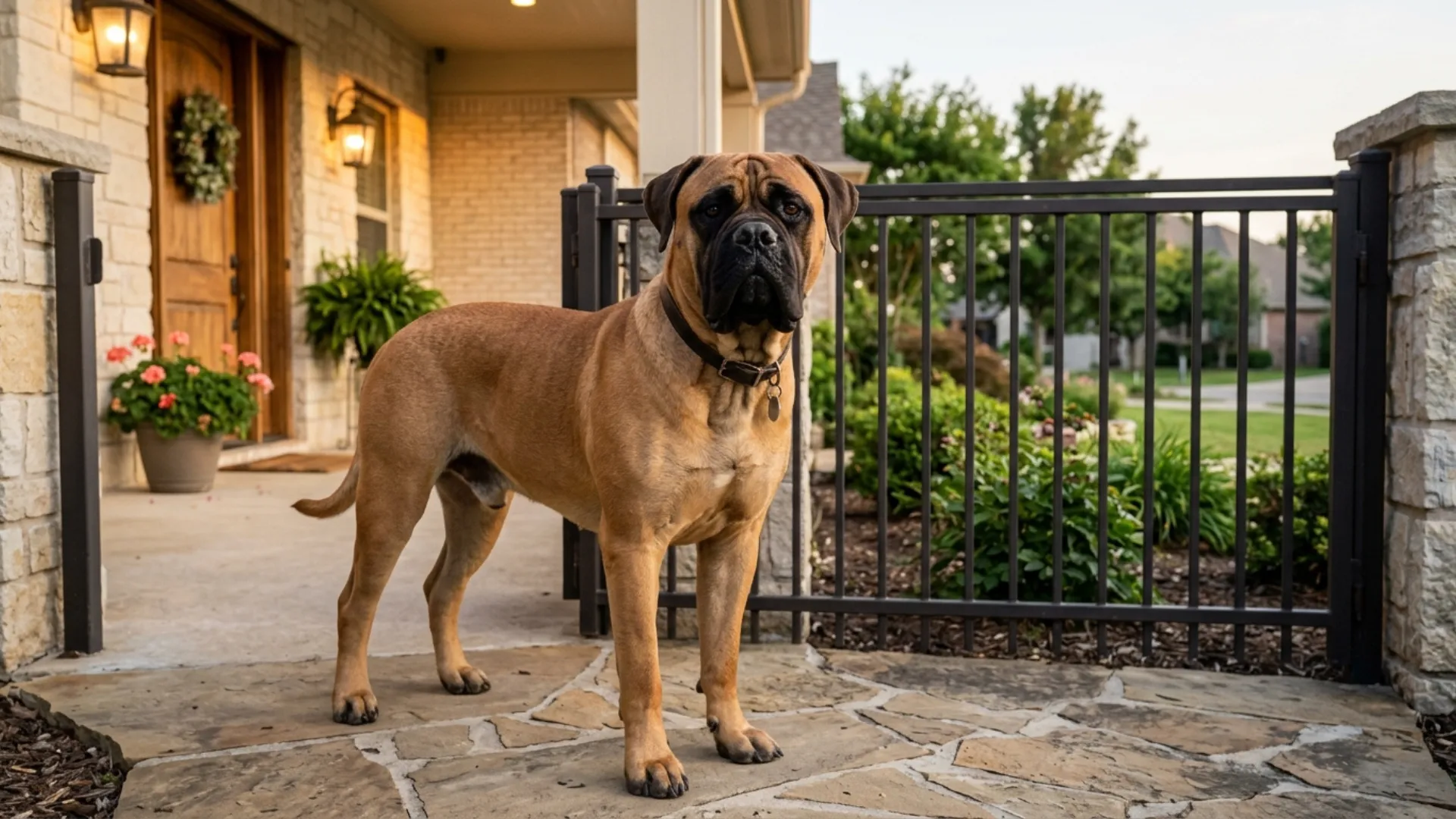
A great guard dog isn’t always the loudest or the most demanding. In many cases, the best protectors are calm, observant companions that quietly watch over their home while fitting effortlessly into everyday family life.
Low-maintenance guard dogs combine natural protective instincts with manageable care needs, making them an excellent choice for busy households and first-time owners alike.
Like all dogs, they still need proper training, regular veterinary care, balanced nutrition, and daily interaction to stay healthy and well-adjusted.
When their physical and emotional needs are met, these loyal companions become confident guardians who know when to stay relaxed and when to step forward.
In this article, we’ll introduce seven guard dog breeds that deliver dependable protection while helping you enjoy a quieter, more peaceful home life.
Key Takeaways
Low-maintenance guard dog breeds can provide dependable protection without requiring excessive grooming or high activity levels.
Early socialization and consistent training are essential for developing a well-mannered and reliable guardian.
Many large breeds are content with moderate daily exercise and plenty of rest.
Short-coated breeds generally require minimal grooming, while some thick-coated breeds need only regular weekly brushing.
Low‑Maintenance Guard Dog Breeds for Quiet Home Life
1. Great Pyrenees
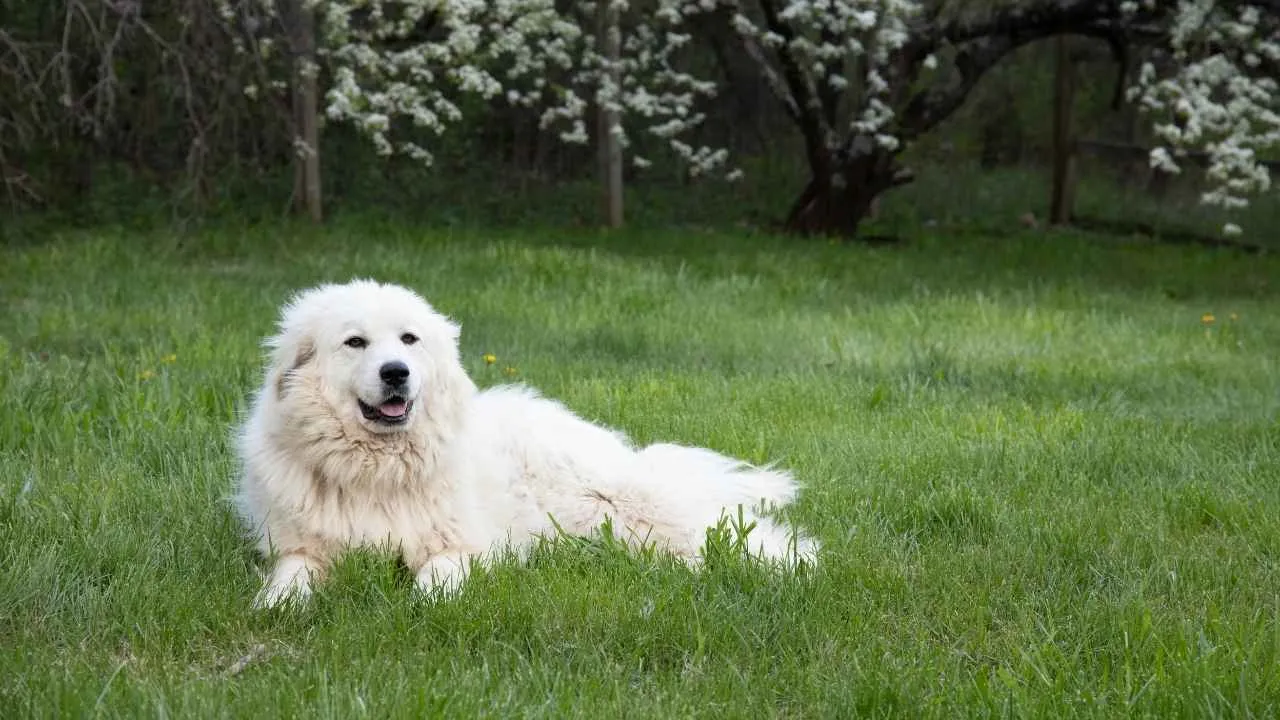
The Great Pyrenees combines impressive strength with a remarkably calm nature, making it a dependable guardian for families seeking a peaceful home environment.
Originally bred to protect livestock from wolves and other predators in rugged mountain regions, this large, powerful breed remains naturally alert while staying gentle and composed around its family.
Despite its thick double coat, grooming is surprisingly manageable because the weather-resistant fur naturally repels dirt and tangles, with weekly brushing usually being enough outside of heavy seasonal shedding.
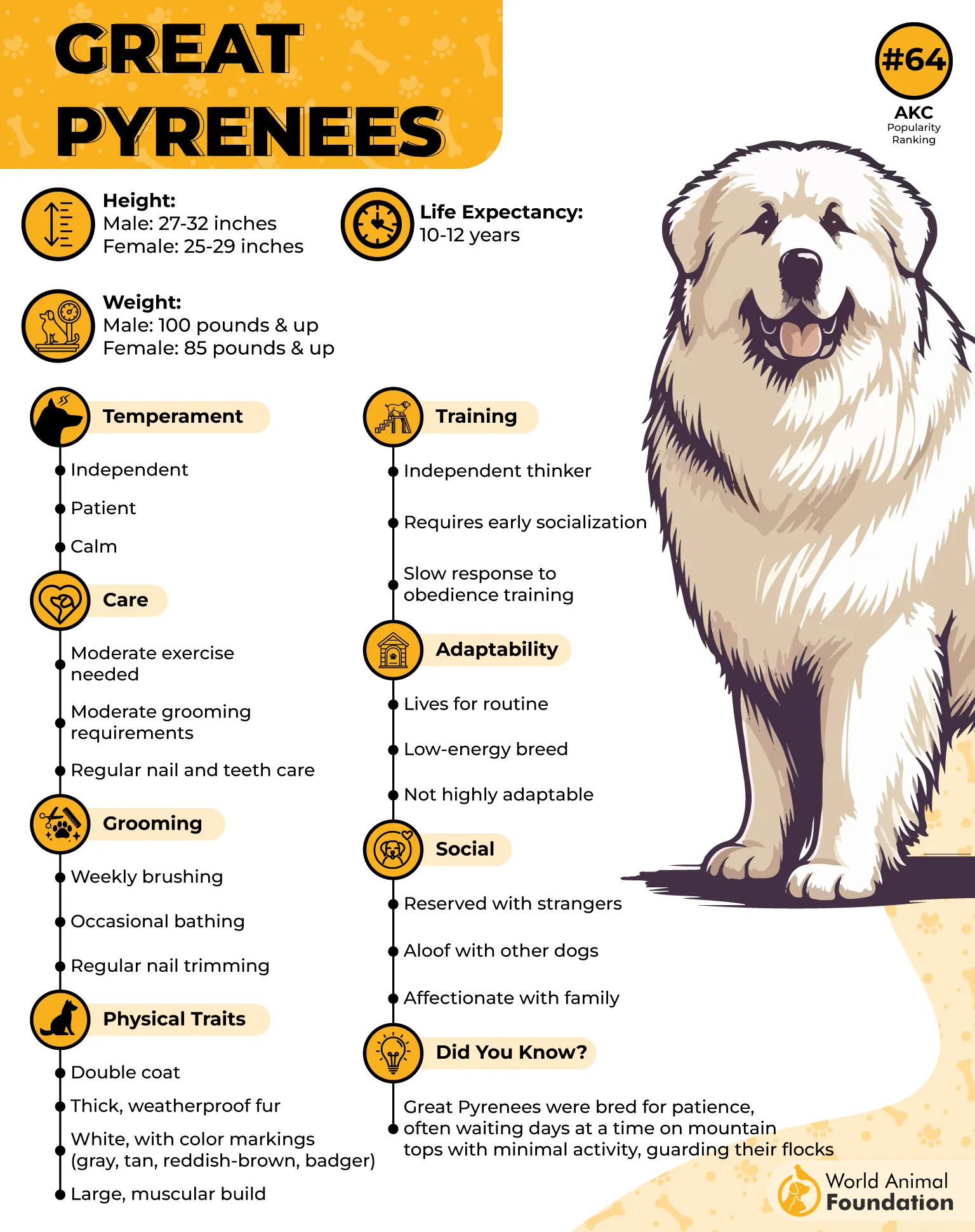
Great Pyrenees are not highly energetic and are generally content with moderate daily walks and time spent watching over their surroundings, according to the American Kennel Club.
Their independent personality means training requires patience, though early socialization and puppy classes help shape a well-mannered companion.
Responsible breeding has improved the breed’s overall health, but owners should remain aware of conditions such as hip and elbow dysplasia, eye disorders, and the risk of bloat, which requires prompt attention.
2. Newfoundland
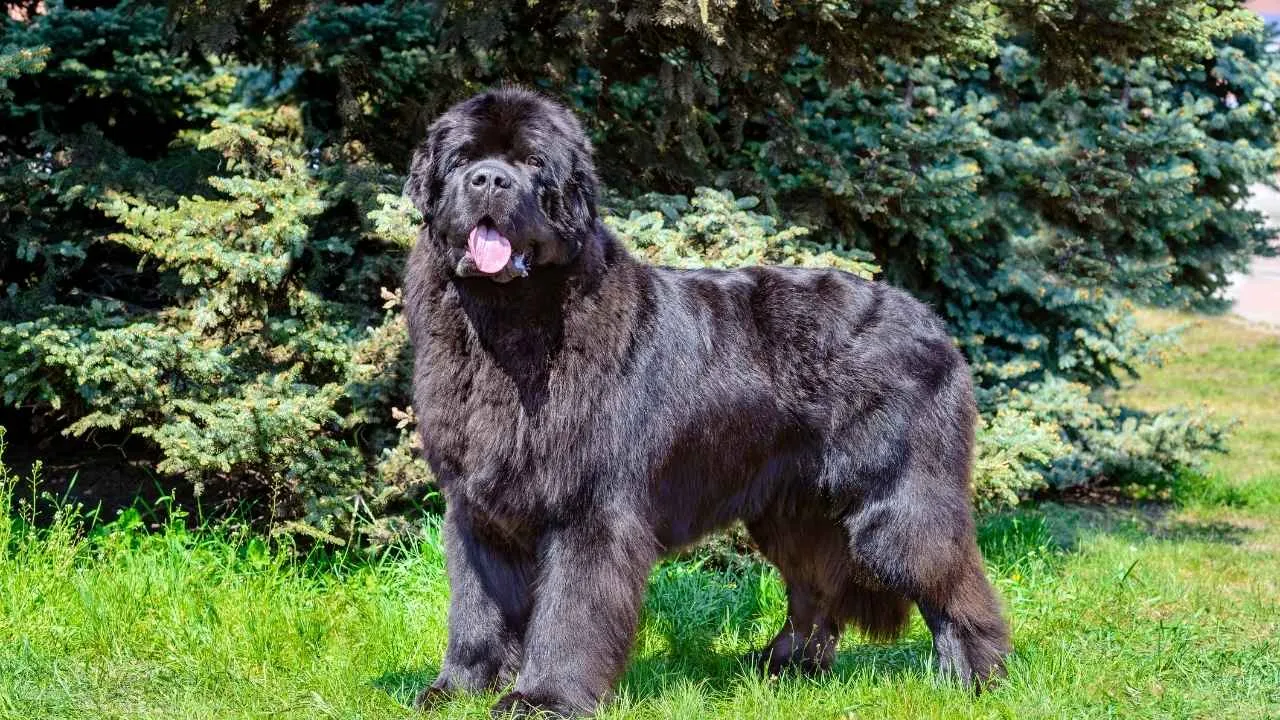
The Newfoundland is a true gentle giant, combining impressive size with a calm, affectionate temperament that makes it a reassuring presence in a quiet household.
Originally developed as a hardworking water dog, the breed earned a remarkable reputation for pulling fishing nets and rescuing people from dangerous waters.
Despite its strength, the Newfoundland is patient, devoted, and naturally gentle with its family. Daily exercise of around an hour helps keep this giant breed healthy, and swimming remains one of its greatest joys.
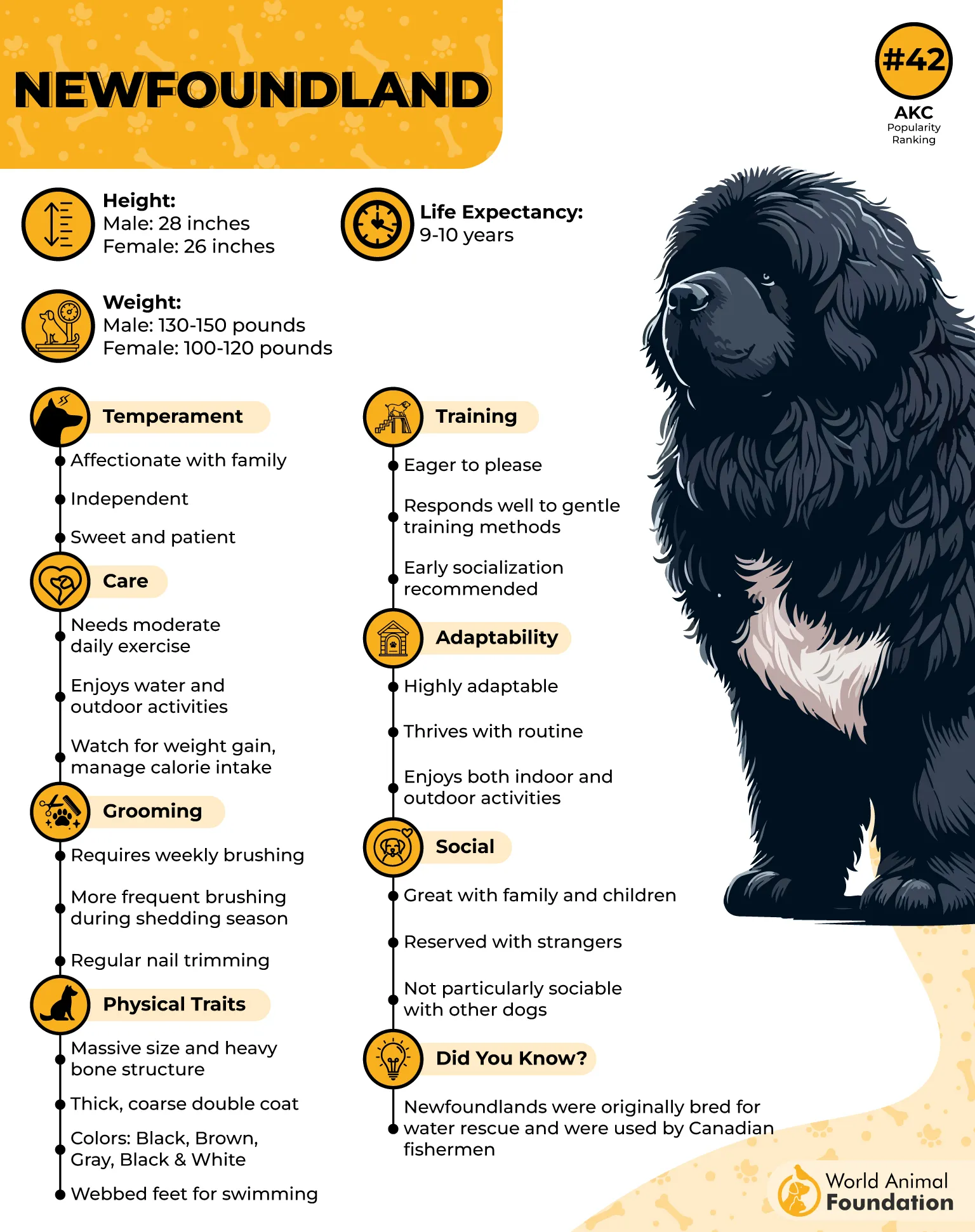
Its dense, water-resistant double coat requires regular brushing to prevent tangles, while owners should be prepared for frequent drooling and the extra care that comes with such a large dog.
Early lead training and socialization are important because of the breed’s size and strength.
Newfoundlands also benefit from smaller, more frequent meals to help reduce the risk of bloat, and growing puppies need carefully managed exercise to protect their developing bones and joints.
3. Bullmastiff
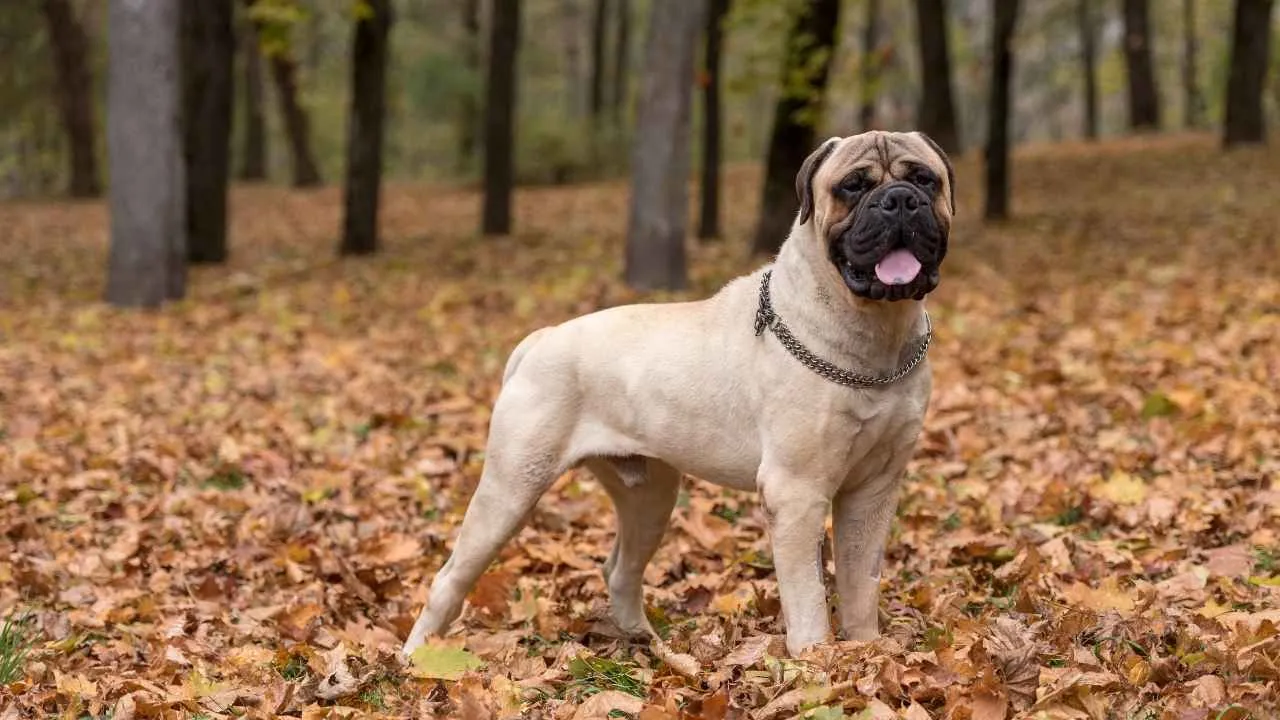
The Bullmastiff was purposefully developed in 19th-century England to be a dependable guard dog that could quietly stop poachers without causing unnecessary harm.
Bred primarily from the Old English Mastiff and Old English Bulldog, and later refined with Bloodhound ancestry for improved tracking, the breed earned a reputation for courage, self-control, and reliability.
Today, the Bullmastiff remains an alert protector while also being a calm and devoted family companion, as stated by Zooplus.
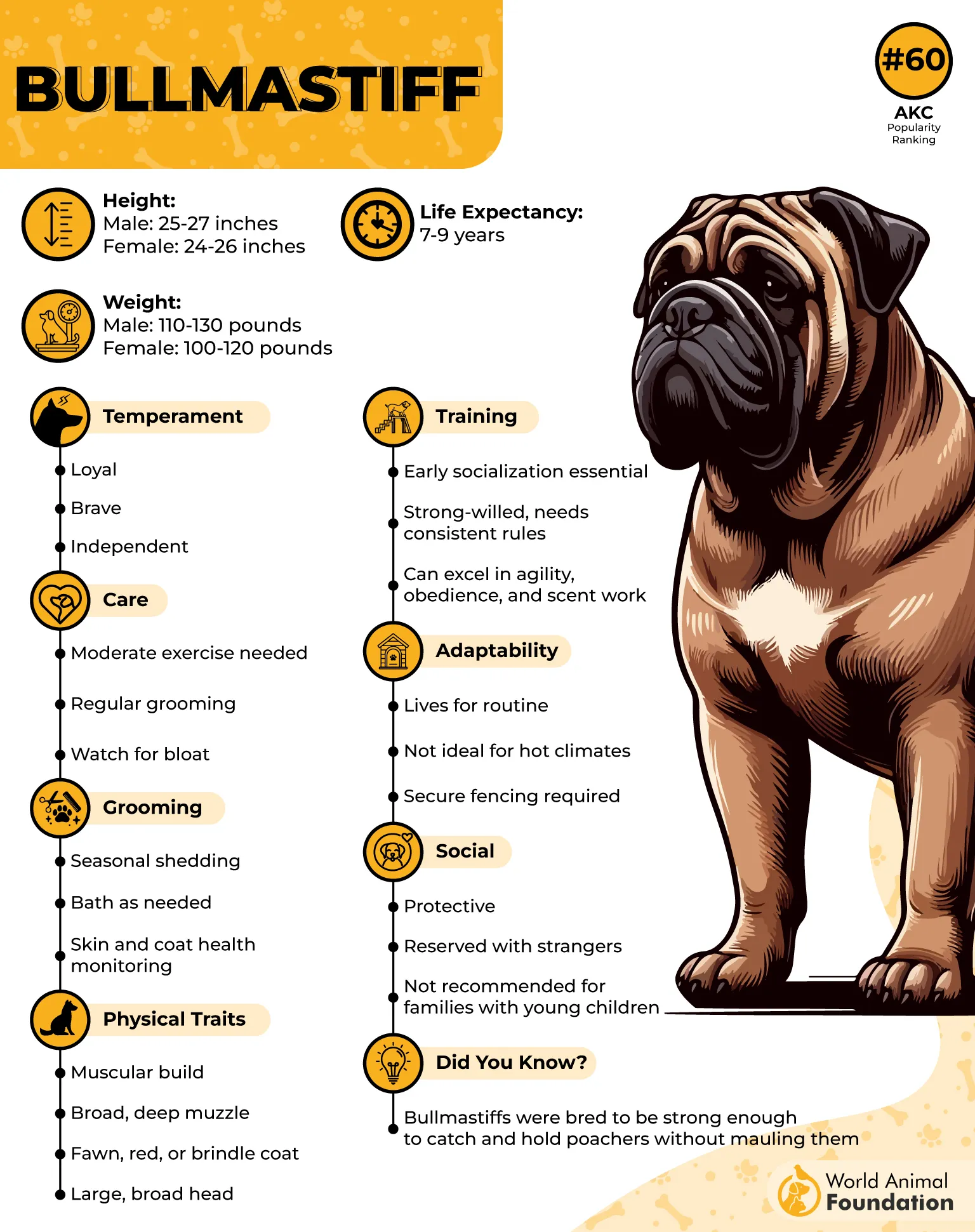
Its naturally watchful nature, combined with a high threshold for reacting, means it rarely barks without reason and stays composed in everyday situations.
Although intelligent, this breed has an independent streak, making early socialization and consistent training important.
Fortunately, grooming is simple thanks to its short, smooth coat that only needs occasional brushing.
With moderate daily exercise and a peaceful home environment, the Bullmastiff is content to relax while remaining quietly attentive, always ready to protect the people it loves if genuinely needed.
4. Great Dane
The Bullmastiff is a powerful yet remarkably calm breed, making it an excellent choice for those seeking a quiet, low-maintenance guardian.
Bred in 19th-century England by crossing the Old English Mastiff and Old English Bulldog, it was developed to stop poachers with courage and restraint rather than unnecessary aggression.
Today, that steady temperament remains one of its greatest strengths.
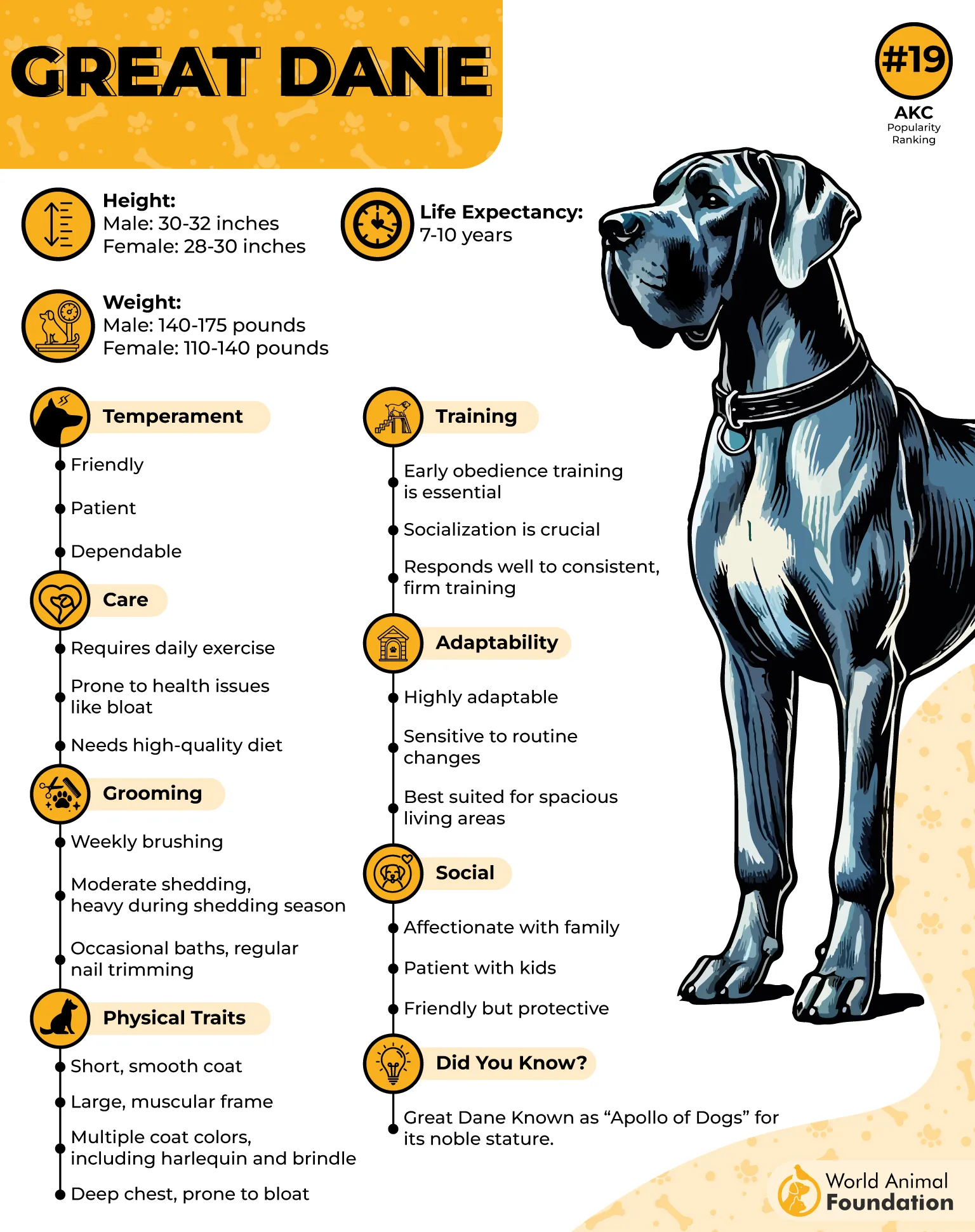
Naturally protective and highly observant, the Bullmastiff is typically reserved with strangers but deeply loyal and affectionate with its family.
It rarely barks without reason and is just as happy relaxing at home as enjoying daily walks and playtime. Its short, smooth coat is easy to maintain, requiring only occasional brushing to stay in good condition.
Although intelligent, the breed has an independent streak, so early socialisation and consistent training are essential. With proper guidance, the Bullmastiff grows into a dependable, gentle companion that quietly watches over its home without being overly demanding.
5. Mastiff
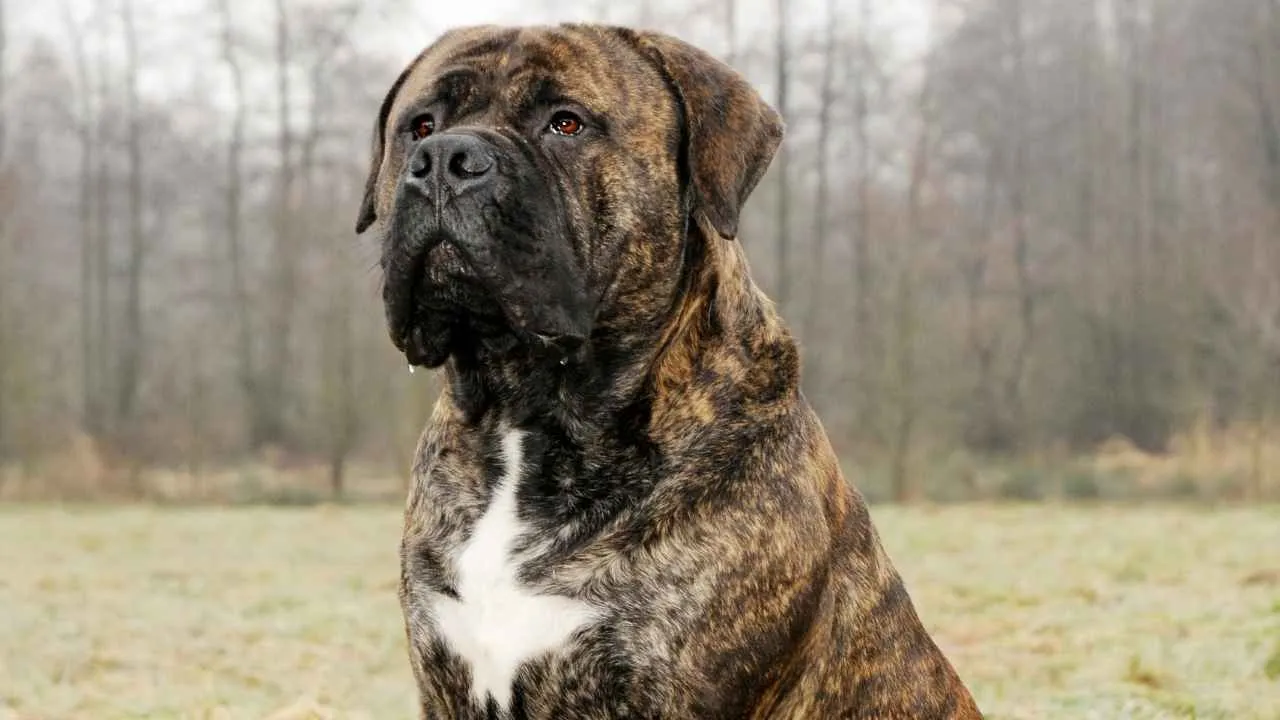
The Mastiff is a calm, dignified giant whose quiet confidence makes it a dependable guardian without excessive barking or constant activity.
Deeply loyal to its family, this affectionate breed prefers staying close to the people it loves, often choosing a spot beside them over being alone.
While naturally reserved around strangers, the Mastiff’s imposing size and powerful bark are usually enough to discourage unwanted visitors.
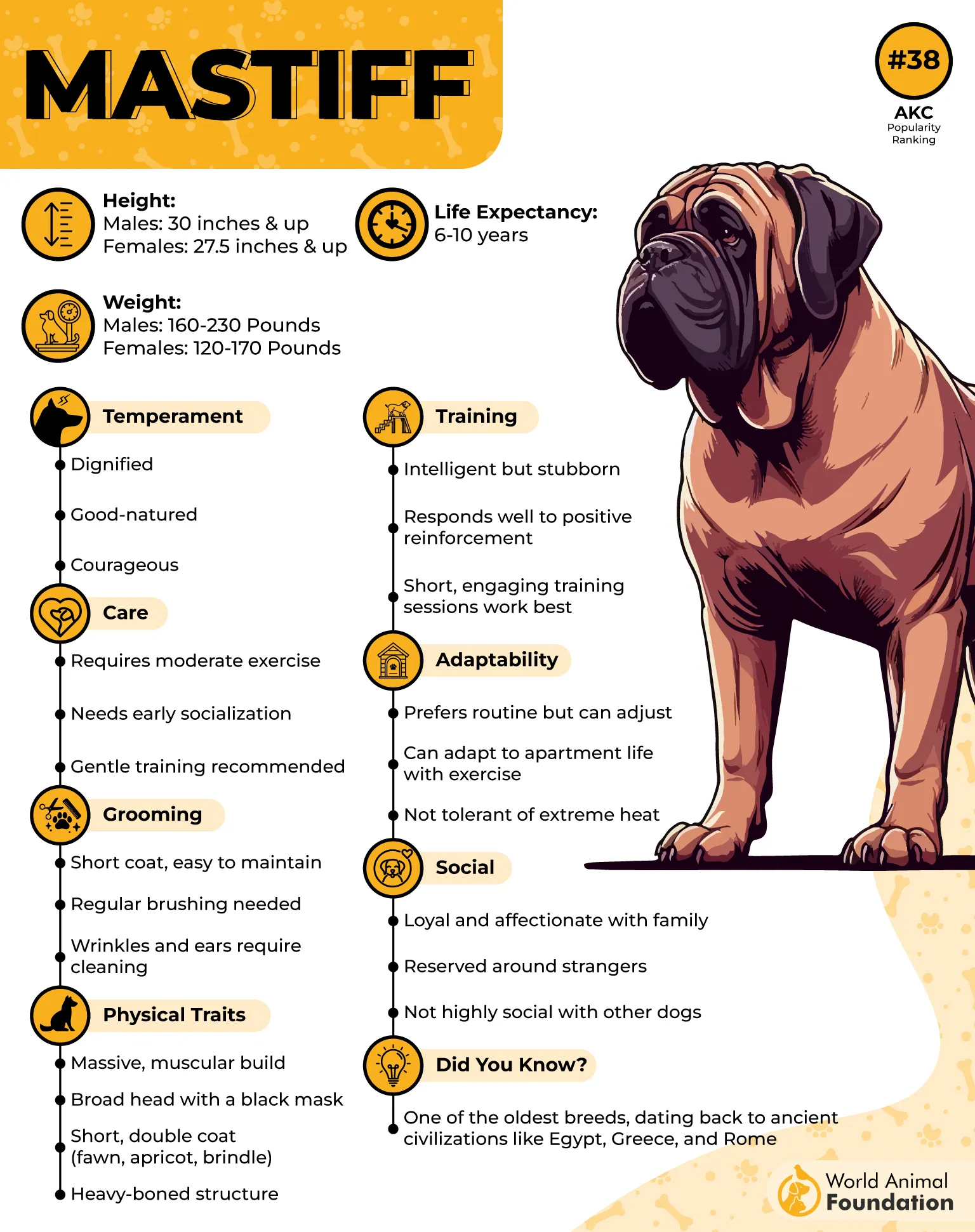
Despite its massive build, it has moderate exercise needs and is generally content with two daily walks and plenty of time relaxing indoors, as explained by Orvis.
Its short coat is easy to care for, requiring only regular brushing to manage year-round shedding, along with routine ear cleaning, nail trimming, and facial care.
Early socialization and patient, positive training are important, as the breed can be strong-willed. With consistent guidance, the English Mastiff develops into a gentle, steady companion that offers quiet protection while fitting comfortably into a peaceful family home.
6. Rhodesian Ridgeback
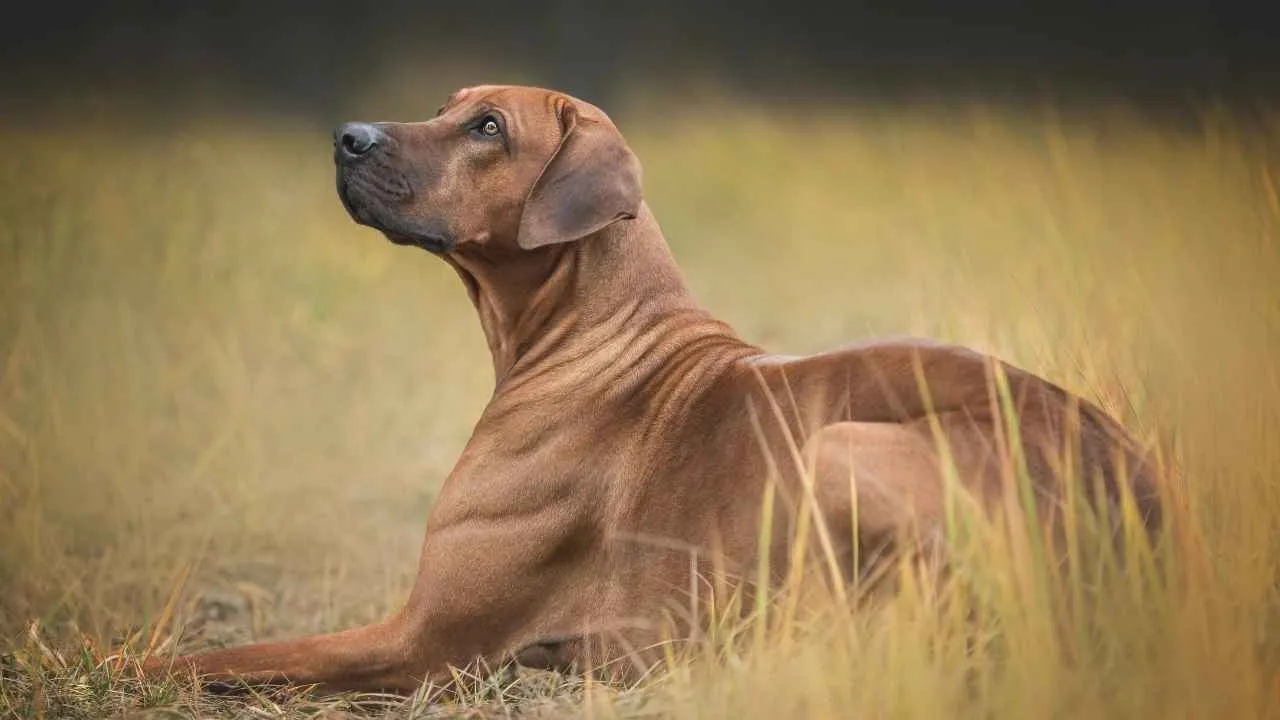
The Rhodesian Ridgeback is a strong, athletic breed known for its courage, intelligence, and quiet confidence.
Originally developed in Africa to track lions, it is easily recognized by the distinctive ridge of hair running along its back.
Despite its impressive guarding instincts, the Ridgeback is deeply loyal to its family and typically remains calm and composed around the home.
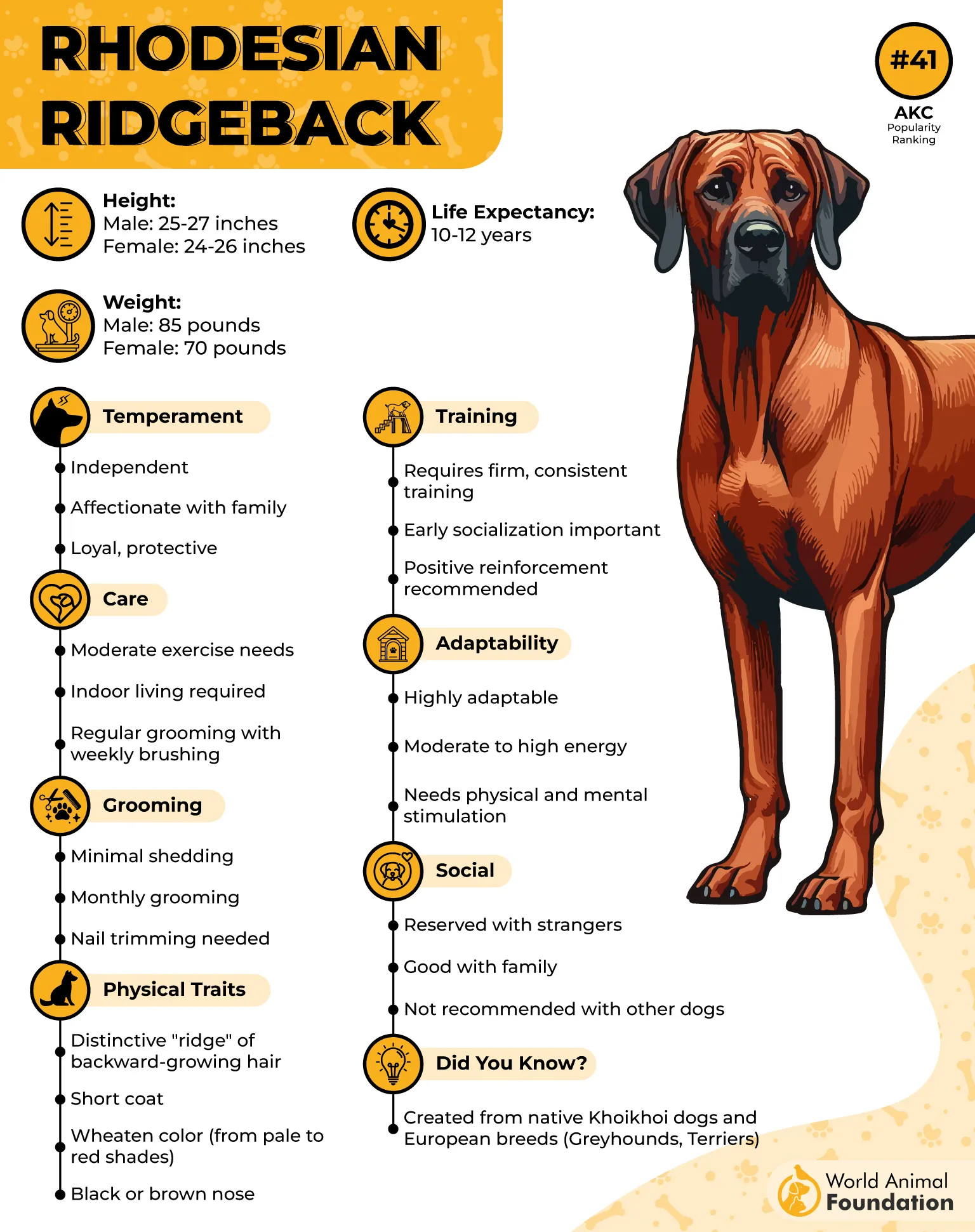
Rather than barking unnecessarily, it relies on its alert nature and imposing presence to deter potential threats. This muscular breed reaches full maturity gradually, with many dogs continuing to develop until around two years of age.
Regular exercise and routine veterinary care help keep Ridgebacks healthy, while early socialization encourages a well-balanced temperament. Their short, sleek coat is easy to maintain, requiring minimal grooming compared with many large breeds.
For owners seeking a protective yet low-maintenance companion, the Rhodesian Ridgeback offers a dependable blend of strength, independence, and quiet devotion.
7. Greyhound
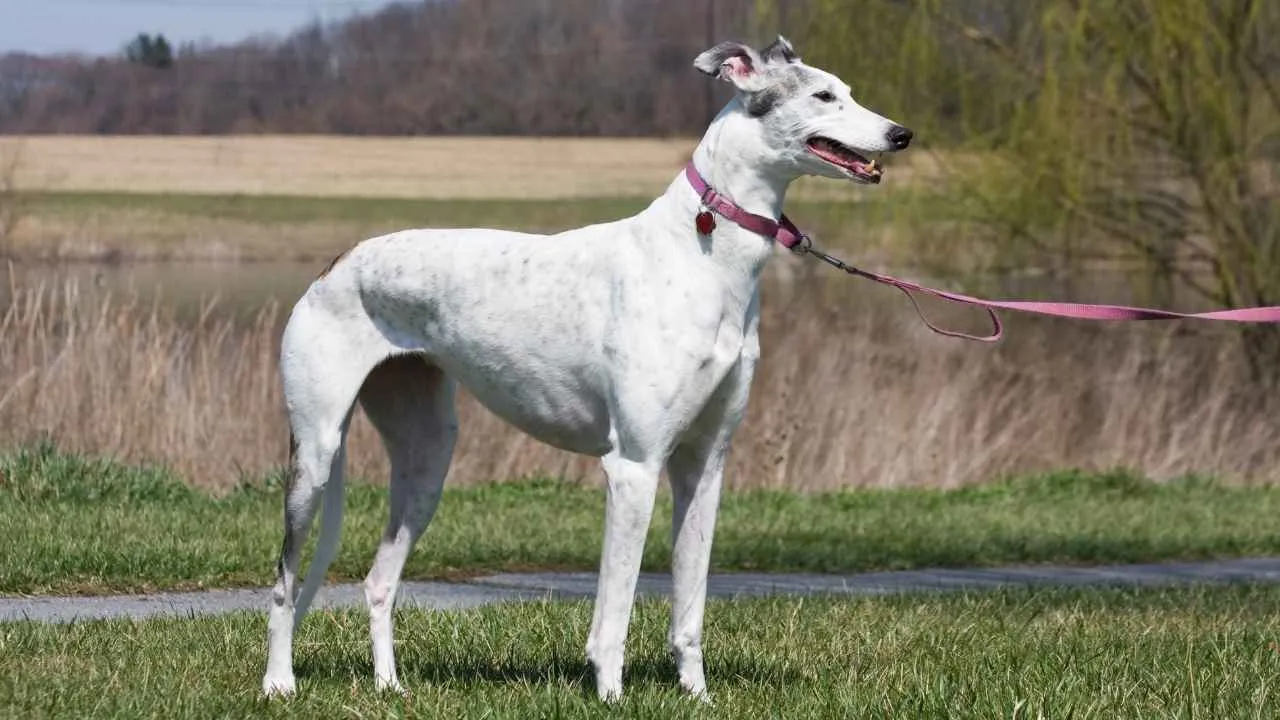
The Greyhound may be famous for its incredible speed, but at home it is surprisingly calm, quiet, and easygoing.
One of the oldest dog breeds, this elegant companion is often happiest lounging on a comfortable bed after enjoying a short burst of exercise.
Its gentle, affectionate nature and low tendency to bark make it well suited to peaceful households.
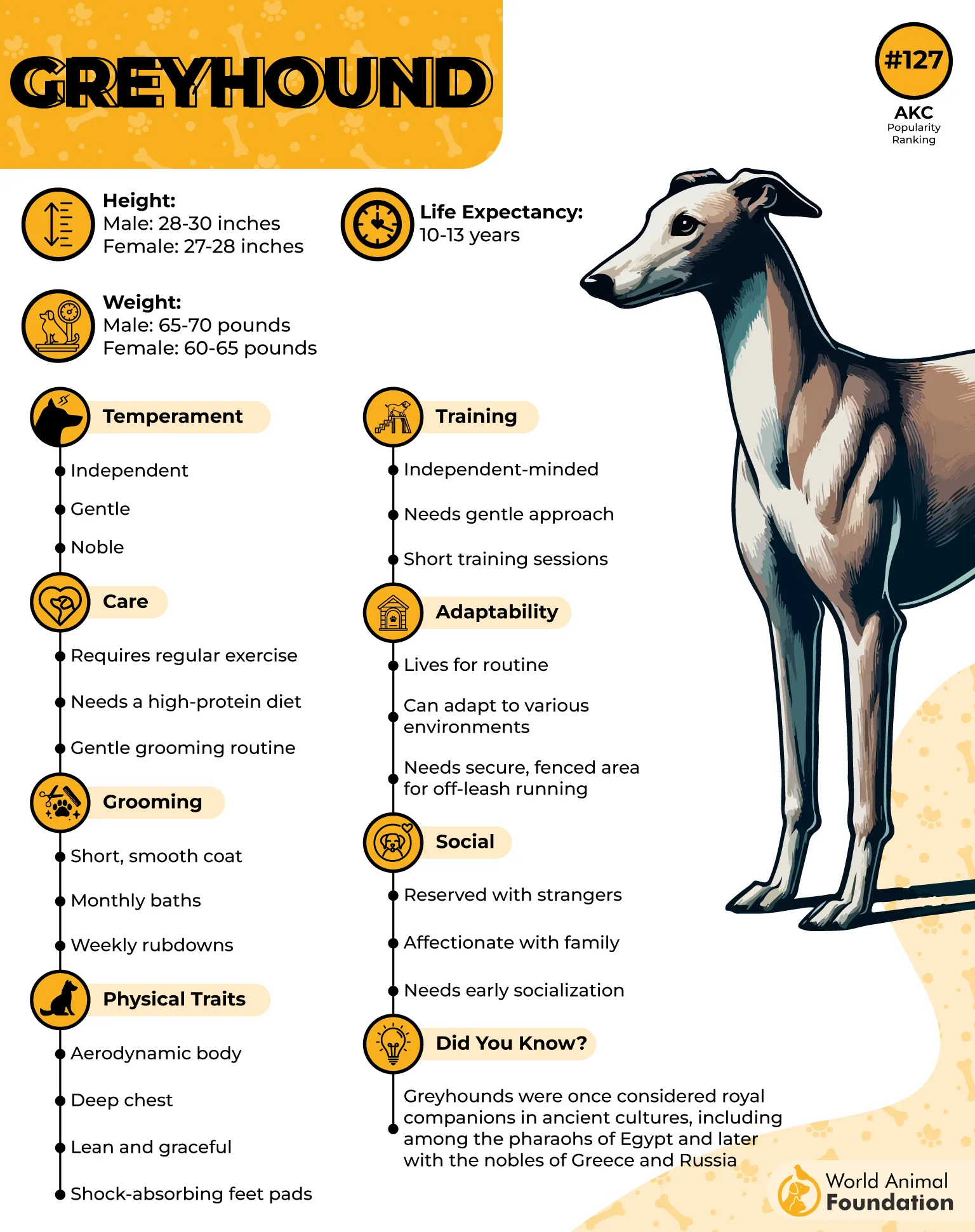
Greyhounds require only moderate daily walks and occasional opportunities to run in a safely enclosed area, while their short, smooth coat needs very little grooming beyond weekly brushing.
Because they have little body fat and sensitive skin, soft bedding and protection from cold weather are important, according to Britannica. Early training and socialization help manage their natural prey drive, particularly around small animals.
With their relaxed temperament, clean habits, and minimal grooming needs, Greyhounds offer a unique combination of graceful beauty, quiet companionship, and low-maintenance care for families seeking a calm yet watchful canine companion.
Conclusion
Choosing a guard dog doesn’t mean sacrificing peace and simplicity at home. The right breed can offer dependable protection while fitting comfortably into a relaxed lifestyle with manageable grooming, moderate exercise, and a naturally calm temperament.
Whether you prefer the quiet confidence of a Bullmastiff, the gentle strength of a Newfoundland, the watchful nature of a Great Pyrenees, or the laid-back charm of a Greyhound, each breed brings its own balance of loyalty and low-maintenance care.
Keep in mind that even the easiest dogs thrive with proper training, early socialization, regular veterinary care, and plenty of companionship. A well-cared-for dog is far more likely to become a trustworthy guardian and a cherished member of the family.
By matching a breed’s personality and care needs to your lifestyle, you can enjoy the reassurance of a protective companion while maintaining the calm, comfortable home environment you value every day.
