




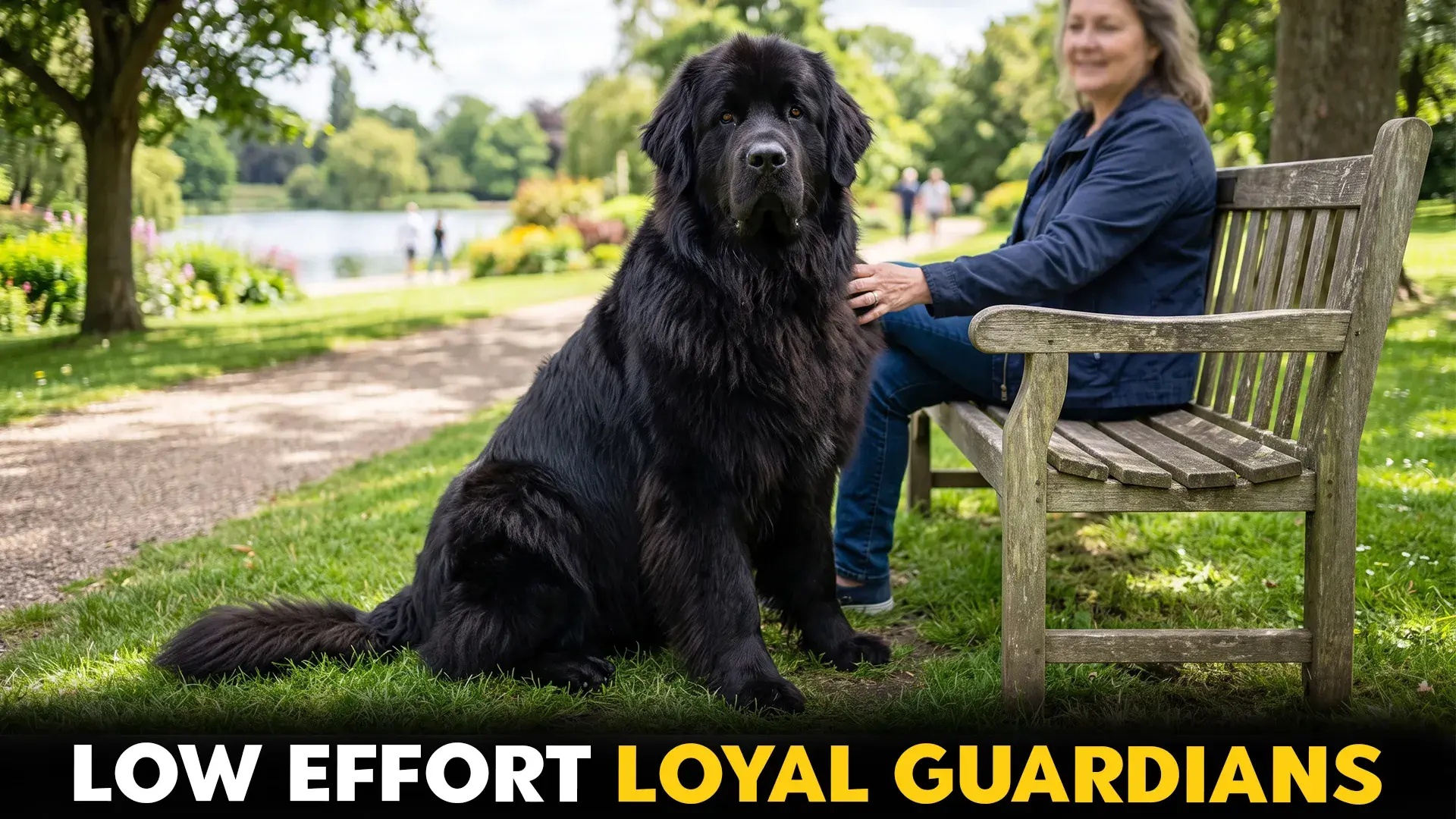
Some people want a dog that can make suspicious visitors rethink their life choices, but they do not want a furry tornado destroying the living room every afternoon. That is where calm, naturally watchful breeds enter the conversation.
These dogs generally offer an impressive presence, loyal companionship, and manageable daily care without demanding nonstop entertainment. However, “low-maintenance” does not mean zero training, zero exercise, or zero responsibility, because that dog has not been invented yet.
In this article, the term refers mainly to practical grooming, moderate activity, calm indoor behavior, or an ability to guard through observation rather than constant barking and frantic movement. Let’s talk about the top low-maintenance guard dog breeds for peaceful owners.
Top Low-Maintenance Guard Dog Breeds for Peaceful Owners
1. Tornjak
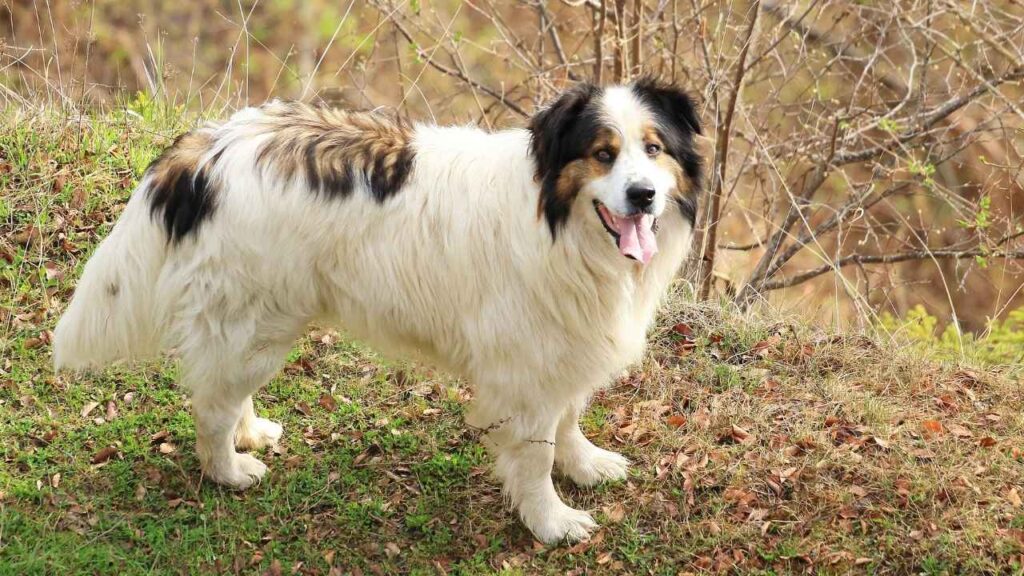
The Tornjak is a powerful livestock guardian that protects through calm observation, steady patrols, and serious physical presence rather than unnecessary chaos. At home, a properly raised Tornjak can be composed, affectionate, and deeply attached to the people within its trusted circle.
These protection dogs can be loving toward children and often take their family-protection duties extremely seriously, according to the United Kennel Club. Their size and guardian instincts still mean that interactions with young children should be supervised, especially when play becomes energetic.
Although the Tornjak has a long double coat, its grooming routine is more straightforward than its dramatic appearance suggests. Weekly brushing usually removes loose hair and helps prevent tangles, while more frequent sessions are useful during seasonal shedding or when the dog lives indoors.
Despite being among the best guard dogs, deep-chested dogs are at risk of gastric dilatation-volvulus, so owners should discuss feeding routines and emergency warning signs with a veterinarian.
What Makes Them Low-Maintenance
Their natural guarding method centers on quiet patrols and confident observation rather than constant high-speed activity.
Weekly coat care can be sufficient during ordinary periods, although seasonal shedding requires additional brushing.
2. Newfoundland
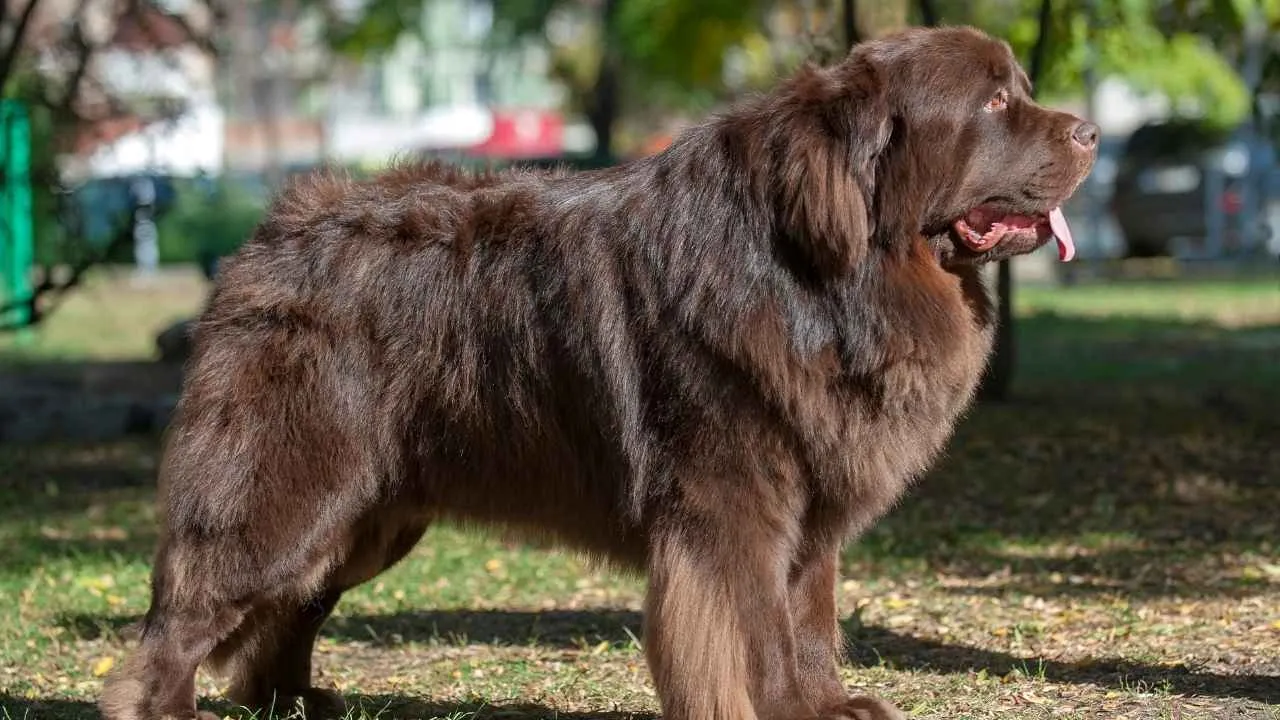
The Newfoundland is basically a gentle maritime legend wearing a thick coat and carrying enough muscle to look extremely convincing from the front gate.
Despite their enormous frame, they are usually sociable, patient, and good-natured rather than confrontational. They tend to form warm relationships with children, other dogs, and smaller household pets when properly introduced.
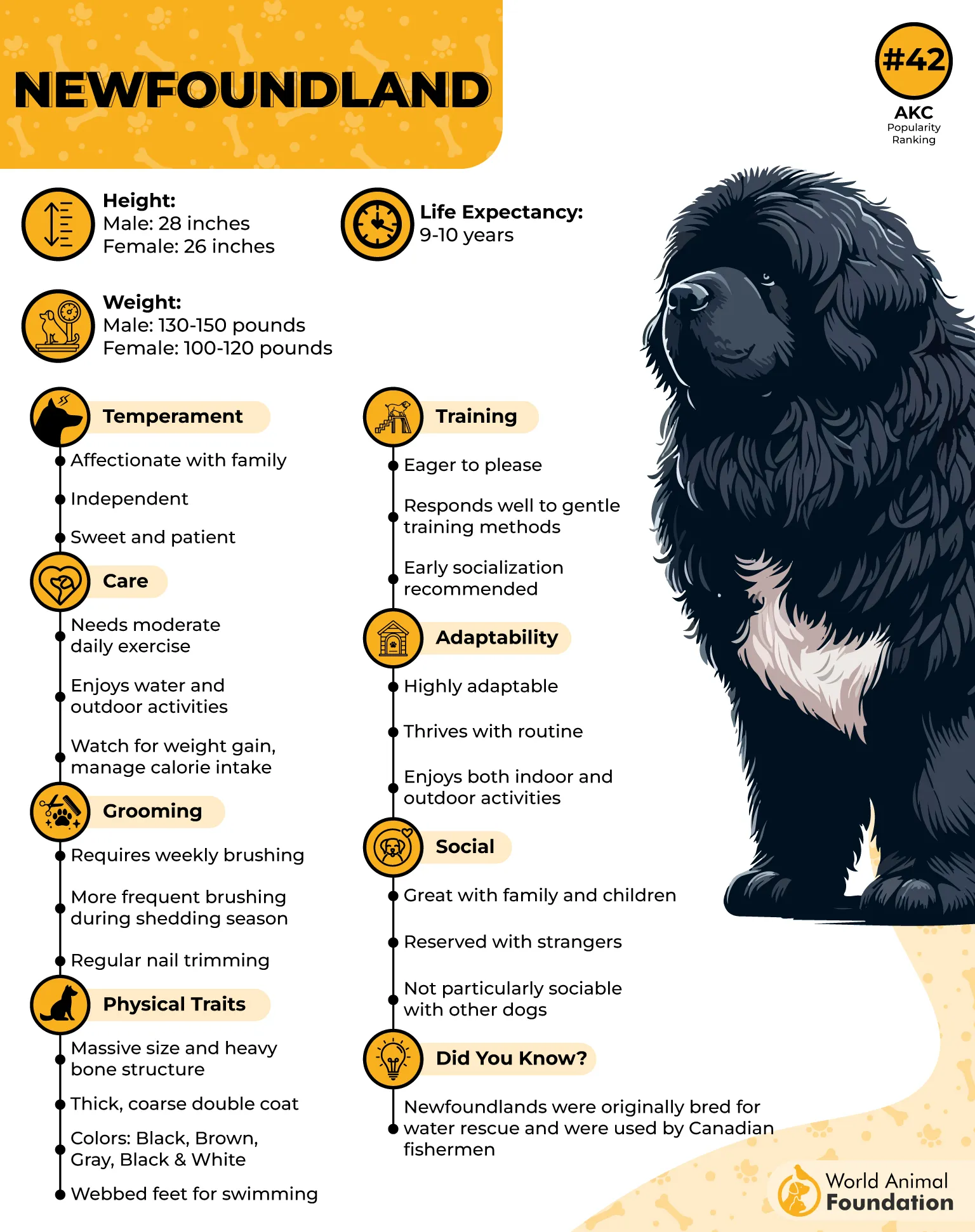
They do not need the relentless exercise schedule associated with high-drive sporting or herding breeds. Daily walks, occasional hikes, swimming sessions, and gentle play can keep them physically and mentally engaged without turning every morning into military training.
Their water-resistant double coat consists of a coarse outer layer and a soft, dense undercoat. Newfoundlands shed throughout the year and typically shed much more undercoat during seasonal coat changes, so consistent brushing is necessary, even though professional grooming is not always essential.
Bathing this protective dog breed roughly once a month may be suitable for many individuals, with an additional rinse or dog-safe wash after swimming in dirty or treated water.
What Makes Them Low-Maintenance
Their calm energy allows for moderate exercise, focusing on steady walks and enjoyable swimming rather than endless sprinting.
A cooperative, people-oriented temperament can make everyday training smoother when positive methods are used.
3. Great Dane
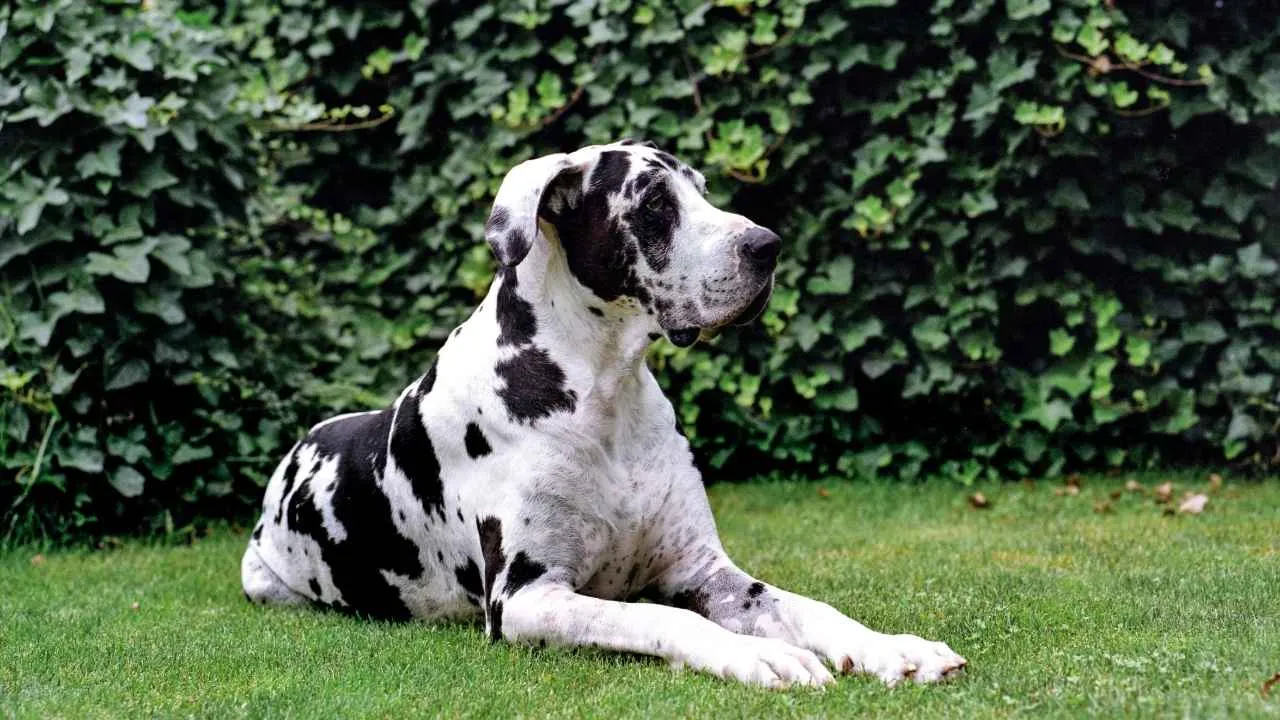
Great Danes bring serious main-character energy because few dogs can stand quietly in a hallway and still look like professional security personnel. Their physical presence alone can be a powerful deterrent, even when the dog would rather lean against its owner than confront anyone.
Young Great Danes can be excitable, clumsy, and completely unaware that their paws are approximately the size of dinner plates. Thoughtful exposure to people, animals, sounds, surfaces, and new environments during early puppyhood helps them develop confidence instead of fearfulness.
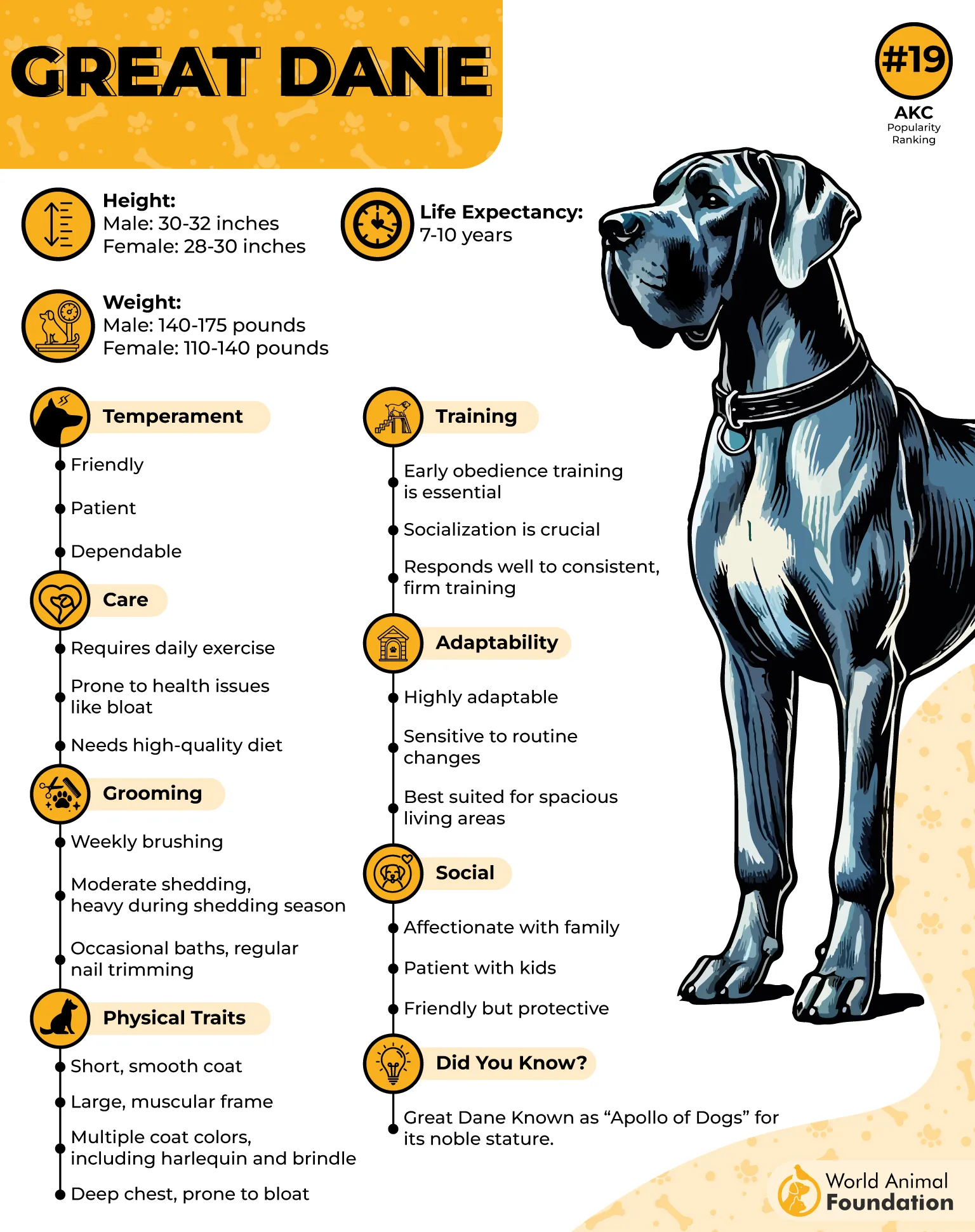
These dogs often bond closely with family members and can live happily with children when proper training and supervision are taken seriously.
These calm guard dogs need regular physical activity, but they are not usually interested in running an ultramarathon before breakfast. Walks divided throughout the day, controlled play, sniffing opportunities, and brief training games can satisfy both their bodies and brains.
Their short coat is easy to brush, dries quickly, and does not require trimming or elaborate grooming appointments.
What Makes Them Low-Maintenance
A smooth, short coat keeps brushing simple and eliminates the need for haircuts.
Mature Great Danes generally appreciate relaxed indoor living once their exercise needs have been met.
4. Rhodesian Ridgeback
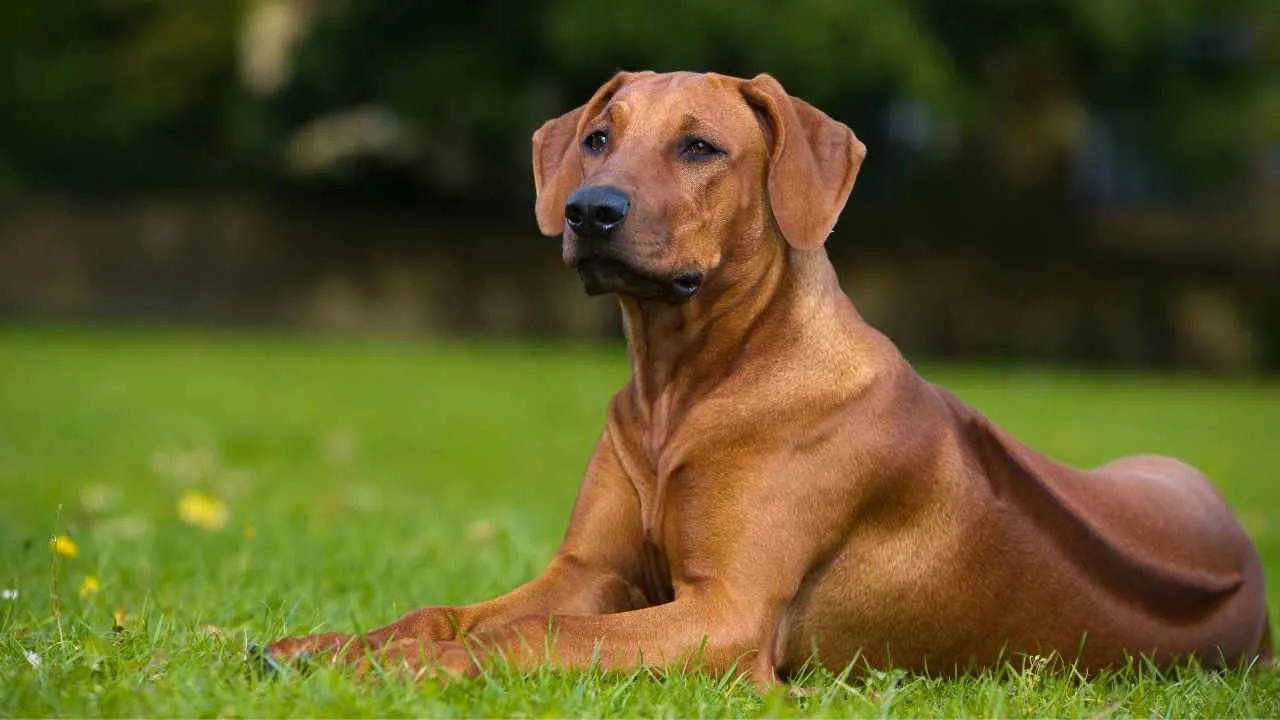
The Rhodesian Ridgeback combines a muscular hound build, athletic endurance, and a short wheaten coat with a naturally watchful personality.
Historically used for demanding hunting and guarding work, the breed can shift from peaceful indoor companion to intensely focused outdoor athlete in seconds.
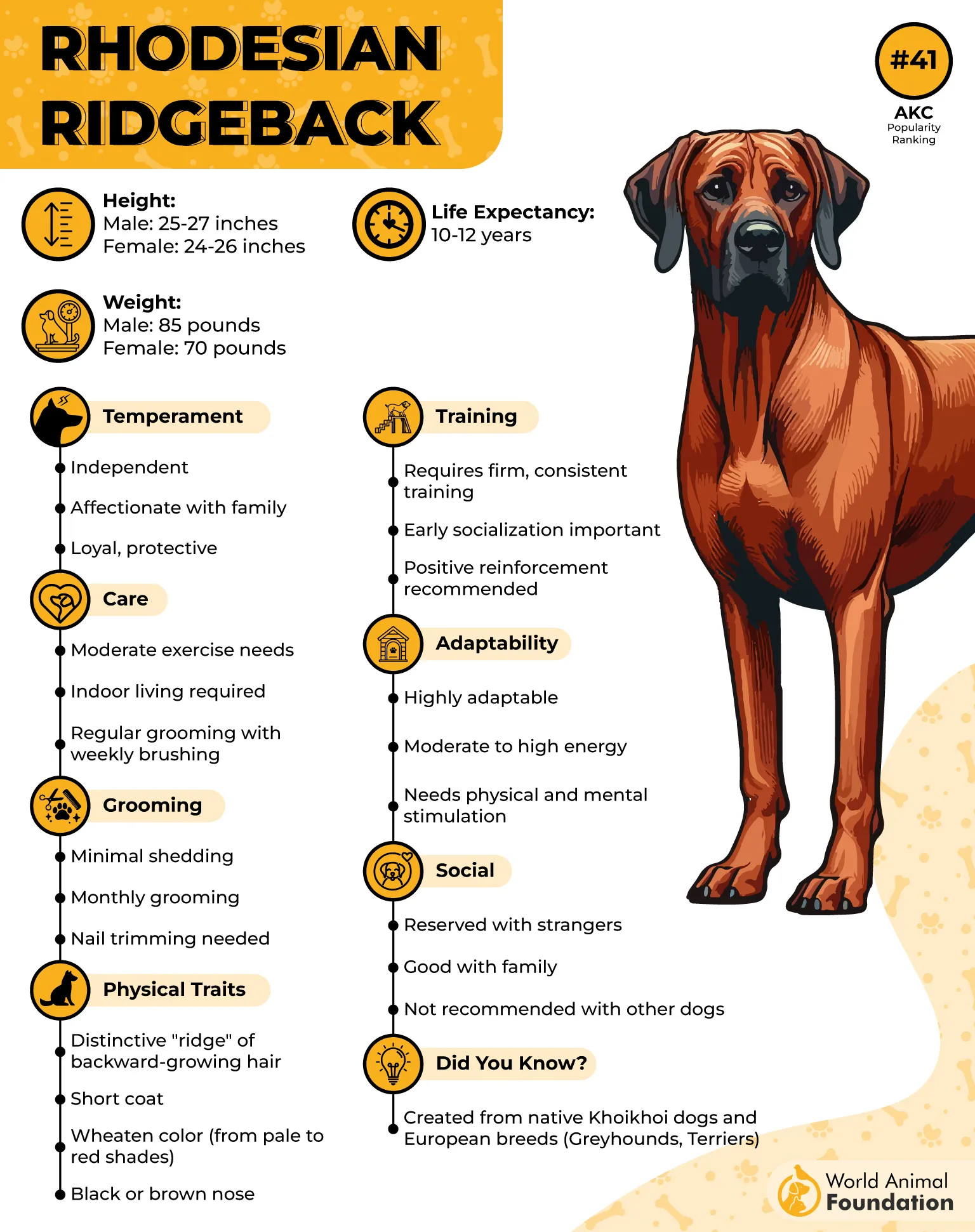
Family closeness matters deeply to most Ridgebacks, and they generally do not thrive when treated as outside-only security animals. They often want to share the same room, furniture, and personal space as their favorite humans, regardless of whether their body technically fits.
The short, dense coat is practical, relatively clean, and unlikely to collect as much mud or debris as long feathering. A weekly brush is usually enough to remove dead hair, although shedding continues throughout the year and may increase during seasonal changes.
Regular nail care, dental hygiene, and occasional bathing complete a refreshingly uncomplicated routine. Low grooming demands should not be mistaken for low physical needs, as Ridgebacks require purposeful exercise and mental stimulation.
What Makes Them Low-Maintenance
Their sleek coat releases dirt easily and usually needs only a quick weekly brushing.
Once adequately exercised, many Ridgebacks settle quietly and enjoy long periods of indoor relaxation.
5. Canaan Dog
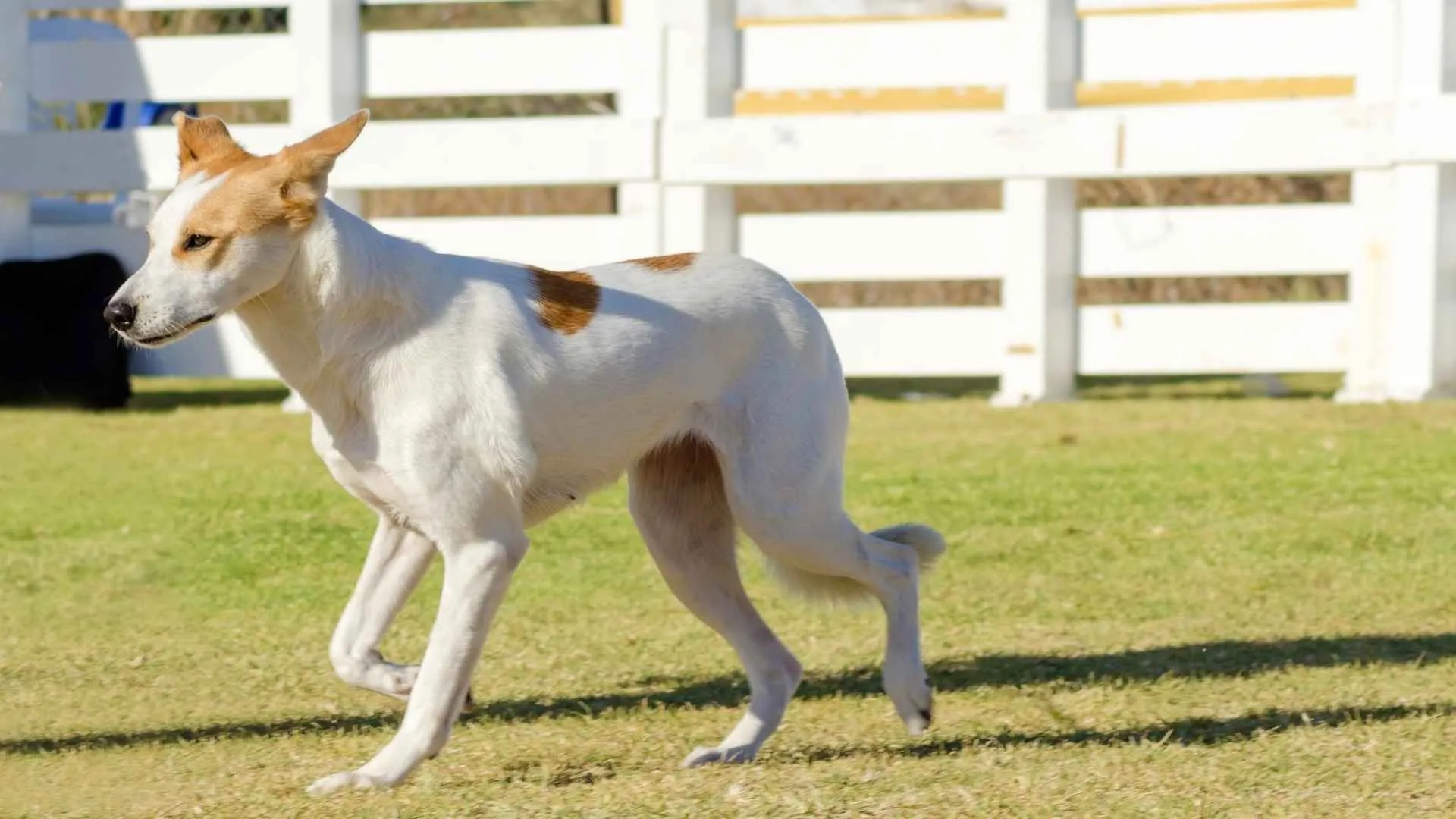
The Canaan Dog developed under demanding desert conditions, and that history helped produce an alert, resilient, and highly observant breed. Positive reinforcement, clear household rules, scent games, and problem-solving activities provide a more productive route to cooperation.
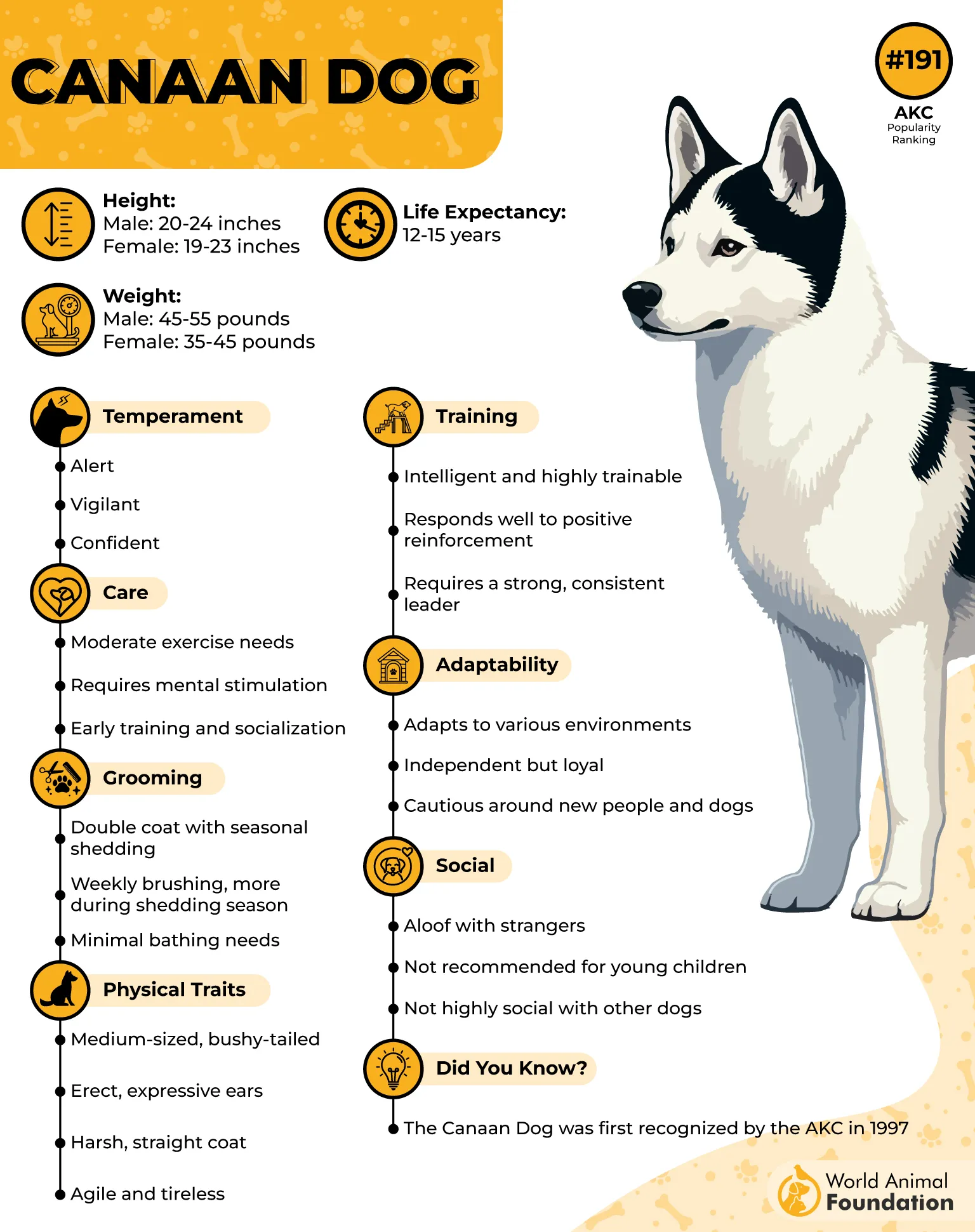
The breed has a straight, double coat with an undercoat whose density may vary with climate. Weekly brushing usually keeps the coat healthy, while heavier grooming is needed when large amounts of undercoat are shed during seasonal changes.
Bathing can remain occasional because these dogs generally require a wash only when they become genuinely dirty. These excellent guard dogs can adapt to different house sizes if their exercise and mental needs are met, but secure outdoor management is non-negotiable.
These loyal companions may jump, dig, or create resting hollows in the soil, so a weak fence is basically an invitation to launch a personal landscaping project.
What Makes Them Low-Maintenance
Frequent bathing is unnecessary because their practical coat generally stays manageable with routine brushing.
Their natural environmental awareness allows them to perform watchdog duties without specialized protection training.
6. Kuvasz
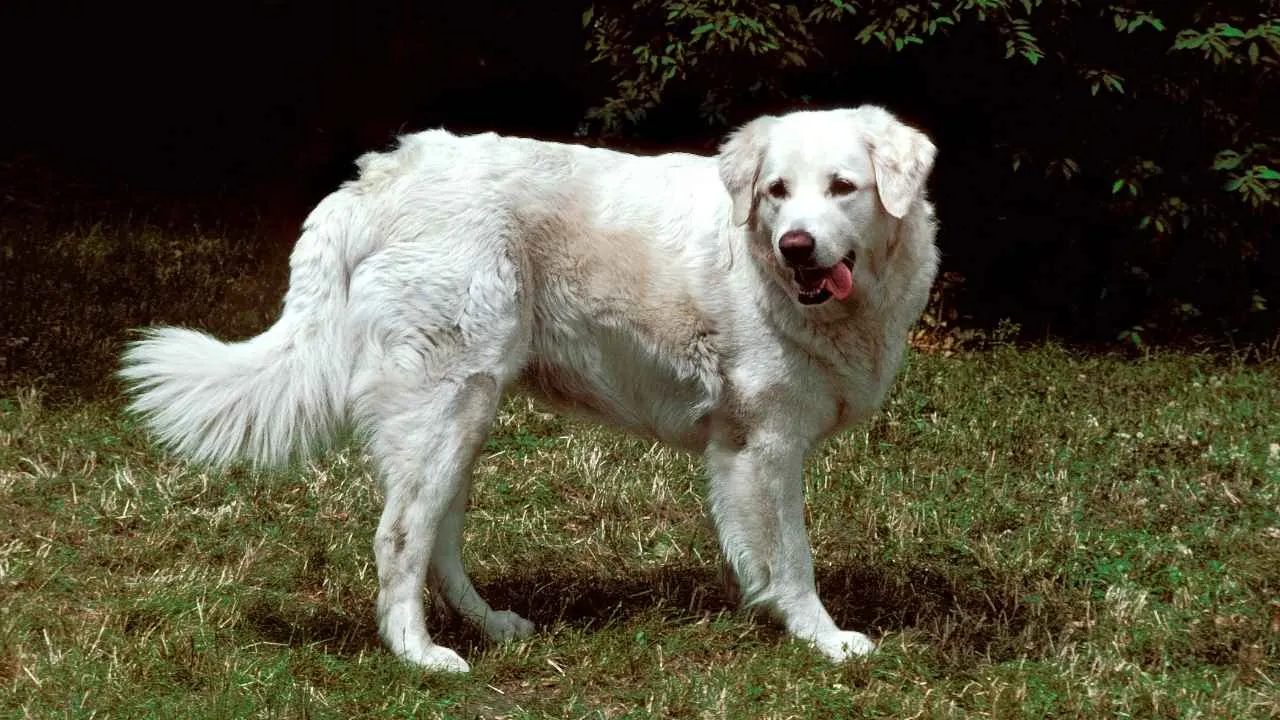
The Kuvasz is a large, athletic livestock guardian recognized for its white double coat, independent mind, and powerful protective instincts. Traditionally responsible for guarding sheep and broad areas of land, it was developed to evaluate danger without waiting for a human supervisor.
With trusted family members, a Kuvasz may display affection, playfulness, and a surprisingly clownish sense of humor. Around unfamiliar people, however, the breed is often reserved and unlikely to treat every visitor like a long-lost bestie.
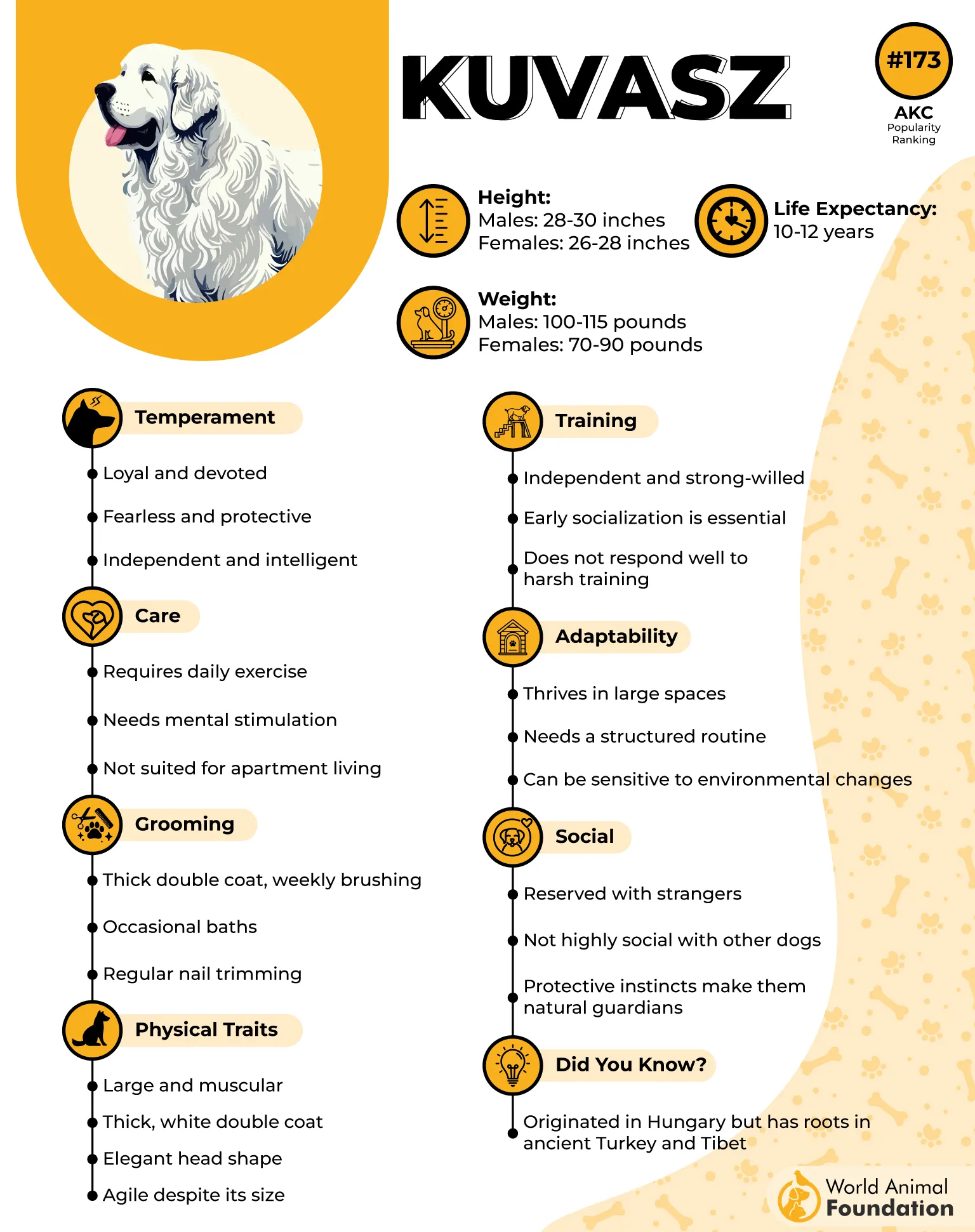
Children already belonging to the household may be accepted when the dog is raised with them and carefully managed. Unfamiliar children can pose a different situation, as loud movement, chasing, or rough play may be misunderstood by a protective guardian.
Although the coat appears luxurious, its basic care is not especially technical. Weekly brushing removes loose hair and outdoor debris, while bathing every four to six weeks may be adequate for many dogs unless they become heavily soiled.
This great guard dog needs regular movement, access to a secure yard, and a legitimate sense of purpose, but it is not usually a frantic activity machine.
What Makes Them Low-Maintenance
Their coat needs consistent brushing but no clipping, sculpting, or breed-specific hairstyle.
A naturally self-directed working style reduces the need for nonstop interactive play.
7. Rafeiro do Alentejo
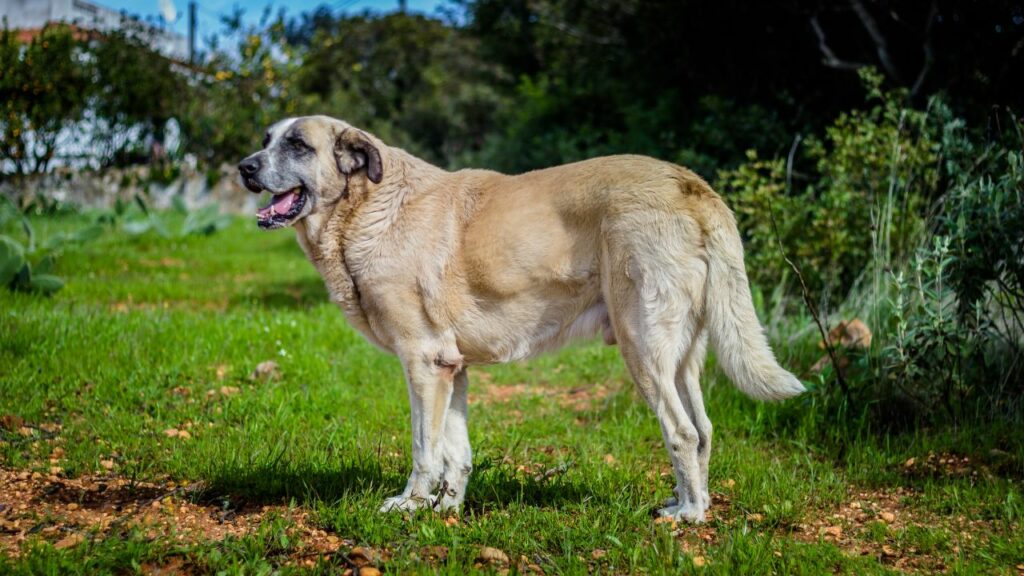
The Rafeiro do Alentejo is a giant guardian whose calm expression can make its protective power easy to underestimate. Properly trained individuals are typically loyal, confident, and composed with their own people while remaining reserved around newcomers.
Historic guardian instincts often appear through roaming, boundary checking, nighttime awareness, and alert barking when something unfamiliar enters the environment.
Zooplus notes that these great family pets are not generally known for being high-energy, although they still need daily exercise to support healthy muscles and body weight. Around an hour of activity spread across walks, training, outdoor exploration, or low-impact games may suit many adults, depending on health and veterinary advice.
The short, straight, dense coat sheds regularly but does not require specialized styling. Brushing removes loose hair and makes the skin easier to inspect, while ears, teeth, and nails require routine attention.
Handling practice should begin during puppyhood because convincing an uncooperative adult giant to sit still for nail care is not a fun weekend challenge.
What Makes Them Low-Maintenance
Their daily exercise can be divided into calm, manageable sessions rather than intense endurance workouts.
Short, dense hair keeps coat care functional and free from complicated trimming schedules.
8. Chinook
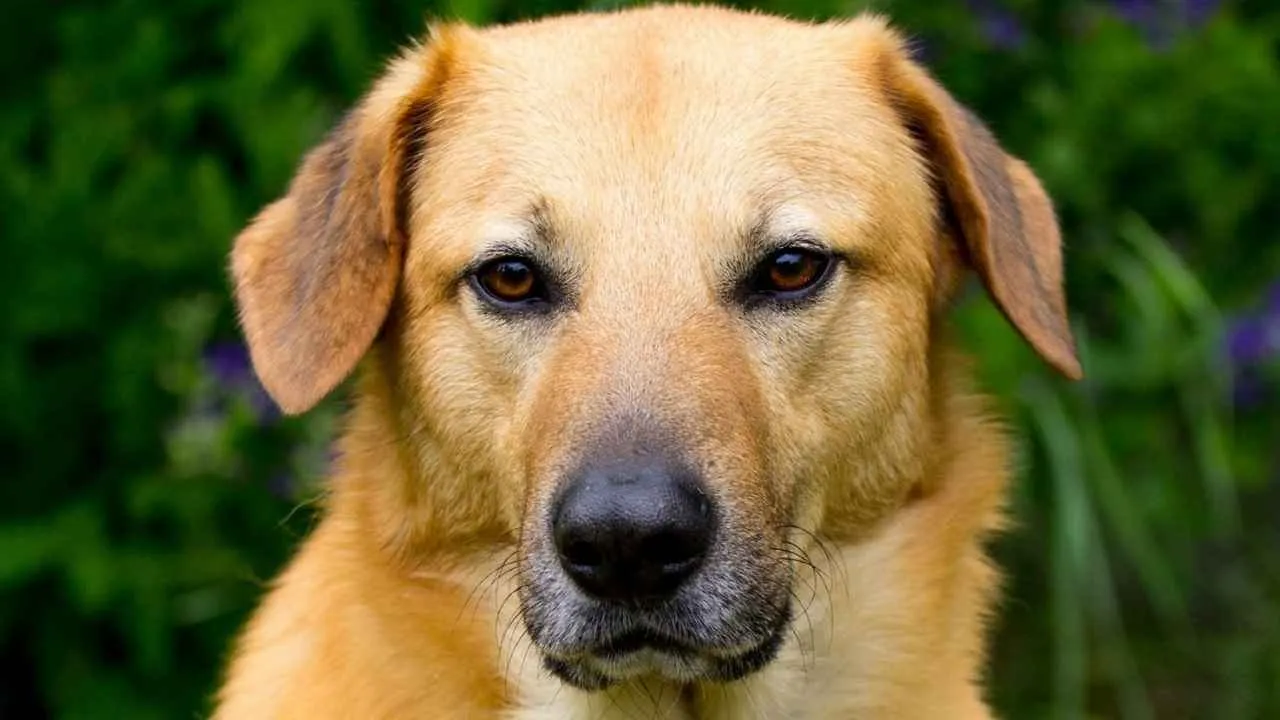
The Chinook was developed for sled work and search-and-rescue activities, giving the breed strength, intelligence, and an outdoorsy personality.
It is important to be honest about this large dog’s role because it is not a traditional protection or livestock-guardian breed. These gentle giants can be vigilant, and their size may look intimidating to someone approaching the home, but they are often friendly and outgoing rather than naturally suspicious.
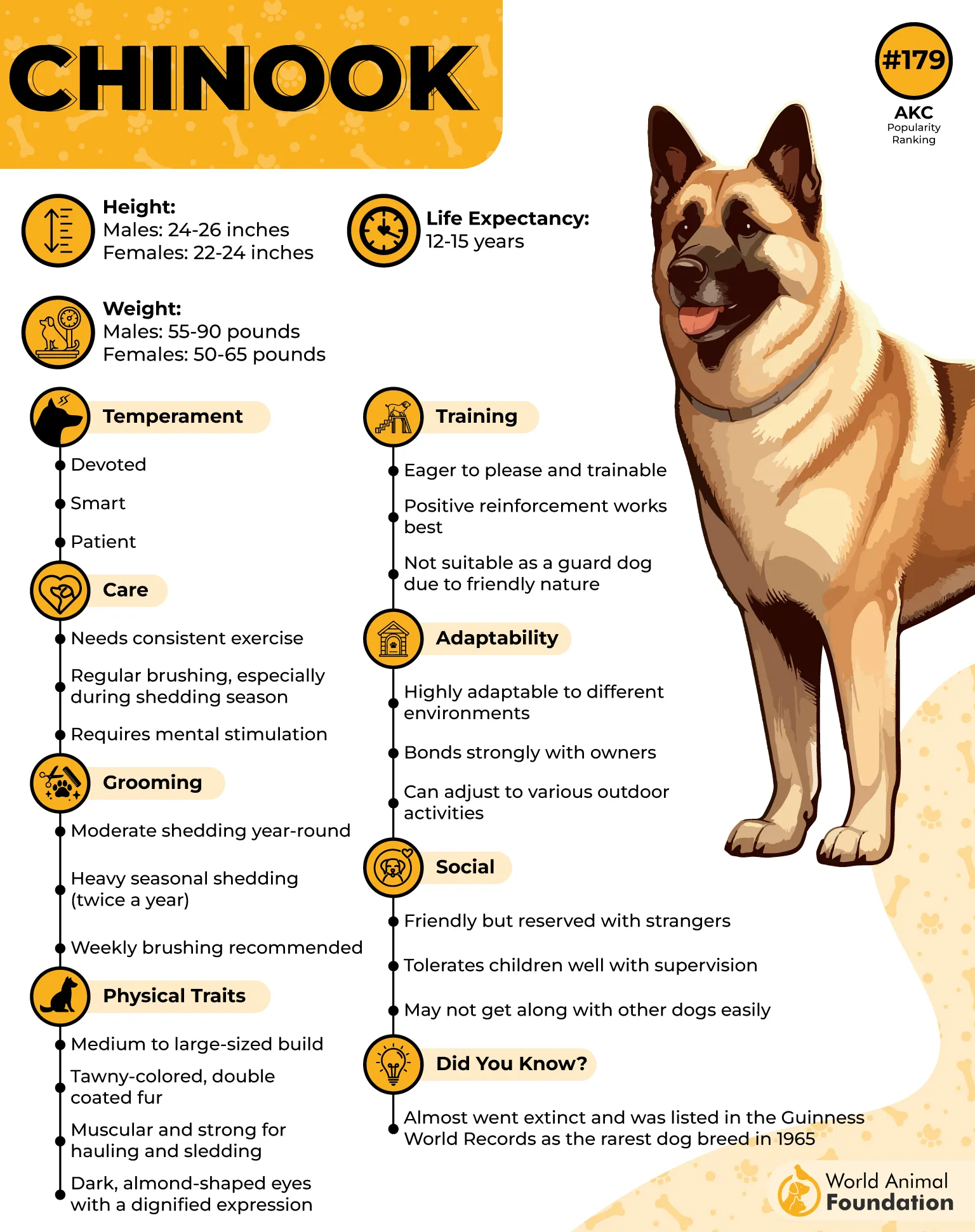
Their working history means they need exercise, outdoor activity, and opportunities to use their intelligence. Hiking, pulling sports, structured walks, scent games, and family adventures can prevent boredom while strengthening the human-dog bond.
The medium-length double coat has straight outer hair and a soft, insulating undercoat. Moderate shedding occurs throughout the year, but weekly brushing can remove dirt, loose hair, and developing tangles before they become an issue.
Their calm household behavior becomes much more reliable when their social and physical needs are consistently met. For families seeking a friendly, substantial dog that is attentive to its surroundings and does not require complicated grooming, the Chinook offers an appealing middle ground.
What Makes Them Low-Maintenance
One thorough weekly brushing can handle much of their ordinary coat upkeep.
Their patient, sociable nature generally supports cooperative training and family routines.
9. Mastiff
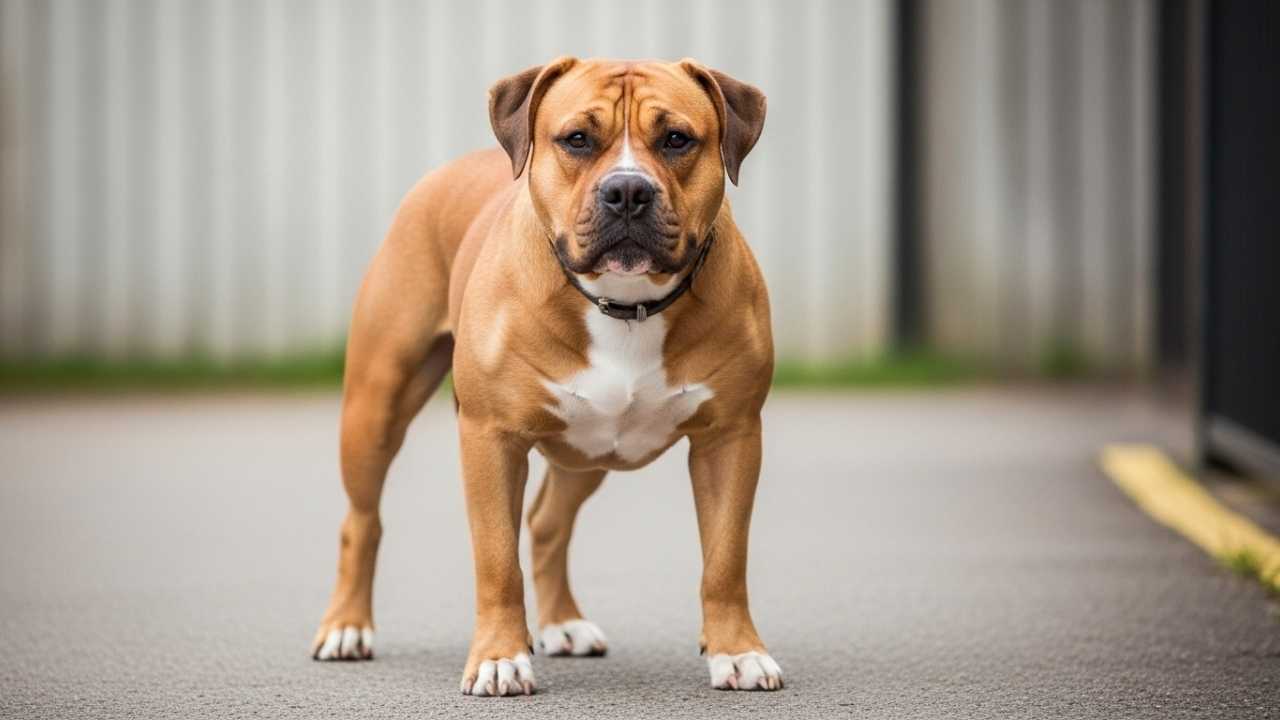
The Mastiff is the definition of quiet authority, combining enormous physical mass with a dignified and generally docile personality. These dogs are naturally loyal and protective, yet many prefer to observe unfamiliar people from a distance rather than cause immediate drama.
Within the family, Mastiffs are affectionate, tolerant, and deeply committed to being physically close to their people. They may lean against someone, attempt to sit partly on a lap, or follow family members from room to room like a very heavy shadow.
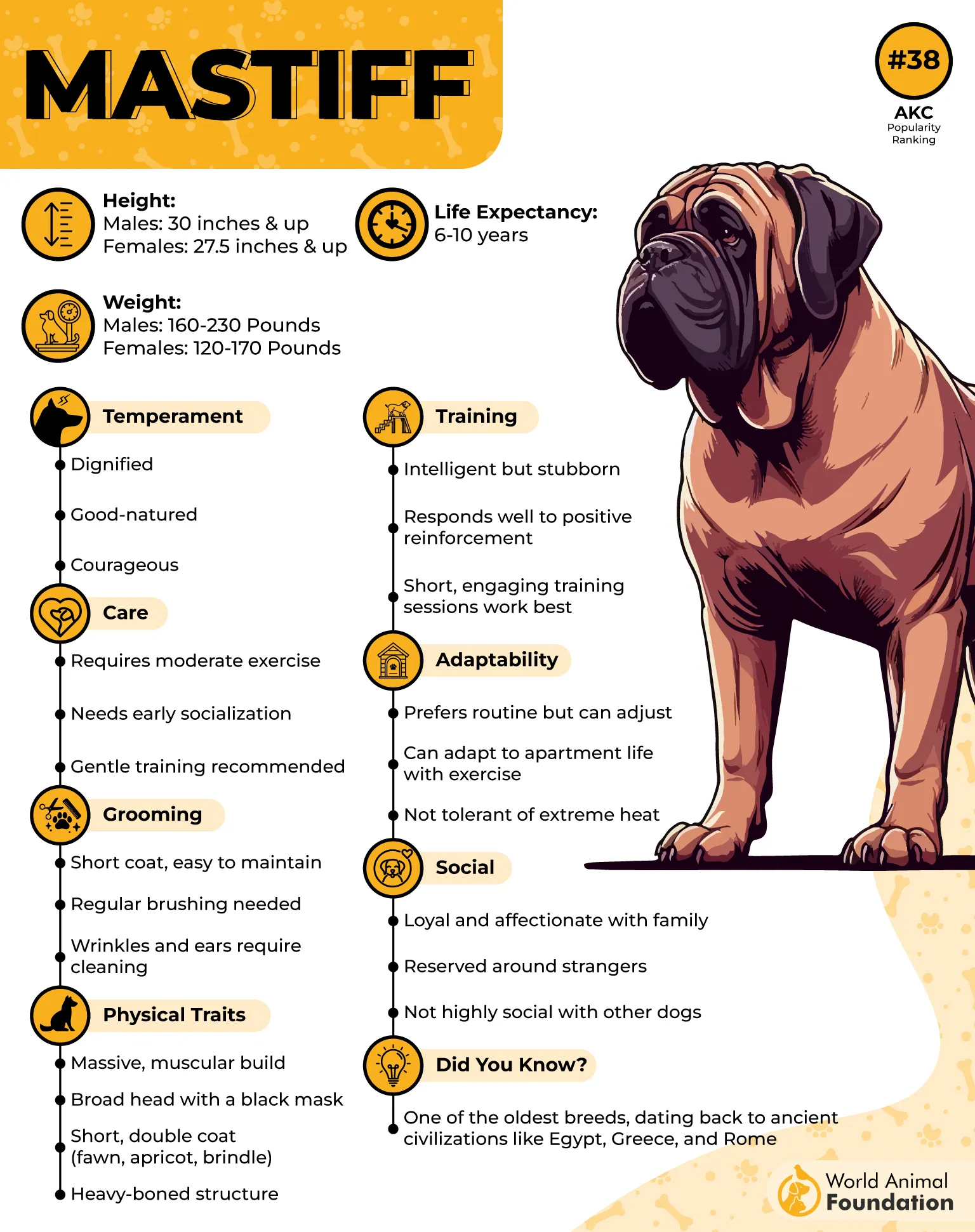
They are not endurance athletes and often need encouragement to leave their favorite resting area. Shorter regular walks and controlled activity are generally more appropriate than strenuous exercise, especially in hot weather or for dogs with joint concerns.
The short, coarse topcoat is easy to brush, though it sheds year-round. Weekly grooming may be enough for some dogs, while more frequent brushing helps households that want to control loose hair.
What Makes Them Low-Maintenance
Limited endurance makes moderate daily walks more appropriate than intense exercise programs.
Their short coat is easy to maintain with ordinary brushing and occasional bathing.
10. Broholmer
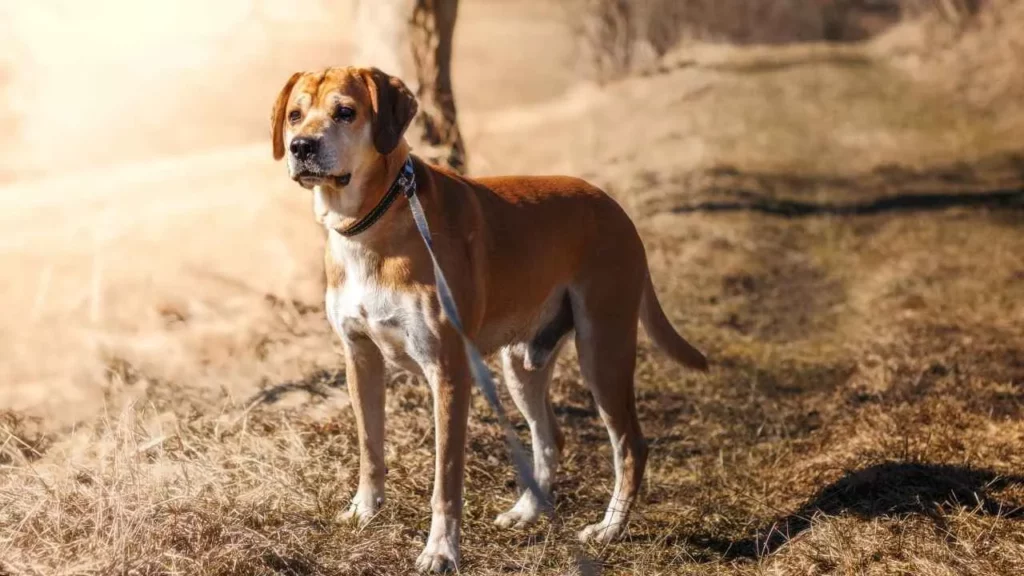
The Broholmer is an impressive giant breed known for strength, physical presence, and a generally friendly disposition. Its massive outline can deter unwanted attention before the dog makes a sound.
At home, a well-raised Broholmer is typically more interested in family companionship than manufacturing unnecessary conflict.
That balance can make them useful watchdogs for experienced owners who want awareness without a constantly reactive personality. They may underestimate their size and attempt to climb onto people, proving once again that giant dogs usually believe they are travel-sized.
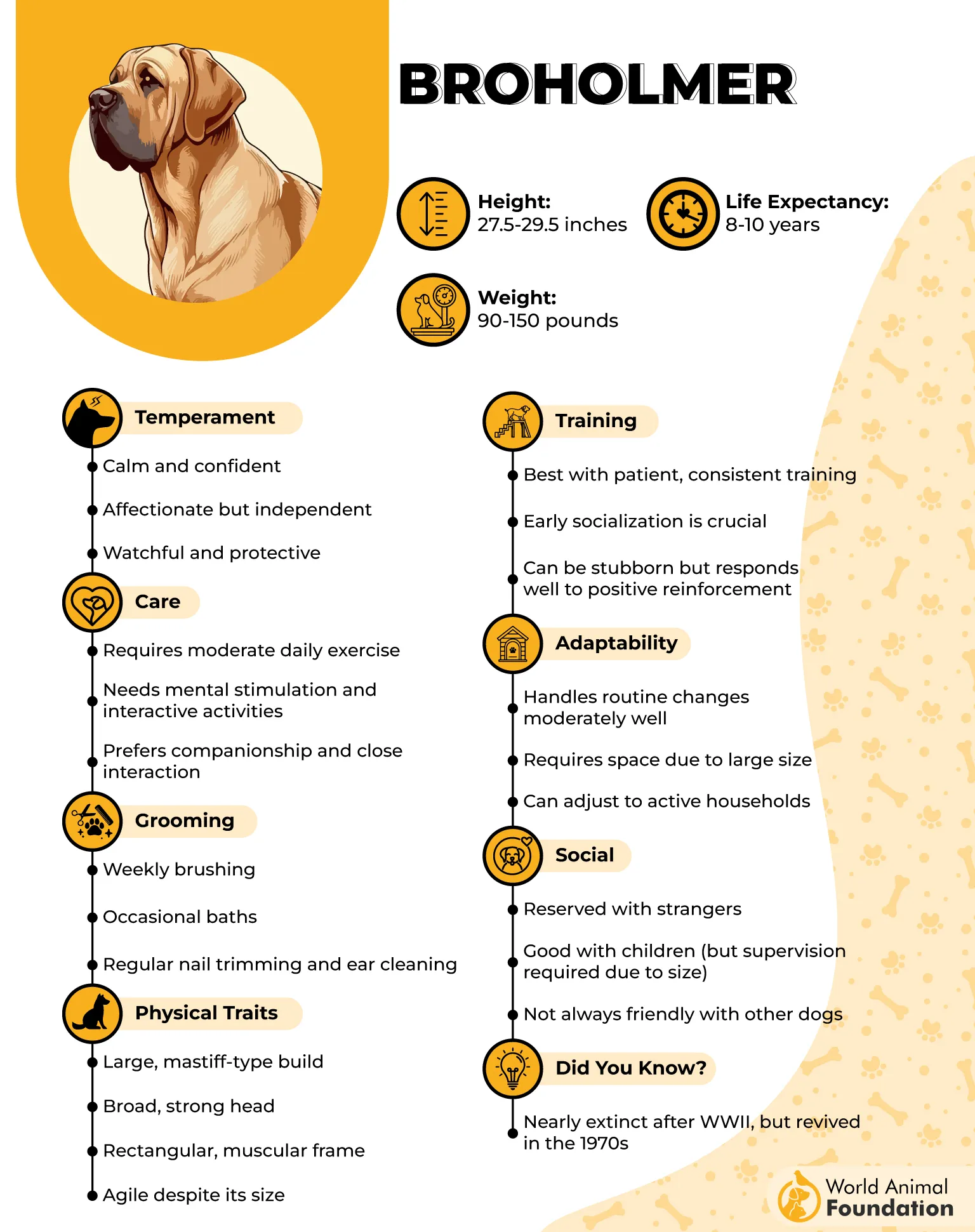
Royal Canin says that they can be calm with family members, but their strength and stubborn streak require confident, fair handling. Early socialization of these naturally protective dogs should include polite encounters with visitors and other animals.
The short, dense coat requires no complicated haircut or professional shaping. Weekly brushing, occasional bathing, regular nail trimming, ear checks, and dental care create a manageable routine for most households.
What Makes Them Low-Maintenance
A smooth coat makes weekly home grooming fast and uncomplicated.
Even-tempered behavior allows them to enjoy relaxed family life after suitable exercise.
Conclusion
Low-maintenance guard dogs are not magical self-operating alarm systems, but the right breed can deliver security, companionship, and peaceful household energy in one very large package. German Shepherd, Belgian Malinois, Doberman Pinscher, Great Pyrenees, and Saint Bernard are some other highly intelligent breeds for peaceful owners.
Training, socialization, veterinary care, secure management, and realistic expectations turn impressive genetics into trustworthy behavior.
