




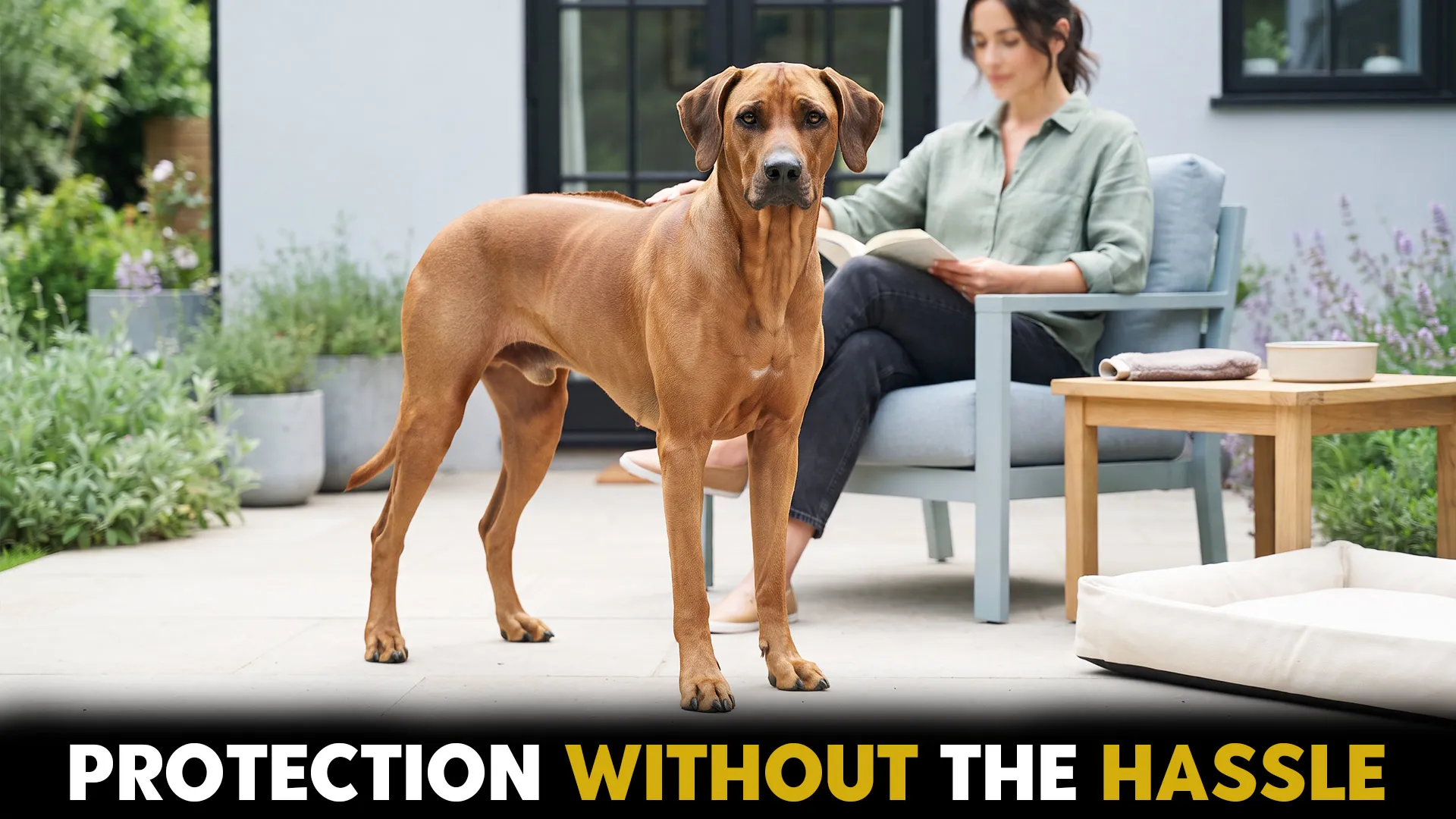
Many people believe a guard dog must be high-energy, difficult to manage, or constantly on alert. In reality, some protective breeds can offer watchful companionship without demanding excessive grooming or an exhausting daily routine.
The key is finding a dog whose size, temperament, exercise needs, and care requirements suit your lifestyle. Protective instincts also need early socialization and consistent, positive training to help a dog become a confident and well-mannered companion.
For households seeking security alongside easier everyday care, the right breed can bring reassurance, loyalty, and affection without making life unnecessarily complicated.
FACT: No guard dog is truly maintenance-free; every protective breed needs training, socialization, exercise, healthcare, and responsible ownership.
Low-Maintenance Guard Dog Breeds for Easy Living
1. Great Dane
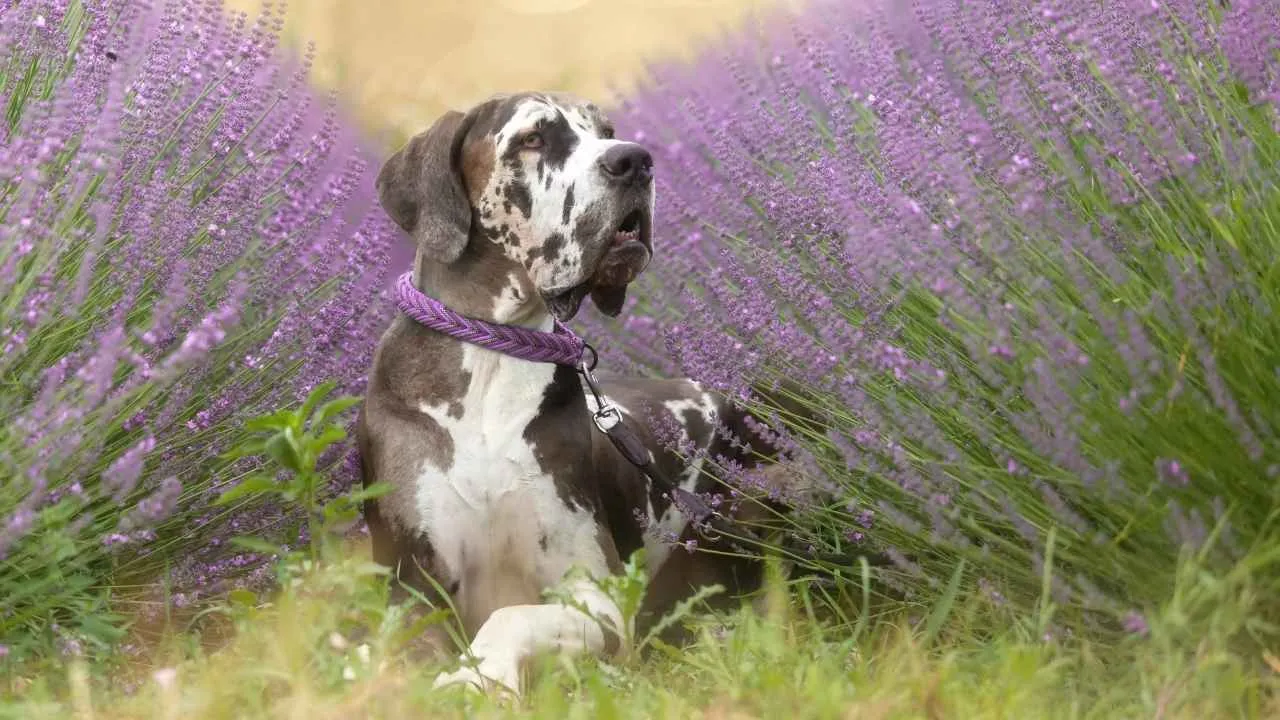
The Great Dane’s towering presence can make strangers think twice, yet life at home often reveals a surprisingly relaxed and affectionate companion. Gentle and devoted, this giant breed enjoys staying close to its family and joining everyday activities.
Its natural alertness adds to its watchdog appeal. Great Danes are observant of their surroundings and can quickly make their owners aware of unusual activity, while their sheer size alone creates an impressive deterrent without constant barking or aggression.
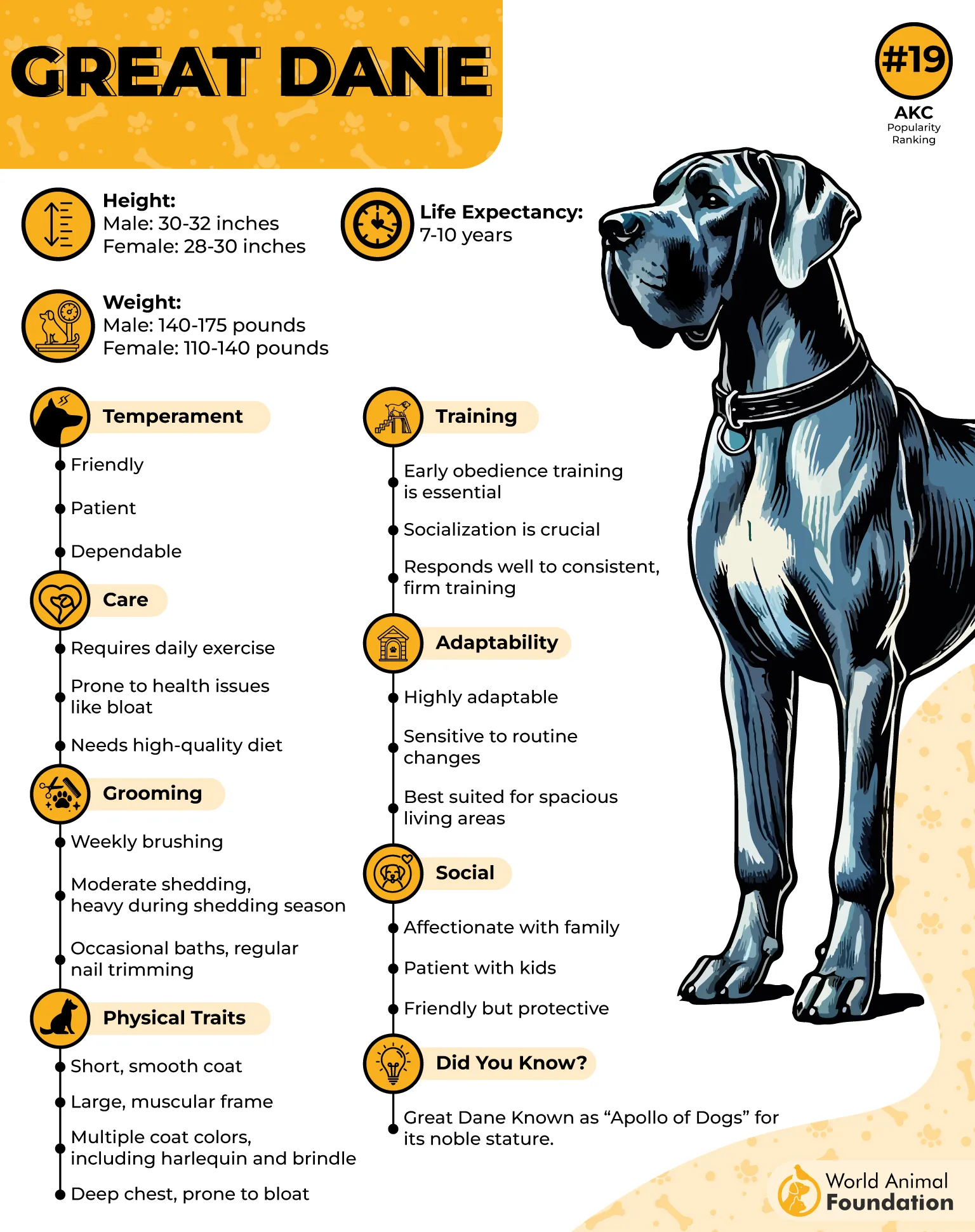
Despite their intimidating appearance, many Great Danes get along well with children and other pets when properly socialized. Their calm, loving temperament can make them pleasant family companions, but their enormous size requires early training and careful handling.
For an easygoing household with enough space, a Great Dane can balance a relaxed home life with a naturally protective presence. Consistent training and socialization are important to prevent unwanted behaviors and help this powerful dog grow into a well-mannered guardian.
2. Great Pyrenees
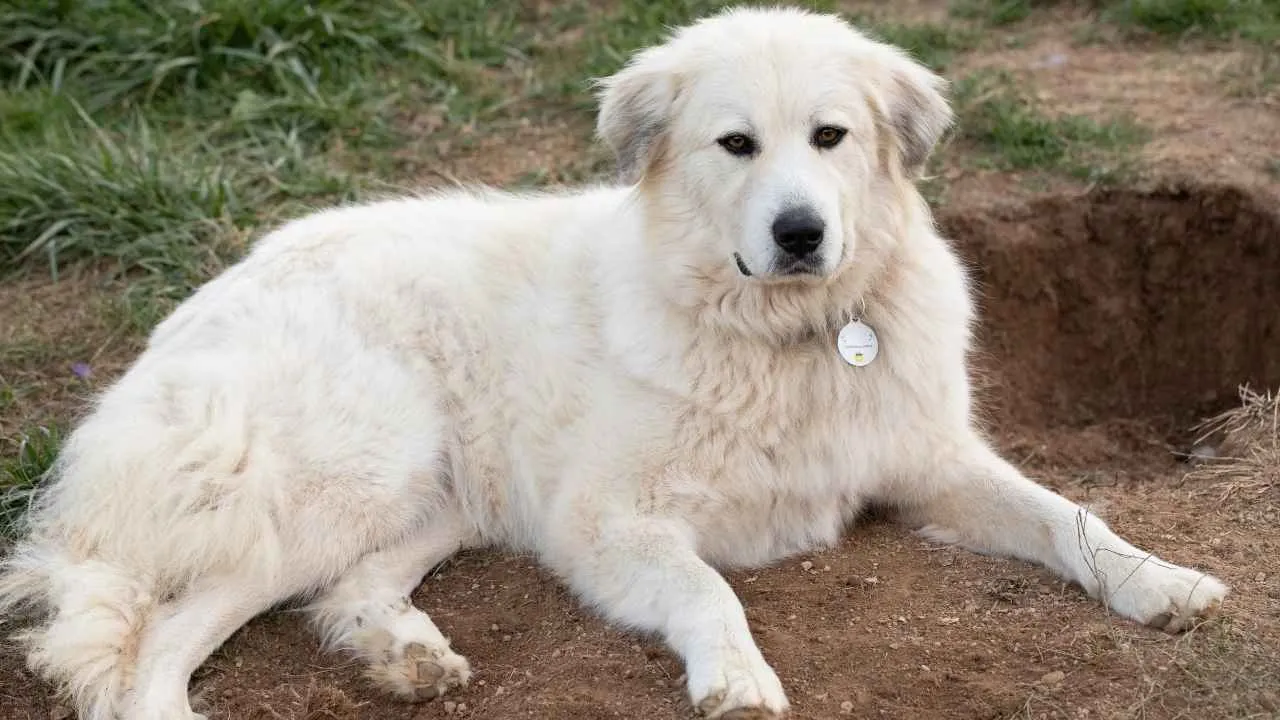
Born among the rugged Pyrenees Mountains, the Great Pyrenees was bred to watch over livestock with patience rather than constant movement. That calm, observant nature still makes this powerful guardian content to spend much of the day quietly monitoring its surroundings.
Its moderate exercise needs can suit owners who prefer leisurely walks over demanding daily workouts. Indoors, this loyal breed is generally relaxed and patient with its family, while its independent instincts allow it to make decisions without needing constant direction.
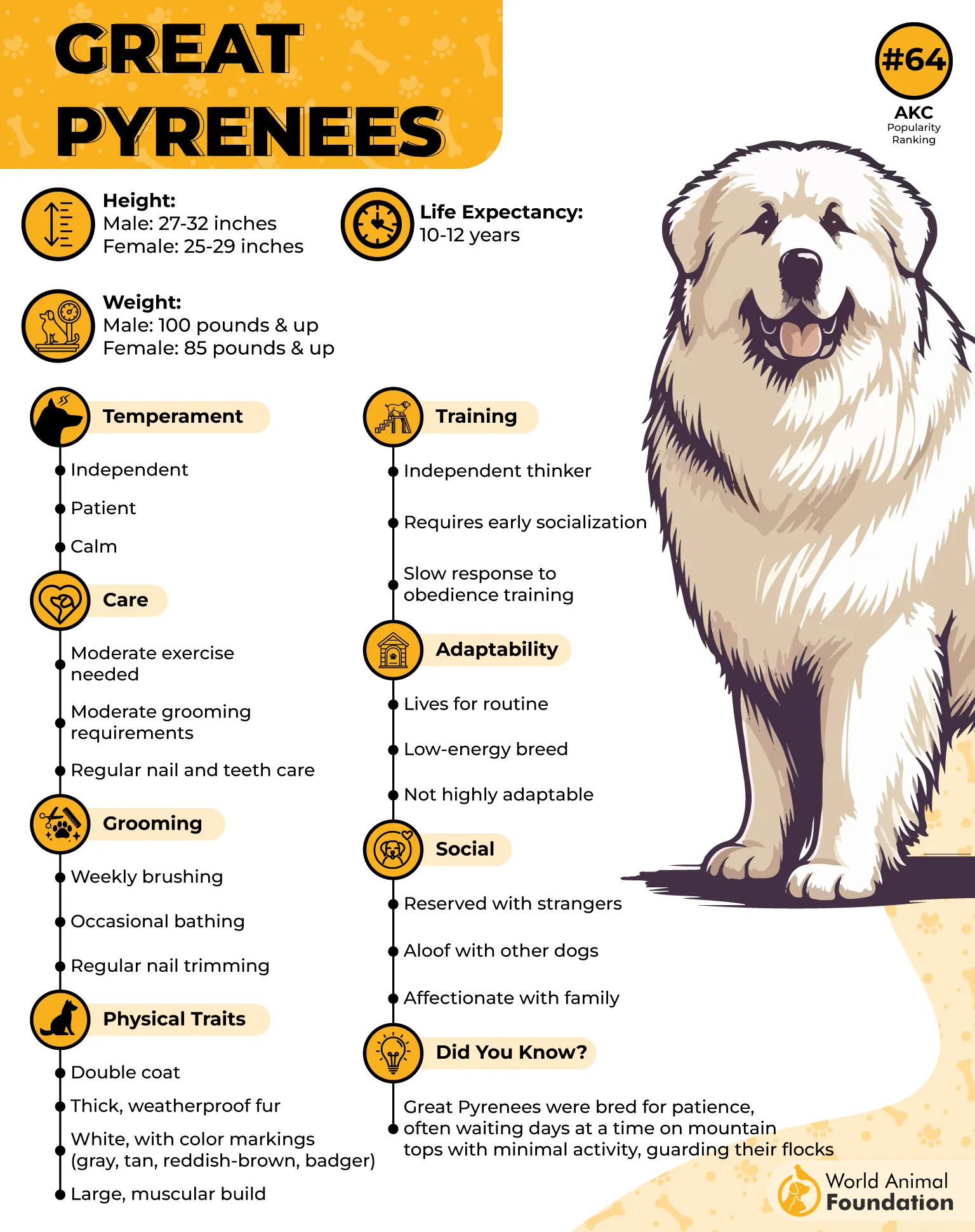
Despite its impressive double coat, regular maintenance is fairly straightforward, with weekly brushing usually sufficient outside seasonal shedding periods. The coat naturally resists dirt and tangling, although heavier shedding requires extra attention.
A Great Pyrenees may bark to alert its family, particularly during nighttime patrols. Its independent nature can also make training slower, while secure fencing is important for a breed with strong territorial and patrolling instincts.
3. Rhodesian Ridgeback
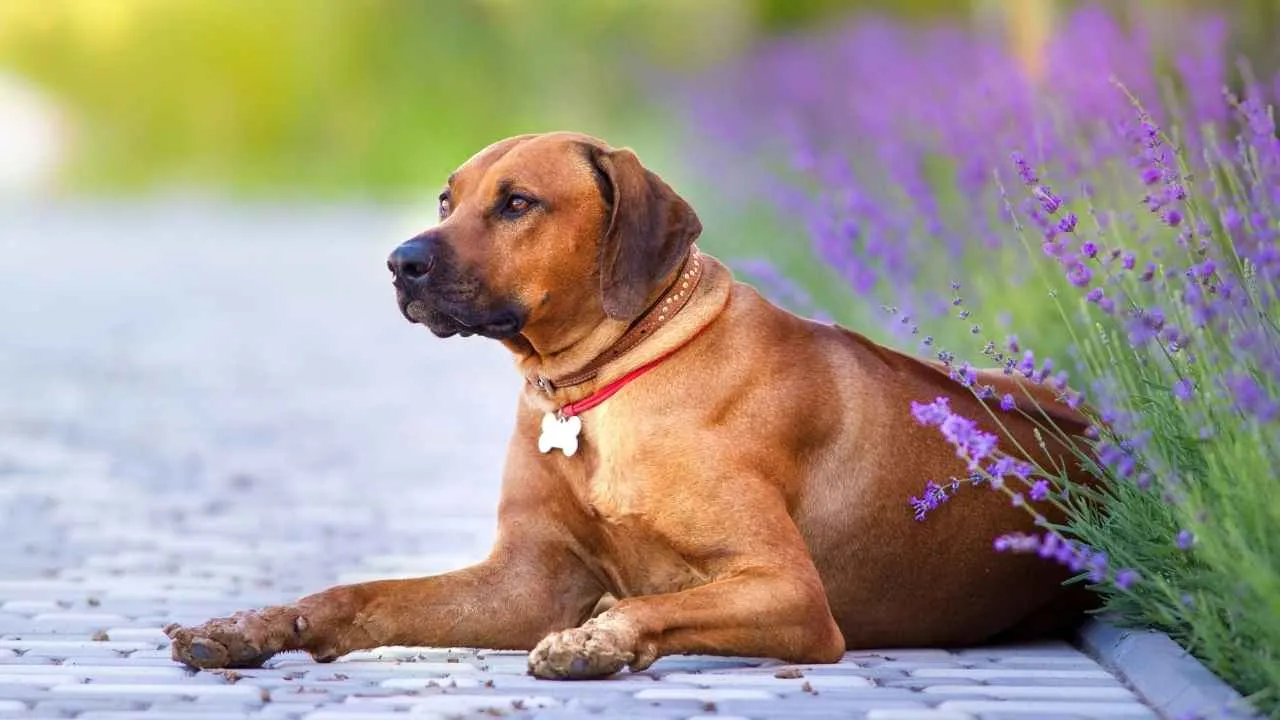
The Rhodesian Ridgeback brings athleticism and natural guarding instincts together in one sleek, powerful package. Originally developed in Africa, this loyal breed is naturally watchful around its home while remaining deeply devoted to its family.
Its short coat makes grooming refreshingly simple. A quick weekly brushing is usually enough to manage loose hair, and the breed sheds relatively little. Ridgebacks also tend to drool very little, helping keep everyday cleanup manageable.
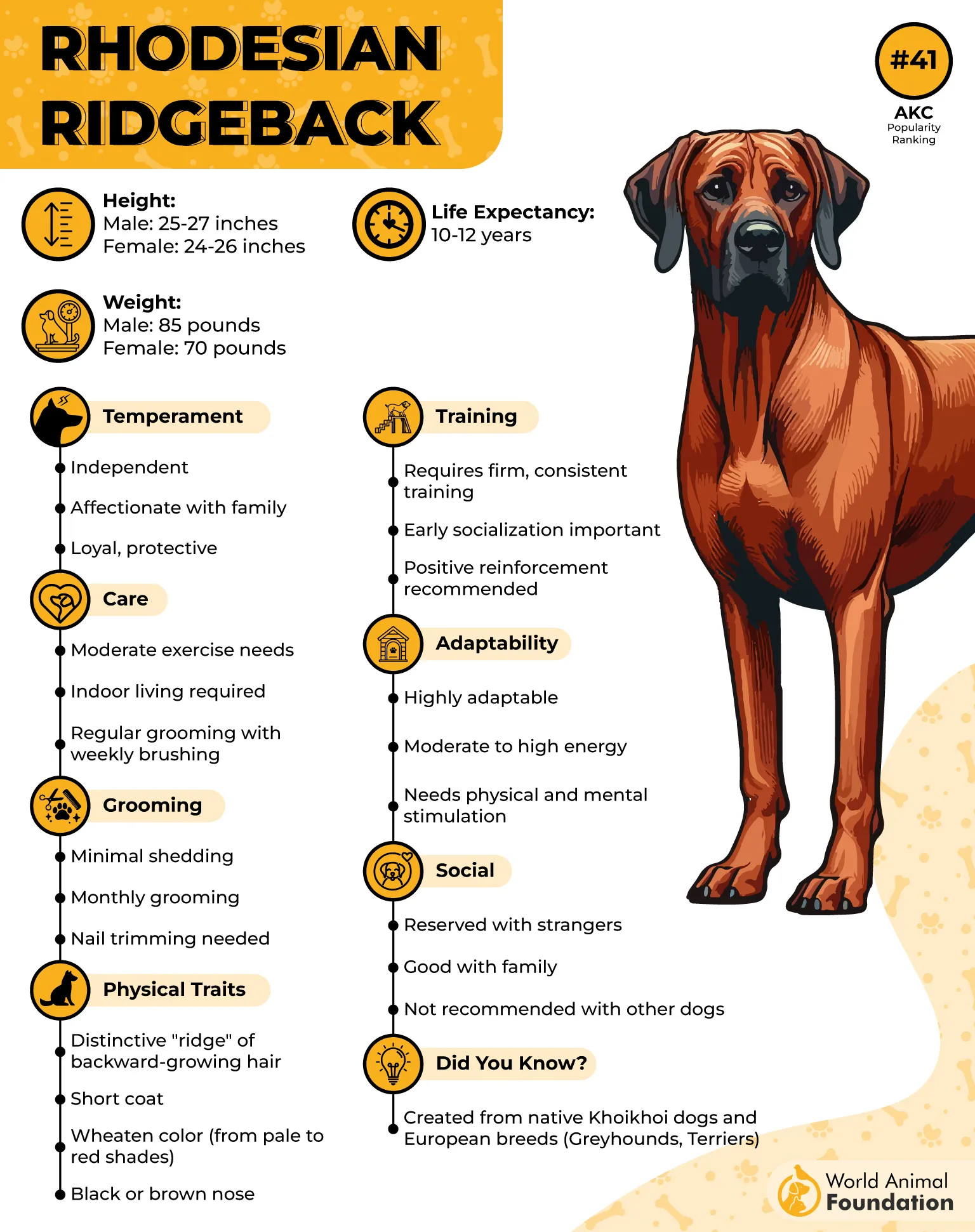
Quiet by nature, they do not typically bark without reason. They can be reserved with unfamiliar people, so early socialization and consistent, firm training are important for managing their independent and strong-willed personality.
Despite being able to relax at home after activity, this is not a low-exercise breed. Vigorous daily exercise and a securely fenced space are essential, making them better suited to active households that can meet their physical needs.
4. Bullmastiff
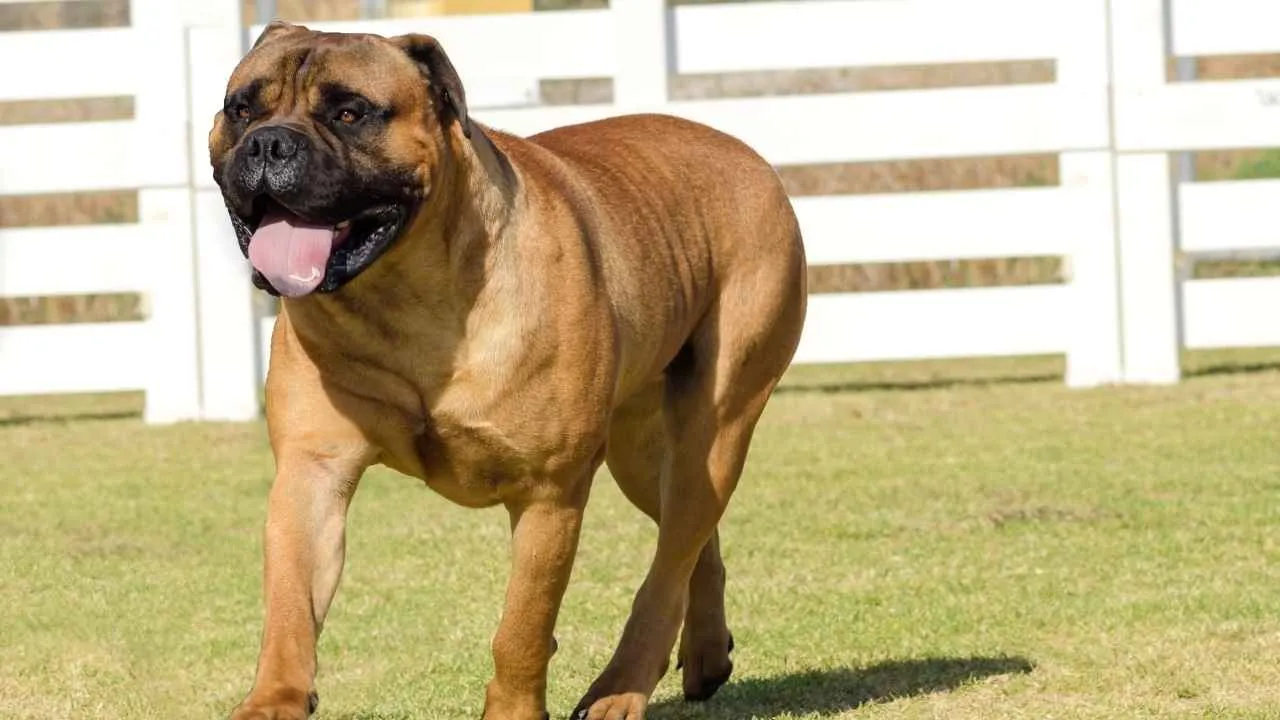
The Bullmastiff brings quiet strength to a home, combining an imposing appearance with a calm, affectionate nature. Originally bred to protect English estates from poachers, this devoted breed still carries strong protective instincts while remaining gentle with its family.
Its short coat requires very little grooming, making routine care refreshingly simple. Bullmastiffs also have moderate exercise needs, with regular walks and controlled activity usually providing enough physical stimulation. According to WebMD, they only need upkeep about once a month.
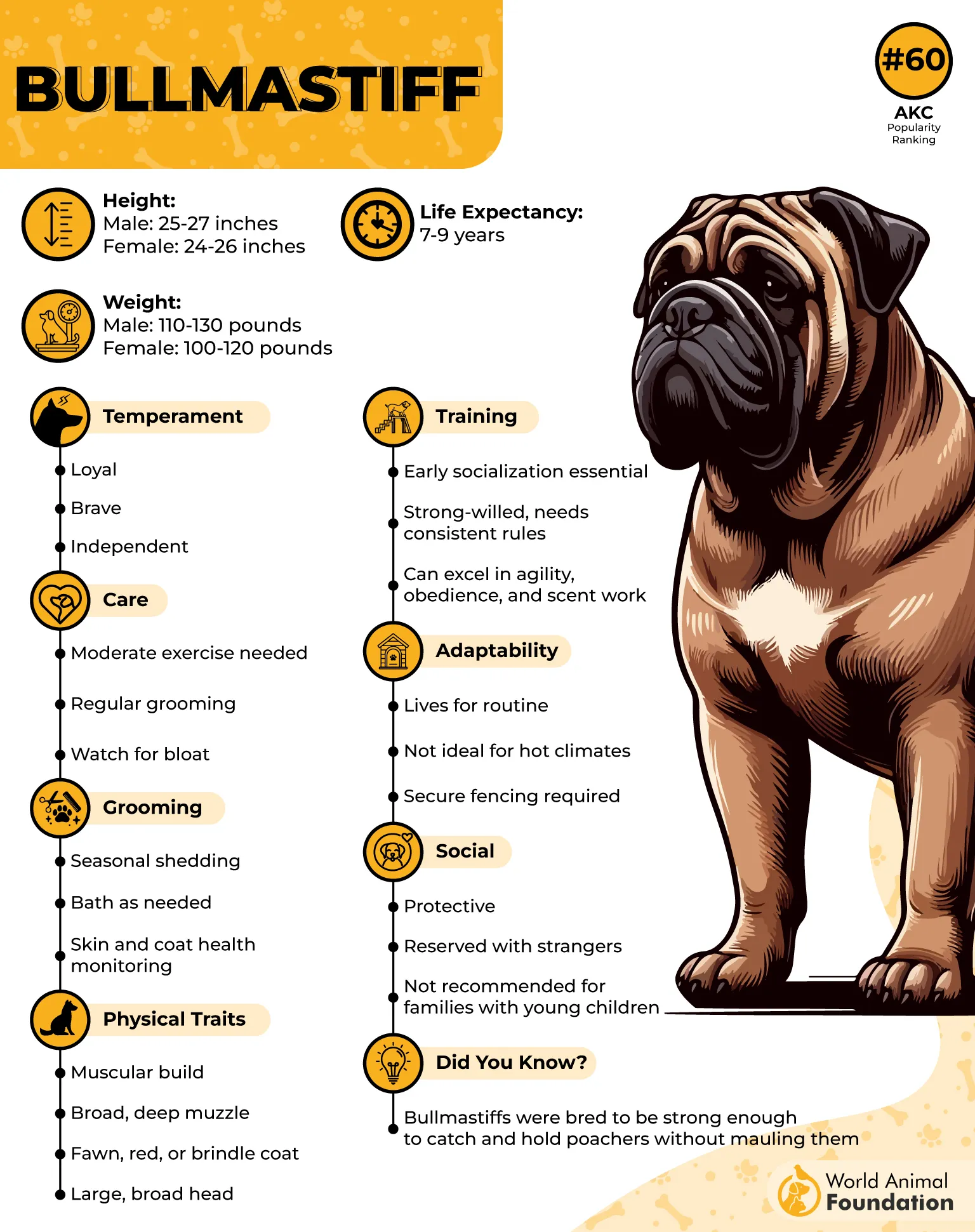
Intelligent and willing to please, they respond well to consistent training, although their independent and occasionally stubborn side calls for firm, patient guidance. Early socialization is equally important, particularly because of their size and natural guarding instincts.
Despite their powerful build, Bullmastiffs are generally relaxed indoors and enjoy spending time close to their people. They need sufficient living space and benefit from weight management and regular veterinary care to help protect their joints and overall mobility.
5. Saint Bernard
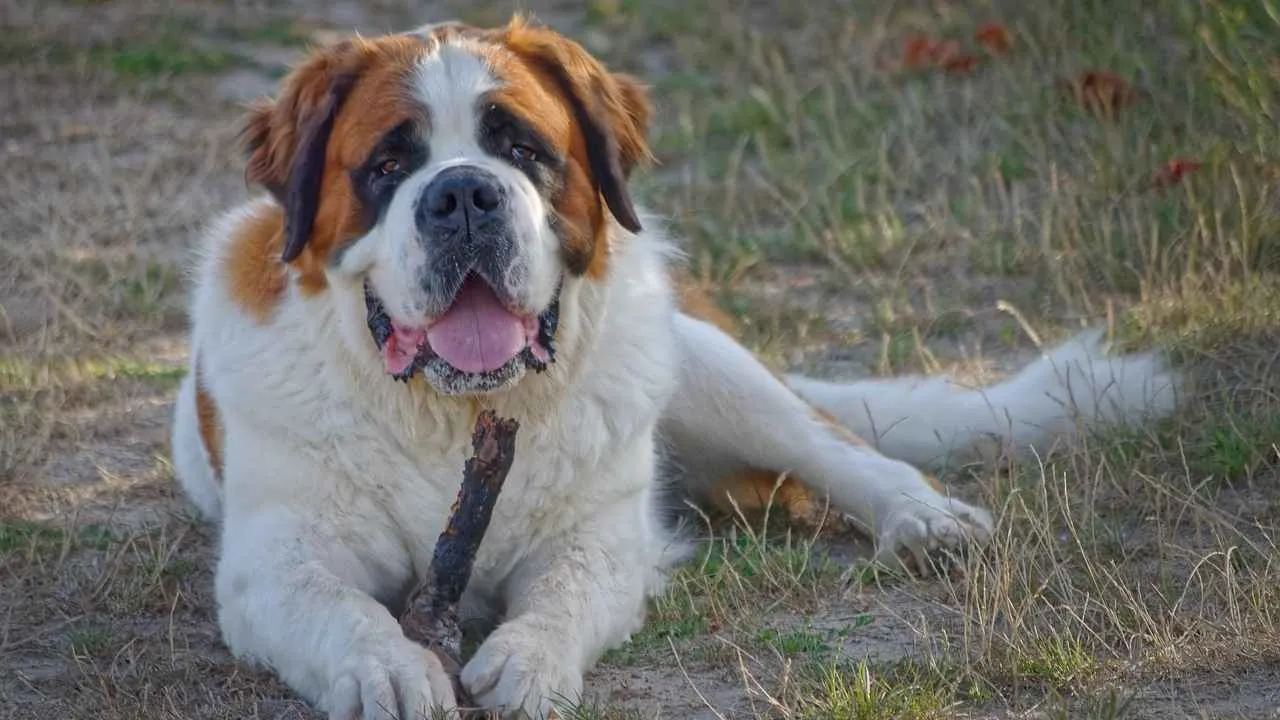
The Saint Bernard carries a legendary history of courage, having worked in the Swiss Alps to help rescue stranded travelers. Today, its enormous size and imposing presence can make an intruder think twice, while its gentle nature shines through with the family it loves.
Loyal and deeply devoted, this breed is naturally protective, especially around children. Its combination of intelligence, strength, and calm temperament can make it a reassuring family guardian without sacrificing its famously affectionate personality.
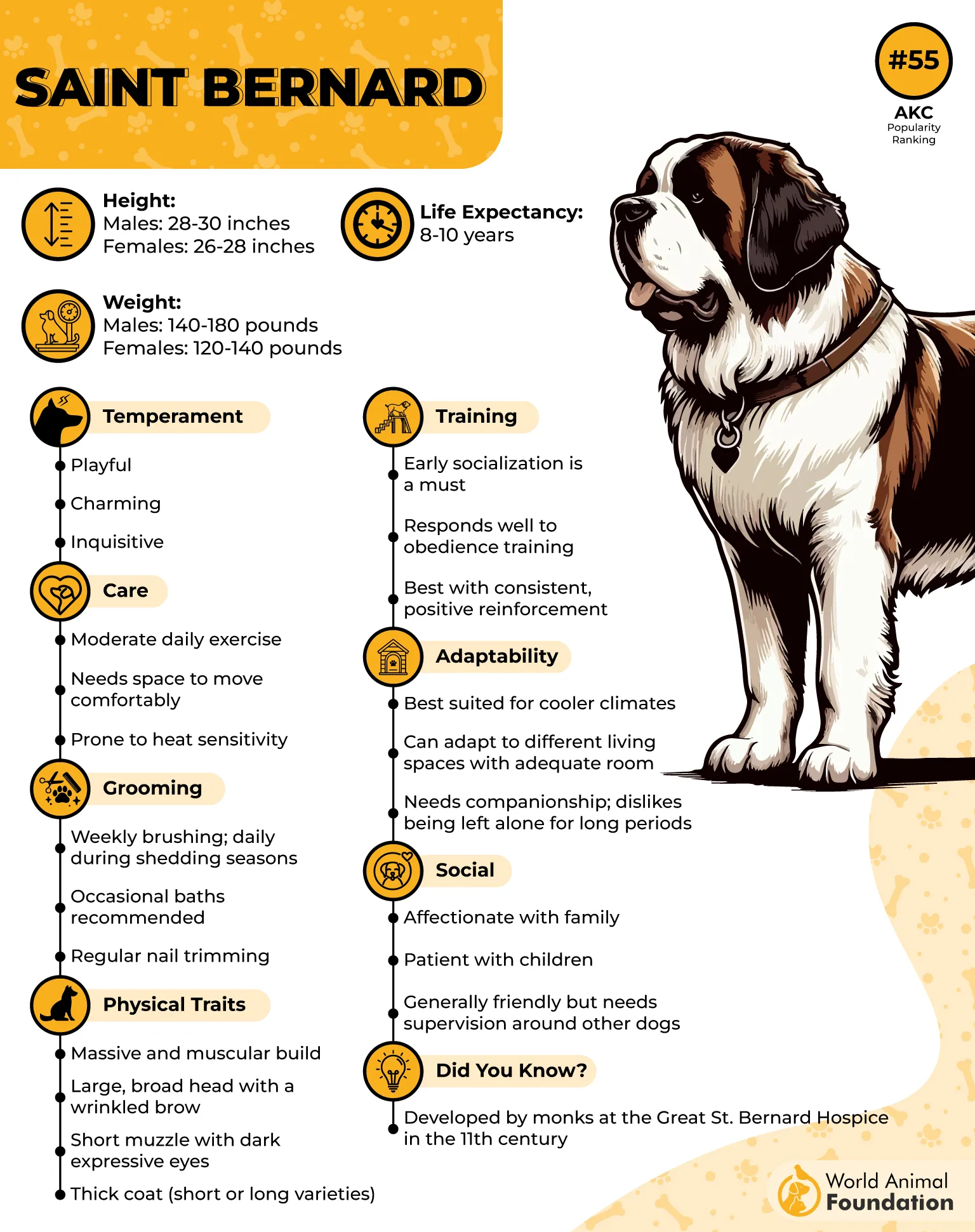
Despite its mountain-rescue heritage, the Saint Bernard does not require nonstop intense exercise. Moderate activity and regular walks can suit its lifestyle, though it needs enough room to move comfortably and may not thrive in a cramped living space.
Early training and lifelong socialization are particularly important for managing such a powerful dog. Consistent guidance helps shape its protective instincts appropriately, while owners should also be prepared for regular drooling and the practical demands of sharing a home with a giant breed.
6. Kuvasz
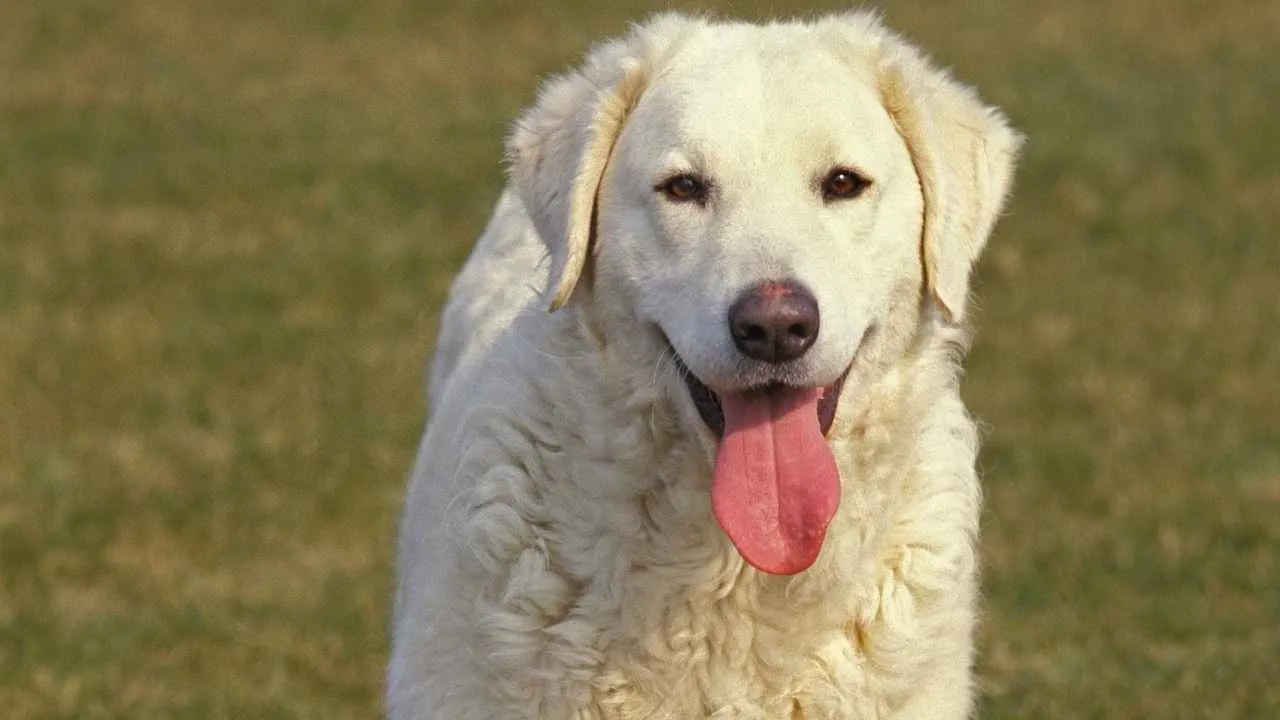
The Kuvasz carries centuries of guarding heritage, making it a deeply watchful and naturally protective companion. Originally developed in Hungary to guard livestock, this powerful breed remains alert and reserved around unfamiliar people while forming strong, sensitive bonds with its family.
Its independent nature is central to its guarding ability. A Kuvasz can assess situations and act on its own, so early training and an experienced, confident owner are important. Although responsive to praise, this breed is not always eager to follow every command without question.
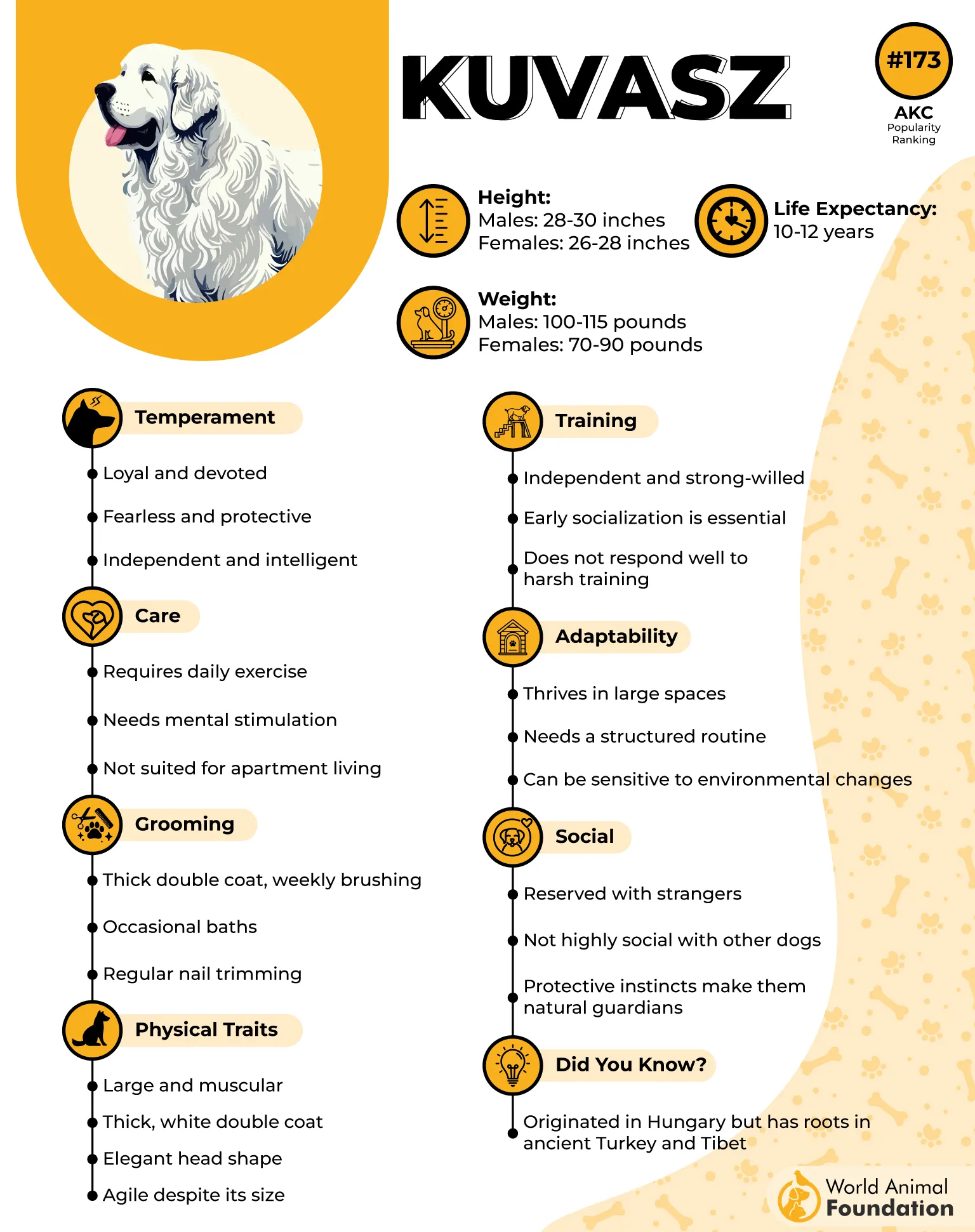
For a large guardian, the Kuvasz is relatively restrained when it comes to barking, yet its presence alone can make strangers think twice. Its brave and spirited personality is well suited to watchful duties.
However, its thick double coat sheds heavily and requires frequent grooming. Combined with its training and handling needs, the Kuvasz may be less low-maintenance than some other guard breeds.
7. Boerboel
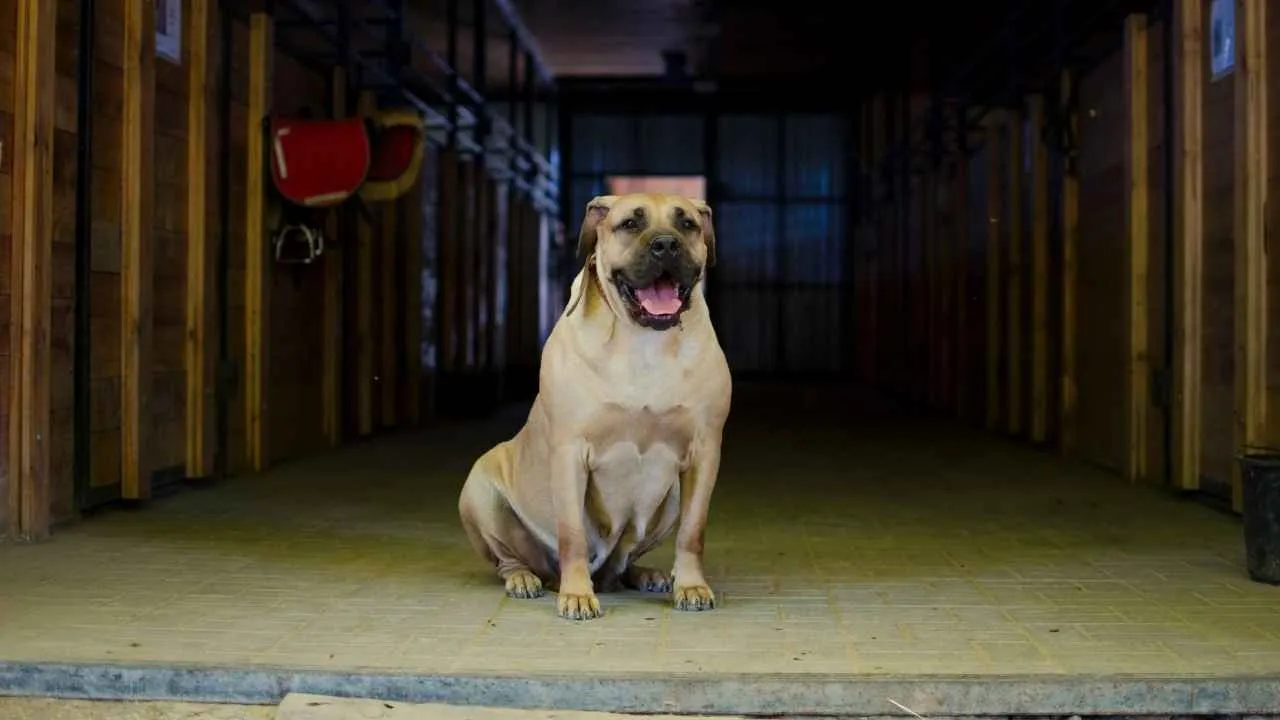
The Boerboel carries the legacy of a South African farm guardian, bred to watch over homes, livestock, and families. Its powerful build and natural confidence give it a serious presence, while deep loyalty keeps it closely connected to its people.
Calm and intelligent, this breed does not need to display aggression to be an effective protector. Its strong territorial instincts and watchful nature make it especially suited to owners with enough space for it to guard and a lifestyle that respects its working heritage.
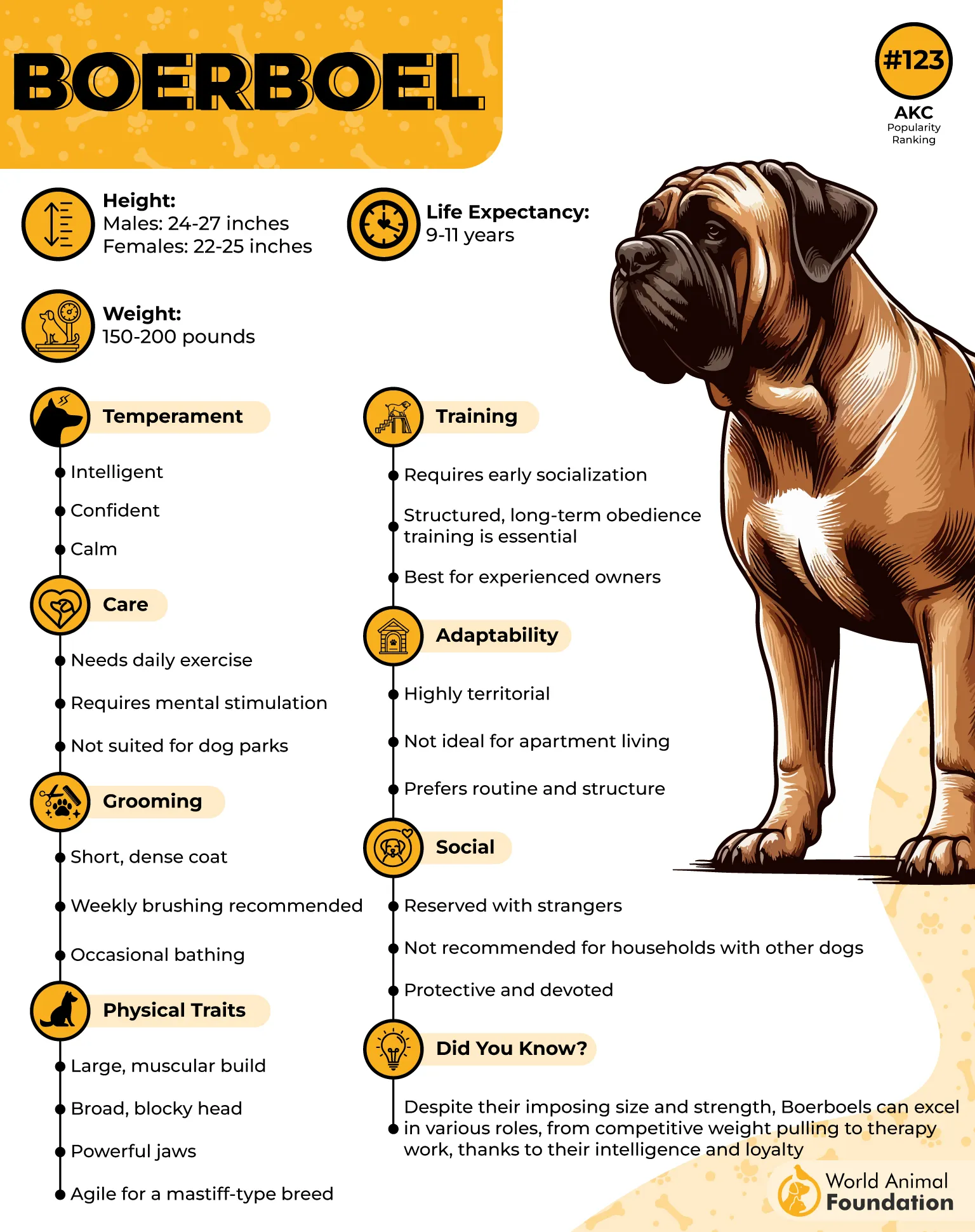
Despite its imposing appearance, a well-raised Boerboel can be affectionate, devoted, and eager to learn. Consistent, reward-based training from a knowledgeable owner is essential because its size, strength, and independent nature require careful guidance.
Grooming demands are relatively straightforward, but its lifestyle needs are more significant. This breed is better suited to spacious rural properties than confined urban living, where it can remain close to its family while having a meaningful territory to watch over.
8. Broholmer
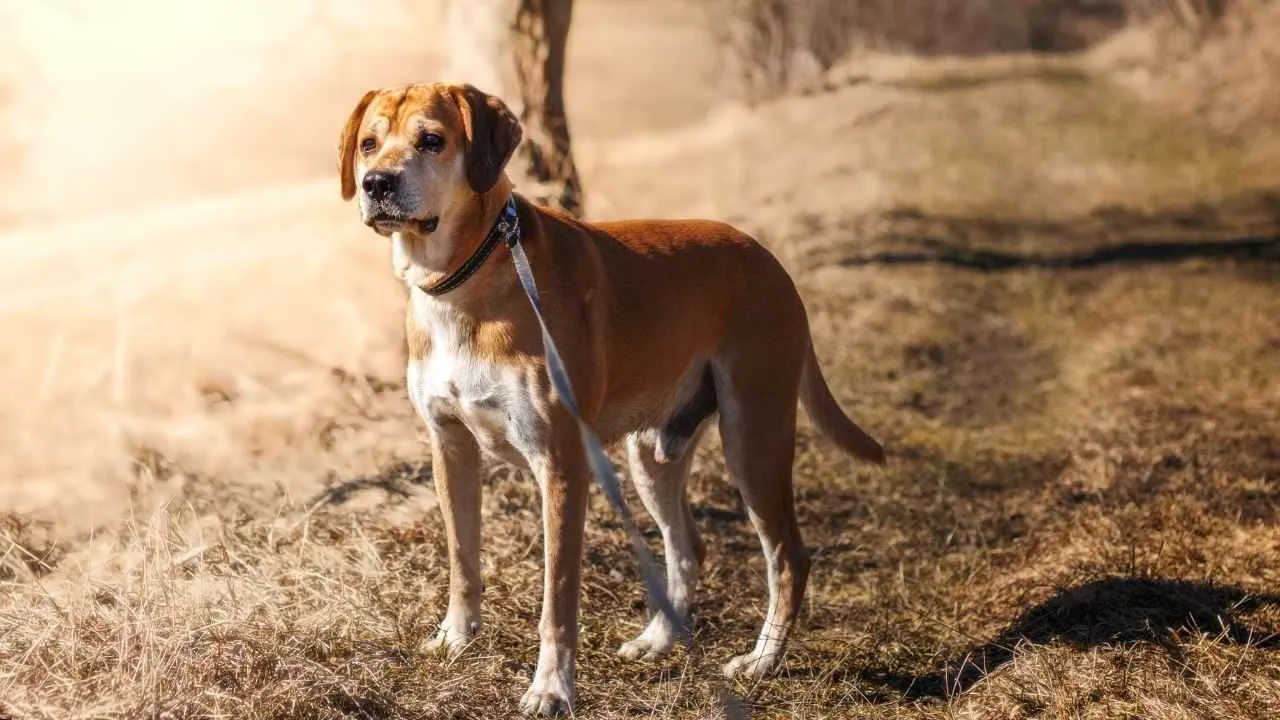
The Broholmer brings a quiet sense of security to a household. This large Danish guard dog is calm, balanced, and naturally watchful, offering a powerful presence without bringing constant commotion into the home.
Its protective instincts may make it reserved around unfamiliar people, yet the Broholmer is deeply loyal and affectionate with its family. Despite its impressive size, this gentle giant often prefers staying close to its favorite people and may even behave like an oversized lap dog.
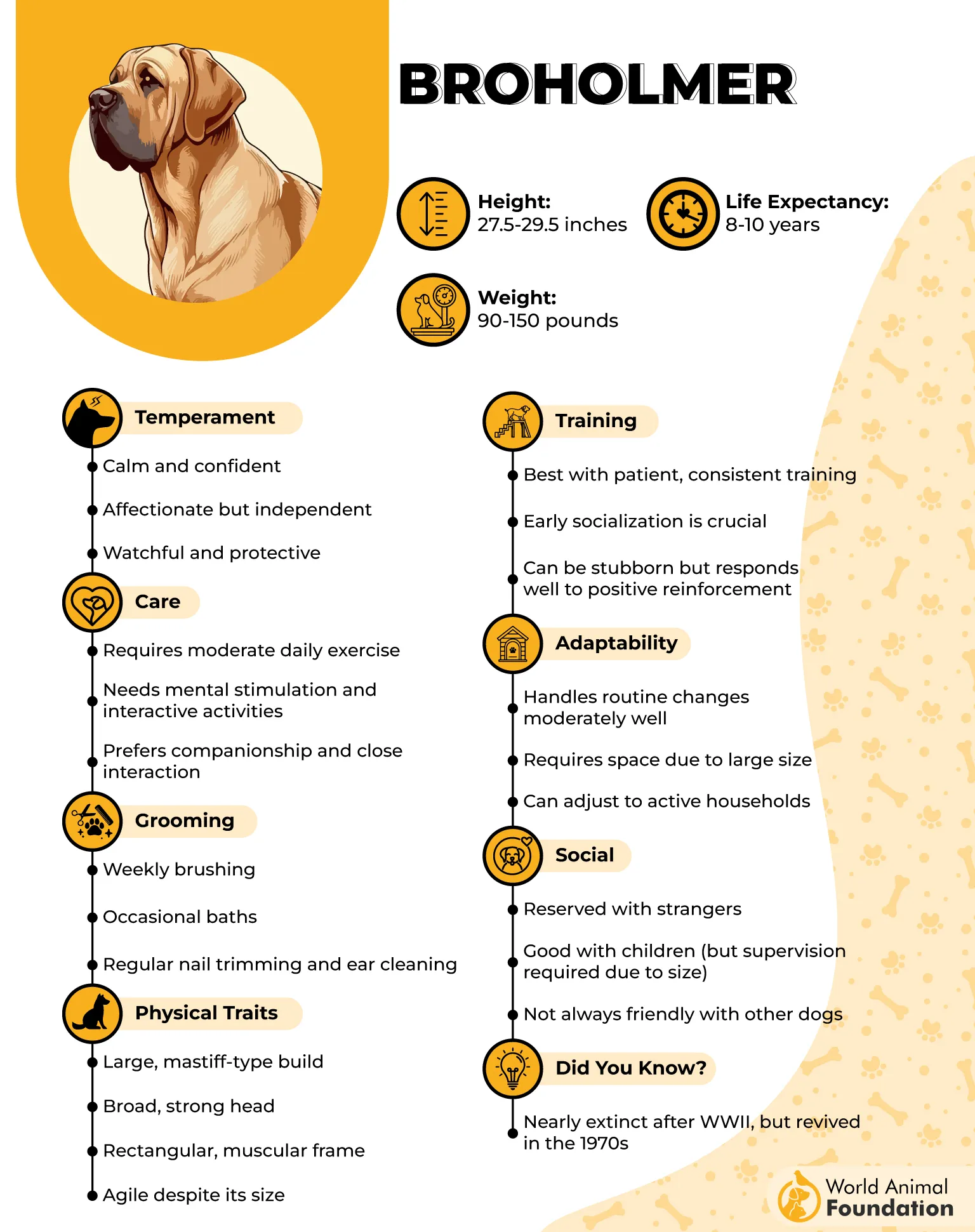
Daily care is relatively straightforward for such a large breed. Its short, dense coat needs minimal grooming, while moderate exercise can help keep it content. A spacious home with a yard is better suited to this solidly built dog.
Intelligent and generally eager to please, the Broholmer can learn well with consistent training. However, its occasional stubbornness means owners should establish clear boundaries and continue reinforcing good behavior throughout its life.
9. Dogue de Bordeaux
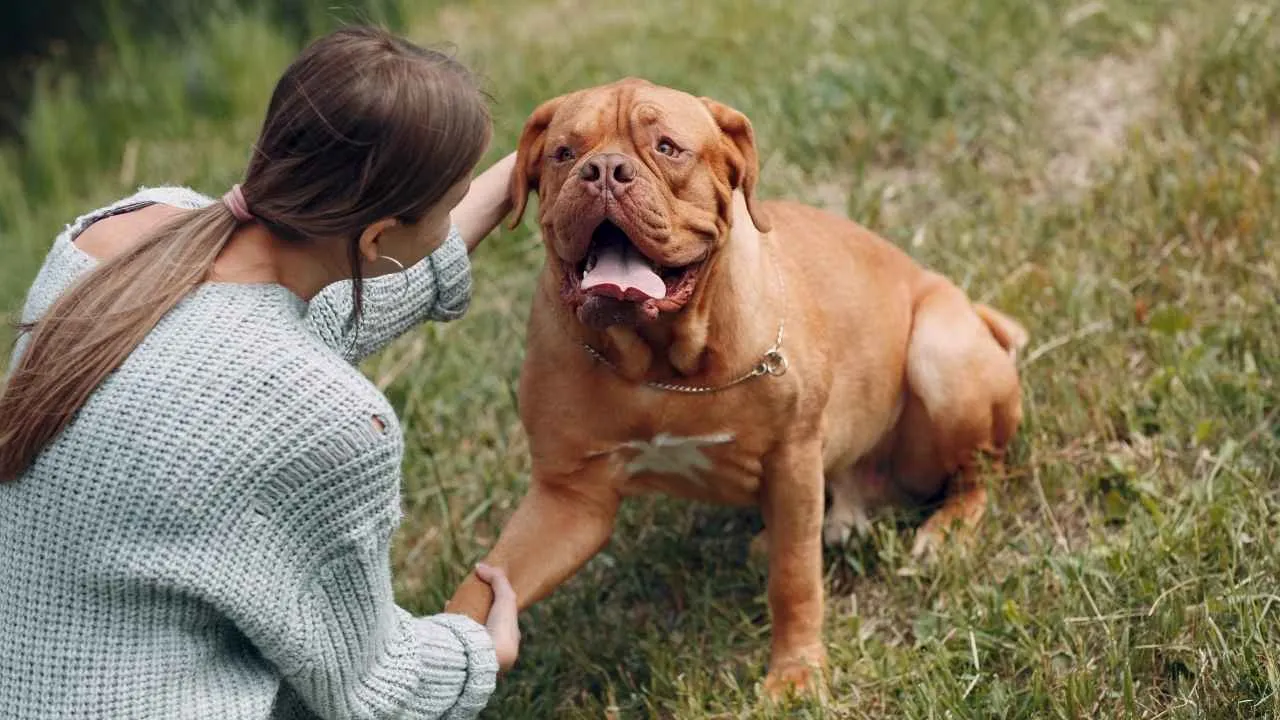
The Dogue de Bordeaux brings a seriously imposing look to the home, but beneath that massive wrinkled head is a calm and affectionate companion. This French Mastiff is fiercely loyal and naturally watchful, giving it the presence of a dependable family guardian.
Despite its powerful build, this breed is more homebody than athlete. Moderate activity is generally enough, and it is often happiest relaxing near its family, though early training and socialization are important to encourage confident, well-mannered behavior.
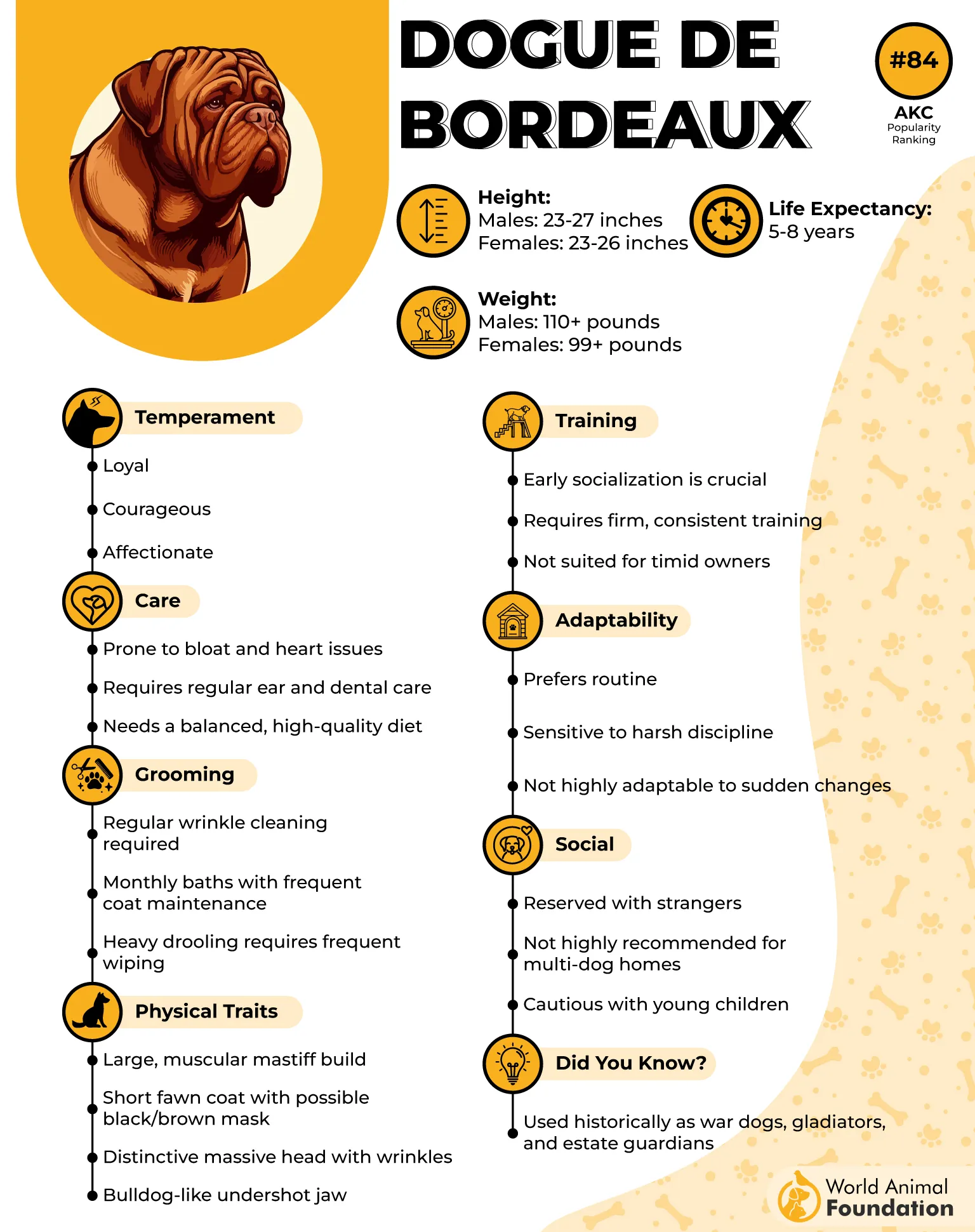
Its short coat is refreshingly easy to manage, with weekly brushing usually sufficient to control loose hair. The main grooming task is keeping those adorable facial wrinkles clean and dry every day. According to Omlet, they may develop canine hip dysplasia and breathing problems related to their head shape.
Dogue de Bordeaux needs an owner prepared for a large, strong dog. Expect some drool and snoring, too—they are simply part of sharing your home with this lovable giant.
10. Newfoundland
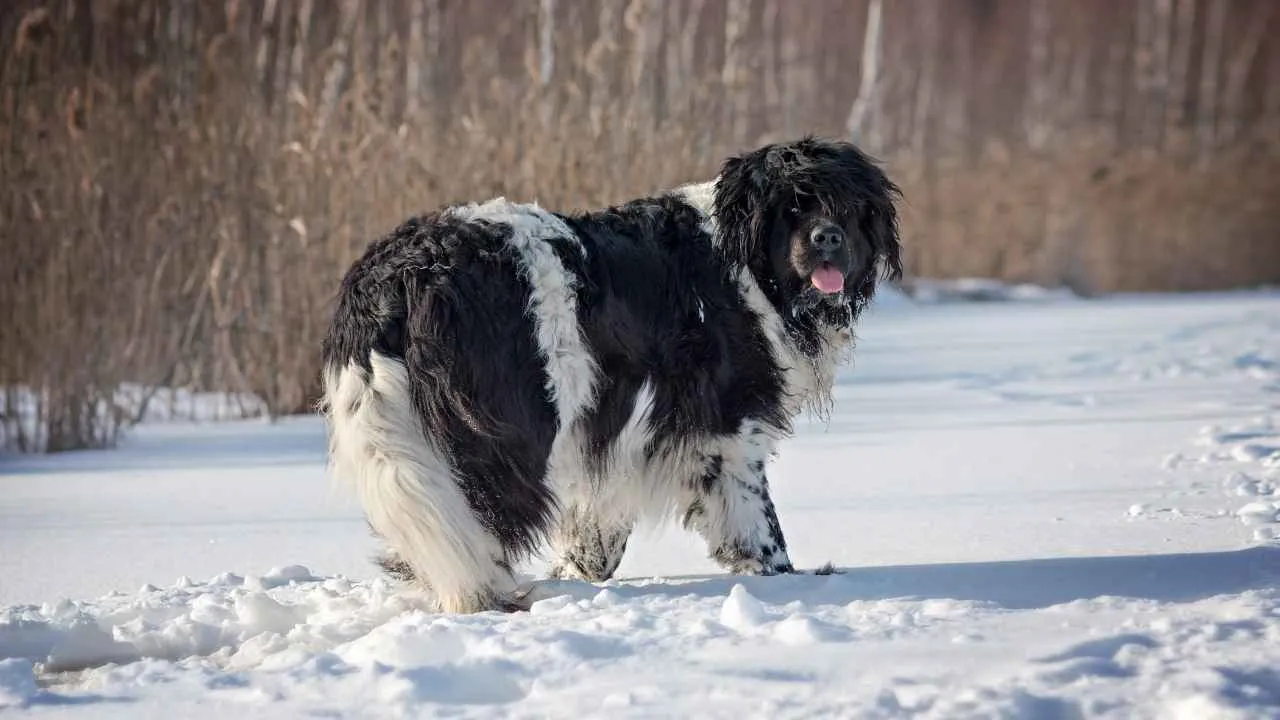
The Newfoundland is a gentle giant that brings a reassuring presence to the home. Originally bred for water rescue, this calm and devoted dog may bark loudly to alert its family, yet it is generally not aggressive and is known for its relaxed nature.
Despite its impressive size, the Newfie can be surprisingly content indoors, often happily resting near its favorite people. Its moderate activity needs can be met with daily walks, access to a secure outdoor space, and the occasional swim.
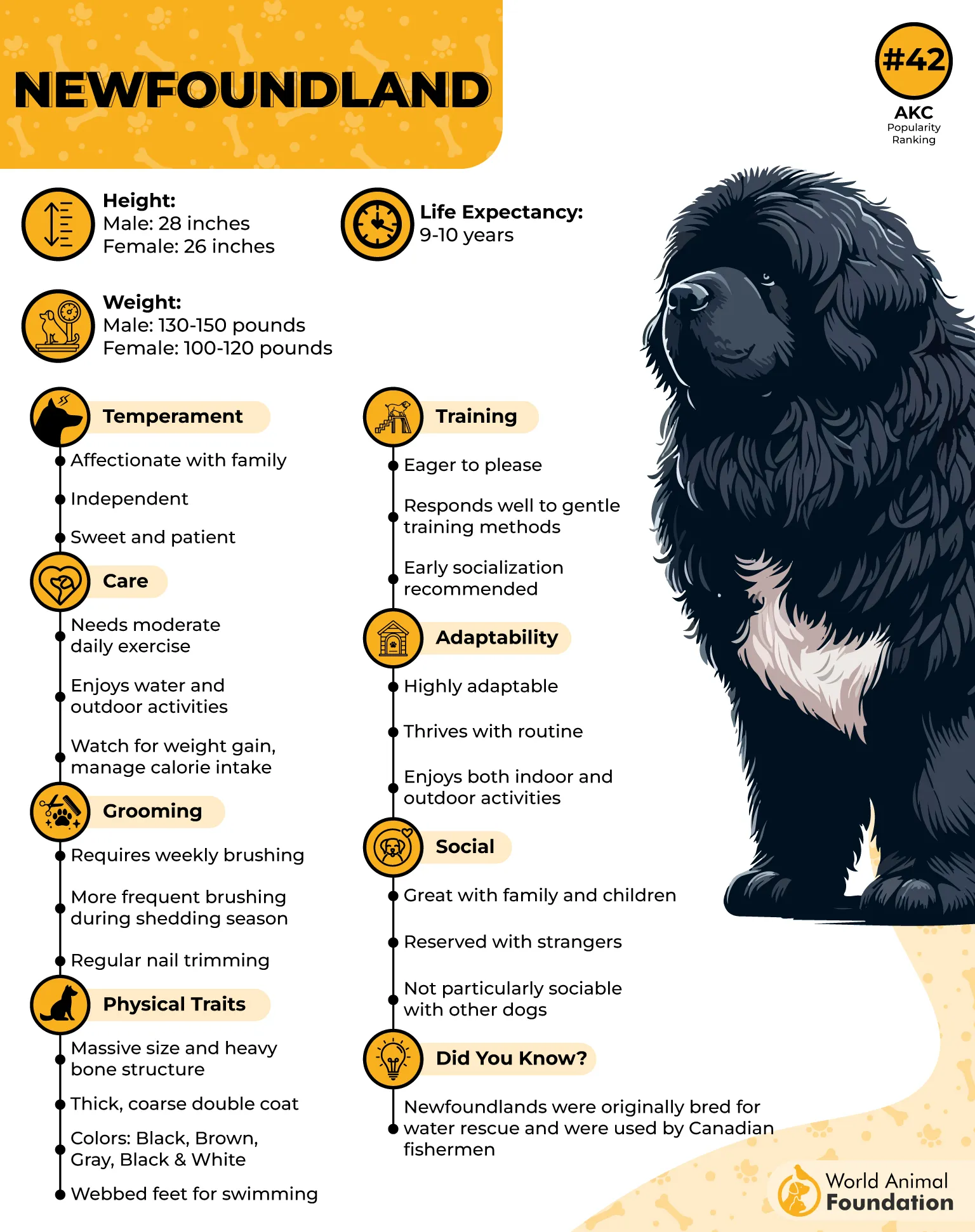
This breed’s thick coat and webbed feet reflect its working heritage. However, its coat requires significant care, with daily brushing needed to manage year-round shedding and keep it clean and healthy. According to the AKC, regular nail trimming helps prevent discomfort and structural problems caused by overgrown nails.
Newfoundlands are moderately trainable and benefit from consistent guidance. Their grooming demands are high, making overall care moderately demanding despite their laid-back temperament and comforting companionship.
Conclusion
Choosing a low-maintenance guard dog means finding a balance between protective instincts and a lifestyle you can realistically support. Some breeds offer calm watchfulness, loyalty, and an imposing presence without requiring constant high-intensity activity.
From gentle giants to independent guardians, each breed brings different needs for exercise, grooming, training, and daily care. A short coat or relaxed nature may simplify certain routines, but size, strength, and temperament still deserve careful consideration.
Early socialization and consistent positive training are essential for raising a well-mannered, dependable companion. The right dog should feel comfortable within your home while understanding appropriate behavior around family, visitors, and other animals.
Remember, low-maintenance never means maintenance-free. Every protective companion needs exercise, nutritious food, healthcare, training, attention, and plenty of love to remain happy, healthy, and well-balanced.
