




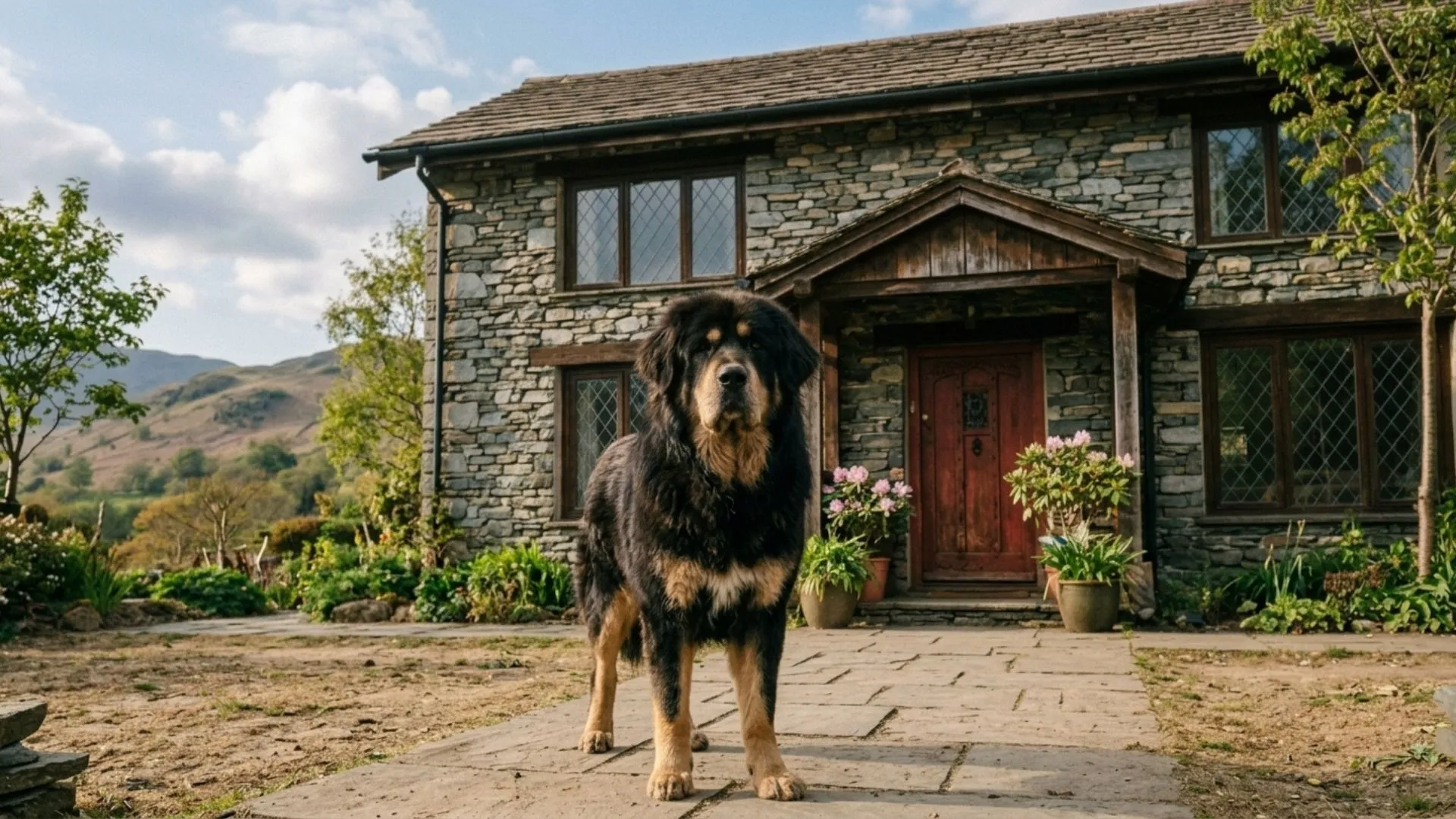
Not every guard dog is a loud, hyper “security alarm with legs” situation. Some of the best protectors are actually calm, quiet, and low-key—think more “silent bodyguard in the background” than chaotic watchdog barking at every leaf.
These low-maintenance guard breeds don’t need constant grooming marathons or 3-hour energy burns every day. Most of them are short-coated, emotionally steady indoors, and naturally observant—so they protect without turning your home into a stress zone.
But here’s the twist: “low-maintenance” doesn’t mean “no responsibility.” These dogs are powerful, intelligent, and built with serious instincts. They’re more like premium security systems—easy to run day-to-day, but only if you set them up properly from the start.
Low‑Maintenance Guard Dog Breeds That Stay Calm and Protected
1. Rhodesian Ridgeback
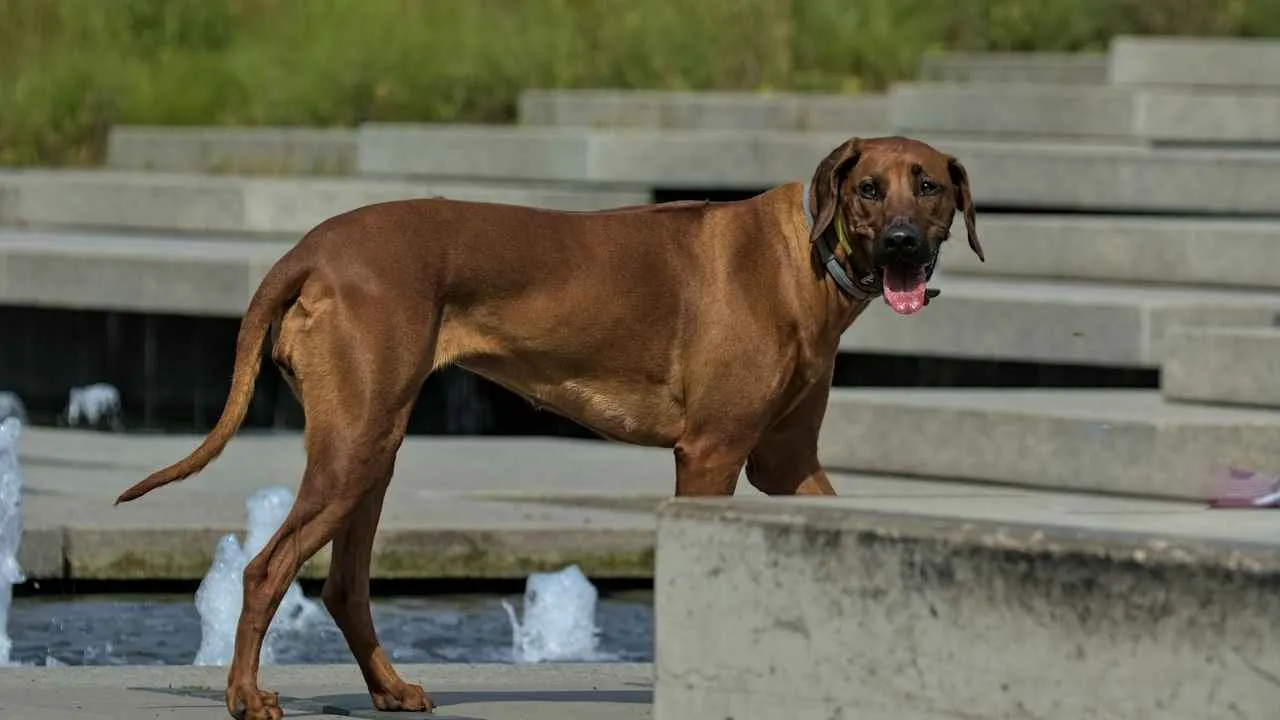
The Rhodesian Ridgeback is considered a calm, low-maintenance guard dog in the home, but only for experienced owners who meet its exercise and training needs.
This great guard dog does have several traits that make people label it “low-maintenance.” It has a short coat that barely needs grooming, it doesn’t have a strong dog smell, and it often behaves calmly and relaxed indoors once it has burned off its energy.
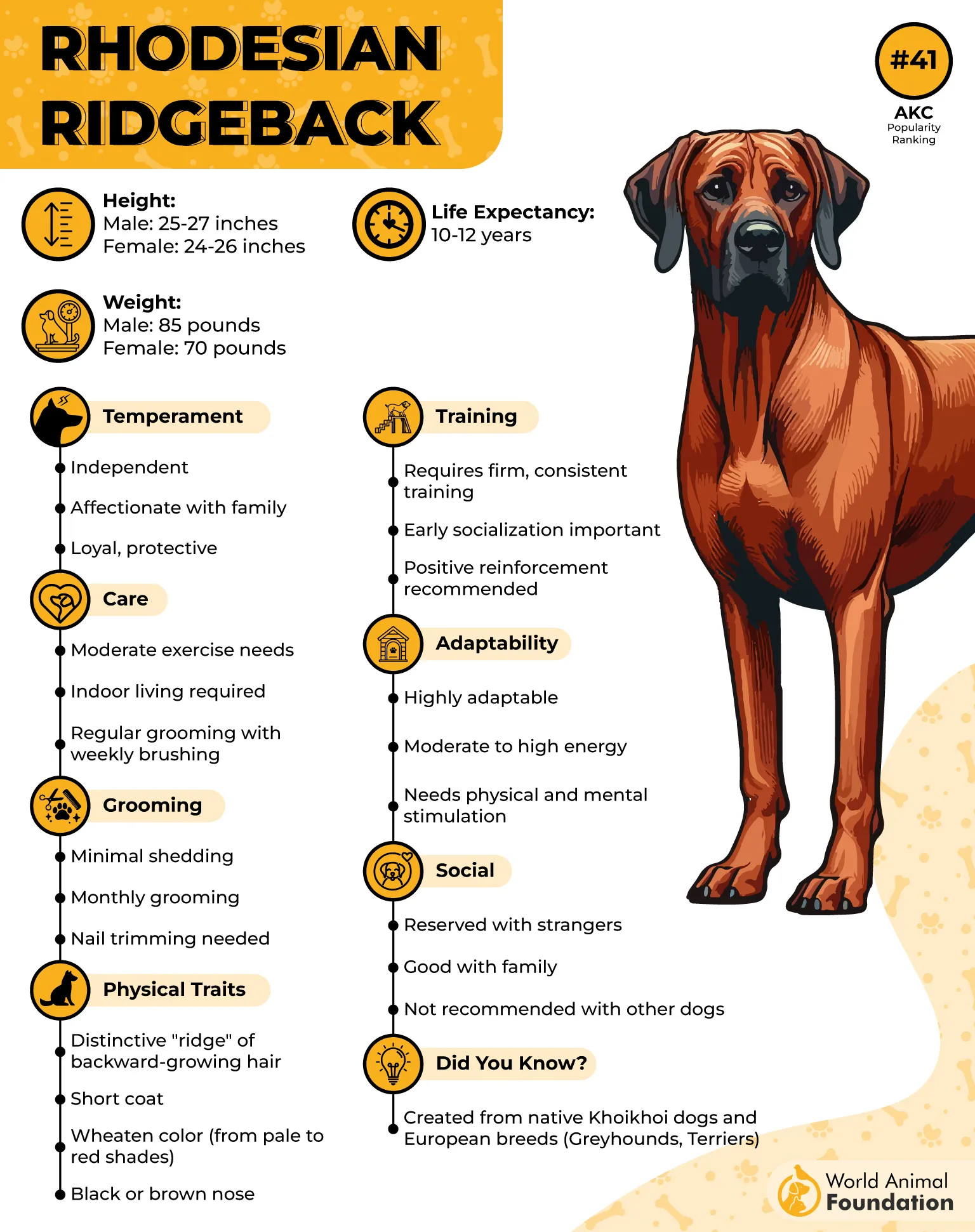
Many owners describe them as quiet “watch-and-lie-down” dogs at home, which gives the impression of an easy-going guard companion.
At the same time, Royal Canin says its guarding ability comes from instincts rather than constant aggression. Ridgebacks are typically reserved with strangers, alert to unusual activity, and physically imposing enough to deter intruders without needing to be reactive or noisy.
This makes them effective “silent guardians” in a household setting.
However, that “yes” only stays true when the dog is properly exercised and trained. Without structure, they are strong-willed and can become difficult to manage. So they’re best described as calm, low-grooming, natural guard dogs—but not low-effort overall dogs.
2. Bullmastiff
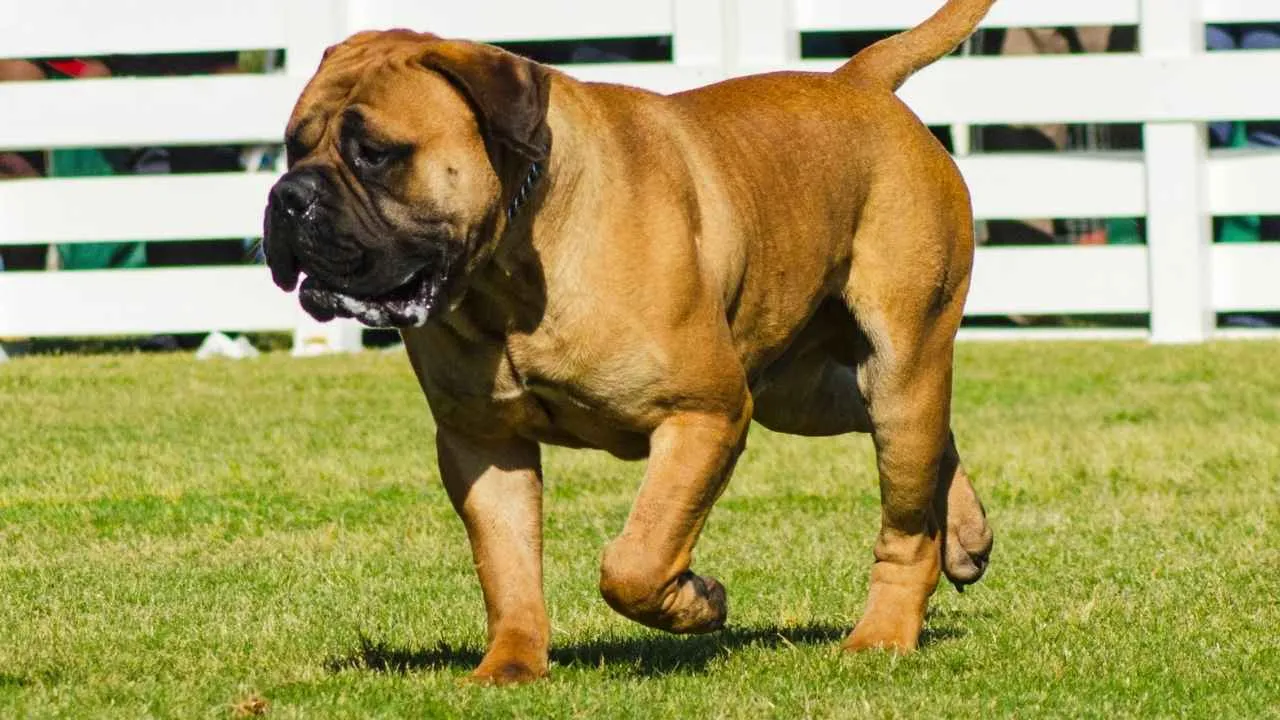
The Bullmastiff can totally be considered a calm, low-maintenance guard dog… but only in that “big soft bodyguard who chills most of the day” way.
The Bullmastiff is basically the definition of “looks scary, acts lazy.” At home, they’re famously chill—think couch potato energy with occasional patrol duty.
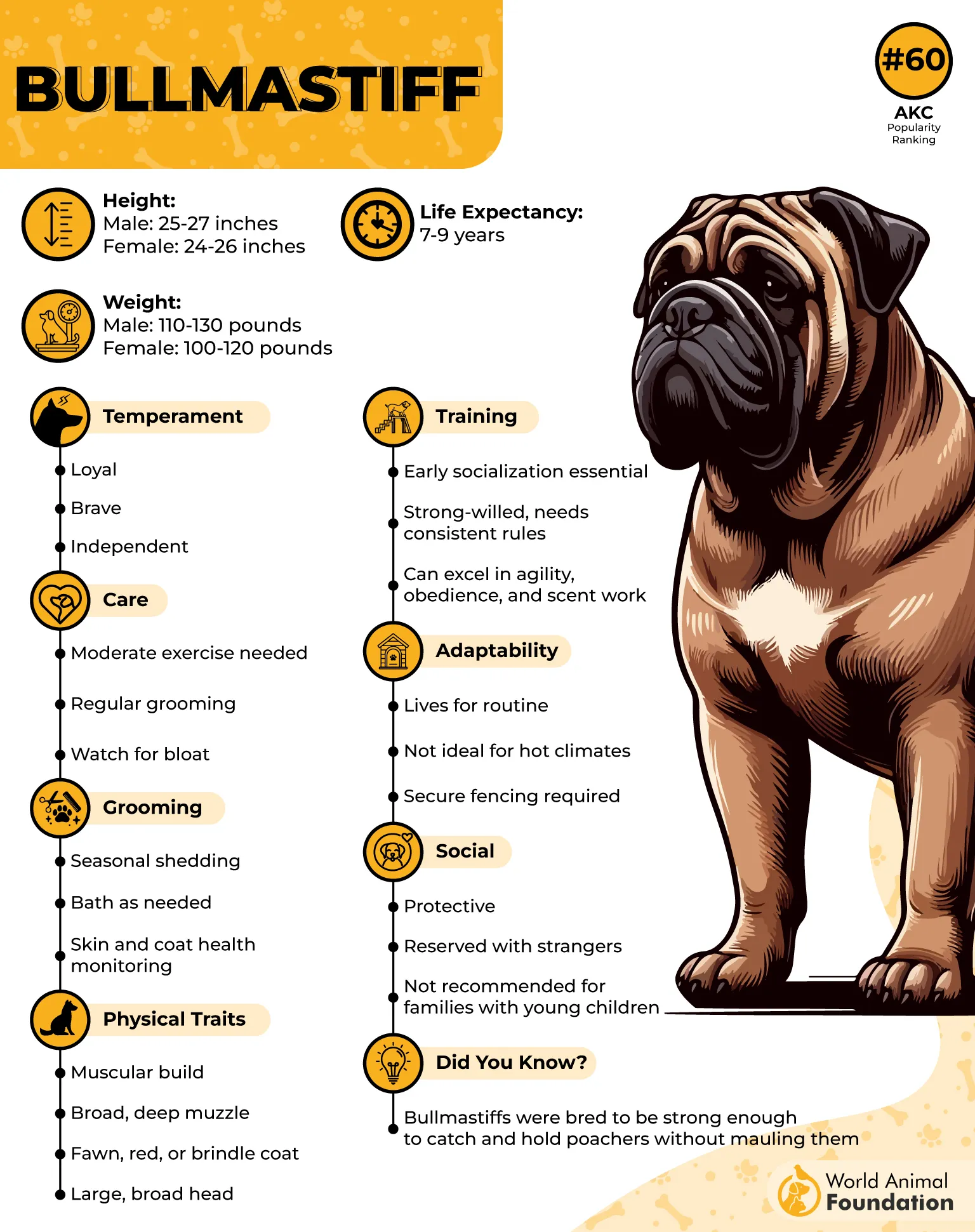
Most of the time, they’re not running around causing chaos; they’re just posted up near you like a silent security system that also wants snacks.
What makes them good guard dogs is their natural vibe. They don’t usually bark a lot or act hyper, but they’re super aware of their surroundings. If something feels off, they don’t panic—they step in. That calm, confident presence alone is often enough to deter strangers without any drama.
They are highly trainable and won’t really cause you any trouble!
Now for the “low-maintenance” part: grooming is easy—short coat, minimal shedding, no fancy upkeep. But energy-wise, they’re not high-maintenance either compared to working breeds—they’re more “short walk, then back to bed” type dogs once adult.
But here’s the real-life catch: they’re still a giant breed with serious strength. So while they’re emotionally low-drama, they still need early training, socialization, and consistent handling.
3. Boerboel
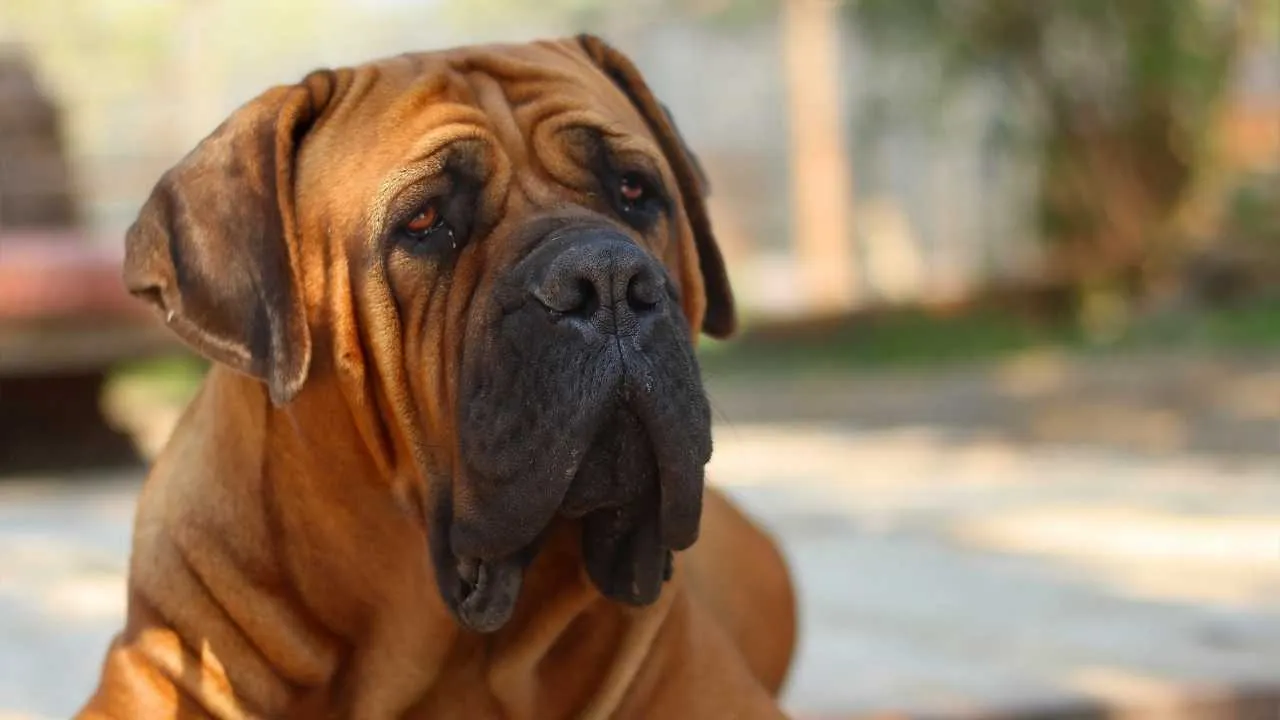
The Boerboel was literally developed to protect farms in South Africa from large predators, so the “guard dog” part isn’t marketing—it’s built into their DNA.
What surprises most people is how emotionally chill they actually are at home. They’re not the nervous, barking-at-every-shadow type. Instead, they observe, assess, and only react when something genuinely feels wrong.
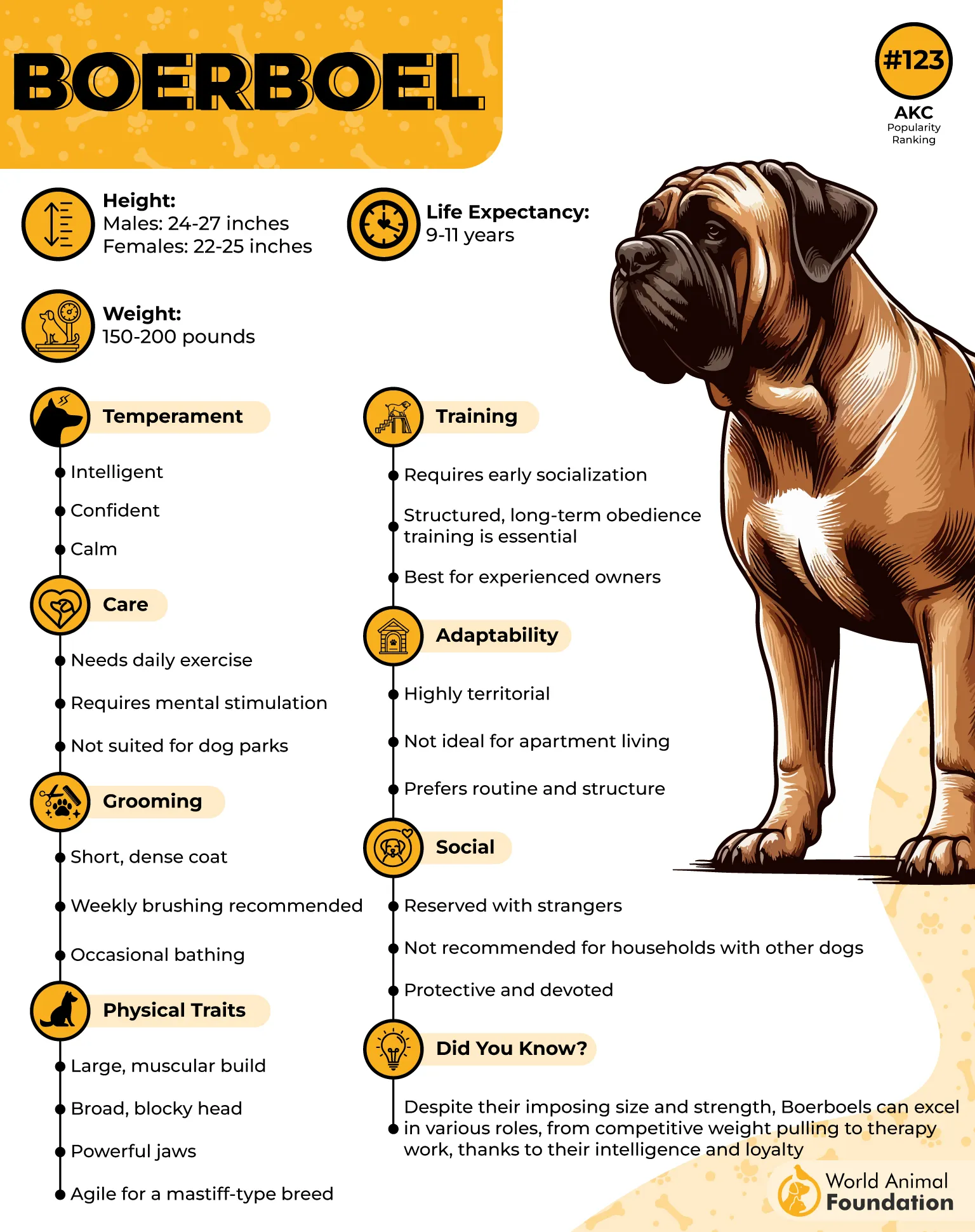
PetMD says that a well-raised Boerboel is usually low-energy and surprisingly gentle with family members. Think of them like a massive roommate with a balanced temperament who mostly wants food, comfort, and a good nap spot near you. They don’t constantly demand attention, which gives them that “low-maintenance” reputation in day-to-day living.
Their grooming needs are also minimal—short coat, easy upkeep, no complicated routines—basically a wipe-down-and-go situation. Even exercise needs are moderate compared to working herding breeds; they’re not built for endless activity, more like structured walks and then couch mode.
But here’s the reality check hidden behind the calm vibe: this is a very powerful, very independent giant breed. Without early training and strong leadership, that calmness can turn into stubborn “I decide now” energy. So while they look effortless, they’re not a casual starter dog.
4. Tibetan Mastiff
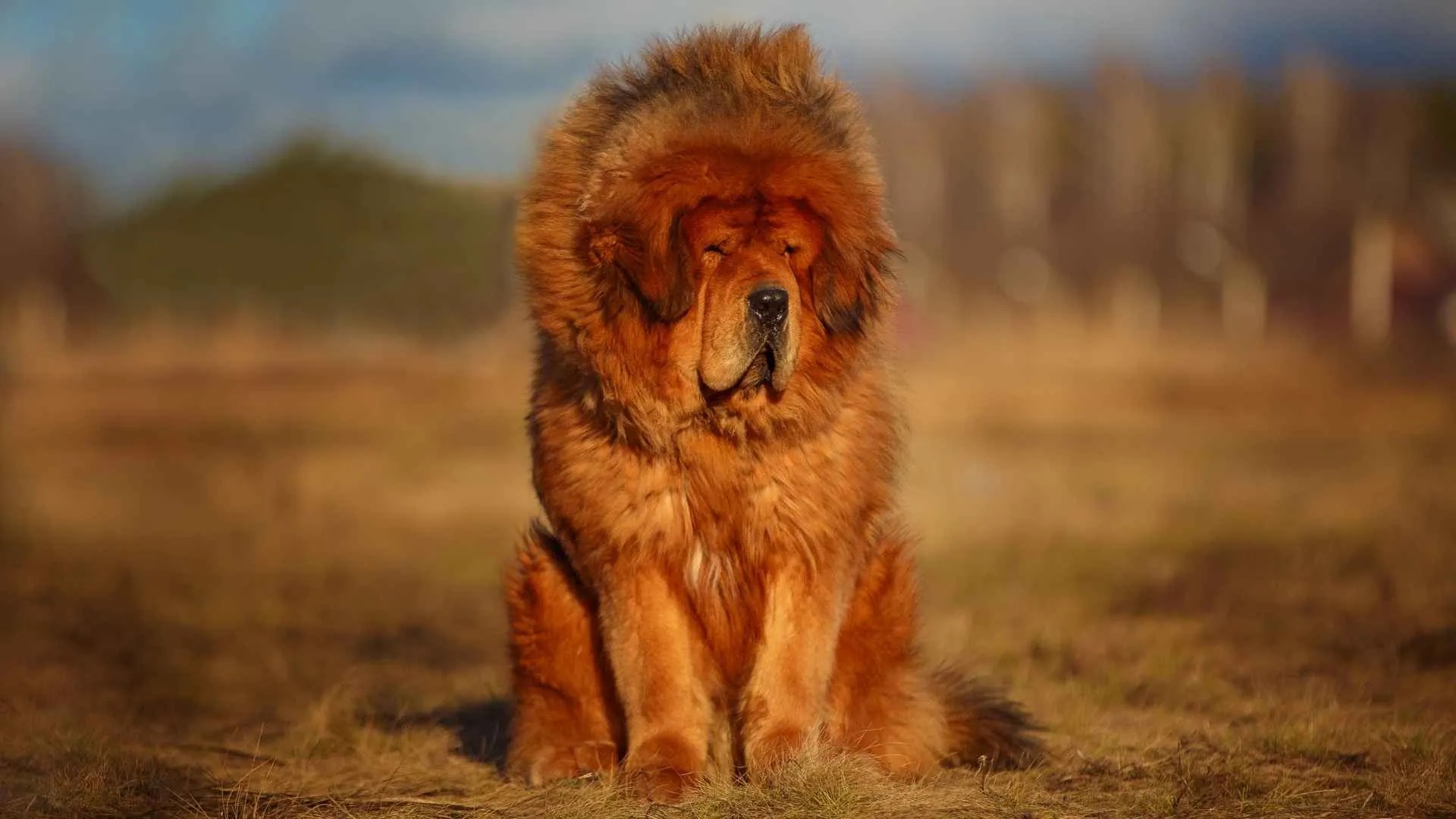
The Tibetan Mastiff can be considered a calm, low-maintenance guard dog… but only if your definition of “low-maintenance” includes a massive, independent night-shift security guard that prefers doing things on its own terms.
The Tibetan Mastiff comes from the mountains of Tibet, where it was used to guard livestock and monasteries from wolves and snow leopards. That alone tells you the vibe: this isn’t a “follow commands instantly” kind of dog—it’s a “I’ll assess the situation and decide if you’re worth listening to” kind of energy.
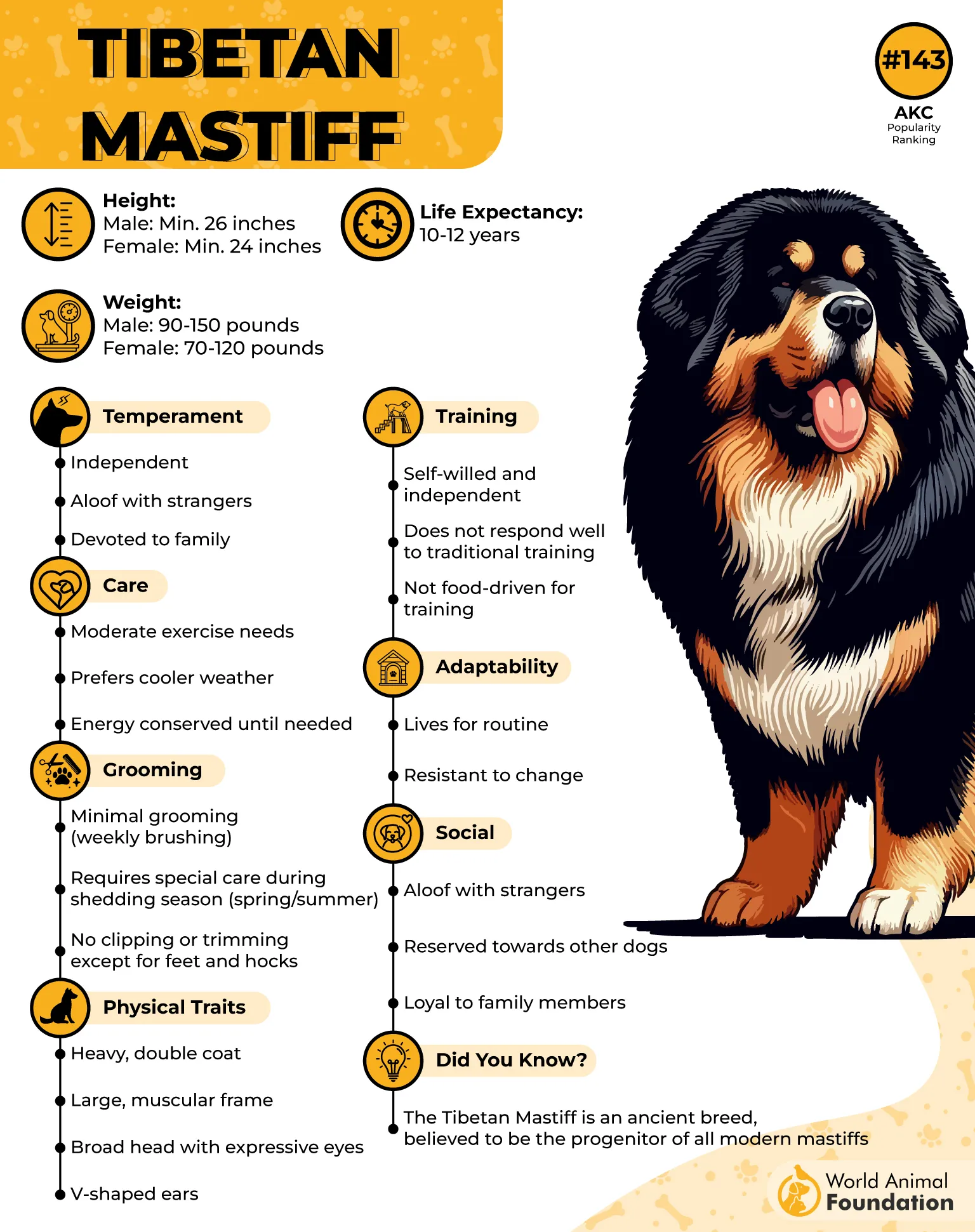
These Mastiff dogs can turn out to be surprisingly calm and low in energy when you pet them. They’re not clingy, not hyper, and often prefer to observe from a distance, like a silent, fluffy security camera. This independence is a big reason people associate them with being low-maintenance in day-to-day living.
These dogs are indeed a perfect fit for personal protection!
They also don’t need heavy grooming beyond seasonal brushing, and they’re not overly demanding in terms of constant attention or stimulation. In the right environment, they’re content with routine walks and a secure space to “patrol.”
But here’s where the illusion breaks a little: this is a very strong-willed, highly territorial giant breed. Their guarding instinct is intense, and they don’t switch off easily around strangers. Training them isn’t about obedience tricks—it’s about earning respect, and that takes consistency and experience.
5. Neapolitan Mastiff
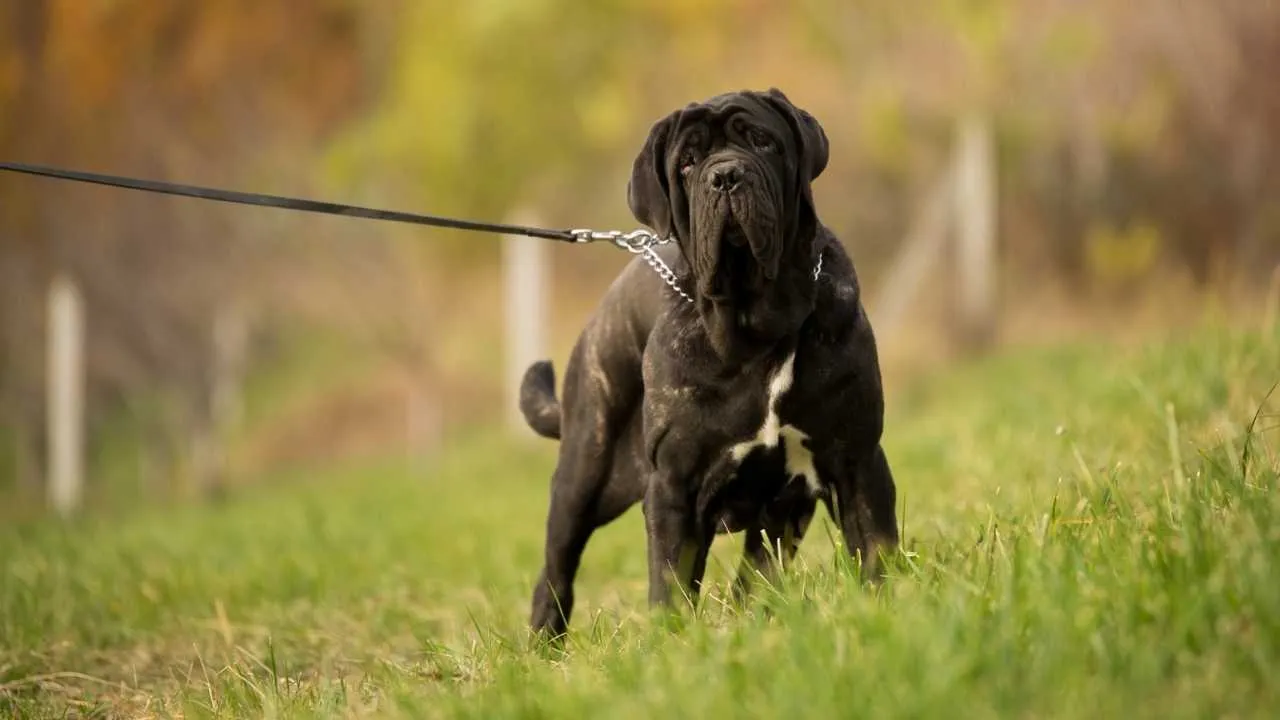
The Neapolitan Mastiff can be a calm, low-maintenance guard dog… but it’s more like a slow-moving, wrinkle-covered security wall that doesn’t need much upkeep but definitely needs respect.
This properly trained protection dog is famous for its massive build, loose skin, and deeply protective nature. This breed was historically used as a property guardian in Italy, and that role still shows in its personality today.
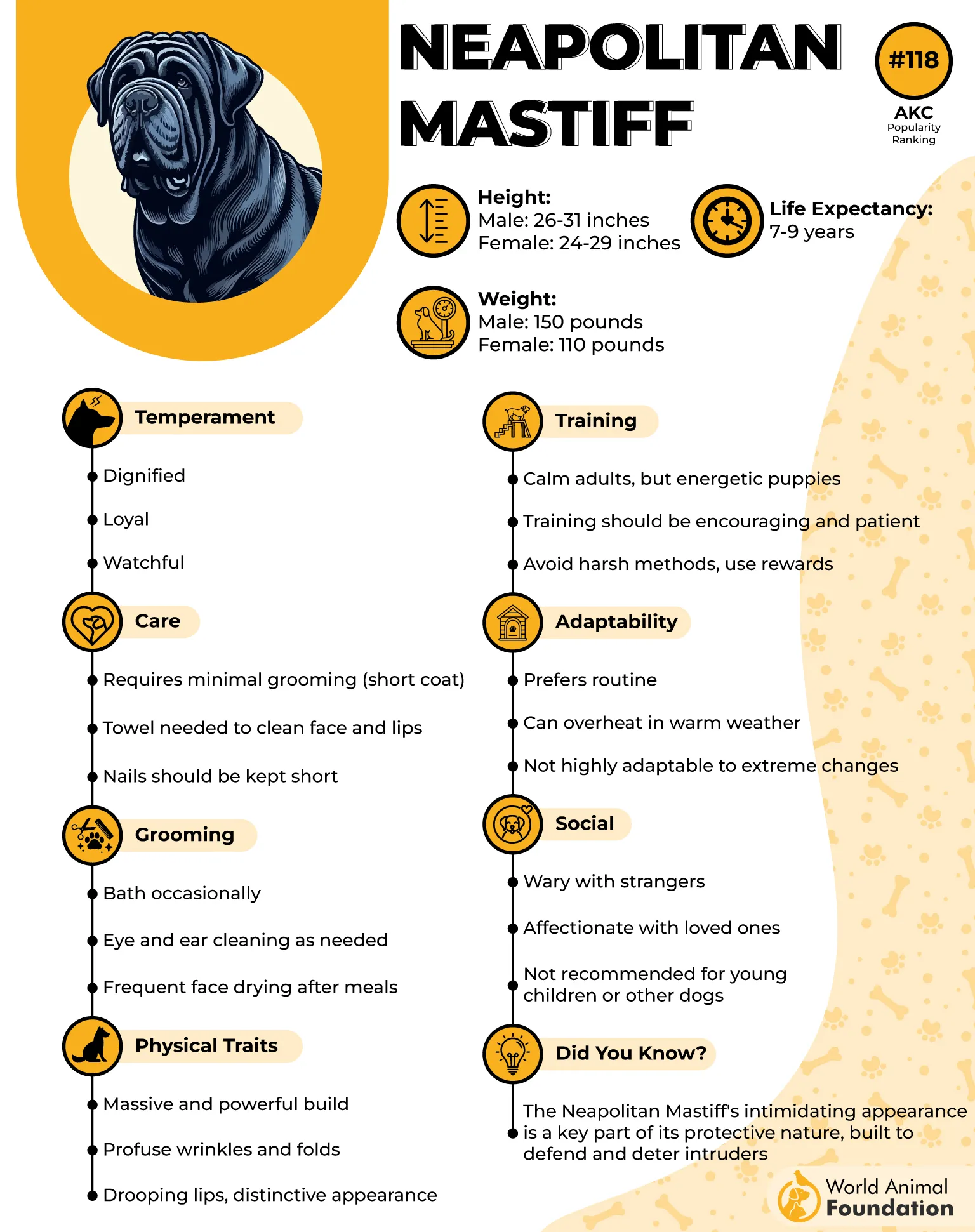
They don’t act flashy or reactive—they exist firmly, which is often enough to make strangers rethink their life choices.
Omlet says most Neapolitans prefer lounging, observing, and slowly moving from one comfortable spot to another, as if they’re in no hurry for anything in life. They’re not attention-seekers or high-energy chaos machines, which is why many owners describe them as “quiet house guardians.”
When it comes to guarding, they are naturally protective and deeply loyal to their family. They don’t bark unnecessarily, but they are very serious when they decide something feels off. Their size alone is often enough to deter intruders without any dramatic behavior.
However, despite being some of the best family guard dogs, they are not casual pets.
Their sheer strength, stubborn streak, and heavy build mean they need early training and consistent handling. Without that, this guardian breed can become difficult simply because they don’t respond to pressure—they respond to trust.
6. Tosa Inu
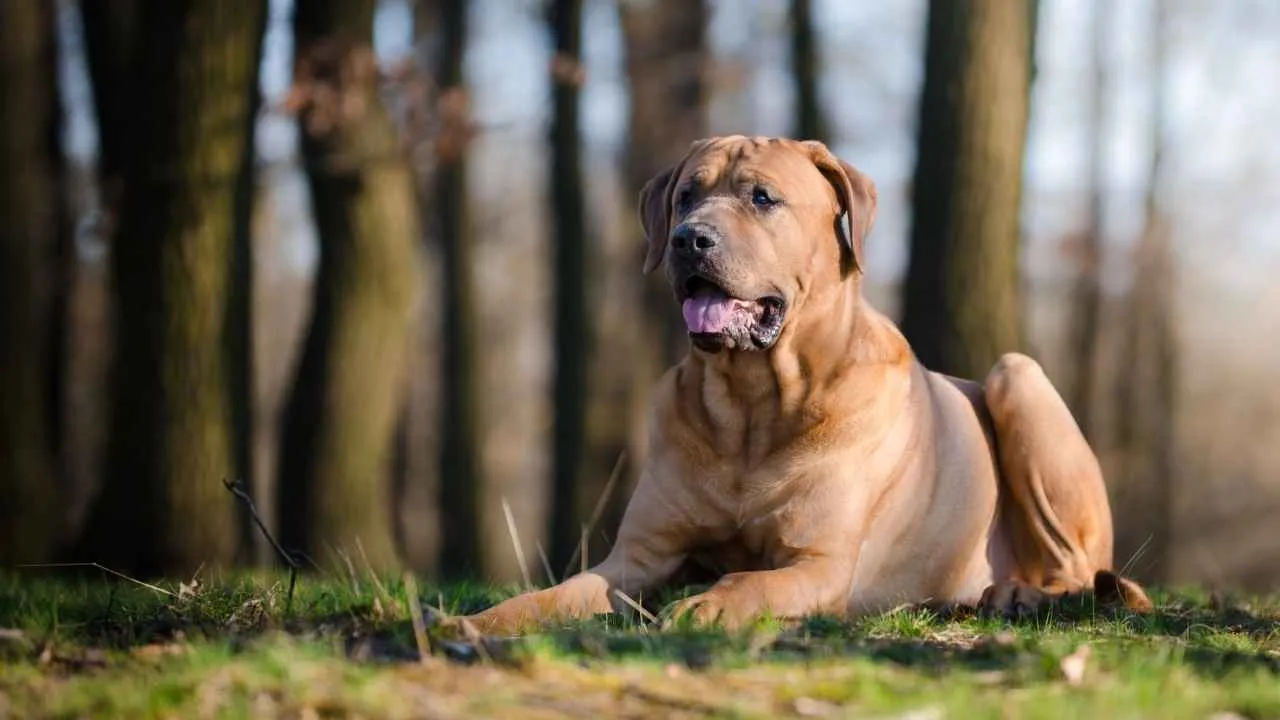
The Tosa Inu can be considered a calm, low-maintenance guard dog… but it’s more like a silent, heavyweight “no-drama security mode” breed that only turns serious when it absolutely needs to.
The Tosa Inu comes from Japan, where it was originally bred for dog fighting and later developed into a controlled guardian-type companion. That history explains a lot: this is a dog that doesn’t waste energy on noise or chaos—it stays composed, observant, and extremely deliberate in everything it does.
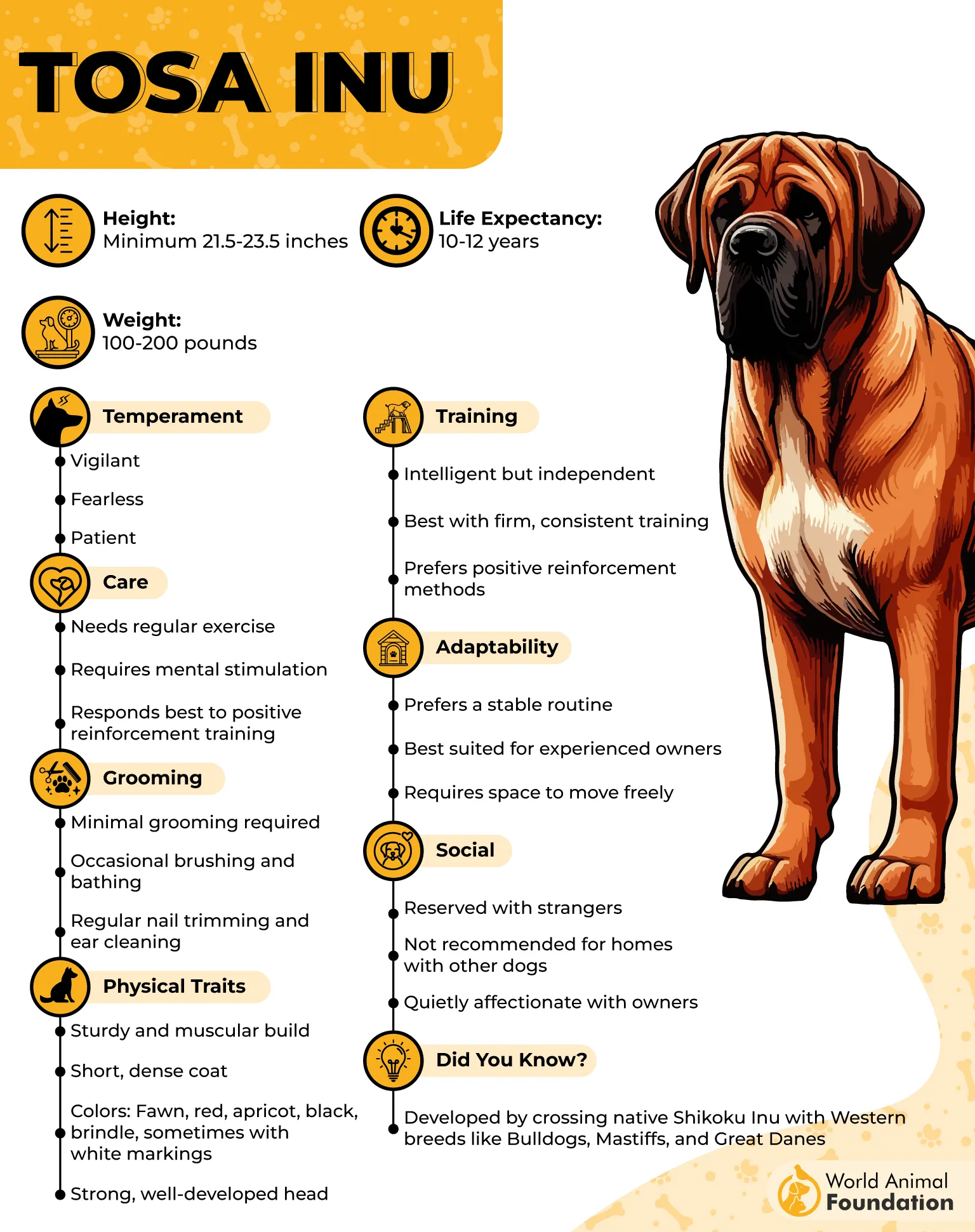
At home, a well-trained Tosa Inu is surprisingly calm and low-maintenance. They’re not hyper, not clingy, and not constantly demanding attention. Most of the time, they settle into the background like a quiet presence—almost like having a “living security system” that prefers silence over drama.
Their grooming needs are also minimal. The coat is short and easy to maintain, with no complicated brushing routines or heavy shedding issues. So in terms of physical upkeep, they fall into the “quick wipe and done” category, which adds to that low-maintenance reputation.
But the real story is temperament.
This protective dog breed is naturally reserved with strangers and extremely strong-willed. They don’t react emotionally or impulsively—they evaluate. That makes them powerful guardians, but also requires experienced handling, early socialization, and consistent leadership.
7. Presa Canario
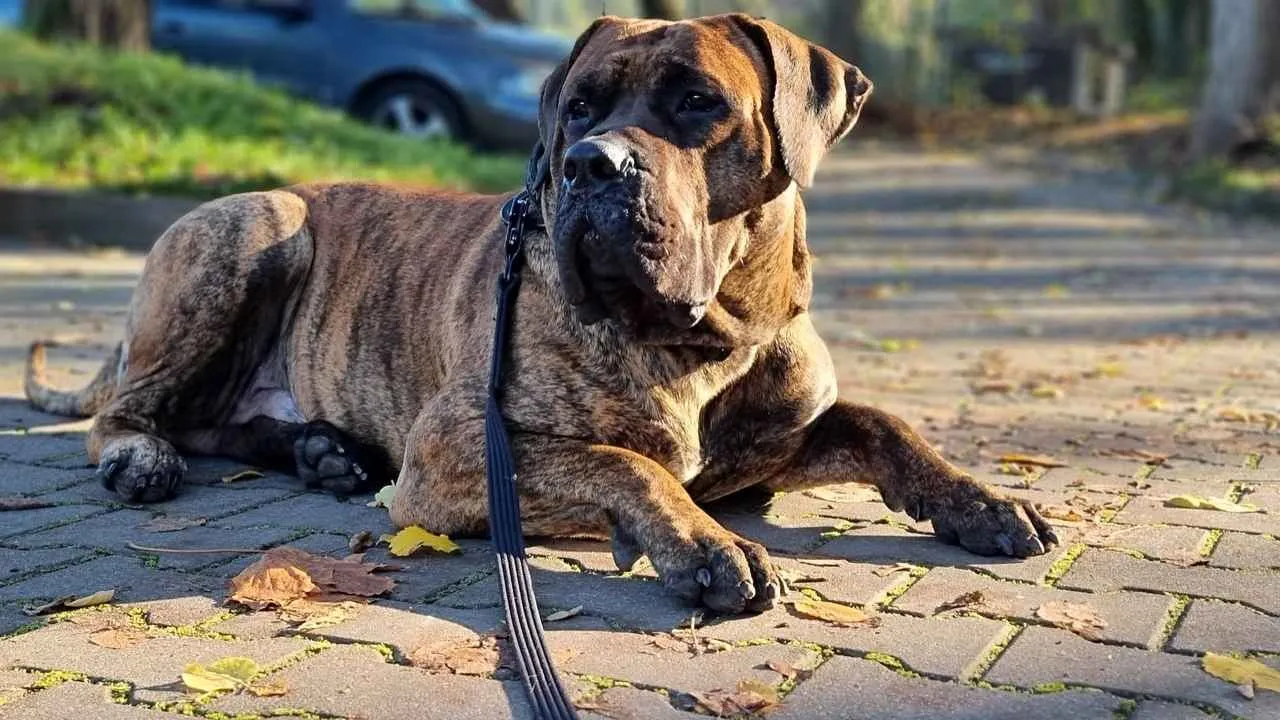
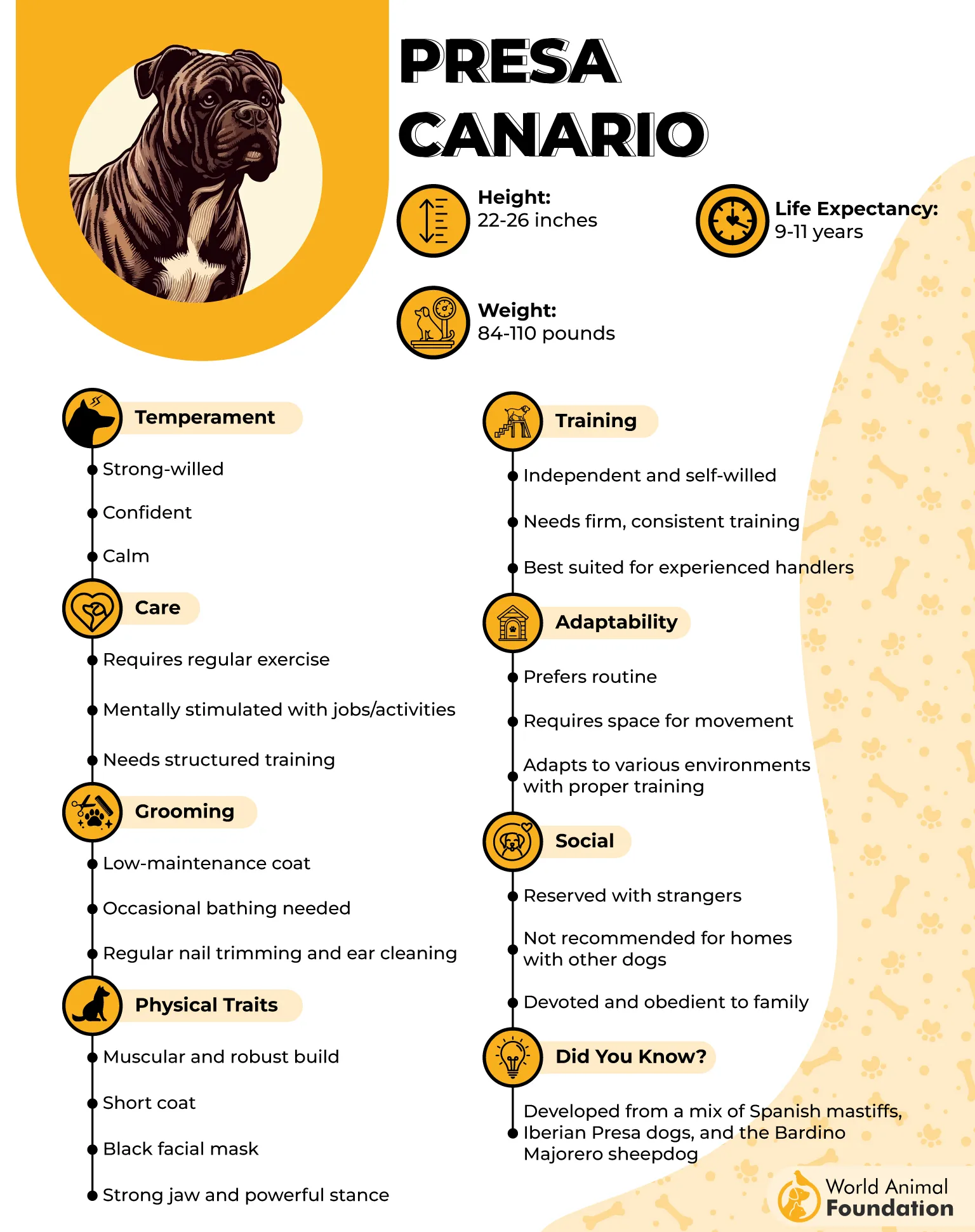
The Presa Canario can be a calm, low-maintenance guard dog… but it’s more like a “built-in security guard with gym physique and serious boundaries” rather than a casual family pet.
The Presa Canario was originally developed in the Canary Islands for guarding livestock and controlling large animals. That working background shows up clearly in its personality today: confident, alert, and naturally protective without needing constant prompting.
A well-raised Presa Canario can actually be very composed around the family. They’re not hyperactive or attention-seeking dogs. Instead, they tend to stay close to their family, observe everything quietly, and relax when nothing unusual is happening.
That “low-drama, high-awareness” vibe is why many experienced owners describe them as surprisingly easy to live with day-to-day.
But the guarding instinct in these protection dogs is very real. Presas are naturally territorial and can be wary of strangers if not properly socialized. They don’t usually bark unnecessarily, but they will step in if they perceive a threat.
This makes them effective deterrent dogs—but also means they need structured training from an early age.
These excellent guard dogs are strong, powerful, and mentally assertive, which means they don’t respond well to inconsistent handling. They need an owner who sets clear rules early and stays consistent; they can become overly dominant or difficult to manage.
Conclusion
So what’s the real takeaway? These 7 breeds aren’t your typical “excited watchdogs barking at shadows” stereotype. They’re more like calm operators—watching, thinking, and stepping in only when something actually feels off.
From the couch-loving Bullmastiff to the ultra-alert Presa Canario, each dog brings that same core combo: low grooming needs, stable indoor behavior, and a natural protective instinct that doesn’t rely on constant noise or chaos. It’s protection… but in a quiet, controlled way.
Still, the vibe check is important: these dogs remain “low-maintenance guardians” only when they’re trained, socialized, and understood. Treat them right, and you basically get a loyal, calm security partner that fits into family life like it was always meant to be there.
