




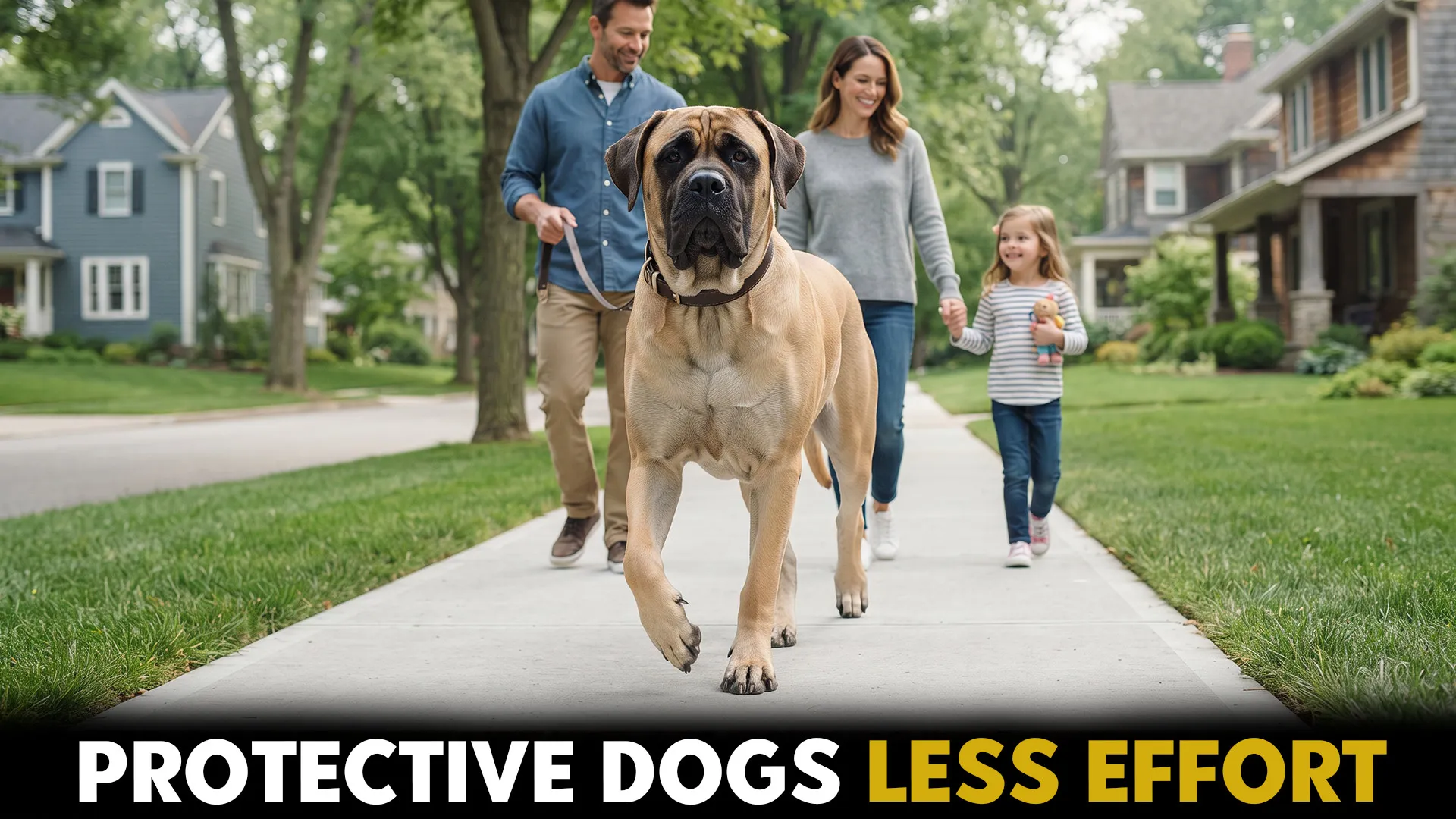
A family guardian does not necessarily need to be a demanding working dog. Some breeds combine an imposing presence, natural watchfulness, and steady behavior with coats and routines that are relatively straightforward to manage.
Of course, no dog should be expected to act as a substitute for proper home security or trained protection work. A good family guardian is usually one that can recognize unusual situations, remain composed, and respond appropriately to its owners.
The breeds below cover a wide range of sizes and personalities. Some are massive and naturally intimidating, while others are athletic, alert, and quicker to react. Their grooming requirements also vary, so choosing the right match means considering both protective instincts and everyday practicality.
Low-Maintenance Dog Breeds That Protect the Family with Ease
1. Great Pyrenees
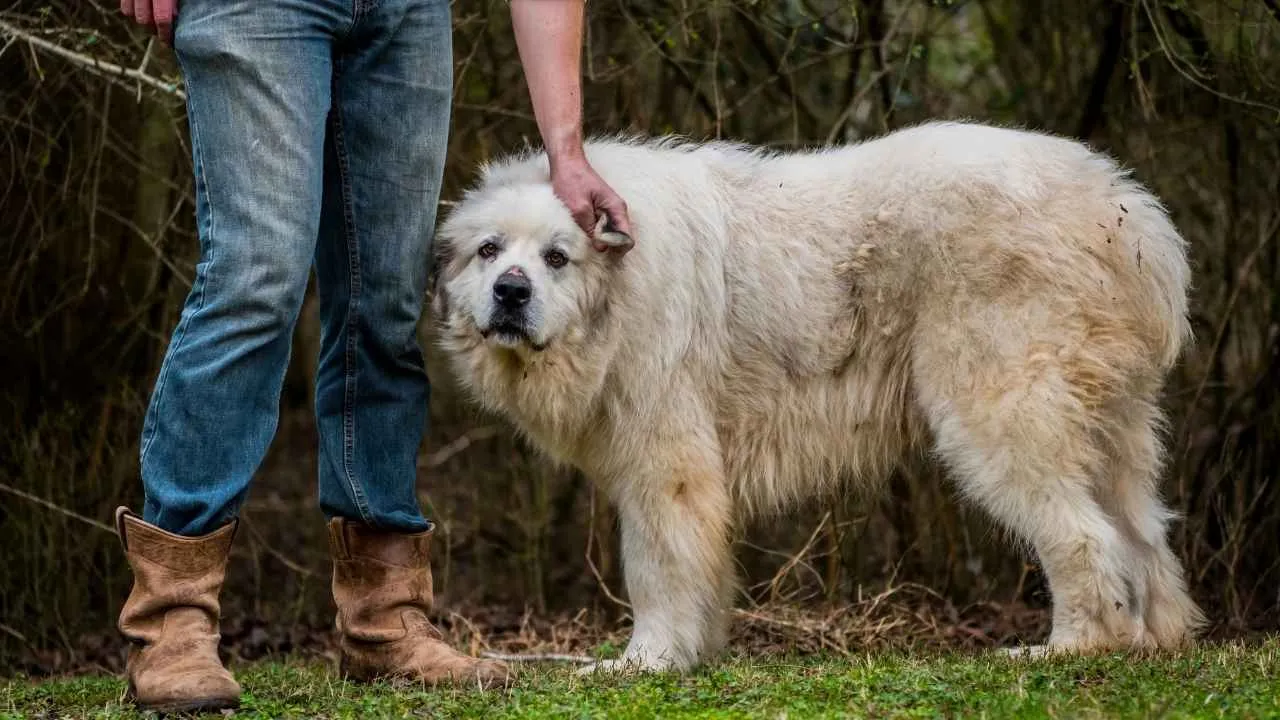
Great Pyrenees are often calm, thoughtful, and strongly devoted to the people they live with. Rather than constantly looking for attention, they can be content observing the household and keeping track of activity around their territory.
With proper socialization, their protective attitude can coexist with a gentle and affectionate temperament at home.
A Mountain Guardian With Centuries of Service
The Great Pyrenees originated in the mountainous regions along the French and Spanish border. Farmers and shepherds valued these guard dogs for protecting livestock from predators and watching over remote pastures.
Their traditional work demanded patience and independent judgment. Instead of waiting for a person to give instructions at every moment, they were expected to remain vigilant and respond when danger appeared.
A Protective Giant With Manageable Grooming
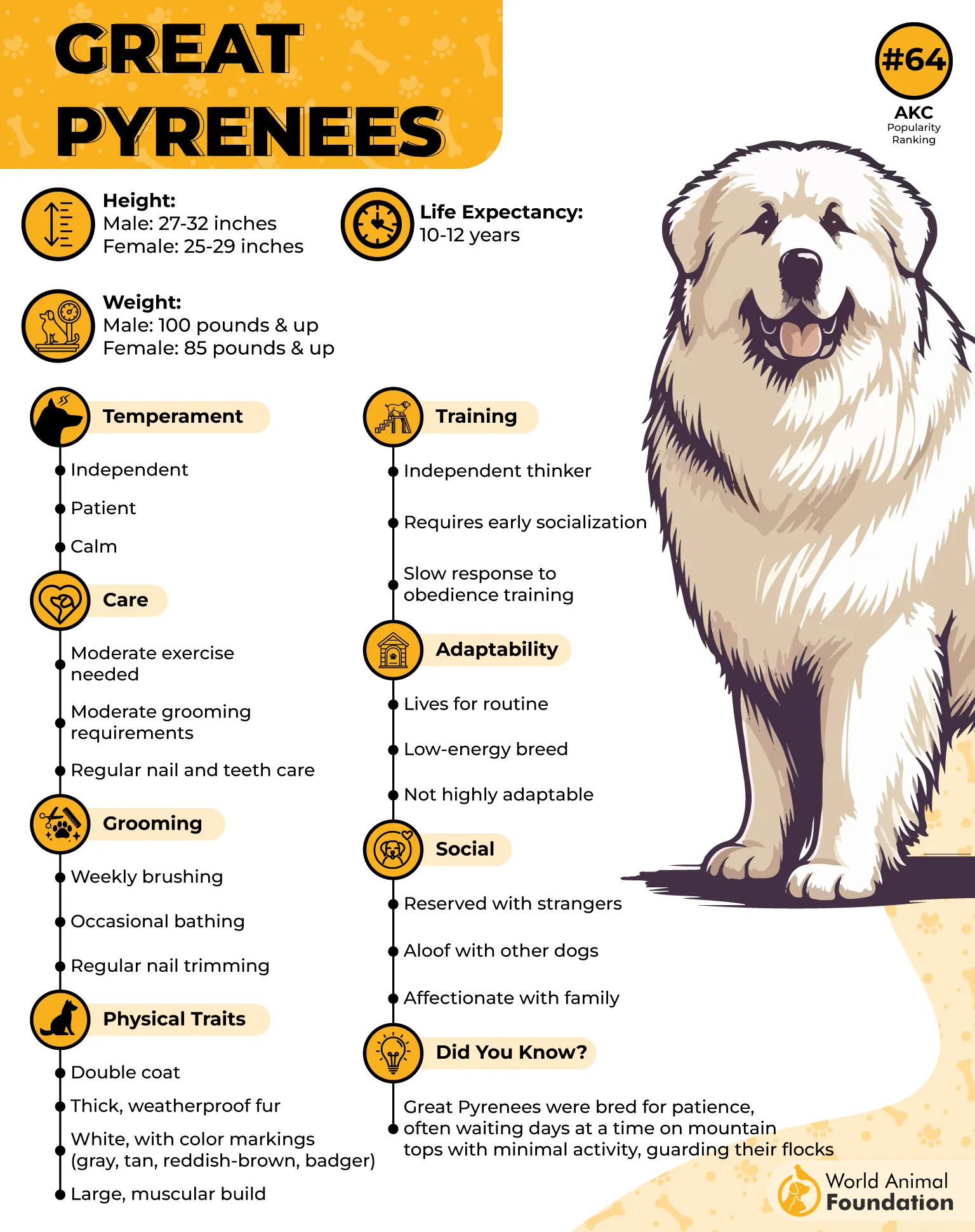
The Great Pyrenees has a thick coat, so regular brushing is necessary to remove loose hair and prevent neglected areas from becoming tangled. However, its grooming routine does not generally require intricate clipping or styling.
For a family seeking a dog that can provide a strong visual deterrent while remaining relatively straightforward to maintain, its combination of size, confidence, and watchfulness can be appealing.
2. Mastiff
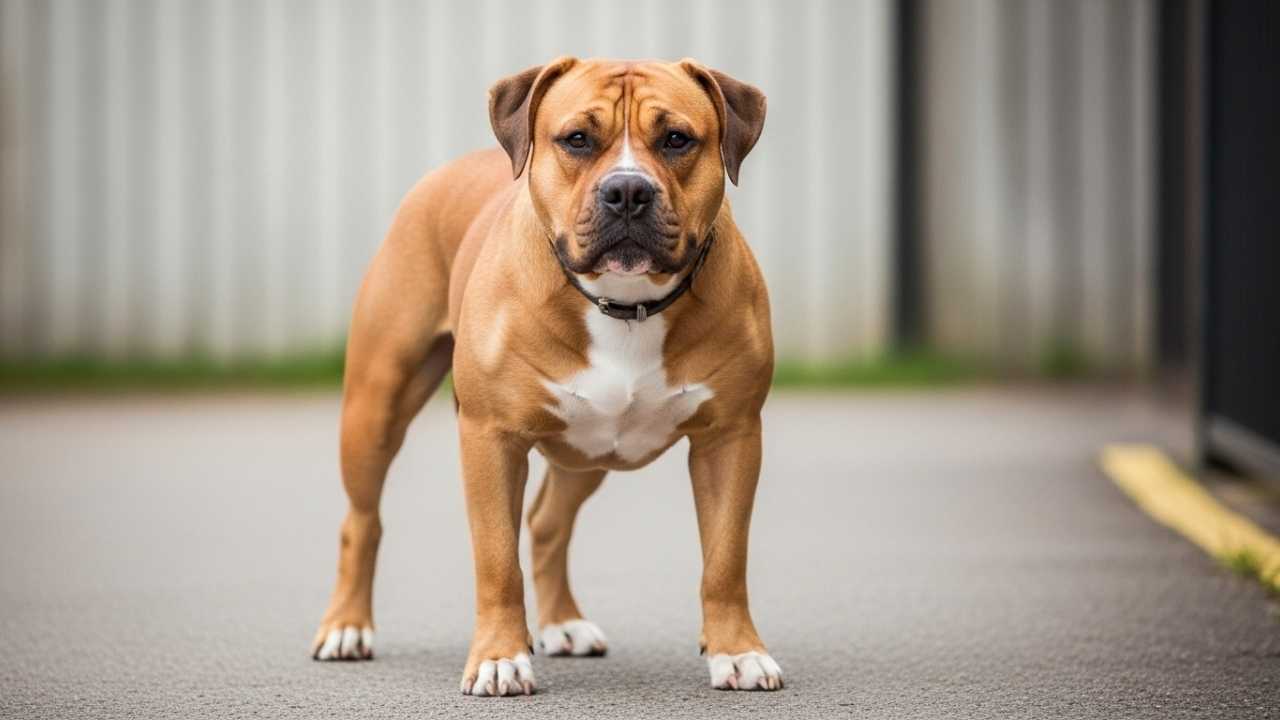
Mastiffs are enormous, composed dogs that often have a surprisingly quiet personality. They tend to form close relationships with their families and may prefer staying nearby rather than constantly demanding interaction.
A well-raised Mastiff may remain relaxed during ordinary household activity but become noticeably attentive when an unfamiliar person or situation appears.
Tracing the Roots of Britain’s Giant Guardian
The Mastiff has a long history in Britain and belongs to a broad tradition of large dogs used for guarding and protection. Powerful dogs of this type were associated with estates and properties where their imposing appearance and physical strength were valuable assets.
Over generations, the Mastiff transitioned toward a more companion-oriented role while retaining many of the qualities that made its ancestors effective guardians.
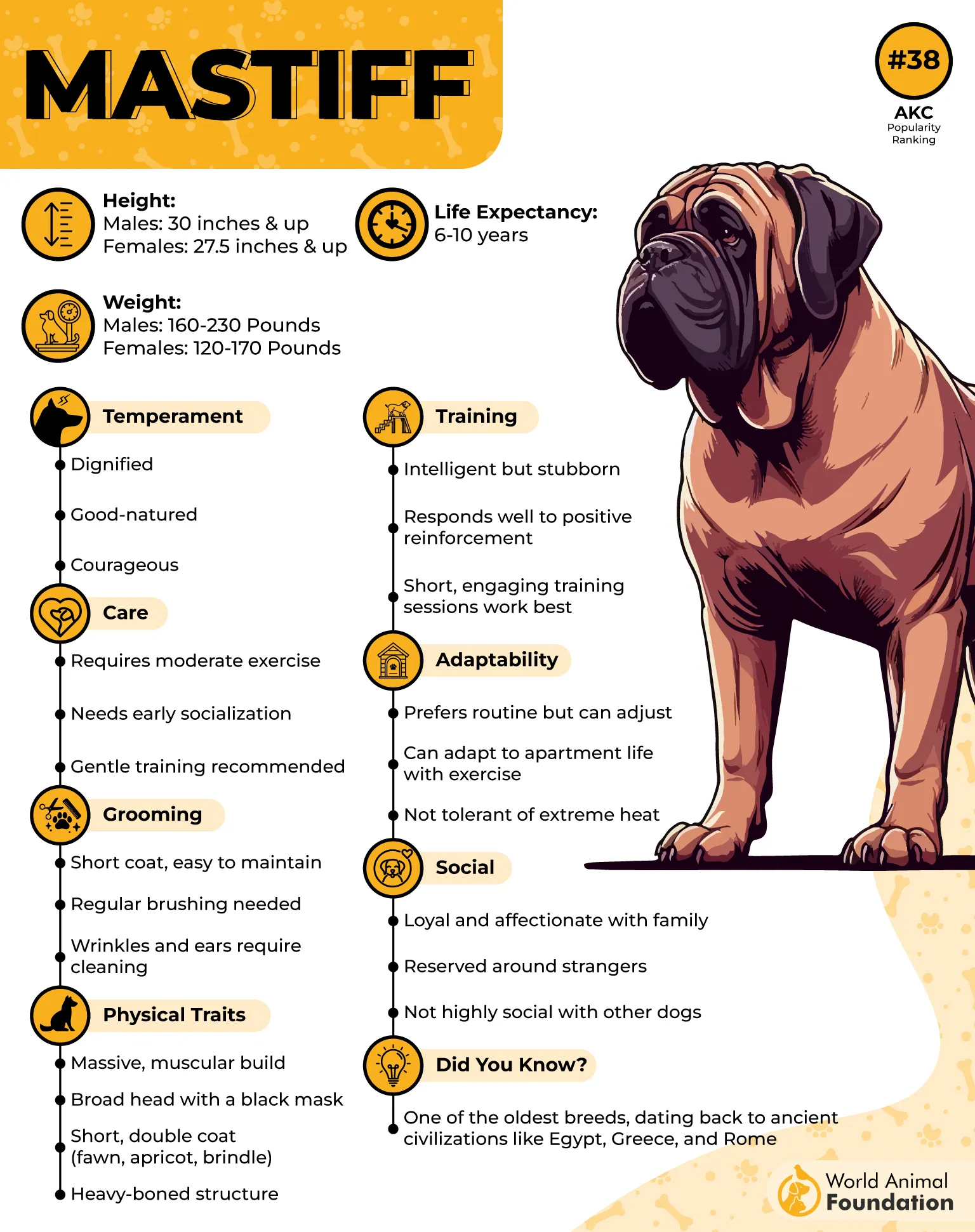
An Imposing Protector With an Easy Coat
Despite its enormous body, the Mastiff does not have a complicated coat. Its short fur can generally be maintained with basic brushing and occasional bathing.
The main practical considerations are its size, appetite, exercise requirements, and living space. For owners prepared for those demands, its simple grooming routine and formidable presence can work well together.
3. Great Dane
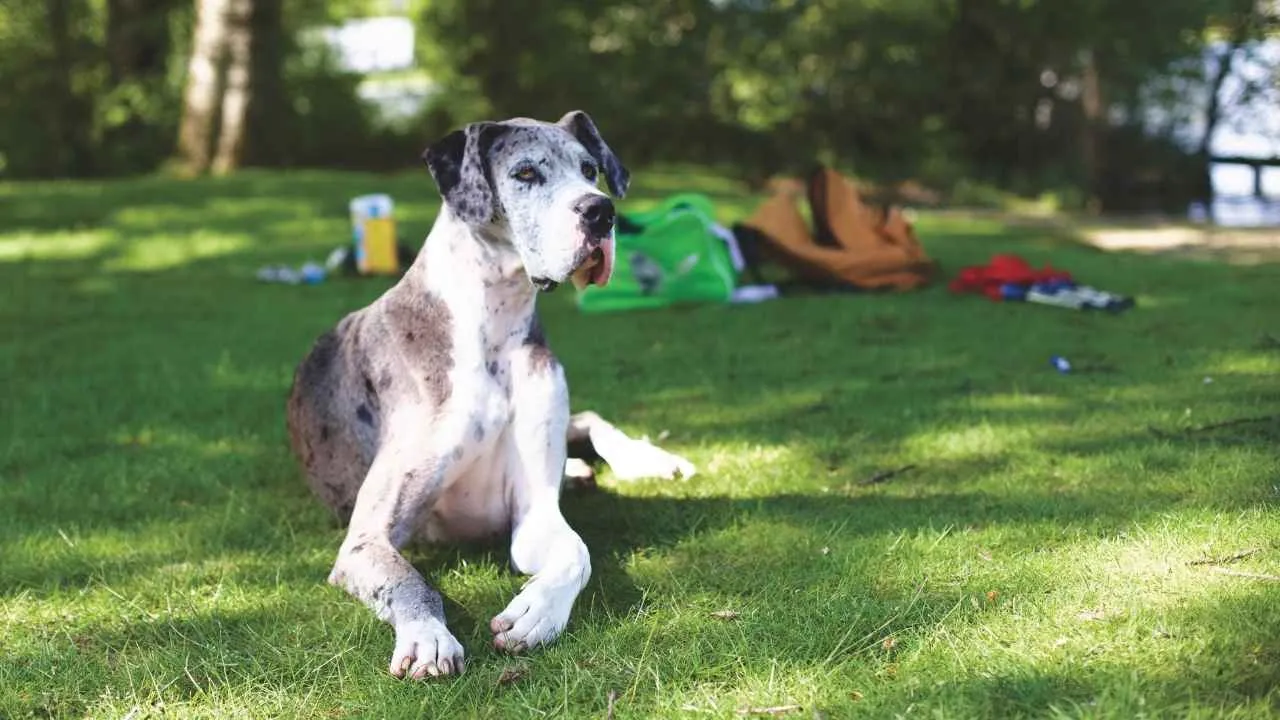
Great Danes often surprise people with their gentle and sociable personalities. Although their towering height can make them appear intimidating, many are affectionate dogs that enjoy staying close to their families.
Their combination of confidence and enormous stature means they may discourage unwanted attention simply through their presence, even when their preferred behavior at home is relaxed and friendly.
From German Hunting Dogs to Gentle Companions
Despite its name, the Great Dane has strong historical ties to Germany. Earlier versions of the breed were developed as large hunting dogs, valued for strength and courage when pursuing demanding quarry.
Today’s Great Dane retains the physical power of its working ancestry while generally being recognized as a family-oriented breed.
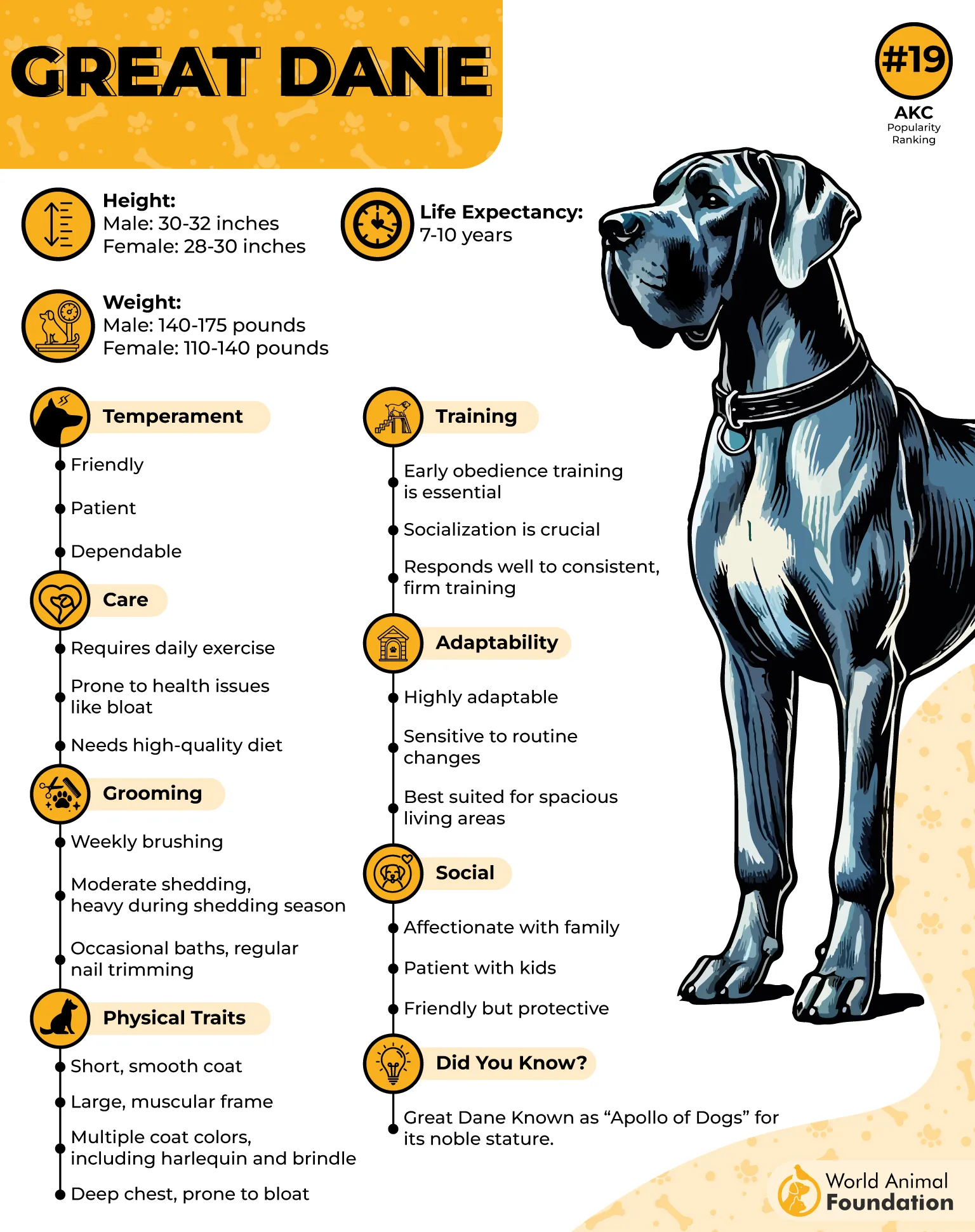
Minimal Coat Work With a Natural Deterrent
The Great Dane’s short coat makes daily grooming relatively uncomplicated. Occasional brushing can help remove dead hair, while routine bathing and general care are usually sufficient.
A Great Dane can command attention without needing an aggressive disposition, making its size an effective natural deterrent for a household looking for a reassuring canine presence.
4. Newfoundland
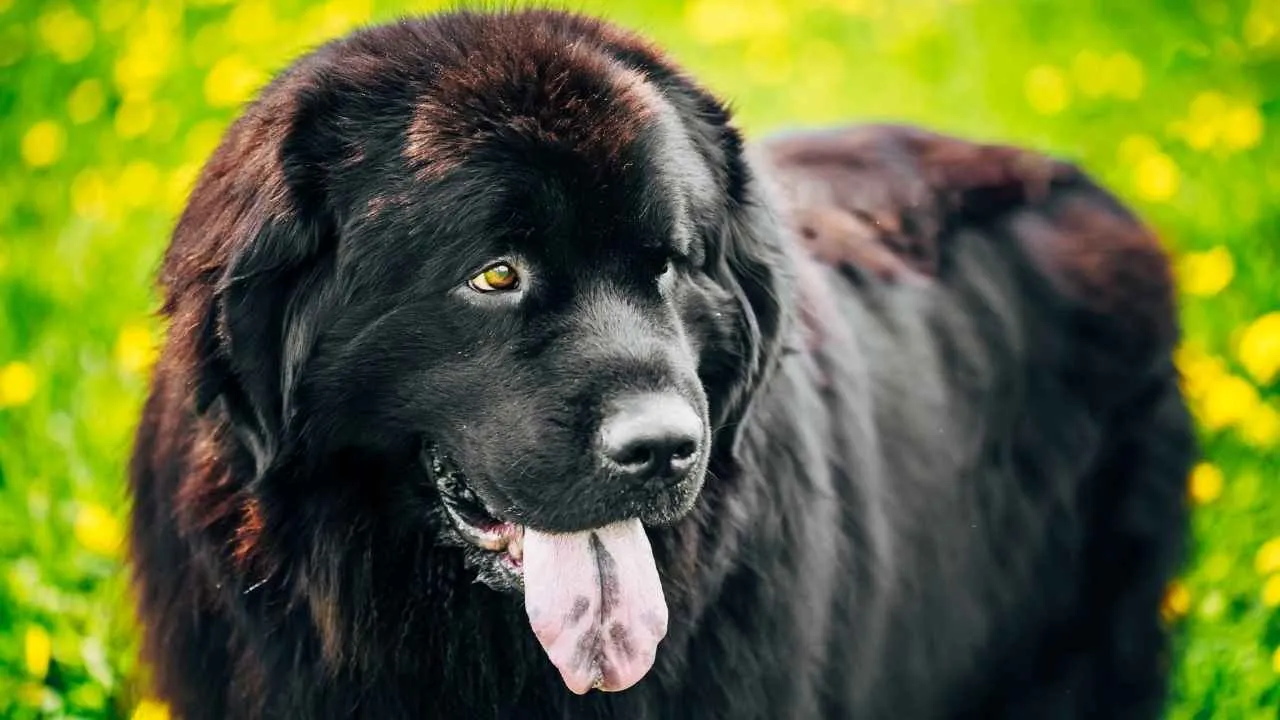
Newfoundlands are generally gentle, patient, and highly devoted to their families. They can be affectionate without constantly seeking stimulation and often enjoy being included in ordinary household activities.
These powerful dogs can be courageous and dependable when circumstances require it, which gives them a useful balance between a soft family temperament and a substantial protective presence.
An Island Working Dog With a Remarkable Past
The Newfoundland developed on Newfoundland, Canada, where large working dogs became closely associated with fishermen and maritime communities.
They could assist with hauling equipment and were also renowned for helping people in dangerous water situations. This history contributed to their reputation for reliability and bravery.
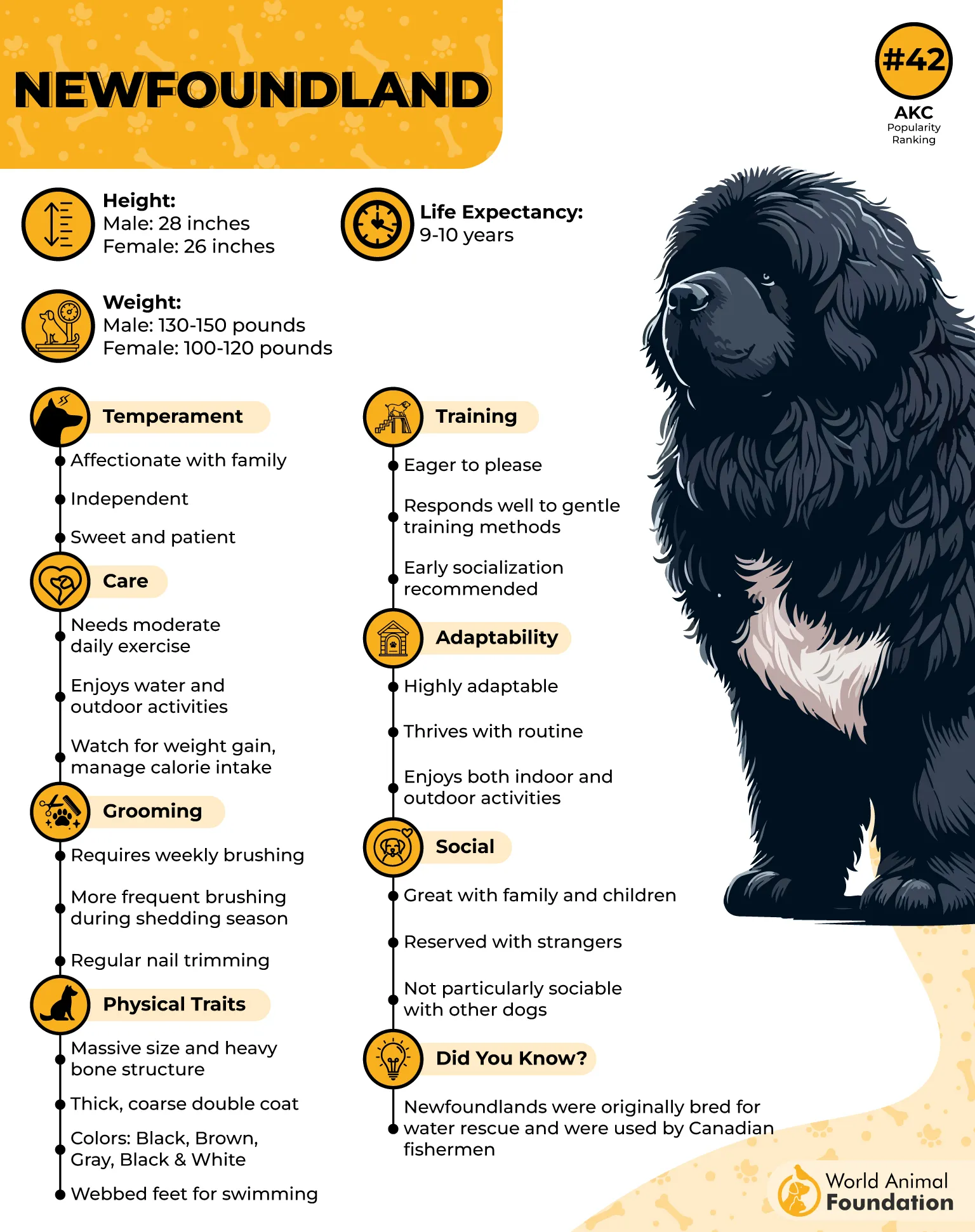
A Gentle Guardian That Needs Regular Brushing
The Newfoundland’s dense coat needs more attention than the smooth coats of many other breeds on this list. Frequent brushing is useful for keeping loose hair under control and maintaining the coat properly.
For families willing to put time into coat care, the Newfoundland can provide an impressive combination of loyalty, physical strength, and calm companionship.
5. Rhodesian Ridgeback
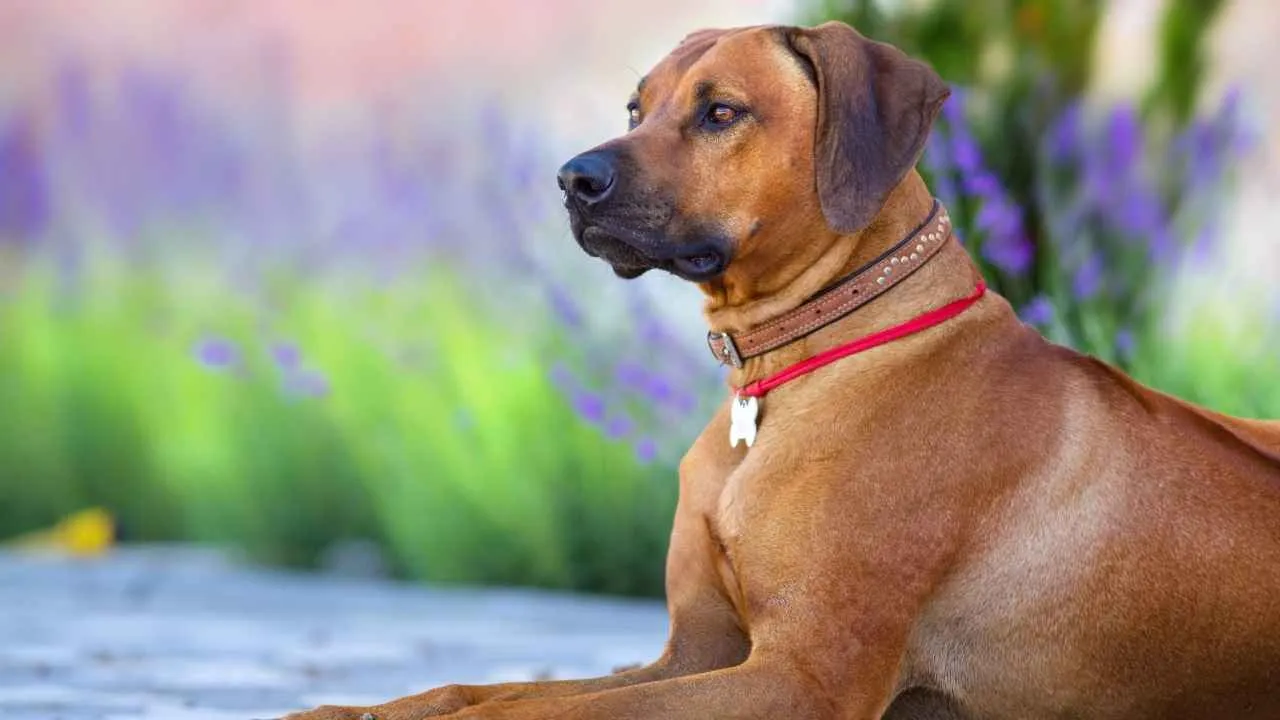
Rhodesian Ridgebacks are confident, athletic, and independent dogs with strong bonds to their owners. They often appreciate having room to move and activities that allow them to use their physical abilities.
Their self-assured nature can make them effective watchdogs, although their intelligence and independent streak mean they respond best to thoughtful, consistent training.
A Southern African Hunting Companion
The Rhodesian Ridgeback was developed in southern Africa, where European settlers bred dogs with local African dogs to create a capable hunting companion, as per WebMD.
The resulting breed became particularly valued for tracking and helping hunters deal with large game. Its working environment rewarded courage, endurance, and confidence, traits that remain important parts of its modern character.
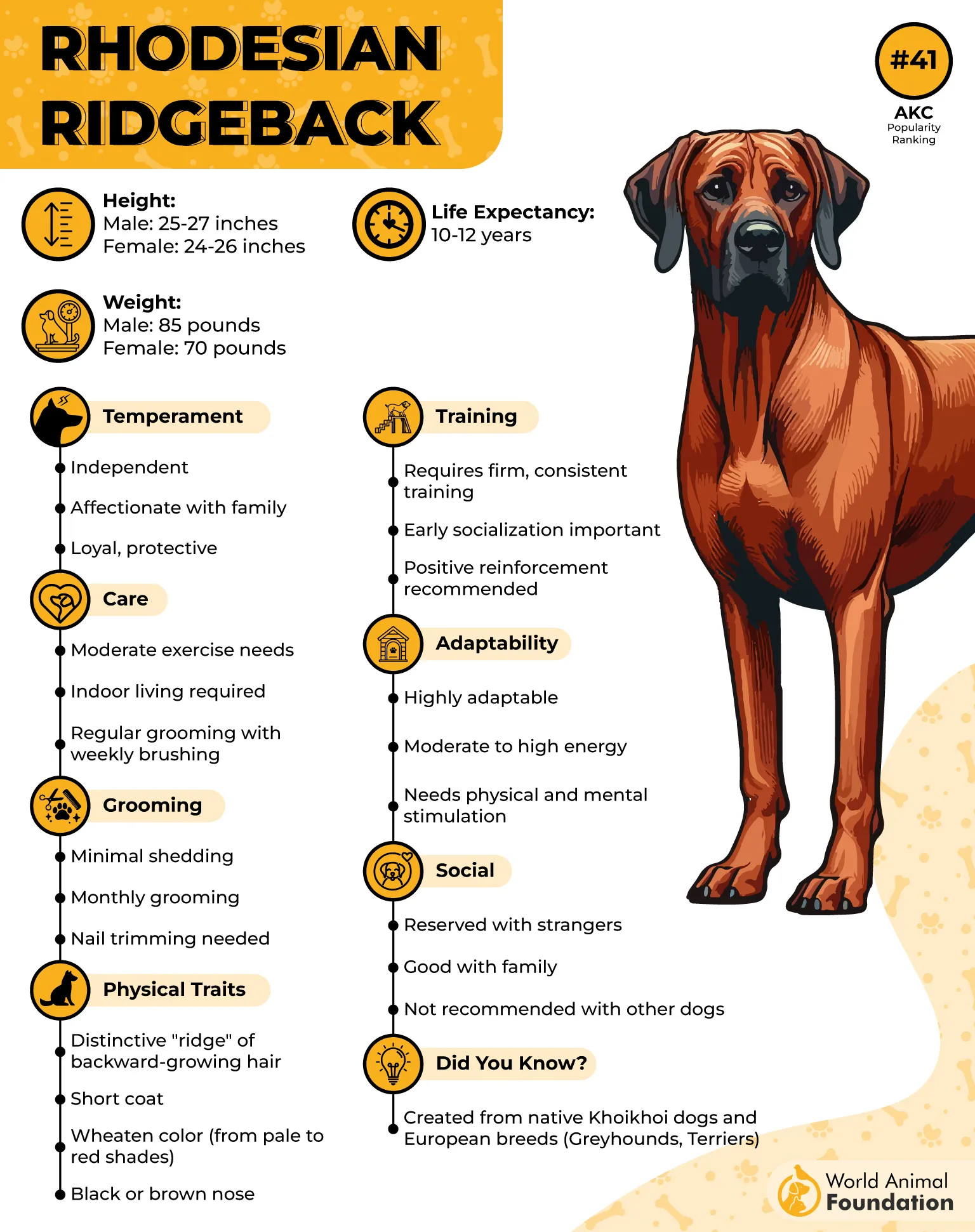
A Short Coat for Easier Guardian Care
The Ridgeback’s sleek coat requires very little complicated grooming. Basic brushing and routine bathing are generally enough to keep its coat in good condition.
Its protective value comes primarily from confidence, athleticism, and awareness rather than massive size. For an active household wanting a capable watchdog without an elaborate grooming routine, this breed can be a practical option.
6. Cane Corso
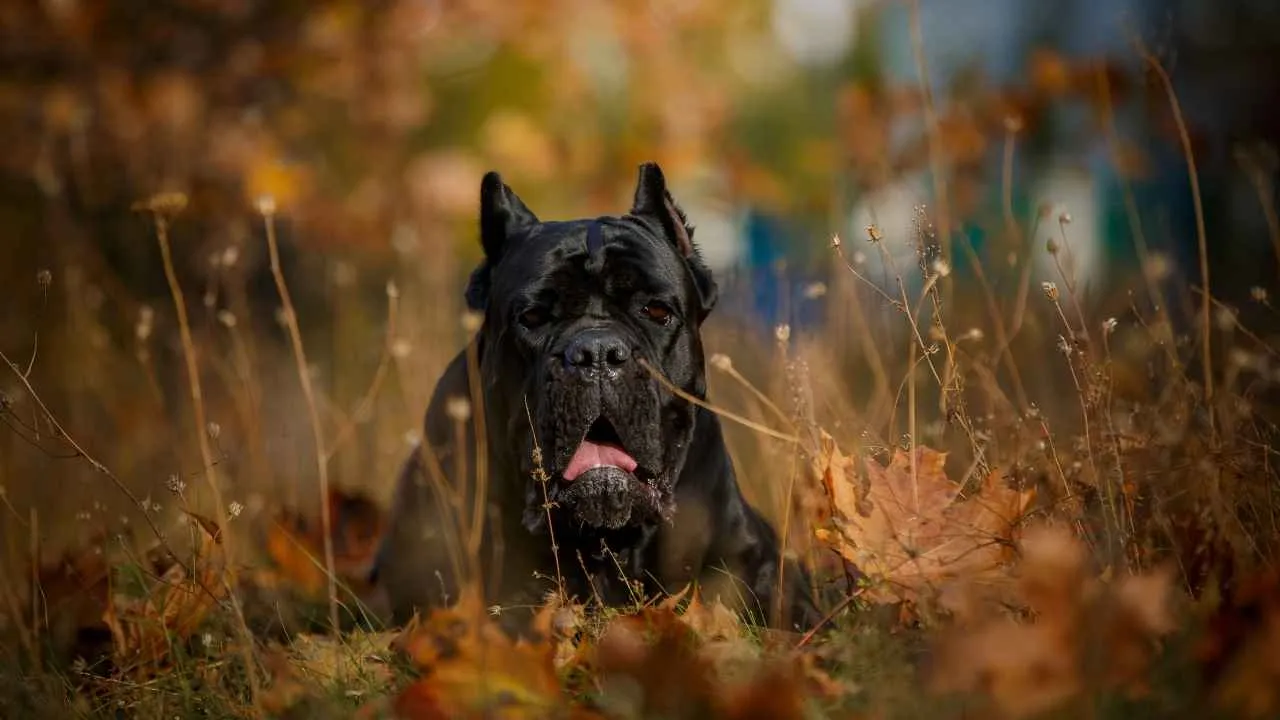
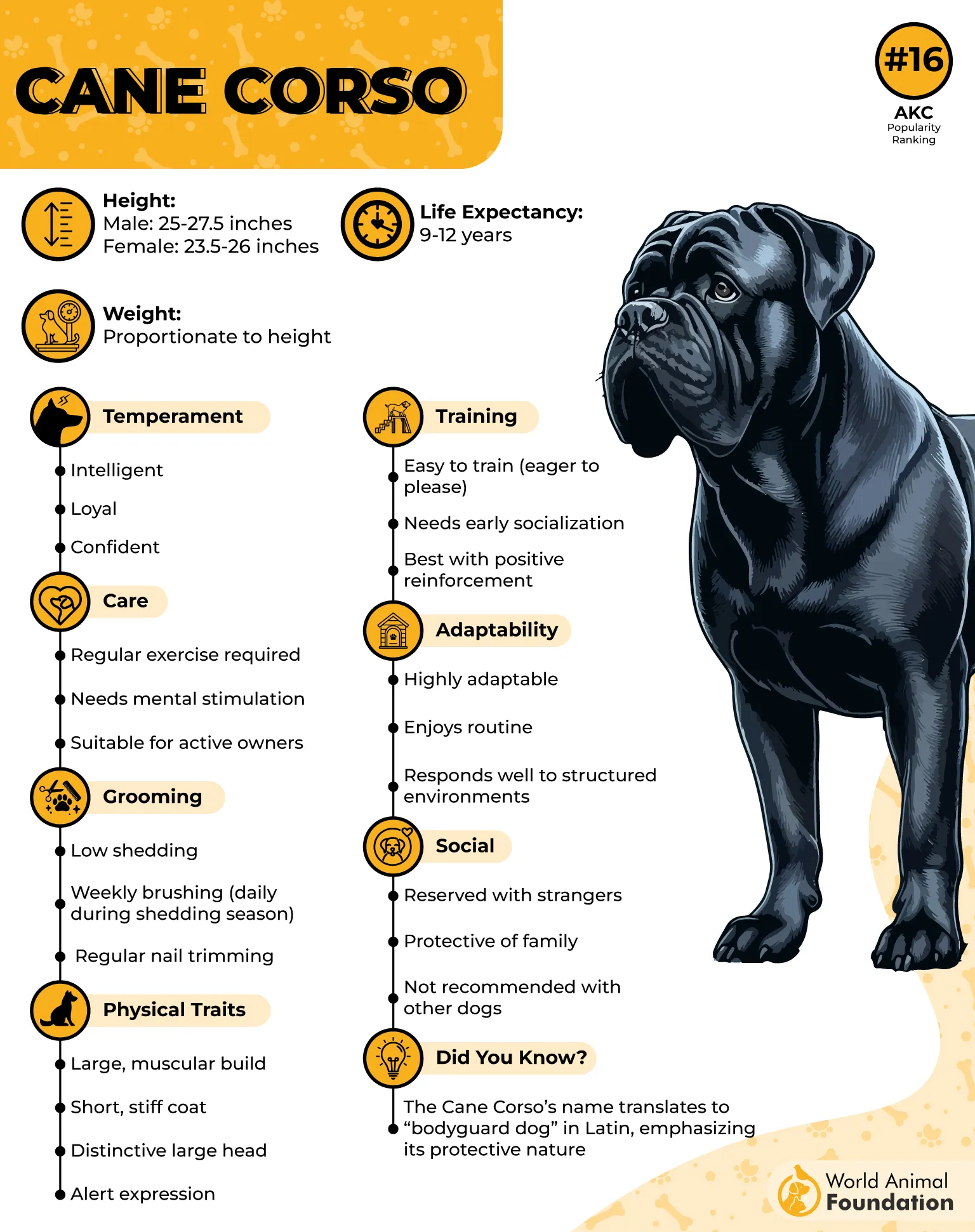
Cane Corsos are serious, intelligent, and strongly attached to their families. They tend to observe their surroundings and may remain cautious when encountering unfamiliar people.
Early socialization, clear boundaries, and consistent training can help turn their natural protective instincts into controlled and dependable household behavior.
An Italian Farm Dog With a Guardian’s Heritage
The Cane Corso has its roots in Italy, where large working dogs were used around farms and rural properties, as per PetMD. Their duties could include watching over land, livestock, and people.
This practical background helped shape a breed that was expected to be capable, courageous, and responsive when protection was necessary.
Low-Fuss Grooming for a Serious Family Protector
The Cane Corso has a short coat that is relatively easy to maintain. Regular brushing and ordinary bathing can handle most routine coat-care needs.
Its low grooming burden does not mean low overall responsibility. Owners must be prepared to devote considerable attention to training and socialization, particularly because of the breed’s strength and natural guarding instincts.
7. Doberman Pinscher
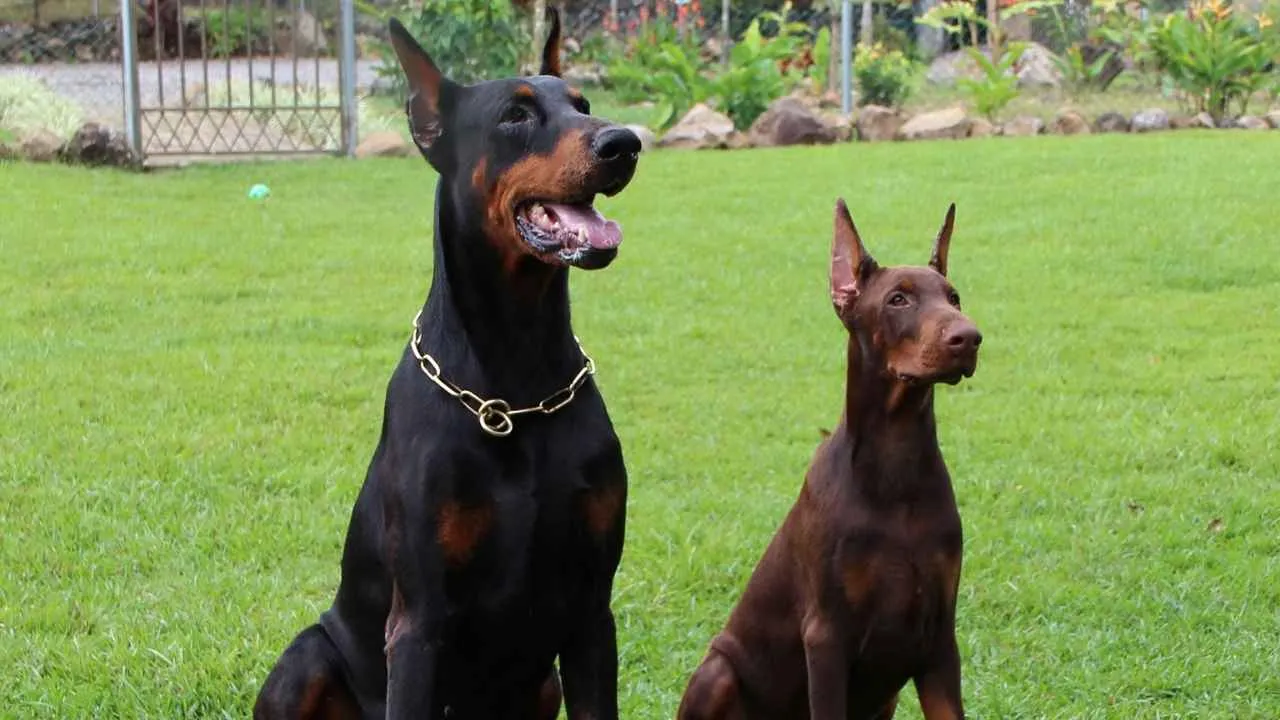
Doberman Pinschers are intelligent, alert, energetic, and highly responsive to their owners. They often enjoy learning and can become closely attuned to household routines, as per PDSA.
A Doberman may quickly notice unfamiliar sounds, people, or changes in its surroundings, while its strong attachment to its family can encourage it to remain close when something seems unusual.
A German Breed Created for Personal Protection
The Doberman Pinscher was developed in Germany in the 19th century by Karl Friedrich Louis Dobermann. He wanted a dog that could accompany him during his work and provide a measure of protection.
Breeders subsequently shaped the type into a versatile working dog known for intelligence, courage, speed, and loyalty. Its original purpose remains evident in its strong connection with its handler and its alert nature.
Sleek and Simple Care With Strong Watchfulness
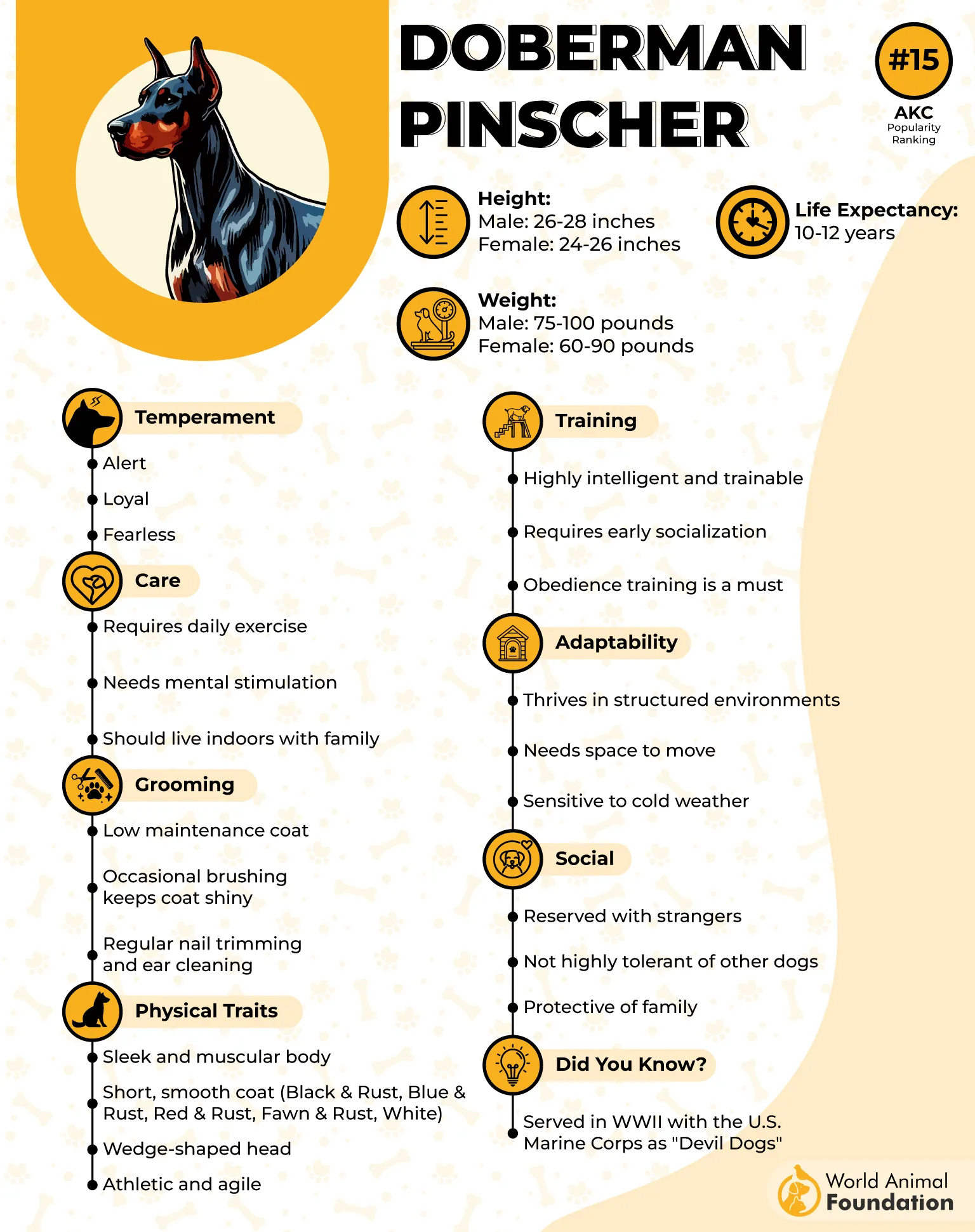
The Doberman’s short coat is one of its easiest features to maintain. Regular brushing is generally enough for routine coat care, with normal bathing as needed.
Its greater maintenance requirement is behavioral rather than cosmetic. Training, exercise, and mental engagement are essential, but in return, families can gain an attentive dog whose presence and responsiveness can contribute to household security.
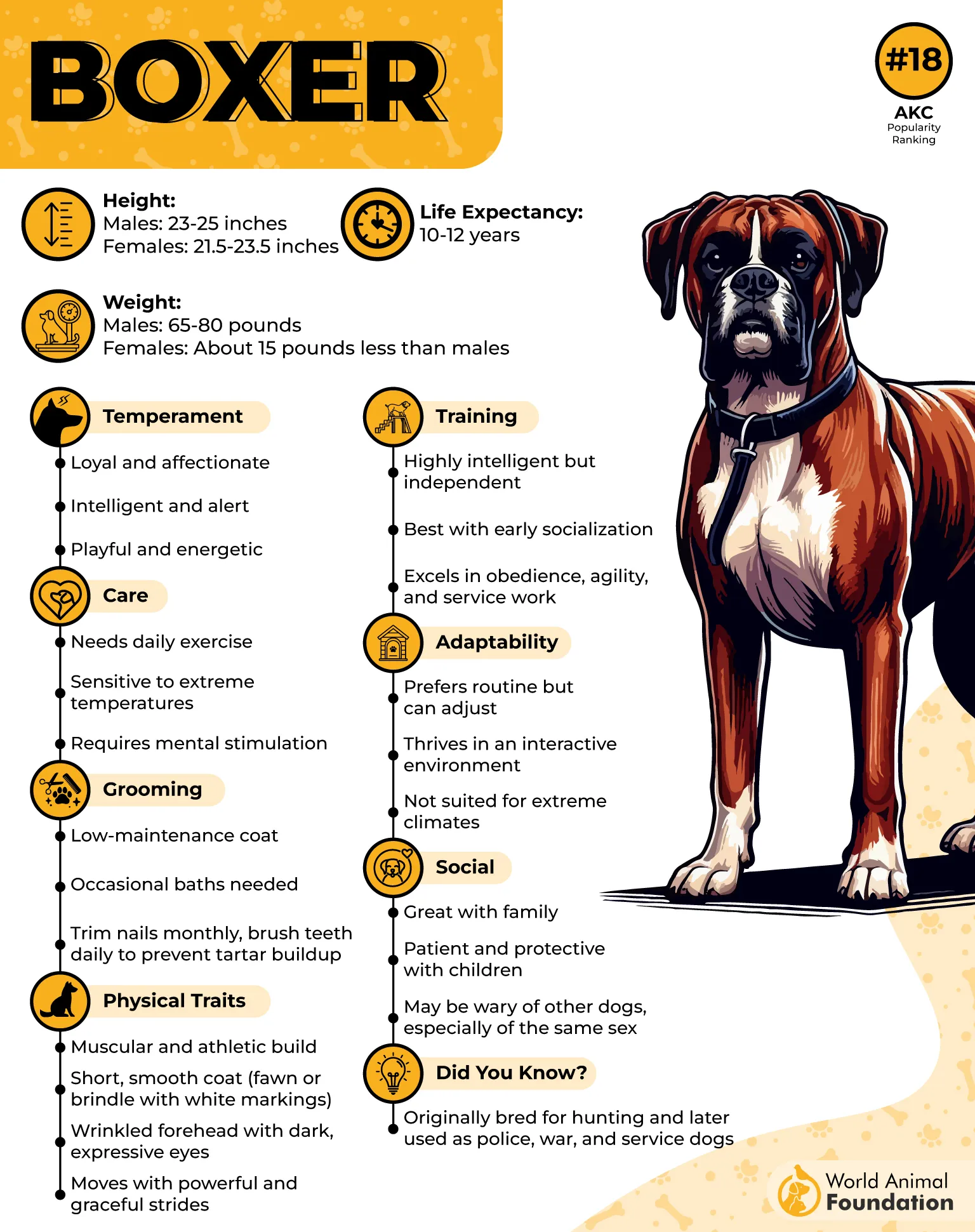
8. Boxer
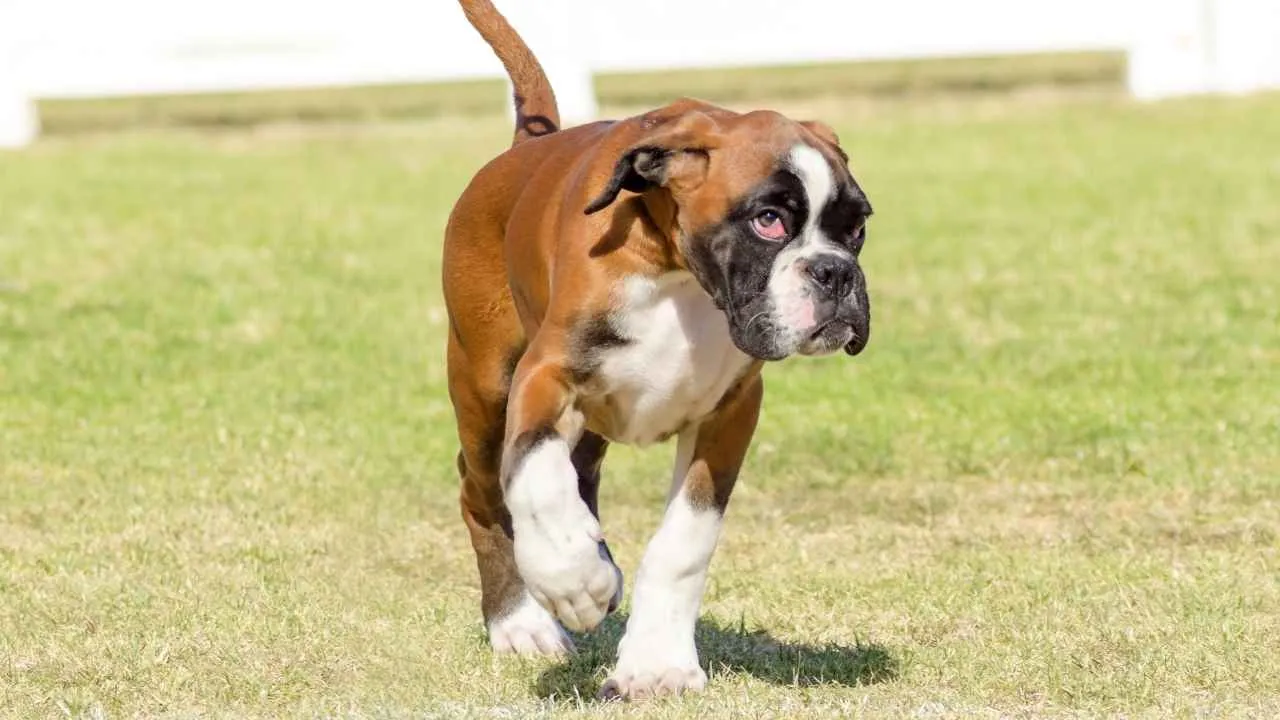
Boxers are lively, affectionate, and enthusiastic dogs that often bring plenty of personality into family life. They enjoy interaction and tend to form strong relationships with their owners.
Their playful behavior does not eliminate their serious side. Boxers can be alert to unfamiliar activity and may become protective of the people they consider part of their family.
A German Working Breed With Many Talents
The Boxer originated in Germany and developed from older European working dogs. Its ancestry included dogs used for hunting and other physically demanding tasks.
As the breed evolved, it became useful in a variety of working and companion roles. Its background helped produce a dog with physical confidence, stamina, and a strong willingness to interact with people.
Easy Coat Care for an Active Household Guardian
The Boxer’s short coat is convenient for families that do not want lengthy grooming sessions. Regular brushing and basic bathing can keep routine maintenance simple.
Its real needs involve exercise and engagement. Families that can provide sufficient activity may find the Boxer offers an appealing balance of straightforward coat care, affectionate behavior, and natural attentiveness.
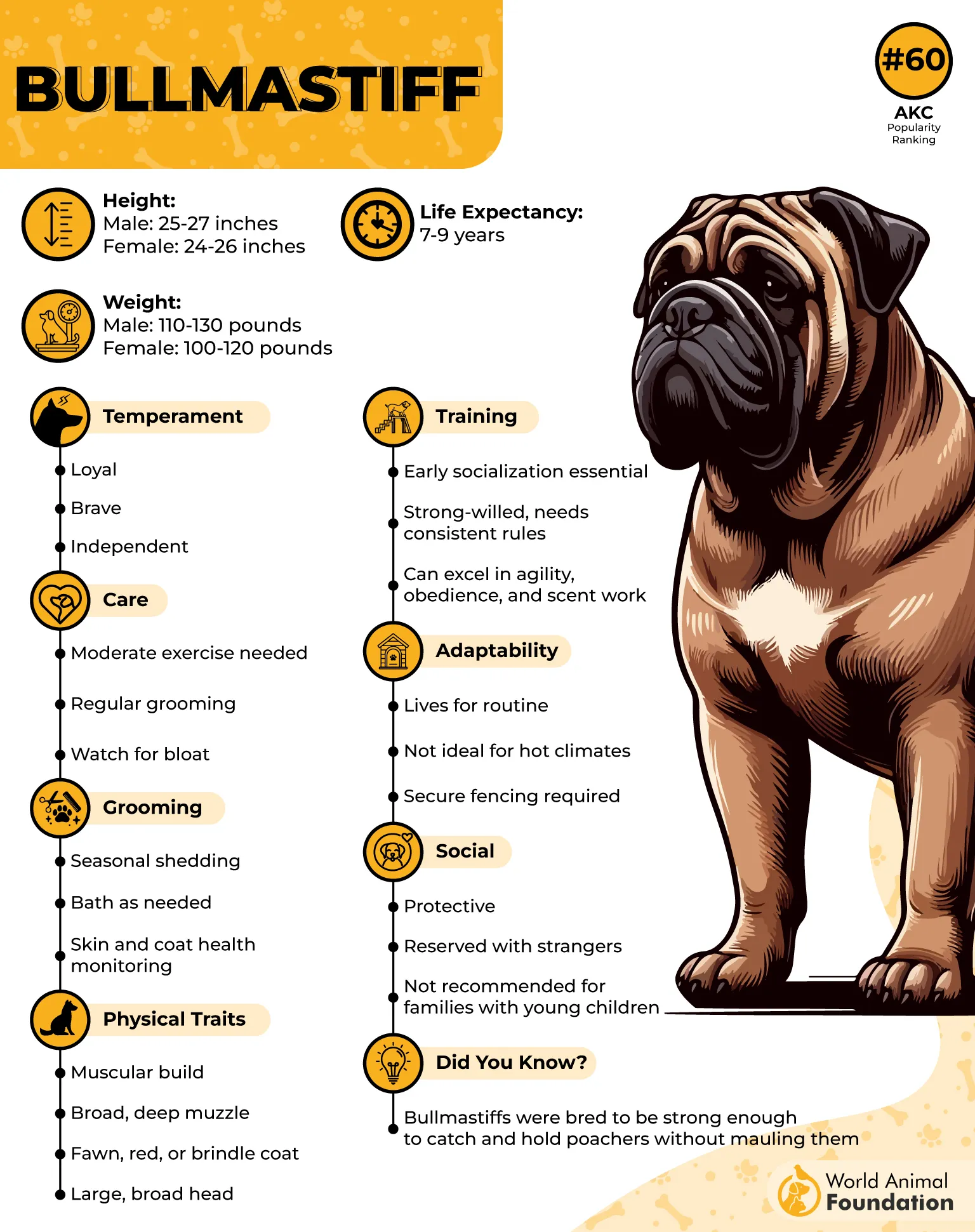
9. Bullmastiff
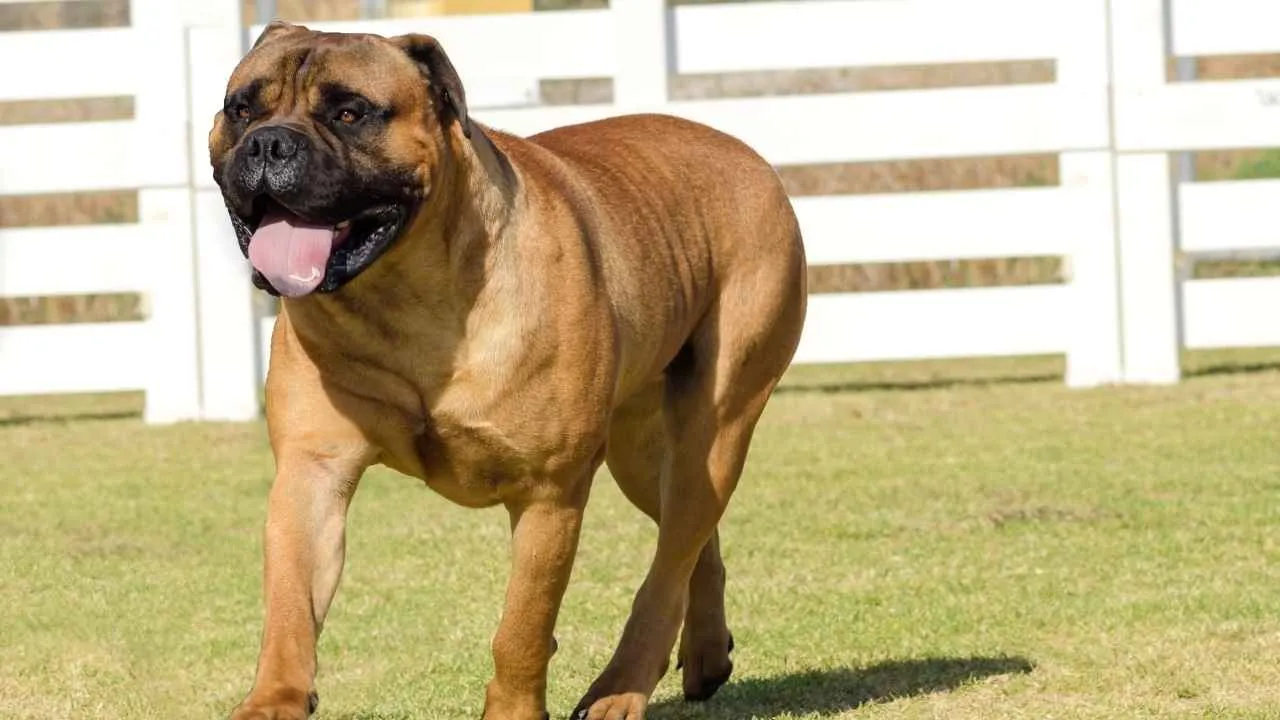
Bullmastiffs are typically calm, loyal, and self-possessed. They can enjoy relaxing around their owners and do not always need constant activity to remain content.
Their powerful build and confident manner can make them naturally intimidating, while appropriate training helps ensure that their protective instincts remain controlled.
Developed to Watch English Country Estates
The Bullmastiff was developed in England to assist gamekeepers in protecting large estates from poachers, as noted by the AKC.
Its working role called for a combination of strength, courage, and restraint. The breed was expected to detect intruders and help stop them rather than simply react indiscriminately, influencing the steady temperament associated with many Bullmastiffs today.
A Short-Haired Guardian With Limited Grooming Needs
Bullmastiffs have short fur that is relatively easy to maintain. Regular brushing can help remove loose hair, and occasional bathing can handle ordinary cleaning needs.
Their imposing physique does much of the visual work when it comes to deterrence. For a family prepared to manage a large dog, the breed can offer a quiet but substantial protective presence without complicated coat care.
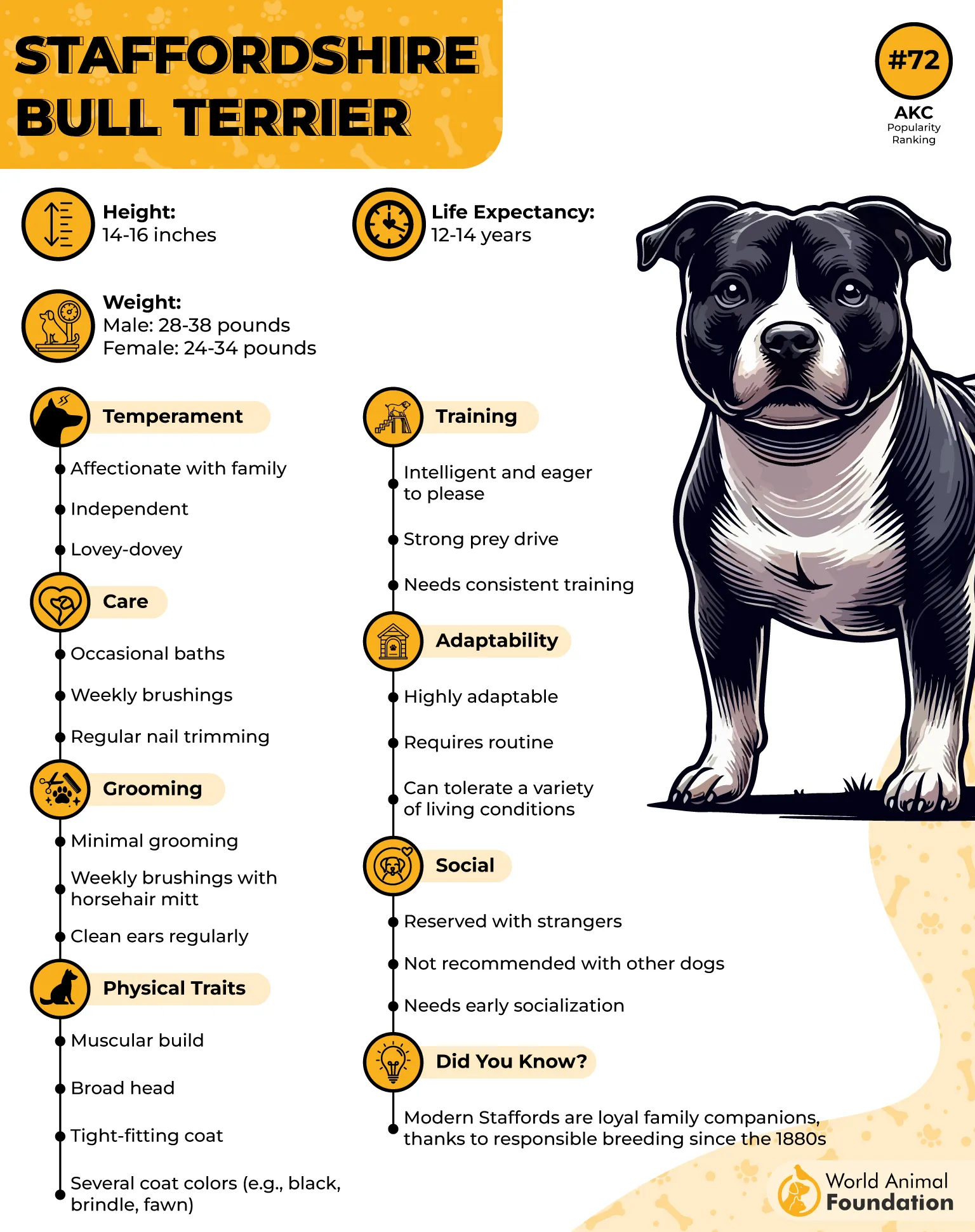
10. Staffordshire Bull Terrier
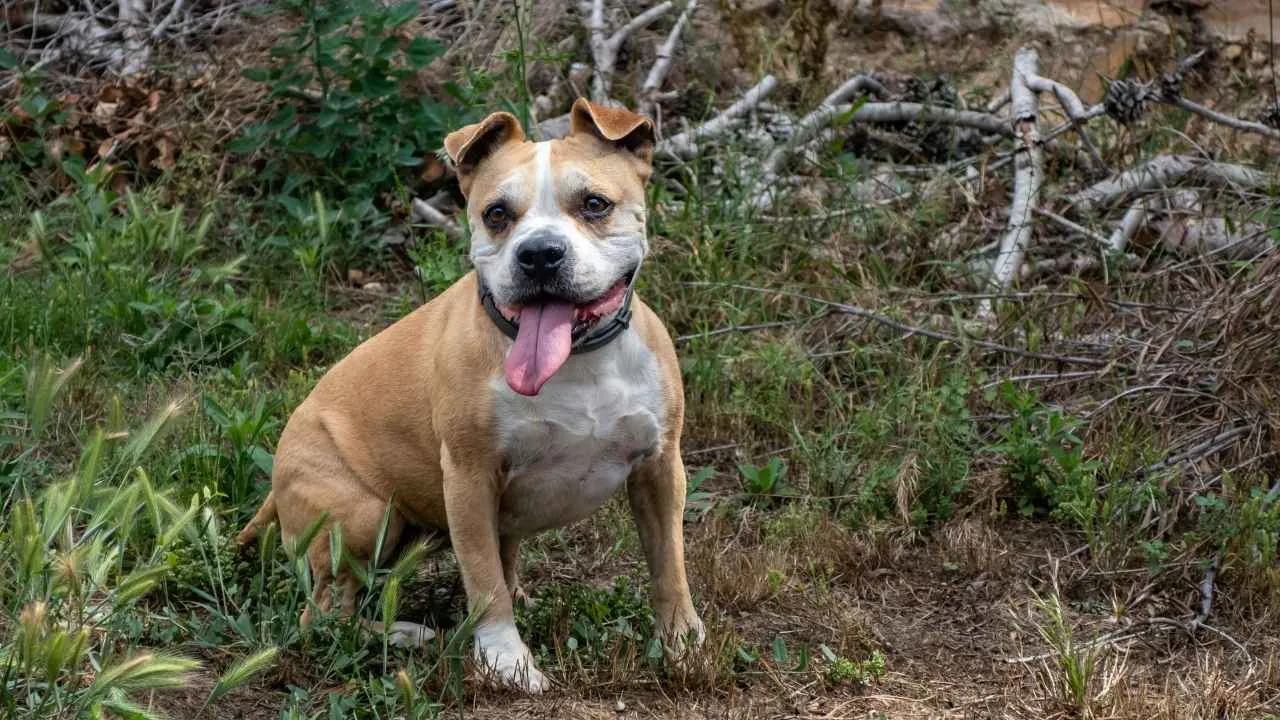
Staffordshire Bull Terriers are energetic, affectionate, and confident despite their compact size. They often enjoy being involved with their families and can have a lively, entertaining personality.
These dogs are also determined and physically capable. Their loyalty can make them attentive to the people they live with, while consistent training and socialization help direct their enthusiasm toward appropriate behavior.
An English Terrier With a Complex Evolution
The Staffordshire Bull Terrier developed in England from combinations of Bulldog and terrier types. Its early history was connected with blood sports, but those activities were eventually prohibited.
Responsible breeders later concentrated increasingly on companionship and temperament. Over time, the breed became recognized for its affection toward people, confidence, and muscular athleticism.
Compact Maintenance With Plenty of Family Loyalty
The Staffordshire Bull Terrier has a short, close coat that is uncomplicated to care for. Regular brushing and occasional bathing are generally enough for its everyday grooming needs.
Its smaller frame can make routine handling easier than with giant guardian breeds, while its confidence and devotion can still make it an attentive member of the household. Owners should provide adequate exercise and training to keep its energetic personality well directed.
Conclusion
The Great Pyrenees, Mastiff, Great Dane, Newfoundland, Rhodesian Ridgeback, Cane Corso, Doberman Pinscher, Boxer, Bullmastiff, and Staffordshire Bull Terrier all approach family protection differently.
Some rely heavily on their enormous stature, while others combine speed, confidence, intelligence, or close family bonds to remain attentive to their surroundings. Their care requirements also vary, with several offering particularly simple coat maintenance.
The ideal low-maintenance guardian is ultimately one that fits the household as a whole. When temperament, training, exercise, grooming, and protective instincts are all considered together, families have a much better chance of finding a dog that is both dependable and practical to live with.
