




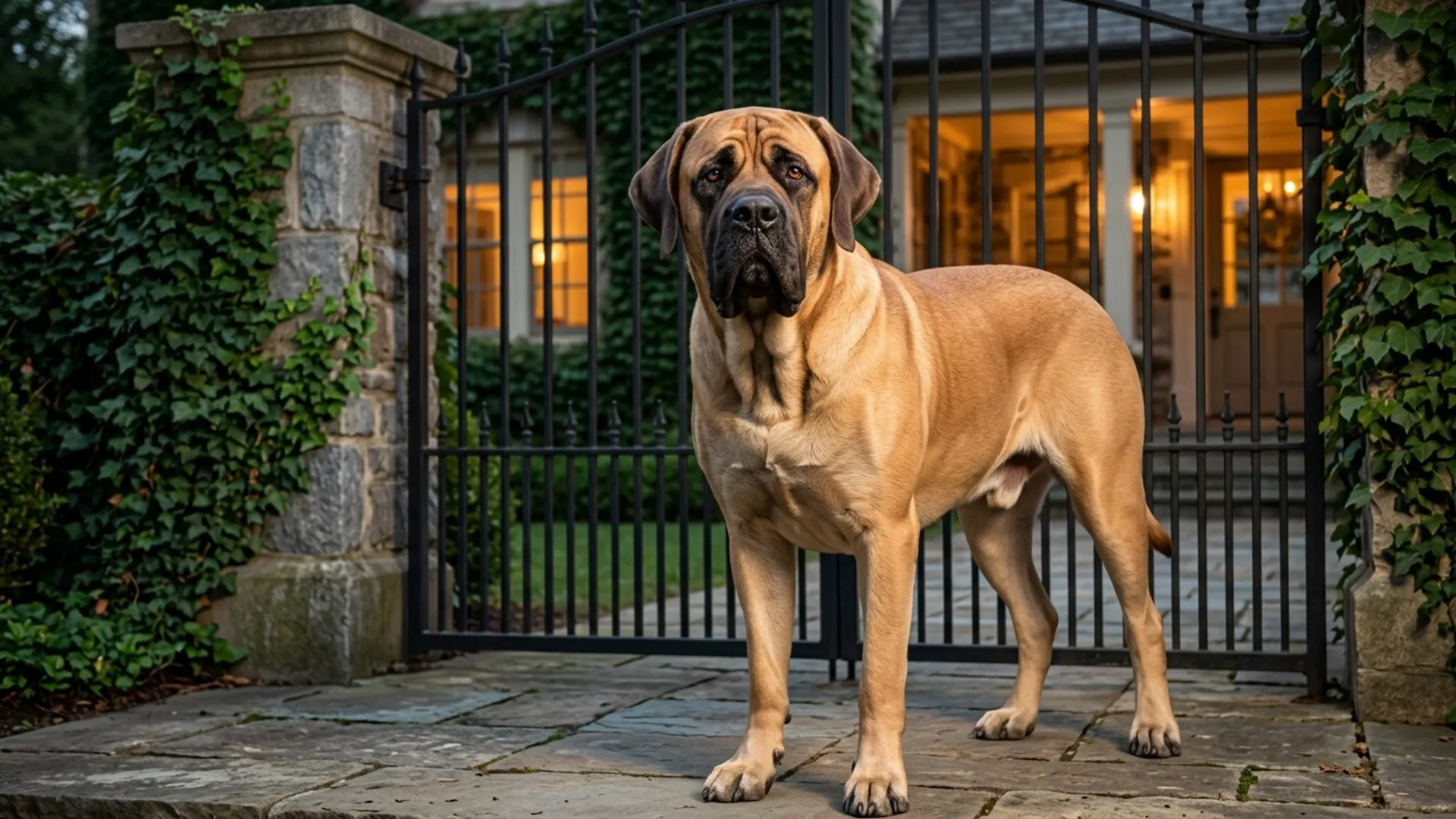
You can have a dog that notices the stranger at the gate, hears an unusual noise outside, and fits comfortably into a household routine. That is the appeal of low-maintenance guard breeds.
They combine natural awareness with manageable care needs, making them easier to handle for people who want a protective companion without spending every day on grooming, intense exercise, or complicated management. A capable guard dog also needs more than a loud bark.
Confidence, responsiveness, impulse control, and early socialization help determine whether alert behavior becomes useful or disruptive. Exercise matters, and no breed should be treated as a substitute for locks, cameras, lighting, or other home-security measures.
In this article, you will find breeds that fit that balance, along with everyday traits that can make living with them simple and comfortable for daily life.
Key Takeaways
A good guard dog can notice something unusual at the gate, keep watch over the house, and still settle into family life afterward.
The Great Pyrenees has an especially fascinating history, with roots going back almost 3,000 years as a livestock guardian.
Then comes the Mastiff, Great Dane, and Newfoundland, each bringing a powerful presence while keeping everyday exercise and coat care fairly manageable.
The later picks add sharper instincts and different guarding styles, from the watchful Rhodesian Ridgeback to the athletic Doberman Pinscher.
Low-Maintenance Dog Breeds That Guard With Ease and Grace
1. Great Pyrenees
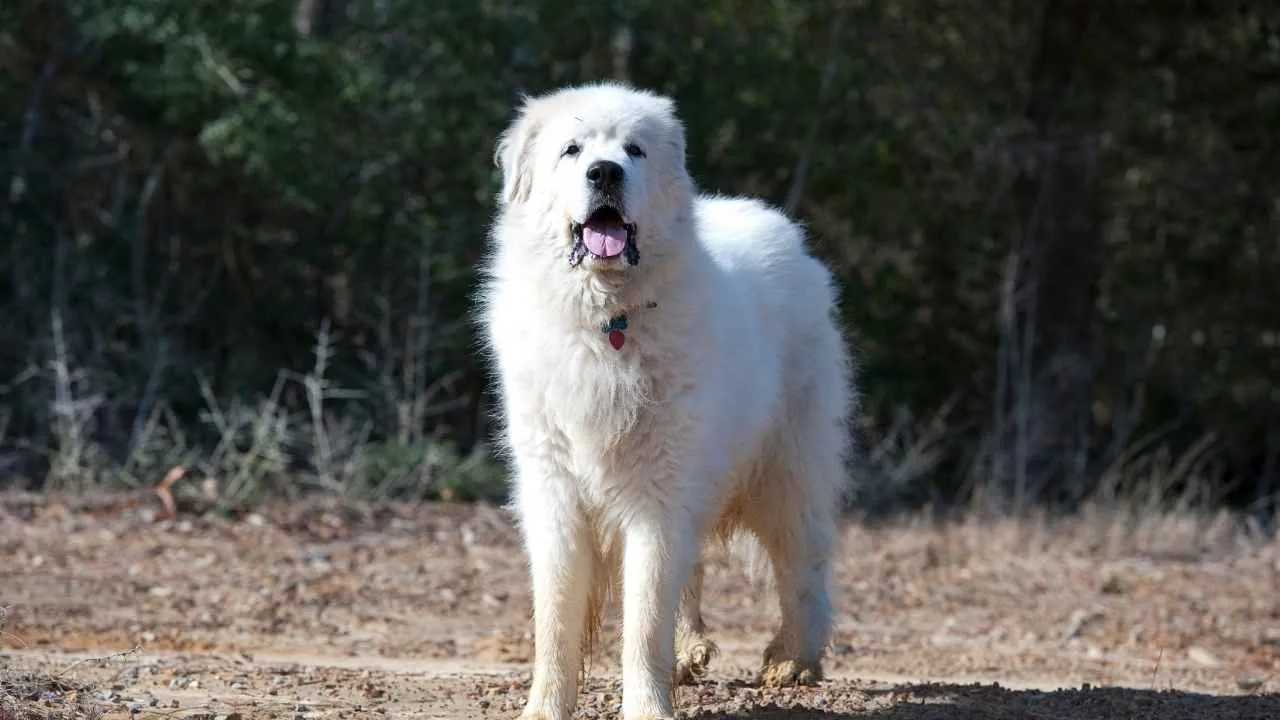
Great Pyrenees descends from large guardian dogs of Asia Minor, with records reaching back nearly 3,000 years. Its name comes from the Pyrenees range between France and Spain, where these dogs guarded sheep and goats against predators such as wolves and bears.
Quiet Confidence
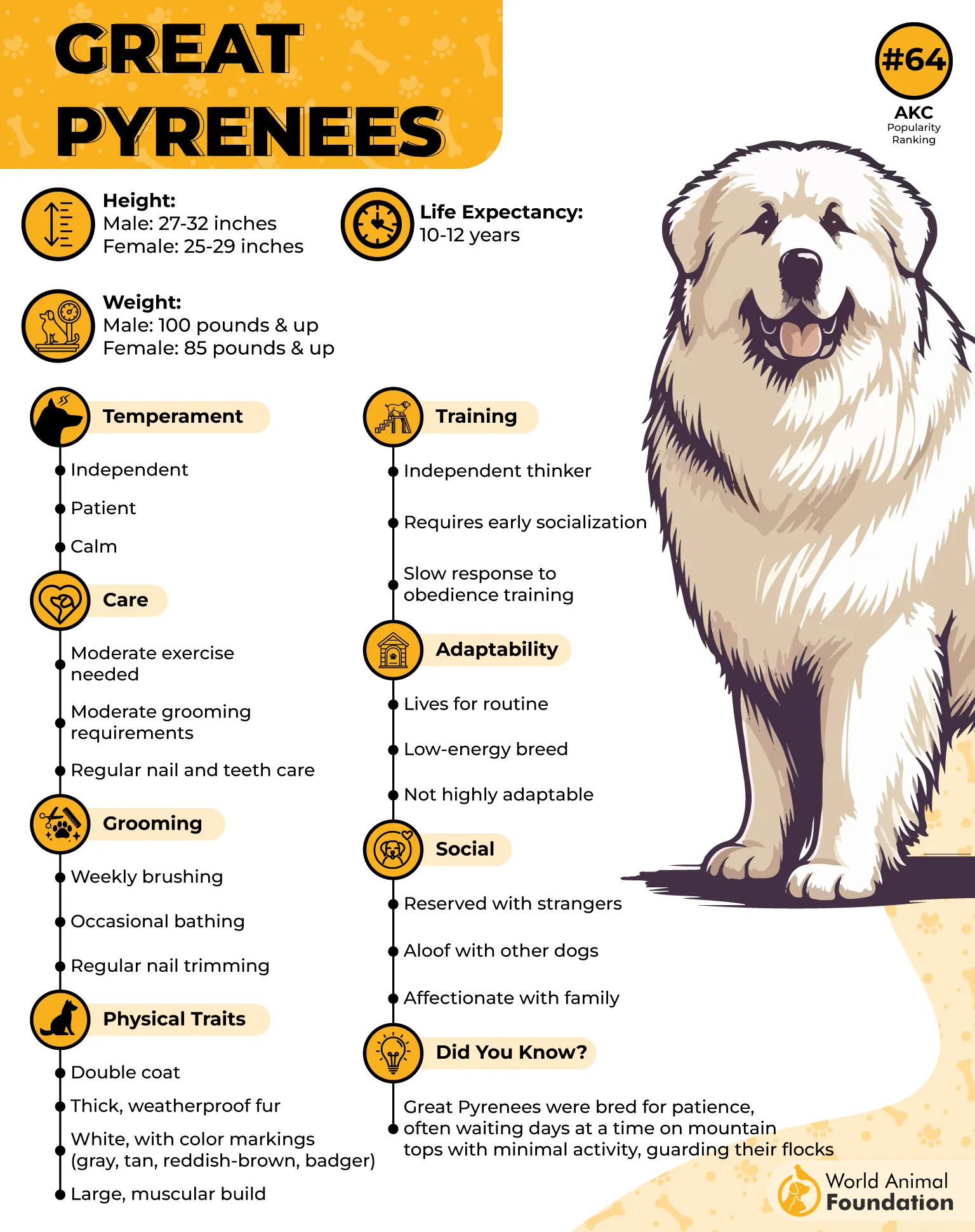
Great Pyrenees has a remarkably patient temperament shaped by long periods spent watching livestock. Its calm nature can suit family life, with proper guidance helping it interact safely with children, cats, dogs, and other animals.
A few practical details make this guardian especially interesting:
Uses deep warning barks around the home
Patrols in wide arcs rather than chasing threats
Can gently watch over young livestock
Low-Key Exercise
This guard dog breed does not need intense workouts to stay fit, and fast-paced running can be too demanding for its natural rhythm. Two 20–30-minute sessions can include gentle walks, easy afternoon hikes, or relaxed time exploring the yard at its own pace, as Orvis suggested.
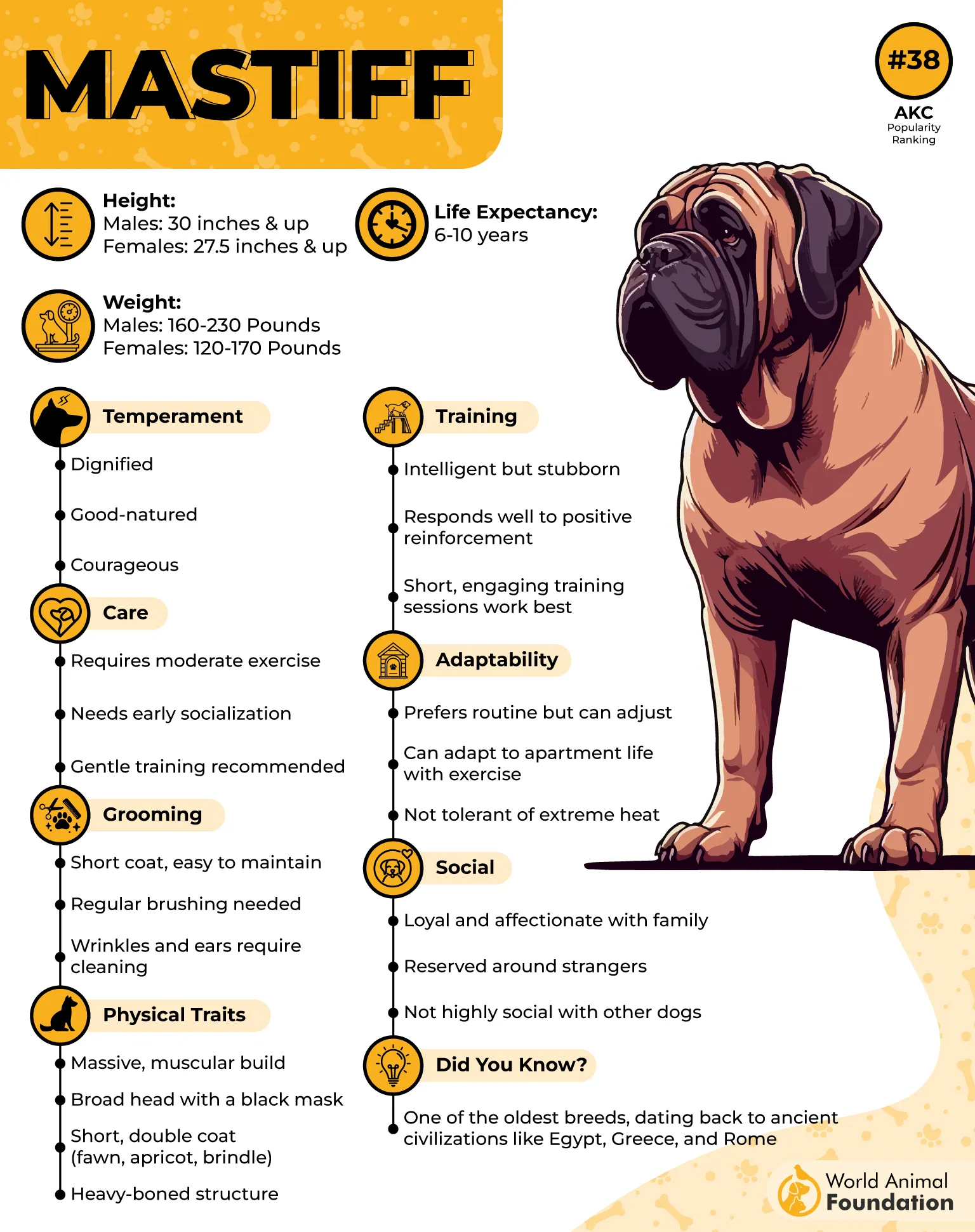
2. Mastiff
Mastiff comes from England and is also called the Old English Mastiff, with roots reaching back to ancient Molosser dogs associated with Asia. For centuries, these huge dogs served as guardians, war dogs, and formidable participants in bull and bear baiting.
A Serious Deterrent
Mastiff’s immense size, broad head, and powerful jaw give it a naturally imposing presence around a home. Its guarding style relies heavily on observation, with slow checks of doors, gates, and boundaries rather than constant activity.
These characteristics make that approach especially practical:
Deep bark that can warn off intruders
Calm body-blocking around family members
Quiet perimeter checks around property
Easygoing Exercise
This loving family pet does not need marathon-style exercise and can handle two 20-to-30-minute walks each day, preferably across softer grassy ground.
Swimming and relaxed games in a fenced yard offer additional low-impact ways to keep this heavy-bodied dog active without placing unnecessary strain on its joints.
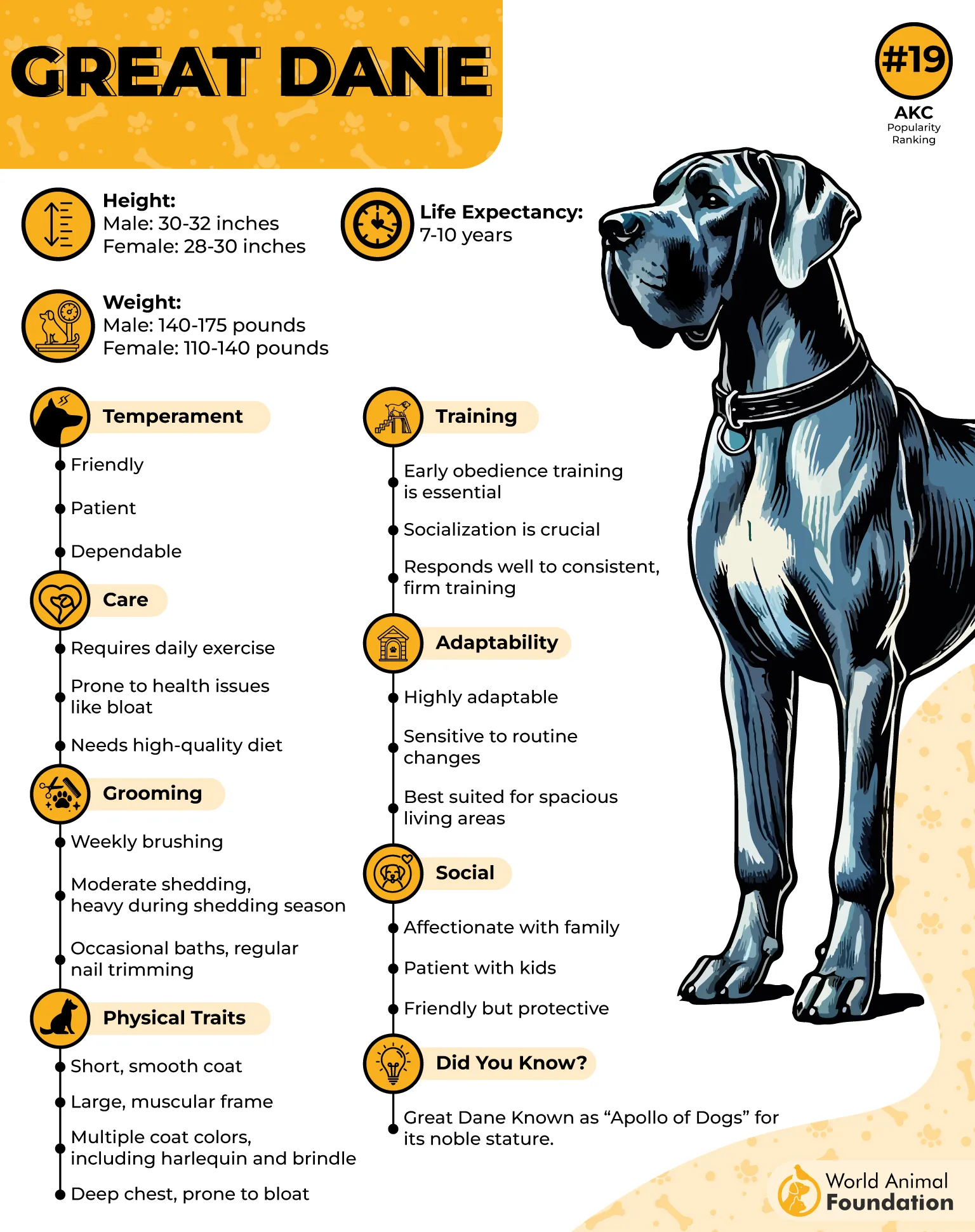
3. Great Dane
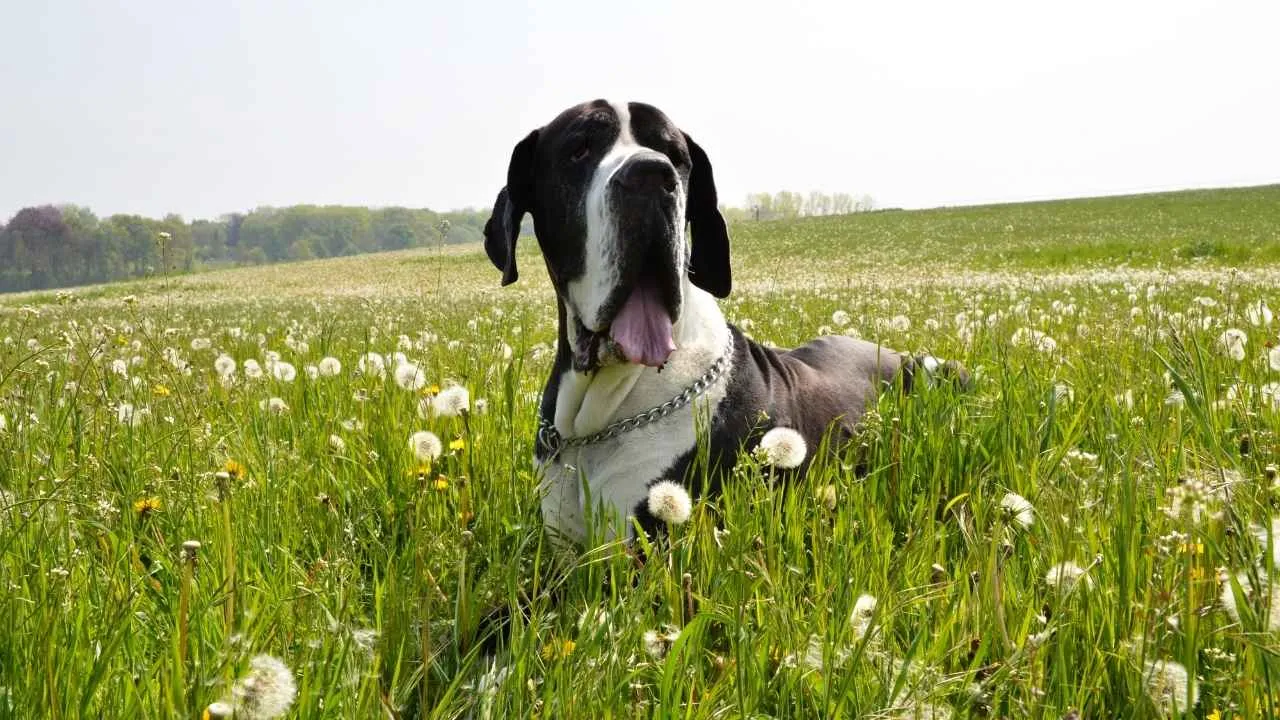
Great Dane originated in Germany as a wild boar hunter, valued for the strength needed to pursue and bring down aggressive game, as mentioned by the AKC. British sources once called the breed the “German Boarhound,” while the name Great Dane remains puzzling because the breed has no Danish connection.
A Serious Home Guardian
Great Dane brings an imposing presence to home security, backed by a deep bark and a body-blocking stance that can discourage unfamiliar people from approaching. Its visual awareness can also pick up distant activity, reflecting instincts linked to hunting and coursing.
At home, its softer personality shines through:
Deeply devoted to its household
Quickly becomes familiar with frequent visitors
Shows affection by leaning against people or seeking laps
Easy Coat Care
This loyal companion has a short coat that needs only weekly brushing to help manage shedding, while a bath every couple of months is generally sufficient, as PetMD writes.
Its daily routine calls for about 30 to 60 minutes of activity, with adult dogs able to enjoy hiking and sports such as agility, scent tracking, and flyball.
4. Newfoundland
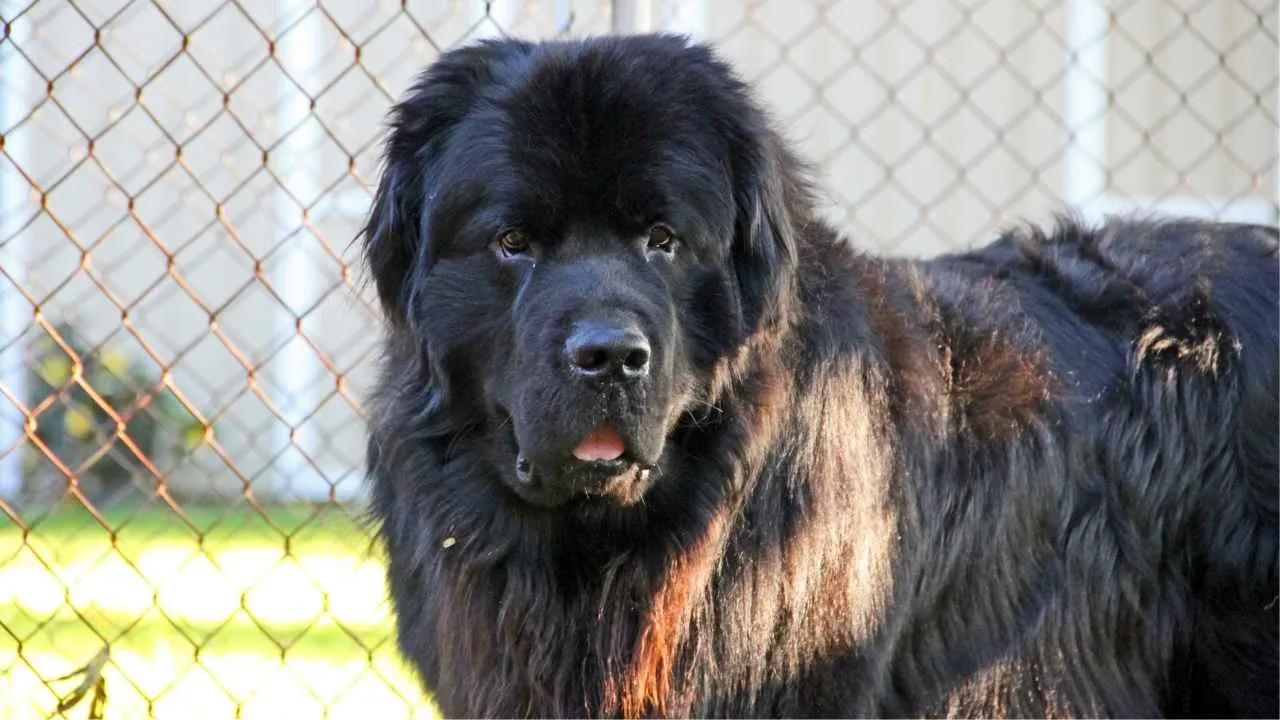
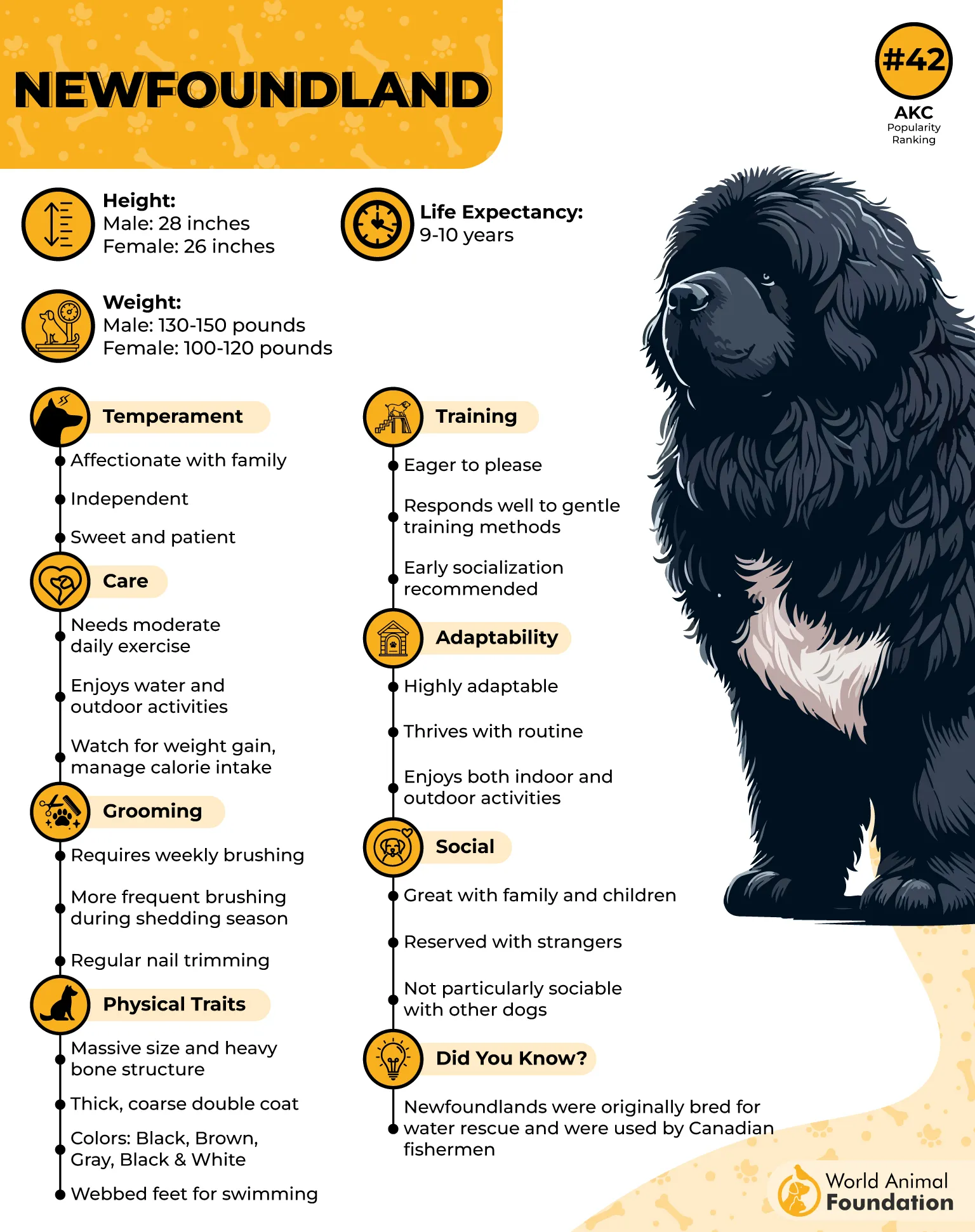
Newfoundland was developed on the Canadian island of the same name, where early dogs worked alongside Portuguese fishermen and were shaped by demanding coastal jobs.
Their duties included hauling nets, swimming through cold water, and pulling carts, giving the breed a practical working foundation.
Quiet Protection
This large breed dog brings a calm presence to the home, yet it takes family protection seriously when danger appears. If someone it loves faces a threat, this powerful dog may place its own body between that person and the source of trouble.
These characteristics make its protective nature especially interesting:
Alerts when something seems wrong
Can tow distressed swimmers
Naturally attentive to water emergencies
Gentle at Home
Newfoundland is calm, obedient, and affectionate, with moderate exercise needs that can often be met through about 30 minutes of daily activity.
Its patience around children has earned it the nickname “Nanny Dog,” while its sheer size means younger children can be knocked over accidentally during ordinary interaction.
5. Rhodesian Ridgeback
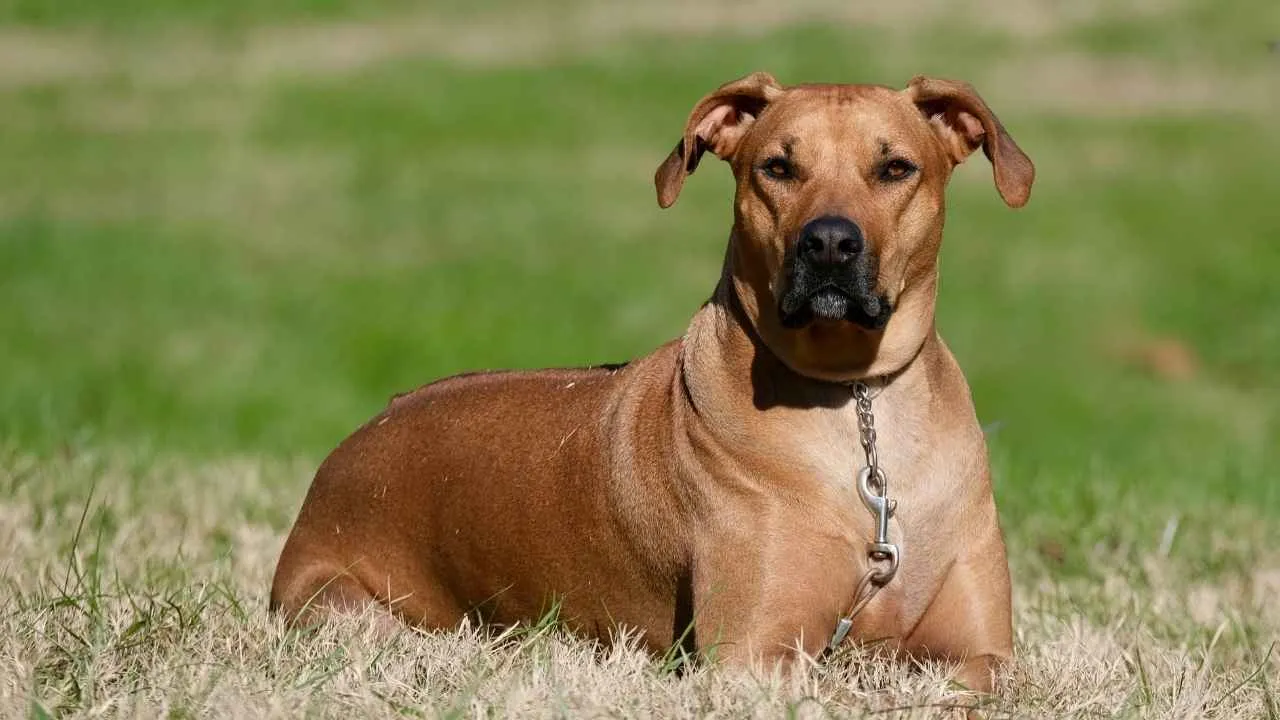
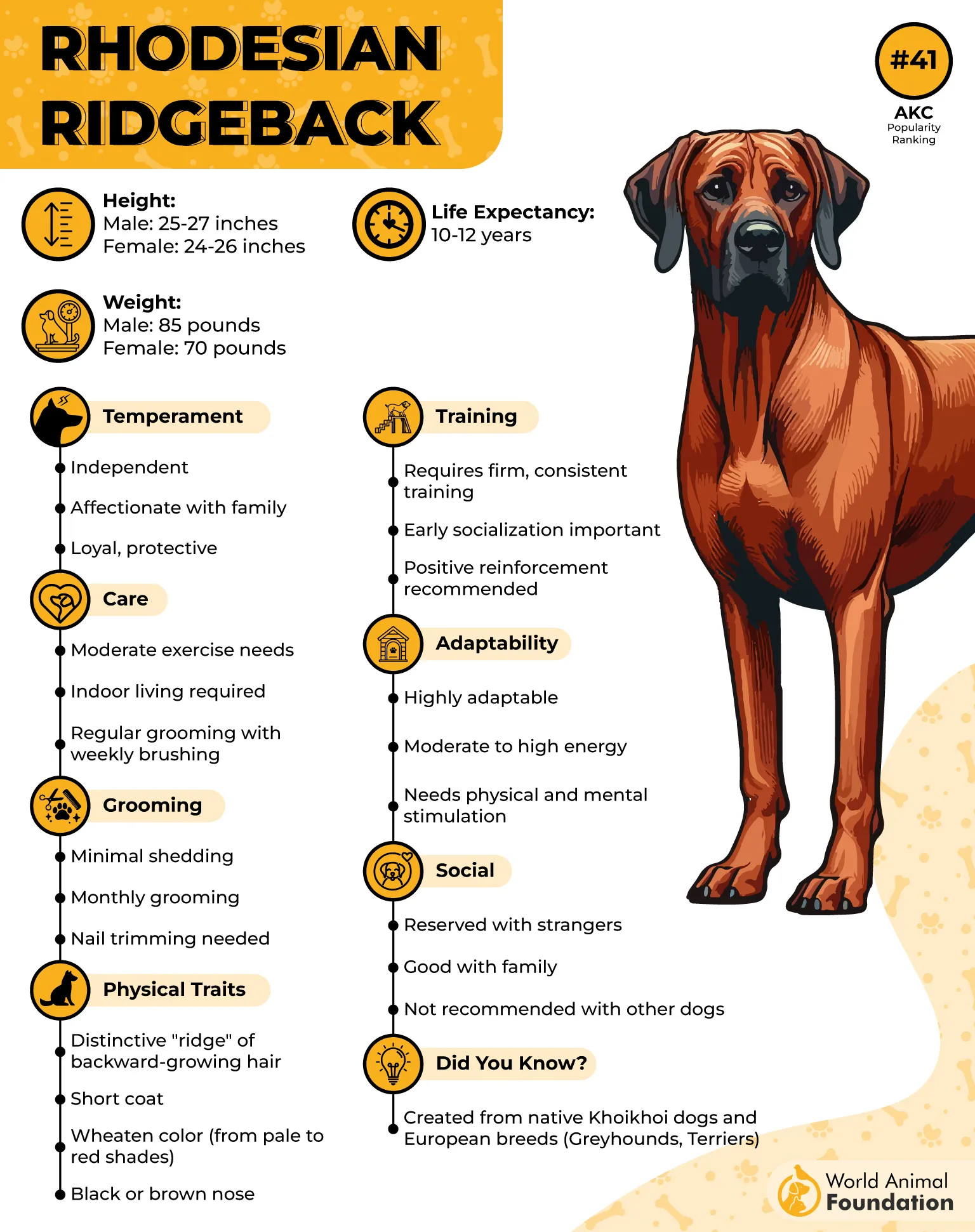
Rhodesian Ridgeback emerged from crosses between European breeds and native hunting dogs in southern Africa, creating a powerful dog marked by the distinctive ridge along its back.
By the late 1800s, these dogs were used in Rhodesia for tracking lions and keeping them at bay while hunters approached.
A Watchful Presence
They have keen eyesight and a strong sense of smell, often detecting activity around the home before people notice it. Its independent nature also suits a guardian that can assess situations on its own rather than waiting for constant direction.
These details give its watchfulness a more specific character:
Patrols home boundaries at dawn or dusk
Gives warning barks when something seems wrong
Can be aloof with unfamiliar visitors
Easy Coat Care
Rhodesian Ridgeback has a short coat that needs relatively little grooming, making routine care straightforward for an active household. Weekly brushing removes loose hair, while a monthly bath can be enough unless outdoor adventures leave the coat especially dirty.
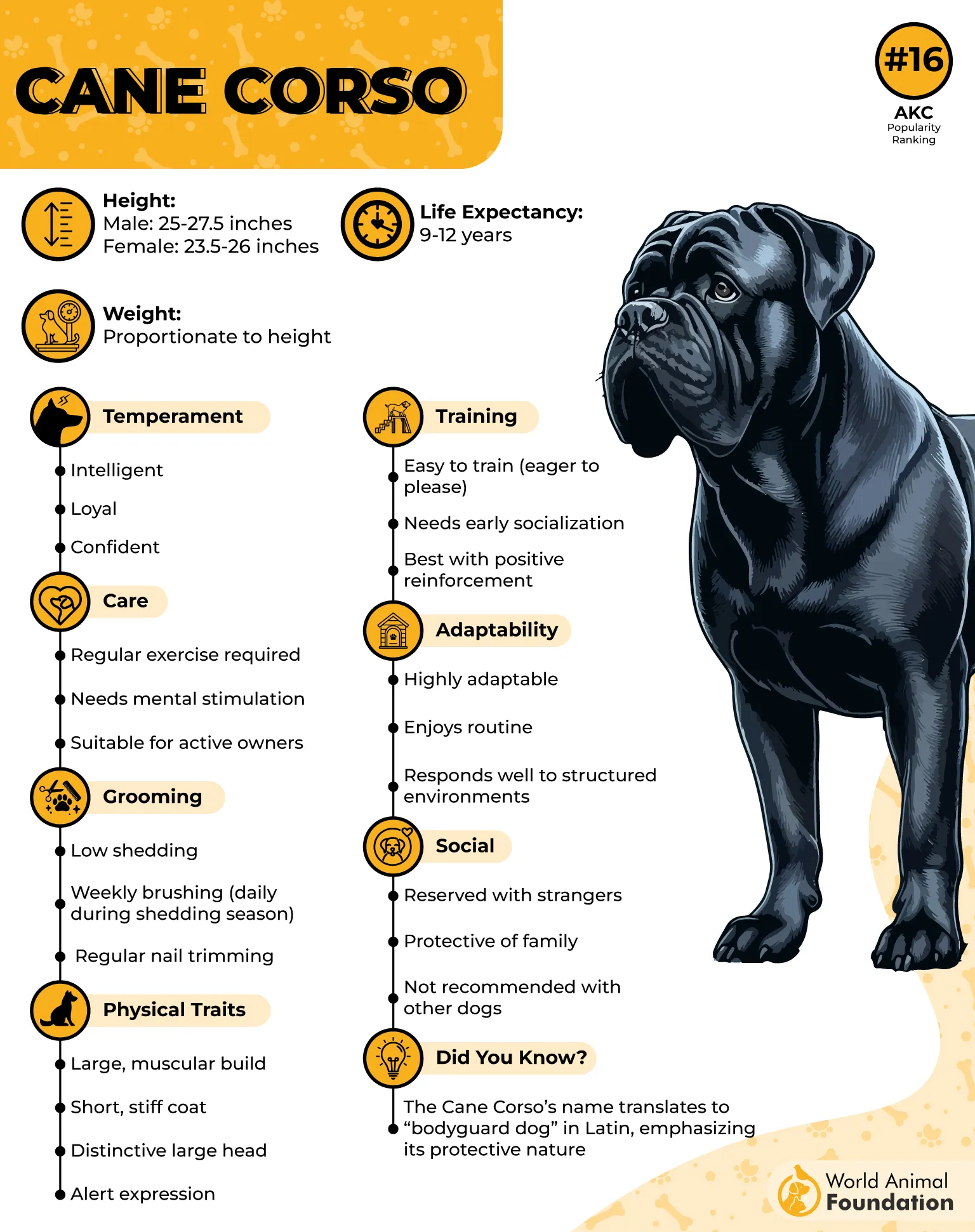
6. Cane Corso
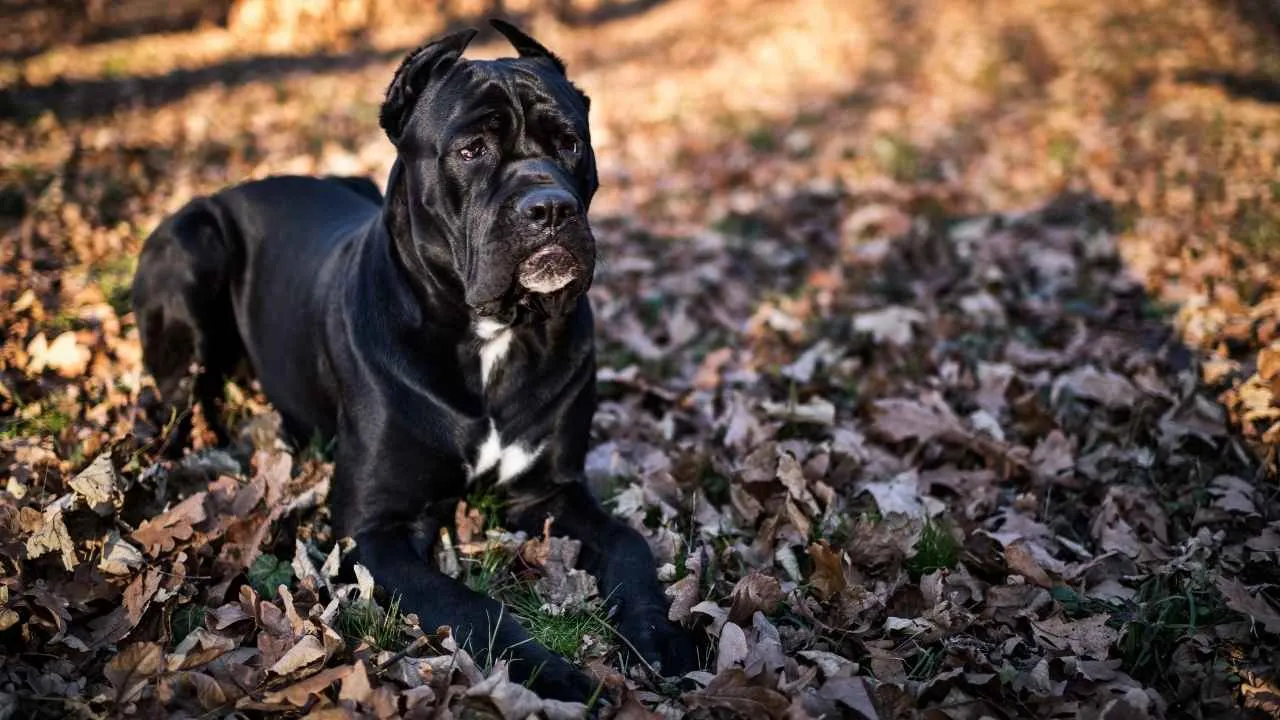
The Cane Corso’s early lineage is linked to the Molossus dogs of ancient Greece, with Roman soldiers later taking these strong dogs back to Italy.
Early Corsi served as war dogs, boar hunters, farm guardians, and livestock drovers before Italian enthusiasts helped revive the breed during the 1970s.
A Watchful Guardian
This excellent guard dog has a quiet way of assessing unfamiliar people, often watching closely before deciding how to respond. Its protective instinct can include deliberate perimeter checks around the home, particularly during evening and nighttime hours.
A closer look at its guardian behavior reveals:
Positions itself between family and perceived threats
Closely follows its primary handler indoors
Can remain intensely focused while assessing strangers
Simple Coat Care
Cane Corso has a short, stiff coat that usually needs weekly brushing, with extra attention during spring shedding when loose hair can increase. Baths can be kept occasional, while pet wipes are handy for removing dirt and keeping the coat fresh between full washes.
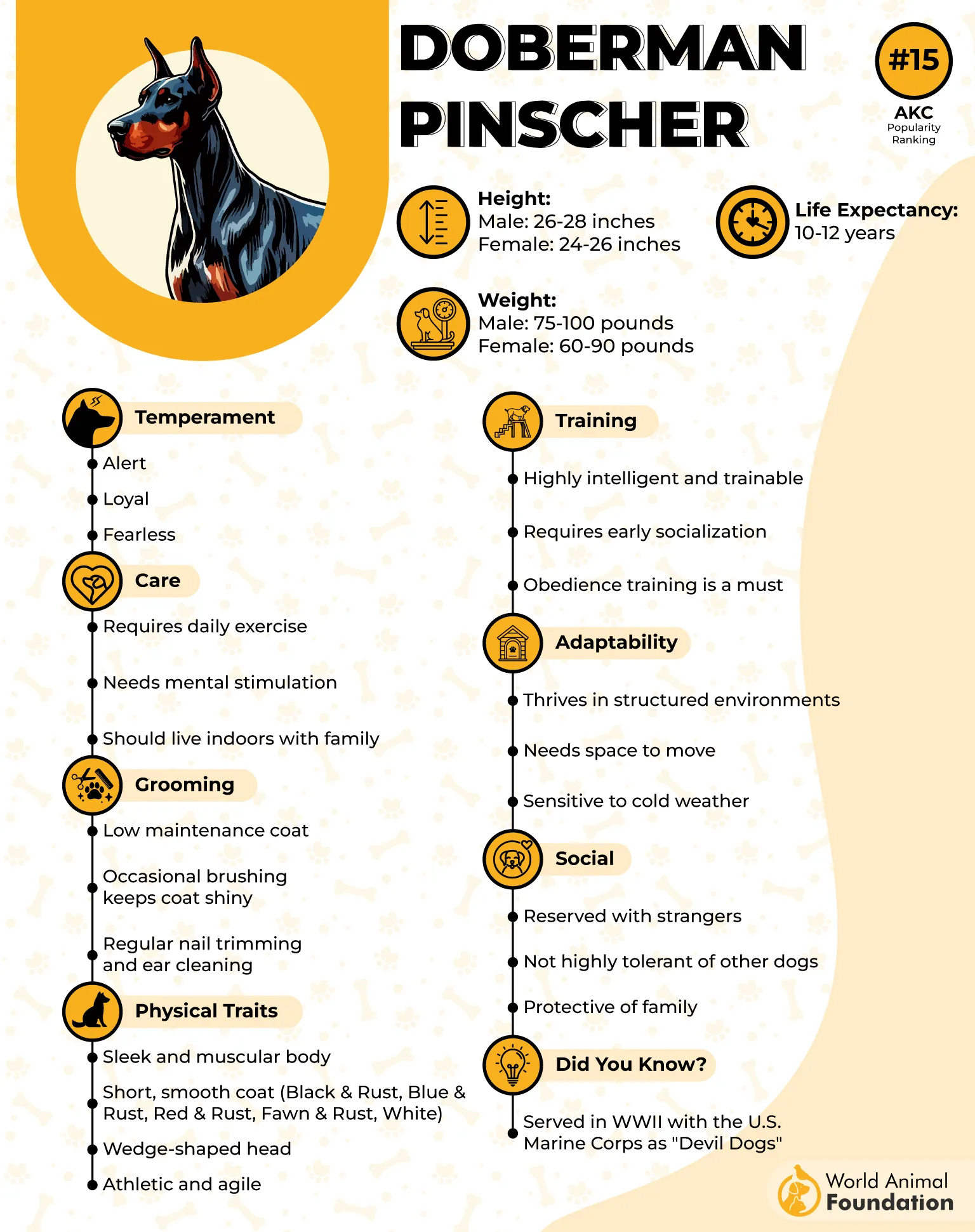
7. Doberman Pinscher
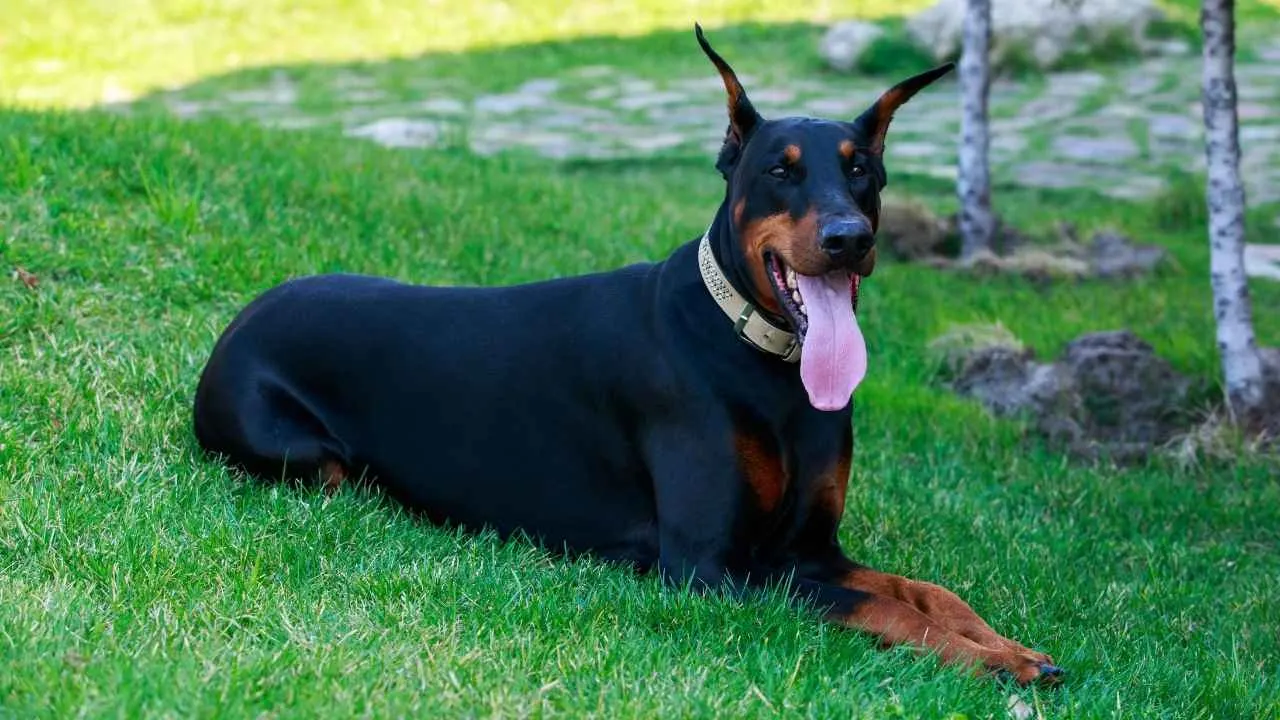
Doberman Pinscher began with Louis Dobermann in Thuringia, Germany, who wanted a dependable protector while working as a door-to-door tax collector.
Early breeding likely involved the Old German Shepherd, German Pinscher, Weimaraner, and Manchester Terrier, shaping the sleek working dog seen today.
Sharp and Athletic
As a great guard dog, they bring a deep chest, powerful hindquarters, and strong coordination to an active household. Its alert nature and ability to read human posture and tone can be valuable in a home where reliable obedience matters.
A few practical details add another layer:
Police and military service
Search-and-rescue work
Agility and protection sports
Low-Fuss Coat
Doberman Pinscher has a short coat that needs relatively little grooming compared with long-coated breeds. A bristle brush a couple of times each week can help control shedding, while monthly bathing is generally enough unless outdoor adventures leave the coat particularly muddy.
8. Boxer
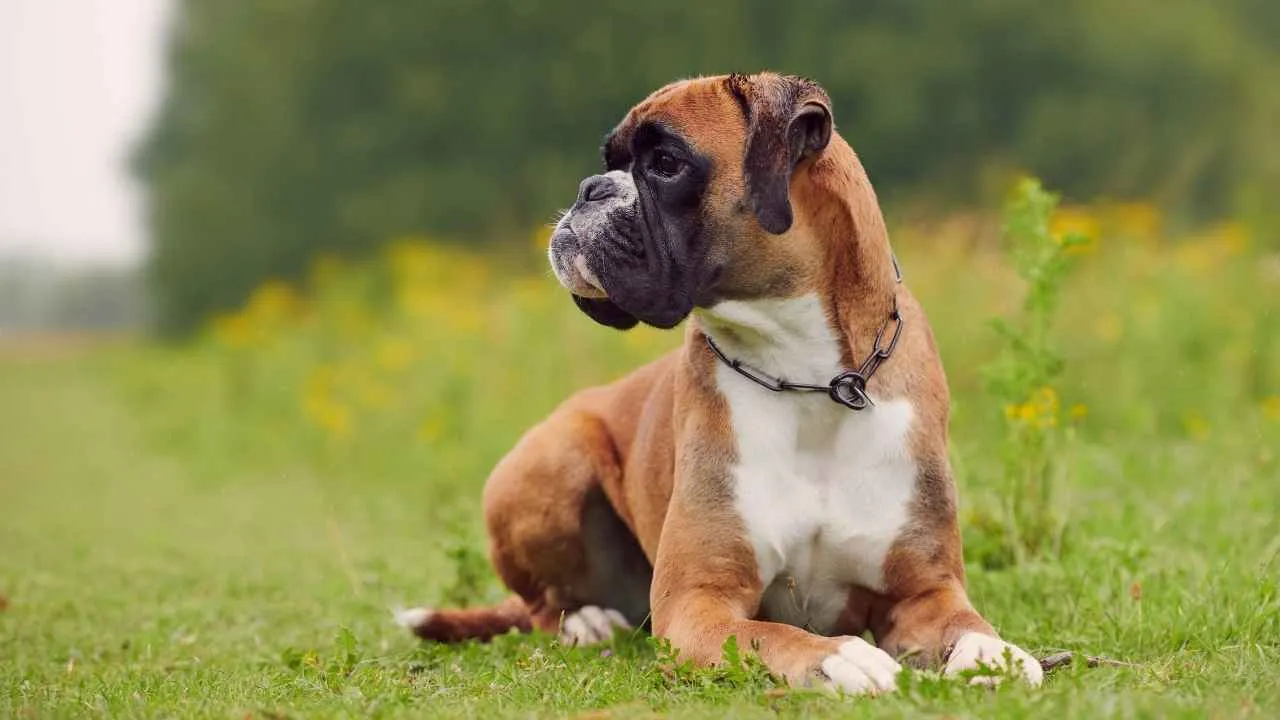
Boxer was developed in Germany from crosses involving the German Bullenbeisser and Bulldog, with its early work centered on controlling cattle at slaughterhouses. By 1903, the breed had reached America, and its versatility later led to service as a messenger and guard dog during World War I.
A Natural Watchdog
Boxers have a keen eye for people and often watch visitors closely, alerting the household when someone approaches the door. With good socialization, its protective instinct can work alongside a friendly attitude toward guests.
Family life brings out its affectionate nature:
Enjoys staying close to family members
Seeks affection through hugs, scratches, and belly rubs
Needs attention and play to avoid feeling overlooked

Simple Grooming Routine
This smart breed has a short coat that needs only modest grooming, with brushing a few times weekly helping manage moderate shedding. Bathing about once a month is generally sufficient unless outdoor adventures leave the coat especially muddy.
9. Bullmastiff
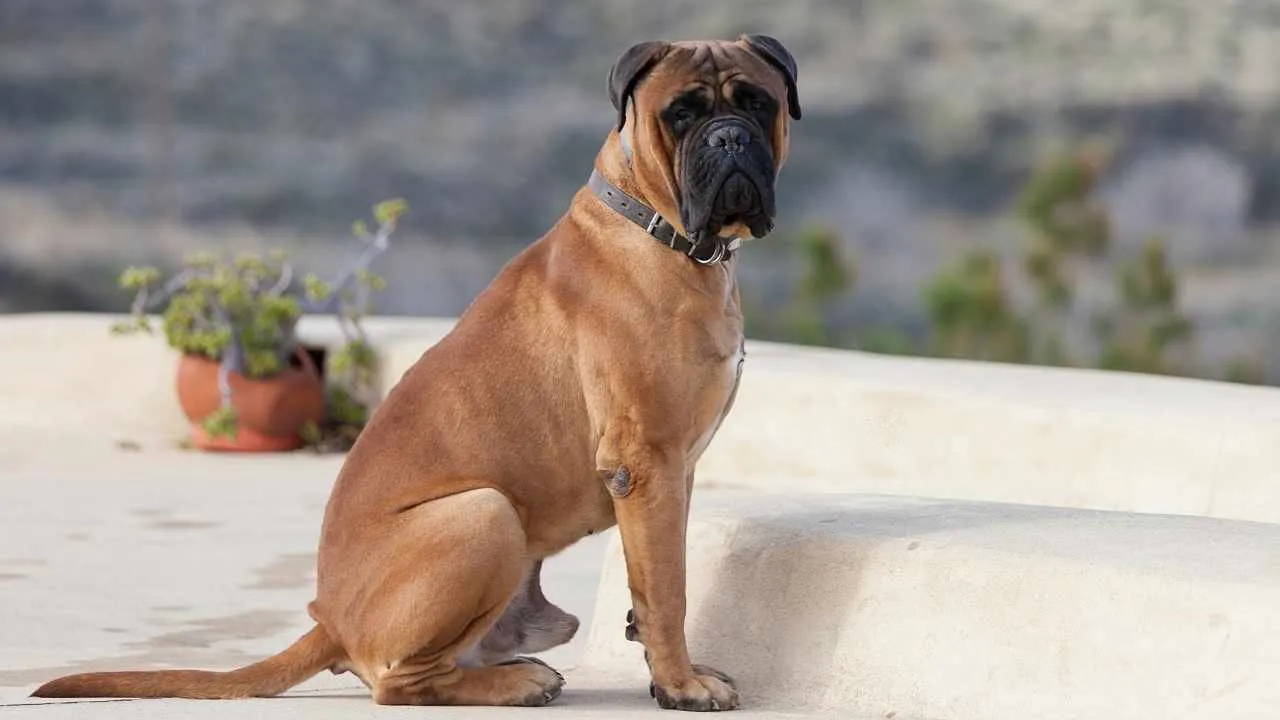
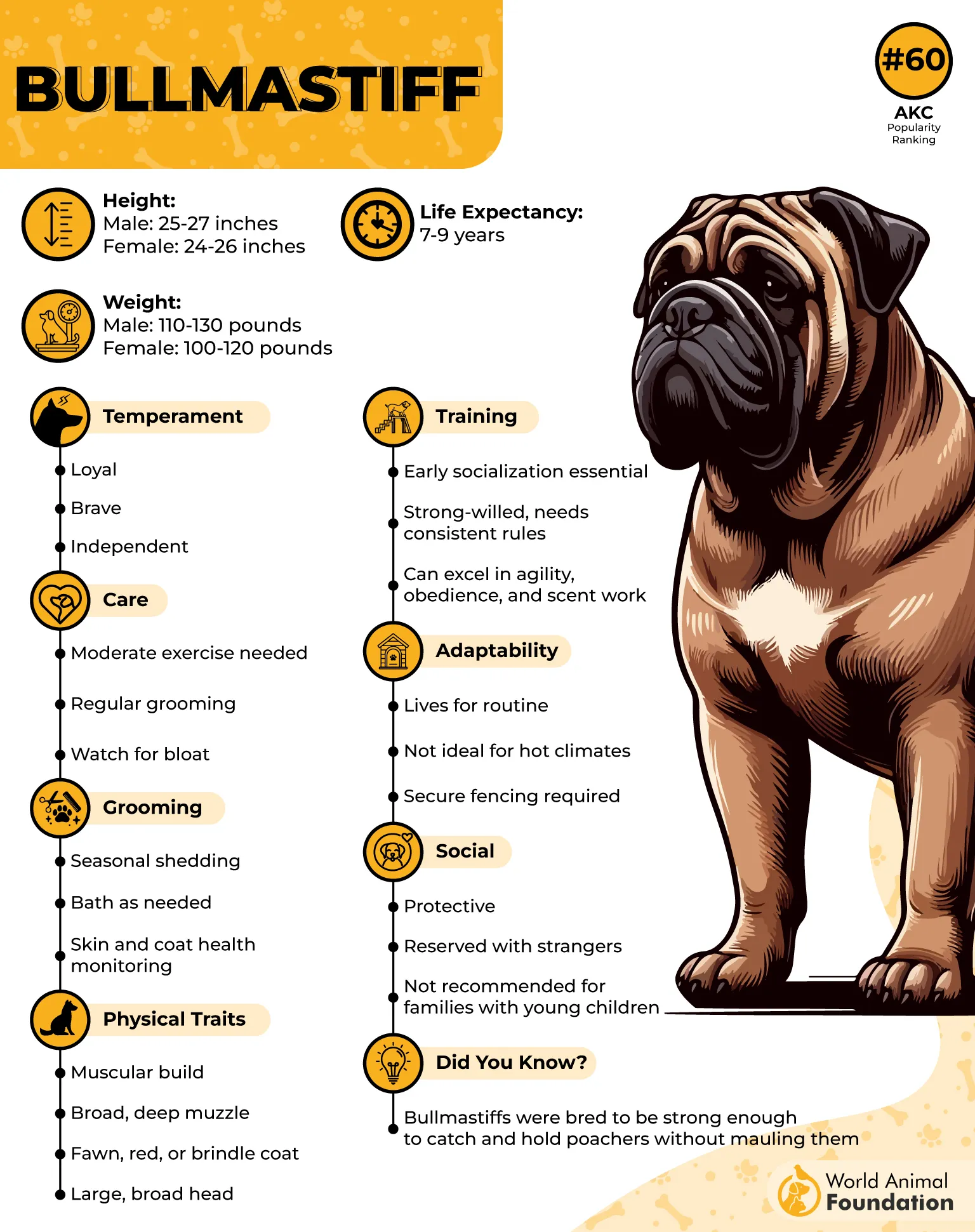
Bullmastiff first appeared in documented records in the late 1800s, when large estates faced serious problems with poaching. A cross between Bulldog and Mastiff produced a powerful guardian trained to wait for a poacher, act on command, and hold the person until the landowner arrived.
Quiet Protection
Bullmastiff has a naturally watchful style that relies heavily on physical presence rather than constant noise. Its strong, squared stance and habit of positioning itself in doorways or hallways can help it monitor visitors and activity around the house.
These characteristics make their guarding style especially useful:
Uses body weight to block perceived threats
Known as the “Gamekeeper’s night dog”
Selected for steady, less reactive nerves
Easy Grooming Routine
Bullmastiffs have moderate energy and generally need around 30 to 45 minutes of daily exercise, with neighborhood walks and casual games fitting their pace.
Weekly brushing with a bristle brush, grooming glove, or rubber curry brush is usually sufficient, with more frequent brushing during spring and fall shedding periods.
10. Staffordshire Bull Terrier
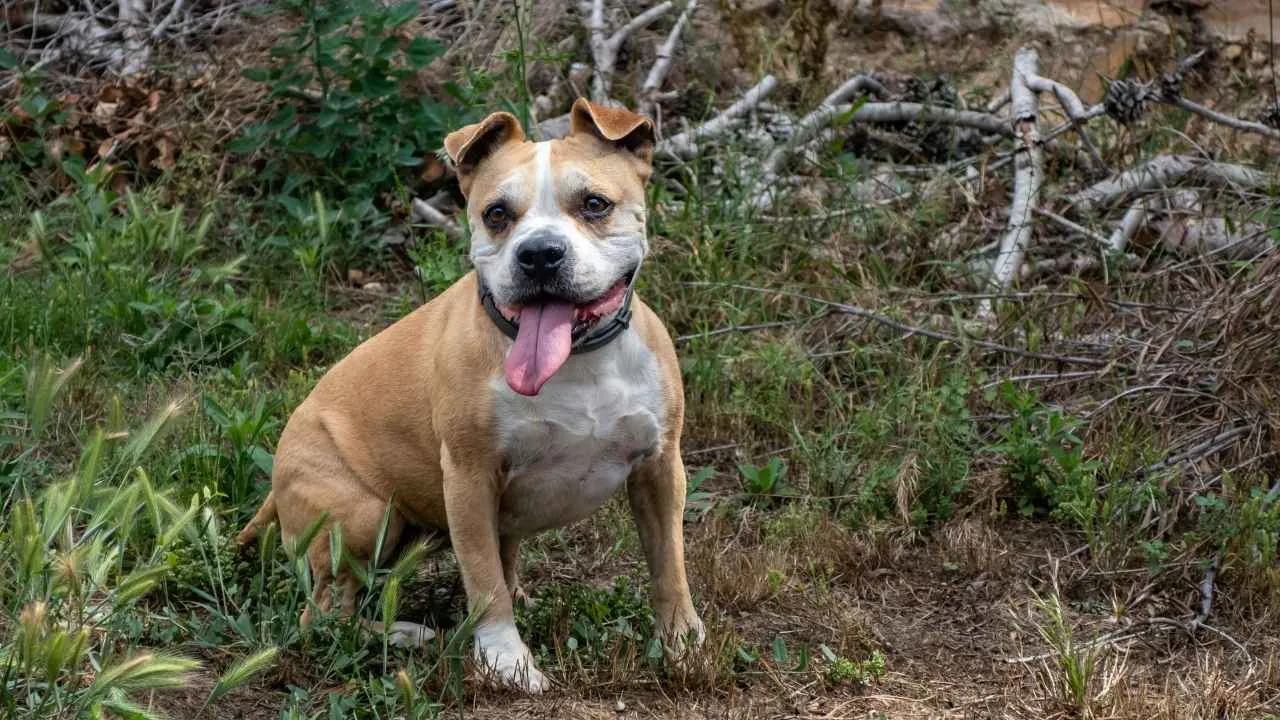
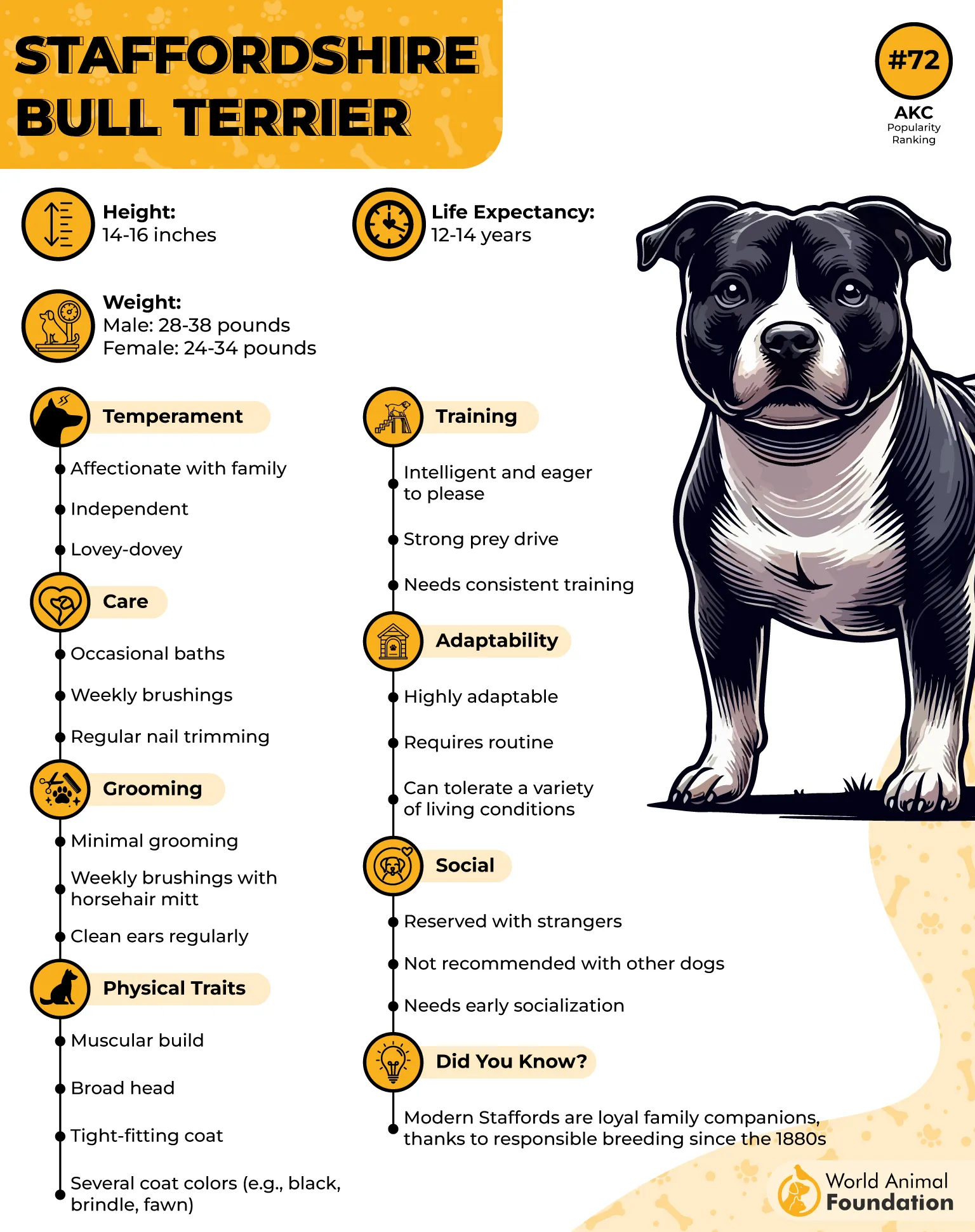
Staffordshire Bull Terrier took shape in England in the early 1800s, when the Bull Terrier was crossed with the Black and Tan Terrier to produce a compact dog with powerful jaws.
As bull baiting became impractical in towns, rat pits became popular, where Staffies drew crowds with their quick, nimble performance.
An Alert Household Companion
This terrier keeps a close watch on its surroundings and can alert the household when people, dogs, cats, or squirrels approach the property. That makes the breed useful as a watchdog, although its friendly attitude toward strangers can limit its role as a true guard dog.
Three practical details are worth knowing:
About 30 minutes of exercise twice daily
Monthly baths are generally sufficient
Light seasonal shedding in spring and fall
Simple Coat Care
Staffordshire Bull Terrier has a short, glossy coat that requires little brushing, with an occasional curry-brush session enough for extra grooming. Early, consistent socialization also matters, particularly around unfamiliar dogs, while some Staffies may prefer being the only pet in the household.
Conclusion
A low-maintenance guard dog can make home life easier when its protective instincts fit naturally into your routine. Still, simple grooming or moderate exercise does not remove the need for training, socialization, attention, and clear boundaries. Size and temperament also matter, especially when a powerful dog lives with children, visitors, or other pets.
Consider how much time you can give to daily activity and training before making a choice. Home security should also include practical measures such as secure doors, lighting, and cameras. The right companion can offer useful awareness around the home while remaining comfortable and manageable in everyday family life.
