




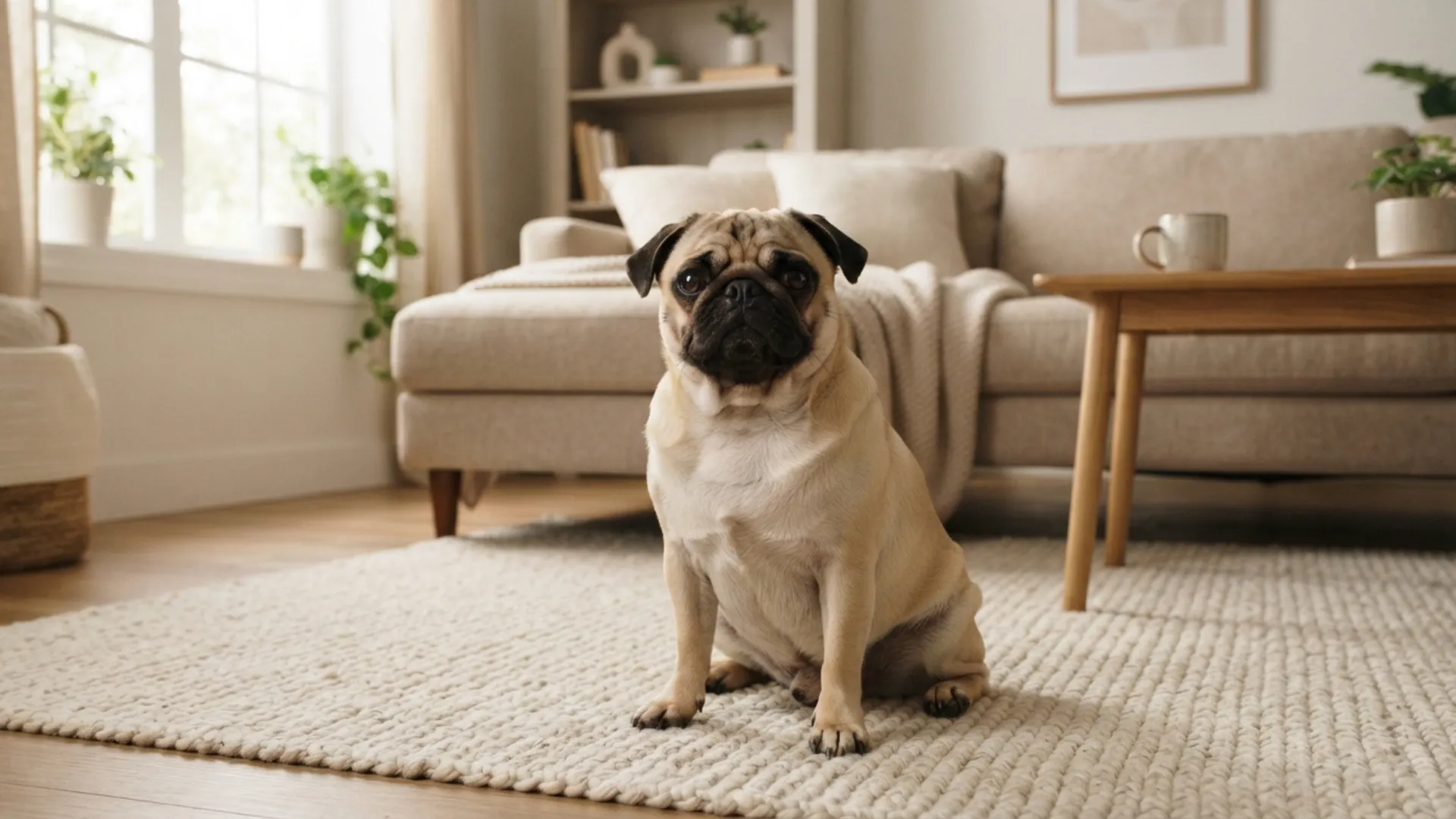
Low-maintenance dog breeds can make pet ownership much easier when your days are already packed with work, errands, family responsibilities, or limited free time.
And for this, coat type matters because dogs with short, easy-care coats usually need less brushing and fewer professional grooming appointments. Energy level matters too, since highly active dogs can require hours of physical activity and mental stimulation each day.
Even size can affect practical care, including food costs, handling, bathing, and living space. The goal is not finding a dog that needs nothing. Every dog needs responsible care. It is about choosing a companion whose everyday needs feel realistic for your routine.
In this article, you’ll find low-maintenance dog breeds with manageable grooming, exercise, training, and general care needs, making it easier to spot a companion that fits your lifestyle.
Key Takeaways
dog can bring plenty of love into your life without turning every day into a long list of grooming sessions, demanding workouts, and complicated care.
Pugs once lived in the luxurious quarters of Chinese emperors, while Cavalier King Charles Spaniels were bred to warm laps during chilly castle days and carriage rides.
French Bulldogs, Chihuahuas, and Maltese bring their own practical advantages, from simple coat care to short bursts of exercise that fit easily into busy routines.
The Dachshund adds plenty of personality to the list, along with a few coat and ear care needs worth knowing before choosing your next companion.
Low-Maintenance Dog Breeds with Simple Care Needs
1. Cavalier King Charles Spaniel
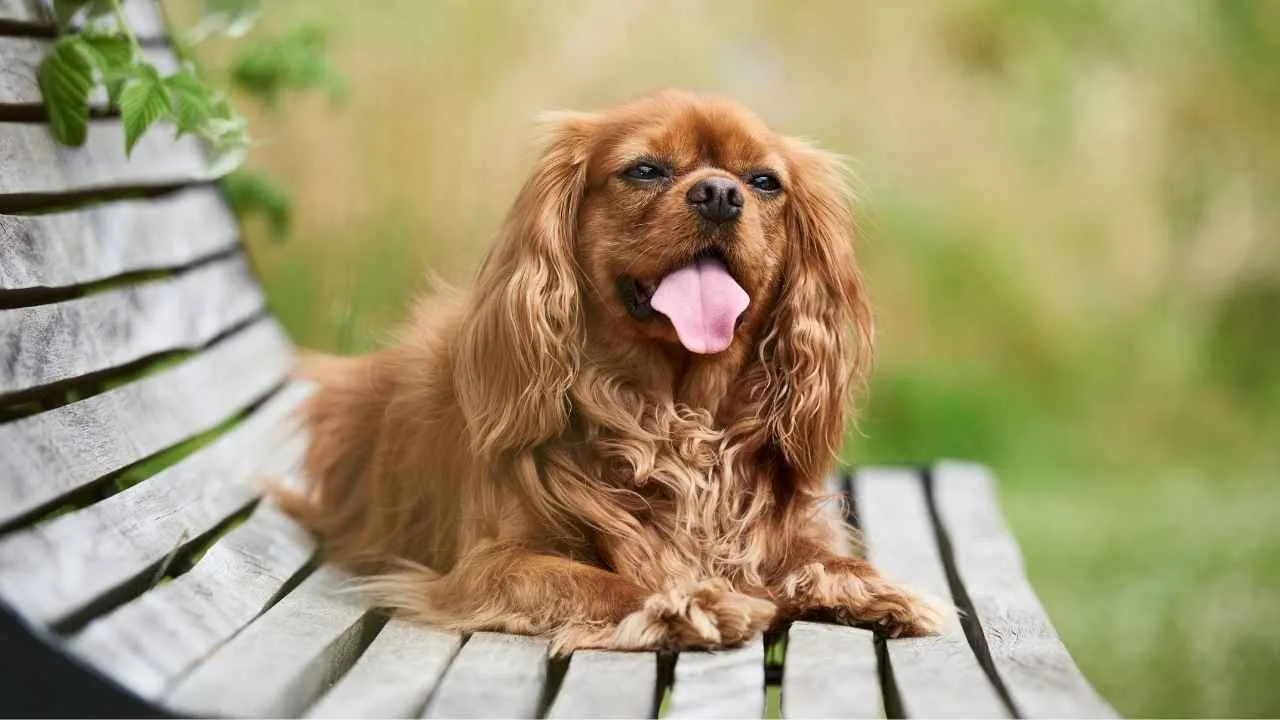
Cavalier King Charles Spaniel descends from the small toy spaniels seen in northern European paintings from the 16th through 18th centuries. These little dogs were bred to warm laps in chilly castles and during cold carriage rides, giving their original role a surprisingly practical purpose.
Simple Daily Rhythm
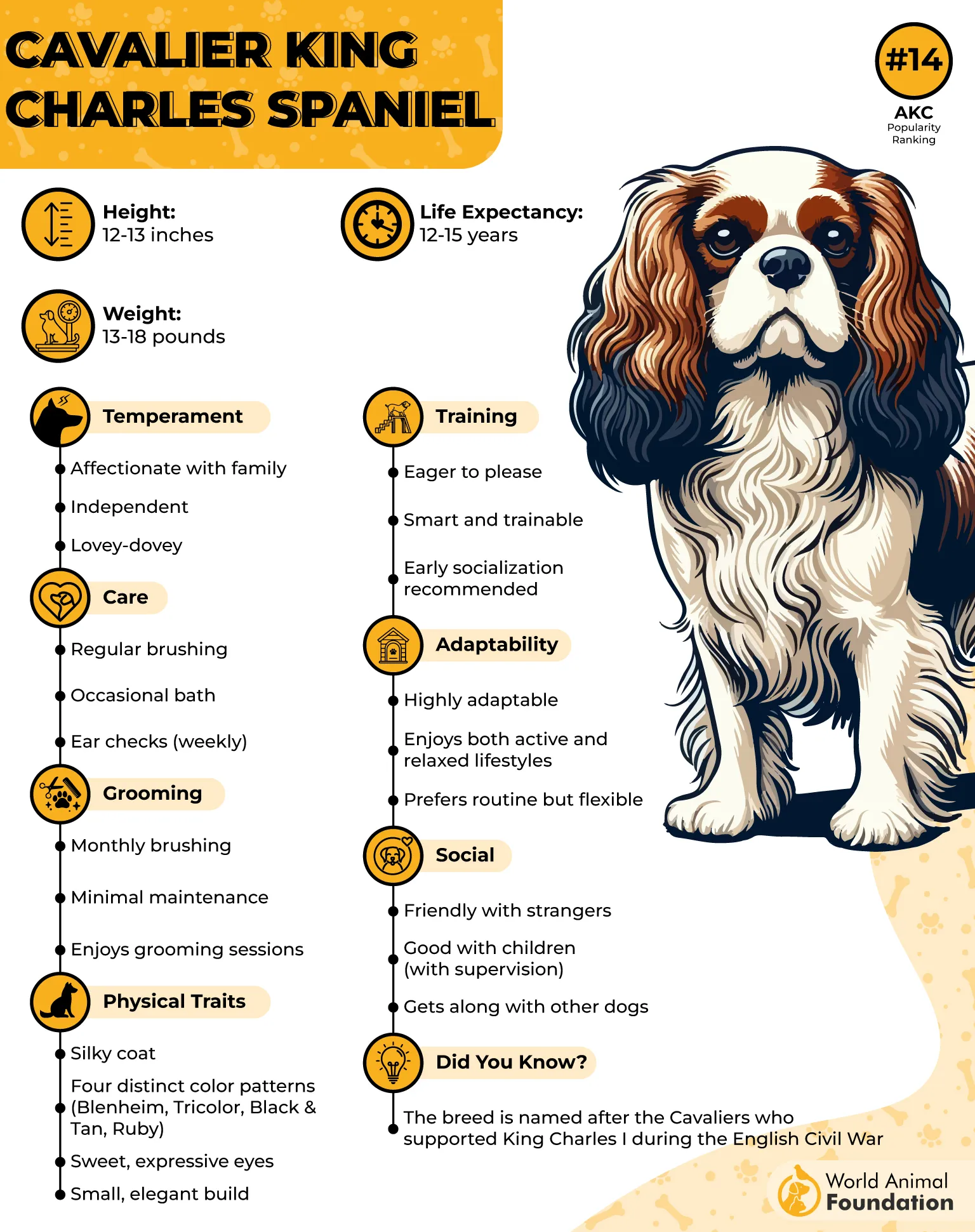
These spaniels fit a manageable routine with daily walks, light play, and plenty of relaxed time indoors. Their moderate exercise needs mean they can enjoy regular activity without requiring intense running, advanced agility work, or demanding workout schedules.
The following characteristics make their everyday care straightforward:
Regular brushing helps prevent coat tangles
Routine ear cleaning is part of basic grooming
Short training sessions suit their learning style
A Companion Dog
Cavalier King Charles Spaniel enjoys human company and prefers being included in everyday household activity rather than facing long periods alone. Their gentle temperament is associated with low levels of aggression and stubborn behavior, while shyness can occur in some individuals.
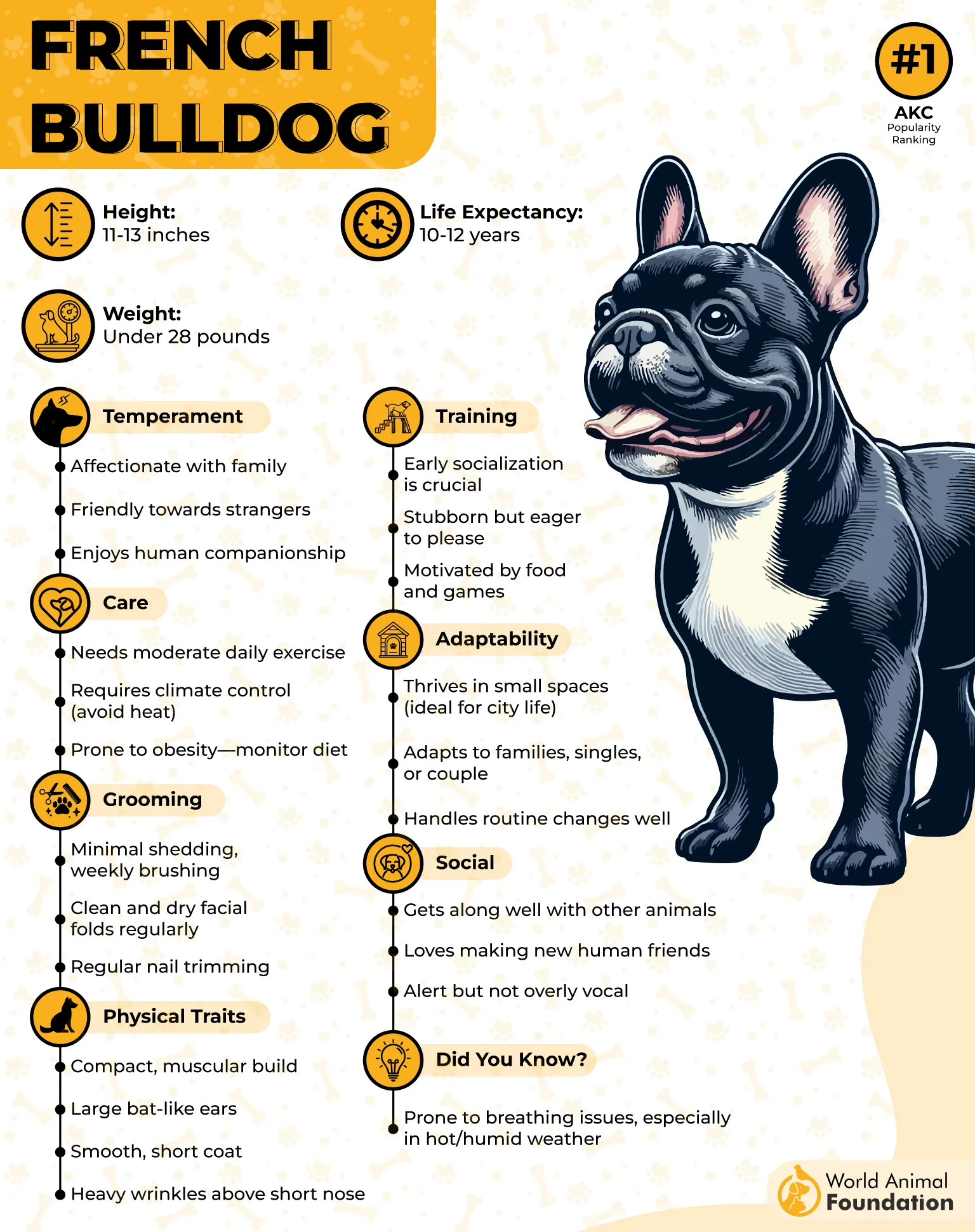
2. French Bulldog
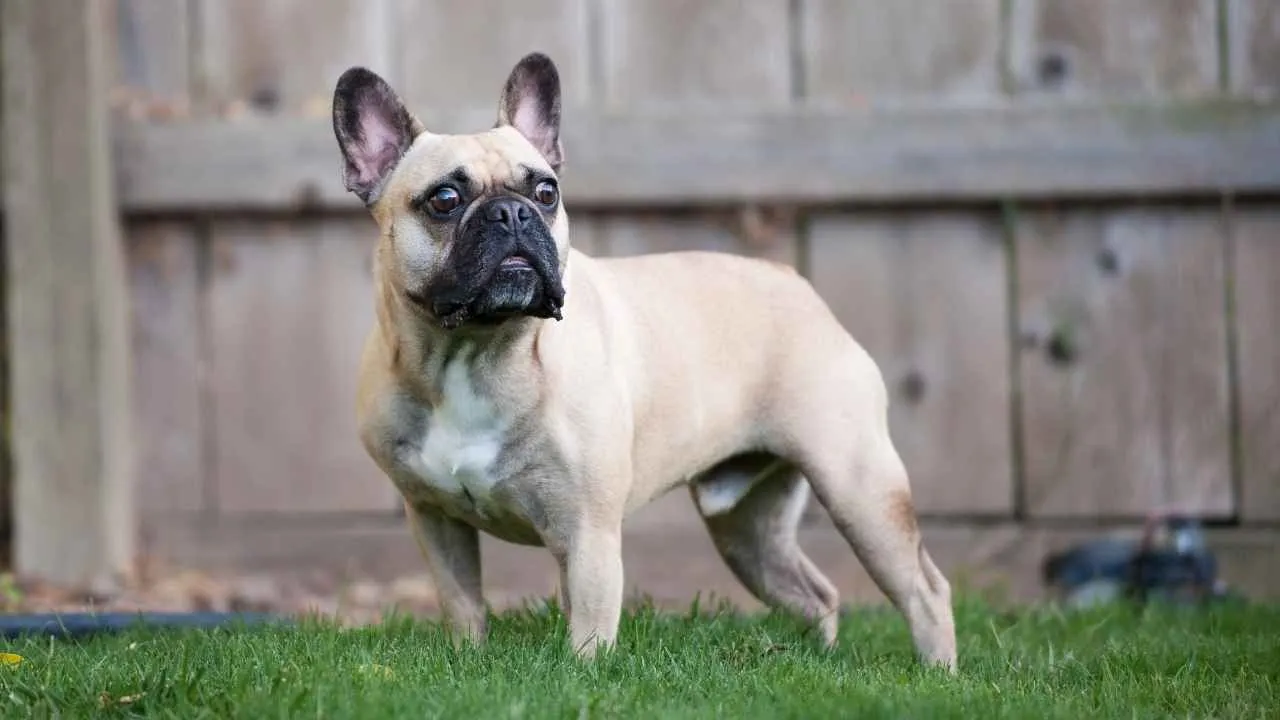
French Bulldog began in 19th-century England as a smaller form of the English Bulldog, later becoming a companion for lace workers who relocated to France.
Its popularity spread across French society, including artists and members of the upper class, while its short legs and long body became familiar features.
Simple Exercise Needs
Frenchies need only mild to moderate activity, making their daily routine easier to manage than breeds requiring intense physical work. A brief walk can provide enough movement, while gentle activities help avoid the breathing strain associated with its short muzzle.
These practical options fit naturally into that routine:
Morning and evening walks
Interactive games with people
Puzzle toys for mental activity
Note: Exercise in hot weather calls for extra caution because temperatures above 80°F can increase overheating risk, particularly with this breed’s short muzzle.
Grooming Takes Attention
French Bulldog’s short coat is fairly easy to look after, although weekly brushing can pick up the loose hair before it ends up around the house. A rubber mitt or soft brush works well, while a bath about once a month is usually enough to freshen things up. There is no need to clip the coat.
3. Pug
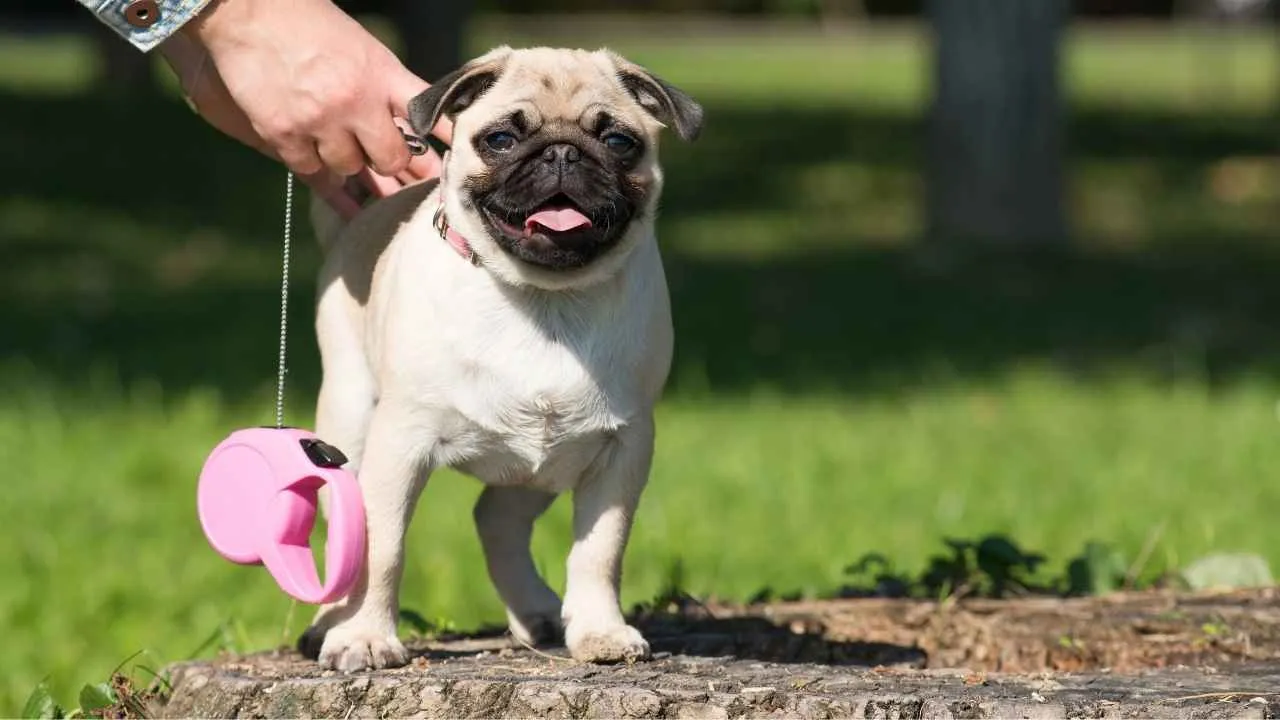
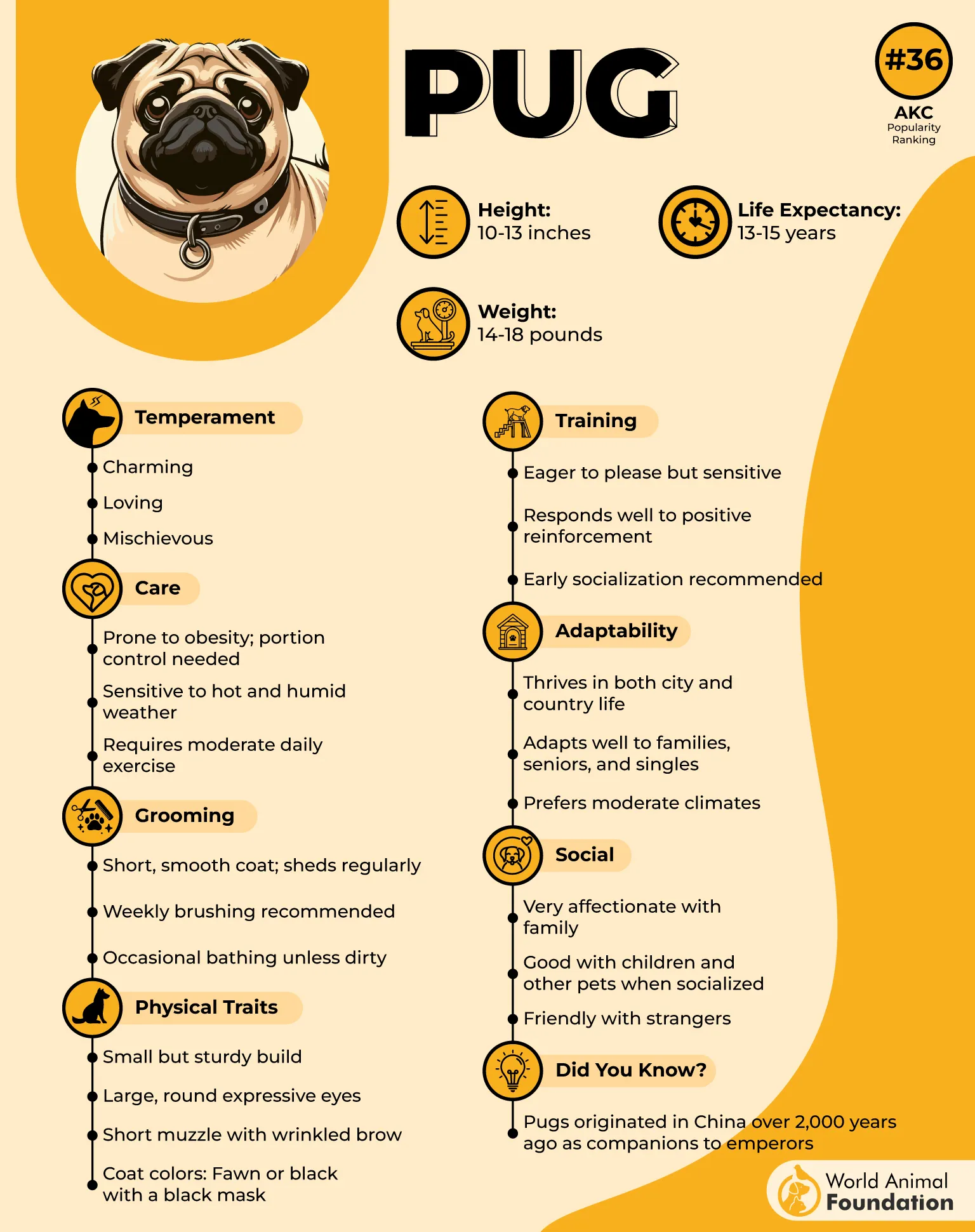
Pugs date to around 400 BC in ancient China during the Han dynasty, where emperors kept these small companions in luxurious quarters with servants attending to them. At the time, owning one was restricted to the elite, and a common person caught with a Pug could face the death penalty.
Simple Coat Care
Pugs have a short double coat that sheds throughout the year, with a little more hair loss during seasonal changes. Brushing two to three times weekly with a soft-bristle or rubber curry brush helps remove loose fur without requiring professional grooming.
These care details make the routine easier:
Flea combs help during flea season
Smooth strokes work best during brushing
Baths are usually needed every 3–4 weeks
Easygoing Activity
Pugs have modest exercise needs and can get much of their daily activity through two walks of about 20 minutes or longer, along with short games of fetch, as PetMD claims. Regular light exercise matters because this low-energy breed can gain excess weight when activity is too limited.
4. Boston Terrier
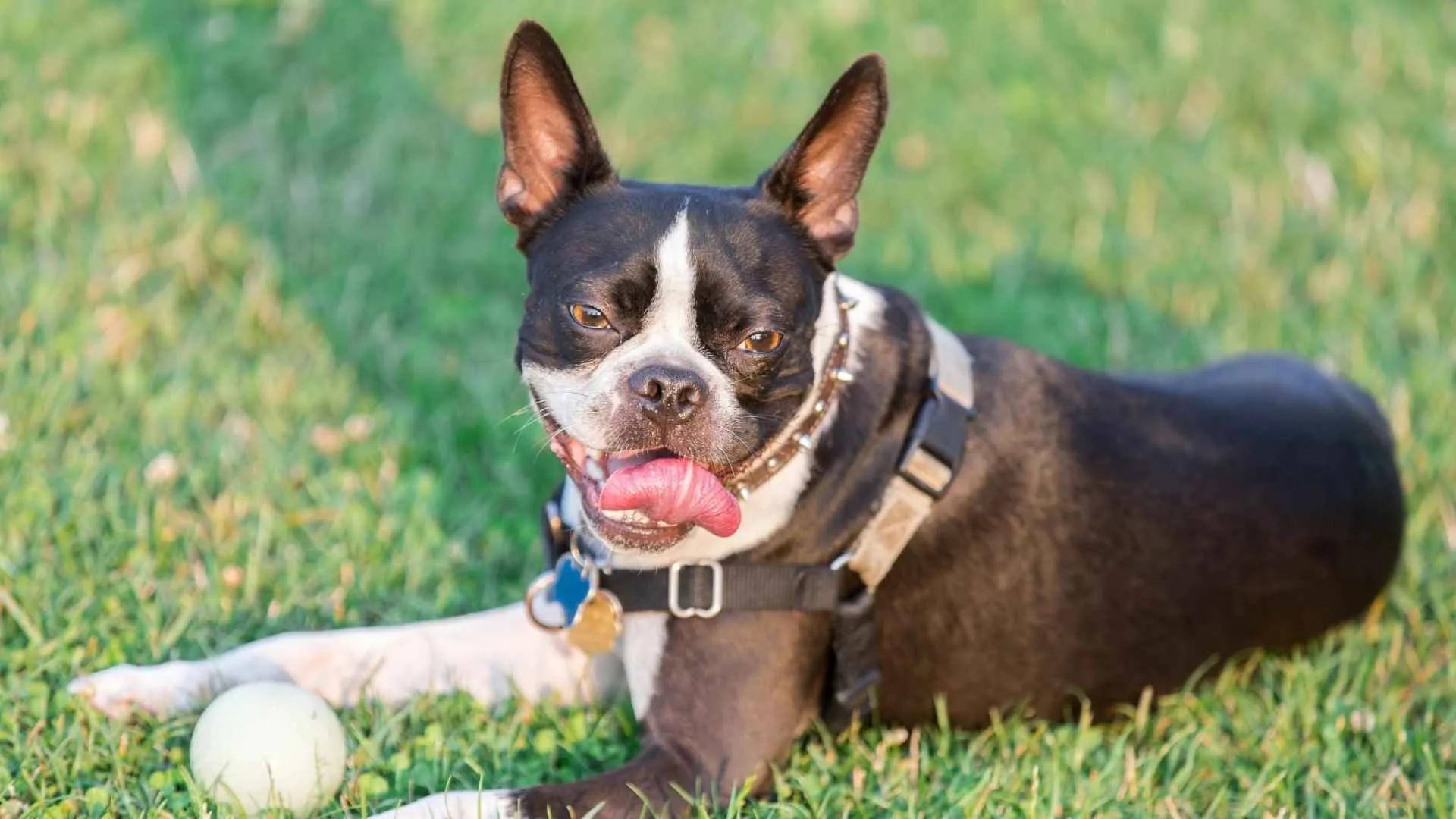
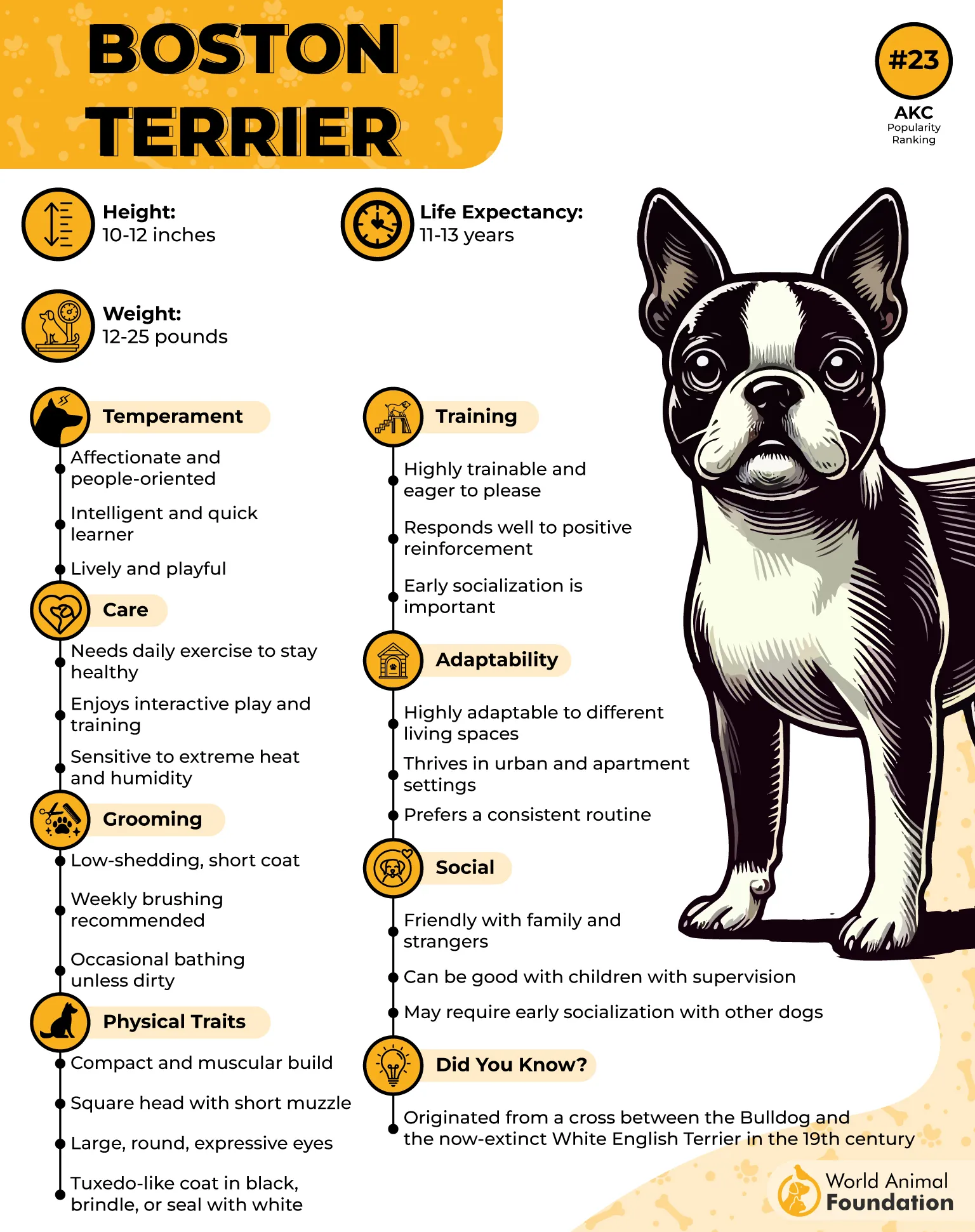
Boston Terrier began in the 1800s as a cross between the English Bulldog and English White Terrier. By around 1893, further breeding brought in the English Bull Terrier, Boxer, Pit Bull Terrier, and other terriers, shaping the small companion breed recognized today.
Simple Daily Care
This low-maintenance breed generally needs around 45 to 60 minutes of activity each day, with two 20 to 30-minute walks fitting most adults well. Their short-nosed anatomy also calls for extra care during hot weather and limits their tolerance for strenuous activity.
These practical details make their routine easier to manage:
Brushing every 1 to 2 weeks
Minimal shedding from the coat
Puzzle feeders for indoor enrichment
Big Personality
Boston Terriers often keep things lively at home, sticking close to their people and happily joining whatever is going on. For dog owners with cats, children, or other dogs, early socialization can help it become a comfortable companion, even around more reserved pets, as Hill’s Pet mentioned.
5. Chihuahua
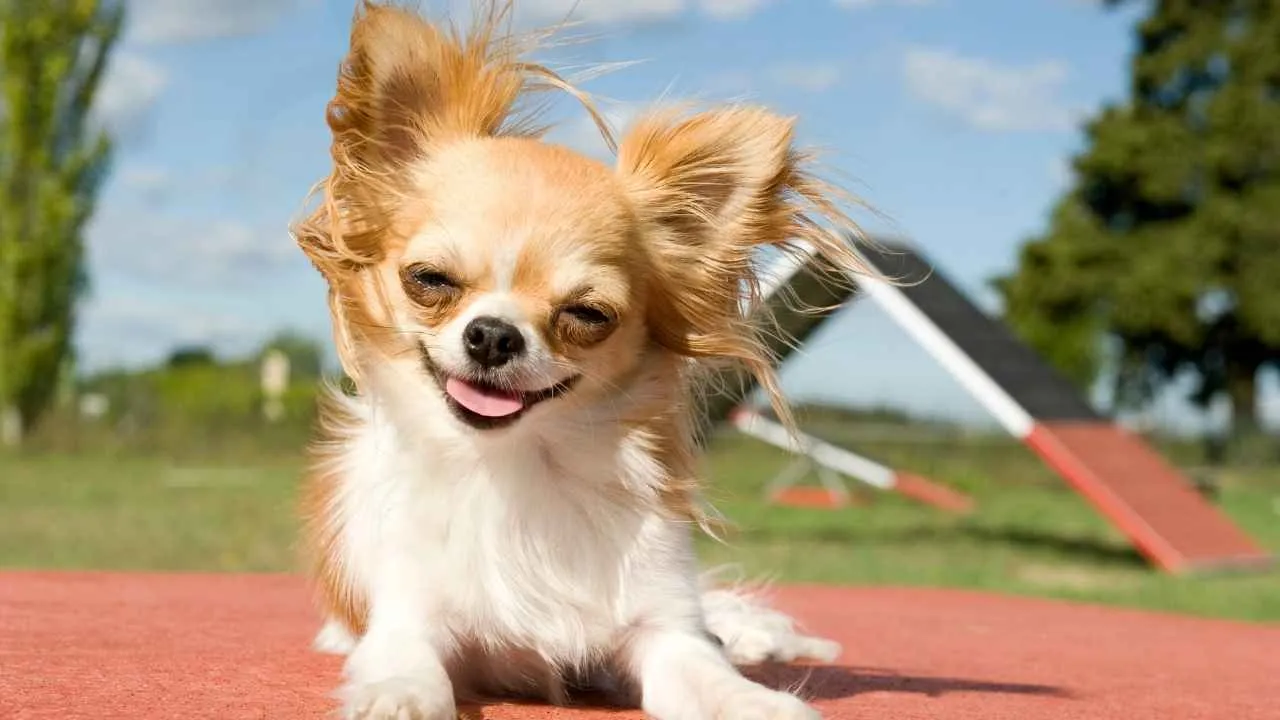
Chihuahua has roots in ancient Mexico, where the breed was associated with the Toltec and Aztec civilizations and regarded as a sacred companion with mystical significance.
Its modern name comes from the Mexican state of Chihuahua, where explorers encountered these tiny dogs during the 19th century.
Simple Coat Care
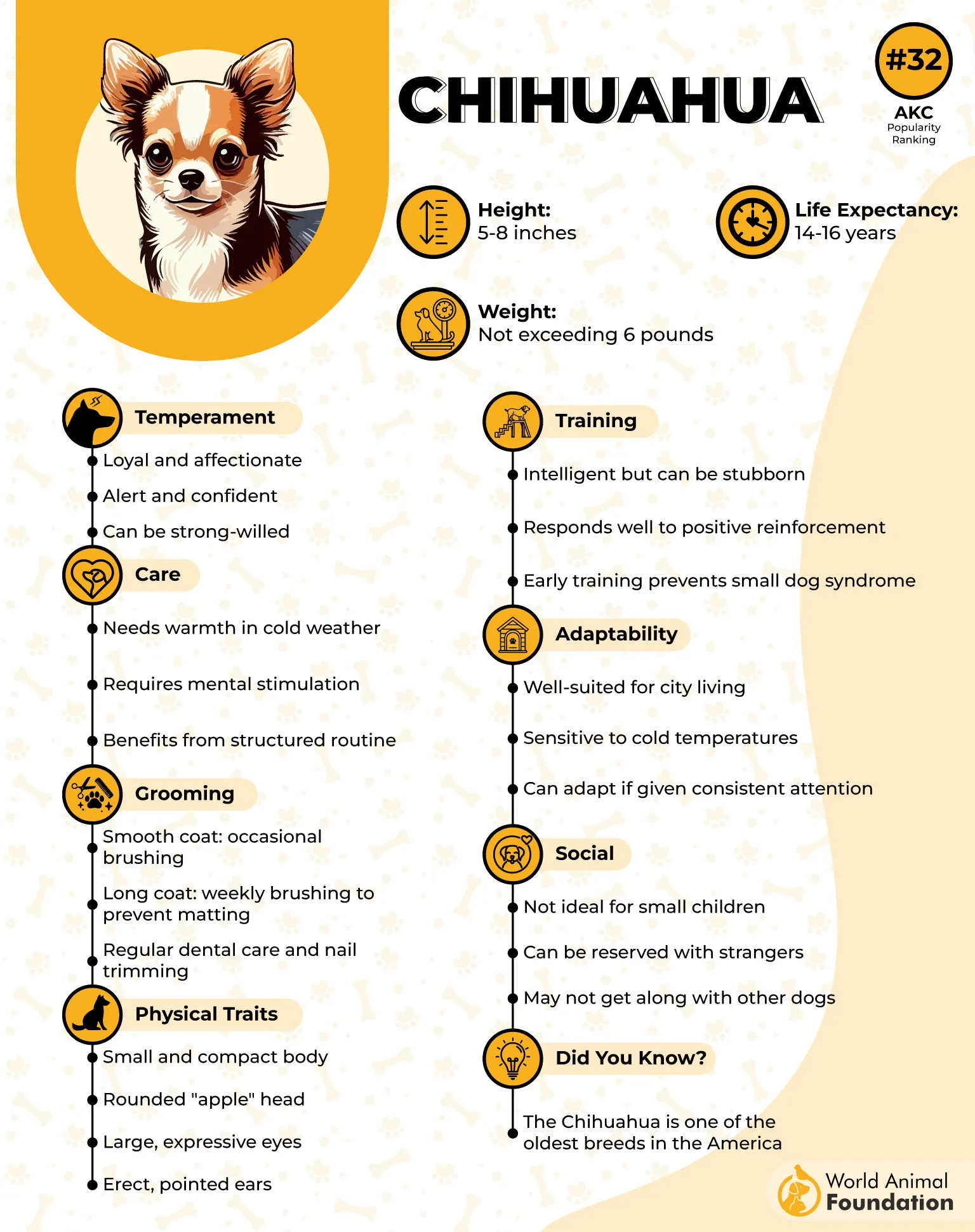
Chihuahuas come in smooth and long-coated varieties, giving pet parents different grooming needs within the same breed. The short coat lies close to the body and needs modest brushing, while longer fur requires a little more attention around feathered areas.
There is more behind their silky coat:
Soft-bristle brush for smooth coats
Slicker brush and metal comb for long coats
Bathing is commonly spaced four to eight weeks
Easy Activity Routine
Chihuahua has moderate exercise needs and can get much of its daily activity indoors through short play sessions. A brief walk paired with energetic bursts, interactive toys, or a game of fetch can provide enough activity before this small dog tires out.
6. Maltese
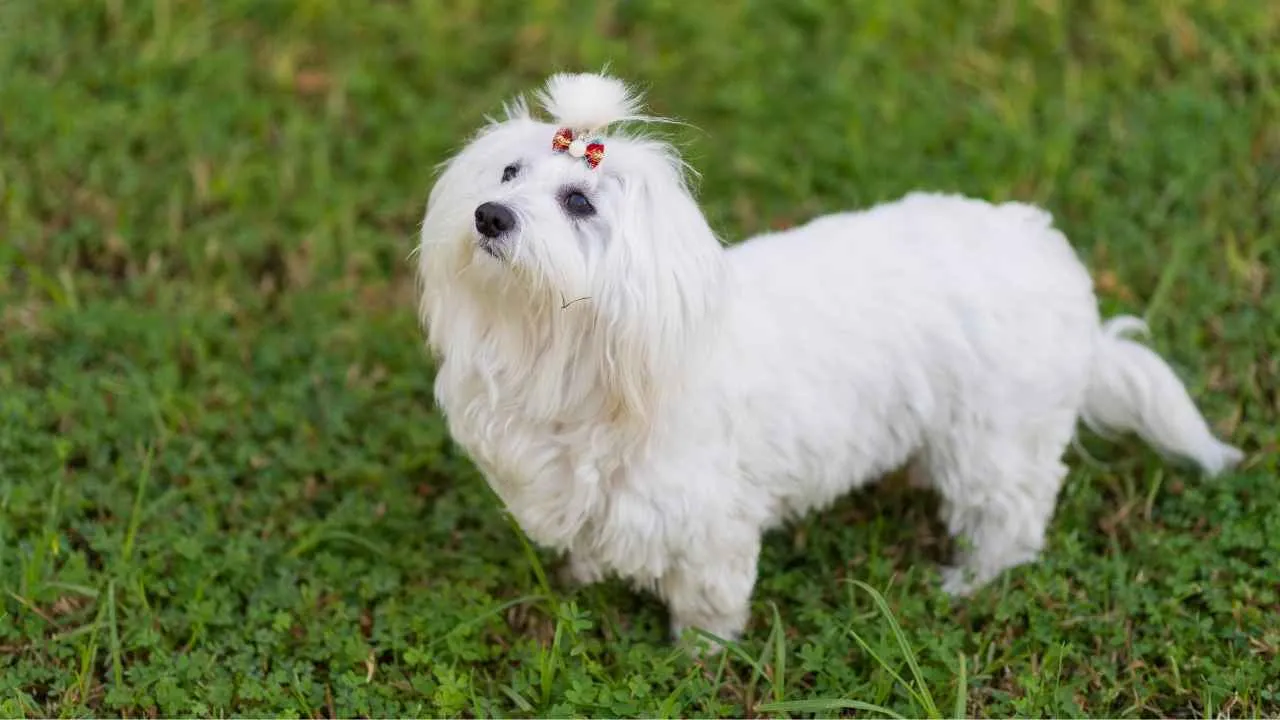
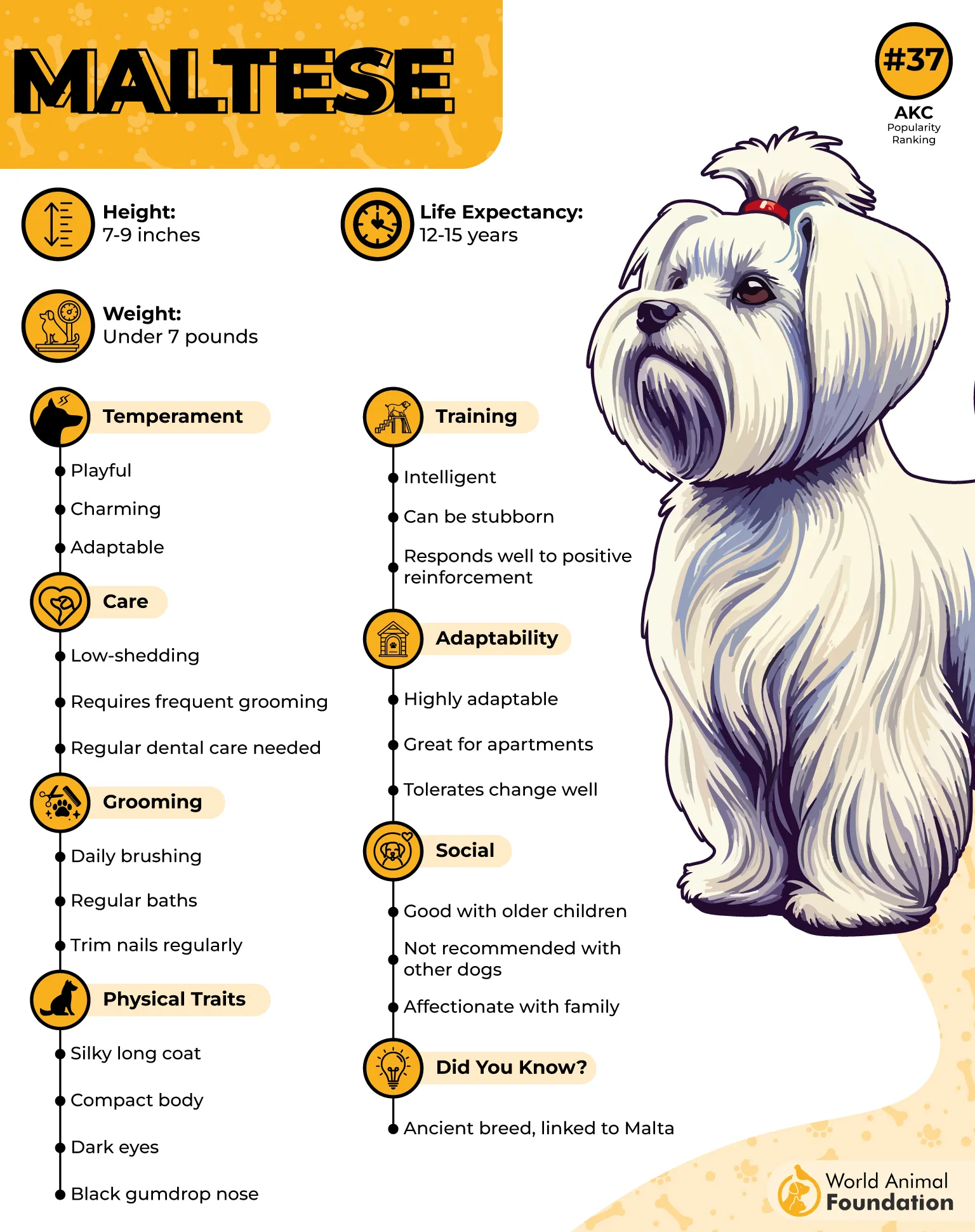
Maltese traces its roots to Malta, where the breed has been associated with Mediterranean cultures for thousands of years. Its small size, elegant appearance, and affectionate nature later made it a favored companion among aristocrats and royal households, often resting beside noblewomen.
Simple Coat Routine
This apartment-living breed has a coat that benefits from consistent grooming rather than complicated equipment or lengthy sessions. About 10 to 15 minutes of brushing each day, using a slicker brush and fine-toothed comb when needed, helps tackle tangles.
A few practical details make the routine easier:
Bathe every 3 to 4 weeks
Use a harness for daily walks
Aim for 20 to 30 minutes of exercise
Playful Little Learner
Maltese brings plenty of energy into playtime, even with its small frame, and responds well to positive reinforcement during training. Fetch, short walks, and treat-dispensing puzzle toys can provide physical activity while giving its quick mind something to work on.
7. Dachshund
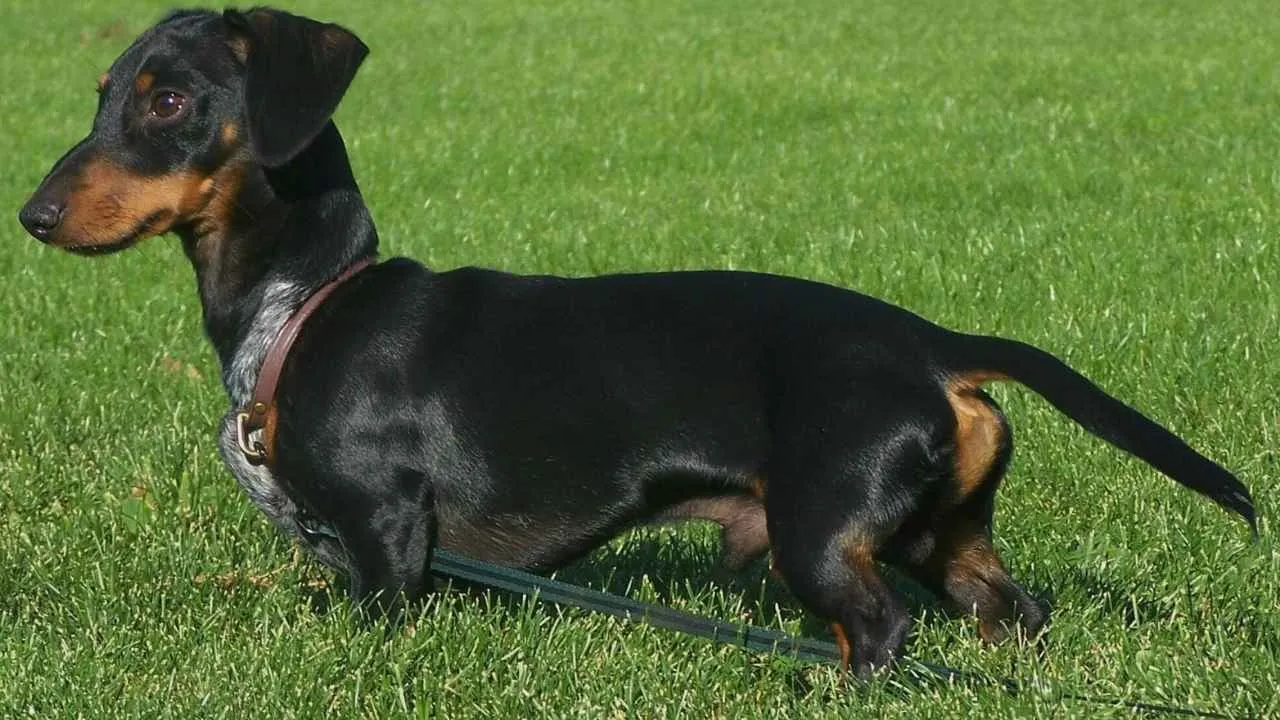
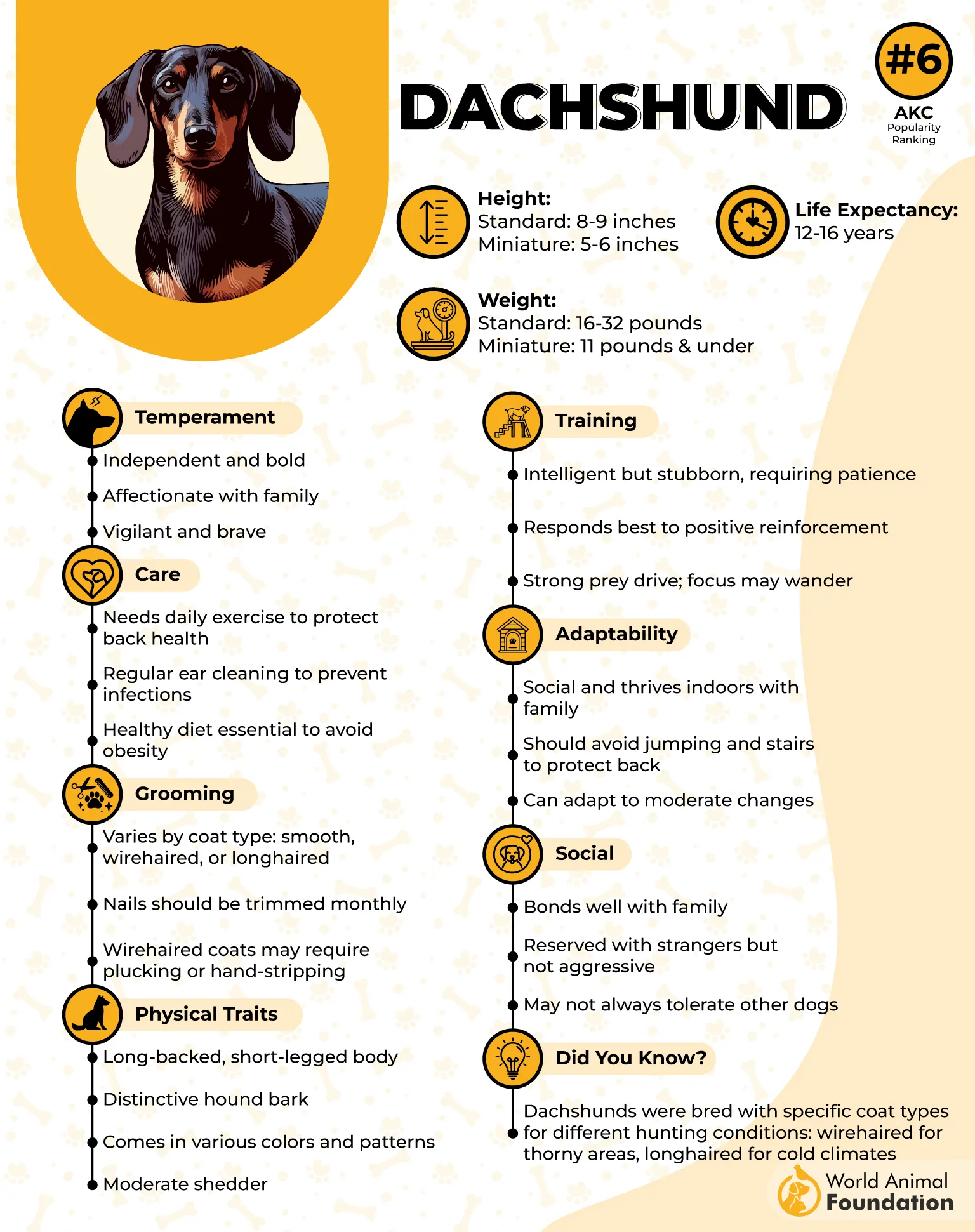
Dachshund originated in Germany as a small scent hound, with its unusually long body and short legs suited to its working role, as noted by the AKC. The breed is divided into Standard and Miniature varieties, giving the same distinctive shape two different size categories.
Simple Coat Care
For a low-maintenance routine, the smooth-coated variety requires the least grooming, while wire-haired Dachshunds need more frequent brushing to prevent tangles.
Their dropped ears also need regular cleaning with a veterinarian-recommended solution, adding one specific task to the grooming routine.
These coat-care details are easy to miss:
Smooth coats renew naturally without clipping
Weekly brushing removes loose, shed hair
Long and wire coats need paw-pad trimming
Personality Has Layers
Dachshunds bring plenty of character in a small frame, combining loyalty and affection with courage that can make encounters with larger animals surprisingly bold.
Coat type can also influence temperament, with long-haired dogs tending to be calmer and wire-haired varieties often being more outgoing and playful.
Conclusion
Low-maintenance care does not mean choosing a dog that needs little attention. It means finding a companion whose grooming, exercise, training, and daily routine fit comfortably into your schedule. Short coats can reduce brushing, while moderate activity needs may make daily exercise easier to manage.
Even small dogs can have strong personalities, so training and socialization still matter. Paying attention to coat type, energy level, size, and temperament can help prevent everyday care from becoming overwhelming. The right match can make dog ownership feel more manageable while still bringing affection, companionship, and plenty of personality into your home.
