




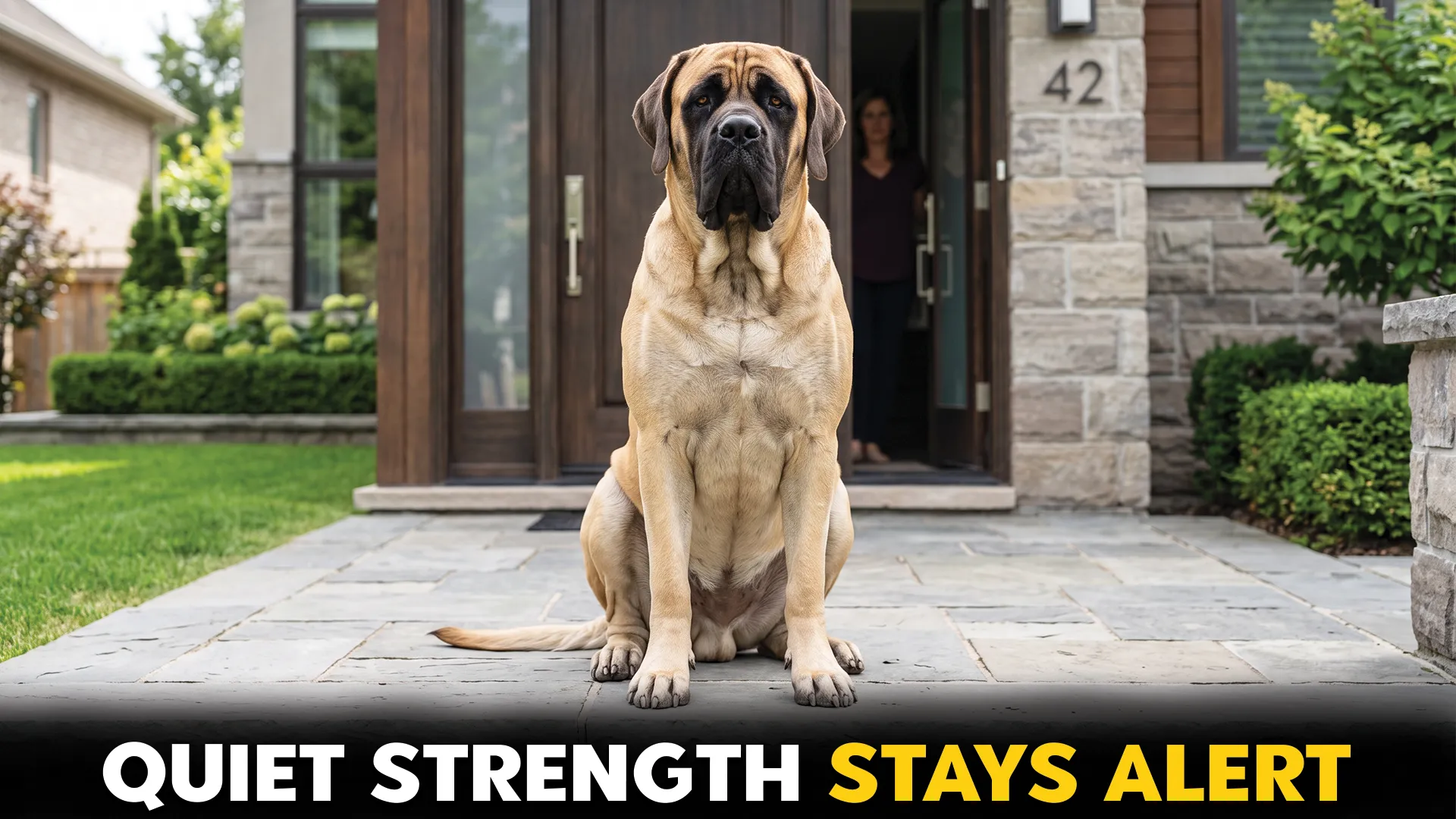
The best guard dogs aren’t always the ones people notice first. In fact, some of the most dependable protectors rarely make a scene unless there’s a genuine reason.
They spend most of their day looking relaxed, quietly observing everything around them while giving little indication of how aware they really are. That steady nature often surprises people who expect guarding ability to come with nonstop barking or intimidating behavior.
The truth is, confidence doesn’t need to be loud to be effective. A dog that carefully watches its surroundings and responds with good judgment can offer exactly the kind of reassurance many families are looking for. These breeds have earned loyal followings because they know when to remain peaceful and when to step forward.
In this guide, you’ll meet low-key guard dogs that combine calm personalities, dependable instincts, and a natural sense of protection without creating unnecessary tension at home.
Key Takeaways
Plenty of dogs can bark at strangers, but only a few know when staying calm is the smarter choice.
One breed on this list once protected sheep from wolves and bears while another was trusted to stop poachers without causing serious harm.
These dogs would rather watch, think, and respond at the right moment than bark at every passing stranger or rustling leaf.
There is a reason these gentle guardians have stayed trusted companions for generations, and you will discover it as you go through the list.
Low-Key Guard Dog Breeds: Calm, Alert, and Protective
1. Great Pyrenees
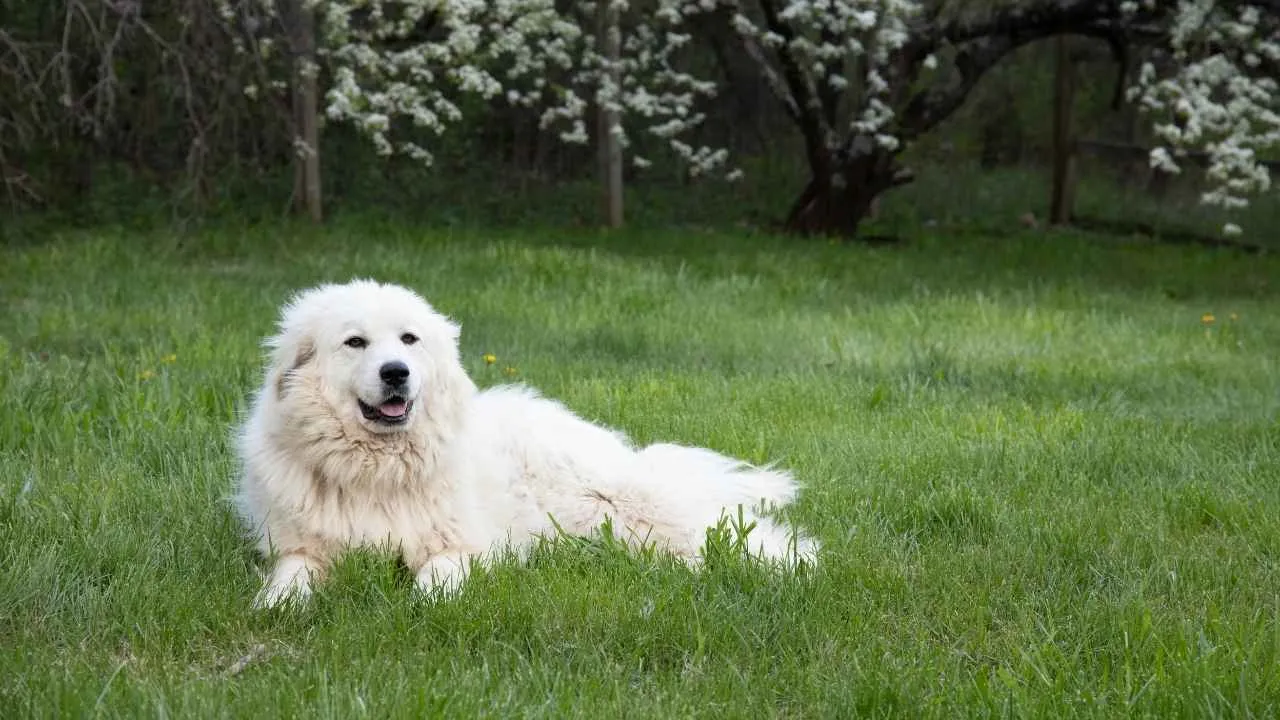
Great Pyrenees spent centuries watching over sheep and goats long before King Louis XIV named it the royal dog of France in 1675, as per the AKC. From quiet mountain pastures to the French court, this breed gained recognition for being a dependable, loving family pet and an even temperament.
Quiet Confidence
This protection dog watches its surroundings with patience instead of constant activity, making thoughtful decisions before reacting. That composed attitude fits a dog whose original responsibility involved protecting flocks from wolves, bears, and human intruders.
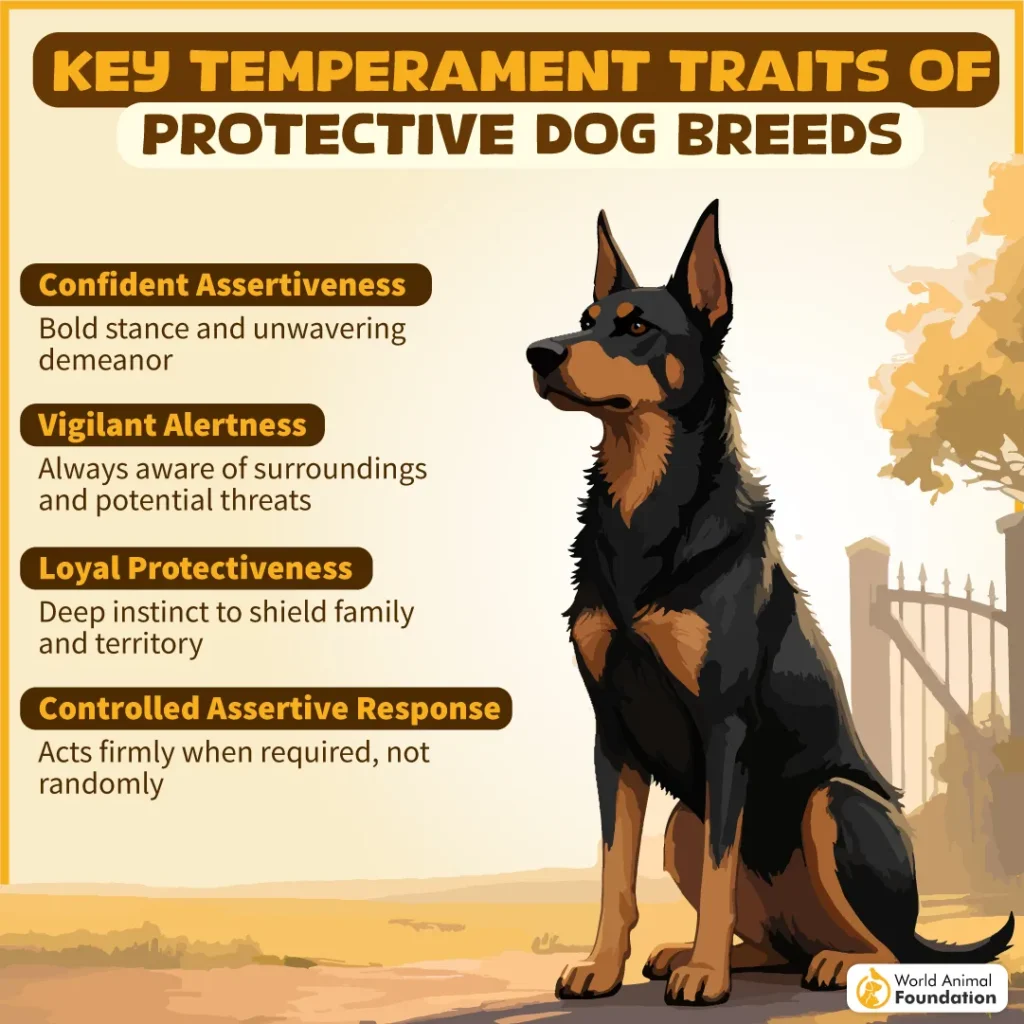
More interesting traits stand out below:
Needs moderate walks and purposeful activities
Often participates in obedience trials and cart-pulling
Learns at its own pace
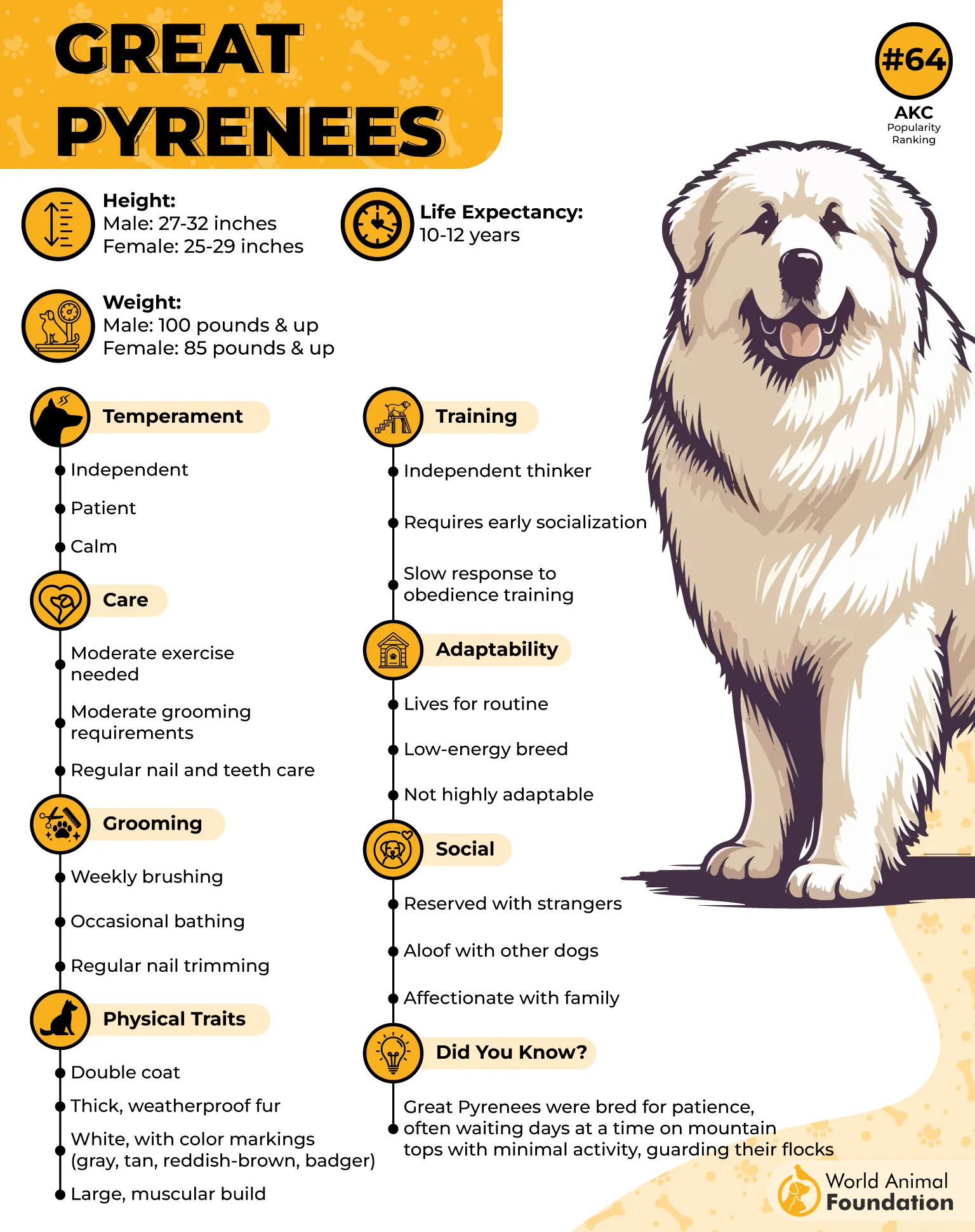
Gentle at Home
Great Pyrenees enjoys close company with family members and often finds the nearest sofa, armchair, or bed without hesitation. Early socialization with new people and other dogs plays an important role in shaping the calm, dependable personality this breed is valued for.
2. Kuvasz
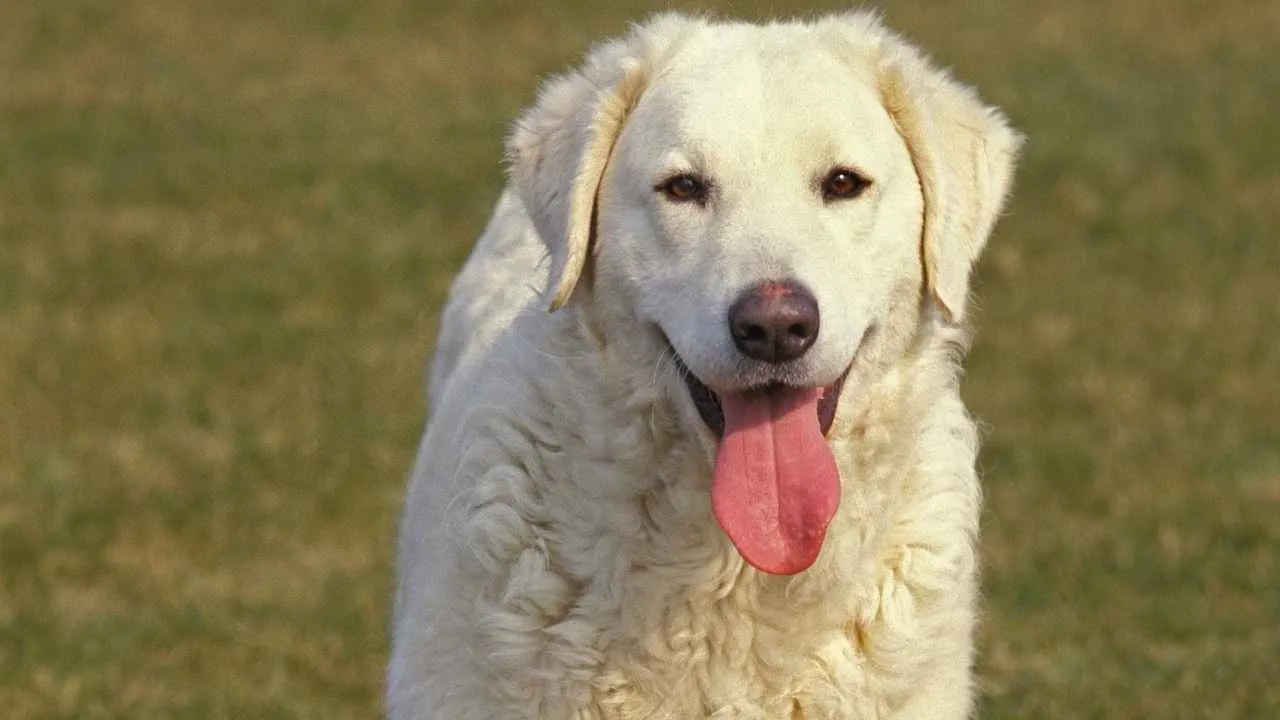
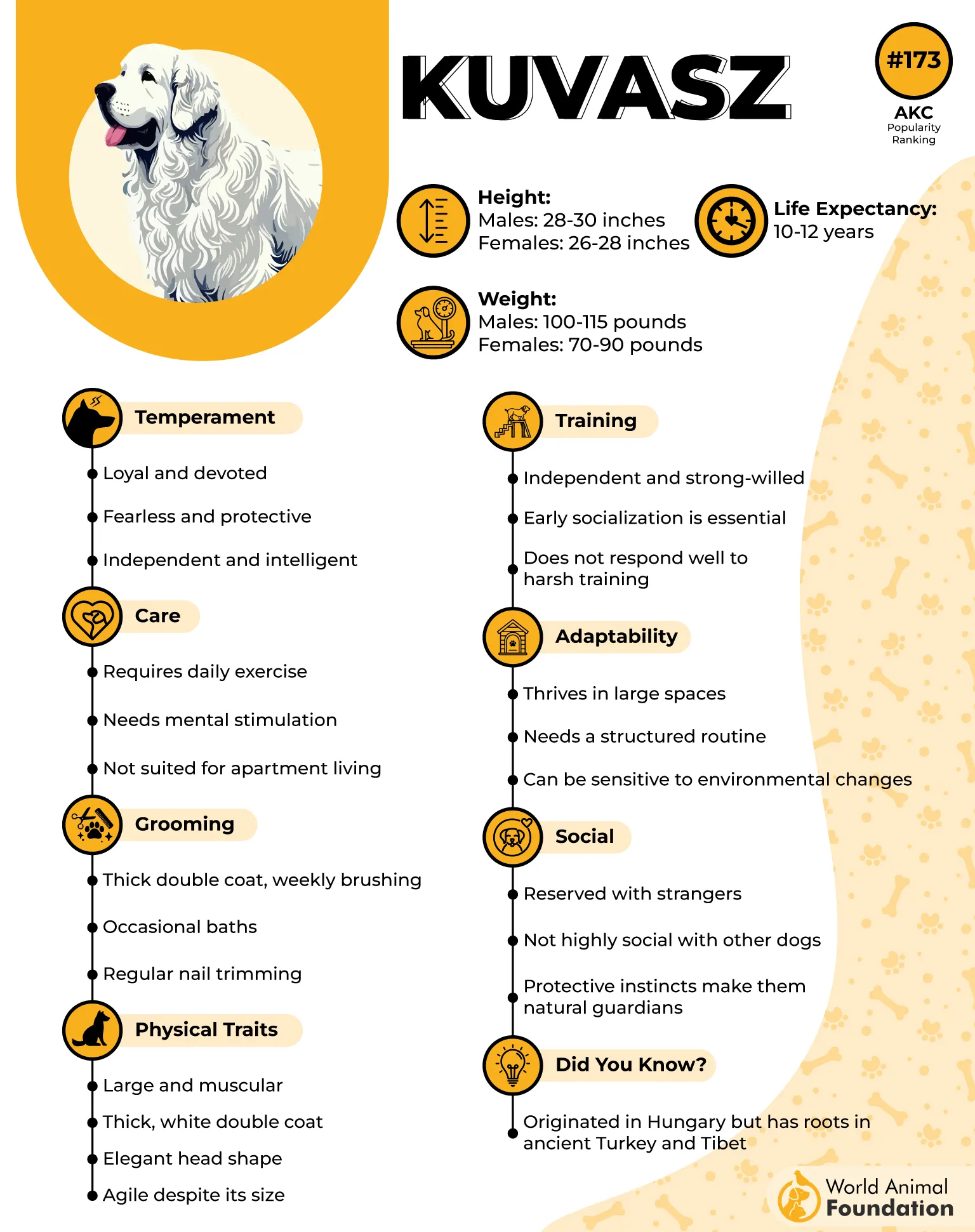
Kuvasz has long been associated with Hungary, although its earliest roots are also linked to the larger dogs of Tibet. It first lived alongside royalty, guarding valuable property and even joining hunts where strength was needed against wolves and bears before later protecting livestock on farms.
Calm Yet Protective
Kuvasz watches its surroundings with a calm attitude instead of constant commotion, making its protective nature feel measured rather than restless.
Inside the home, this mature dog is composed and self-assured, giving family members dependable companionship without demanding continuous attention.
A few details reveal even more about this breed:
White coat helped farmers distinguish it from wolves
They need a proper fenced yard
Experienced handling suits its independent decision-making
Around Family
This great guard dog is fiercely loyal and also enjoys being around its family but is just as happy stepping away when it needs some quiet time, as WebMD claims.
Meeting new people is usually a slow process for this breed, while puppies need supervision until they learn to handle their size and strength with better control.
3. Mastiff
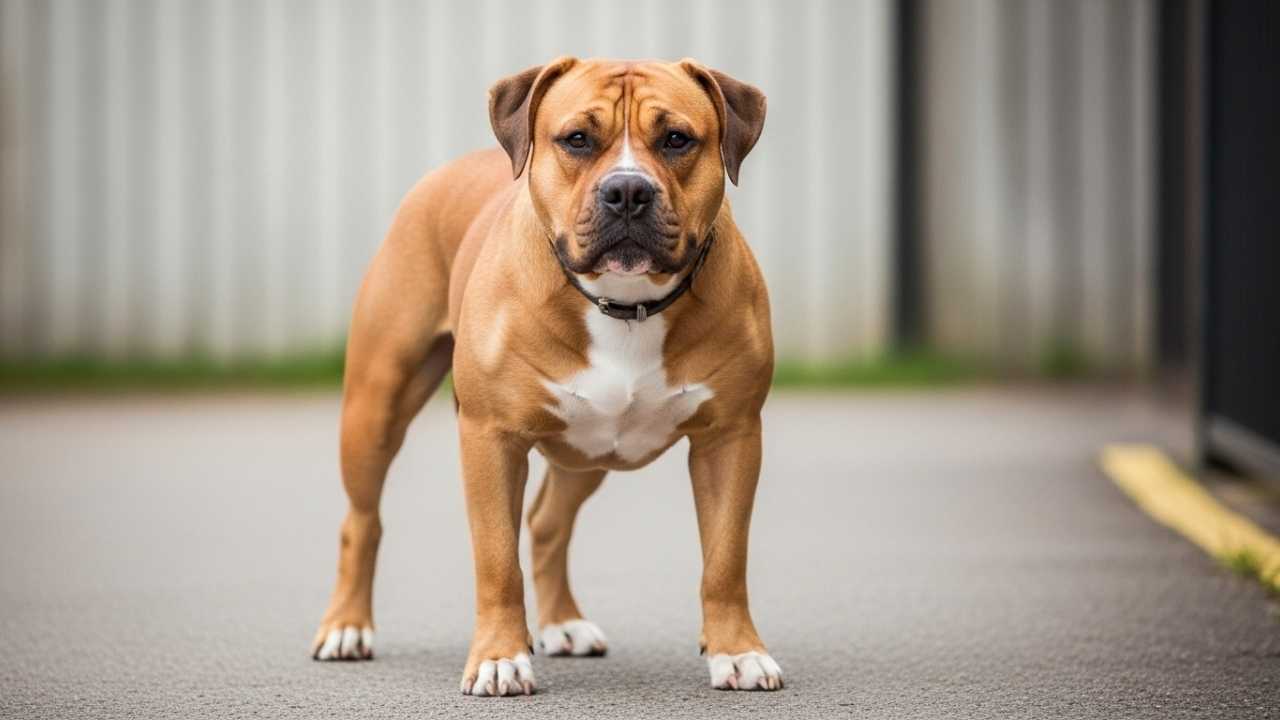
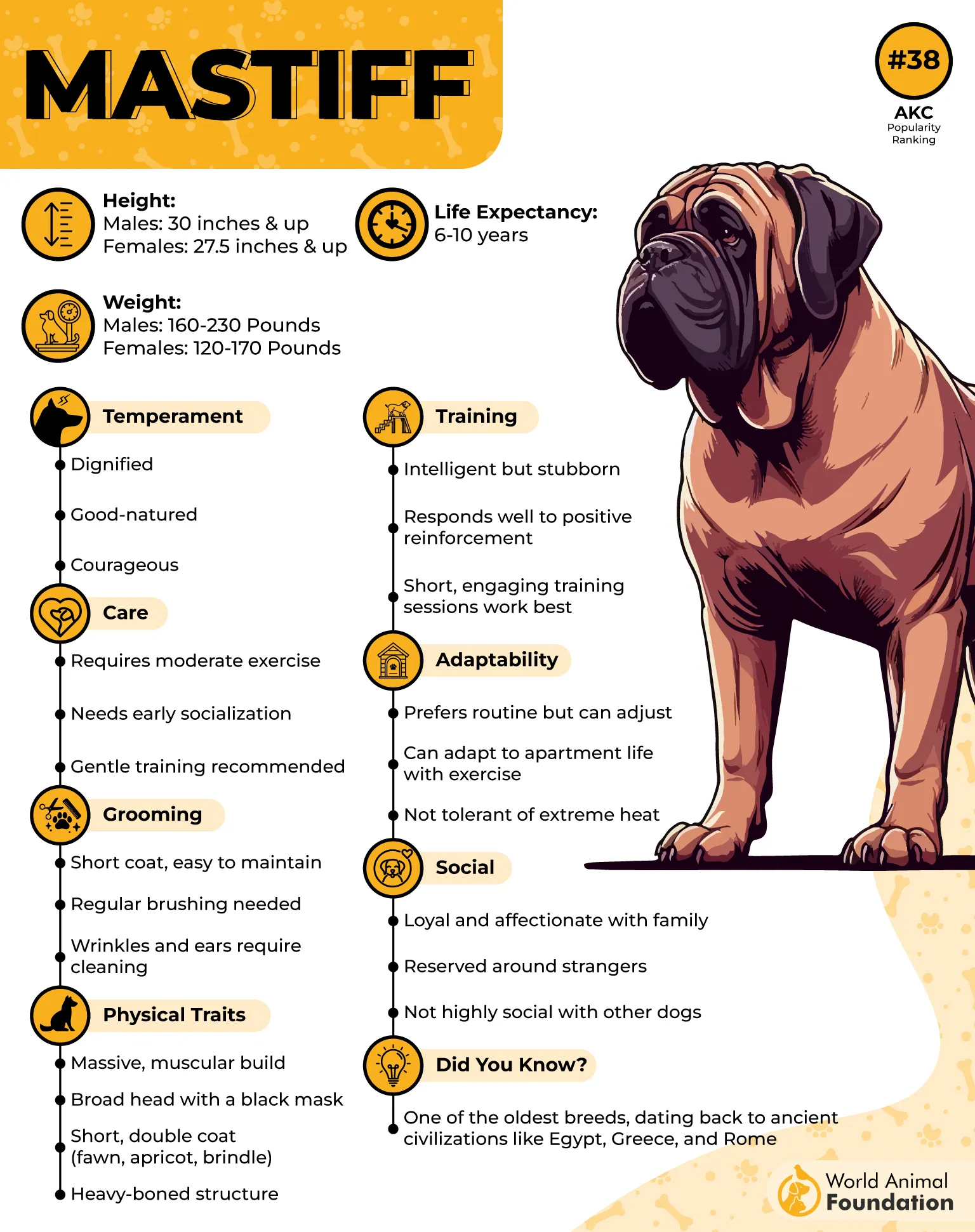
Mastiff comes from England, where the modern breed took shape after descending from the ancient Molosser dogs believed to have originated in Asia thousands of years ago.
Across different eras, these powerful dogs served in war, guarded property, and even took part in bull and bear baiting before finding a place in family homes.
Protects With Patience
They are naturally protective and watch unfamiliar people with patience instead of reacting at every sound. If a genuine threat arises, this breed is more likely to place itself between its family and danger while waiting for the situation to settle.
A closer look reveals a few daily-life behaviors:
Generally, they are quite dogs
Often barks to interrupt family arguments
Sensitive to harsh handling and poor treatment
Guidance Matters
Mastiff responds well to positive reinforcement and consistent training, especially when learning how and when protective behavior is appropriate.
Adult dogs usually do well with free play and daily walks, while growing puppies benefit from shorter outings that avoid stairs, jumping, and long distances, as Purina noted.
4. Great Dane
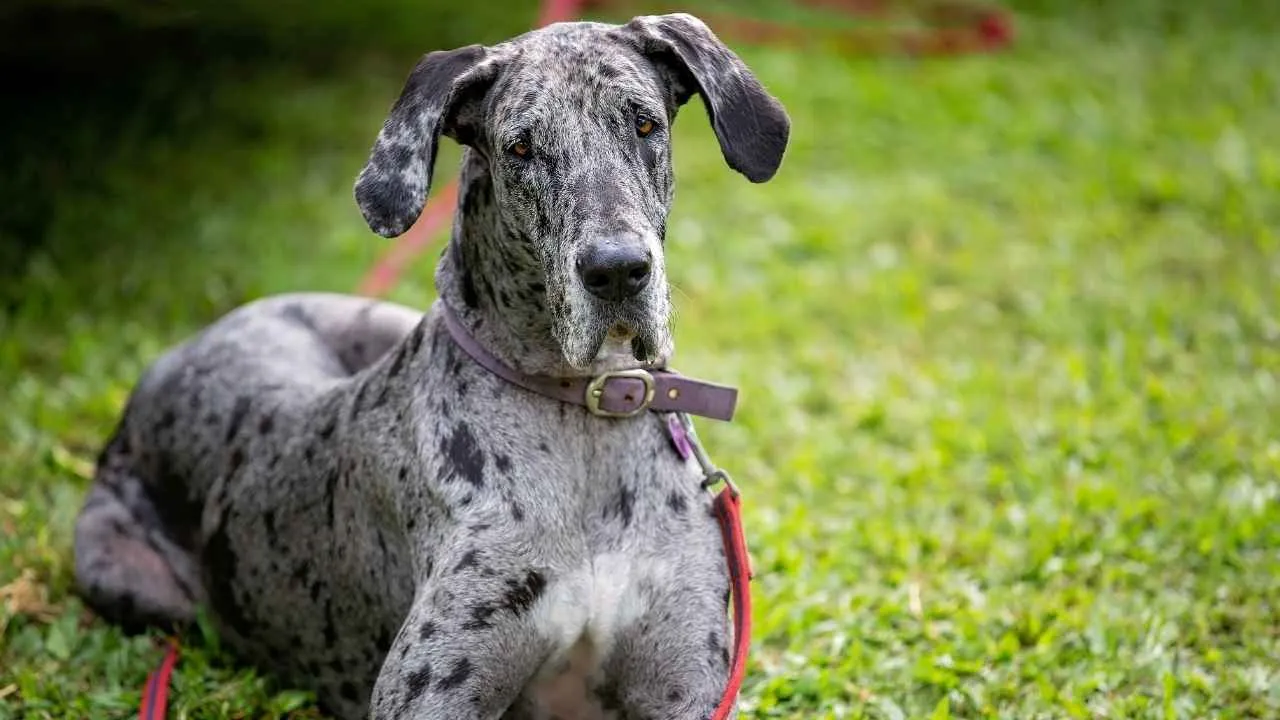
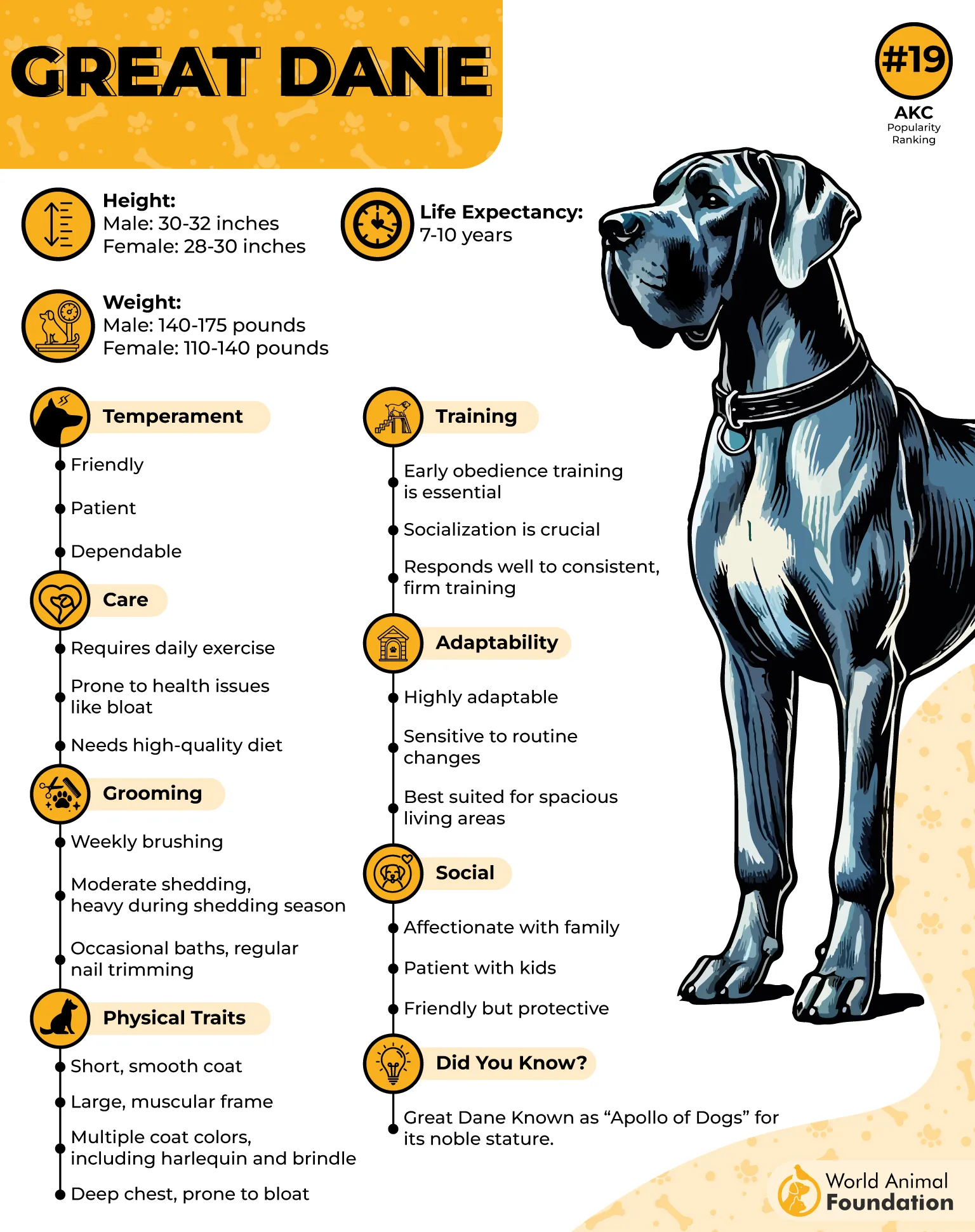
The Great Dane’s history began in Germany, where it hunted wild boar and protected large estates several centuries ago. Despite what its name suggests, the breed has no connection to Denmark, a fact that still catches many dog enthusiasts by surprise today.
Strength With Restraint
Great Dane relies more on its commanding size and calm awareness than constant vocal reactions, making it a reassuring presence around the home. A deep bark can quickly announce unfamiliar visitors, while genuine aggression is generally reserved for situations involving a real threat.
These facts add another layer to its guarding nature:
Tallest breed in the working group
Do not have a strong territorial drive
Confident socialization starts within four months
Gentle Presence
This gentle giant brings a composed attitude into family life and often responds well to children when proper training and early social experiences are part of its routine. Without those positive introductions, unfamiliar situations can lead to fearfulness or anxious behavior later in life.
5. Bullmastiff
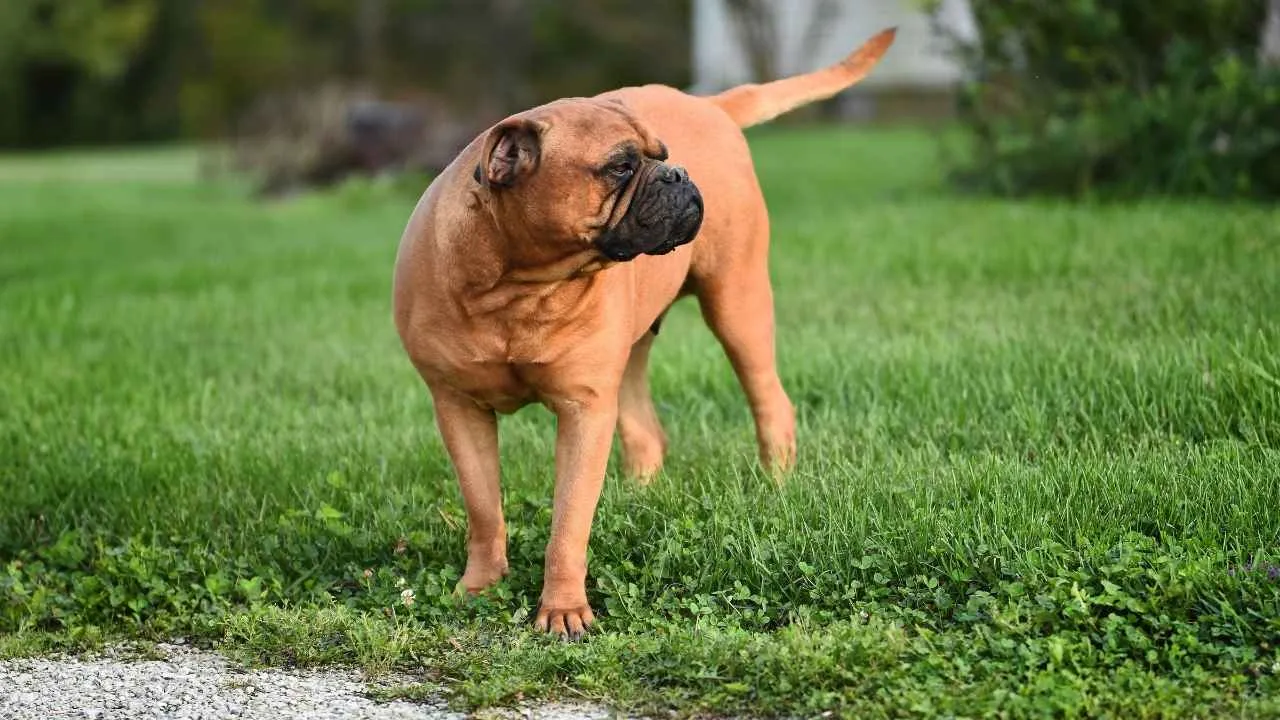
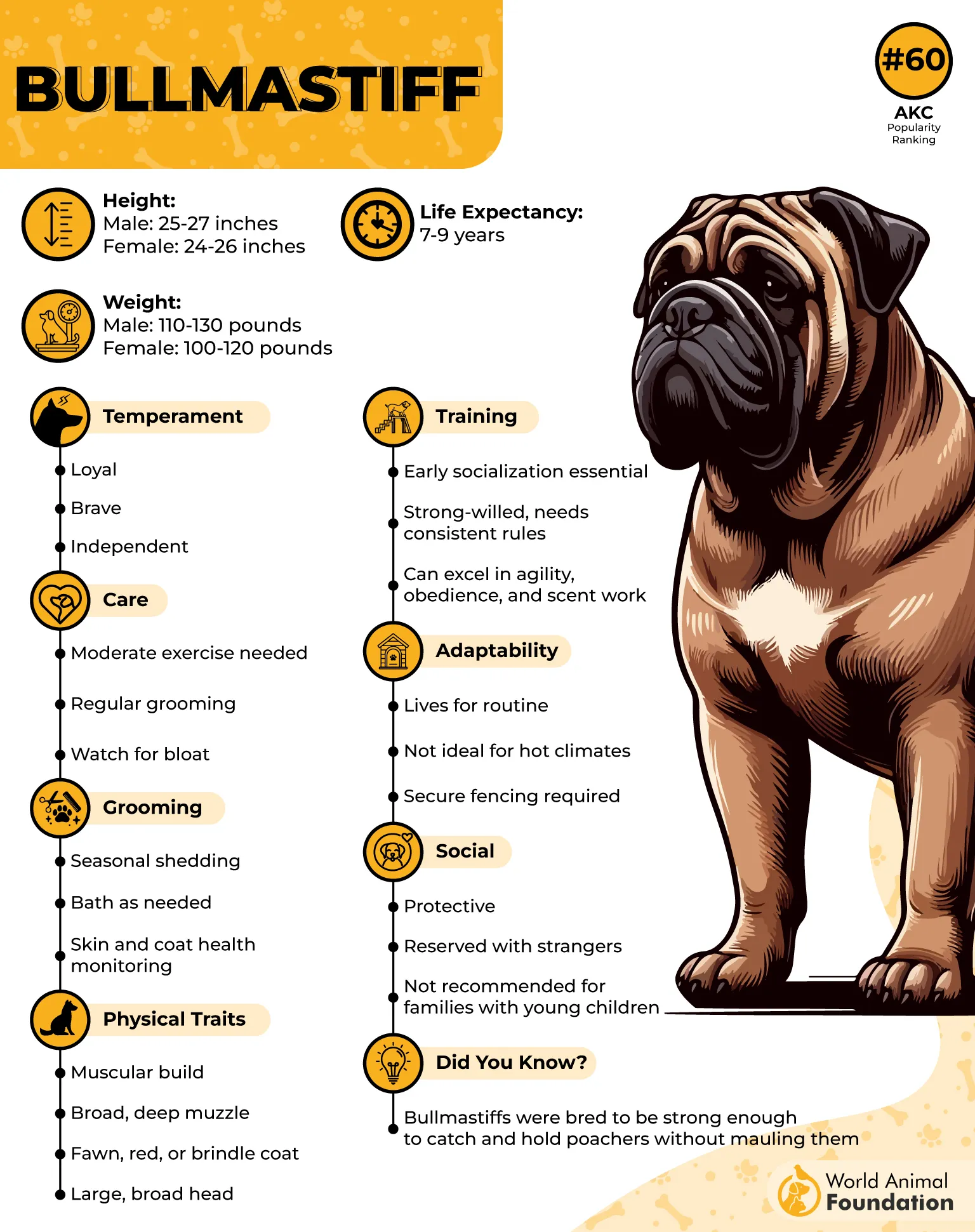
Bullmastiff was originally bred during the late 1800s, when large estates needed a dependable dog to stop poachers without causing serious injury. Created from Bulldog and Mastiff lines, this powerful breed was taught to wait, respond on command, and restrain intruders until the landowner arrived.
Confident, Not Loud
With a Bullmastiff, quiet confidence often speaks louder than constant barking, while its natural guarding instincts remain close at hand. A well-trained dog with proper socialization is more likely to stay calm, think through the situation, and avoid impulsive reactions.
There is more behind that calm watchfulness:
Performed the historic “Pin and Hold” task
Accepts strangers more easily after trusted introductions
Male dogs may challenge unfamiliar males without early guidance
Home Companion
Bullmastiff enjoys being involved in everyday family life and often follows its favorite people from one room to another instead of choosing a quiet corner. Around children, it can be gentle when raised alongside them, while its affectionate side often includes asking for close attention and plenty of cuddles.
6. Saint Bernard
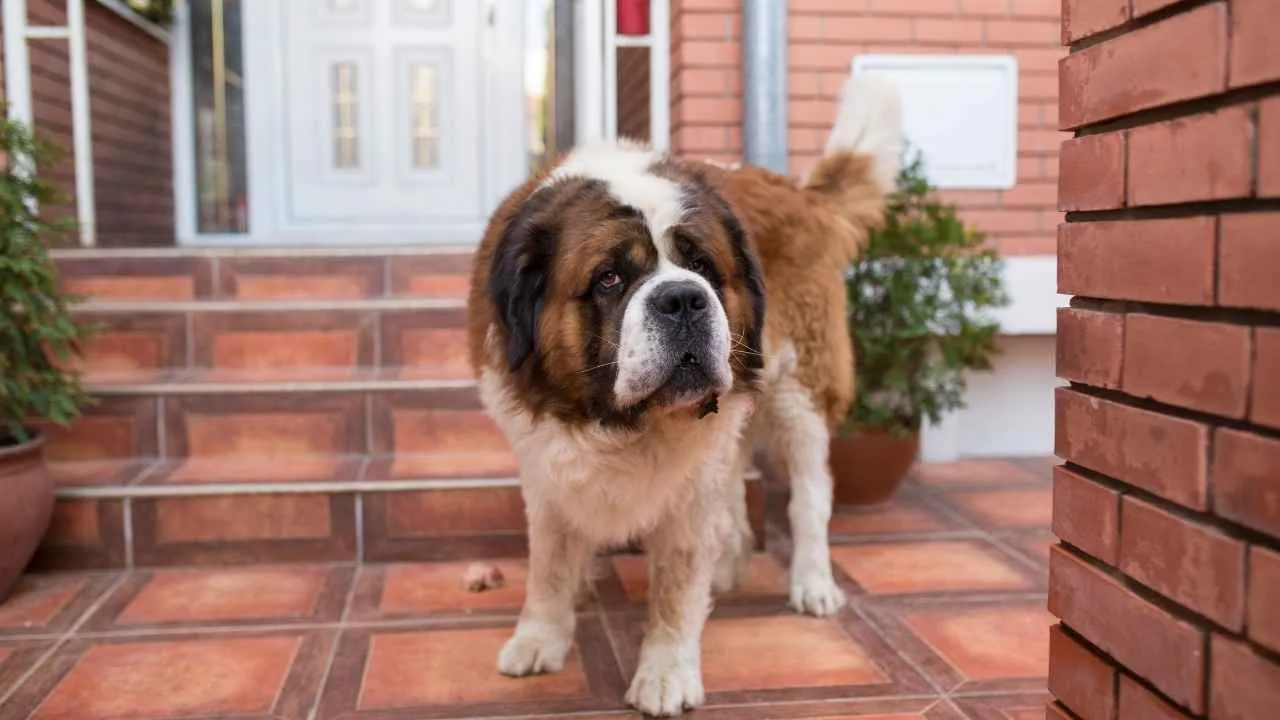
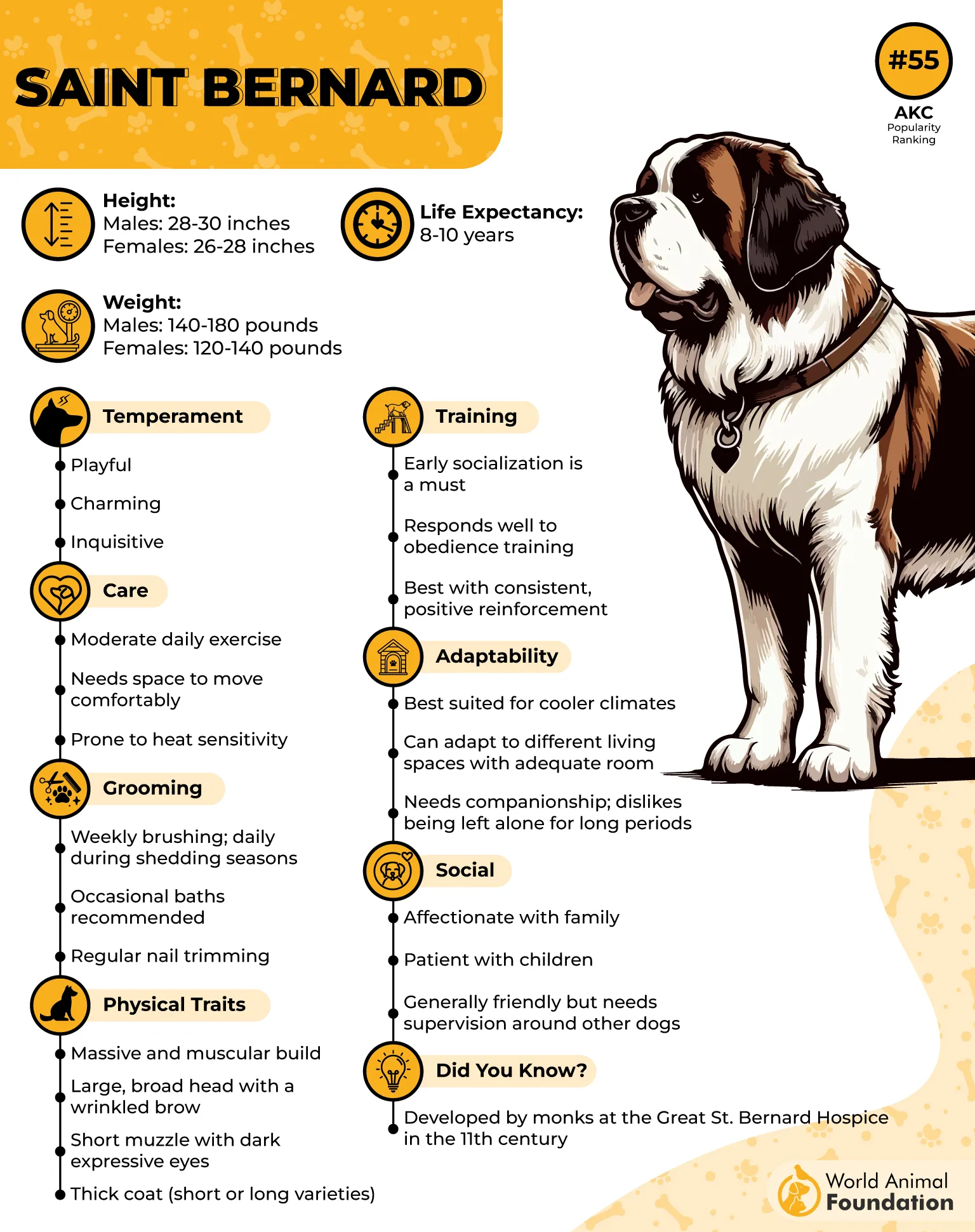
Saint Bernard appeared in written records as early as 1707 through the monks at the Saint Bernard Pass Hospice between Switzerland and Italy.
Early accounts connect the breed with Roman Molossian dogs before it became closely associated with locating lost travelers and finding safe routes through deep mountain snow.
Calm but Protective
The Saint Bernard’s impressive size often says enough without frequent barking, making many unwanted visitors think twice before coming closer. It takes a great deal before this breed reacts defensively, but genuine danger toward family members can quickly trigger their protective instincts.
A few details reveal even more about this breed:
Young dogs learn rescue work from older dogs
Strong sense of smell and direction
Digging linked to search-and-rescue instincts
Gentle Judgment
Saint Bernard interacts with children thoughtfully, often adjusting its path to avoid bumping into them during everyday activity. Puppies bring plenty of playful energy, while mature adults become noticeably calmer and more even-tempered around the family.
7. Leonberger
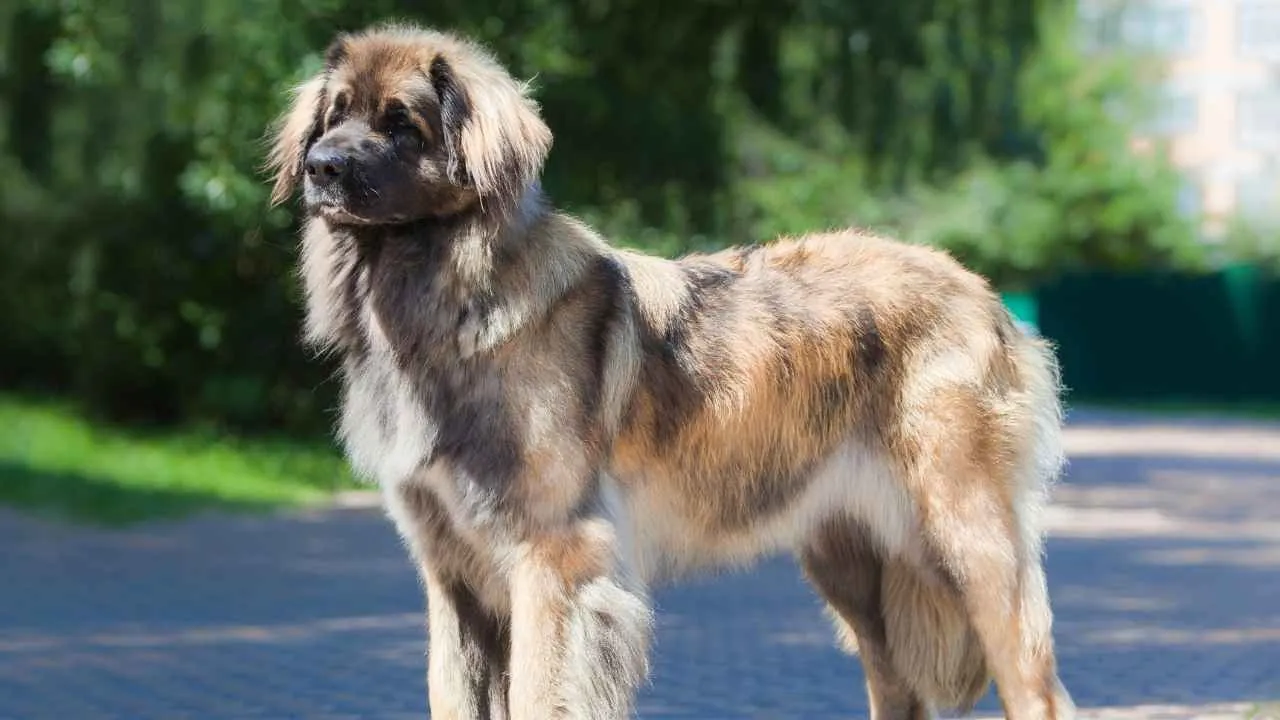
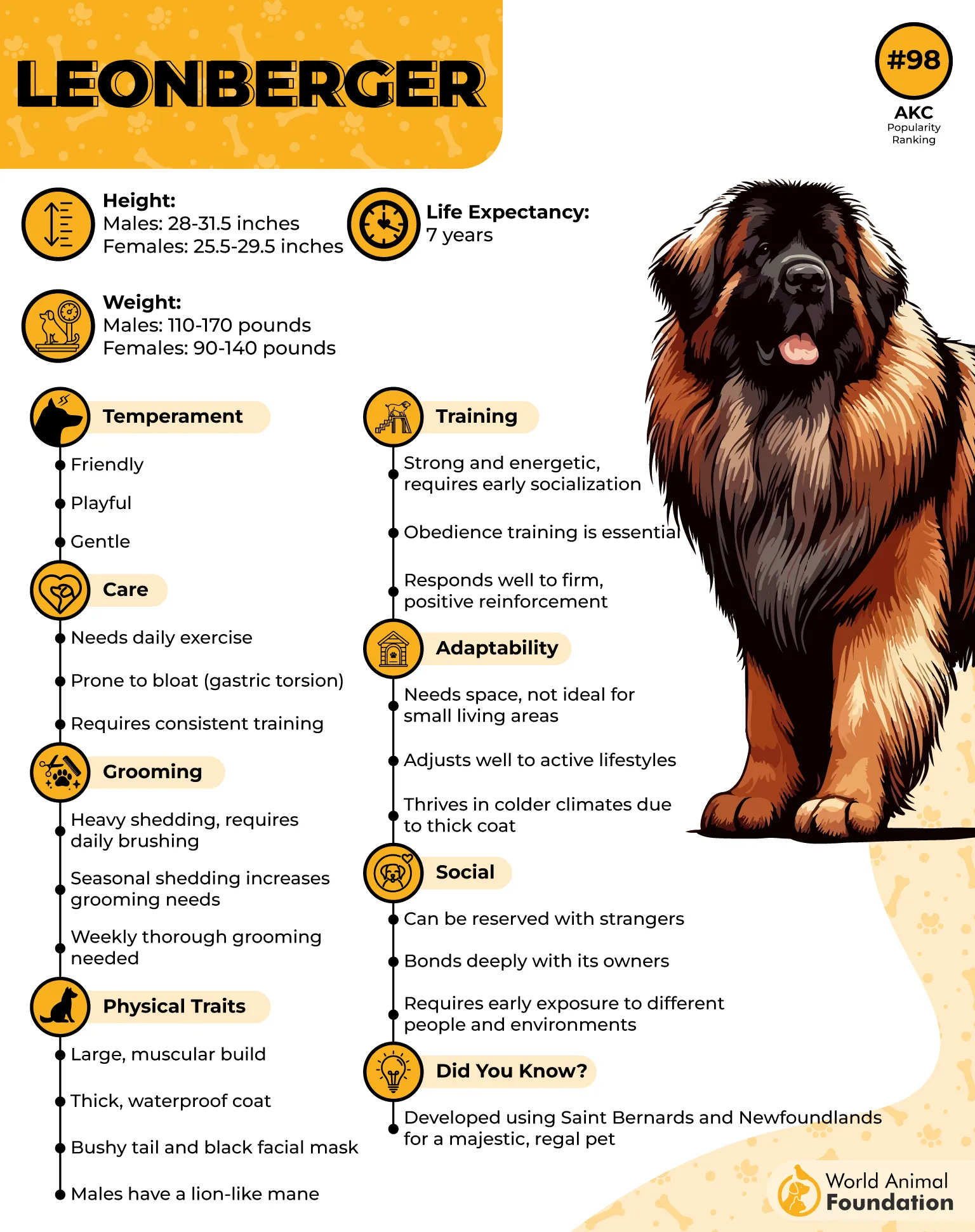
Leonberger was developed in the German town of Leonberg, where accounts describe a reddish-gold dog created by combining Newfoundland, Saint Bernard, and Great Pyrenees lines.
The goal was a dog whose appearance reflected the lion featured on the town’s coat of arms, and it later found a place on farms as well as among European royalty.
Thoughtful Temperament
Rather than responding to every unfamiliar person right away, this guardian breed prefers to quietly assess what is happening around it. Once it sees that a visitor has been welcomed by the family, its reserved attitude usually softens.
That balanced temperament becomes clear with these traits:
Protective instincts strengthen with maturity
Shows gentle nature around children
Long periods without companionship can be difficult for this breed
Learning the Right Way
Although they are incredibly loyal, but benefits from early socialization and regular obedience work, especially because their playful personality can show positive development during training.
Guidance from an early age is especially important when handling such a large, athletic dog that enjoys daily walks and purposeful activities.
Conclusion
Not every home needs a dog that reacts loudly to every unfamiliar sound or passing visitor. For many families, excellent guard dogs with an instinct to stay alert create a far more comfortable environment. These dogs understand when to remain calm and when a situation deserves closer attention, making their quiet confidence especially reassuring.
Their protective nature grows through trust, proper guidance, and meaningful relationships with the people they live beside each day. When properly trained, given moderate exercise, and plenty of positive experiences, they become incredibly loyal companions, rewarding that effort with steady companionship that brings both comfort and confidence into everyday family life together.
