




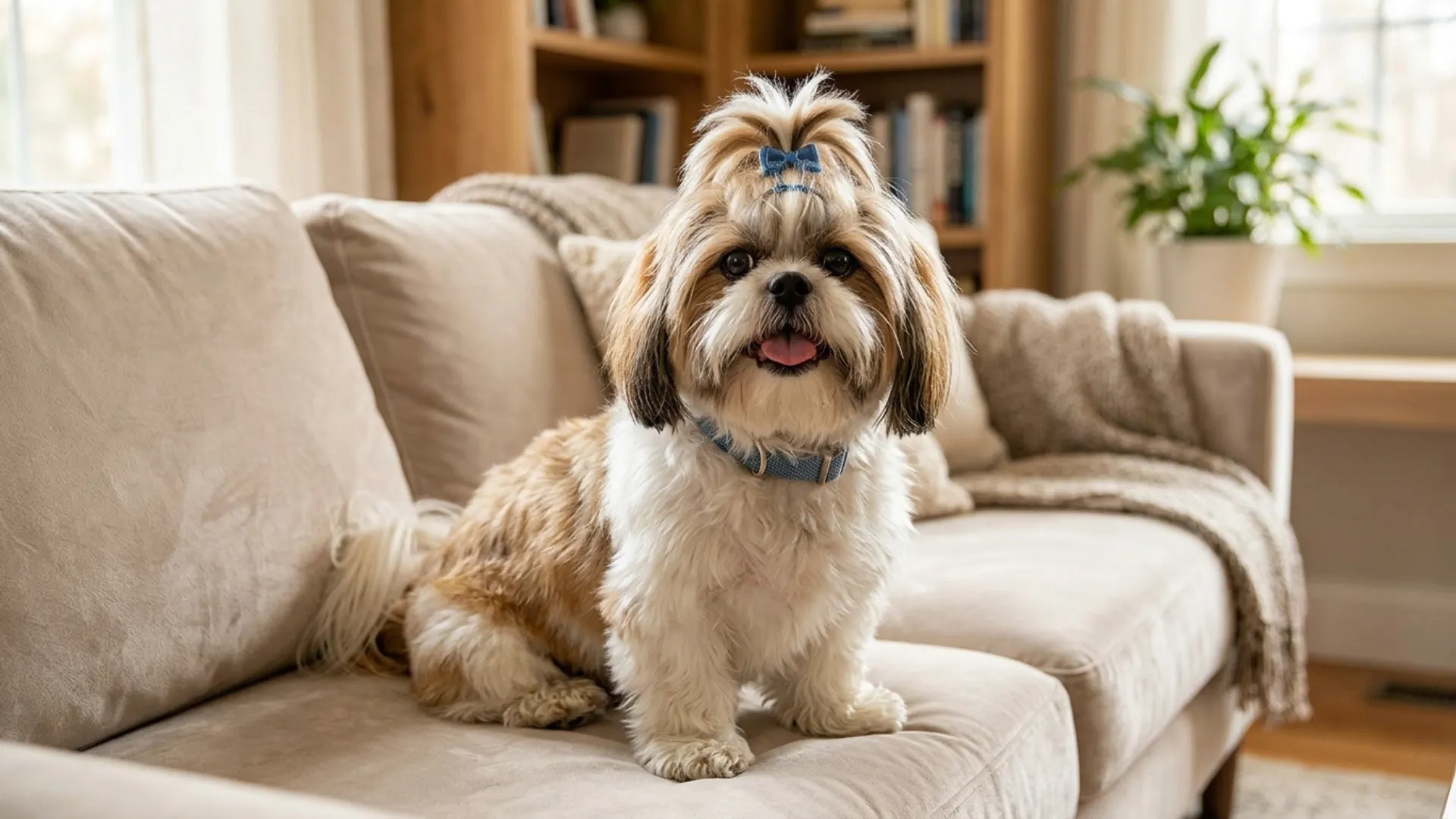
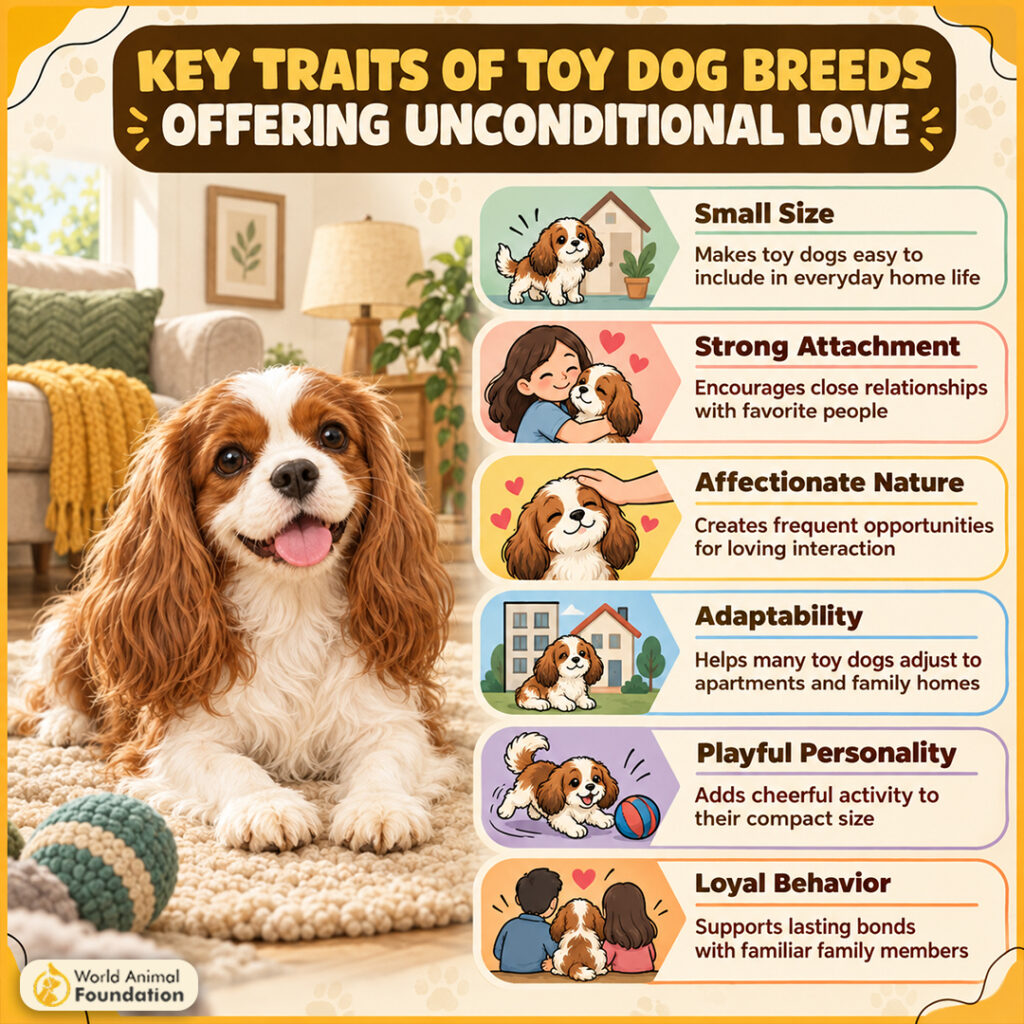
Toy dogs can be appealing to first-time owners because their small frames are often easier to accommodate in apartments, smaller houses, and busy households. Their compact size can also make everyday handling and transportation more convenient.
However, small dogs still have individual exercise, grooming, training, and companionship requirements. Some toy breeds are energetic and highly intelligent, while others are happier with a quieter routine and plenty of time beside their owners.
The seven breeds below represent different personalities within the toy-dog category. Their histories, learning styles, social needs, and affectionate qualities can help beginners understand what everyday life with each breed may involve.
Lovable Toy Dog Breeds Perfect for Beginners
1. Cavalier King Charles Spaniel
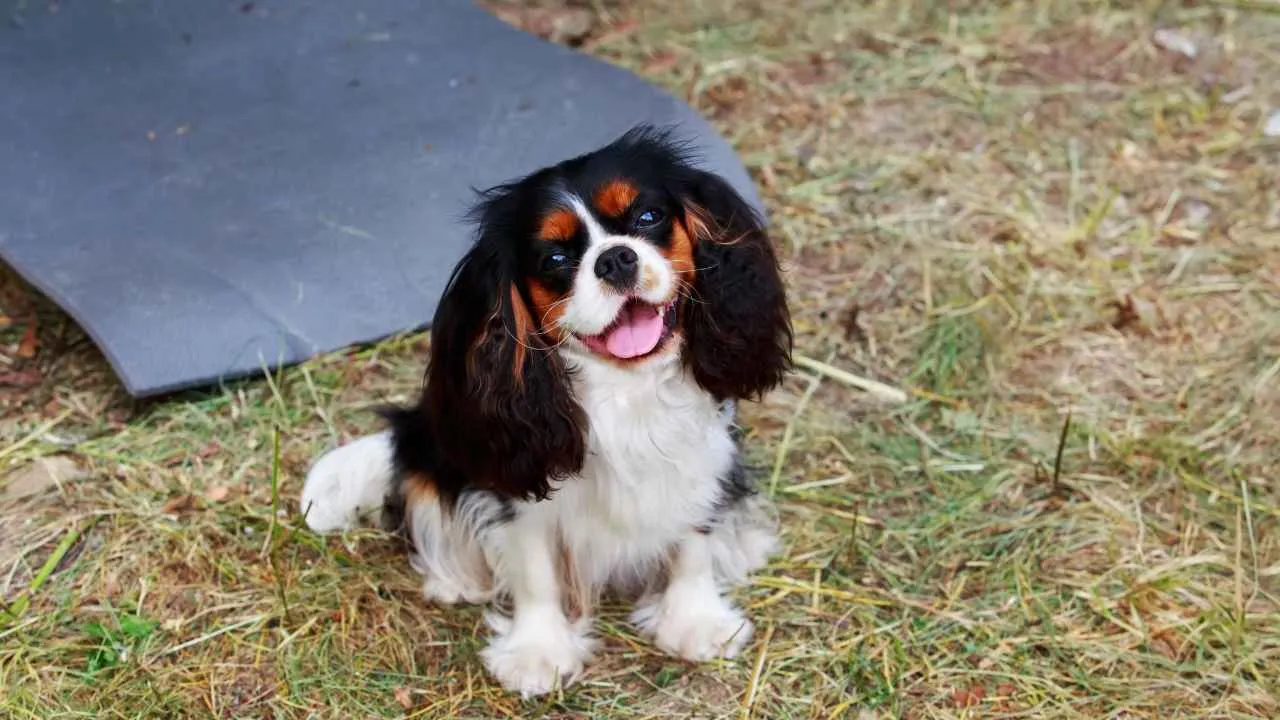
The Cavalier King Charles Spaniel developed in Britain and has a long association with aristocratic households, as per PetMD. Small spaniels appeared in paintings and were valued as companion animals. Over time, breeders established the modern Cavalier while retaining its characteristic spaniel appearance.
Friendly Training and Early Socialization
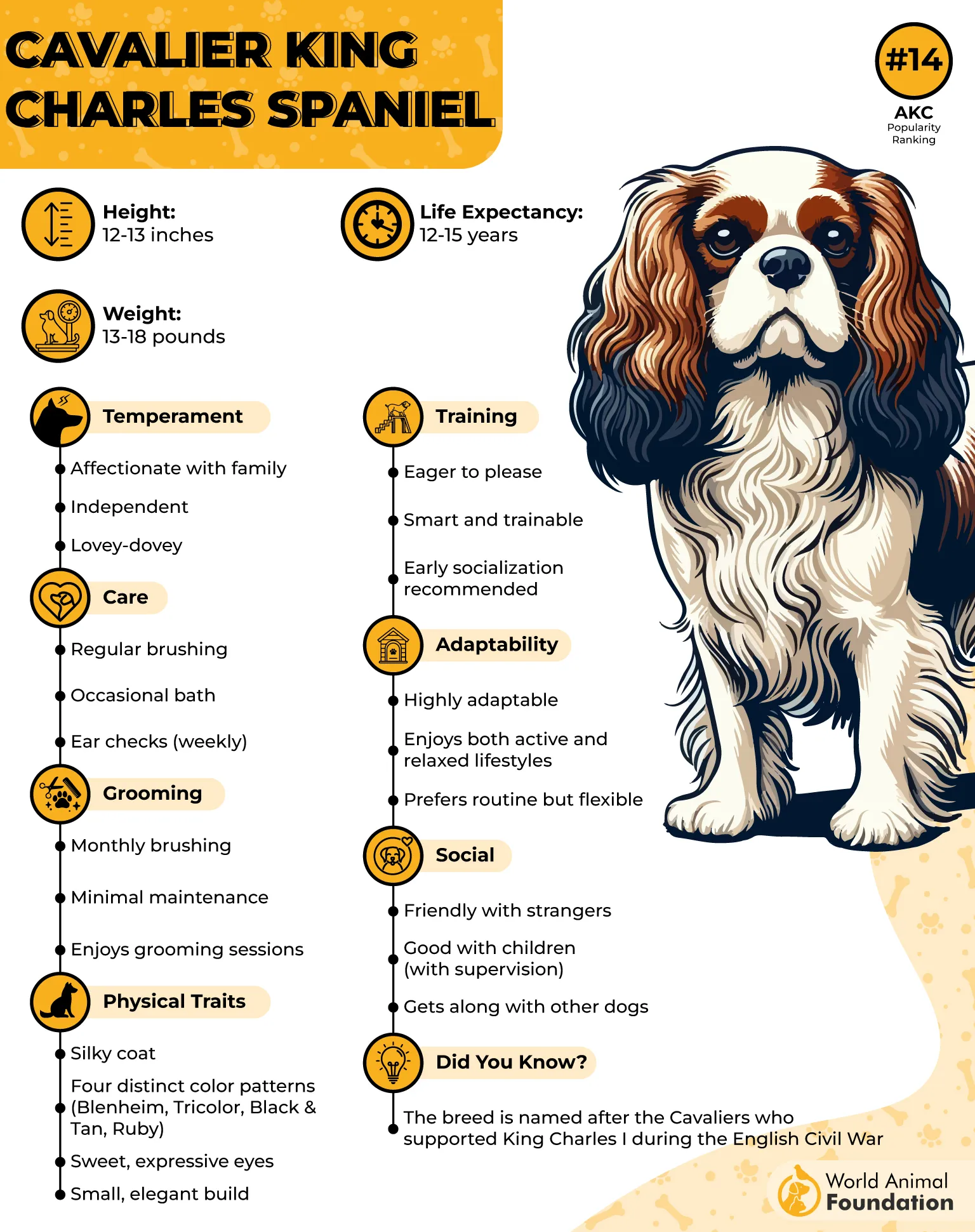
Cavaliers often respond well to praise, treats, and other positive training methods. Early socialization can help puppies become comfortable with visitors, dogs, handling, and unfamiliar surroundings. Short lessons can be useful for teaching manners without making training feel repetitive.
An Affectionate Companion for Beginners
Their gentle and people-oriented nature can make Cavaliers appealing to first-time owners seeking a close companion. They generally enjoy walks and play but can also settle beside their family. Regular grooming, companionship, exercise, and appropriate veterinary care remain necessary.
2. Shih Tzu

The Shih Tzu has roots in China and Tibet and became closely associated with Chinese imperial households. Its ancestry includes small companion dogs that were valued for their appearance and affectionate nature. The breed was developed primarily for companionship rather than demanding physical work.
Patient Lessons and Positive Socialization
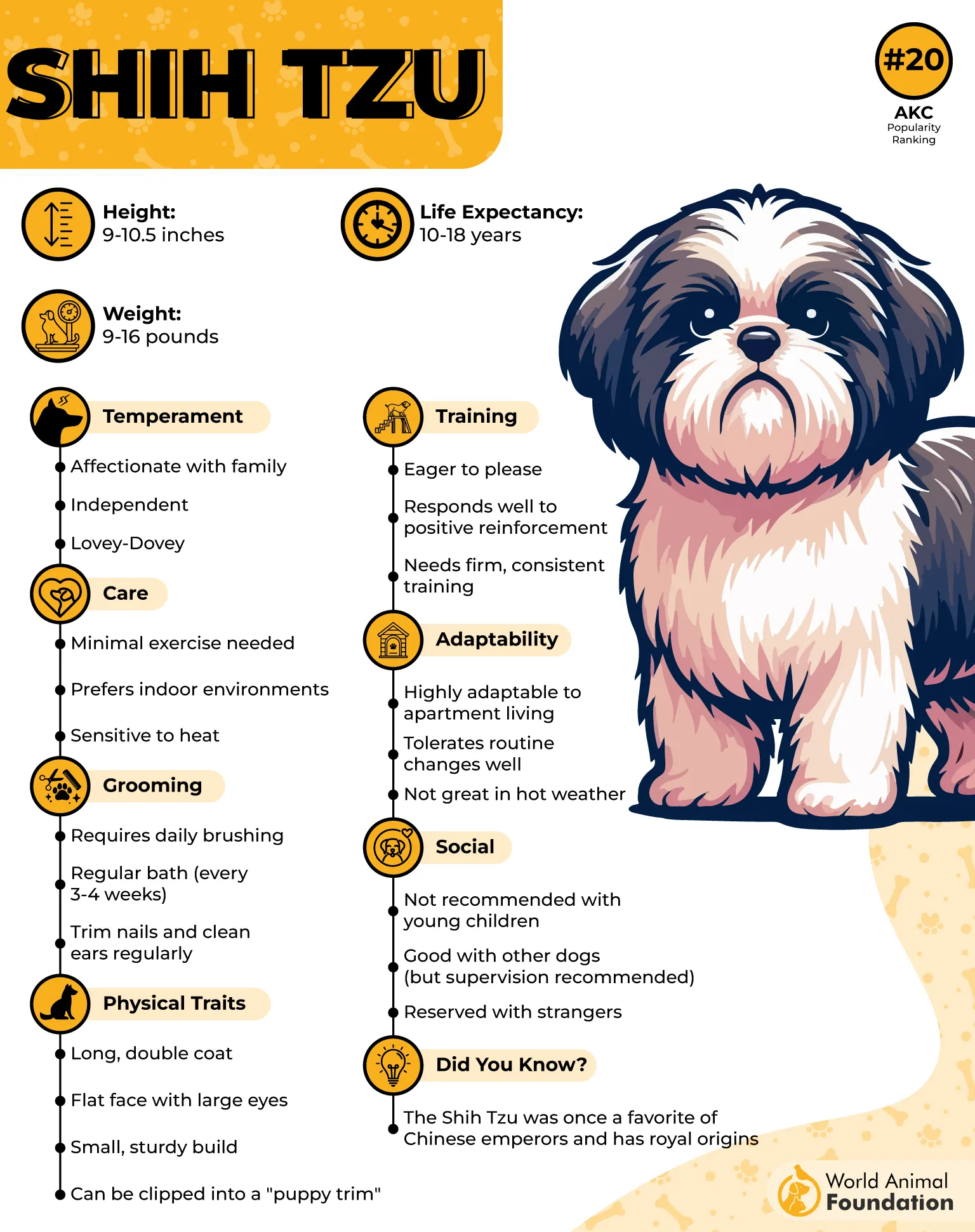
Shih Tzus can learn household manners through gentle, consistent training. Early exposure to people, animals, sounds, and different settings can help prevent unnecessary nervousness. House-training may require patience, so beginners benefit from predictable routines and positive reinforcement, as per WebMD.
A Devoted Little Household Companion
Shih Tzus often enjoy being close to their owners and can adapt to many indoor living arrangements. Their affectionate personalities can make them rewarding companions for people new to dog ownership. Their long coats require regular brushing and professional grooming to prevent matting.
3. Papillon

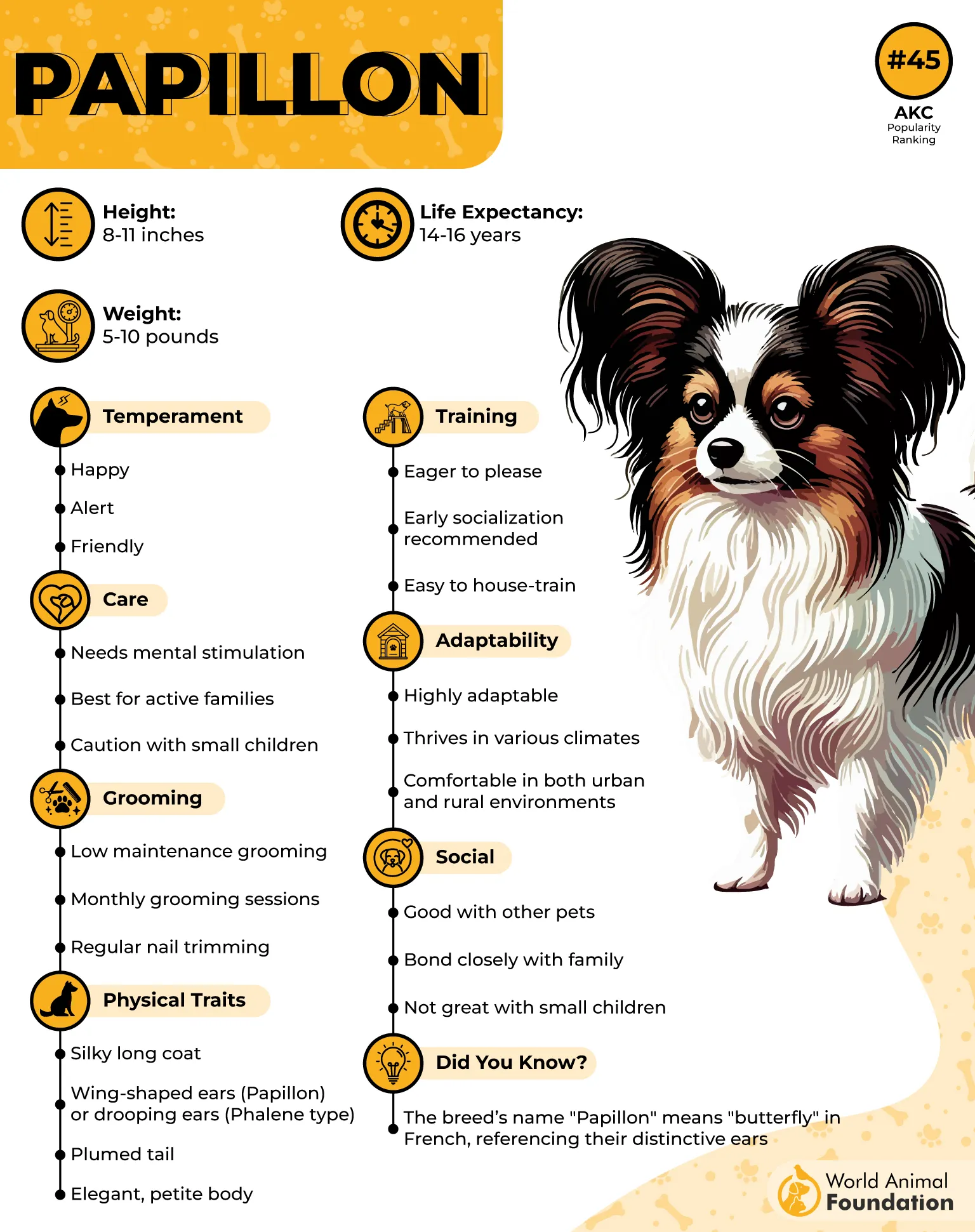
The Papillon has a long European history and appears in artwork dating back several centuries. The breed became associated with continental European courts and was primarily developed as a companion, as per Purina. Its name comes from the French word for butterfly, referring to its distinctive fringed ears.
Bright Training and Broad Socialization
Papillons are intelligent and often enthusiastic learners. Short sessions involving treats, toys, and praise can teach useful commands while providing mental stimulation. Early socialization can introduce them to people, animals, environments, and household experiences in a positive way.
A Tiny Dog With a Big Personality
Despite their small stature, Papillons can be lively, curious, and eager to participate in family activities. Their cheerful nature can make everyday companionship especially engaging for beginners. They need regular activity and mental challenges rather than being treated solely as decorative lapdogs.
4. Toy Poodle
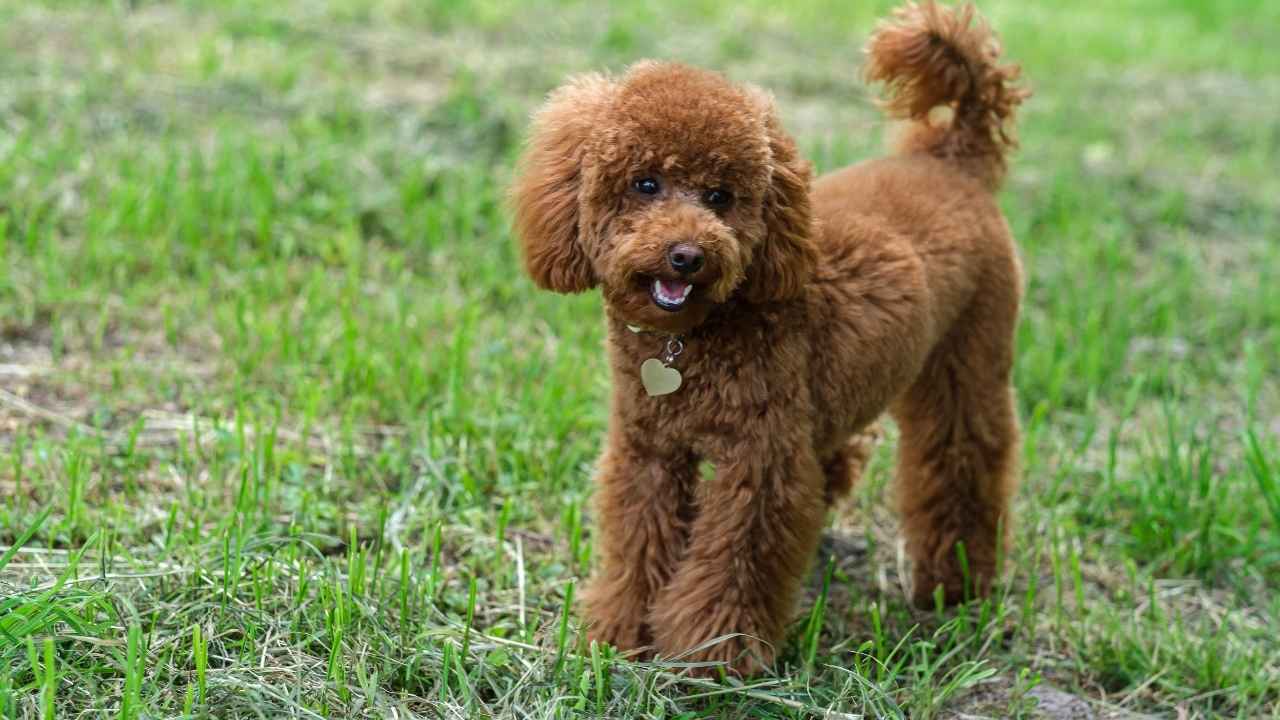
The Poodle has European origins and was historically associated with water retrieving, despite its modern reputation as a sophisticated affectionate dog. Smaller varieties were later developed for companionship and other activities. The Toy Poodle became particularly popular for its intelligence and compact size.
Intelligent Training and Confident Socialization
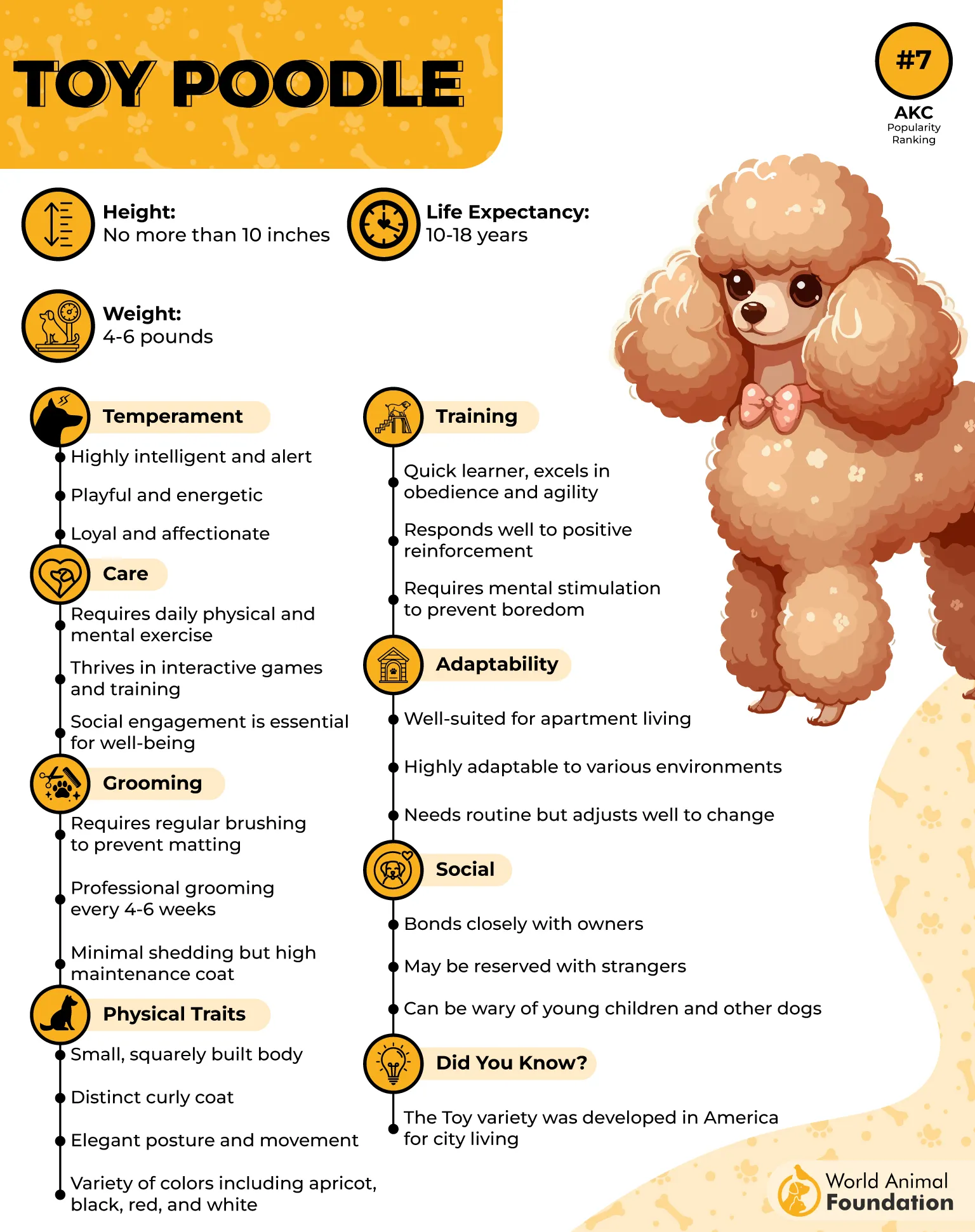
Toy Poodles are highly capable learners and often enjoy training that combines rewards with mental challenges. Beginners can teach basic obedience, tricks, and household routines through short, consistent sessions. Early socialization helps them become comfortable with different people, dogs, sounds, and environments.
A Clever and Affectionate Companion
Their small size can make them convenient for many first-time owners, while their intelligence provides plenty of opportunities for interactive companionship. Toy Poodles often enjoy being involved in their owner’s activities. Their curly coats require regular brushing and grooming to prevent tangles and maintain coat condition.
5. Havanese
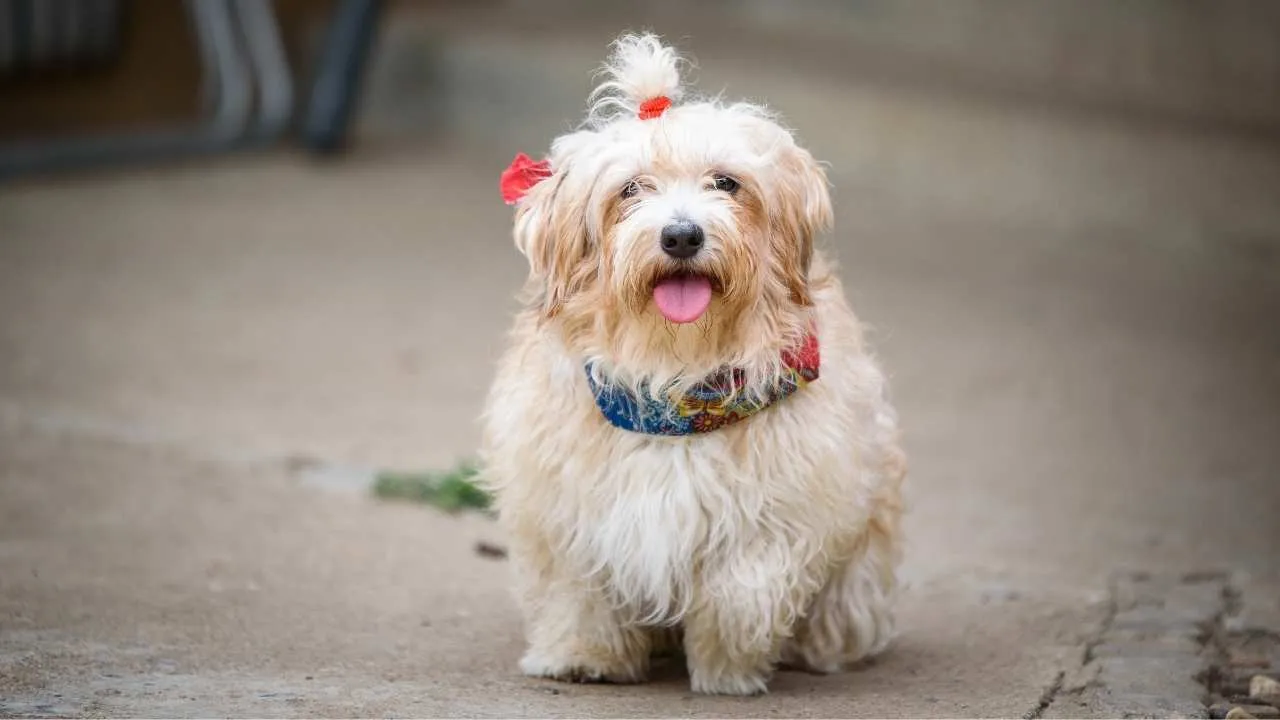
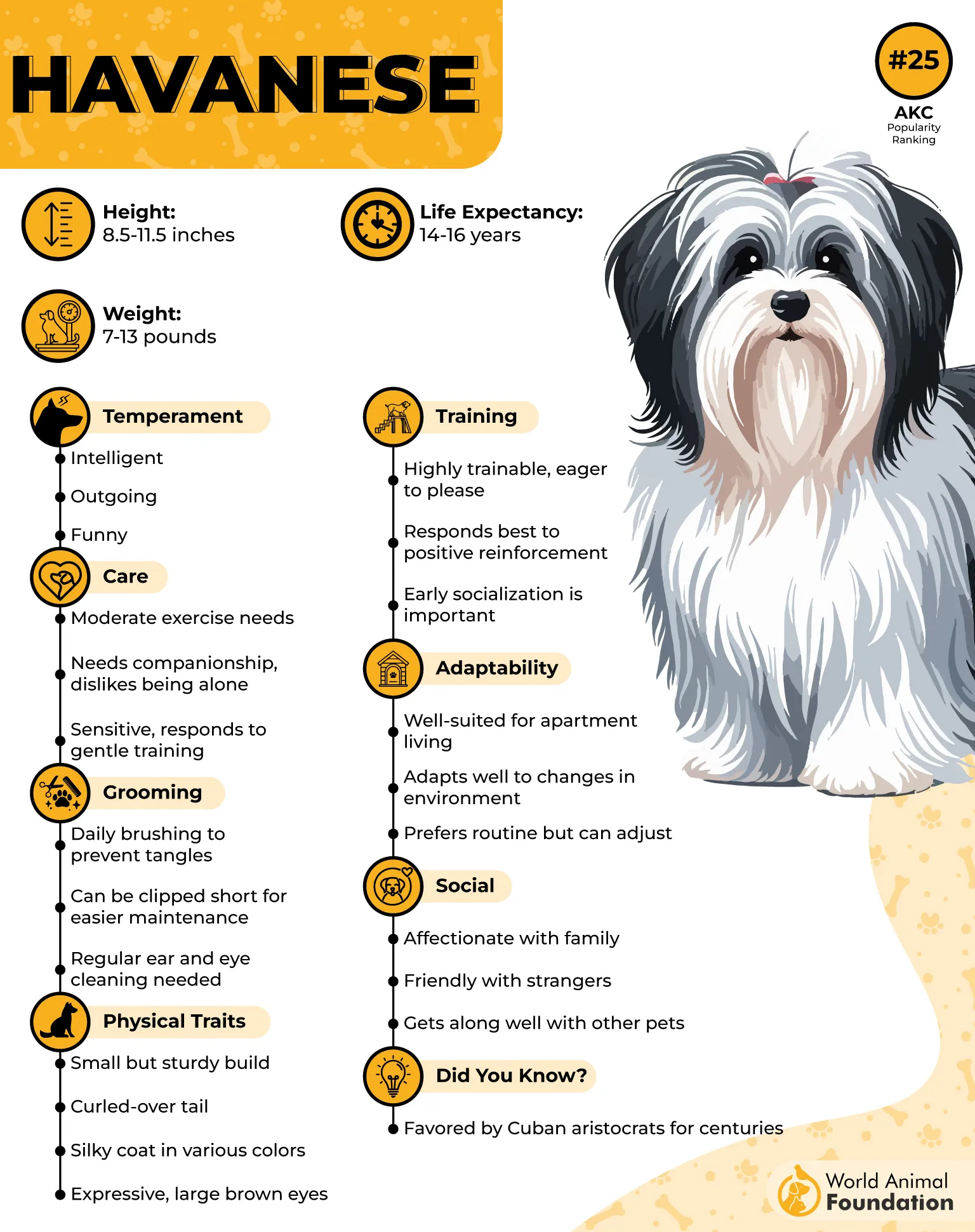
The Havanese developed in Cuba and belongs to the Bichon family of companion dogs. European settlers brought small companion dogs to the island, where the breed became associated with Cuban households. Its development centered heavily on companionship and an affectionate relationship with people.
Reward-Based Learning and Social Confidence
Havanese generally benefit from gentle instruction that uses praise, treats, and play. Early socialization can help them become comfortable around unfamiliar people, friendly dogs, new places, and household noises. Consistent routines can make basic manners and house-training easier to establish.
A Cheerful Companion for First-Time Owners
Their affectionate and sociable nature can suit beginners who want a dog that enjoys close human interaction. Havanese can remain playful without requiring extreme levels of physical activity. Their long coats do require regular brushing and maintenance, which new owners should plan for.
6. Maltese
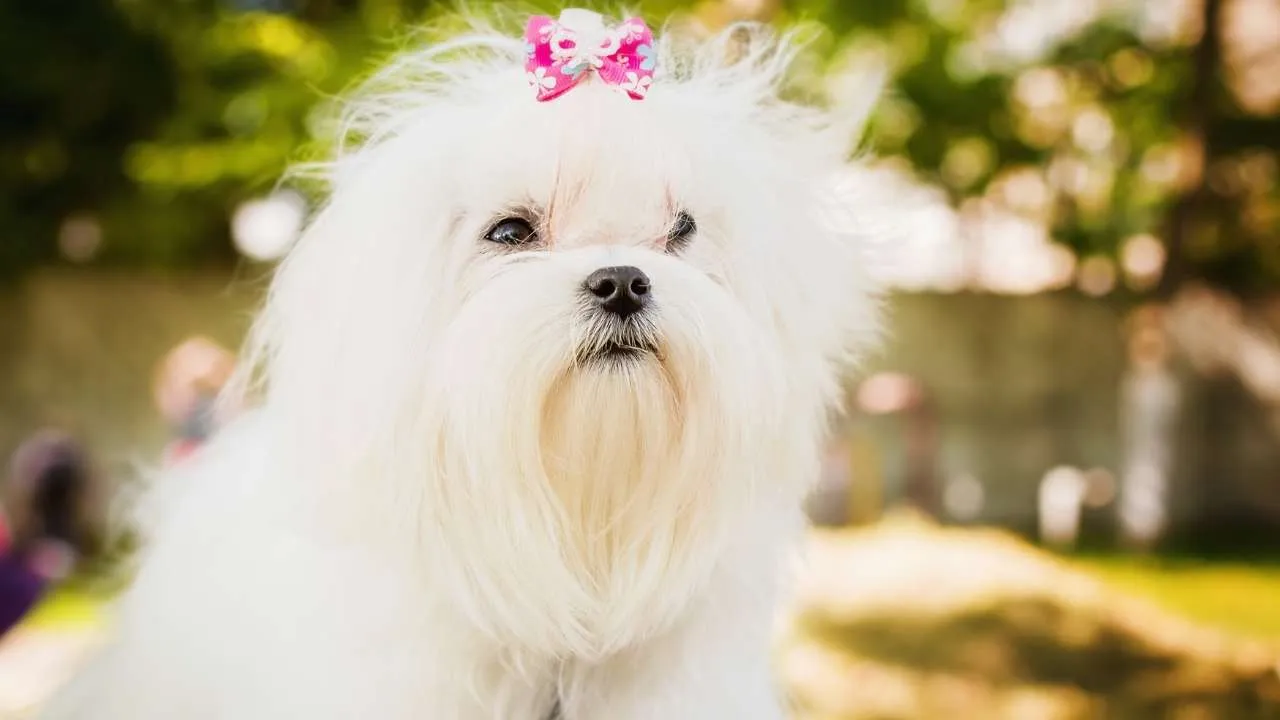
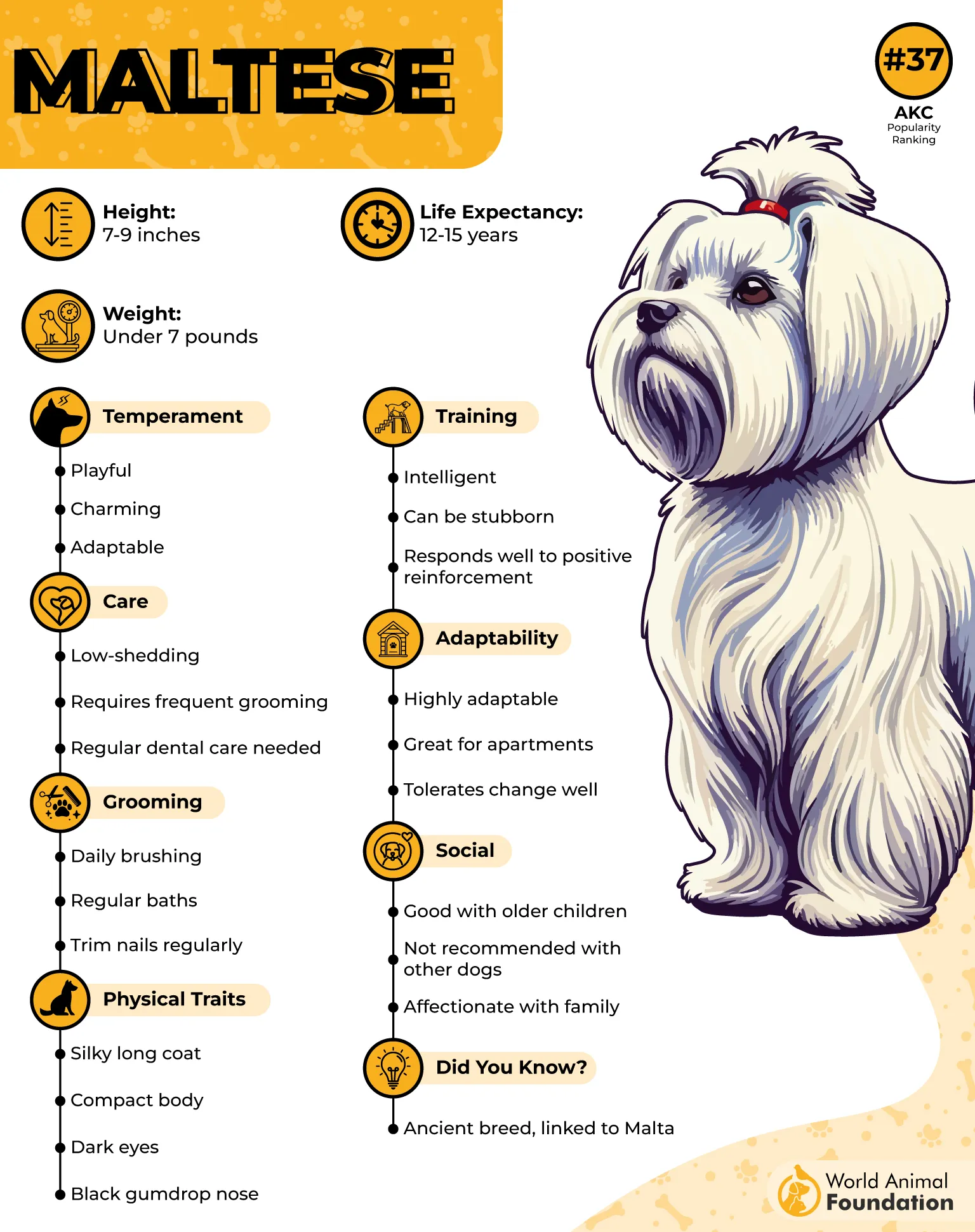
The Maltese has an ancient history as a small companion dog associated with Mediterranean societies, as per Hill’s Pet. The breed was prized for its elegant appearance and companionship rather than for hunting or herding duties. Its long white coat eventually became one of its most recognizable features.
Gentle Training and Early Social Experiences
Maltese dogs can respond well to reward-based training when lessons remain short and consistent. Socialization from an early age can help them become comfortable with visitors, animals, handling, and unfamiliar situations. Establishing predictable routines can also support good household habits.
A Loving Companion in a Small Package
Maltese are often affectionate and enjoy spending substantial time with their owners. Their compact size can make everyday handling convenient for beginners. Their flowing coat requires frequent brushing and regular grooming, while their small bodies still benefit from appropriate daily activity.
7. Yorkshire Terrier

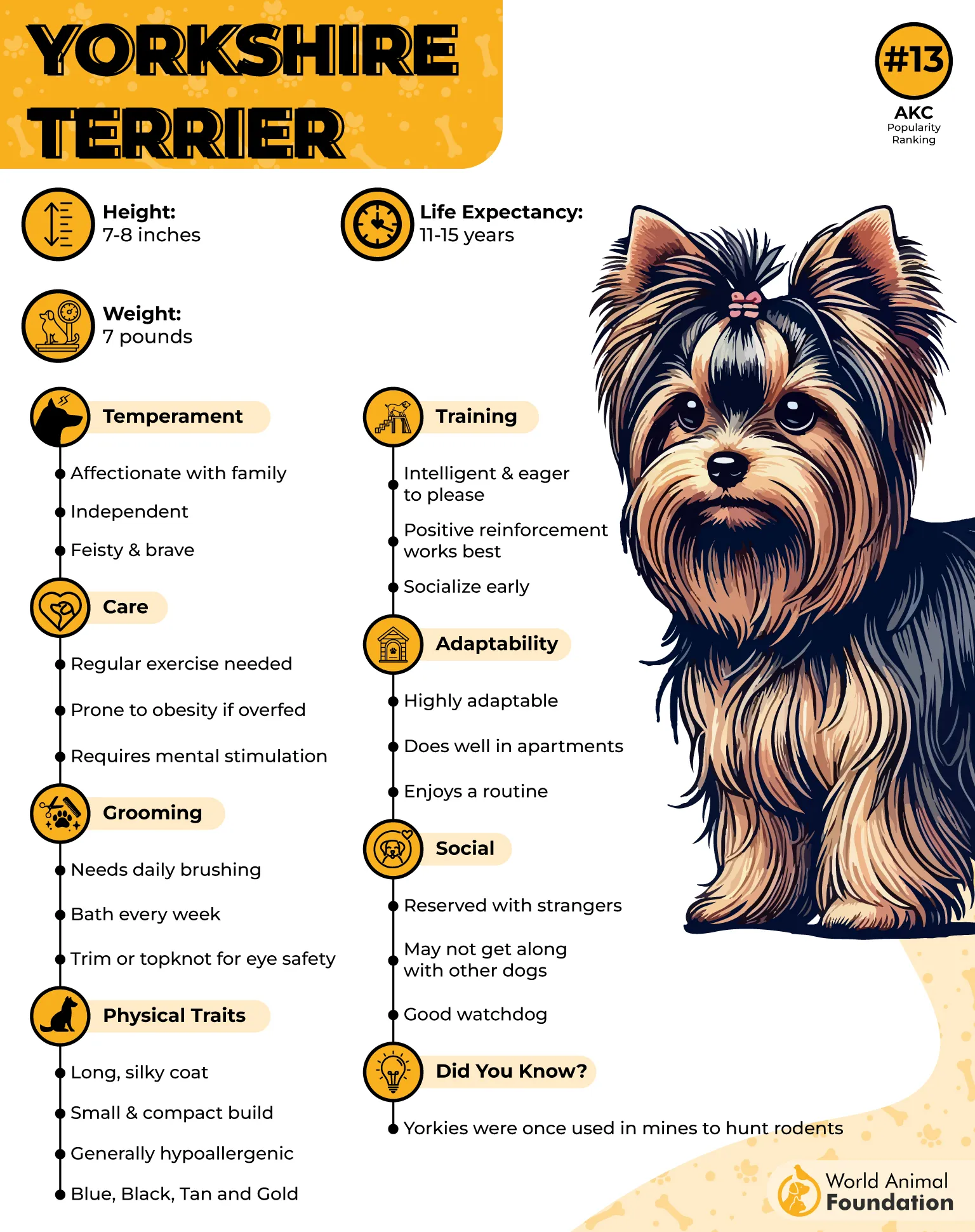
The Yorkshire Terrier developed in northern England during the Industrial Revolution, particularly around Yorkshire and Lancashire. Workers brought small terrier-type dogs to the region, where they were used for controlling rats in mills and other workplaces. Selective breeding eventually transformed the breed into a popular companion.
Consistent Training and Careful Socialization
Yorkshire Terriers are intelligent and can learn household rules through positive reinforcement. Early socialization can help them become comfortable with visitors, other dogs, sounds, and unfamiliar environments. Beginners should also teach calm behavior because their terrier heritage can contribute to bold reactions.
A Confident and Loving Toy Companion
Yorkies combine a very small body with an energetic and spirited personality. They can form strong bonds with their owners and often enjoy interactive play and attention. Their long, fine coat needs regular maintenance, while daily mental and physical activity helps keep their lively nature appropriately focused.
Conclusion
Cavalier King Charles Spaniels, Shih Tzus, Papillons, Toy Poodles, Havanese, Maltese, and Yorkshire Terriers can all appeal to people experiencing dog ownership for the first time. Each offers a different combination of affection, energy, trainability, grooming, and social needs.
Some, such as the Cavalier and Havanese, are particularly oriented toward close human companionship. Papillons, Toy Poodles, and Yorkies can bring more energetic and mentally engaging personalities, while Shih Tzus and Maltese may appeal to owners seeking compact household companions.
Being a toy breed does not automatically make a dog effortless to care for. Beginners should consider grooming commitments, exercise, training, socialization, separation tolerance, and individual temperament before choosing a puppy or adult dog. A good match can make the transition into dog ownership both enjoyable and manageable.
