




Imagine coming home after a long day to a little furry companion that is happiest curling up beside you on the sofa. Sounds lovely, right? If you prefer a peaceful home and a relaxed routine over hours of walking and endless outdoor adventures, a small, easygoing dog might be just what you need.
Toy dogs may be small in size, but they have plenty of personality, affection, and charm to share. While some dogs need constant activity to stay happy, others are content with short walks, indoor playtime, and plenty of cuddles.
However, choosing a calm companion involves more than finding a dog with a cute face and tiny paws. Every dog has its own temperament, and even laid-back pups need daily exercise, mental stimulation, training, and socialization to thrive.
The good news? There are plenty of lovable toy dog breeds that can fit beautifully into a calm household. Keep reading to discover which ones might make your home feel a little warmer and a lot more cuddly!
Lovable Toy Dog Breeds For Calm Households
1. Maltese
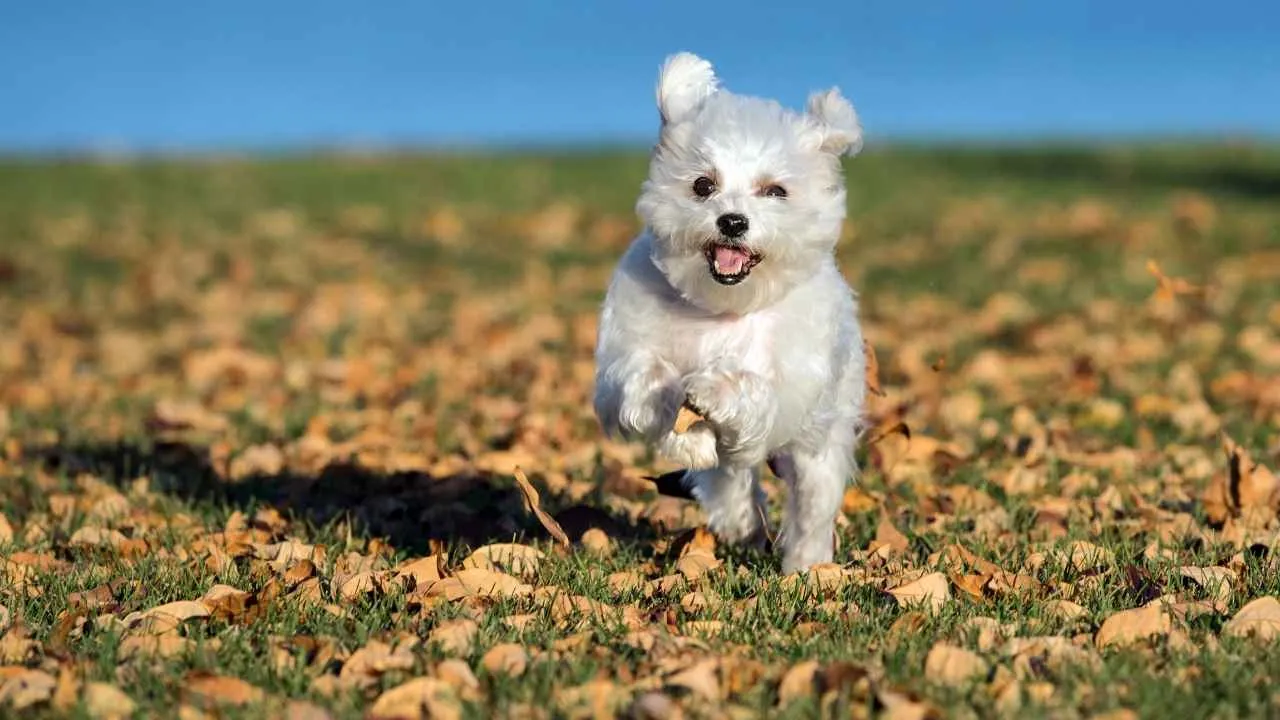
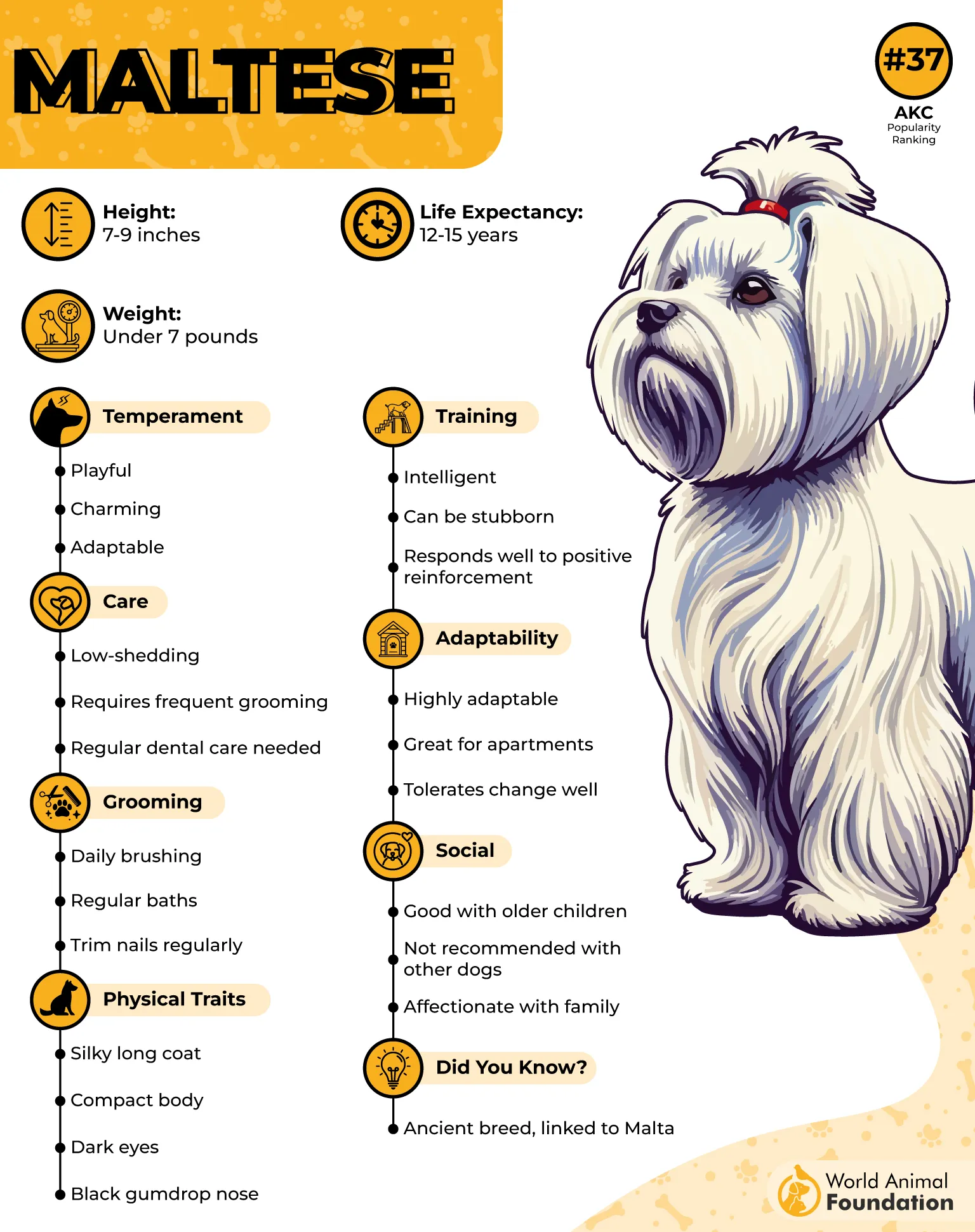
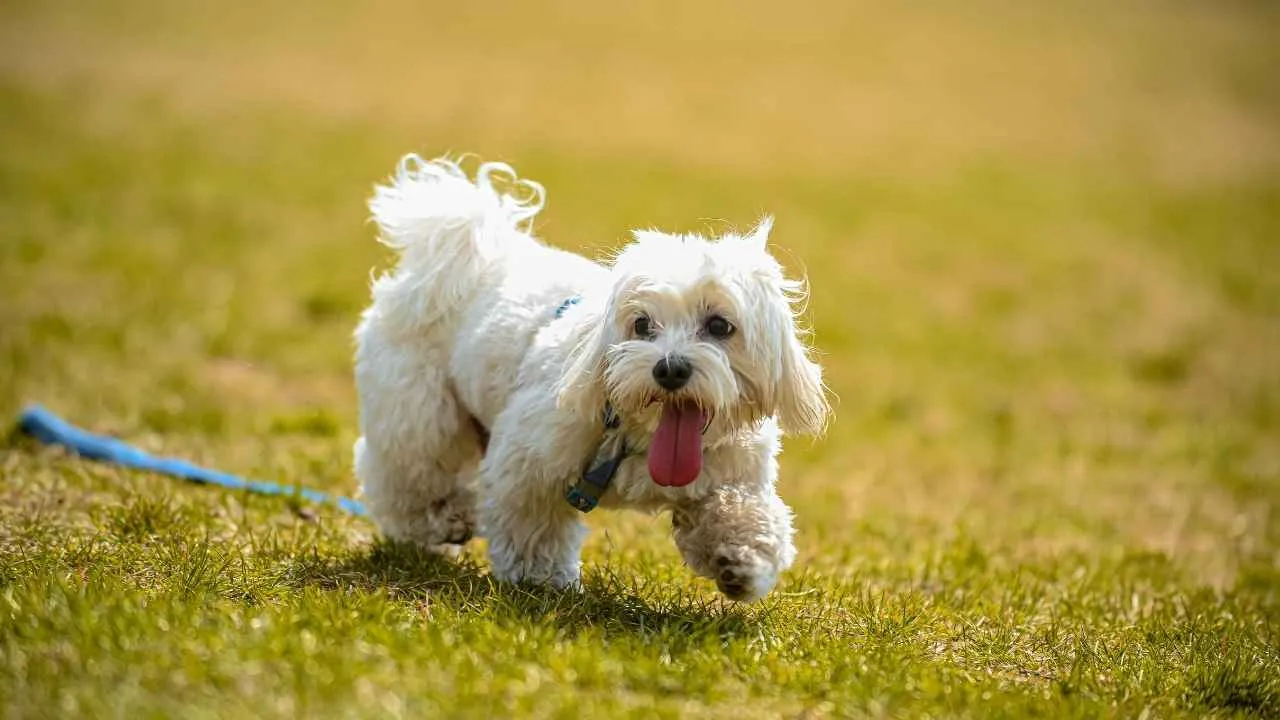
The Maltese is a charming toy dog known for its long, silky, white coat and playful personality. Originally from the Mediterranean island of Malta, this breed has been a beloved companion for centuries, with references dating back to Ancient Greek and Roman literature.
Temperament and Personality
Maltese dogs are affectionate and love staying close to their people. They enjoy lap time, indoor play, and learning tricks with reward-based training.
Although lively, they can fit well into calm households. They are generally friendly with other pets when properly socialized and also make alert little watchdogs, according to the American Kennel Club.
Grooming and Care
Their long, silky coats need daily brushing and frequent baths to prevent mats. Maltese dogs shed very little, though no breed is completely allergen-free.
They also need daily exercise, mental stimulation, and positive reinforcement training. Since they are delicate, supervision around young children and babies is important to prevent accidental injuries.
2. Toy Poodle
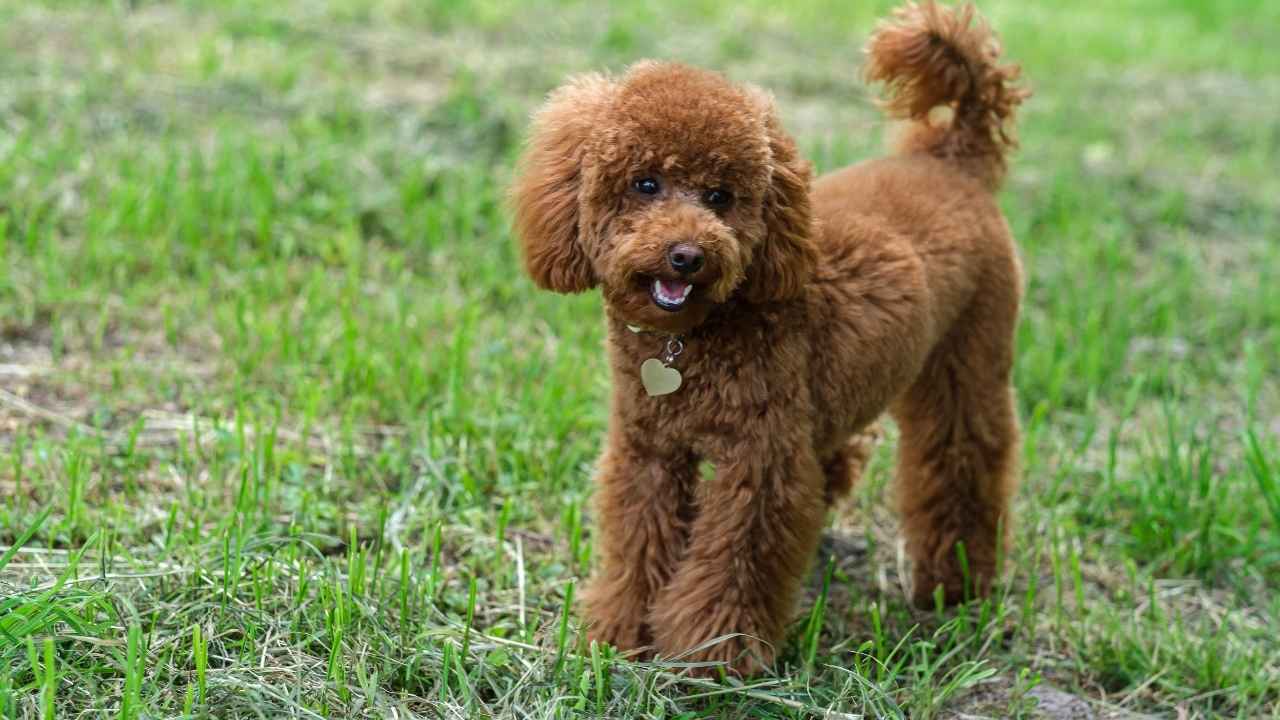
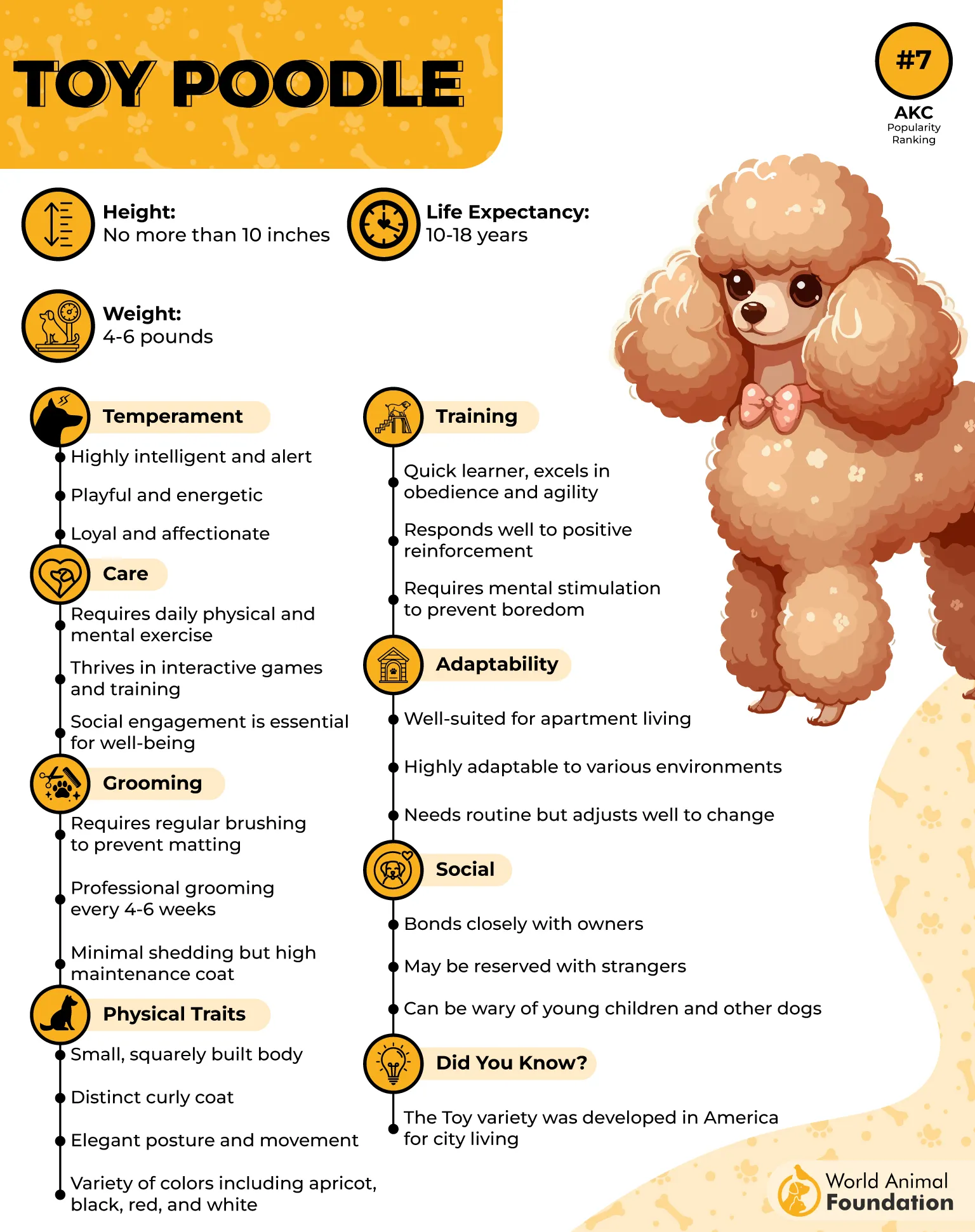
Toy Poodles are tiny dogs with big personalities. Poodles originated in Germany, where Standard Poodles were used for duck hunting. Toy Poodles were later developed from the larger variety. They are known for their curly coats, playful nature, and impressive intelligence.
Temperament and Personality
Toy Poodles are affectionate, sociable, and eager to please. They enjoy family activities, learning tricks, and playing indoors.
Although small, they have plenty of energy and need daily walks, playtime, and mental stimulation. They bond closely with their owners and may become mischievous if left alone or ignored for too long.

Grooming and Care
Their curly coats need regular grooming and trimming every four to six weeks. Toy Poodles shed very little, but no dog is completely allergen-free. They respond well to fun, consistent, reward-based training and can excel at obedience and agility.
They can also be good family pets, but supervision is important around kids and larger dogs because their small size makes them vulnerable to injuries.
3. Shih Tzu
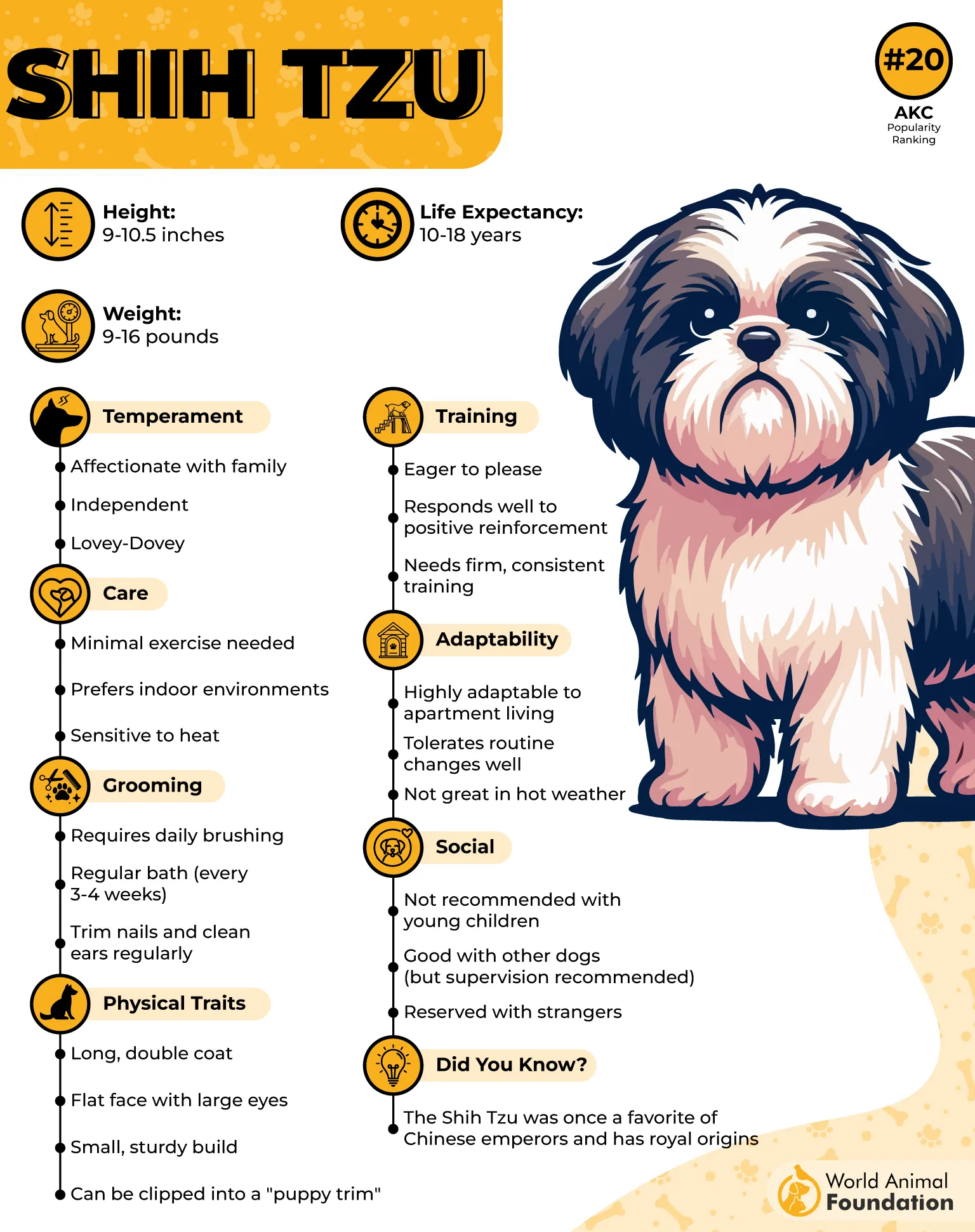
The Shih Tzu is an ancient toy breed from Tibet, known for its sweet expression, round face, and large, dark eyes. Often called the “Lion Dog,” it was once a pampered lap dog of Chinese royalty. Its long, smooth coat comes in many colors and needs regular grooming to stay beautiful.
Temperament and Personality
Shih Tzus are affectionate, playful, and friendly with people and other pets. They can switch from enjoying playtime to curling up on the sofa, making them excellent companion dogs for calm households.
They also suit apartment living and can be good companions for seniors and gentle older children. Although alert and good at announcing visitors, they are not suited to protection work.
Exercise and Care
Shih Tzus need around 30 minutes of walking each day, along with indoor playtime. They can be slow to obey but learn well with patience and consistent training.
Early socialization helps prevent unwanted behaviors, such as excessive barking. Since their small size makes them vulnerable to accidental injuries, supervise them around children and use a harness rather than attaching the leash to their collar.
4. Papillon
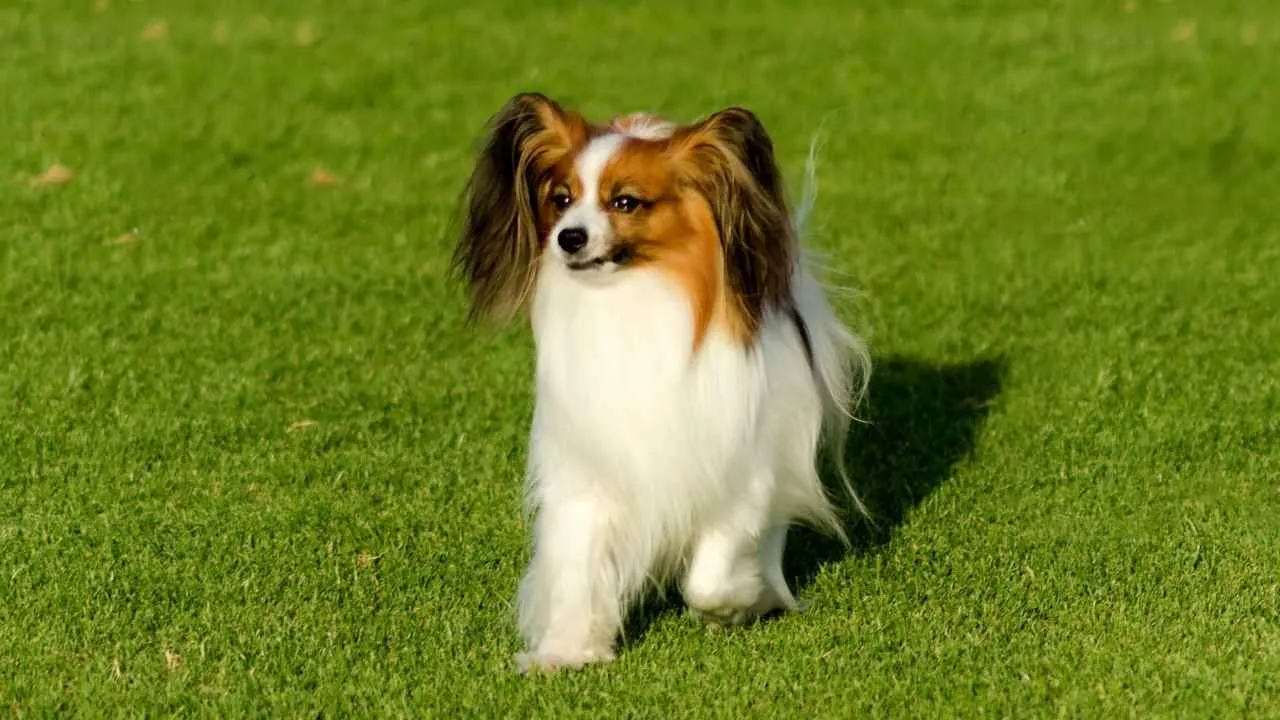
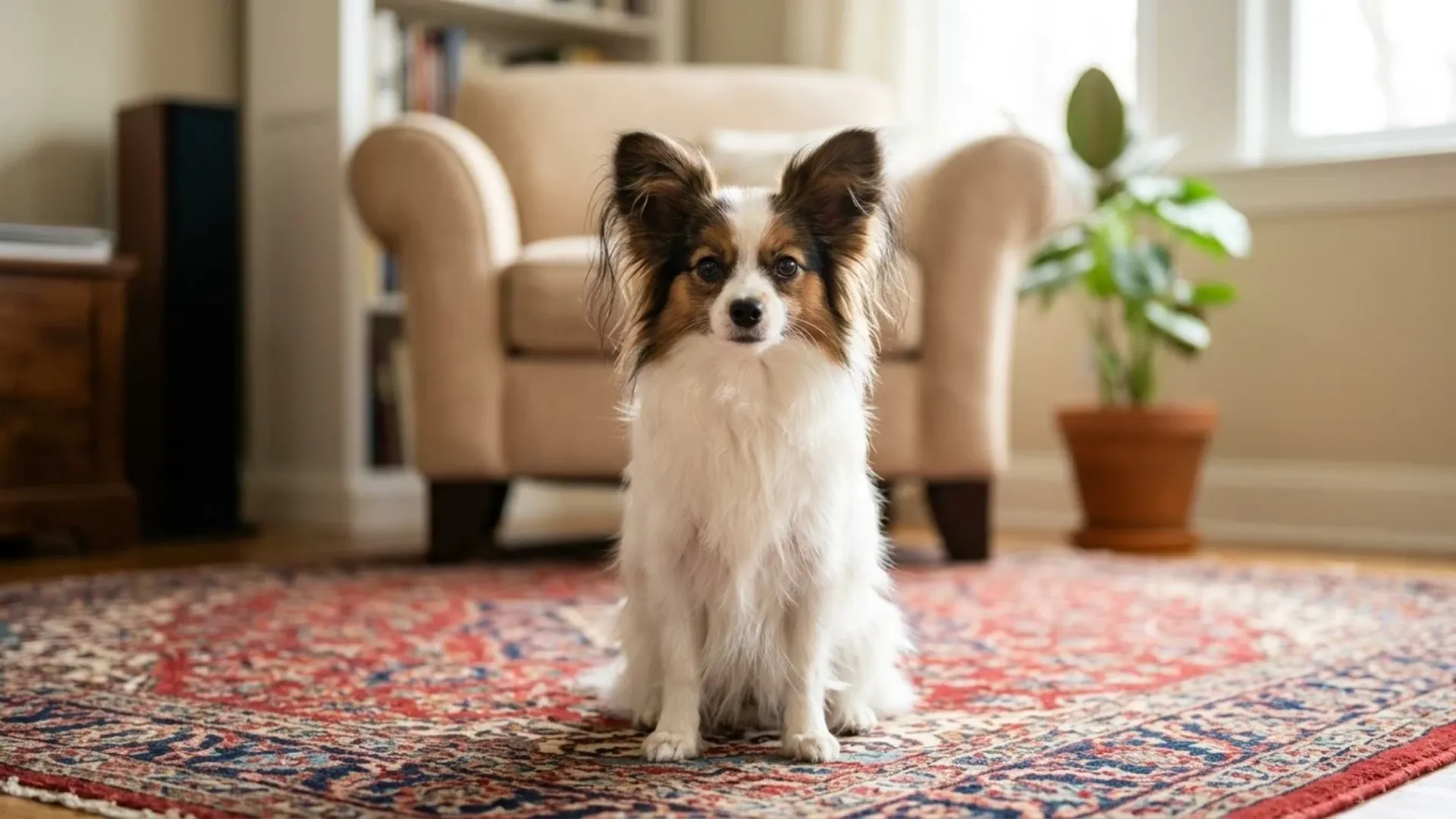
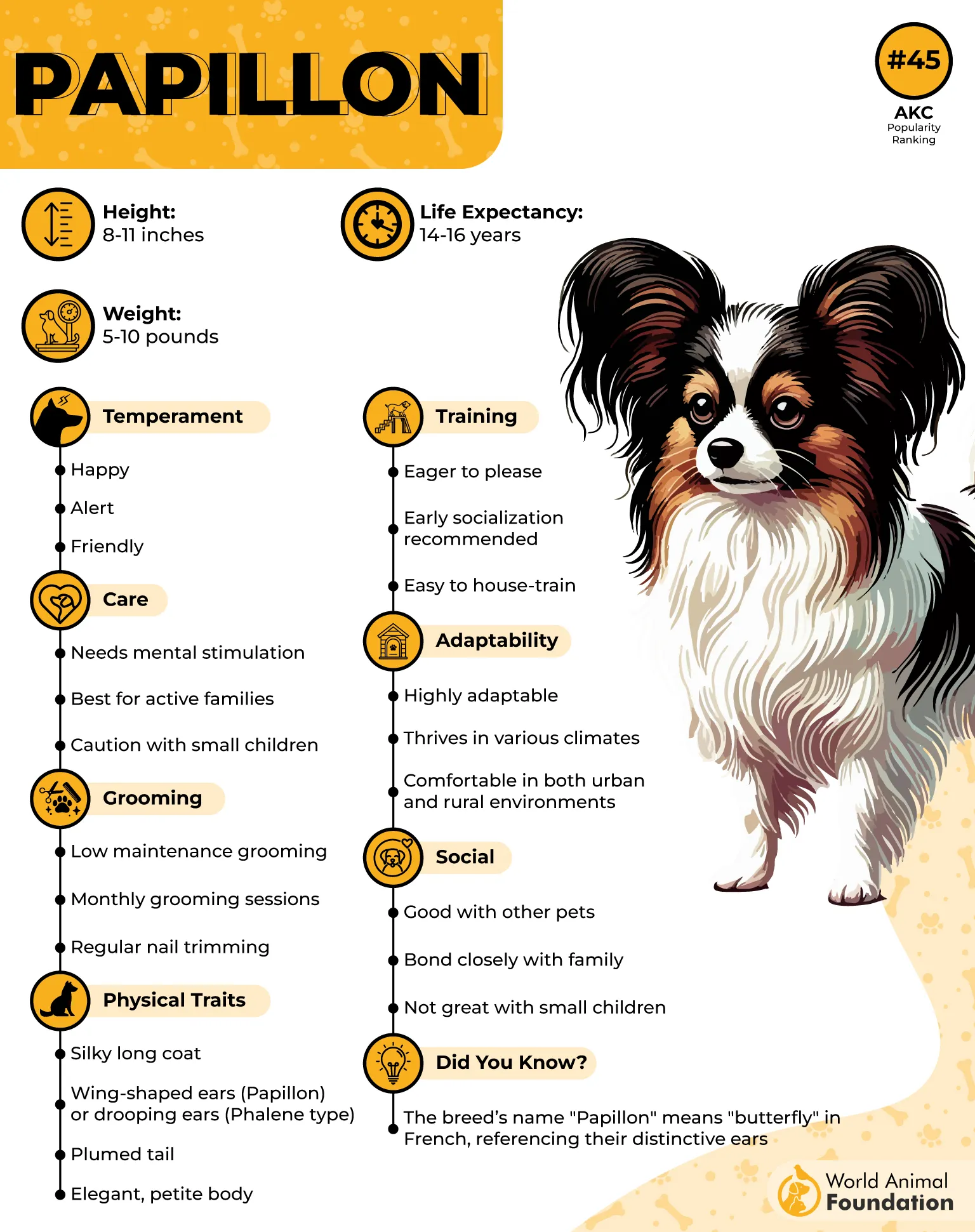
The Papillon is a small, elegant toy dog named after the French word for “butterfly.” Its large, feathered ears resemble butterfly wings, while its long, silky coat comes in several color combinations, usually with white as the base color. The breed has appeared in Western European artwork since the 16th century.
Temperament and Personality
Papillons are friendly, alert, and highly intelligent. They enjoy family activities, lap time, and learning new tricks. They get along well with people and other pets when socialized early.
Although affectionate companions, they are more energetic than many toy breeds and need regular play to settle down. They can also excel in agility, obedience, and service work.
Exercise and Care
Papillons need daily walks, indoor games, and mental stimulation to keep their active minds busy. Their eagerness to please makes reward-based training effective, though some may bark excessively when excited, as noted by Britannica.
Their feathered coats need brushing several times a week to prevent tangles. Supervise interactions with young children, as rough play can injure these delicate dogs.
5. Yorkshire Terrier
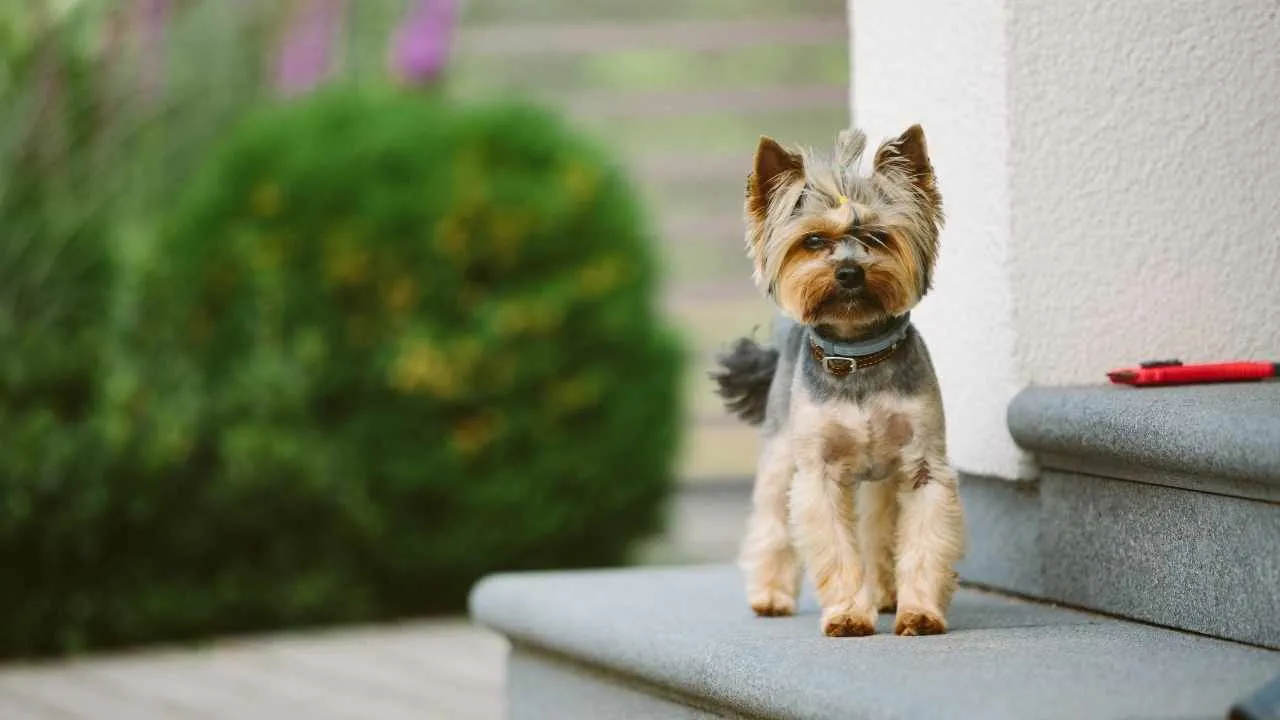
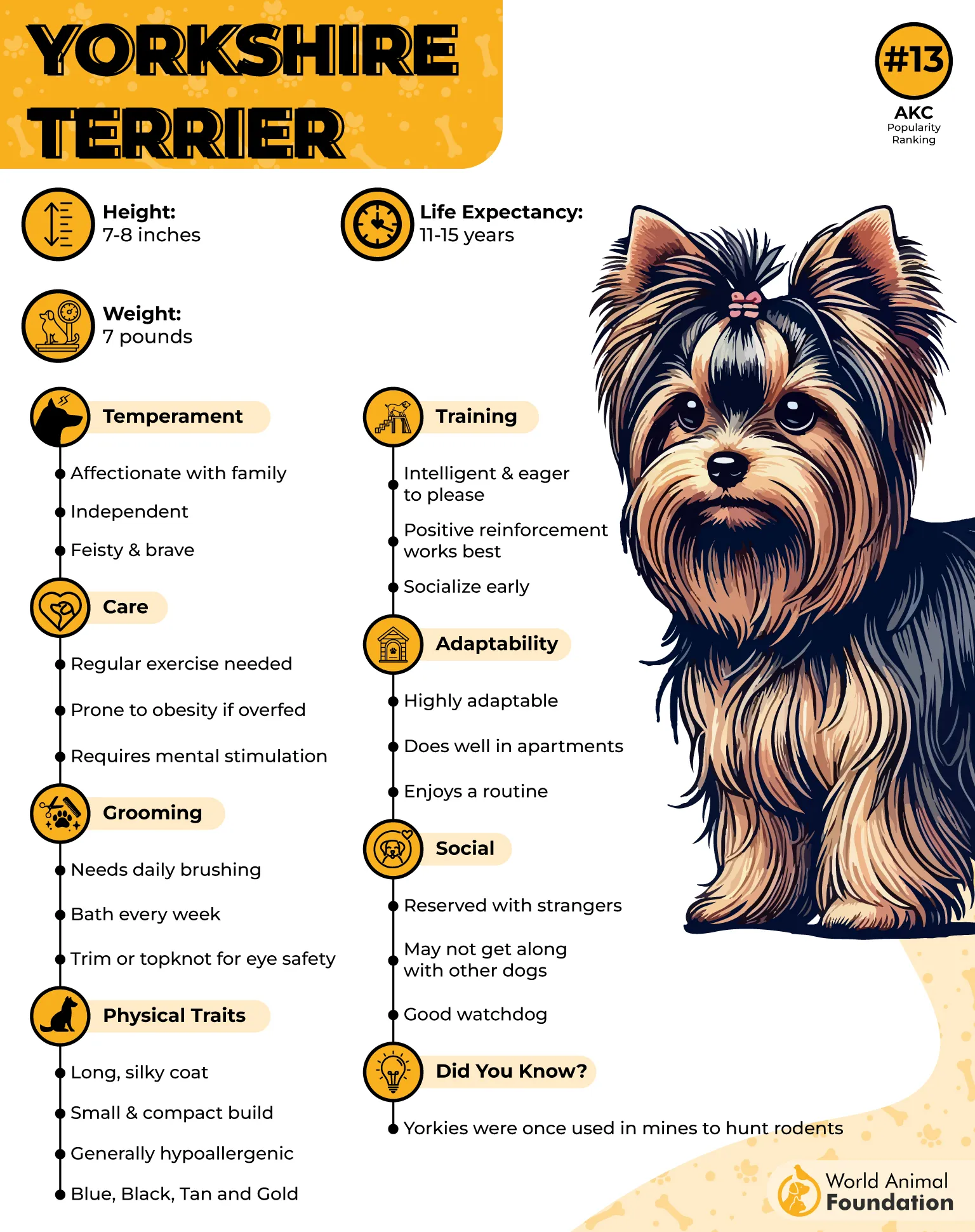
The Yorkshire Terrier, commonly called the Yorkie, is a tiny dog with a bold personality. The breed originated in England, where its ancestors were used to hunt rats in mines, mills, and textile factories.
Yorkies later became popular companion dogs, especially during the Victorian era. They are known for their long, silky blue-and-tan coats and lively expressions.
Temperaments and Personalities
Yorkies are affectionate, playful, curious, and brave. They enjoy spending time with their owners and can become loving lap companions after getting enough exercise and attention.
Early socialization and puppy classes help them become more comfortable around strangers and other dogs. Their strong hunting instincts also mean they may not be safe around hamsters, gerbils, and other small rodents.
Exercise and Care Needs
Yorkies do not need long walks, but they still require daily activity and mental stimulation. Two short walks, indoor games of fetch, and regular training can help keep them happy and prevent destructive behavior.
Since they dislike being left alone for long periods, they are best suited to households where they receive regular company and attention.
6. Pomeranian
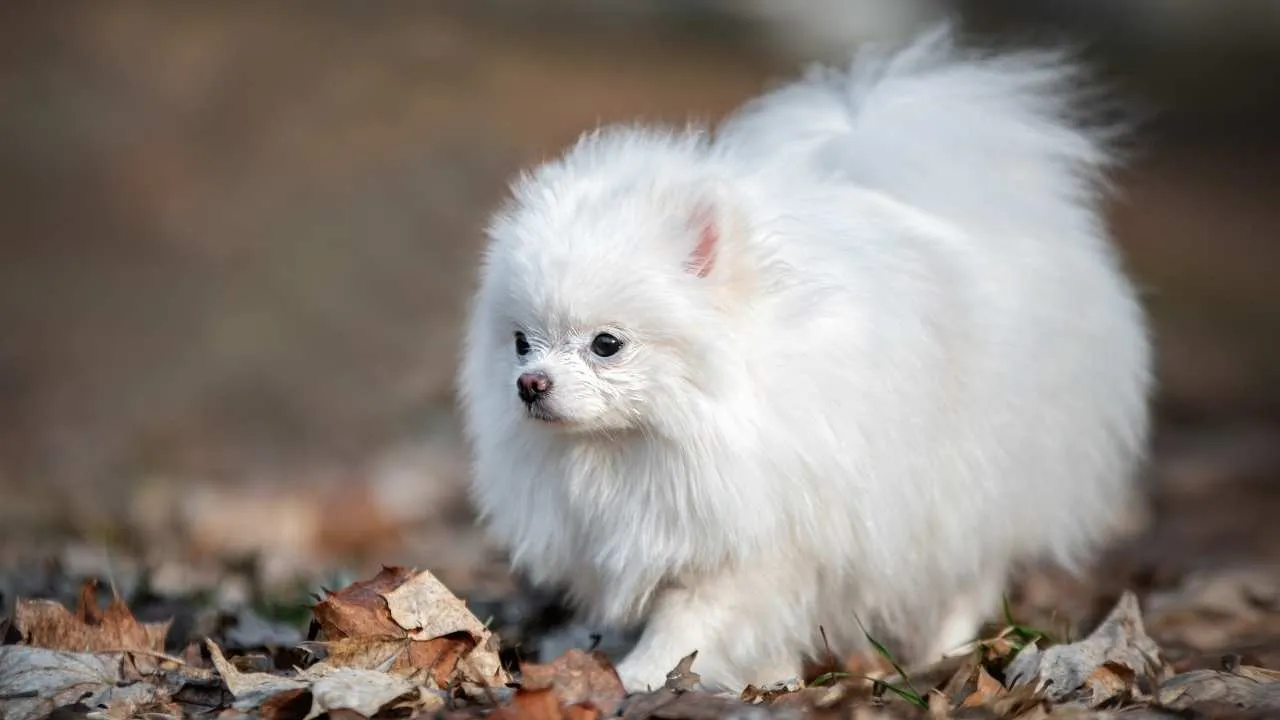
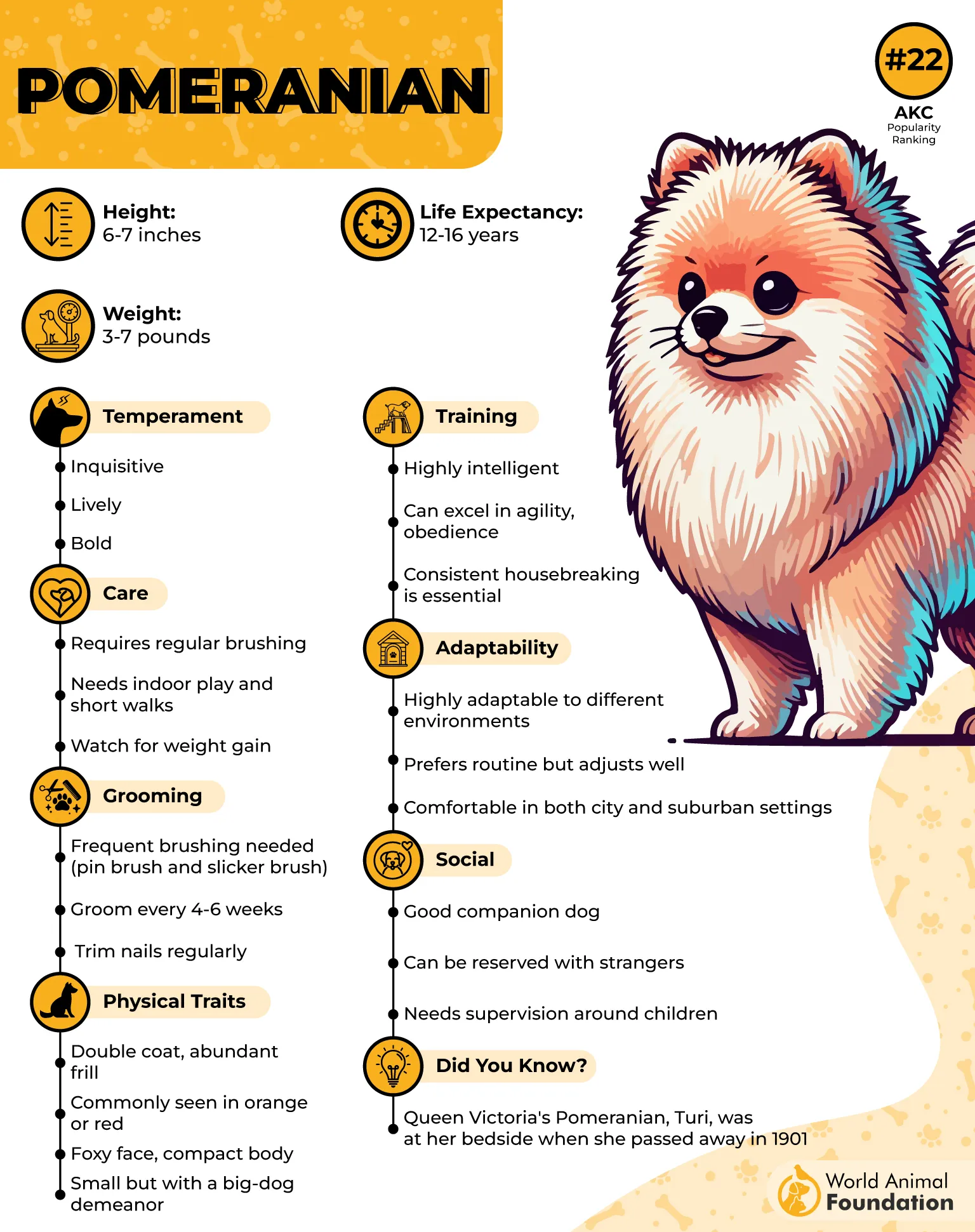
Pomeranians are small descendants of Spitz-type dogs that were once much larger and used for herding. Over time, they were bred to a smaller size and became popular companion dogs.
They have a foxlike face, a fluffy double coat, and a thick ruff around the neck. Their coats come in many colors and patterns, including orange, red, black, white, sable, and merle.
Temperaments and Personalities
Pomeranians are cheerful, intelligent, confident, and full of personality. They enjoy attention, social interaction, and making their owners laugh. Although they can be playful companions, they are not always content to sit quietly on a lap.
They are good watchdogs and may bark excessively, especially when they notice strangers. Poms can get along with other pets and families, including those with children who understand how to handle small dogs gently.
Exercise and Care Needs
Pomeranians can suit calm households because they do not need extensive outdoor exercise. Short walks and indoor games can help meet their activity needs, while training and learning tricks keep their minds engaged.
They are quick learners, although they can sometimes be stubborn. Their thick, fluffy double coats need daily brushing to stay in good condition.
7. Cavalier King Charles Spaniel

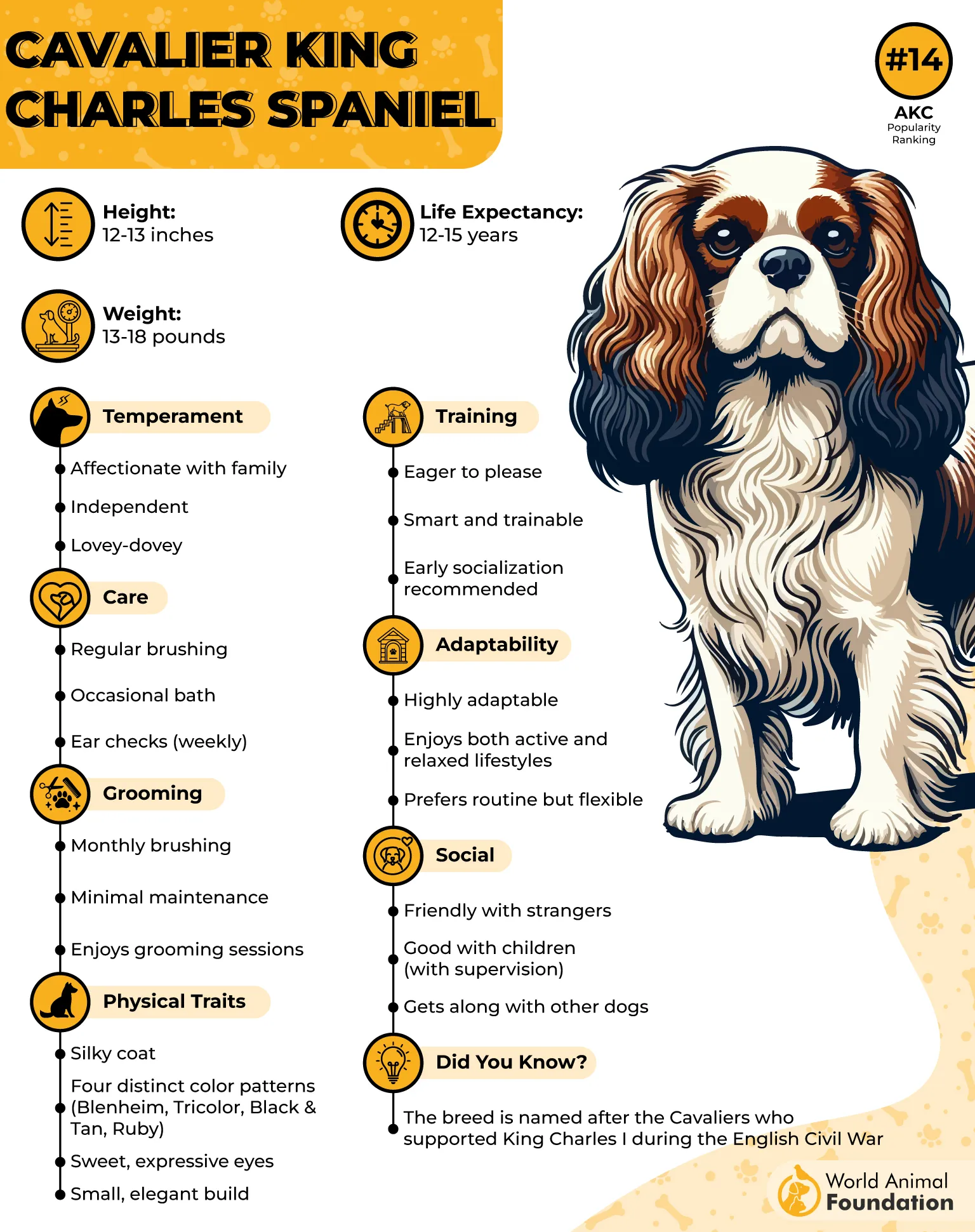
The Cavalier King Charles Spaniel is a toy breed with a royal history dating back to 17th-century Britain. King Charles I and his son, Charles II, were devoted to these dogs and often took them everywhere. Originally bred as lap warmers, Cavaliers have silky coats, floppy ears, and large, expressive eyes.
Temperaments and Personalities
Cavaliers are gentle, affectionate, and friendly with people and other pets. They enjoy cuddling with their owners but also love playtime and outdoor activities.
Their patient nature and gentle temperament make them suitable for first-time owners and calm households. They are generally easy to train with positive reinforcement but need plenty of companionship and may struggle when left alone for long periods.
Exercise and Care Needs
Cavaliers need moderate exercise, including two daily walks of around 20 to 30 minutes and some playtime. Their silky coats require regular brushing, while weekly ear and eye checks help maintain their comfort.
Keep them on a leash or in a fenced area outdoors, as interesting scents may tempt them to wander. Supervise young children around these small dogs to prevent accidental injuries.
8. Pug
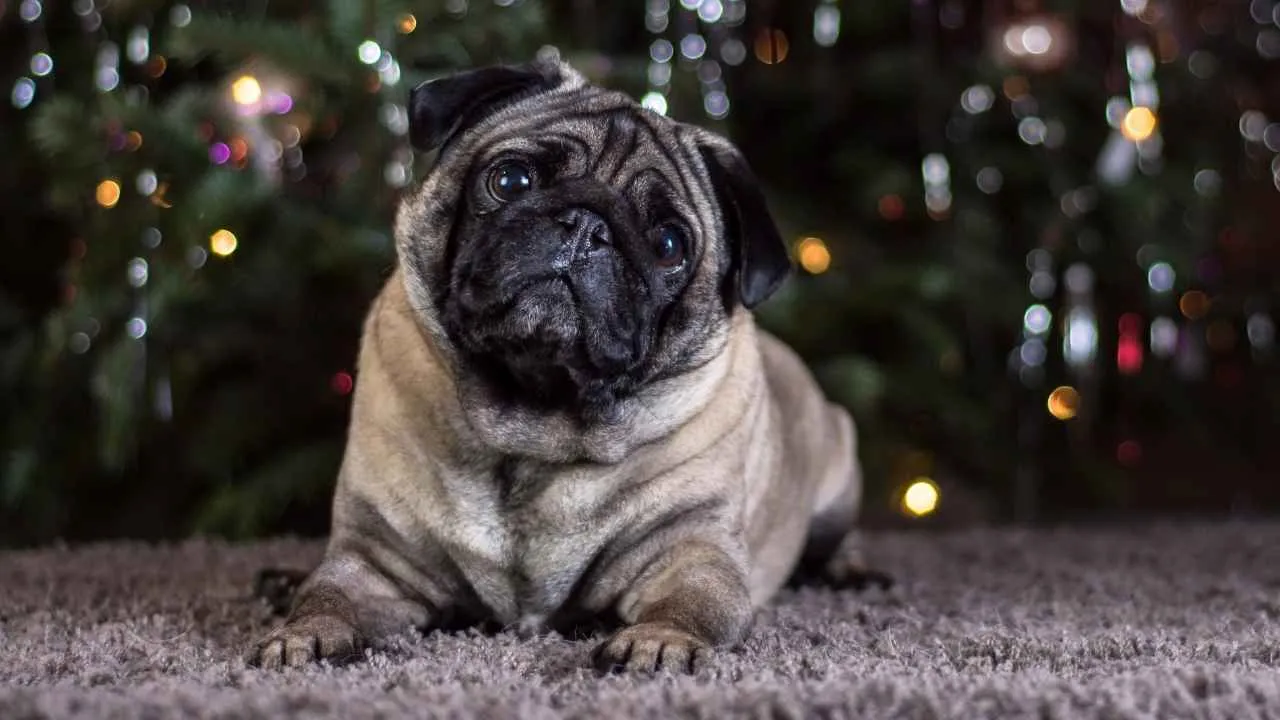
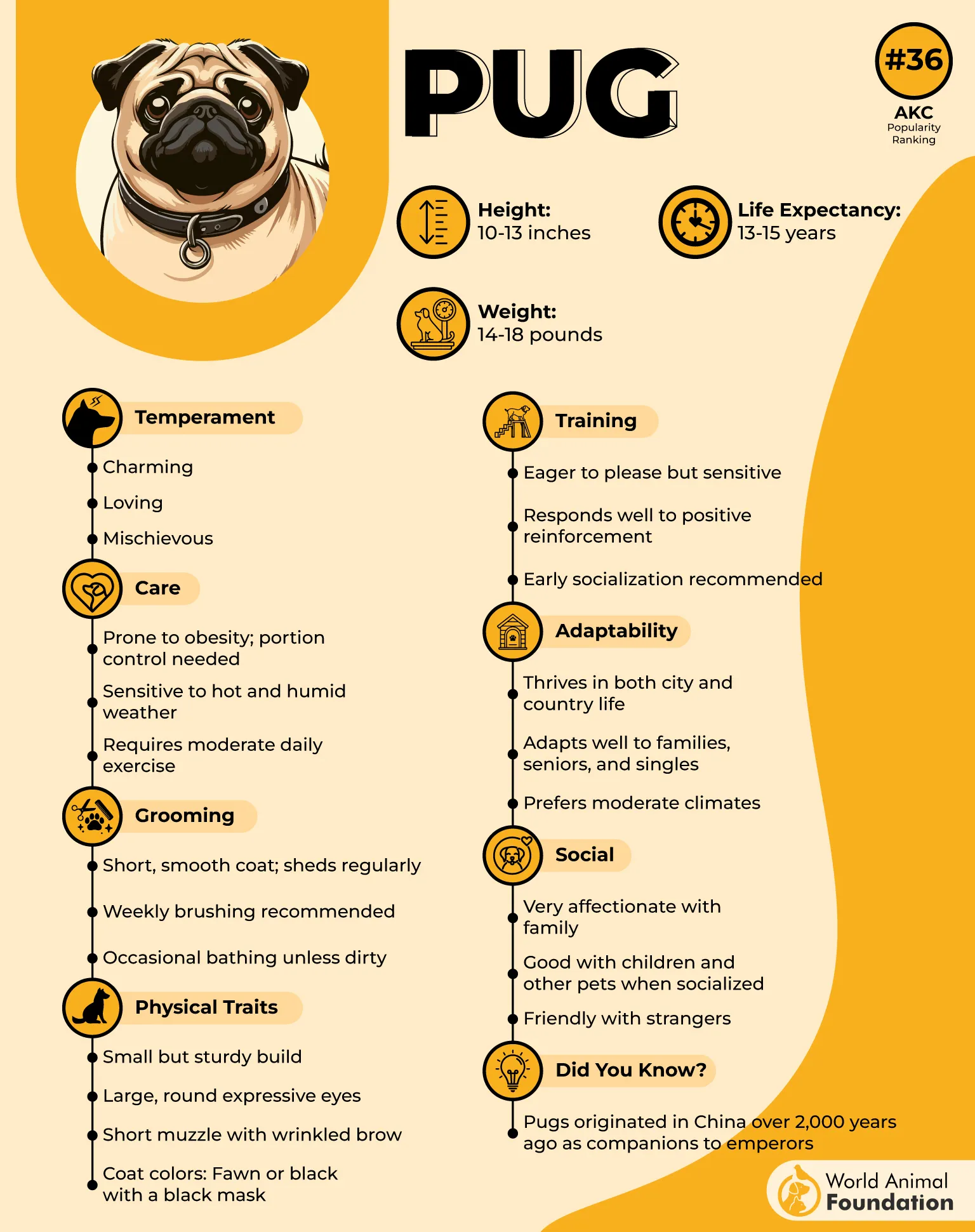
The Pug is an ancient breed that originated in China around 2,000 years ago. Once favored by royalty, it is now a popular companion dog known for its charming personality.
Pugs have short coats, curly tails, flat faces, and expressive, wrinkled brows. Their coats are usually fawn with a black mask or entirely black.
Temperaments and Personalities
Pugs are affectionate, playful, and friendly dogs that love being part of family activities. They enjoy cuddling and relaxing with their owners, making them suitable for calm households and first-time dog parents.
They generally get along well with children and other pets. Although playful and sometimes mischievous, they are not overly energetic and are usually easy to train.
Exercise and Care Needs
According to PetMD, Pugs need several short walks of around 15 to 20 minutes, along with gentle indoor play. Their flat faces make breathing more difficult, so they should avoid strenuous exercise and hot weather.
Watch for signs of overheating or breathing distress, especially outdoors. Their short coats shed moderately throughout the year and need brushing several times a week, with more frequent brushing during shedding seasons.
9. Bichon Frise
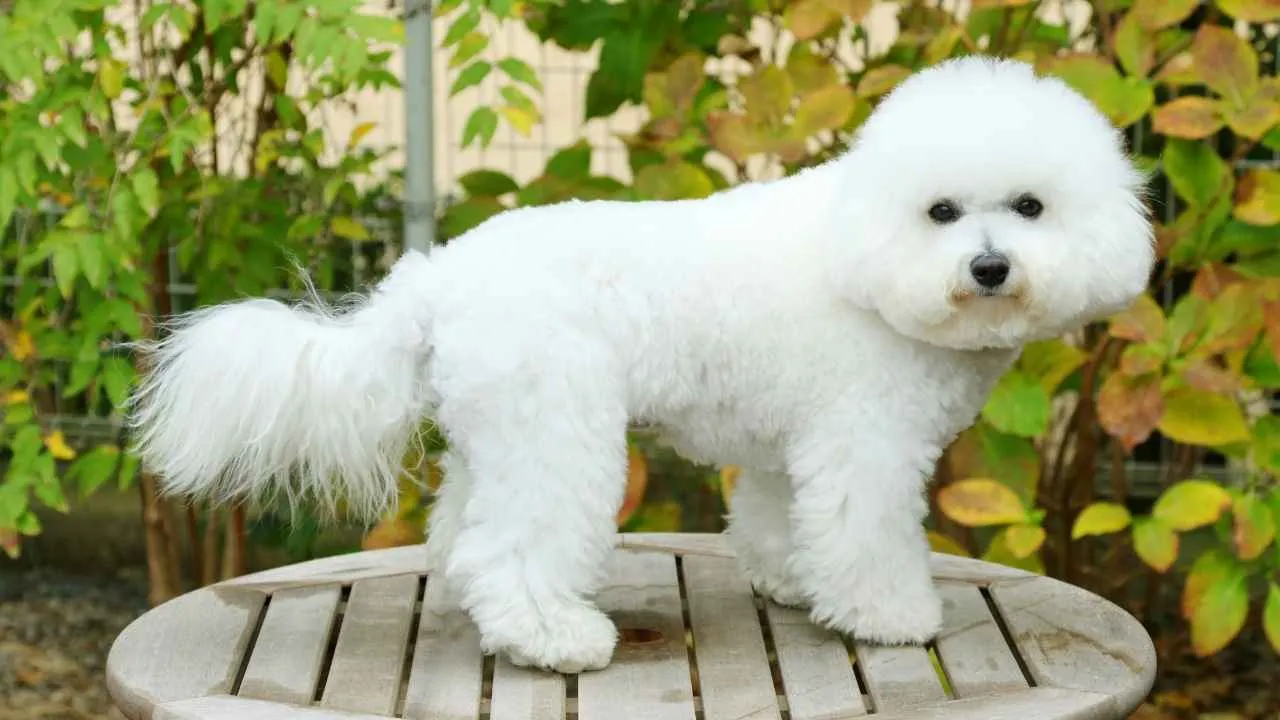
The Bichon Frise is a small, playful companion dog related to breeds such as the Maltese, Havanese, and Bolognese. It is known for its fluffy white coat, dark eyes, and cheerful expression.
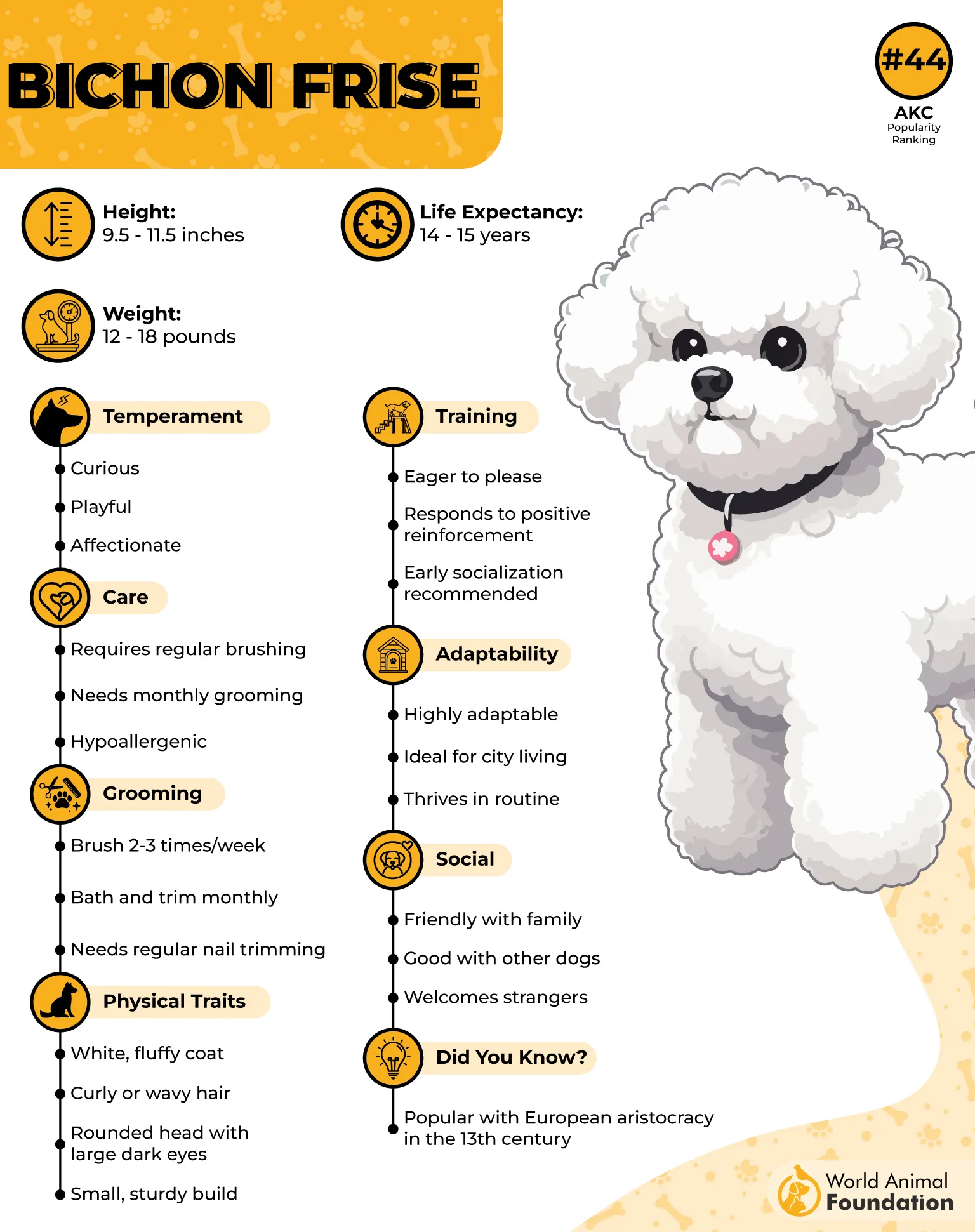
Bichons shed less than many other breeds, so they may suit some people with allergies, although no dog is completely hypoallergenic.
Temperaments and Personalities
Bichons Frise are affectionate, friendly, and curious dogs that enjoy meeting people and spending time with their families. They usually get along well with children and other pets, making them suitable for many households, including apartments.
They love attention and can struggle when left alone for long periods. Without enough company or stimulation, they may become bored and destructive.
Exercise and Care Needs
Bichons need short daily walks, indoor play, and opportunities to learn new tricks. Once their activity needs are met, they are happy to relax beside their families.
Their fluffy coats require daily brushing, regular baths, and professional grooming to prevent tangles. Consistent training also helps control excessive barking and keeps their minds active.
10. Japanese Chin
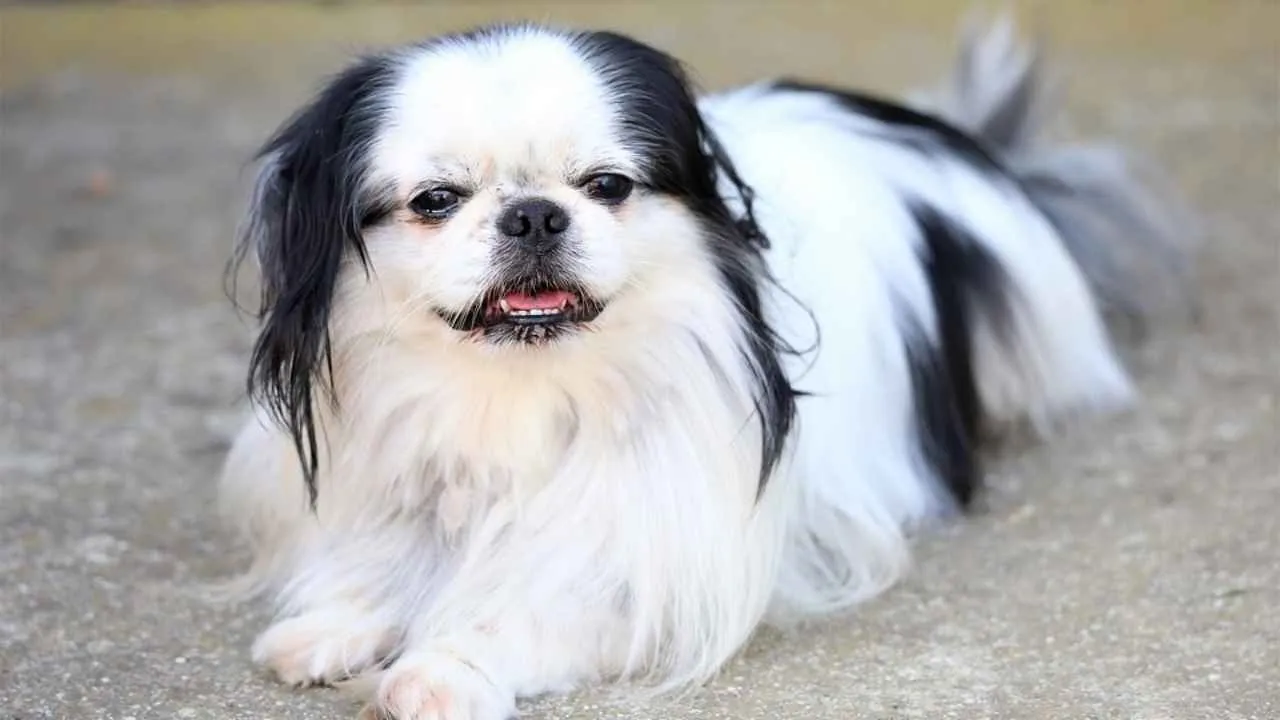
The Japanese Chin is an ancient toy breed known for its elegant appearance and silky coat. Despite its name, the breed is often believed to have originated in China, although its exact roots remain unclear.
Japanese Chins were kept by Buddhist monks and gifted to nobility, later becoming familiar companions in Imperial palaces.
Temperaments and Personalities
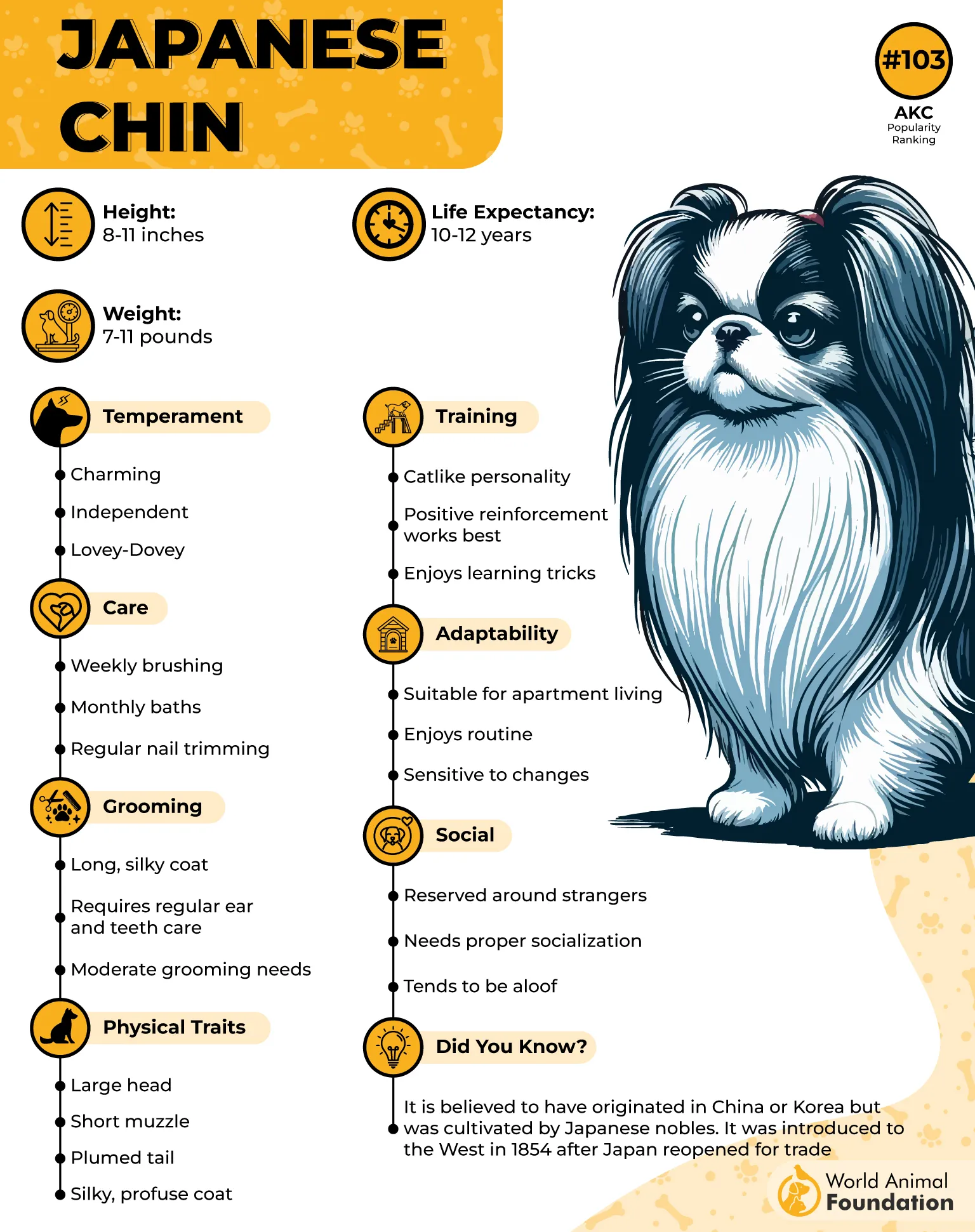
Japanese Chin are affectionate, playful, and gentle companions. Often described as cat-like, they enjoy lounging on furniture and keeping an eye on their surroundings.
They are generally friendly with strangers, children, and other animals when raised with them. They are usually quiet but may bark to alert their owners when someone approaches the door.
Exercise and Care Needs
Japanese Chins have modest exercise needs, making them suitable for calm indoor households. Short walks, gentle play, and learning tricks help keep them active and entertained.
Their long, silky coats need brushing once or twice a week, with occasional baths to keep them clean. They enjoy being close to their owners, so regular companionship is important for their happiness.
Conclusion
Toy dog breeds can bring plenty of love, companionship, and personality to a calm household. While their exercise needs may be manageable, they still need regular care, training, mental stimulation, and attention to stay happy.
Before choosing your new companion, consider your daily routine, grooming preferences, and how much time you can spend with your dog.
Research the breeds that suit your lifestyle and meet them whenever possible before making a decision. Sometimes, the smallest paws leave the biggest mark on a home, turning quiet everyday moments into treasured memories.
