




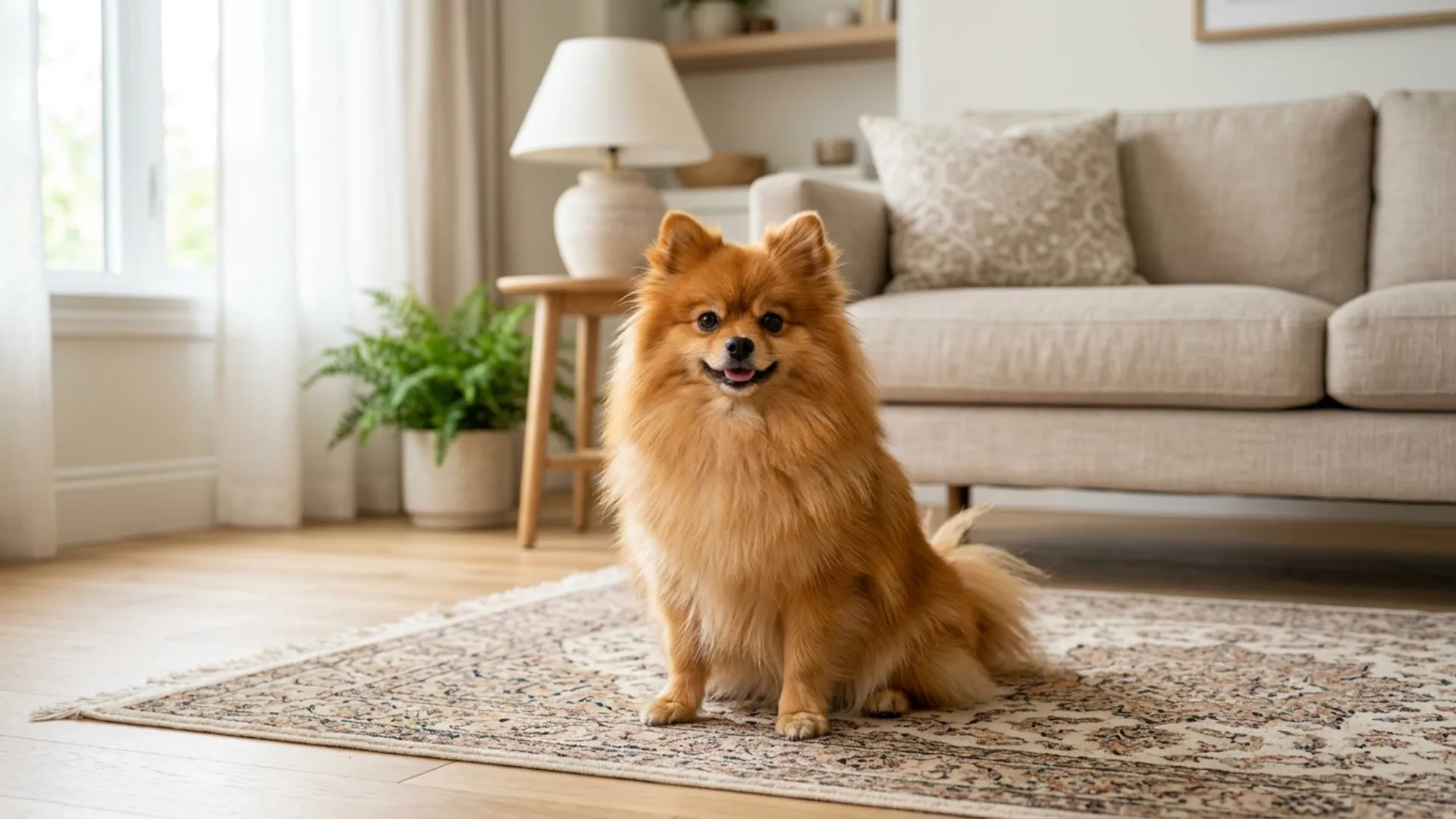
Toy dogs may arrive in tiny packages, but their personalities regularly ignore the size chart. These compact companions can be bold watchdogs, clever athletes, professional snugglers, and household comedians—all before breakfast.
The American Kennel Club’s Toy Group contains breeds developed primarily for companionship, yet many have working, hunting, or performing roots. Their manageable size makes them attractive to apartment residents, frequent travelers, older adults, and families with limited space.
However, a smaller dog doesn’t automatically mean less training, cheaper care, or less exercise.
Let’s explore seven lovable toy breeds and discover which pocket-sized icon could complement your lifestyle.
Lovable Toy Dog Breeds: A Comprehensive Guide
1. Toy Poodle
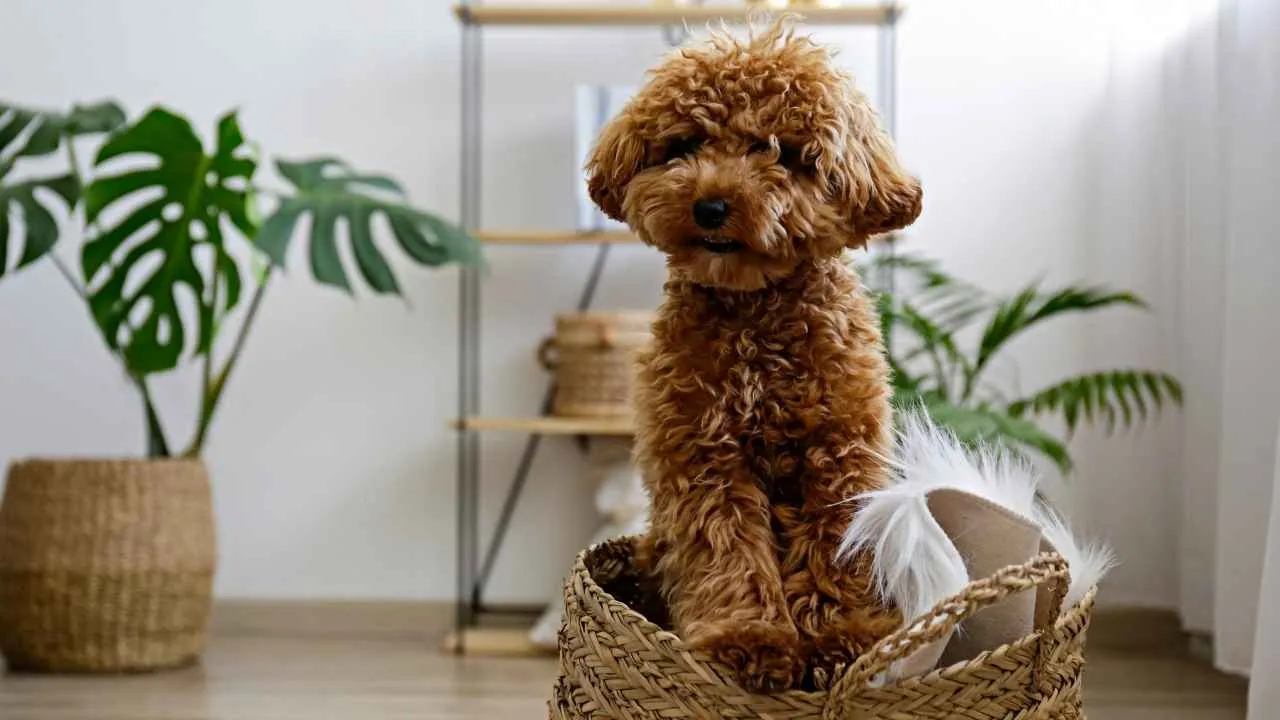
The Toy Poodle is living proof that elegance and intelligence can share one extremely curly body. They are considered to be the smallest Poodle variety. Their petite dimensions never stop them from approaching life like brilliant athletes with a fully booked social calendar.
Although many people associate these quintessential lap dogs with France, the breed’s early development is strongly connected to Germany, where larger Poodles worked as water retrievers. The familiar decorative show trim originally helped protect important joints and organs while reducing drag in the water.
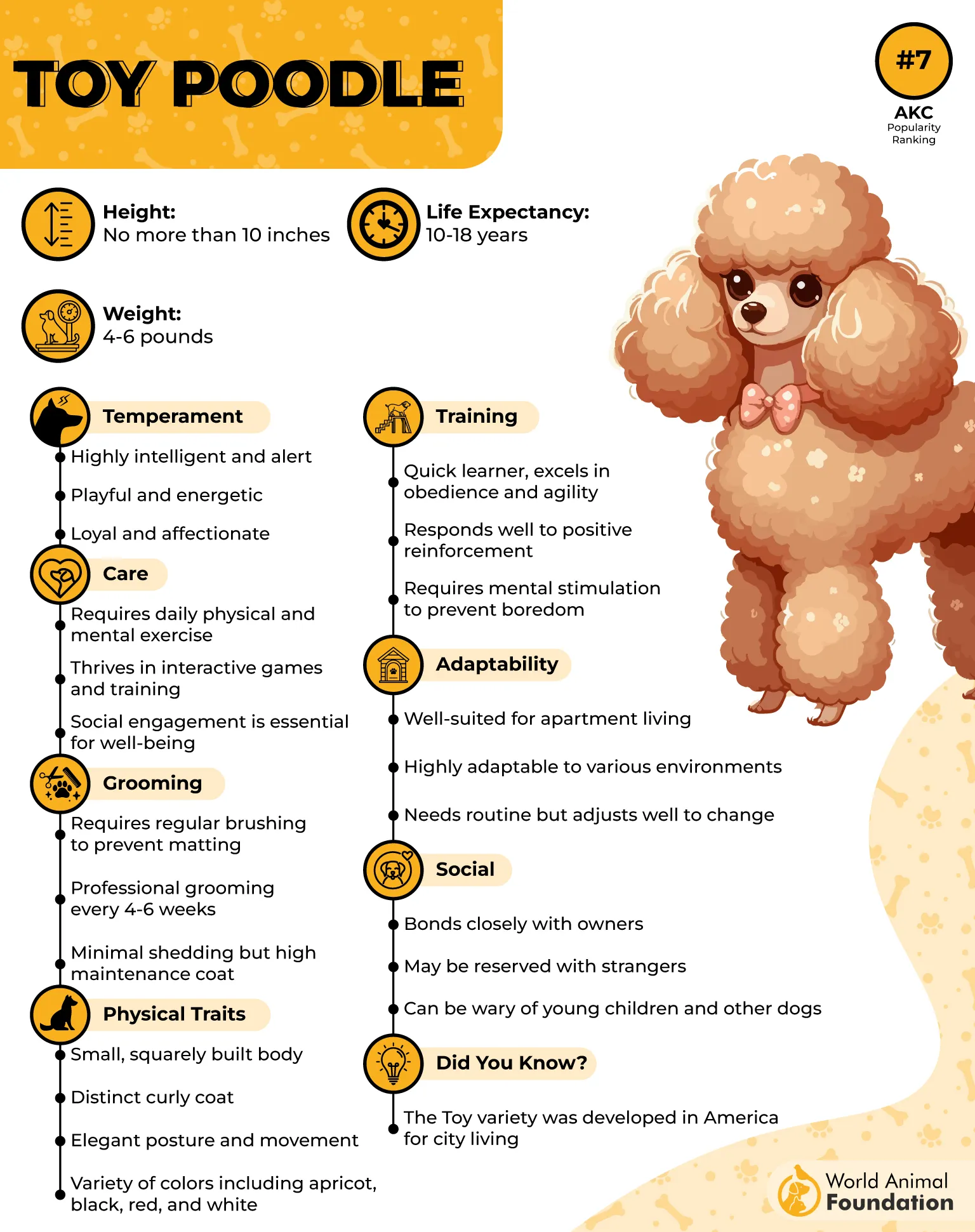
Toy Poodles learn commands, routines, tricks, and human habits remarkably quickly. Owners frequently enjoy teaching them agility, scent work, rally, obedience, and elaborate tricks because these dogs thrive when their brains stay busy.
Health-conscious owners should ask responsible breeders about patellar, eye, and genetic testing. Dental care is also essential because small mouths can become crowded, allowing plaque to build up quickly. For people who want a responsive, affectionate, highly trainable companion, the Toy Poodle makes an excellent family dog in a travel-sized package.
2. Pomeranian
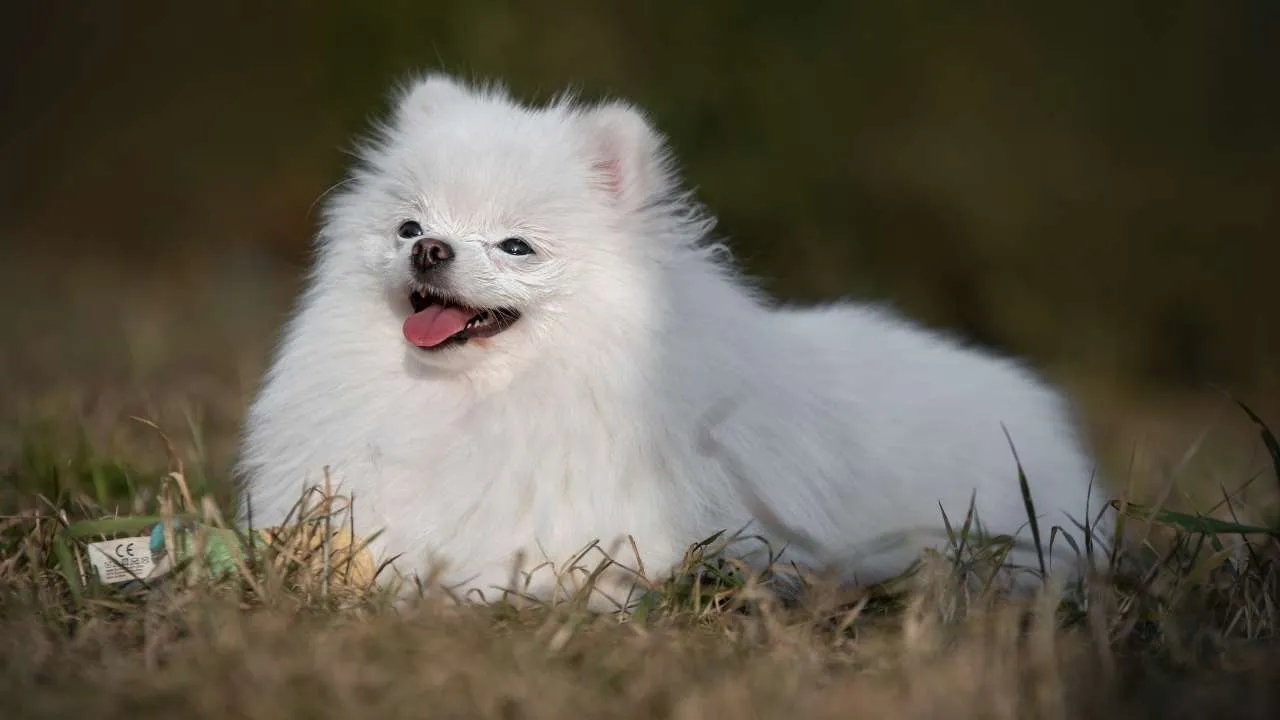
The Pomeranian resembles a cheerful cloud that has somehow developed opinions about everything. Despite its small size, this Toy Group celebrity descends from much larger spitz-type working dogs. Its name comes from Pomerania, a historical region along the Baltic Sea that now spans Germany and Poland.
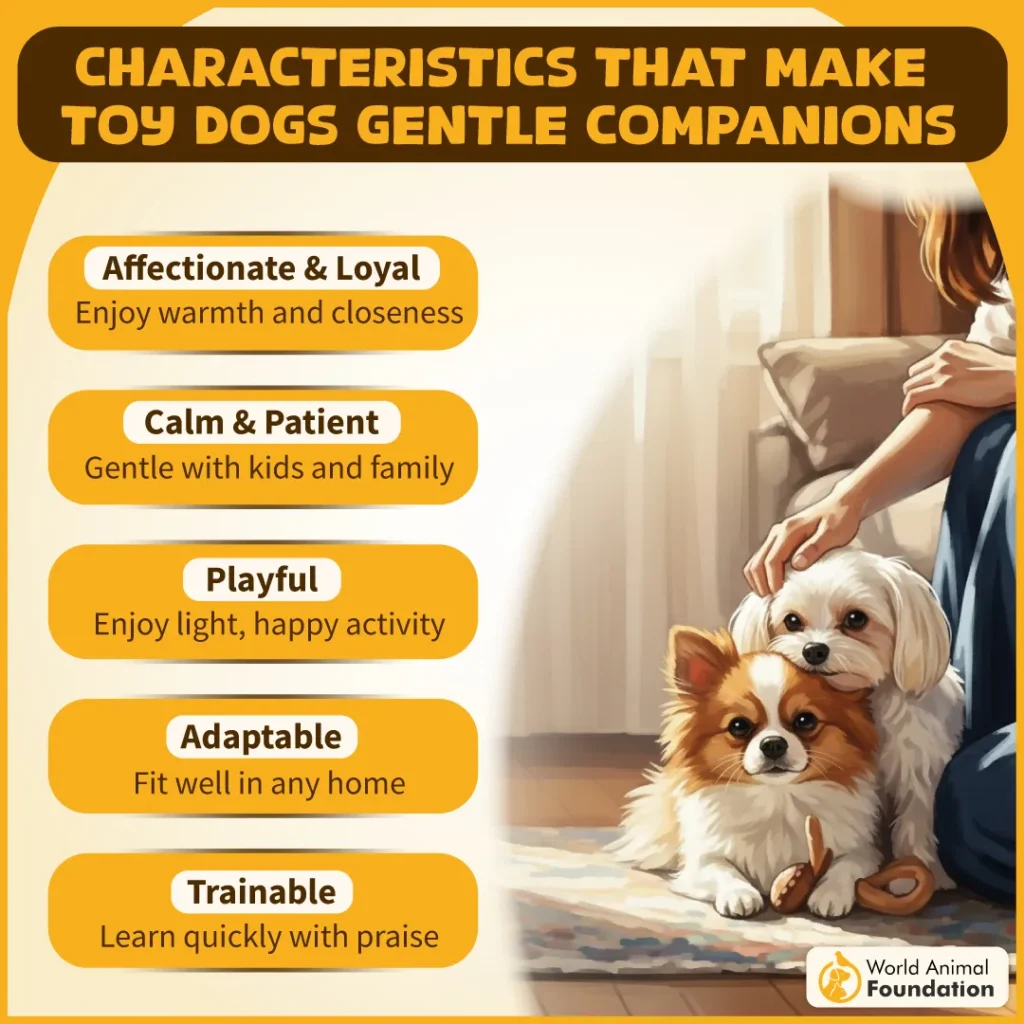
Queen Victoria helped increase the breed’s popularity after encountering Pomeranians during a trip to Italy in the nineteenth century. Selective breeding gradually favored smaller dogs, producing the compact companion recognized today.
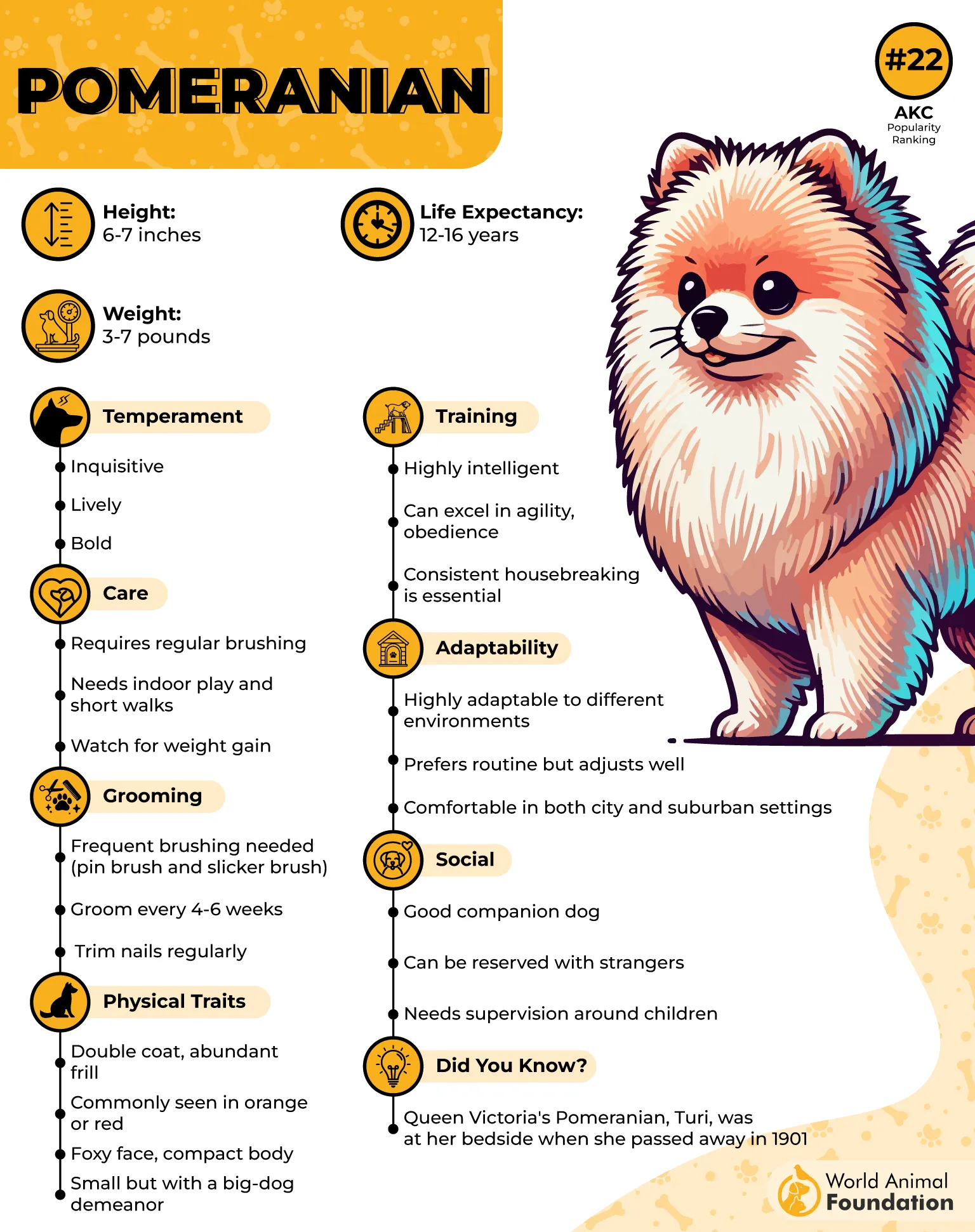
They are inquisitive, lively, and bold, qualities their families see in daily life. PDSA say they often alert enthusiastically and may announce visitors, passing animals, mysterious hallway sounds, or a leaf behaving suspiciously.
Pomeranians can enjoy walks, tricks, scent games, and miniature agility, although their delicate bodies need protection from rough handling and high jumps. With considerate care, this fluffy extrovert becomes an entertaining companion whose confidence could fill a much larger dog.
3. Maltese
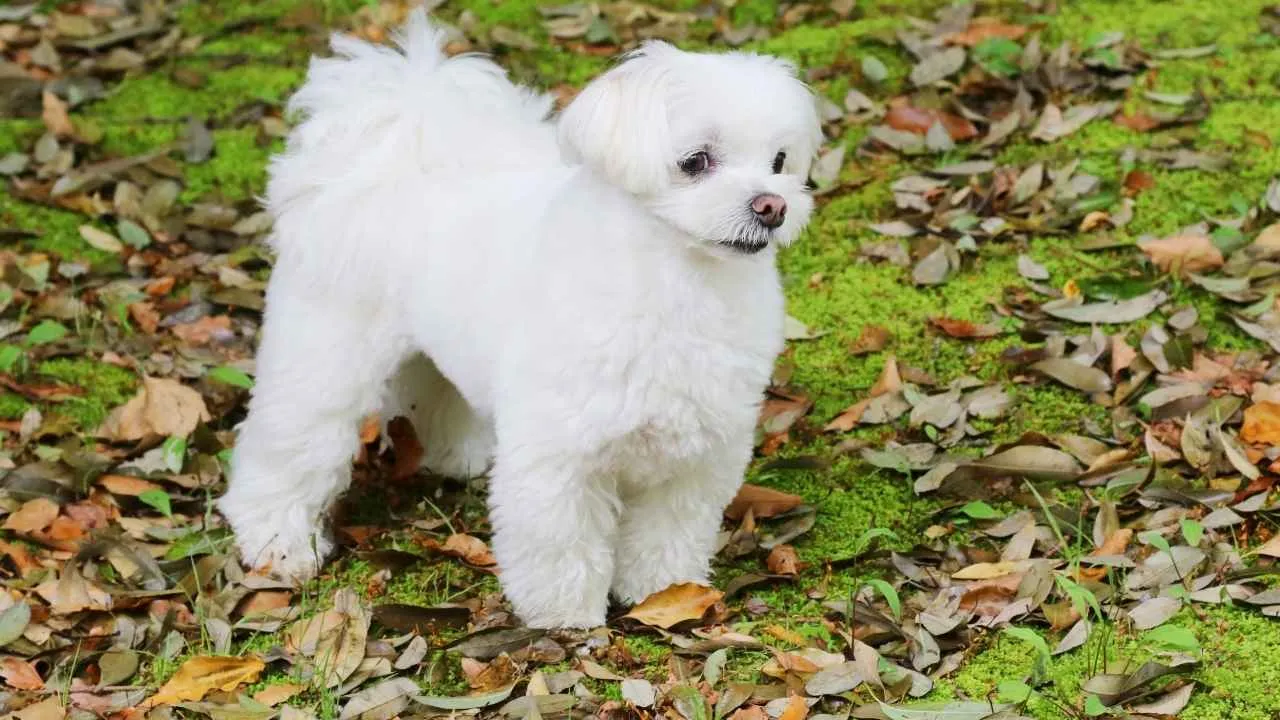
The Maltese has spent centuries perfecting the art of looking innocent while quietly running the household. This ancient companion breed is associated with the Mediterranean island of Malta and appeared in the writings and artwork of Greek and Roman civilizations.
These outgoing dogs are playful, charming, and gentle, but “gentle” should not be confused with boring. These lively dogs can race through the house, master tricks, sound an alarm at the door, and then transform into luxurious lap warmers.
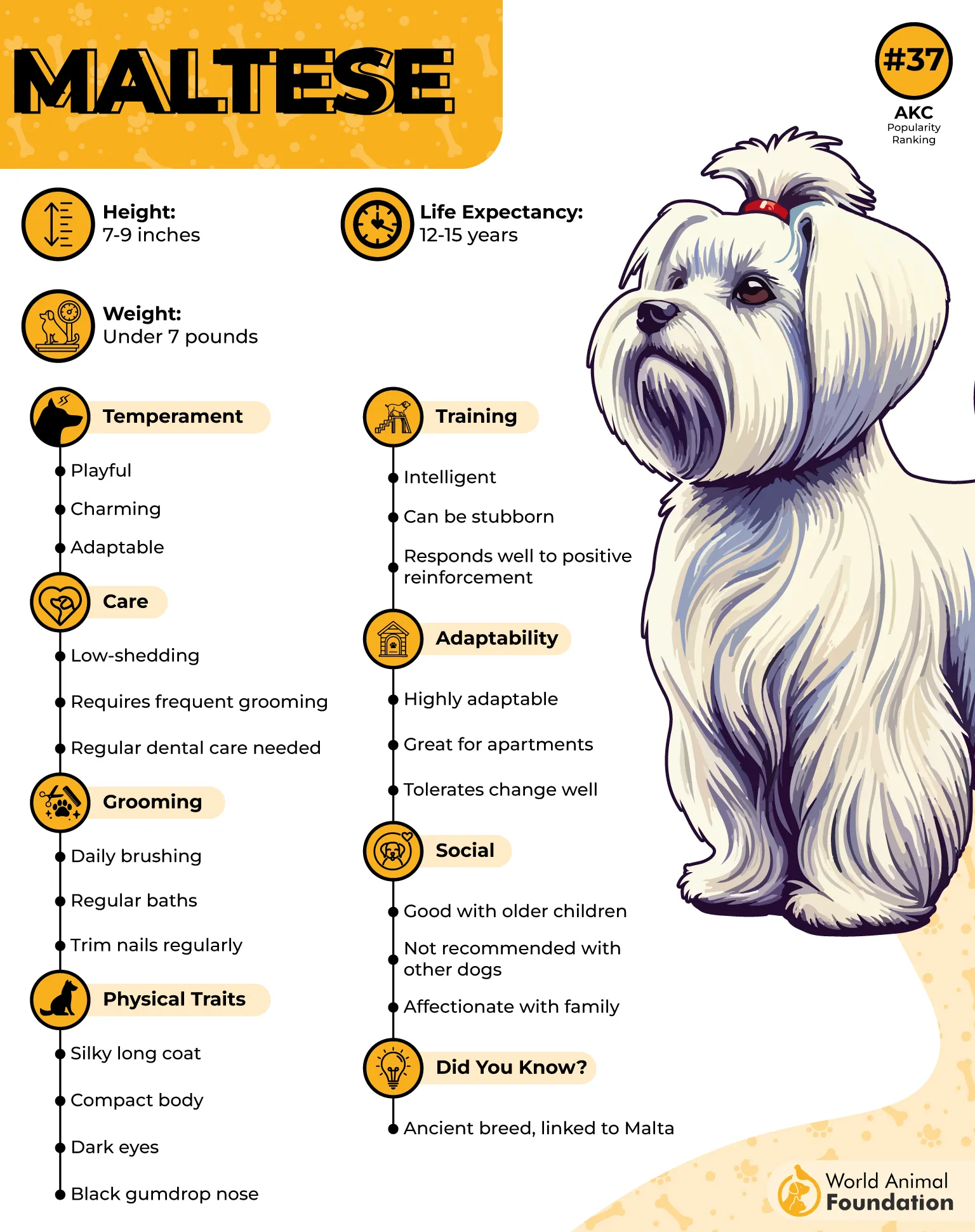
The breed’s long, straight white coat can reach the floor when maintained for the show ring. Most pet families choose a shorter puppy cut, yet brushing remains necessary because the silky hair can tangle around the ears, legs, belly, and collar area.
Training a Maltese works best with cheerful reinforcement, tiny treats, and sessions short enough to remain interesting. House-training can require patience because small bladders offer less scheduling flexibility, especially during puppyhood or bad weather.
For someone seeking an affectionate companion with ancient history and modern main-character energy, the Maltese is difficult to overlook.
4. Papillon
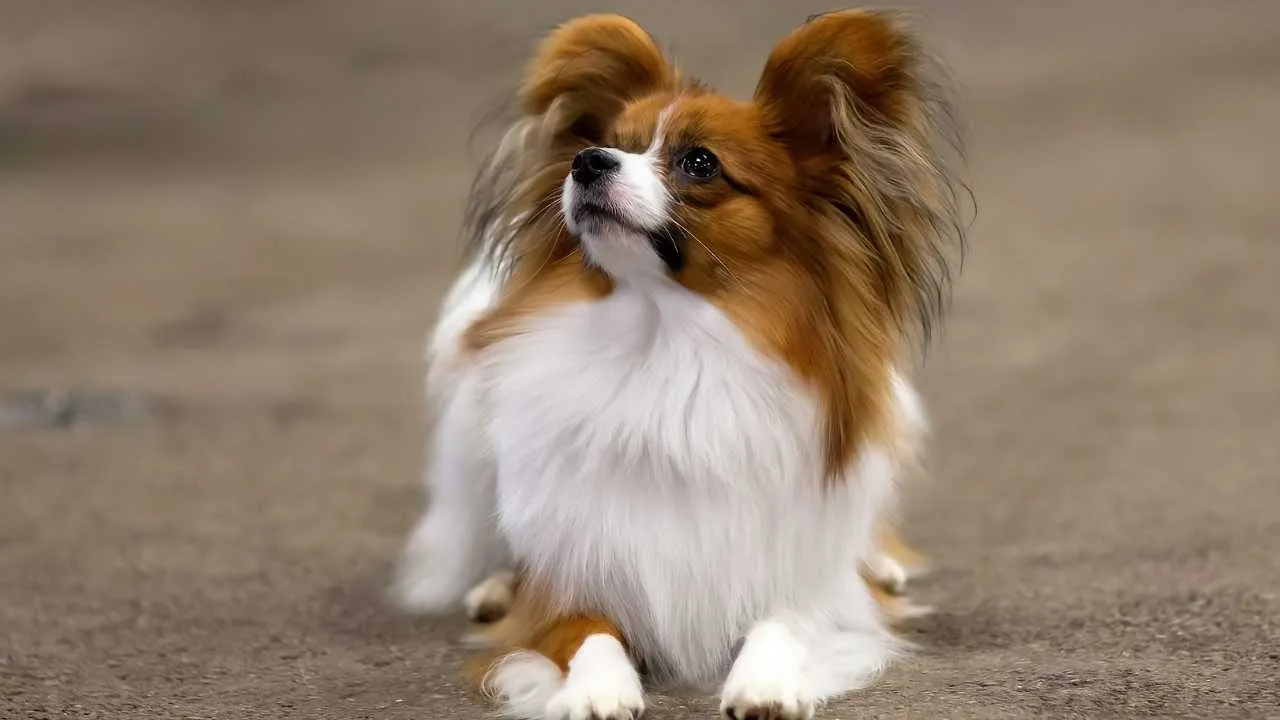
With enormous fringed ears resembling butterfly wings, the Papillon looks like canine artwork that suddenly came to life. Its name means “butterfly” in French, while the drop-eared variety is known as the Phalène, meaning “moth.”
This fiercely loyal dog with a charming personality may look delicate, but it is far more athletic than its fancy portrait history suggests. They are happy, alert, friendly, and surprisingly hardy. Many real-world owners compete successfully with Papillons in agility, obedience, rally, scent work, and trick events, where their speed and enthusiasm become impossible to miss.
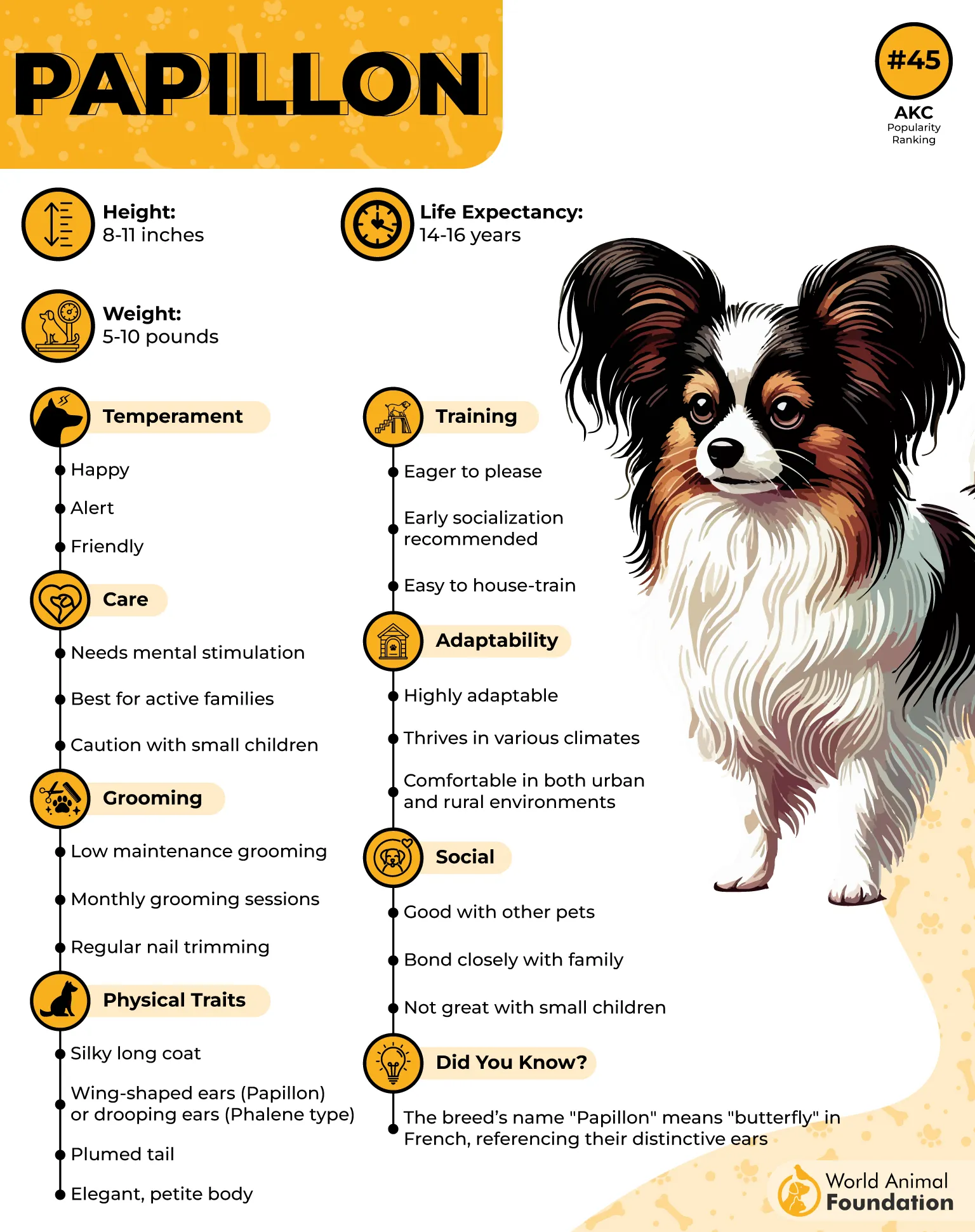
Training is usually rewarding because these excellent companions are attentive and eager to solve problems. They can learn complicated behaviors quickly, yet they may also invent unauthorized tricks if daily life becomes dull. Food puzzles, hide-and-seek, platform work, miniature obstacle courses, and brief training games keep their mental Wi-Fi connected.
Because Papillons have fine bones, interactions with young children and larger dogs need careful supervision. Health screening may include evaluations for patellar luxation, eye disorders, and cardiac problems, while dental care deserves lifelong attention.
5. Shih Tzu
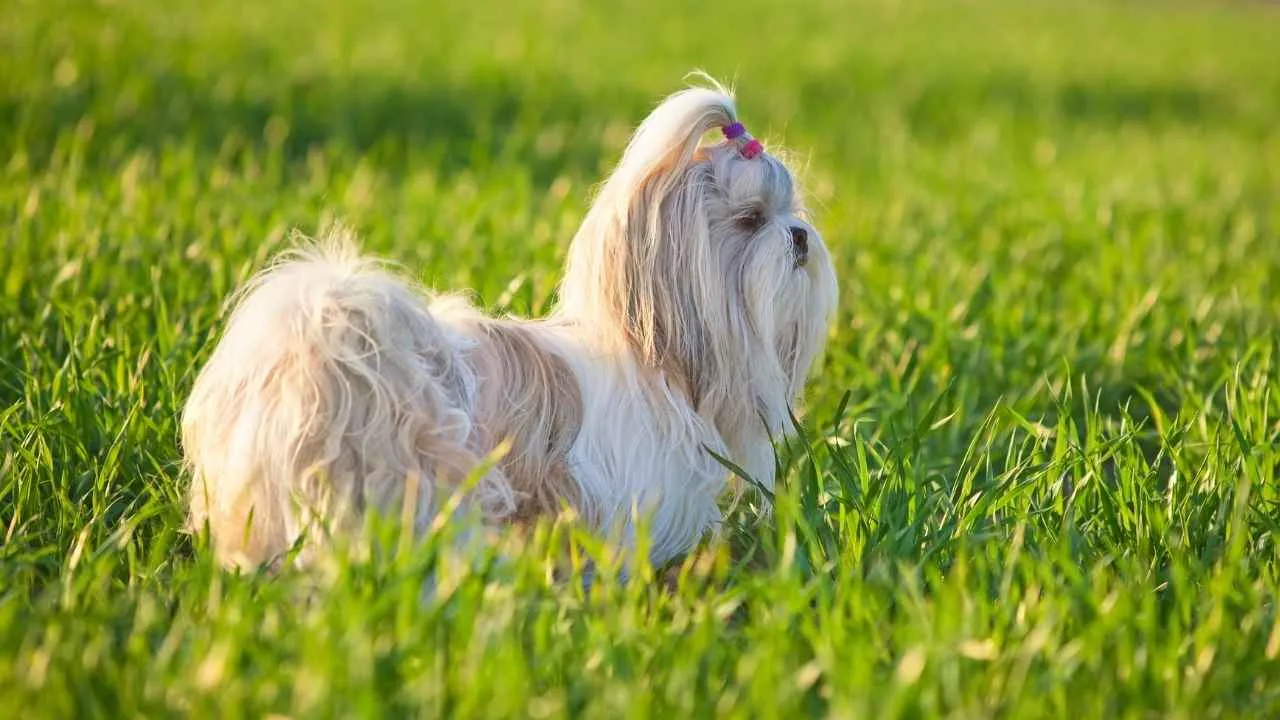
The Shih Tzu was bred to warm royal laps, and honestly, it has never forgotten the assignment. Developed in imperial China from Tibetan companion-dog ancestry, the breed lived within palace walls and enjoyed attention from members of the royal court.
They are affectionate, playful, and outgoing companions, claims Omlet. They generally prefer being near their people and may follow family members from room to room in case an unscheduled cuddle becomes available.
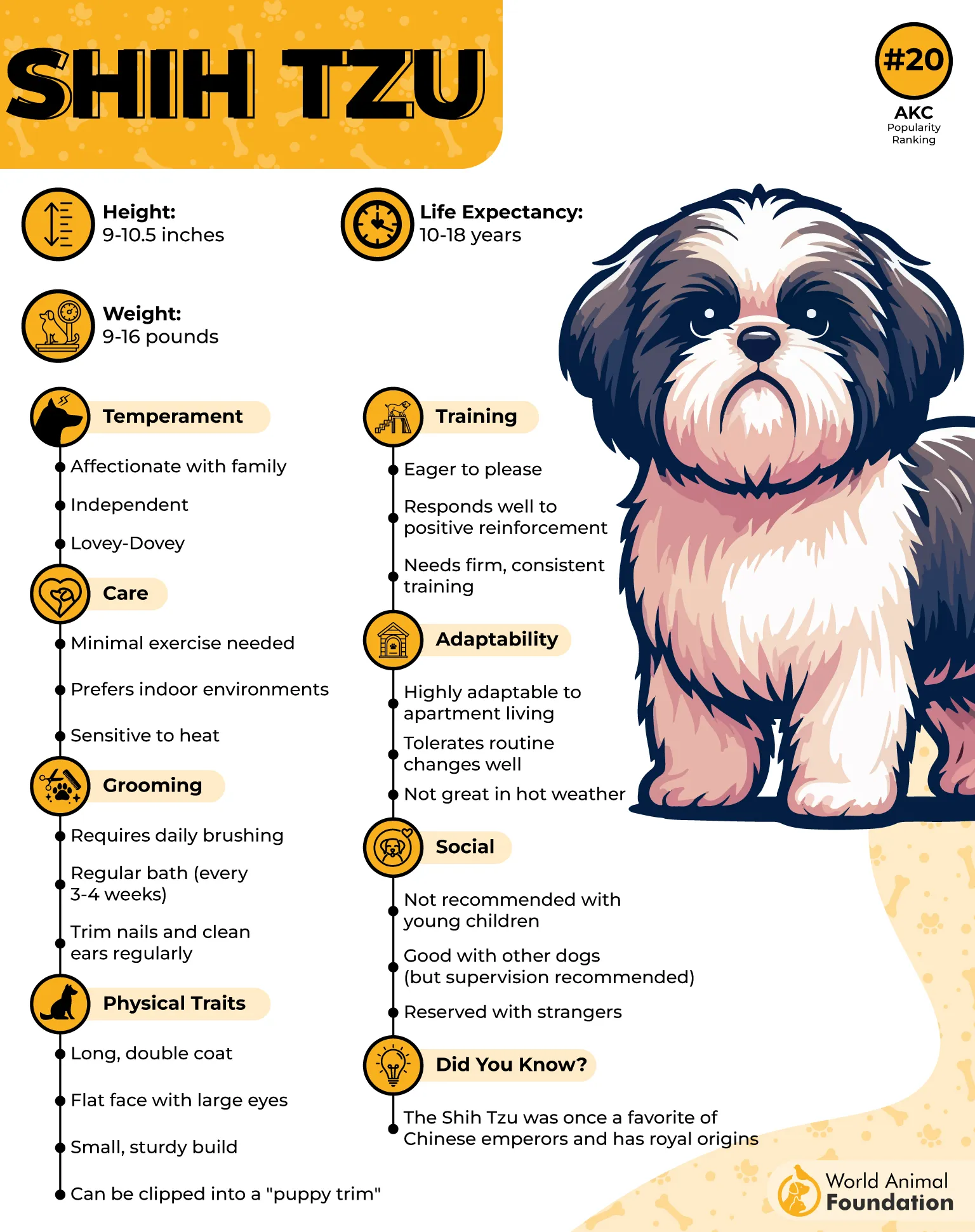
That flowing double coat needs consistent care if kept long, including frequent brushing, careful detangling, and hair management around the eyes. Many families select a shorter trim to simplify upkeep, but even a practical haircut still requires bathing, brushing, ear care, and regular appointments.
They are brachycephalic, meaning they have shortened skulls and relatively flat faces. This structure can make breathing and cooling less efficient, so strenuous exercise and hot-weather adventures require serious caution.
6. Yorkshire Terrier
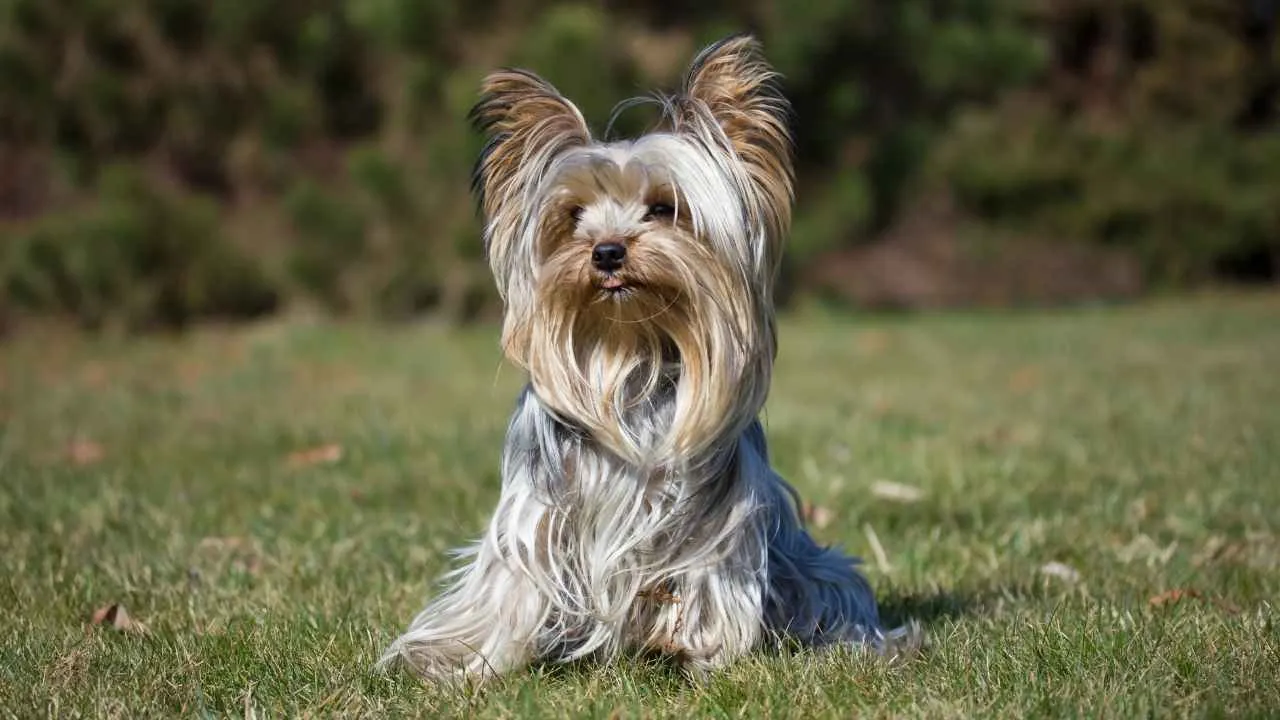
The Yorkshire Terrier may wear a silky floor-length coat, but beneath that glamour lives a genuine working terrier. During the nineteenth century, the breed developed in northern England, where small terriers helped control rats in mills and industrial environments.
They are small, but their confidence, however, seems to be measured on an entirely different scale. A Yorkie may challenge a vacuum cleaner, patrol the sofa, and then request immediate transportation upstairs because walking suddenly feels beneath its status.
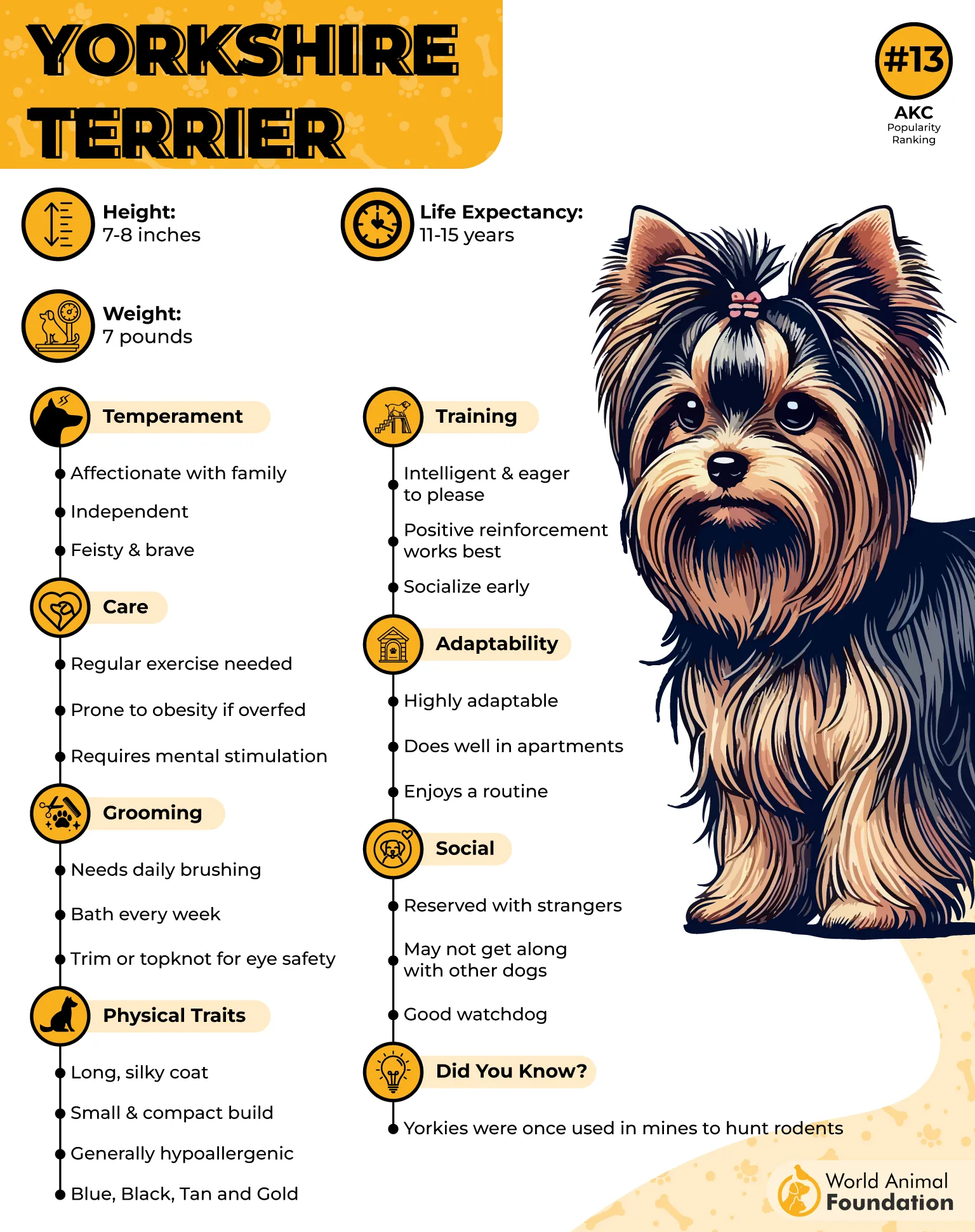
Yorkshire Terriers are clever and can learn quickly when training remains upbeat and consistent. Terrier independence may show up during recall or house-training, so management and repetition matter even when the dog seems to understand perfectly.
Teaching polite barking, comfortable handling, loose-leash walking, and calm behavior around other dogs can prevent small habits from becoming big headaches.
This popular toy dog breed can be vulnerable to dental disease, patellar luxation, collapsing trachea, and certain liver conditions.
7. Havanese
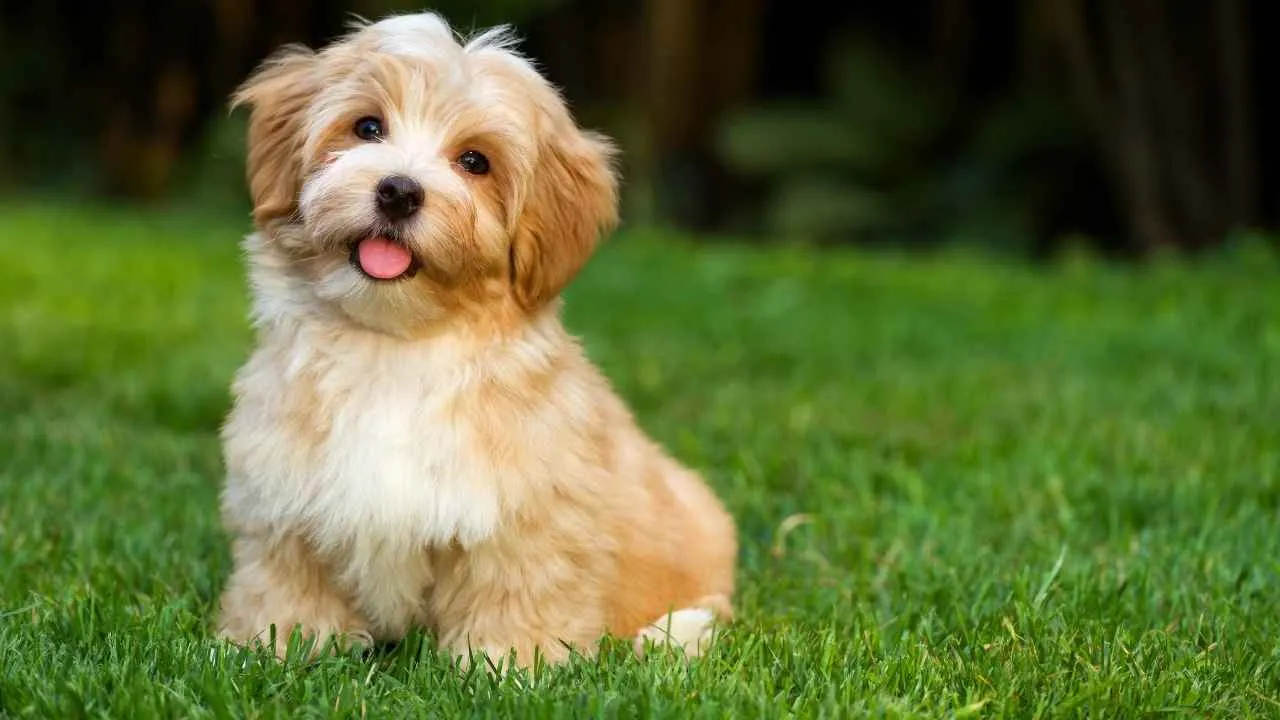
The Havanese brings tropical charm, social confidence, and a walk that looks as though every step has background music. Recognized as Cuba’s only native dog breed, it developed as a companion for wealthy families in Havana.
They often bond strongly with entire households rather than reserving affection for one person. Owners often love their clownish performances, though the dog may be less amused when the audience leaves for work.
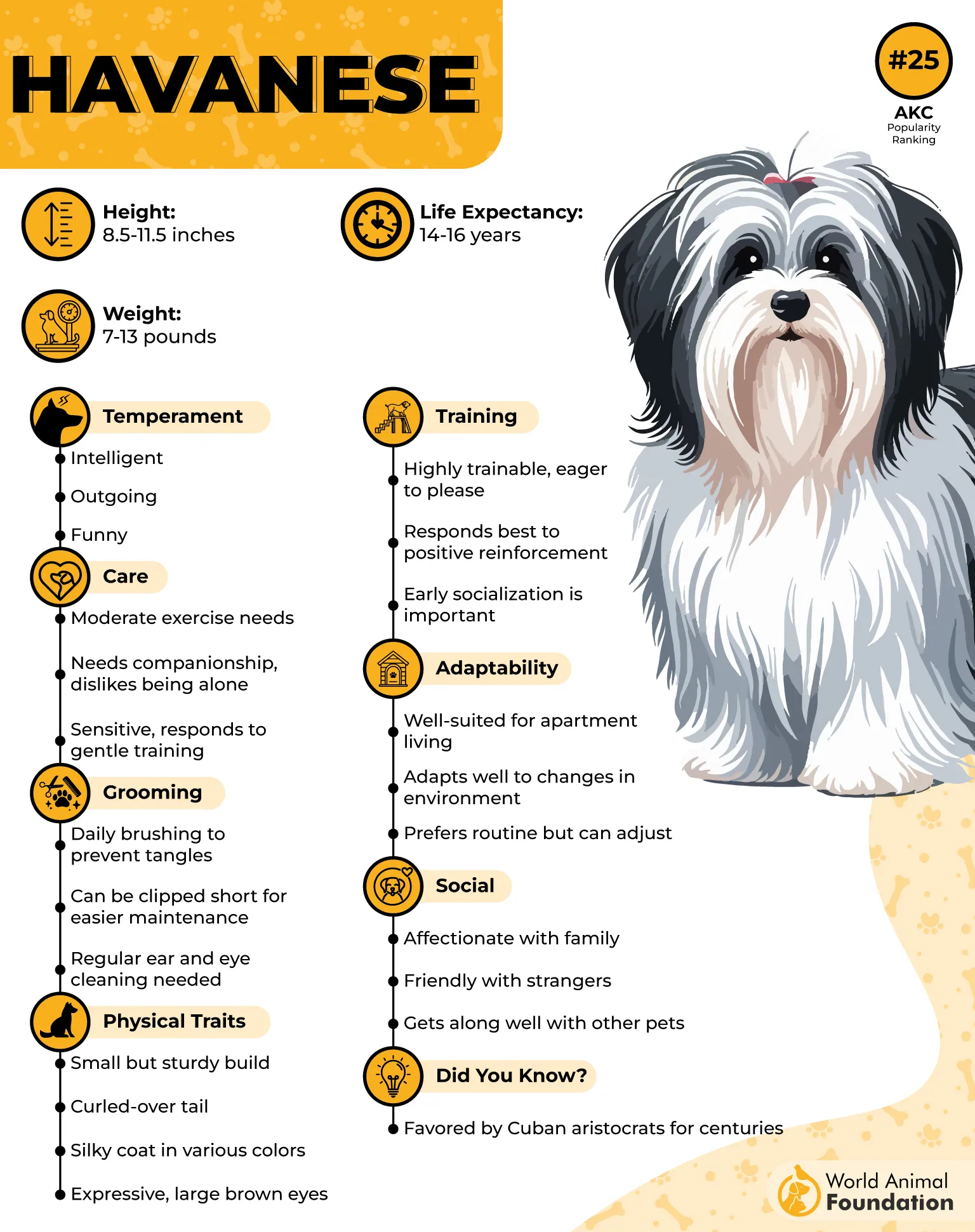
Because these small dogs are highly people-oriented, start gradual independence training during puppyhood. Short departures, calm reunions, and comfortable rest areas can help prevent excessive distress when the family is away. This human companion isn’t ideal for someone who expects a dog to spend most days alone, no matter how cozy the apartment may be.
The long, soft coat can be silky, wavy, or lightly corded and needs regular maintenance to prevent matting. A puppy cut reduces styling time but does not eliminate brushing, bathing, nail trimming, ear care, or attention beneath the harness.
Conclusion
Toy breeds may be small enough to share a chair, but each brings a distinct history, instincts, grooming needs, and emotional needs. Cavalier King Charles Spaniel, Toy Fox Terrier, Chinese Crested, Bichon Frise, Japanese Chin, Italian Greyhound, and Miniature Pinscher are other popular small breeds loved by human owners.
Before choosing a small dog breed, consider more than appearance or adult weight. Consider grooming costs, barking tendencies, exercise needs, training, time alone, household noise, children, other animals, health testing, and access to ethical breeders or reputable rescues.
Meeting well-adjusted adult dogs can reveal far more than scrolling through perfect puppy photographs at 2 a.m.
