




What if the most beautiful dogs… are also the most misunderstood?
Sounds surprising.
Because when people think of long-haired dogs, they imagine glamor.
Perfect coats.
Elegant walks.
Instagram-worthy fluff.
But the reality?
It’s not always picture-perfect.
Behind all that silky fur is a world of loyalty, personality, chaos… and serious charm.
Some were bred to survive freezing mountains.
Others guarded flocks through storms and snow.
And a few?
They simply turned heads everywhere they went.
From tiny cloud-like companions to giant majestic protectors, these dogs don’t just look fabulous…
They OWN the spotlight.
And once you discover the stories behind those flowing coats, you’ll never see “fluffy” the same way again.
So… let’s dive into the most stunning long-haired dog breeds — from fluffy to absolutely fabulous.
Long-Haired Dog Breeds: From Fluffy to Fabulous
1. Afghan Hound
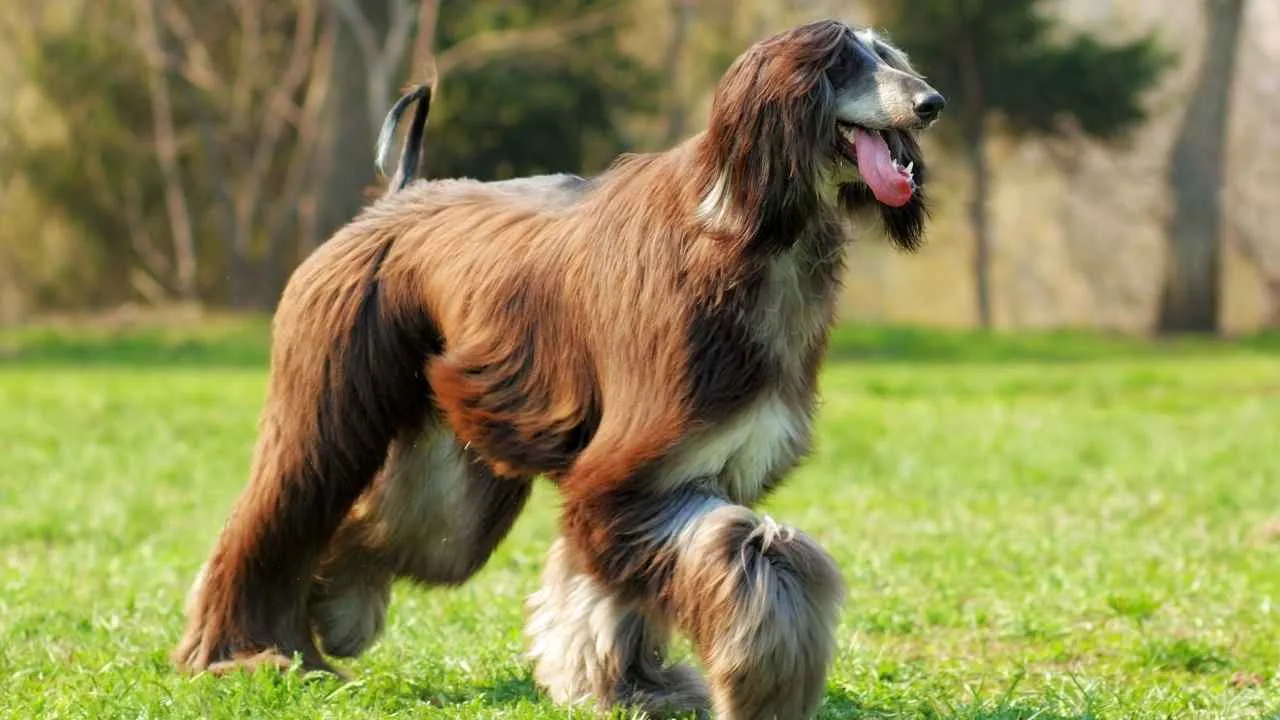
Afghan Hound is recognized for its long, flowing coat and independent personality, as mentioned by the AKC.
Long, silky, and flowing from head to tail, this stunning hair originally protected the breed from freezing winds and rough mountain conditions in Afghanistan.
Unlike many long-haired dogs with thick woolly fur, the Afghan’s coat has a fine texture that moves almost like human hair when the dog runs.
One of the breed’s most fascinating details is the naturally shorter hair across the saddle area on its back, creating a striking contrast against the heavy feathering on the legs, chest, and ears.
Afghan puppies begin life with a soft fuzzy coat and tiny “monkey whiskers” around the face, but that simple look quickly transforms into layers of glamorous hair as they grow.
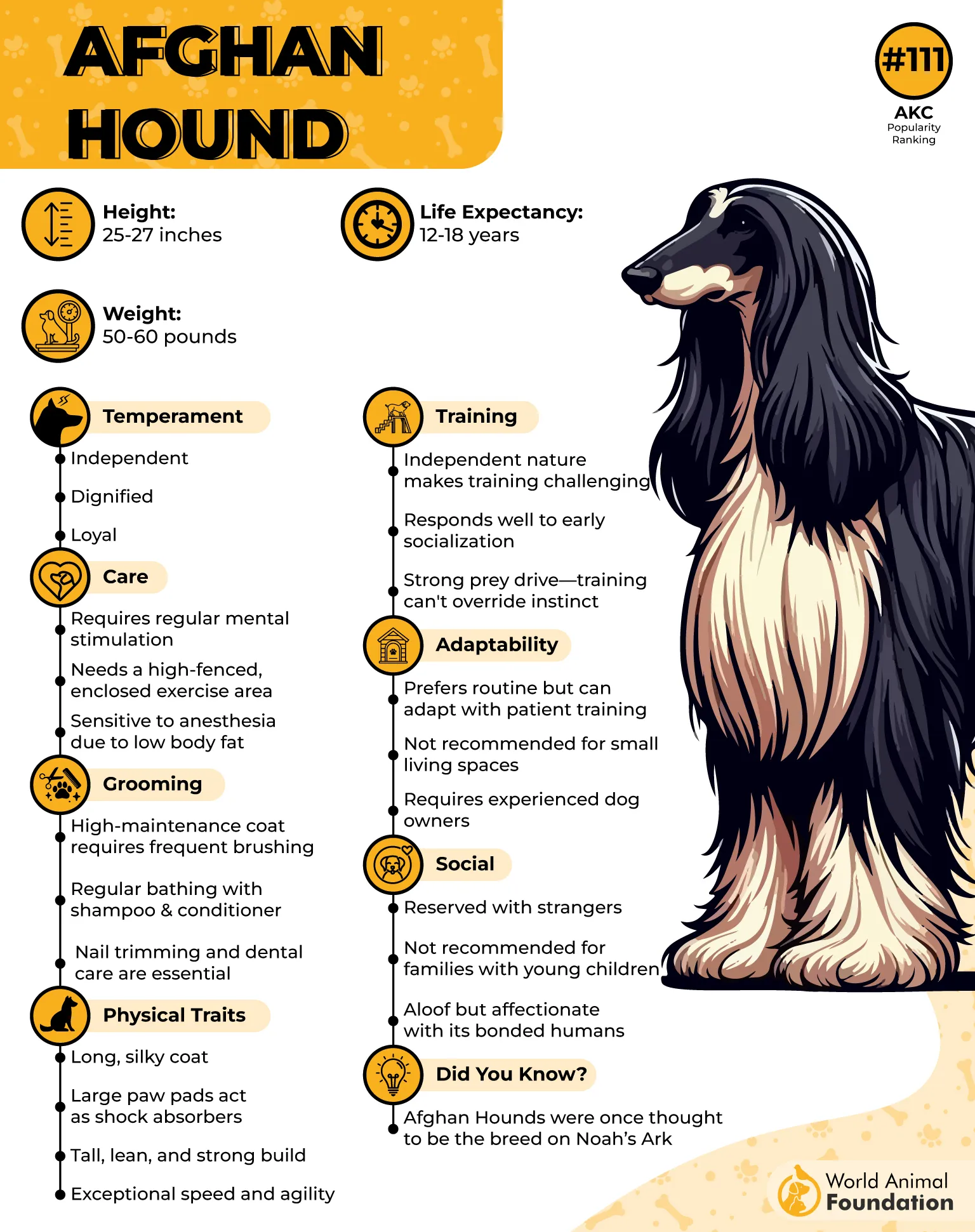
The Afghan Hound’s long, silky coat requires several hours of brushing each week, along with routine bathing using both shampoo and conditioner.
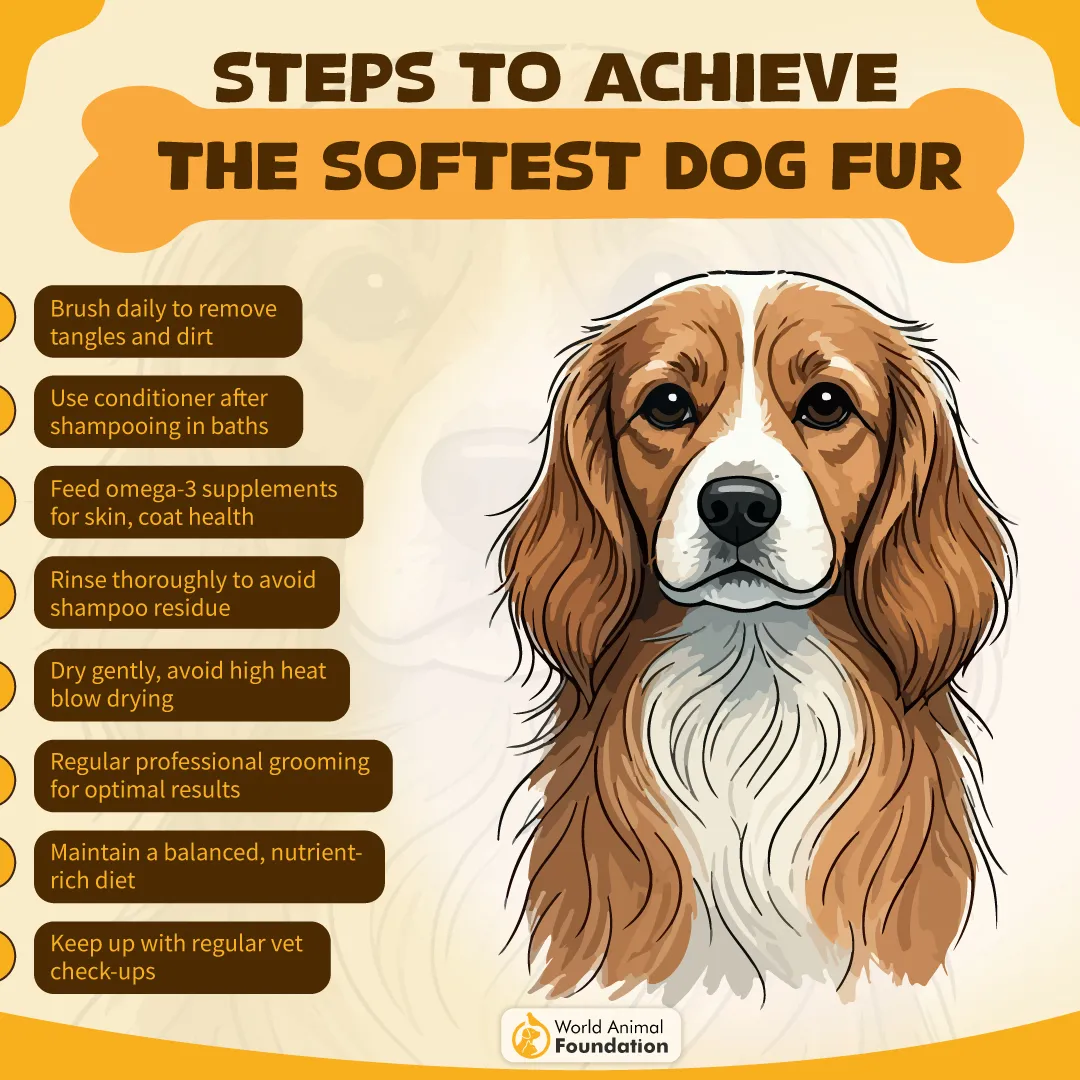
When properly maintained, the Afghan Hound’s flowing coat turns every walk into a show-stopping moment.
2. Shih Tzu
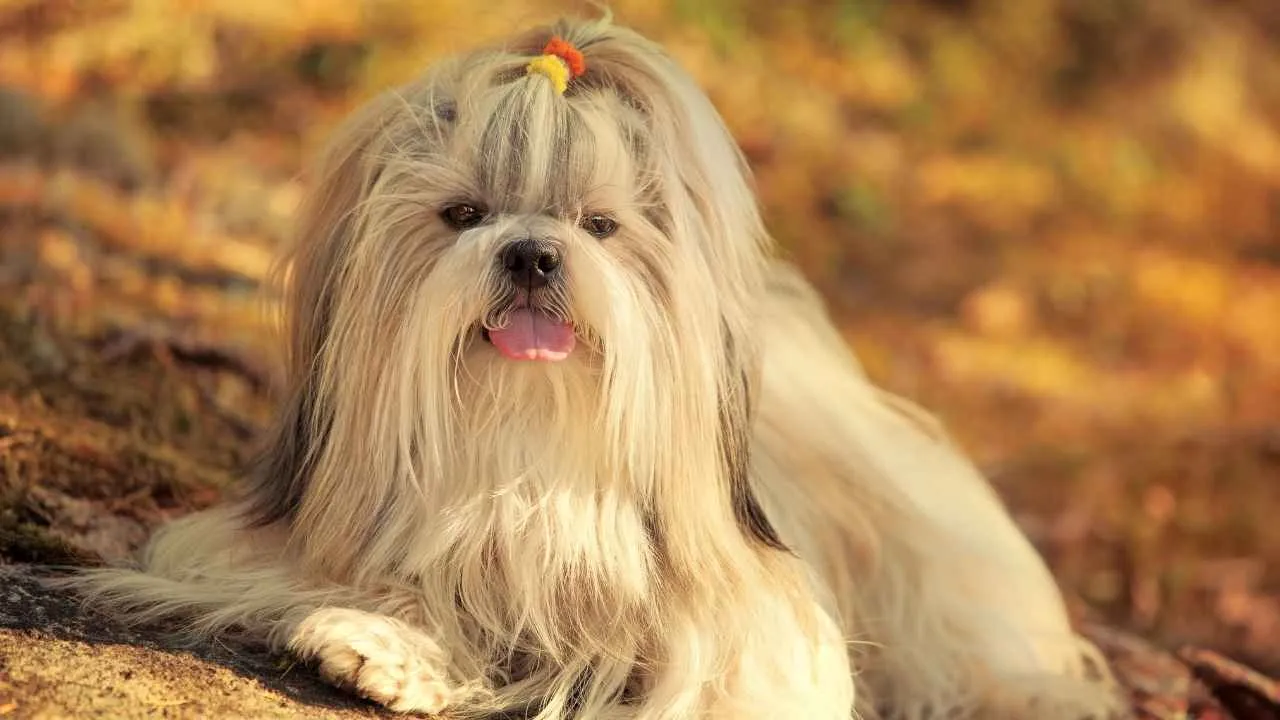
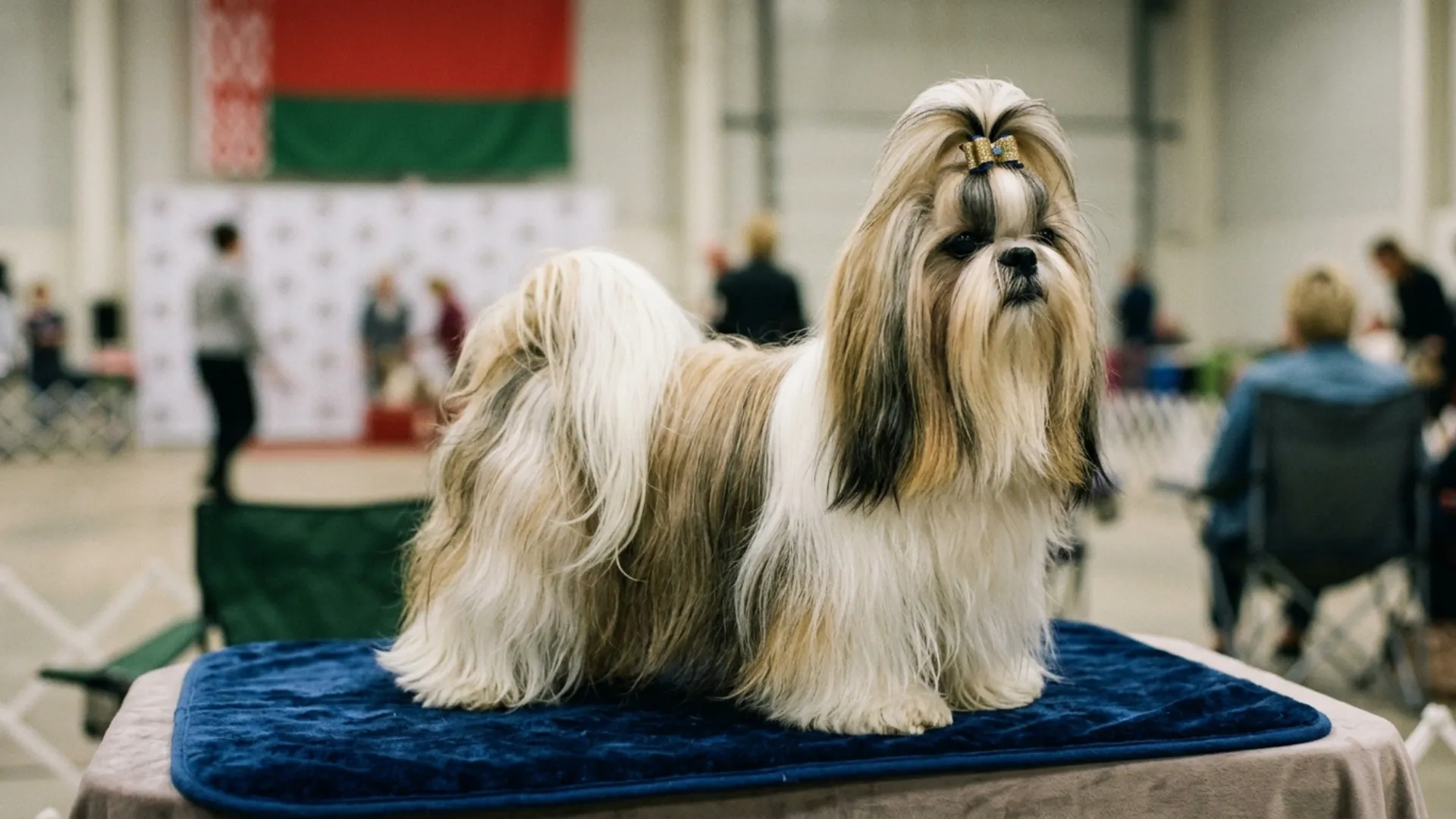
The beautiful coat of the Shih Tzu is one of the biggest reasons this tiny companion stands out. Its long, flowing thick double coat grows continuously throughout life, often reaching the floor if left untrimmed.
In many homes, owners tie the hair on top of the head into a small topknot to keep it out of the dog’s eyes, giving the breed its signature charming look.
Although Shih Tzus shed very little, their coat demands consistent care. Without regular brushing, tangles quickly form behind the ears, under the legs, and around the collar area after everyday walks or naps on soft furniture.
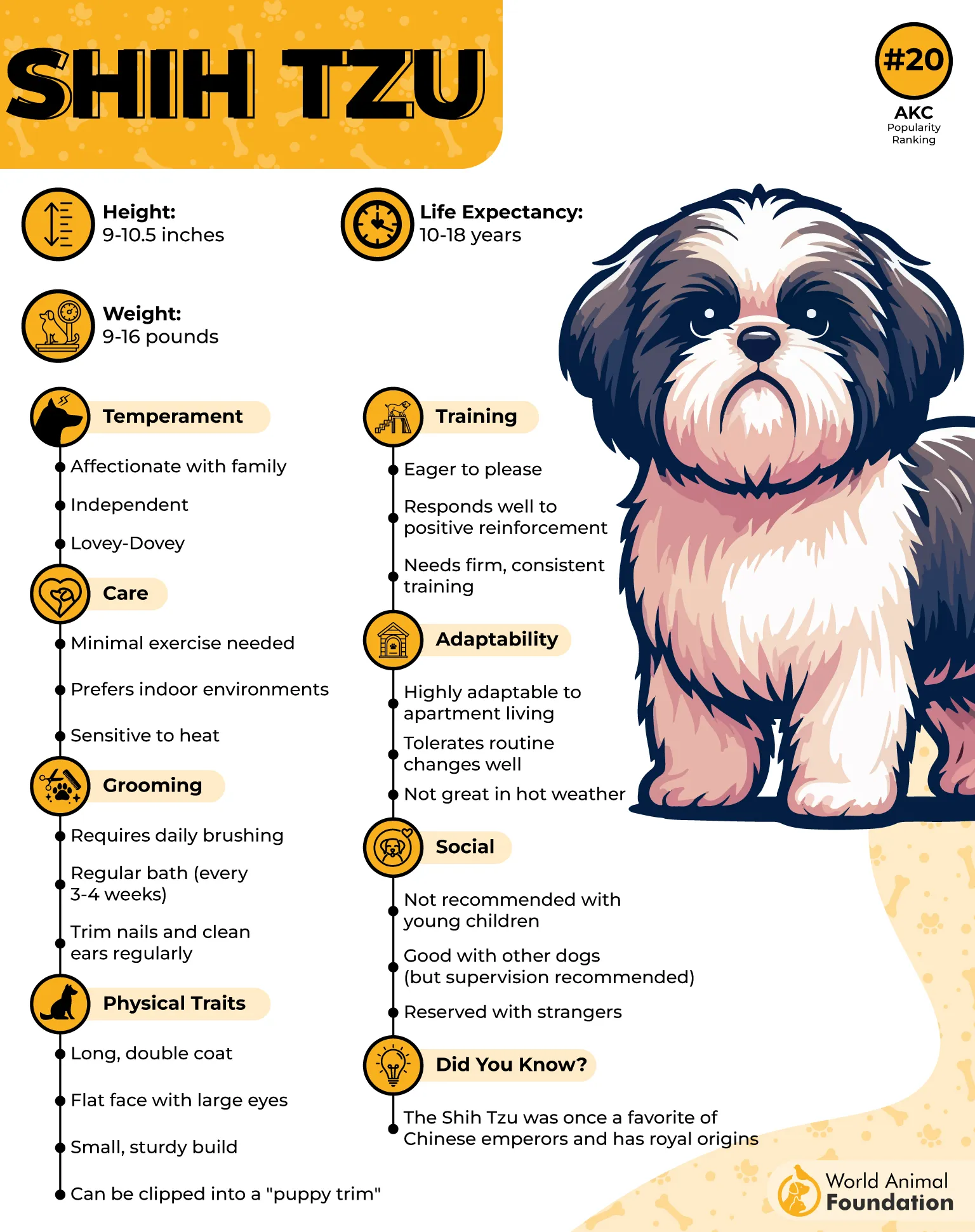
Many owners choose a shorter “puppy cut” because it is easier to manage and keeps the dog more comfortable in warm weather.
Bathing is usually needed every week to keep the coat clean and prevent irritation beneath the dense layers of hair.
Professional grooming also becomes part of routine care, especially for owners who prefer the full glamorous coat. With proper maintenance, the Shih Tzu’s silky fur gives this small breed an almost royal appearance wherever it goes.
3. Yorkshire Terrier
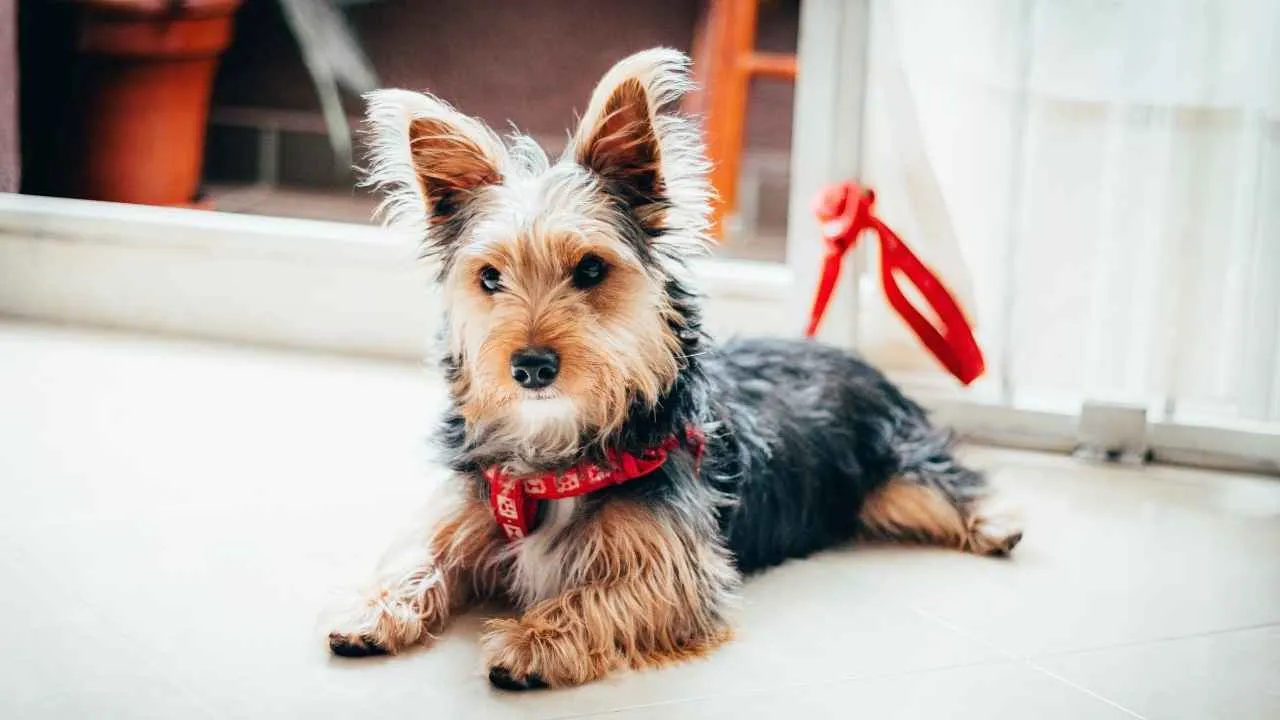
The silky coat of the Yorkshire Terrier gives this tiny dog a glamorous appearance that often surprises first-time owners, as mentioned by the AKC.
Unlike the fluffy fur seen in many small breeds, a Yorkie’s hair grows long, straight, and smooth with a texture remarkably close to human hair.
When left untrimmed, the glossy steel-blue and golden-tan strands can sweep the floor as the dog walks, creating an elegant look that became famous during the Victorian era.
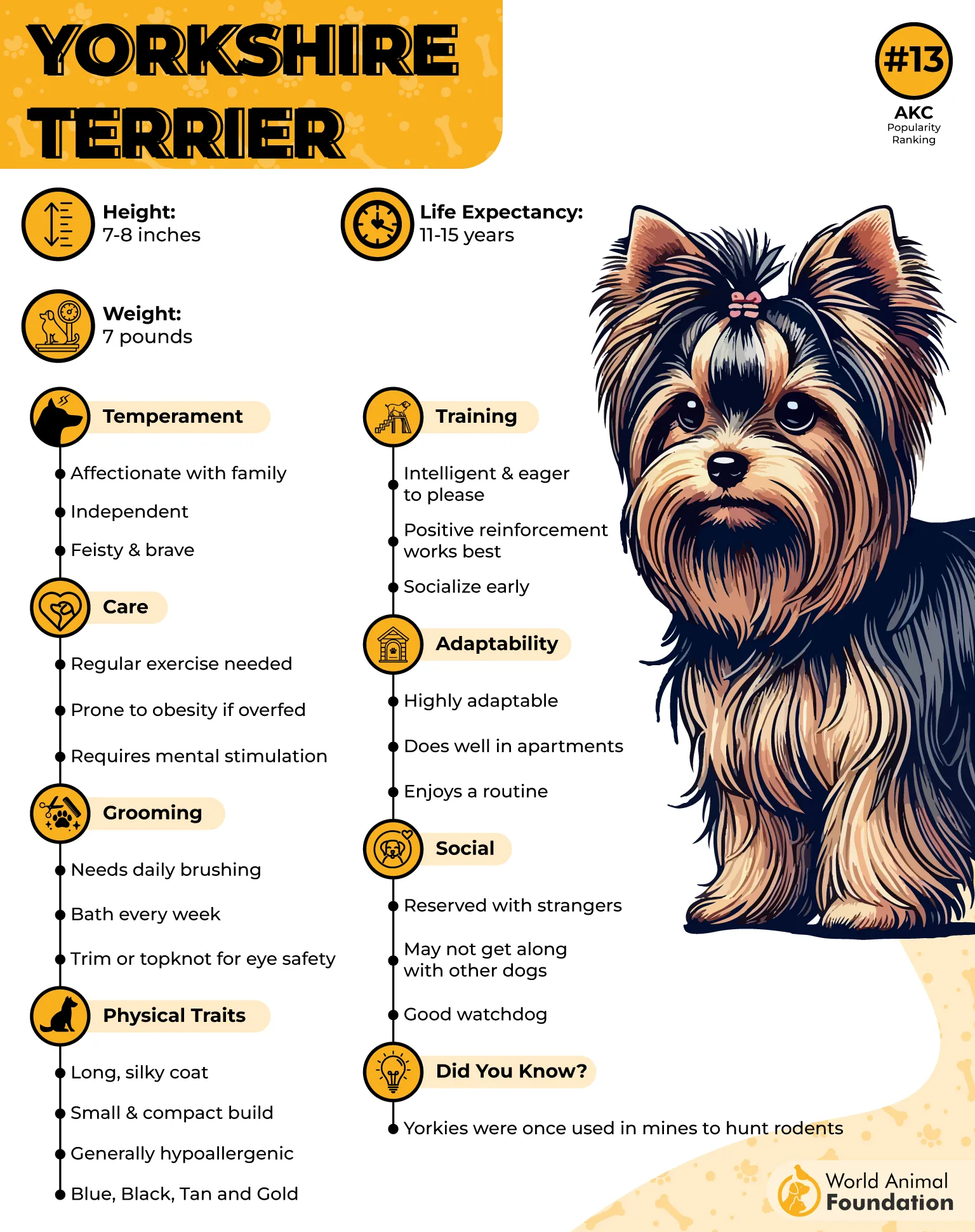
Keeping that beautiful coat in shape takes regular attention. Daily brushing helps prevent knots, especially around the legs, chest, and behind the ears where tangles form quickly.
Many owners gather the hair on top of the head into a neat topknot to stop it from irritating the eyes during walks or playtime. Others choose shorter trims for easier maintenance while still keeping the breed’s polished appearance.
What makes the Yorkie especially fascinating is the contrast between its delicate coat and bold terrier attitude. Beneath all that flowing hair is a fearless little dog once used to chase rats through crowded textile mills and mines.
4. Havanese
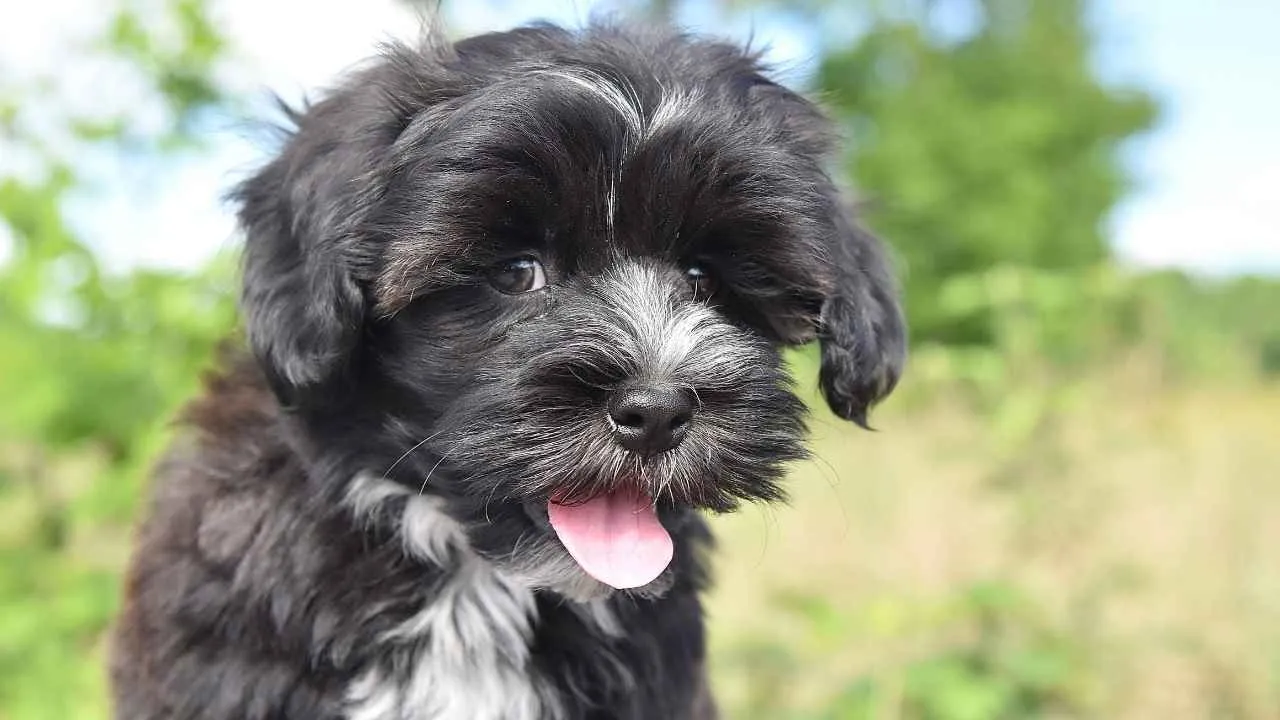
The soft, flowing coat of the Havanese gives this cheerful Cuban breed a light, almost airy appearance. Its silky hair comes in many colors and naturally falls in gentle waves, helping protect the dog from strong Caribbean sun and heat.
The Havanese breed is highly social and friendly, which makes them a popular choice for families.
One of the most charming details is the way the cotton like coat moves when the Havanese walks, creating a springy, lively look that perfectly matches its playful personality.
Unlike many long-haired breeds with heavy fur, the Havanese has a lighter texture that owners often style in different ways.
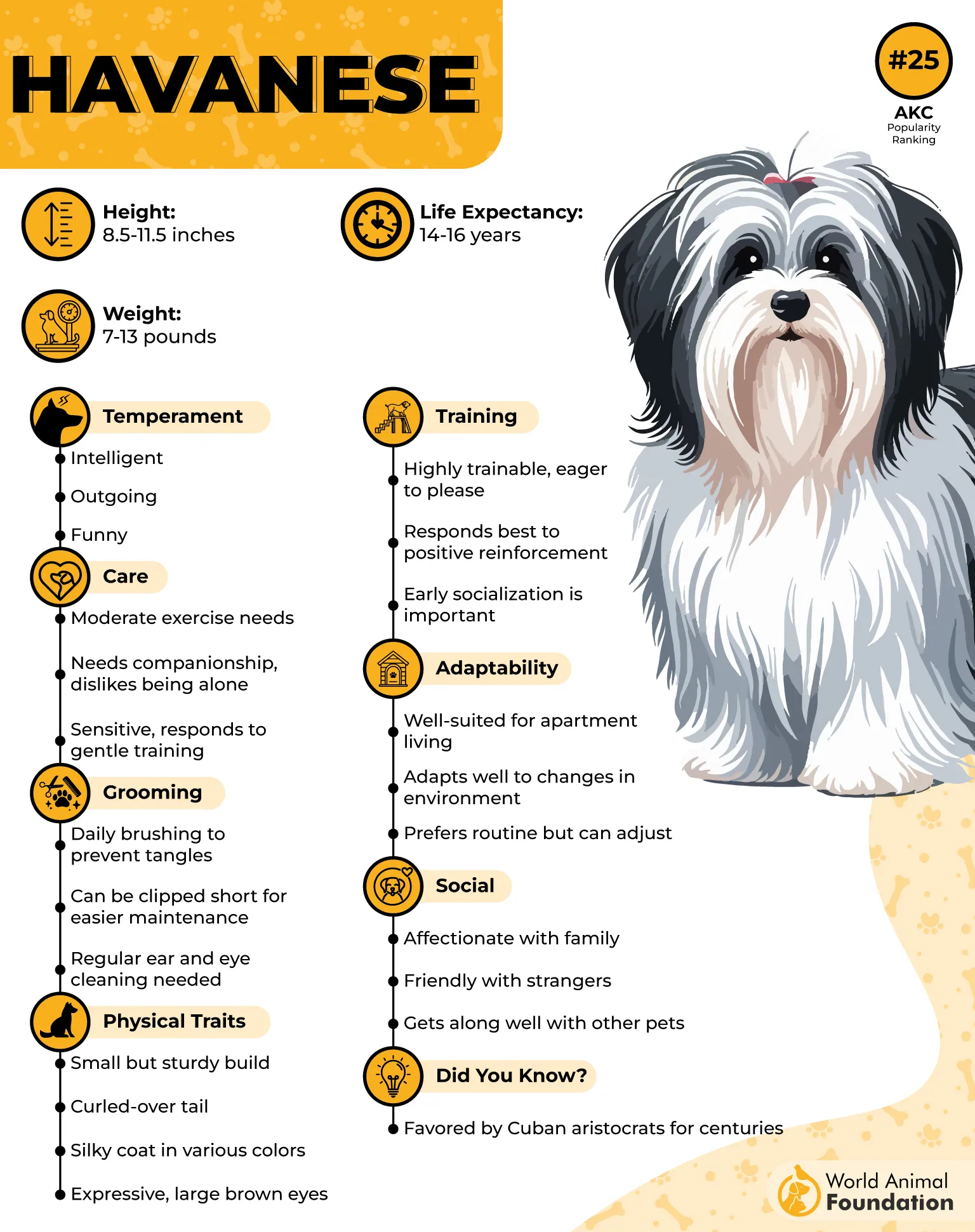
Some keep the coat long and natural, while others trim it short for easier upkeep during busy daily routines. A few even allow the hair to form soft cords, giving the breed a rare and eye-catching appearance similar to a Puli.
Regular brushing is important because tangles can quickly form around the legs, chest, and under the collar. Many owners gently comb the coat while the dog relaxes on their lap, turning grooming into bonding time.
Combined with the breed’s constantly wagging curled tail, the silky coat makes the Havanese impossible to ignore.
5. Lhasa Apso
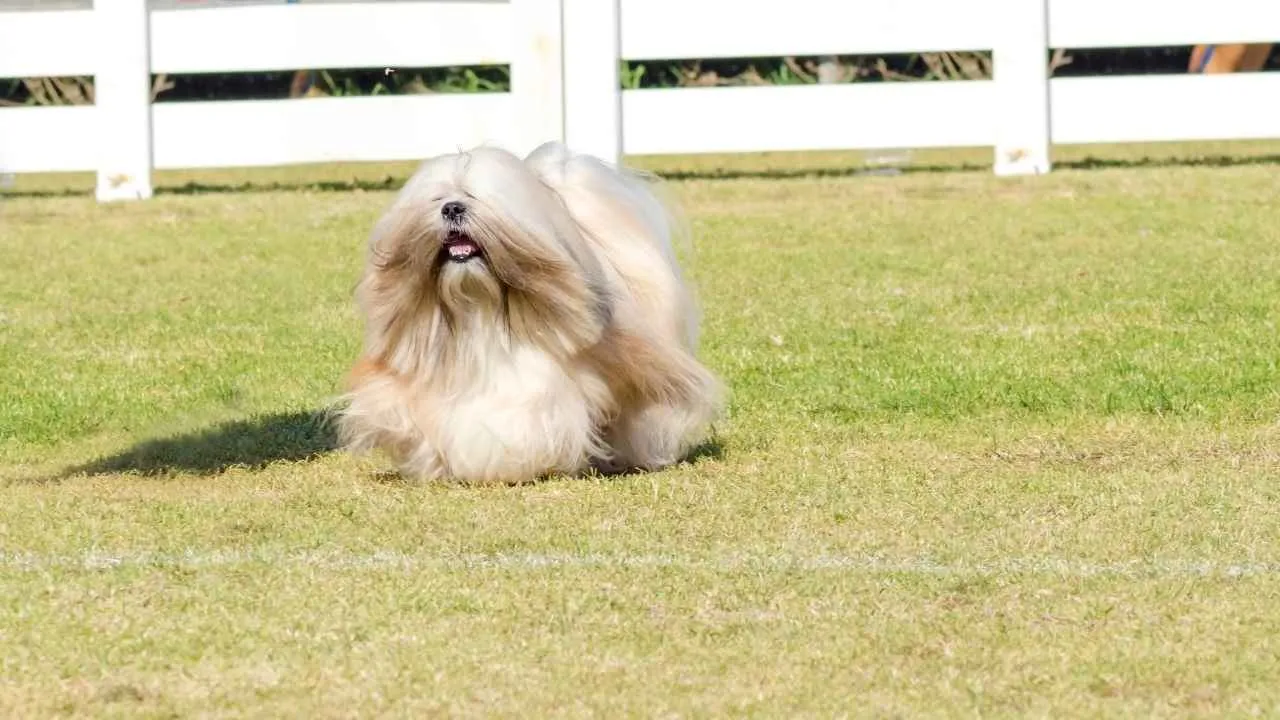
The heavy, flowing coat of the Lhasa Apso was built for survival long before it became admired for beauty, as stated by the Petmd.
High in the cold Himalayan mountains, this small dog relied on its dense hair to handle cold climate and harsh weather around remote monasteries.
The long outer coat, combined with a soft underlayer, worked like natural insulation in extreme climates.
One of this ancient dog breed’s most recognizable details is the straight coat that parts neatly down the middle of the back, falling almost to the ground on both sides.
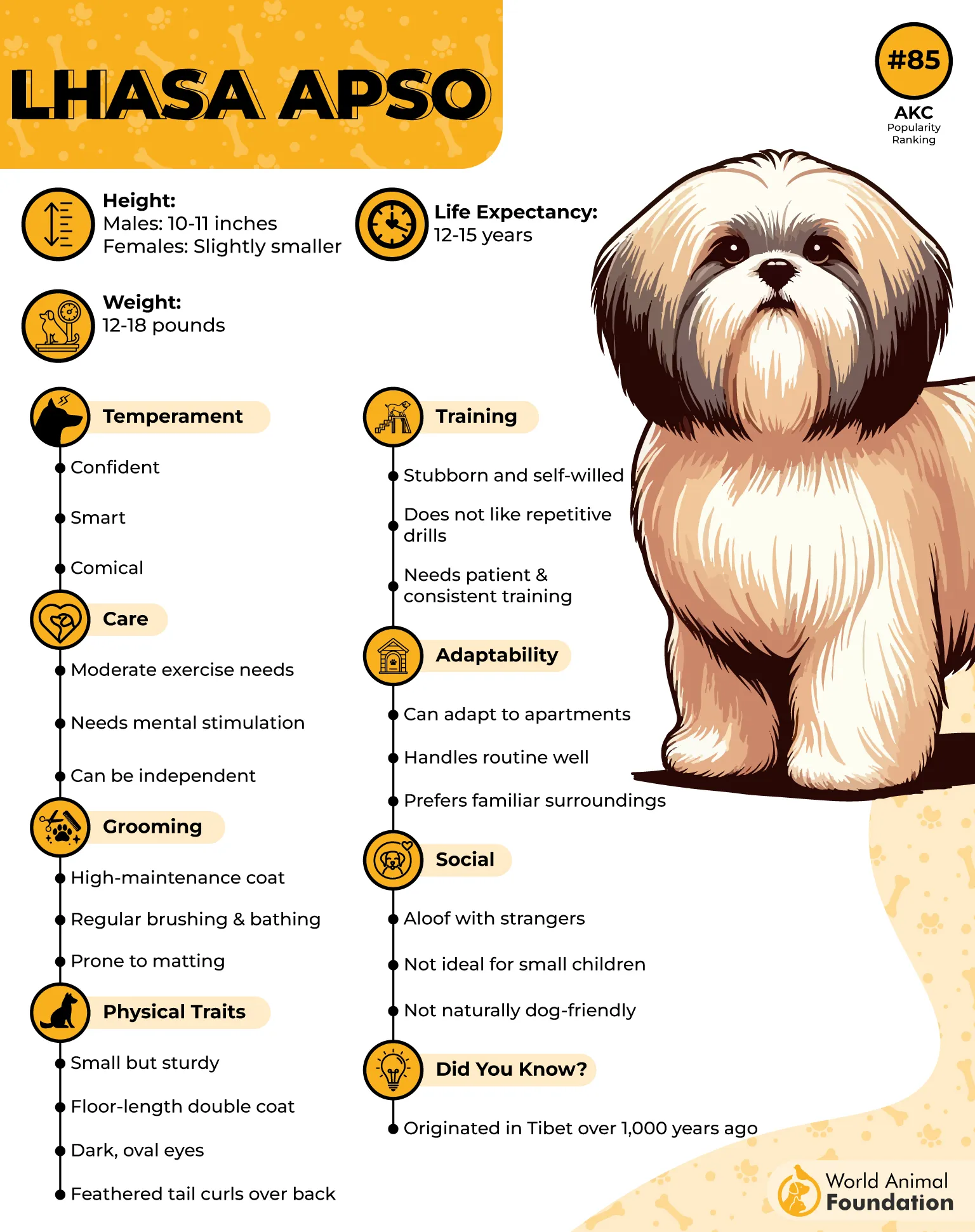
Lhasa Apsos are known to get along well with kids and other pets, making them great family companions.
Around the face, the thick hair creates the famous “bearded lion dog” look that gave the breed its name. Even with a shorter puppy cut, the coat still needs steady maintenance because tangles easily form near the legs, chest, and belly after everyday activity.
The Lhasa Apso’s heavy, straight, dense double coat requires thorough brushing two to three times a week and regular trimming by a professional groomer to maintain its condition.
When carefully groomed, the Lhasa Apso’s luxurious coat gives this ancient watchdog an elegant yet sturdy appearance.
6. Maltese
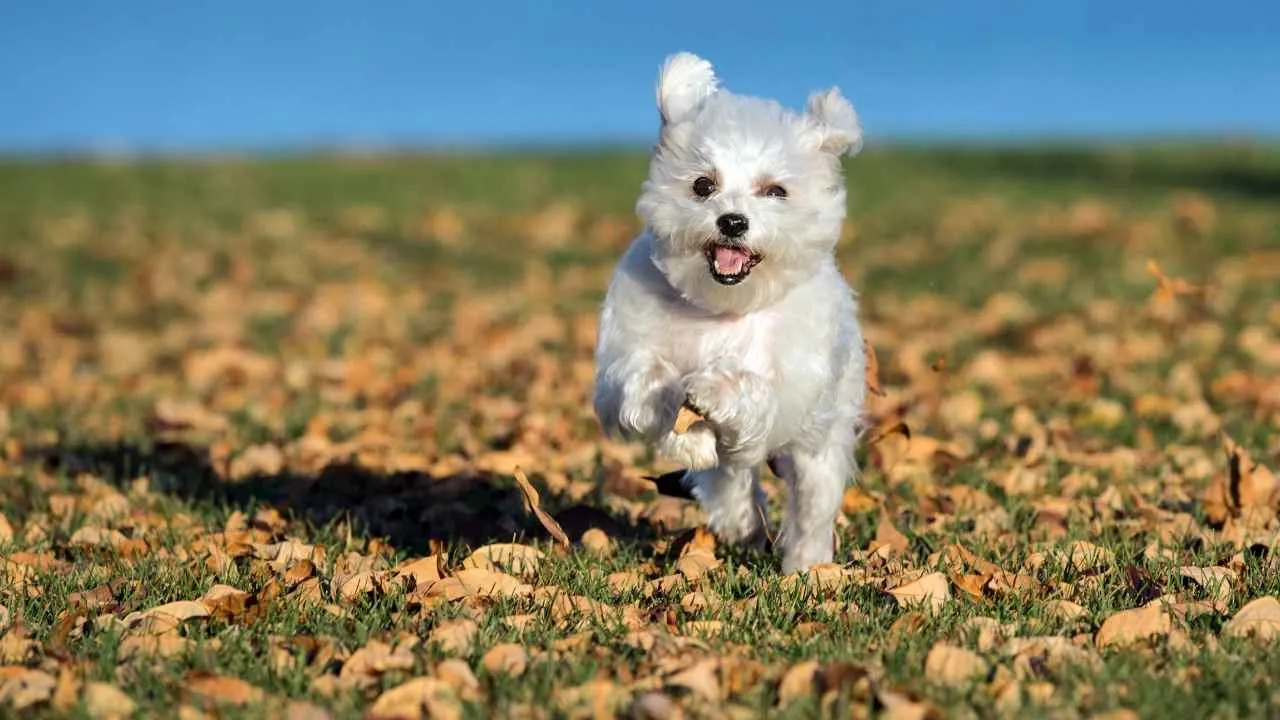
The flowing white coat of the Maltese is one of the most elegant sights among small companion dogs. Silky, straight, and naturally bright, the hair can grow all the way to the floor when carefully maintained.
Unlike many fluffy breeds, the Maltese has no undercoat, which gives the coat a lighter, smoother texture that falls neatly along the body instead of puffing outward.
That beautiful coat also changes how owners care for the breed in daily life. Because there is no thick insulating layer underneath, Maltese dogs often need extra warmth during cold weather, and many owners use soft jackets on winter walks.
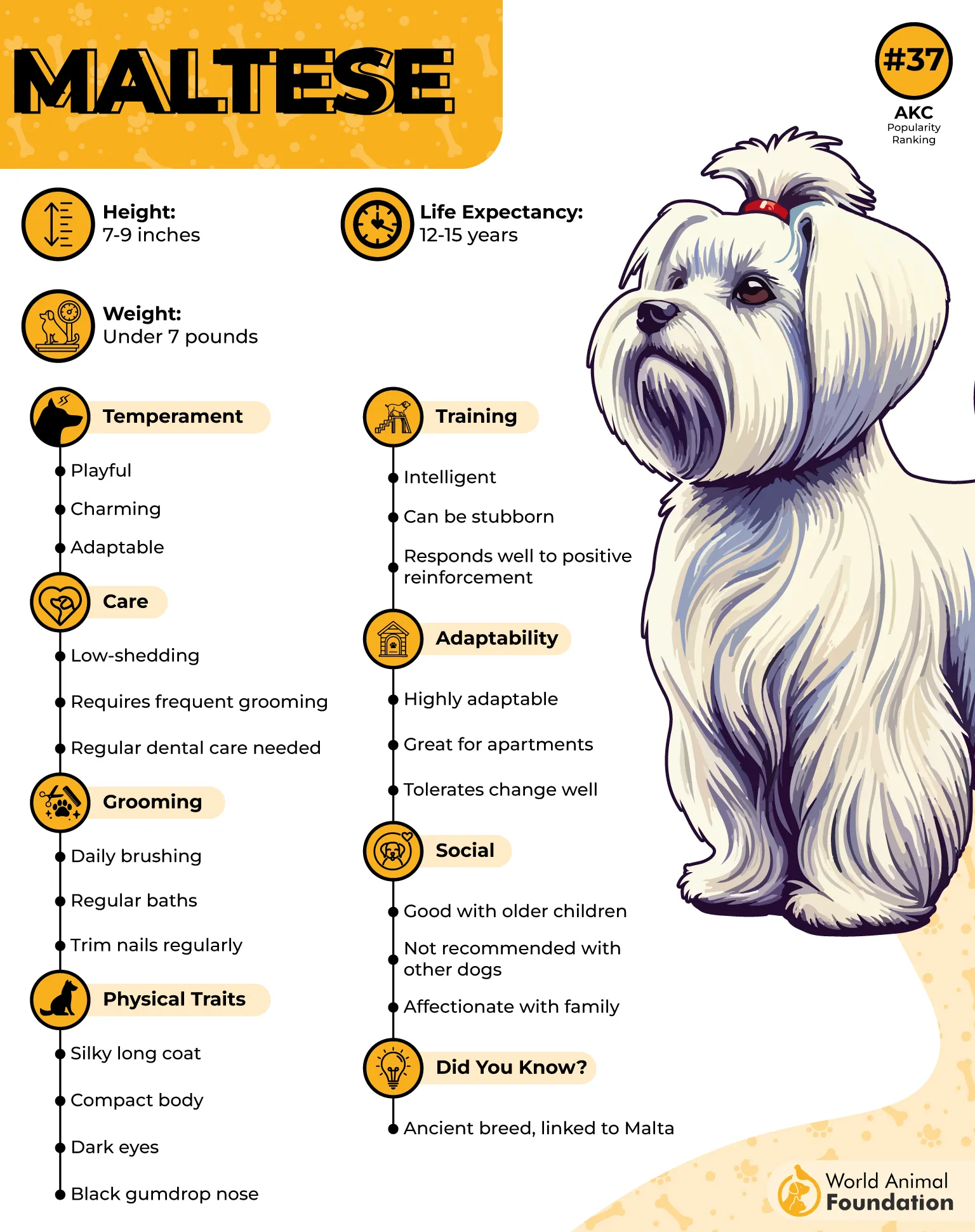
The fine hair around the face and ears can easily pick up dirt or food stains, so regular cleaning and brushing help keep the coat looking fresh and healthy.
Many people choose shorter trims for easier upkeep, while others prefer the dramatic floor-length look seen in dog shows.
Even though the breed sheds very little, the silky strands can tangle quickly without consistent grooming. Combined with its graceful movement and bright dark eyes, the Maltese carries an almost porcelain-like elegance wherever it goes.
7. Tibetan Terrier
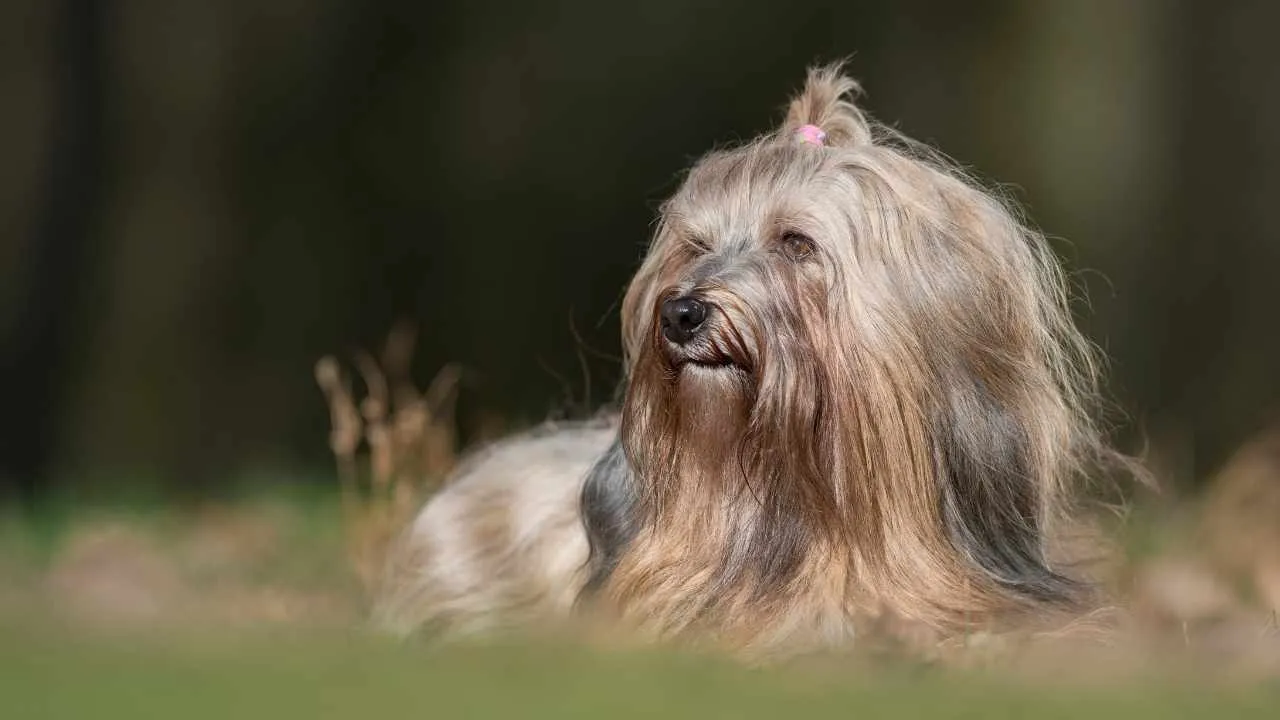
The shaggy double coat of the Tibetan Terrier was designed to handle the harsh climate of the Himalayan mountains.
Beneath the long coat’s outer hair sits a dense, wool-like undercoat that helped protect the breed from icy winds and freezing temperatures in Tibet.
The coat naturally falls forward around the face, often giving the dog a soft, almost hidden-eyed expression beneath its curtain of hair.
One of this shaggy dog breed’s most unusual details is its large, flat feet that spread out like natural snowshoes. Combined with the thick coat, these feet helped Tibetan Terriers move steadily across snowy mountain paths where smaller paws would sink.
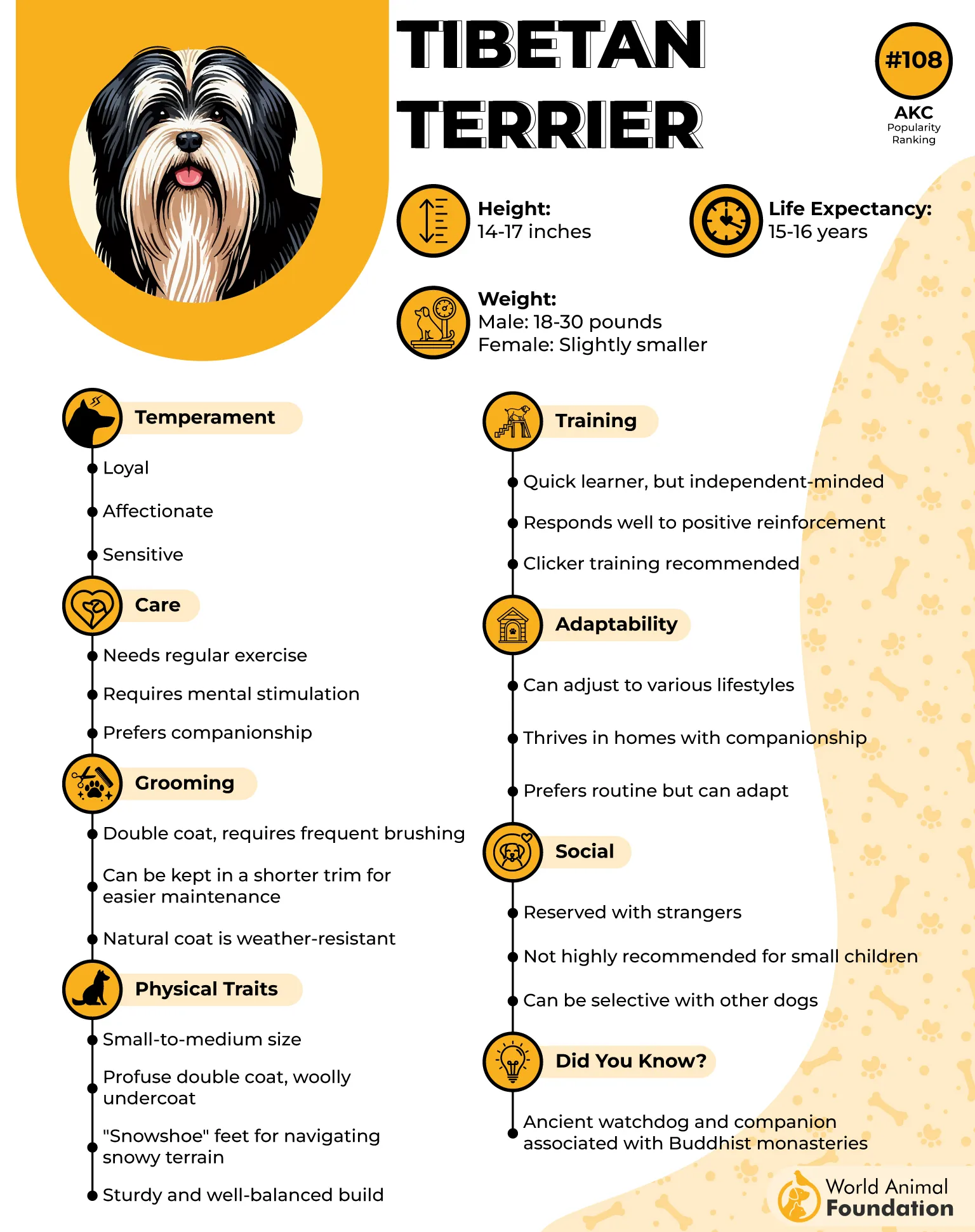
Today, that same long hair easily collects leaves, dirt, and tiny sticks after outdoor walks, especially around the legs and belly.
Regular brushing several times a week keeps the shaggy coat comfortable and prevents tight mats from forming close to the skin.
Many owners choose a shorter trim to make maintenance easier while still preserving the breed’s fluffy appearance. Even with a tidy haircut, the Tibetan Terrier keeps its rugged mountain-dog charm wrapped in layers of soft, flowing fur.
Conclusion
These long-haired dog breeds are renowned for their stunning, luxurious coats, ranging from silky, flowing locks to thick, fluffy, and woolly coats.
Some coats were designed to handle snow and freezing winds, while others became symbols of elegance and charm inside busy homes and cities.
Their beauty may grab attention first, but their personality, history, and unique coat textures are what truly make them unforgettable.
With the right care and commitment, these fluffy dogs transform everyday walks, quiet afternoons, and family moments into something a little more extraordinary.
