




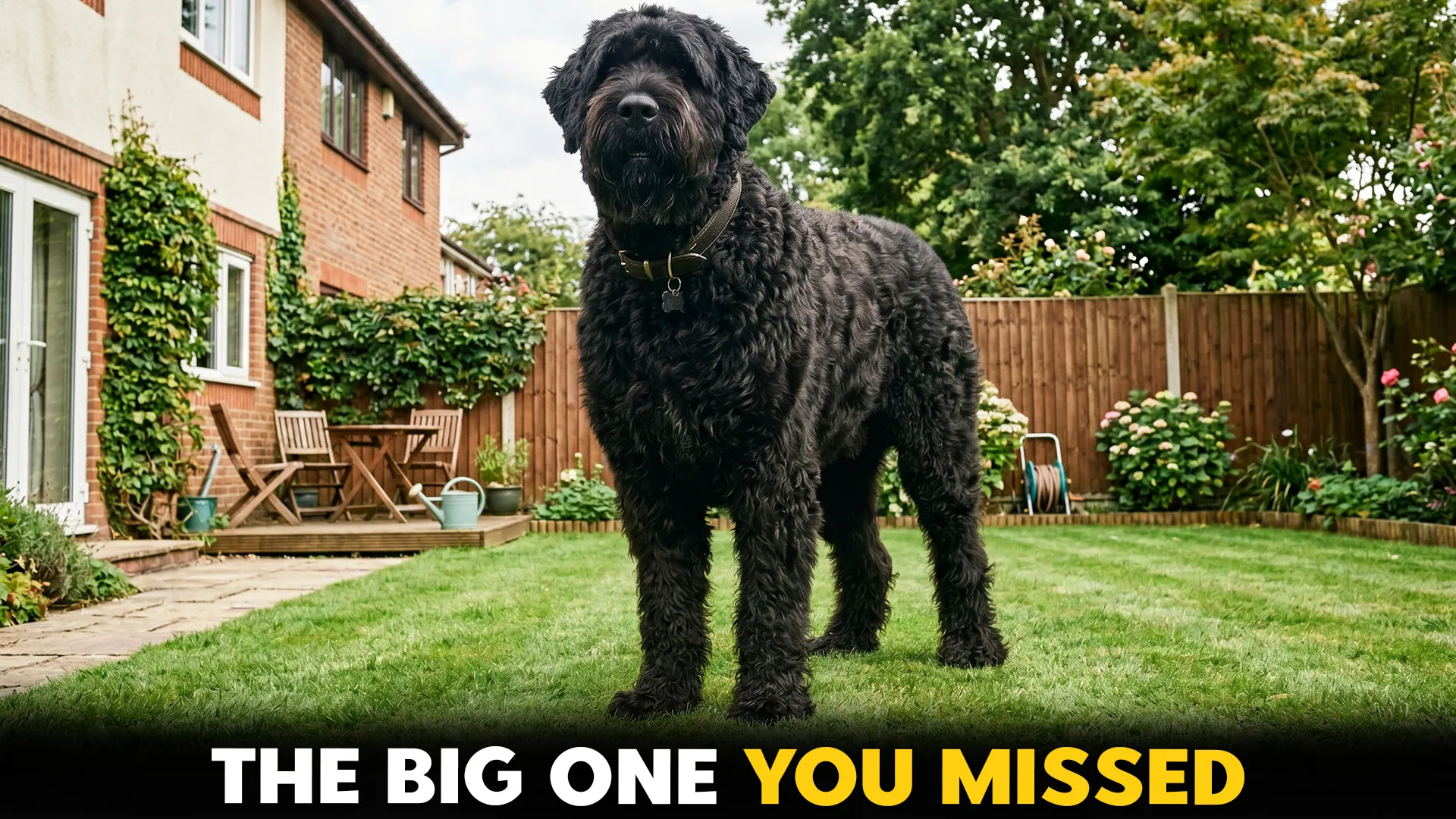
When most people think of giant dogs, a handful of famous breeds usually steal the spotlight. But beyond those household names lies a world of lesser-known gentle giants that are just as impressive—if not more so.
Despite their towering stature, many giant dog breeds are surprisingly calm, affectionate, and family-oriented. Often described as “big softies,” they form strong bonds with their humans, are typically patient with children, and love spending time close to their families.
Of course, owning a giant dog comes with unique responsibilities. They need more food, more living space, larger supplies, and often higher veterinary care costs than smaller breeds. Their lifespans also tend to be shorter, averaging around 6 to 10 years.
Still, for dog lovers who appreciate their loyalty, gentle nature, and larger-than-life presence, these little-known giant breeds offer a rewarding companionship that’s hard to match.
Key Takeaways
These lesser-known giant breeds combine size, loyalty, and a protective nature.
Breeds like the Caucasian Shepherd, Pyrenean Mastiff, and Estrela Mountain Dog make devoted companions.
Early socialization and training are essential for most giant guardian breeds.
Giant dogs need more space and care, but reward owners with unmatched loyalty.
Top Little-Known Giant Dog Breeds to Consider
1. Central Asian Shepherd Dog

The Central Asian Shepherd Dogs are among the most resilient and oldest breeds in the world. Developed through natural selection over more than 4,000 years, they were bred to protect livestock, property, and people across the harsh landscapes of Central Asia.
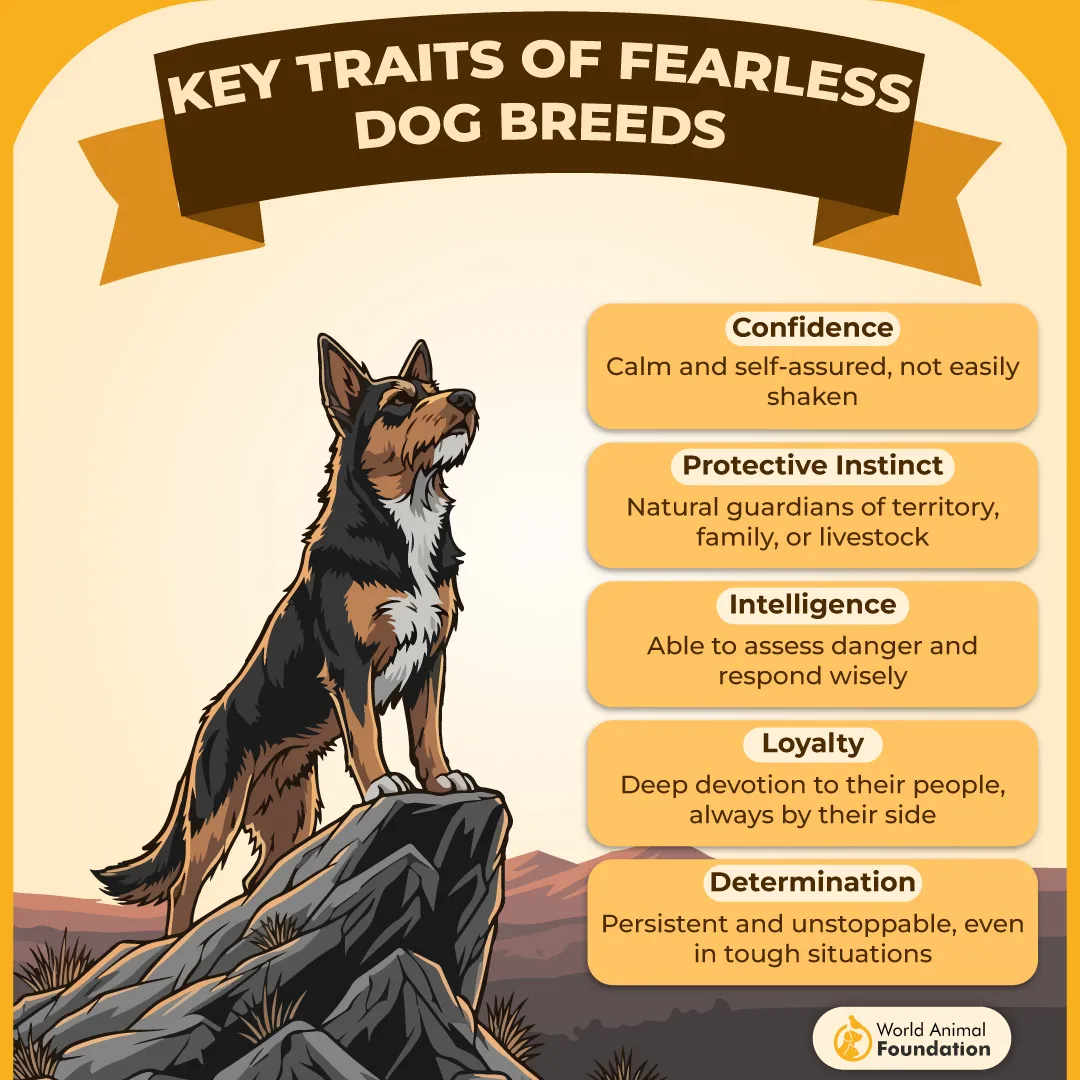
Their history as fearless guardians has shaped them into confident, courageous, and highly independent dogs.
Temperament and Personality
Central Asian Shepherd Dogs are loyal, calm, and deeply devoted to their families. They have strong protective instincts and are naturally wary of strangers, making early socialization essential. While affectionate with their people, they are not overly clingy and prefer having a job or purpose.
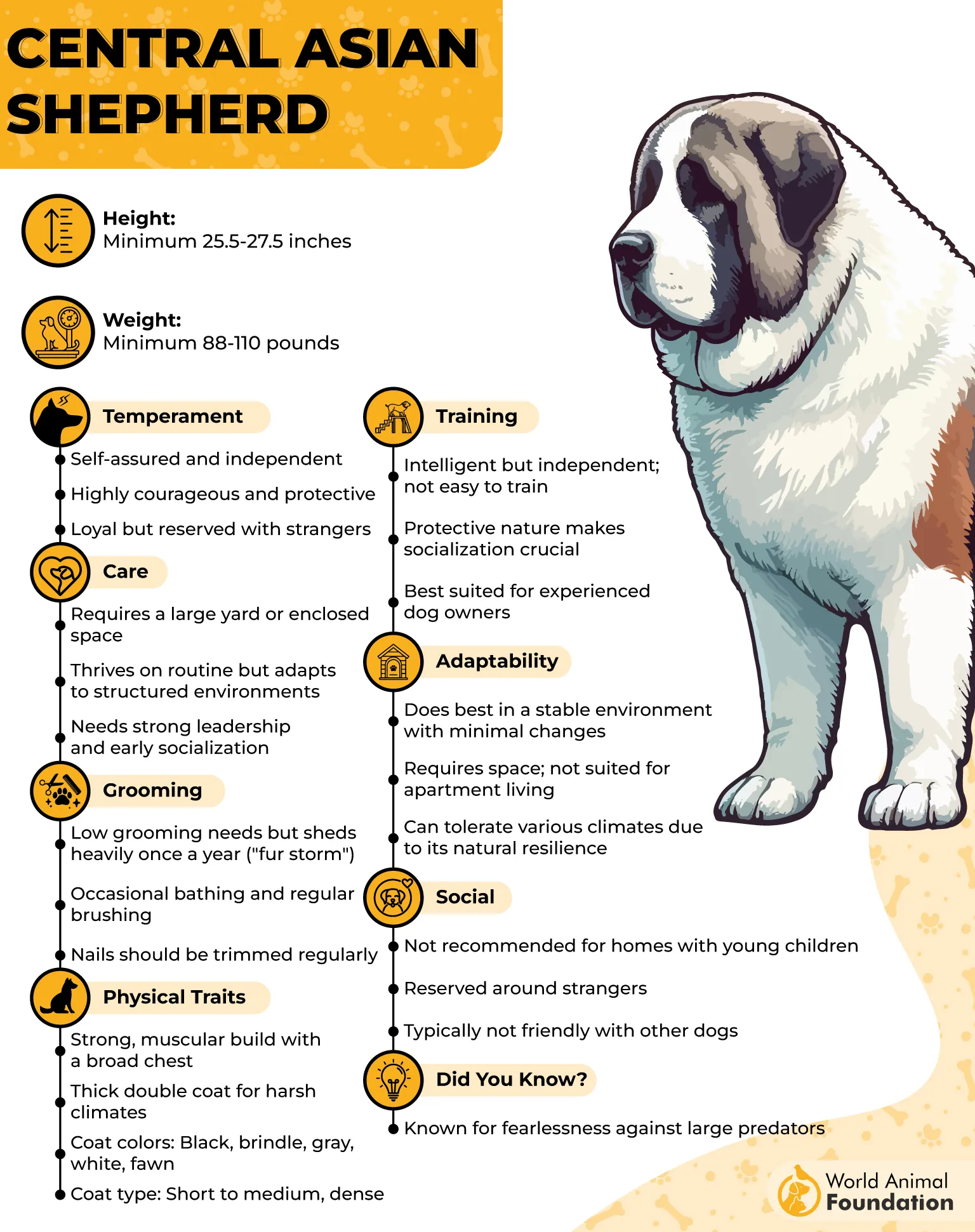
Their intelligence and independent nature can make training challenging, so they are best suited to experienced dog owners who can provide consistent, positive guidance from an early age.
Care and Exercise
These large dogs do best in homes with plenty of secure outdoor space and enjoy daily walks, hikes, and backyard play. Their coat is relatively low-maintenance for most of the year, though they shed heavily during seasonal coat changes.
Regular brushing, nail trimming, ear checks, and dental care help keep them healthy. Because they can become bored when left alone for long periods, they thrive in an active lifestyle where they can stay engaged and close to their family.
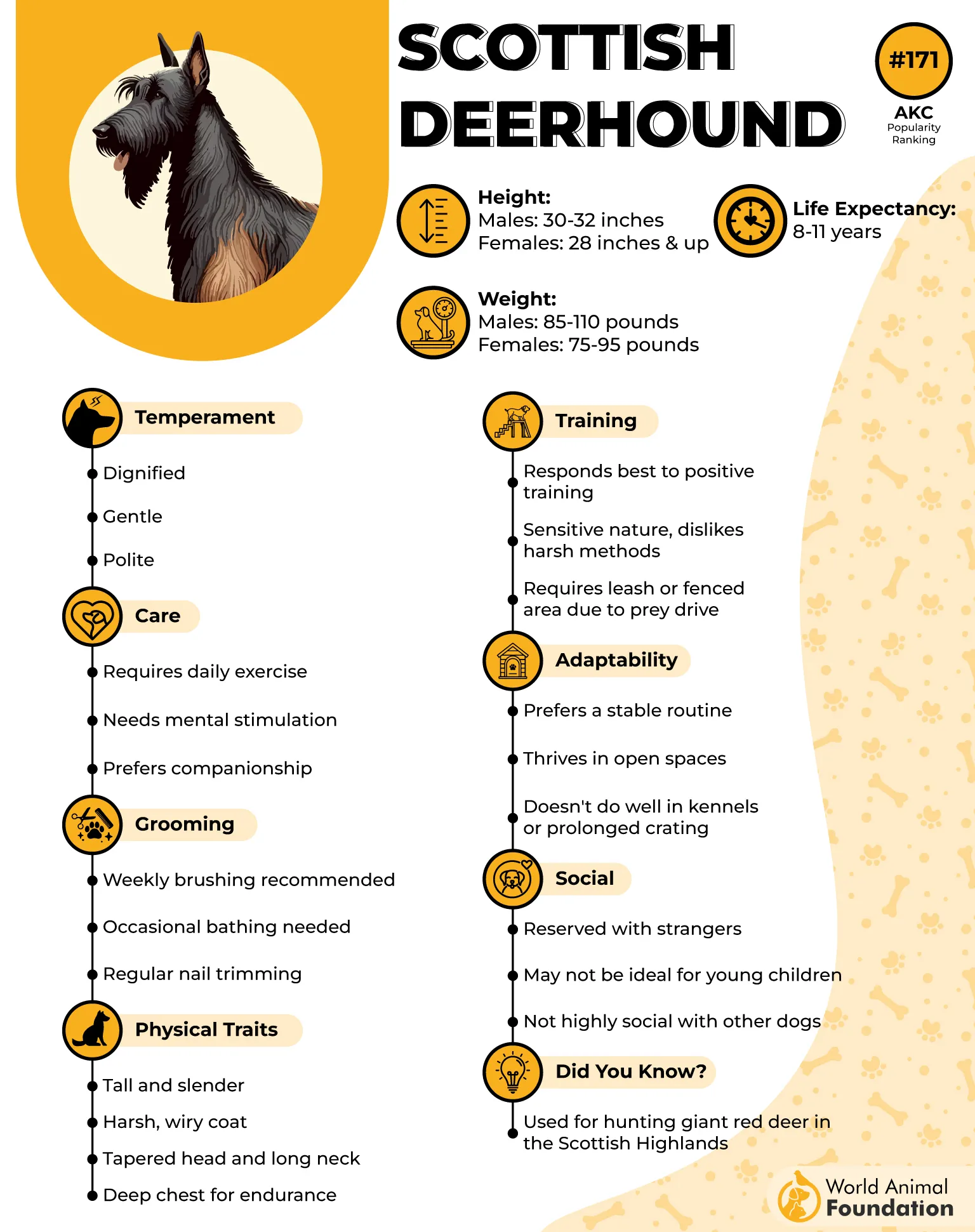
2. Scottish Deerhound
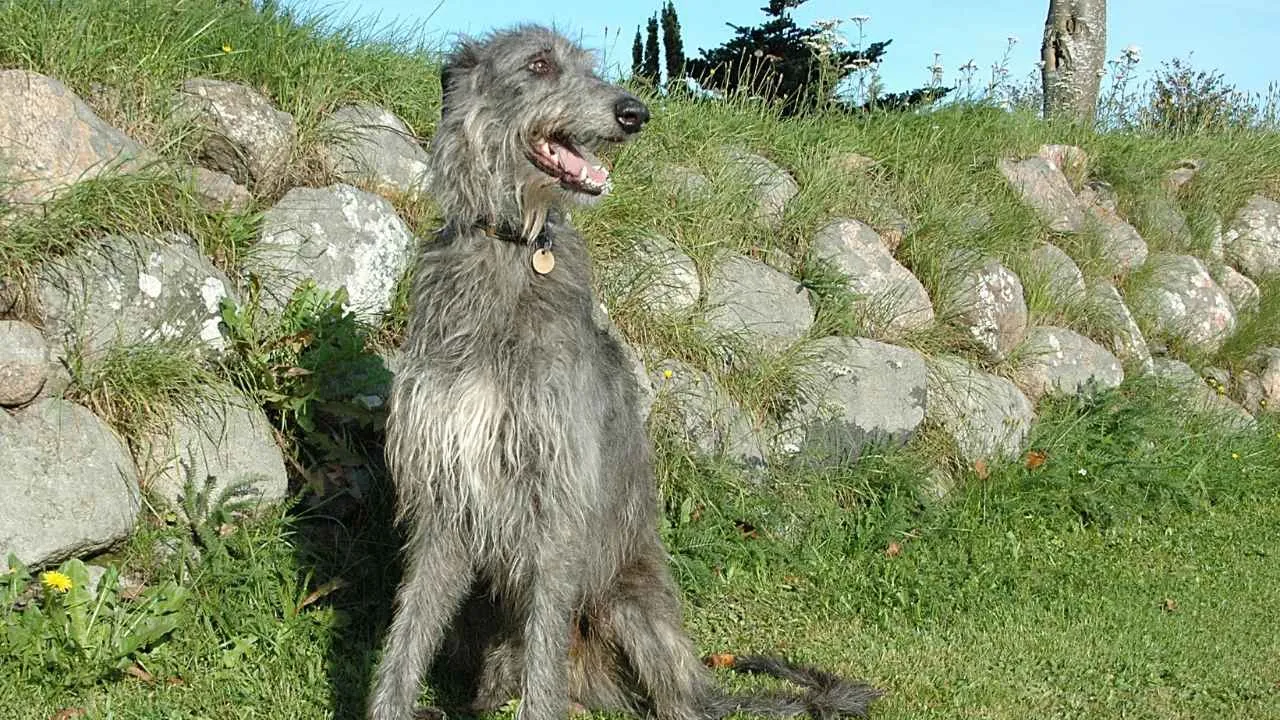
Often called the “Royal Dog of Scotland,” Scottish Deerhounds are one of the most overlooked giant dog breeds.
Originally bred to hunt red deer across the Scottish Highlands, these elegant hounds combine impressive size with a gentle and friendly nature. Their wiry coat, long neck, and graceful build give them a noble appearance that is hard to miss.
Temperament and Personality
Scottish Deerhounds are calm, affectionate, and easygoing companions. While they enjoy relaxing at home and are famous for their love of long naps, they also have a strong prey drive and may chase small animals outdoors.
They are intelligent but independent, so training requires patience, variety, and positive reinforcement. Early socialization helps them develop good relationships with people, children, and other pets.
Care and Exercise
Despite their laid-back nature, Scottish Deerhounds need at least 30 minutes of exercise twice a day to stay happy and healthy, according to PetMD. They enjoy running, long walks, lure coursing, and other active pursuits.
Puppies need room to play and should not be left alone or confined for long periods. Their coarse coat is relatively easy to maintain with weekly brushing and occasional baths, while regular nail, ear, and dental care help keep them in good condition.
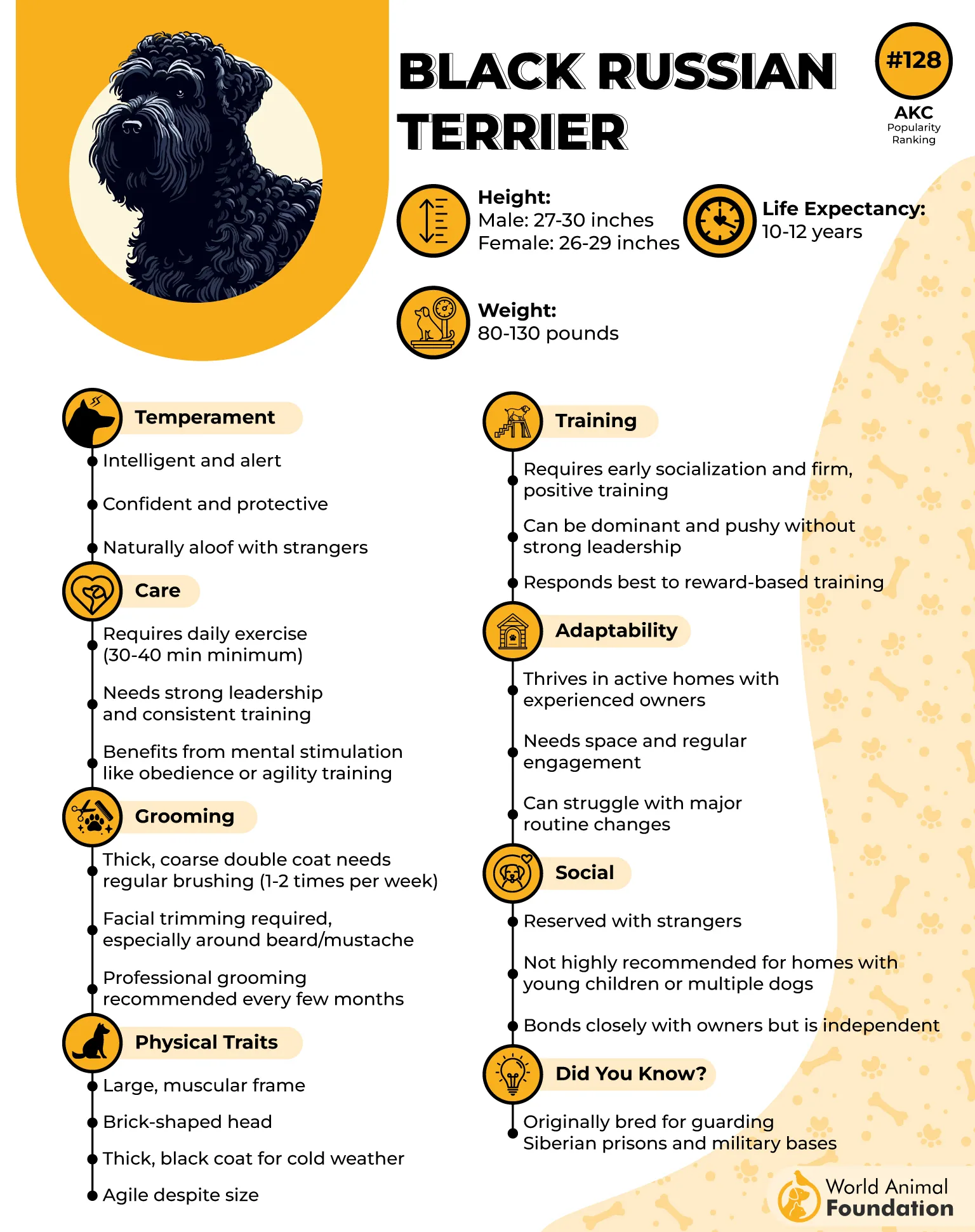
3. Black Russian Terrier
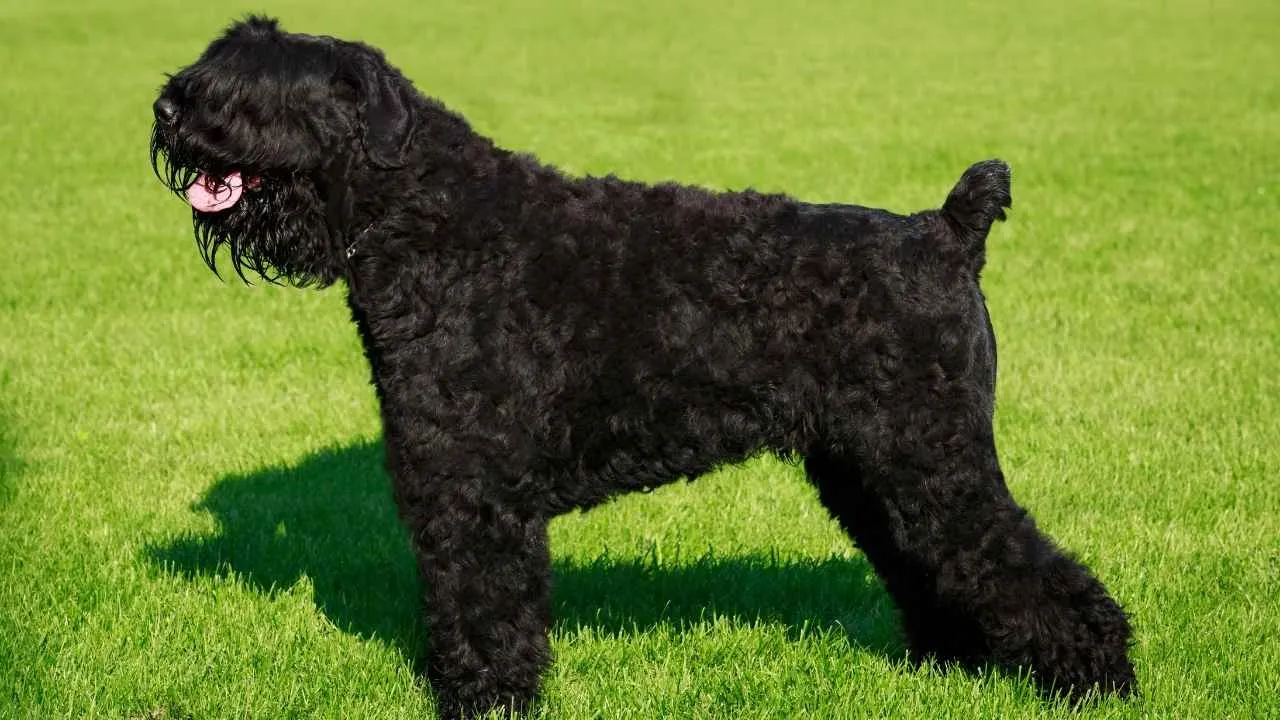
Black Russian Terriers are powerful working dogs that were originally developed in Russia as versatile guardians. Despite their name, they are not true terriers but members of the working group.
Known for their intelligence, confidence, and imposing presence, these big dogs were bred to protect and work in some of the harshest environments. Their dense black coat and strong build make them one of the most distinctive giant breeds.
Temperament and Personality
Black Russian Terriers are calm, loyal, and deeply devoted to their families. While affectionate with their loved ones, they can be reserved around strangers and need early, lifelong socialization to become well-adjusted adults.
They are highly intelligent and learn quickly, but their strong-willed nature means they need experienced owners who can provide firm, consistent, reward-based training. With proper introductions, they can live well with children, other dogs, and even cats.
Care and Exercise
These giant dogs need daily physical and mental activity to stay happy. Long walks, hikes, swimming, fetch, and training sessions are all excellent outlets for their energy. Without enough exercise or family interaction, they can become bored and develop unwanted behaviors.
Their thick double coat requires occasional brushing once or twice a week to prevent mats, along with regular trimming around the beard, face, and paws. Routine nail care and grooming help keep them looking and feeling their best.
4. Rafeiro do Alentejo
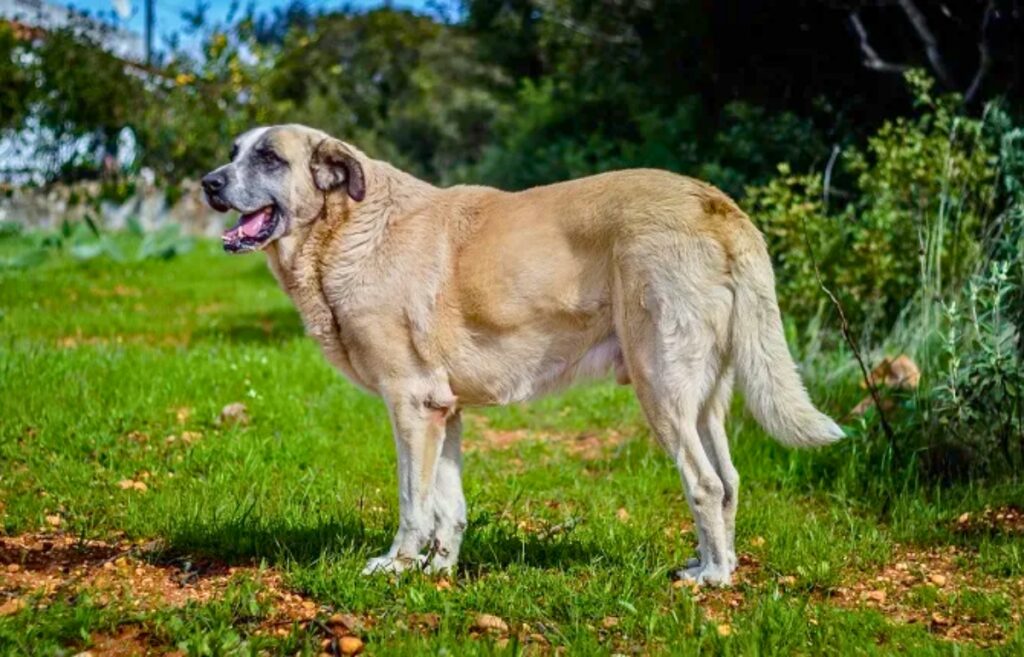
The Rafeiros do Alentejo are rare giant guard dogs from Portugal that have spent centuries protecting livestock, farms, and estates.
Often called Portuguese Mastiffs, these powerful dogs are known for their calm presence, confidence, and watchful instincts. Though imposing in appearance, they are loyal companions that form strong bonds with their families.
Temperament and Personality
Rafeiros do Alentejo are intelligent, independent, and naturally protective. They tend to be reserved around strangers but are affectionate with the people they trust. Their strong guardian instincts make early socialization and consistent training essential.
Properly raised dogs can live peacefully with children and other pets, especially when they grow up together. They are also known to be more active and alert during the night, a trait that comes from their history as livestock guardians.
Care and Exercise
These giant dogs do best in homes with plenty of secure outdoor space. Daily walks, hiking, games, and training activities help keep them physically and mentally stimulated.
Because of their guarding instincts, outdoor exercise should take place on a leash or within a fenced area. Their short, dense coat is easy to maintain with weekly brushing and occasional baths. Regular nail trimming, ear checks, and dental care are also important parts of their grooming routine.
5. Spanish Mastiff
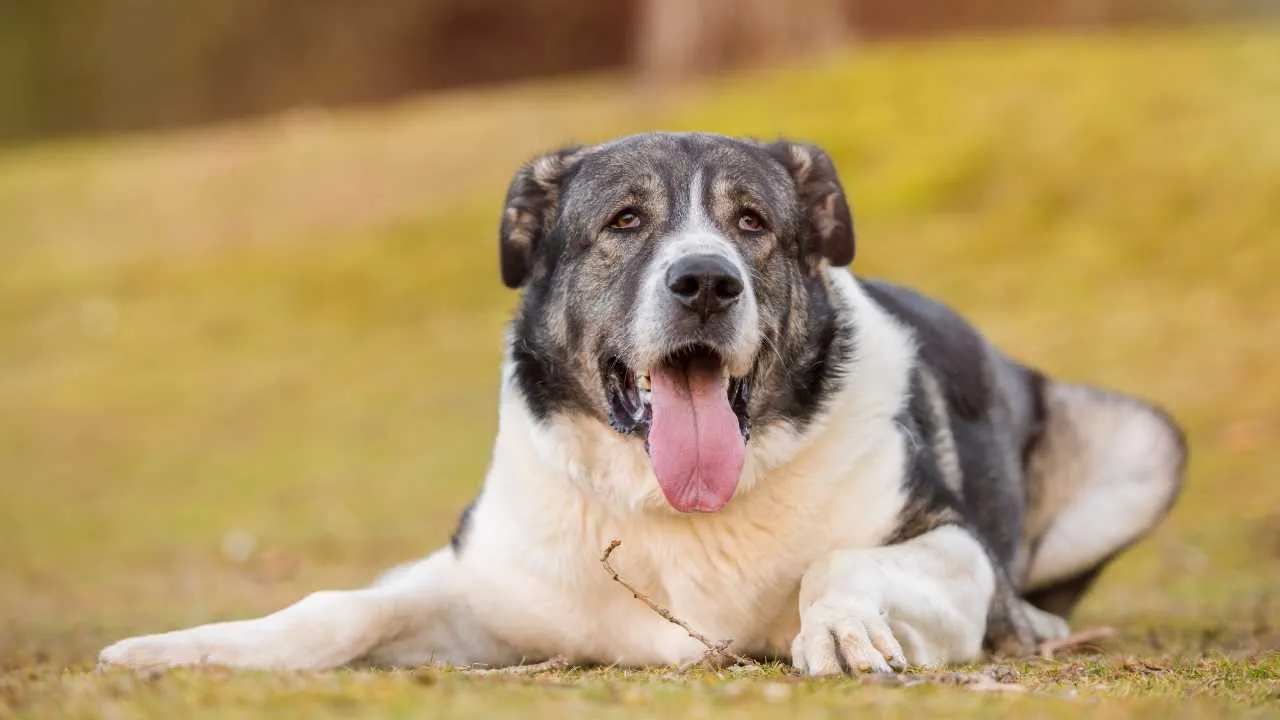
Spanish Mastiffs are one of the oldest and most powerful livestock guardian breeds in Europe. For more than 2,000 years, they have protected sheep, farms, and property from predators across Spain.
Despite their imposing size and deep, booming bark, these giant dogs are known for being calm, affectionate, and deeply loyal to their families.
Temperament and Personality
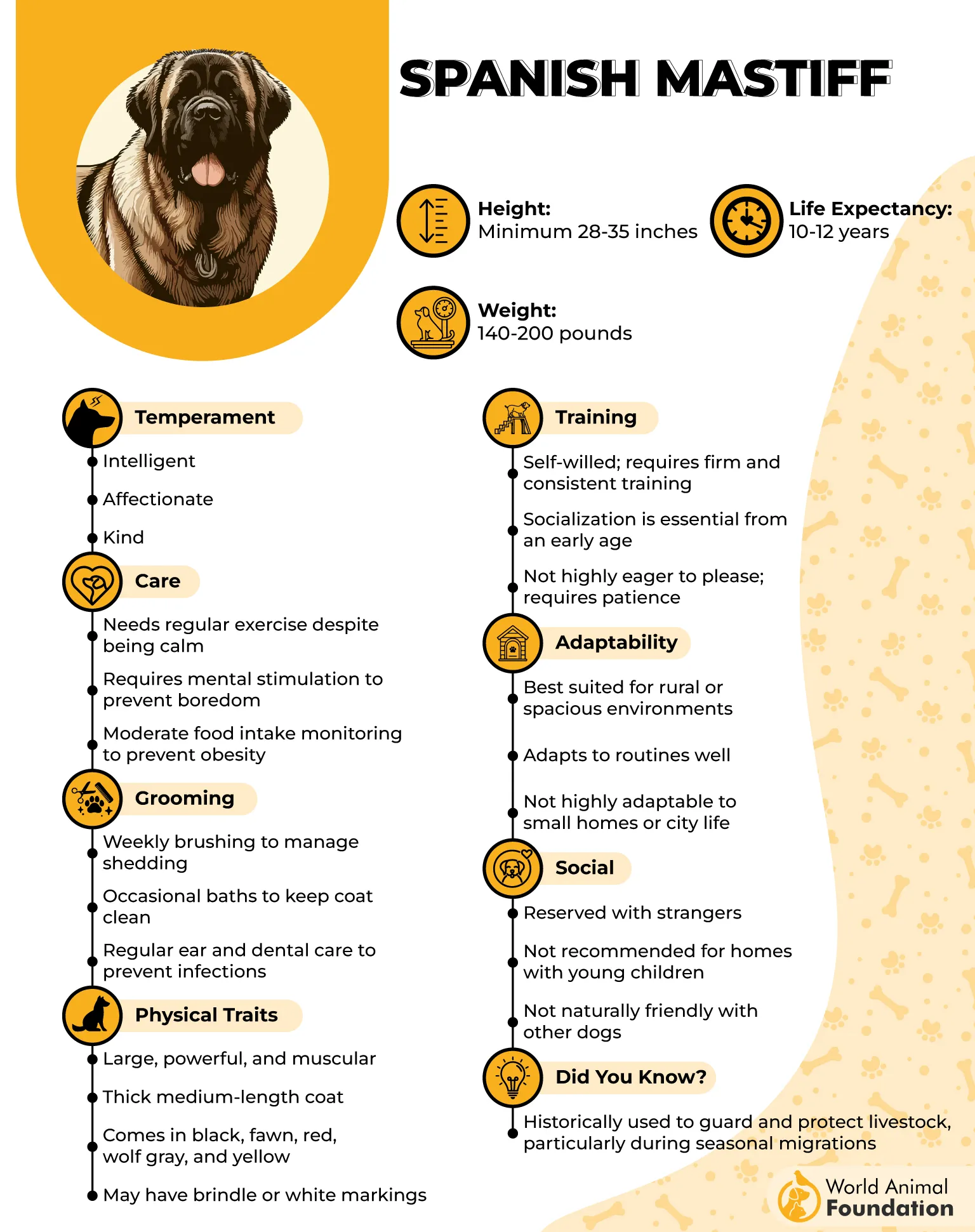
Spanish Mastiffs are intelligent, confident, and naturally protective. They have a gentle temperament with family members, including children, but can be wary of strangers and unfamiliar situations. Early socialization and proper training are essential to help them grow into well-mannered adults.
Their independent nature can make training challenging, so they are often better suited to experienced dog owners. With proper introductions, they can also live peacefully with other dogs and pets.
Care and Exercise
Although considered a low-energy breed, Spanish Mastiffs still need about an hour of daily exercise to stay healthy. Long walks, swimming, backyard play, and training activities are all good options. Their short, dense coat is easy to maintain with weekly brushing and occasional baths.
Regular nail trimming, ear checks, and dental care are also important. A secure outdoor space and consistent mental stimulation help these giant guardians stay happy and well-balanced.
6. Estrela Mountain Dog
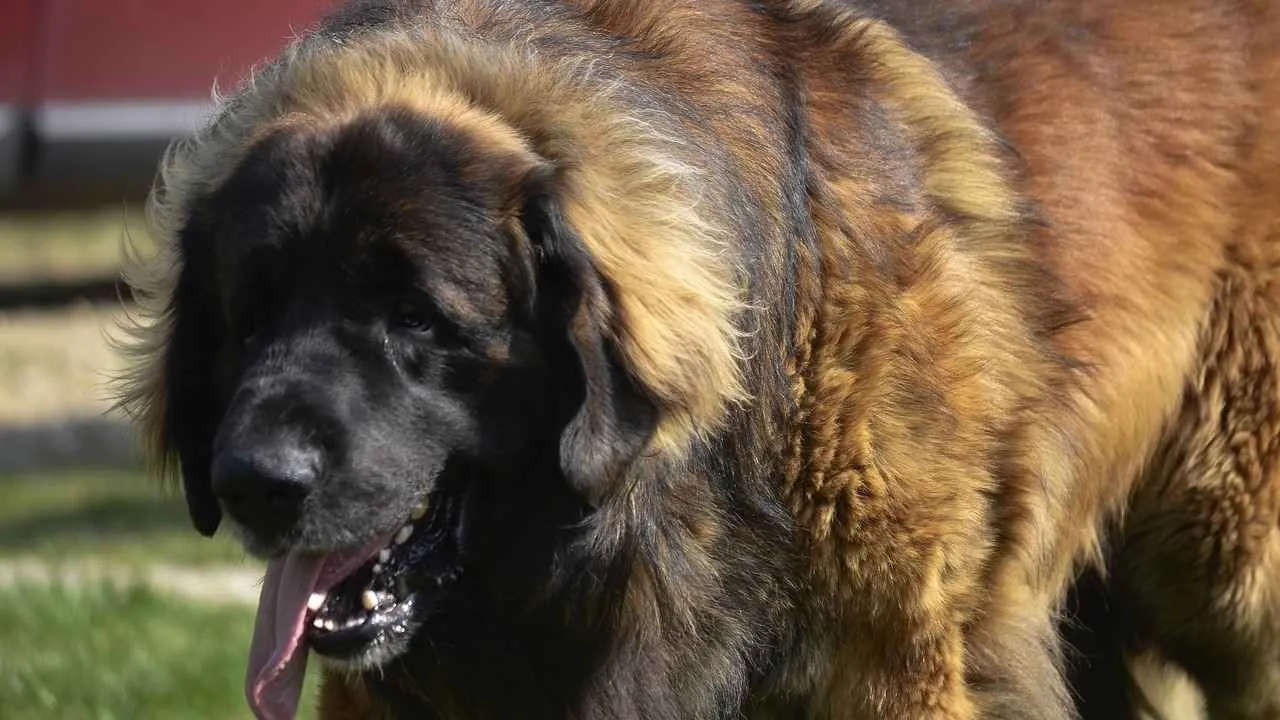
Estrela Mountain Dogs are one of Portugal’s oldest and rarest dog breeds. Originally bred in the rugged Estrela Mountains to guard livestock from wolves and thieves, these powerful dogs are known for their loyalty, intelligence, and strong protective instincts.
While they remain excellent guardians, they are also devoted family companions that form deep bonds with their owners.
Temperament and Personality
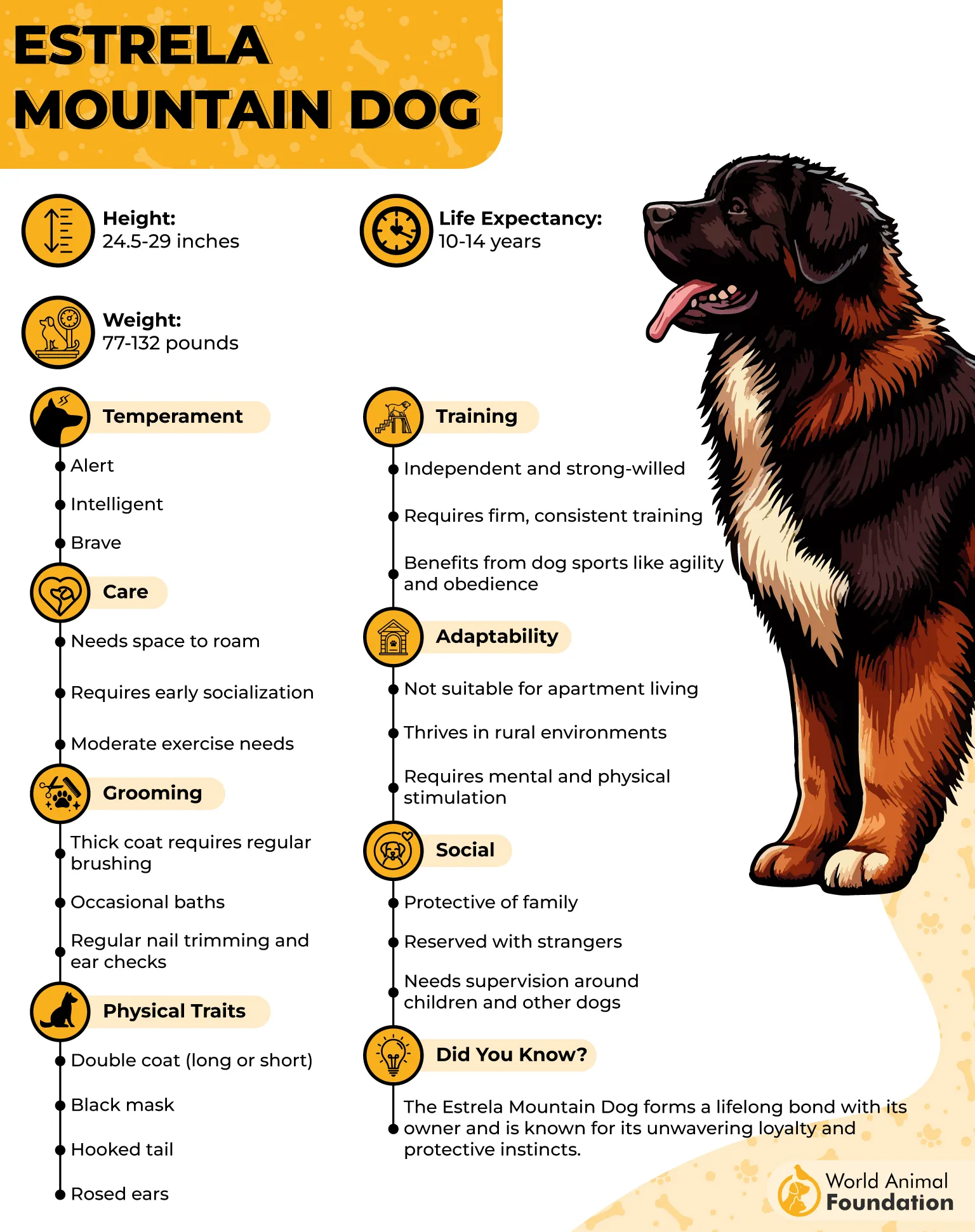
Estrela Mountain Dogs are calm, confident, and naturally protective. Purina mentions that they are affectionate with their families and get on well with children. However, they can be reserved around strangers and are always alert to potential threats.
As independent thinkers with a long history of working on their own, they need proper socialization and early training. With proper guidance, they grow into loyal, dependable, and well-mannered companions.
Care and Exercise
These giant dogs need regular exercise to stay physically and mentally healthy. Long walks, hiking, backyard play, and obedience training are all great activities for them. They do best in homes with secure outdoor space where they can move around comfortably.
Their thick double coat requires regular brushing, especially during seasonal shedding periods. Routine nail trimming, ear cleaning, and dental care are also important to keep them in top condition.
7. Pyrenean Mastiff
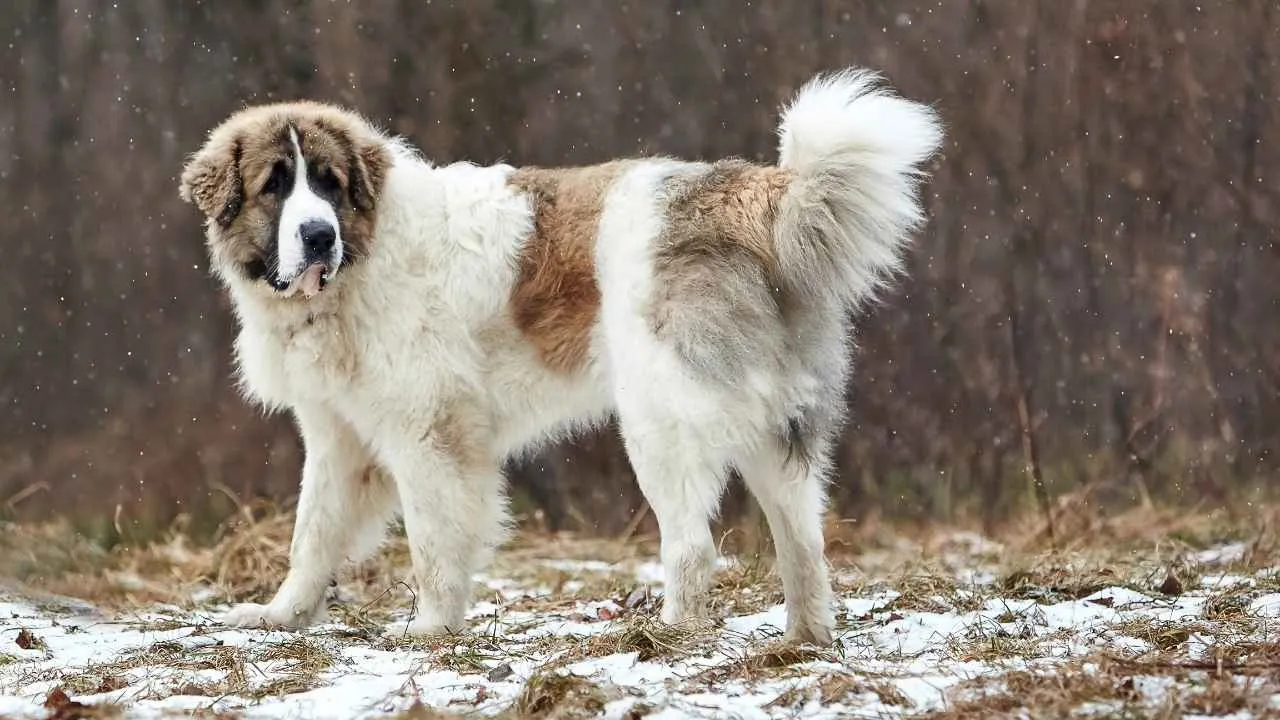
The Pyrenean Mastiffs are a rare giant breed from the Pyrenees Mountains of Spain, where they spent centuries guarding livestock from wolves, bears, and thieves.
Though still excellent guardians today, these affectionate giants are also valued as loyal family companions. Their calm demeanor, intelligence, and protective instincts make them one of the most underrated giant dog breeds to consider.
Temperament and Personality
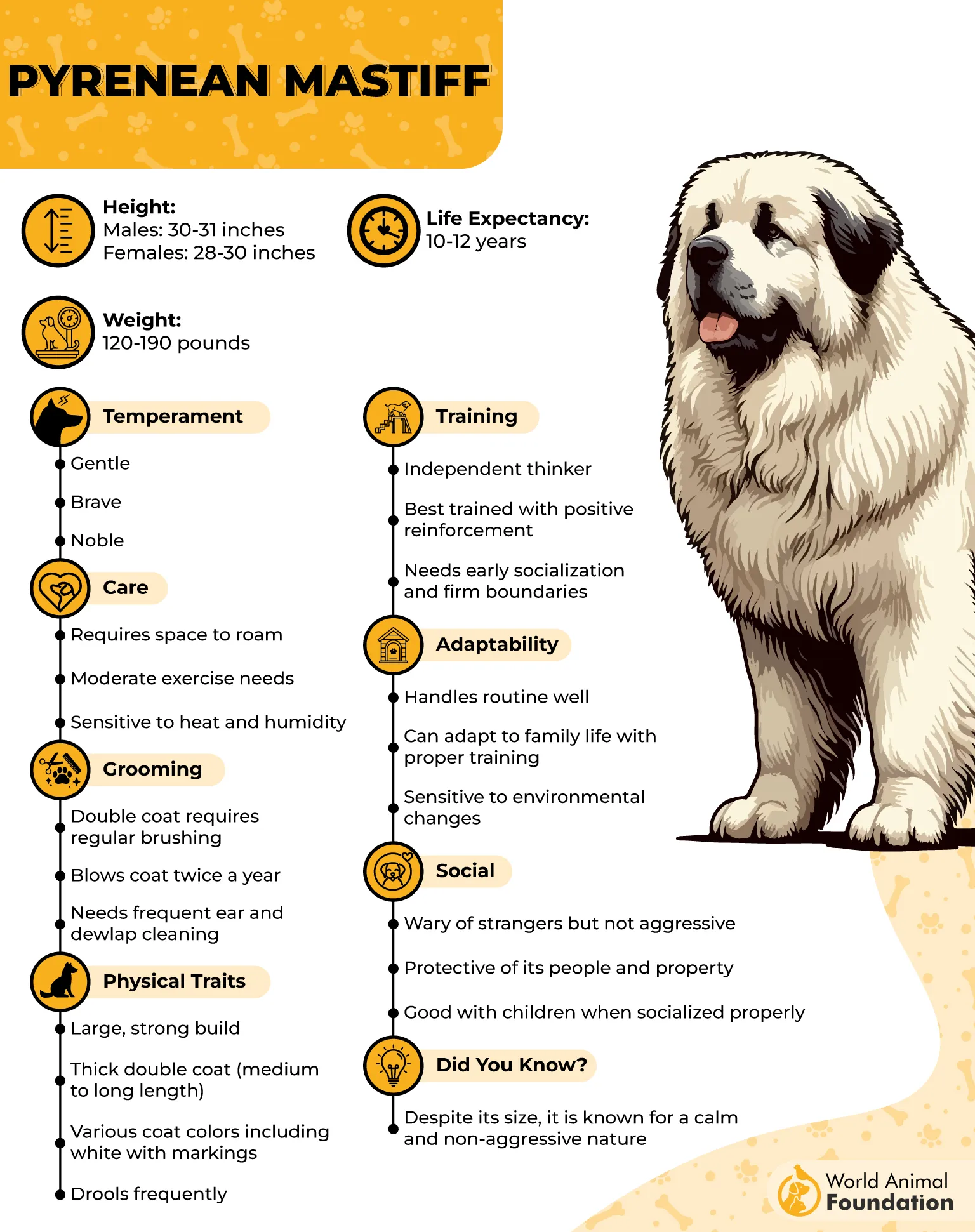
Pyrenean Mastiffs are friendly, affectionate, and exceptionally gentle with their families. According to Omlet, they are known for being patient with children and generally get along well with other pets in the home, thanks to their naturally low prey drive.
While calm and easygoing most of the time, they remain confident guardians who will alert their owners when something seems out of place. They are independent thinkers, so early socialization and positive reinforcement training are important to help them become well-mannered adults.
Care and Exercise
These giant dogs are relatively low-energy and are usually happy relaxing at home with their families. However, they still need regular walks, hikes, play sessions, and mental stimulation to stay healthy.
Their medium-length double coat requires weekly brushing, with extra, regular grooming during seasonal shedding periods. Regular nail trimming, ear cleaning, and dental care are also important. While they enjoy having a job to do, what they love most is spending time with the people they care about.
8. Caucasian Shepherd Dog
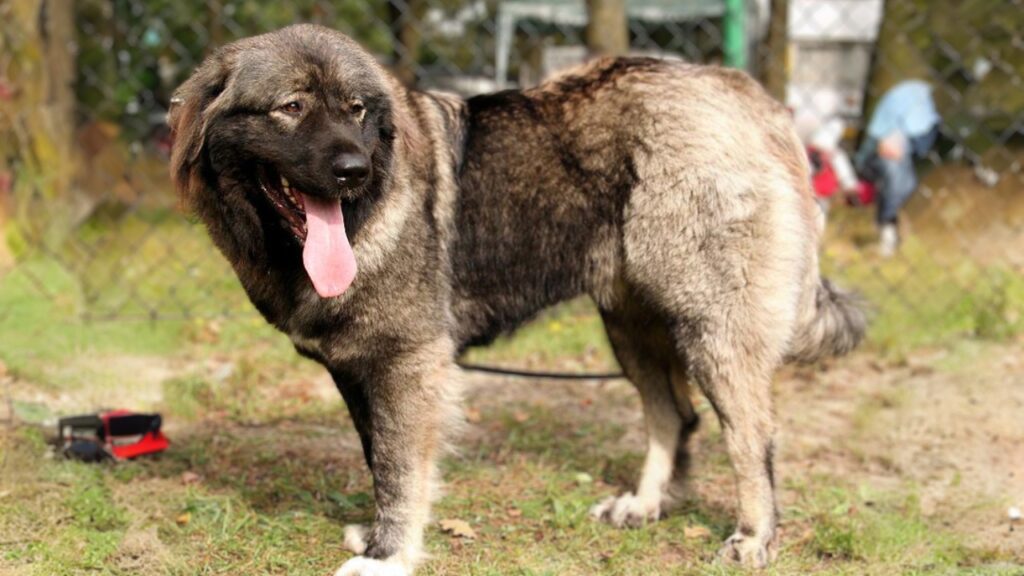
The Caucasian Shepherd Dogs are ancient guardian dogs that originated in the rugged Caucasus Mountains between Europe and Asia. For centuries, they protected livestock and property from predators such as wolves and bears.
Today, they remain one of the most powerful and protective giant dog breeds, valued for their loyalty, courage, and devotion to their families.
Temperament and Personality
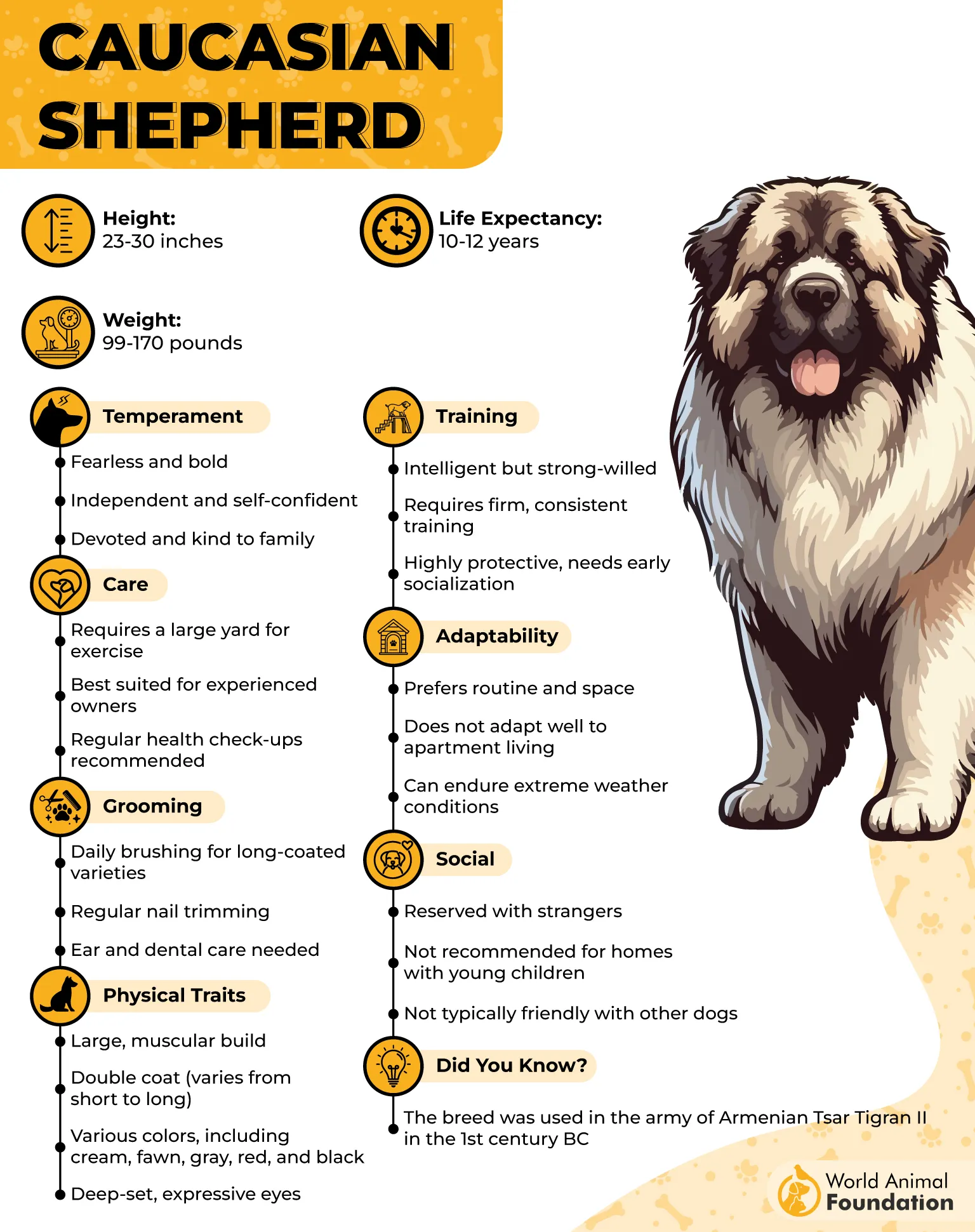
Caucasian Shepherd Dogs are fearless, confident, and highly independent. While they are deeply affectionate with their families, including children and household pets, they are naturally suspicious of strangers and take their guarding duties seriously.
Their strong protective instincts mean they need experienced owners who can provide early socialization and consistent training. Intelligent but strong-willed, these dogs prefer thinking for themselves and are not always eager to obey commands simply to please their owners.
Care and Exercise
These giant dogs do best in homes with plenty of secure outdoor space and enjoy daily walks, hiking, and moderate exercise. Although relatively calm indoors, they need regular physical activity and mental stimulation to stay balanced.
Grooming needs depend on coat type, with longer-coated dogs requiring more frequent brushing. Regular nail trimming, ear cleaning, and dental care are also important.
Because of their size, strength, and guardian instincts, Caucasian Shepherd Dogs are generally best suited to experienced dog owners rather than first-time pet parents
9. Greater Swiss Mountain Dog
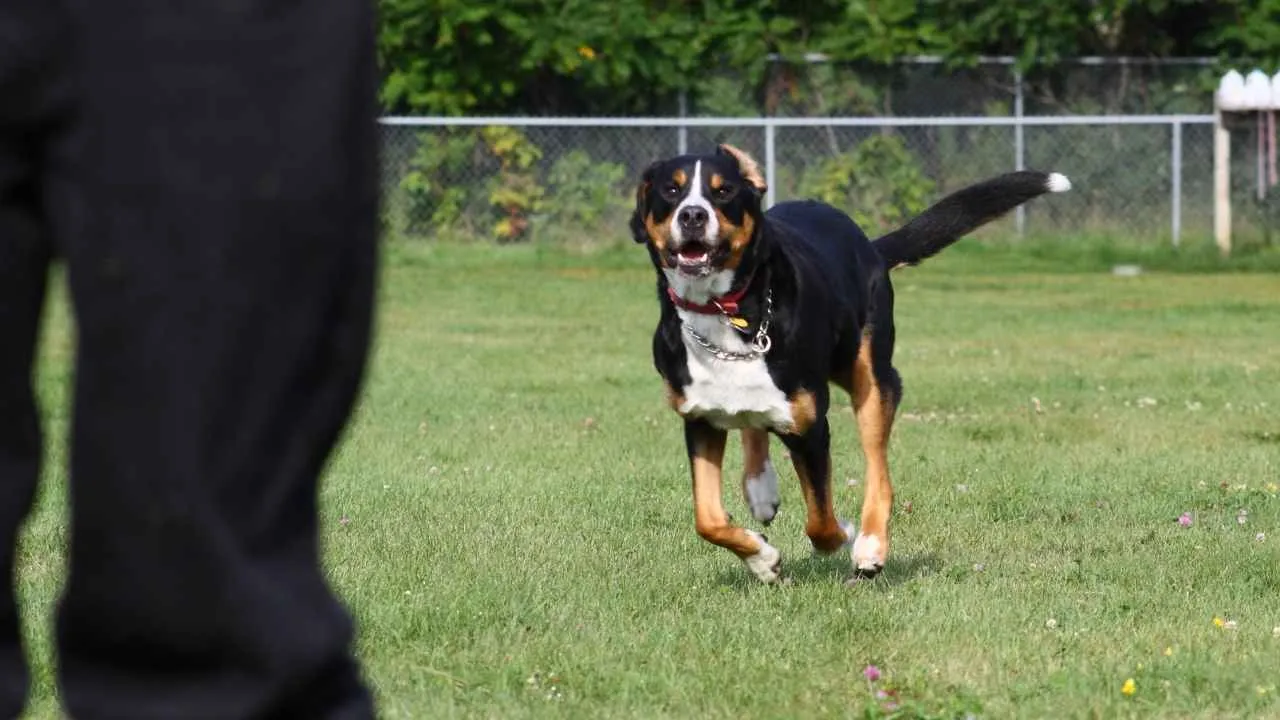
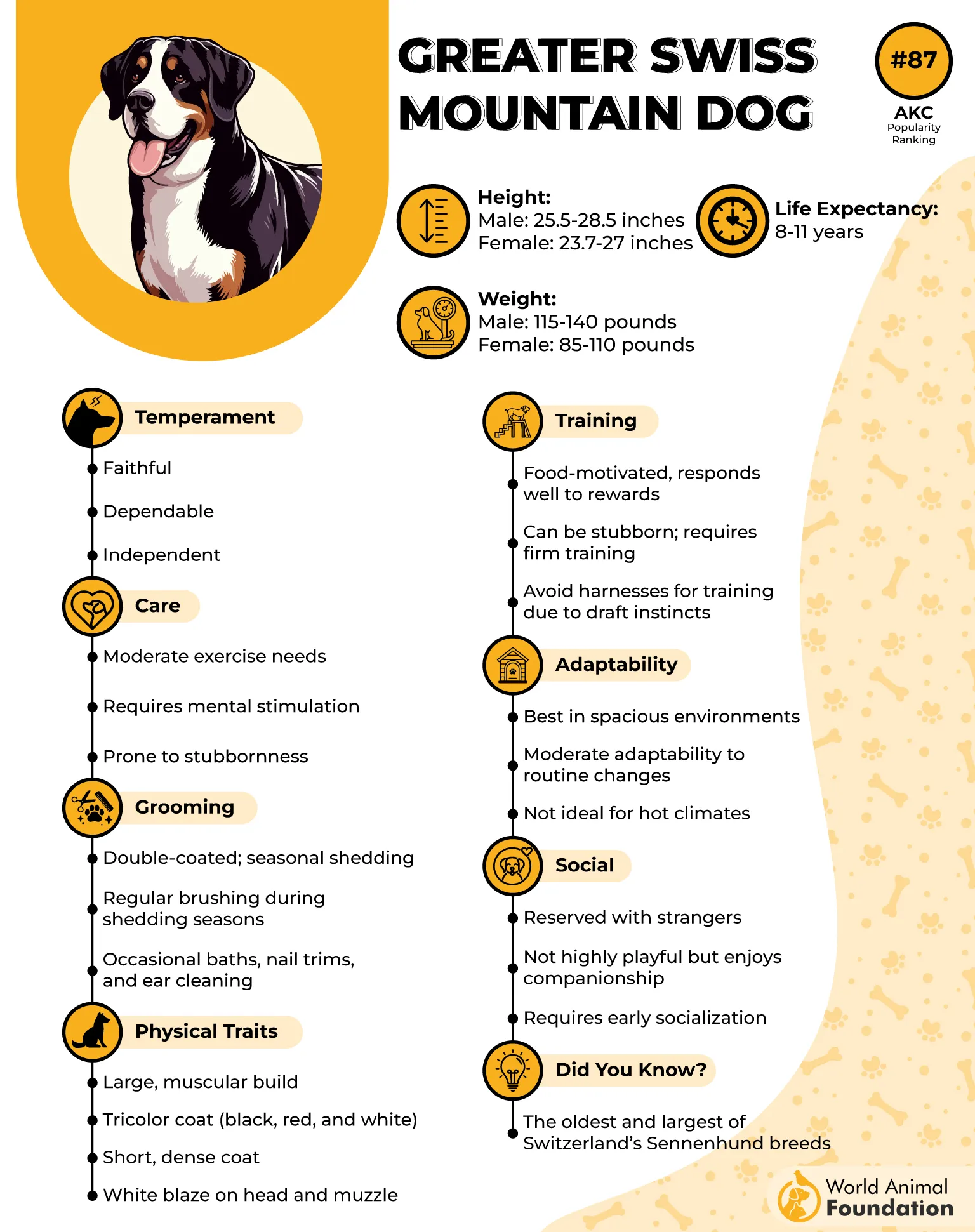
Greater Swiss Mountain Dogs, often called Swissies, are powerful working dogs that once helped Swiss farmers herd livestock, pull carts, and guard property.
Though not as well-known as some other mountain breeds, they are prized for their strength, loyalty, and gentle nature. Their striking tricolor coat and cheerful personality make them stand out among giant dog breeds.
Temperament and Personality
Greater Swiss Mountain Dogs are friendly, dependable, and devoted to their families. They are especially known for being gentle with children and enjoy being involved in everyday family activities.
While generally welcoming toward people, they are naturally alert and will bark if something seems unusual. Swissies are intelligent and eager to learn, but they can also be stubborn, so early socialization and consistent positive-reinforcement training are important.
Care and Exercise
These giant dogs have moderate exercise needs and are happiest when they can join their owners on walks, hikes, or outdoor adventures. They enjoy activities such as drafting, obedience training, and agility, but are not built for long-distance running.
Their short double coat is relatively easy to maintain, requiring weekly brushing and extra grooming during seasonal shedding periods. Regular nail trimming, ear cleaning, and dental care will help keep them healthy and comfortable.
Conclusion
While famous giant breeds often get all the attention, these lesser-known gentle giants prove there’s much more to discover in the canine world. From fearless livestock guardians to loyal family companions, each breed brings its own unique blend of size, intelligence, and devotion.
If you’re considering adding a giant dog to your family, take the time to research each breed carefully and choose one that matches your lifestyle.
The right giant breed won’t just be a pet—it will become a loyal protector, trusted companion, and unforgettable member of the family. After all, when it comes to these gentle giants, their biggest trait isn’t their size—it’s their heart.
Looking for more large breeds that make wonderful companions? You can also check out the Irish Wolfhound, Great Dane, Bernese Mountain Dog, English Mastiff, Saint Bernard, Great Pyrenees, and Tibetan Mastiff.
