




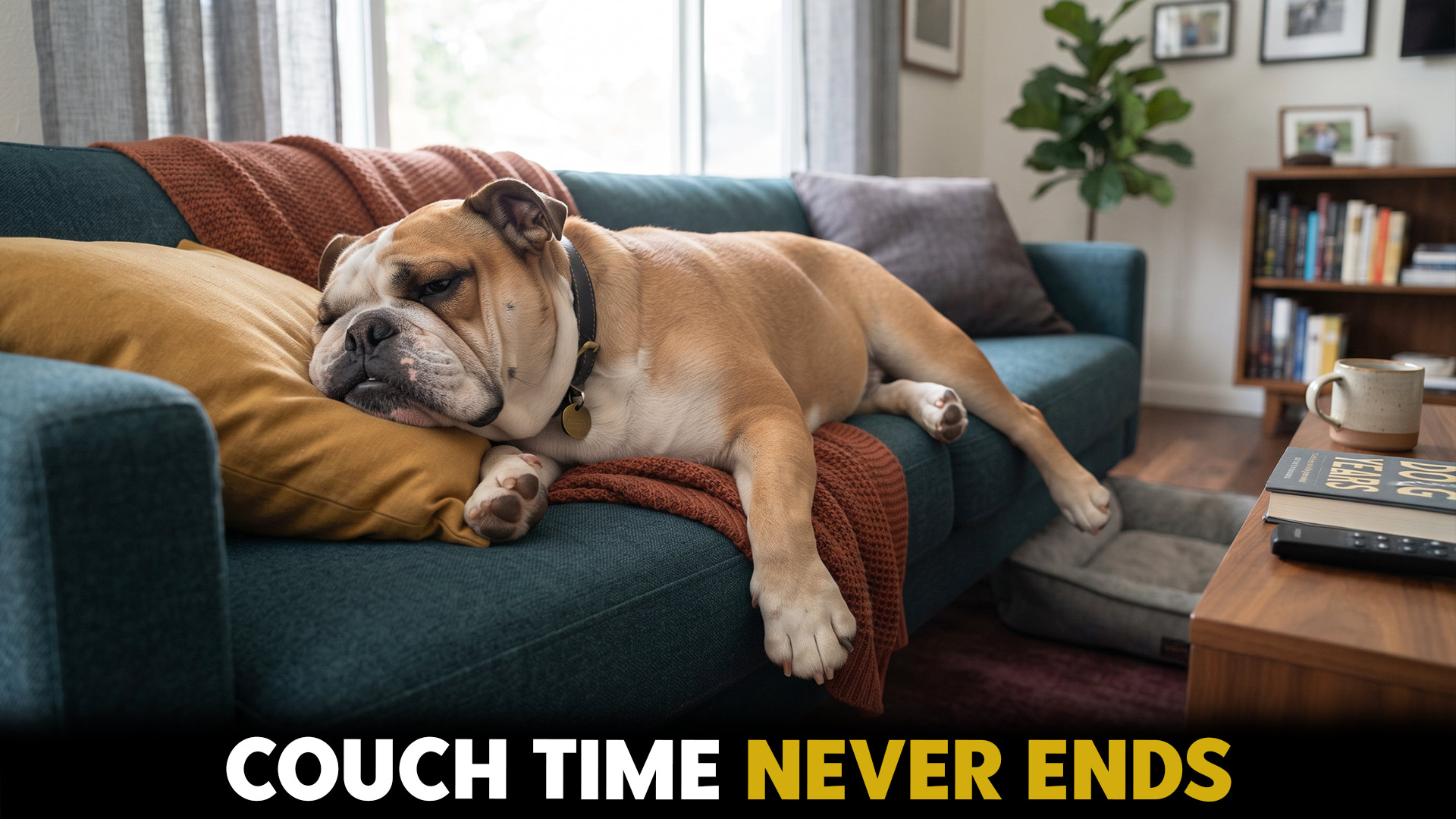
Want a dog that would rather claim the couch than conquer the neighborhood?
Some breeds are naturally more comfortable with shorter walks, long naps, and quiet time at home. That can make them appealing to apartment dwellers, homebodies, older adults, or anyone whose schedule does not leave hours for intense exercise every day. Still, a low-energy dog is not the same as a dog that needs no activity.
Daily movement, play, training, and a suitable diet remain important because extra weight can create health problems. The interesting part is how differently dogs reach that relaxed lifestyle. Some are naturally mellow, some tire quickly, and others simply prefer staying close to their favorite person once their basic needs are met.
By the end, you will know which laid-back types deserve a place on your shortlist and what makes each one comfortable with a slower pace.
Key Takeaways
Some dogs are happiest when the day is quiet, the walk is short, and their favorite spot on the couch is within reach.
The Basset Hound fits that routine surprisingly well, although one interesting scent can quickly turn a sleepy afternoon into a tracking mission.
Meanwhile, the Cavalier King Charles Spaniel can sleep for up to 18 hours a day and still have plenty of affection left for its favorite person.
The rest of this list brings more unexpected stories behind the breeds that truly enjoy taking life at an easier pace.
Lazy Dog Breeds That Excel At Being Couch Potatoes
1. Basset Hound
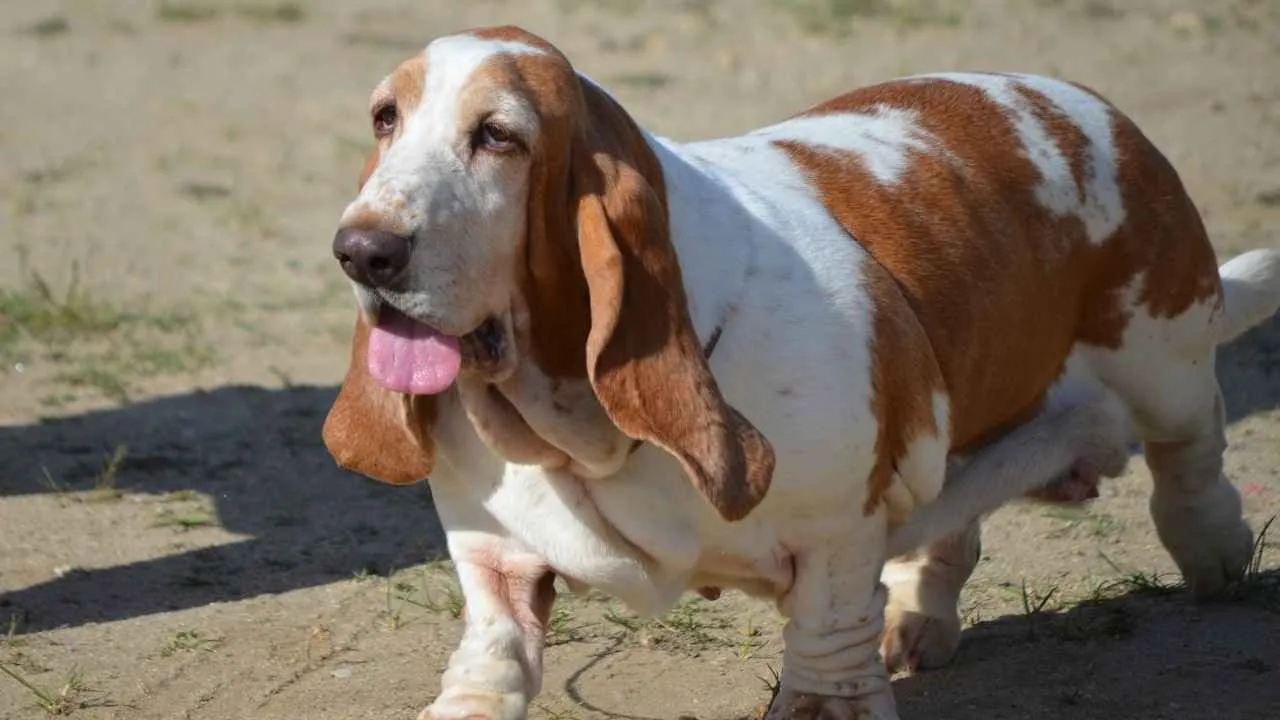
The Basset Hound was originally bred in France, where breeders developed it from a short-legged mutation of the St. Hubert Hound, the ancestor of today’s Bloodhound. According to Pawlicy Advisor, even its name reflects its low build, coming from the French word “basset,” meaning “dwarf” or “low.”
A Natural Lounger
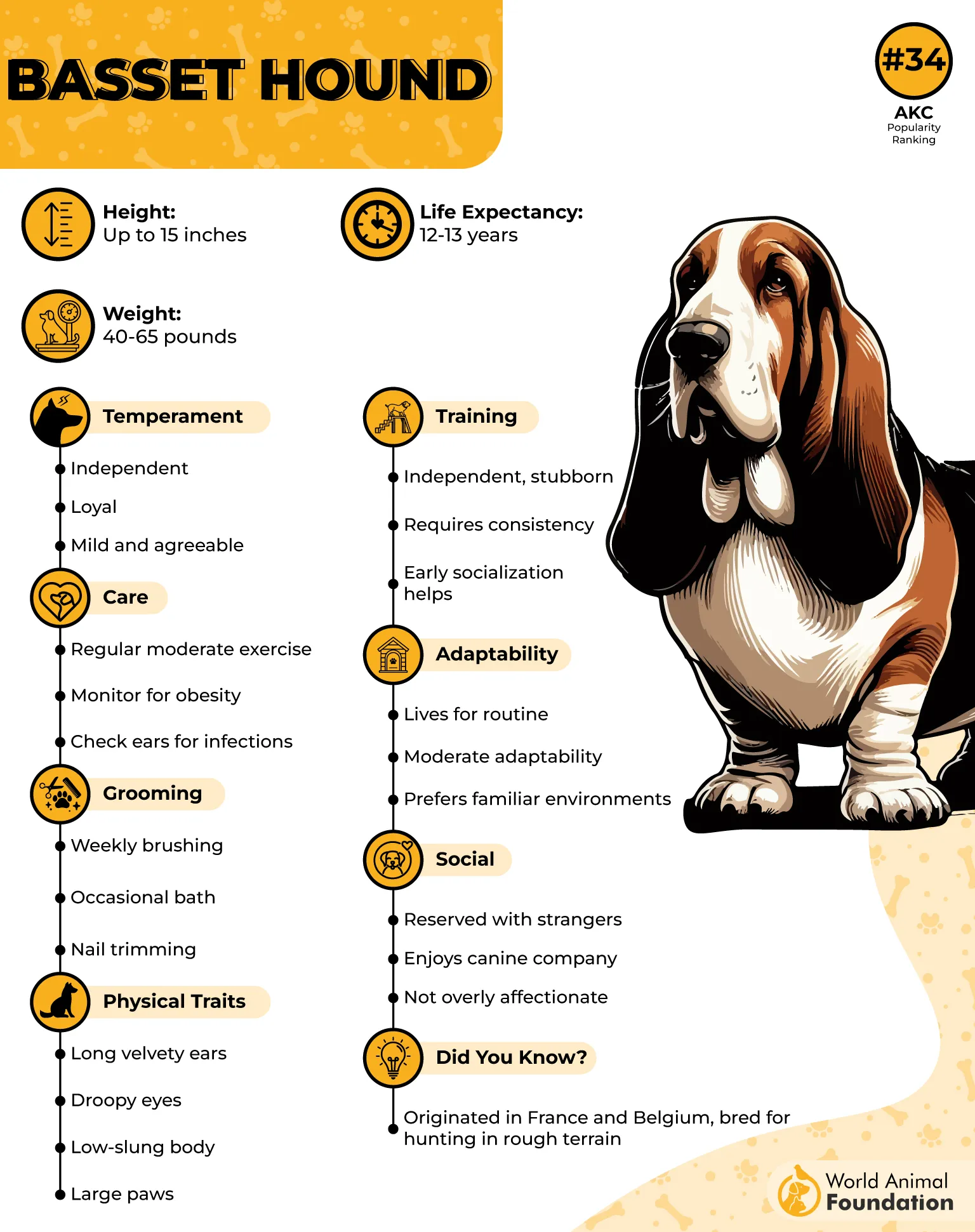
Basset Hounds can spend long stretches napping between their daily activities, making them a natural match for a relaxed household rhythm. Its routine can include a morning outing, a snuffle hunt, another nap, dinner, and an evening walk before more downtime.
The following low-key routine is more interesting:
Deep, mournful howls
Strong food motivation during training
Expressive, droopy facial features
Nose Leads the Way
Basset Hound was bred as a pack hound for tracking hare and rabbits through dense forests, so scent can completely capture its attention outdoors. Once an interesting trail reaches its nose, recall becomes much harder, while food rewards can help bring focus back during training.
2. Shih Tzu
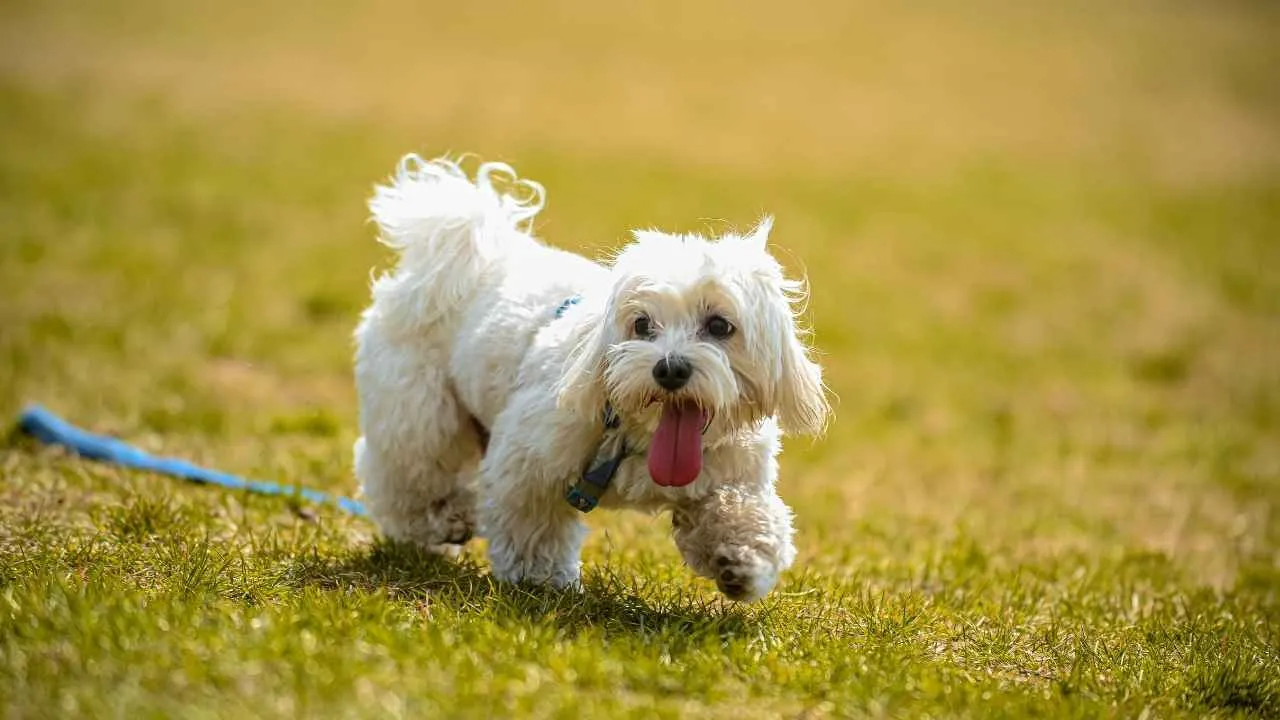
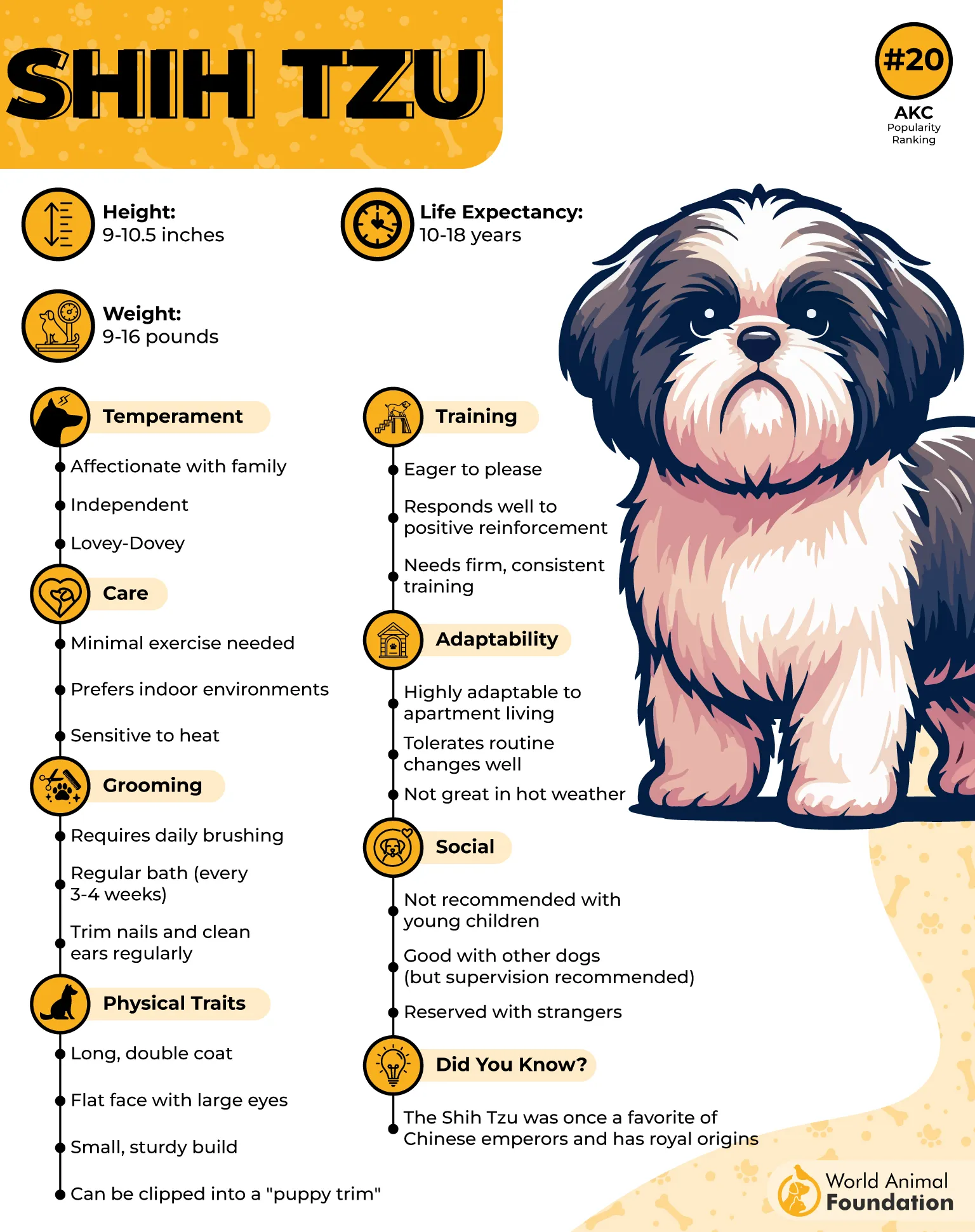
Shih Tzu, as we know the breed today, came from Tibet and later became a favored house pet among Chinese royalty during the Ming dynasty from 1368 to 1644. Their population later fell to just 14 dogs, seven males and seven females, and every Shih Tzu alive today descends from those dogs.
A Serious Sleeper
If there is one thing that proves the Shih Tzu can be a serious couch potato, it is how much time it spends sleeping. Adults may get around 12 hours a day, puppies about 14, while older dogs can sleep for up to 20 hours and happily fill the rest with quiet lounging.
Some daily life traits of this couch potato dog are listed here:
Lively during walks and play sessions
Enjoys gentle play with older children
Can live peacefully with other pets
Plenty of Personality
Shih Tzu has a lively side that comes out during park walks, play sessions, and time with older children who understand gentle handling. The adaptable nature of this canine companion also helps it get along with other pets when introductions are handled properly.
3. Bulldog

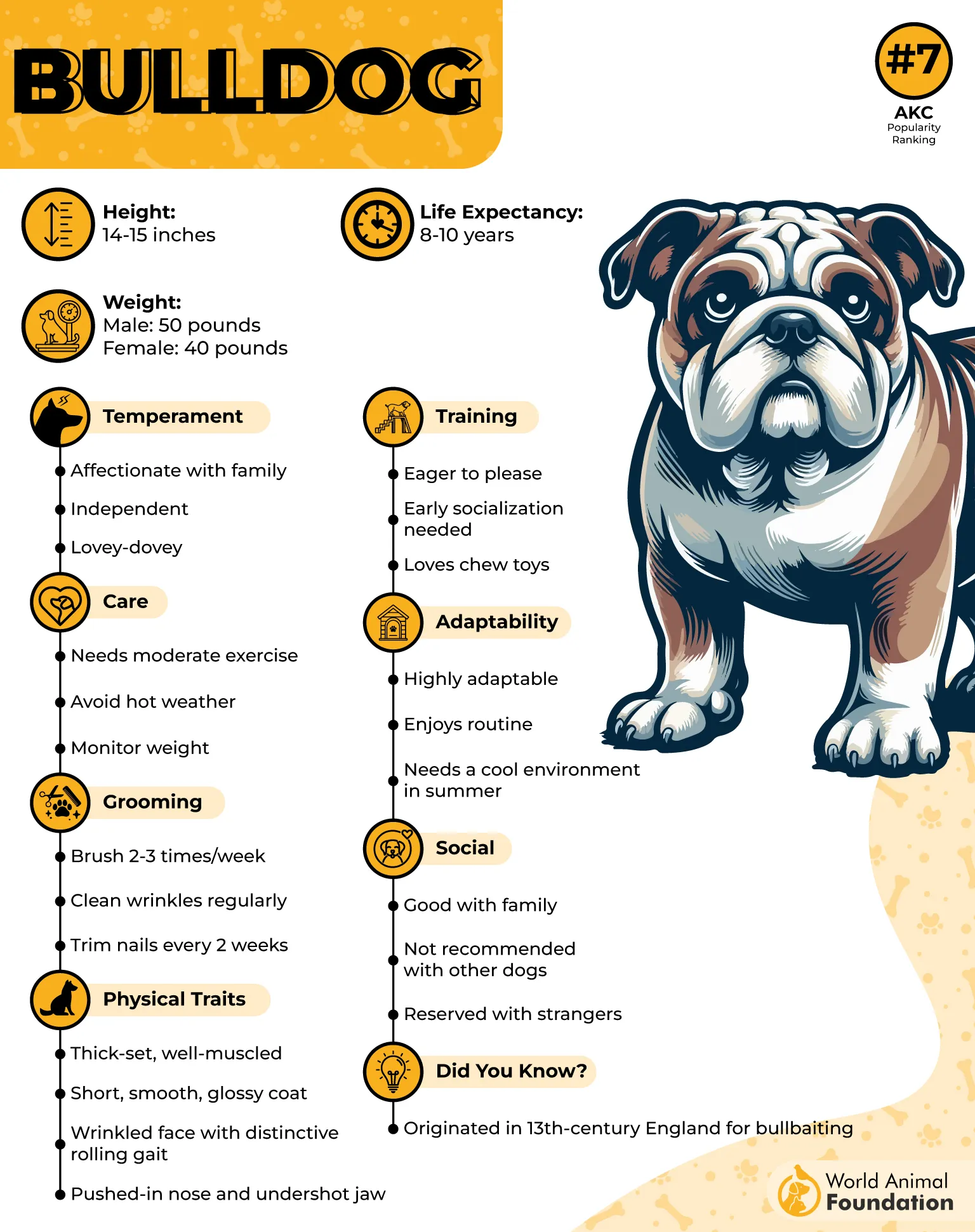
Bulldog began as a working dog used in bull-baiting and by butchers to control animals intended for slaughter, as stated by PetMD.
After generations of selective breeding, its role shifted toward that of a calmer household companion with a very different daily purpose.
Built for Quiet Days
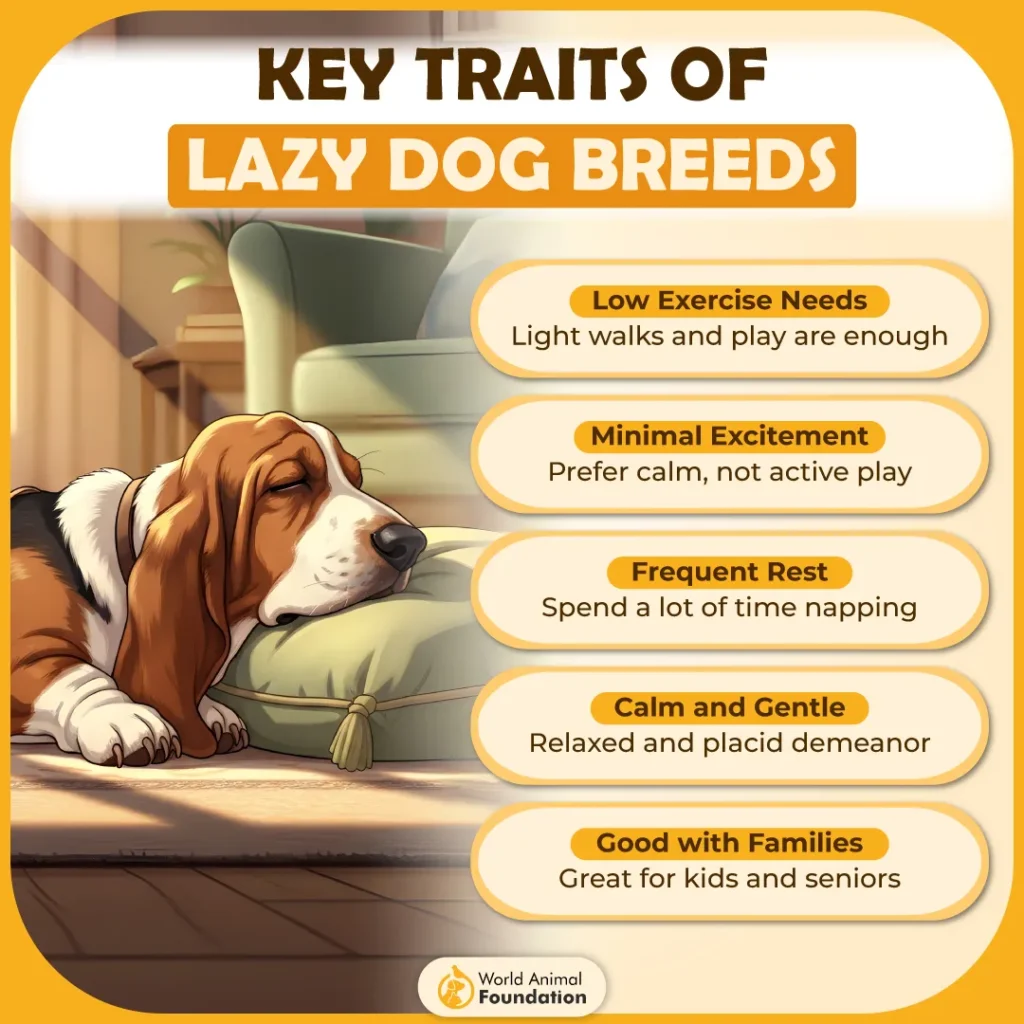
This big lazy dog fits a relaxed routine, with short play sessions, gentle indoor games, and brief training periods fitting its lower-energy lifestyle. A 10 to 15-minute walk can provide useful activity, while treat puzzles add something interesting without demanding intense exertion.
The following practical details make indoor life easier:
Use durable rubber toys for play
Keep fresh water available at all times
They may pant, snort, and snore often
Watch the Weather
Bulldog’s short muzzle makes hot and humid conditions especially concerning because breathing can become difficult and overheating can occur quickly. Warm afternoons are better suited to an air-conditioned room, with outdoor activity limited when temperatures climb.
4. Cavalier King Charles Spaniel

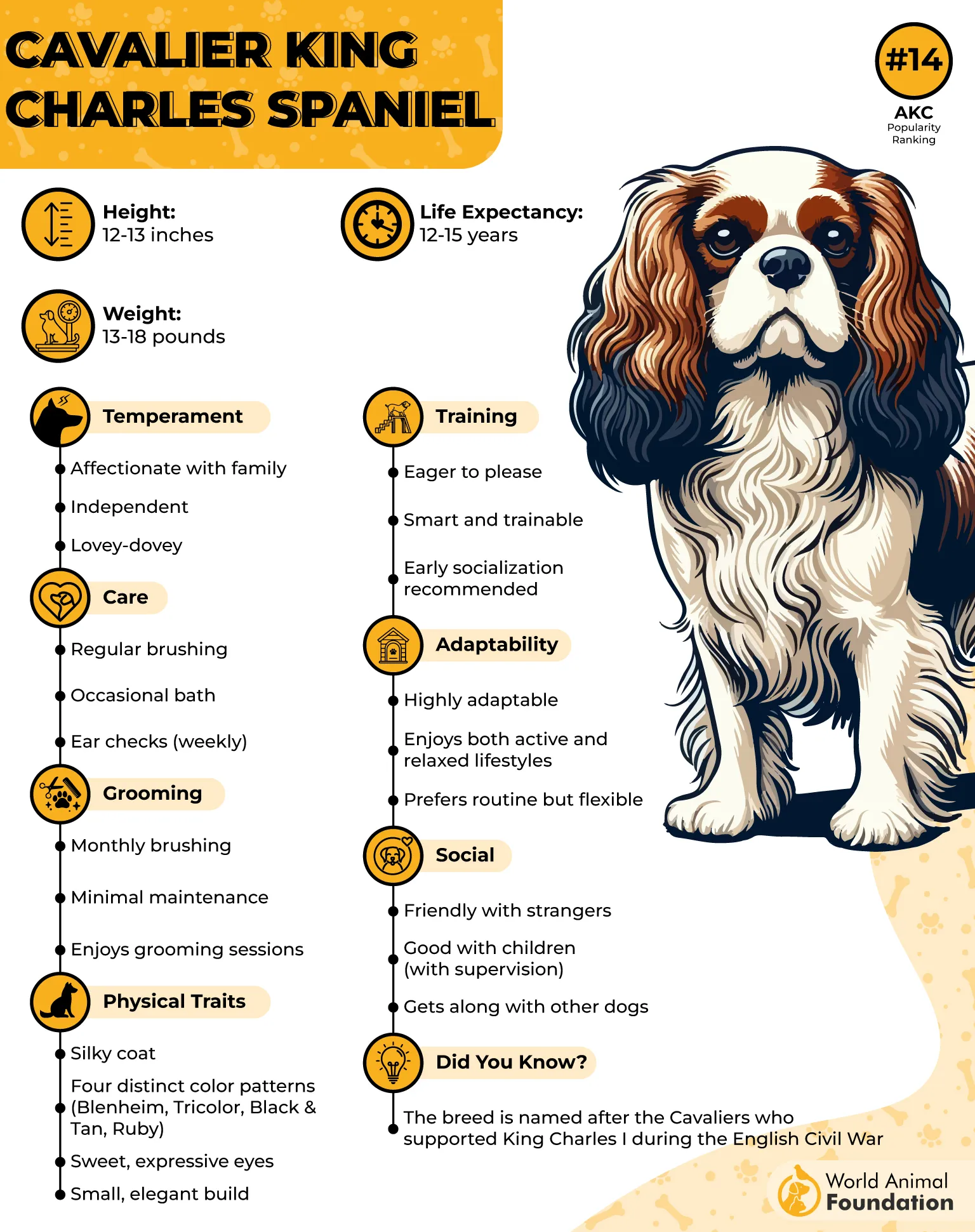
Cavalier King Charles Spaniel was bred as a companion for British royalty, with both King Charles I and King Charles II famously fond of these little dogs. Charles II even issued a decree allowing dogs in Parliament, while Cavaliers were also called “comforter” Spaniels for their love of laps.
Born for the Sofa
These Spaniels fit the couch-potato lifestyle remarkably well, happily spending quiet hours curled up beside a person. Their adaptable nature also lets them switch between an active household and a relaxed home without demanding a highly structured routine.
The following characteristics reflect their lazy nature:
Can sleep up to 18 hours a day
Hot weather can lower energy levels
Less exercise may increase sleep
Easy to Teach
Cavalier King Charles Spaniel combines intelligence with a strong desire to please, making obedience work and agility training surprisingly suitable for this laid-back companion.
Their gentle, patient temperament has also made them useful as therapy dogs and companions for elderly or disabled people, as CKCSC describes.
5. Pug
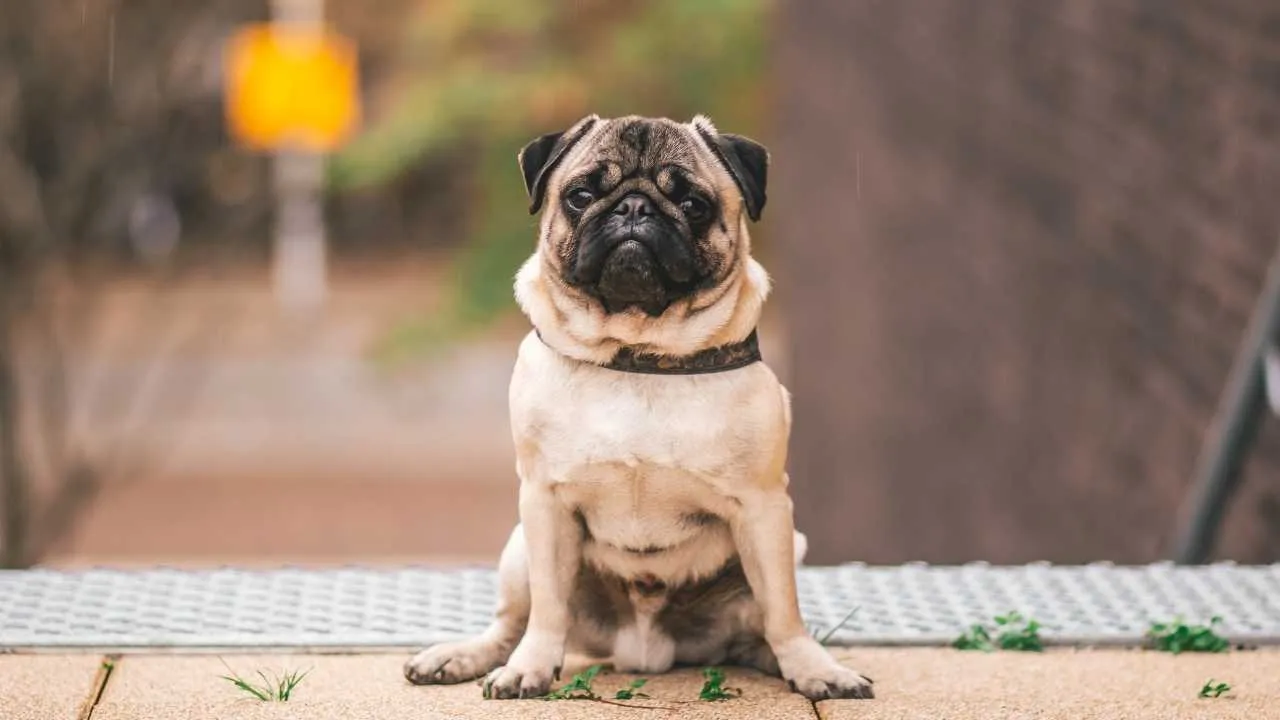
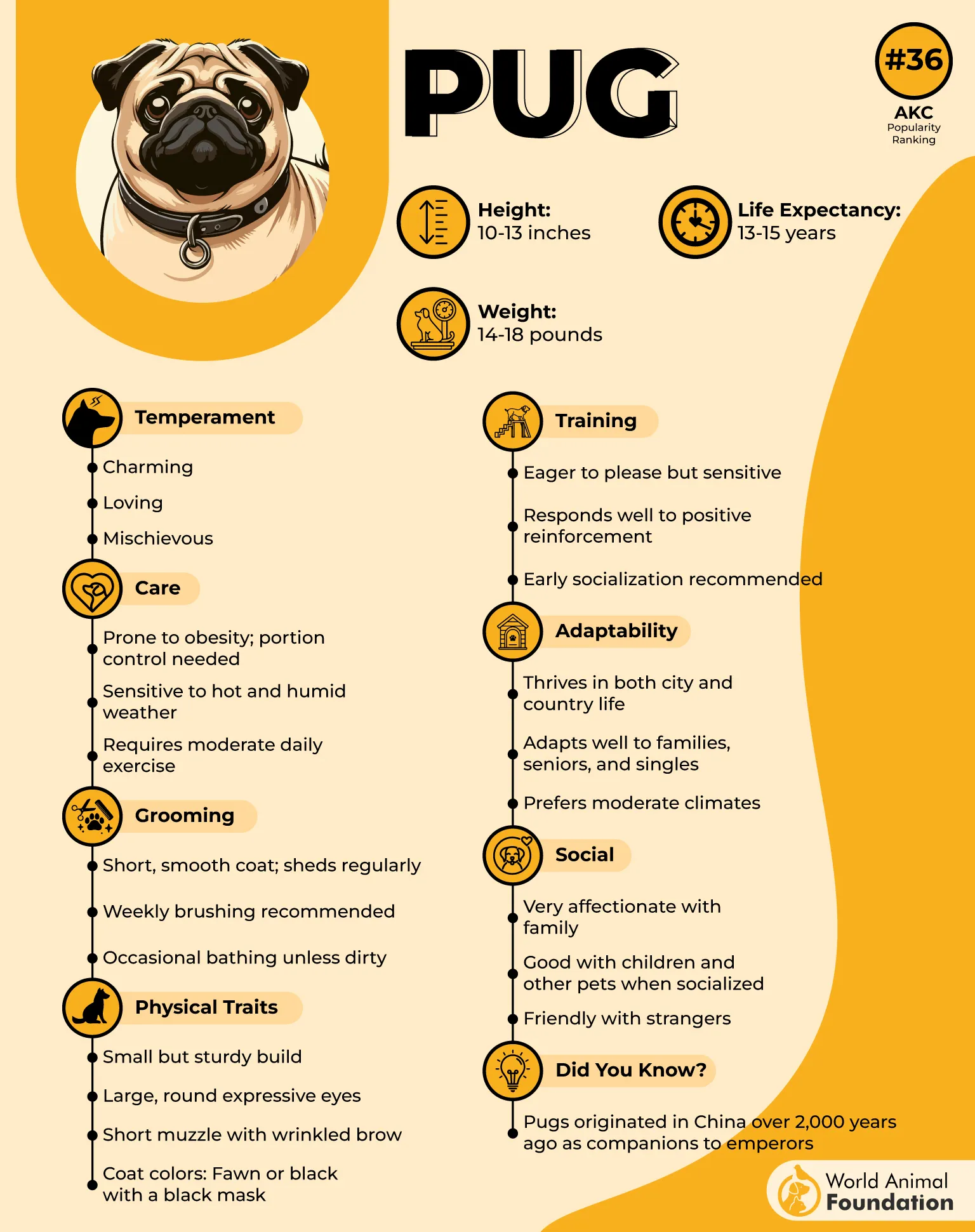
The Pug dates to around 400 B.C. in China, where wealthy families kept these small dogs as lap companions. Their compact, sturdy build and expressive faces later became closely associated with a breed described by the Latin phrase “multum in parvo,” meaning “a great deal in a small space.”
Built for Lounging
This low-maintenance dog can spend much of the day napping indoors, with adult dogs commonly sleeping 10 to 14 hours daily. Puppies may sleep up to 20 hours, while seniors can reach around 15, giving this breed an unusually generous schedule for rest.
The following traits put that easygoing routine into perspective:
About 30 minutes of daily walking
Apartments suit their smaller size
Dry-land activities are safer for them
Better Indoors
The Pug has respiratory limitations linked to its short muzzle, making hot or humid weather particularly difficult. Temperatures above 29°C can put the breed at risk of heat stroke, while its weak swimming ability means exercise is better kept on dry ground.
6. French Bulldog

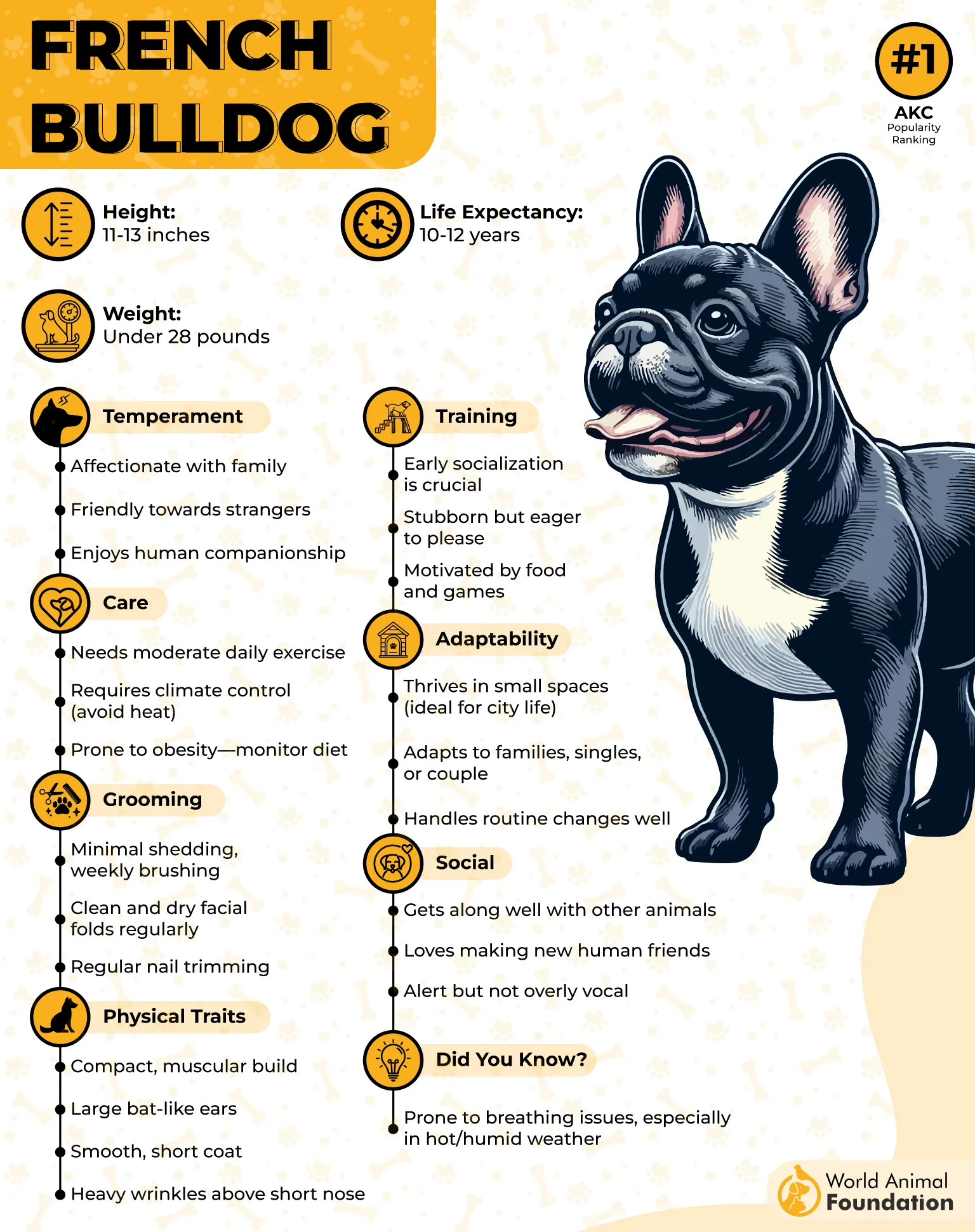
French Bulldog began in England as a smaller version of the Bulldog and became especially popular among lace workers in Nottingham. When workers relocated to France, they brought these little dogs along, where the breed soon became closely associated with its new home.
A Serious Nap Schedule
As a brachycephalic dog, they fit the couch-potato label rather well, with adult dogs sleeping around 10 to 13 hours a day. Puppies can sleep even longer, often reaching 15 to 18 hours, while a short walk or brief yard play supplies the activity they need.
Its compact frame isn’t its only appeal:
Nicknamed “Frenchie” in the United States
Their short coat is easy to maintain
Poor swimming ability requires water supervision
Heat Changes the Plan
French Bulldogs’ love of lounging makes sense when you consider how easily this breed can struggle in the heat. Its short, stubby muzzle can restrict airflow in warm weather, and the familiar snorting and snoring mean strenuous activity should be limited as temperatures rise.
7. Japanese Chin
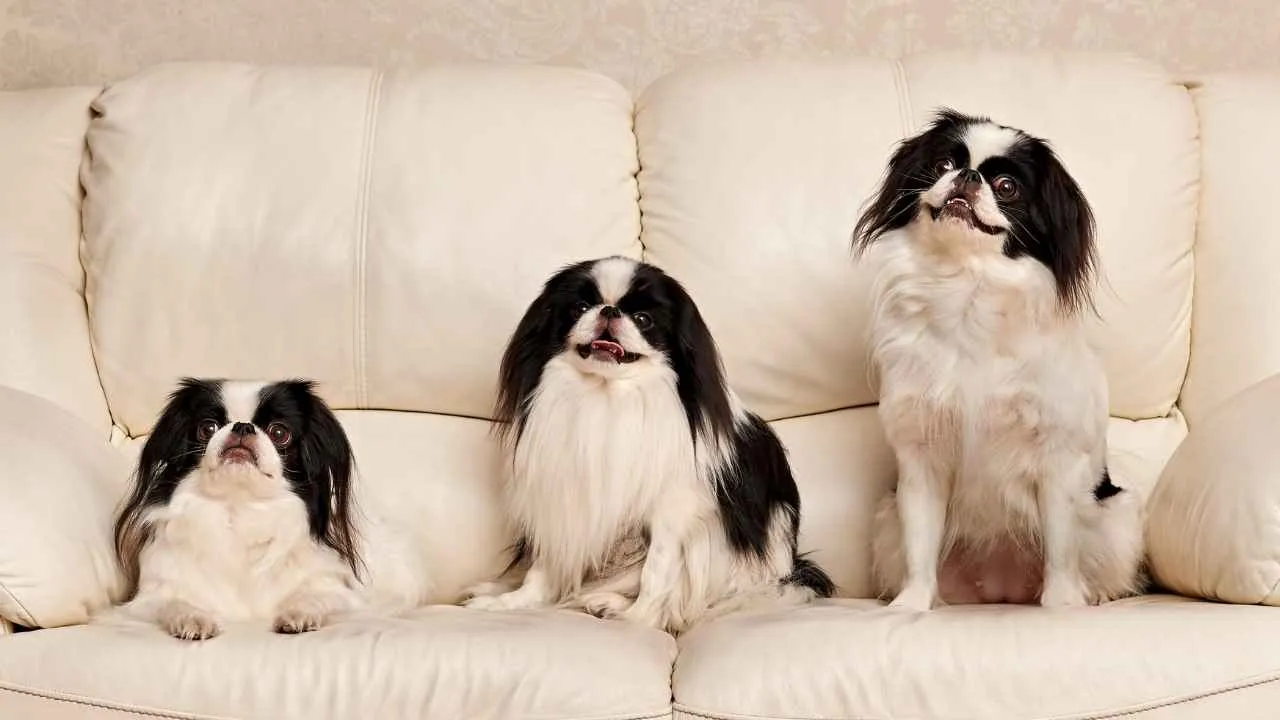
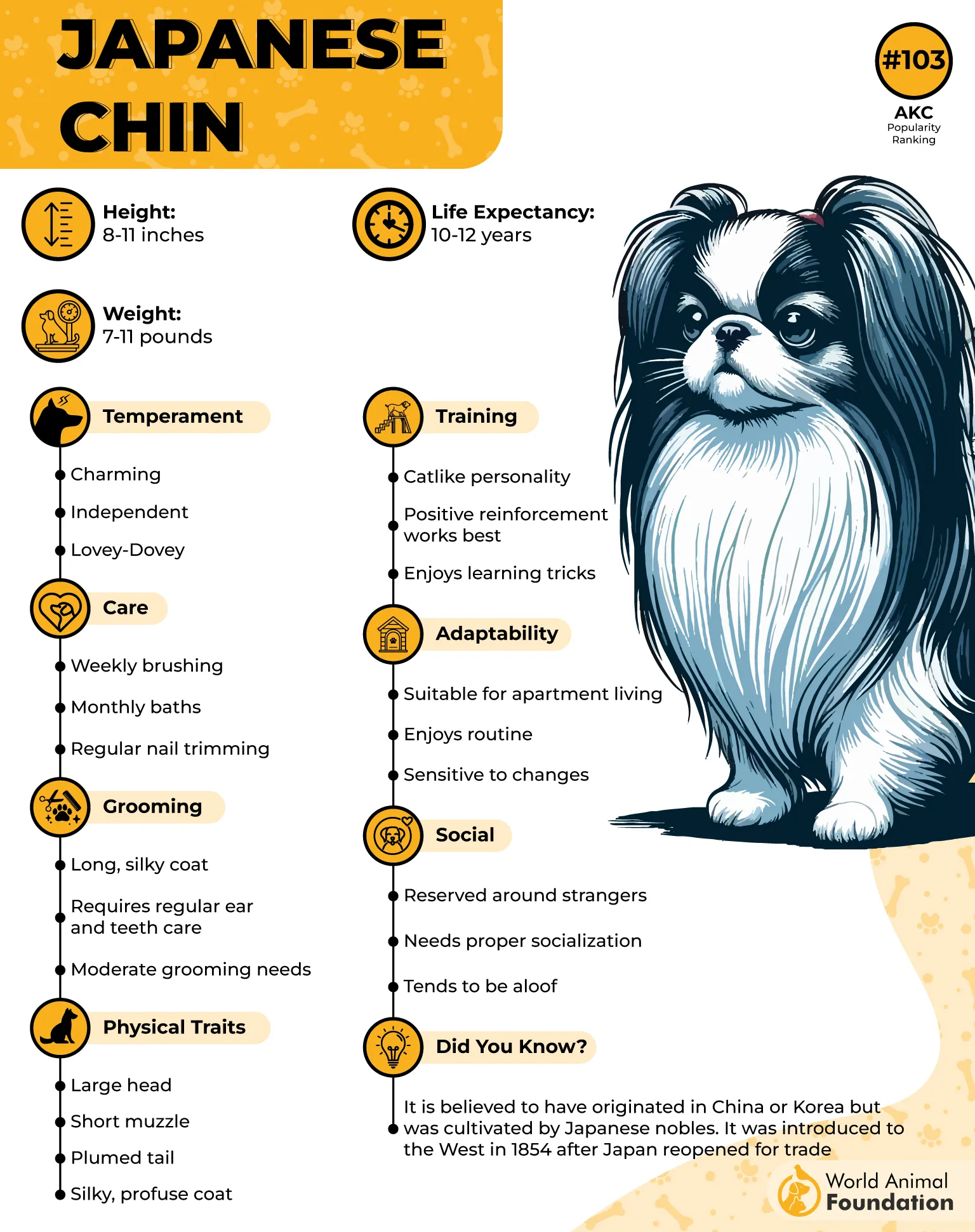
Japanese Chin has an unusual past tied to the Silk Road, where early Chins accompanied travelers before being given to Chinese nobility. Later, these small dogs became closely associated with royal households and were restricted to people of high social rank.
A Natural Lap Dog
This apartment-living breed was bred for companionship, so a quiet afternoon lounging beside its person fits its nature remarkably well. About 20 to 30 minutes of daily walking is usually enough, leaving plenty of time for lounging, napping, and watching the household from a favorite spot.
This is what makes this little companion even more intriguing:
Often described as cat-like
Enjoys feline company
Suited to calm adult households
A Little Energy Burst
Japanese Chin can be curious and strong-willed when exploring outdoors, so off-leash freedom calls for a securely fenced area. Its famous “Chin spin,” where it rises onto its hind legs and twirls for attention or a treat, adds a surprisingly lively moment to an otherwise relaxed routine.
Conclusion
A relaxed lifestyle can be a great match for low-energy dog breeds that enjoy quiet afternoons, comfortable naps, and plenty of time beside their people. Even the best lazy dogs still need minimal exercise, indoor play, and a balanced diet to stay healthy. Understanding each dog’s exercise needs helps prevent unnecessary weight gain while supporting a comfortable routine.
Weather, age, breathing ability, and the dog’s behavior can also affect how much activity feels comfortable. When those needs fit your routine, slow days become easier to enjoy. Sometimes the best companion is simply one with a calm demeanor, happy to share the couch, follow the household rhythm, and make ordinary evenings feel more comfortable.
