




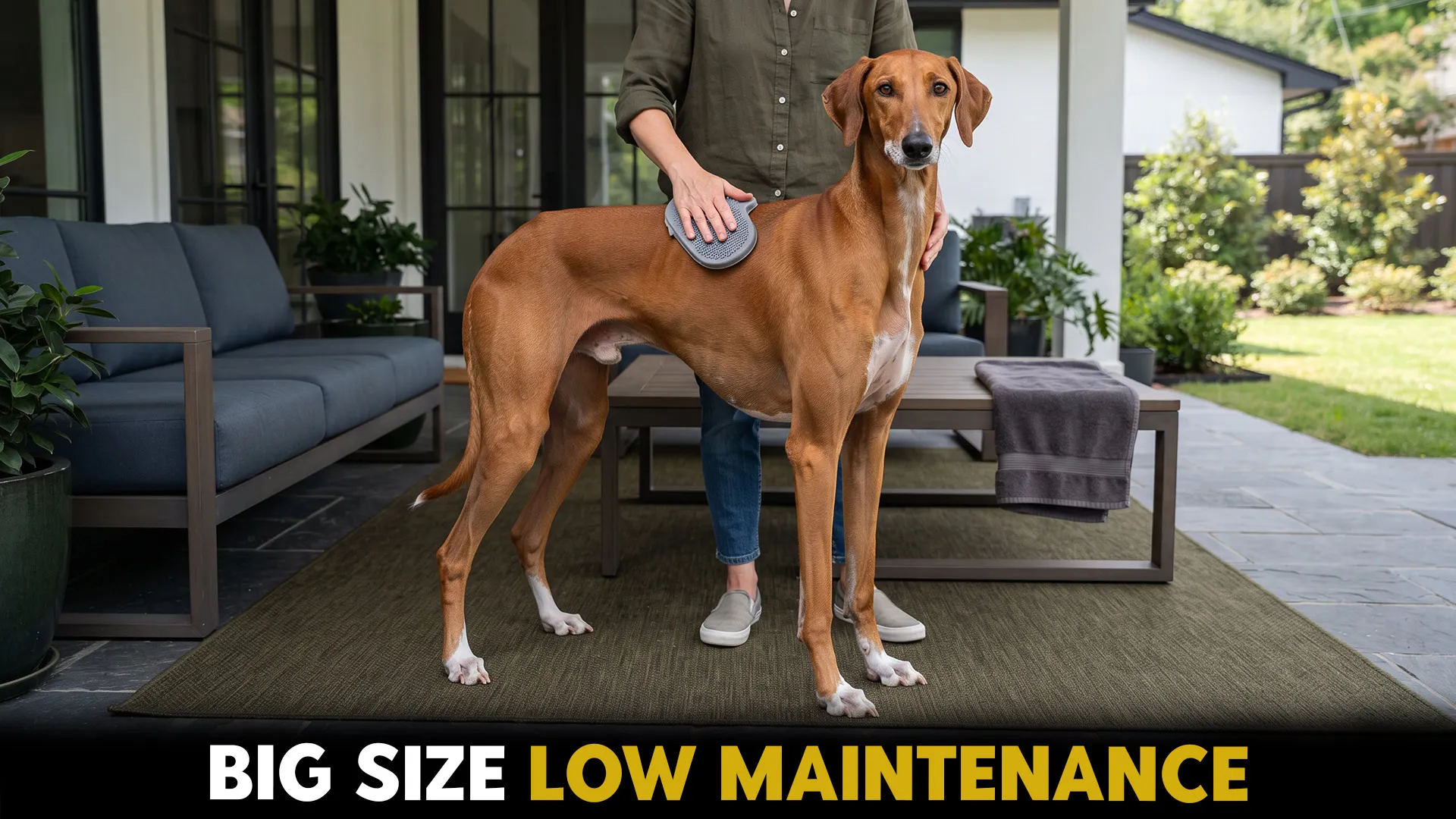
When people compare large dog breeds, they often focus on temperament, exercise, trainability, or protective instincts before thinking about coat care. Yet grooming can shape everyday life.
A short coat changes the routine in practical ways. Brushing is usually quicker, bathing can be simpler, and there are fewer long strands to detangle after rain, mud, or outdoor play. It also makes the dog’s skin easier to inspect for irritation, parasites, or other changes.
Still, short hair has its own considerations. Some short-coated large dogs shed year-round, while others shed more noticeably during seasonal changes. Short hair means easier maintenance, not zero maintenance. If easy grooming matters to you, that distinction is worth understanding before making a choice.
This article brings together large breeds with short, manageable coats and the practical traits that make each one easier to handle in everyday life.
Key Takeaways
Big dogs can come with big personalities, serious stamina, and plenty of hair. Thankfully, a few impressive breeds keep the coat care much more manageable.
The Dogo Argentino takes that simplicity even further with a glossy white coat that sheds little and produces surprisingly little odor.
Then there’s the Redbone Coonhound, whose short coat needs little attention while its nose can send it chasing a scent far beyond the backyard.
From the athletic Belgian Malinois to the elegant Great Dane, the rest of this list has a few more practical surprises worth discovering.
Large Dog Breeds with Easy-to-Manage Short Hair
1. Dogo Argentino
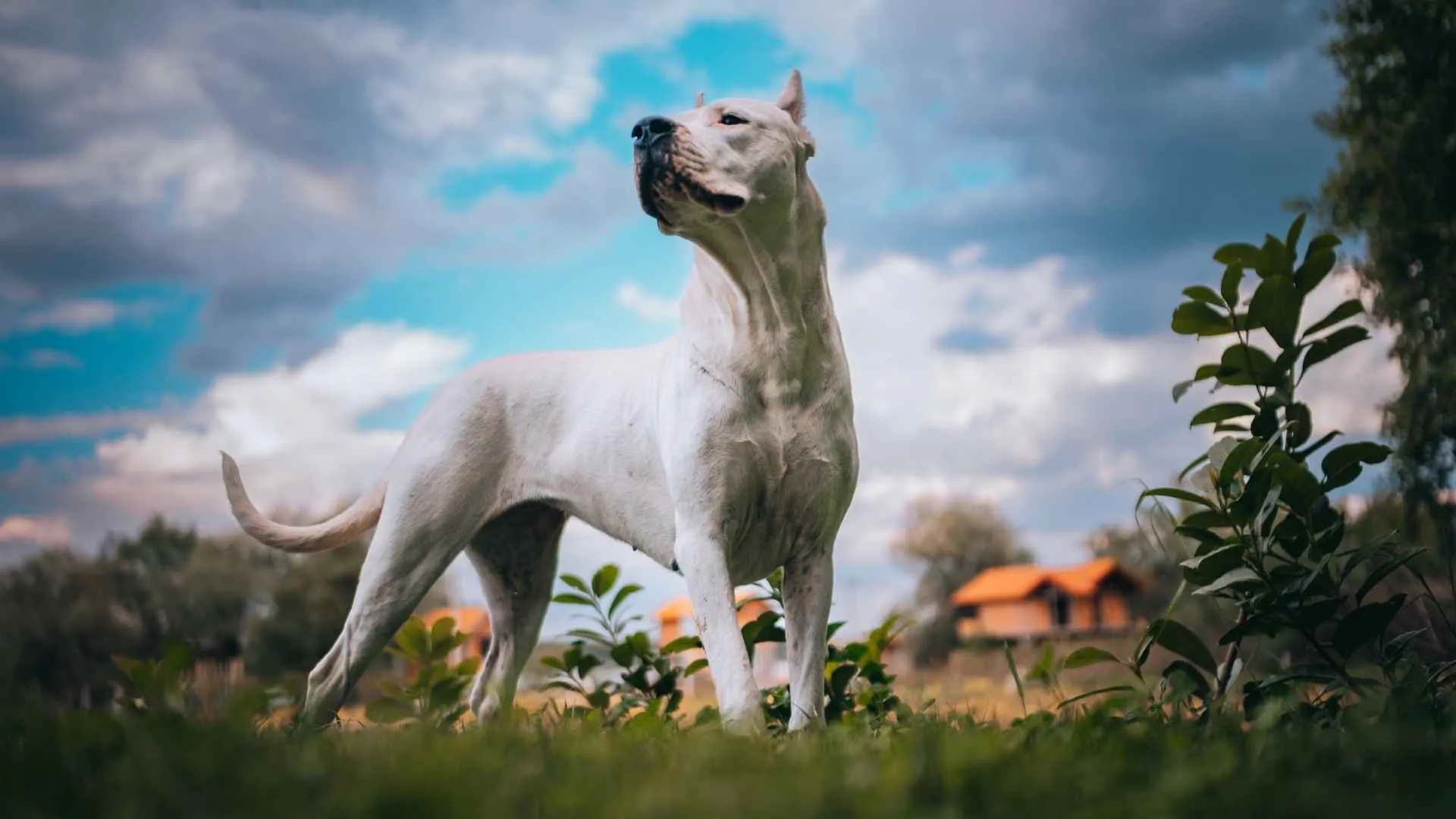
Dogo Argentino originated in Córdoba, Argentina, during the 1920s under Dr. Antonio Nores Martínez, who envisioned a powerful dog suited to demanding field work.
Its original purpose centered on pursuing large game such as wild boar and puma while also serving as a household protector and companion.
Easy Coat Care
This short-haired dog breed has a thick white coat with a glossy finish and no undercoat, making its grooming routine refreshingly straightforward. Brushing once or twice a week with a soft brush or rubber curry brush helps spread natural oils while keeping dead hair under control.
The following coat details also matter:
Sheds only a small amount
Produces little doggy odor
White coat has a glossy finish
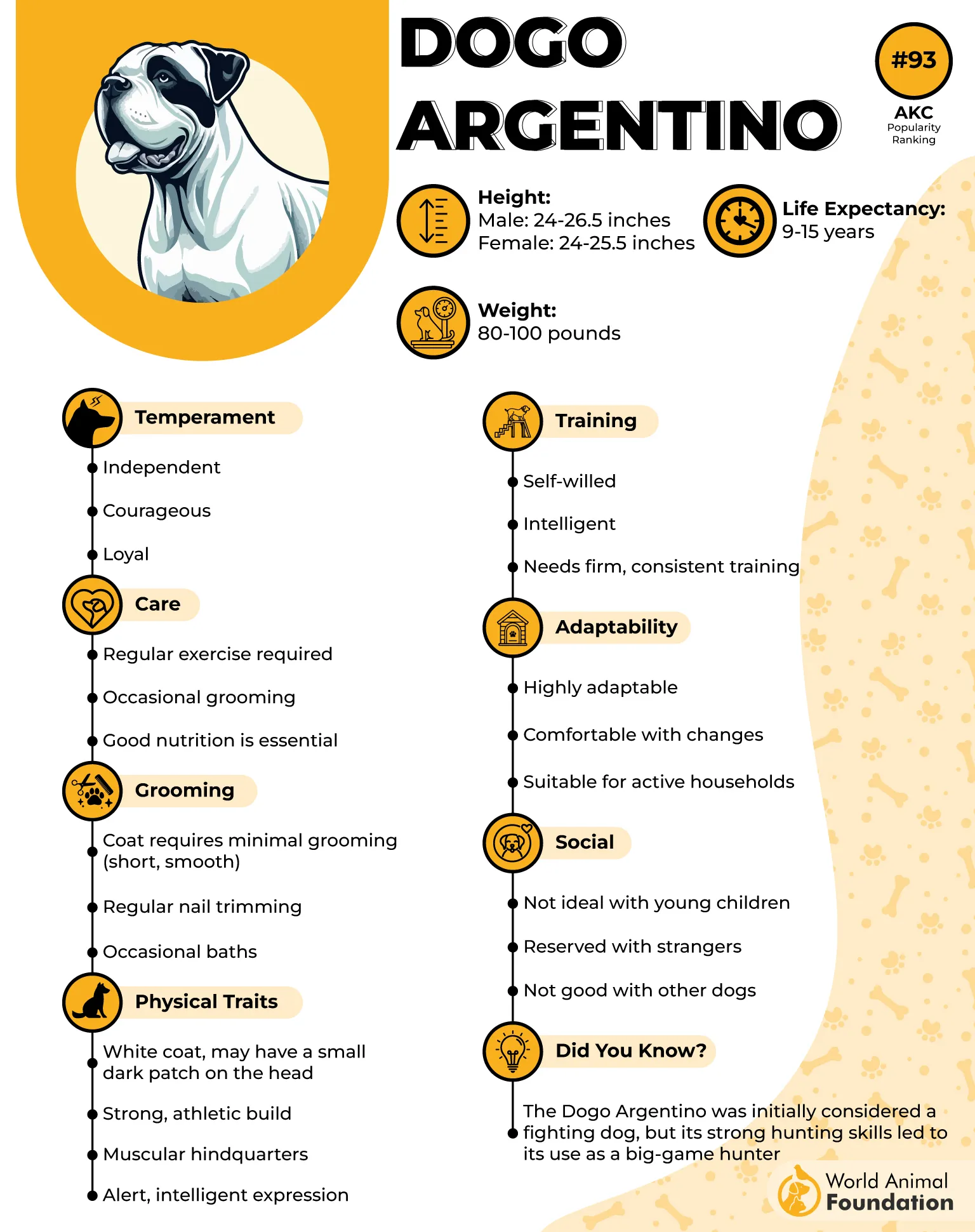
A Versatile Worker
Dogo Argentino has taken on demanding roles beyond hunting, including police work, search and rescue, and therapy work, as stated by PetMD. Its intelligence and willingness to learn also suit advanced obedience, tracking, and protection training when guided with consistent methods.
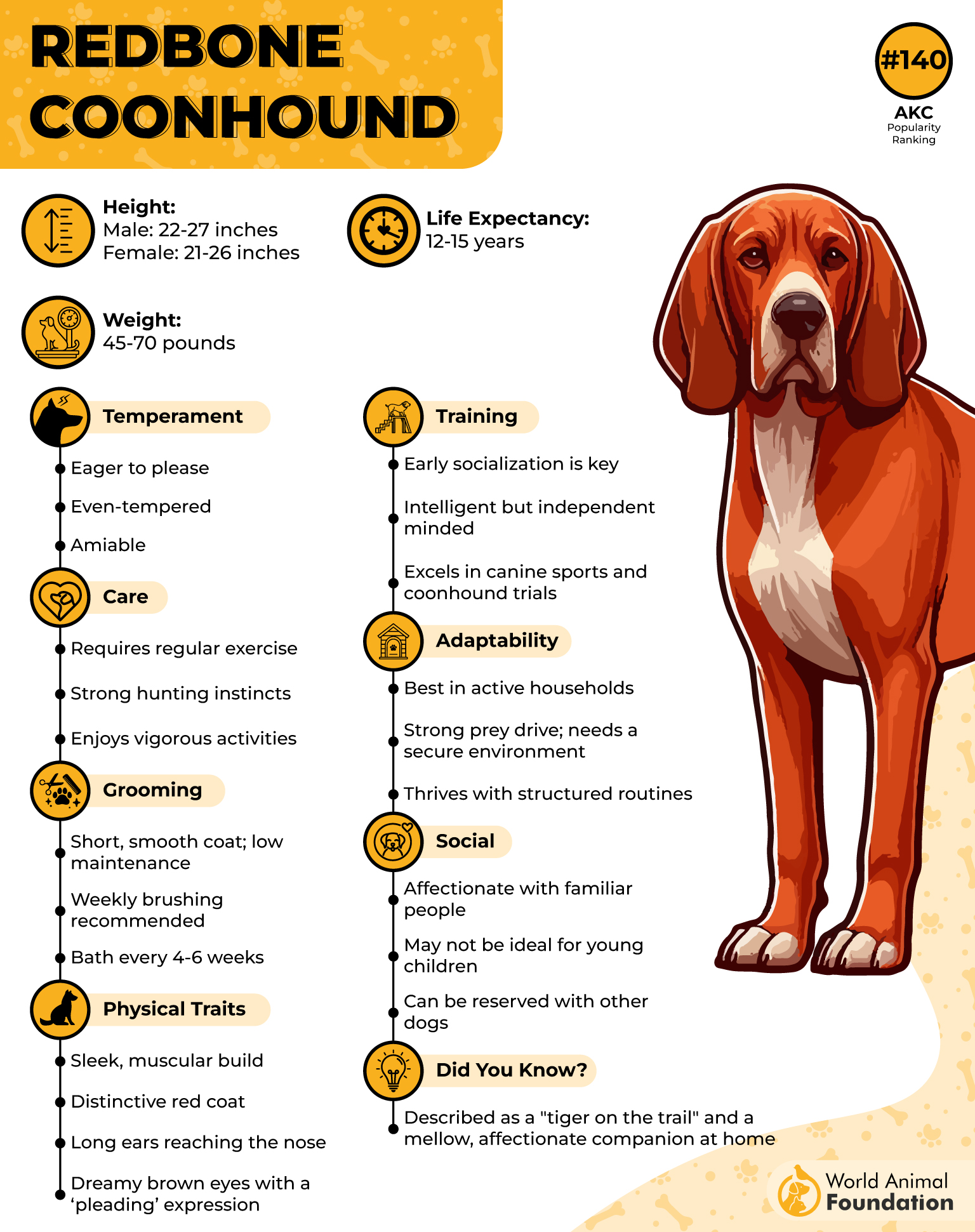
2. Redbone Coonhound
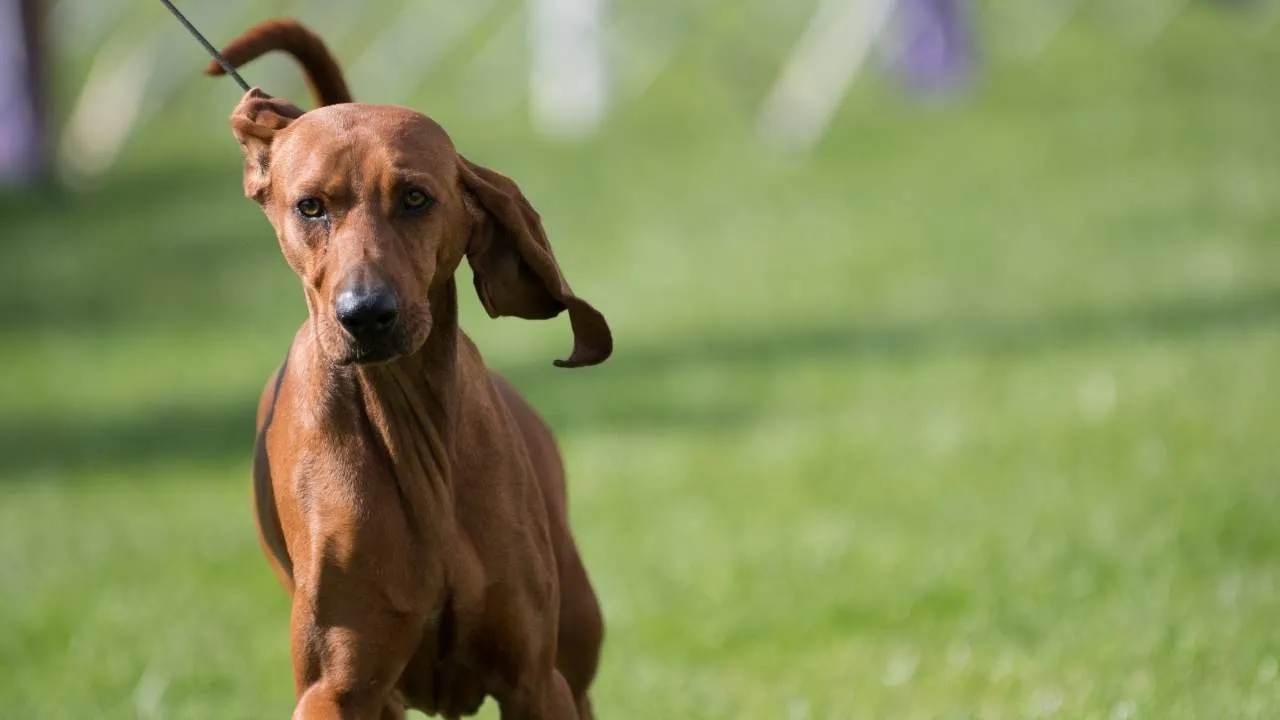
Redbone Coonhound descends from red foxhounds brought to the United States by Scottish immigrants in the late 1700s. Much of its later breeding took place in Georgia and other parts of the Southeast, with Irish hounds and possibly Bloodhounds added to strengthen its raccoon-hunting abilities.
Low-Fuss Grooming
They have a short, smooth coat that requires little grooming and sheds minimally, making them practical for people who dislike loose hair around the house. Its natural hound odor can be managed with regular baths, although some scent remains part of the breed.
Keeping up with grooming takes little effort:
Teeth brushing twice a week
Weekly ear cleaning
No professional trimming and grooming is required
A Nose With Plans
Redbone Coonhound can become intensely focused when an intriguing scent reaches its nose, sometimes ignoring everything else while following the trail, as VCA Hospital noted.
That impulse can make the breed an escape artist, with some dogs figuring out ways over, under, or around fences to pursue whatever caught their attention.
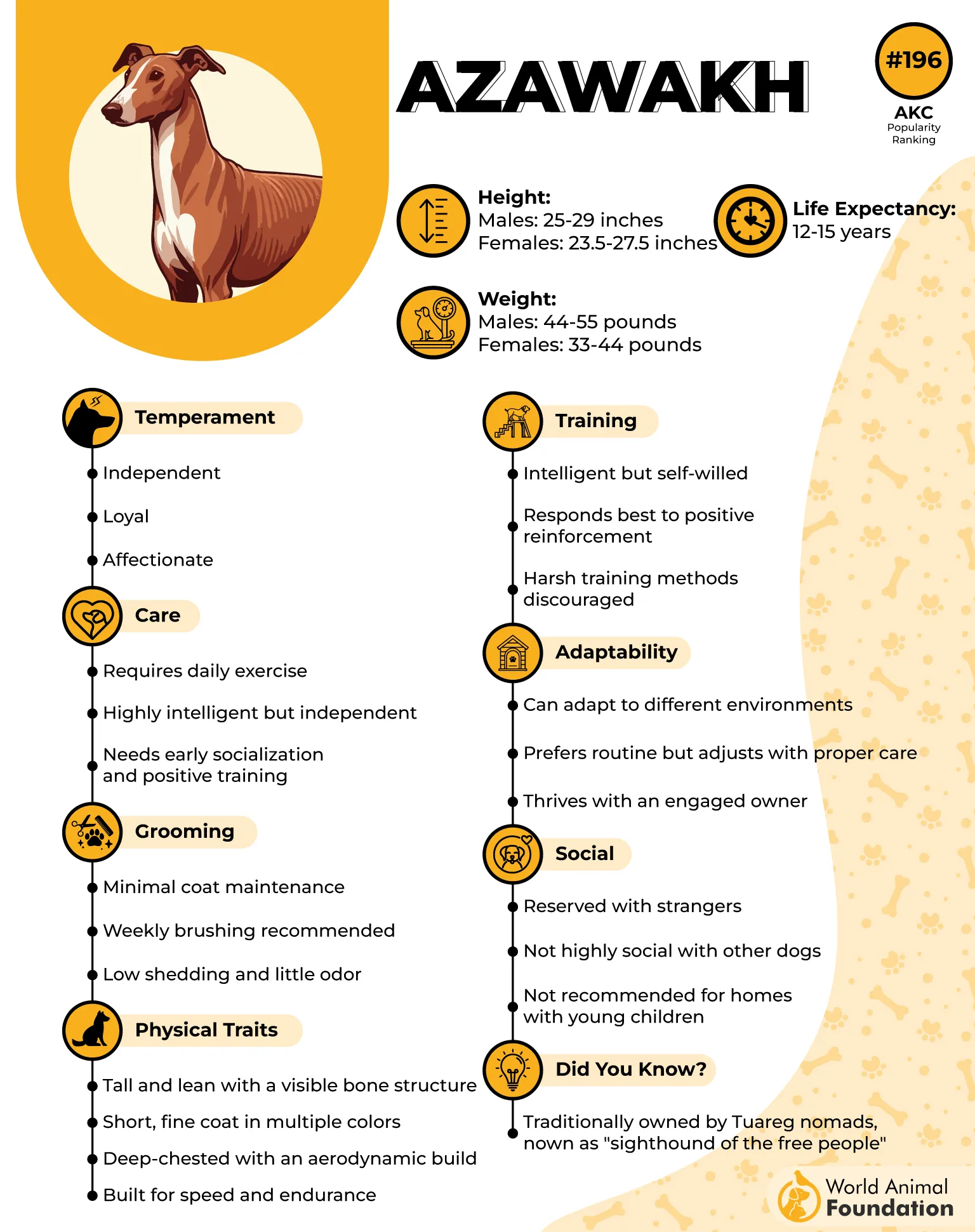
3. Azawakh
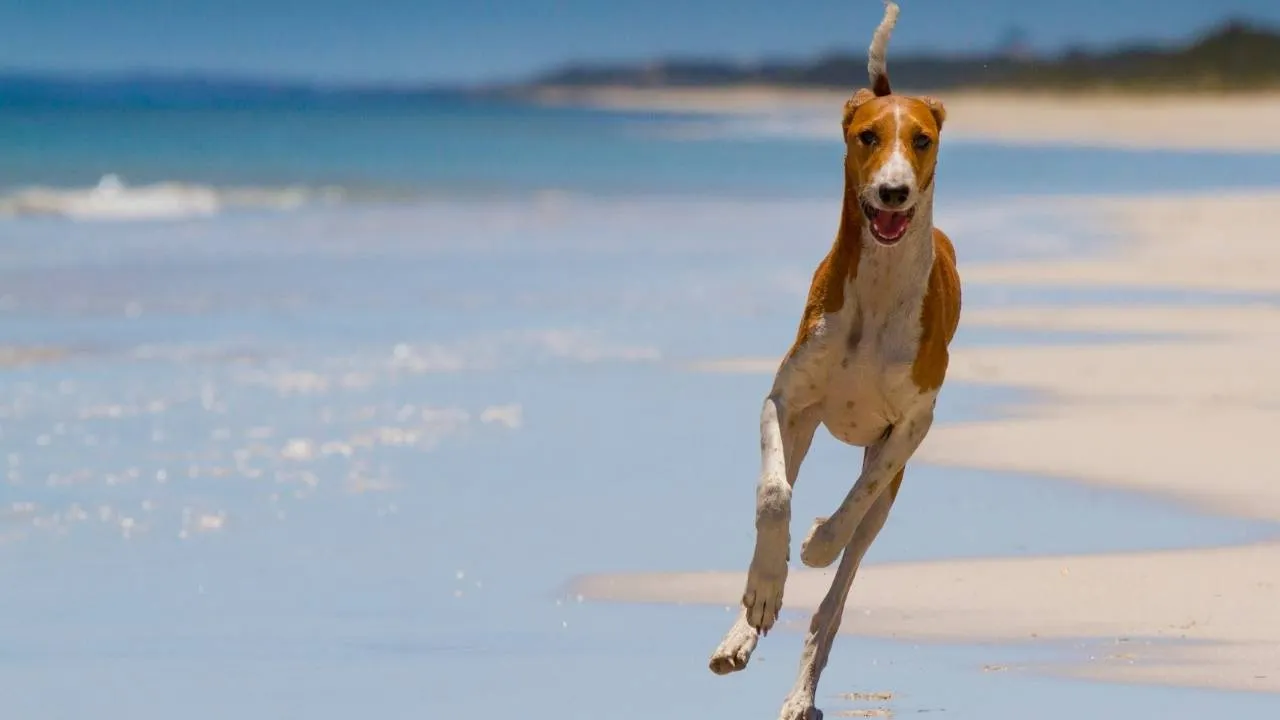
Azawakh comes from the Sahel region of Africa, particularly Mali, Burkina Faso, and Niger, with its name linked to the Azawagh Valley in the Iullemmeden Basin. For generations, people in this region valued the breed for several roles, including hunting, guarding, and companionship.
Effortless Coat Upkeep
Grooming an Azawakh is generally an easy part of the weekly routine because its coat is smooth and fine. A soft-bristled brush, grooming mitt, or hound glove can remove loose hair, and its naturally mild odor means regular baths are rarely necessary.
The following coat details are easy to overlook:
Mud can often be brushed away after drying
Thin skin needs careful handling
Fine coat suits hot, dry climates
A Watchful Companion
Azawakh was traditionally used for hunting, guarding, and companionship, and its alert nature remains evident around unfamiliar people, as reported by Purina.
It can be reserved with strangers while becoming affectionate and playful with familiar family members, with early socialization helping it handle new social situations.
4. Beauceron
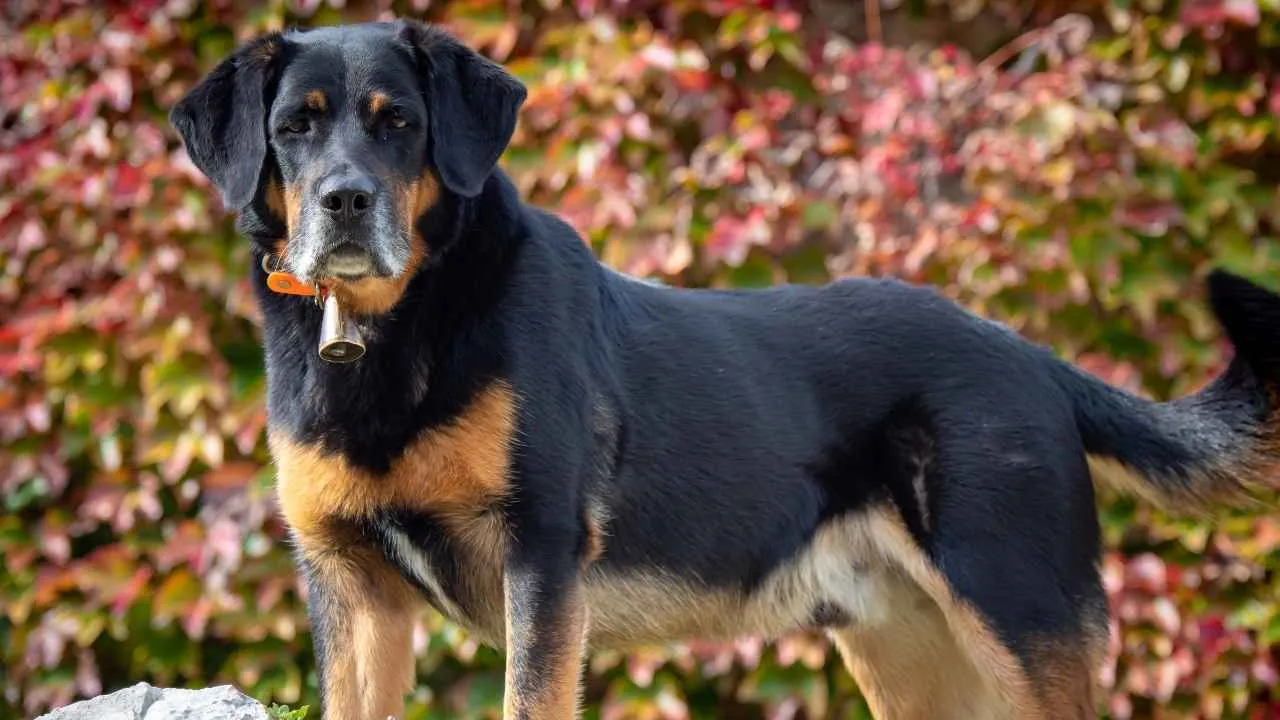
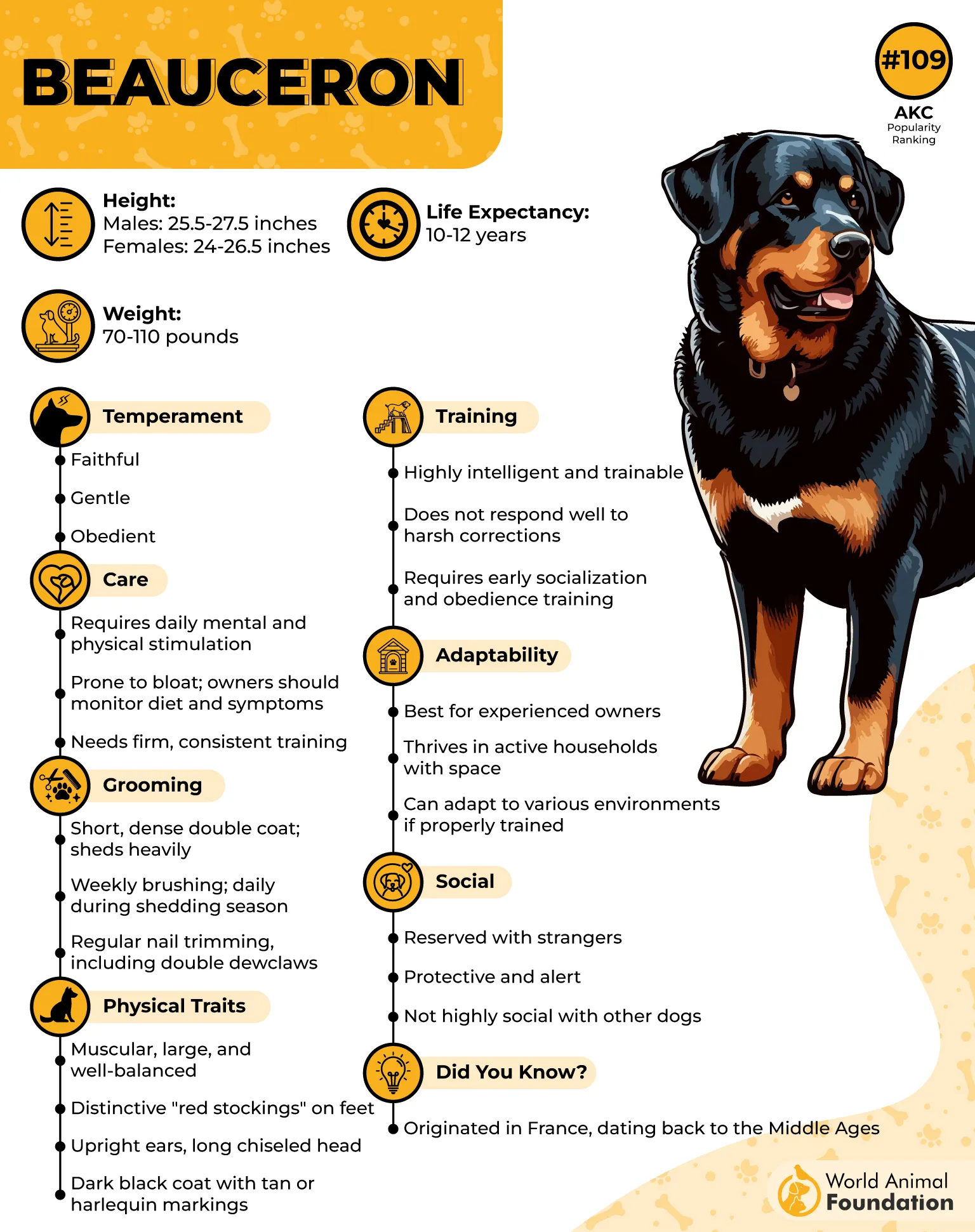
Beauceron was bred in France for the demanding job of herding and guarding flocks of up to 300 sheep. Keeping track of that many animals across wide stretches of land took stamina, sharp intelligence, and a powerful, athletic build that could handle long days on the move.
A Surprisingly Simple Coat
Beauceron has a short, dense double coat with a coarse outer layer measuring about 1¼ to 1½ inches long. The close-lying topcoat keeps the soft undercoat hidden, while the glossy black coloring is marked with deep mahogany accents.
These practical details make grooming fairly straightforward:
Weekly brushing is generally sufficient
May shed more in spring and fall
A pin or slicker brush keeps the coat healthy
Sensitive at Home
Beauceron can be reserved with unfamiliar people and dogs while remaining playful, gentle, and responsive to the moods of familiar family members. Its size and herding instinct also make homes with experienced handlers and older children a better fit, while smaller pets can trigger its prey drive.
5. Belgian Malinois
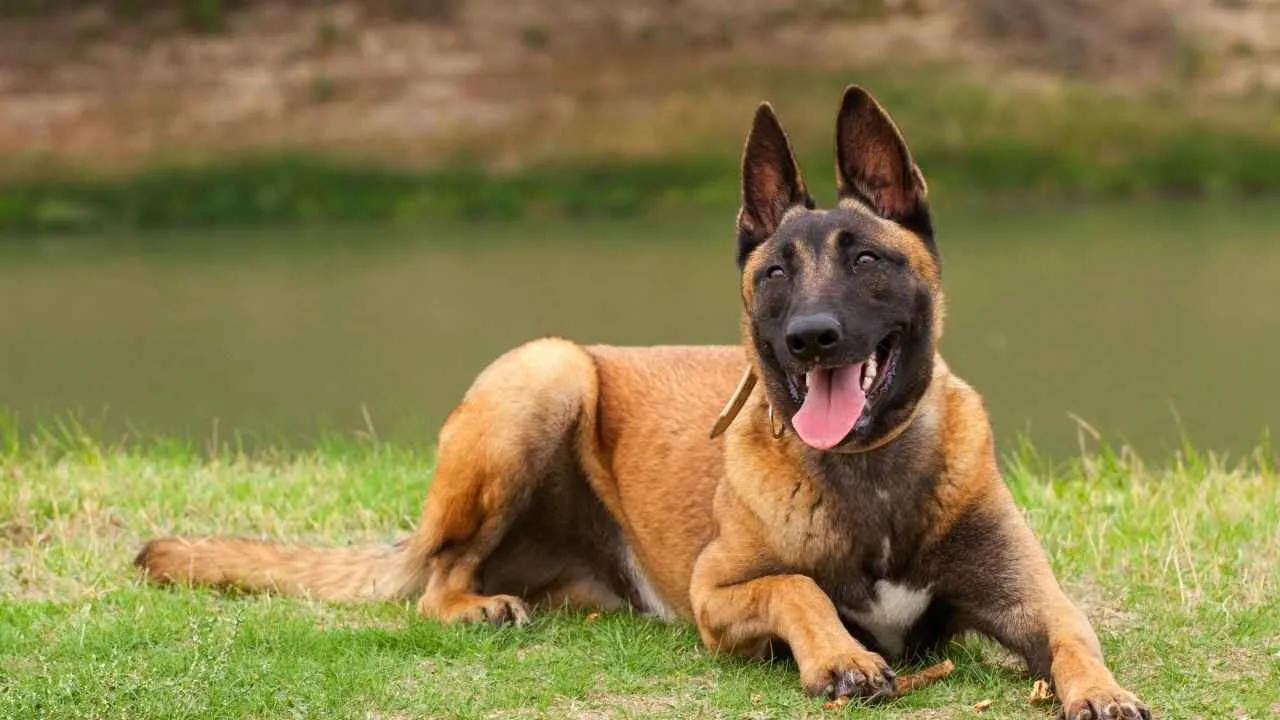
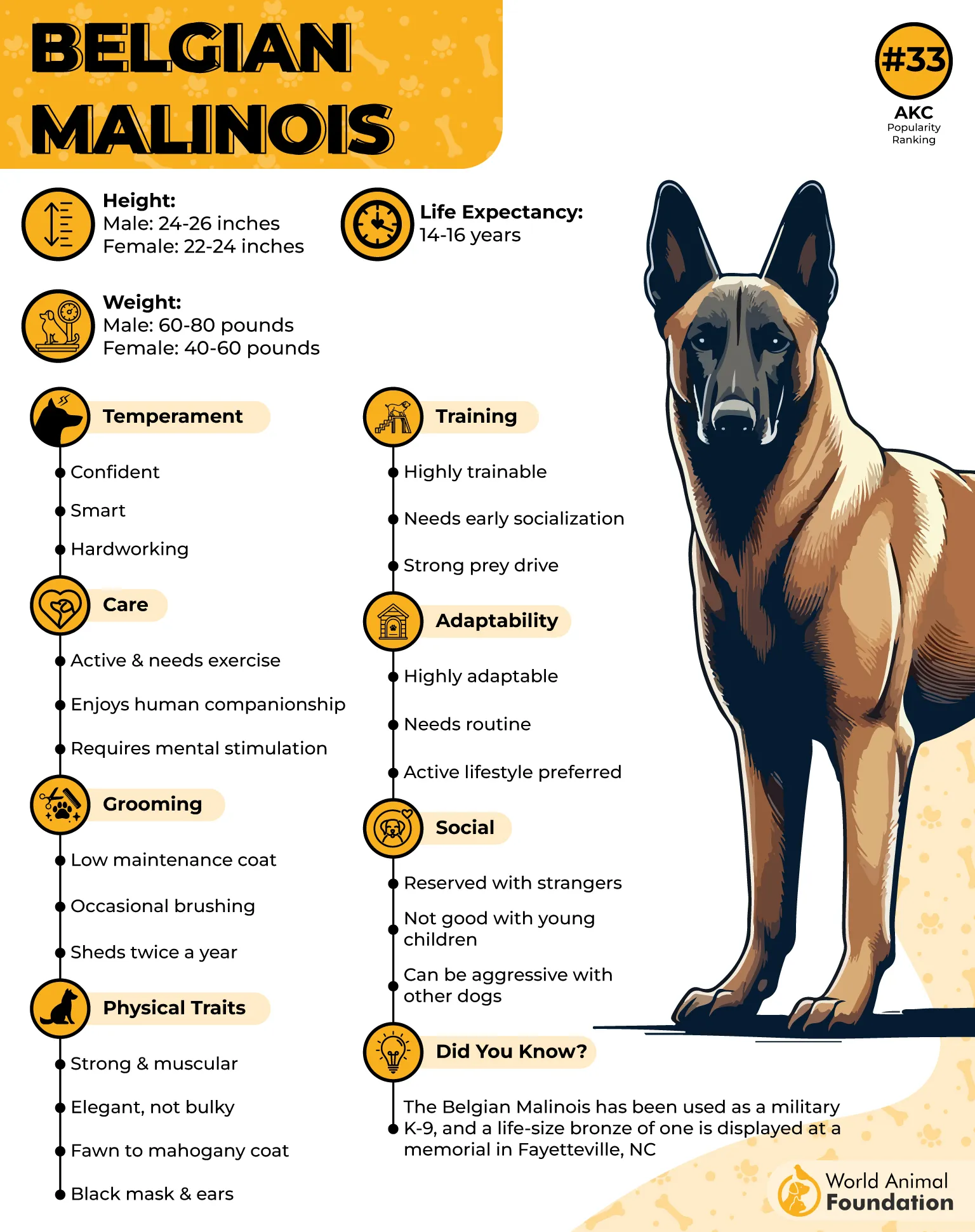
The Belgian Malinois comes from the area around Malines in Belgium, which is also where its name comes from. Herding was among its early jobs, but its strong ability to learn opened up plenty of other roles, including police work, search and rescue, and detection duties.
Simple Coat Routines
Its short, dense coat sheds regularly throughout the year, with only those seasonal changes bringing daily brushing. Otherwise, weekly brushing suits them, distributes natural skin oils, and keeps the coat looking healthy without frequent professional grooming.
Good grooming comes down to a few basics:
Bristle brushes work well
Rubber grooming mitts are another option
Baths are usually needed every few months
Built for Work
Belgian Malinois needs demanding daily activity, with running, hiking, biking, tracking, and agility providing better outlets than ordinary walks. A five-mile morning run is one example of the aerobic workload this energetic breed can handle.
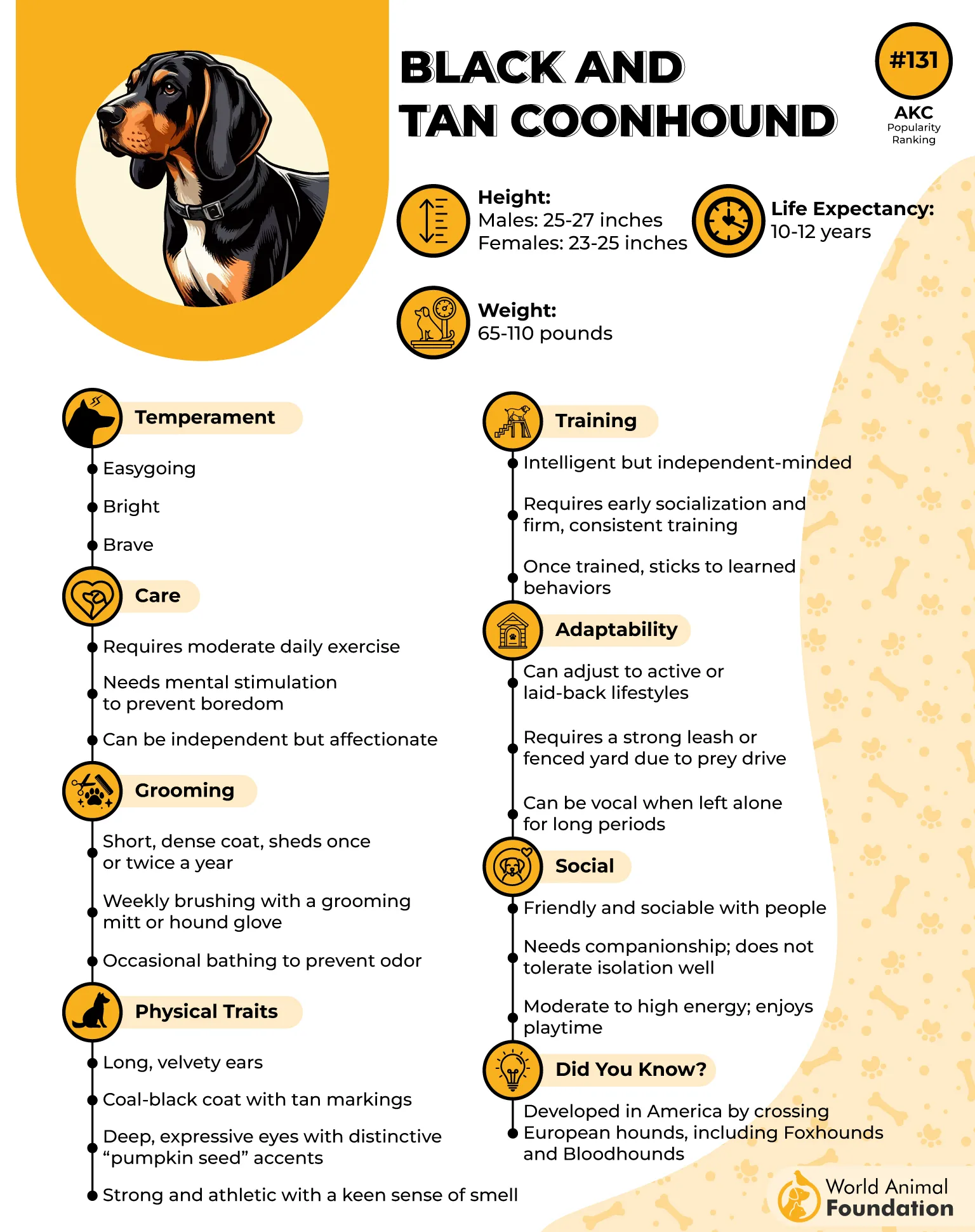
6. Black and Tan Coonhound
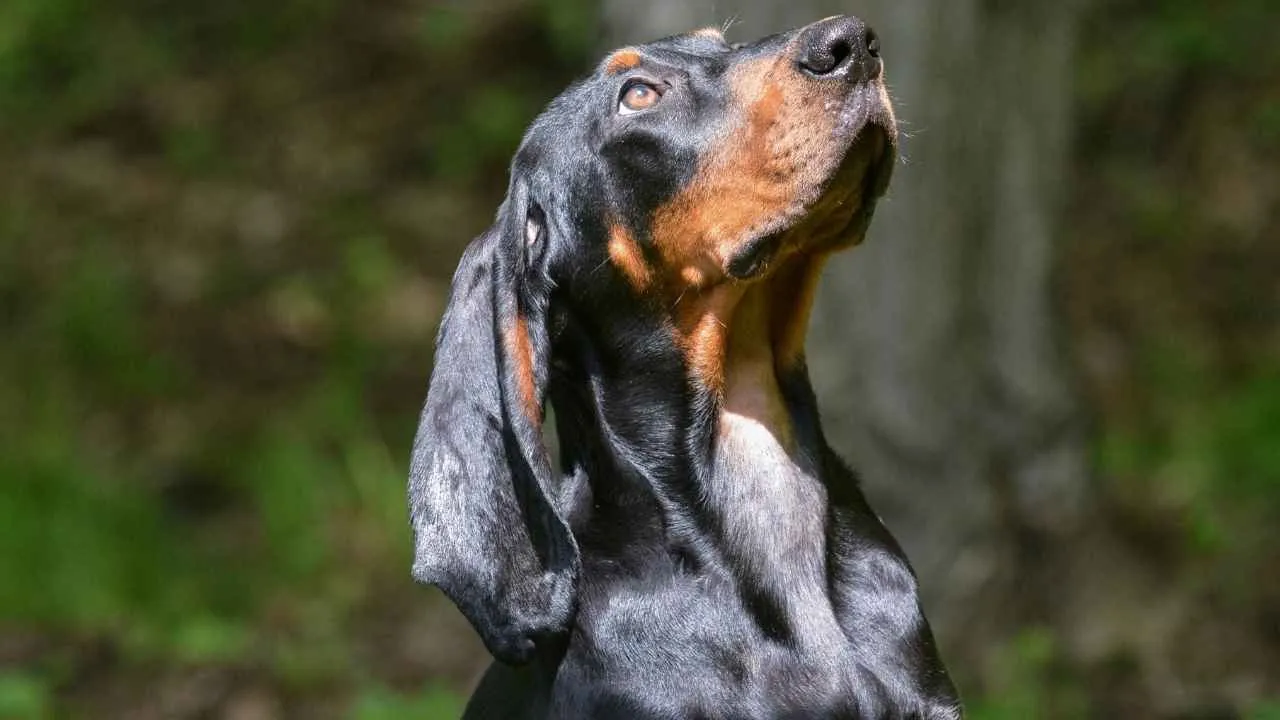
Black and Tan Coonhound is a distinctly American scent hound whose roots reach back to 17th-century colonial hunting dogs brought from Britain. Foxhounds, pointers, setters, and bloodhounds all contributed to the varied group of scent hounds that eventually shaped this breed.
Manageable Coat Care
Long grooming sessions are not part of life with the Black and Tan Coonhound, thanks to its short coat and manageable shedding. A weekly brushing with a grooming mitt or medium-bristle brush helps remove loose hair while distributing natural skin oils.
A few grooming details make things easier:
No professional trimming is required
Check the coat regularly for ticks and fleas
Bathing helps control its characteristic odor
Serious Stamina
Black and Tan Coonhound can handle at least two hours of formal exercise each day across different terrains, with additional opportunities to run, follow scents, and work. Tracking, man-trailing, and scent discrimination also give its active mind something worthwhile to investigate.
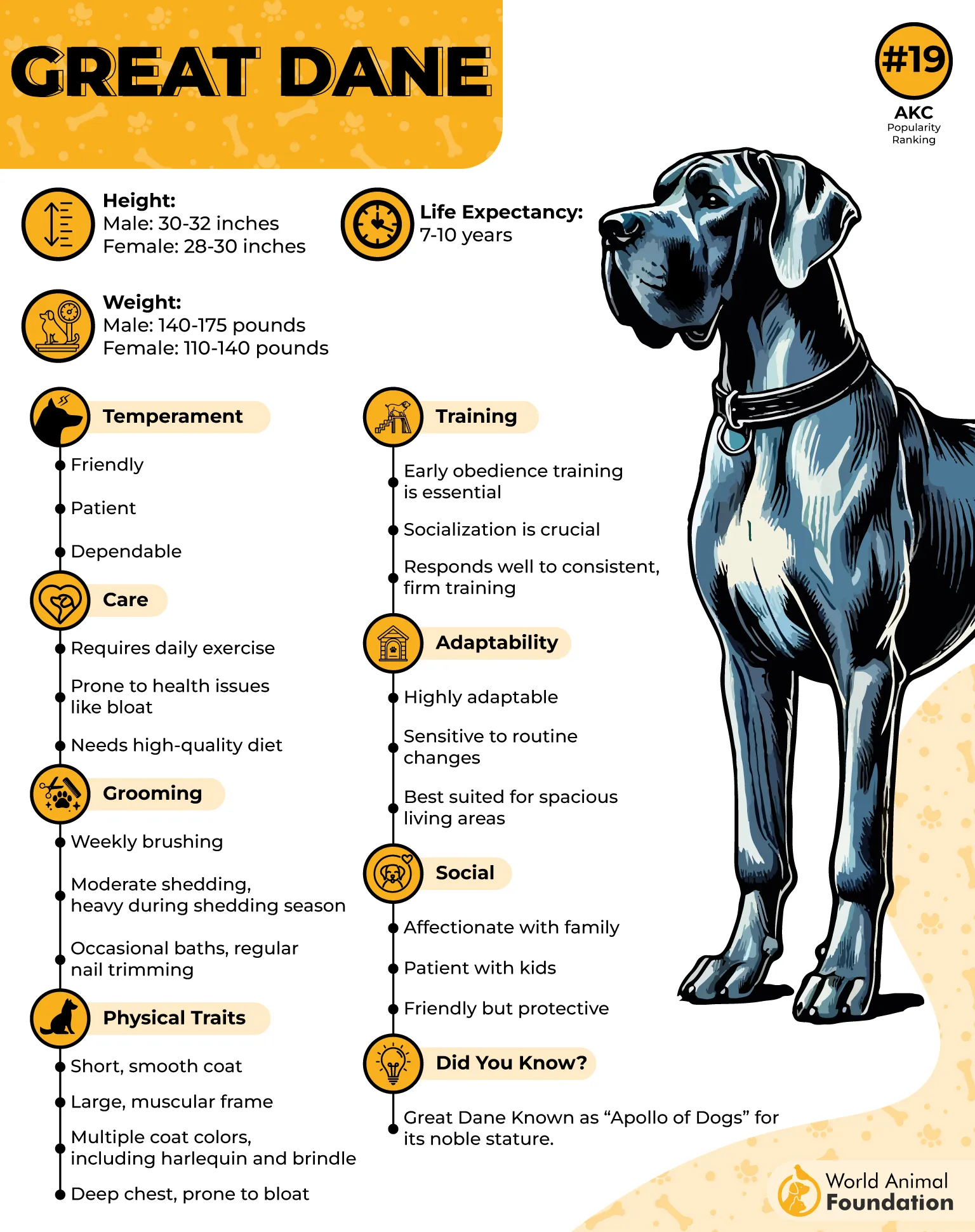
7. Great Dane
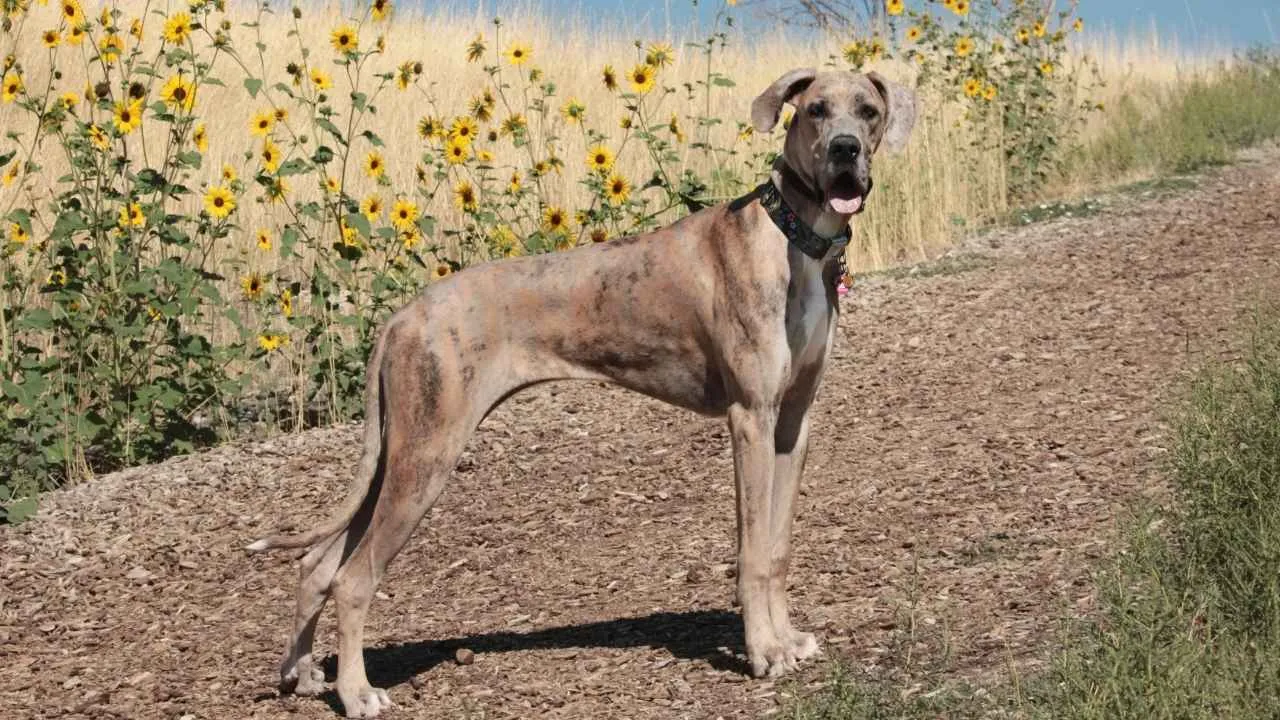
Great Dane has connections reaching far beyond the German origins often associated with the breed, with Egyptian art from around 3000 BC and Babylonian temples from 2000 BC offering much older clues. Chinese literature dating to 121 BC also contains references that point toward an early connection with Tibet.
Little Grooming Fuss
Keeping a Great Dane’s coat tidy is pretty simple, with a weekly curry-brush session helping pick up loose hair before it ends up around the house. Some shedding is still part of the deal, and with the occasional drool, keeping a towel nearby can save you some cleanup.
The right care keeps things manageable:
Bathe about every few months
Use shampoo wipes between baths
Increase bathing after muddy outings
Gentle at Home
Great Dane has a patient, affectionate nature and enjoys close contact, sometimes nudging its oversized head toward a person’s hands or climbing onto a lap for attention. Its people-focused temperament also makes training easier when obedience work begins early.
Conclusion
Selecting a large dog from short-haired breeds can make grooming easier, but that does not mean daily care disappears. Occasional brushing, baths, ear checks, nail care, and regular skin inspections still matter. With minimal grooming, these routines can remain manageable, while gentle brushing helps keep the coat comfortable and clean.
Shedding, weather tolerance, temperament, and training should also be part of the decision. Looking at these details together makes it easier for dog owners to find a dog that fits their routine. When coat care and everyday needs match, living with a large companion becomes much more manageable.
