




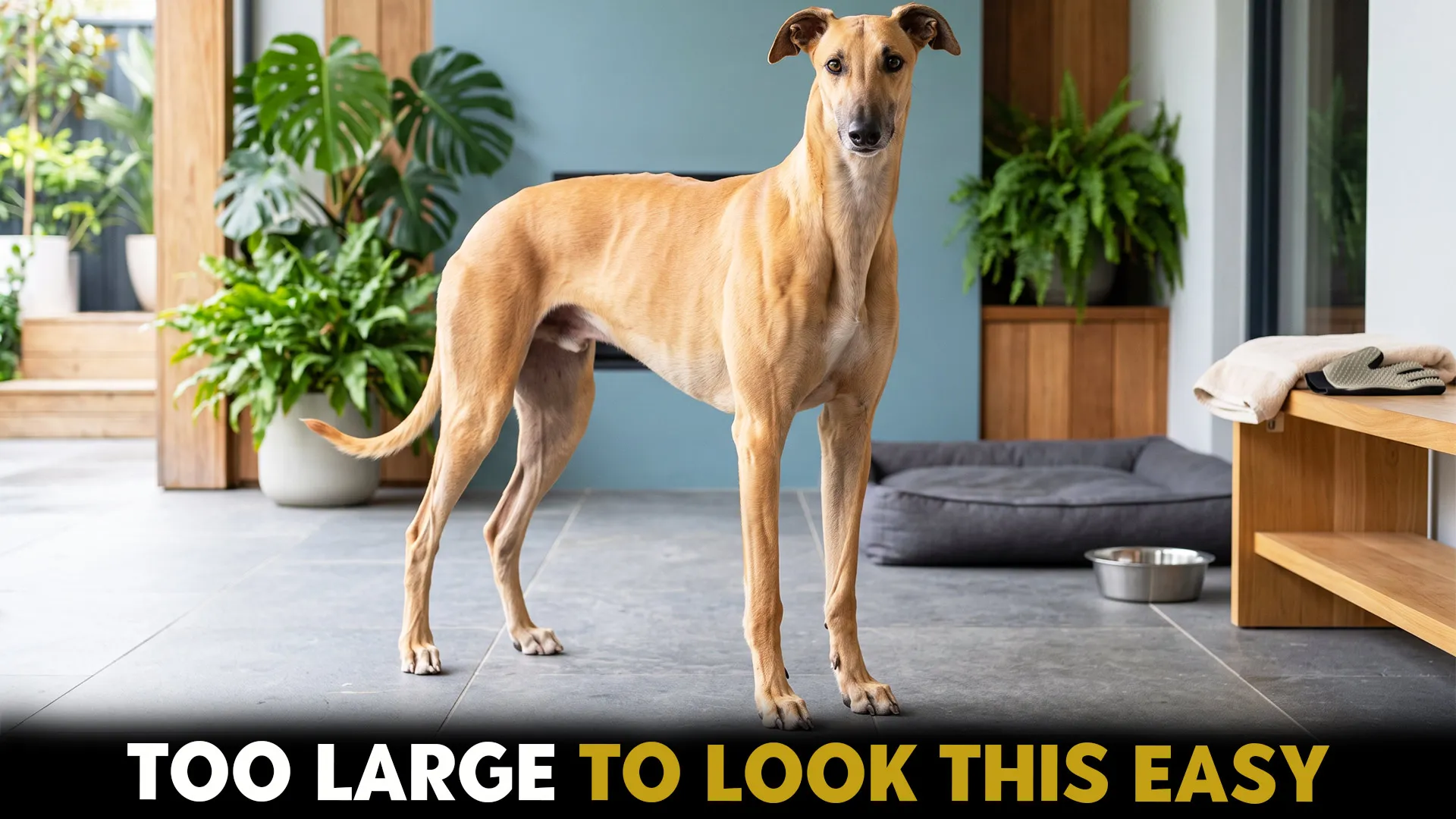
Big dogs have a reputation problem, and it is mostly undeserved. Ask anyone, and they will assume more size automatically means more grooming, more shedding, and more mess to manage.
That assumption falls apart the moment you look at coat type instead of body weight. Some giant short-haired breeds spend far less time on a grooming table each week than breeds half their size.
Shedding, brushing frequency, and bathing needs all come down to the coat itself, not how tall or heavy a dog grows.
If your daily life already juggles work, other pets, and moderate exercise routines, a genuinely low-fuss coat matters more than most people realize.
Keep reading to find out which large breeds skip the heavy grooming routine entirely, and exactly what makes their coats so easy to live with every day.
Large Dog Breeds with Easy-Care Short Coats
1. Rhodesian Ridgeback
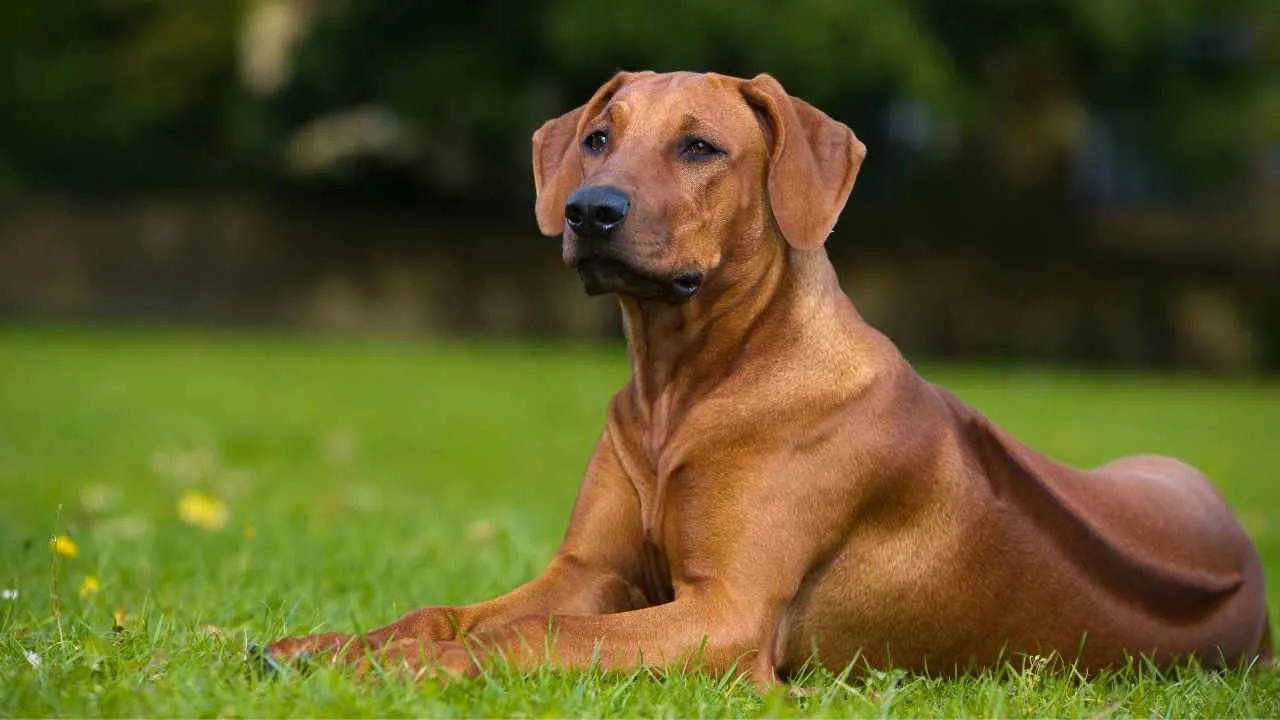
The Rhodesian Ridgeback keeps grooming refreshingly simple for such an athletic dog. This African hunter pairs an easy coat with a calm, loyal temperament. It looks polished and sharp without much effort from you.
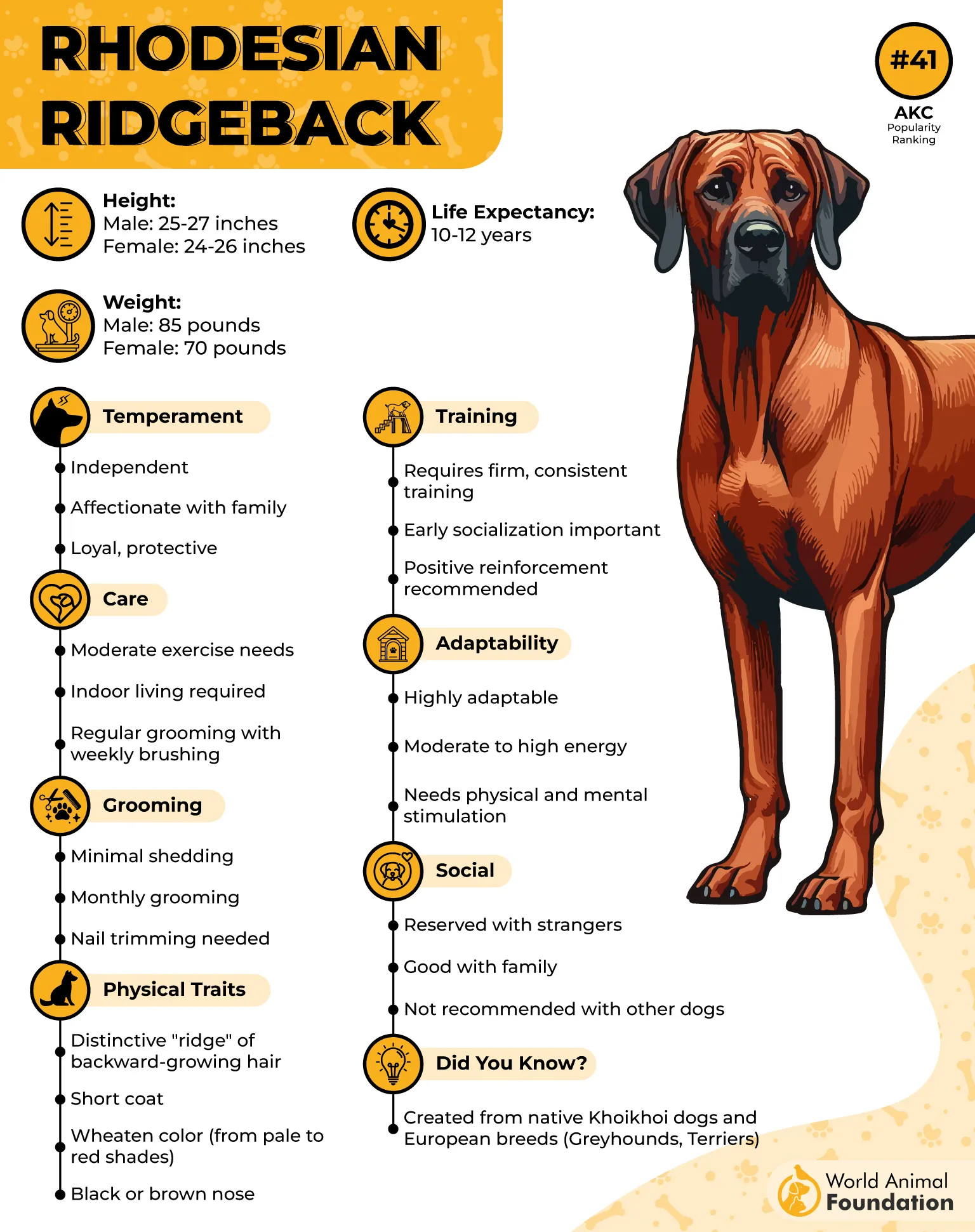
This short coat is a single layer, not a double coat. It lies flat and glossy, with shedding that stays light and steady all year. Seasonal shedding barely registers on this particular breed.
Brushing: Once a week with a rubber curry brush or grooming mitt.
Bathing: Every 6 to 8 weeks, or sooner if muddy.
That sleek coat also means minimal doggy odor between baths. AKC notes the coat needs little more than a quick wipe-down. Sun sensitivity is rare too, thanks to pigmented skin underneath.
2. Great Dane
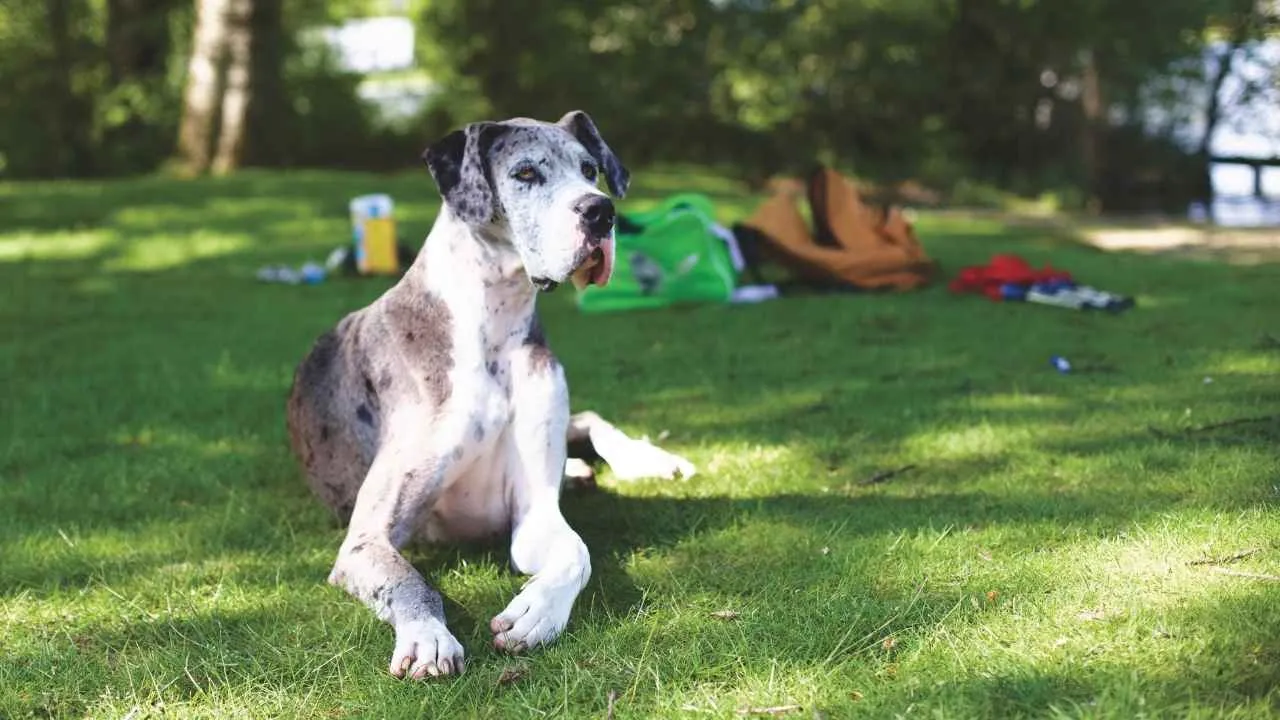
Great Danes prove size and grooming effort do not have to move together. This giant breed carries a low-maintenance coat for its massive frame. The temperament stays sweet, patient, and deeply affectionate.
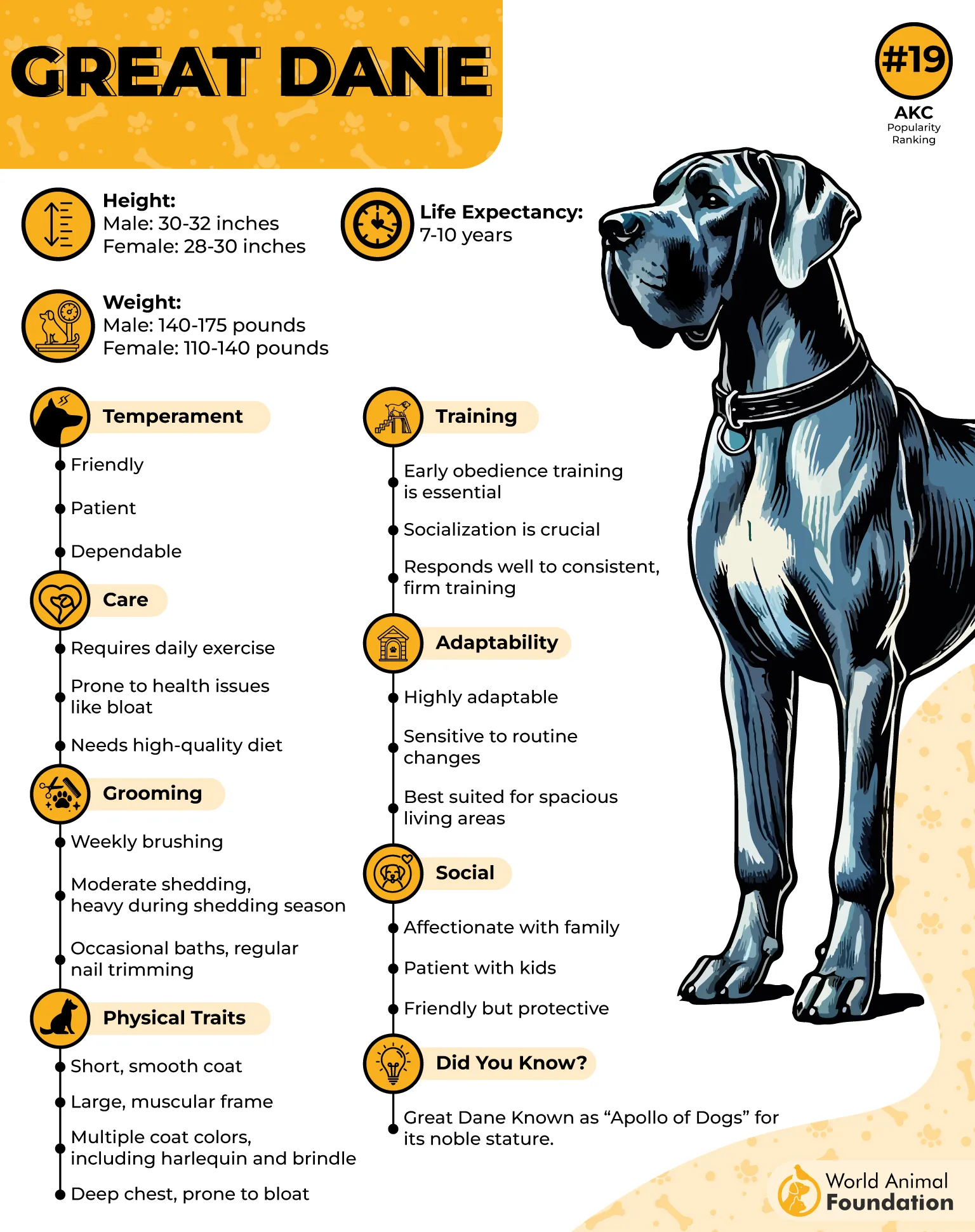
The coat is short, smooth, and single-layered, lying flat across a large surface area. Shedding runs light to moderate and stays fairly consistent through the year. There is no heavy double coat to manage here.
Brushing: Once or twice a week with a soft bristle brush or grooming glove.
Bathing: Every 8 weeks, or when noticeably dirty.
That smooth, short coat means almost no doggy smell lingers between sessions. PetMD notes nail and ear care matter more here than coat upkeep. Thin skin can make great danes sensitive to cold weather.
3. Doberman Pinscher
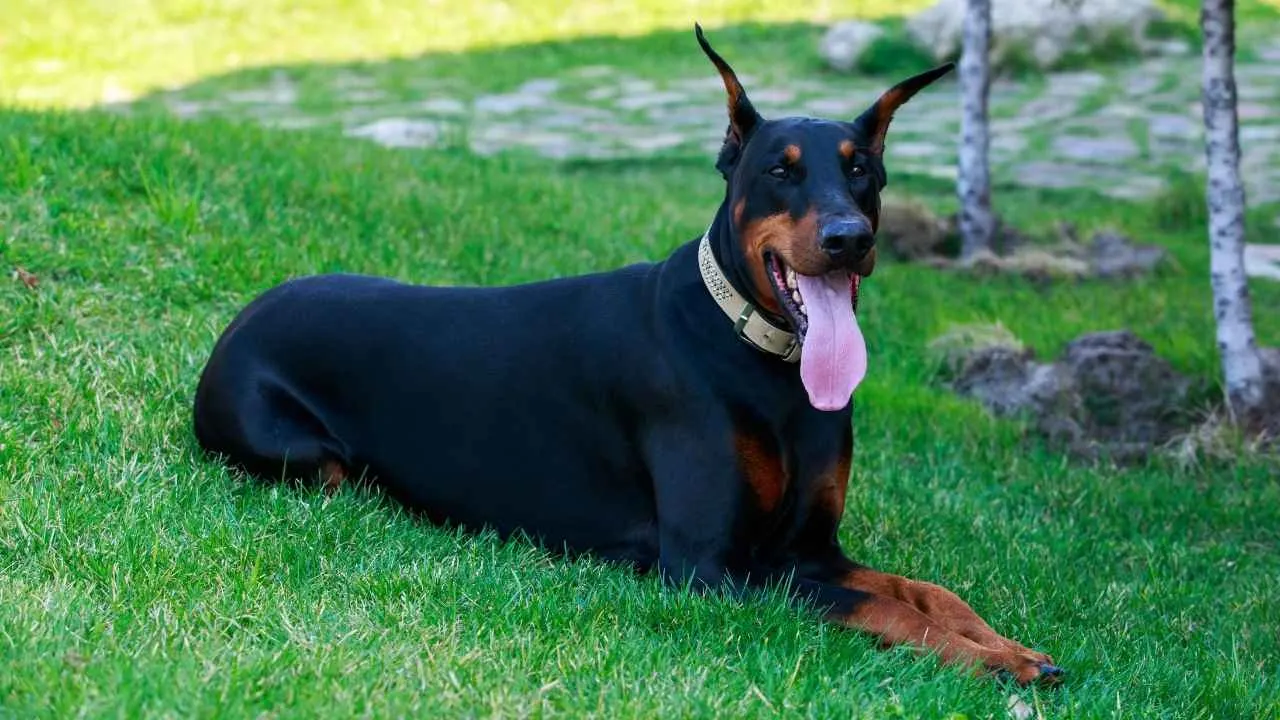
The Doberman Pinscher is sleek, athletic, and built for a low-maintenance coat routine. Underneath that polished look is a sharp, highly intelligent dog loyal to its family. Many owners call Dobermans velcro dogs for how closely they stick by your side.
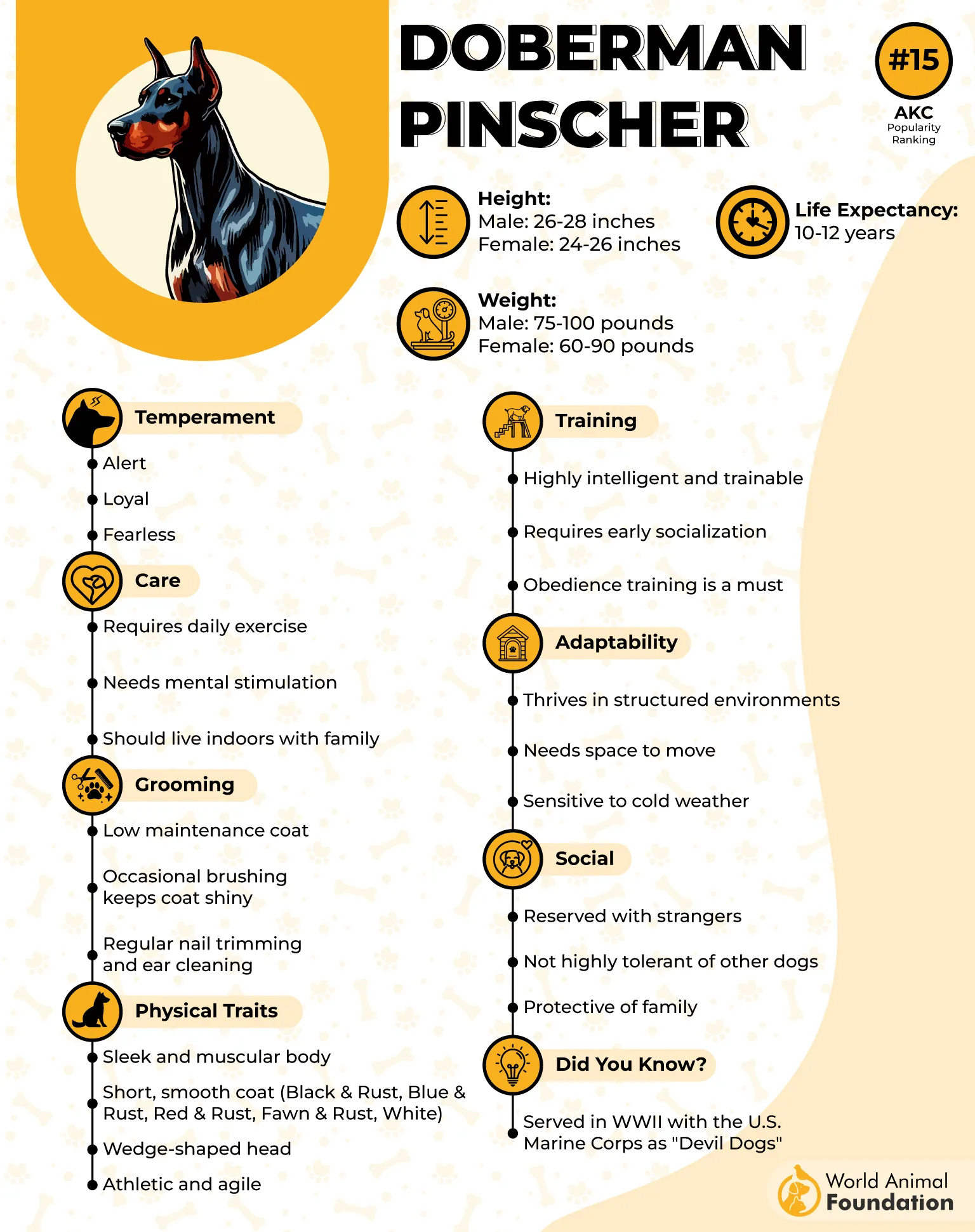
This is a true short, smooth coat with a single layer and no real undercoat. Shedding stays light and spreads evenly across the year instead of one season. The coat texture stays close and tight against the muscular body.
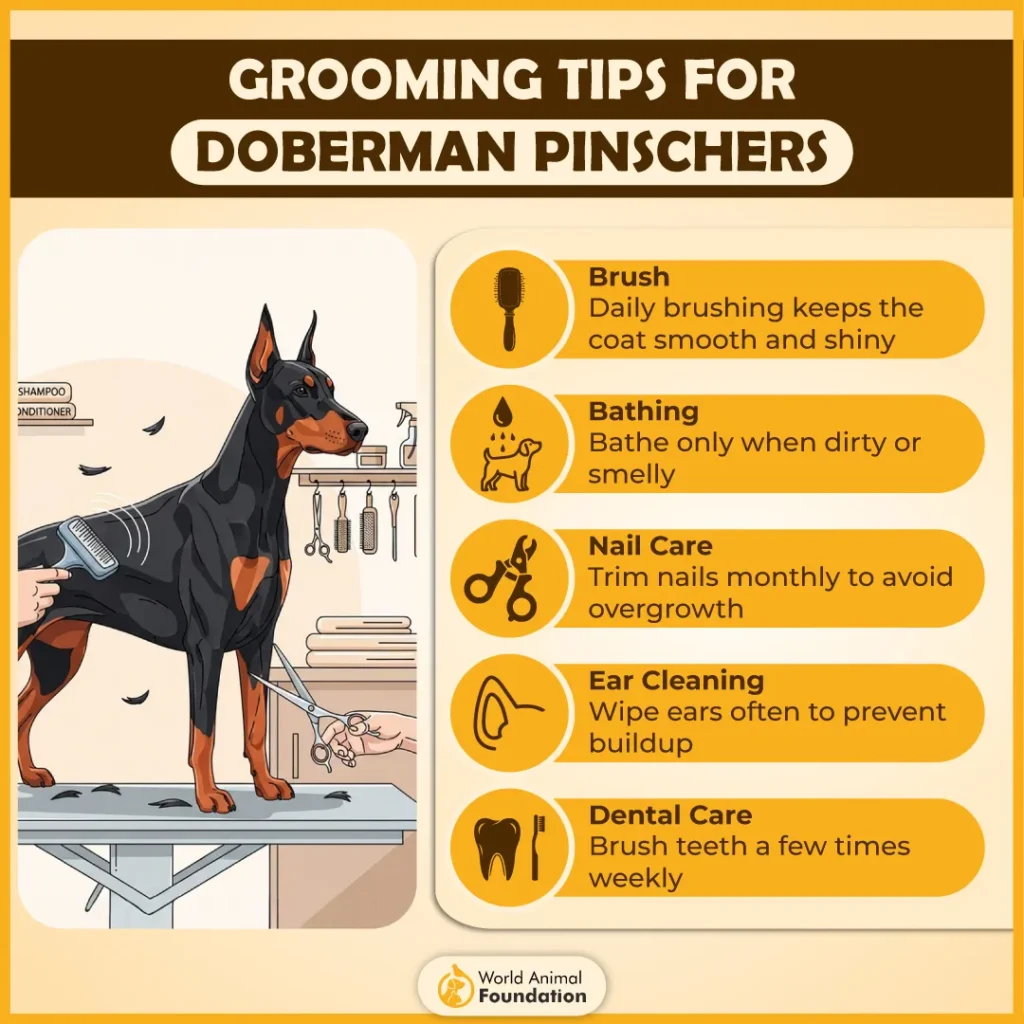
Brushing: Once a week using a rubber grooming mitt.
Bathing: Every 6 to 8 weeks to keep the coat glossy.
Thin coats like this one offer little protection in cold weather. VCA recommends a jacket for Dobermans on winter walks. Hot weather is easier on this coat, since heat escapes quickly through the thin layer.
4. Weimaraner
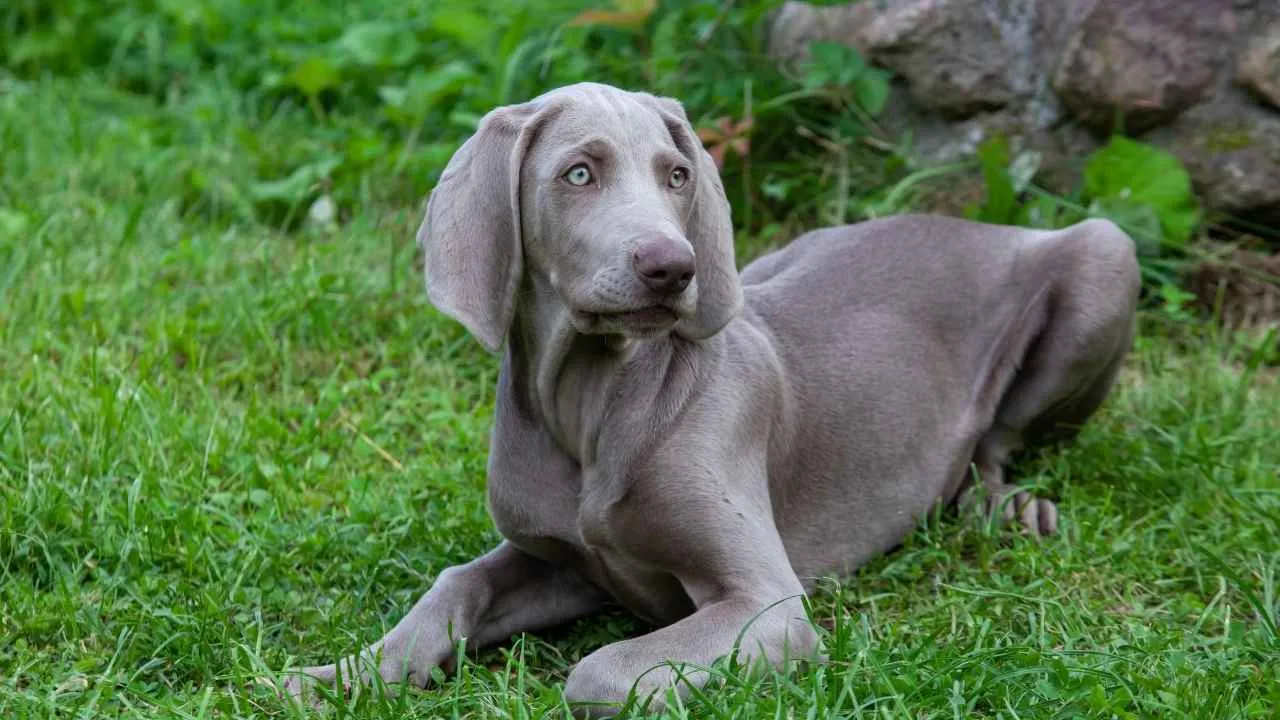
The Weimaraner, often nicknamed the gray ghost, brings a strikingly low-maintenance coat to the large breed lineup. High energy and highly intelligent, this dog thrives on human companionship, dog sports, and daily exercise. It is built for active owners who want a dog, not a grooming project.
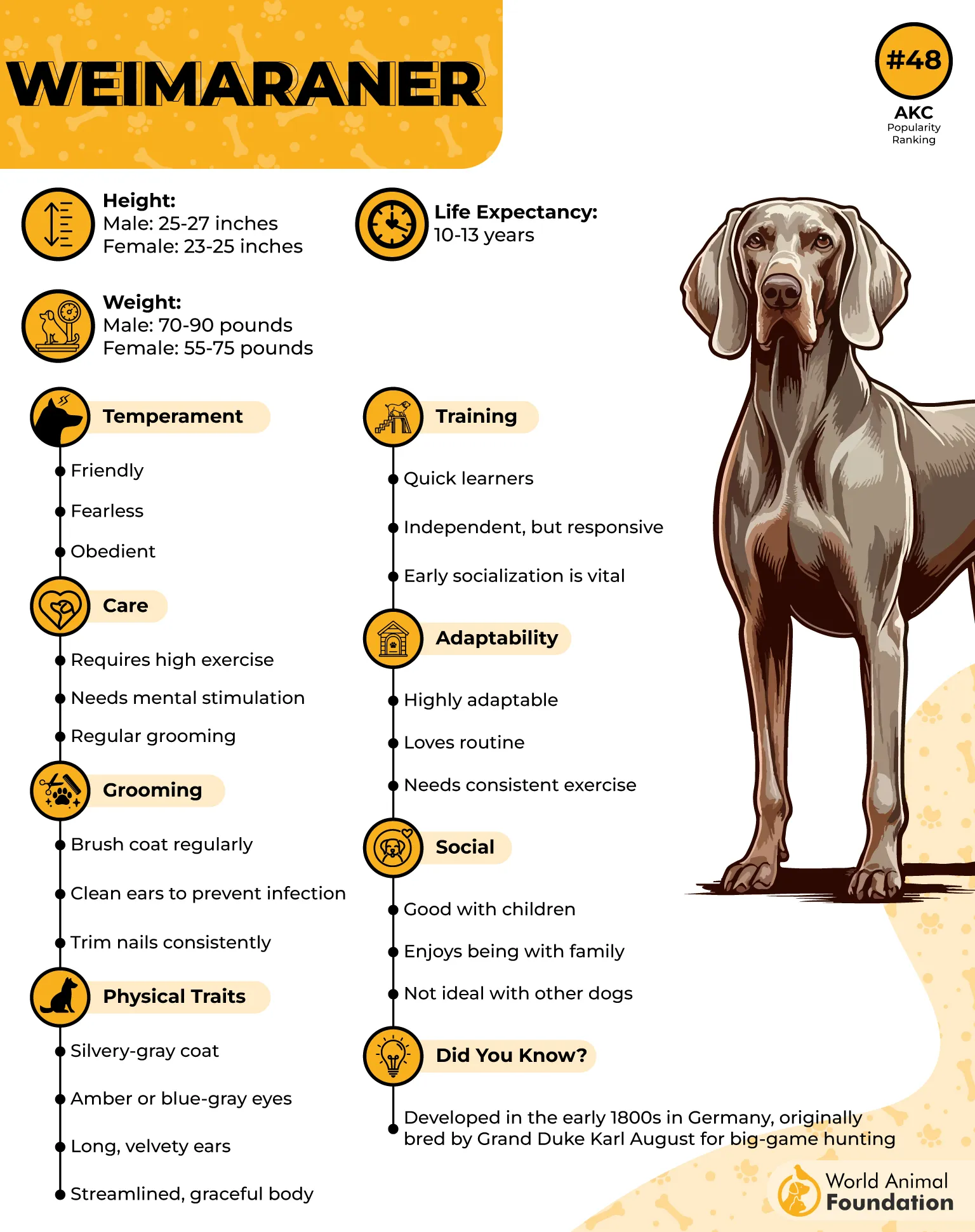
The coat is short, smooth, and single-layered with a distinctive silvery sheen. Shedding stays minimal and steady, without a dramatic seasonal shift. The texture feels fine and close to the skin.
Brushing: Once a week with a soft bristle brush or hound mitt.
Bathing: Every 6 to 8 weeks, or as needed.
That pale, thin coat makes the Weimaraner prone to sunburn on exposed skin. Purina advises limiting midday sun during hot weather for this reason. The same thin coat that keeps grooming light also means less natural insulation outdoors.
5. Cane Corso
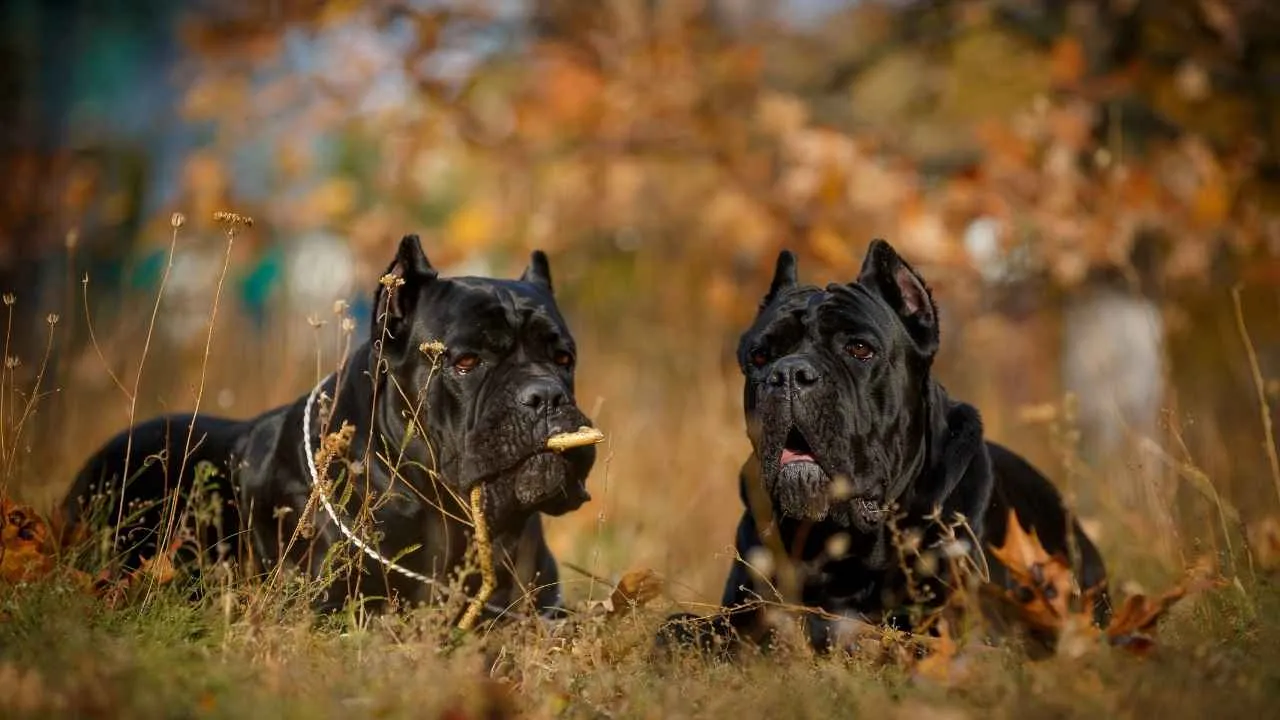
The Cane Corso pairs an imposing presence with a genuinely low-maintenance coat. This Italian guardian breed stays confident, calm, and fiercely protective of its family. Grooming this large breed takes far less time than its size suggests.
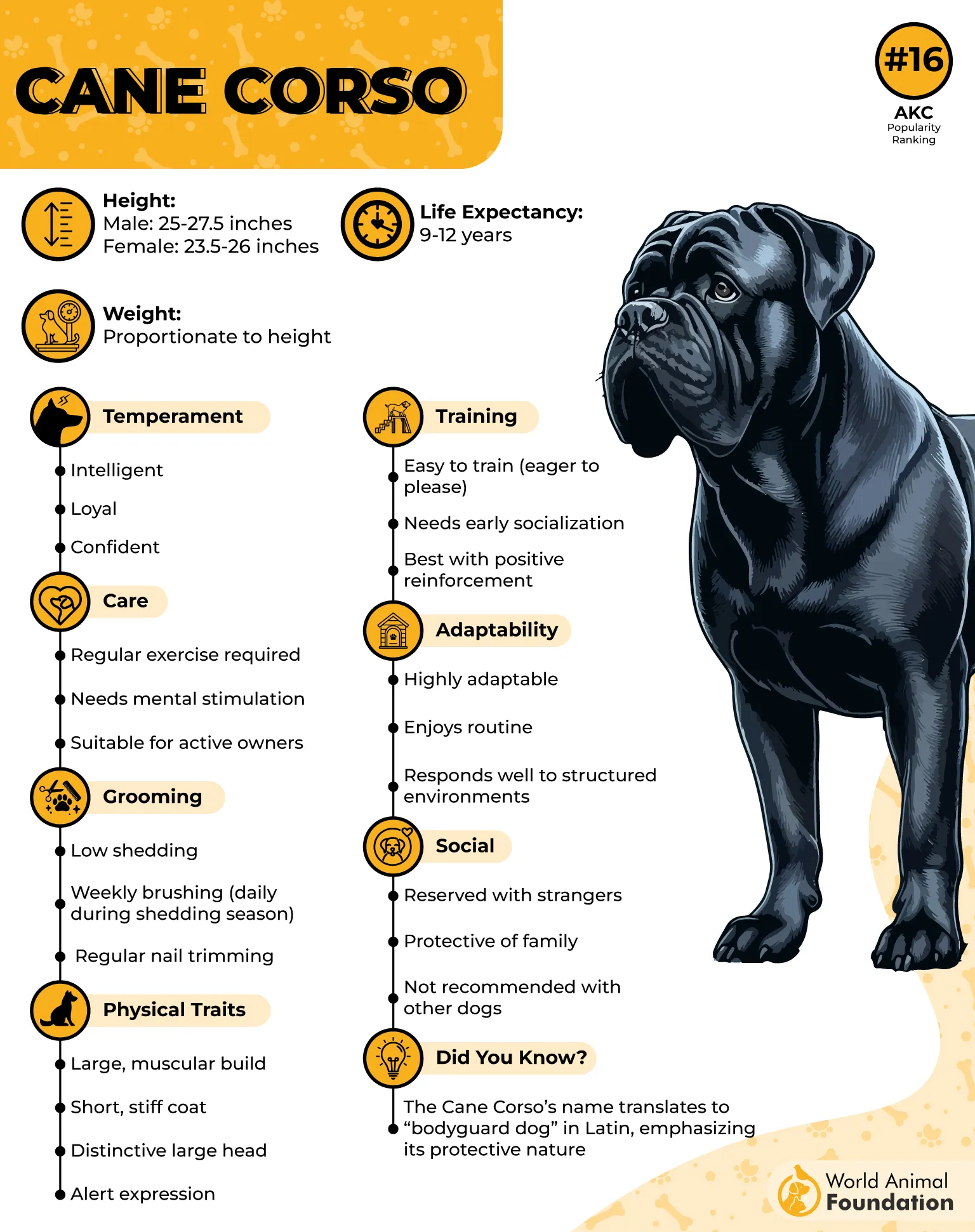
This short coat is technically a double coat, though thinner than heavier double-coated breeds. Shedding increases during 2 seasonal periods each year but stays manageable the rest of the time. The outer layer feels coarse while the undercoat stays fine and sparse.
Brushing: Twice a week, more often during seasonal shedding.
Bathing: Every 8 to 10 weeks, or when visibly dirty.
This coat naturally resists dirt and debris better than longer-haired large breeds. A damp cloth wipe-down between baths keeps the Cane Corso looking sharp. Odor stays low too, as long as regular grooming habits stay consistent.
6. Greyhound
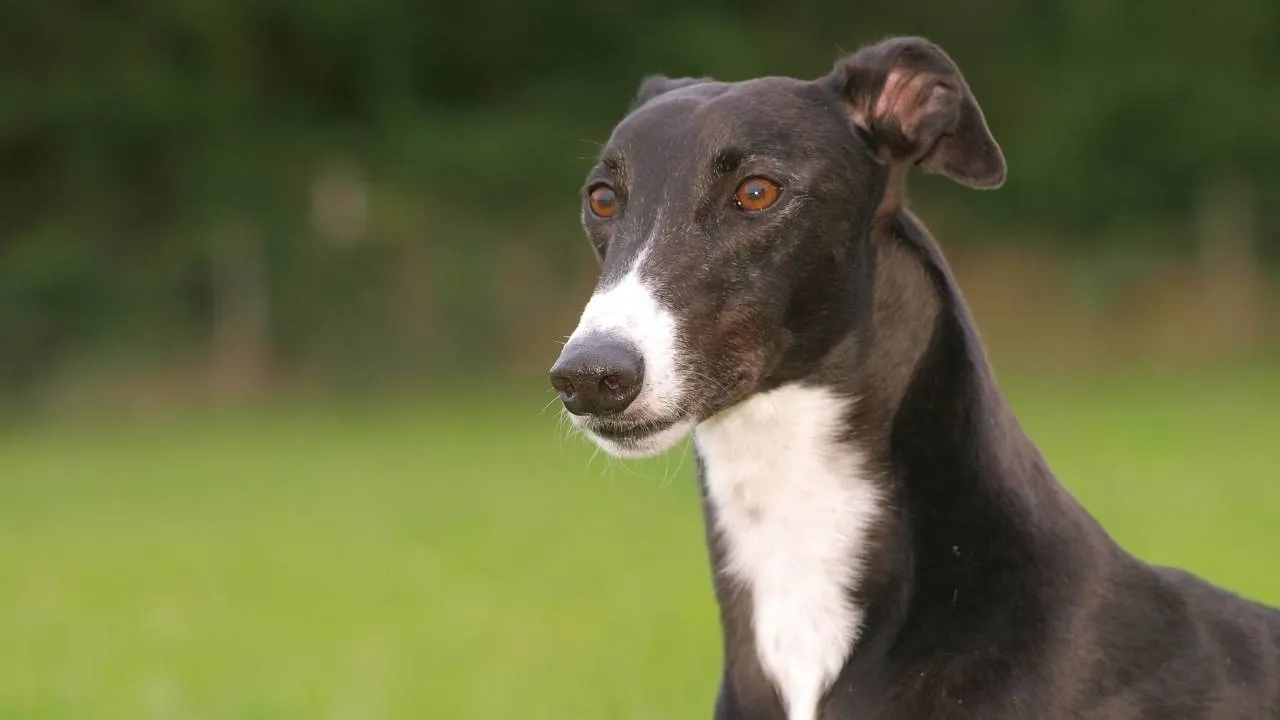
Few large breeds make grooming easier than the Greyhound. With a racing background built for speed, this breed carries a coat as efficient as its body. Gentle and calm indoors, it surprises many with how little anxiety it brings to daily life.
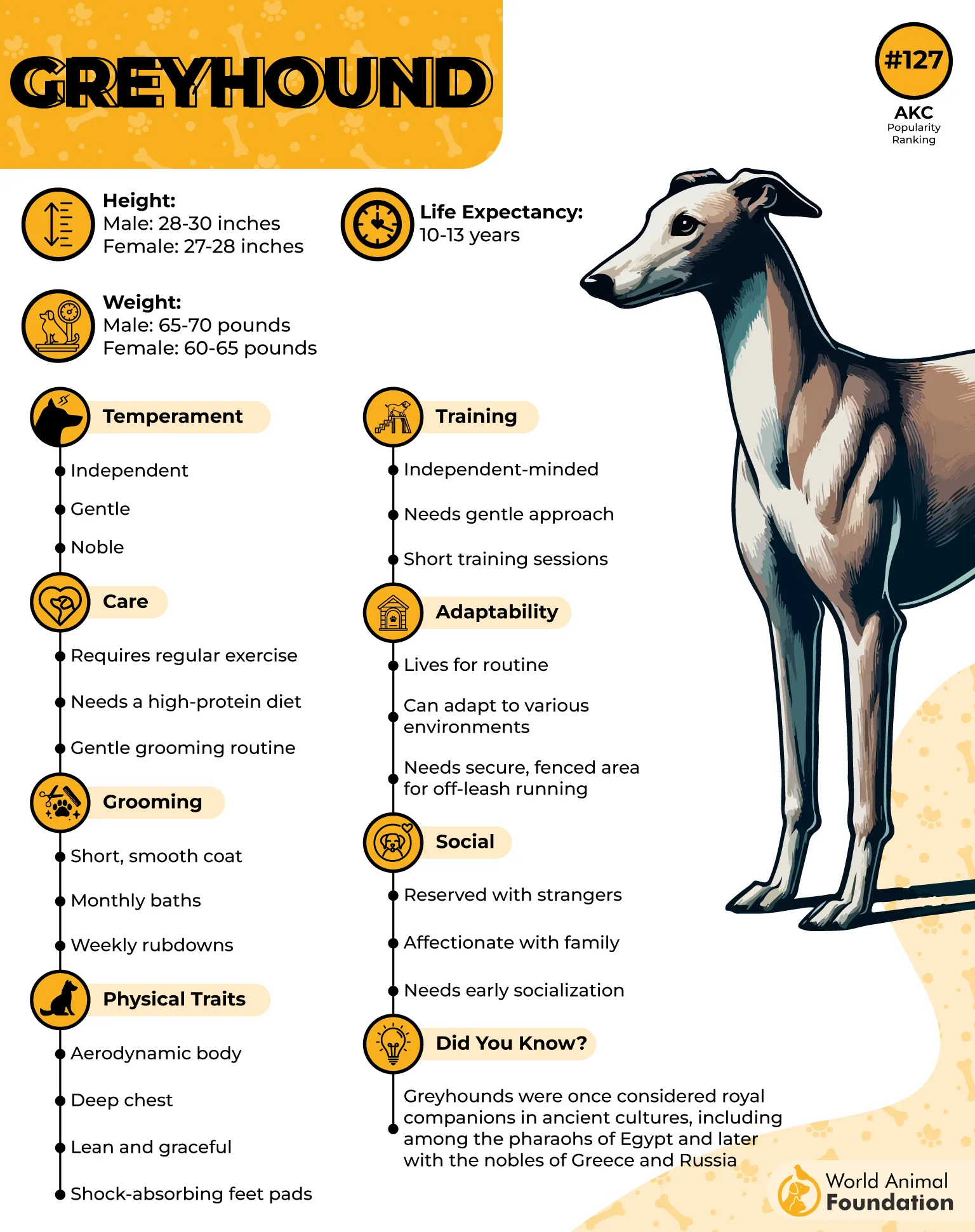
The coat is extremely short, smooth, and single-layered, almost like a second skin. Shedding stays light year-round, with no noticeable seasonal change. There is no undercoat, just fine hair close to the body.
Brushing: Once a week with a grooming glove or soft cloth.
Bathing: Every 8 to 10 weeks.
This nearly bare coat and low body fat leave greyhounds more sensitive to cold than most breeds. Britannica notes the lean build and thin coat work together for speed, not warmth. A coat on cold days is a sensible choice.
7. Rottweiler
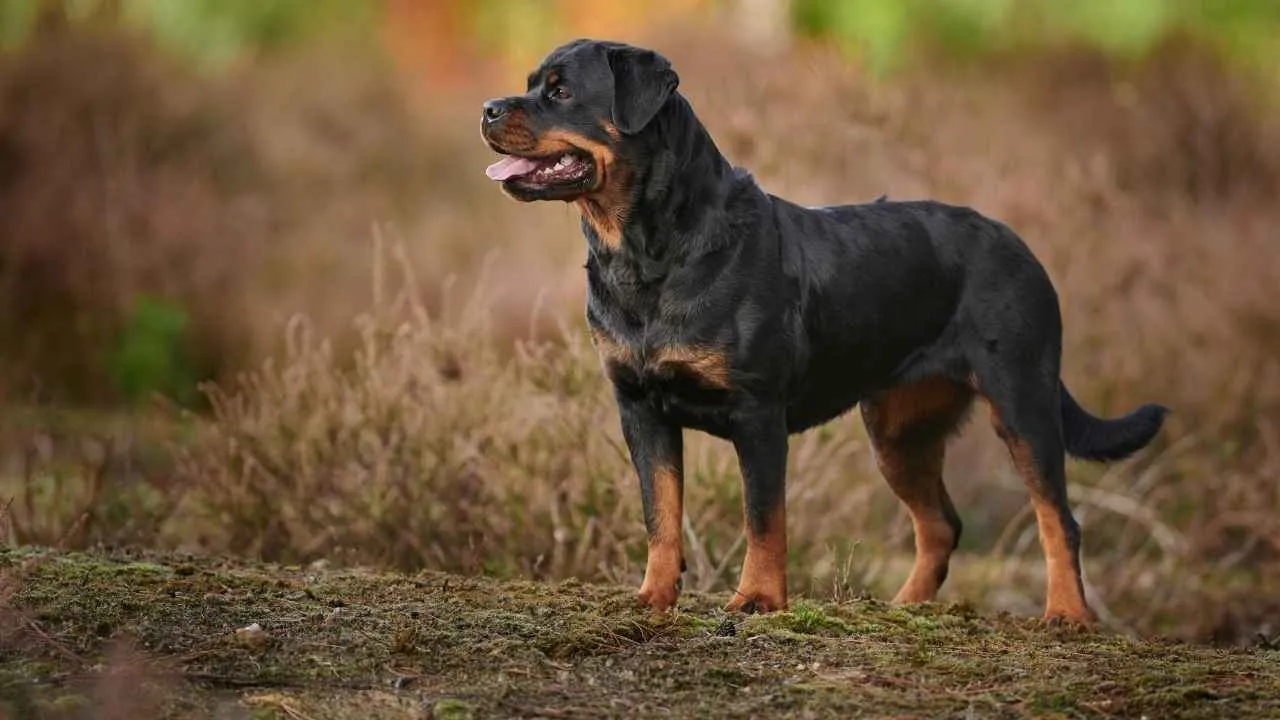
The Rottweiler combines a confident, loyal temperament with a coat that asks little in return. This large breed is often misunderstood, but its grooming needs are refreshingly simple. Strength and devotion define the Rottweiler just as much as its short, tidy coat.
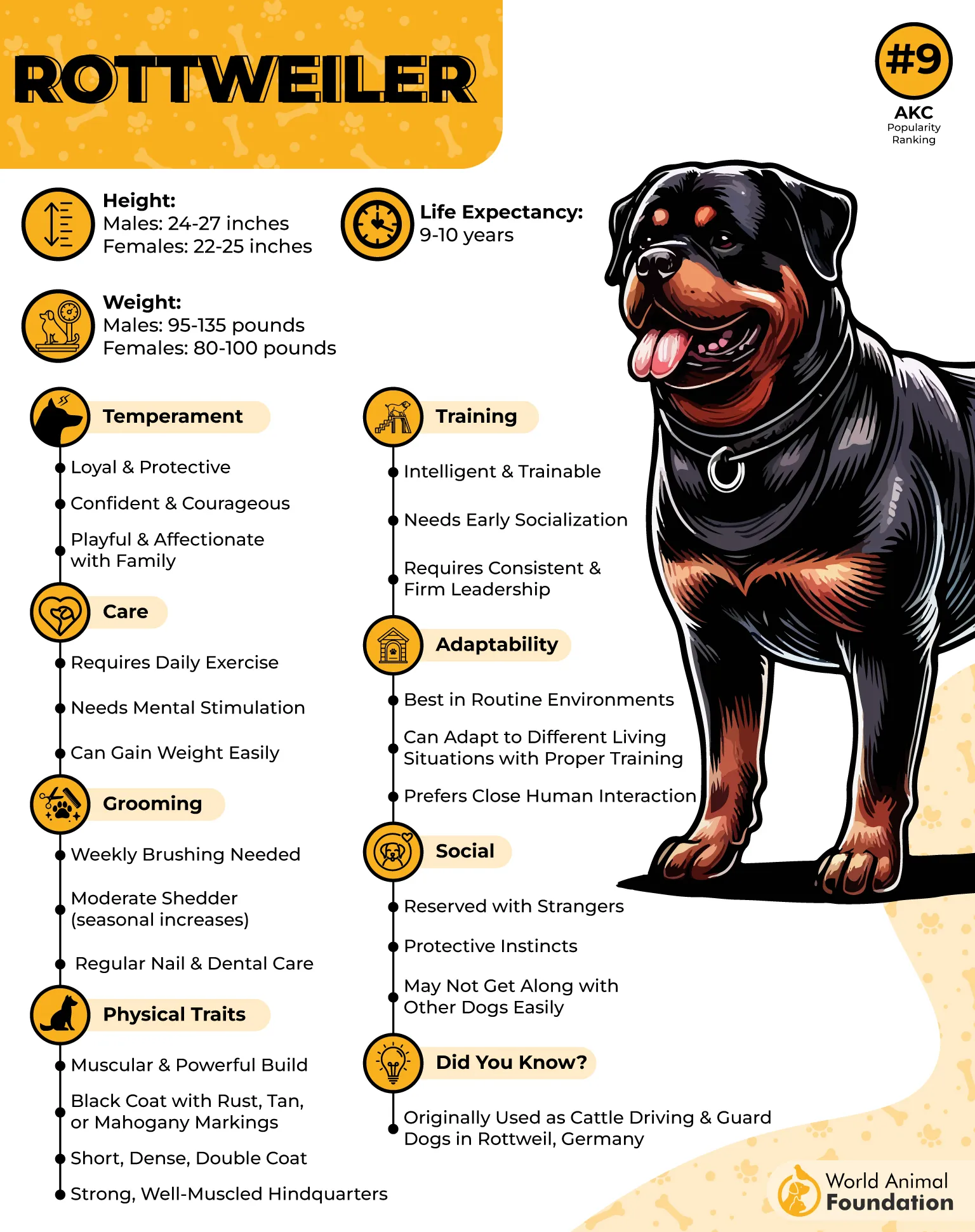
This is a short double coat, with a coarse outer layer and a softer undercoat underneath. Shedding picks up during 2 seasonal periods each year, then settles back down. The coat stays flat and dense rather than long or wavy.
Brushing: Twice a week, daily during heavy seasonal shedding.
Bathing: Every 8 weeks, or when needed.
That dense double coat offers more weather protection than many other short-coated large breeds. Cold tolerance is noticeably better here than in thinner-coated dogs like the Greyhound or Doberman. Regular grooming still forgives missed brushing days more than most.
Conclusion
These 7 large breeds prove that size says nothing about grooming workload, and coat type says everything. Pick based on your schedule rather than just looks, and any of these dogs will require minimal grooming while still fitting smoothly into daily life.
Every individual dog still deserves regular veterinary care alongside that easy coat routine. Ready for a new dog that keeps grooming simple? Start your search with one of these 7 low-fuss breeds today.
