




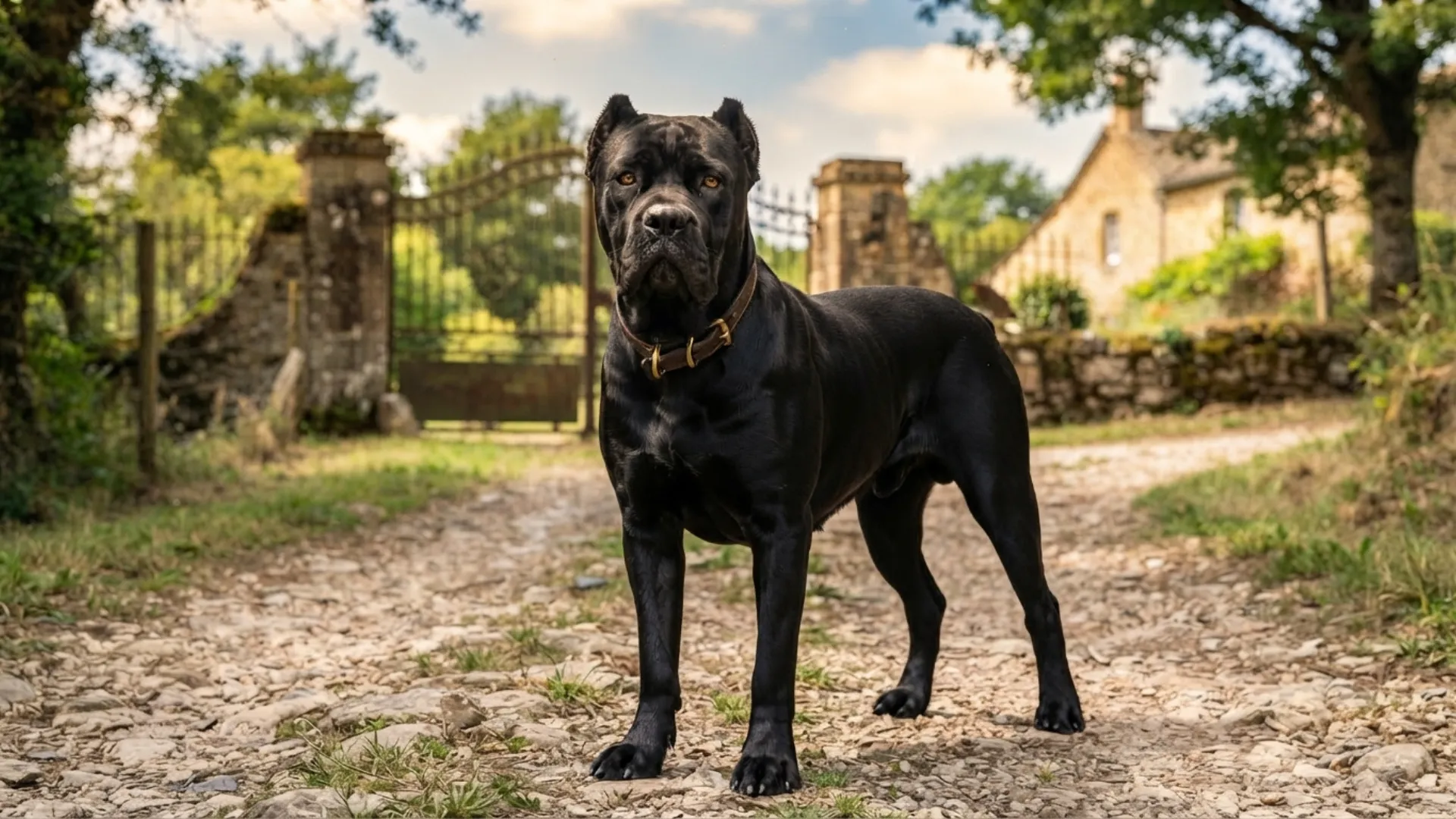
Large dogs can bring a wonderful combination of presence, affection, and loyalty to a household, but their size doesn’t have to mean demanding coat care. Several big breeds have naturally short, sleek coats that are easier to maintain than long or heavily textured fur.
These dogs typically need only occasional brushing to remove loose hair and support a healthy coat. However, short-haired doesn’t mean completely shed-free, so regular cleaning and basic grooming are still part of responsible ownership.
Research suggests 23% of dog owners get their dogs from breeders, compared with 7% of cat owners. Whether choosing from a responsible breeder or another source, finding a large breed with manageable grooming needs can make life easier.
Large Dog Breeds Boasting Naturally Short Hair
1. Bloodhound
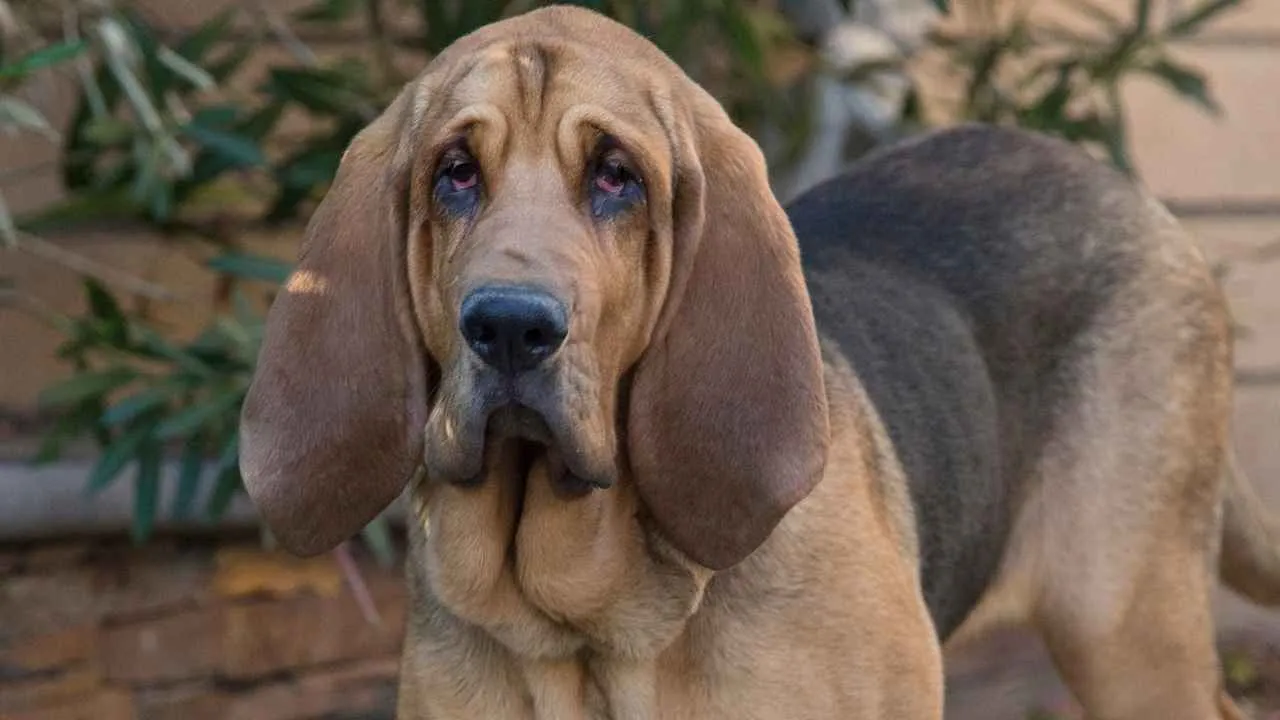
The Bloodhound is a massive scent hound distinguished by its short, dense coat and unmistakable appearance. Loose, wrinkled skin frames its long face, while oversized drooping ears and deep-set eyes create its dignified expression.
According to PetMD, they are recognizable by their long, drooping ears and prominent facial skin folds, which contribute to their serious-looking expression.
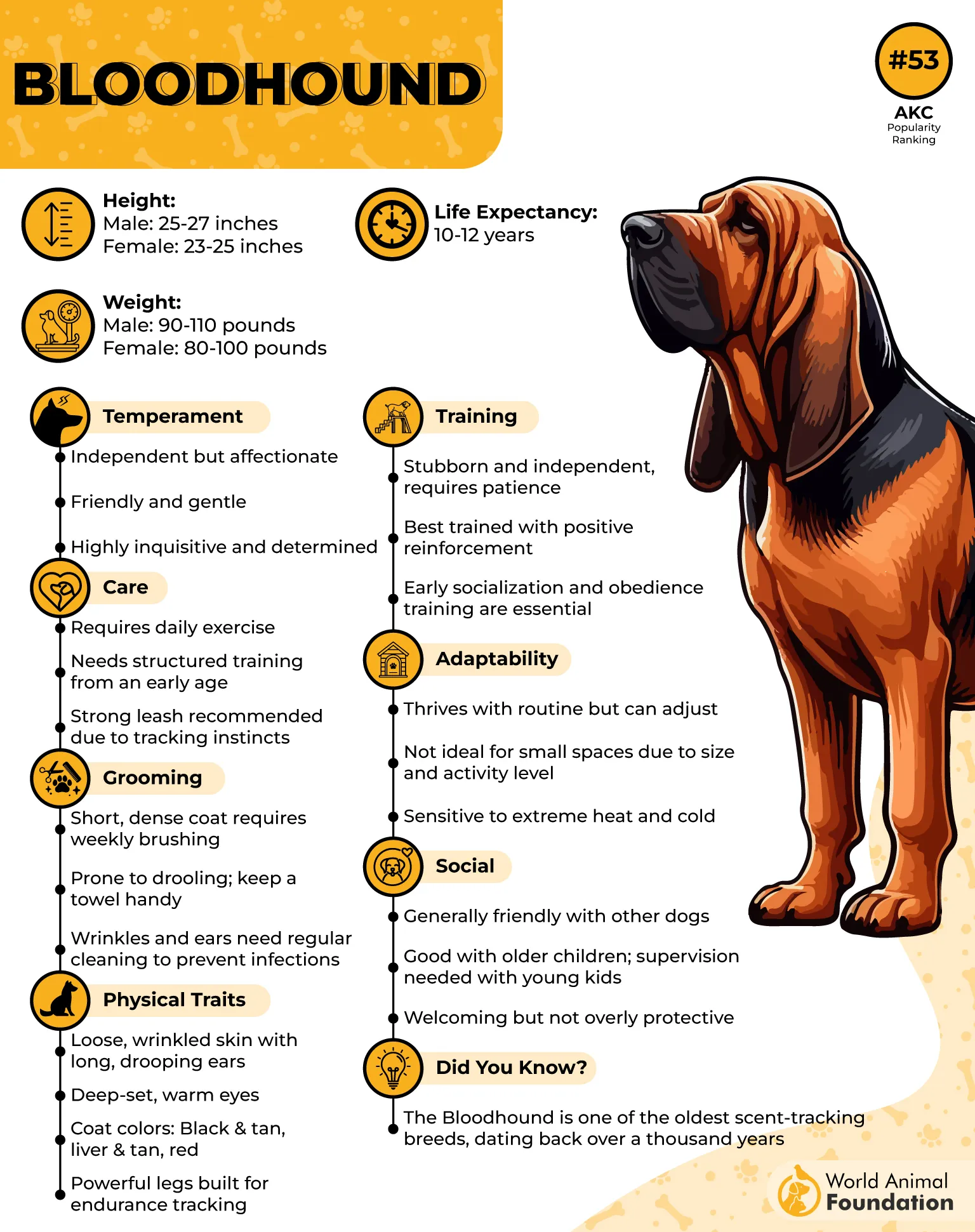
Beneath its short coat is a powerful, athletic body built for following scents across demanding terrain. Bloodhounds are renowned for their extraordinary tracking abilities and can remain focused on a trail for miles. Their coat sheds seasonally and benefits from weekly brushing to remove dead hair.
How This Breed Stands Out
Loose, wrinkled skin — Deep facial folds and abundant loose skin give the Bloodhound its distinctive, solemn appearance.
Remarkable scent-tracking ability — Its exceptional nose allows it to follow challenging trails across extensive terrain.
2. Greyhound
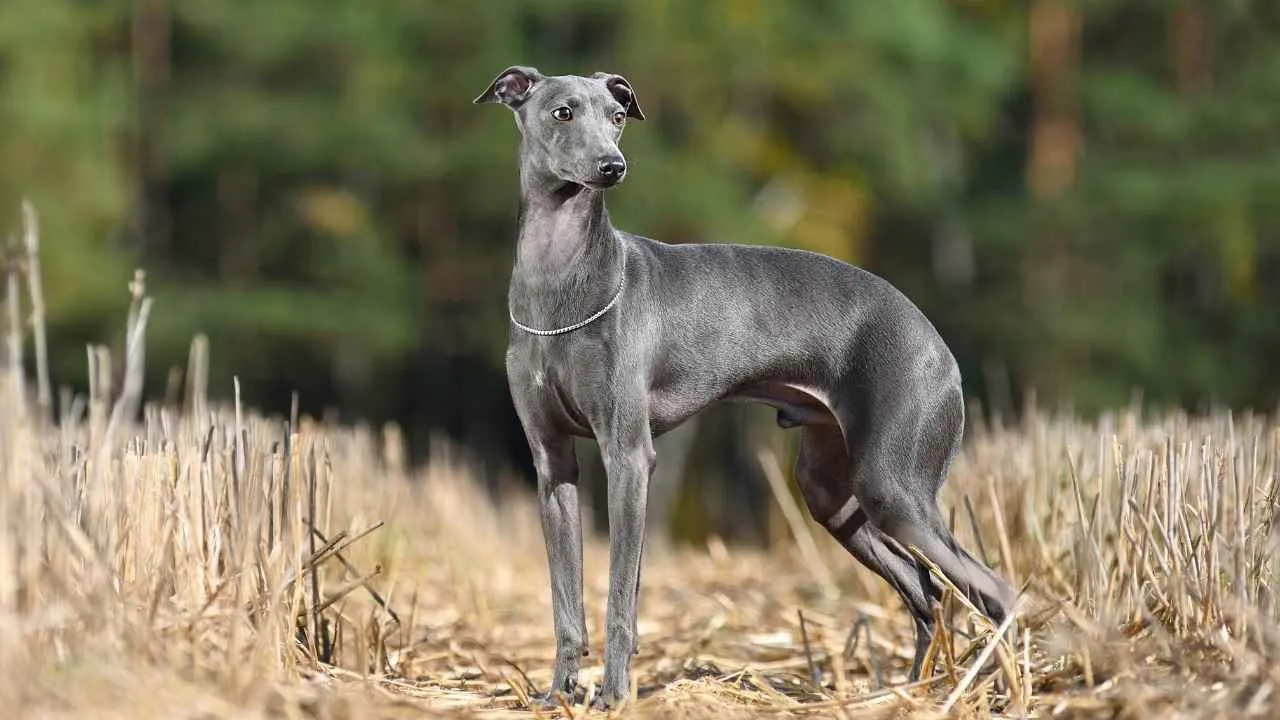
The Greyhound has a sleek, aerodynamic body shaped for remarkable speed, with a narrow head, long neck, deep chest, and powerful hindquarters. Its short, smooth coat comes in a variety of colors and has a naturally neat appearance.
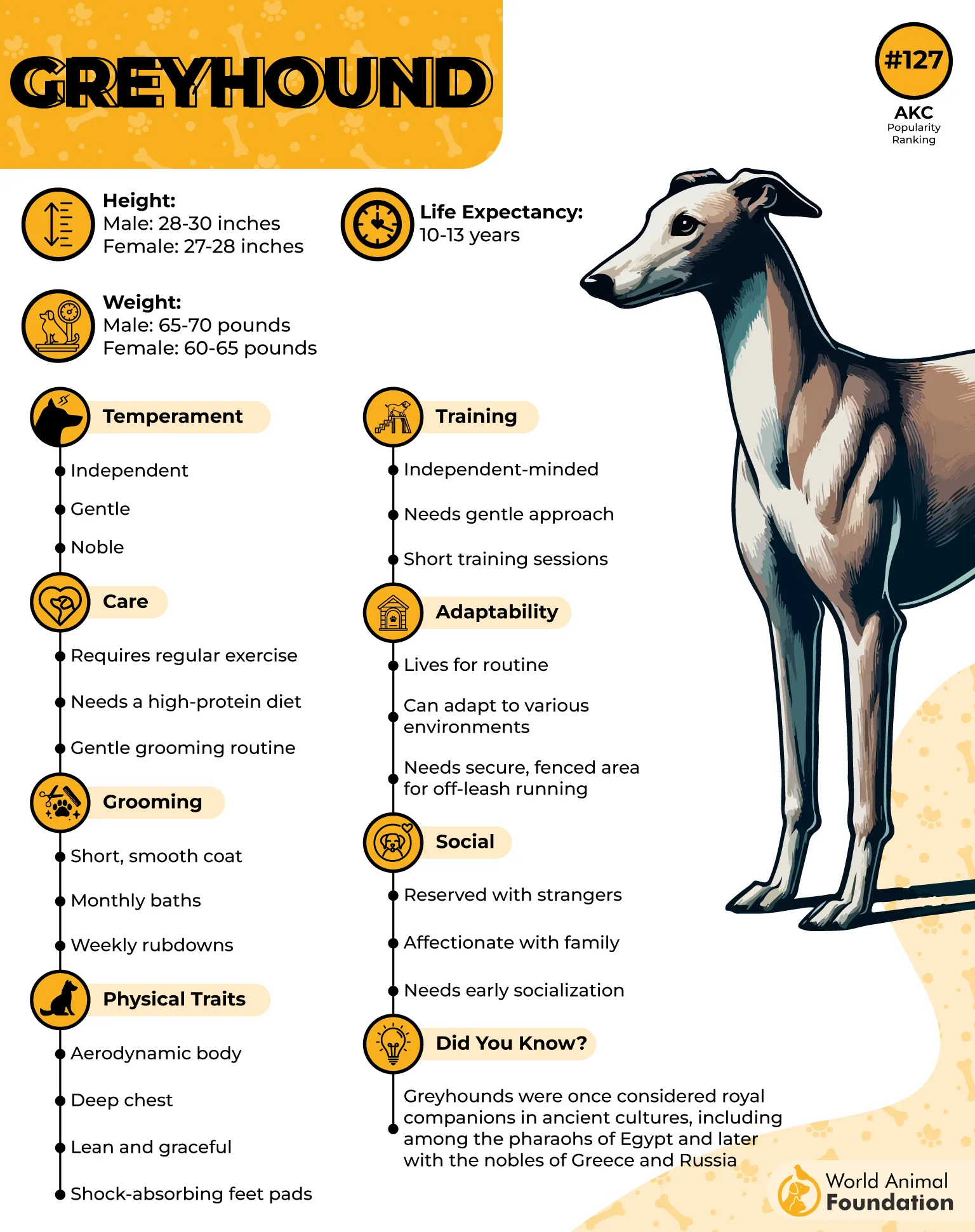
Despite its athletic build, the Greyhound is generally quiet, gentle, and affectionate with its family. It can be somewhat reserved around strangers and responds best to patient, gentle training. The single-layer coat has no undercoat and needs only light grooming, making weekly brushing sufficient for removing loose hair.
How This Breed Stands Out
Sleek, aerodynamic body — Long legs, a streamlined frame, and a deep chest give the Greyhound its distinctive athletic silhouette.
Exceptionally smooth coat — Its fine, short coat is easy to maintain and typically requires minimal grooming.
3. Beauceron
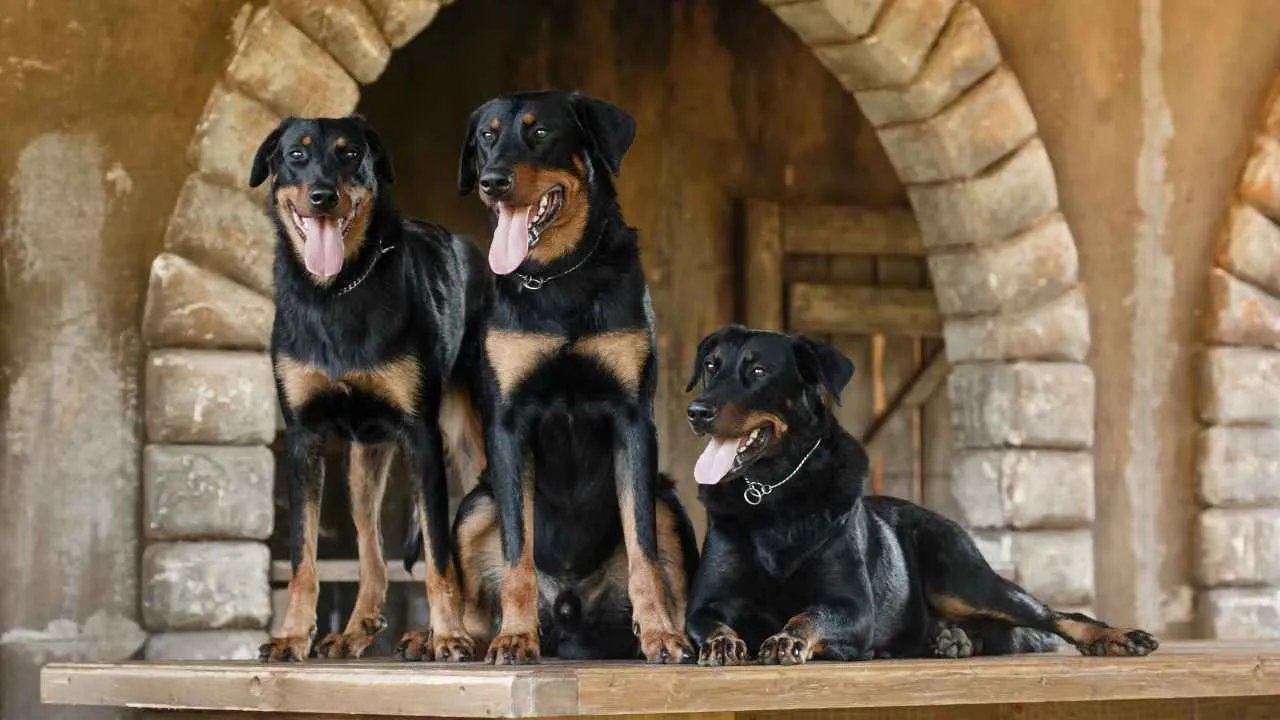
The Beauceron is a powerful French herding breed recognized for its short, dense double coat. Its rough, waterproof outer layer protects the softer undercoat, while the classic black-and-tan coloring gives this large working dog a striking appearance.
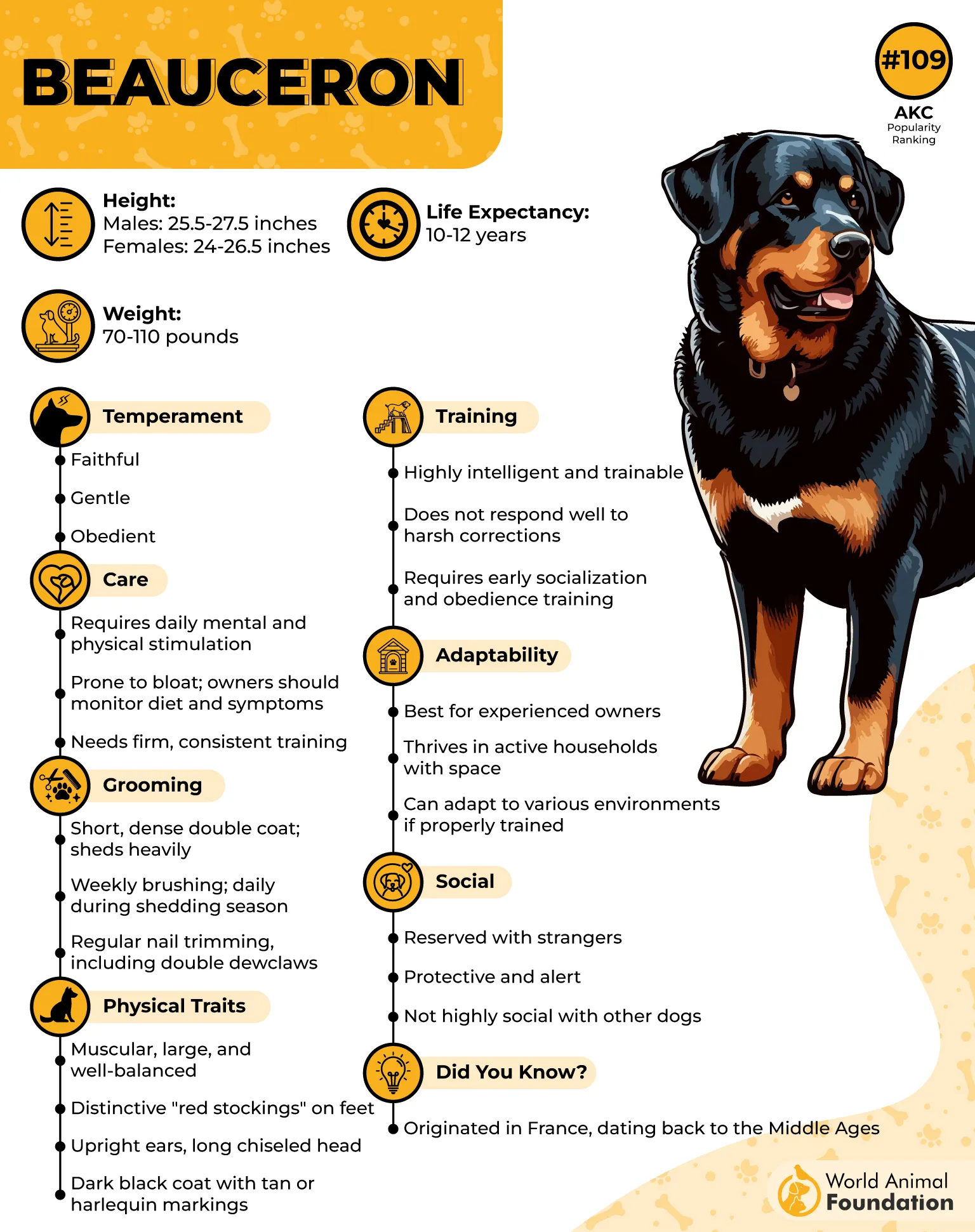
Intelligent and naturally protective, the Beauceron is a loyal companion with strong herding instincts and plenty of energy. It learns readily but benefits from firm, consistent guidance and daily physical activity. The coat is relatively easy to maintain, although regular brushing becomes more important during seasonal shedding.
How This Breed Stands Out
Short double coat — The dense coat offers weather protection while requiring relatively simple routine grooming.
Natural herding instincts — Bred to manage livestock, the Beauceron remains alert, energetic, and naturally inclined to control movement.
4. Cane Corso
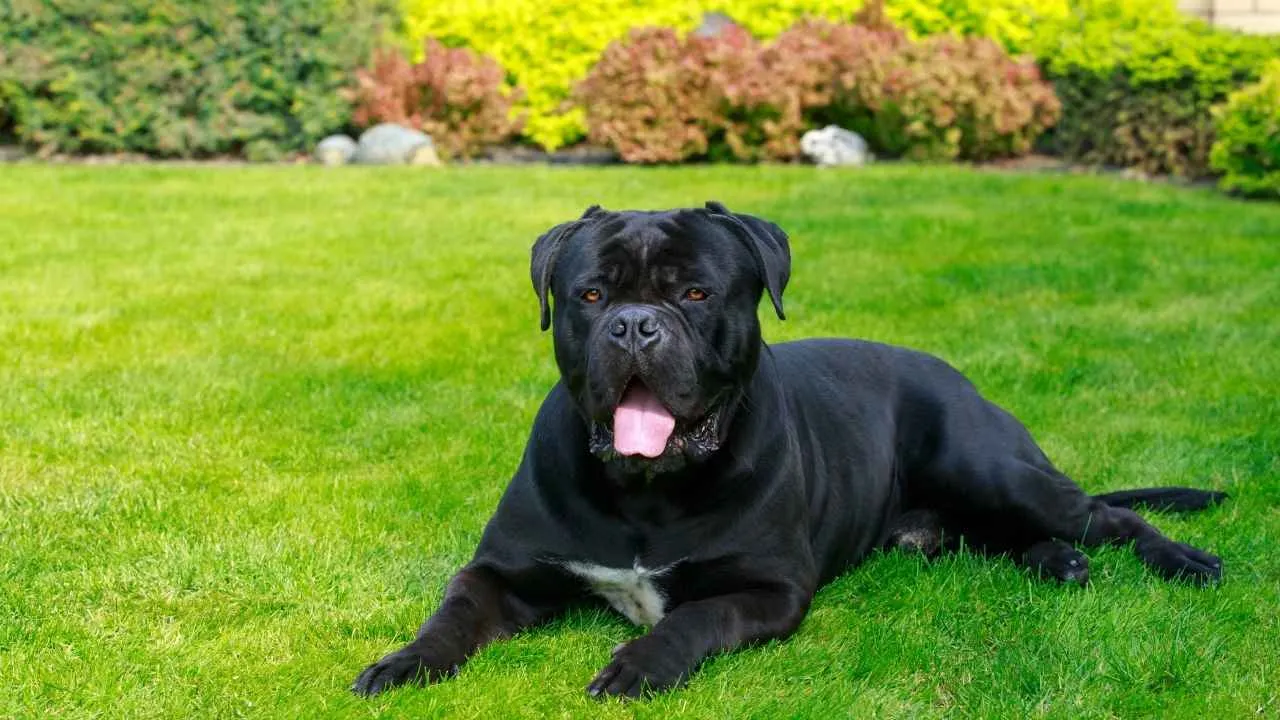
The Cane Corso combines a short, practical coat with the commanding presence expected of a powerful guardian. Its dense double coat has a slightly coarse texture and needs only weekly brushing to remove loose hair and distribute natural oils.
According to PDSA, Cane Corsos are highly active dogs that need plenty of daily exercise to stay happy, healthy, and well-balanced.
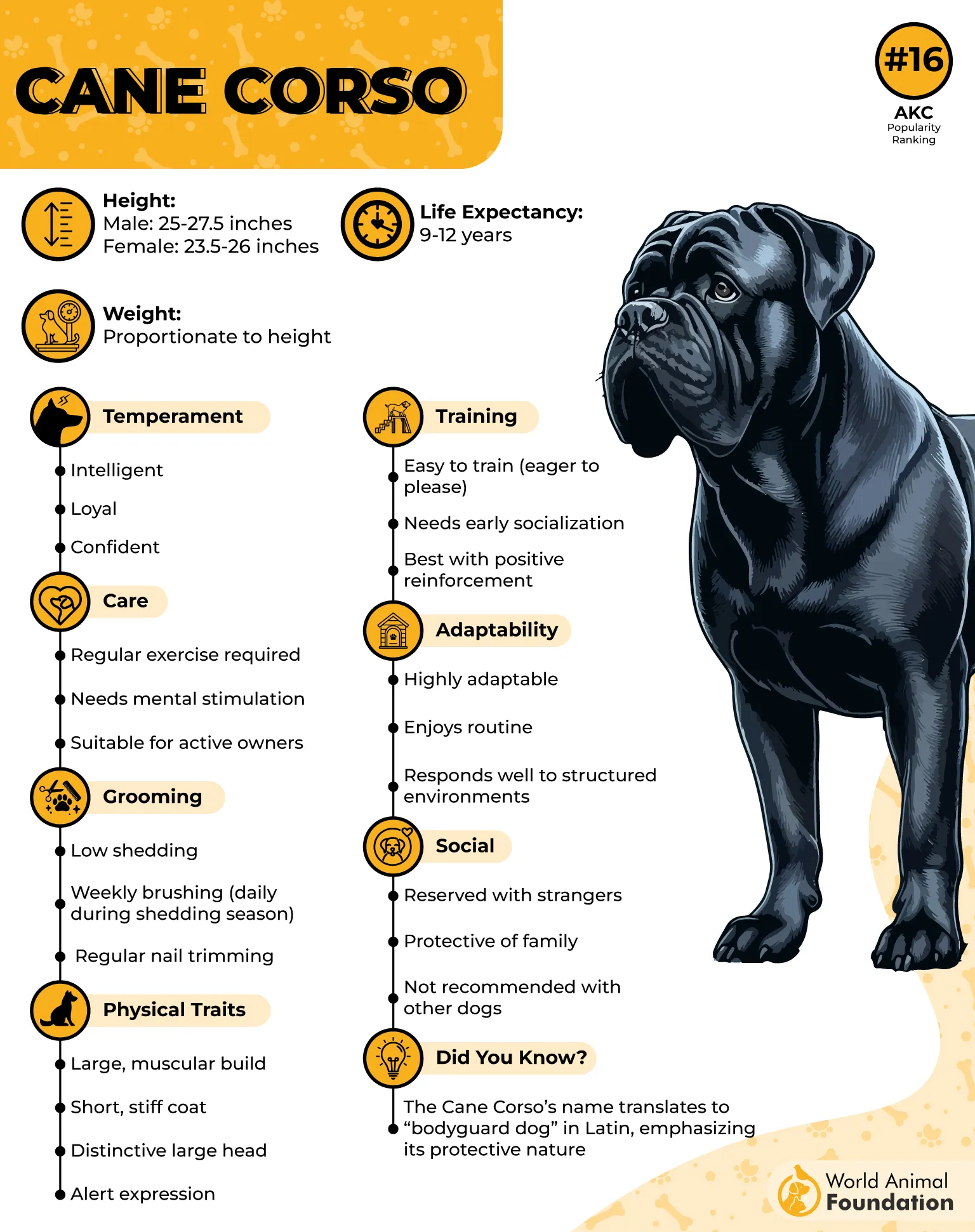
Despite its imposing appearance, this breed is affectionate and deeply devoted to its family. Cane Corsos have a calm, steady temperament but need regular exercise, mental stimulation, early socialization, and consistent training to thrive.
How This Breed Stands Out
Dense, close-fitting coat: The Cane Corso’s short, dense double coat sits close to the body, offering practical protection while requiring relatively simple grooming.
Powerful guardian presence: Its imposing build, confidence, and natural protective instincts make the Cane Corso an attentive guardian that remains deeply loyal and affectionate toward its family.
5. Great Dane
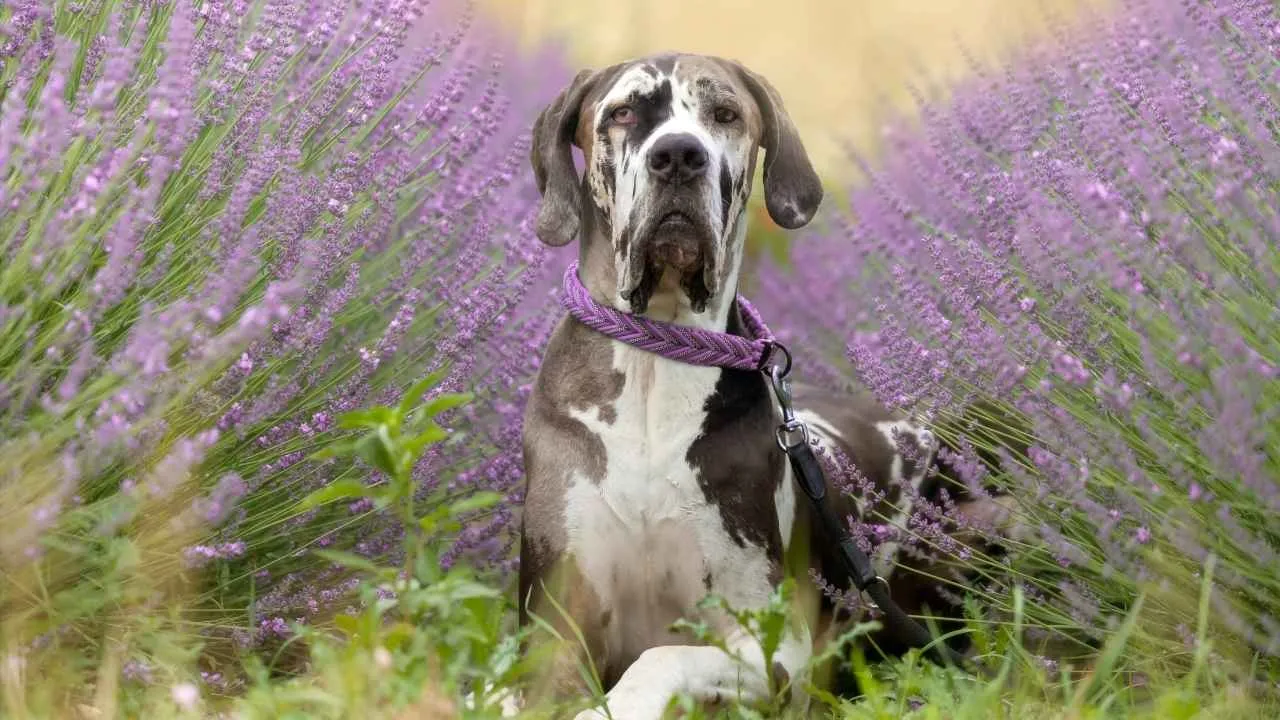
The Great Dane pairs an enormous frame with a short, smooth coat that is refreshingly simple to maintain. Its coat comes in several striking patterns, including the distinctive harlequin pattern, while routine brushing helps manage year-round shedding without extensive grooming.
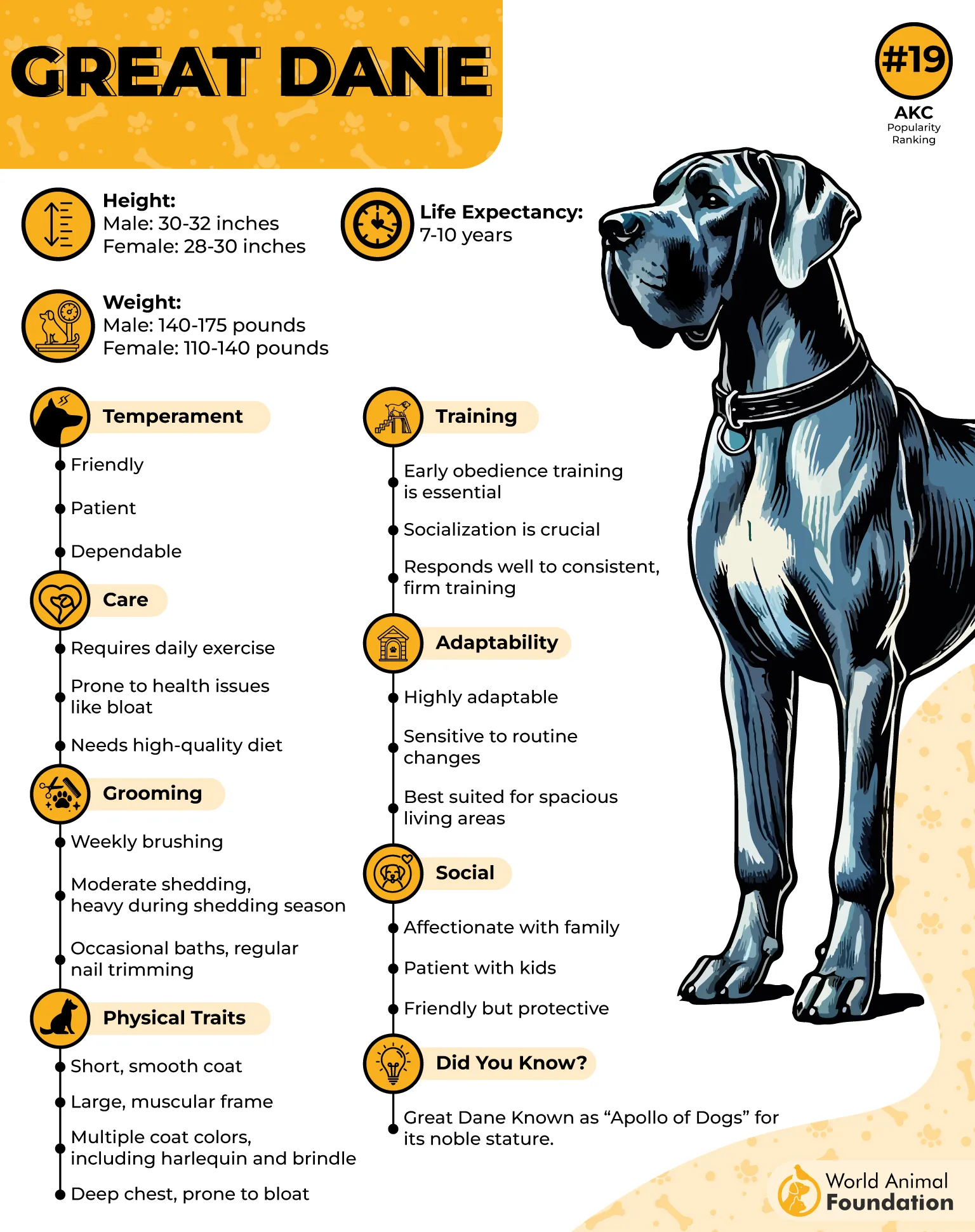
Despite their towering stature, Great Danes are known for their gentle, affectionate temperament and generally moderate exercise needs. They can be playful and protective at home, while early training and socialization are important for managing their strength and ensuring good manners around people and other animals.
How This Breed Stands Out
Short, glossy coat: Its sleek coat needs only routine brushing to remove loose hair and maintain a healthy appearance.
Gentle giant temperament: Great Danes are typically affectionate and even-tempered, forming strong bonds with their families despite their imposing size.
6. Bullmastiff
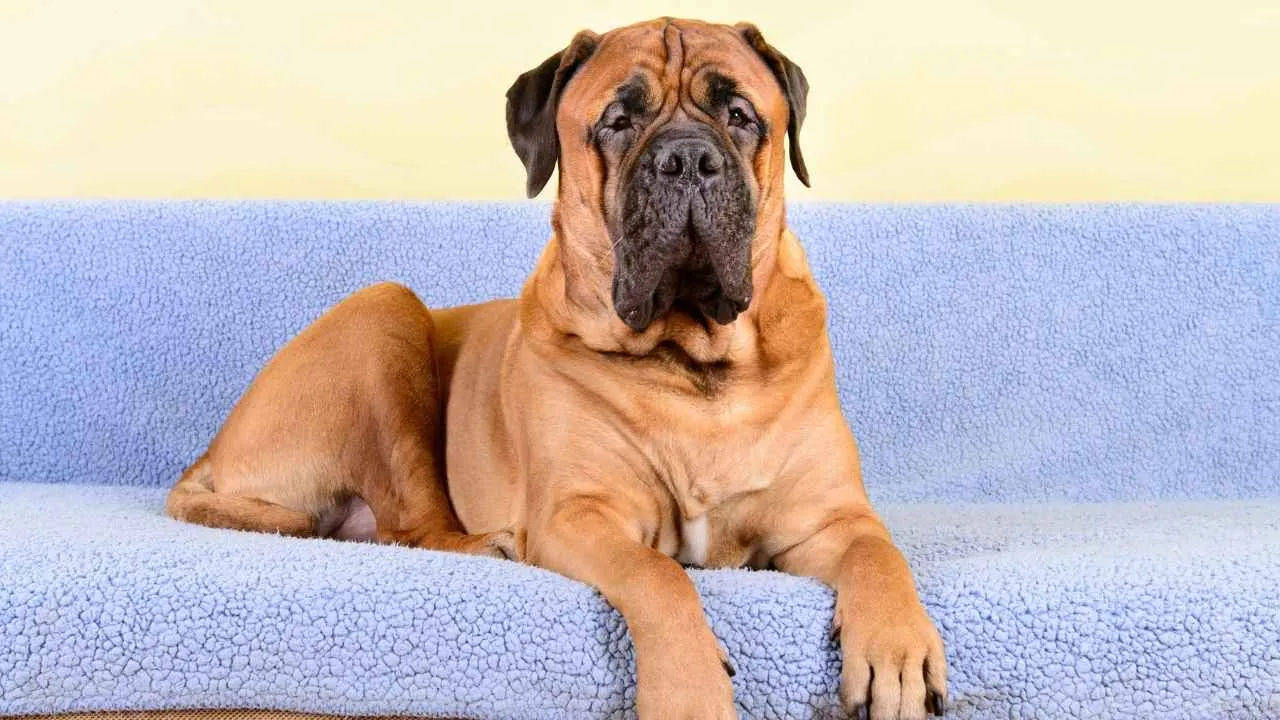
The Bullmastiff combines a powerful build with a short coat that is practical and relatively easy to maintain. Its coat comes in fawn, red, or brindle and may shed seasonally, while regular grooming helps control loose hair and keeps the skin and coat in good condition.
According to Royal Canin, the Bullmastiff’s history as a watchdog contributes to its deeply devoted nature, making it a companion that does not enjoy being left alone for long.
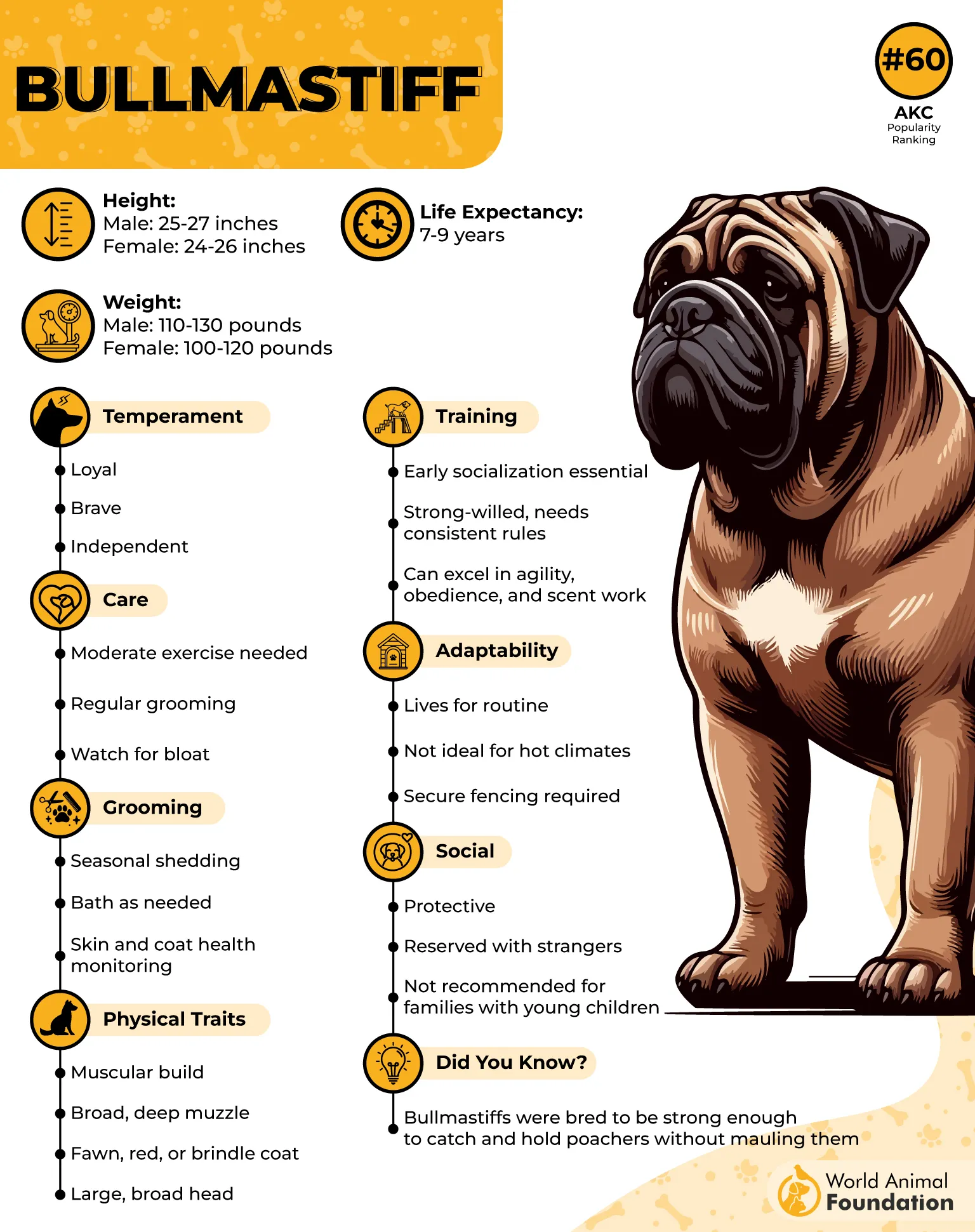
Bred as a formidable guardian, the Bullmastiff is confident and watchful yet generally calm and docile at home. Its quiet nature means it may not bark frequently, making early socialization and consistent training especially important for developing reliable behavior around people and other animals.
How This Breed Stands Out
Short, weather-resistant coat: The Bullmastiff’s short coat provides practical protection and requires routine grooming rather than intensive coat care.
Quiet protective nature: It tends to remain composed and reserved while naturally watching over its family and property.
7. Boerboel
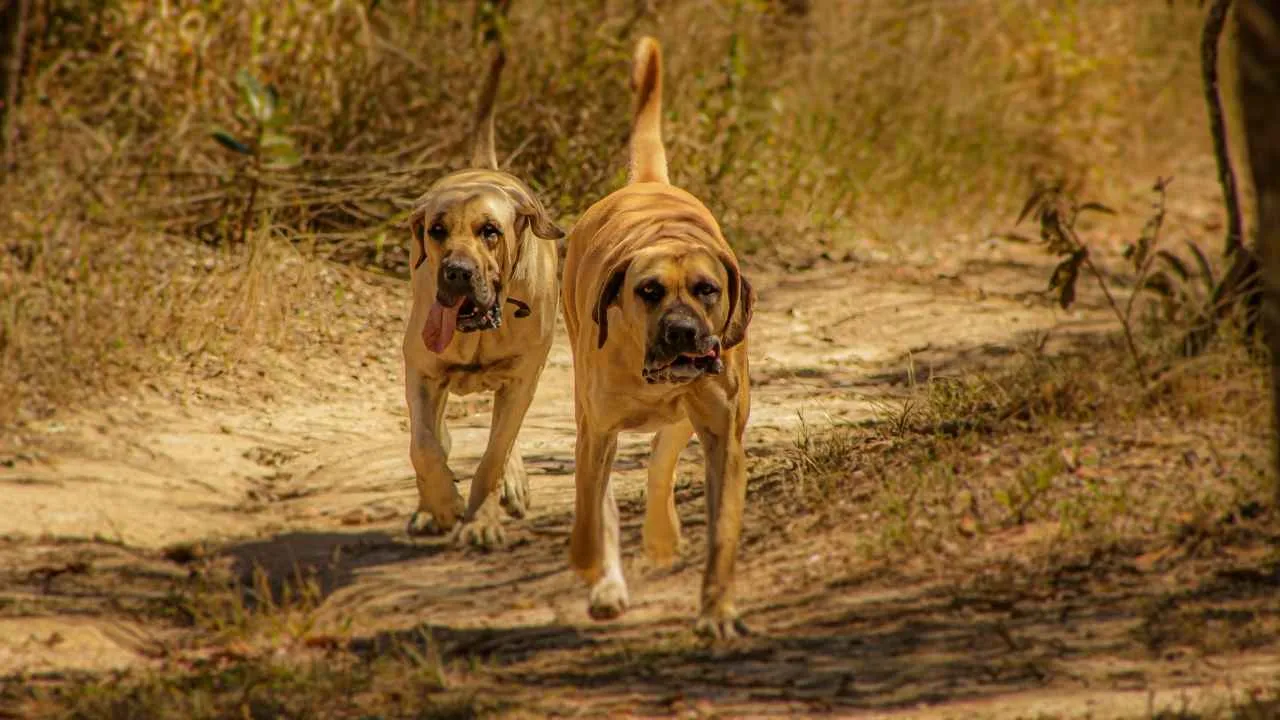
The Boerboel has a sleek, short coat that keeps grooming relatively straightforward. Its dense coat sheds moderately, so weekly brushing can help remove loose hair, spread natural oils, and maintain healthy-looking skin. Occasional baths and regular nail care are usually sufficient.
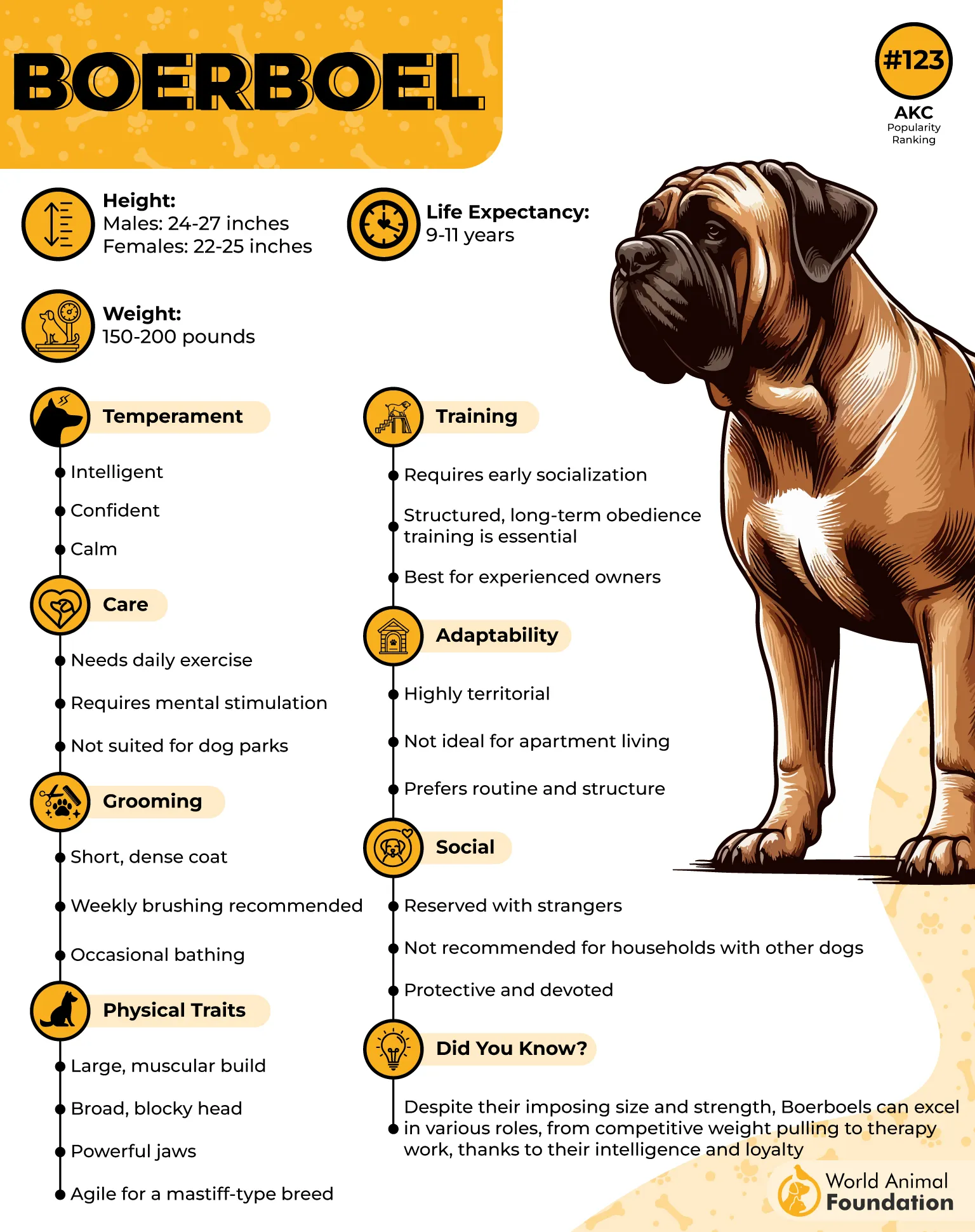
Developed to protect South African homesteads, the Boerboel is a confident and discerning guardian with a powerful, muscular build. Intelligent and eager to learn, it responds well to consistent training and early socialization, while its dominant nature makes experienced handling especially important.
How This Breed Stands Out
Smooth, low-maintenance coat: Its short, dense coat needs only routine brushing to control shedding and keep it in good condition.
Confident family guardian: The Boerboel is devoted to its household and naturally attentive to protecting its people and property.
Conclusion
Large dog breeds with naturally short hair can offer an appealing balance of impressive size and simpler coat care. Their sleek coats generally need less grooming than longer or heavier coats, making routine maintenance more manageable.
From the gentle Great Dane to the devoted Cane Corso, these breeds bring distinct personalities and abilities to the home. Some are calm companions, while others are energetic workers or dependable guardians.
Although their coats may be easy to maintain, their overall needs can vary considerably. Exercise, training, socialization, nutrition, and regular care remain important for keeping these powerful dogs healthy and well-adjusted.
Choosing the right breed ultimately depends on your lifestyle, experience, and available space. A short coat can simplify grooming, but understanding each breed’s temperament and care requirements is essential for a rewarding companionship.
