




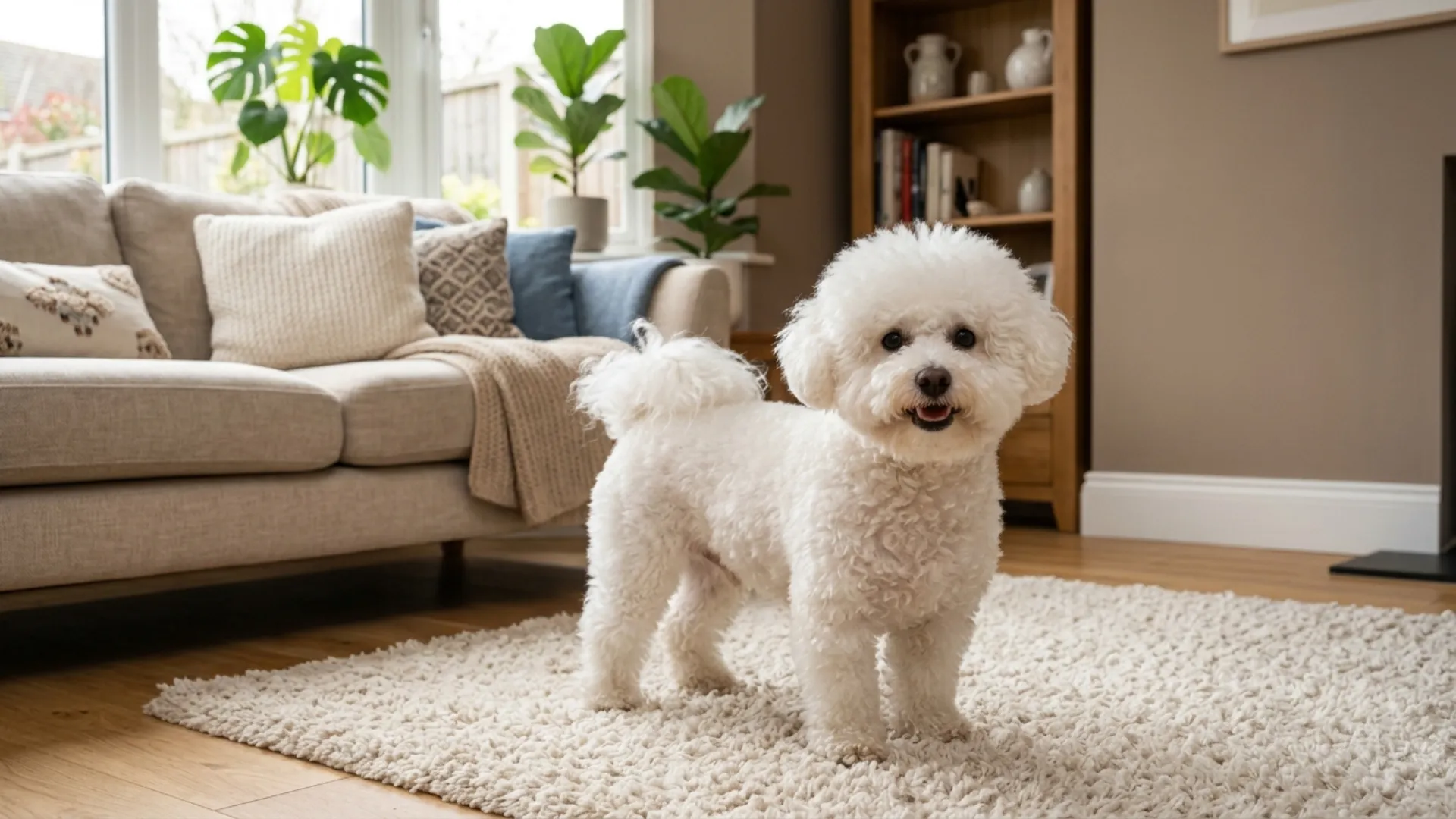
There is something almost magical about running your hand through a dog’s soft, fluffy coat. It can brighten a stressful day faster than a warm cup of coffee. As actress Betty White once said, “Once you have had a wonderful dog, a life without one is a life diminished.” She had a point.
While every dog deserves love, some breeds feel like walking clouds with paws. Their silky or plush coats make cuddle time even more special, but their charm goes far beyond looks.
In this guide, you will meet nine irresistibly soft dog breeds, learn what makes each one unique, and discover what it really takes to keep those beautiful coats healthy and comfortable.
Irresistibly Soft Dog Breeds with Fluffy Coats You’ll Love
1. Bichon Frise
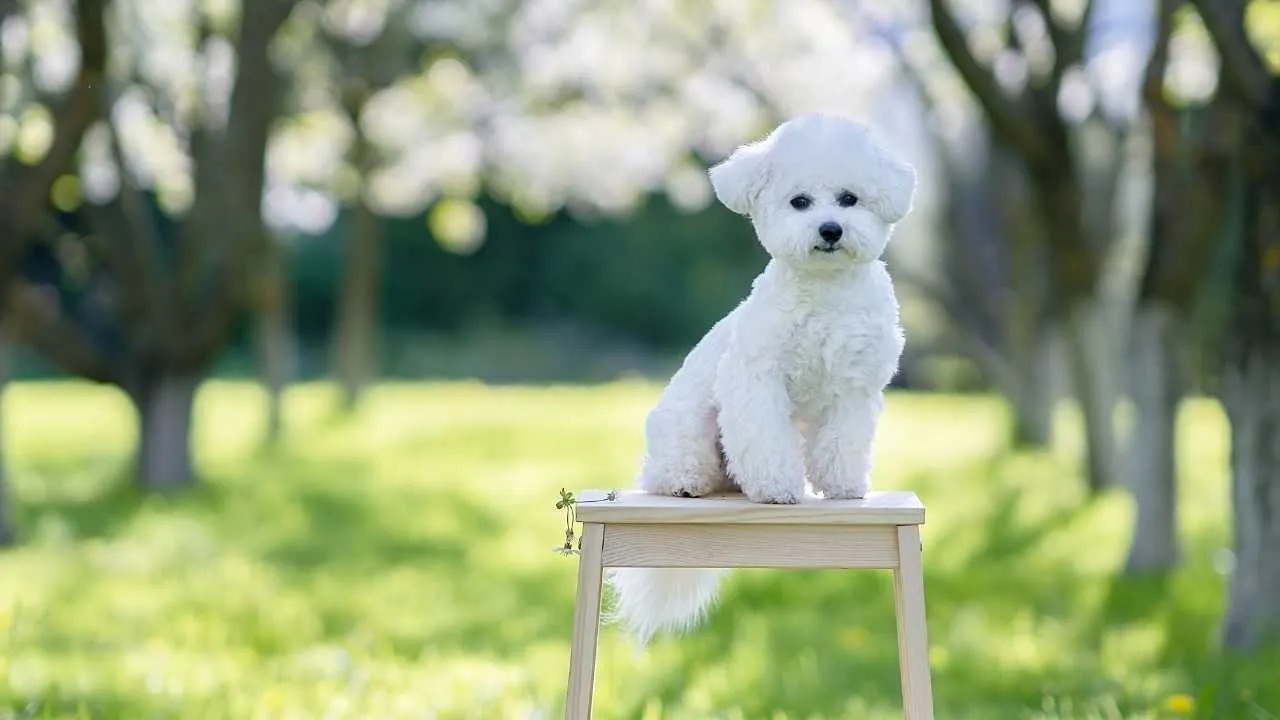
Descended from the water spaniels of the Mediterranean region, the Bichon Frise was the favorite of Henry III of England, who carried his own dogs in a basket hung around his neck. Sailors from the 14th century carried the breed for bartering. It was later used as a circus performer after the French Revolution, says Orvis.
Known for its ‘powder puff’ double coat, the fluffy dog breed has two layers: a slightly springy and curly outer layer, and a bouncy undercoat. It predominantly comes in pure white color. However, there are other shades of buff, cream, or apricot (making up to 10% of the total coat color).
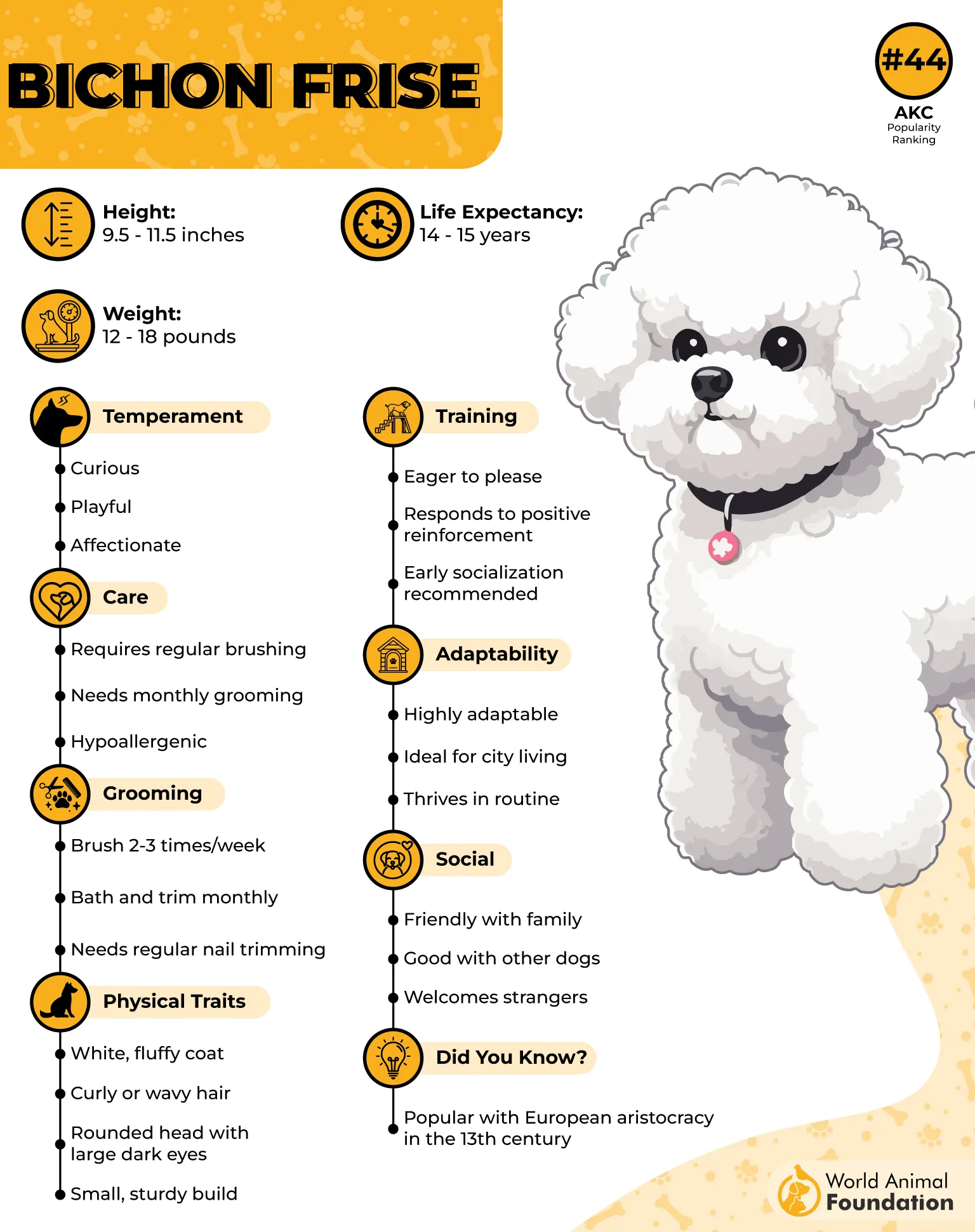
The curly topcoat is highly prone to matting and needs daily brushing using the ‘line brushing’ technique (from the root to the tip using a slicker brush). Use a variable-speed blow dryer to straighten the hair (do not rub as it causes tangles).
2. Pomeranian
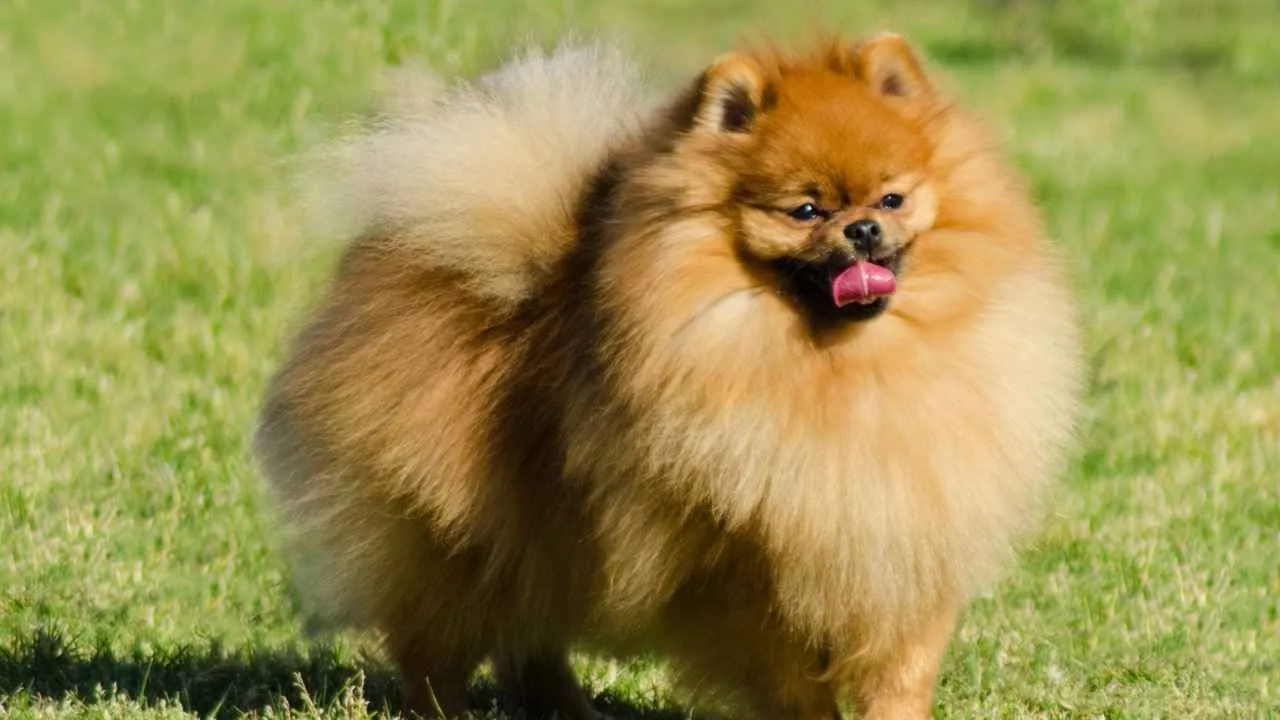
The Pomeranian is the descendant of the Spitz sled dog breeds. It was originally bred as a much larger dog and was used for herding. It then went through size reduction, and today, it is one of the smallest dog breeds. It has a thick ruff around its neck, a fox-like face, a fluffy double coat, and a square body.
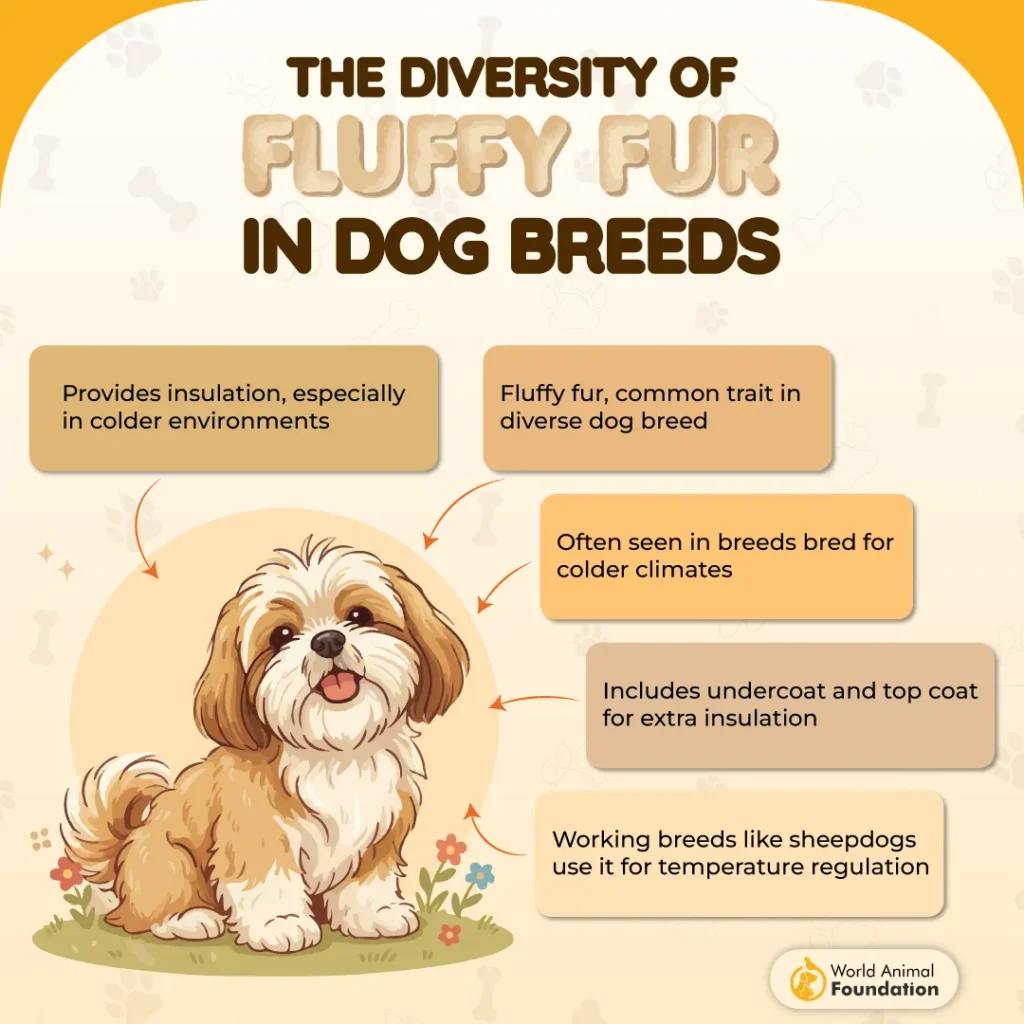
It is known for its iconic “cotton ball” silhouette. The puppies are born without an undercoat. They undergo a major “shedding” or “ugly duckling” phase between 4 and 8 months of age. When this fur falls out, a two-layered adult coat grows in.
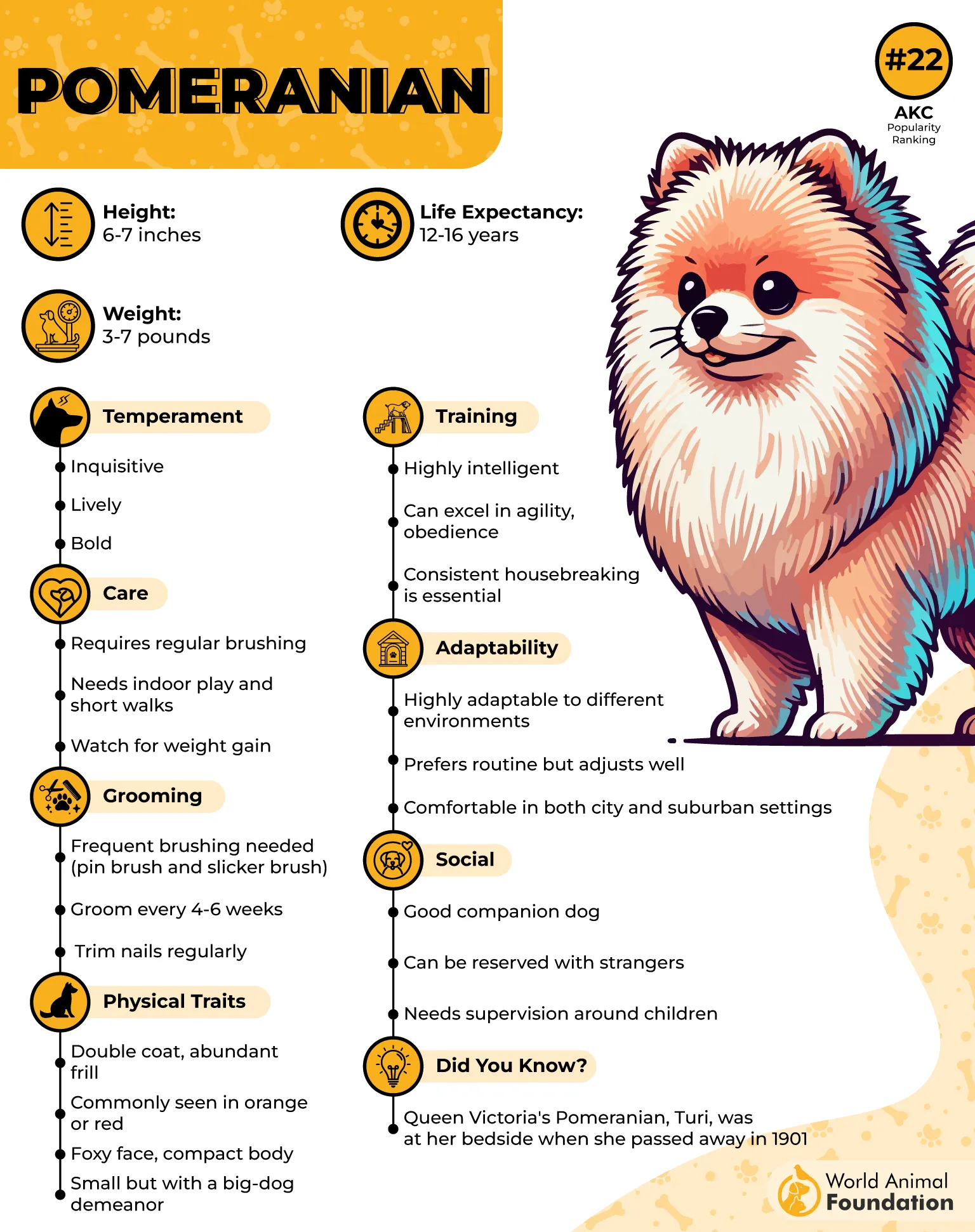
The most common coat colors are orange and red. Other colors include white, black, cream, chocolate, blue, and beaver. It needs daily to weekly brushing sessions using a slicker brush and a metal comb to check for tangles behind the ears, under the legs, and around the tail.
3. Shih Tzu
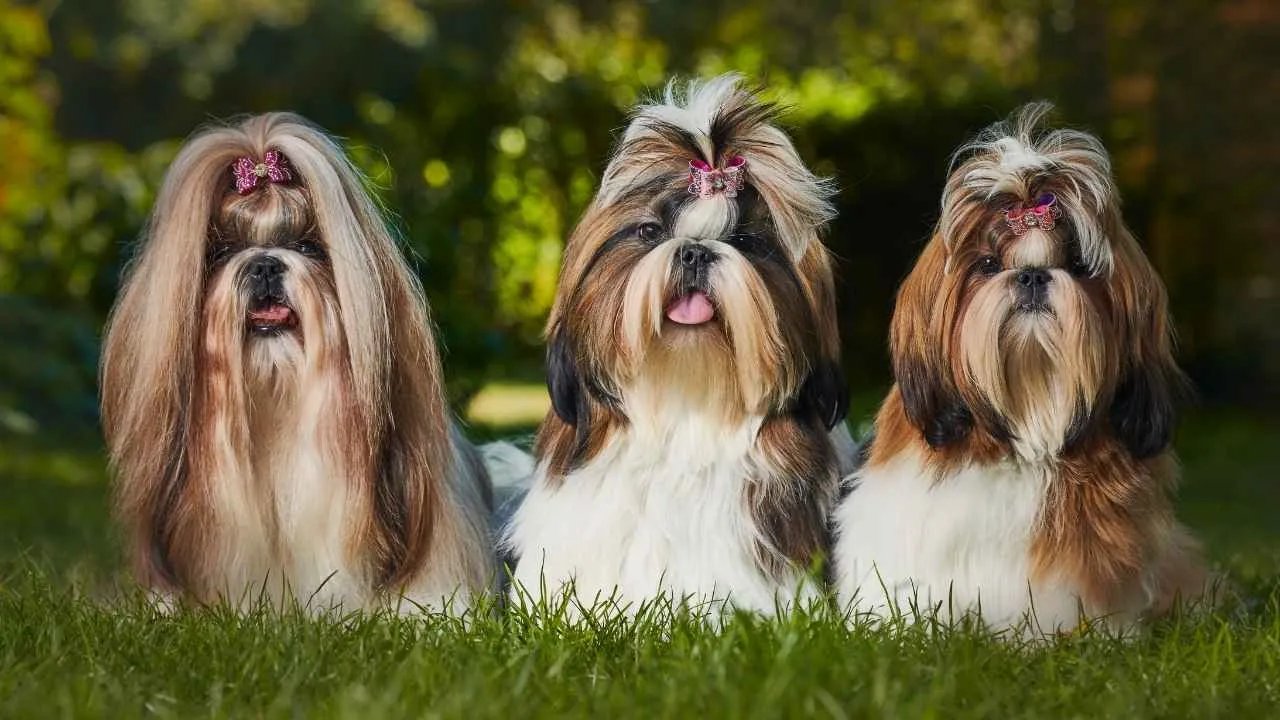
It is the 14th oldest breed in the dog world, and was most likely to be developed by the Tibetan monks or in China. It is recorded (Marco Polo’s 13th century) that the active dog was kept alongside lions. The breed almost went extinct, but was revived in the 1930s in England.
There are two coat types: the long show coat (grows long, sweeping the floor, and requires regular grooming) and the puppy cut (uniformly short, 1-2 inches, easy maintenance). The hair on the head is typically tied up in a traditional topknot to prevent irritation.
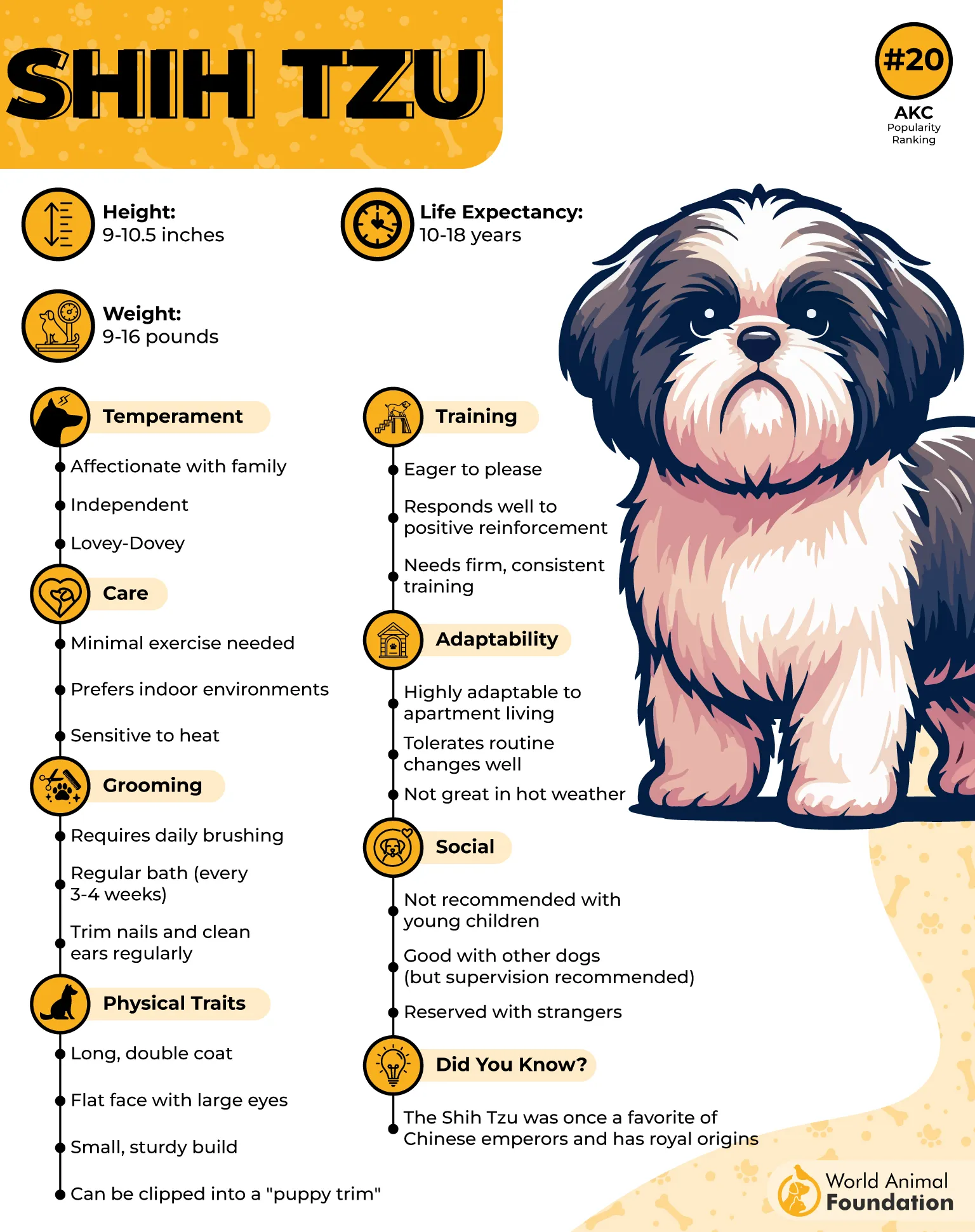
The standard coat colors are black, silver, red, gold, and white, while the rare colors include liver, blue-gray, and lavender/lilac. The coat of this companion dog requires a strict routine of daily brushing, regular bathing (every 3-4 weeks), and consistent face and paw maintenance.
4. Maltese
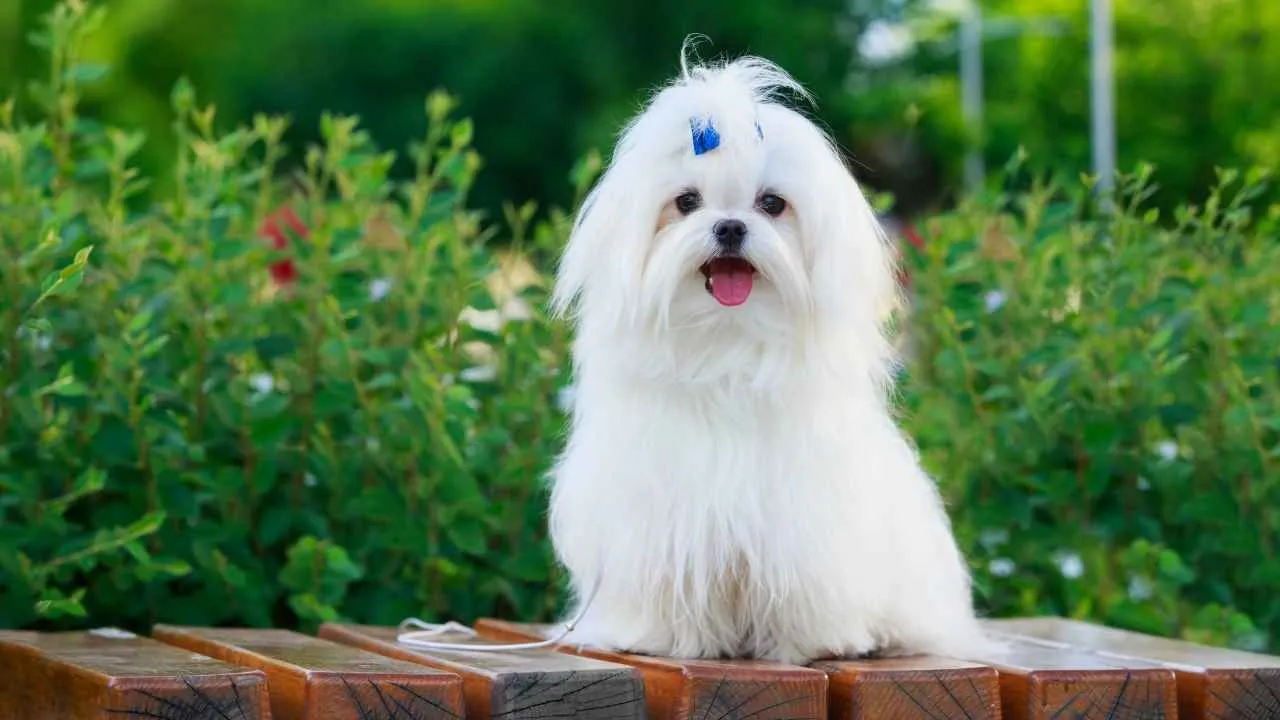
Originating in the Mediterranean island of Malta, the Maltese has been a loyal companion for centuries and has also been found in the Ancient Greek and Roman literature. This small fluffy dog is known for its luxurious, floor-length white coat, as per PetMD.
The single-layered coat lacks the undercoat. The coat comes in three types: the pet cut (low-maintenance, clipping, and shaggy length), the full-show coat (floating illusion, floor length, and covering the dog’s legs), and the topknot (because of the hair, they are tied into one or two cute “topknots” with a bow to keep the hair out of their expressive eyes).
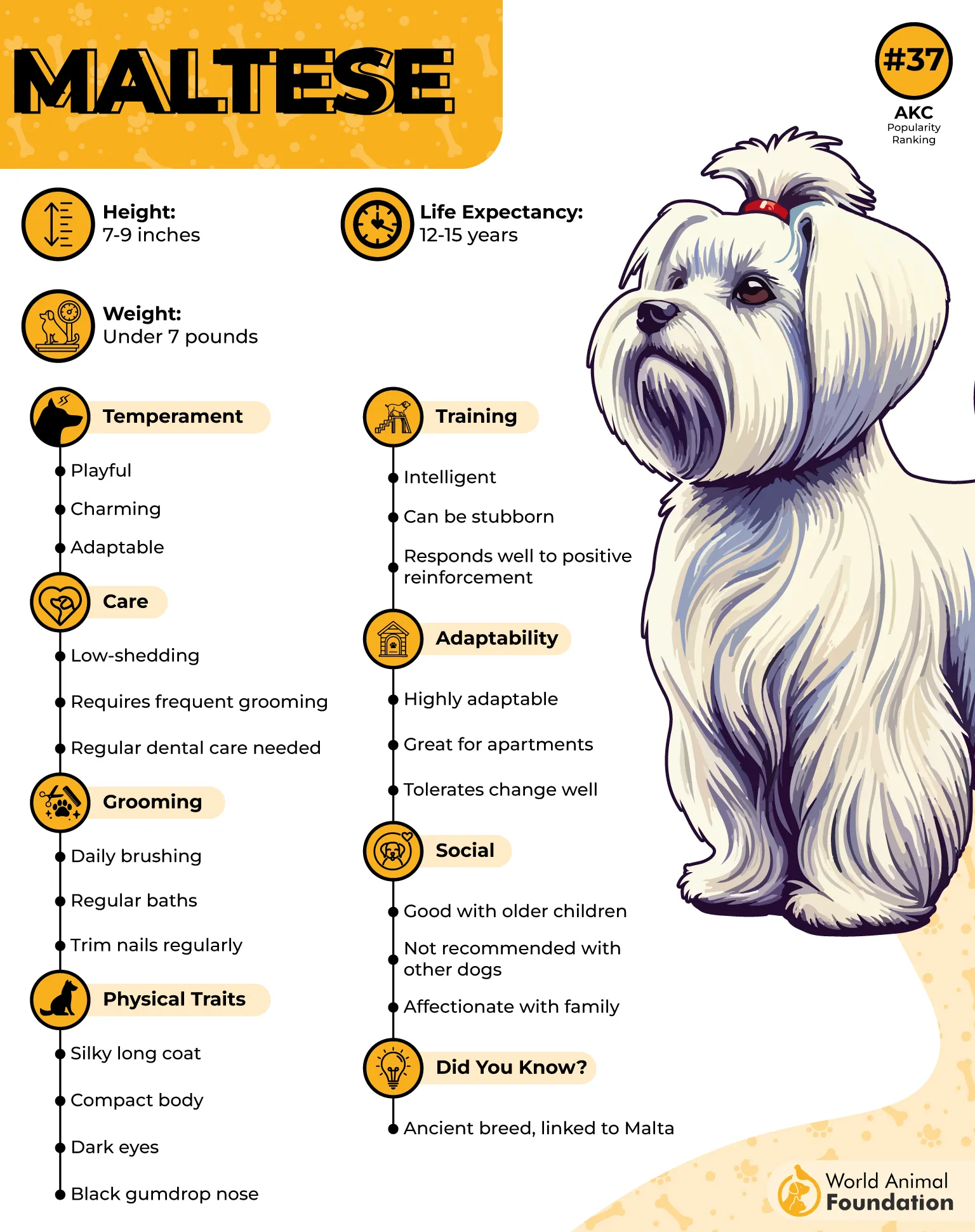
The thick coat has two textures: a cottony coat (closer to cotton or wool, prone to tangles and matting) and a silky coat (glistening texture). Daily brushing is required using a pin brush and a steel tooth comb. Never let the coat air dry, as it can cause the hair to curl or tangle.
5. Havanese
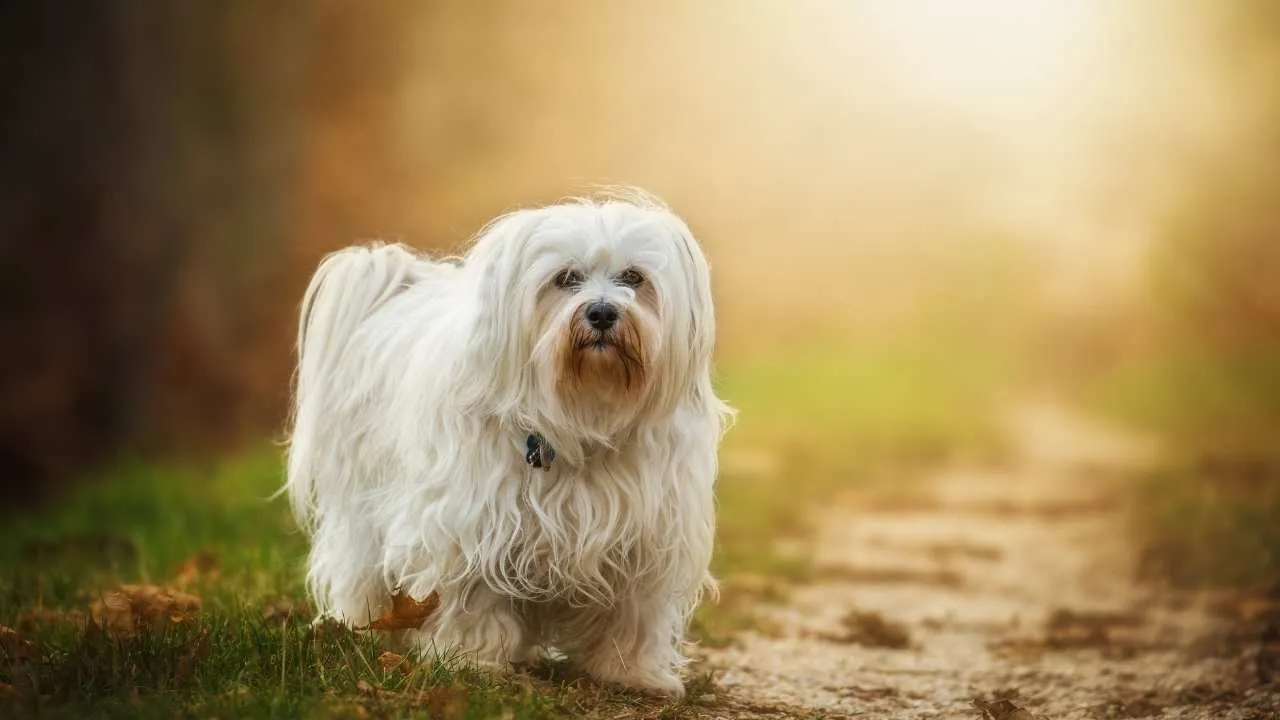
The ancestors of this canine breed were originally from Spain and were brought to Cuba. It shares its lineage with the Bichon Frise. It is now the national dog of Cuba and is mostly kept as a family companion. It almost went extinct in 1959 but got a revival and was officially recognized in 1996.
There are four coat types: wavy (the most common texture and feels like cool, raw silk), curly (poodle-like curls), straight (less common, short coat, often called “Shavanese”), and corded (forms long, rope-like locks and needs high maintenance).
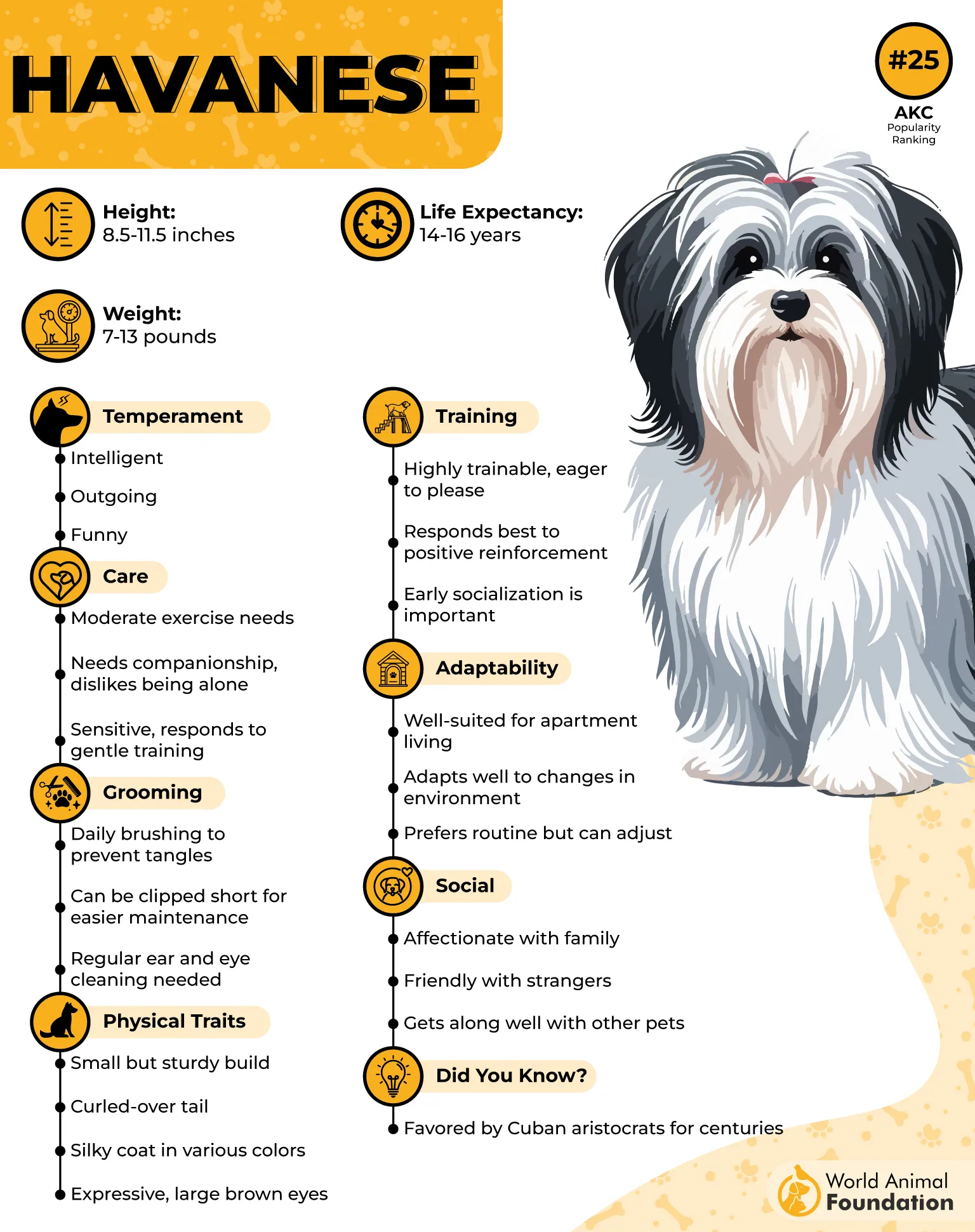
Because of the non-shedding double coat, it requires minimal grooming (3-4 times brushing a week). Use a pin brush to gently detangle. Then use a fine-toothed metal comb to check for hidden mats, particularly behind the ears, under the armpits, and around the thighs.
6. Toy Poodle
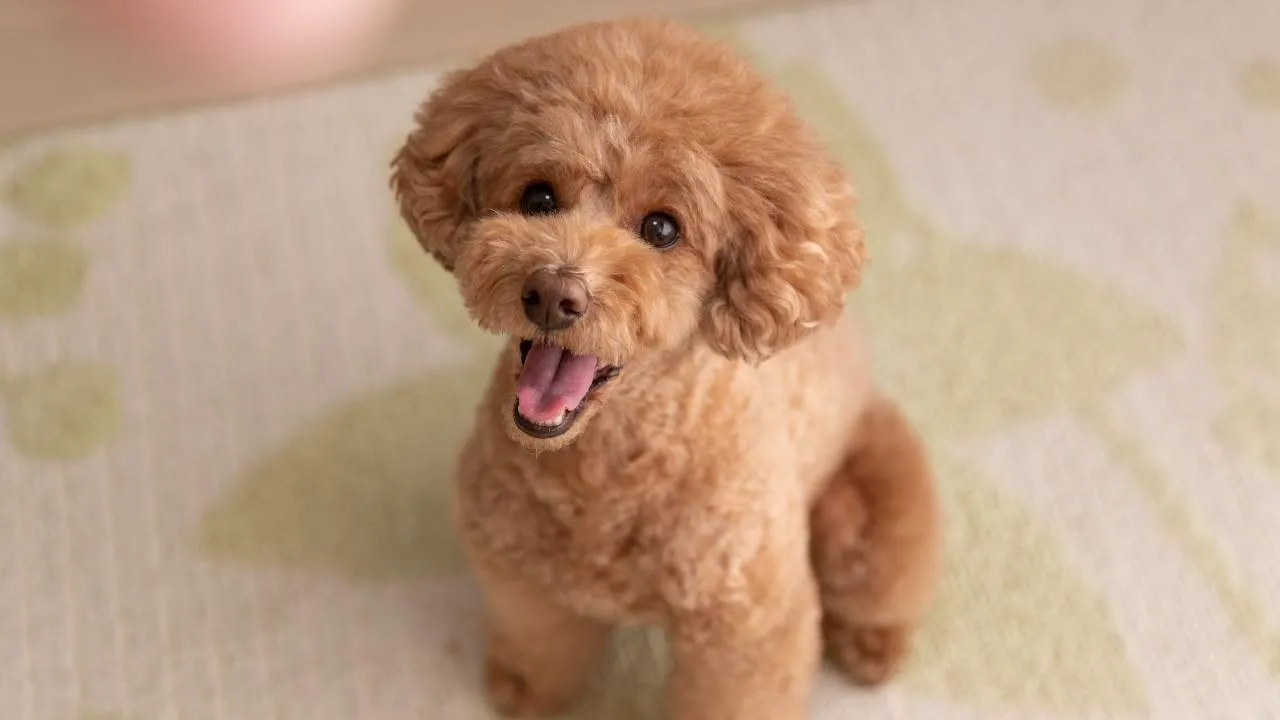
Bred as a duck hunting dog in Germany almost 400 years ago, its thick curly coat came in handy to protect against the cold weather. The toy Poodle was first developed in the 20th century as a companion dog. It is the national dog of France.
The thick coat comes in two types: the corded coat (instead of brushing, it is allowed to form tight rope-like mats that can grow up to 20cm) and the curly coat (naturally harsh and wiry texture, making it waterproof). The coat has a variety of colors: black, white, brown, red, and apricot.
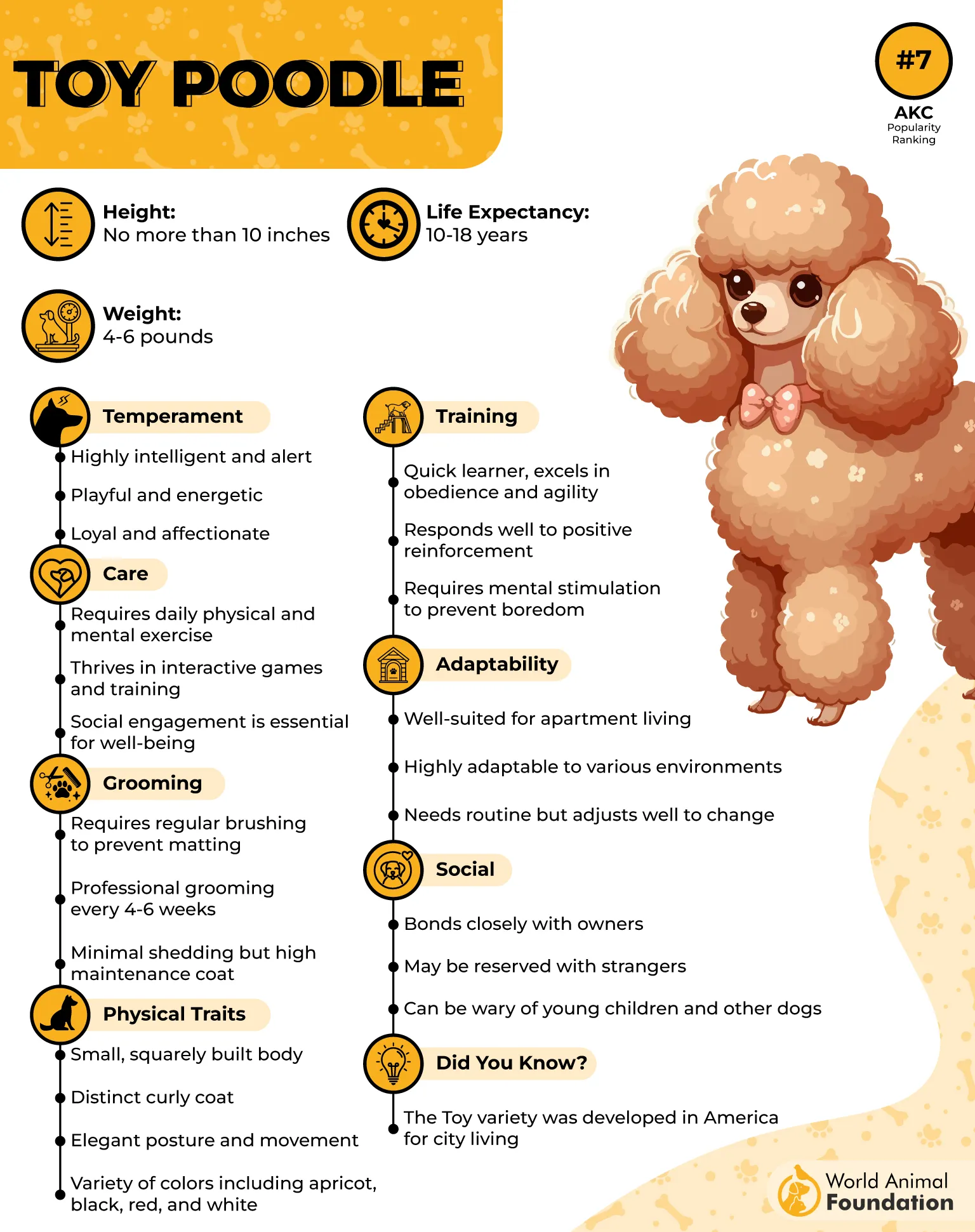
Daily brushing is required to remove loose hair and evenly distribute natural oils. Use a slicker brush (to smooth out tangles), a steel comb (to ensure all mats are down to skin), and grooming scissors (to shape the paws, tail, and head).
7. Papillon
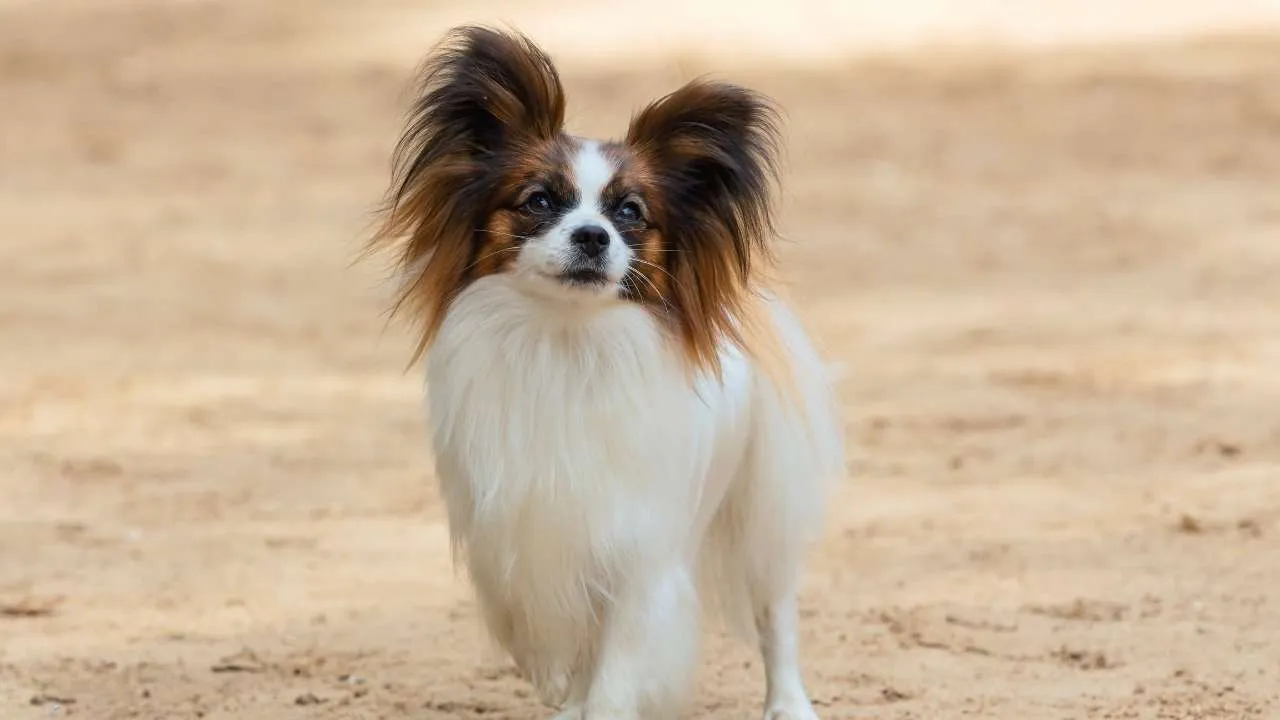
Originally bred as a lap dog for the noblewomen, the Papillon was developed in France and was given the name because of its ‘butterfly ears.’ It is the cross of the existing toy breeds and the spaniels. The fluffy breed was further refined in Spain and Italy, says Purina.
It is a single-layered breed that lies relatively flat. It has a rare variant called ‘Phalène,’ where the large ears are pendant, or dropped, but retain the same long, silky fringes. There is a thick ruff around the neck, giving it a lion-like mane.
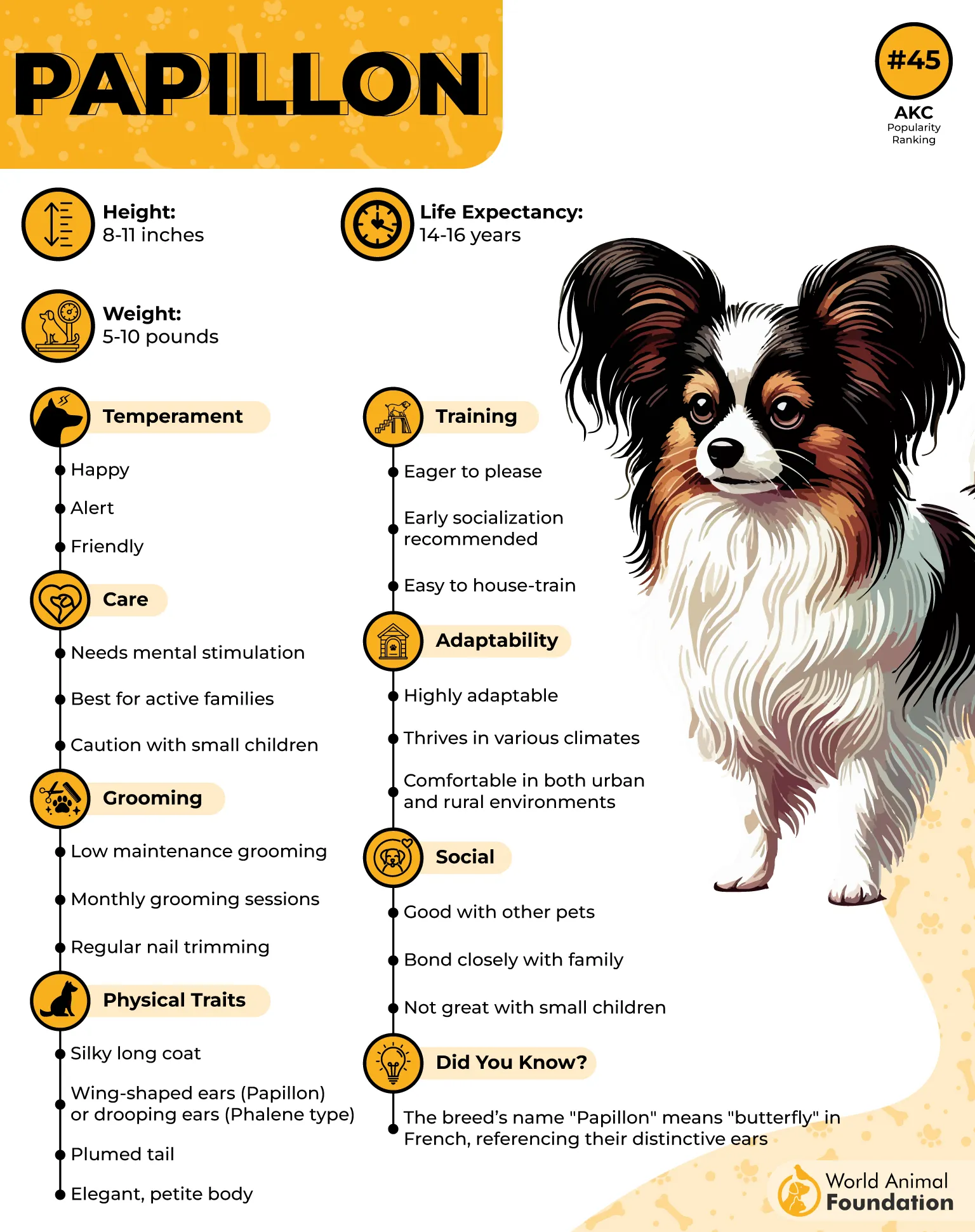
The breed has long feathering that runs down the back of the forelegs and the thighs. The color comes in black, red, sable, and lemon. The feathering is prone to tangling. The fluffy friend requires regular brushing (2-3 times a week) and monthly bathing.
8. Japanese Chin
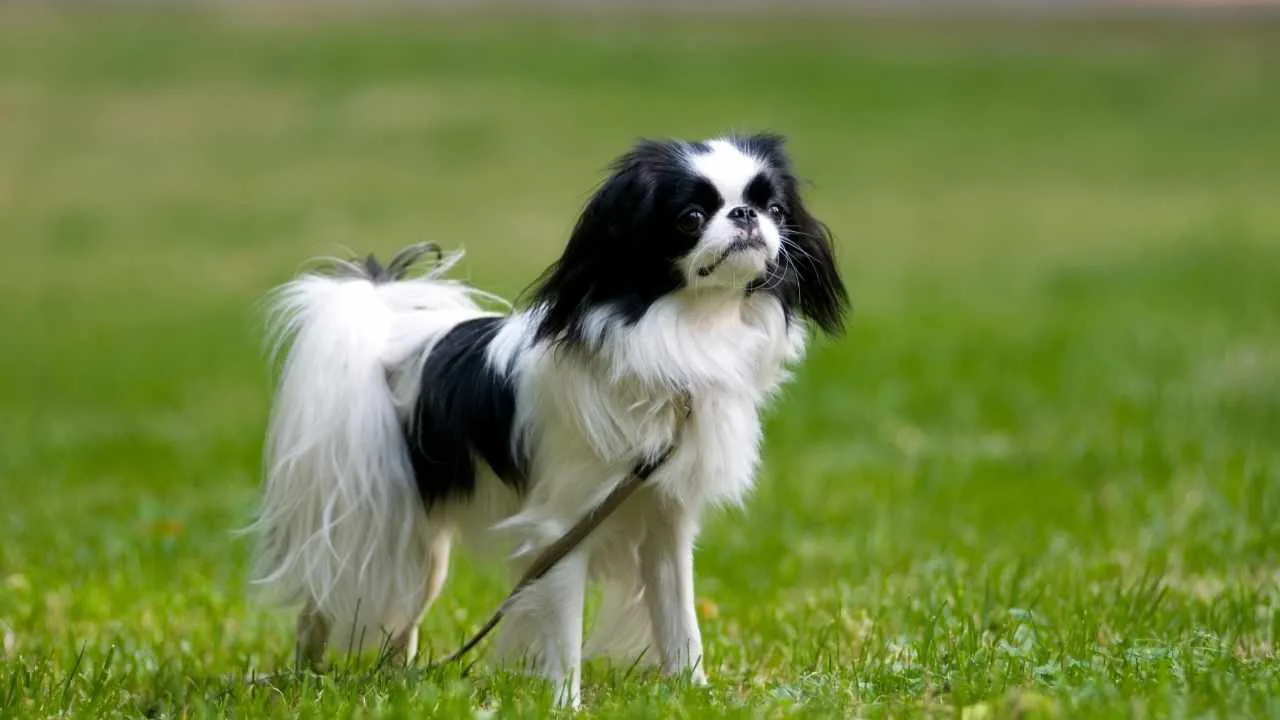
The breed is thought to have been developed in China instead of Japan. It was kept by the Buddhist monks and was gifted to the nobility. The true roots of the ancient breed are murky. It is known for its silky fur, a short muzzle, and a broad head.
The fur of the single coat lies flat against the body. The coat is shorter on the forelegs and face. The high-set tail has a sweeping plume. The hair frames the face from the long-feathered ears. The coat comes in black and white, red and white, tri-color, and markings.
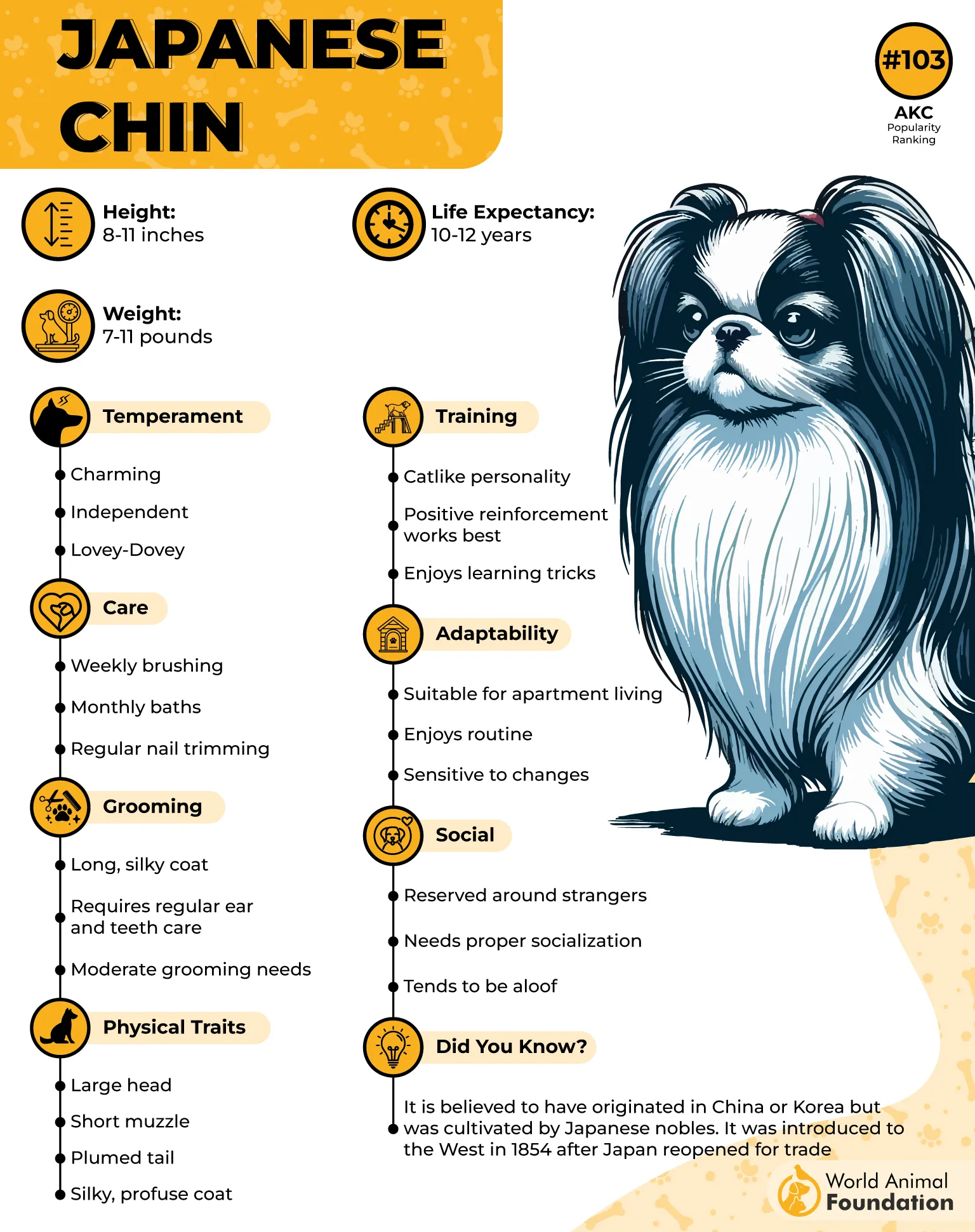
Brush the thick coat 1-2 times a week using a pin brush and a wide-tooth comb. Pay close attention to the high-friction areas prone to tangling, such as the ear fringes, tail, and pants. Use a light conditioner to preserve the shine of the coat.
9. Pekingese
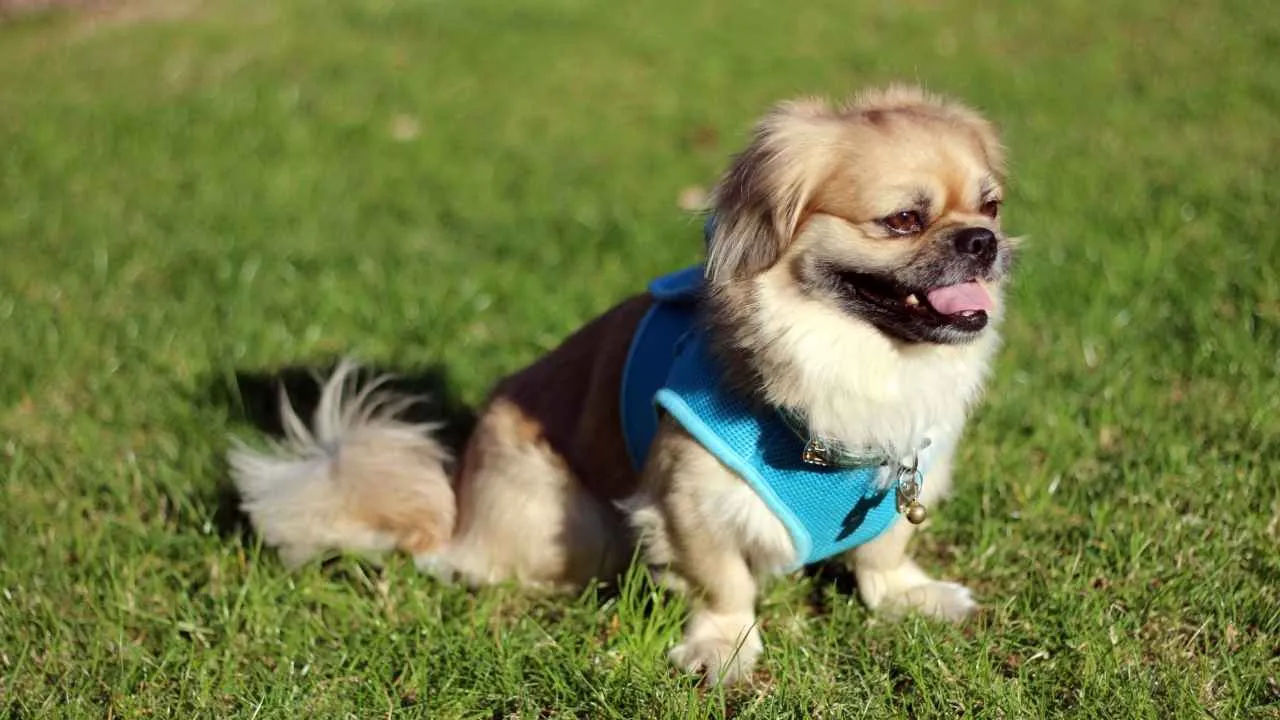
The big fluffy dog breed was developed in ancient China for the palaces. It was bred at the same time as the Pug and the Shih Tzu. The first Pekingese was brought to the West as loot in 1860. Since the lion has a sacred place in Chinese culture, it was intentionally bred to look like a lion.
The thick double coat has a coarse and harsh outer coat, while the soft undercoat is a thermoregulator and stands off slightly from the body. It has feathers on the ears, tail, thighs, forelegs, and toes. The coat comes in biscuit, black, cream, fawn, gray, red, and white colors.
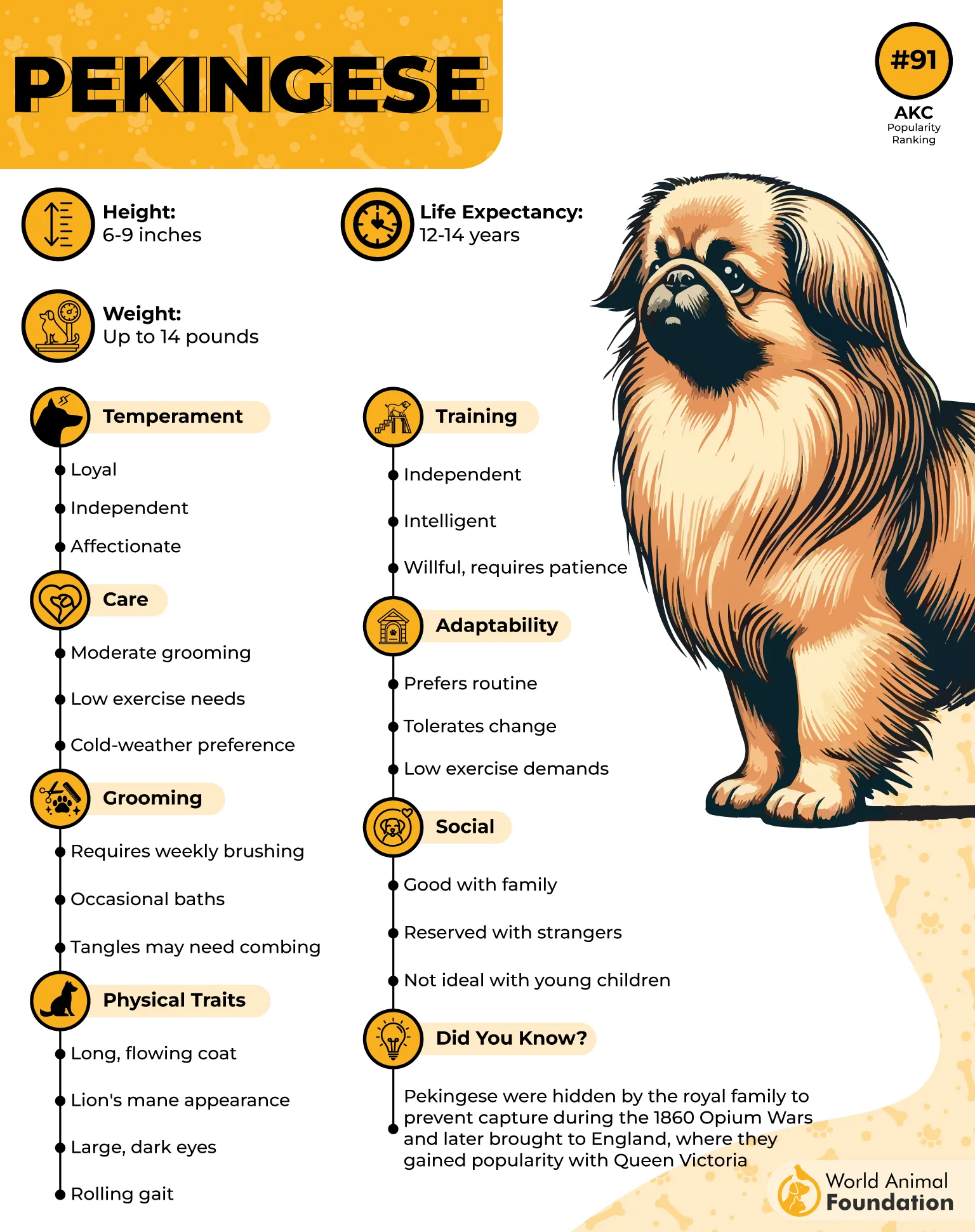
The Pekingese needs extensive grooming. Daily brushing should consist of misting the coat with the detangling spray first and then using a fine-tooth comb. Monthly bathing is required using a gentle dog shampoo (1 part shampoo to 10-20 parts water).
Conclusion
A fluffy coat may catch your eye first, but a dog’s personality is what wins your heart. Some of these breeds love being the center of attention, while others are calm companions, happiest beside their favorite person. Their coats also need regular care, so choosing one means being ready for brushing, grooming, and a little extra cleaning around the house.
The reward is a loyal friend who brings warmth, comfort, and plenty of unforgettable moments. Whether you prefer the playful bounce of a Pomeranian or the quiet elegance of a Maltese, each of these soft-coated breeds offers something special. Pick the dog that matches your lifestyle, and you will gain a companion you will treasure for many happy years.
