





Finding a furry companion doesn’t have to drain your wallet. For pet lovers on a tight budget, choosing an inexpensive dog breed can provide both companionship and affordability without compromising on joy. Many breeds are low-maintenance pets, healthy, and adaptable to various living situations, making them ideal for first-time owners or families looking to save on pet expenses.
These affordable dog breeds often have modest grooming needs, manageable food requirements, and fewer health issues, which helps reduce long-term costs. Small to medium-sized breeds, in particular, tend to be more budget-friendly while still offering affection, loyalty, and playfulness.
By focusing on practical yet loving breeds, you can enjoy the perks of dog ownership without financial strain. With the right choice, even those on a limited budget can experience the joy of a loyal canine companion.
Cheapest dog breeds prove that love and companionship don’t have to come at a high cost.
Inexpensive Dog Breeds: Perfect For Tight Budgets
1. Pug

A Regal Companion Through Time
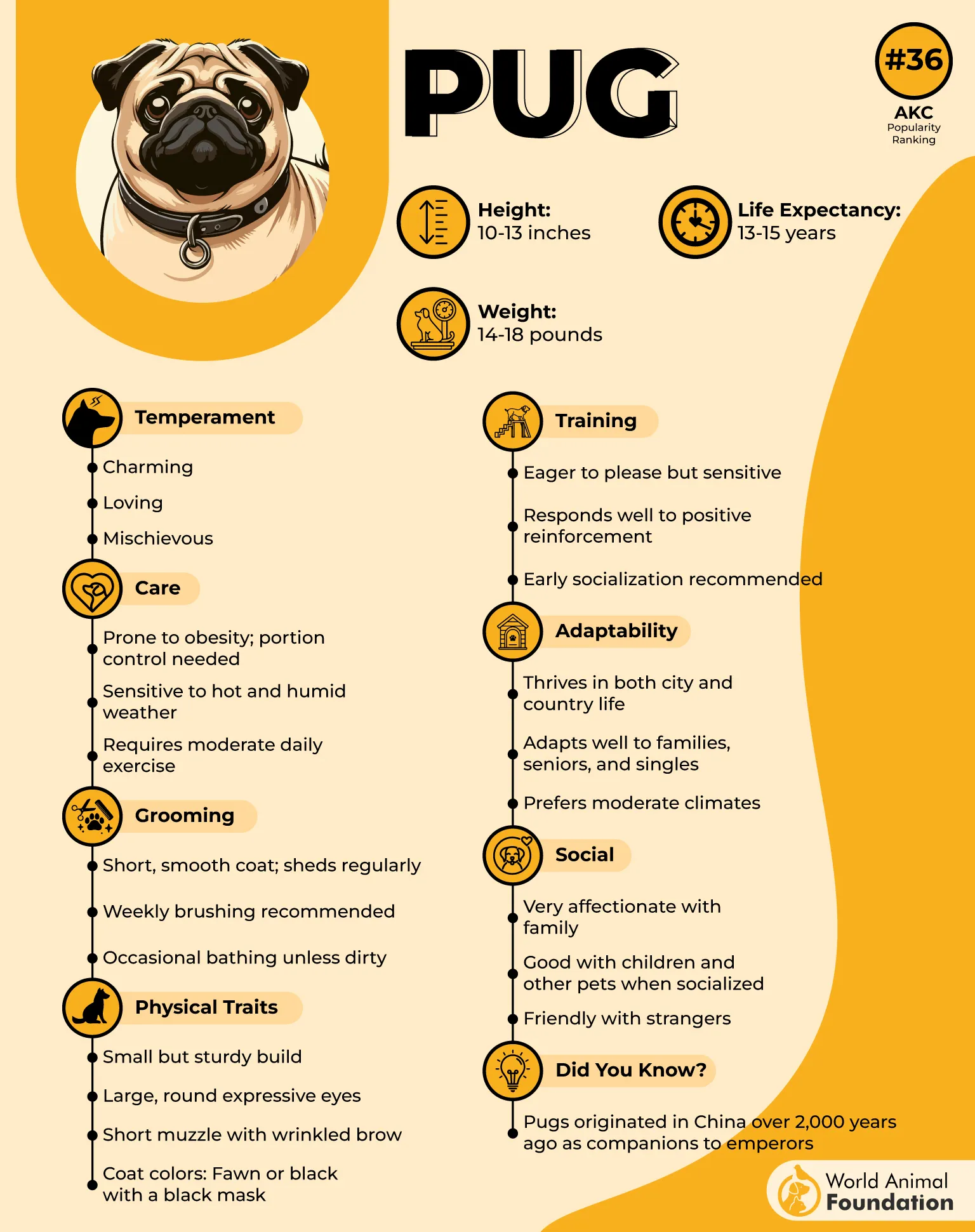
The Pug has charmed humans for over 2,000 years, starting as a prized companion of Chinese emperors, as per PetMD. Later, they became the loyal mascot of Holland’s royal House of Orange and traveled to England with William and Mary.
Easy-Care Furballs
Pugs are low-maintenance dogs with short coats in fawn, apricot, or black. While they do shed, regular brushing keeps hair under control and skin healthy. Their moderate grooming needs, paired with short daily walks, make them ideal for owners who want a playful companion without constant upkeep.

Clever, Loving Housemates
Pugs thrive on attention and human companionship, making them highly trainable with positive reinforcement. They enjoy gentle play and short walks rather than high-intensity exercise. Mental stimulation is key to preventing boredom, which can lead to minor mischief.
Why Pugs Are Budget-Friendly Pets
Small size reduces food expenses
Minimal grooming costs compared to long-haired breeds
Low medical expenses when properly cared for
Short daily walks mean no costly equipment or training needs
Adaptable to various living spaces, avoiding expensive housing adjustments
2. Bichon Frise
Fluffy Royals of the Mediterranean
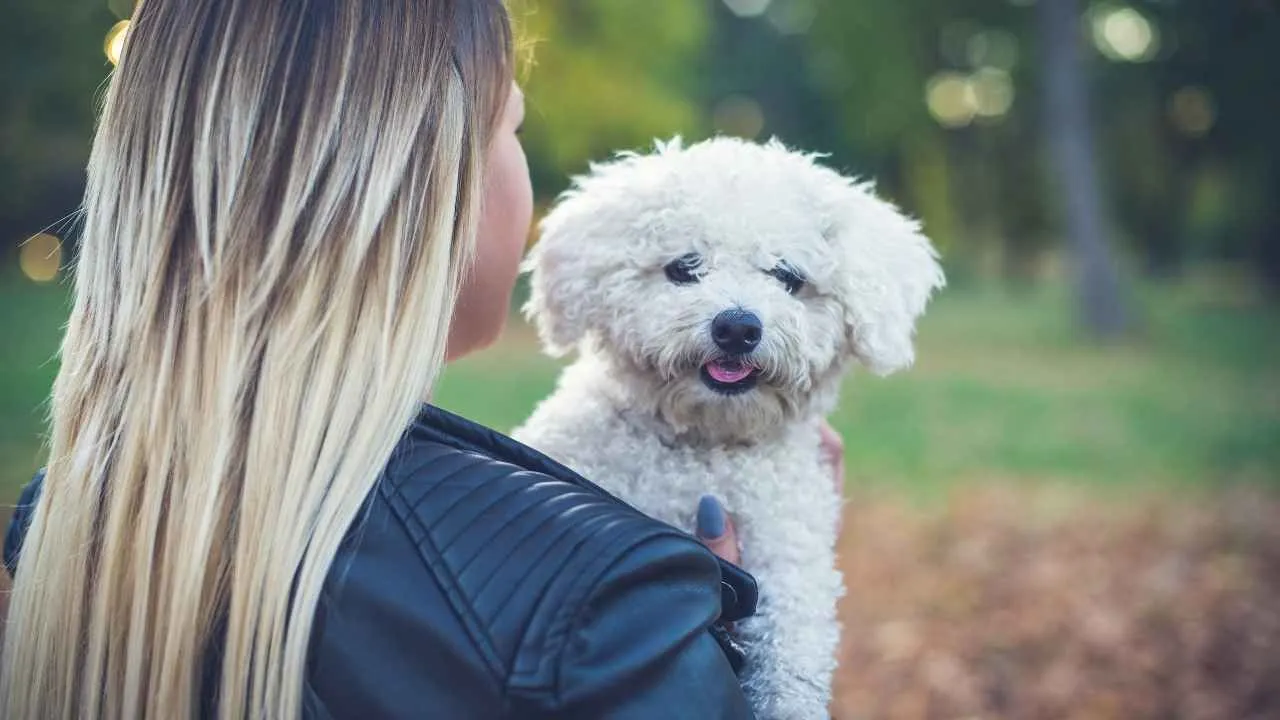
The Bichon Frise, a member of the Toy group, has delighted humans for centuries with its cheerful personality and charming presence. Originating in the Mediterranean, these small dogs were favorites of Spanish sailors and later European royalty.
Grooming for the Happy Cloud
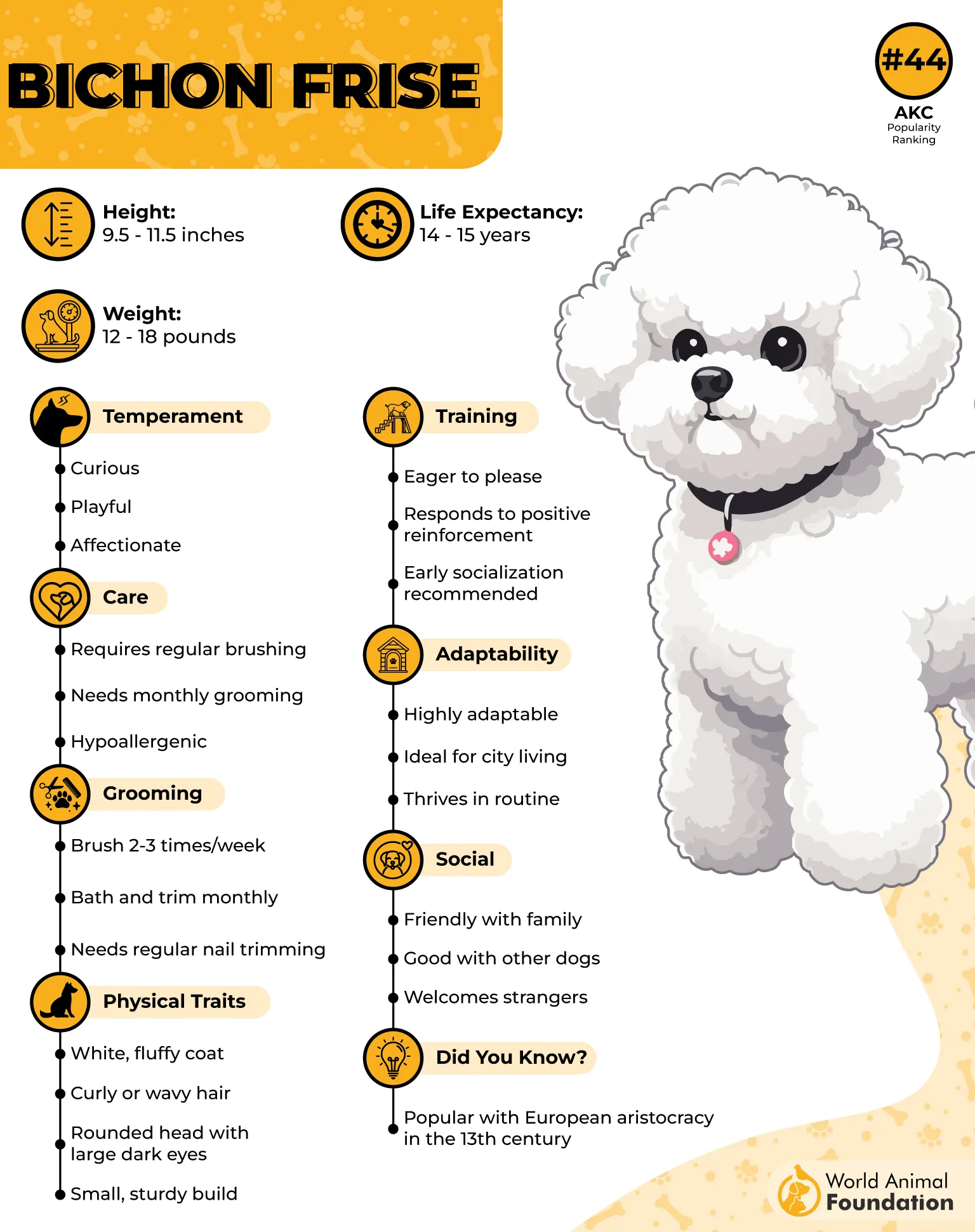
With their soft, puffy coats, Bichons need daily brushing to prevent mats and tangles. Despite the grooming commitment, Bichons shed very little, making them suitable for homes that prefer low-hair companions. Their moderate exercise needs—around 30 minutes per day—can be met with indoor games or brisk walks.
Playful, Affectionate Housemates
Bichons Frises are cheerful, intelligent, and eager to please, making training relatively straightforward. They thrive on human attention, enjoy cuddles as much as fetch, and get along well with children and other pets.
Budget-Friendly Perks of Bichons
Small size reduces food and supply costs
Minimal shedding cuts down on cleaning expenses
Low exercise requirements save on outdoor gear or memberships
Versatile for apartment or house living
Health maintenance is generally straightforward with routine care
3. Border Collie

Brilliant Shepherds of the Highlands
The Border Collie is celebrated for its intelligence, agility, and unmatched herding instinct. Originating in the border regions of England and Scotland, this breed was shaped over centuries to work livestock in rugged terrain, as per Purina.
Active Minds, Loving Hearts
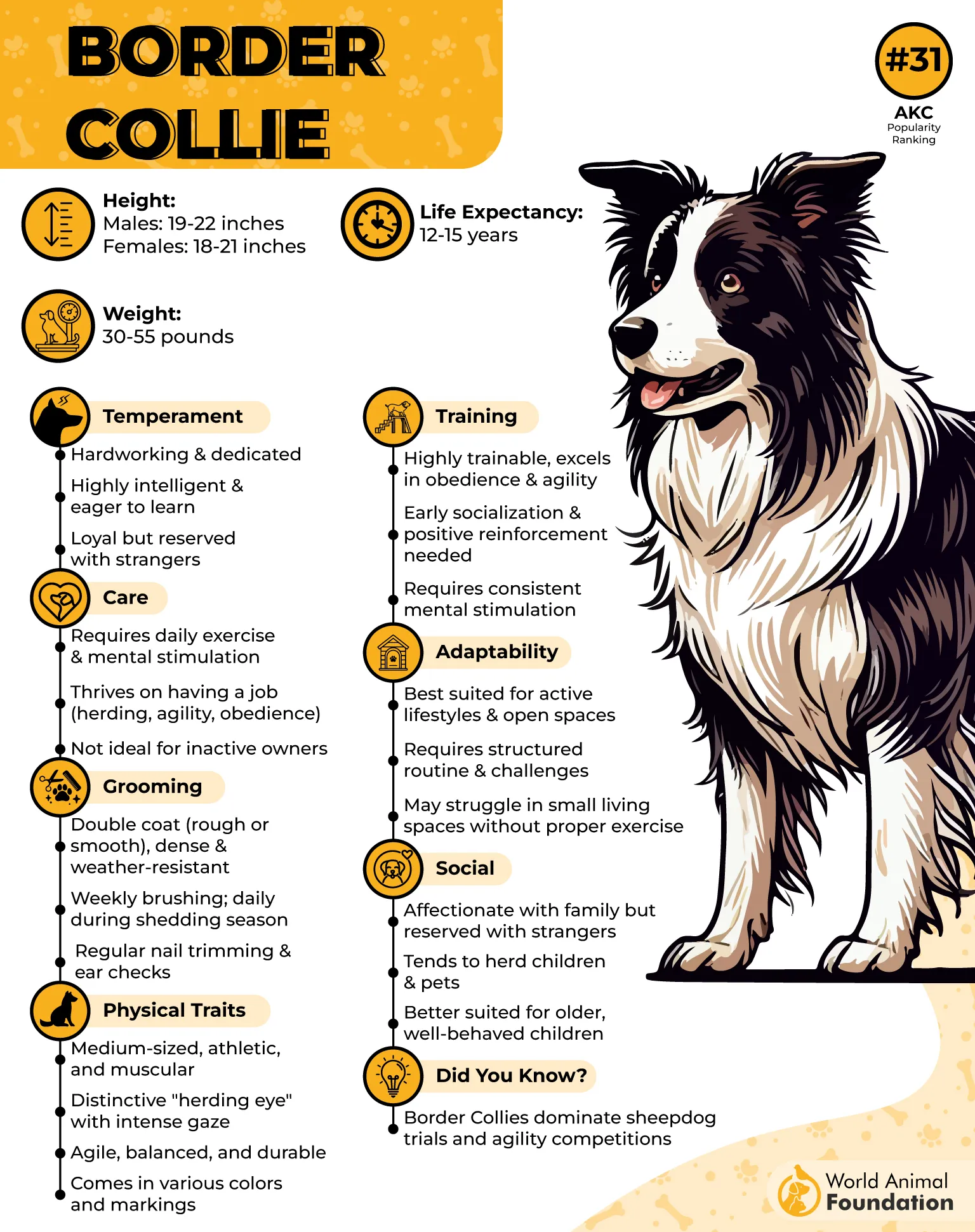
These high-energy dogs thrive on activity and mental stimulation. Regular exercise is essential, as Border Collies love having a “job” to do, from herding livestock to chasing balls. They are highly trainable, excelling in obedience, agility, flyball, and other canine sports.
Smart, Protective Family Friends
Border Collies are alert and protective, often keeping a watchful eye on children and family members. With a moderate-shedding coat that requires weekly brushing, these dogs are best suited for active households where they can receive plenty of attention, exercise, and mental challenges.
Why Border Collies Are Budget-Friendly Pets
Small-to-medium size lowers food costs compared to large breeds
High trainability reduces the need for paid obedience classes
Exercise needs can be met with games and outdoor activities instead of expensive equipment
Moderate grooming keeps professional care minimal
Healthy and hardy when given proper care, reducing vet bills
4. American Foxhound

Gentle Hunters of Colonial America
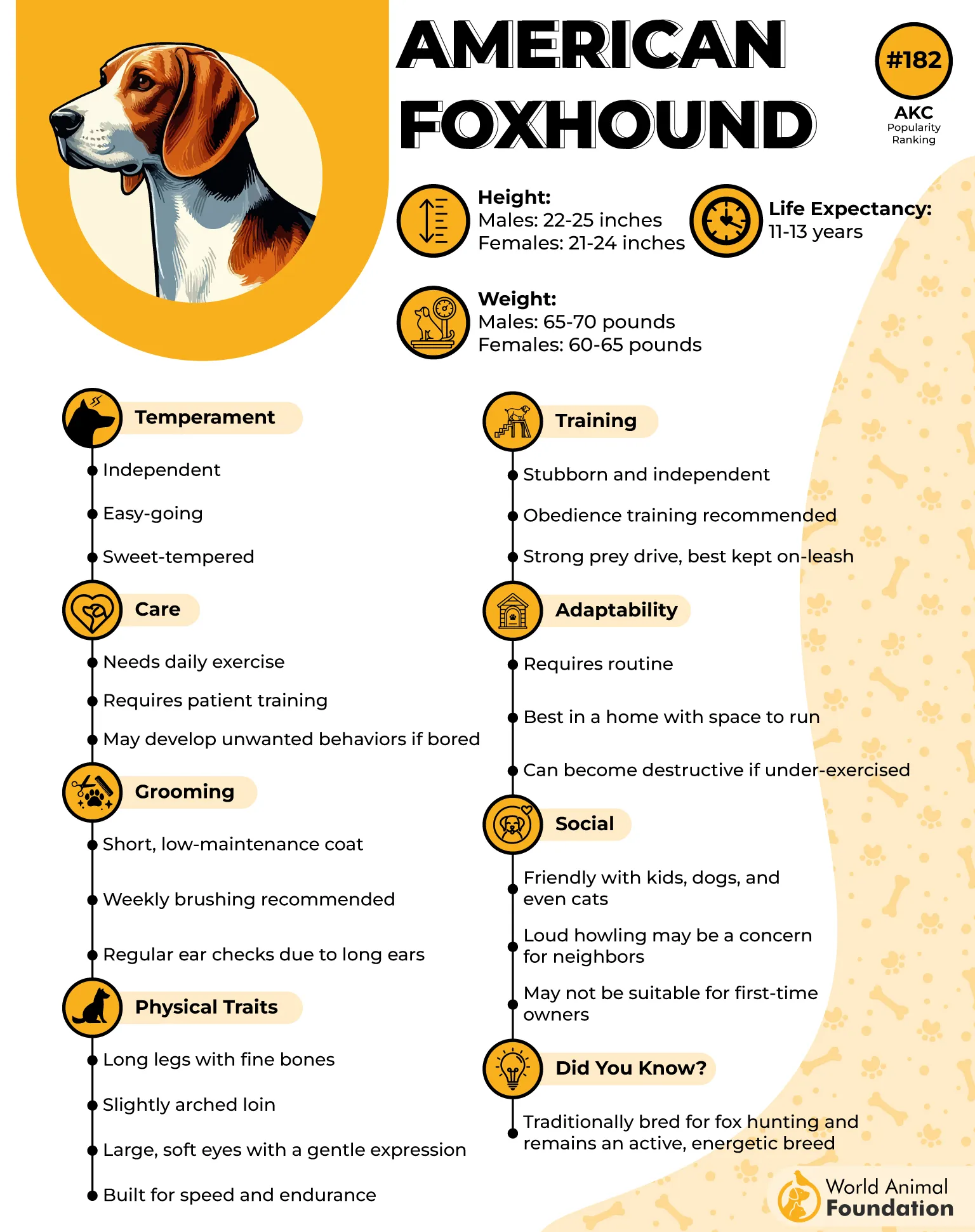
The American Foxhound is a sleek, fast, and enduring breed with roots in early Virginia estates. Closely tied to Revolutionary-era history, these hounds were originally bred by George Washington and other colonial planters for fox hunting.
Active Companions for the Outdoors
These high-energy dogs require one to two hours of exercise daily to stay happy and healthy. Their single-minded prey drive and tendency to bay can be managed with proper training, socialization, and secure outdoor spaces, ensuring they remain well-behaved and affectionate dogs.
Smart, Loyal, and Low-Maintenance
American Foxhounds are intelligent and independent, making consistent positive reinforcement training essential. Despite their hunting instincts, they bond closely with people and other pets when properly socialized.
Why American Foxhounds Are Budget-Friendly
Low-maintenance coat reduces grooming costs
Healthy, sturdy breed lowers vet expenses
High endurance means no expensive equipment for exercise
Social, adaptable nature fits families and multiple pets
Smart, trainable, and independent, minimizing the need for professional trainers
5. Dachshund

Fearless Badger Hunters of Germany
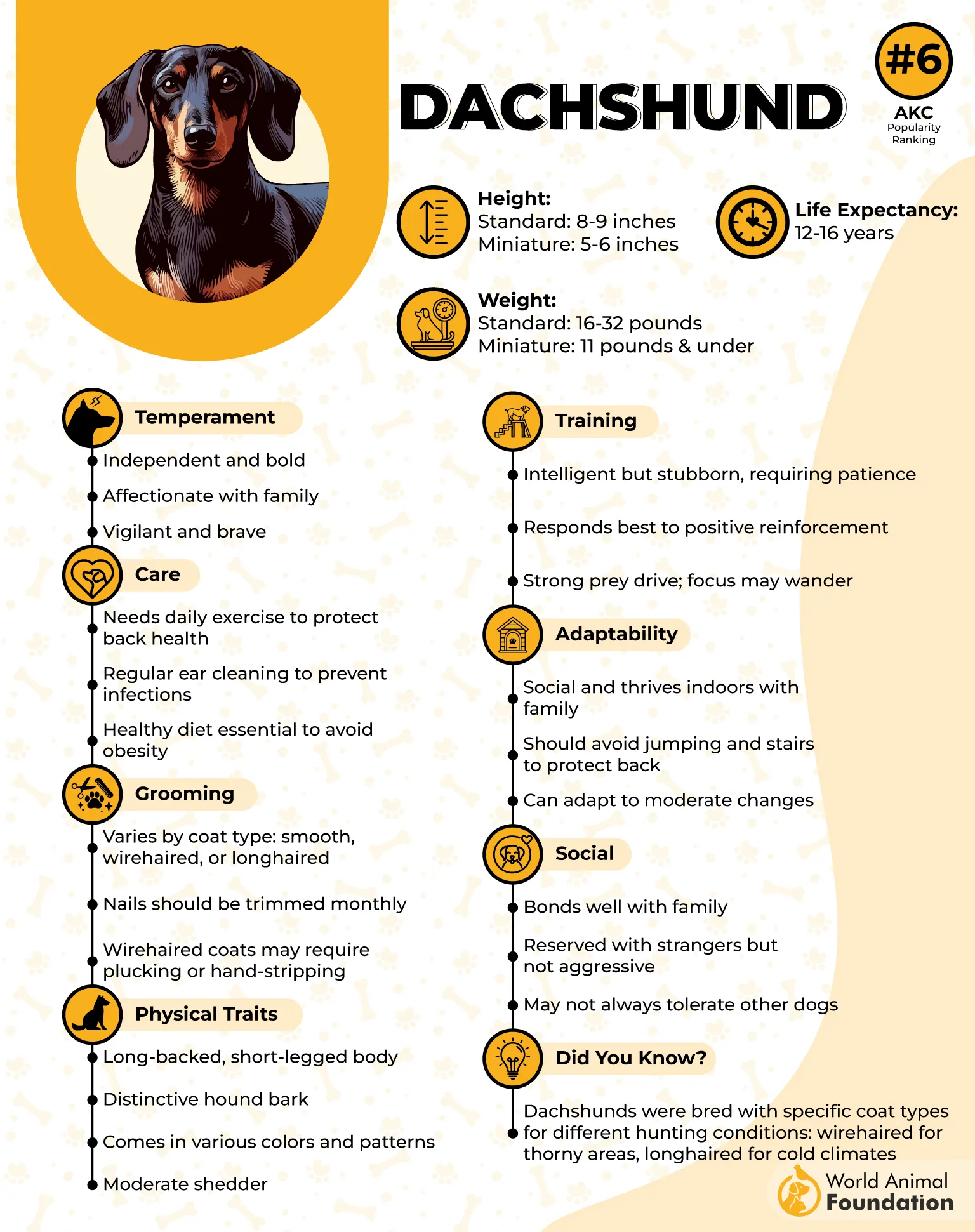
The Dachshund, whose name literally means “badger dog,” was developed in Germany to pursue burrowing prey, as per PDSA. With its long body, short legs, and tapering muzzle, this small yet determined dog combines hound and terrier traits.
Coat Care for Every Type
Dachshunds come in smooth, longhaired, and wirehaired varieties, each requiring slightly different grooming routines. Smooth coats need only occasional brushing, longhaired varieties benefit from weekly combing, and wirehaired types require periodic hand-stripping.
Independent Yet Loving Housemates
These clever dogs are independent, curious, and occasionally stubborn, but respond well to positive reinforcement. Dachshunds bond closely with their families, are protective, and can make excellent watchdogs.
Why Dachshunds Are Budget-Friendly
Small size keeps food and supply costs low
Minimal grooming for smooth and long-coated varieties
Moderate exercise needs can be met with home play and short walks
Healthy breed when active and weight-managed, lowering vet expenses
Adaptable to apartments or houses with proper daily activity
6. Cavalier King Charles Spaniel

Regal Companions with a Gentle Heart
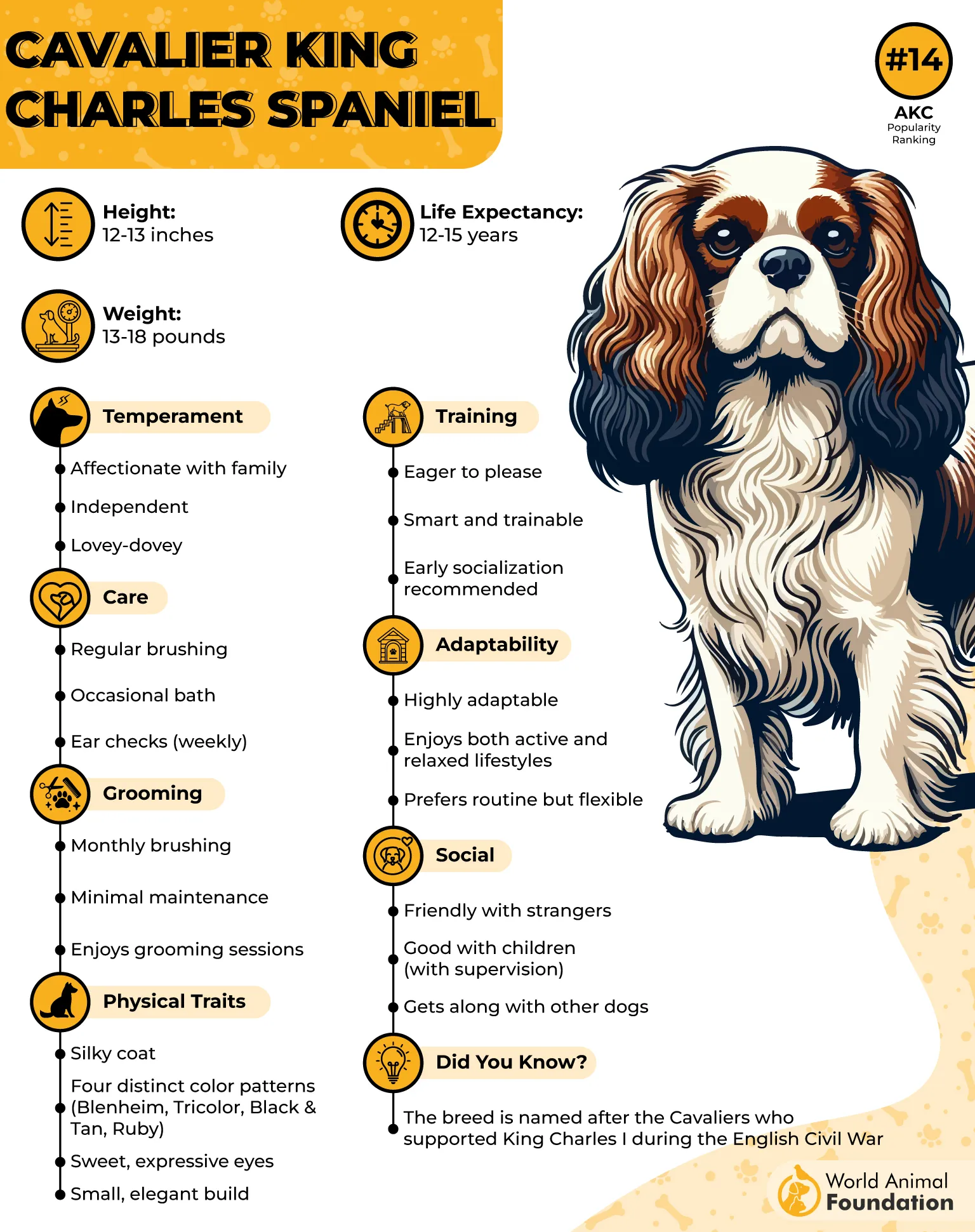
The Cavalier King Charles Spaniel carries centuries of British history in its name. Blending the gentle charm of a toy breed with the athletic grace of a sporting spaniel, Cavaliers are small yet versatile companions, as per Britannica.
A Legacy of Aristocratic Favor
Originally adored by 17th-century British royalty, including King Charles I and II, these toy spaniels were cherished for their loyal companionship and gentle nature. Over centuries, the breed was refined at estates like Blenheim Palace and later crossed with Asian toy breeds, shaping the Cavalier we know today.
Loving, Trainable, and Sociable
Cavaliers are affectionate, friendly, and excellent with children and other pets. Their intelligence and eagerness to please make them easy to train, and they excel in canine sports such as agility, obedience, and AKC Rally. Daily walks and playtime help keep them healthy and happy.
Why Cavalier King Charles Spaniels Are Budget-Friendly
Small size keeps food and supply costs manageable
Minimal grooming for a silky coat with regular brushing
Moderate exercise needs require no expensive equipment
Healthy, adaptable breed for apartments or houses
Easy to train, reducing the need for professional classes
7. Chihuahua
Tiny Dogs with a Big Personality
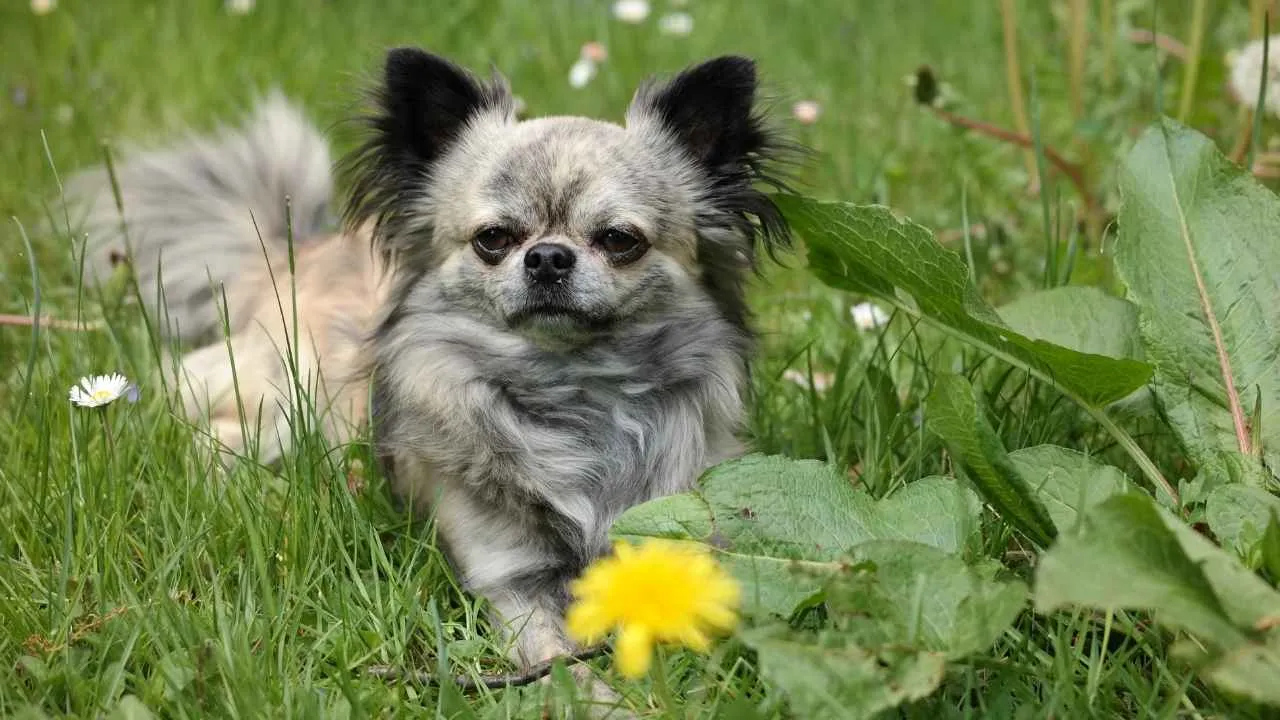
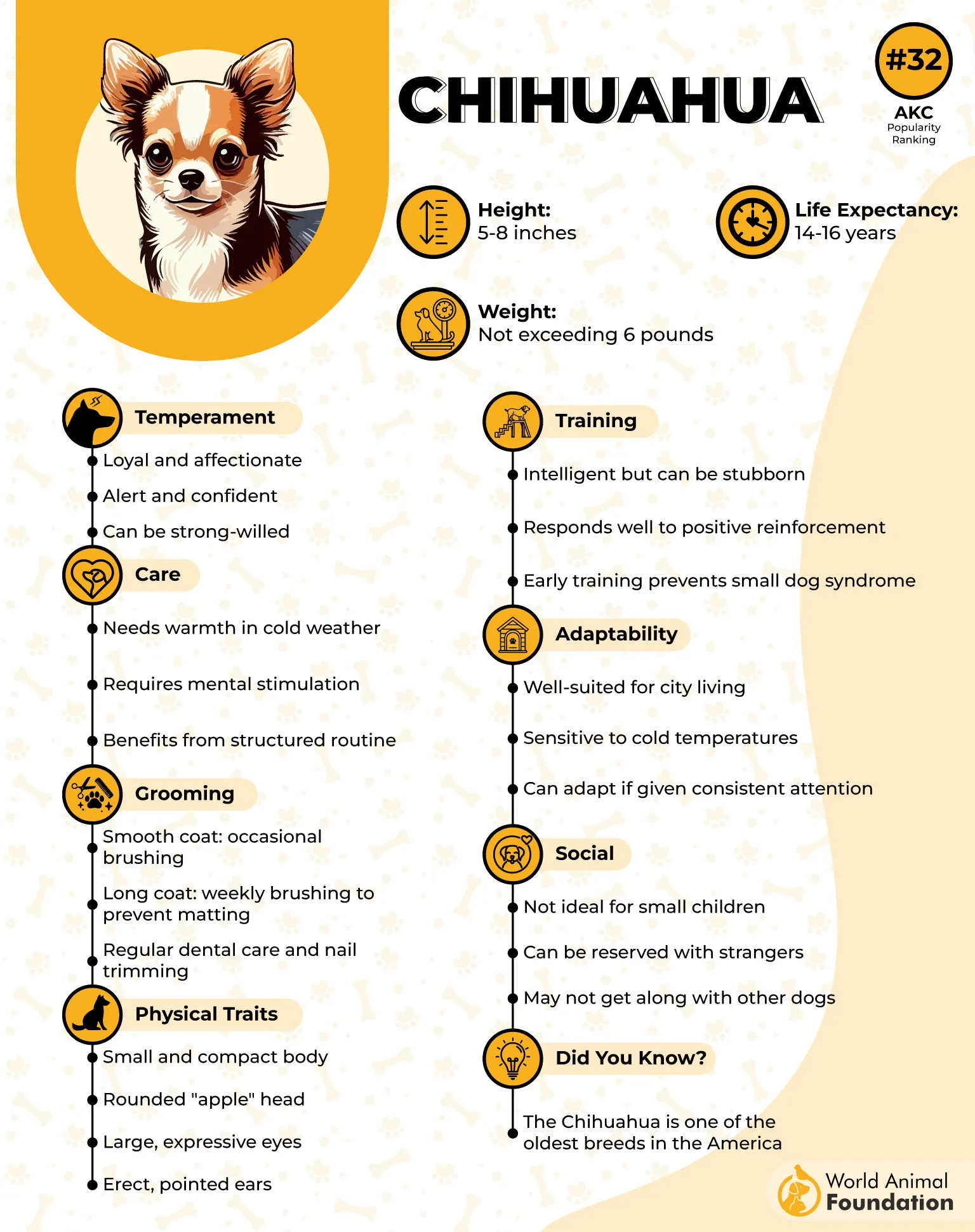
The Chihuahua may be small in size, but it carries an outsized personality. Their large, expressive eyes and erect ears add to their distinctive appearance, making them instantly recognizable and endlessly endearing to their families.
From Ancient Mexico to Modern Homes
Chihuahuas descend from the Toltecs’ sacred Techichi dogs, later refined by the Aztecs into the petite, alert companions we know today. Named after the Mexican state where they were found, Chihuahuas were introduced to America in the 1800s, with the AKC registering the first dog in 1904.
Loyal, Adaptable, and Trainable
Though tiny, Chihuahuas are energetic and benefit from daily walks, playtime, and mental stimulation. Intelligent and eager to please, they respond well to positive reinforcement training and thrive when given love, attention, and proper socialization from an early age.
Why Chihuahuas Are Budget-Friendly
Very small size keeps food and supply costs low
Minimal grooming for smooth-coated varieties
Moderate exercise needs can be easily met indoors or with short walks
Healthy and hardy with proper care, reducing vet bills
Loyal, intelligent, and trainable, minimizing the need for professional classes
Conclusion
Generally speaking, inexpensive dog breeds perfect for tight budgets are ideal for first-time owners and apartment dwellers. Small dogs and toy dogs with minimal grooming needs help pet parents save money on grooming costs, professional grooming, and grooming tools.
For dog owners seeking the cheapest dog breeds, small breed dogs or miniature varieties with short coats reduce food costs, adoption fees, and breeder prices. DIY grooming, regular brushing, dental care, and trimmed short coats keep silky coats healthy.
Inexpensive dog breeds allow pet parents to enjoy dog ownership while keeping budget-friendly dog breeds accessible. Spending time with affectionate companions, training, and addressing health issues early saves money.
