




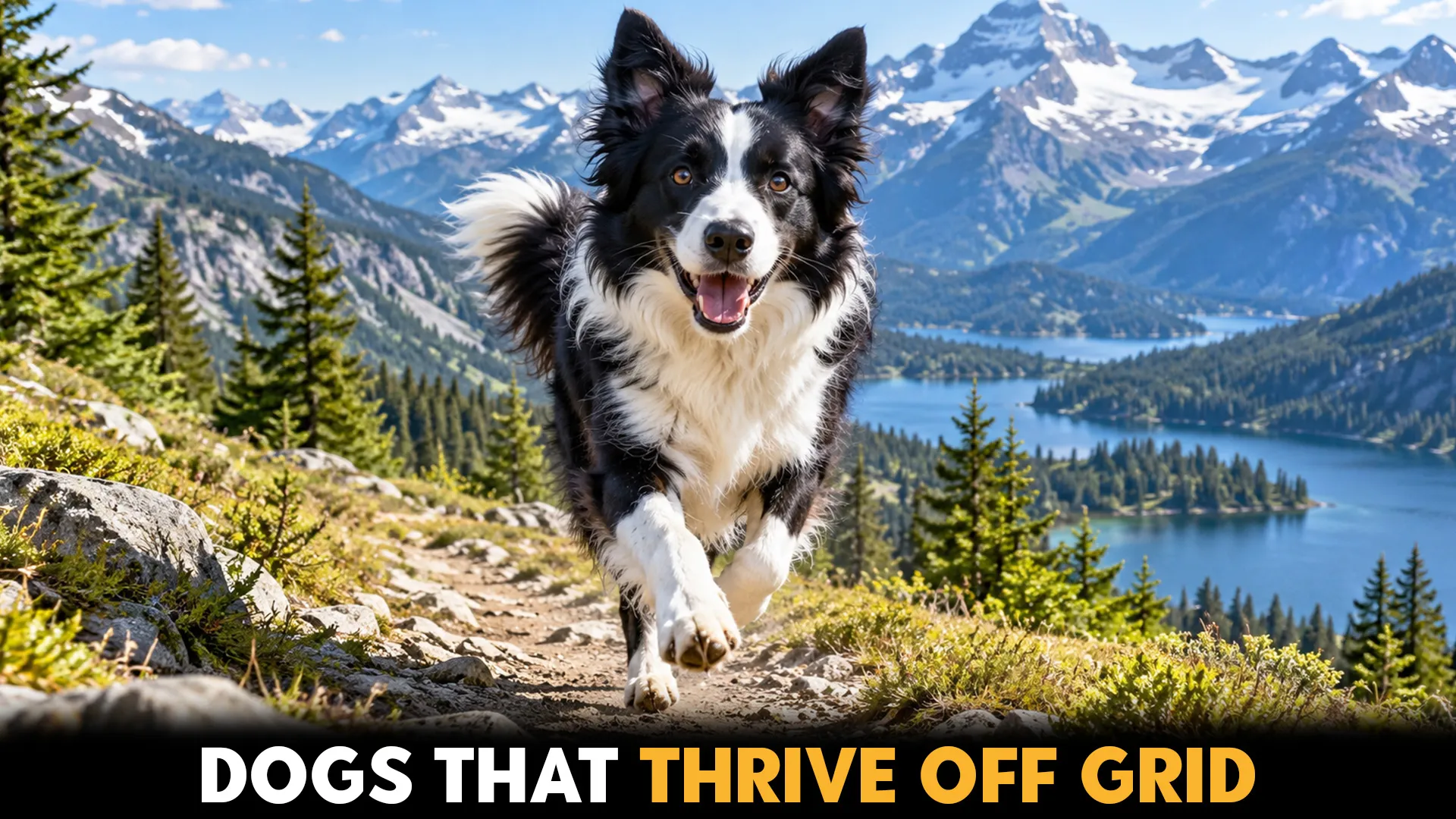
Did you know a dog’s nose is officially rated 100,000 times stronger than yours? That single fact explains why the right exploration buddy can sense danger, water, or game long before you ever do.
Out on wild hiking terrain, that kind of nose becomes a real survival tool, turning incredible endurance into the one trait separating a weekend walker from a true outdoor companion. That scenting power is exactly what makes tracking dogs so effective in the field.
Not every adventurous pup is built the same way, though. Some distinct breeds were shaped for brutal cold-weather hikes, while others were bred for rigorous hikes through thick, unfamiliar terrain.
So how do you pick the right dog for your own kind of wild?
Keep reading to meet seven outdoorsy companions, each one built for a different mountain dog challenge, ready for your next road trip into the great unknown.
Incredible Dog Breeds for Wilderness Exploration
1. Alaskan Malamute
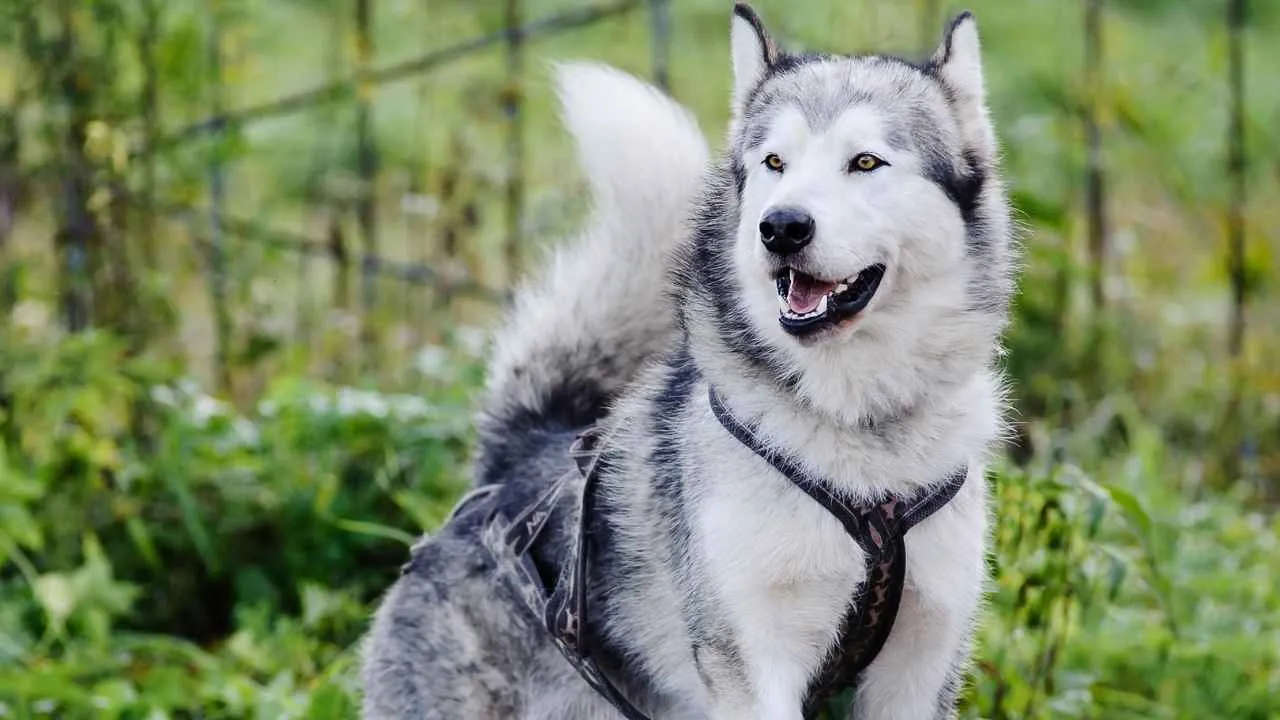
The Alaskan Malamute built its name hauling sleds across frozen wilderness. Extreme cold and brutal distances are exactly the challenge this breed solves. According to the AKC, Arctic peoples relied on it to move heavy loads for miles.
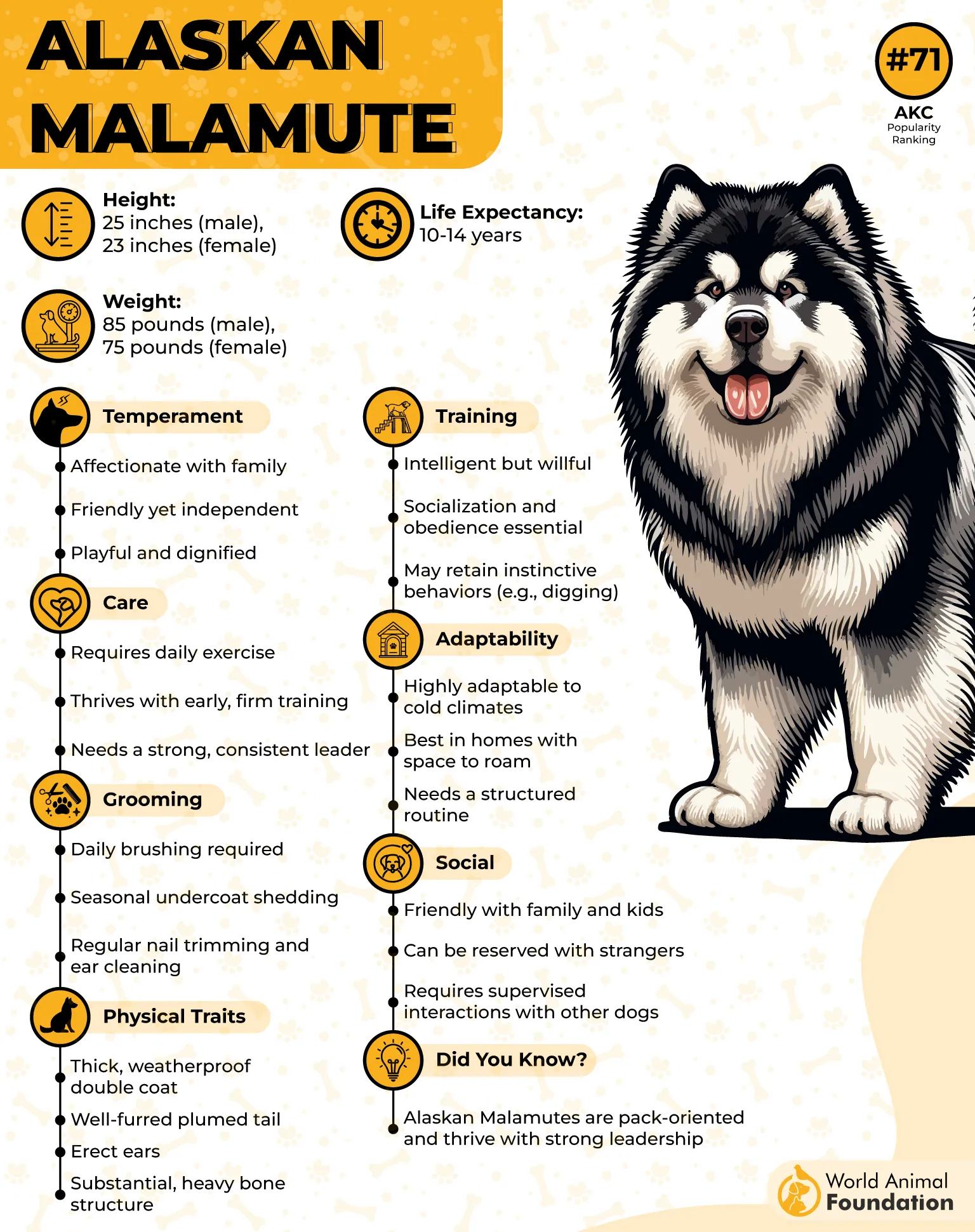
Off-leash, this dog thinks for itself once a trail vanishes under snow. It stays calm under pressure and rarely panics in rough conditions. This working breed can labor for hours in sub-zero cold without losing steam.
Coat: A thick double coat traps heat and blocks wind.
Paws: Tough, wide pads grip ice without slipping.
Build: A deep chest holds strong lungs for thin air.
This dog was shaped for Arctic snow and frozen ground. An owner planning cold-weather hikes gets a loyal, rugged companion built for that mission. For frozen trails, the Alaskan Malamute is a standout choice.
2. Siberian Husky
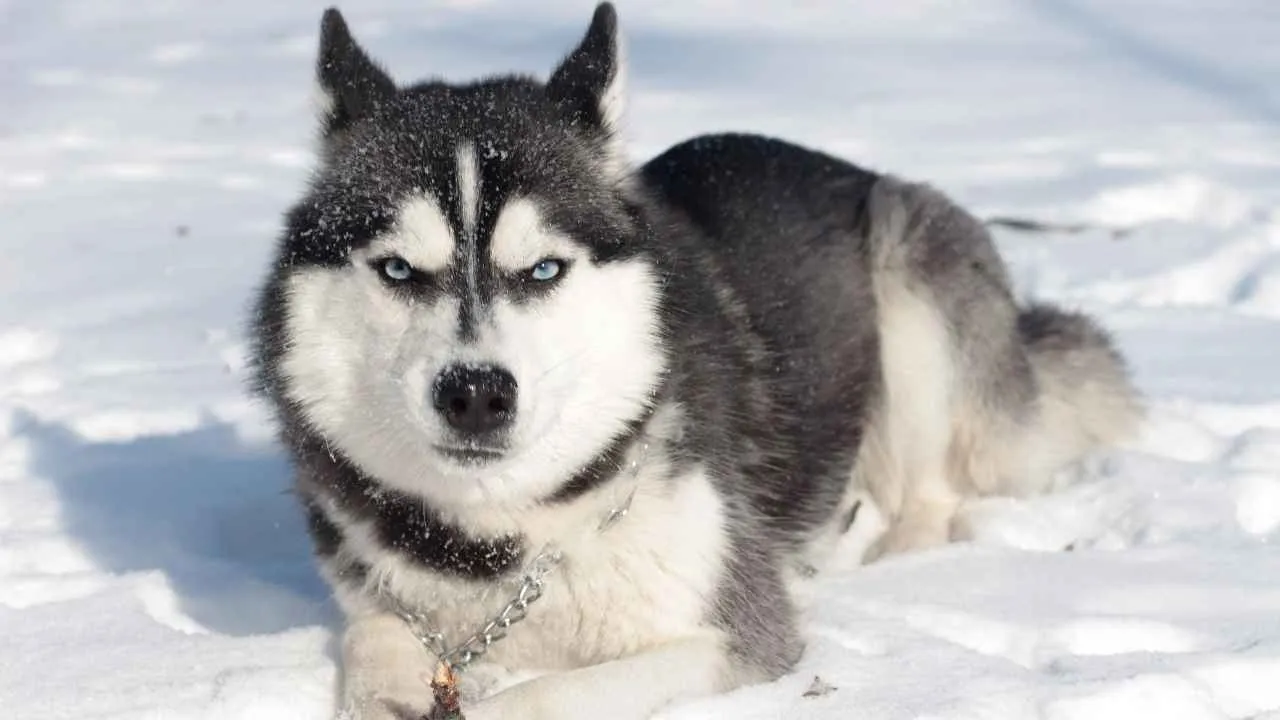
The Siberian Husky was born to cover vast frozen distances at speed. Long, grueling runs across Arctic terrain test this breed like no other. According to VCA, it developed in Siberia to move loads over many miles.
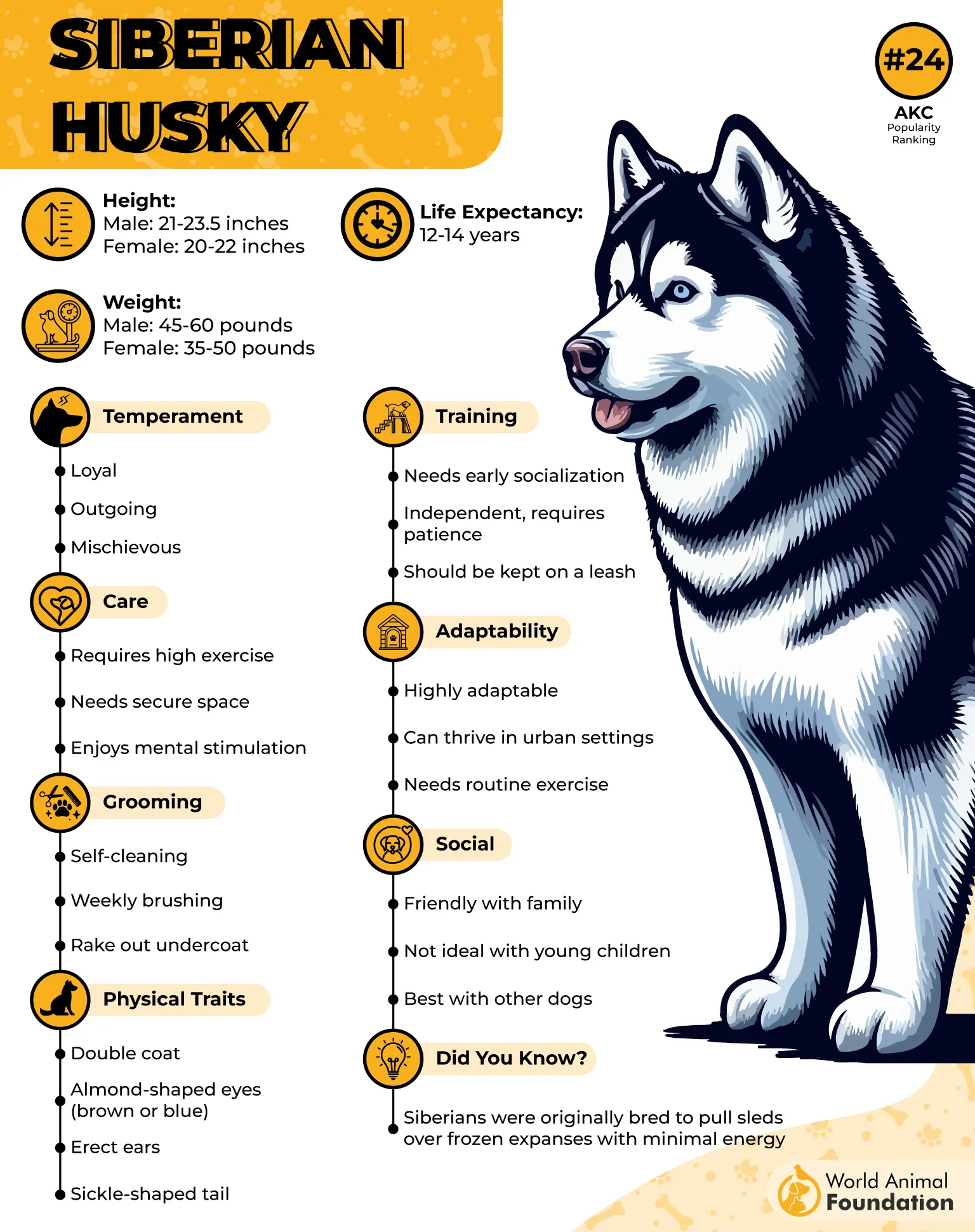
This exploration buddy stays focused through long, monotonous trail stretches. It works well with a team but still thinks fast in icy conditions. Huskies can run for hours without needing frequent rest, true distance athletes of the snow.
Coat: A dense double coat insulates against sub-zero temperatures.
Paws: Compact, fur-covered paws resist ice buildup and frostbite.
Build: A lean frame burns energy efficiently over long distances.
This breed thrives in deep snow and brutal cold where other dogs slow down. An owner chasing cold-weather hikes will find a natural runner built to keep pace. For snowy wilderness, the Siberian Husky is a trail-worthy partner.
3. Australian Cattle Dog
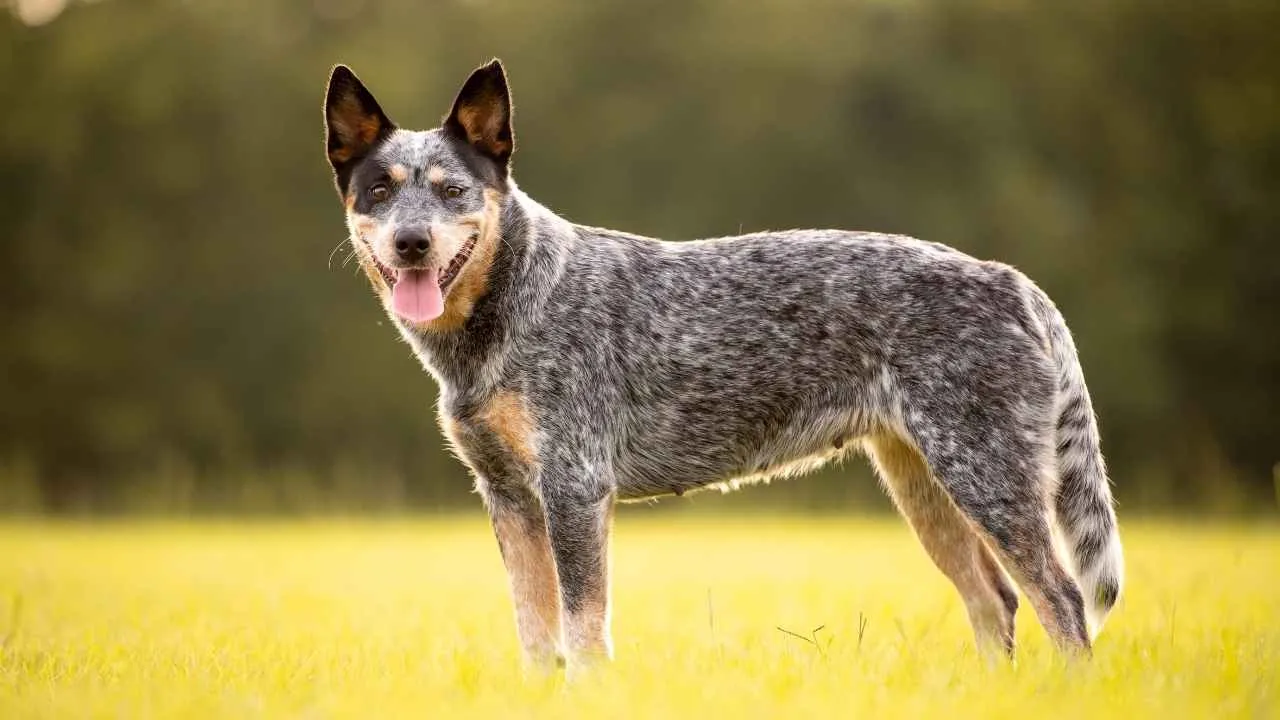
The Australian Cattle Dog was bred to cover rough, sunbaked terrain all day. Scrubland and extreme heat are the wilderness challenges this breed handles best. According to PetMD, it developed in Australia to herd cattle across harsh land.
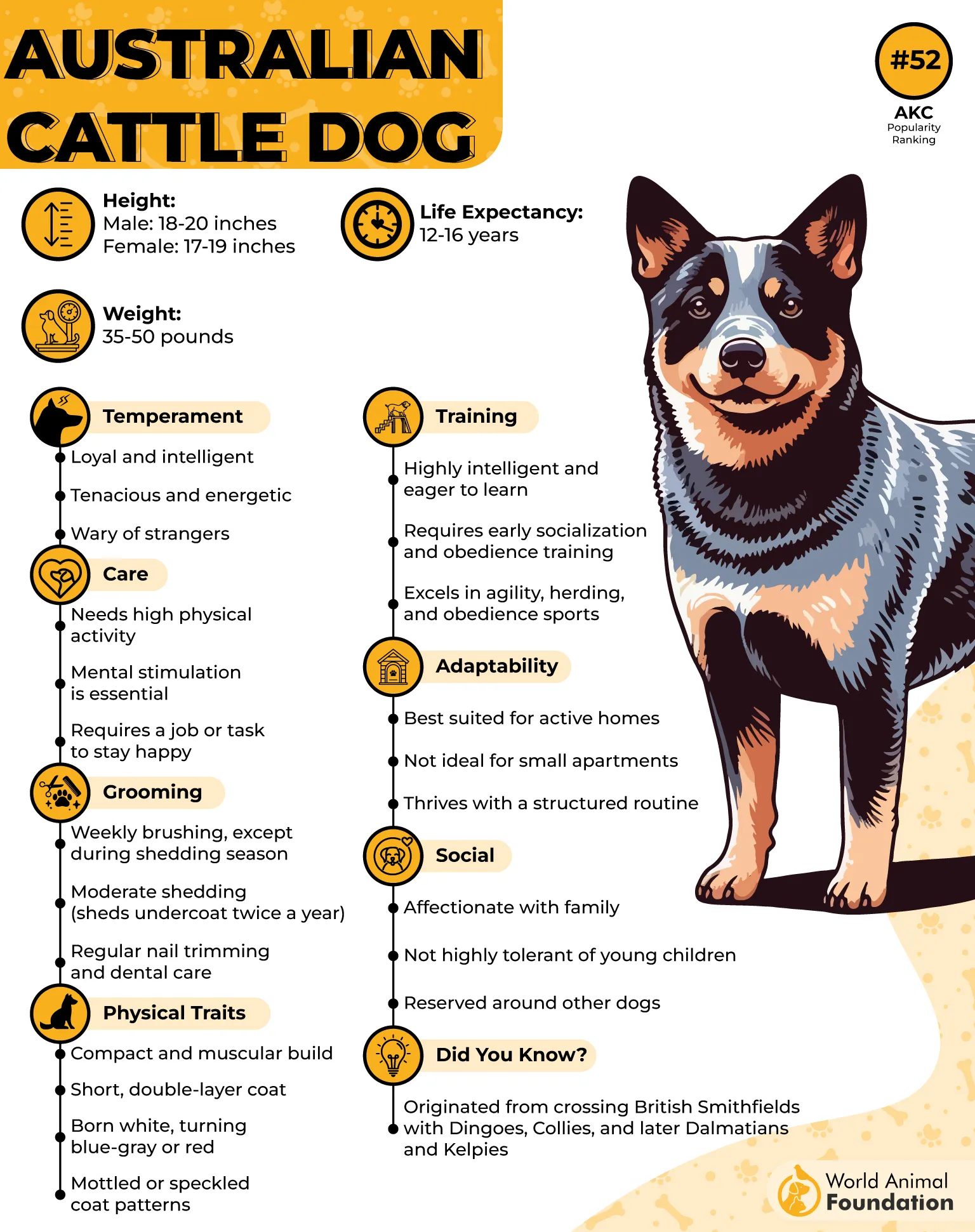
This dog thinks on its feet and rarely waits for direction. It stays sharp and alert through hours of hard work in rough country. The breed can work full days under a scorching sun without flagging.
Coat: A short coat sheds dirt and resists harsh sun.
Paws: Tough, compact paws handle rocky ground with ease.
Build: A muscular frame fuels nonstop movement across open land.
This breed is shaped for dry scrubland, rocky ground, and blazing heat. An owner heading into rugged terrain gets a loyal, tireless hiking partner. For dusty trails, the Australian Cattle Dog is a great choice.
4. German Shorthaired Pointer
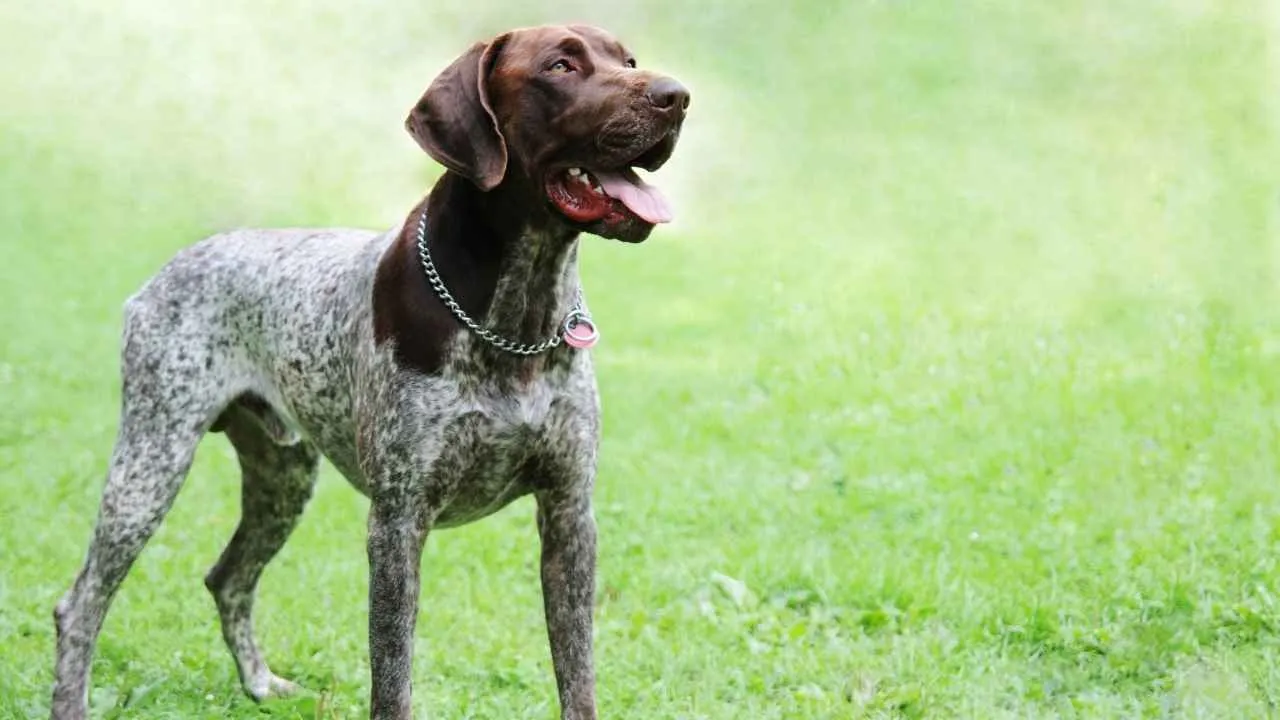
The German Shorthaired Pointer was bred to track game through dense forest undergrowth. Thick woods and scent-heavy ground are the challenge this breed solves best. According to Britannica, it developed in Germany as an all-purpose hunting companion.
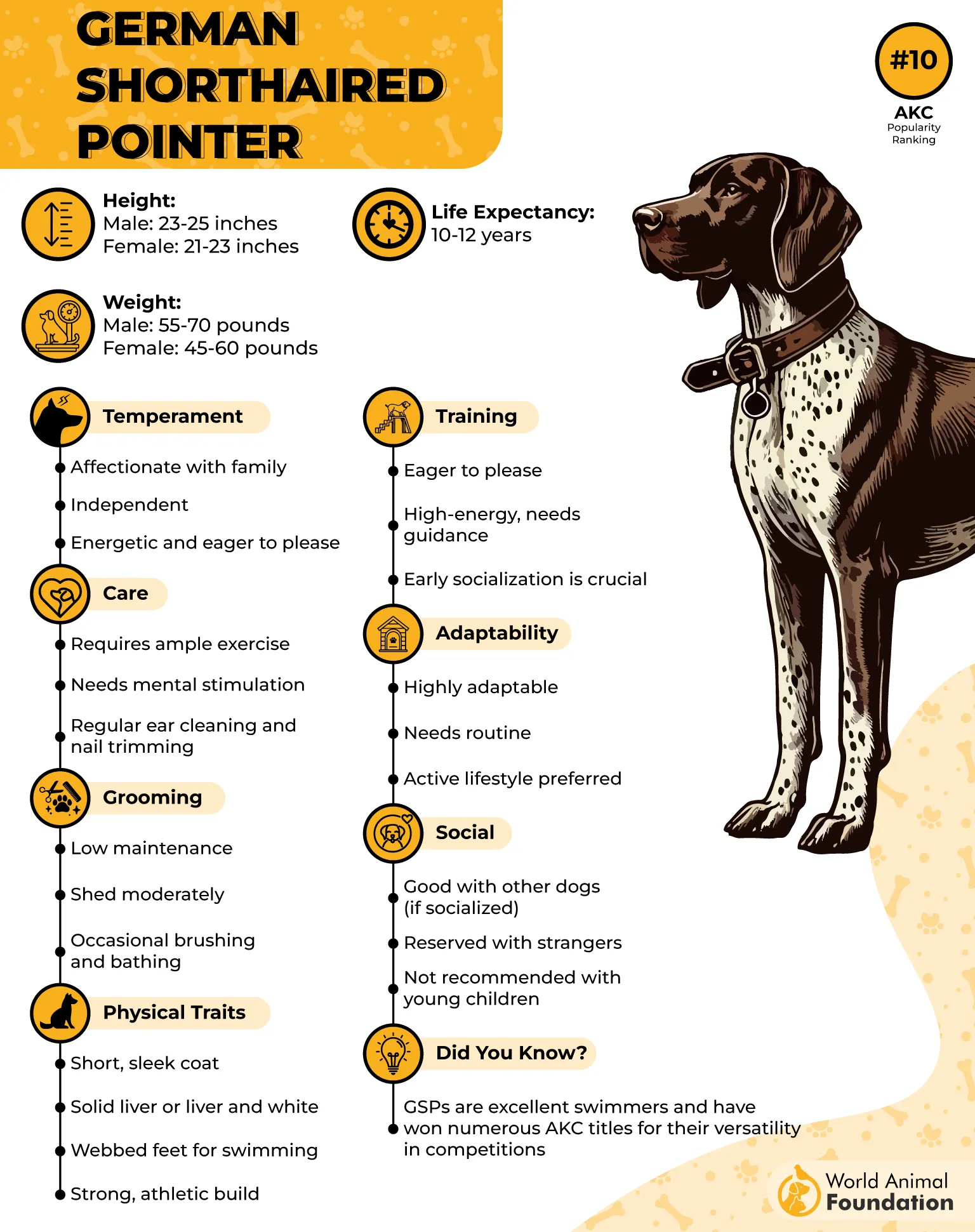
This dog works independently once it’s out ahead of its handler in heavy brush. It stays focused and confident even when thick cover blocks the view. The breed can hunt for hours without tiring, a reliable partner in heavy cover.
Nose: An exceptional scenting ability tracks game through cover.
Coat: A short coat sheds burrs and dries fast after brush.
Build: A lean, athletic frame covers ground quickly between trees.
This breed thrives in dense forest and scent-rich wilderness where tracking matters most. An owner who loves wooded trails gets a sharp, trail-worthy hunting partner. For forest exploration, the German Shorthaired Pointer is a natural fit.
5. Rhodesian Ridgeback
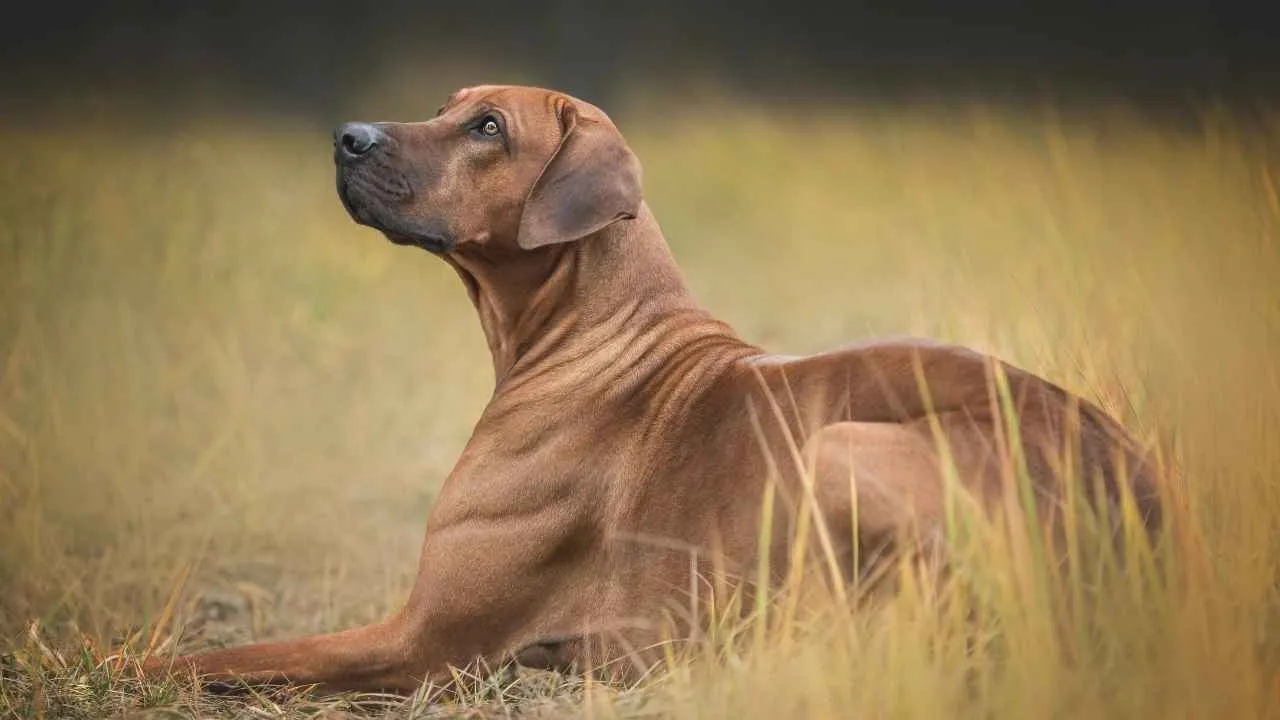
The Rhodesian Ridgeback was bred to track big game through rugged African bush. Dangerous wildlife and tough terrain are the challenges this breed was built to face. According to Orvis, it developed in southern Africa to track lions alongside hunters.
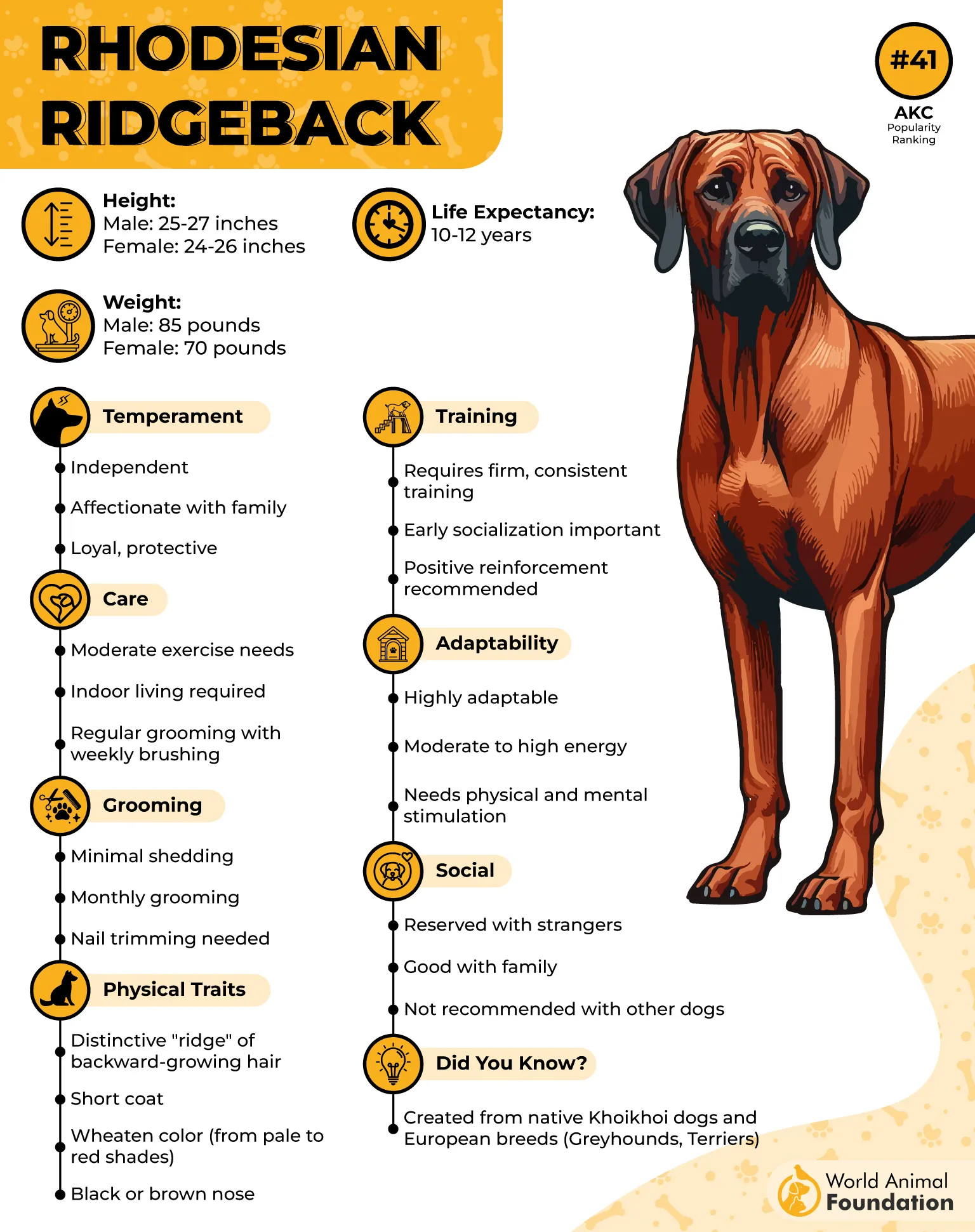
This dog stays brave and level-headed when facing dangerous wildlife alone. It works independently, holding its ground rather than backing down. The breed can track for hours across harsh bushveld, a true endurance specialist.
Ridge: A distinctive ridge of reverse hair marks this breed.
Coat: A short coat handles heat and sheds debris easily.
Build: A muscular, lean body gives speed over rough ground.
This breed is shaped for dense bush and rugged African terrain. An owner exploring wild, remote land gets a fearless, rugged companion built for real danger. For true wilderness, the Rhodesian Ridgeback is a standout breed.
6. Australian Shepherd
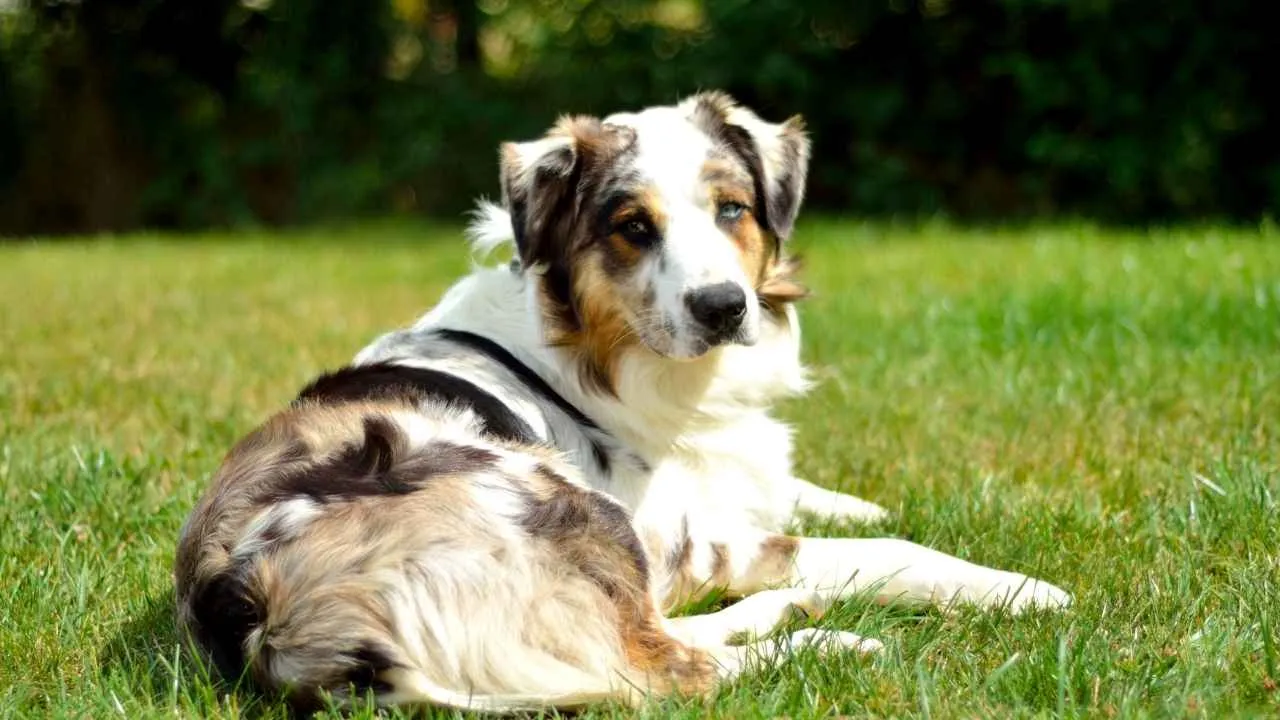
The Australian Shepherd was bred to herd livestock across rugged mountain country. Steep slopes and unpredictable footing are the exact challenge this breed was built to handle. It developed in the American West, working stock across wide ranchland.
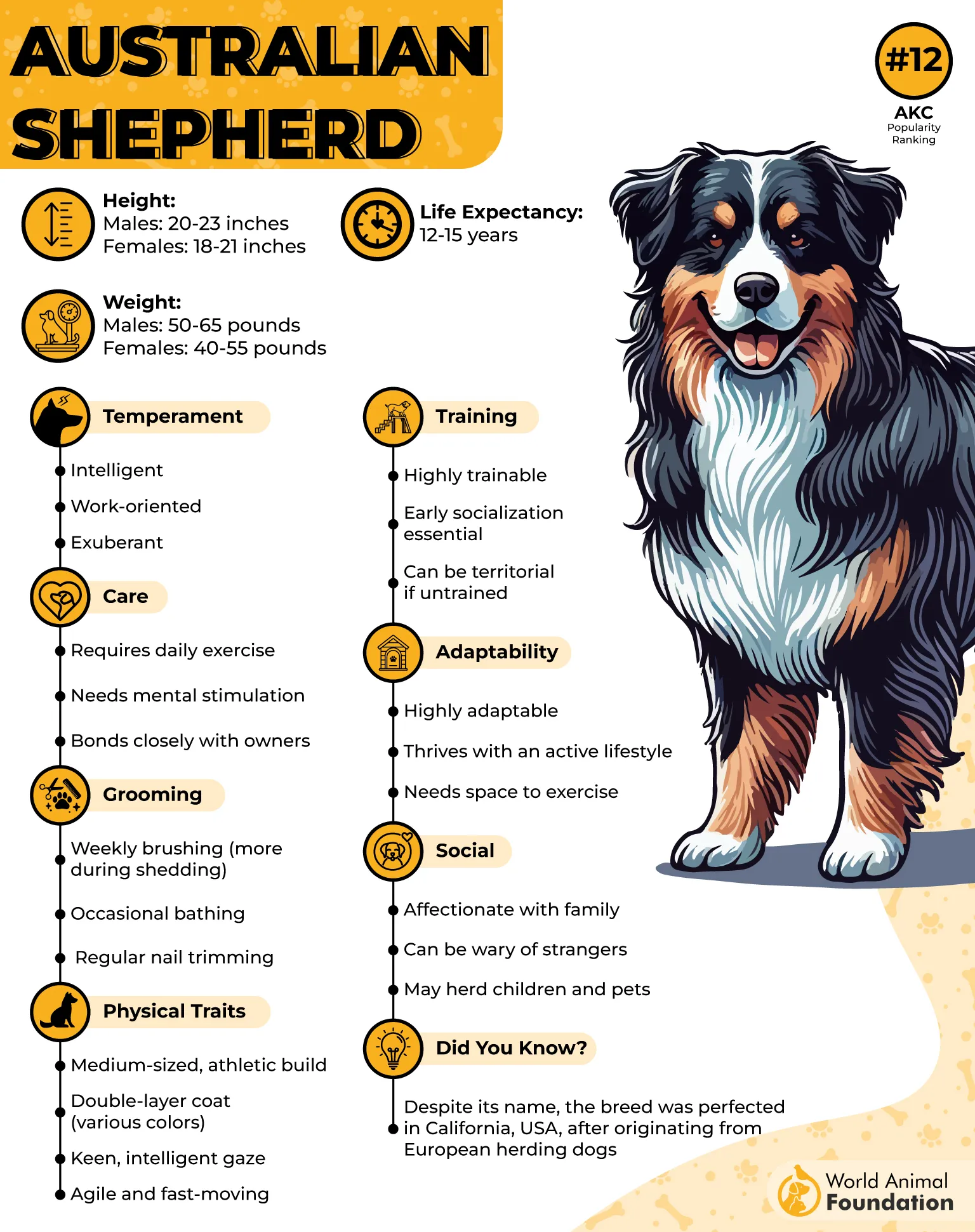
This dog reads the land fast and adjusts its footing without missing a beat. It stays sharp and confident on steep, shifting terrain. The breed can work long days across variable ground, a reliable partner for changeable trails.
Coat: A weather-resistant double coat handles rain, cold, and sun.
Paws: Sturdy, compact paws grip loose rock and steep ground.
Build: An agile, muscular body turns quickly on uneven slopes.
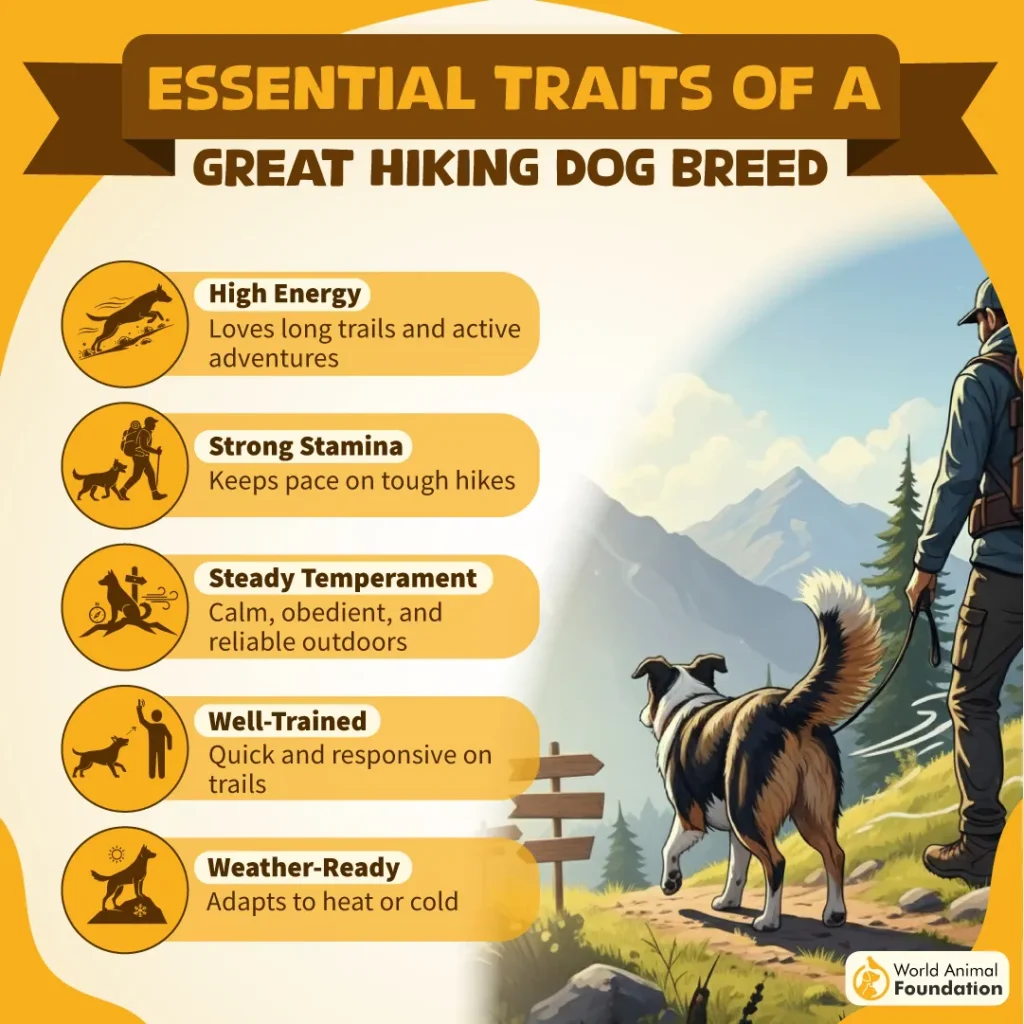
This breed is shaped for mountain trails, steep slopes, and shifting terrain. An owner heading into variable, high-altitude country gets a sharp, adaptable trail partner. For rough hiking terrain, the Australian Shepherd is an ideal choice.
7. Norwegian Elkhound
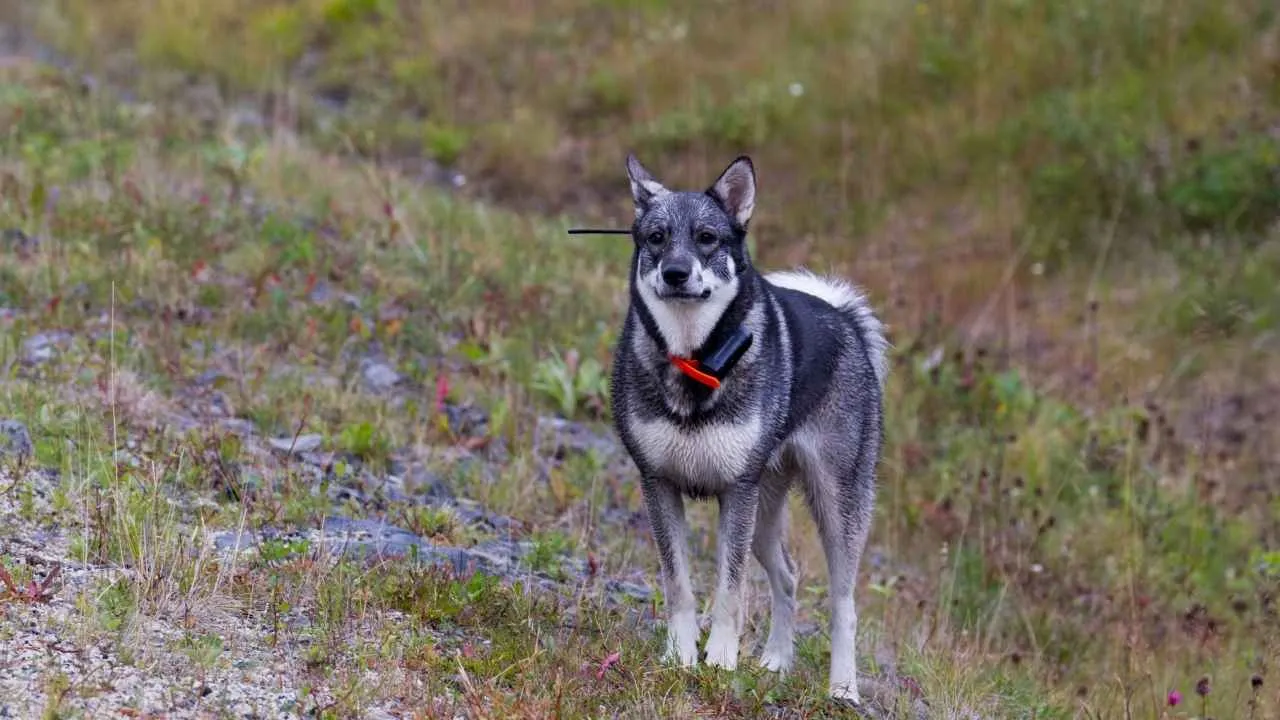
The Norwegian Elkhound was bred to track large game through dense, cold forest. Freezing temperatures and thick timberland are the exact challenge this breed was built to solve. It developed in Scandinavia, hunting moose across rugged woodland.
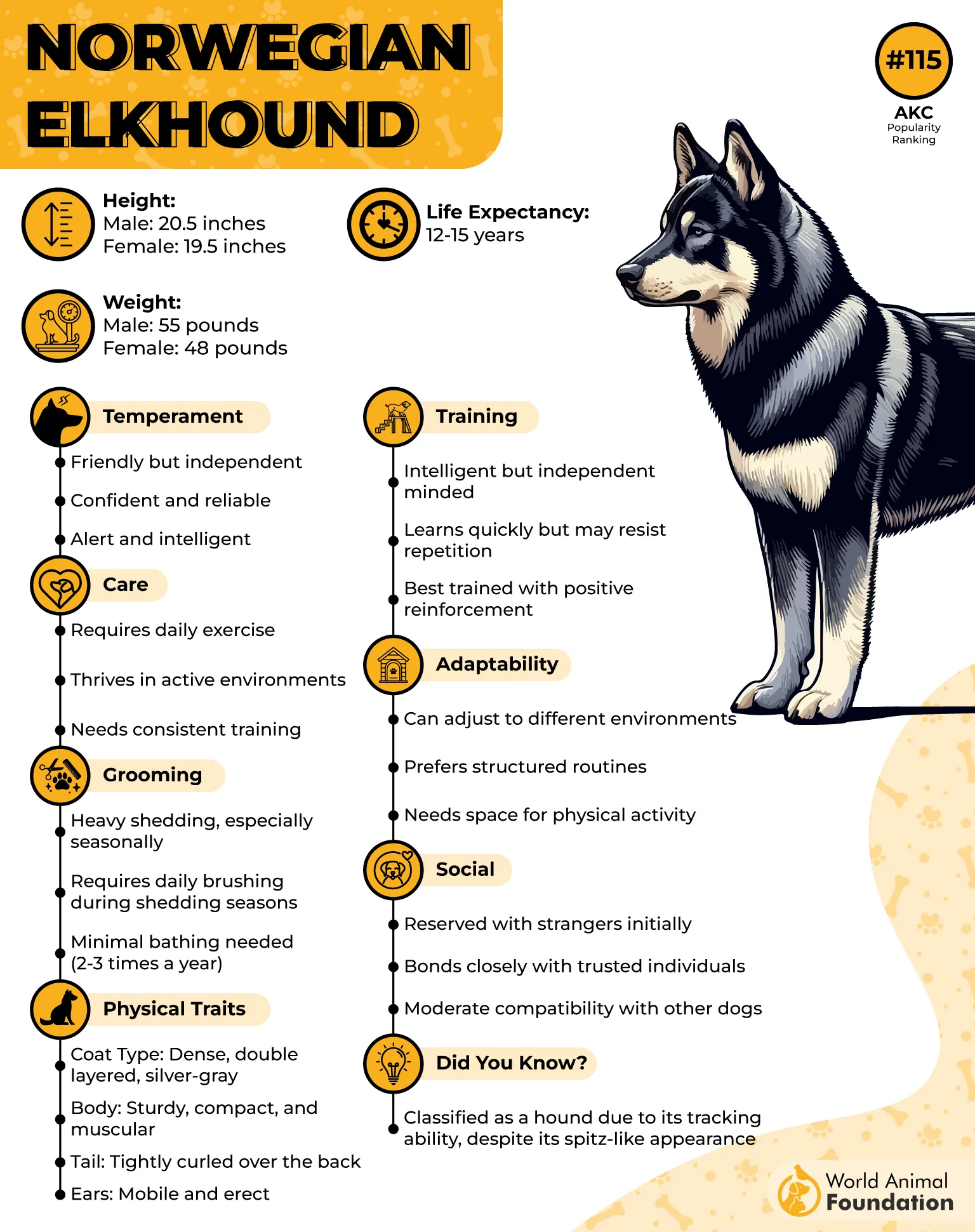
This dog barks to alert its handler, then holds its ground near big game. It stays bold and confident alone in thick, freezing woods. The breed can push through hours in deep snow, a hardy endurance specialist.
Coat: A thick, weatherproof coat blocks snow and biting cold.
Nose: A sharp, reliable nose tracks scent across frozen ground.
Build: A sturdy, compact body powers through deep snow with ease.
This breed is shaped for dense northern forest, deep snow, and freezing timberland. An owner exploring cold, wooded wilderness gets a loyal, rugged hiking partner. For forest and snow trails, the Norwegian Elkhound is a natural fit.
Conclusion
Picking the right dog for the great outdoors comes down to matching terrain to temperament, not just choosing the most adventurous face on the trail.
Each of these seven breeds proves true wilderness skill looks completely different depending on the climb, the cold, or the cover ahead, which is exactly what makes a solid guide to dogs so useful before you commit.
Whichever hiking partner calls to you, choosing right sets you both up for a lifetime of outdoor living and unforgettable adventures together. Ready to find your own trail companion? Browse our full breed overview and start planning your next wild adventure today.
