




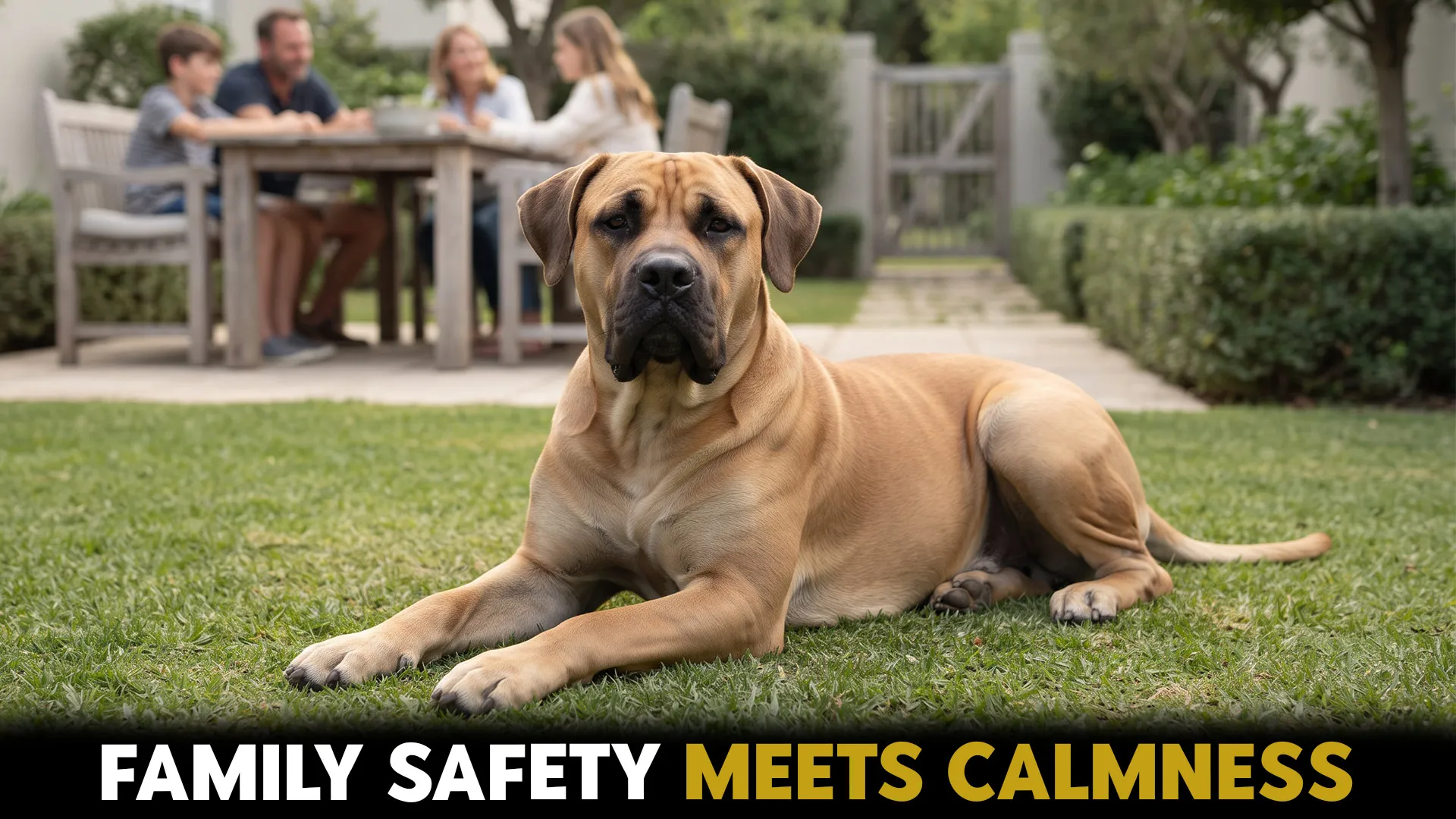
A family dog doesn’t have to be bouncing off the walls to make you feel safe. Some breeds have a calmer, quieter way of watching over the people they love.
The ideal family protector strikes a balance between being a companion and a confident guardian; gentle with loved ones, yet ready to respond when it truly matters. The properly trained protection dogs for families aren’t defined by size or appearance alone.
Their size, confidence, alertness, and natural guarding instincts create a reassuring presence without turning the home into a security checkpoint.
Of course, even a calm dog still needs proper training, socialization, exercise, and responsible handling. If you’re after a loyal family companion with enough presence to make strangers think twice, these breeds are well worth a closer look.
Ideal Calm Dog Breeds for Families Seeking Security
1. Newfoundland

Also known as Newfie, the large dog breed was originally bred in Canada to serve as a water rescue dog and work alongside fishermen. The gentle giant has a calm nature and is widely kept as a family protection dog, according to PetMD.
Because of sharing its roots with the Molosser and Mastiff-type breeds, this guard dog breed has a heavy brow that casts a strong impression. Built to endure strong ocean tides, the Newfoundland has powerful and muscular hindquarters that provide it with stopping power and explosive traction.
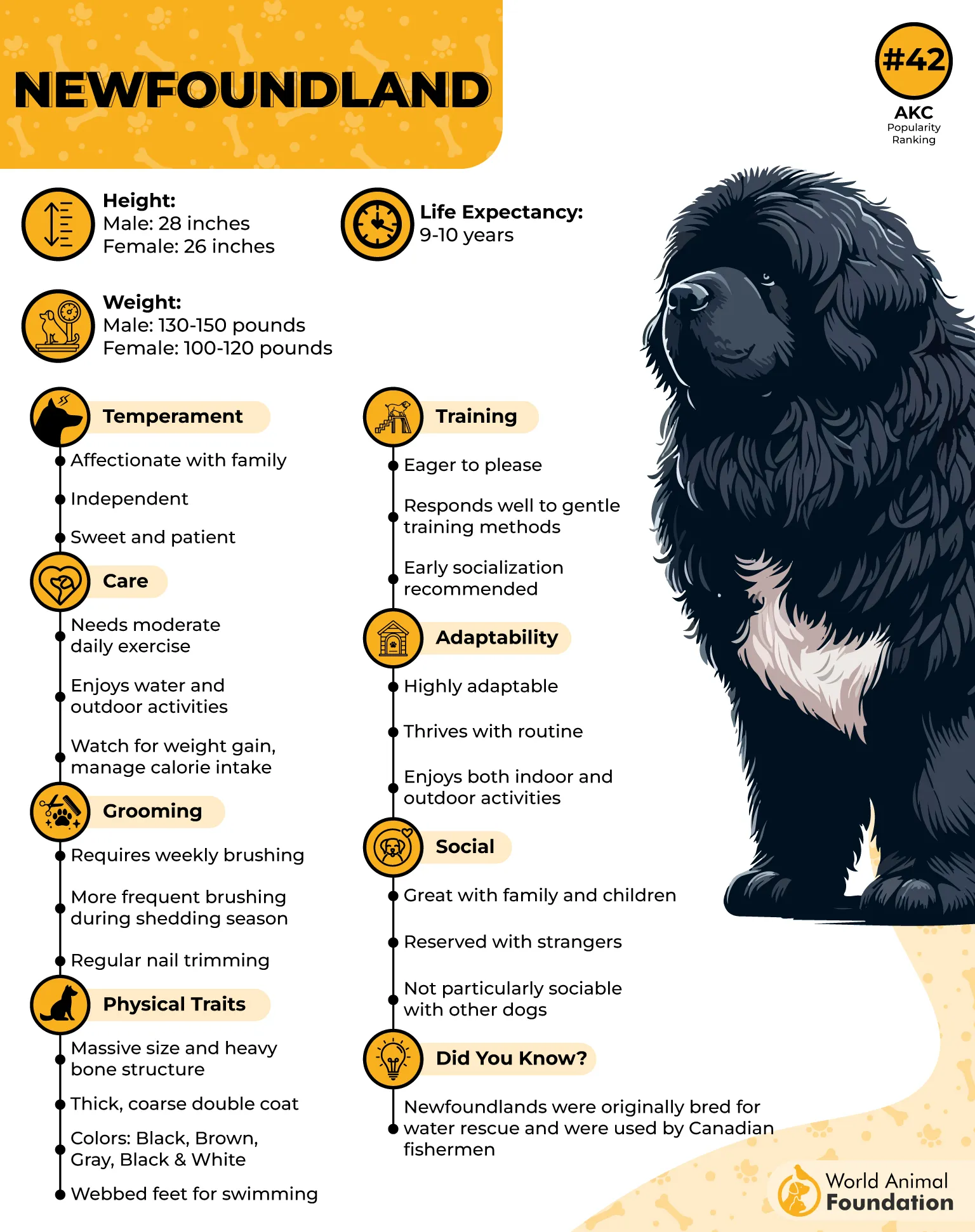
It has a high-reactivity threshold and only reacts when there is an actual threat. It is also generally termed a nanny dog because of its forgiving nature towards children. The breed has a thick coat and webbed feet that make it an excellent swimmer.
2. Great Pyrenees
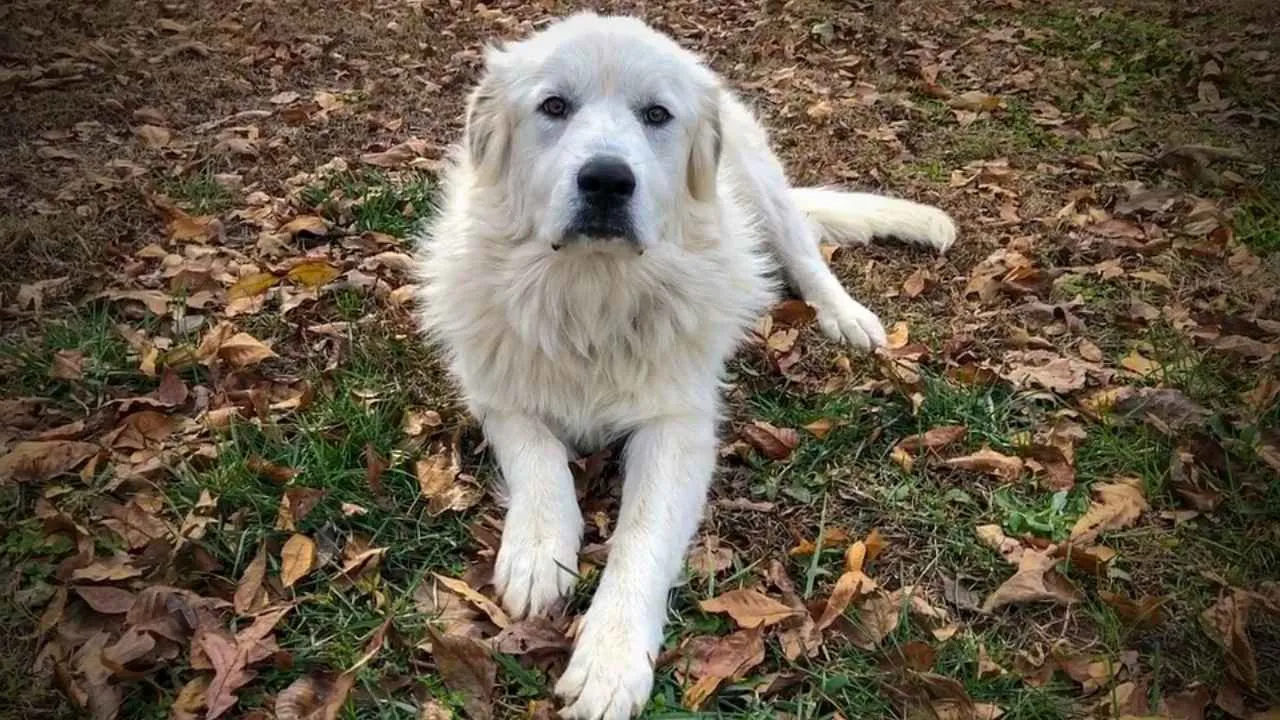
The history of this ancient breed dates back to the Bronze Age (between 1800-1000 BCE), when it was developed between the borders of France and Spain. The primary purpose was to herd and protect animals. It was later adopted by the French royalty and used to protect their palaces.
The thick mane around its neck protects the breed’s jugular vein and trachea from dangerous bites. With its tight facial structure, it stays protected from being scratched or grabbed during a fight. It has double dewclaws on each hind leg that provide grip and stability on the ground.
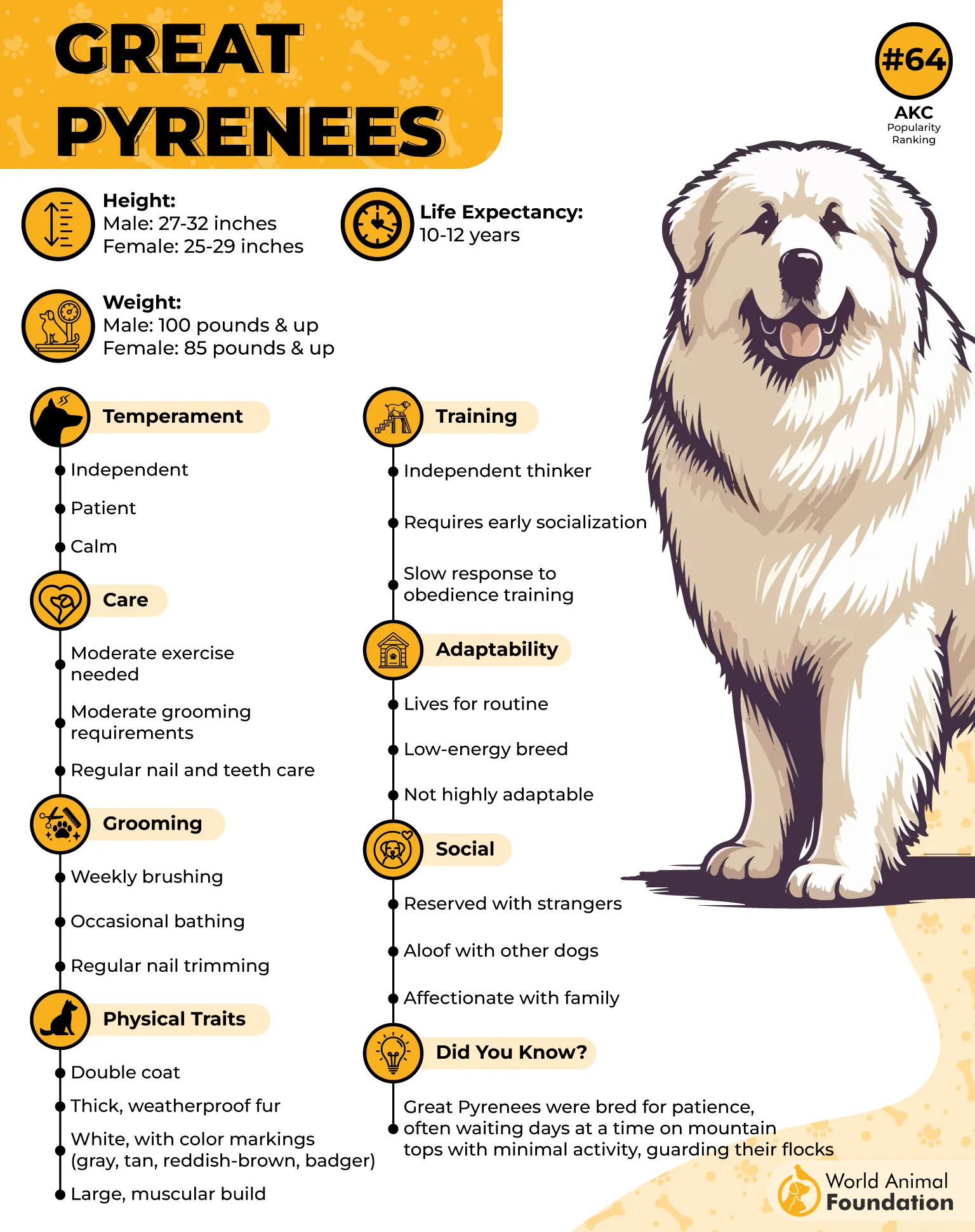
Being nocturnal, this effective guard dog breed tends to work efficiently at night using its strong sense of sight and high speed. The breed provides protection in 4 layers: visual stand (alert posture), vocal warning (low-frequency bark), body blocking, and active defense.
3. Leonberger
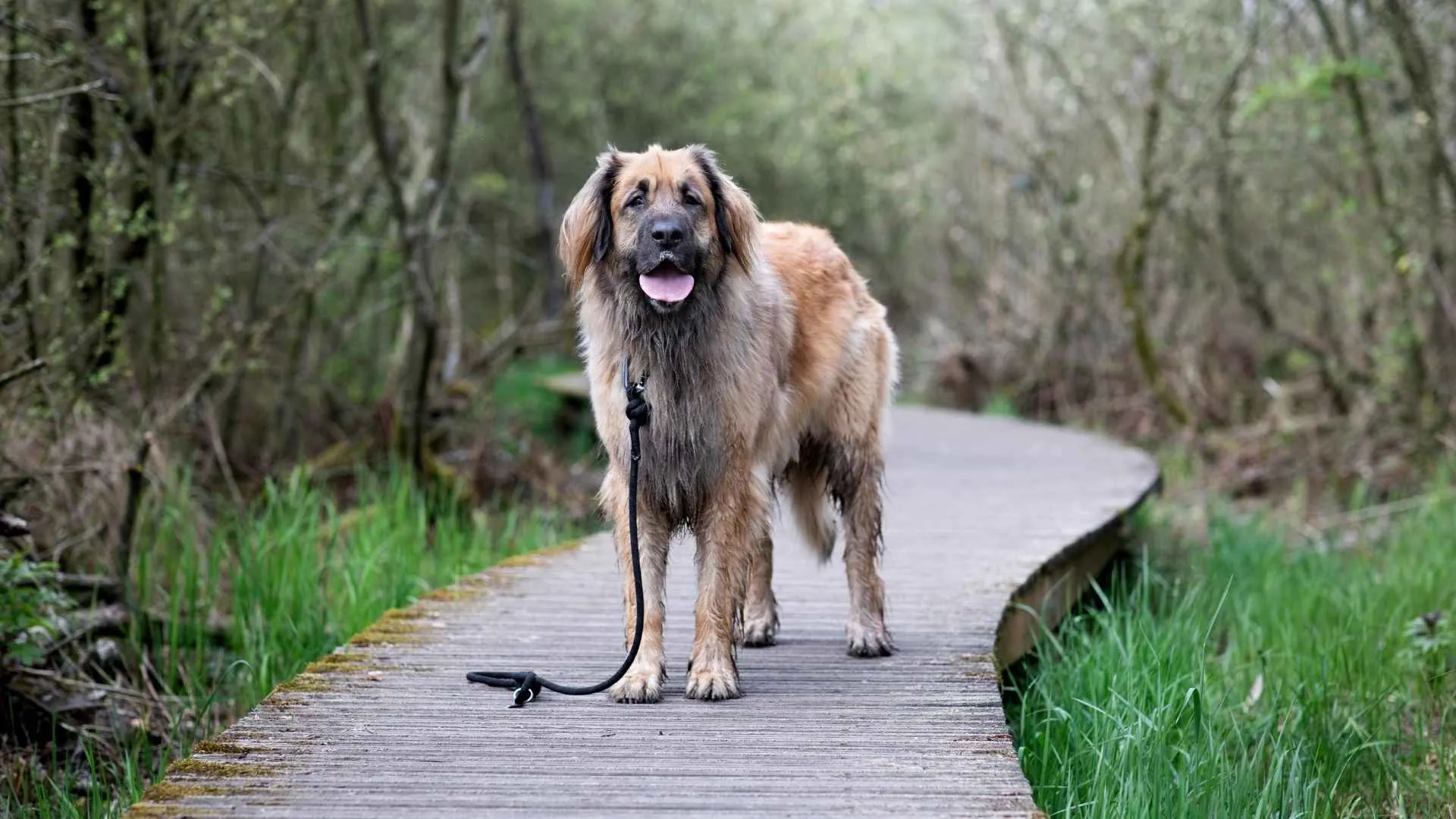
Similar dogs were used in the late 16th century to guard livestock. The breed was meant to resemble the lion. However, the first litter of this excellent guard dog was registered in the year 1846, and then it became a popular guard dog breed among royalty, says Orvis.
With its slight sexual dimorphism (males look powerful and more masculine), it creates a visual deterrent while patrolling the property line. It has high-set dropping ears that catch low-frequency sounds. It tends to focus on entry points and can detect minute changes in the environment with acute eyesight.
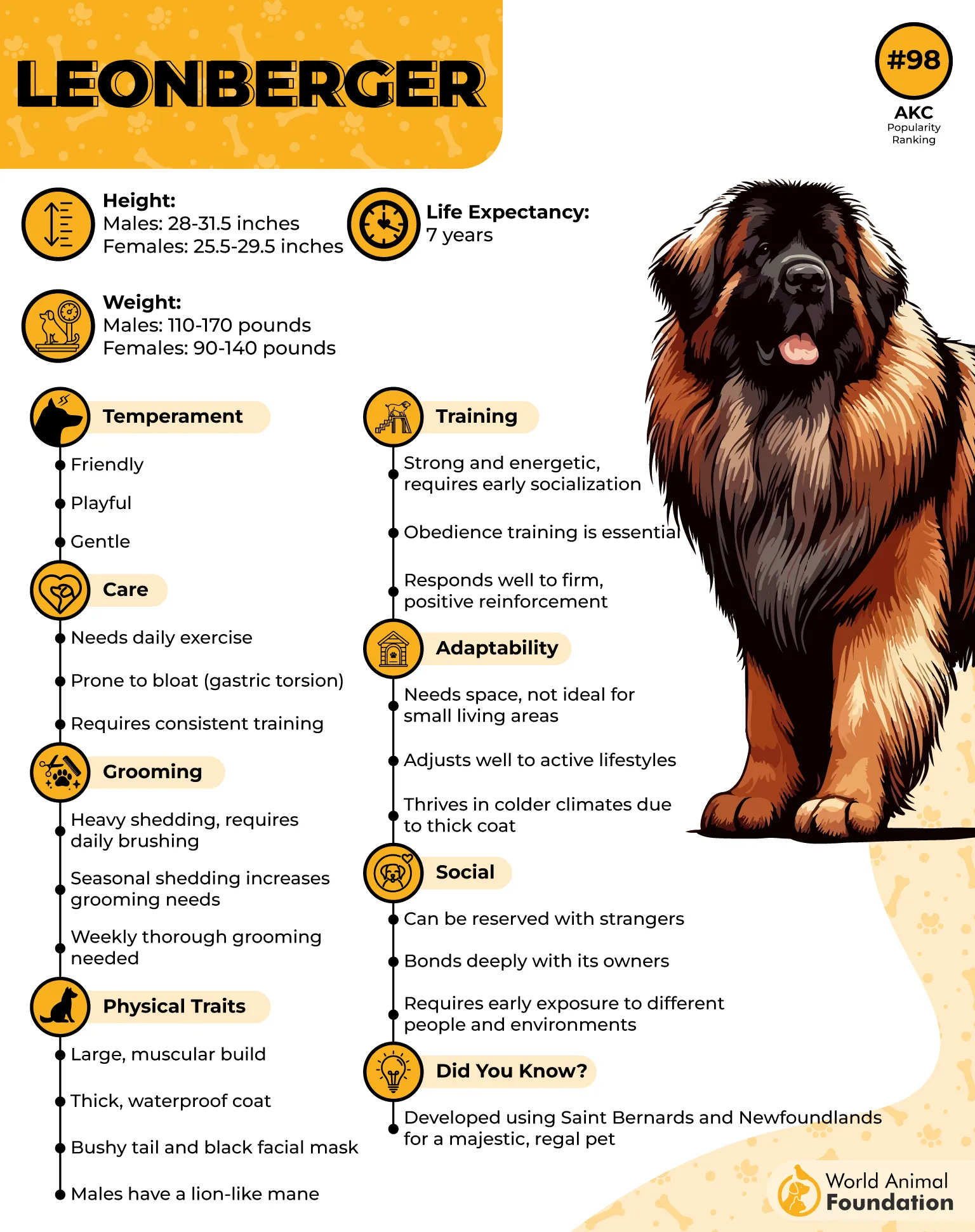
The high intelligence and eager-to-please nature make it highly trainable. Since it forms strong bonds with the family and sees them as a pack, it has the natural tendency to see the property as its domain. With its quiet observation, this guardian breed can detect a potential threat before humans do.
4. Saint Bernard
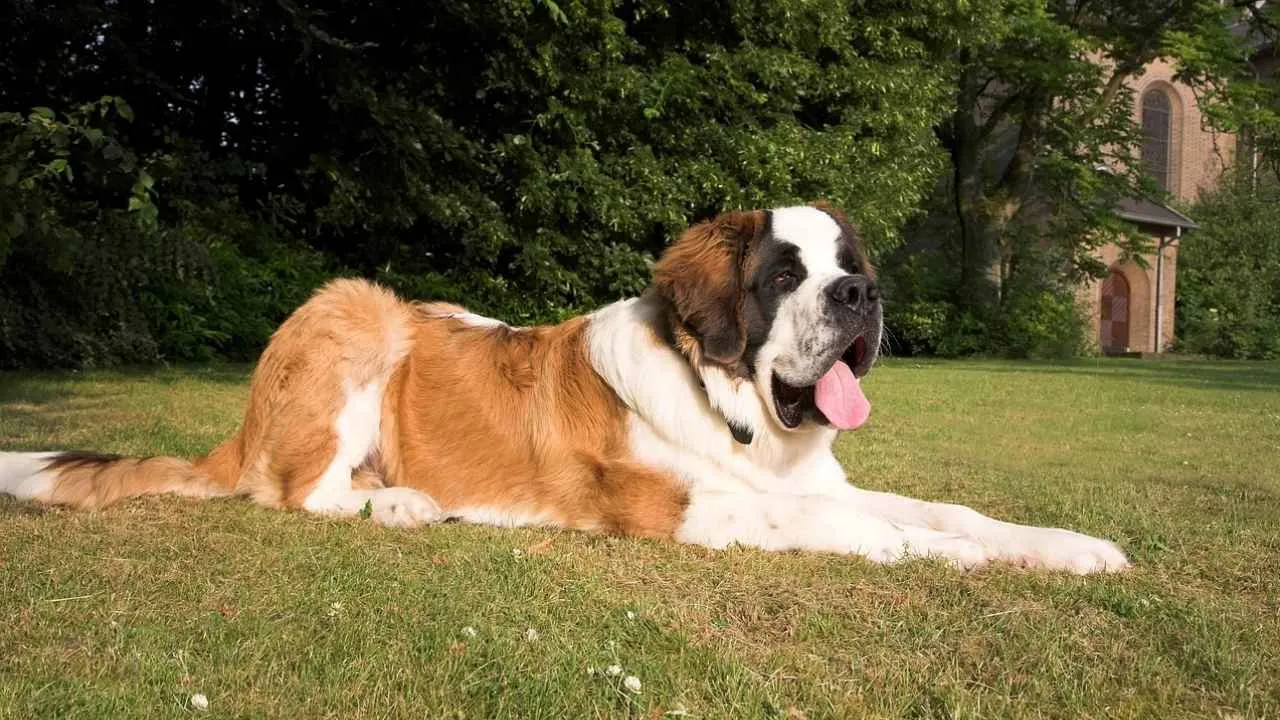
This large dog was originally bred by the monks as a rescue dog and was used by travelers as a protection dog who used to travel between the Italian and Swiss mountains. It was also used to warn inhabitants of upcoming snowstorms. These dogs have saved around 2,000 people while serving in hospice.
It has an open-jaw geometry that provides it with immense bite pressure. Developed from the Roman Molosser dog, the breed has firm muscles, and the body weight is spread low across the heavy paws. This prevents intruders from pushing past, overpowering, or physically fighting the breed.
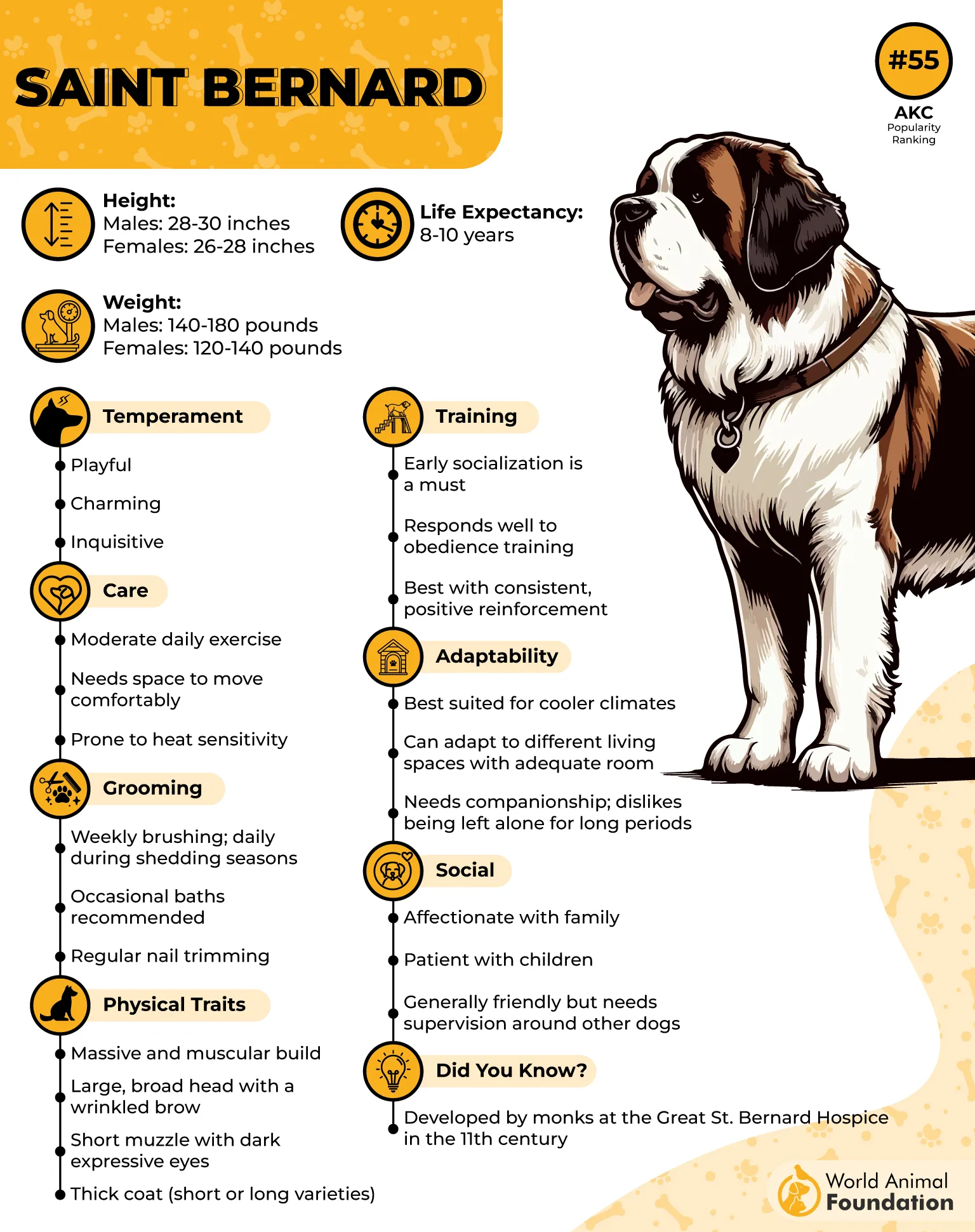
This breed has a distinct black mask around the eyes and wrinkly skin on the forehead that give it an overall intimidating presence. Despite having a low prey drive and territorial instincts, it was historically used as a watchdog and is incredibly loyal to the family; thus, an excellent protective dog breed
5. Boerboel
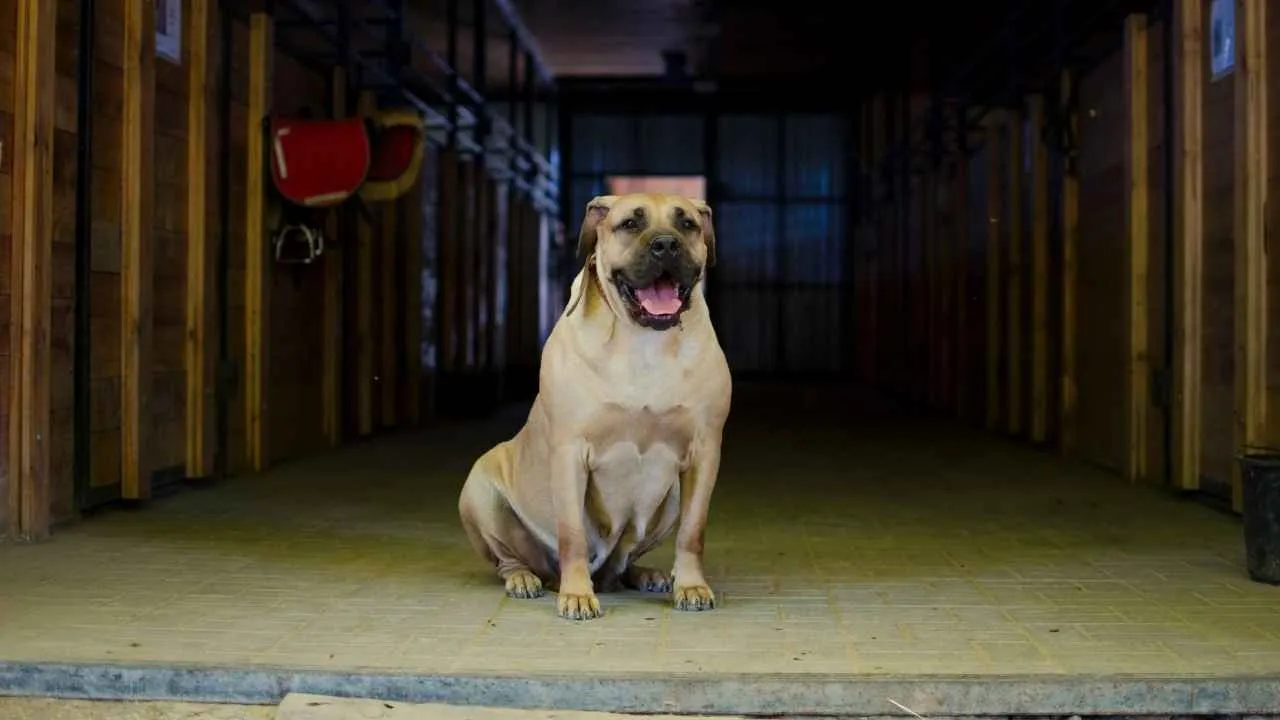
These large guardian and hunting dogs were brought to South Africa in the 17th century by the Dutch, Huguenot, and German settlers. These breeds were bred with other dogs, such as the Bull Mastiff, English Bulldog, Rhodesian Ridgeback, and native dogs, resulting in the Boerboel, as reported by Chewy.
The length-to-height ratio of the breed is 10:9, so the low centre of gravity combined with sloping shoulders and a deep chest provides immense physical power to pin down an adult human.
It has loose, thick, and highly pigmented skin that protects the dog from the intense cold of the African environment and dangerous bites of predators.
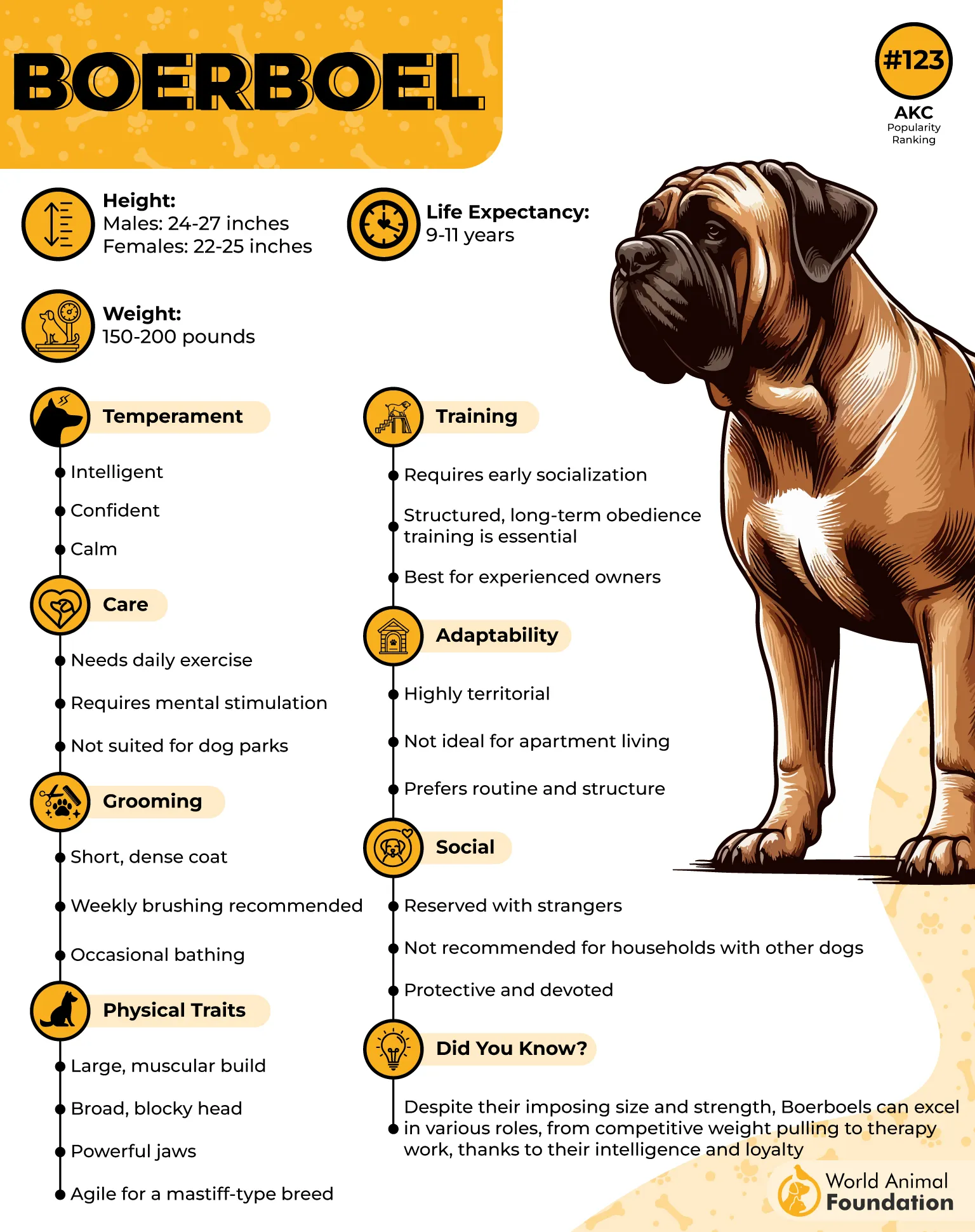
With its low-to-medium baseline energy level, the breed can watch over the property for hours. It only shows aggression when it perceives an actual threat. It needs 1-2 hours of intense exercise and mental stimulation daily.
6. Great Dane
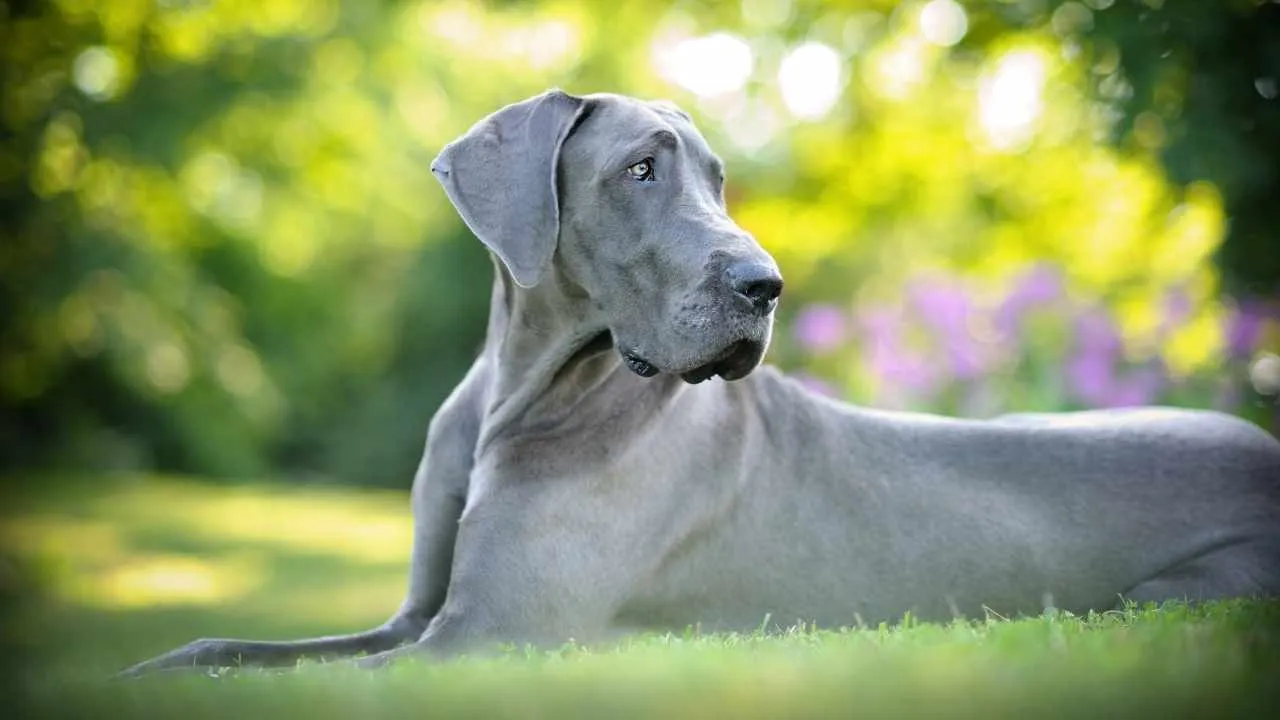
Also known as the Deutsche Dogge, the Great Dane was developed in Germany to hunt wild boars. Later, the breed was kept as a family guard dog. However, similar dogs existed some 3,000 years ago in Egypt. It has a rectangular head, prominent eyebrows, and heavily set jaws, creating a terrifying silhouette.
This ideal protection dog has hyper-vigilant olfactory and acoustic tracking mechanisms that provide a smooth transition from a resting to an alert state.
This loving family pet has natural protective instincts and low baseline aggression. However, it is both a gentle companion to family members and children and the right guard dog against threats.
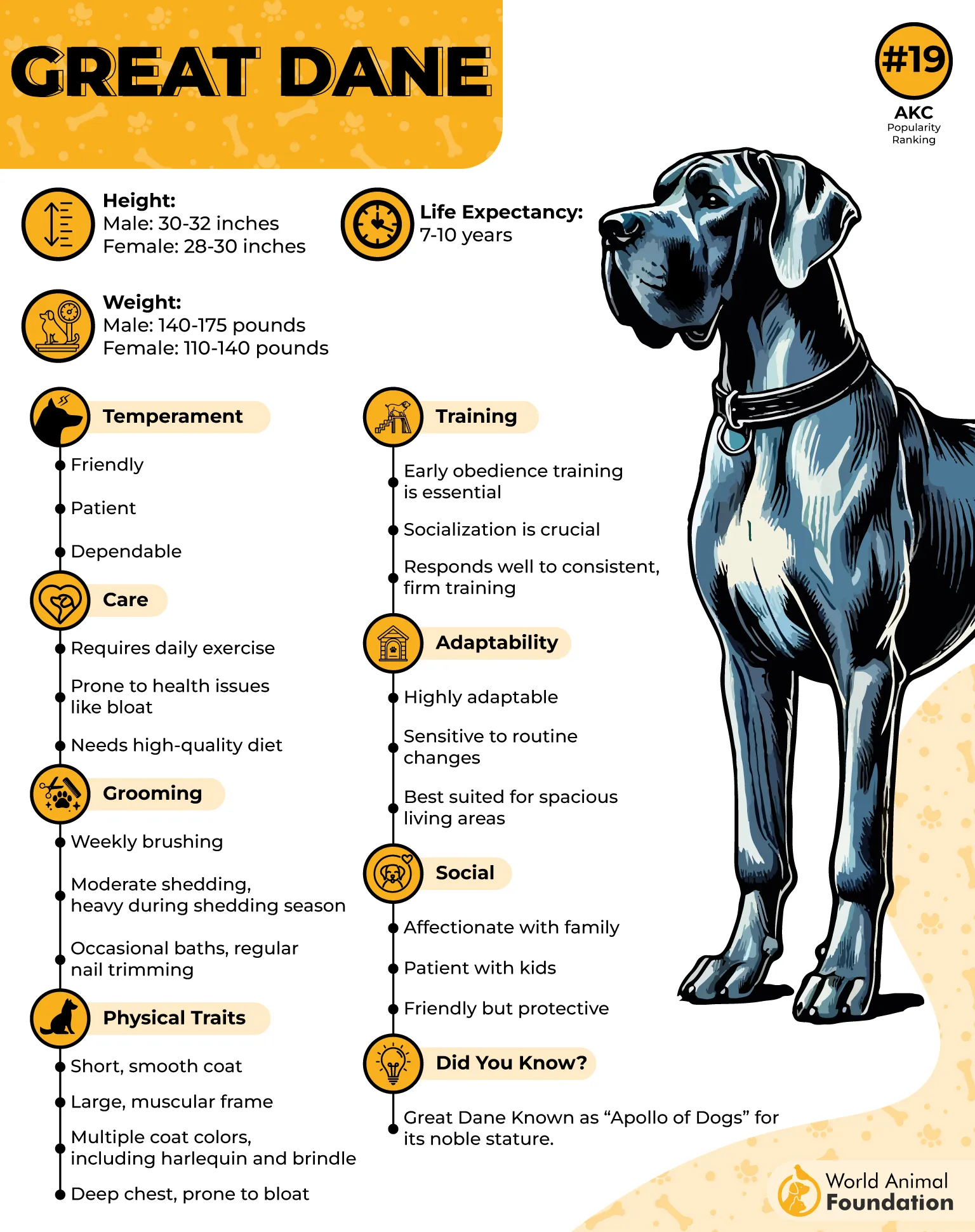
It has moderate exercise needs (30-60 minutes daily): running, brisk walks, indoor play sessions, and fetching. The short coat needs weekly brushing using a soft, bristly brush.
7. Mastiff
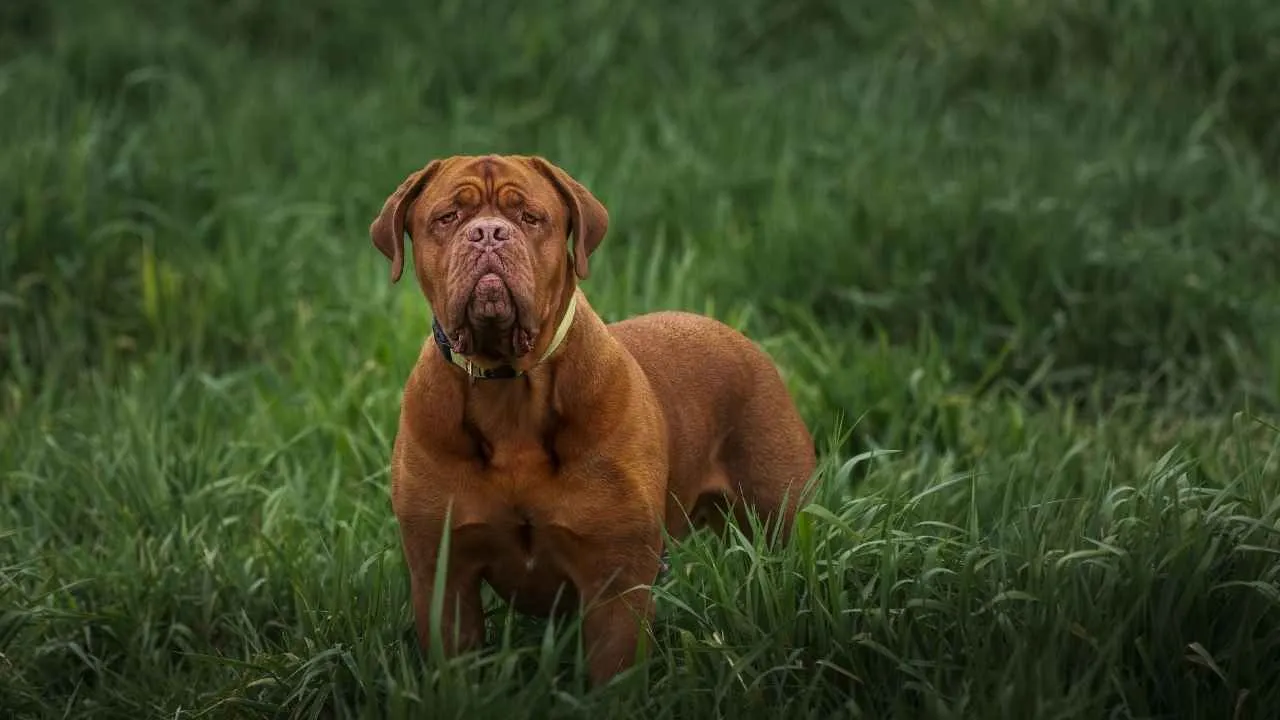
The history begins in England 2,000 years ago, where it was used as a worker and a watchdog. It also served in gladiatorial and dogfighting events, but after the prohibition of these blood sports, the modern-day Mastiff is bred with less aggressive traits.
This guard dog has loose facial skin and drooping jowls that were developed as a defensive buffer. The excess skin rolls absorb the impact of the bite, protecting internal organs. It has fast-twitch muscle fibres that enable explosive, high-power defensive maneuvers and sharp turns.
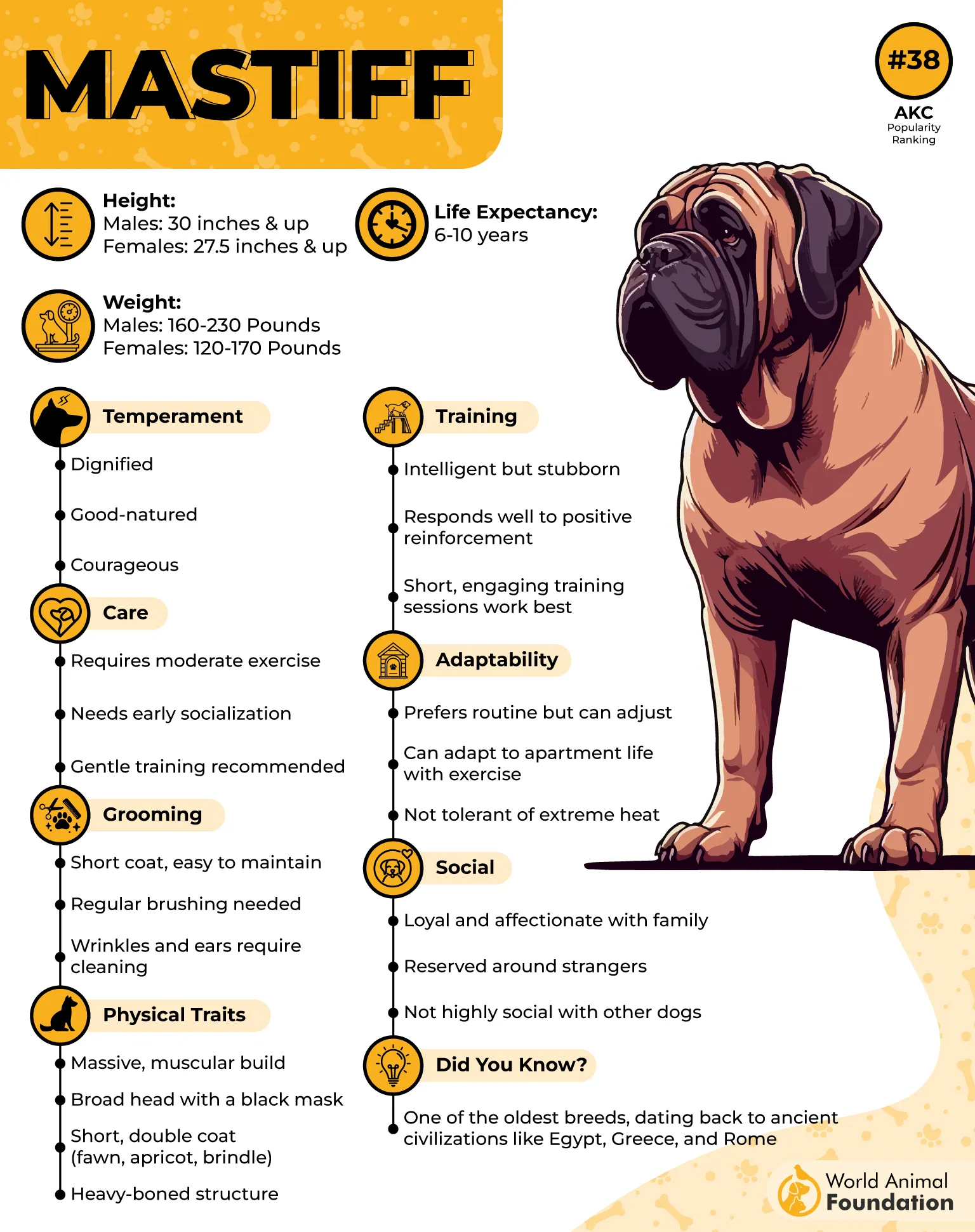
Wth its high stoic nervous system, it has a high pain tolerance level and does not back down from injuries. It has a low prey drive and rarely gets distracted by small animals
Conclusion
Choosing a calm dog for family security is about more than picking the biggest dog you can find. The right match should fit your household, experience level, space, activity routine, and expectations.
A Newfoundland may bring a gentle, steady nature, while a Great Pyrenees can combine patience with strong guardian instincts. Other best guard dog breeds on this list offer their own blend of size, confidence, loyalty, and watchfulness.
Remember, a protection breed should be dependable, not unpredictable. Proper socialization, obedience training, proper exercise, and clear household rules all help shape good behavior. You also need to respect each breed’s size and strength. The best family guard dog is one that can settle beside you after a busy day, enjoy family life, and still pay attention when something feels out of place.
