





I have owned dogs my entire life, and my family has also always been among the dog-owning households. So I appreciate the cost of owning a dog, the obvious costs, the hidden ones, or the small outgoings that you don’t even notice but add up over time.
The following article offers a deep dive into the statistics behind dog ownership costs
Due to the high rate of inflation on pet food, accessories, routine veterinary care, grooming, and other costs, we adjusted our numbers accordingly based on industry inflation percentages. According to Economy Indicators Analytics, veterinary services jumped about 273.5% since 1997.
We also used online resources, researched extensively, and interviewed experts to arrive at our adjusted numbers. Please keep in mind that these numbers are arbitrary, and some costs might be higher or lower.
How Much Does it Cost to Own a Dog?
The estimated costs of dog ownership can be broken into four categories: first-time costs when you first bring your pup home, basic essentials you’ll be buying every year, monthly expenses, and optional extras. All these costs can differ based on factors like your dog’s age, breed, and lifestyle.
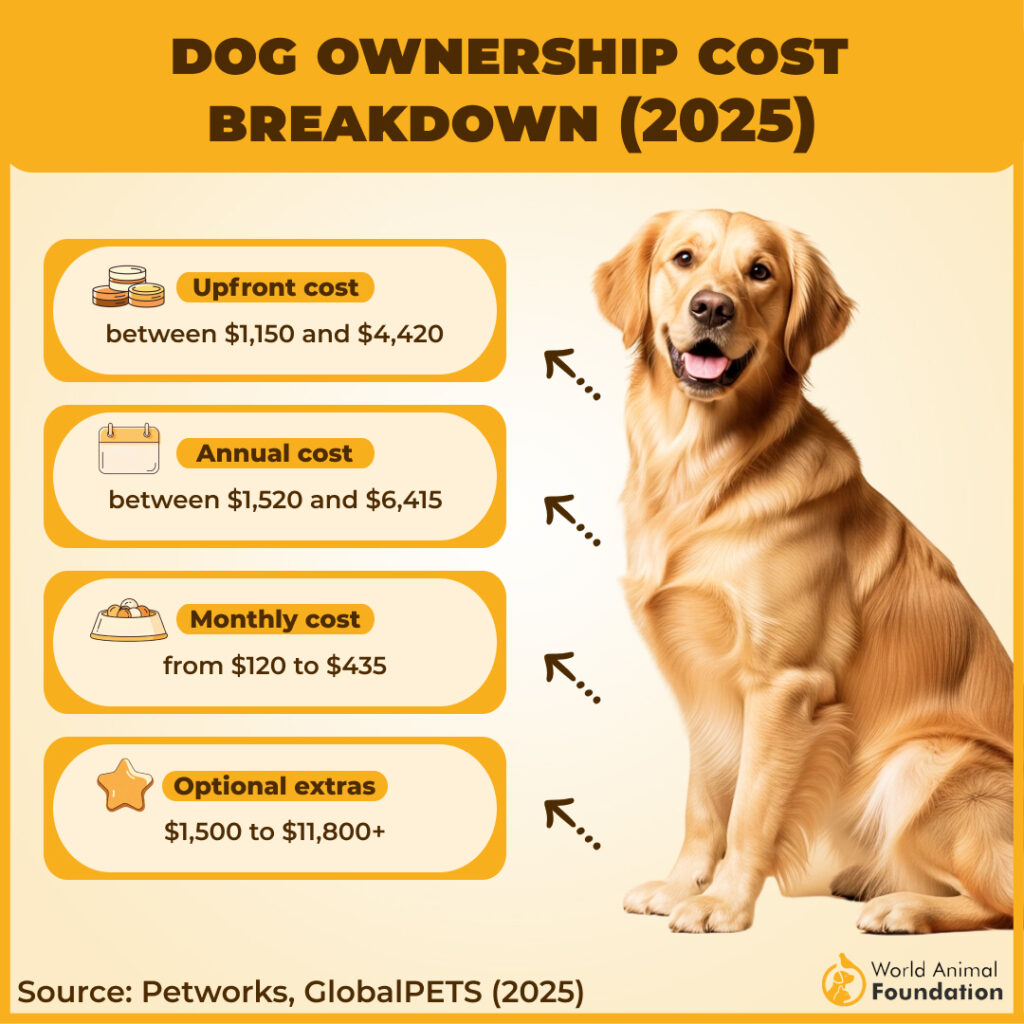
In 2025, the upfront costs for new dog owners may range from $1,150 to $4,420. Annual costs for the basic essentials range from $1,520 on the low end to $6,415 on the high end. Reputable breeder prices range from $775 to $4,750, depending on the breed, sex, and demand for that specific type of dog.
The monthly dog expenses can range from $120 to $435. Lastly, the cost of the optional extras most dog parents may have to bear ranges between $1,500 and $11,800 per year.
You can also use our calculator to know more about the cost of owning a dog.
First-Time Dog Costs
Owning a dog is about more than just putting a roof over their head and going for walks. There are costs involved in every step of dog ownership. Therefore, new or potential dog owners should always take a step back and ask how much does it cost to own a dog?
According to our research, the first-year cost of owning a dog is around $1,150 to $4,420. There are seventeen critical expenses involved in getting a new dog.
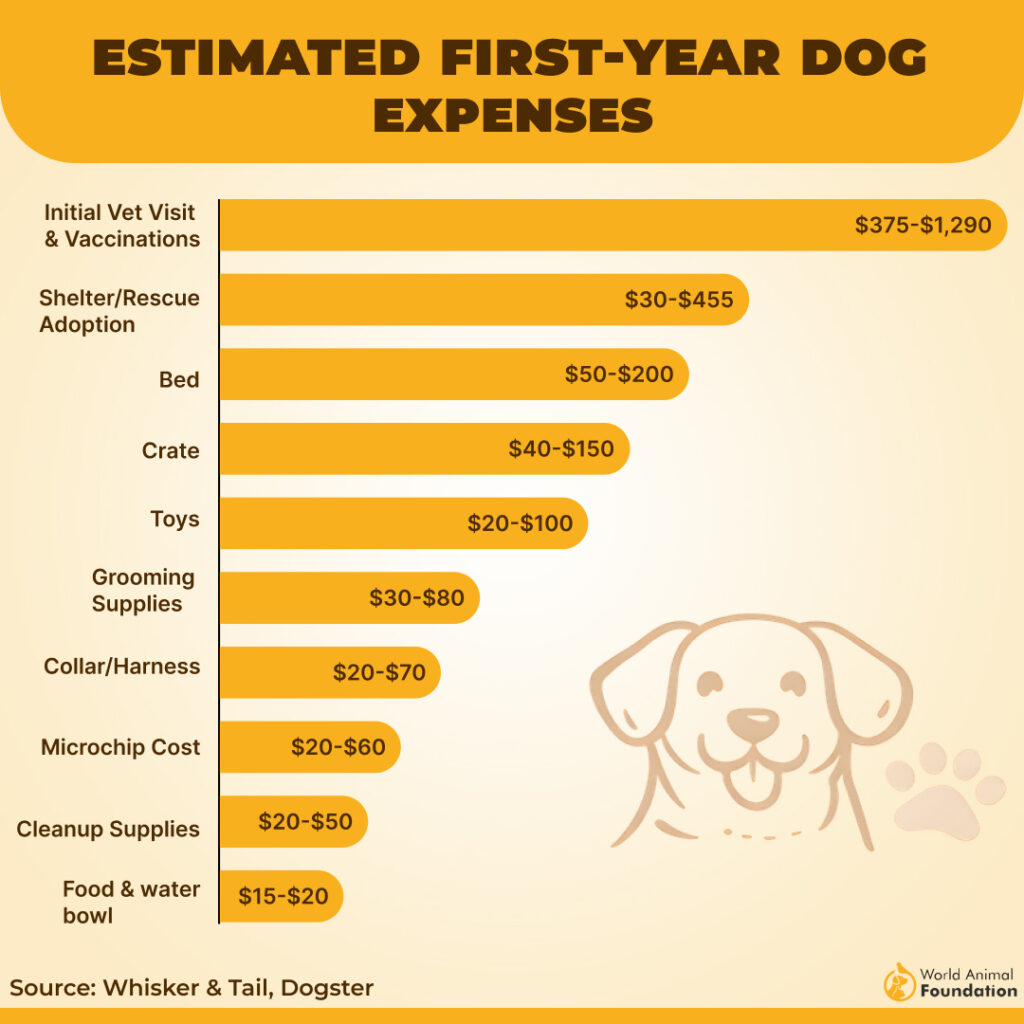
Some of these costs may be covered by the initial expenses paid to the breeder, and others may be bought secondhand or given by family members.
Pet health insurance is an additional cost that many pet owners elect to take. However, many variables regarding insurance make it hard to factor into the figure above.
Adoption Fees

The average dog adoption fee ranges from $30-$455. The dog breed is the main factor influencing the cost of adopting a dog. You can expect to pay as much as $1,500 to $7,000 or even higher for designer breeds.
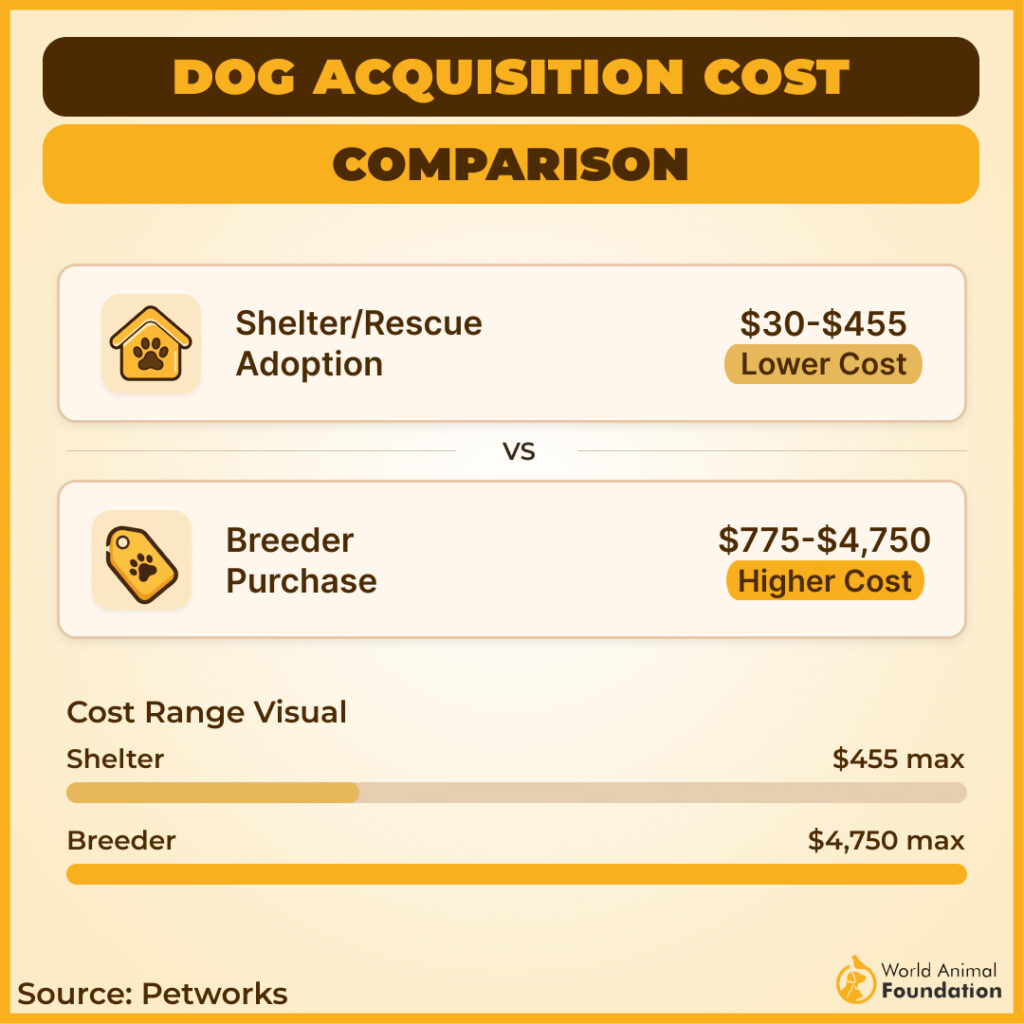
Other factors that impact the adoption fees are whether the dog has been microchipped, vaccinated, or neutered by the shelter.
New Dog Supplies
When bringing home a new dog, there are several supplies you can invest in that will make your furry friend feel more comfortable in their new home.
Below are seven vital supplies for canine pet owners:
- Crate: A crate acts as a bed and a safe place for your dog to retreat. The best dog crate should be large enough for your dog to stand and turn around, but not larger. Expect to pay anywhere between $40 to $150 for a crate.
- Food and Water Bowls: A vital necessity for any pet parent. Expect to pay anywhere between $15 to $50 for food and water bowls.
- Toys: Toys are vital for your furry friend as they stimulate your dog. Whether puppies or older dogs, toys remain important. Expect to pay anywhere between $20-$100 for toys.
- Collar: Collars are a mandatory item for any dog. Depending on your dog’s breed, there are many different types to choose from. For larger dog breeds, you will also need a harness. Expect to pay between $20 and $70 for a good collar or harness.
- Leash: A leash is another vital dog-owning tool. Many dog owners and dog walkers appreciate the benefits of a good quality lead. Expect to pay anywhere between $10-$50 for a leash.
- Soft bed: Whether you have a soft bed in your crate, outside, or both, they are an important factor to remember when looking at the annual costs of owning a new pet dog. Expect to pay anywhere between $50-$200 for a soft bed.
- Grooming tools: Some dogs require a lot more work than others. However, even a short-coated dog would benefit from grooming and TLC from time to time. Keep grooming costs low by investing in some simple tools yourself. Expect to pay between $30-$80 for grooming supplies.
- Poop bags: As a responsible pet parent, dog waste removal is an ongoing cost to consider. Poop bags and dispensers are essential for this task, typically costing around $20 to $50 per 100-count. To save on expenses, it’s recommended to buy in bulk for better deals, as you’ll need them throughout your dog’s life.
House training your dogs using a training pad can cost almost $180-$480. Should you elect to use potty training pads, you should factor in an additional $60-$120. House training a puppy can take anywhere from four to six months.
Vaccinations/Vet Visits

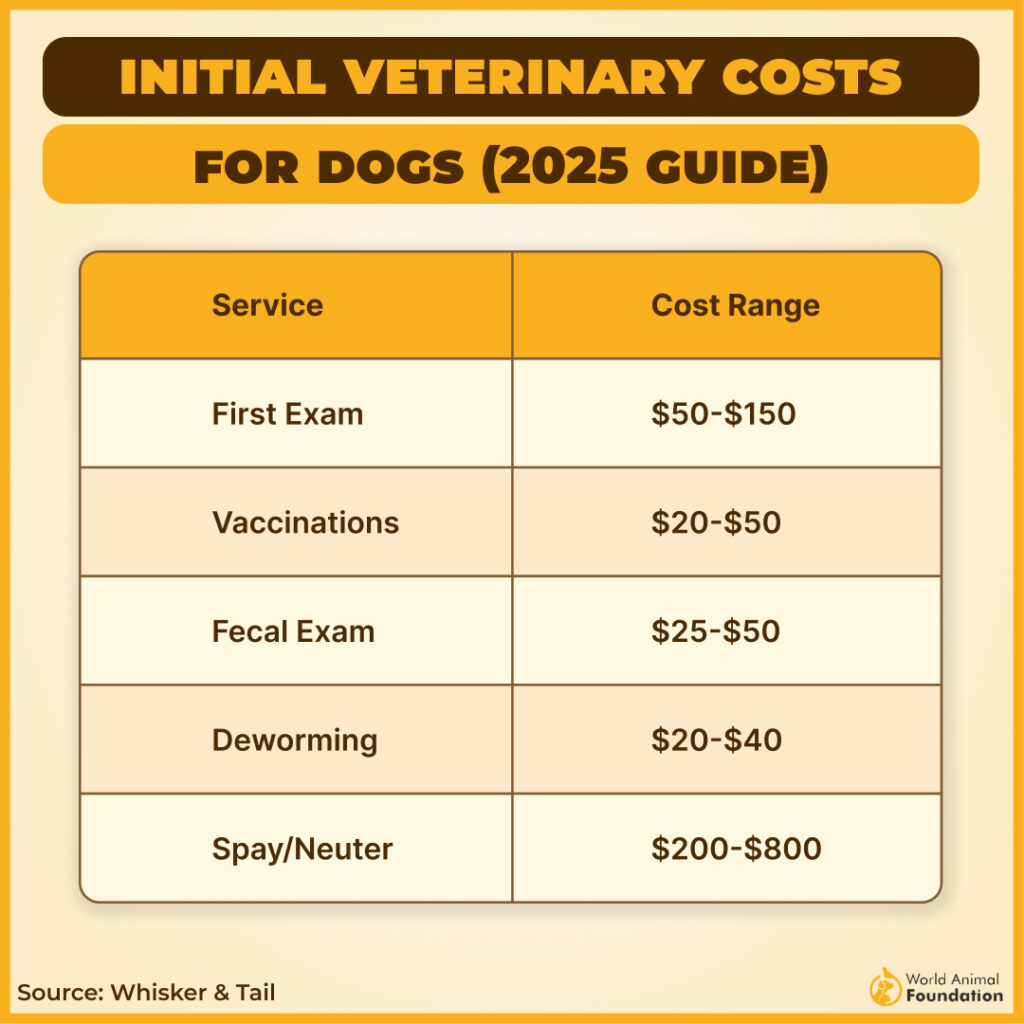
The dog vaccination can cost hundreds of dollars. The average cost of dog vaccines is approximately $20-$50. A full physical exam typically costs $50-$150.The price varies from state to state; however, variances are relatively minor.
Incidentally, California is the most expensive state for dog vaccination costs.
How Much Does a Dog Cost Per Year?
According to our research, an average dog owner spends anywhere between $1,520 and $6,415 per year on their dogs. Annual costs for older dogs range from $2,555 to $4,680.The main source of ongoing expenses is pet food.
Pet parents spend between $480 to $1,200 per year on dog food. Depending on your dog’s breed, size, and dietary requirements, the cost of feeding a dog can be vast.
A growing trend among pet owners is to use fresh dog food, which costs considerably more than dry or canned food.
Medical Expenses
The cost of dog health could reach $640 to $1,820+ per year. Keeping a dog healthy is not cheap. Pet owners should expect to pay upwards of $2,000 yearly to maintain their pet’s health.
Below are the five main expenses related to dog health.
- Routine vet visits and wellness checkups
- Vaccines
- Lab tests
- Dental care
- Neutering
Dog Treats
The annual treats for dogs cost approximately $120 to $360. It can always help if people could budget properly for their dog costs. The average cost of dog treats is $10-$30 per month.
You could spend more than this or less, depending on your dog and, to a larger extent, your finances. You could always try making your own dog treats at home to save money.
Dog Food

The annual food costs for dogs average $446. An AKC article also discussed budgeting for food costs.
Depending on your dog’s age, size, and any health conditions that impact its diet, this price can change. However, it is a healthy average to work towards.
Monthly Dog Costs
Our research shows that the average cost of owning a medium-sized dog breed is $120 to $435 per month. This figure excludes any emergency veterinary care or unexpected costs.
However, this cost will vary based on your dog’s specific needs, size, pet insurance plan, and health condition.
Unexpected/Optional Costs Associated with Owning a Dog
The unexpected or optional dog expenses can cost up to around $11,800. Looking at the different costs of owning a dog, many pet parents spend between $1,500 and $11,800 on unplanned or optional expenses every year.
Unexpected or optional dog expenses include emergency veterinary bills, associated pet insurance costs, housing deposits, and home and garden doggy-proofing.
Emergency Health Conditions
A typical emergency vet hospital visit can start at $200-$500 for an exam and basic diagnostics, but surgery or extended hospitalization can easily exceed $2,000-$5,000+.
This is the average cost. Extreme and serious incidents could see veterinary bills run into the tens of thousands. This is why more people take out pet insurance when getting a new dog.
Grooming and Training

The pet parents should expect to spend anywhere between $50-$800+ per year on grooming.
Your dog’s grooming needs will vary based on their size, breed, and how much they like to roll around in mud or other unmentionables. You can save money on grooming by buying some basic dog supplies and trying to groom your dog more at home.
If you choose to enroll your dog in obedience training classes, it is advisable to allocate a budget of approximately $0 to $2,000+ per week. This amount will cover the expenses associated with instructional DVDs, books, and classes you may opt to attend alongside your dog.
Surgery
A visit to the emergency hospital for your dog can incur expenses ranging from $200-$500 for an exam and basic diagnostics.
Extended hospitalization for a sick dog can add more, depending on the severity of the illness or injury.
Unforeseen surgeries can result in costs ranging from $1,000 to upwards of $5,000+.
Dog Insurance
While pet insurance is not compulsory, most dog owners find it valuable, particularly during the initial year or for dogs susceptible to health issues. The average yearly expense for pet insurance amounts to $360-$840+.
Dog Walkers

The average cost per month of hiring a professional dog walking service can vary. If you work long hours, a dog walker ($15-$30 per walk) or dog daycare ($25-$50 per day) can be invaluable for exercise and socialization.
This will vary based on the length of the walks, whether they are part of a group or solo, and the frequency. However, this can easily add hundreds or thousands annually, depending on frequency.
Cost of Owning a Dog by Size and Breed
Whether you’re bringing home a pint-sized pup or a gentle giant, your choice of breed and size will be the biggest driver of your long-term pet budget.
Cost of a Small Dog

A small dog has an average life expectancy of ten to fifteen years. This means that the average cost a pet parent should expect to incur during that time is $15,000-$30,000.
While some recurring costs, such as food, may be lower per month for smaller breeds, the longer life span means more costs in total. One of the primary factors in the full-life cost of owning a dog is veterinary costs.
Cost of a Medium Dog

Medium dogs have a 10 to 13-year lifespan, making them the most expensive-sized dog to own. Medium dogs are some of the more popular dog breeds, but pet parents should expect to pay a lifetime cost of $29,500 for their dog.
Cost of a Large Dog

The lifetime cost of owning a large dog is $34,550. Large dogs have a life expectancy of just 10 years.
Additionally, large dogs have a chance of incurring extra expenses, particularly when it comes to medical expenses and large-breed health conditions.
If you’re considering adopting a dog and are concerned about your budget, you can compare the average costs associated with different dog breeds.
Labrador Retriever

An article published by Spot Pet confirms that the estimated lifetime cost of owning a Labrador Retriever is generally between $20,000 and $22,000, not including emergency medical situations.
Caring for Labrador retrievers costs between $140-$180 a month. The dog’s size is a major factor, as most medicines and other costs associated with vet visits are based on the dog’s weight.
Golden Retriever

The cost of owning a Golden Retriever ranges from $140 to $190 a month. The recurring monthly costs include vaccinations, toys and treats, and grooming.
Mixed Breeds

Mixed breeds like Dachshunds and Chihuahuas are generally more affordable, with monthly costs averaging $50-$99.
The driving cost for all dog breeds is their food and grooming needs. Those prices will vary based on owner requirements for things such as a pet sitter or professional grooming services above and beyond the standard.
Which Generation Spends the Most on Dog Ownership
Below are three dog ownership stats based on generation.
30% of Millennial Households Own a Pet
The American Pet Product Association (APPA) confirms that 30% of millennial households own a pet.
Interestingly, Gen Z is officially entering its “pet parent” era. In a massive shift for American households, pet ownership among this generation skyrocketed from just 14% in 2019 to an impressive 31% by 2025. Currently, 1 in 5 Gen Zers shares their home with a furry companion, proving that for this younger generation, a pet isn’t just a hobby—it’s a lifestyle.
The surge in the number of 18-34-year-old dog owners is largely related to the COVID-19 pandemic, as this pet owner demographic grew the most during that period.
One-Third of All Millennials Buy a New House With More Space for Their Dogs
A survey funded by SunTrust Mortgages and published by NBC News confirmed that 33% of millennials base a large part of their purchasing decisions on needing more space for their fur babies.
Pet parents are becoming more attuned to the lifestyle and welfare of their animals, and as the time comes to leave apartments behind and move into a family home, space for dogs to run and play is becoming a highly sought-after commodity.
43% of Americans prefer pets over children
A recent Harris Poll of 2,000 Americans highlights a major cultural shift: 43% of people now prefer the company of pets over the prospect of having children. For many Millennials and Gen Zers, the decision comes down to practicality, as they increasingly view furry companions as both easier to care for and far kinder to their bank accounts.
Reason Behind High Dog Ownership Costs
An article published on Yahoo Finance confirmed that 71% of pet parents feel that inflation is the main reason behind the increased basic costs of owning a canine.
Everything from vet visits and routine care to the cost of toys and treats has risen sharply in recent years. The worrying impact of this could be the high number of people forced to surrender their dogs due to the inability to afford them.
73% of dog parents show concern about continually rising costs. CNBC reported that almost three-quarters of pet owners are worried about the rising cost of dog ownership.
Everything from the upfront costs and price of adoption papers to food, toys, treats, and license costs has pushed owning dogs from being an affordable option to a family luxury.
Cost of Dog Ownership by State

The cost of owning a dog can vary depending on the state you live in and is influenced by factors such as the local cost of living and the availability of goods and services.
Below are two interesting stats looking at the cost of dog ownership by state.
Most Expensive State to Own a Dog
California is one of the most expensive states to own a dog, costing over $3,541 yearly for standard care requirements. The prices were based on average costs for food, medicines, grooming, and ancillary expected costs.
When it comes to dog food, California residents spend over $300-$1,200 per year. Moreover, Massachusetts, Washington, D.C., New Jersey, and Vermont all exceed $3,000.
Massachusetts is one of the most expensive states for pet care, with daycare at about $45 per day, insurance around $59 per month, and boarding costing $60 per night.
Washington also ranks high, matching California’s $25 dog-walking rate and charging roughly $45 for daycare and $60 for boarding.
Least Expensive State to Own a Dog
Conversely, Oklahoma is one of the most affordable states, with a $2,759 yearly cost for owning dogs, and others on the list are North Dakota, Montana, Alabama, and Iowa.
When it comes to the cost of owning a dog, four main categories create the biggest price gaps from state to state. While the price of food stays relatively steady across the country, pet insurance premiums vary wildly depending on where you live.
Meanwhile, the costs for vet visits, boarding, and grooming tend to follow the local cost of living and service prices in your specific area.
Memorial Cost Associated with Owning a Dog
Saying goodbye to your cherished pet companion is often the most difficult aspect of being a pet owner. When considering dog burials, it’s important to note that they can be costly due to expenses such as dog caskets, burial services, and the plot of land.
On average, dog burials in the US start at $50-$500 and can increase based on the dog’s size and the type of casket chosen.
FAQ’s
Can I Afford To Own a Dog?
Providing you understand that you need to spend money on more than just breeder fees and can do so without bringing yourself into financial difficulty, yes, you can afford to own a dog.
However, it is vital to do your research and get an idea of the lifetime cost of dog ownership. It is a good idea to create an annual budget for your dog.
Should I Finance My Dog?
No, you should not get finance for a dog. A dog is a big financial commitment, and besides the initial purchase cost, the yearly fees associated with owning a dog often eclipse the initial breeder fees.
If you do not have the money to purchase a dog, you need to understand that you will also be unable to afford the day-to-day costs of owning it.
Additionally, when you take finance for a dog, you pay the cost of the dog and the interest on the repayments, further increasing your outgoings.
What Are the Statistics About Loans for Vet Bills?
The statistics surrounding loans for veterinary bills show that this method of payment is still in the minority. Around 5% of pet owners use loans to pay for routine vet visits and emergencies.
Generation Z types are over twice as likely to take out a loan for vet costs (9%) as both millennials (5%), Generation X (4%), and Boomers (1%).
How Much Does Vet Care Cost?
The average vet care costs vary greatly depending on several different factors. A good starting point is to assume a standard doggy physical would cost around $60.
Other costs vary widely depending on the breed, the issue, and the geographical location. Major surgery will always cost more than an extra health check, while ongoing medications also vary depending on amounts and types.
In addition, pet insurance can take a lot of the sting out of ongoing vet bills, but again, it has many variations depending on budget and requirements.
Wrap Up
To summarize, there is much more to owning dogs than just paying the initial expenses to buy them. A responsible dog owner does their research and gets a true idea of the ongoing costs they are likely to face.
Only then can a real decision about getting a dog be made. Personally, I had to wait an extra year to get my dog, not only because of the yearly costs but because the pandemic had driven the cost of puppies up by over 300% where I lived.
Are you a dog owner? How have the rising costs of dog care impacted you? If you’re considering getting a dog, are you concerned about the rising cost of dog living? Let us know in the comments. We always love hearing from you.
