




Some dogs seem to learn new skills almost as soon as you show them, which can make life much easier for busy pet owners. If you want a companion that responds well to training and helps you see quick progress, choosing the right breed is a smart first step.
In this guide, we will look at highly trainable dog breeds that are known for their focus, eagerness to learn, and strong connection with their people.
From active working dogs to friendly family companions, these smart breeds can be a great fit for owners who want smoother training sessions and a well-mannered pet without turning every lesson into a long struggle.
Top Highly Trainable Dog Breeds for Quick Results
1. Border Collie
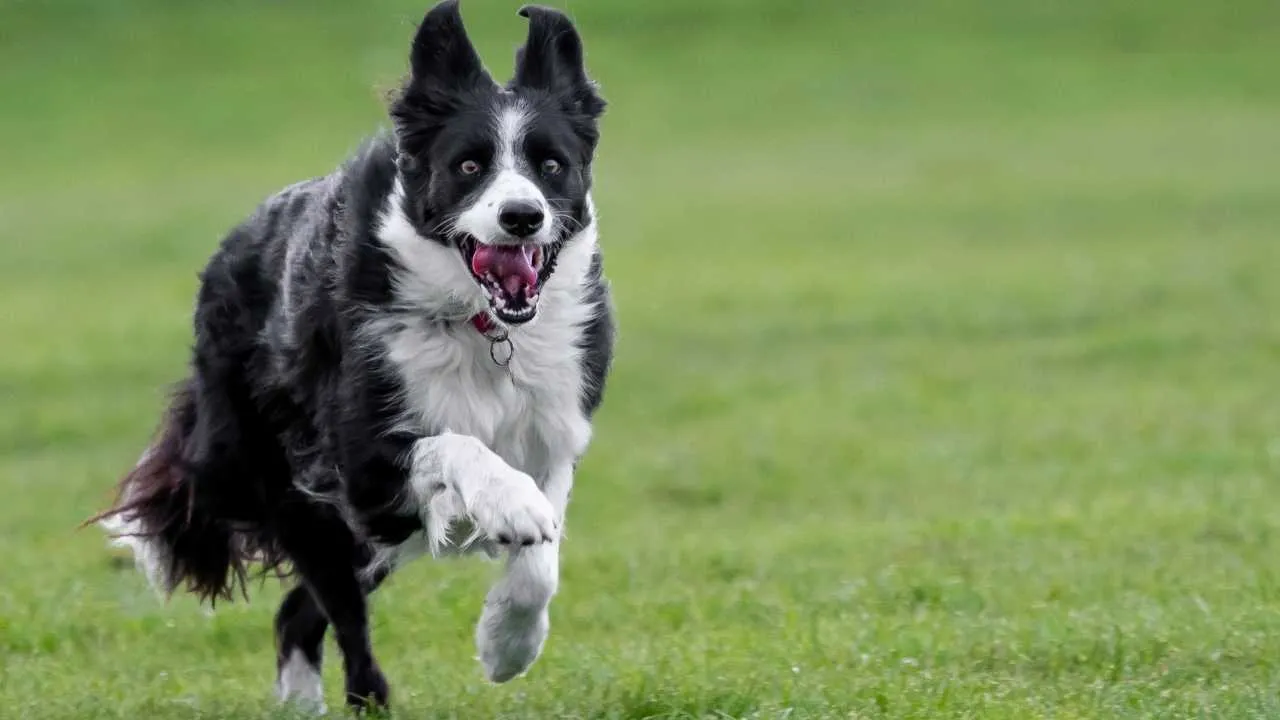
The Border Collie is a highly trainable breed with a serious work mindset and a sharp, focused expression. This medium-sized dog has a muscular but nimble build, and both rough and smooth coats come in many colors and patterns.
The almond-shaped eyes and the well-known herding eye give this breed an alert look that matches its working background. According to Omlet, the breed was standardized in 1906 based on its working ability rather than its appearance, and it was simply classified as a sheepdog.
Among working dogs, Border Collies are known for intelligence, athletic ability, and exceptional trainability.
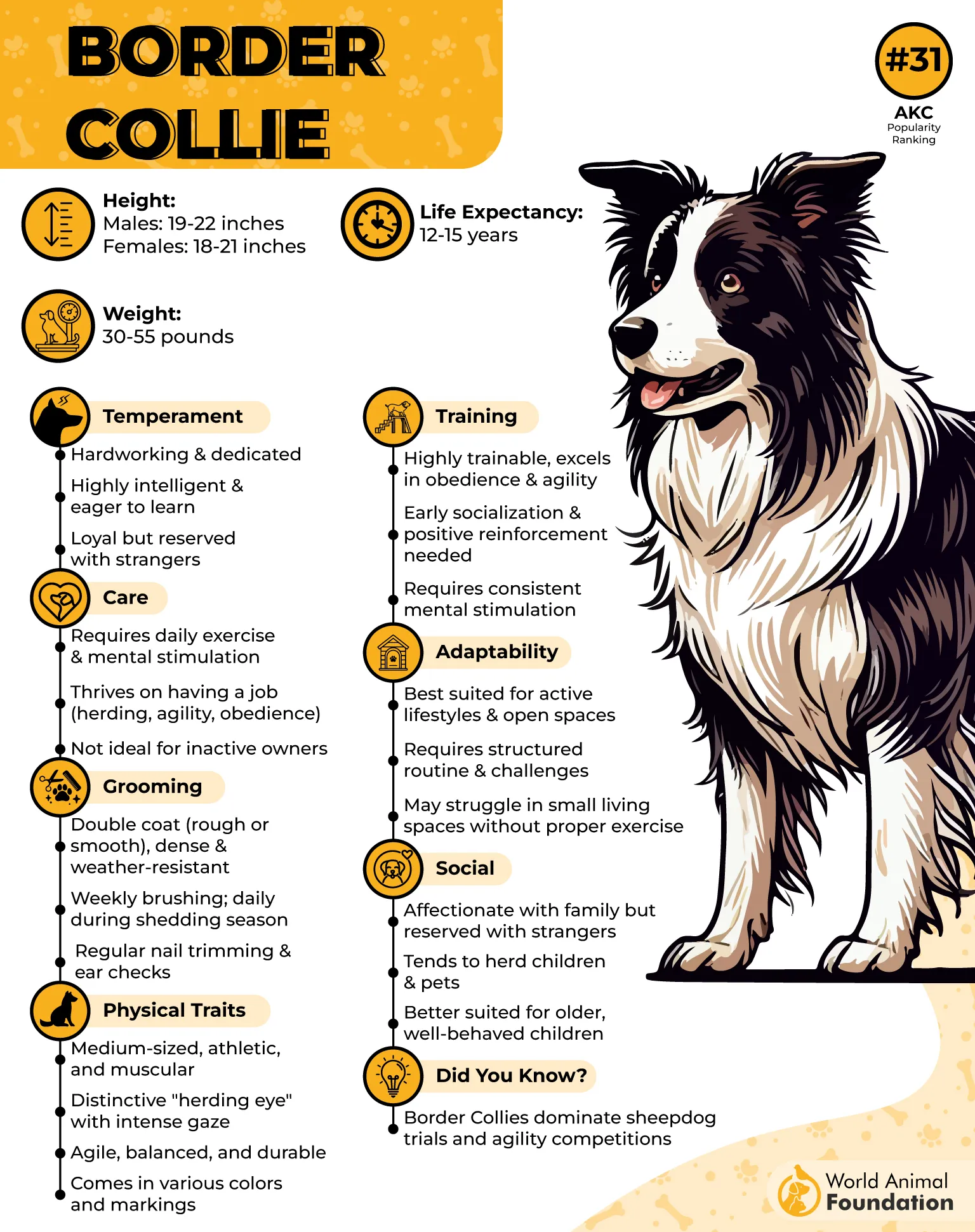
They are highly intelligent, quick learners, and often do best when dog training includes a real job instead of only basic commands. This breed can be easy to train when training sessions stay active and purposeful.
A Border Collie is a high energy dog that needs regular exercise, mental stimulation, and physical and mental stimulation to stay balanced.
Agility training, herding work, and obedience training can support strong mental engagement and help prevent behavioral issues or excess energy from turning into trouble. They are amiable with friends, but may be reserved with strangers.
Why This Breed Is a Good Fit
Great for pet parents who enjoy dog sports and want one of the easiest breeds to train when they have time and structure.
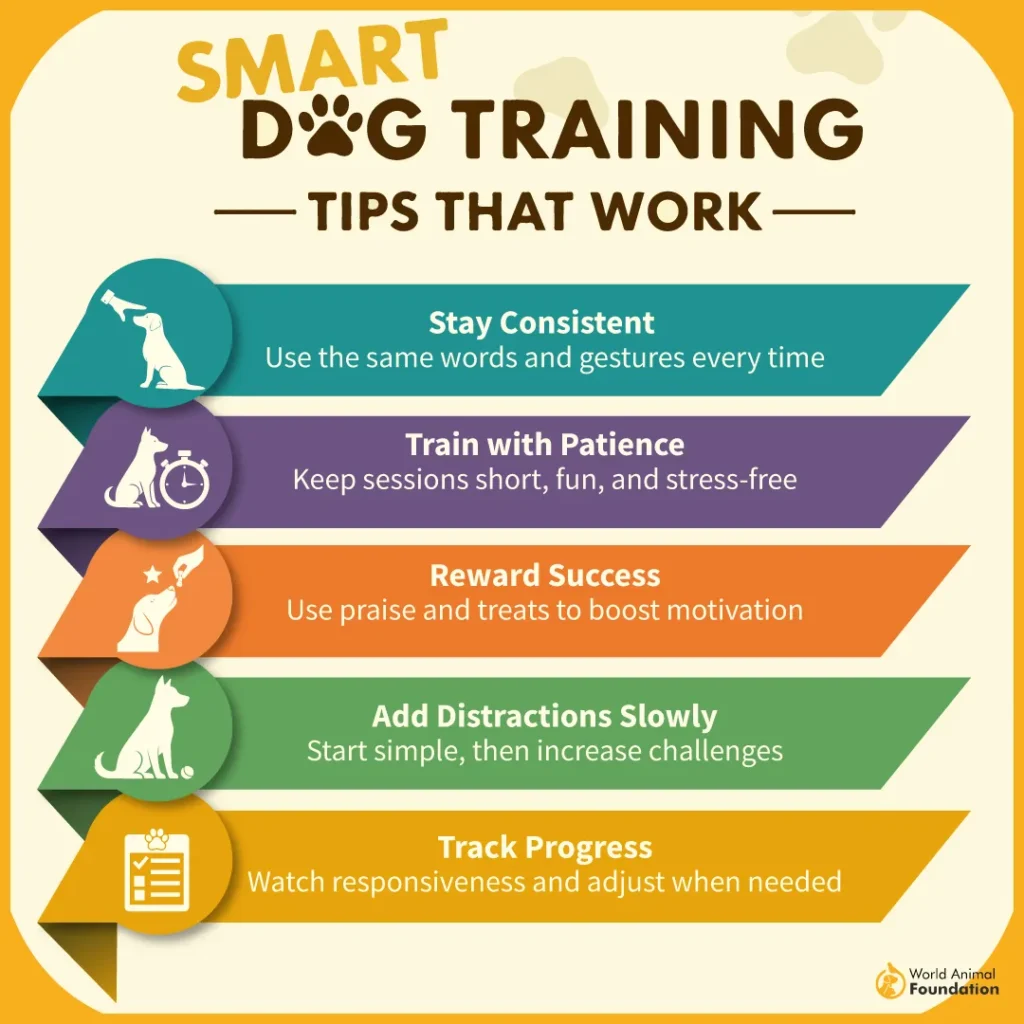
A strong match for owners who like short, focused training sessions and can provide mental challenges every day.
If you want a dog that loves having a job, this breed brings drive, brains, and a little “let’s get to work” attitude.
2. Papillon
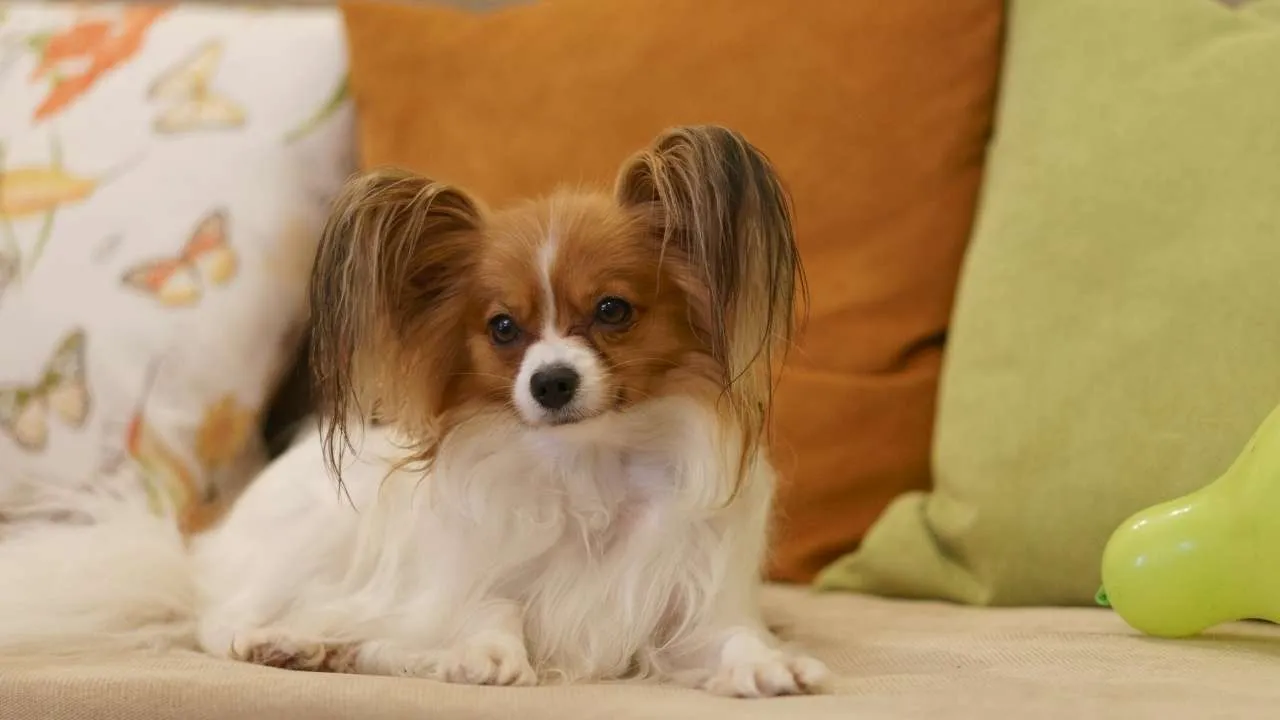
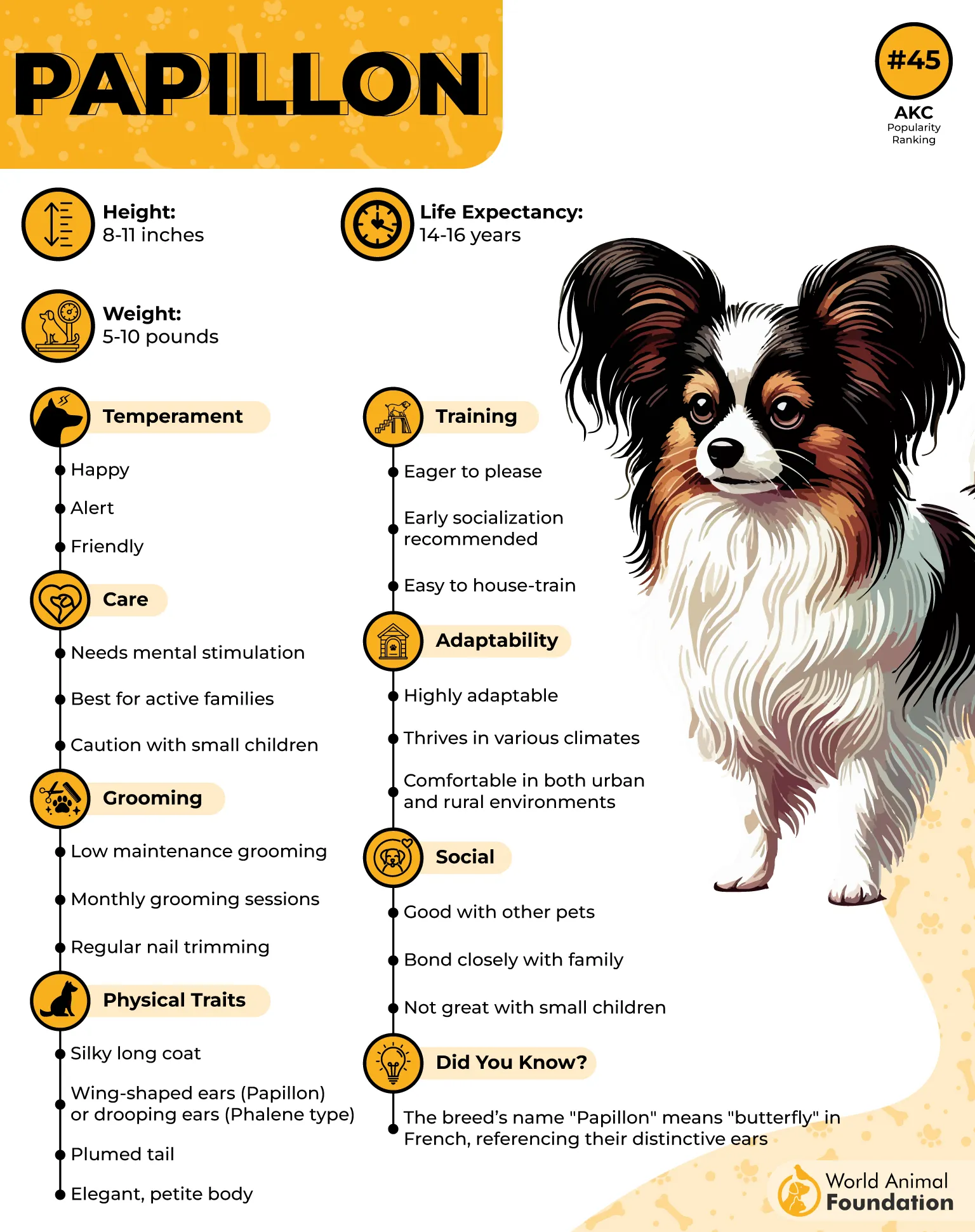
The Papillon is a small dog with a standout look, especially its butterfly-like ears with long, wispy hair. The name comes from the French word for butterfly, and the breed is compact, adaptable, and easy to recognize.
Even with a dainty appearance and elegant coat, this breed is described as happy, friendly, and very people-focused.
Papillons are popular dog breeds for homes that want a bright companion in a smaller size. These small dogs are known to do well in different climates and settings, and they enjoy spending time with their humans.
Their sociable nature makes them appealing to many pet parents who want a friendly dog that fits into daily life.
This breed is easy to train and often shines when training feels fun and interactive. Papillon dogs also excel in the agility ring, and some work as therapy dogs and service dogs, which speaks to their trainable breed’s reputation.
With proper training and positive reinforcement, they can learn new tricks while staying cheerful and engaged.
Why This Breed Is a Good Fit
A smart pick for new pet parents who want an easily trainable companion without a large dog size.
Works well for owners who want a lively dog for agility training or everyday obedience training at home.
Tiny body, big brain, and plenty of personality make this breed a fun choice for quick progress.
3. Jack Russell Terrier
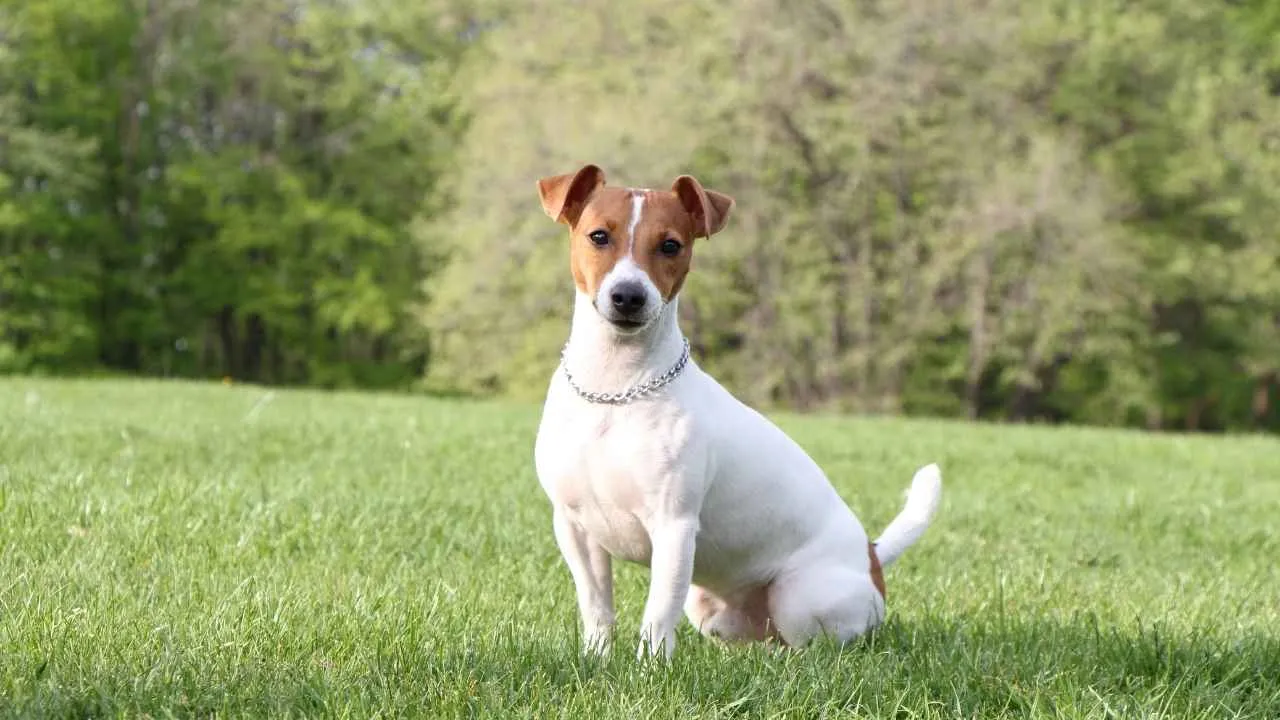
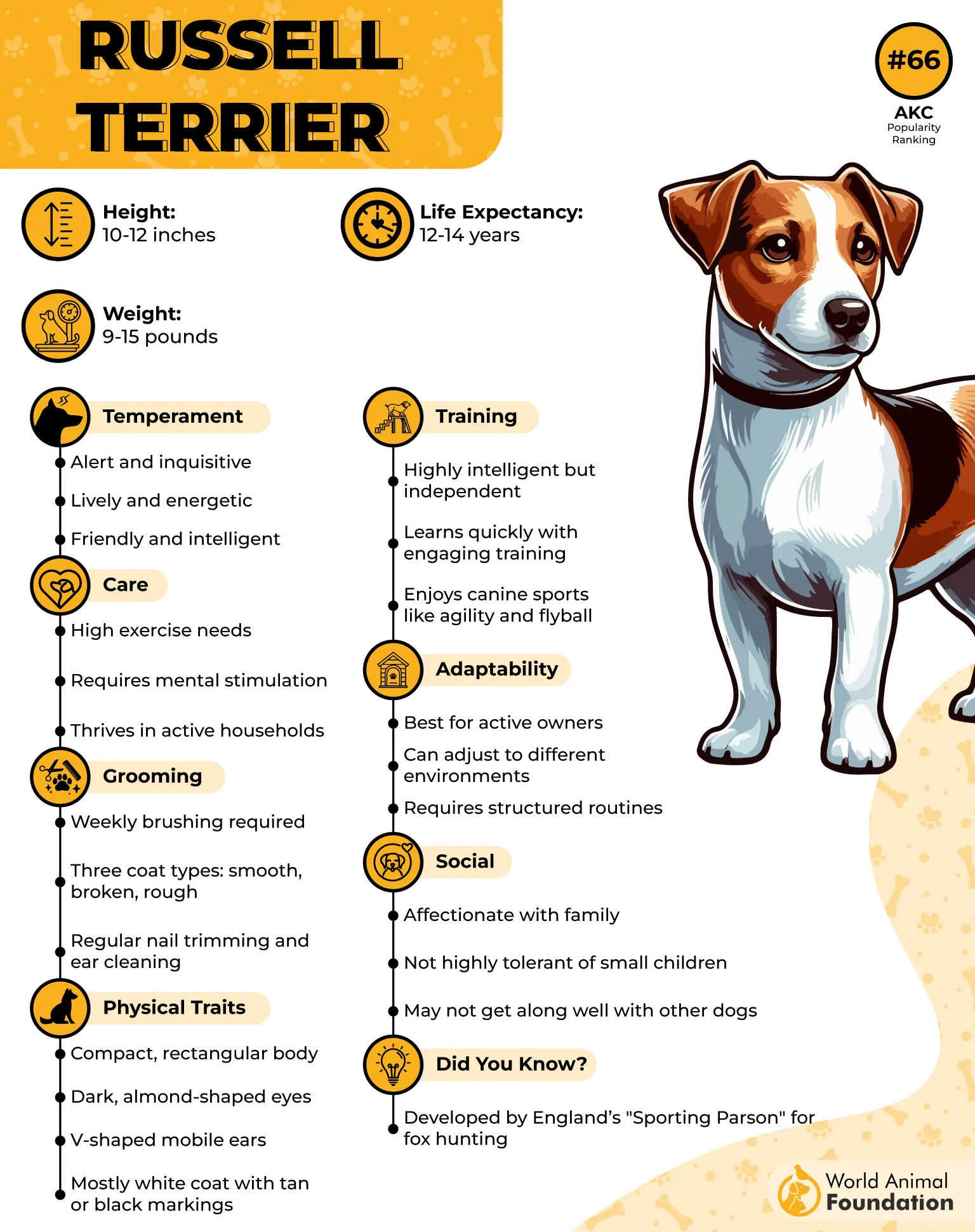
The Jack Russell Terrier is a compact, muscular breed built for action and work. It is described as a happy, energetic dog with a strong desire to work, and it is most content with companionship plus a job to do.
Digging and hunting behavior are part of its nature, so this dog often acts with purpose, even in the yard.
This breed has high energy and an innate desire to chase and hunt, which can make daily life lively. Because hunting ability is bred into them, training is not optional for this dog.
As per Hiil’s Pet, a Jack Russell can also be vocal, since it is a baying terrier, and that alert nature helps it function as a watchdog.
Dog training for this breed needs clear structure and consistency because they are assertive and strong-willed, rather than naturally easy to train.
They may not tolerate young children or other animals in the home, and they can be aggressive toward other dogs. Proper training, enough exercise, and steady guidance help channel that excess energy into better habits.
Why This Breed Is a Good Fit
Best for pet parents who want a bold, busy dog and enjoy active routines instead of couch-only days.
A good option for people who like to train dogs with firm boundaries and a clear plan.
This breed brings humor and energy, but owners make the difference by staying consistent.
4. Australian Shepherd
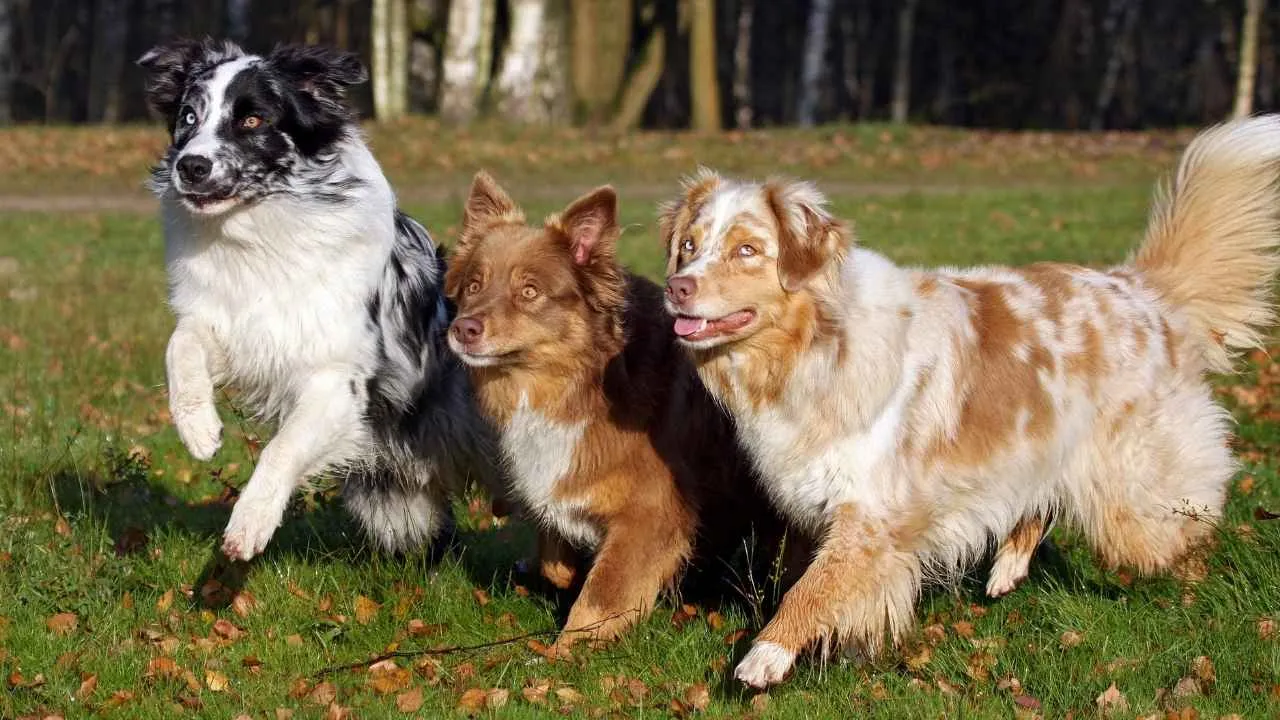
The Australian Shepherd is an intelligent breed with a muscular, agile build and strong natural herding instincts. This herding breed was originally developed as one of the working dogs, and that job-focused background still shows in daily behavior.
They are medium-sized dogs with an active presence and a clear drive to get things done. Australian Shepherds are highly trainable and known for wanting to please their people. They have a strong desire to work and can be easily trained when training includes movement, direction, and a clear goal.
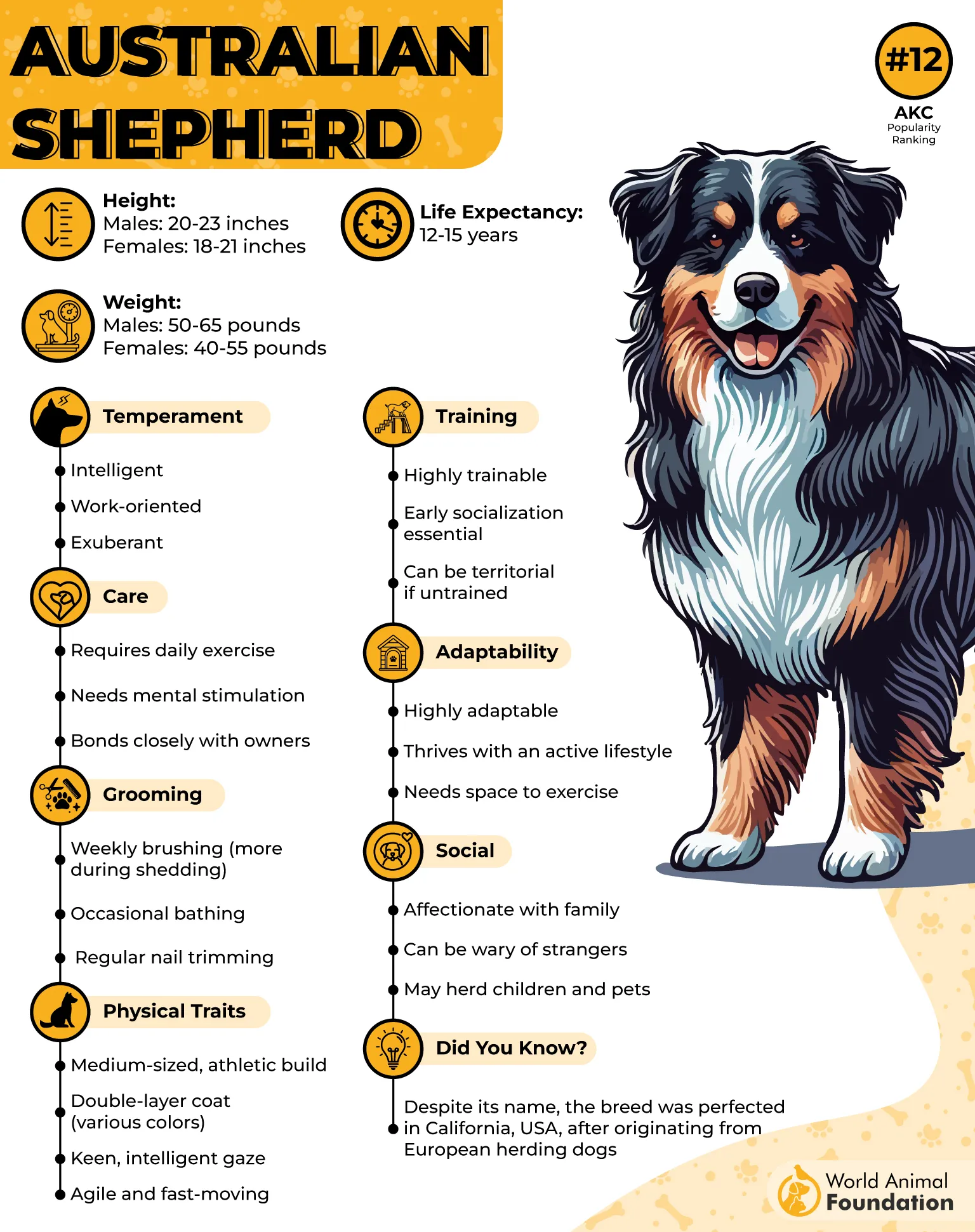
Their outgoing nature with trusted people often supports steady learning during obedience training and skill practice. According to PetMD, Australian Shepherds may be born with naturally short tails, while others have full-length tails.
Because this is a high-energy dog, daily structure matters. Without enough exercise and mental stimulation, some dogs may develop behavioral issues from boredom and frustration. Dog sports, mental challenges, and regular training routines can help this breed stay well-behaved and focused.
Why This Breed Is a Good Fit
A strong choice for active homes that want one of the most highly trainable dog breeds for hands-on learning.
Great for owners who enjoy obedience trials, dog sports, or advanced training beyond sit and stay.
If your idea of fun includes movement and teamwork, this breed will probably agree immediately.
5. Belgian Malinois
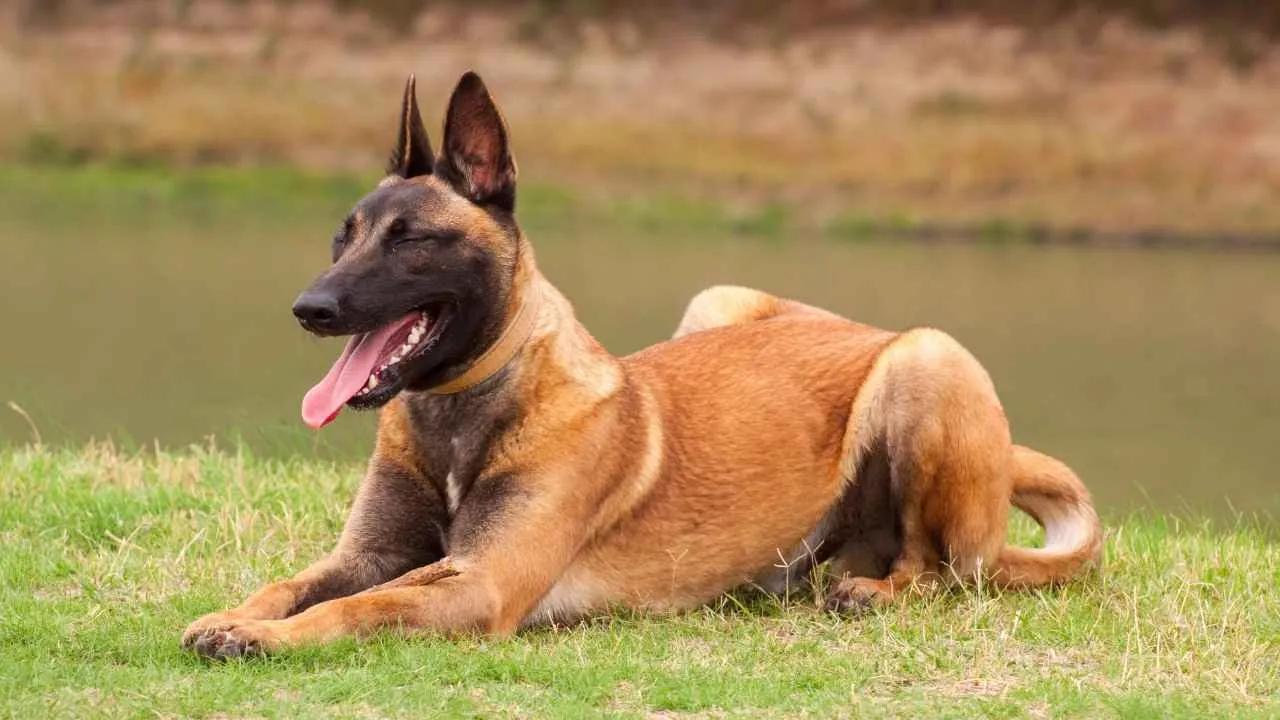
The Belgian Malinois is a sturdy, well-muscled dog with an almost square build and a thick coat that ranges from yellowish brown to mahogany with black-tipped hairs.
A black mask and dark ears are common features, giving the breed a strong, alert look. In the United States, many people simply call this breed the Mal.
This breed developed in Belgium and is one of four types of Belgian shepherds that were originally separated by coat type and color.
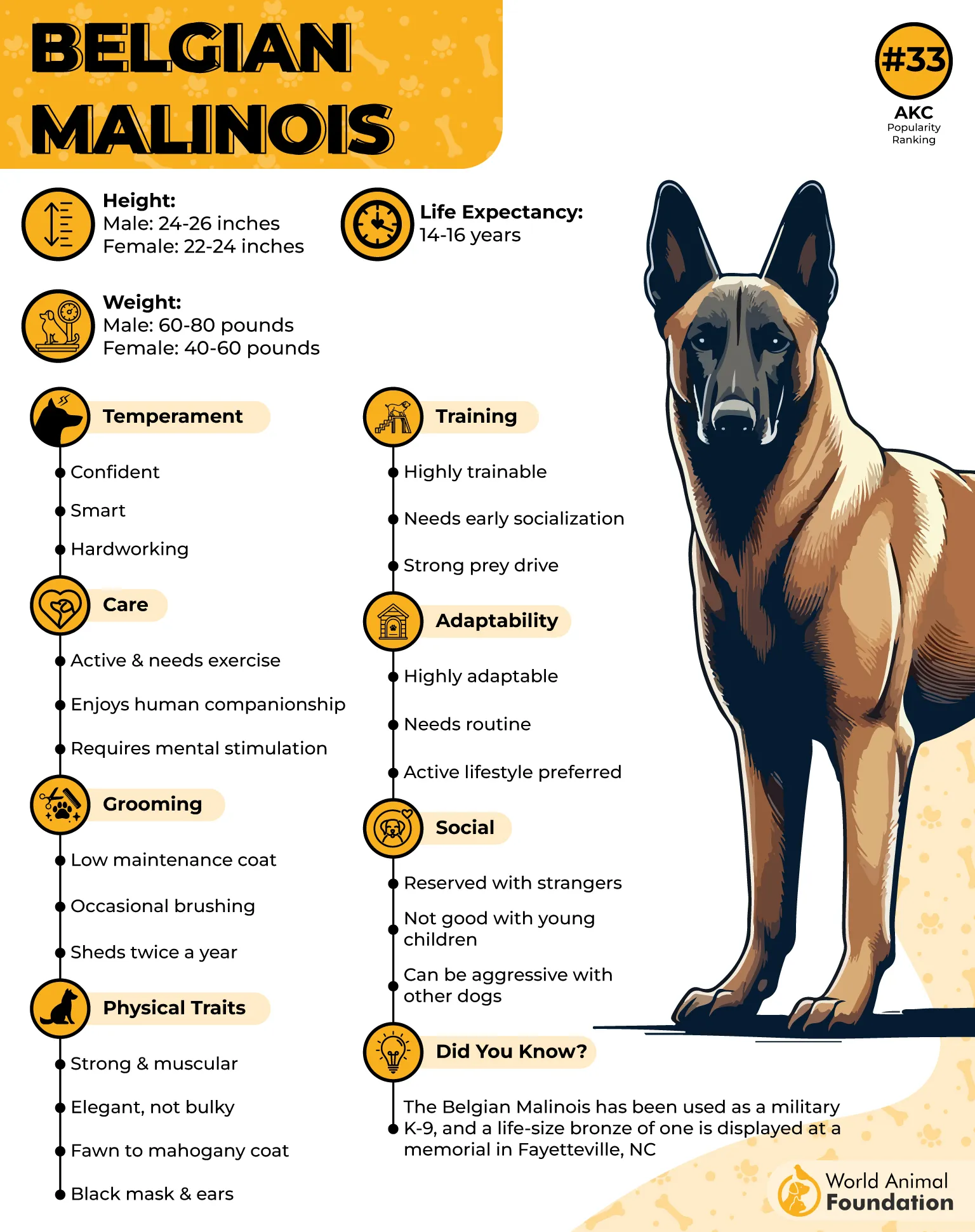
The Malinois has short sable hair and was used as a sheepherder and guardian. It was later recognized in the United States and placed in the herding group.
The Belgian Malinois is valued for strength, stamina, dexterity, loyalty, and an eager-to-please attitude. Police departments and militaries rely on this breed, which highlights its exceptional trainability and serious working ability.
For owners interested in breeds to train with purpose, this is a highly trainable option that needs proper training, clear direction, and mental engagement.
Why This Breed Is a Good Fit
Ideal for experienced pet parents who want a driven dog with real working ability and fast learning potential.
A great match for structured training sessions that reward focus, control, and teamwork.
This breed is not just smart; it shows up ready for the assignment every single day.
6. Pembroke Welsh Corgi
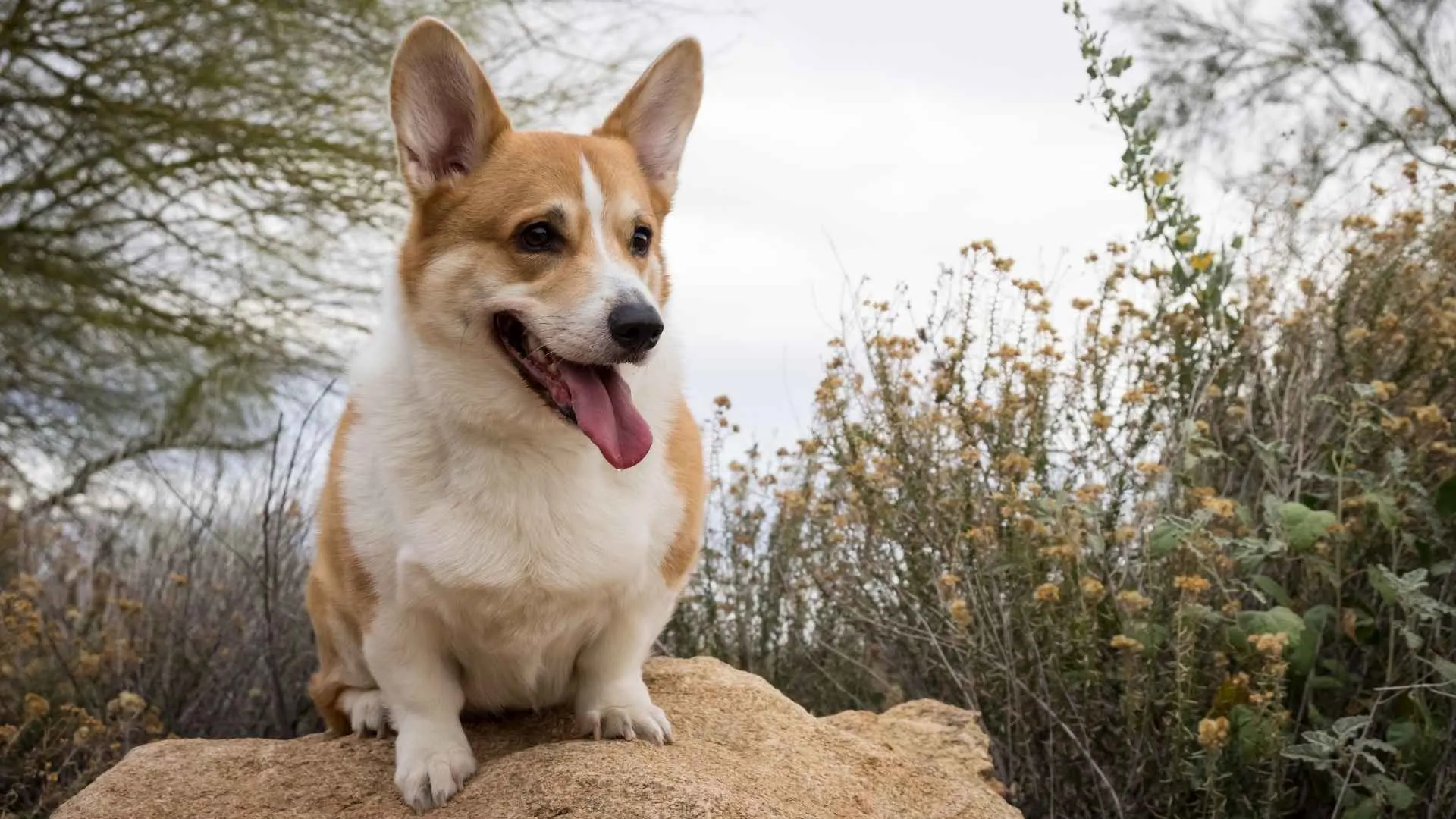
The Pembroke Welsh Corgi is one of two Welsh Corgi breeds developed in Wales to herd animals. It is often described alongside its cousin, the Cardigan, and the two were once treated as one breed for show purposes until 1934.
The Pembroke Welsh Corgi became the more popular of the two and remains widely recognized. This breed has deep historical roots, with origins tied to dogs brought to Pembrokeshire between the 10th and 12th centuries by Vikings, Flemish weavers, or both.
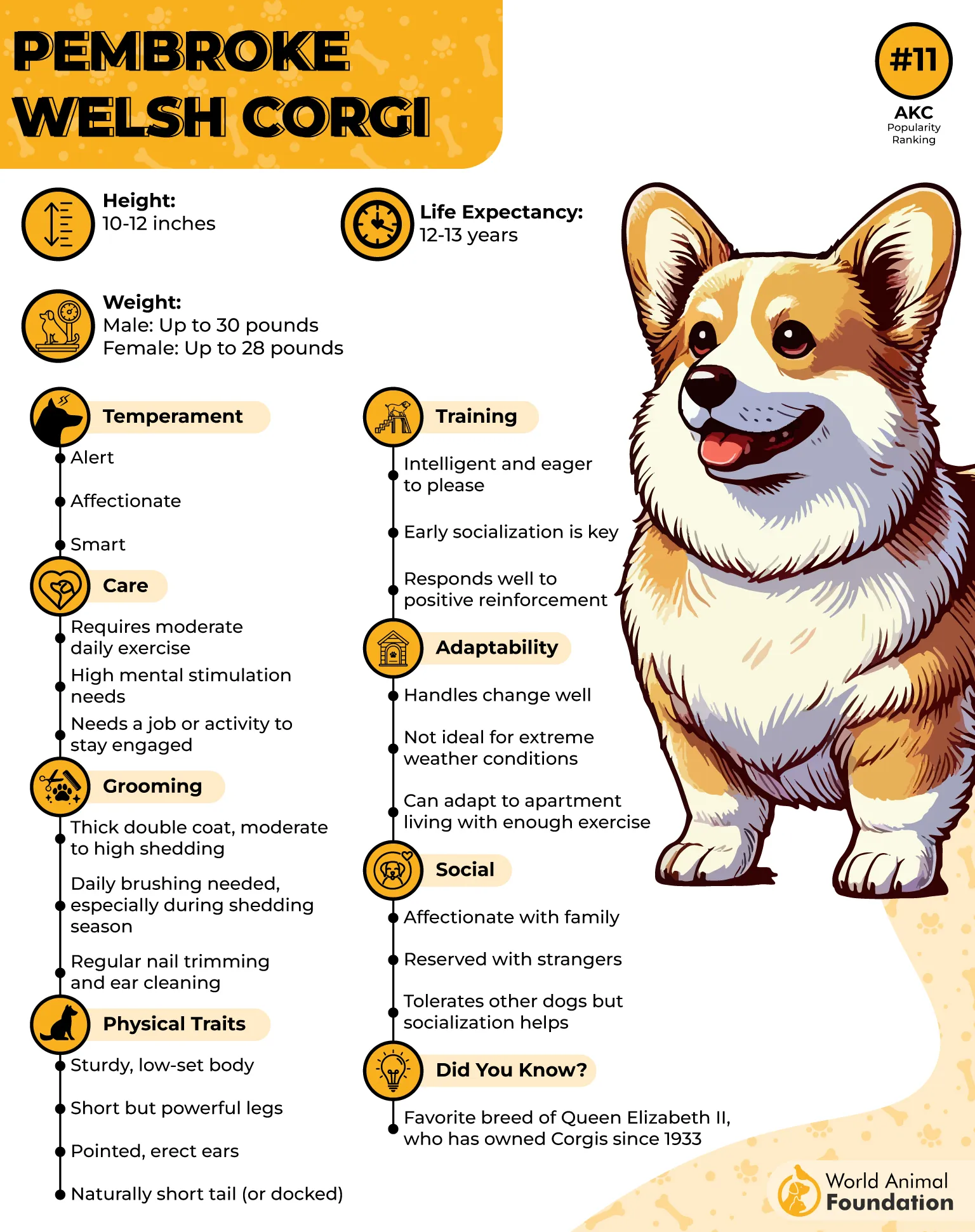
Some ancestors were likely part of the Spitz group. That long history gives the breed a strong identity among dog breeds with herding backgrounds.
The Pembroke gained major visibility through its association with Britain’s royal family, especially Queen Elizabeth II, who owned Pembroke Corgis from childhood. For pet parents, that popularity does not replace training, but it does reflect why certain breeds stand out in public attention.
With the right home and positive reinforcement, this breed can be an engaging companion and one of the more interesting breeds to train.
Why This Breed Is a Good Fit
A fun option for owners who want a well-known breed with herding roots and a big personality.
Appeals to new pet parents looking at popular dog breeds but still ready to commit to training.
Short legs, royal fame, and a confident attitude make this breed memorable from day one.
7. German Shepherd
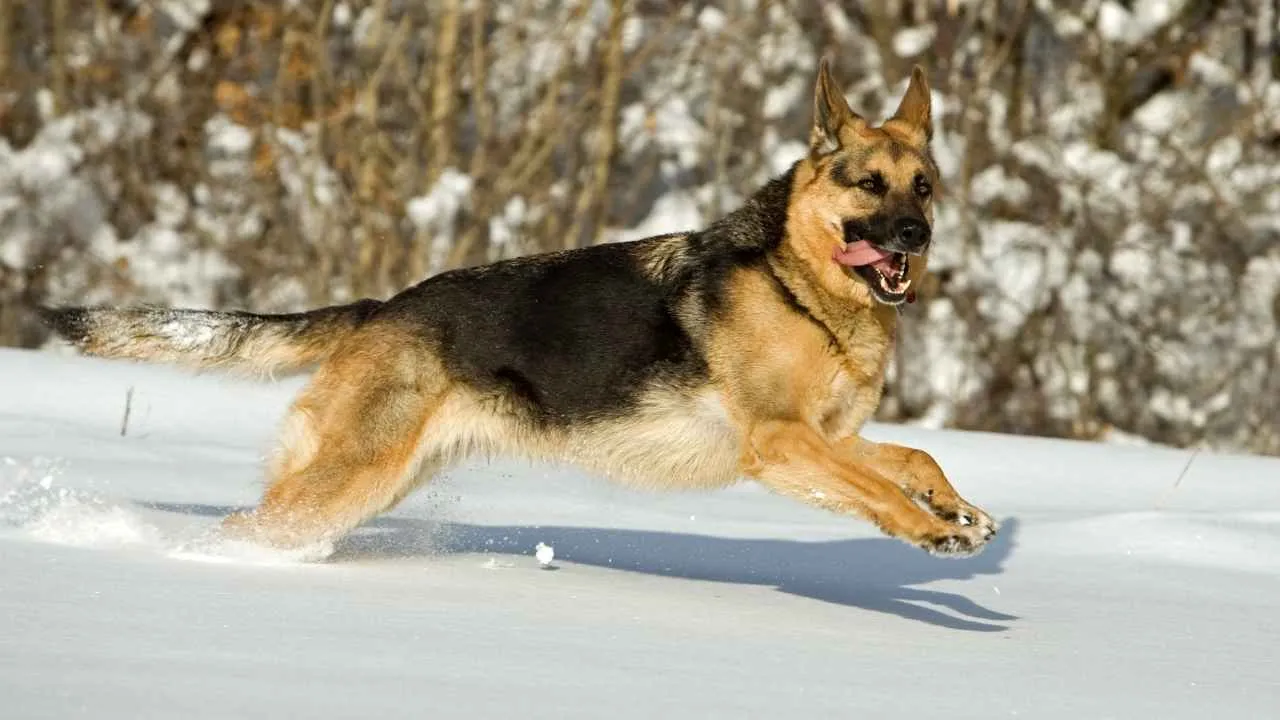
The German Shepherd is a large, agile, muscular dog known for noble character and high intelligence. This breed is often described as an all-purpose worker with a loyal, confident, courageous, and steady nature.
Its outline shows smooth, graceful curves, and the natural gait is a free, easy trot with the ability to move at speed.
German Shepherd dogs are among the most respected working dogs because they can learn commands for many tasks.
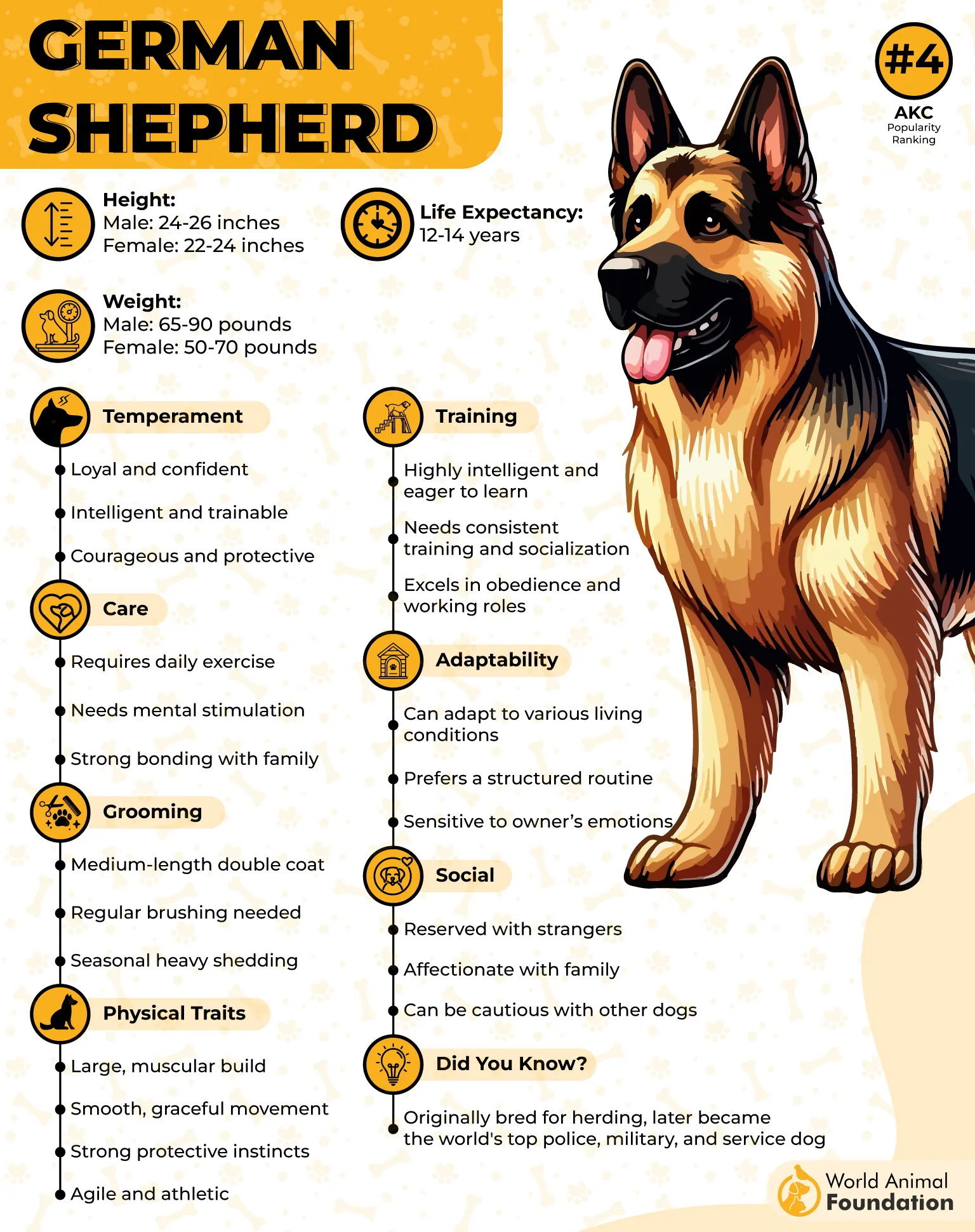
Experts highlight character as the defining trait, including loyalty, courage, confidence, and willingness to protect loved ones. This makes the German Shepherd a highly trainable breed with broad potential in many roles.
This breed can be a gentle family pet and steadfast guardian, but there is also a certain aloofness that may limit instant friendships with strangers. That part of the dog’s temperament matters for training and daily social expectations.
With obedience training, positive reinforcement, and consistent training sessions, owners can help shape a well-behaved dog while respecting the breed’s natural reserve.
Why This Breed Is a Good Fit
A strong fit for pet parents who want a serious, capable dog and enjoy ongoing training work.
Great for homes that value loyalty and want a breed known for learning many tasks.
This dog brings brains and bravery, but it still needs thoughtful guidance to shine.
8. Miniature Poodle
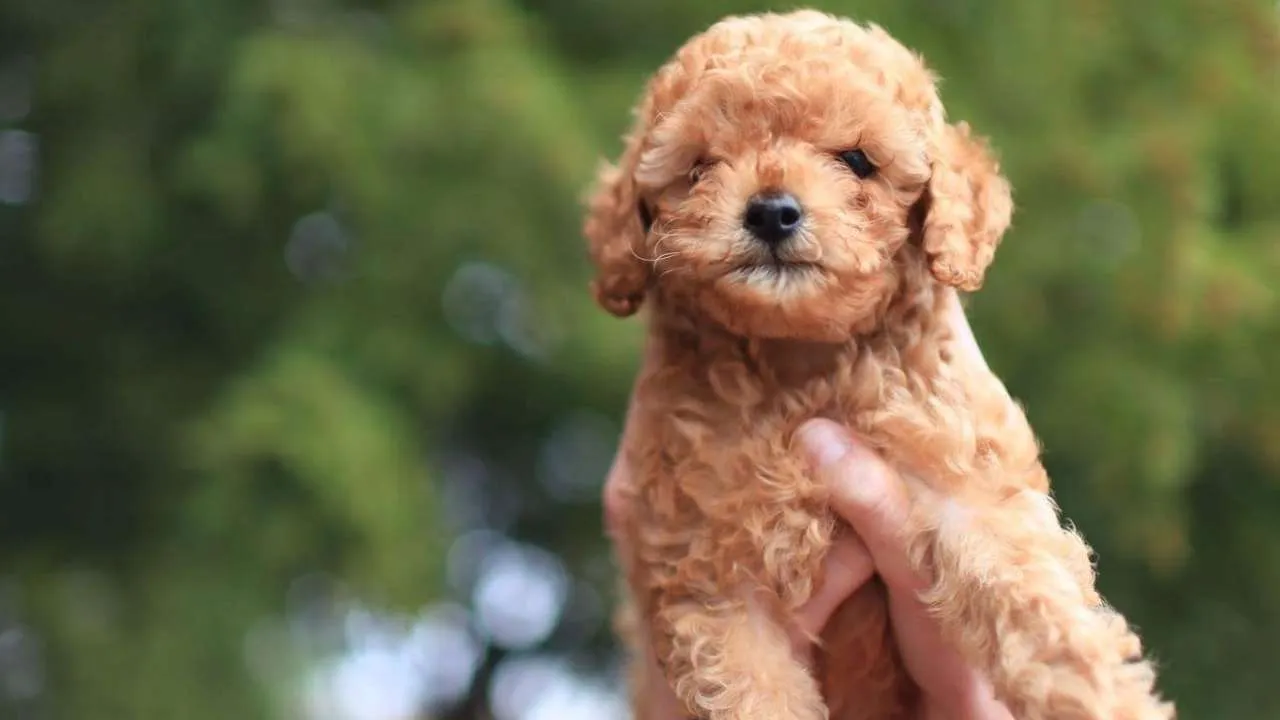
The Miniature Poodle is part of the Poodle family, which also includes Standard and Toy sizes. All three varieties share the same build and proportions, and the breed is known for an elegant, athletic look beneath the curly coat.
Many pet owners choose a simpler Sporting clip, even though dog shows often feature the more elaborate Continental clip.
This breed has a reputation that goes far beyond appearance. Poodles are described as eager, athletic, and wickedly smart, and poodles excel in many kinds of training because of their versatility.
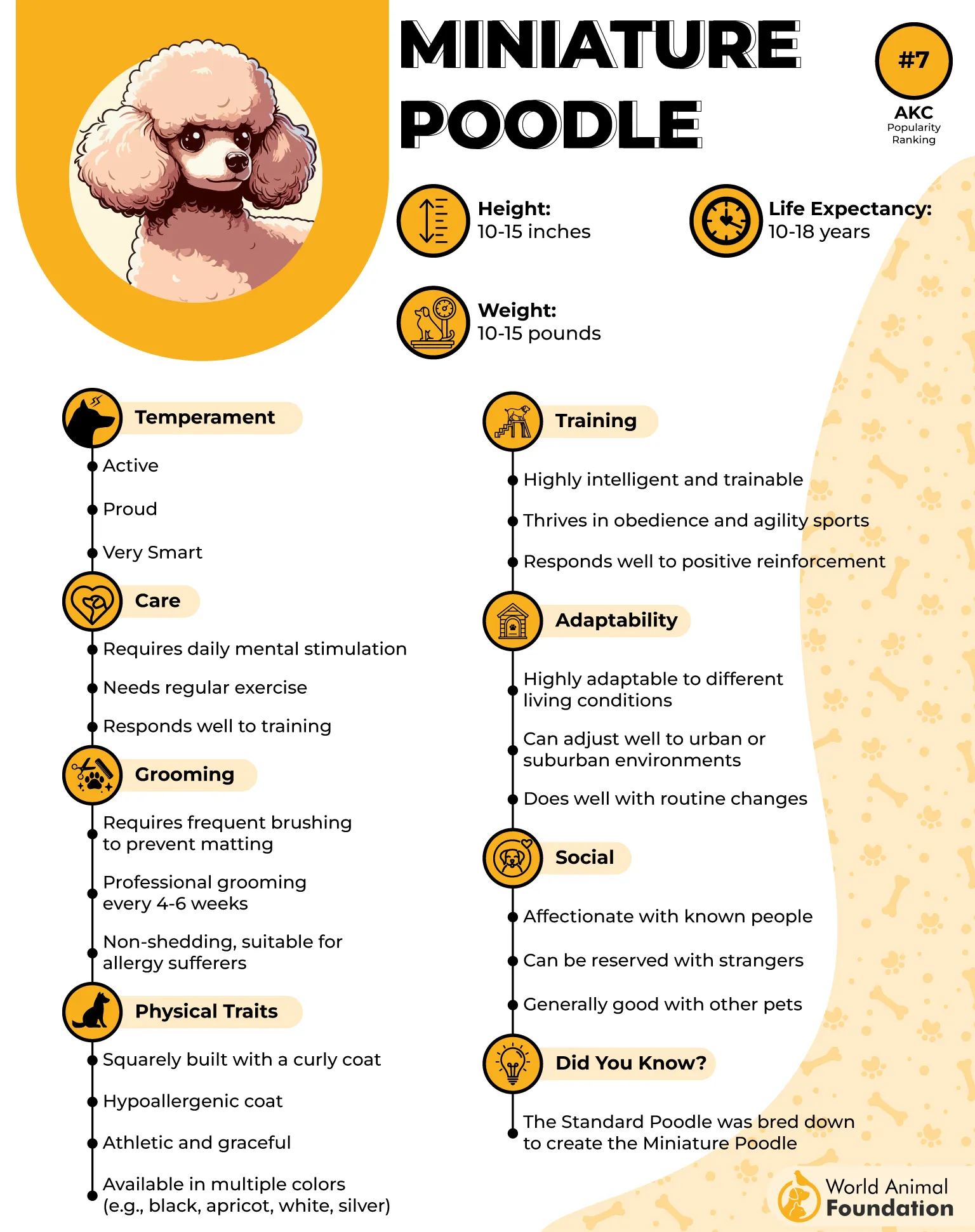
That makes the Miniature Poodle one of the easiest dogs for owners who want a polished companion that learns quickly.
Miniatures are 15 inches or under at the shoulder, giving pet parents a smaller but very capable dog. The breed is easy to train and can succeed with obedience training, new tricks, and other forms of dog training when sessions stay clear and upbeat.
Positive reinforcement helps this highly trainable dog stay engaged without turning learning into a chore.
Why This Breed Is a Good Fit
Excellent for owners who want one of the easiest dog breeds to train in a compact size.
A smart choice for homes that enjoy regular training and want a dog that picks up new tricks fast.
Stylish look, athletic body, and fast thinking make this breed a real crowd-pleaser.
9. Labrador Retriever
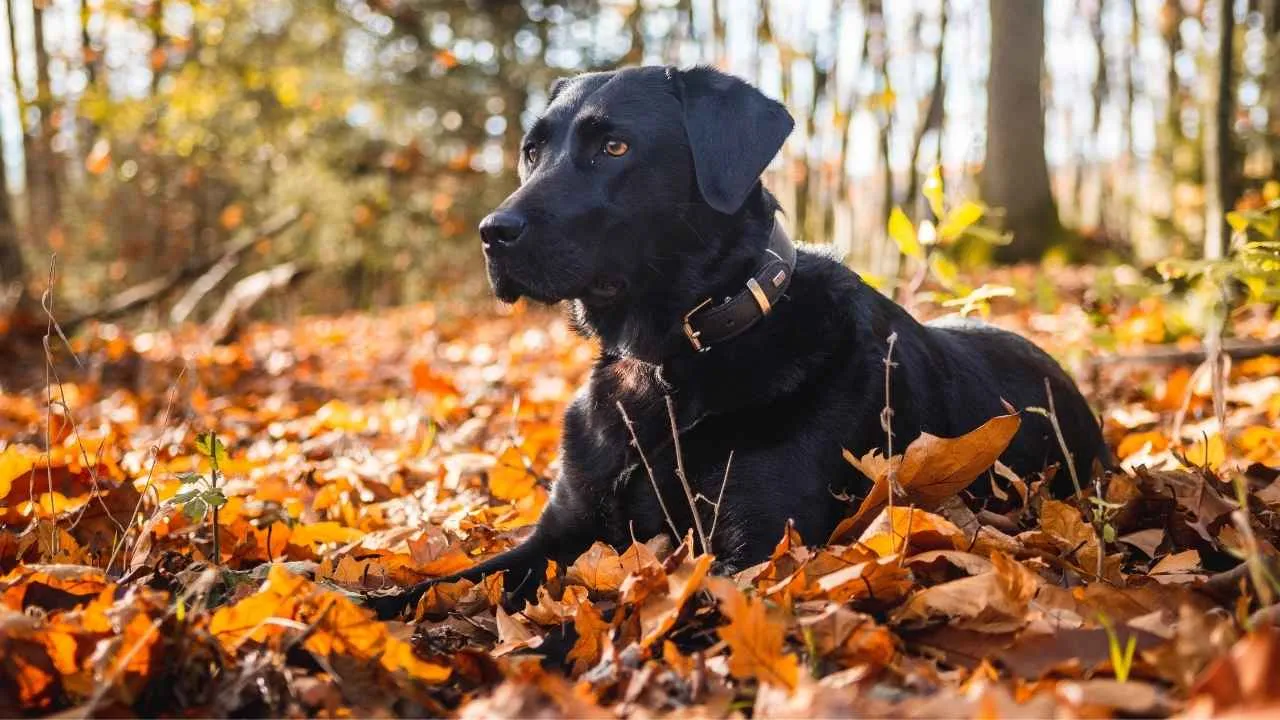
The Labrador Retriever is one of the most popular dog breeds in the United States and is widely loved for good reason.
This breed is active and friendly, with a medium to large build, a wide skull and nose, a deep chest, a strong tail, and a muscular body. Labrador Retrievers come in yellow, black, and chocolate.
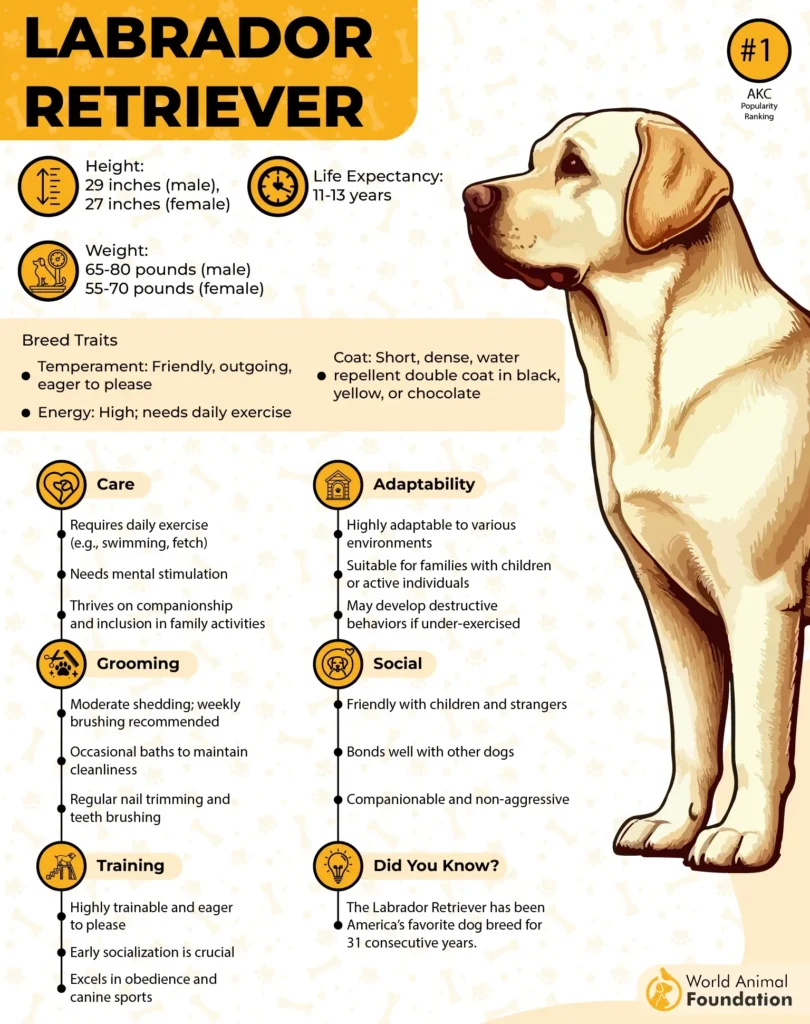
Labs are often described as highly affectionate toward people, even strangers, and they usually do well with children and other dogs.
Supervision is still important when introducing a Labrador retriever to family members for the first time. Their friendly dog nature and sociable style make them great companions in active homes.
Labrador Retrievers have a water-repelling double coat and shed heavily, so brushing is part of care. They also love water and have a history of working with fishermen, and today, a Labrador retriever may enjoy outdoor activities like swimming, hiking, or hunting.
With proper training, regular exercise, and positive reinforcement, many Labs become easy to train and dependable family partners, and some also serve as guide dogs or therapy dogs.
Why This Breed Is a Good Fit
A great pick for pet parents who want a social, active dog and enjoy outdoor time together.
Fits families looking for great family dogs that respond well to training and daily routines.
This breed tends to bring a happy “let’s go” energy that makes practice feel easier.
10. Shetland Sheepdog
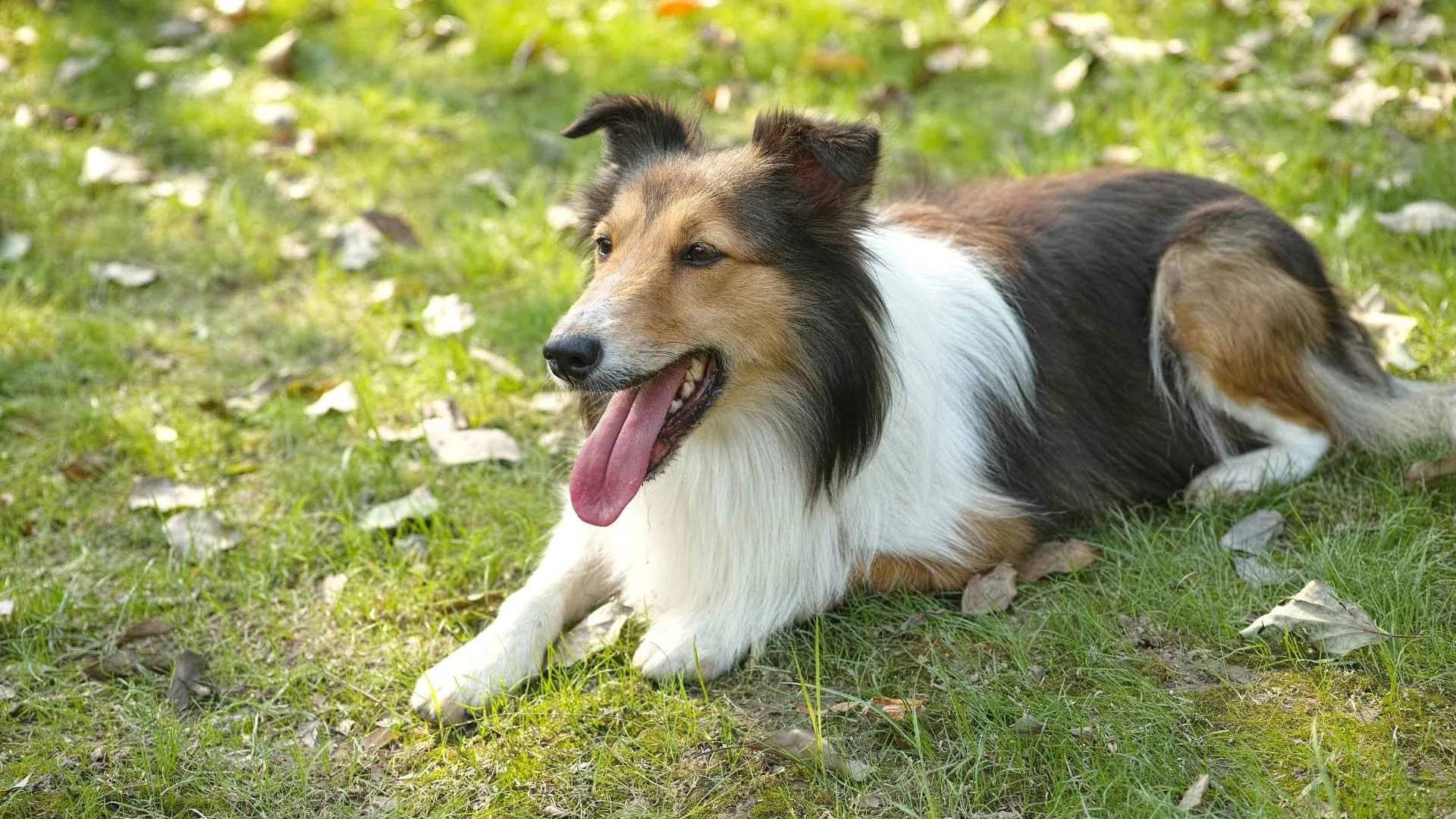
The Shetland Sheepdog, or Sheltie, is a small, active, agile herding dog from Scotland’s Shetland Islands. This breed has a long, harsh, straight coat with a dense undercoat and comes in black, blue merle, or sable with white markings.
Its wedge-shaped head, partly erect ears, and deep chest create a refined look that many people notice right away.
The Shetland Sheepdog is described as extremely intelligent, quick, and obedient. Bright and eager Shelties are easy trainers and are known as world-class competitors in obedience, agility, and herding trials.
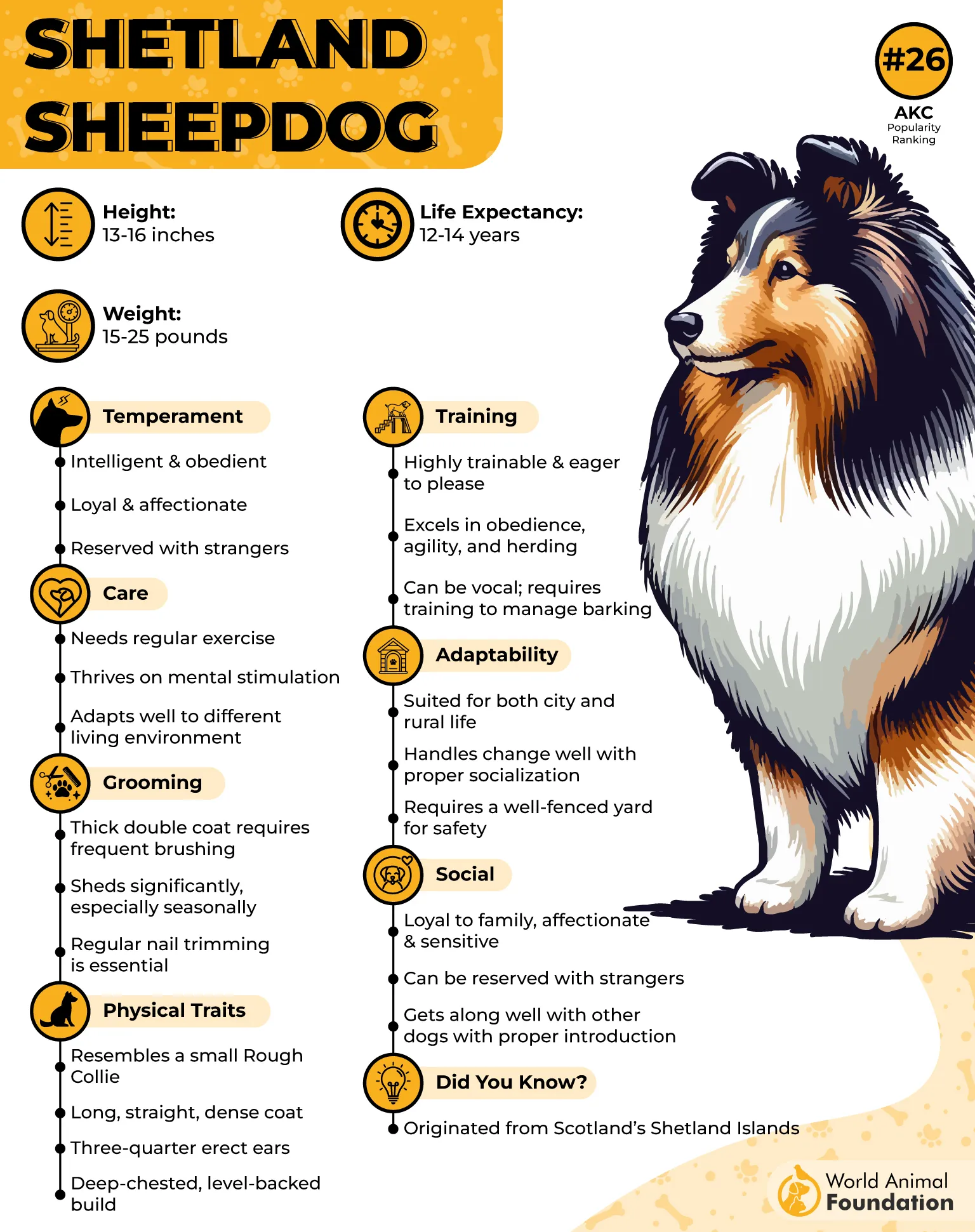
That combination makes this an easily trainable and highly trainable option for owners who enjoy steady progress. Shelties are sensitive and affectionate family dogs that are highly in tune with the mood of the household.
They tend to bark and may be reserved with strangers, which also supports their watchdog qualities. With mental stimulation, obedience training, and kind training methods, this intelligent breed can stay focused and thrive as one of the easiest dog breeds for involved owners.
Why This Breed Is a Good Fit
A lovely choice for pet parents who want a smaller herding breed with a strong learning ability.
Great for homes interested in obedience trials or agility training with a responsive partner.
This breed notices everything, so training can feel like working with a tiny furry assistant.
Conclusion
Choosing among these breeds to train comes down to your time, lifestyle, and what kind of dog you enjoy living with every day. Some dogs love nonstop work, some enjoy learning in short bursts, and some bring a friendly, family-first style to training.
The best results usually come from matching the breed’s natural strengths with your routine, then using clear guidance, patience, and positive reinforcement. If you want quick progress, look for a highly trainable dog with an eager-to-please personality and make training part of daily life.
Good habits grow faster when your dog gets structure, attention, and the right outlets. Start with realistic expectations, keep sessions fun, and you will build a smarter, happier bond.
