




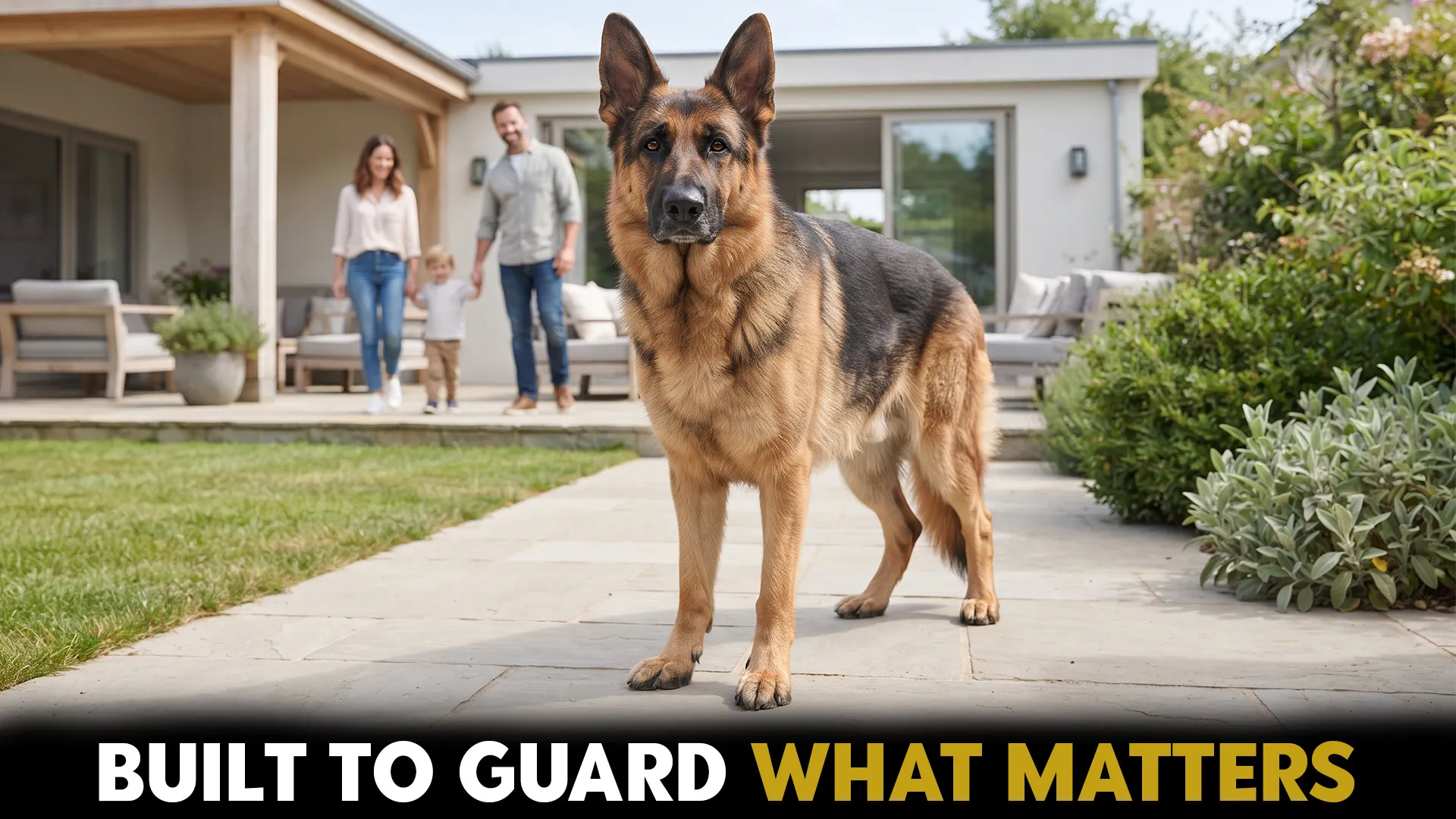
Having a protective dog in the family home can genuinely boost your sense of security, but choosing the right one comes down to more than just size and strength. A truly good family protection dog needs to read its environment well, stay controllable around people, and respect its owner’s direction.
Natural protective instincts are only really valuable when they can be properly managed. It’s also worth understanding the clear difference between being protective and being aggressive. A well-socialized guard dog breed doesn’t need to confront every person it meets.
Instead, its job is to alert its owner to anything unusual and then take direction from there. That kind of balance is built through consistent training, early socialization, clear household rules, and regular exercise.
The breeds below all have strong track records as guard dogs, working dogs, or dependable family protectors. They vary quite a bit in independence, energy, sociability, trainability, and overall household fit, so understanding those differences can help families choose a naturally protective dog that also fits smoothly into everyday life.
Highly Protective Dog Breeds for the Modern Family
1. Akita
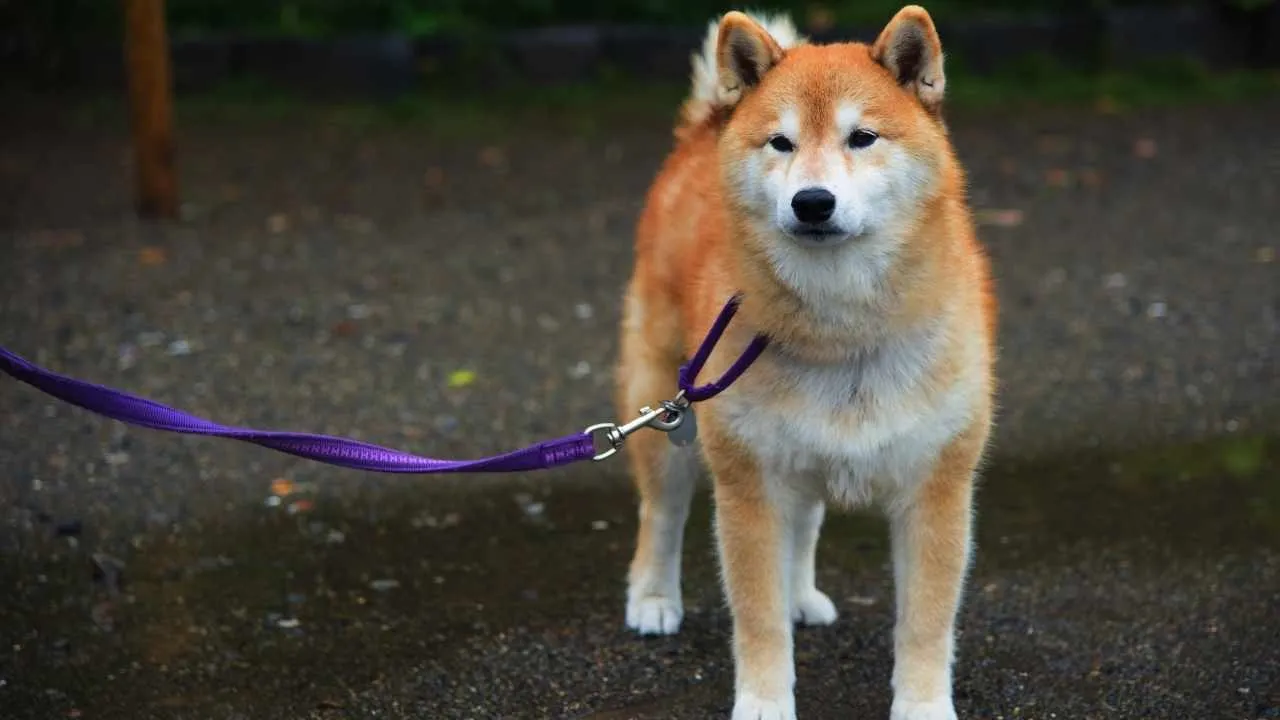
What really sets the Akita apart is that unique blend of protective instinct and genuine independence. Unlike breeds that constantly look to their owner for direction, Akitas tend to operate more on their own terms, a trait inherited from their ancestors, who worked as all-purpose hunting and protective guard dogs in Japan and were expected to make decisions independently.
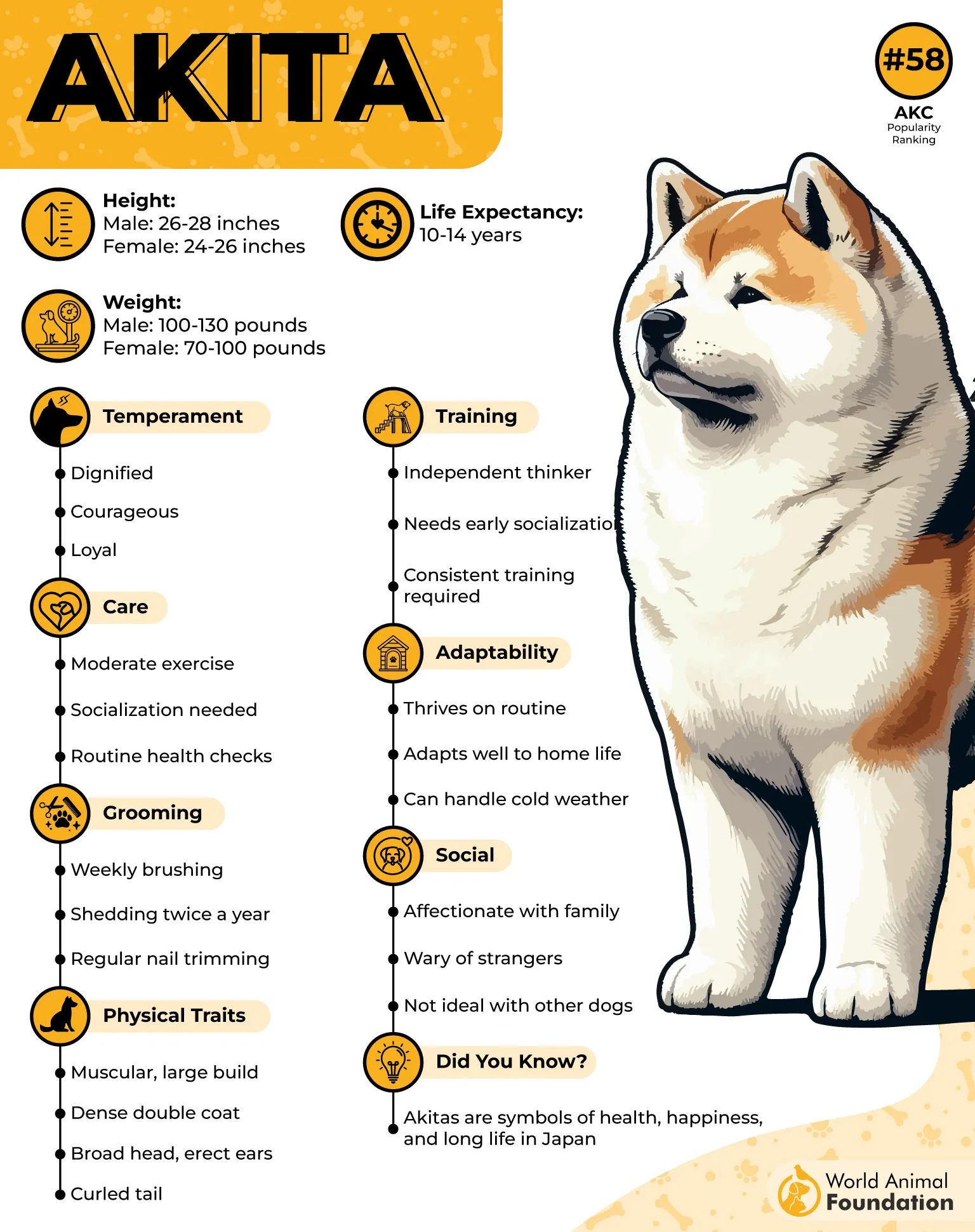
This often translates into a dog that’s deeply loyal to its family without needing constant companionship or reassurance. Akitas typically form strong bonds with their household while staying more reserved, sometimes even aloof, around strangers.
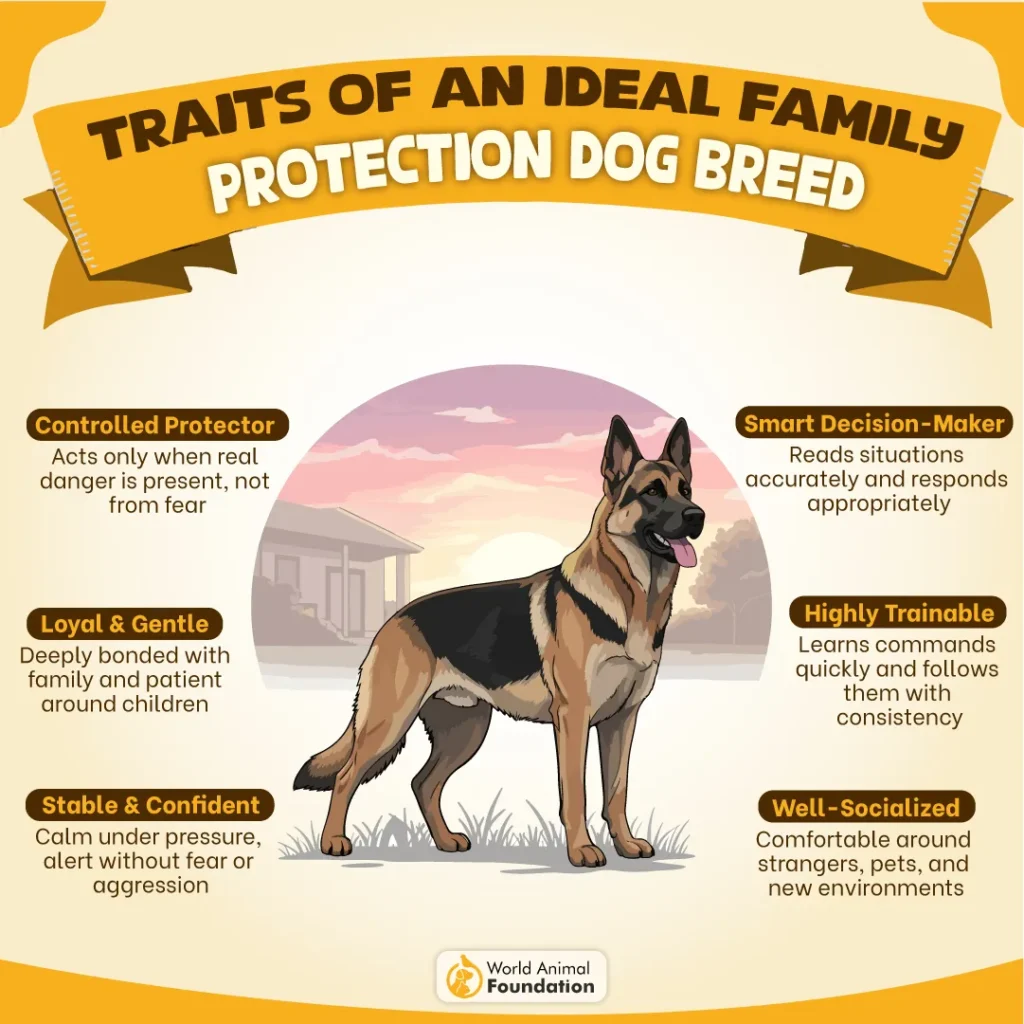
That reserved nature is exactly why early socialization matters so much with this breed. A good protective dog needs to be able to tell the difference between an actual threat and an everyday visitor, delivery person, or neighbor.
Introducing an Akita to other pets can also require some extra care. According to the American Kennel Club, Akitas aren’t always the easiest fit for households with existing pets unless introductions are handled thoughtfully and gradually.
2. German Shepherds
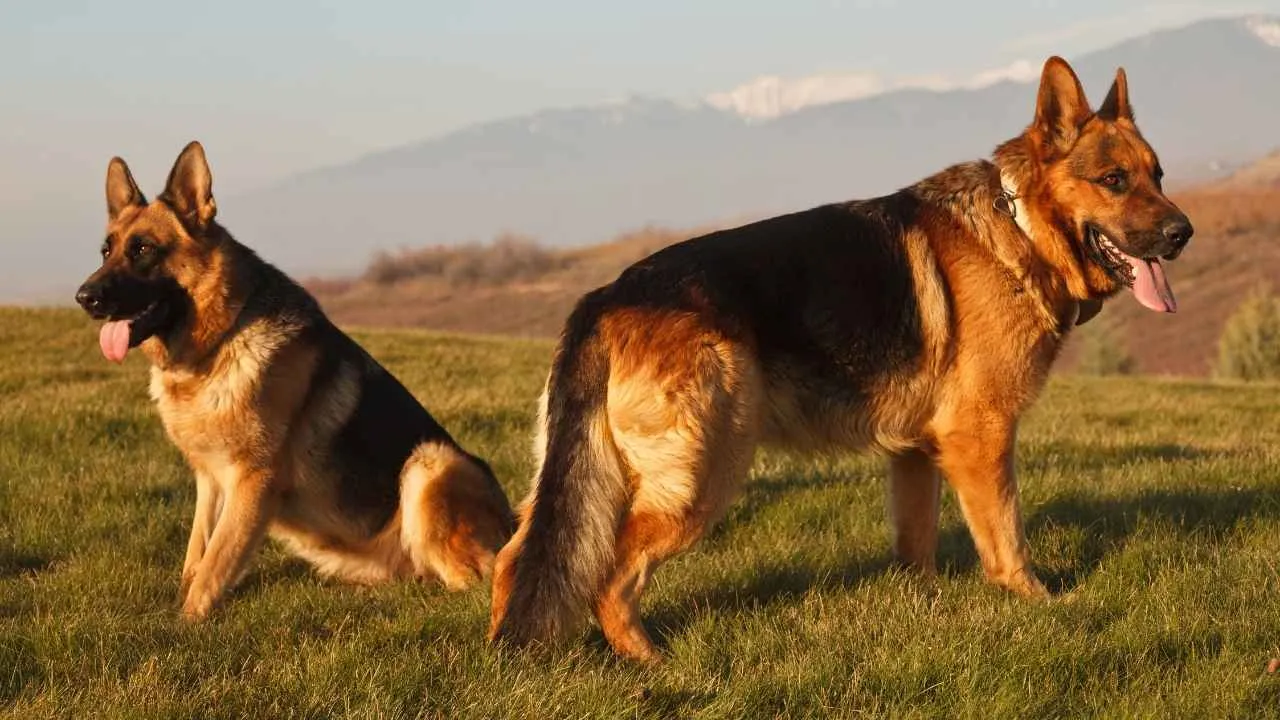
The German Shepherd is one of the most versatile dog breeds in the world, and it’s easy to see why. Its intelligence and trainability have made the breed a go-to choice for police, military, and search-and-rescue work.
But when their physical and mental needs are properly met, German Shepherds are just as capable of being deeply loyal family companions. According to The Kennel Club, they’re energetic, intelligent, highly trainable, and fiercely loyal.
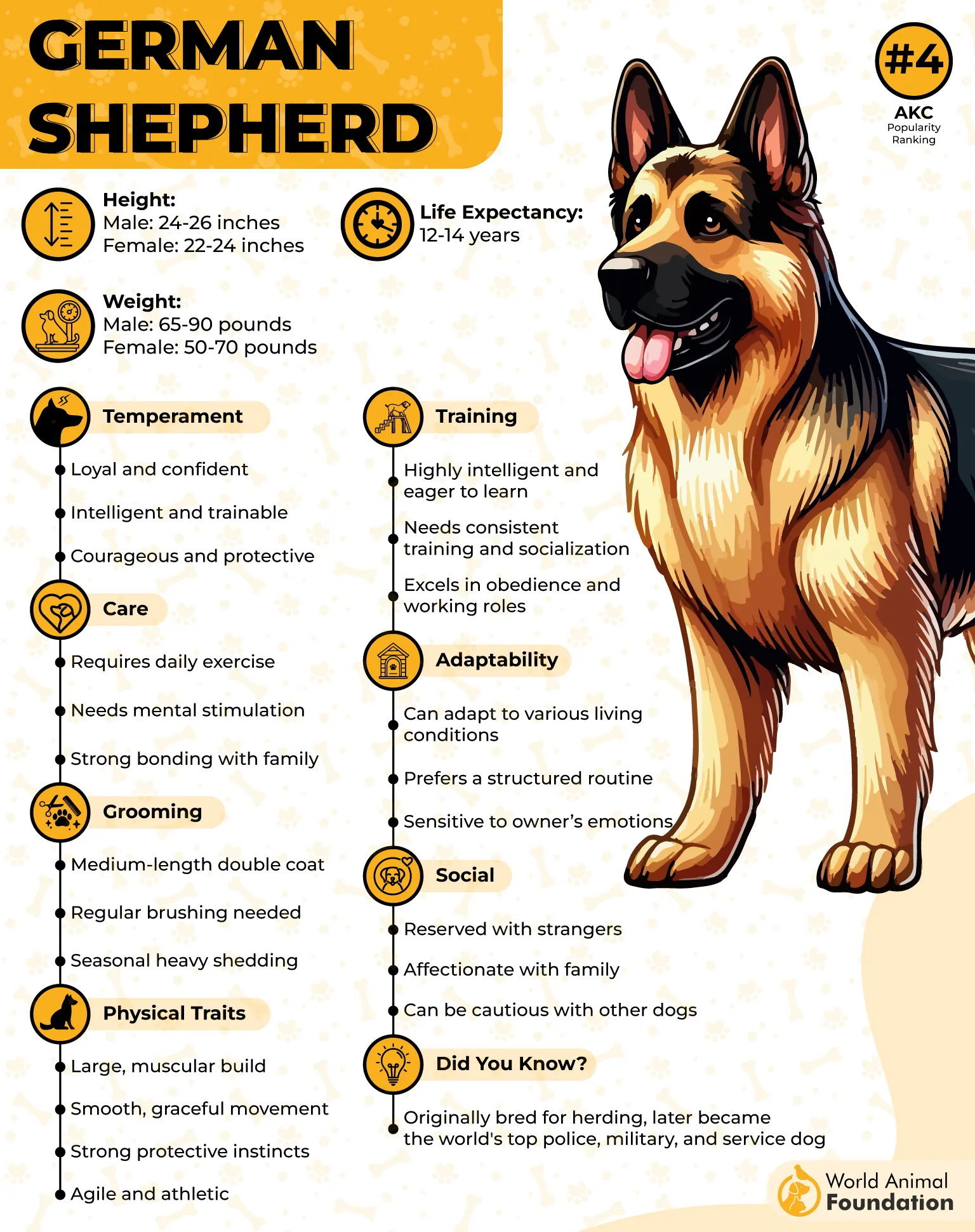
That versatility is exactly what makes this breed such a strong choice for modern families looking for a protective dog. German Shepherds also tend to be highly responsive to their owner’s commands, which makes consistent training especially important.
When you’re relying on a large, protective dog to make good decisions around strangers, it’s essential that they’re well-equipped to handle a variety of situations calmly and appropriately.
The key takeaway here is that true protection comes from control and proper training, not from encouraging aggressive behavior.
3. Rottweilers
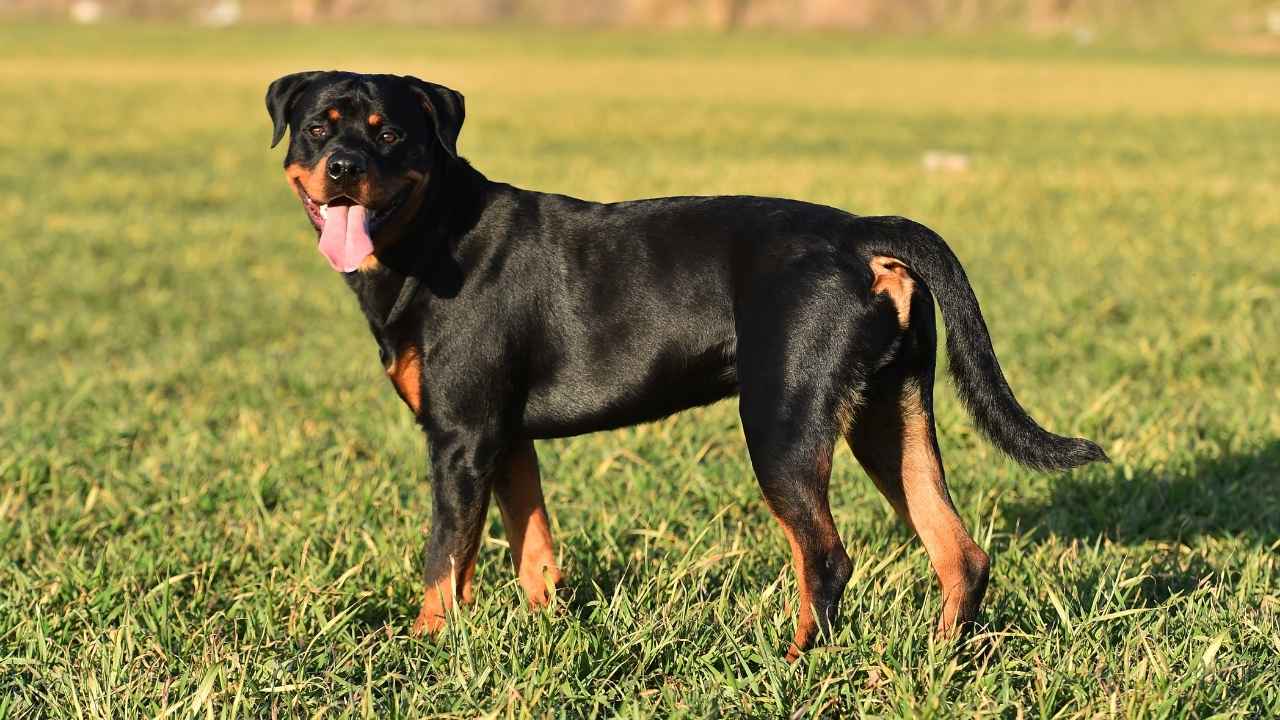
While the Rottweiler certainly has an imposing presence, that’s far from the only reason it makes such a great family guardian. According to Purina, Rottweilers are deeply devoted and loving toward their owners, especially within their own family circle.
They’re also naturally vigilant, making them excellent watchdogs for households looking for a protective presence. With proper training and socialization, they can be wonderfully patient with children too.
A truly well-socialized Rottweiler isn’t constantly on high alert. Instead, it learns to feel comfortable around familiar faces while staying attentive whenever something genuinely changes.
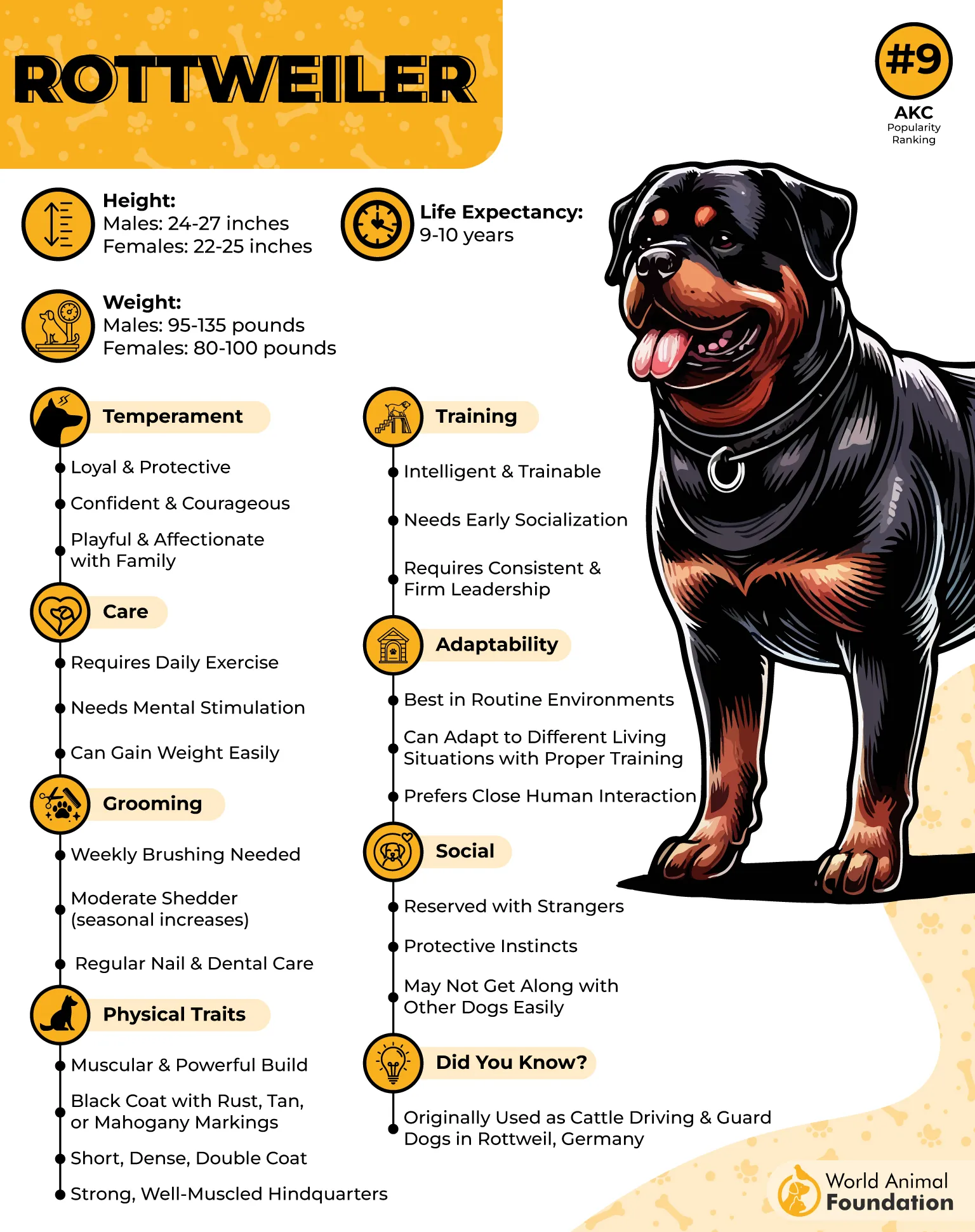
Early exposure plays a huge role here, and puppies benefit greatly from meeting different people, visiting new places, and experiencing a variety of sounds and situations, so they don’t grow up associating every stranger with danger.
Rottweilers are also fairly energetic dogs who genuinely enjoy walks, training sessions, play, and mental stimulation. Families considering this breed should be ready to offer more than just yard space and basic exercise.
Overall, the Rottweiler offers a great balance of companionship and protection for active families looking for a large dog with a naturally protective temperament.
4. Doberman Pinscher
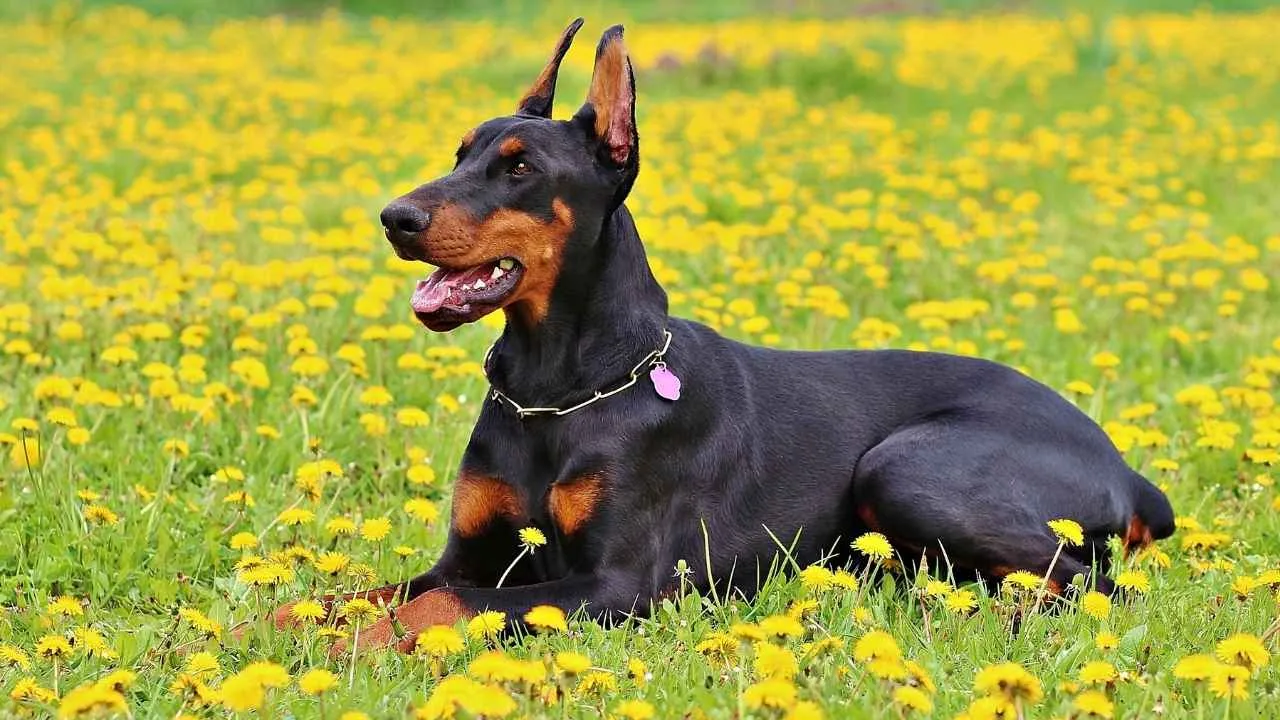
The Doberman Pinscher is known for close-range protection and a deep desire to stay near its people whenever possible. This is a highly people-oriented breed that genuinely wants to be part of everyday family life, not just an occasional companion.
The breed’s history traces back to a German tax collector named Louis Dobermann, who set out to create a loyal, reliable guard dog and companion. That original purpose still shines through today in the breed’s alertness, loyalty, intelligence, and impressive athleticism.
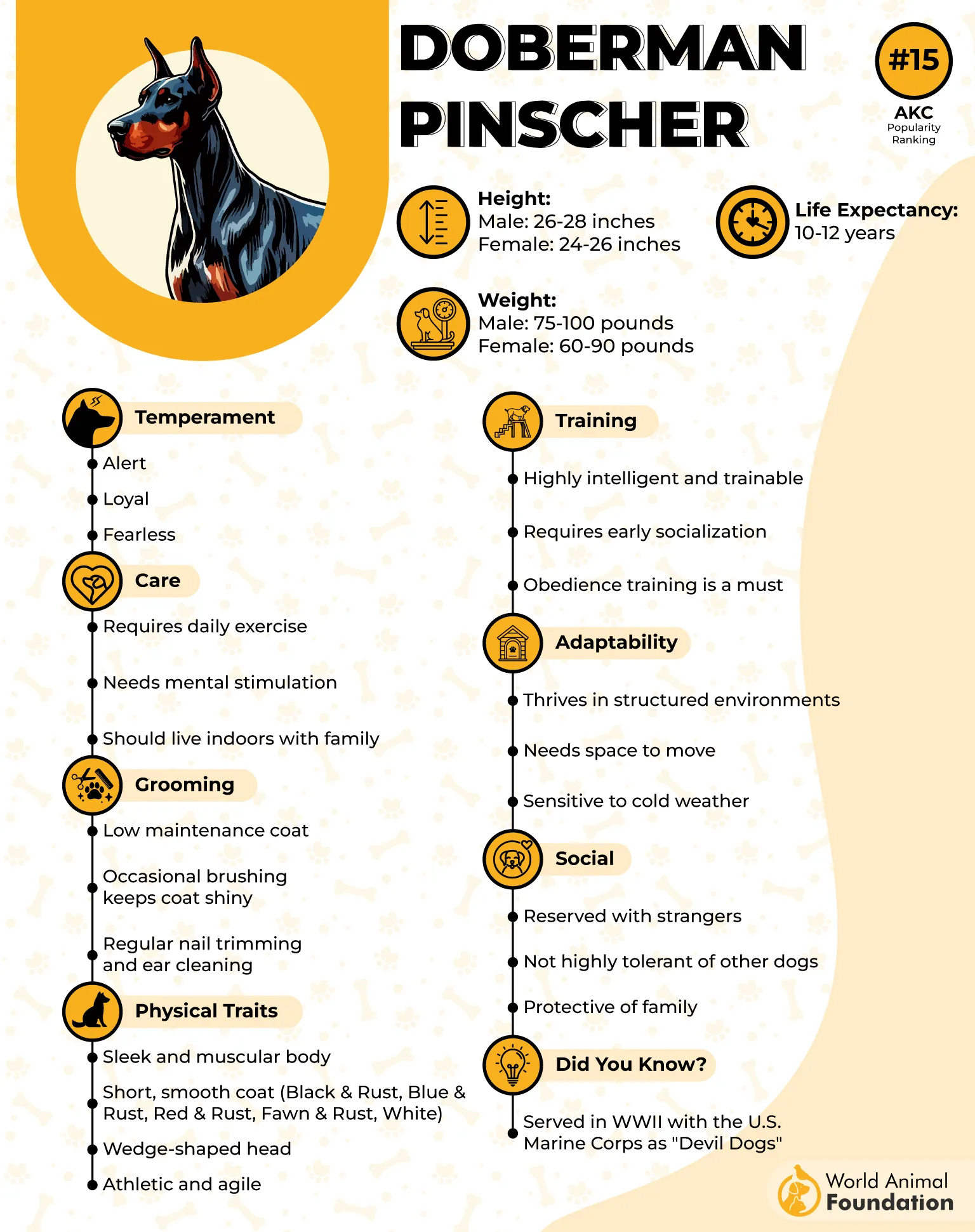
Dobermans make excellent family guard dogs because they balance protection with genuine companionship so well. They’re also remarkably clever, which makes training and socialization come fairly easily. That eagerness to learn is a real practical advantage too, since household manners, obedience, and everyday habits can all be shaped effectively through consistent training.
This matters because a good protective dog shouldn’t be making all its own decisions in the moment. It’s also worth noting that Dobermans can be territorial around other pets, and some may not do well with smaller animals, so careful, gradual introductions are essential when bringing other pets into the home.
5. Cane Corso
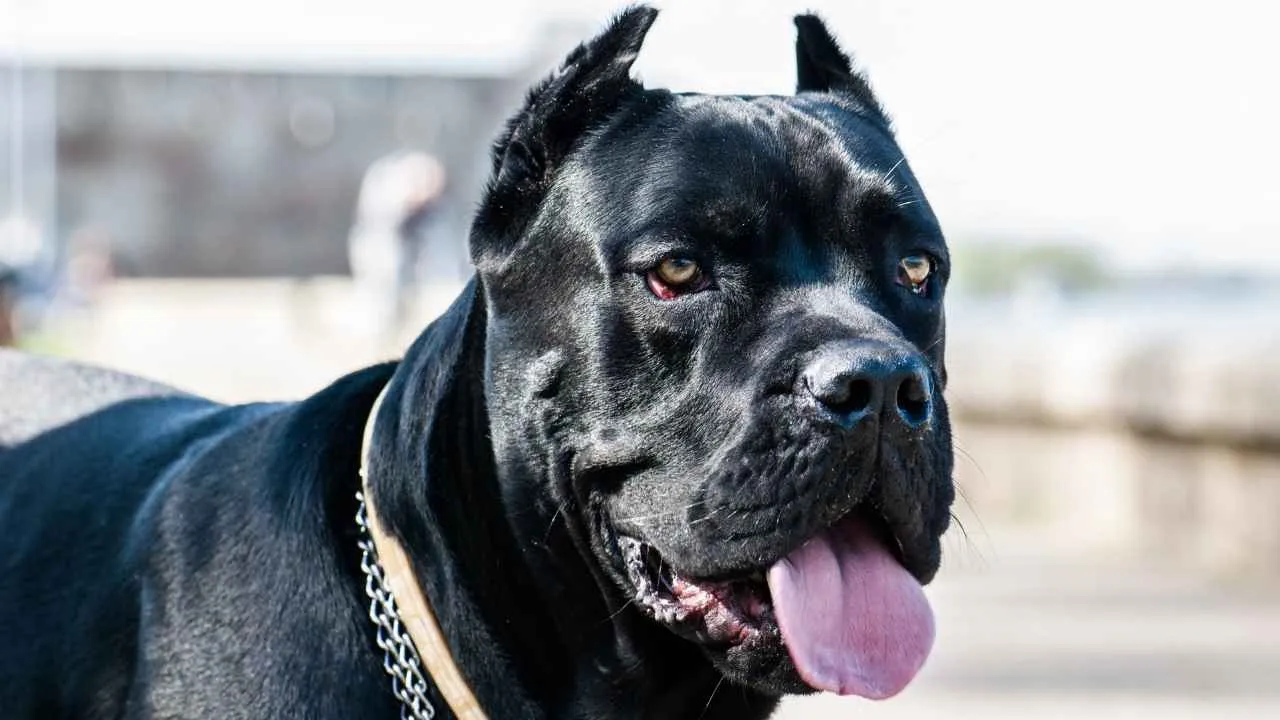
Protection is really the defining word when it comes to the Cane Corso. While it’s not directly descended from a formal guardian or bodyguard breed, its name roughly translates to “bodyguard dog,” and honestly, that reputation fits.
This breed is intelligent, trainable, deeply protective, and fiercely loyal to its family. At home, a Cane Corso can be wonderfully affectionate and cuddly, while staying naturally wary of strangers or unfamiliar animals. It’s exactly this combination that makes the breed such an excellent guard dog.
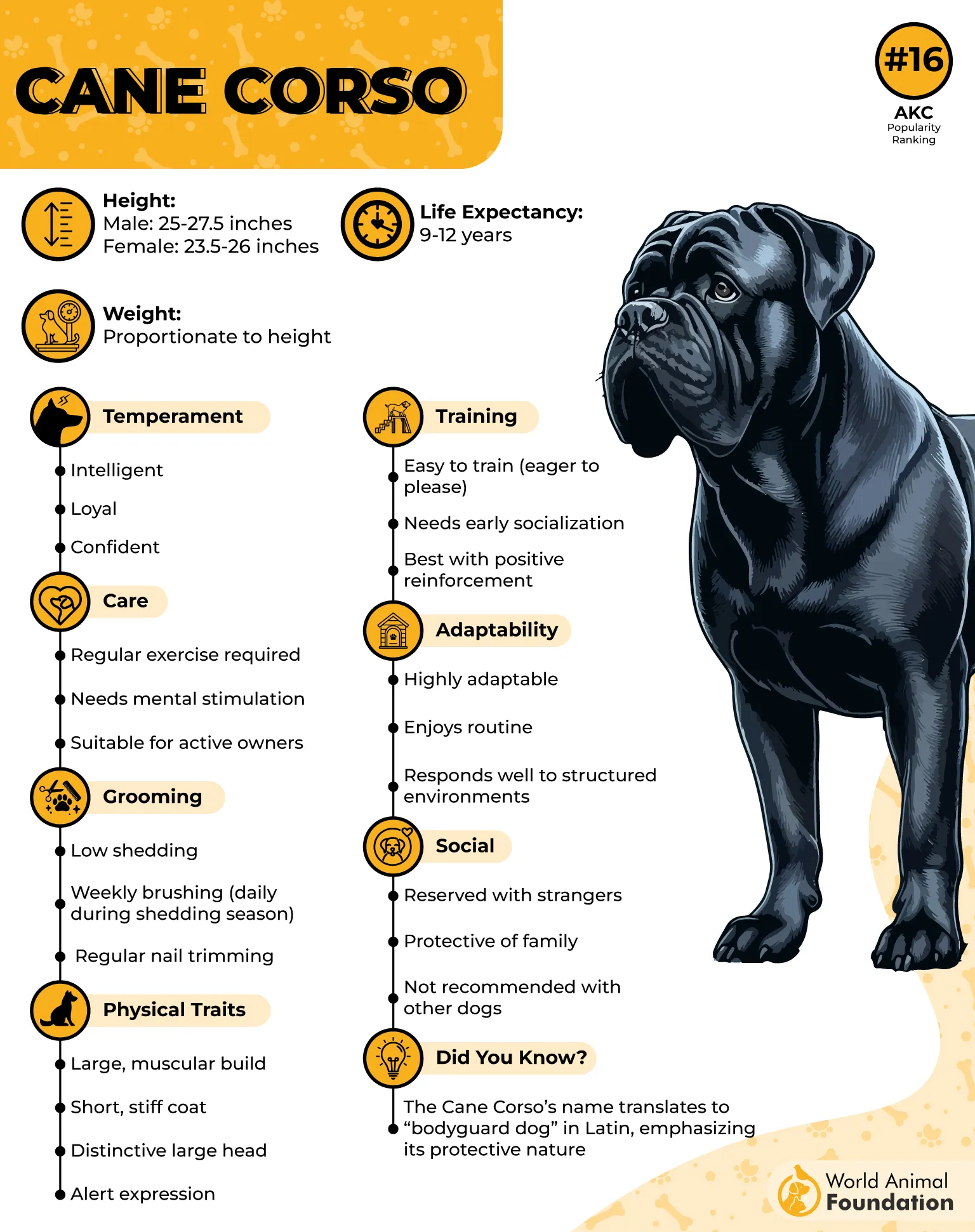
That said, given its large size and strength, responsible ownership is absolutely essential. Cane Corsos tend to do best with experienced owners who genuinely understand the breed’s temperament and training requirements.
Early socialization is critical here. A Cane Corso needs to become comfortable with normal family routines in order to keep its protective instincts appropriately in check. This becomes especially important for households that frequently host guests, since the dog needs to learn that visitors welcomed by the owner are meant to be there, not treated as a threat.
For an experienced family looking to bring home a large, naturally protective dog, the Cane Corso stands out as one of the most serious, dedicated options on this list.
6. Giant Schnauzer
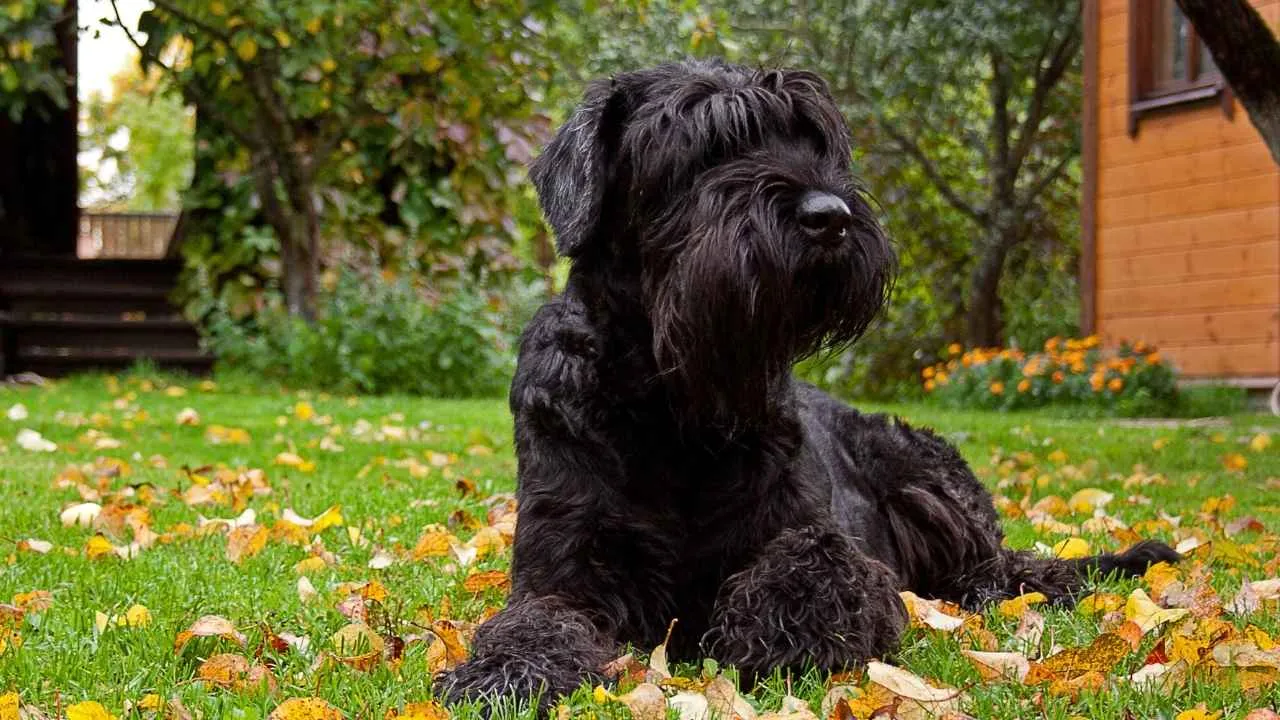
The Giant Schnauzer is a real testament to the idea that size alone doesn’t make a good protector; it’s really about how that natural instinct is guided. According to Purina, this breed was developed in Germany, originally working and guarding livestock. Today, it’s known for being intelligent, alert, loyal, and highly trainable, making it a loving addition to the right family.
Giant Schnauzers tend to be happiest when they have a job to focus on. Their sharp intelligence needs a healthy outlet, whether that’s obedience training, hiking, dog sports, or other structured activities.
Without enough positive reinforcement, obedience training, and mental stimulation, though, that same intelligence combined with their natural territorial instincts can make them a bit more challenging to manage.
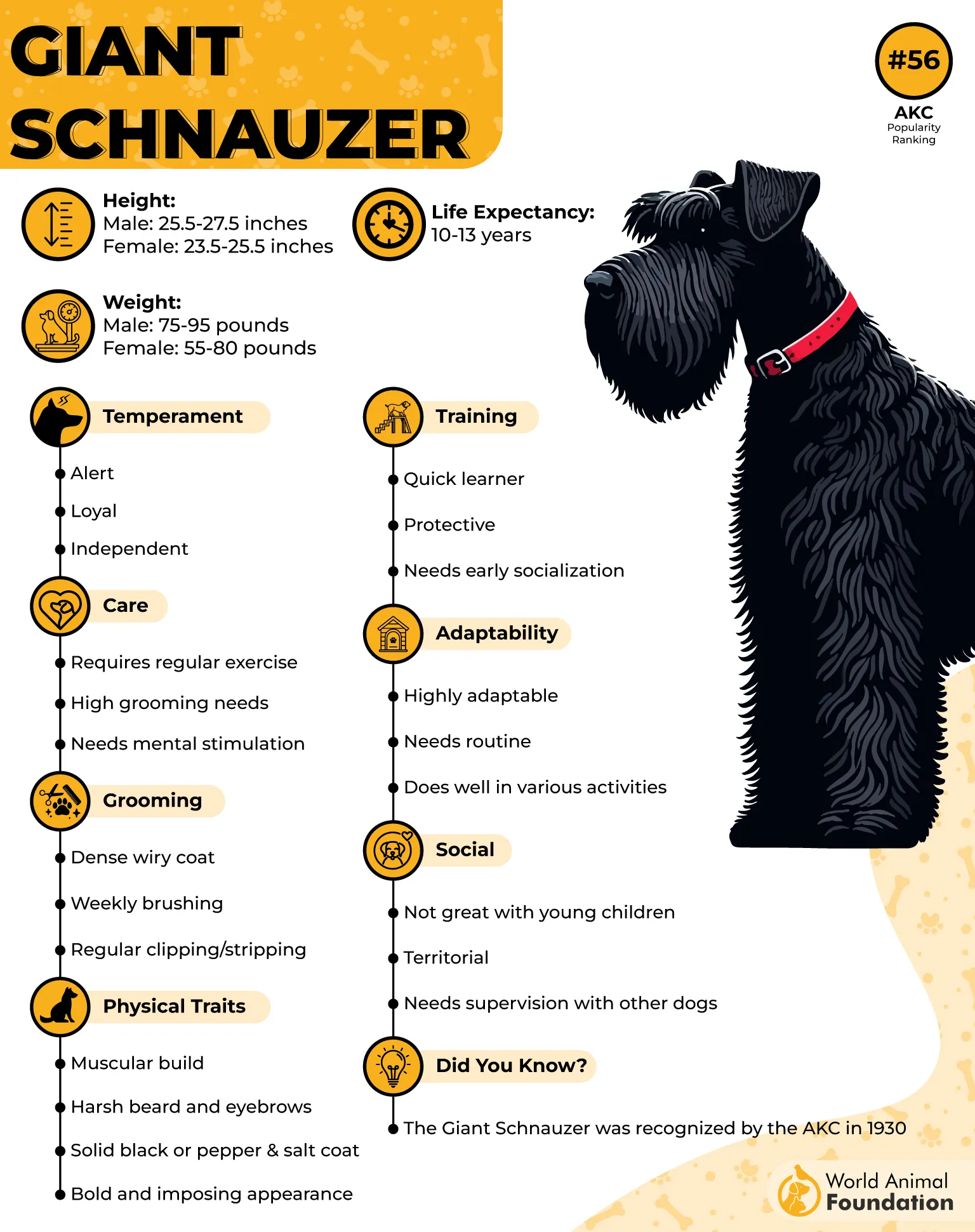
With proper socialization, this breed can behave well around other animals and large dogs alike. It tends to suit active families best, rather than households looking for a quieter, more low-key companion.
Professional training can also go a long way in helping this breed thrive in a well-structured, healthy environment. At its core, though, the Giant Schnauzer is a deeply loyal dog that forms strong bonds with its family members from a young age.
7. Bullmastiff
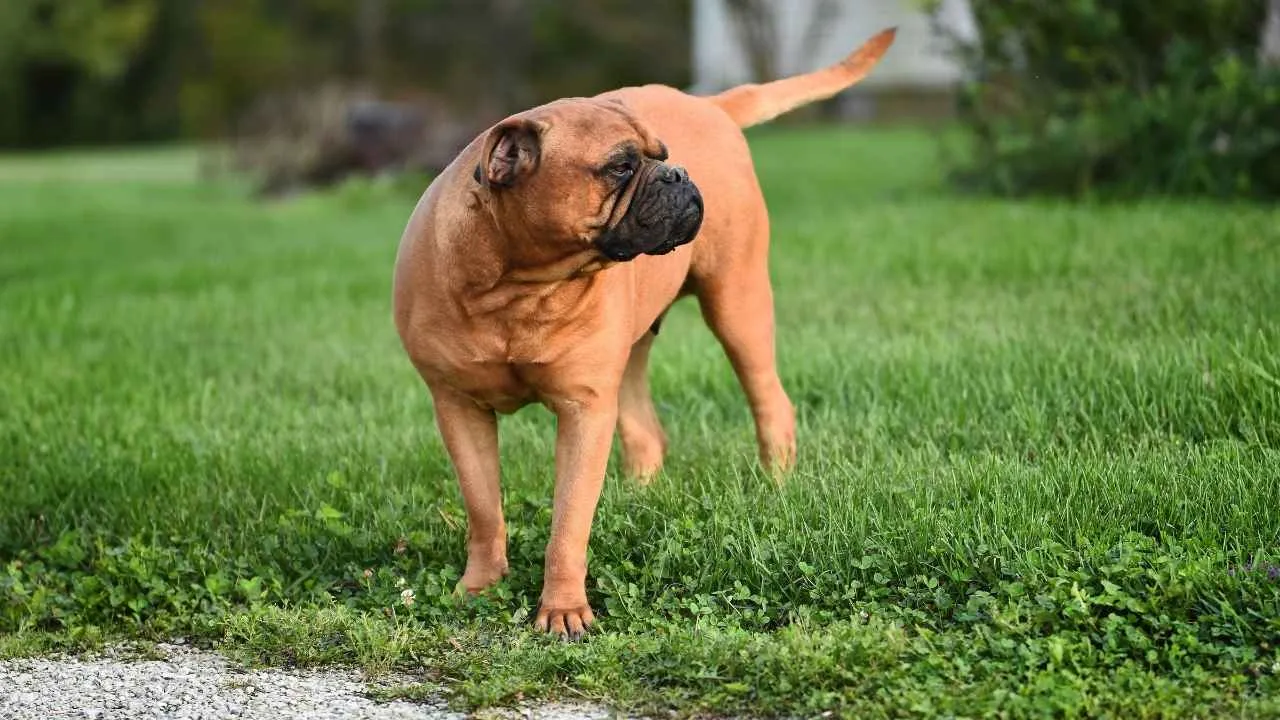
The Bullmastiff brings a different kind of energy to family life. This loving companion wasn’t originally bred to be constantly on the move like many hound breeds; instead, it’s far better known for its calm, steady temperament.
Developed in Britain to work as a gamekeeper’s dog, the Bullmastiff was originally tasked with protecting large estates from poachers. That role demanded physical strength and quiet confidence rather than excessive barking or noise, traits that still show up in the breed today.
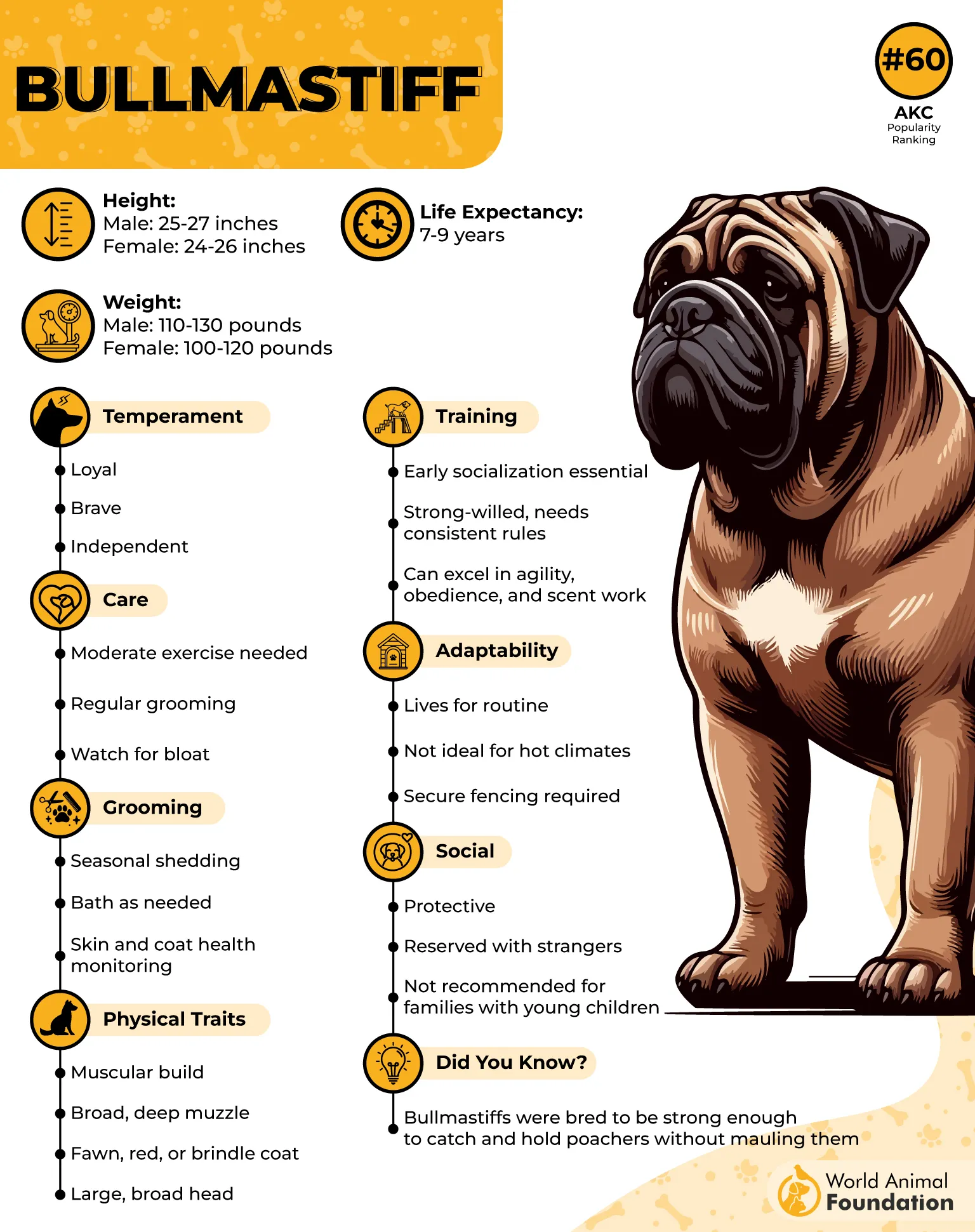
This background makes the Bullmastiff a wonderful protector for family life, including around small children, especially when given proper training and socialization. That said, their large size is definitely something to keep in mind around little ones, simply due to sheer scale rather than temperament.
Regular exercise is important too, since Bullmastiffs can be prone to laziness if left unmotivated. At the same time, it’s important not to overdo it, particularly with high-impact activities like excessive jumping, since that can put unnecessary strain on their joints.
Naturally wary of strangers and potential threats, the Bullmastiff tends to stay calm at home while remaining quietly alert to anything out of the ordinary.
Conclusion
A truly good protection dog needs to fit naturally into family life, not exist in its own separate world. It’s worth remembering that a loud, intimidating dog isn’t automatically the right choice for protecting the people you love.
The real key to finding the right match is thinking beyond the initial impression and considering what everyday life actually looks like once that dog comes home. Dogs need to navigate all kinds of everyday situations, spontaneous walks, vet visits, guests dropping by, and casual encounters around the neighborhood.
A dog that can never switch off its protective instincts often ends up creating more stress than security. What you really want is a dog that can stay calm most of the time, while still being sharp and capable enough to step up when it truly matters.
