




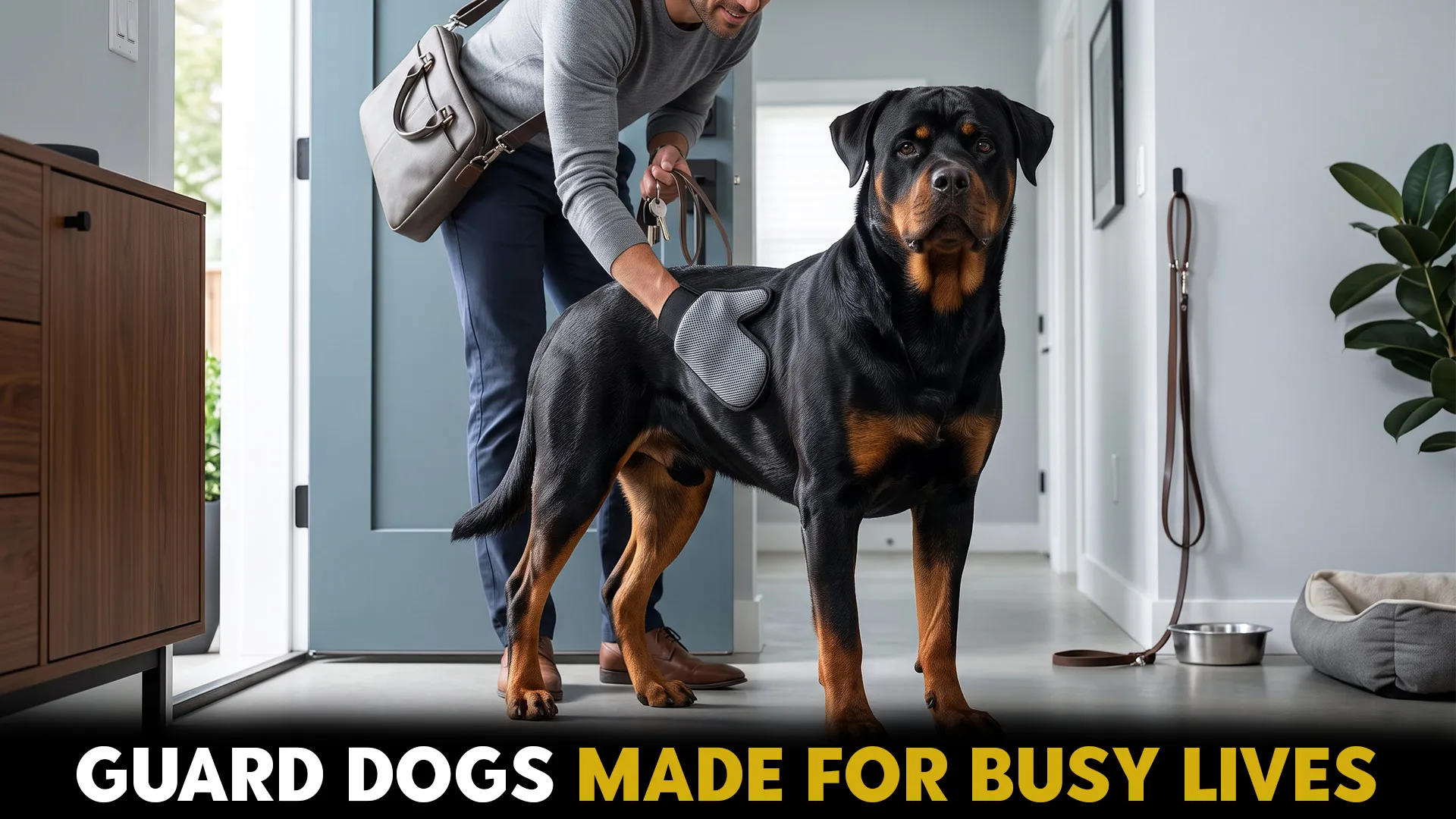
A good guard dog should make you feel protected, not make your grooming schedule look like a second job. For busy owners, the sweet spot is a confident, alert companion with natural guarding instincts and a coat that does not demand constant brushing, trimming, or salon visits.
These low-maintenance pups can still bring plenty of presence, loyalty, and watchfulness to the home without covering your week in grooming chores. Their practical coats make everyday care simpler, especially when work, family, and everything else already compete for your time.
Of course, easy grooming does not mean easy ownership. Guard dogs still need training, exercise, socialization, and clear boundaries, but choosing one with simpler coat care can make the routine far more manageable.
If you want dependable protection without turning your bathroom into a full-time grooming station, these guardian breeds deserve a closer look.
Guard Dog Breeds with Minimal Grooming for Busy Lifestyles
1. Rottweiler
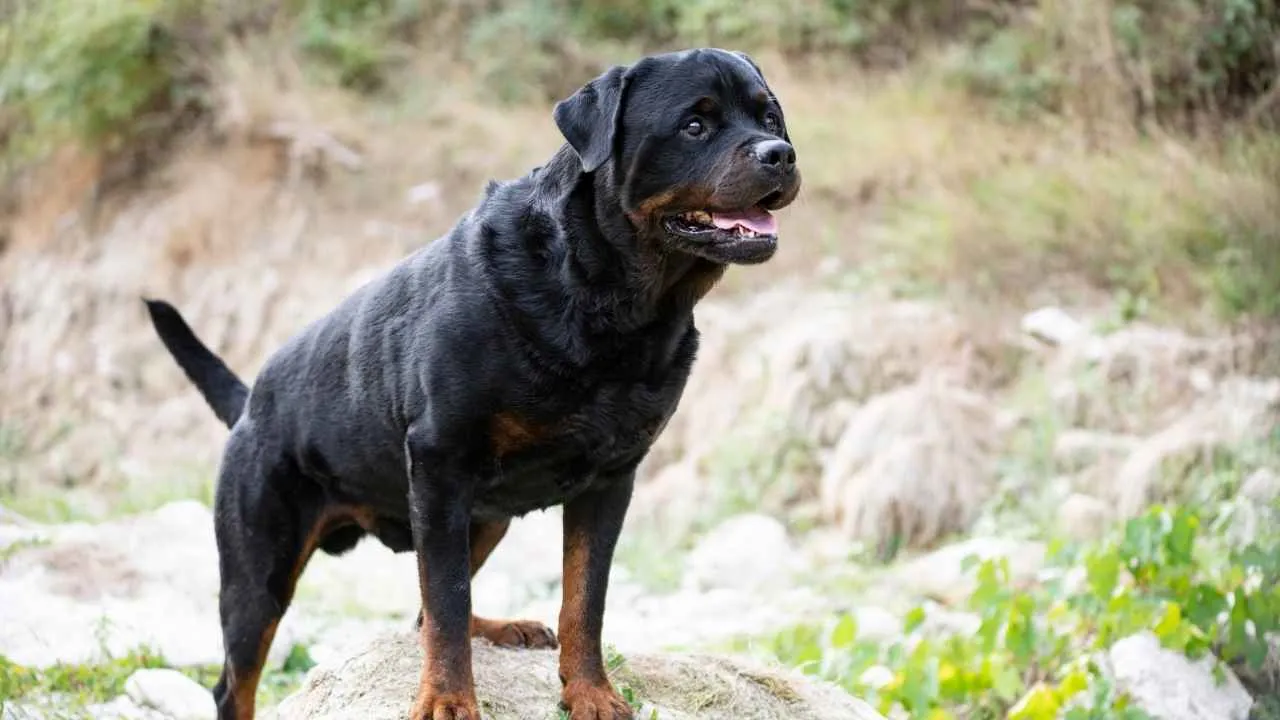
German butchers once trusted Rottweilers to carry money safely around their necks. Their strong presence discouraged thieves, while their calm, steady temperament made them dependable working companions.
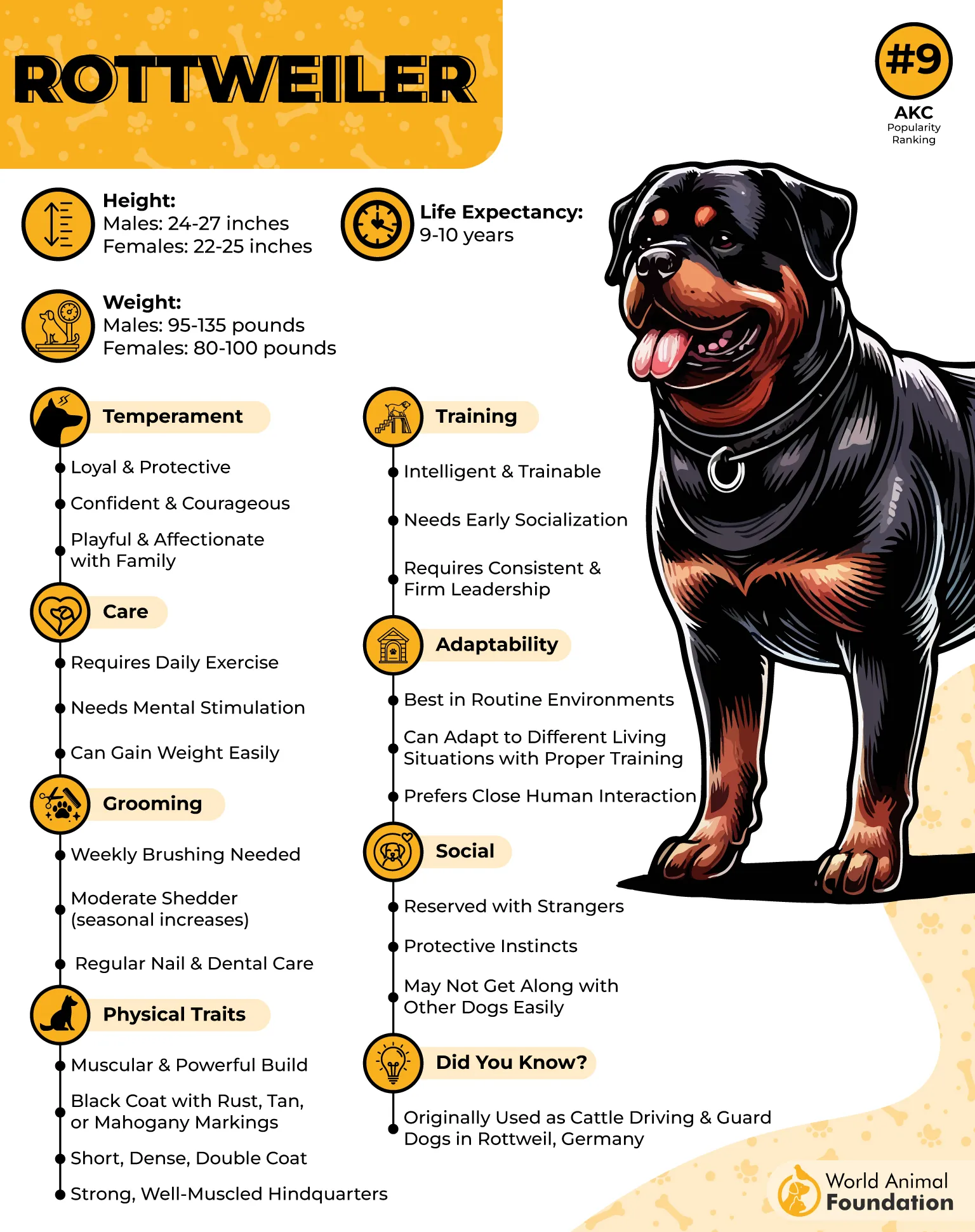
The coat needs very little care, with about ten minutes of brushing each week and no regular professional grooming. A committed first-time owner can manage this breed, but around an hour of daily exercise should be part of the routine.
The guard job: Deters. Suspicion dialed high for strangers, switched off entirely for family.
Grooming: Short double coat. Around 10 minutes of regular brushing weekly, moderate to heavy shedding, minimal drool.
Rottweilers guard by presence. They read a stranger first and bark second, so most encounters end at the stare. At home, they turn eager to please and quietly affectionate.
Daily exercise: 60 minutes minimum, walks plus a task that occupies the brain.
Training demand: Moderate. Quick and food-motivated, though strong enough that consistency matters.
Now the honest part. PetMD puts their lifespan at nine to ten years, with bone cancer a genuine risk. You get an excellent guard dog, just not for long enough.
2. Doberman Pinscher
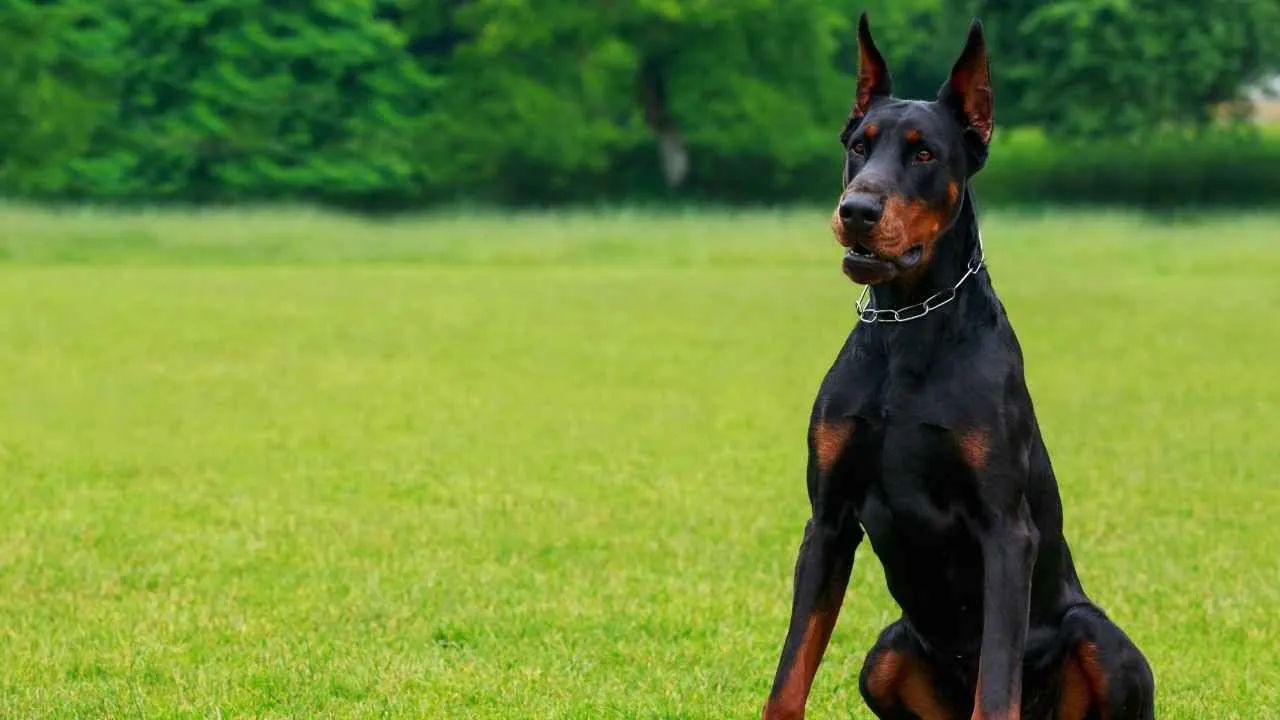
A German tax collector built this breed. Louis Dobermann also ran the local dog pound, so he picked the sharpest dogs there to walk his rounds, according to the AKC. The result still looks permanently on duty.
Five to ten minutes with a rubber brush covers grooming for the week. Its trainability is forgiving enough for a first-time dog owner, though it needs an owner who is home rather than out.
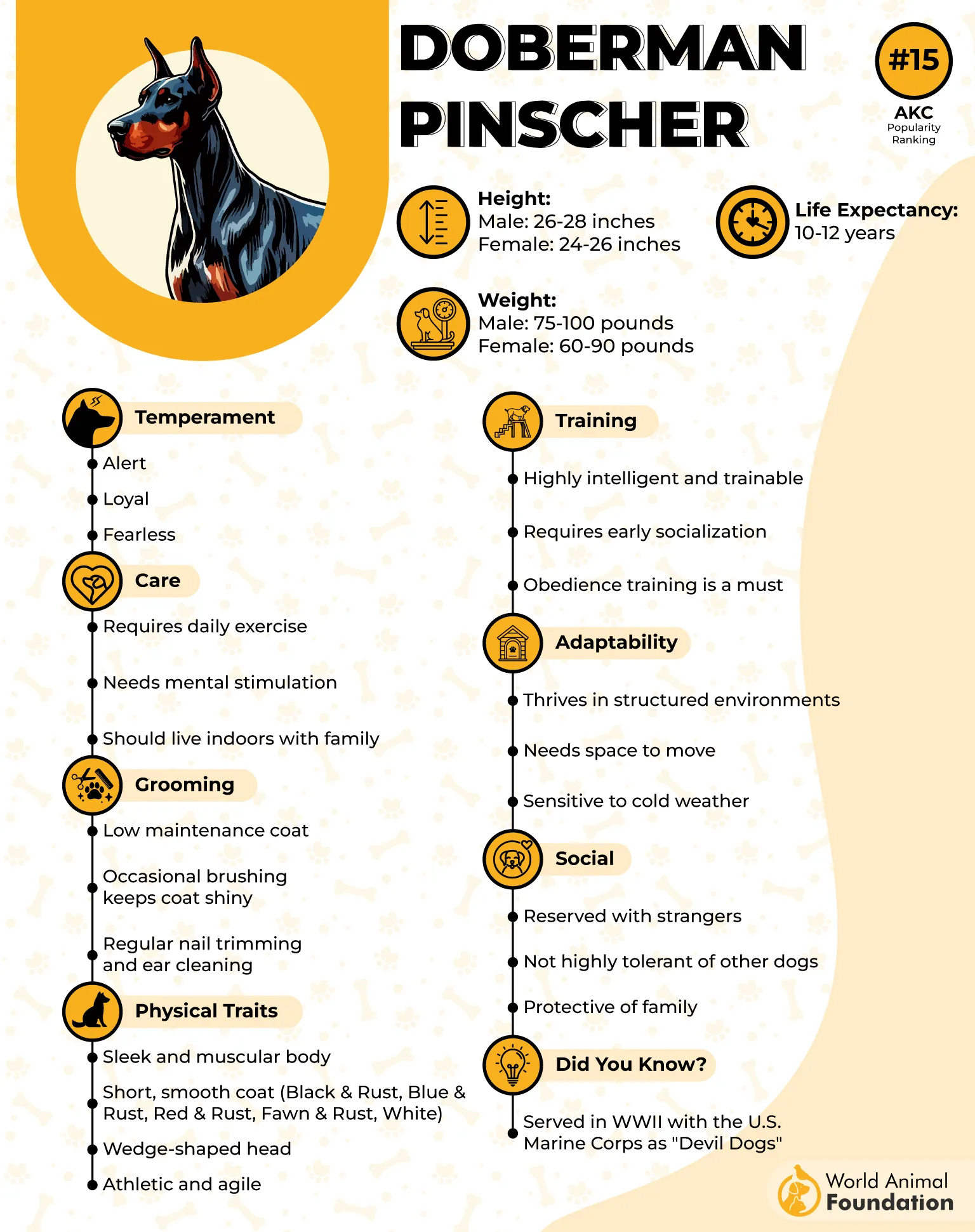
The guard job: Deters. The most alert dog here, always scanning, rarely escalating.
Grooming: Short coat, single layer. Five to ten minutes of brushing a week, moderate shedding, almost no drool.
A Doberman is naturally alert and quick to notice anything unusual around the home. Its intelligence and good judgment make it an effective guard dog, while strong trainability helps keep those protective instincts controlled and manageable.
Daily exercise: An hour, split between movement and thinking work.
Training demand: High, but easy. Skip it, and you get a pushy dog with opinions.
The main health concern is the heart. Dobermans are at higher risk of dilated cardiomyopathy, so it is important to ask breeders about cardiac health testing. They also tend to struggle when left alone for long periods.
3. Boxer
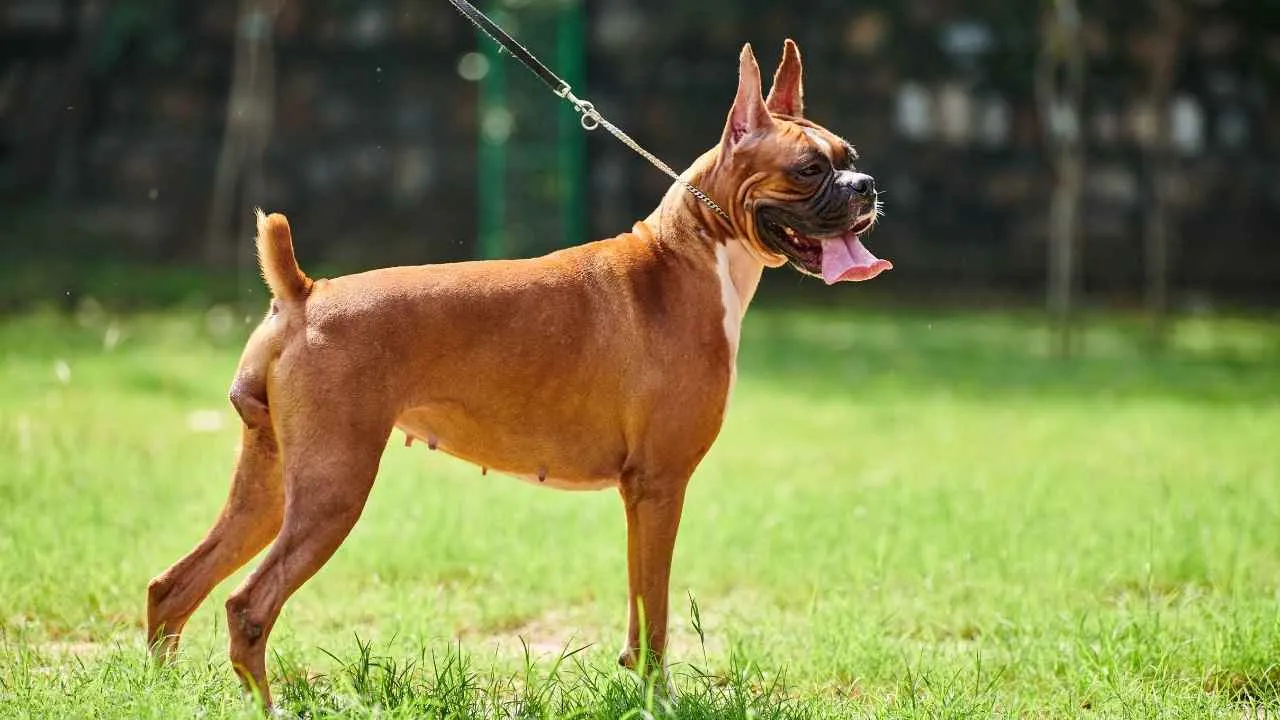
The Boxer is named for how it fights, swiping with its front paws like a sparring partner. That big personality never settles down, and it attaches hard to its favorite humans. So you get a guard dog that doubles as a clown.
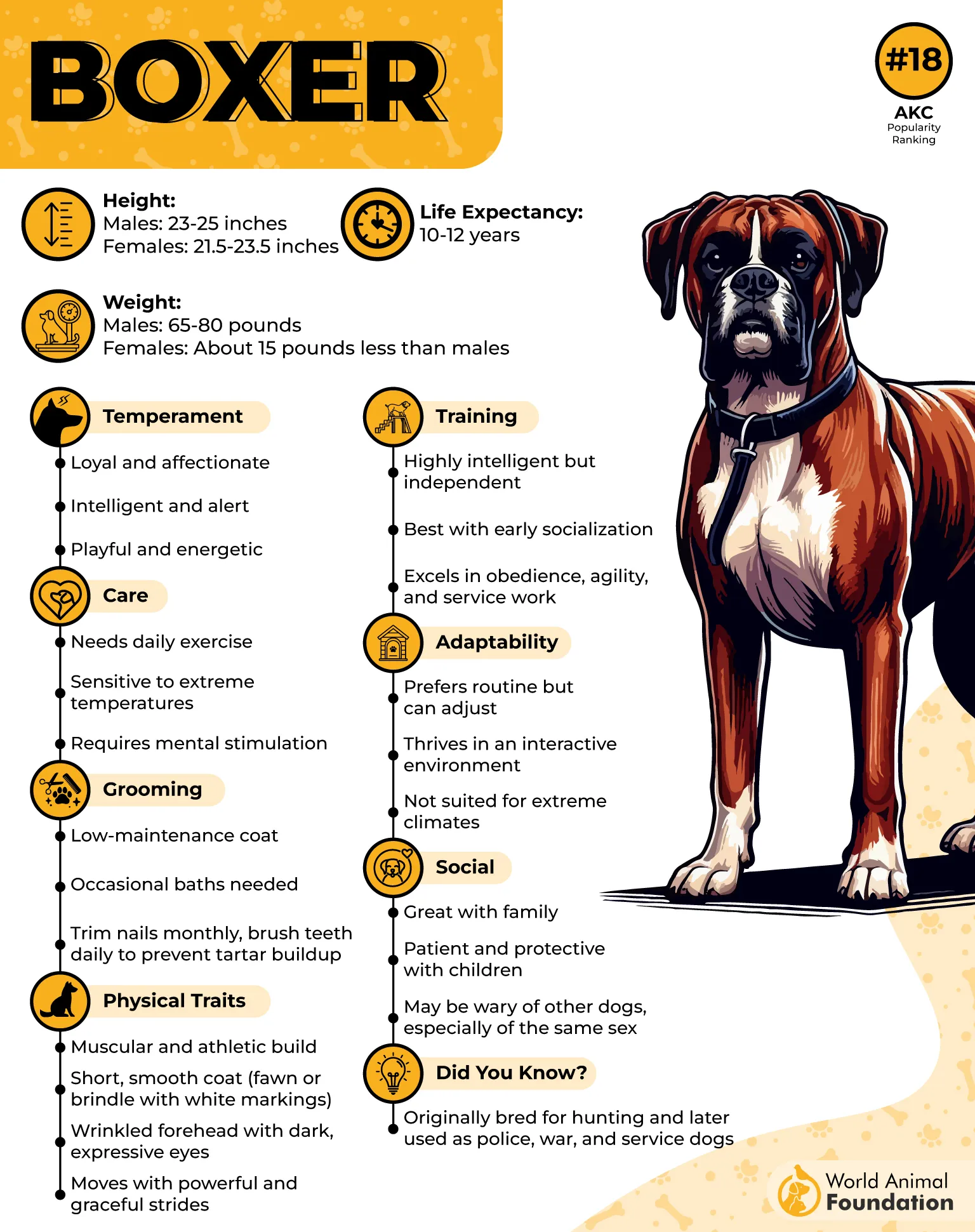
The coat is very easy to care for, but the breed still needs plenty of time and attention. Its temperament can suit first-time owners, but around two hours of daily exercise may be difficult for people with busy schedules.
The guard job: Deters, warmly. Wary of strangers at first, friendly once you vouch for them.
Grooming: Short single coat, five to ten minutes weekly. Moderate shedder with heavy spring and autumn drops, mild drool.
A Boxer’s guarding is social. It puts itself between you and the door, then reads your reaction before deciding anything. Well-mannered with training, it stays the least suspicious dog here.
Daily exercise: Up to two hours of daily exercise, the most on this list.
Training demand: Moderate. Smart and willing, though the energy tests your patience.
Then comes the catch. Petplan reports that up to two in five Boxers develop some form of cancer, and their flat faces make them overheat fast. Shade and water are not optional.
4. Great Dane
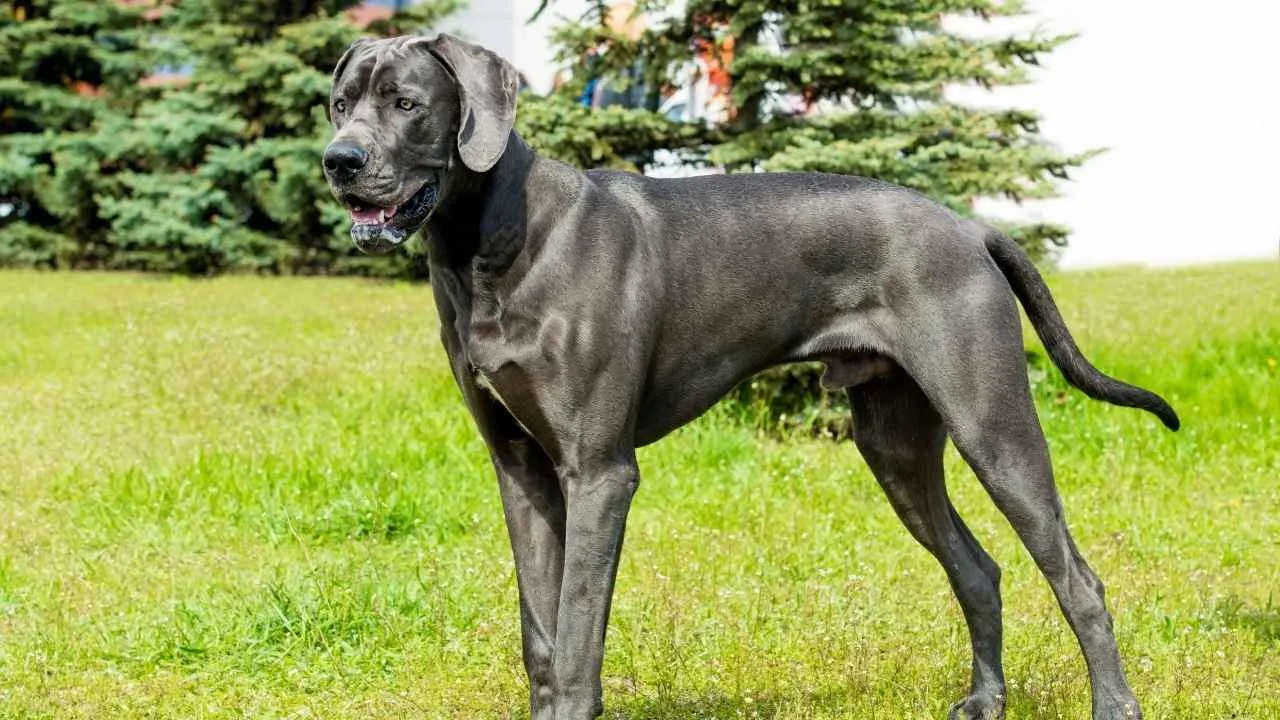
Here is a fact that ruins pub quizzes: the Great Dane is German. Britannica traces it back at least 400 years, to a dog bred for hunting wild boar. Nothing Danish about it.
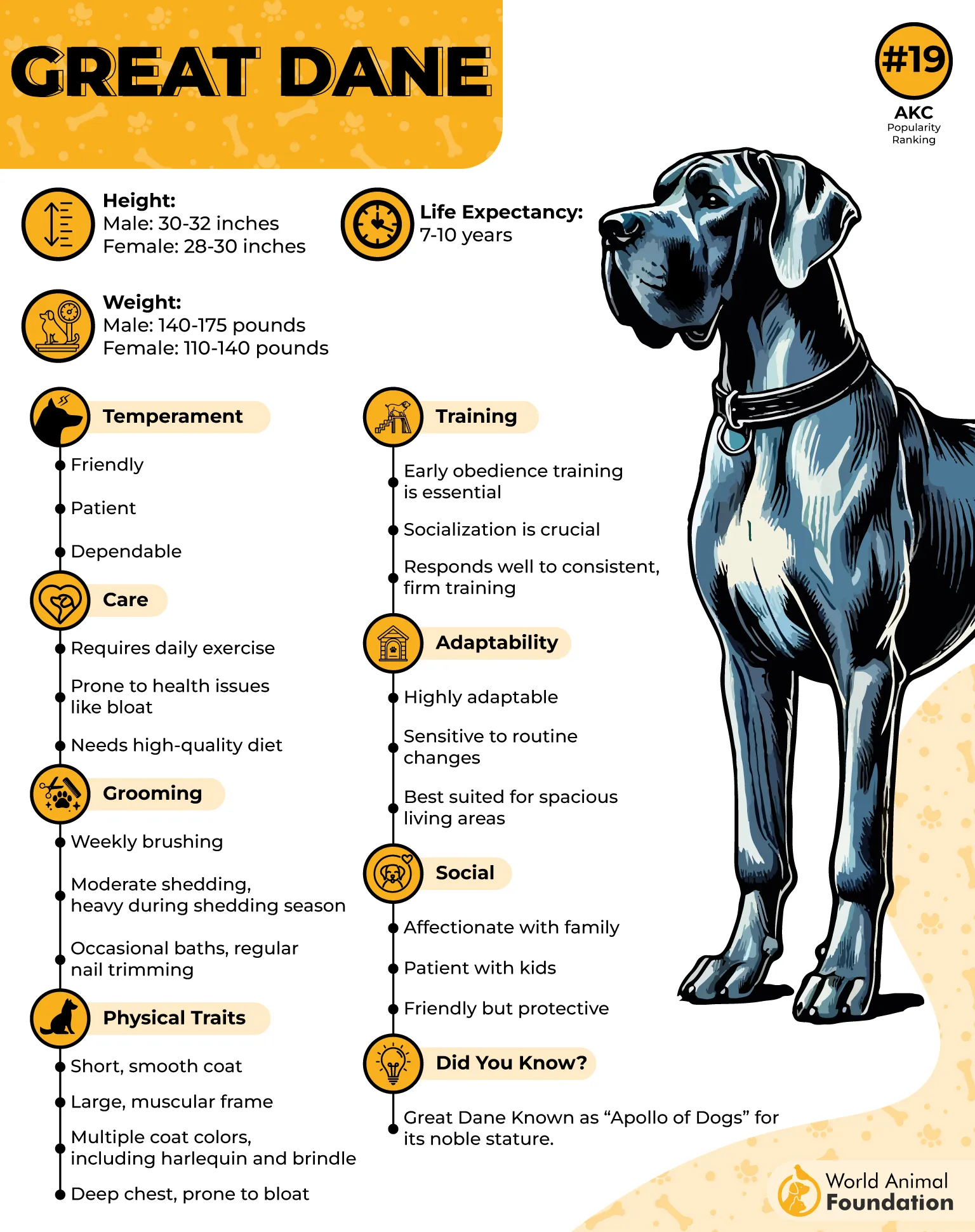
This is the surprise of the list: one of the biggest dogs here has moderate exercise needs and stays quiet indoors. Low grooming plus low fuss makes it genuinely busy-friendly, and you pay for it in drool and floor space.
The guard job: Deters, purely by size. Vigilant rather than suspicious, with the instinct dialed low.
Grooming: Smooth short coat, about 10 minutes weekly. Moderate shedding across a very large surface, heavy drool.
The Great Dane’s size alone can discourage strangers before it needs to react. Its generally adaptable temperament means it is better suited to calm deterrence than to owners looking for a highly confrontational guard dog.
Daily exercise: Moderate exercise, two long walks a day.
Training demand: Moderate. Bright and quick, so early socialisation does most of the heavy lifting.
Now the hard truth. Great Danes live roughly seven to ten years, and while they are quiet indoors, they need real space, so apartment living rarely works. A surprisingly low-maintenance dog on a painfully short clock.
5. Bullmastiff
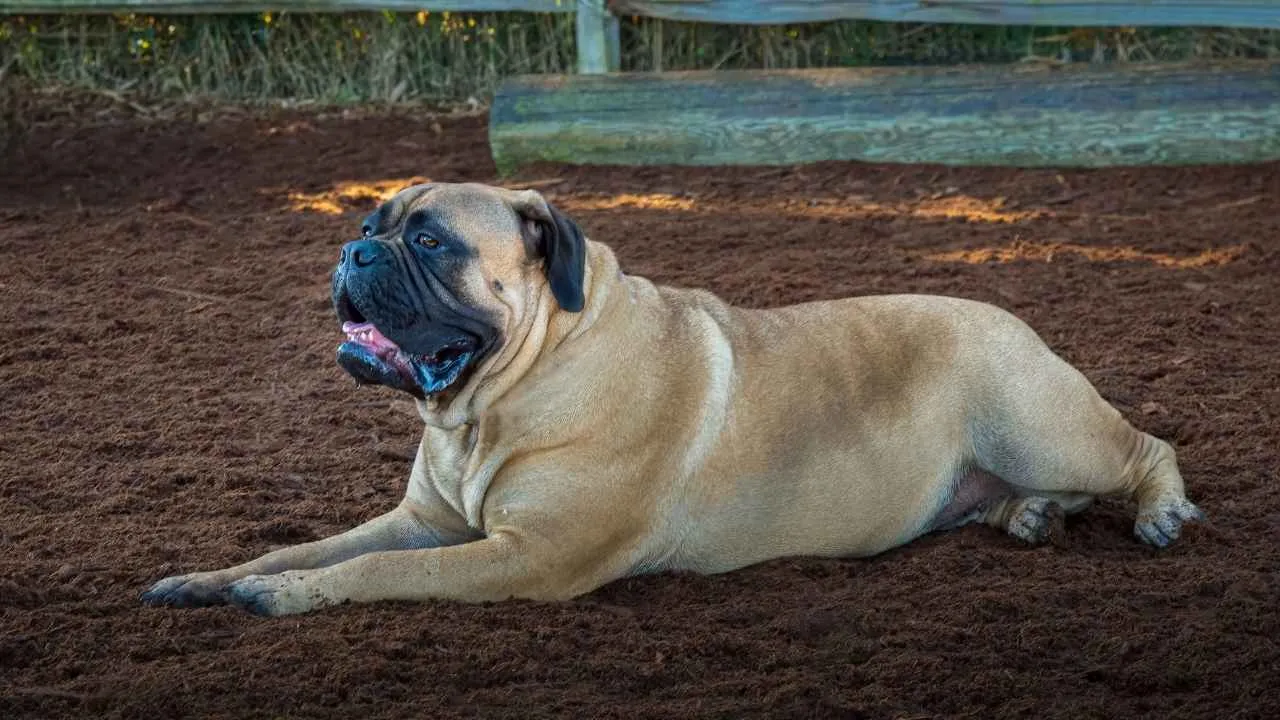
Victorian gamekeepers needed a dog that could catch poachers without mauling them. Orvis describes what they built: a dog bred to track an intruder, knock him down, and pin him until help arrived. They called it the Gamekeeper’s Night Dog.
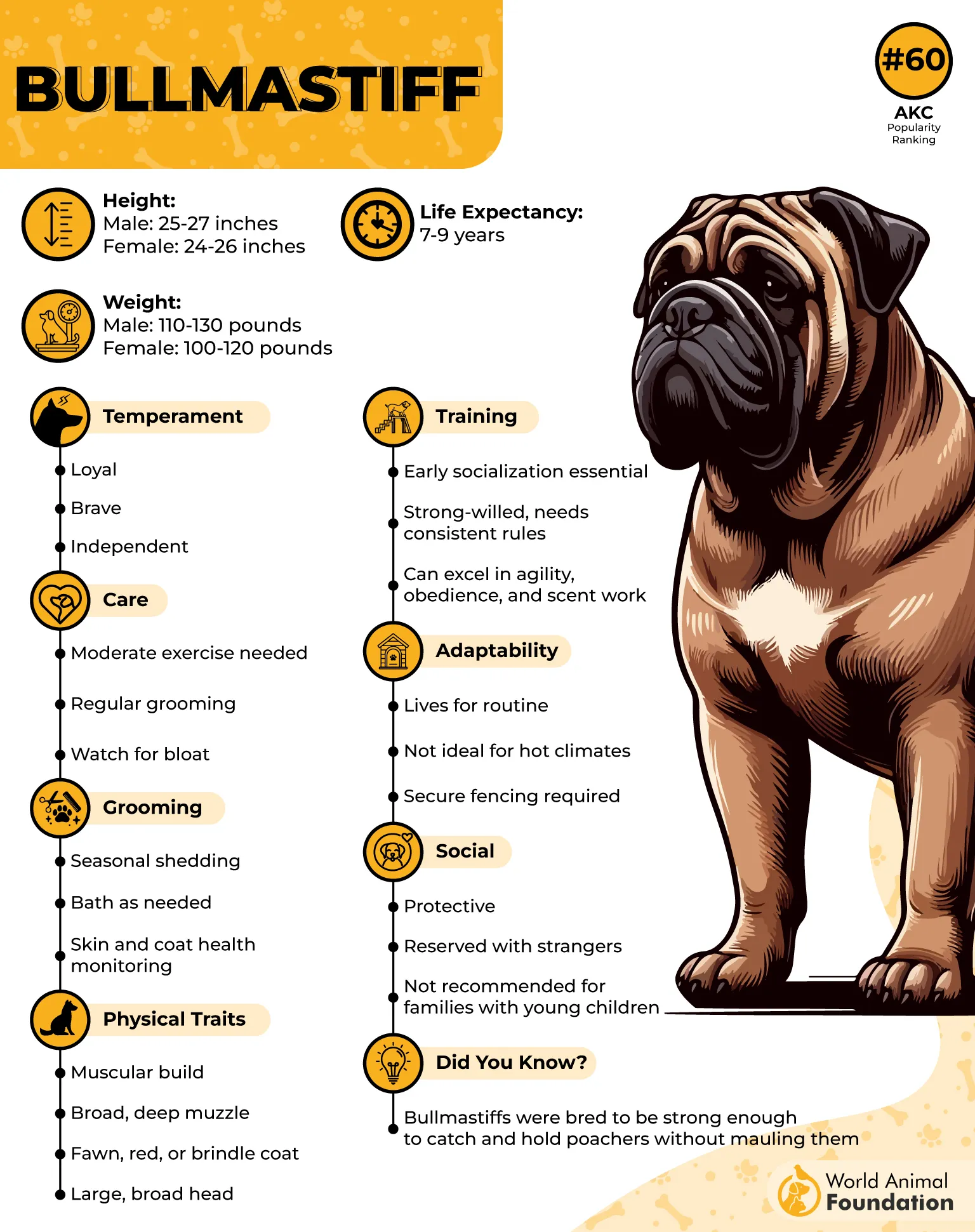
A few mid-length walks and a weekly brush is the whole job, so it fits a packed schedule better than anything else here.
The guard job: Deters, then holds. Property-focused, instinct high, drama minimal.
Grooming: Short dense coat, five to fifteen minutes weekly. Moderate seasonal shedding, heavy drool.
A Bullmastiff guards quietly. It was bred to work in silence, so it watches the door rather than announcing it. Calm indoors, it saves its reaction for something that earns one.
Daily exercise: A few mid-length walks. These are sprinters, not running partners.
Training demand: Moderate. Quick to learn when young, then a bit stubborn once mature.
The main concerns are lifespan and heat sensitivity. Bullmastiffs typically live around eight to ten years, and their short muzzle can make hot weather harder for them to handle. They can fit a busy lifestyle well, but they need extra care in warm conditions.
6. Rhodesian Ridgeback
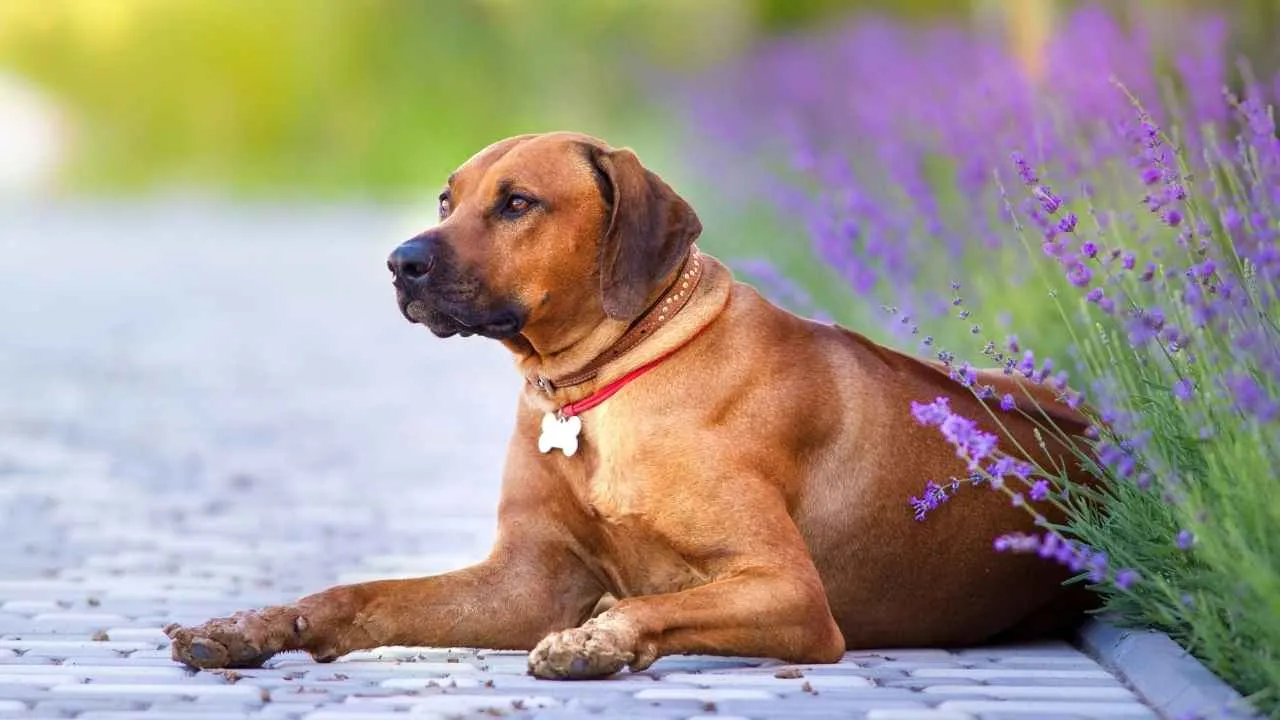
This breed was once used to help hunt lions. It worked in groups to track, corner, and hold them until hunters arrived. Its most distinctive feature is the ridge of hair along its back that grows in the opposite direction.
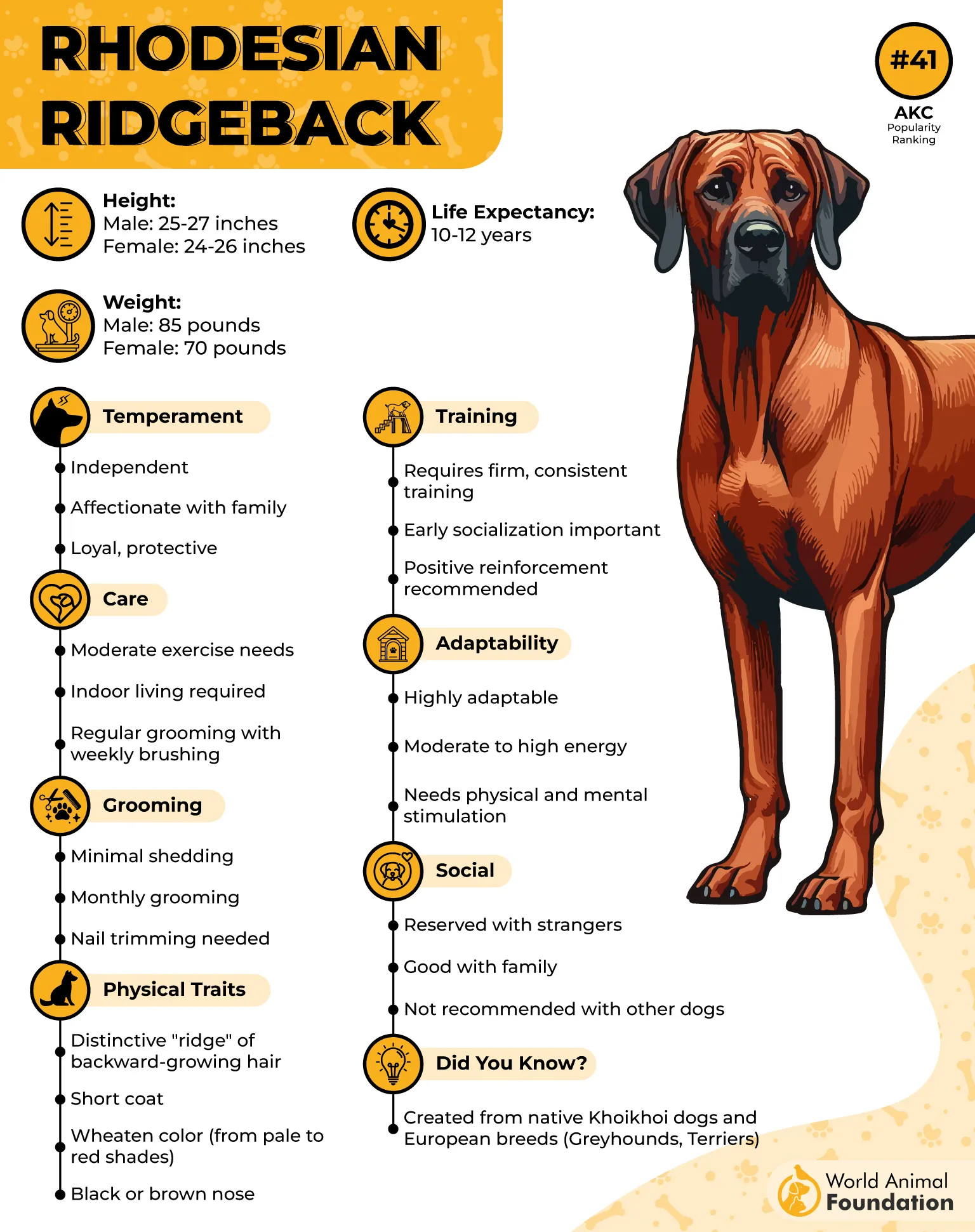
Five minutes of brushing and a near-silent house make this the lightest daily load on the list. The training never stops, though, so it suits a busy owner far more than a brand-new one.
The guard job: Deters, silently. Aloof with strangers, natural instinct high, volume near zero.
Grooming: Short single coat, five minutes weekly. Moderate shedding, almost no drool.
Ridgebacks guard by exception. Many experienced owners note they rarely bark, so when one does, it is worth getting up to check. For sheer daily fuss, this is the most low-maintenance dog on the list.
Daily exercise: 45 minutes at minimum, plus daily walks with time to sniff.
Training demand: High exercise and mental stimulation. That independent streak never fully switches off.
Here is the catch: training never ends. A Ridgeback will decide it knows better roughly once a week, for life. Add a serious prey drive, and cats are off the table.
7. Boerboel
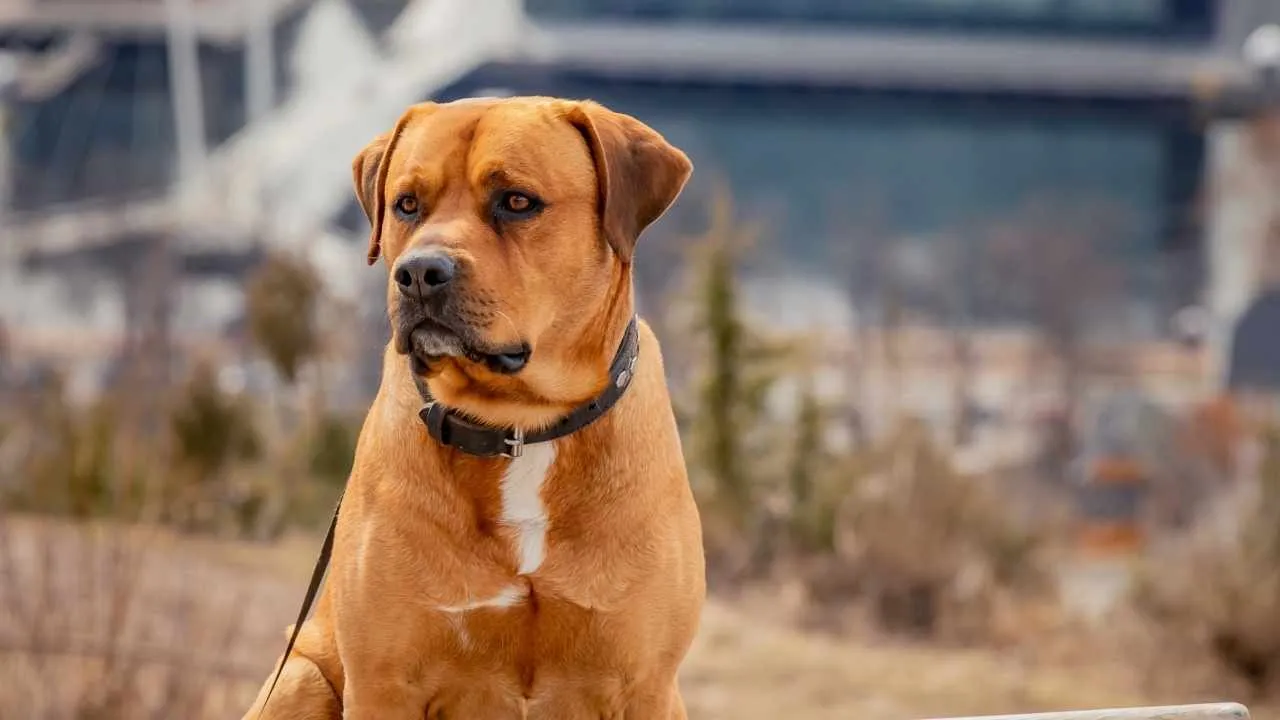
Its name means “farm dog,” but the breed has a much bigger history. Developed in South Africa around the 1650s, it protected families and farms from dangerous predators. Today, that powerful working heritage comes in a dog that can weigh more than 150 pounds.
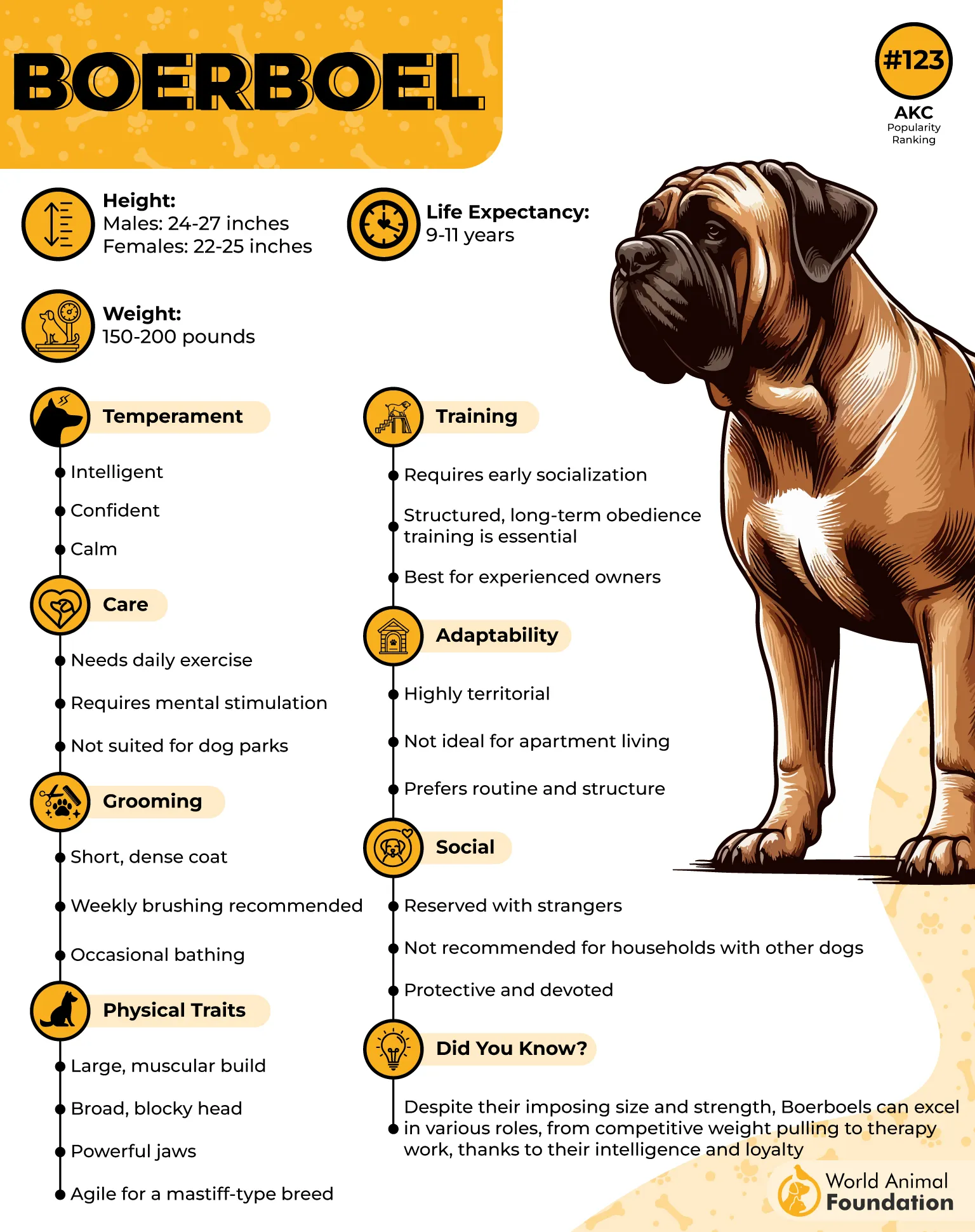
Its coat is easy to care for, but handling a livestock guardian that can weigh over 150 pounds is not. This breed is best suited to experienced dog owners.
The guard job: Engages. The most serious guardian here, instinct dialed all the way up.
Grooming: Short, shiny coat, about 10 minutes weekly. Moderate shedding, very heavy drool.
A Boerboel does more than deter. It will refuse entry to unfamiliar visitors, which is precisely the point and precisely the problem. It is loyal to the children and pets it grows up with, but may be less friendly toward unfamiliar ones.
Daily exercise: Daily walks plus running and play. Boredom turns destructive quickly.
Training demand: The highest here. Dominant, stubborn, needs positive reinforcement training, and recommended strictly for experienced pet parents.
The main issue is legal, not behavioral. Denmark bans this breed, and some other places have restrictions, so always check local laws first. It is a suitable choice for only a small number of owners.
Conclusion
The best guard dog breeds with minimal grooming prove that reliable protection does not have to come with an exhausting coat-care routine. For busy owners, a naturally watchful dog with manageable grooming needs can make daily life feel far more practical without sacrificing confidence, loyalty, or presence.
The right choice still depends on more than an easy-care coat, though. Consider training needs, energy levels, temperament, and how well the dog fits your household before deciding. Choose thoughtfully, and you can enjoy a capable protector that suits both your security needs and your schedule.
