




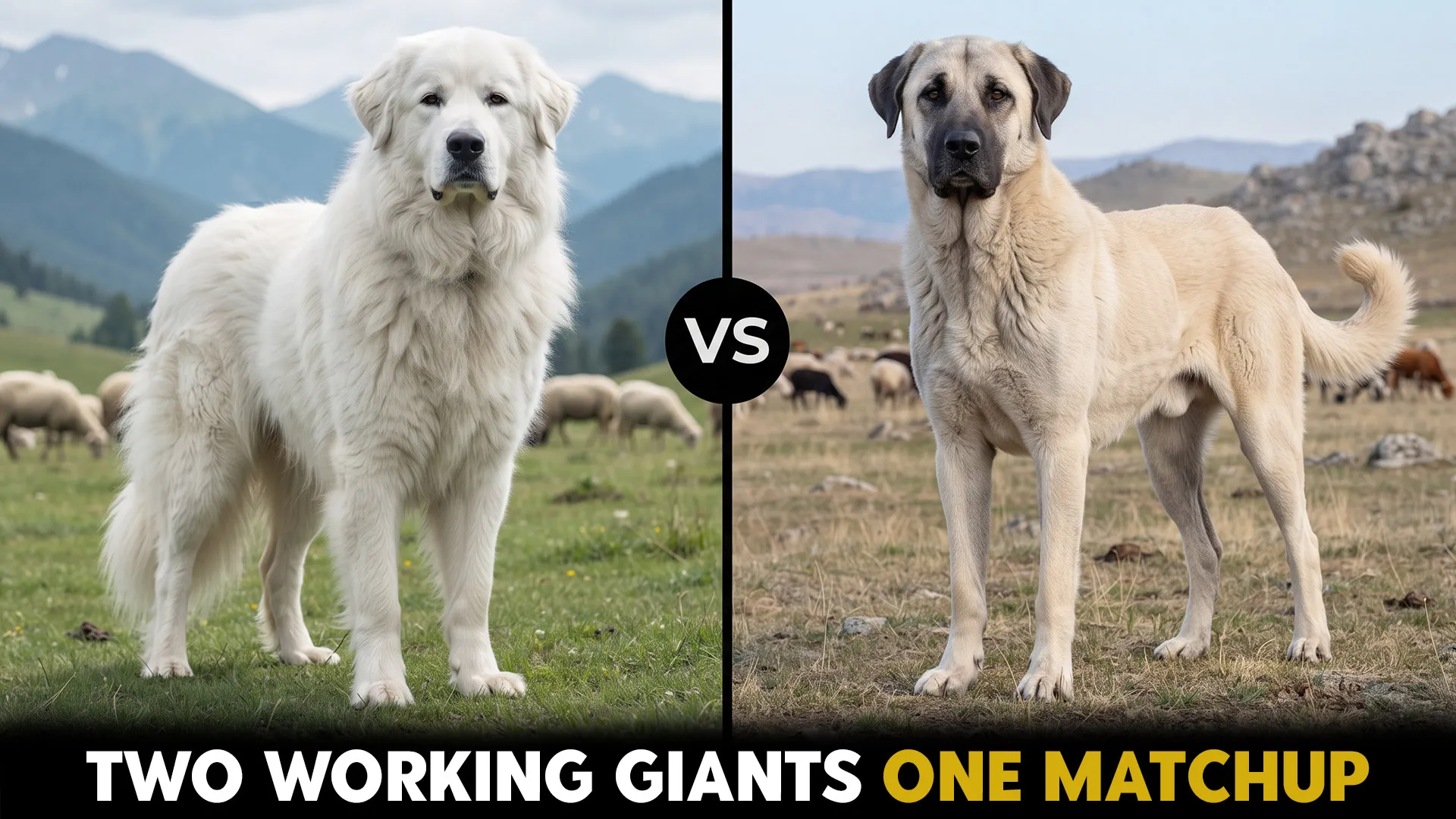
Choosing between the Great Pyrenees and Kangal can feel like comparing two impressive guardians with very different personalities. Both are strong, independent, and naturally protective, but their instincts can shape everyday life in distinct ways.
The Kangal dog tends to suit experienced owners seeking a serious working guardian, while the Great Pyrenees may fit rural families prepared for barking, shedding, and plenty of space. Neither breed is naturally eager to follow constant commands, making patience and understanding essential.
Before choosing your guardian, consider your property, visitors, fencing, climate, and experience with independent breeds. The better match is the one whose natural abilities and needs genuinely fit your lifestyle.
Great Pyrenees vs. Kangal: Insightful Dog Breeds Matchups
This matchup compares their protection instincts, family suitability, training needs, and everyday behavior to help you see which one fits better.
Origins & Purpose
The Kangal was originally bred in Turkey’s Sivas province, where this Mastiff-type guardian was developed to protect sheep from predators. Recognized as Turkey’s national dog, it is valued for its strength, vigilance, and dependable working nature.
The Great Pyrenees traces its roots to the Pyrenees Mountains between France and Spain. For thousands of years, these imposing dogs guarded livestock, and their role later extended to the French royal court under Louis XIV.
While both breeds were shaped by livestock-guarding duties, their histories took different paths. The Kangal remains closely associated with Turkish pastoral traditions, whereas the Great Pyrenees became established in France.
Size & Physical Build
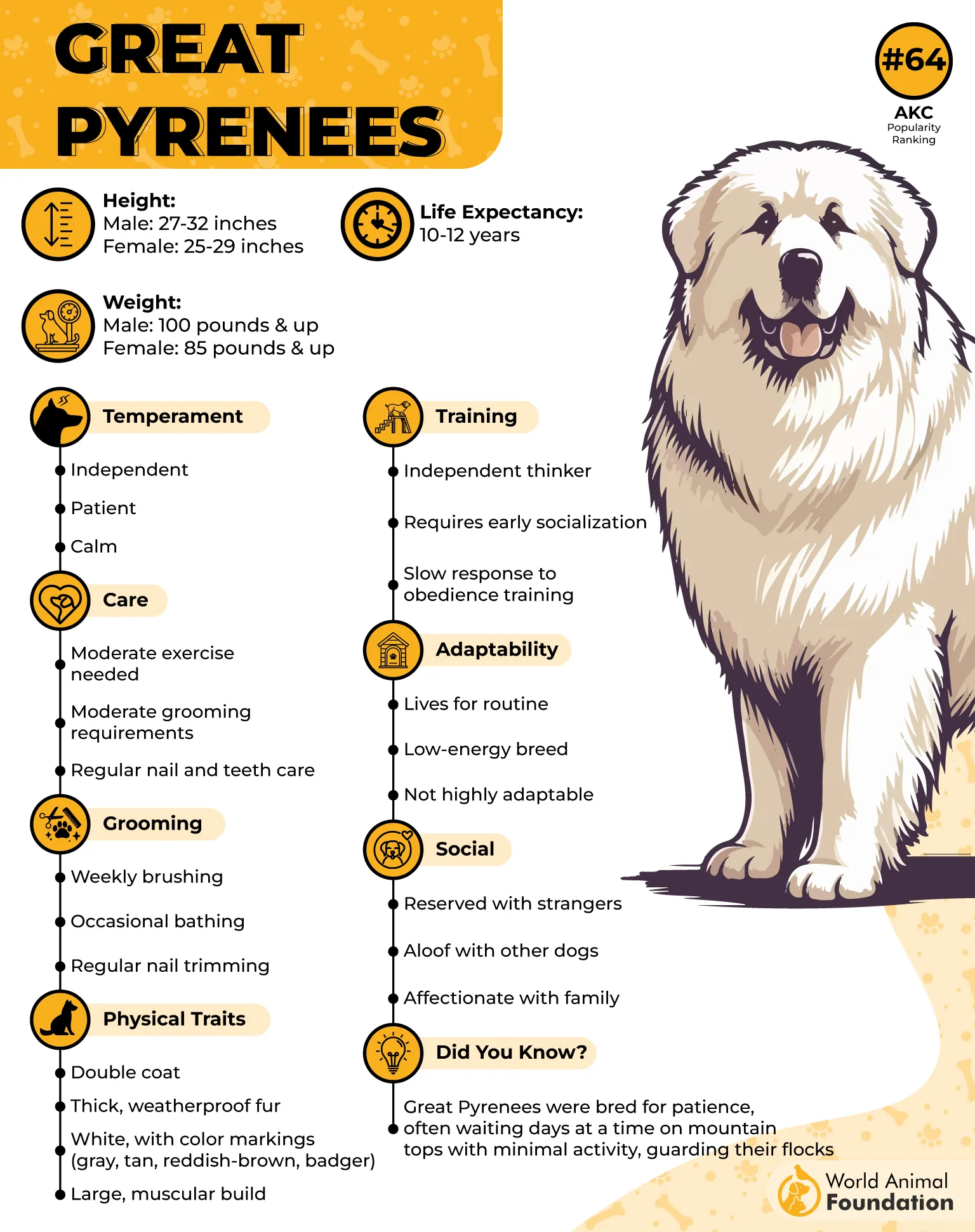
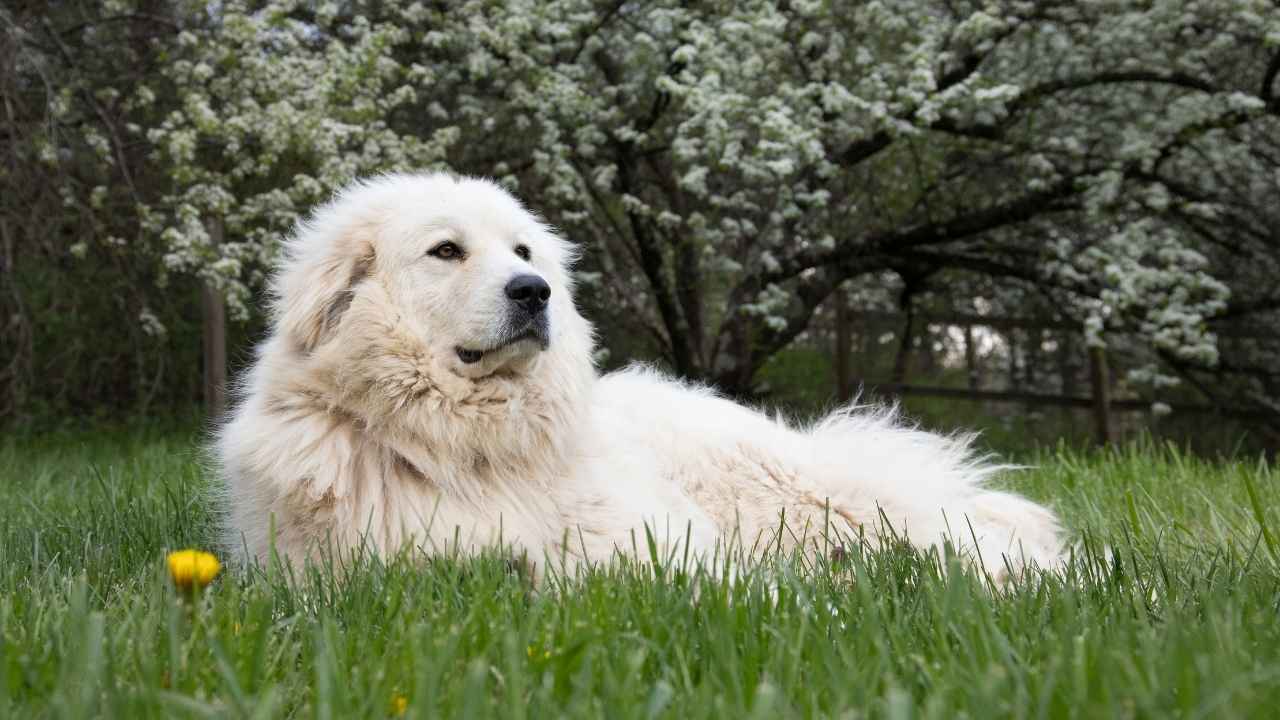
The Great Pyrenees is a substantial, heavily boned dog with a broad head, floppy ears, and a long, plumed tail. Its predominantly white coat, sometimes marked with light tan or gray, adds to its imposing appearance.
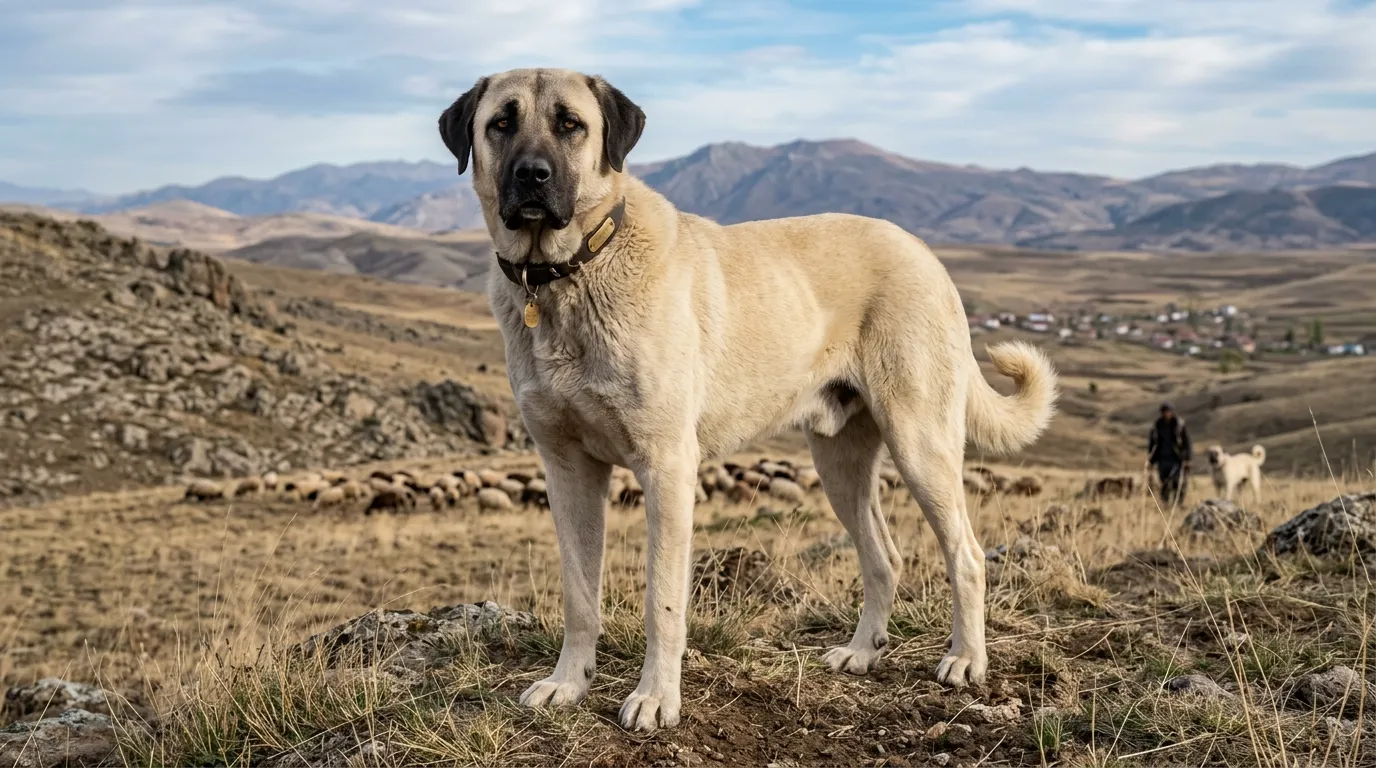
The Kangal has a powerful, Mastiff-like build, though its lighter frame gives it notable speed and agility. Males and females stand around 28–32 inches tall and typically weigh 90–150 pounds, as per CKCUSA.
By comparison, the Great Pyrenees stands roughly 25–32 inches and weighs about 85–100+ pounds. Its medium-to-long double coat is coarse and can be straight or slightly wavy.
Temperament & Personality
The Great Pyrenees is calm, affectionate, and patient with family members, including children and household pets. Its independent nature can make training require consistency and patience.
Although not especially energetic, this breed takes its guarding role seriously and may bark frequently when it notices unfamiliar activity. It prefers plenty of room to patrol and settle comfortably. According to PetMD, they are not particularly lively dogs.
The Kangal is confident, composed, and naturally protective, with strong territorial instincts and a reserved attitude toward unfamiliar people and dogs. With its family, however, it can be deeply loyal and gentle. Intelligent and athletic, the Kangal benefits from early socialization and training. Its higher energy and powerful working drive make active living spaces more suitable than compact homes.
Exercise & Energy Levels
Great Pyrenees have low to moderate energy levels and prefer steady activity over strenuous workouts. A brisk 20–30-minute walk a couple of times daily can help maintain their fitness.
They also enjoy gentle hikes, yard time, and simple ball or rope games. Patrolling a large property comes naturally to this territorial guardian and provides additional movement.
Kangals are considerably more energetic, with adults needing around two hours of physical activity each day. Running is particularly beneficial, as these athletic dogs can reach speeds of up to 30 mph.
Their active minds need exercise too, so puzzles and interactive games are valuable additions. Puppies require shorter sessions and should gradually increase activity as they mature.
Training & Intelligence
The Great Pyrenees is extremely intelligent but naturally independent, so training can sometimes feel like a test of patience. Short, engaging sessions with treats, praise, and play can encourage cooperation without overwhelming them.
Repetition may quickly become dull for this thoughtful guardian, making variety especially useful during training. Practicing commands in different environments can help maintain focus and build reliable responses.
Kangal Shepherd Dog is equally intelligent but strong-willed, making experienced handling particularly important. Positive reinforcement, consistency, and patience help develop trust, while reliable recall is essential given the breed’s power and independence. According to Purina, they can be challenging to train and are not well suited to inexperienced owners.
Coat Maintenance
The Great Pyrenees has a thick double coat with a long, flat outer layer and dense, woolly undercoat. Its abundant fur can resist dirt and tangles but still needs regular attention.
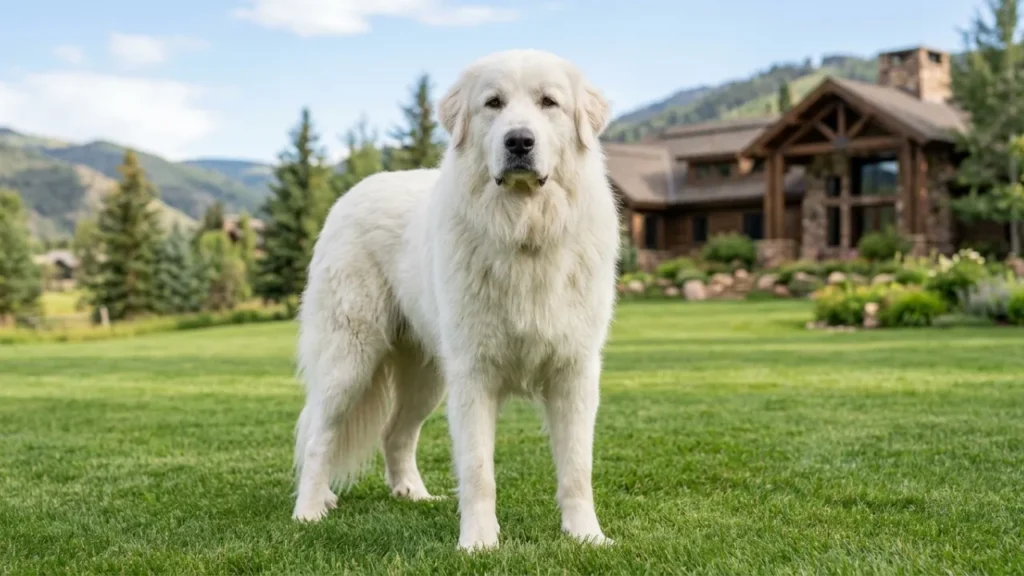
Brushing about twice a week helps remove loose hair, prevent matting, and keep burrs from becoming trapped. During heavy shedding periods, additional brushing may be useful to manage the large amount of fur.
The Kangal has a short, dense coat that naturally resists dirt, so frequent bathing is usually unnecessary. Its coat is relatively simple to maintain compared with the Great Pyrenees. According to Omlet, they molt heavily two times a year.
Brushing at least twice weekly helps remove loose hairs, while more frequent sessions can be helpful during seasonal shedding. While brushing, owners can also check the skin for fleas, ticks, or unusual lumps.
Health & Lifespan
Great Pyrenees typically live 10–12 years. Maintaining a healthy weight, providing a nutritious large-breed diet, and keeping up with regular veterinary visits can support their long-term well-being.
Despite being relatively healthy for a giant breed, they can develop conditions such as hip dysplasia and other inherited health problems. Feeding smaller meals throughout the day may also help reduce the risk of dangerous bloat.
Kangals are generally healthy and have a lifespan of about 11-13 years, but may still experience hip or elbow dysplasia, eye problems such as entropion, skin allergies, and ear infections. Regular veterinary care and appropriate vaccinations are important throughout their lives.

They can also be vulnerable to gastric dilation-volvulus (GDV), a serious condition in which the stomach twists and traps gas. Prompt veterinary attention is essential if signs of bloat appear.
Conclusion
The Great Pyrenees and Kangal are both impressive livestock guardian dogs, but they bring different qualities to the table. The Great Pyrenees dog is known for its calm, protective nature and thick coat, making it well suited to families seeking a devoted guardian with a gentle temperament.
The Kangal, meanwhile, stands out for its strength, confidence, athleticism, and instinctive ability to protect livestock and its territory.
Both breeds require responsible ownership, proper nutrition, regular veterinary care, and enough space to accommodate their large size and guardian instincts. Health considerations also matter, as both can be affected by conditions such as hip dysplasia, while Kangals may also face elbow, eye, and gastrointestinal concerns.
Ultimately, the better choice depends on your lifestyle, experience, available space, and expectations. Either breed can become a loyal and dependable companion when its needs are properly understood and met.
