




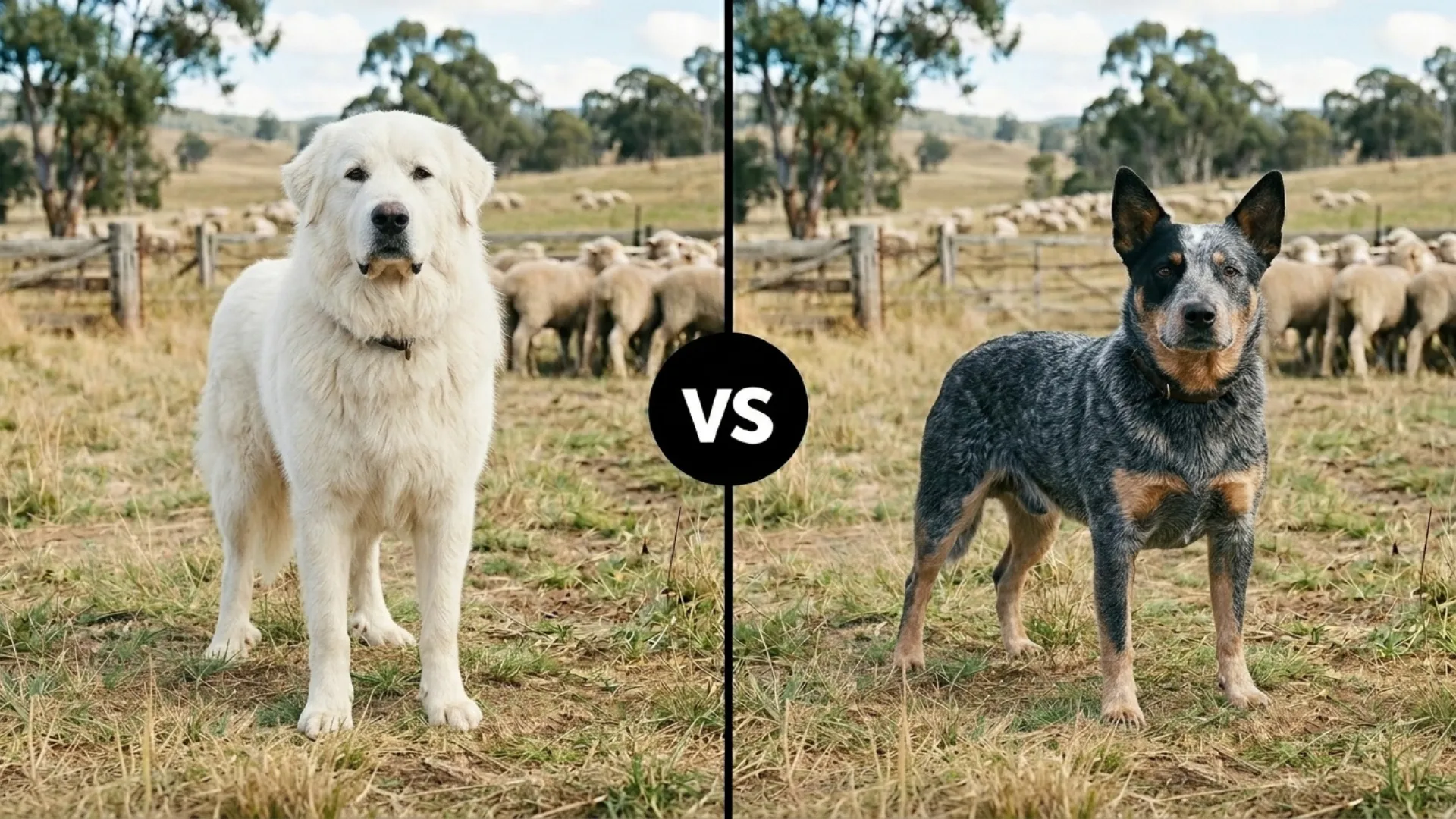
The world of working dogs is full of breeds shaped by challenging environments, demanding tasks, and generations of selective breeding. A fascinating comparison lies between the Great Pyrenees and the Australian Cattle Dog (Blue Heeler).
These two breeds were developed for very different purposes, yet both have become indispensable partners for farmers and handlers over generations. The Great Pyrenees was bred to remain calm and protective in isolated mountain regions, while the Australian Cattle Dog was designed to be alert, active, and responsive on the open range.
Understanding these differences is crucial for anyone considering one of these breeds as a companion or working partner. While both dogs possess exceptional abilities, they thrive best with owners who can respect, guide, and channel their natural instincts effectively.
Great Pyrenees vs. Blue Heeler: Dog Breed Showdown
While the Great Pyrenees is built to stand its ground and defend property, the Blue Heeler relies on relentless stamina and sharp agility to keep livestock in line.
This showdown matches the calm, independent protective instincts of a giant guardian against the high-octane, intense work ethic of a compact herding champion.
Origin & Purpose
Both the Great Pyrenees and the Australian Cattle Dog were developed as hardworking farm companions, though they evolved in very different environments and eras. The Australian Cattle Dog emerged in 19th-century Australia, while the Great Pyrenees traces its origins to 18th-century Spain.
The Great Pyrenees was bred to guard sheep in the frigid mountainous regions of southern France. Over time, it also became a favorite among French royalty and nobles for its protective abilities. The breed was officially recognized by the American Kennel Club about 100 years after arriving in the U.S., thanks in part to General Lafayette’s influence.
In contrast, the Australian Cattle Dog was developed as a livestock guardian, specifically to manage cattle on sprawling Australian ranches. Today, they retain their intelligence, quick decision-making skills, and impressive endurance, making them excellent guardians of homes and families. Their work ethic is balanced with a playful, entertaining personality that keeps owners engaged.
Size & Physical Build
Blue Heelers, or Australian Cattle Dogs, are medium-sized, typically weighing between 30 and 50 pounds, while Great Pyrenees are giants, ranging from 85 to 130 pounds. Despite the size difference, both breeds are purpose-built working dogs—one designed for agility, the other for stability and protection.
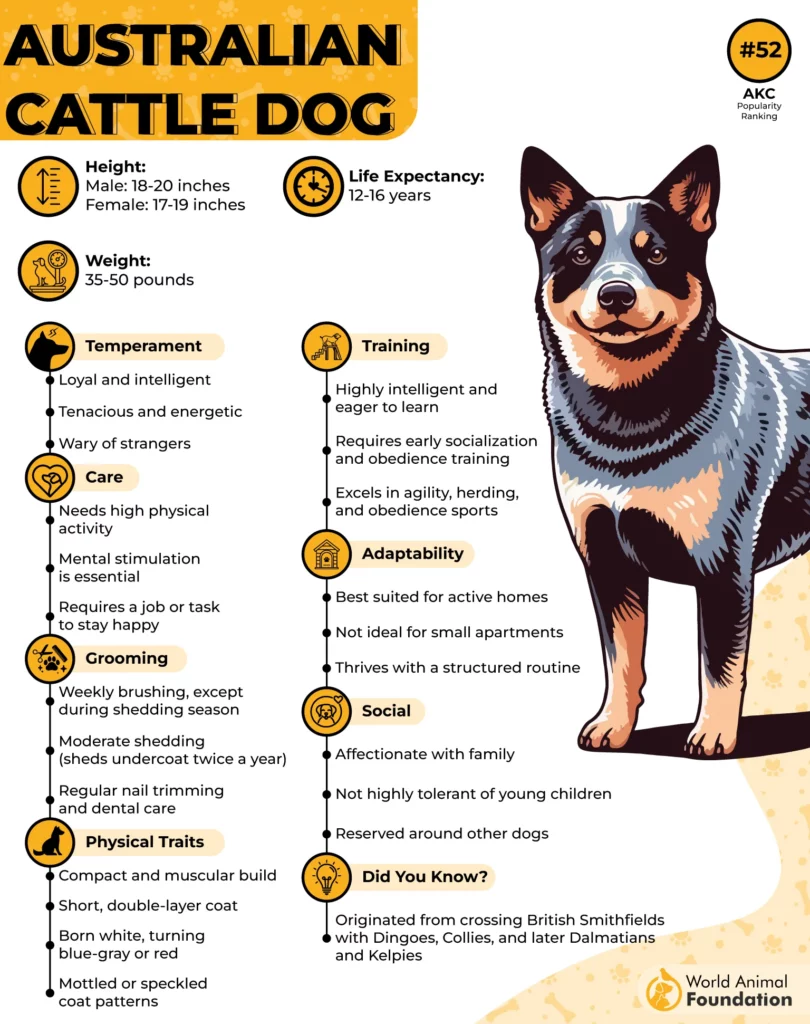
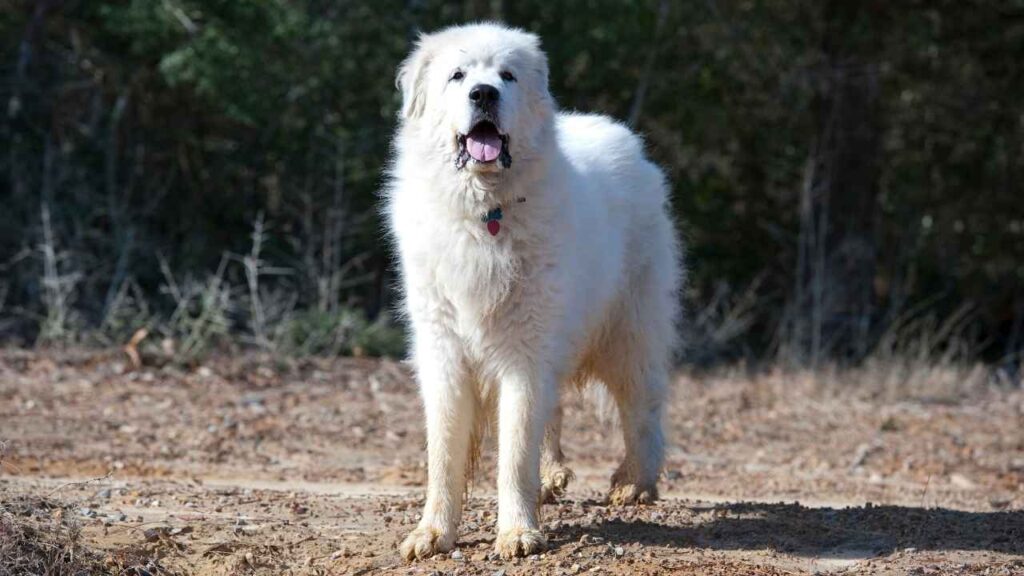
The Great Pyrenees is a large, heavy-boned dog with a powerful and imposing presence. It isn’t built for speed, but for stamina and endurance. Its strong frame allows it to withstand harsh weather, work long hours, and deter intruders through sheer size and presence.
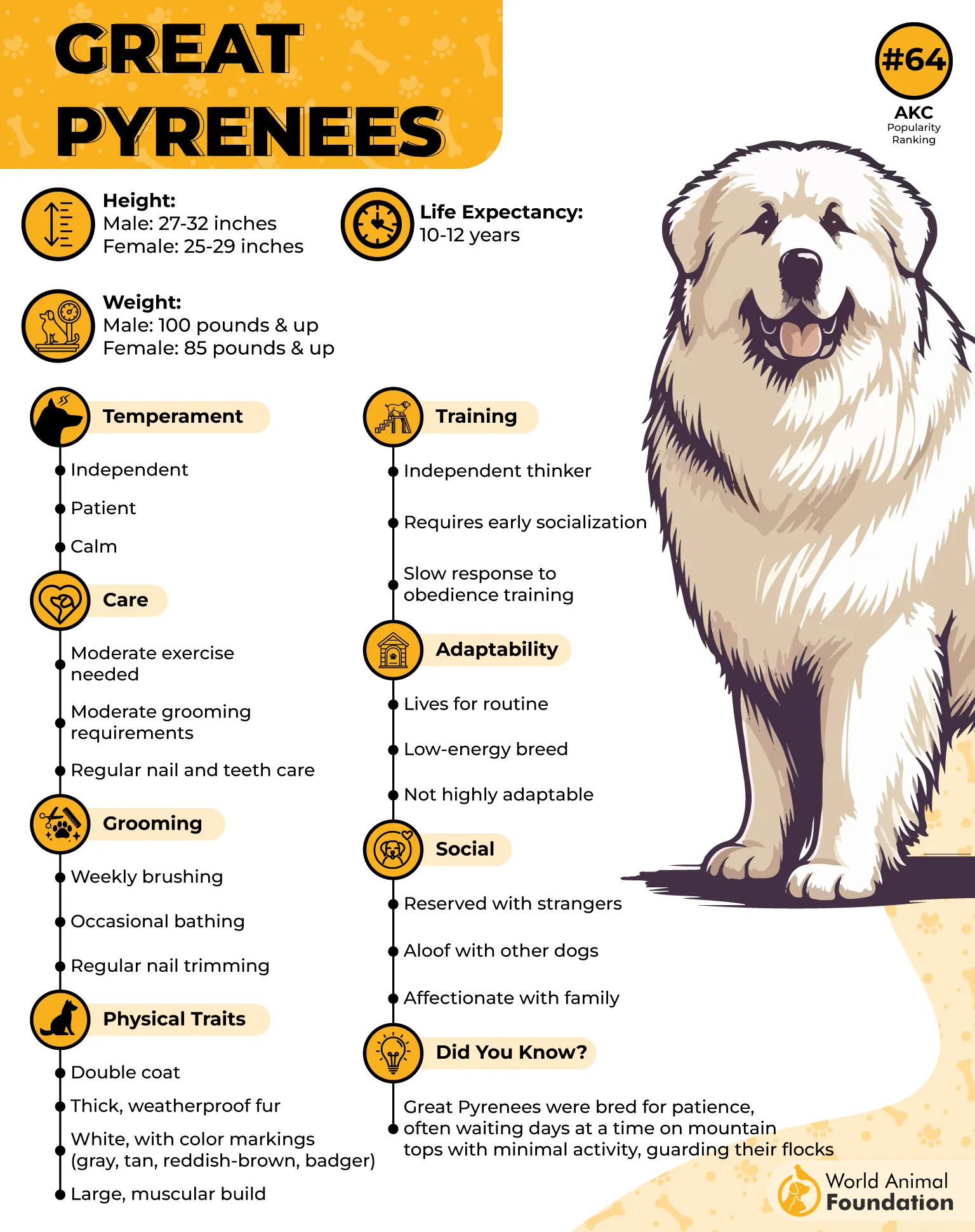
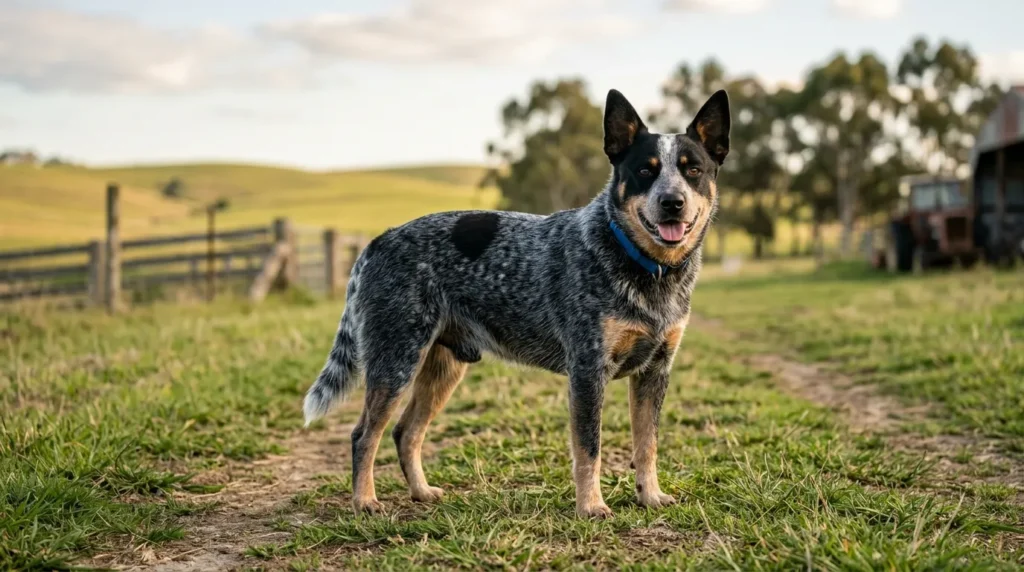
In contrast, the Australian Cattle Dog is compact and built for agility and sustained stamina. Its lean, muscular body, paired with strong legs, supports quick movements and sharp directional changes. Tireless and resilient, Blue Heelers can stay active across rough terrain, making them ideal for herding and high-energy work.
Energy Levels & Activity Needs
Thanks to their long history as working breeds, both the Great Pyrenees and Australian Cattle Dog require regular physical and mental engagement; they aren’t suited to idle lifestyles. Both need space, structure, and routine to stay balanced and mentally satisfied.
Great Pyrenees are not overly active; they tend to conserve energy while keeping watch over their surroundings. To stay healthy and fit, they benefit from regular exercise, including walks, play sessions, and activities like obedience trials or cart pulling, as noted by the AKC.
Australian Cattle Dogs, on the other hand, are highly energetic and thrive in active households. While they excel at herding on farms, those living in homes need intense daily exercise to channel their instincts, including outdoor adventures, agility activities, and mentally stimulating tasks. Without this, they can become bored and potentially develop unwanted behaviors.
Trainability & Obedience
Great Pyrenees are intelligent, but they often exhibit a stubborn streak and prefer to work independently, which can make training a bit challenging. They respond best to experienced handlers who understand how to guide such large, self-reliant dogs with patience and consistency.
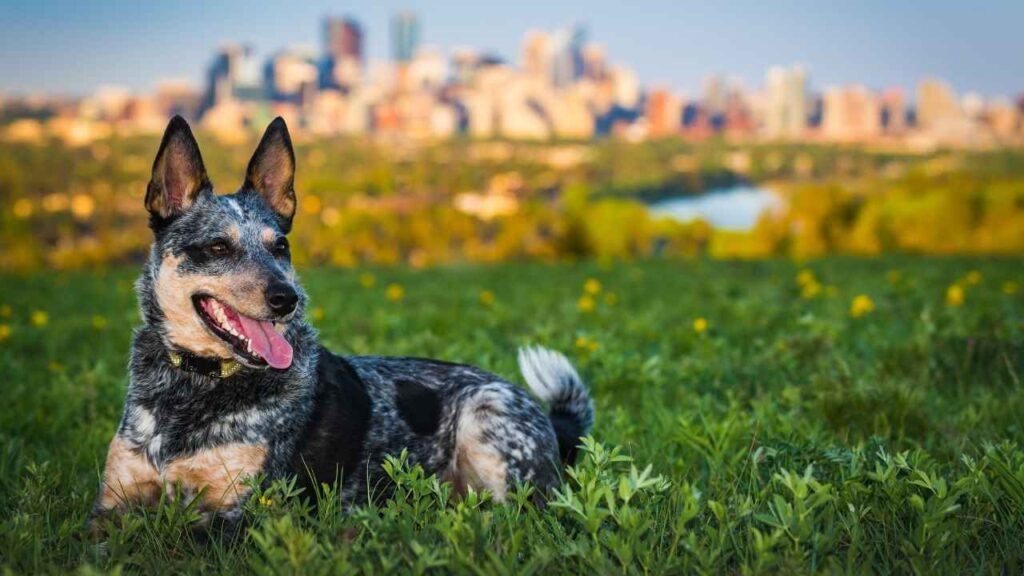
Australian Cattle Dogs (Blue Heelers), also highly intelligent, rely heavily on consistent and structured training. Early socialization and obedience training are crucial; without it, they may attempt to herd other animals, or even children, at home or in the park.
For both breeds, positive reinforcement from a young age produces the best results. They learn most effectively through rewards, repetition, and consistent yet firm guidance.
Additionally, the environment in which these working dogs are raised, whether on a farm or in a household, can significantly influence their responsiveness and behavior.
Temperament & Personality
Each dog has its own personality, even within the same breed. Between these two breeds, the differences are striking: one exudes calm independence, while the other is smart, alert, and highly energetic.
Great Pyrenees are strong-willed, large dogs who remain gentle with their families while staying vigilant of their surroundings. They adapt to various environments but thrive in colder climates. These dogs enjoy roaming outdoors, though they may become lost if allowed to wander too far, according to PetMD.
Australian Cattle Dogs are brave, loyal, and lively companions, blending guardianship with affectionate behavior. Their high energy levels require proper outlets; without them, they may develop destructive habits. Known as “shadow dogs,” they tend to stay close to their owners and do not like being left alone.
Health & Lifespan
When it comes to responsible breeding, preventive healthcare, and daily care, these two breeds differ significantly. Both require attention to genetic health concerns, proper nutrition, and an active lifestyle to maintain quality of life, though their average lifespans vary.
Australian Cattle Dogs typically live 12 to 16 years and remain active well into old age. However, they can be prone to inherited health issues such as deafness, progressive retinal atrophy, and primary lens luxation, as noted by Britannica.
Great Pyrenees have a slightly shorter lifespan of 10 to 12 years, largely due to their large size and heavy structure, which can lead to joint problems. Responsible breeders should screen for conditions like hip and elbow dysplasia, neurological disorders, and eye problems to help ensure healthier puppies.
Coat Type & Maintenance
Both breeds have weather-resistant double coats, developed for outdoor working environments. While their grooming needs differ, proper coat care is essential for healthy skin, controlling shedding, and keeping them clean and comfortable year-round.
The Great Pyrenees sports a long white outer coat with a dense undercoat that protects it from harsh environmental elements. Regular brushing removes dead hair and keeps the coat smooth, with extra attention during seasonal shedding to manage heavy hair loss.
Purina states that Australian Cattle Dogs have a shorter outer coat and a softer undercoat. While their grooming requirements are lower due to the coat’s natural resistance to tangles and matting, they still benefit from regular brushing to minimize shedding and maintain skin health.
Working Roles & Their Instincts
The Great Pyrenees was originally bred to protect livestock from predators like wolves, and even today, this breed retains strong protective instincts. They remain loyal companions, instinctively guarding their families and property.
Australian Cattle Dogs, with their rich herding heritage, exhibit intense instincts for precision and control. They are known for chasing and nipping at livestock, and sometimes children or other pets, using independent decision-making rather than relying solely on commands.
Both breeds are highly intelligent and energetic, requiring experienced owners to guide and channel their natural instincts. Great Pyrenees are calmer and more reserved, while Australian Cattle Dogs are lively and active, yet both thrive when their loyalty, environmental awareness, and instincts are properly understood and supported.
Conclusion
Choosing between a Great Pyrenees and an Australian Cattle Dog ultimately depends on your lifestyle, experience, and the type of companionship you’re seeking. With the right owner, either breed can become an exceptional companion, forming a strong, lifelong bond.
Whether guarding livestock with calm vigilance or herding cattle with relentless determination, both breeds reflect a rich history of partnership with humans and showcase the unique traits that made them invaluable working dogs.
