




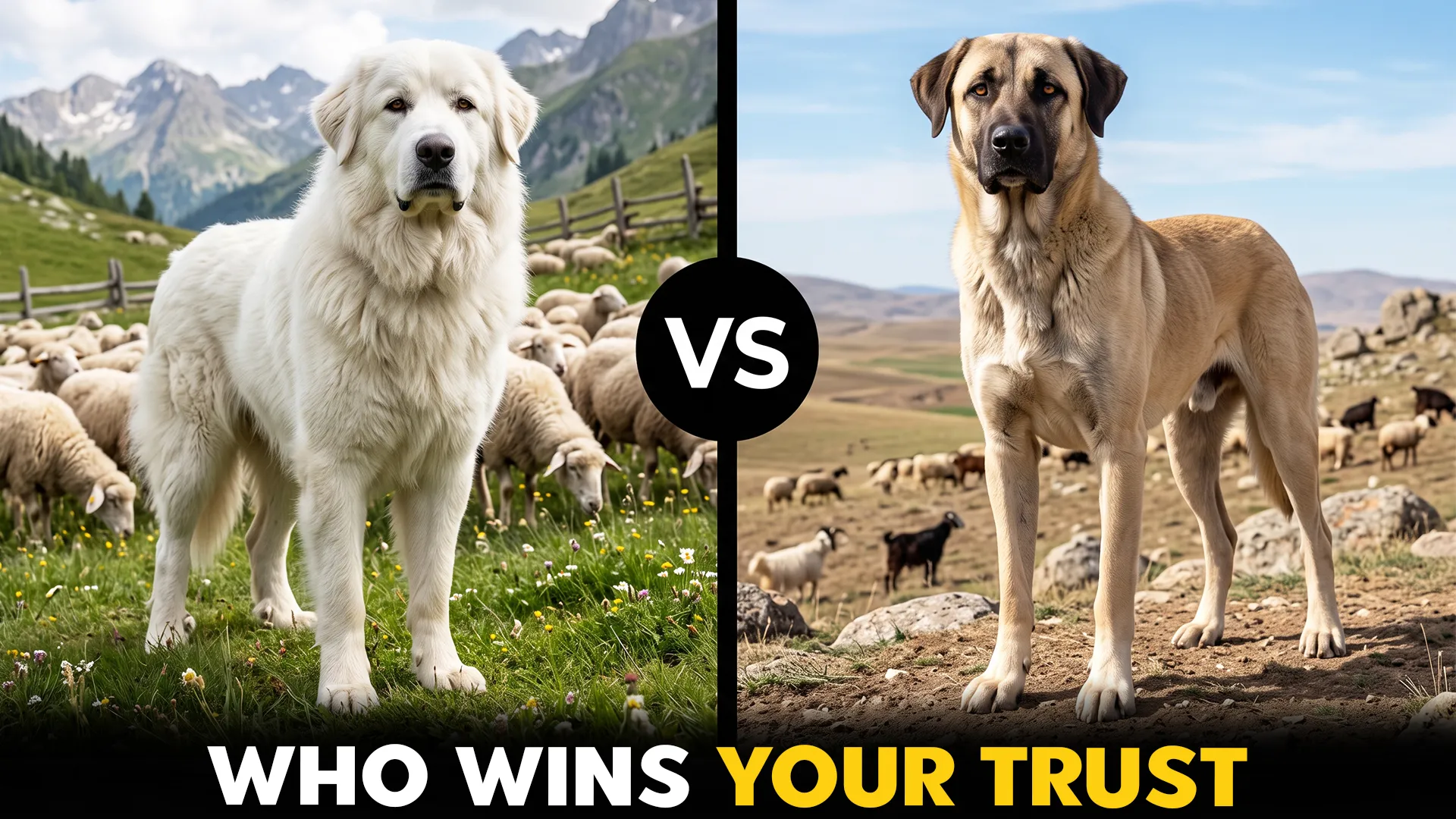
When people think about powerful livestock guardian dogs, two names almost always rise to the top: the Great Pyrenees and the Anatolian Shepherd. Both breeds have spent centuries protecting animals from wolves, bears, and human threats. They are brave, intelligent, and remarkably independent.
But when the question becomes, “Which guardian is stronger?” the answer is not as simple as comparing weight or muscle. True guardian strength includes physical power, endurance, decision-making, courage, and the ability to stand firm in the face of danger.
I once heard a rancher joke, “A Great Pyrenees guards with heart, while an Anatolian Shepherd guards with attitude.” While humorous, that statement contains some truth.
Let us take a closer look at these legendary protectors and see how they compare.
Great Pyrenees vs. Anatolian Shepherd: Which Guardian Is Stronger
Choosing between a Great Pyrenees and an Anatolian Shepherd means deciding between two of the strongest protector breeds on earth. Both are built to take down apex predators, but they have completely different temperaments and fighting styles.
Here is the ultimate breakdown of their strength, bite force, and instincts to help you see which guardian is truly stronger.
Origins & Historical Purpose
Both are ancient livestock guardian dogs bred to protect flocks from apex predators. However, different terrains and native climates have shaped their specific traits.
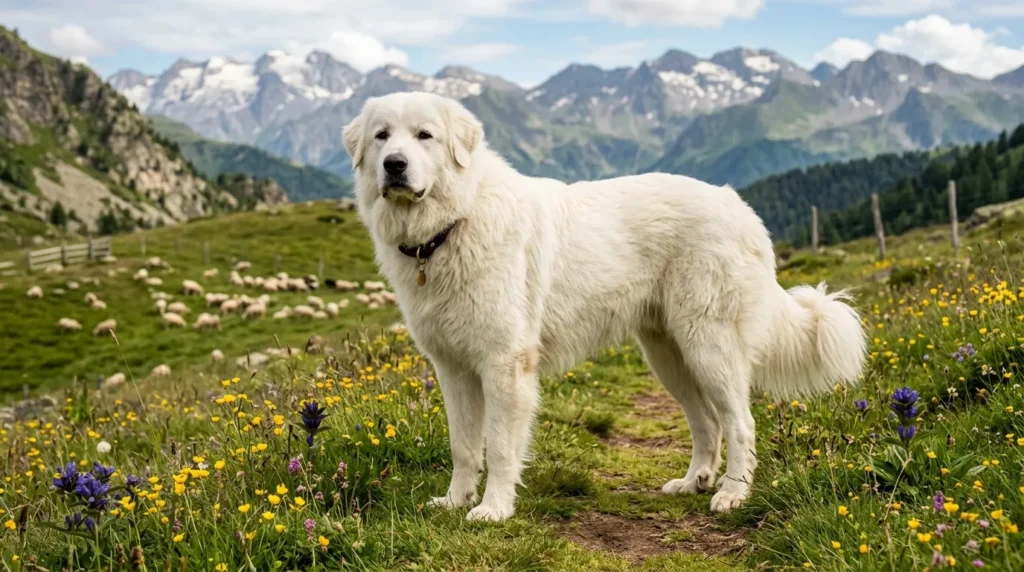
Great Pyrenees: Originally bred in Asia Minor thousands of years ago (3,000 years ago), between Spain and France. Its primary goal was to protect the livestock from larger predators, such as wolves and bears. It was designed as an independent thinker, who patrols the mountain pastures without the handler’s instructions.
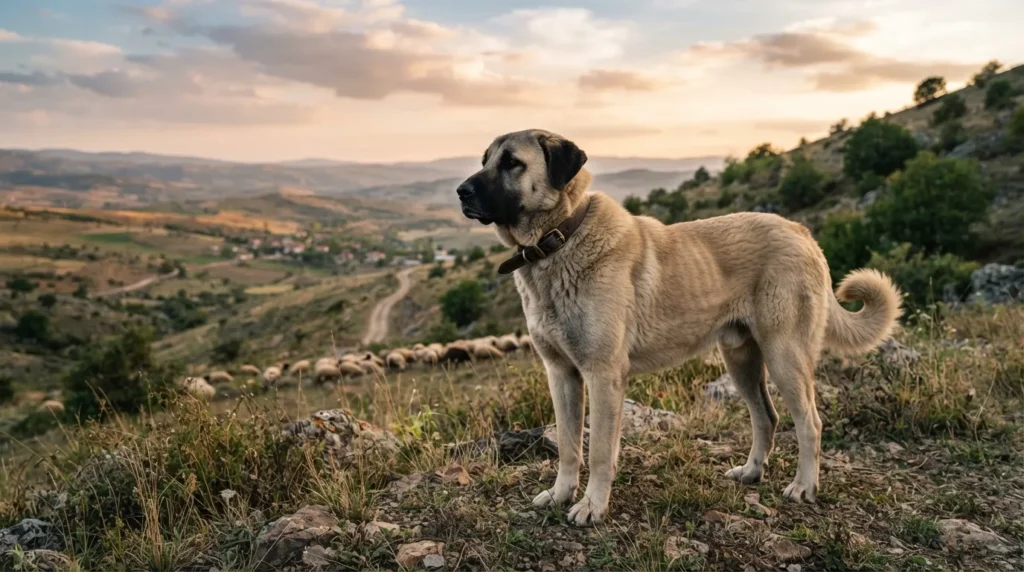
Anatolian Shepherd: This ancient dog breed was developed in the Anatolian plateau of modern-day Turkey some 4,000 years ago. It was bred to protect livestock accompanying the Nomadic shepherds. It was specifically bred to work in cold climates with its weather-resistant, thick coat.
Size, Physical Structure & Overall Appearance
Both are large dogs. But the Pyrenees is a thick-coated ‘mountain dog,’ while the Anatolian shepherd dog is an athletic guardian built for endurance and agility.
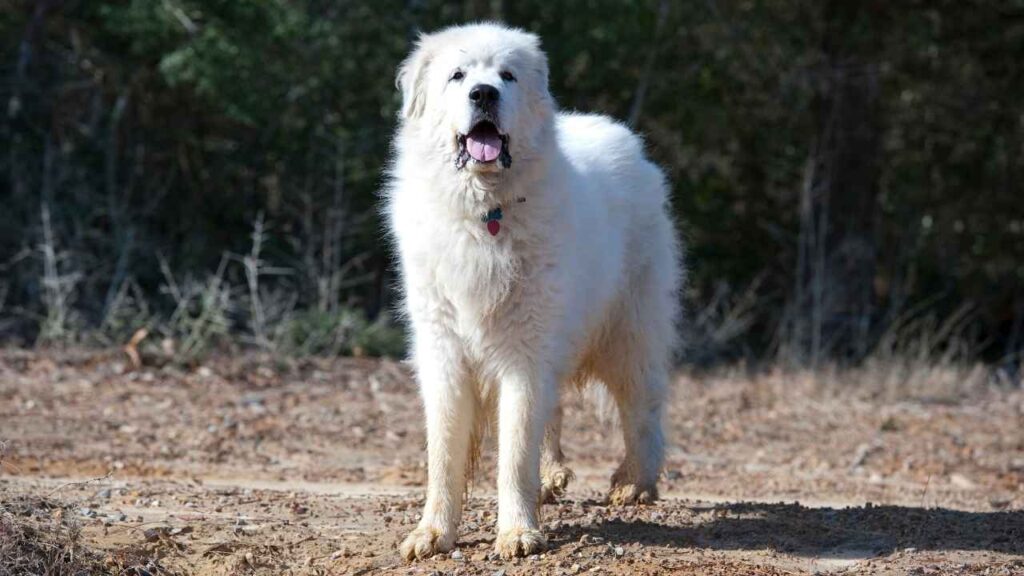
Great Pyrenees: Known for its bear-like appearance, the Great Pyrenees dog stands 25-32 inches tall and weighs around 85-100 pounds. It has a rectangular body structure, almond-shaped dark brown eyes, a black nose, tight black lips, small-to-medium V-shaped ears, a deep chest, and heavily muscled shoulders. It possesses a long, plumed tail that curls over the back when the dog is alert, says PetMD.
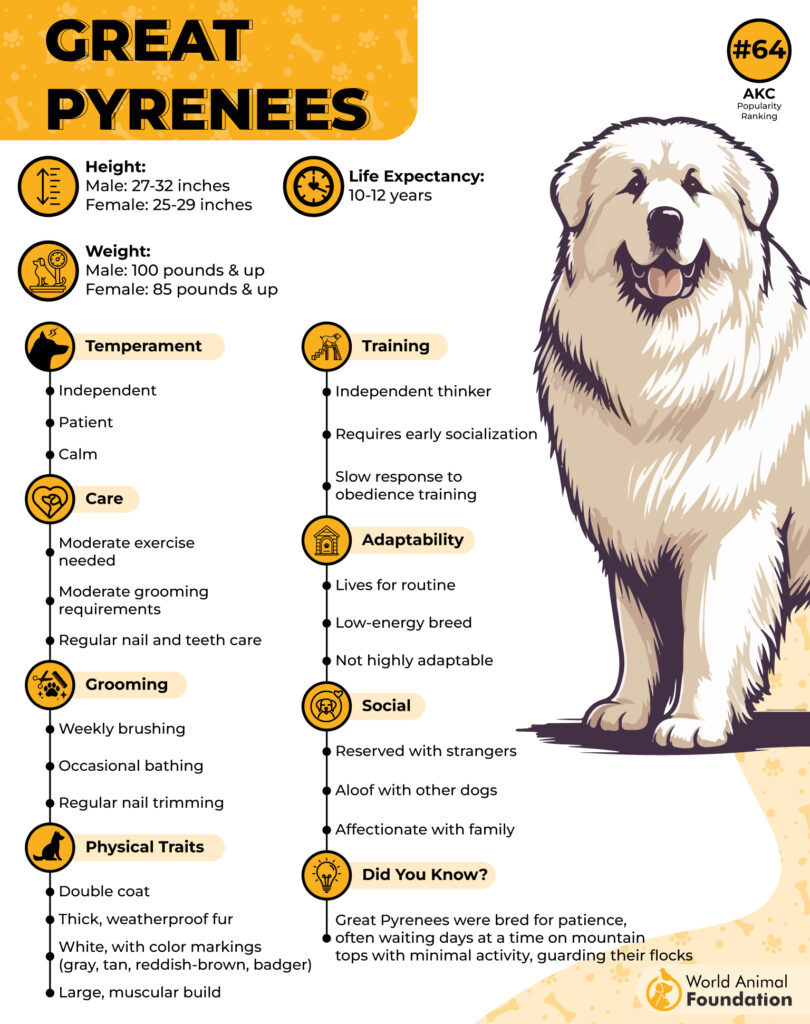
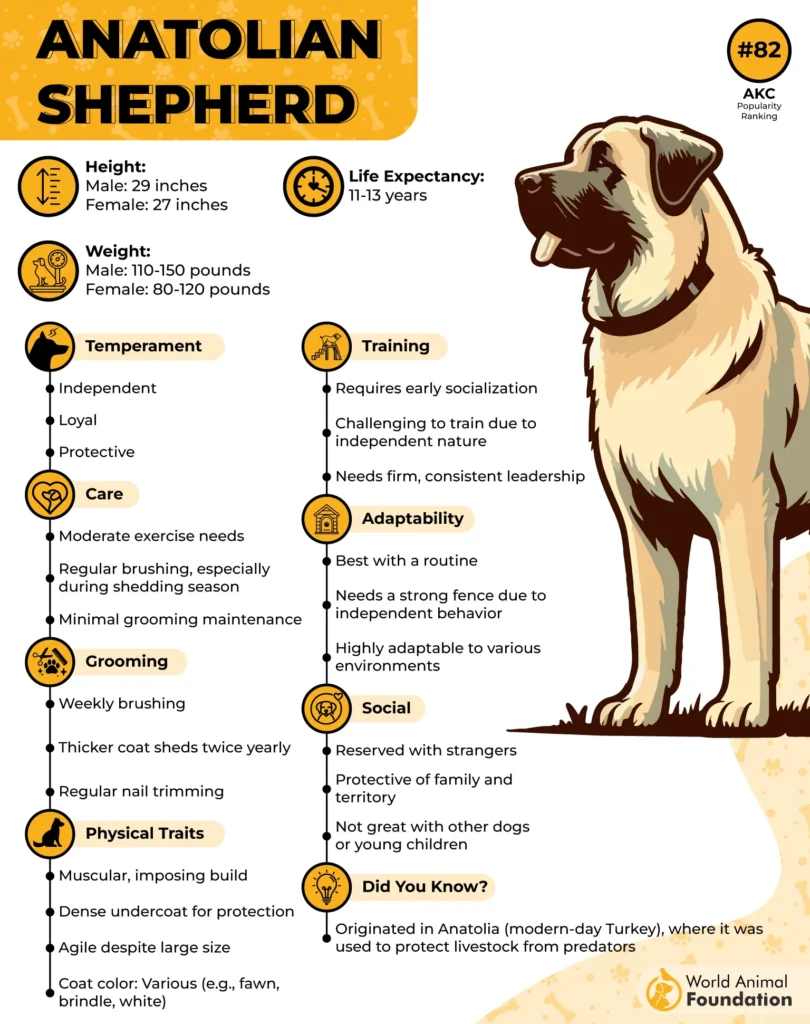
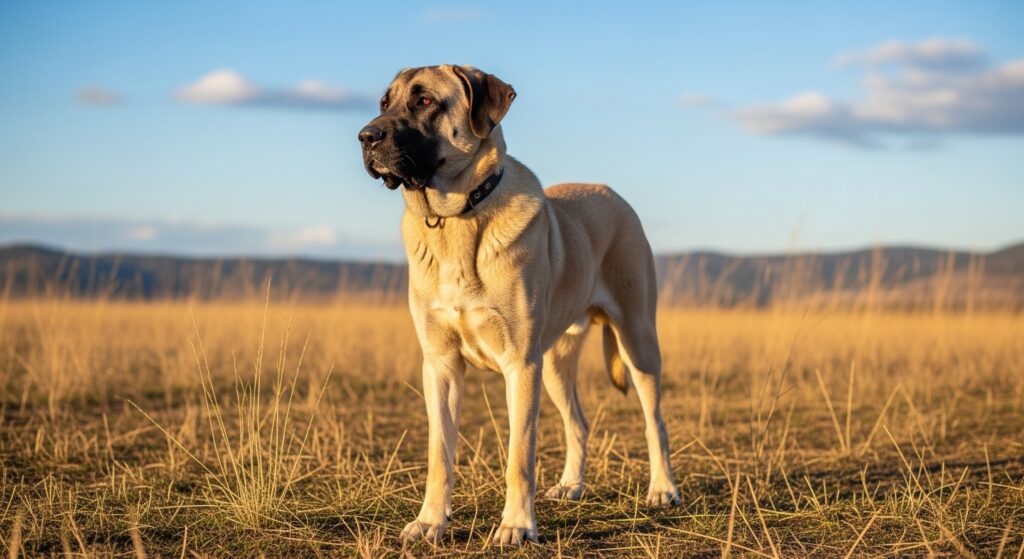
Anatolian Shepherd: Standing 27-32 inches tall and weighing 80-150 pounds, this affectionate breed is a rapidly growing giant dog that reaches its full physical maturity in 14-19 months. It has a blunt rectangular muzzle, a broad head, and a powerful neck with a slight dewlap.
Coat Type & Maintenance Requirements
The Great Pyrenees has a long double coat that requires weekly brushing, while the Anatolian Shepherd has a short and coarse coat with minimal grooming needs.
Great Pyrenees: The double coat has a long, flat, and coarse outer coat (straight to slightly wavy). It has a self-cleaning property that naturally repels dirt and water. The undercoat is a thermoregulator.
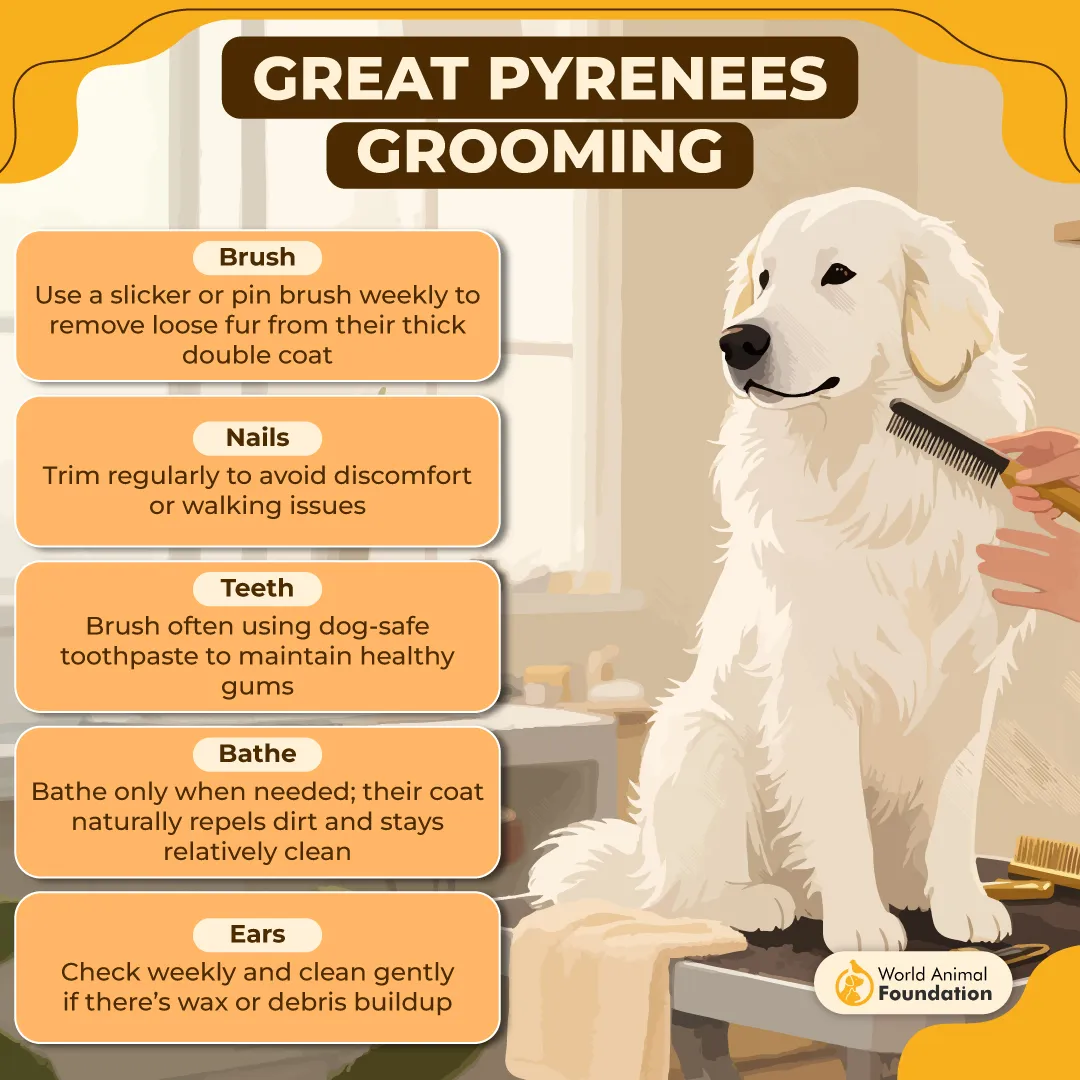
The coat sheds throughout the year and needs 30 minutes of weekly brushing sessions with a slicker brush and a metal comb. Bathe the breed after 1-3 months.
Anatolian Shepherd: The weather-resistant coat comes in short (1 inch) or rough varieties. It has a plush insulating undercoat and a long outer coat. There is longer feathering around the neck, ears, and legs, as per the Royal Kennel Club.
Use a pin brush to brush the coat weekly to remove loose hair and debris and to evenly distribute natural oils.
Temperament Differences & Personality Traits
Both breeds are premier livestock guardians, but the Great Pyrenees is a family-oriented and affectionate breed that relies on barking when it senses a threat, while the Anatolian is fiercely independent and acts as a silent protector.
Great Pyrenees: Being independent in nature, it learns commands quickly but chooses to respond slowly if there is no need. It has a natural guarding instinct, acts as a vigilant watchdog, and is prone to barking, especially if it spots something out of place.
It tends to remain calm indoors and spends most of the day sleeping. While not being aggressive, it may sometimes be aloof to strangers.
Anatolian Shepherd: The large breed takes guarding duties seriously. While looking calm, it is highly observant and jumps immediately when it perceives a threat. It is loyal and is known for the ‘Anatolian lean’ since it loves to lean its heavy body against the owner. It is initially suspicious of strangers.
Exercise Demands & Space Requirements
Each requires a specific living arrangement. The Great Pyrenees has daily low energy needs and can adapt to small spaces as well. The Anatolian shepherd requires much more space and is well suited for rural settings.
Great Pyrenees: This minimally athletic ‘gentle giant’ requires 20-40 minutes of regular exercise. It moderately enjoys outdoor activities: daily 2-3 walks, puzzle toys, and mental stimulation.
The breed overheats quickly; hence, high-impact workouts on hot days are not recommended. Puppies below 18-24 months should not be exposed to intense exercise because of their developing joints.
Anatolian Shepherd: This athletic livestock guardian needs intense exercise for 1-2 hours daily: brisk jogging, long walks, hiking (5-10 miles).
This high-energy breed needs a constant job to prevent boredom and destructive behavior. The living space must be securely fenced as it may see the neighboring pets as pedestrians as trespasser.
Independent Thinking & Training Challenges
The Great Pyrenees has a gentle and calm presence that relies on vocal deterrence, while the Anatolian Shepherd is an independent thinker built for silent patrolling.
Great Pyrenees: The breed is bred to assess threats and makes its own decisions to manage and protect the territory. It has selective hearing and can not be trained with obedience training. Use positive reinforcement with high-value treats and keep the sessions short (5-10 minutes daily).
Anatolian Shepherd: It naturally evaluates situations and differentiates between the normal stranger and a potential threat. It has a built-in “cost-benefit analysis” mechanism, where if the command is not aligned with its analysis, it will simply ignore it. Early socialization helps. Gain its trust through fairness, consistency, and daily engagement.
Overall Health & Lifespan for Long-Term
The Great Pyrenees has a shorter lifespan than the Anatolian Shepherd since the latter is less prone to joint/cancer risks.
Great Pyrenees: The Great Pyrenees lives 10-12 years. Because of its rapid growth, it is susceptible to hip/elbow dysplasia and patellar luxation, according to Orvis. This can be prevented through regular screening and proactive care. It is also at high risk of bloating, where the stomach fills with gas and can twist. Avoid intense workouts right after a meal to prevent this.
Anatolian Shepherd: It lives around 11-13 years. In order to maximize long-term health, owners must focus on their physical development, structural risks, and specific digestive vulnerabilities. The breed is prone to bloating, joint issues, ear/eye infections, and anesthesia sensitivity.
Protective Instincts & Social Behavior
Both are exceptional livestock guardians, but they have different guarding approaches. The relaxed Pyrenees used distance deterrence, while the assertive Anatolians use the ‘intercepting threat’ technique.
Great Pyrenees: It is a nocturnal breed and is more alert at night, since it was bred to fend off wolves and bears in the French Alps. If the intruder breaches the territory, it silently acts and may pin them with larger bodies than bites.
Anatolian Shepherd: It does not always act immediately, and uses intimidating size and territorial positioning to deter intruders. Using its loud bark, it alerts the owner to potential threats. It sees its family as its ‘flock’ and sees loud, sudden arguments involving visitors as real threats.
Livestock Guardian Roles & Ideal Living Environment
The Great Pyrenees is a ‘watch and warn’ guardian for cold climates and diverse flocks, while the Anatolian shepherd is an active and assertive defender built for harsh climates.
|
Features |
Great Pyrenees |
Anatolian Shepherd |
|
Guardian Roles |
It is an attentive caretaker for young livestock |
It is built for active defense against a formidable threat |
|
Guarding Style |
The breed positions itself to assess threats and escalates when required (barking and patrolling). |
It covers wide boundaries through patrolling and actively drives off threats through physical power. |
|
Ideal Living Environment |
Do not expose the breed to sweltering heat. It can adapt to apartment living, but a rural setting is ideal. |
Since it tends to patrol widely, it needs a large area to roam. Hence, big and fenced spaces are recommended. |
Conclusion
If strength means sheer physical presence, calm courage, and the ability to protect family while remaining gentle, the Great Pyrenees is an outstanding choice. Their combination of patience and power has protected livestock for centuries.
Neither breed is better for everyone. The right choice depends on your lifestyle, property size, and expectations. But if the question is purely about overall guardian strength, the Anatolian Shepherd holds a slight edge thanks to its combination of physical toughness, stamina, and highly developed protective instincts.
