




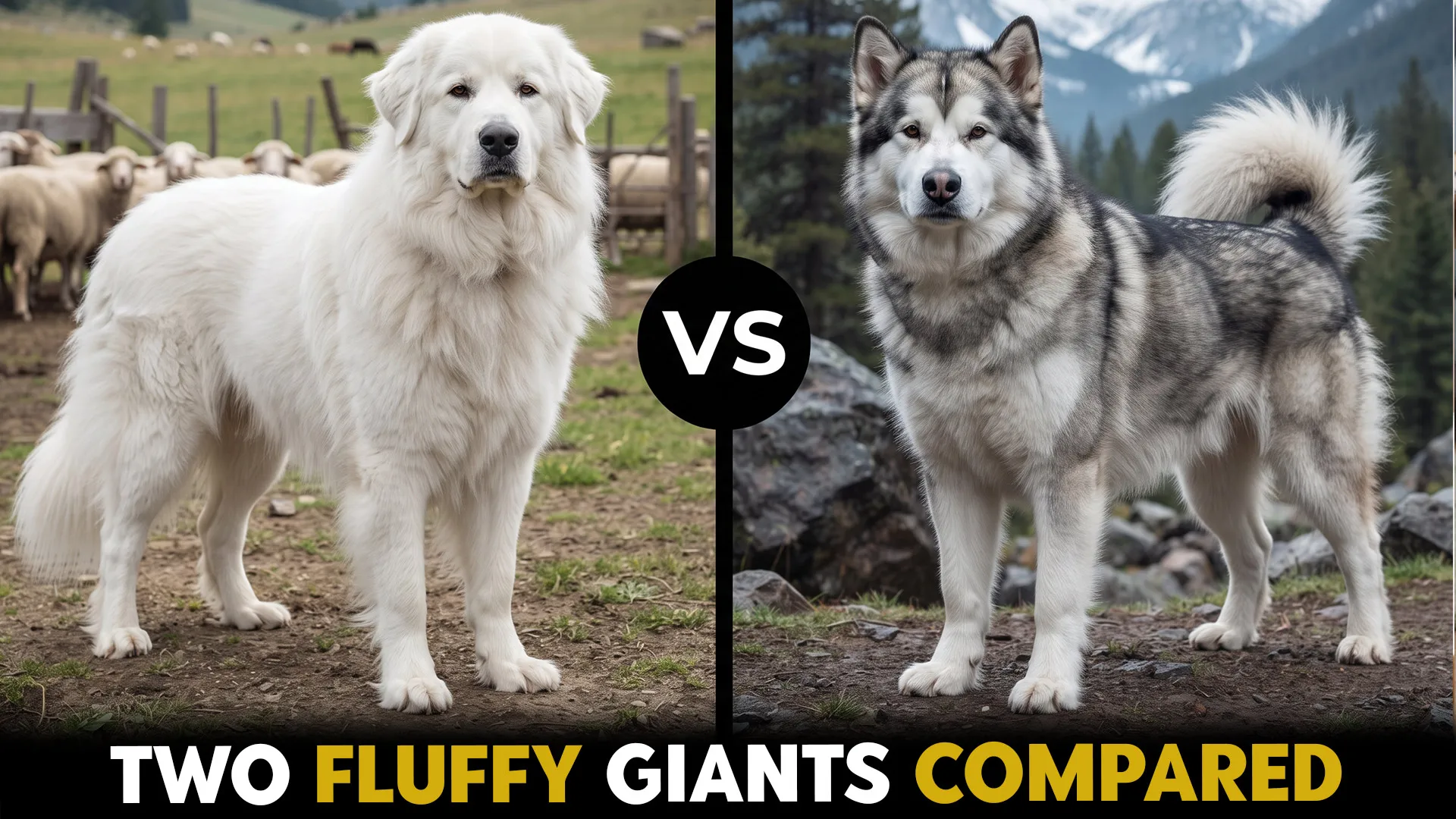
The Great Pyrenees and the Alaskan Malamute are two of the most impressive large dog breeds in the canine world. They’re both double-coated, muscular, and loyal.
On the surface, they might look the same. However, they were bred for different tasks, which meant that their behavior, energy, and care levels are different.
The Great Pyrenees is a calm livestock guardian, and the Alaskan Malamute is a working sled dog. It is important to consider your lifestyle, living area, and activity level when deciding which one of them to bring to your home.
Let’s do some comparisons to see which one is best for you.
Great Pyrenees vs. Alaskan Malamute: Giant Fluffy Dog Comparison
Breed Origins and Historical Purpose
The Great Pyrenees is a dog breed native to the Pyrenees Mountains area of France and Spain. These dogs have been used by shepherds for centuries to keep sheep safe from wolves and bears. They worked on their own, sometimes guarding flocks all night without human oversight.
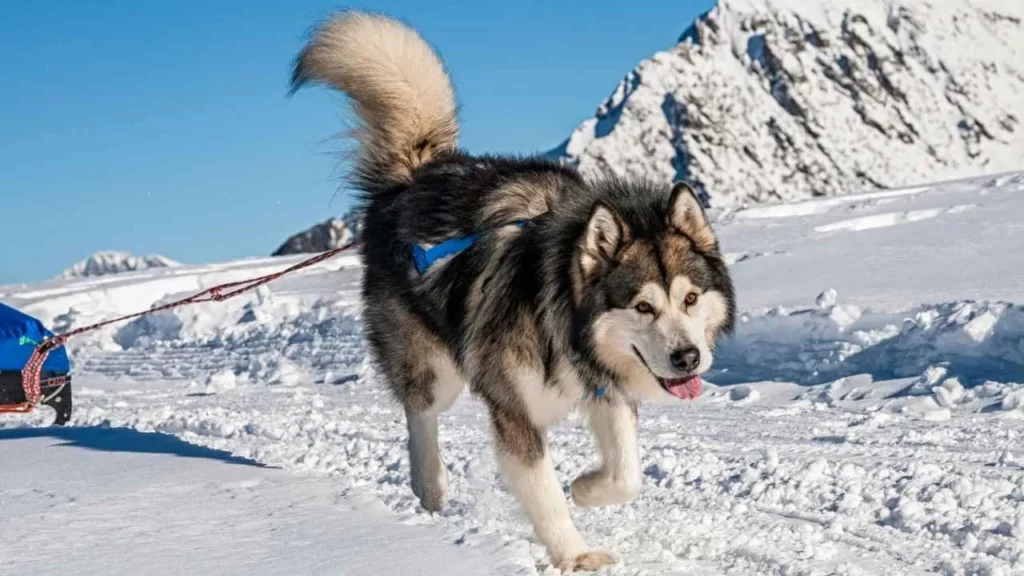
The Alaskan Malamute is a breed created by the Mahlemut Inuit people in Alaska. These large-sized dogs were used to pull heavy sleds, carry supplies, and protect the hunter’s survival in the harsh Arctic winters, rather than herding livestock. They have been bred to be strong animals and to last, not to be fast.
Both breeds are hard-working pets, but one protects and the other pulls.
Size, Weight and Physical Appearance
The two breeds are large, yet their respective body types are for different purposes.
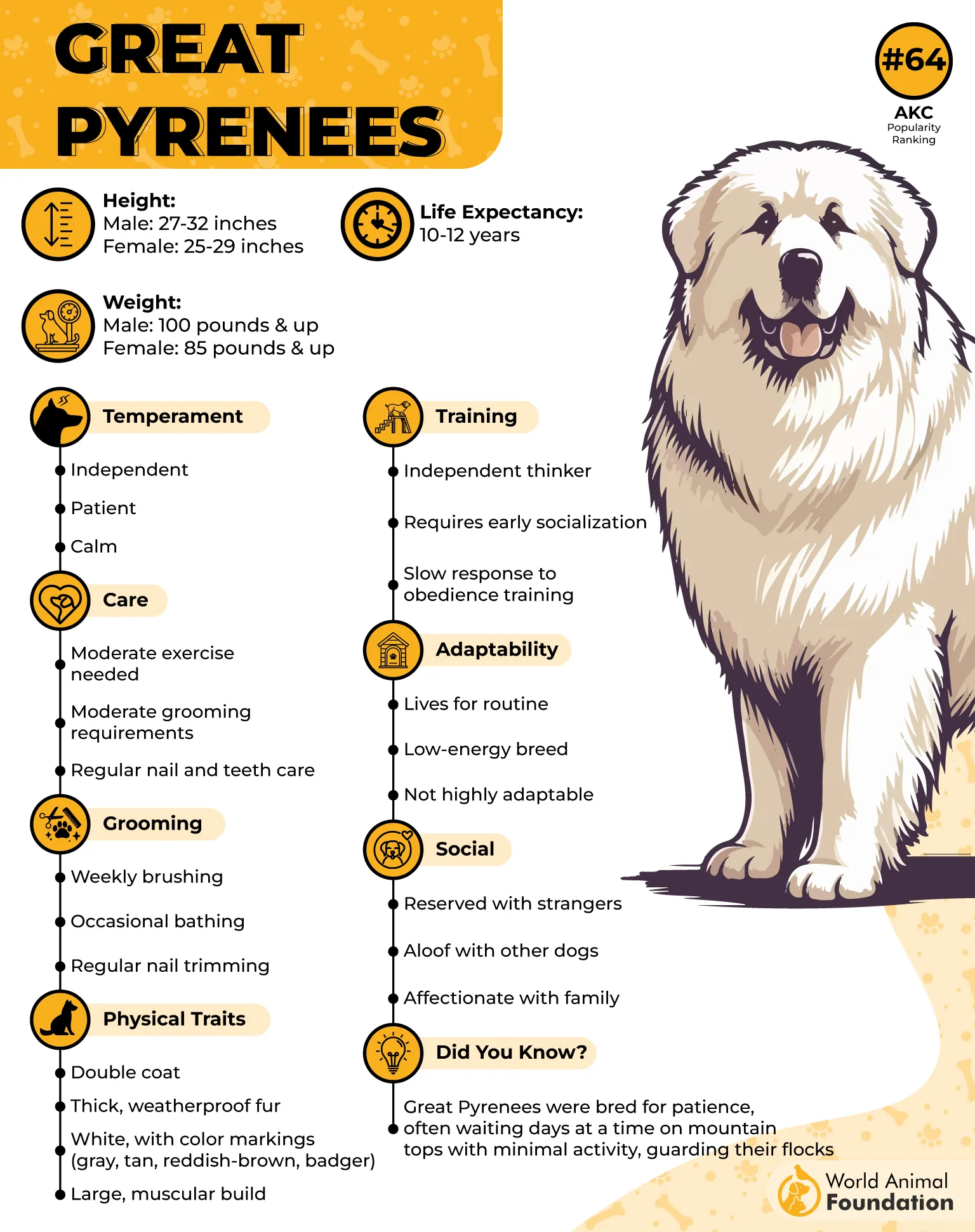
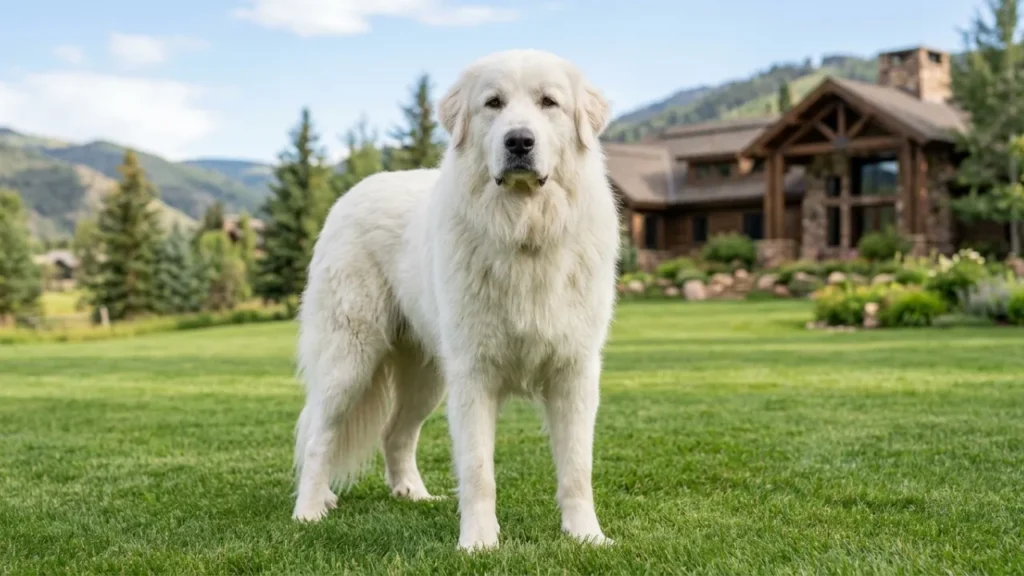
The American Kennel Club calls the Great Pyrenees a big dog with a big heart. The Great Pyrenees is a 25-32 inch tall dog that weighs 85-160 pounds. It possesses a wide chest, well-muscled legs, and a thick weather-proof coat.
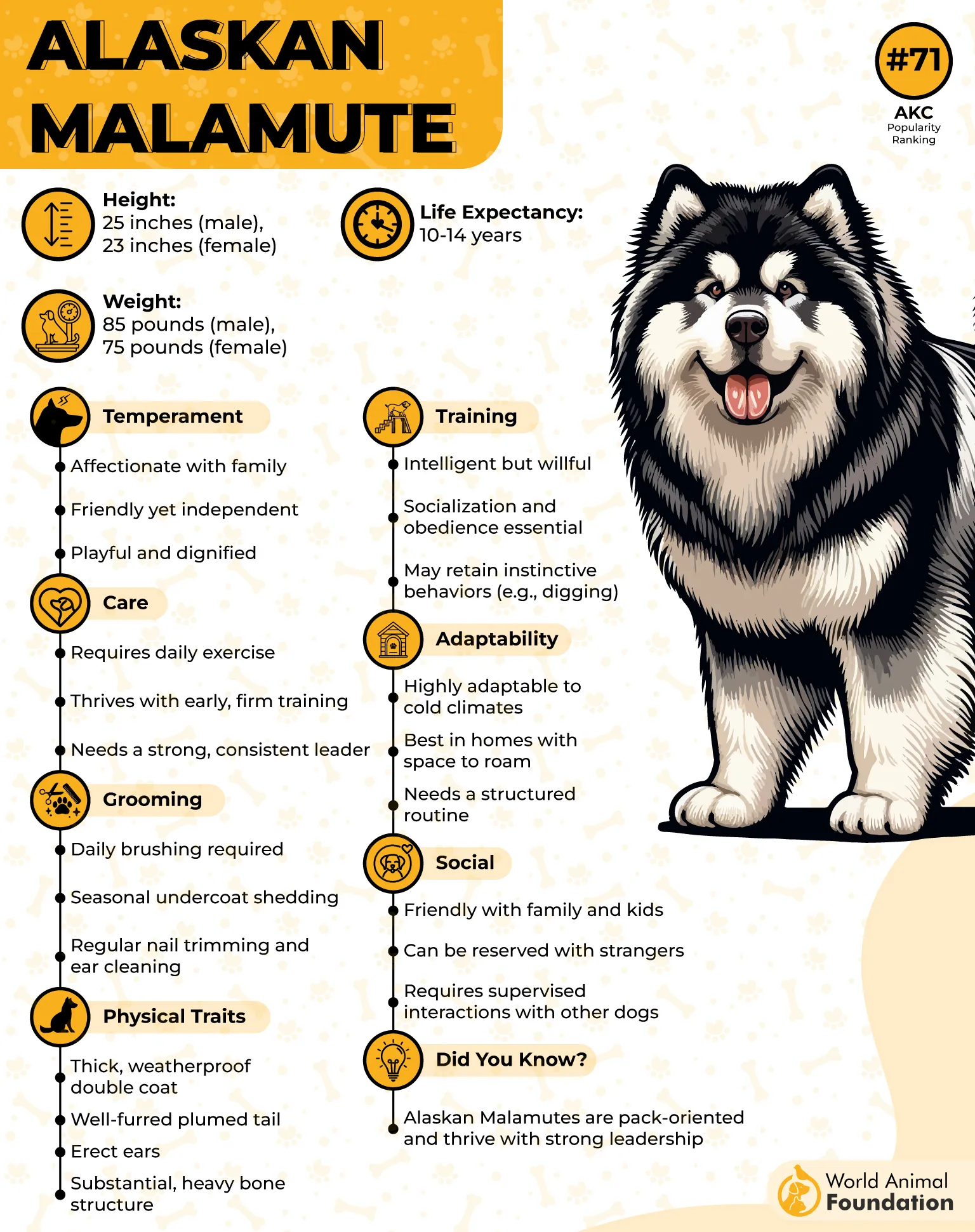
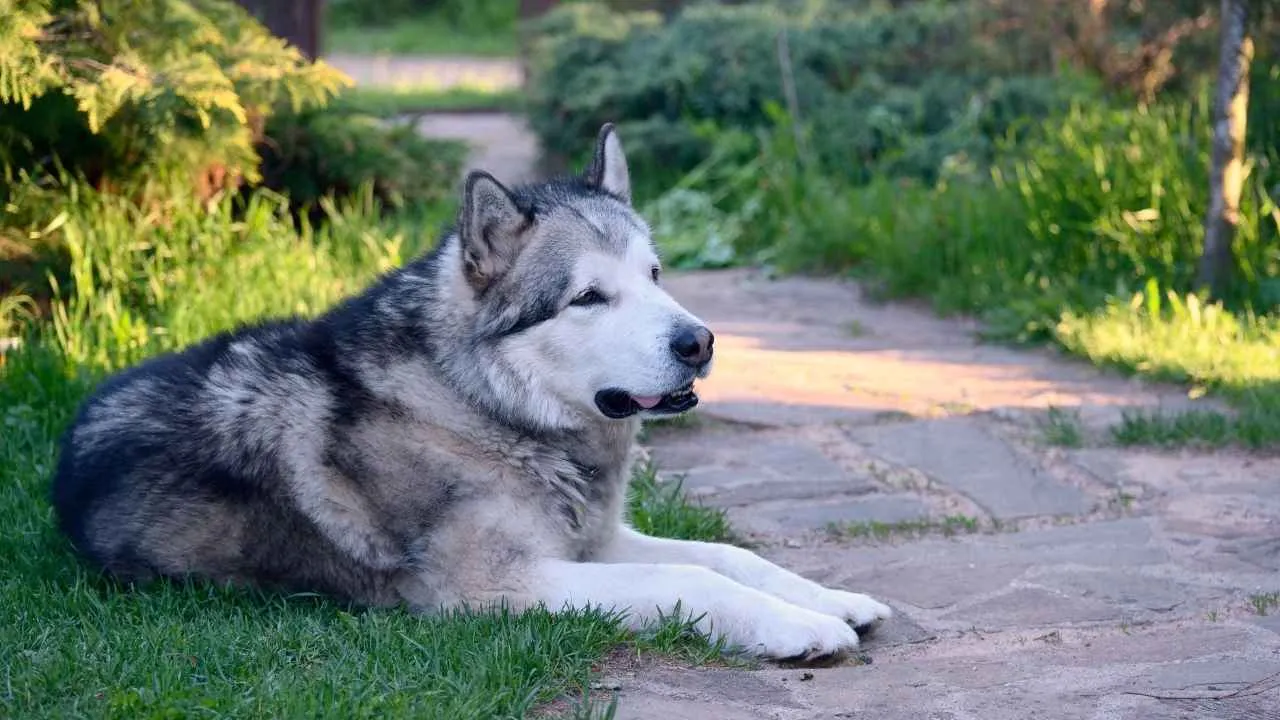
The Alaskan Malamute is 23-25 inches tall and 75-100 pounds in weight. Its deep chest is designed to pull heavy sleds over long distances, and it has a compact muscular frame.
The more athletic dog, visually, between the two is the Alaskan Malamute. Great Pyrenees dogs will tend to look heavier and taller.
Both breeds have a thick double coat, bushy tail, and expressive eyes, but Malamutes can come in a variety of coat colors while Great Pyrenees dogs are mostly white with occasional gray, tan, or reddish patches.
Temperament and Personality Traits
The Great Pyrenees is independent and strong-willed, as stated by Orvis. This puppy is calm, patient, and has a naturally protective temperament. It prefers watching rather than acting. It is loving, has a gentle nature, and is kind towards family members, particularly children.
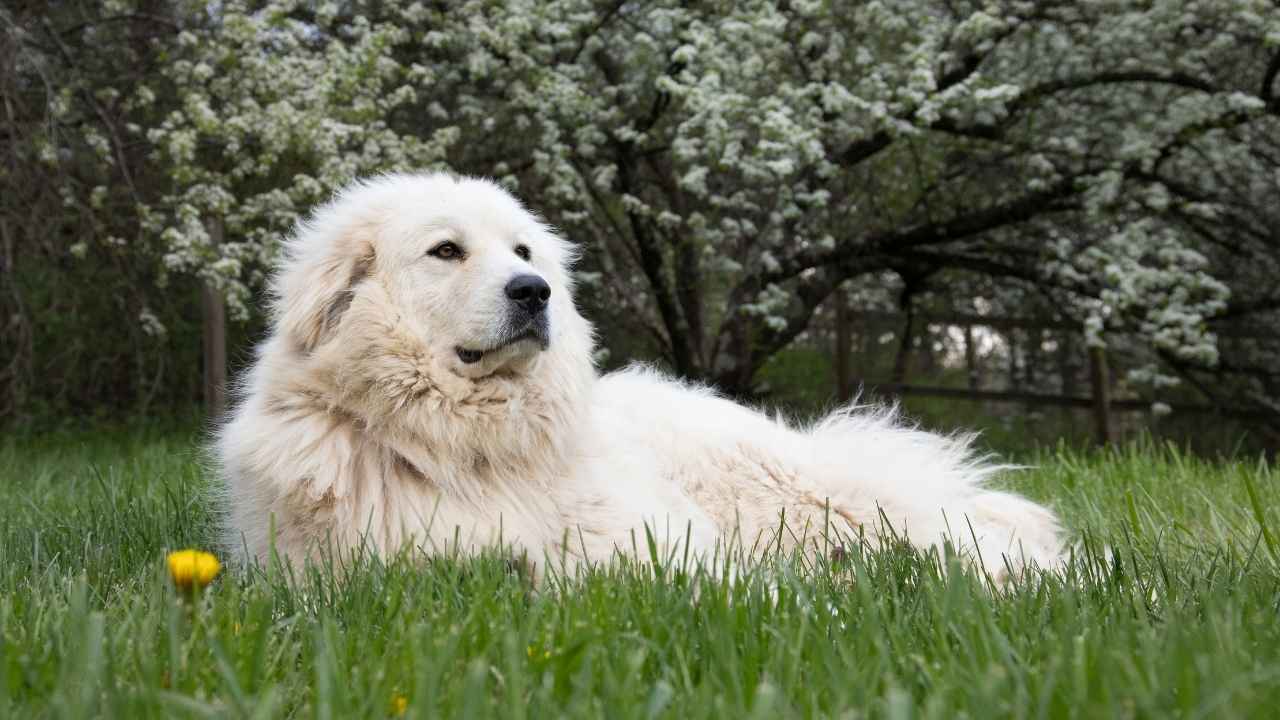
It has been known to make decisions on its own for centuries, which can sometimes make it seem stubborn towards its owners. It prefers having a cause before taking action.
The Alaskan Malamute is more of a playful and outgoing dog, as noted by WebMD. It likes to be included in family activities and loves interaction. Malamutes are not as protective as many people think, but early socialization is still a benefit. They are typically curious around strangers.
They are also more pack-oriented and tend to love people and dogs.
Exercise Requirements and Energy Level
One of the biggest differences between both breeds is their energy level.
The Great Pyrenees is an average energy dog. It can typically be kept healthy with a secure yard and daily walks. It likes to investigate but doesn’t necessarily need to be kept busy constantly.
You should provide the Alaskan Malamute with plenty of exercise. It’s been bred to be out there for hours, and requires extensive exercise and mental stimulation to remain content.
Malamutes are great for long hikes, backpacking, pulling sports, canicross, and jogging. They may dig, chew, or be restless if insufficient exercise is provided.
Malamutes are typically a much better fit for an active outdoor lifestyle due to their playfulness.
Trainability and Intelligence
Both breeds are smart animals but learn in different ways.
For example, the Great Pyrenees is a self-thinking, livestock guard dog. It often considers situations before responding to commands. Patience, consistency, and positive reinforcement are necessary in training.
The Alaskan Malamute is quick to learn and has an independent nature. It likes to solve problems, but may become bored with repetitive procedures.
Both breeding stocks are not good at taking punishment. Both benefit from positive reinforcement and short, interesting sessions.
Great Pyrenees dogs might be better suited to jobs such as watching over livestock and property, whereas Malamutes are likely to be great at pulling sports or doing outdoor activities.
Health Issues and Life Expectancy
Both breeds, due to their history and genetics, are susceptible to joint problems just like many other large breeds.
Due to a large and muscular body, the Great Pyrenees is prone to hip dysplasia, elbow dysplasia, and bloating. These risks are minimized by regular check-ups from a vet and weight control.
The Alaskan Malamute is also predisposed to hip dysplasia and can also develop polyneuropathy (nerve disease), eye disease, and hypothyroidism.
The Great Pyrenees will live to 10-12 years on average, and the Alaskan Malamute has a lifespan of 10-14 years, with appropriate care.
A good diet, exercise, and maintaining a healthy weight will keep these affectionate breeds from suffering from many health issues throughout their lives.
Family Companion vs. Watchdog Abilities
The Great Pyrenees is a natural protector. Always alert, it watches over its family silently, and often stands between its pet parents and unwanted visitors.
It does not bark all the time, and instead only alerts when it thinks protection is necessary. This makes it a great watchdog for a large estate and big homes.
The Alaskan Malamute is loyal, but not as protective. Most Malamutes are good at meeting people and more likely to invite than deter.
The Malamute is a pup that is playful, affectionate, and loves to be a part of the family adventures in the wild.
For families seeking protection, the Great Pyrenees may be a better choice, and those who are more active may favor the Malamute’s spirited nature.
Grooming Needs and Coat Maintenance
Both breeds are thick double-coated and shed all year round.
The Great Pyrenees needs regular grooming and should be brushed 2-3 times a week and more during its shedding season. It has a natural ability to resist dirt, and so doesn’t need to be bathed often.
Regular brushing is also helpful to the Alaskan Malamute. Brushing daily during shedding season will help to remove fur from its loose undercoat and minimize the amount of hair in the house.
The double coat is important to both breeds for regulating body temperatures in warm and cold weather, so neither breed should be shaved.
Both breeds require nail trimming, cleaning of ears, and dental work to avoid any unforeseen health issues and reduce veterinarian visits.
Conclusion
Though they have a similar fluffy look and they’re both large dogs, the Great Pyrenees and Alaskan Malamute were bred for very different purposes.
The Great Pyrenees is a patient livestock guardian that values independence and quiet observation. The Alaskan Malamute is an active working dog that is prepared to work outdoors with a group.
The ultimate choice is completely based on your lifestyle. There is hardly a better breed for a calm protector than the Great Pyrenees. The Alaskan Malamute is a great dog that can be a wonderful hiking partner when you want and need one.
Always search for a reputable breeder to adopt whichever pup you love the most.
