




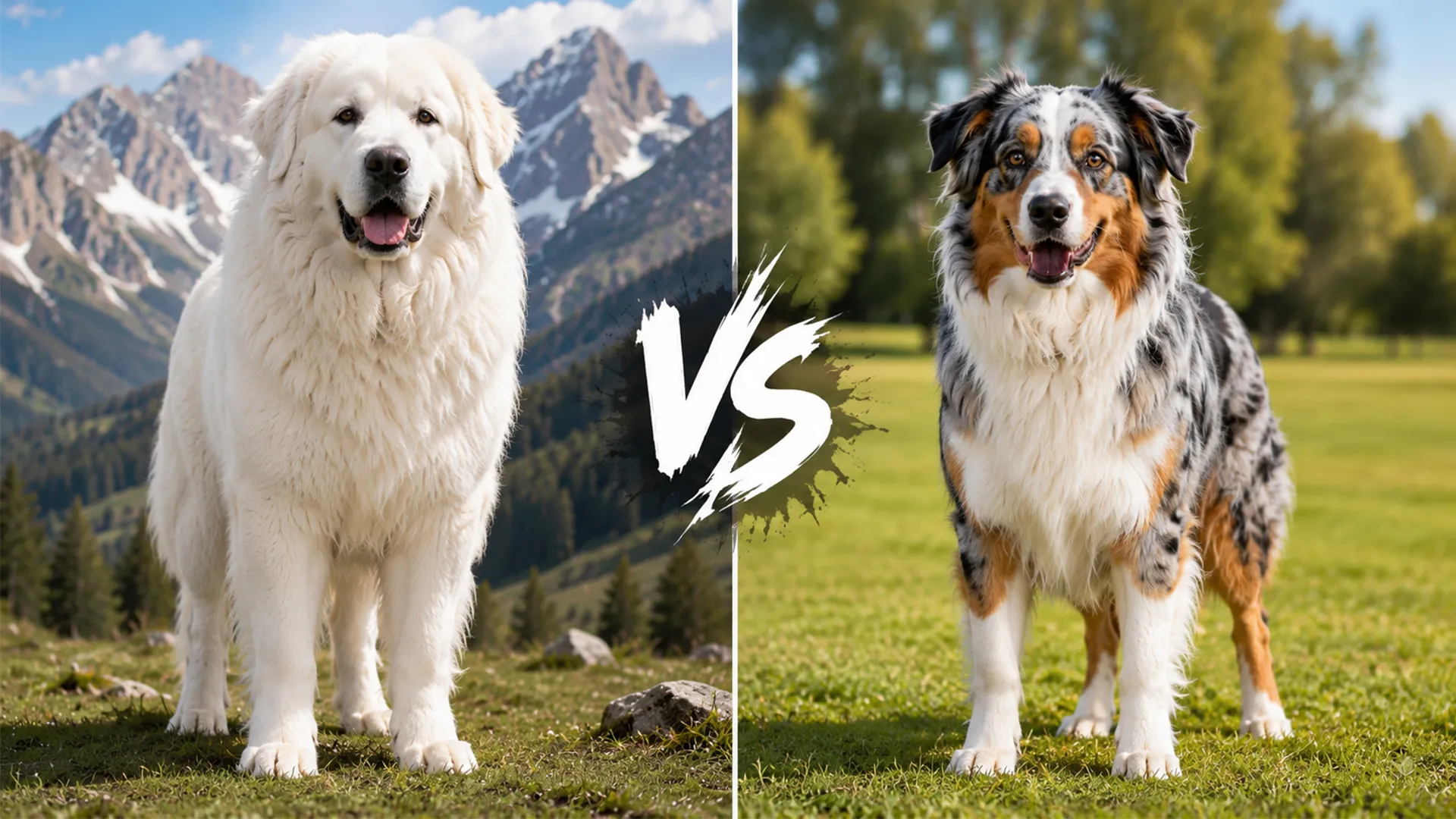
The Great Pyrenees and the Australian Shepherd are both intelligent, loyal, and hardworking — but they are built for very different lives, and choosing between them without understanding that distinction is where most people go wrong.
One is a calm, independent guardian bred to watch over livestock across vast mountain terrain. The other is a high-energy herding dog that needs a job, a purpose, and an owner who can keep up. On the surface, both breeds look like a great choice. Dig a little deeper and the differences become impossible to ignore.
Exercise needs, training styles, living arrangements, family dynamics — each of these plays out very differently depending on which breed you bring home. This comparison breaks down exactly where the Great Pyrenees and the Australian Shepherd differ, so you can make a choice that actually fits your life rather than just your wishlist.
Key Takeaways
Many people begin this comparison expecting a simple choice, but the way these two breeds live and think quickly changes that idea.
Great Pyrenees carry a calm guarding instinct that values space and patience, while Australian Shepherds bring sharp focus and a need for ongoing stimulation.
This difference shapes everything from exercise routines to training style, making daily life feel very different depending on the breed you choose.
As you move through the details, the contrast between a steady protector and an energetic worker becomes impossible to miss.
Great Pyrenees vs. Australian Shepherd Dog Breeds
Choosing between the majestic Great Pyrenees and the high-energy Australian Shepherd comes down to deciding between a calm, independent livestock guardian and a brilliant, fast-paced herding companion. While both breeds are fiercely loyal, they require entirely different lifestyles when it comes to space, training, and daily exercise needs.
Size & Build Differences
Great Pyrenees Size and Presence
The Great Pyrenees immediately stands out through sheer scale, with males reaching 27 to 32 inches and often weighing well over 100 pounds. That size is paired with a thick coat and a powerful frame that was built to withstand demanding mountain conditions rather than move with speed alone.
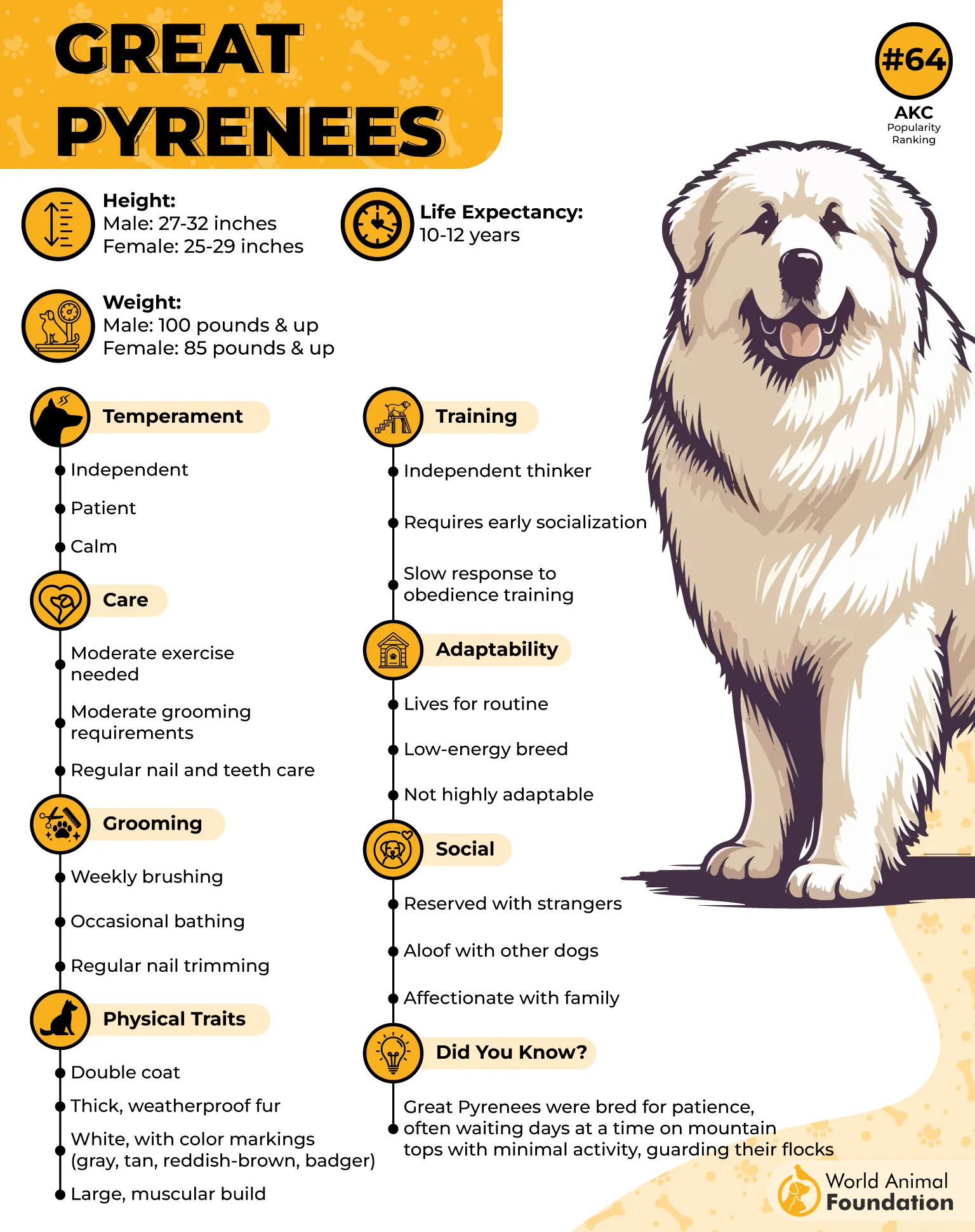
Its body is slightly longer than tall, creating a balanced outline that feels both substantial and surprisingly elegant. Even at rest, the breed gives off a commanding presence thanks to its combination of mass, strength, and natural composure.
Australian Shepherd Athletic Structure
The Australian Shepherd takes a much leaner approach, standing between 18 and 23 inches tall and typically weighing 40 to 65 pounds. Its medium-sized frame is built for agility and quick movement, reflecting the breed’s long history as a hardworking ranch dog, as per the AKC.
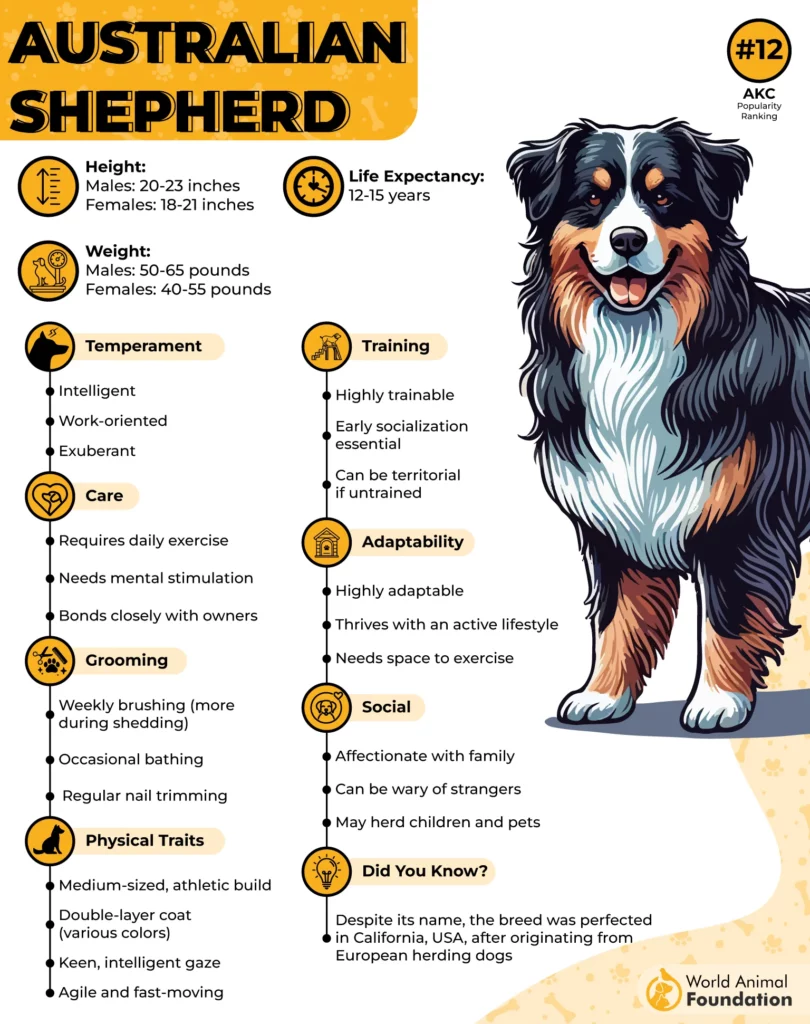
The body is also slightly longer than tall, but the impression is completely different from the Pyrenees. Instead of overwhelming size, the Australian Shepherd stands out through athletic balance, efficient movement, and a sharp, ready-for-action appearance.
Temperament & Personality
Great Pyrenees at Home
Great Pyrenees are known for a calm and steady temperament that often feels reassuring rather than demanding. They enjoy being close to their family, stay naturally alert to their surroundings, and are more likely to announce unusual activity with their voice than rush into action.
Their independent side is just as noticeable as their gentle nature. While they generally live peacefully with other pets, they appreciate having personal space and can spend time quietly observing rather than constantly seeking attention or interaction.
Australian Shepherd Energy and Connection
Australian Shepherds bring a much more active and people-focused personality into daily life. They are highly intelligent, form strong bonds with their favorite humans, and usually prefer being involved in whatever is happening rather than watching from the sidelines.
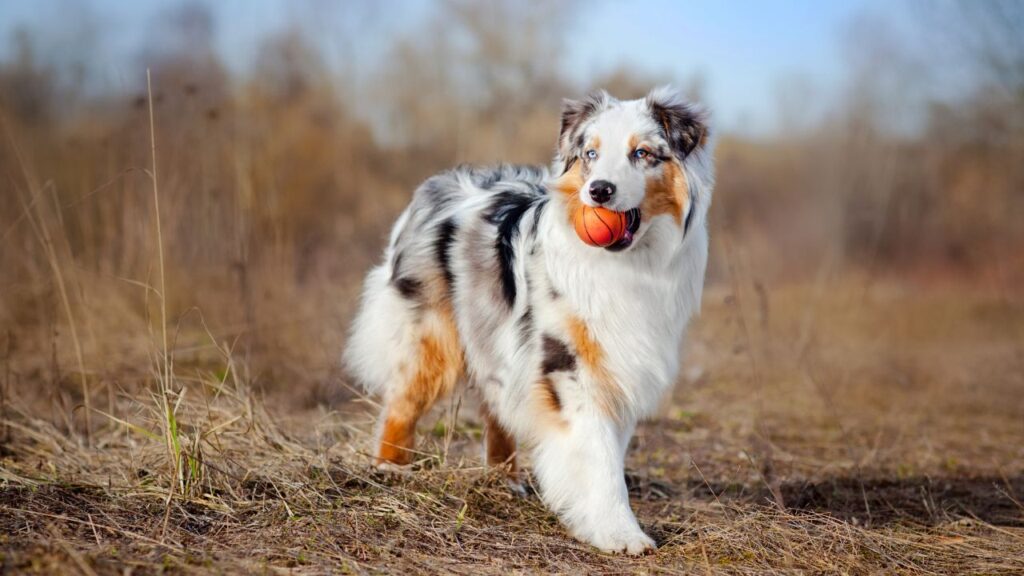
That enthusiasm needs a productive outlet to stay balanced. According to PetMD, without enough activity and mental engagement, an Australian Shepherd may channel its energy into behaviors like chewing, digging, or becoming overly dependent on constant companionship.
Exercise & Energy Levels
Great Pyrenees Energy Style
Great Pyrenees approach activity very differently from high-drive working breeds. Their history as livestock guardians taught them to patrol, observe, and conserve energy until a real threat appeared, which is why they often seem calm and measured rather than constantly on the move.
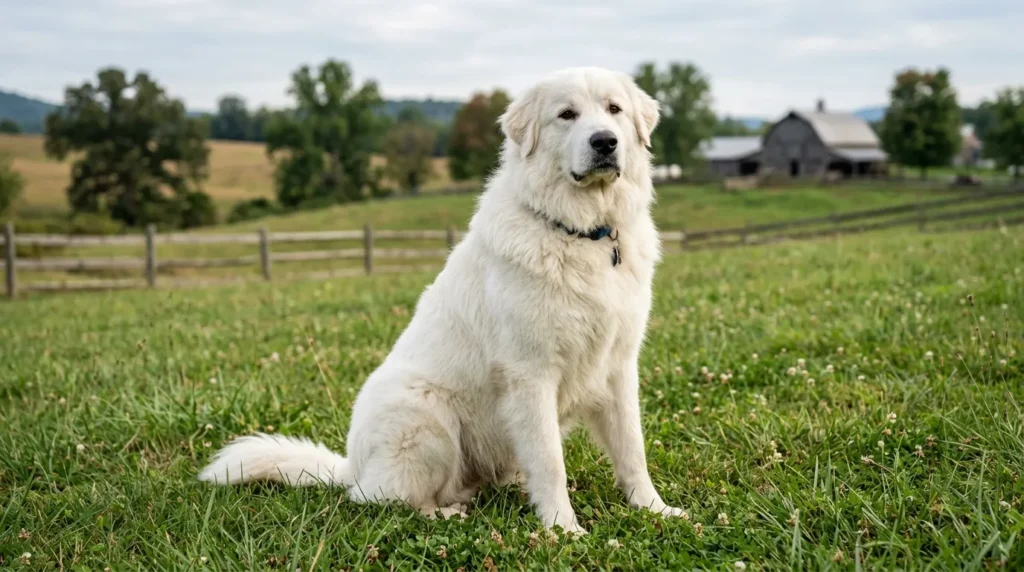
Daily walks and purposeful activities are usually enough to keep them satisfied. Even when participating in tasks like obedience or cart-pulling, they tend to pace themselves instead of seeking nonstop action throughout the day.
Australian Shepherd Drive
Australian Shepherds operate at a much higher energy level and are rarely content with a brief outing. They were bred to work for long hours, so regular opportunities to run, explore, and stay engaged are an important part of their daily routine.
Physical activity alone rarely tells the whole story with this breed, as stated in WebMD. Aussies often enjoy having a job to focus on, whether that involves herding, hiking, agility events, dock diving, or simply accompanying their people on longer outdoor adventures.
Training & Intelligence
Great Pyrenees Learning Style
Great Pyrenees dogs are intelligent, but their intelligence shows up through independent decision-making rather than a desire to follow instructions. For generations, they were expected to watch over livestock without constant human direction, which explains why formal obedience exercises often fail to impress them.
Training success usually depends on patience and realistic expectations. A Pyr may understand exactly what is being asked yet respond at its own pace, making early socialization and puppy classes especially valuable for building good manners and everyday reliability.
Australian Shepherd Training Drive
Australian Shepherds take on learning from a completely different angle, often looking for something to do and someone to work with. Their combination of loyalty, sharp intelligence, and responsiveness allows them to pick up new skills quickly when training is consistent and purposeful.
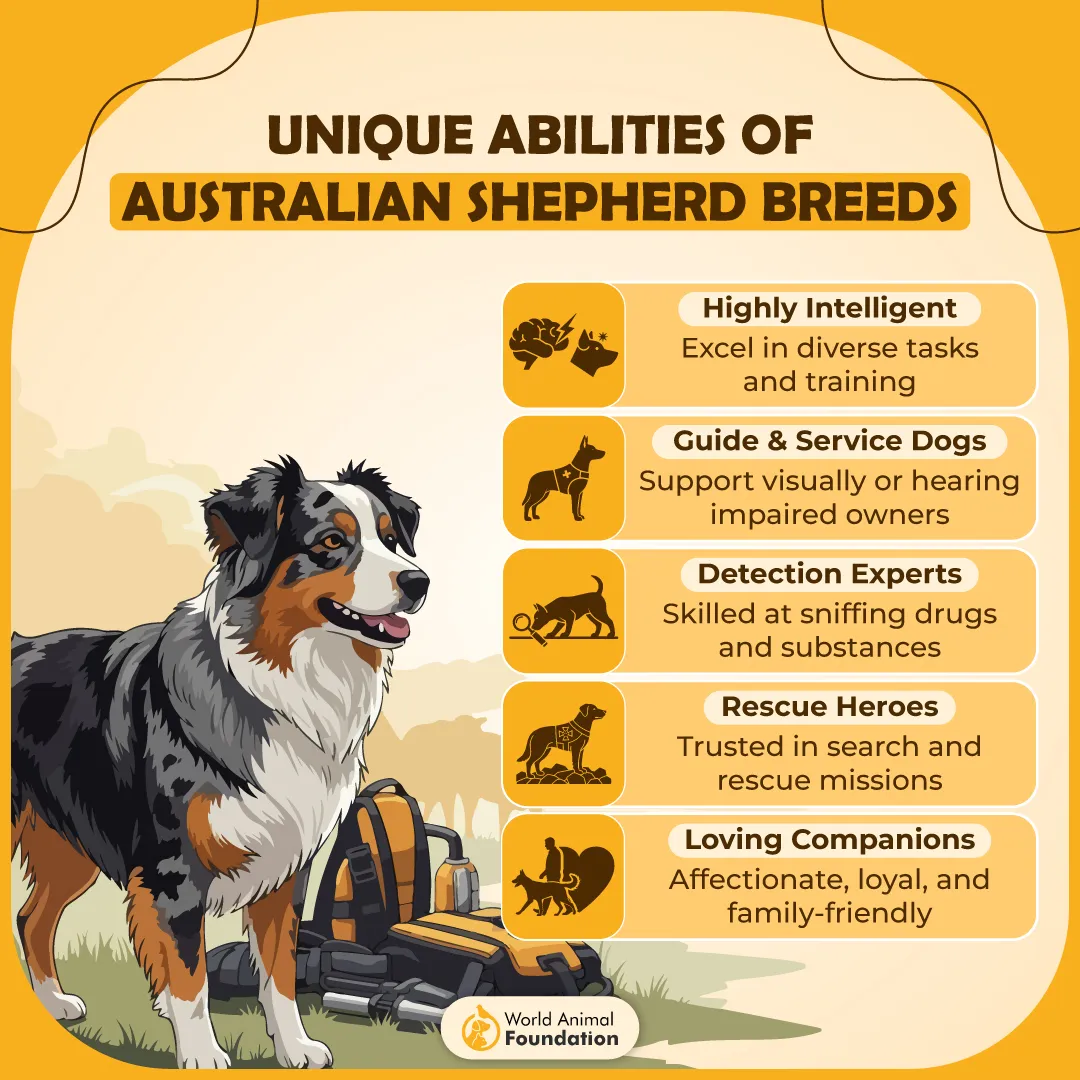
That eagerness becomes especially important because an Aussie without direction tends to create its own activities. Early obedience work helps channel their focus productively, while regular training sessions give this highly engaged breed the mental challenge it naturally seeks.
Energy Level & Lifespan
Great Pyrenees Pace and Longevity
Great Pyrenees approach daily life with a calm, measured rhythm rather than constant activity. Most are content with 20 to 40 minutes of moderate exercise, such as relaxed walks or time spent exploring a securely fenced yard without feeling the need to stay busy all day.
That steady lifestyle is reflected in a typical lifespan of 10 to 12 years. Their energy is conserved rather than constantly spent, making them a natural fit for people who prefer a more laid-back companion around the home.
Australian Shepherd Drive and Endurance
Australian Shepherds operate at a completely different speed, bringing the kind of stamina expected from a dog bred to manage livestock for long hours. Daily exercise is only part of the equation, as they also need regular mental challenges to stay satisfied and focused.
Their active lifestyle is matched by a longer average lifespan of 12 to 15 years. Even as adults, many Australian Shepherds retain the enthusiasm and work ethic that make them feel ready for the next activity before the previous one has fully ended.
Conclusion
Finding the right companion often requires looking beyond first impressions and focusing on everyday realities. Activity levels, training expectations, independence, and social needs all influence how well a dog fits into a household. The differences explored throughout this comparison show why research matters, whether choosing a medium or large breed.
Both dogs have earned admiration for good reason, yet they excel in different lifestyles. Knowing those strengths helps create realistic expectations from the beginning. When a dog’s natural tendencies align with its family, the relationship becomes smoother and more rewarding. Each dog loves having a role that suits its personality.
