




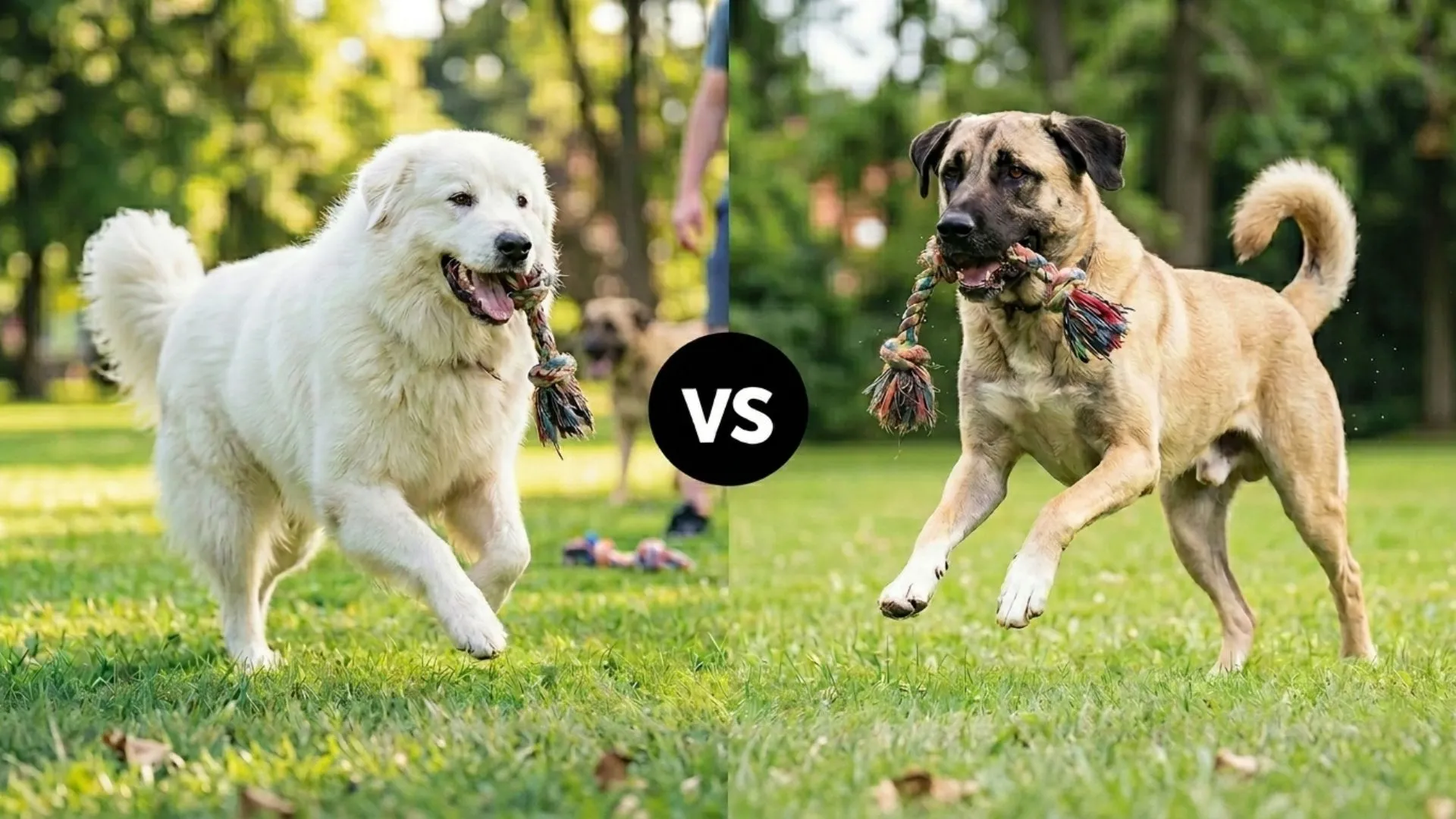
Livestock guardian dog breeds have one of the most important jobs on a farm, and they take it very seriously, even if they look like they are just lounging around. These dogs are trusted to protect livestock, goats, sheep, and other animals from predators while living closely with family and farm life.
Among the most popular livestock guardian dog choices, Anatolian Shepherd and Great Pyrenees stand out for their strength, loyalty, and calm confidence. One is known for making independent decisions, while the other tends to stay closer to humans and animals, forming strong bonds with kids, goats, and even baby goats on the farm.
Both breeds are suited for protecting livestock in different ways, depending on training, fencing, and environment. Whether guarding against larger predators or simply watching over farm animals at night, these dogs bring a mix of intelligence, instinct, and dedication that makes them truly reliable guardians.
Great Pyrenees vs. Anatolian Shepherd Dog Breeds: Key Differences
Choosing between two of the world’s finest livestock guardians means looking beyond their massive size to understand their distinct working styles. While the Great Pyrenees relies on a calm, nurturing presence, the Anatolian Shepherd brings an intense, deeply independent protective drive.
Though both breeds are legendary protectors, their temperaments, coat care, and training needs differ significantly. Here is exactly how these two powerhouse guardians compare to help you find the perfect match for your land or family.
Origins & Purpose
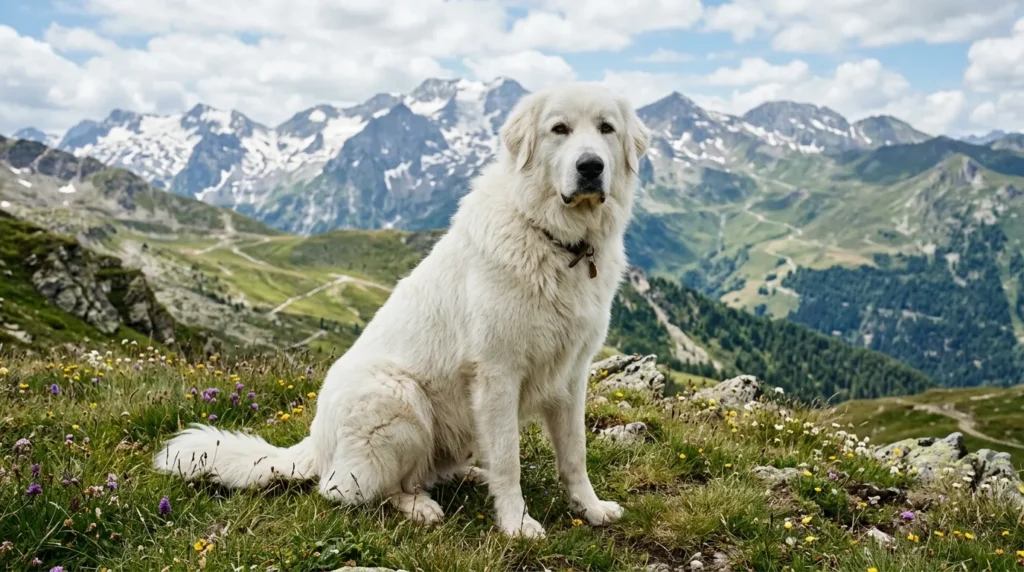
The Great Pyrenees was basically born for dramatic mountain duty, standing guard on snowy peaks like a fluffy security system that never clocks out.
These dogs were originally tasked with protecting sheep from wolves and other predators, using calm confidence and sudden bursts of action when things got serious, as per AKC. Today, they still carry that “majestic mountain bouncer” vibe, just with more couch time and family cuddles.
The Anatolian Shepherd comes from ancient, tough working bloodlines designed for serious livestock protection across harsh terrain. This breed was built to guard livestock with independence, intelligence, and a strong “I’ve got this” attitude against predators like wolves or bears.
Still powerful and alert, it treats goats, sheep, and other animals like its personal responsibility, blending calm patience with instant protective instincts when needed.
Size & Physical Build
The Great Pyrenees is a massive, cloud-like guardian that looks soft but is built like a mountain fortress on four legs. Weighing often over 100 pounds, this breed carries a thick double coat with a long outer layer and a soft undercoat that keeps it comfortable in snow, wind, or farm chaos.
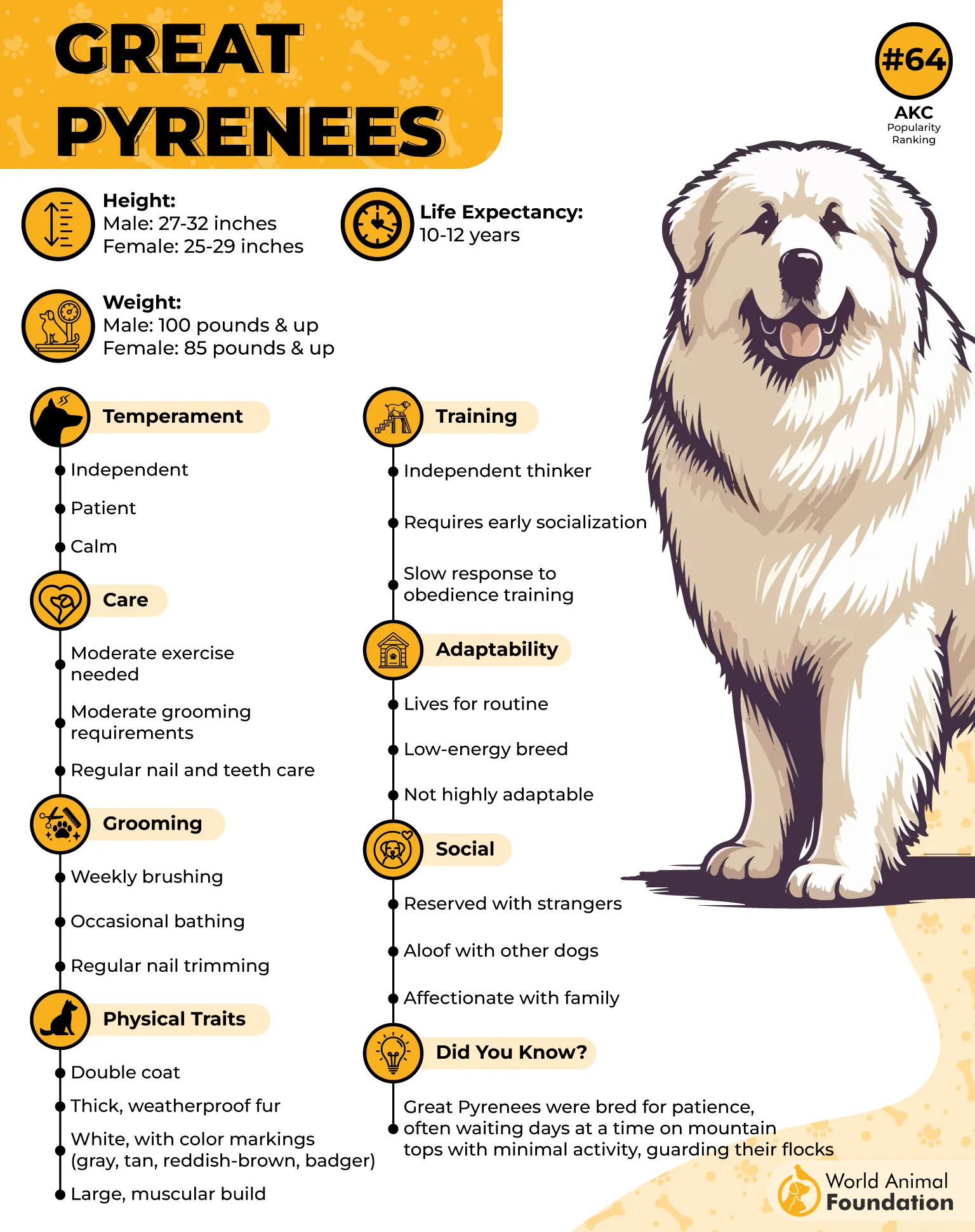
Its coat is usually white, sometimes with shades of gray, tan, or reddish markings, giving it a naturally “majestic but slightly dramatic” appearance.
The Anatolian Shepherd is equally powerful, often reaching up to 150 pounds of lean, muscular strength designed for real working conditions.
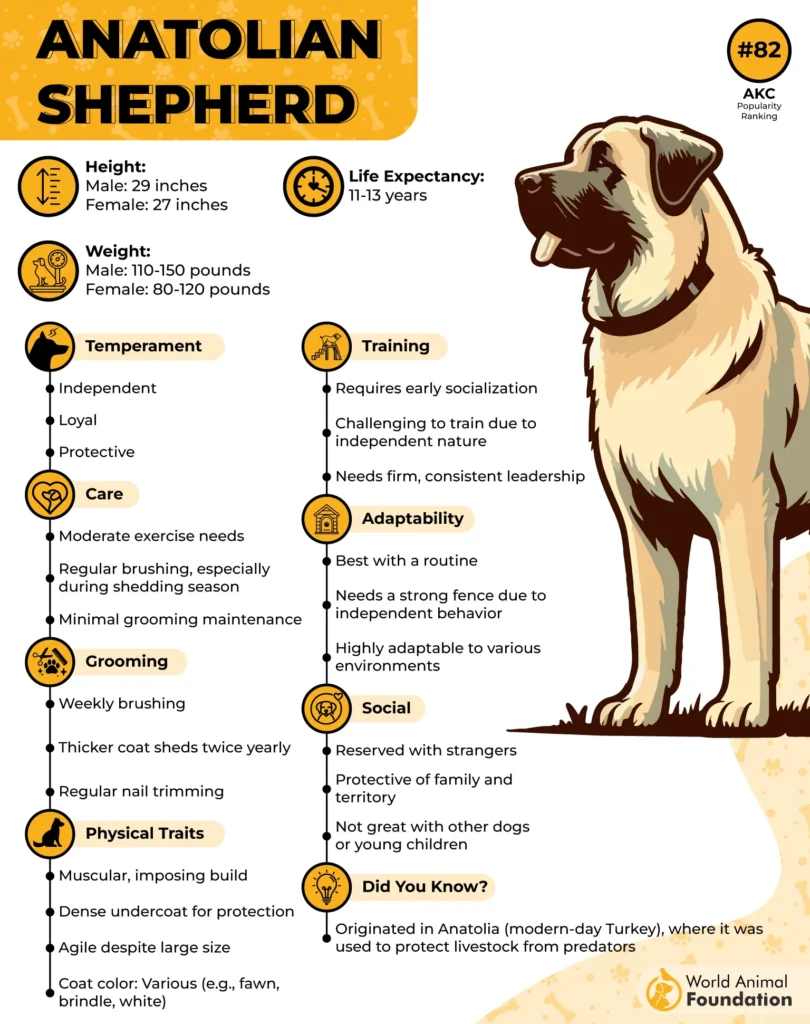
Built to handle harsh terrain and predators, it has a thick undercoat for protection, while the outer coat may be short or sometimes longer, depending on the dog. Strong, agile, and surprisingly fast for its size, this breed looks like it is always ready for serious business on the farm.
Temperament & Personality
The Great Pyrenees is calm, gentle, and slightly dramatic in the most lovable way, often acting like a fluffy philosopher watching the world. This breed forms strong bonds with family members, kids, and even other pets, but still enjoys alone time like a true introvert.
Don’t be fooled, though—its barking can turn into a full night shift alert system, especially when strangers, cats, or absolutely nothing at all appear suspicious.
As per Orvis, the Anatolian Shepherd is more of a “boss energy” type, known for being independent, strong-willed, and always ready to make its own decisions. This breed tends to take charge, so training and socialization are important to keep things balanced between dogs and humans.
When raised well, it becomes affectionate, protective, and deeply loyal, but still keeps that serious, no-nonsense personality when guarding livestock, family, and property.
Exercise & Energy Levels
The Great Pyrenees is not your “let’s run a marathon” kind of dog, but more of a slow-walk-and-watch-the-world type. This breed has low to moderate energy and is perfectly happy guarding livestock, relaxing on the farm, or quietly observing family life.
As per PetMD, while they do enjoy a casual walk, they tend to prefer doing their own thing, which can make training feel like negotiating with a very fluffy, independent thinker.
The Anatolian Shepherd has a bit more working energy, but still doesn’t demand constant activity like some high-energy dogs. A secure yard, good fencing, and one or two daily walks are usually enough to keep this breed balanced and happy.
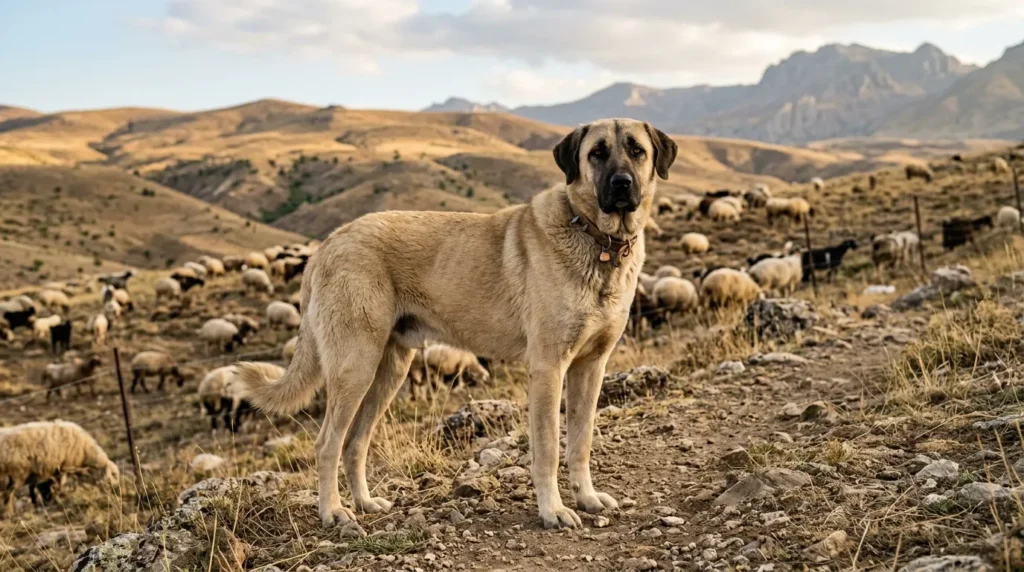
However, always use a leash outside, because this independent guardian may decide to chase a predator, patrol the property, or simply go on its own mission without asking.
Training & Intelligence
The Great Pyrenees is smart, wise, and just a little too aware of everything, including your mood, your tone, and probably your snack choices. This breed tends to think independently, so training requires patience, consistency, and a sense of humor when your pup decides your command is more of a suggestion.
Early socialization helps them become gentle, accepting, and well-mannered around family, kids, and other animals, as per WebMD.
The Anatolian Shepherd takes intelligence to a whole new “I’ll decide myself” level, often making its own decisions without waiting for humans. Training this breed can feel like debating with a very serious, very stubborn boss, so strong leadership and early socialization are essential.
While they are loyal and protective, they should not receive guard-dog training, as their natural instincts are already powerful enough to protect livestock, property, and family.
Grooming & Coat Care
The Great Pyrenees comes with a majestic double coat that looks like a fluffy cloud but sheds like it’s preparing for a snowstorm indoors. The outer coat resists dirt and tangles, so grooming isn’t too demanding, but weekly brushing is still needed to control all that flying hair.
They don’t usually have sensitive skin, but regular checks, flea care, and a solid brushing routine keep this breed looking clean and wonderful.
The Anatolian Shepherd is more of a “low-maintenance but still serious” type when it comes to grooming. Its thick undercoat protects it from harsh weather, while the outer coat is usually short and easy to manage with weekly brushing.
However, during shedding season, things can get intense, and brushing every few days becomes important. Regular nail trimming and basic care keep this hardworking breed neat without too much fuss.
Health & Lifespan
The Great Pyrenees, also known as the Pyrenean mountain dog, is generally strong but can face a few health issues over its life. Common problems include hip dysplasia, heart disease, allergies, and eye conditions like entropion that may need attention.
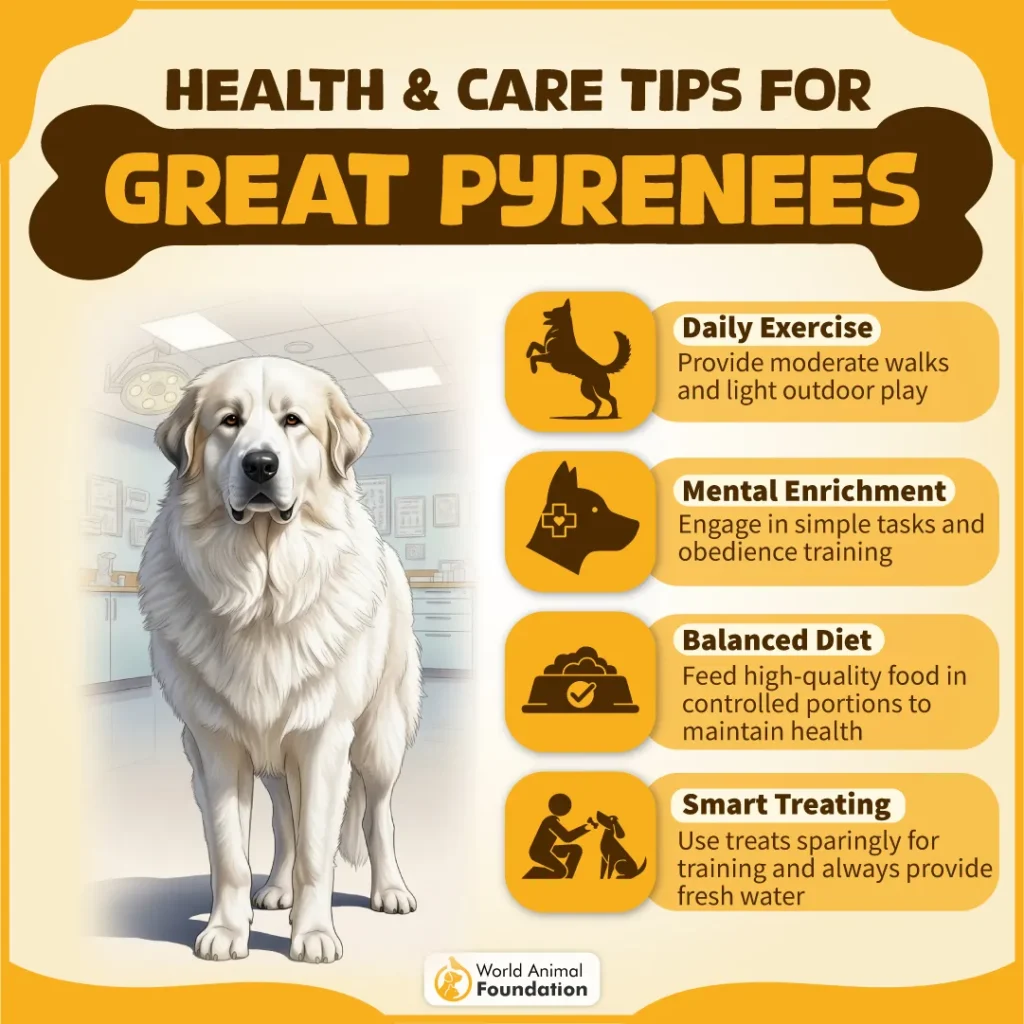
With proper care, regular vet visits, and a good breeder, these dogs usually live around 10 to 12 years while guarding livestock and family like true professionals.
The Anatolian Shepherd is also a tough and resilient breed, built to handle harsh environments and long working days with livestock. However, it can develop hip dysplasia and entropion, so routine health checks are important to keep this guardian in top shape, as per Omlet.
With the right care, training, and environment, this breed often enjoys a lifespan of 11 to 13 years, staying active, protective, and dependable throughout its life.
Great Pyrenees vs. Anatolian Shepherd Dog Suitability as Farm Dog vs. Guard Dogs
The Great Pyrenees is often the gentle farm hero, perfectly suited for guarding livestock like goats, sheep, and even chickens with calm confidence. This breed forms strong bonds with animals and family members, making it a wonderful livestock guardian that prefers to stay close and watch quietly.
While protective, it is less aggressive and more accepting, which makes it ideal for farms with kids, pets, and mixed animals.
The Anatolian Shepherd, on the other hand, is built for serious guarding jobs where larger predators like wolves or even bears may be a threat. This breed is more independent, territorial, and naturally protective, making it better suited for large farms or open land.
It tends to act quickly, sometimes more aggressively when needed, and prefers working over socializing, especially with strangers or unfamiliar animals.
In short, one is a calm, family-friendly farm guardian, while the other is a powerful, no-nonsense protector designed for tougher environments.
Conclusion
Choosing between these two breeds really comes down to your farm, your lifestyle, and what kind of guardian you need around your livestock and family.
One offers a calm, gentle presence that blends beautifully with kids, pets, and smaller animals, while the other brings powerful protection, independence, and the confidence to handle serious predator threats. Both are loyal, hardworking dogs that take their role very seriously.
Before deciding, think about your space, fencing, experience, and how much training you can commit to. Whether you prefer a soft, watchful protector or a bold, take-charge guardian, the right choice will depend on your environment and expectations.
In the end, the best dog is the one that fits your farm life perfectly and keeps both your animals and peace of mind safe.
