




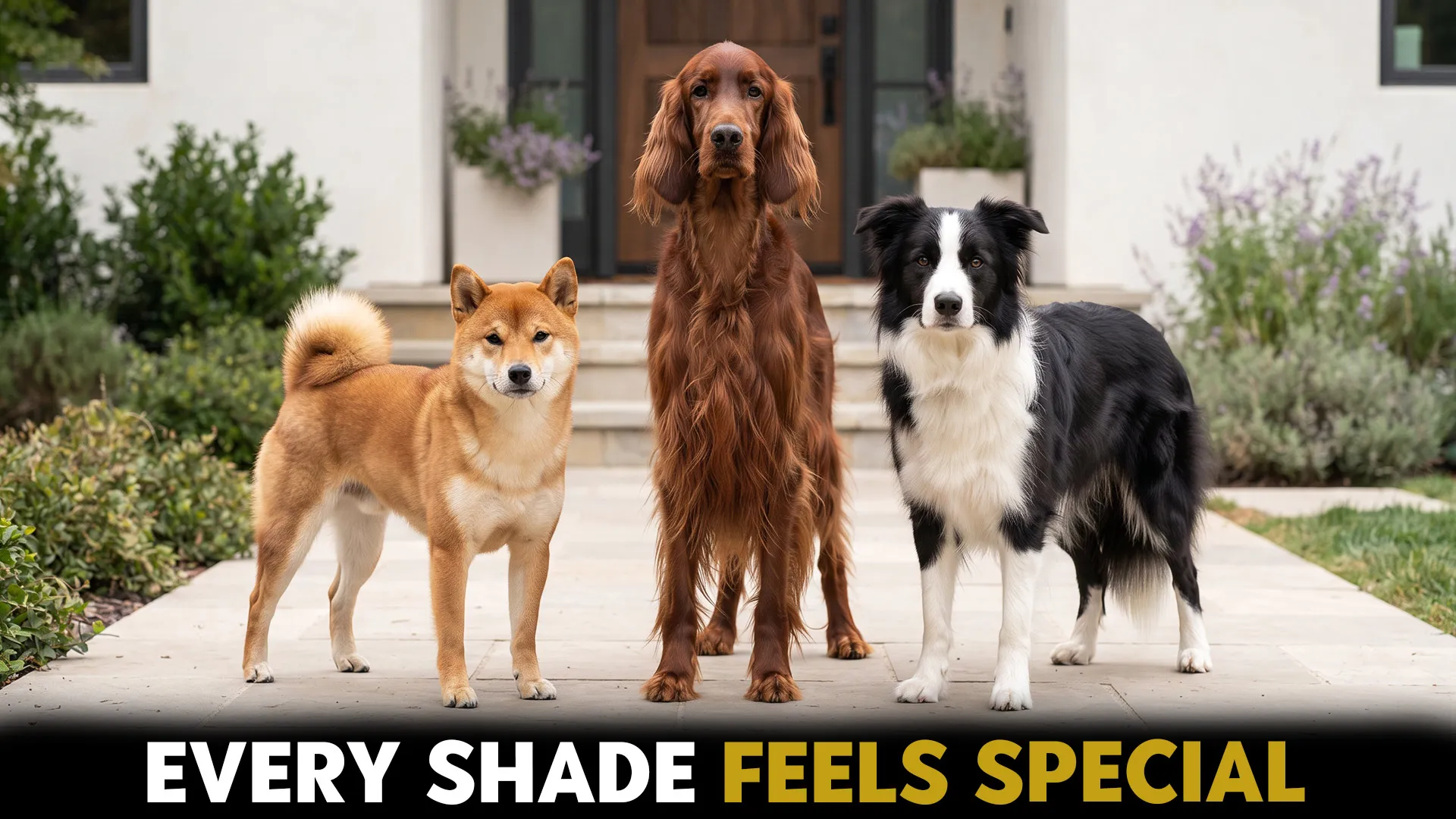
Some dogs walk into a room and immediately become the main character, and honestly, their coats deserve a huge chunk of the credit. Canine coats can look like nature decided to experiment with an entire color palette.
Dog coat color isn’t simply a case of a “brown dog gene” or “black dog gene,” either, because researchers have identified numerous genes involved in canine pigmentation. A 2022 review in Animal Genetics reported that at least 15 genes contribute to dog coat-color phenotypes and noted that many colors and patterns emerge through complex gene interactions.
Two major pigment families do much of the visual heavy lifting: eumelanin, which produces black and brown shades, and pheomelanin, which contributes red, yellow, and related warm tones. Other genes can influence where those pigments appear, how intensely they are expressed, whether portions of the coat become white, and whether patterns such as merle or dapple develop.
The seven breeds below show just how wildly different that genetic toolkit can look in real life.
Gorgeous Dog Breeds Defined by Their Striking Coat Colors
1. Shiba Inu
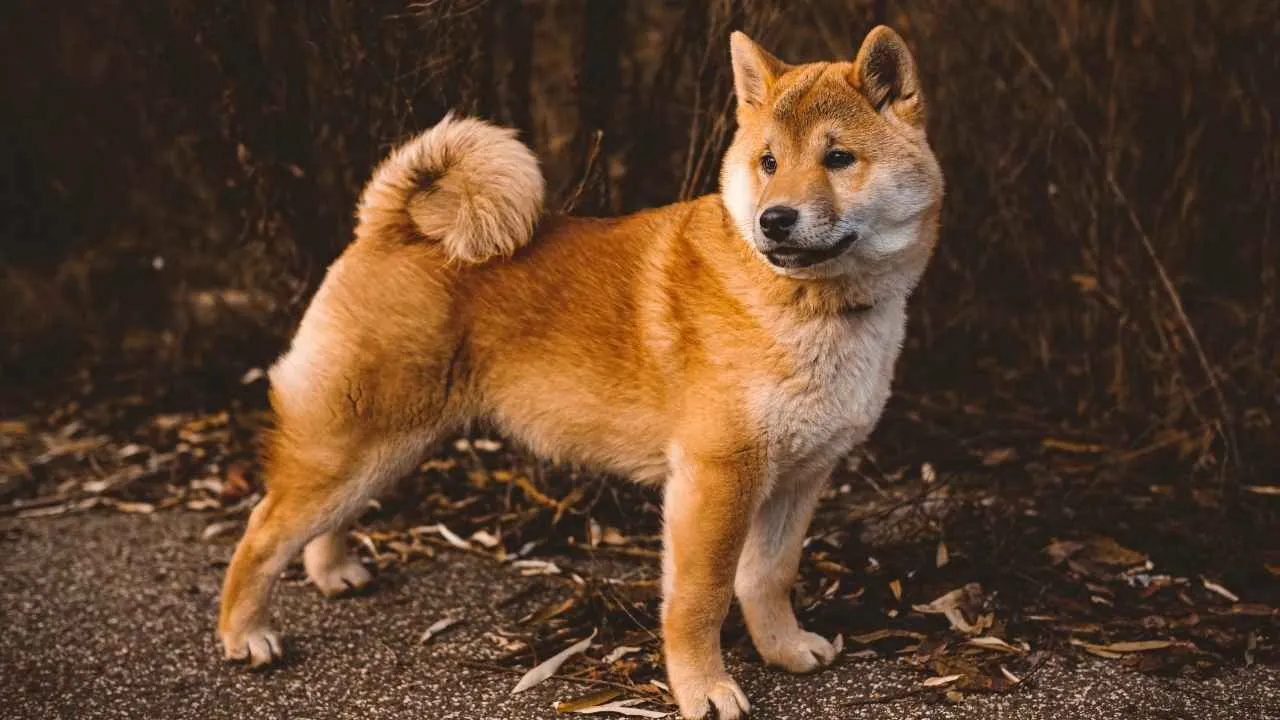
The Shiba Inu is the canine equivalent of a perfectly edited autumn aesthetic, especially in that iconic red coat. The American Kennel Club recognizes red, red sesame, and black and tan as the breed’s characteristic colors, with lighter cream, buff, or grayish thick double-coat tones contributing to the overall visual effect.
That famous red Shiba was used to hunt small game in mountainous brushwood terrain, and its coat could help it blend visually with reddish-brown vegetation.
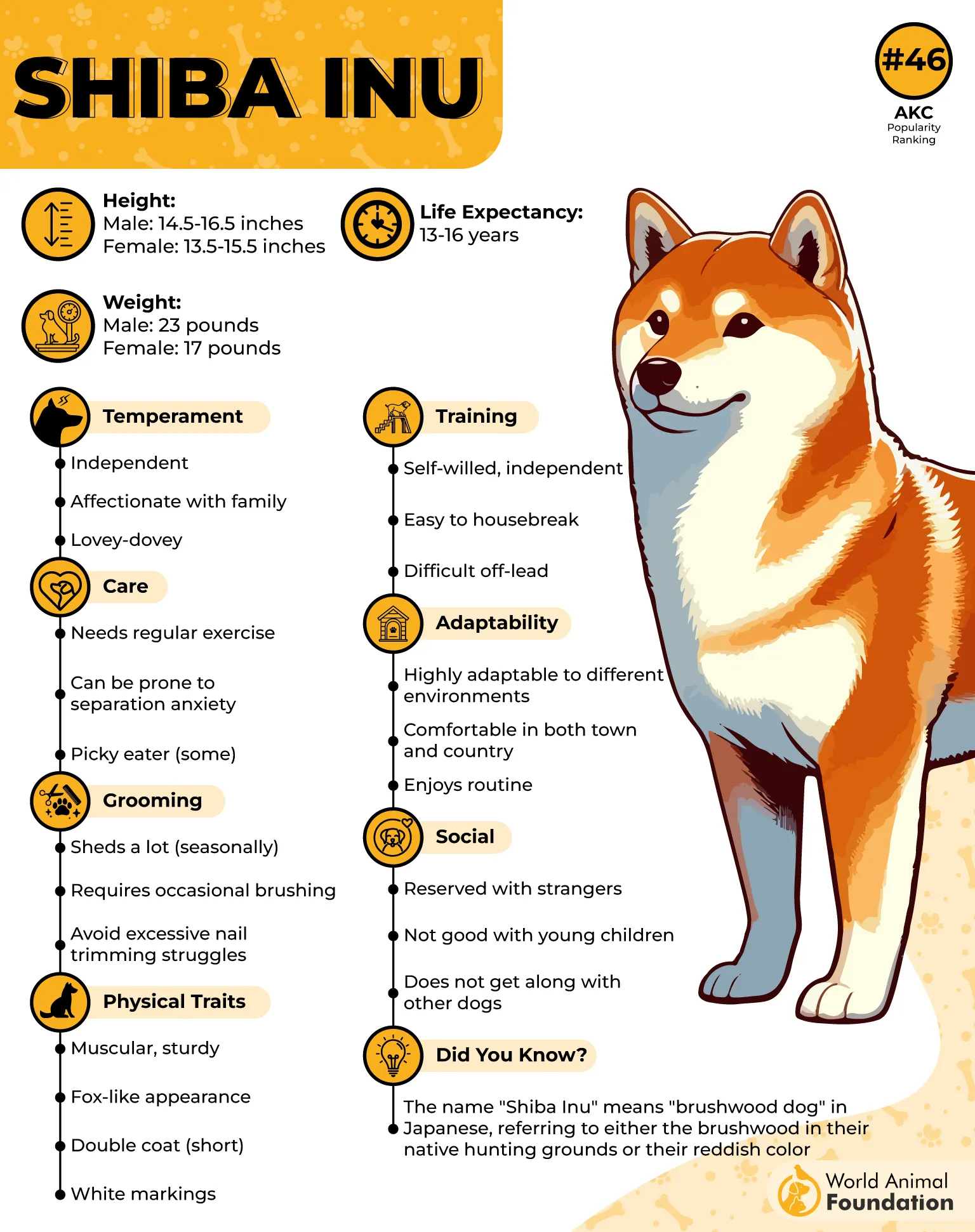
One particularly fascinating variety is red sesame, where darker-tipped hairs create a more textured, peppered appearance instead of one flat block of red. Black-and-tan Shibas bring a completely different vibe, combining dark pigmentation with strategically placed lighter markings that make the face, chest, and legs pop.
They are intelligent, active, independent, and famously strong-willed, so their fox-like appearance comes packaged with a dog that may occasionally look at your training request and silently consider whether it fits their schedule.
What Really Sets Their Striking Coat Colors Apart
Their red, sesame, and black-and-tan combinations create distinctly different visual identities within one compact breed.
The warm coloration has historical roots in the brushwood environments associated with the Shiba’s hunting heritage. American Kennel Club
2. Irish Setter
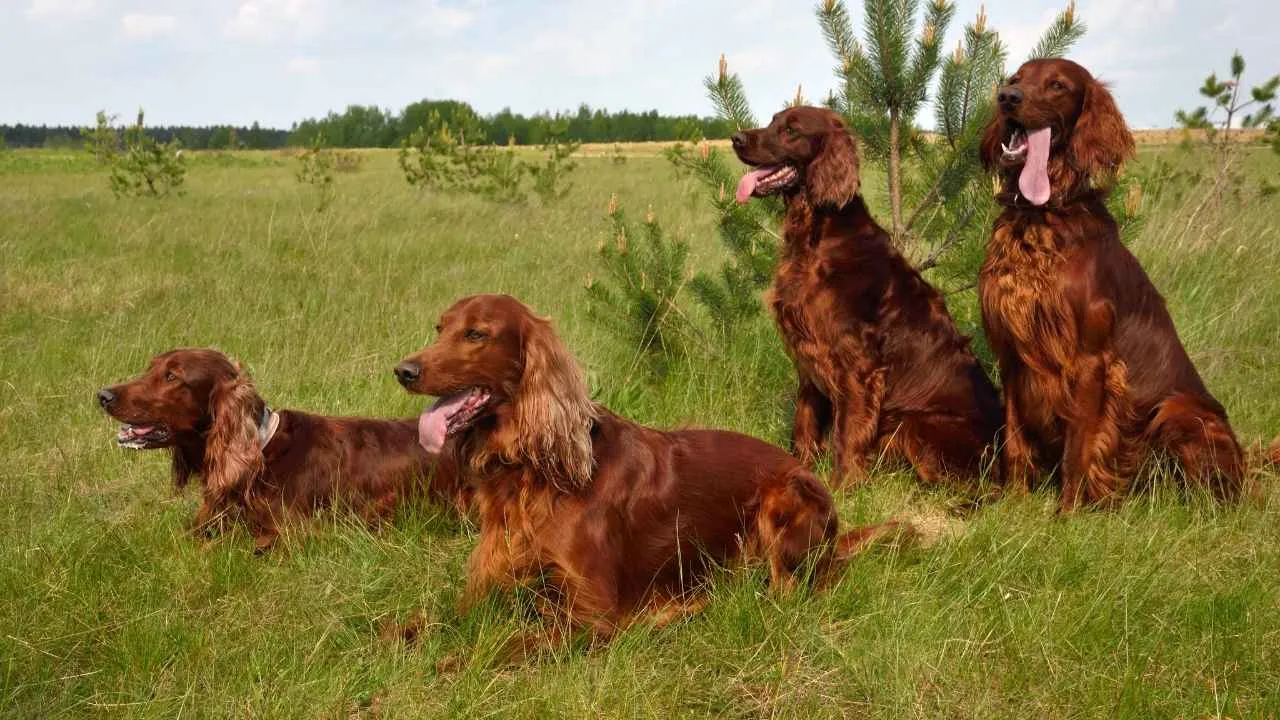
The Irish Setter’s flowing coat is famous for rich red, chestnut, and mahogany shades, creating one of the most instantly recognizable silhouettes in the sporting-dog world.
The color is also deeply connected to the breed’s history, because Irish Setters were developed as athletic field dogs capable of working across the Irish countryside.
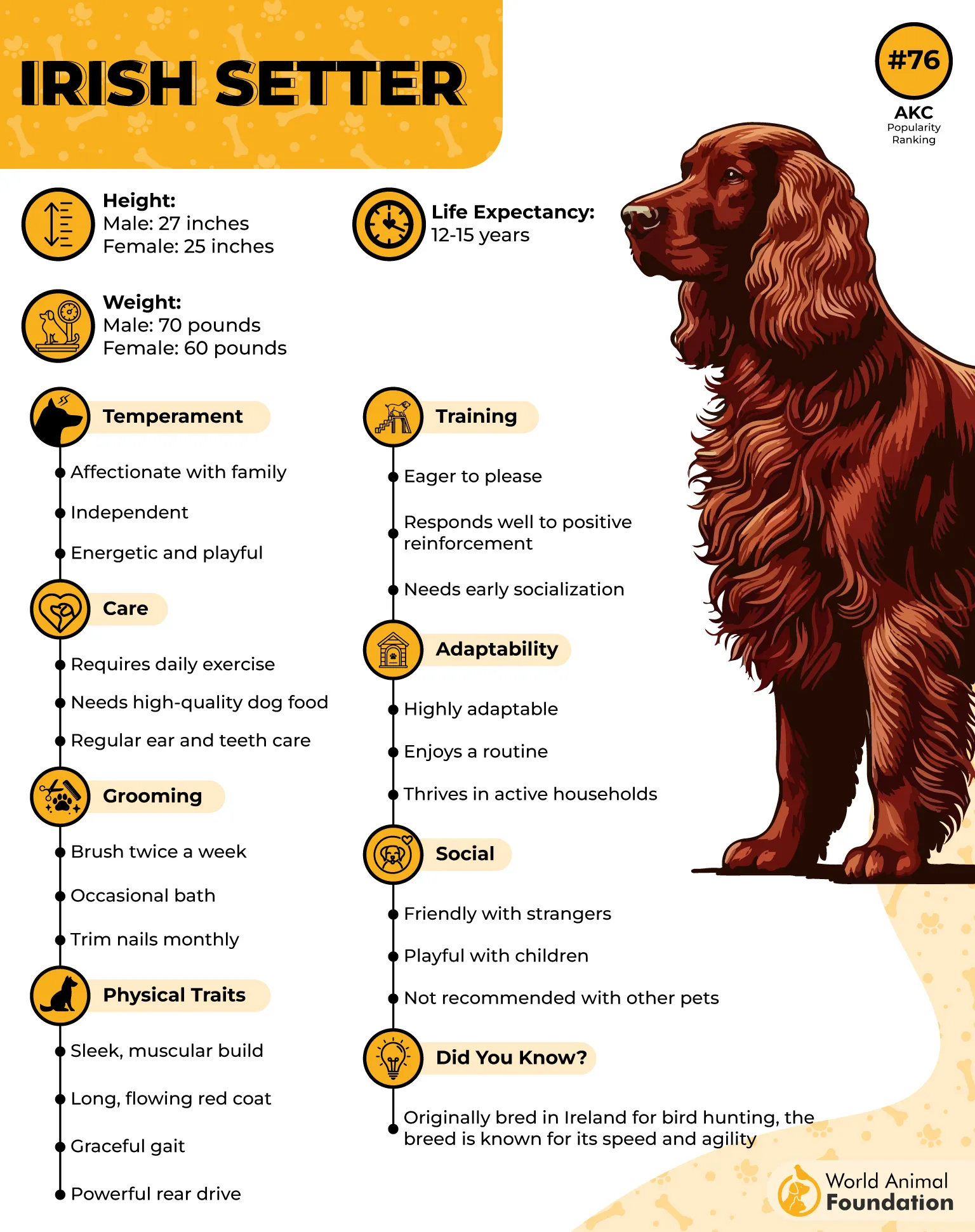
There is something especially dramatic about seeing an Irish Setter in motion because the coat does not simply sit on the body like a uniform blanket. The longer feathering catches movement, so the mahogany or chestnut color seems to ripple as the dog runs.
That beauty comes with an athlete underneath it, and Irish Setters were bred to cover ground while locating and pointing upland game birds. PetMD describes them as tireless field workers, while they can also participate successfully in activities such as agility and rally.
What Really Sets Their Striking Coat Colors Apart
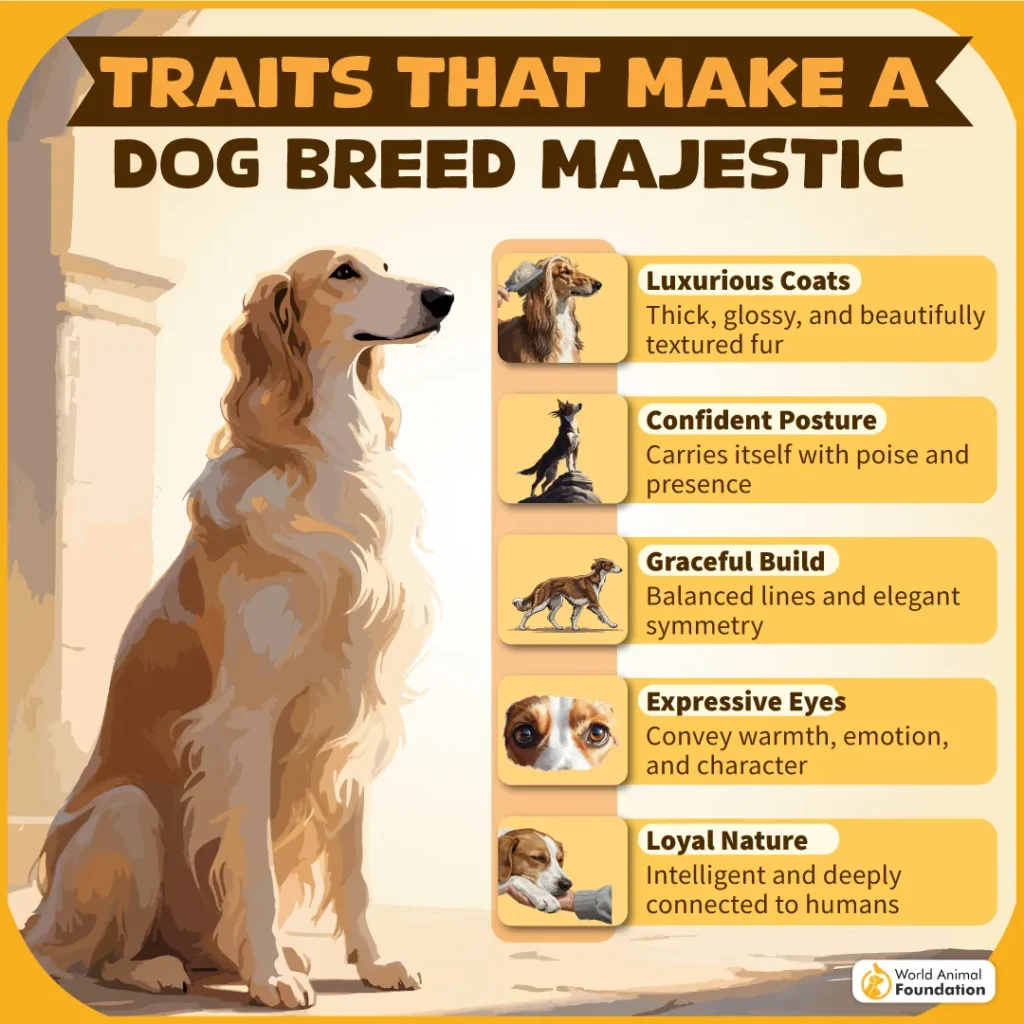
Deep mahogany, chestnut, and red tones give the breed a visual identity that is almost impossible to confuse with another sporting dog.
The solid-red appearance became particularly prominent during the 19th century through selective breeding and changing preferences.
3. Border Collie
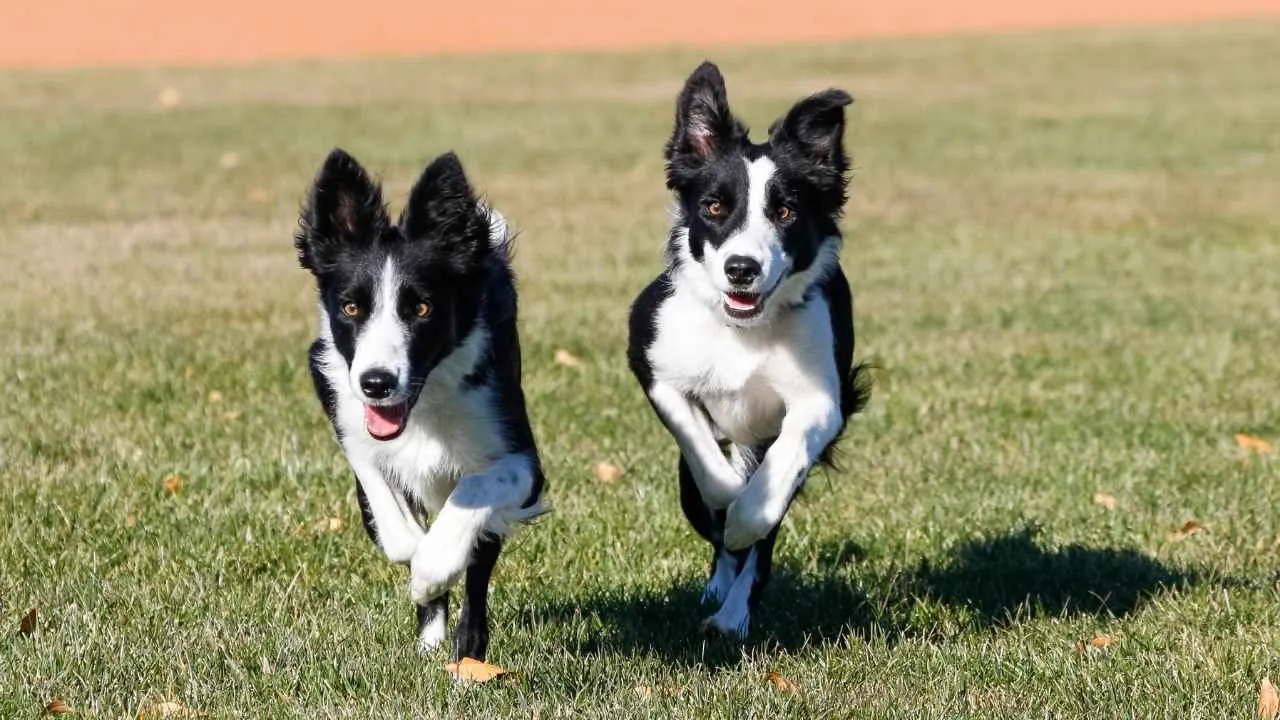
The Border Collie coats can appear in numerous colors and patterns, while the breed’s instantly recognizable “herding eye” gives almost every color combination an intense, focused expression.
Black and white is probably the image most people summon when someone says “Border Collie,” and that combination has become practically iconic. Yet the breed’s historical development prioritized working ability over appearance, which helps explain why Border Collies can vary considerably in color, coat type, and markings.
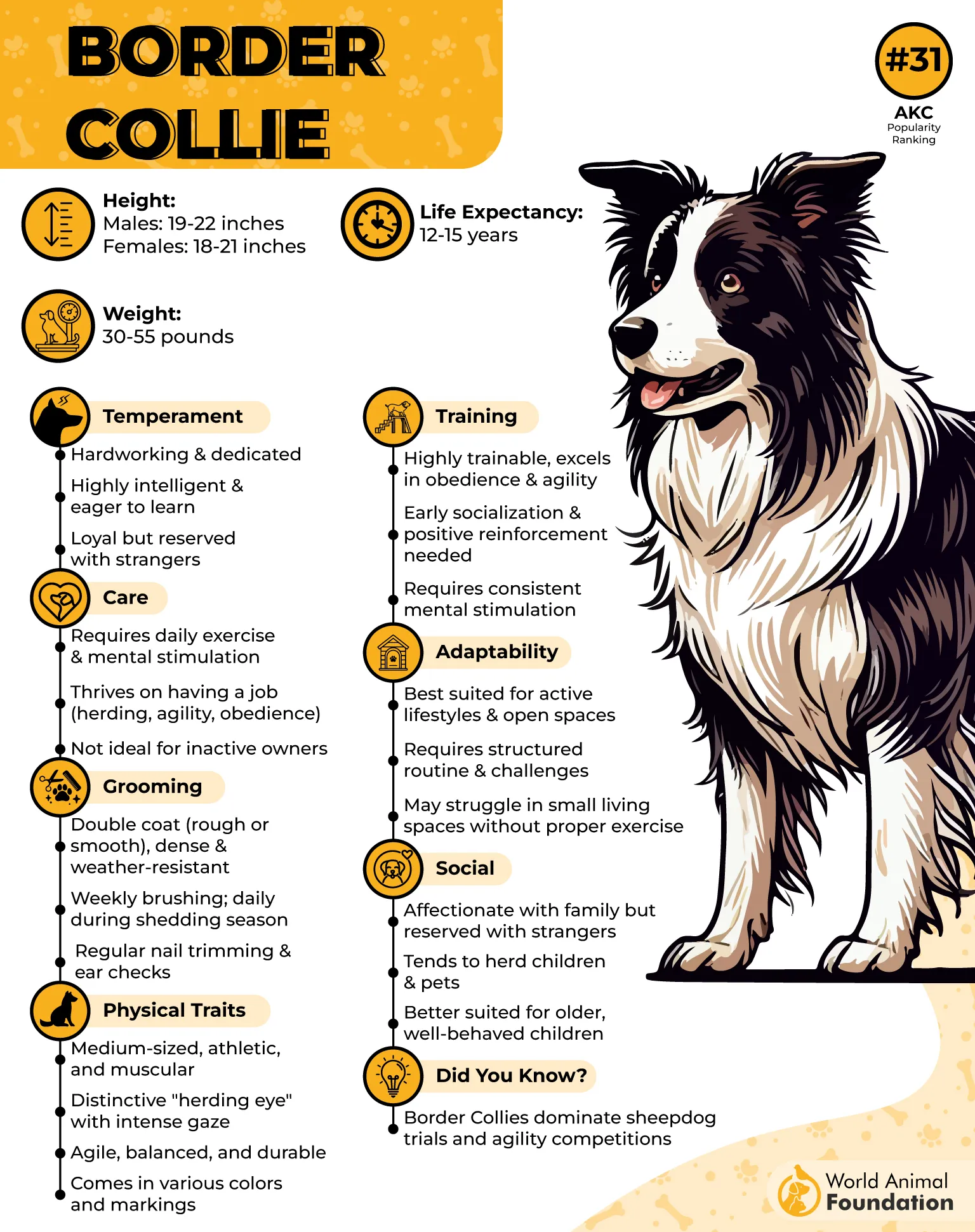
Their coat comes in rough and smooth varieties, and VCA Animal Hospitals say both are dense, weather-resistant double coats designed for demanding outdoor work. That practical construction reminds us the beautiful fur was never merely decorative; these dogs were developed to work around livestock in changing terrain and weather.
And yes, that famously gorgeous coat can produce a serious household hair situation. Regular brushing helps prevent mats and remove debris.
What Really Sets Their Striking Coat Colors Apart
Their color diversity reflects a breed historically shaped more by livestock-working performance than by fashion.
The classic black-and-white look contrasts beautifully with the breed’s other accepted colors and patterns.
4. Australian Shepherd
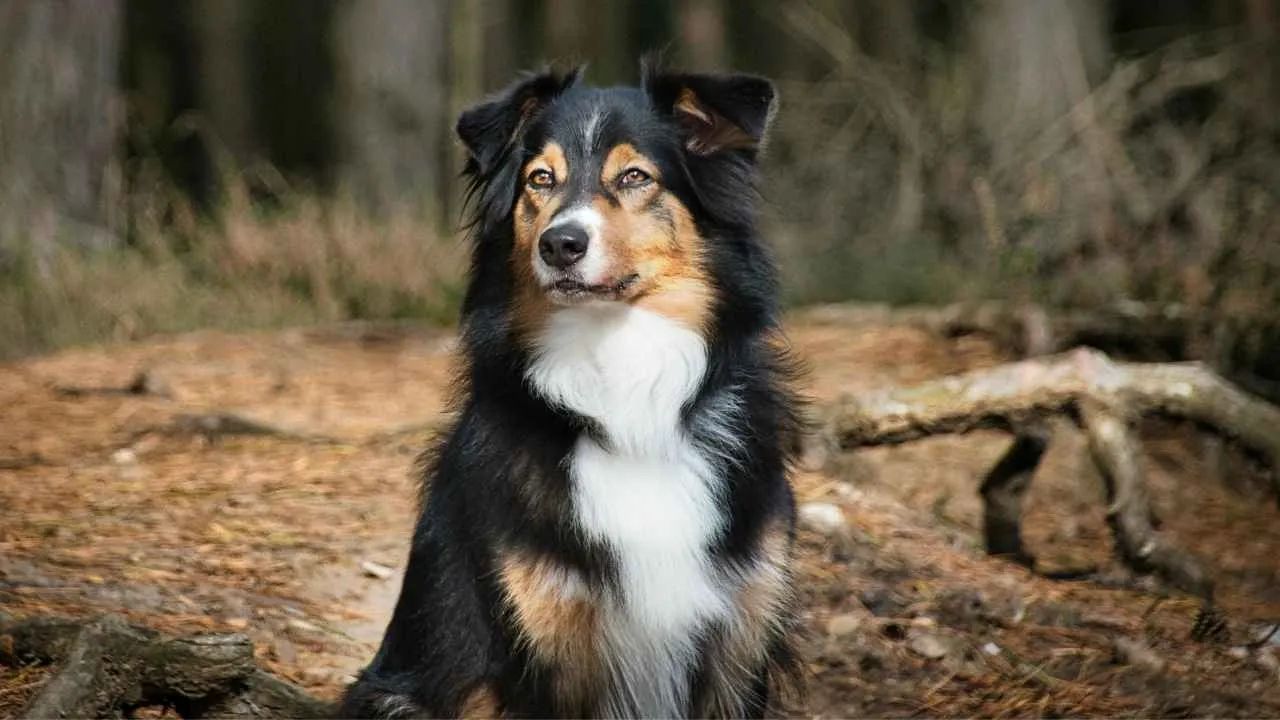
The Australian Shepherd is where coat-color genetics gets seriously interesting, because merle can make an already gorgeous dog look like it was painted with watercolor.
Blue merle can create black patches against a grayish background, while red merle produces brown or liver-colored patches over a lighter warm base. The result can be wildly individual, meaning two Aussies with the same broad color category can still look dramatically different from each other.
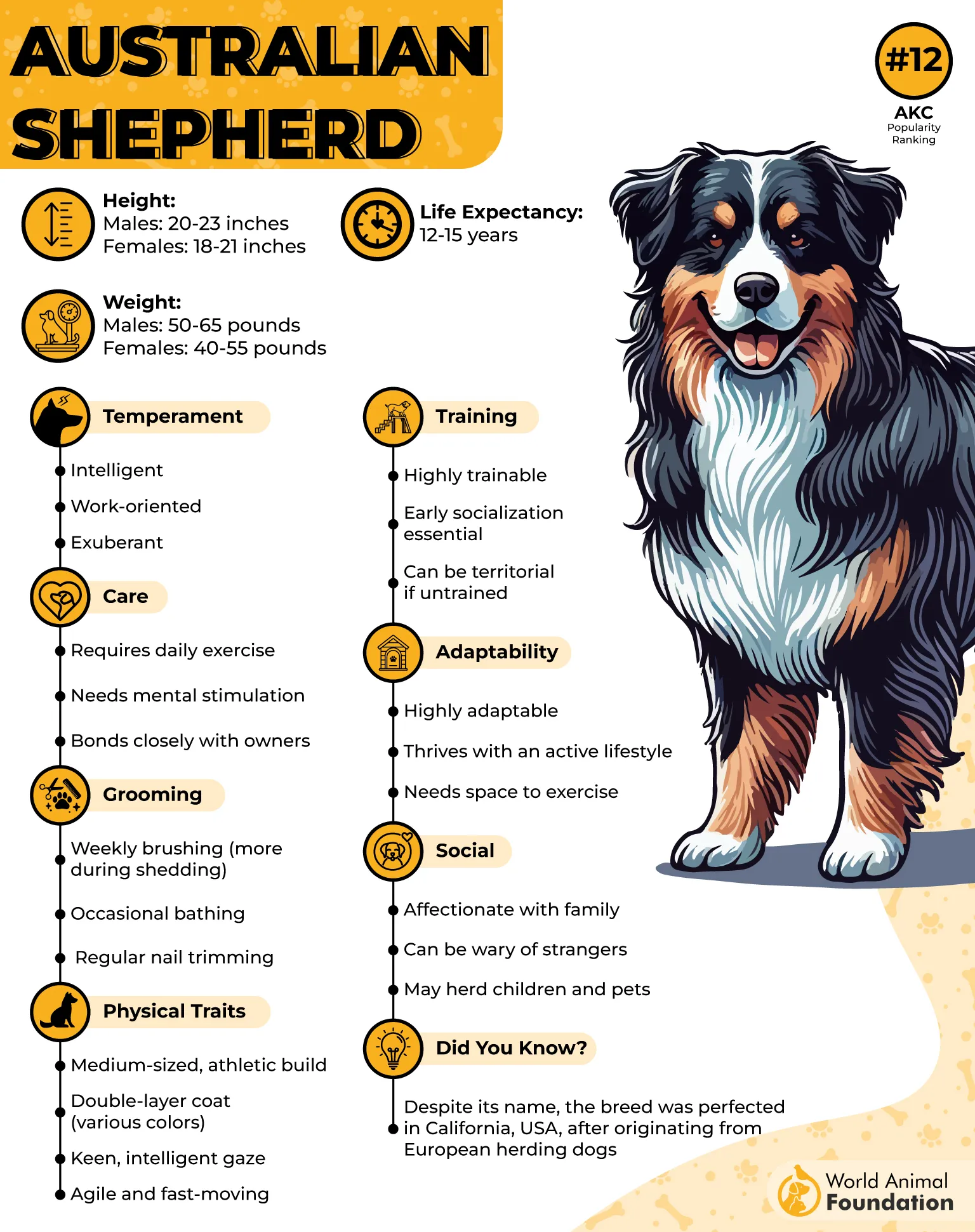
NHS says that the science behind merle is particularly fascinating because researchers have linked the pattern to variation at the SILV locus, and the merle phenotype involves irregular dilution of eumelanic pigmentation.
Scientific studies have also linked certain merle genotypes to developmental abnormalities affecting hearing and vision, which is why responsible breeding practices matter so much with this pattern.
Beyond the color spectacle, Australian Shepherds are athletic, highly intelligent working dogs with considerable energy and a strong desire for mental engagement.
What Really Sets Their Striking Coat Colors Apart
Merle creates irregular pigment patches that can make every individual coat look almost custom-designed.
Blue merle and red merle demonstrate how the same broad pattern can produce completely different visual moods.
5. Dachshund
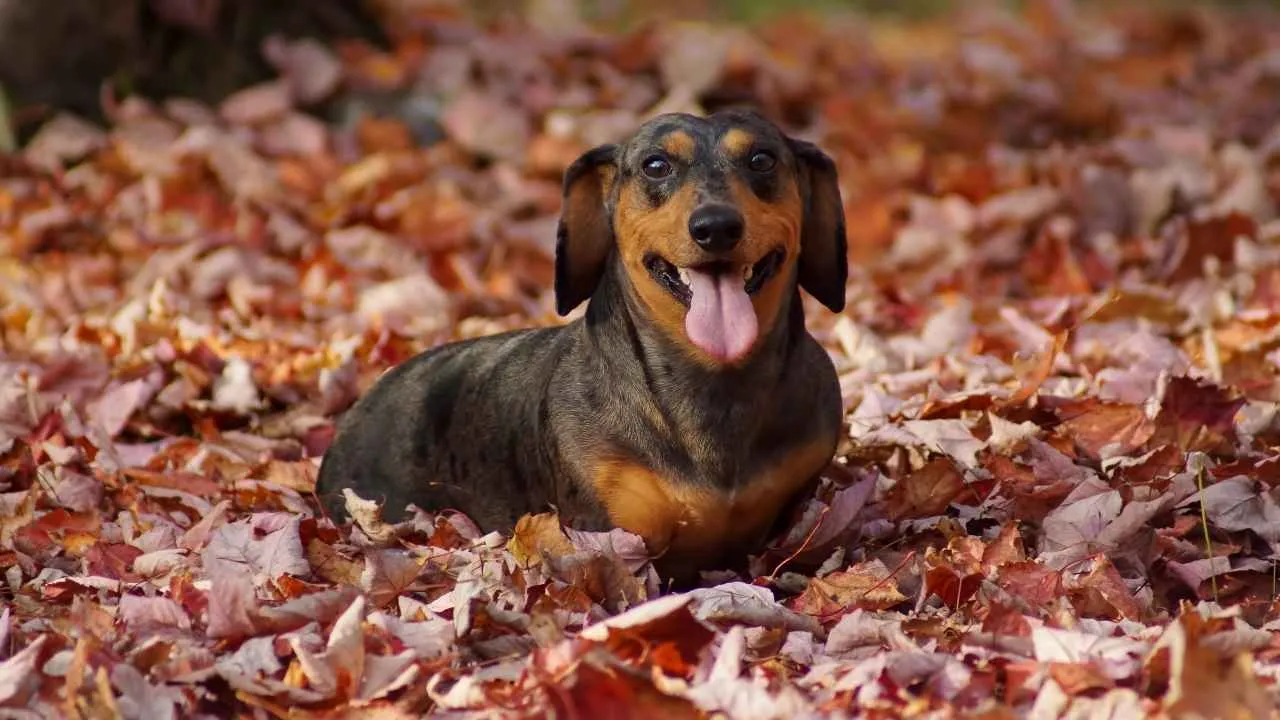
Dachshunds exist in smooth, long-haired, and wire-haired varieties, and those coat types can appear in an extensive range of colors and patterns.
Classic Dachshund looks include red, black and tan, cream, chocolate and tan, and wild-boar coloration, while recognized patterns include dapple, brindle, piebald, and sable. That means one Dachshund can look like a glossy little red sausage; another can resemble a spotted artwork.
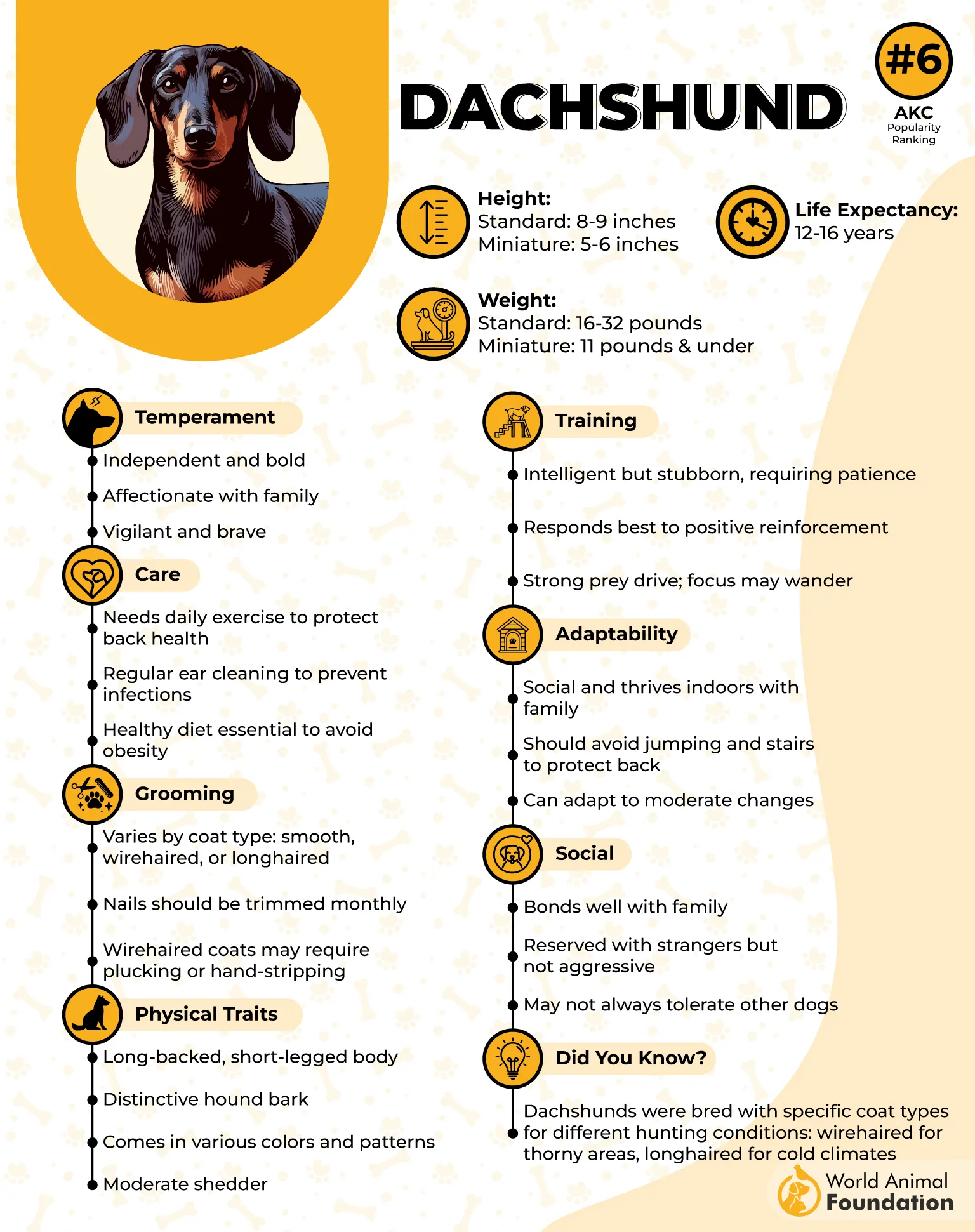
Dapple is particularly eye-catching because it is a merle-type pattern involving lighter areas against a darker base. The genetics behind these patterns are not merely cosmetic trivia, either, because some pigmentation genes can connect to sensory development.
Their coat variety also fits neatly with the breed’s practical origins as a hunting dog designed to work close to the ground. The three coat types offer different textures and appearances, while the Dachshund’s distinctive body shape lets it pursue quarry into underground burrows.
What Really Sets Their Striking Coat Colors Apart
Dapple, brindle, piebald, sable, and solid colors can create dramatically different visual effects.
Their color diversity makes the Dachshund a great example of how genetics, coat type, and selective breeding can produce enormous visual variation within a single breed.
6. Afghan Hound
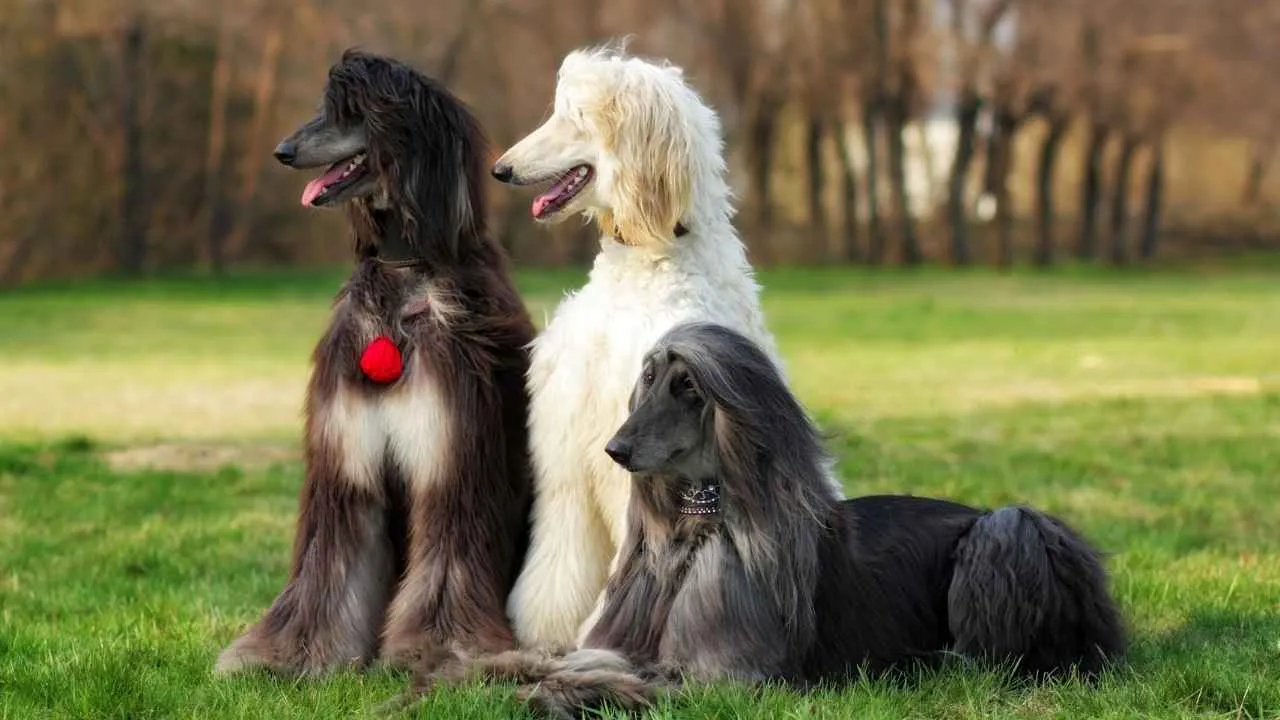
The Afghan Hound doesn’t just have a coat; it has a full luxury collection. Its long, silky hair, dramatic topknot, feathered ears and legs, and distinctive short-haired saddle give the breed an almost surreal silhouette that looks like it belongs in an ancient royal portrait.
You can find Afghans in many shades and combinations, and their luxurious texture makes whatever color they wear look extra dramatic.
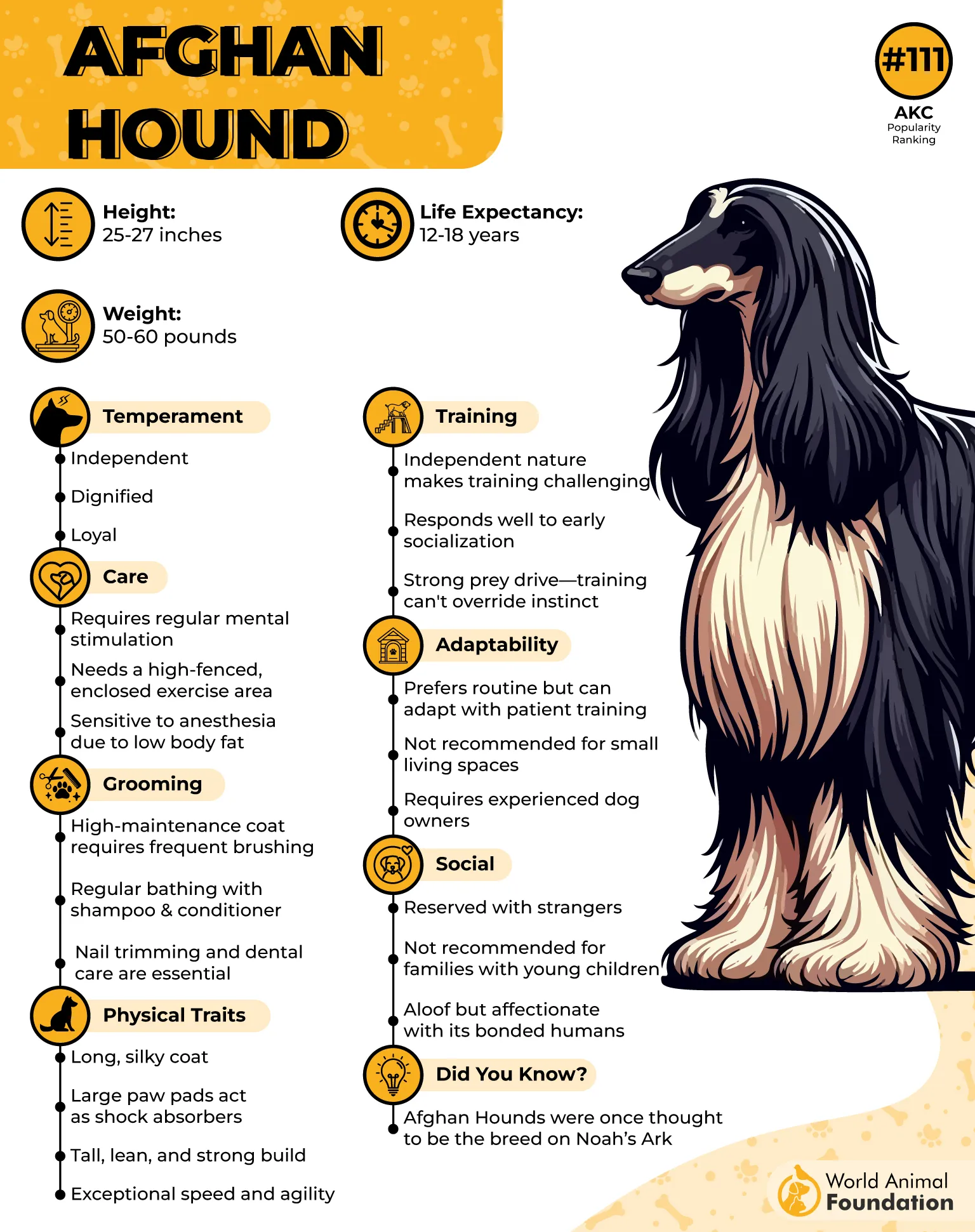
The breed’s coat wasn’t developed purely for glamour, even though it now looks ready for a high-fashion campaign. These hound dogs originated in regions associated with present-day Afghanistan, India, and Pakistan, and their thick, silky coats helped protect them from harsh climatic conditions.
An intriguing structural feature hides beneath all that flowing hair: mature Afghans traditionally have shorter, close hair along the back, creating the characteristic saddle.
What Really Sets Their Striking Coat Colors Apart
Unlike breeds limited to a small group of signature colors, the Afghan Hound standard permits all colors.
The contrast between silky long hair and the naturally short saddle creates visual dimension even when the dog has a relatively uniform color.
7. Boxer
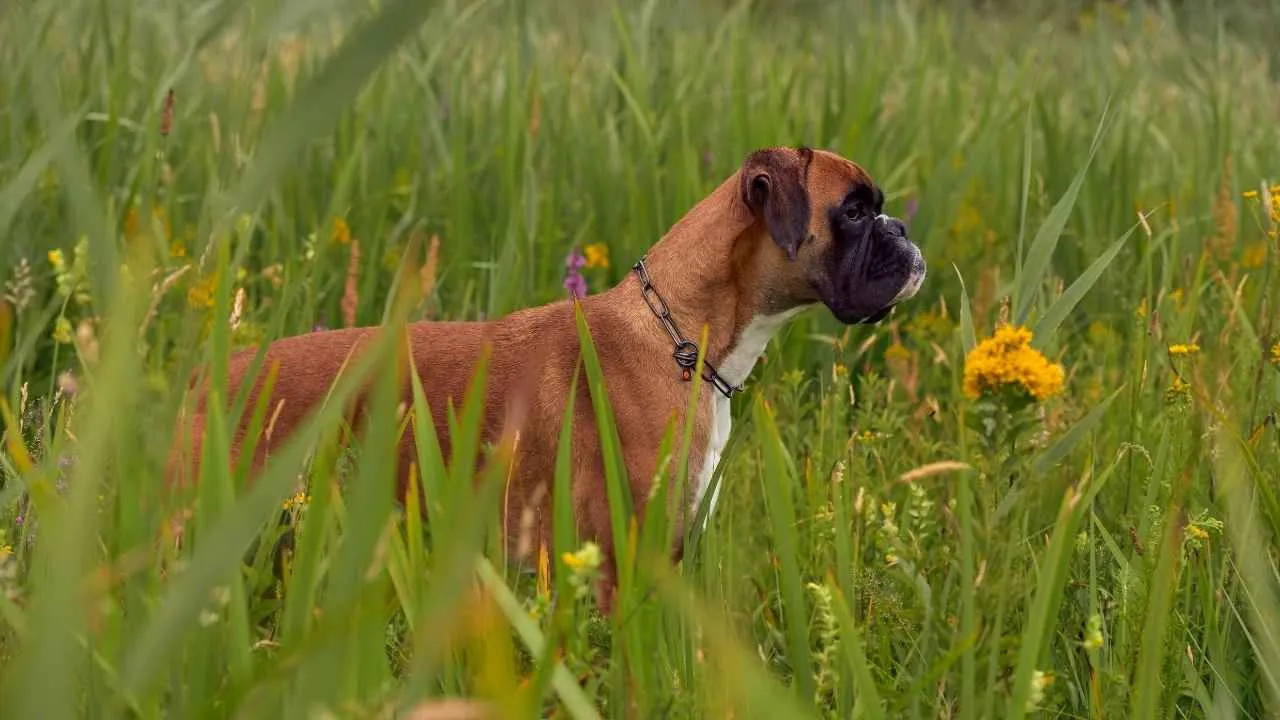
The Boxer keeps things comparatively simple in the color department, but wow, does it make those colors count. The breed’s accepted base colors are fawn and brindle, with white markings commonly appearing across the coat and adding sharp contrast to the muscular body.
Fawn can range from a lighter tawny tone toward deeper reddish shades, while brindle introduces dark striping over the fawn background. In heavily brindled dogs, the dark stripes can become so concentrated that the coat appears almost black at first glance, although the underlying fawn remains visible.
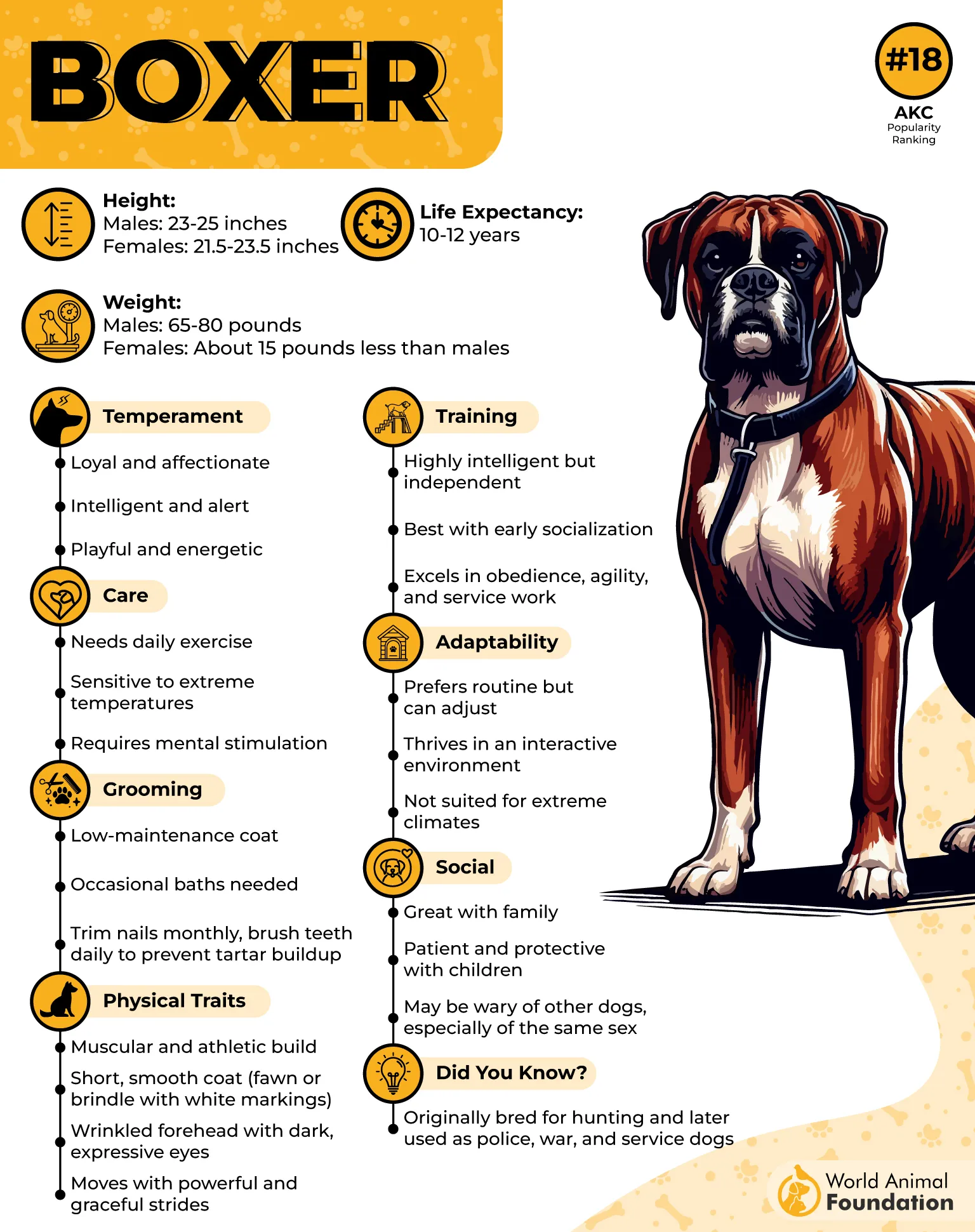
Brindle is particularly cool because it transforms a relatively straightforward base color into something much more graphic. Instead of large patches or delicate flecks, the darker stripes create a visual rhythm across the body, making the Boxer look like someone applied a dramatic monochrome filter to a traditional fawn coat.
This beautiful breed’s personality is every bit as expressive as its face and coat. These gentle dogs are intelligent, energetic, affectionate, playful, and protective, which explains why a serious-looking brindle Boxer can switch from imposing guardian mode to family clown in about three seconds.
What Really Sets Their Striking Coat Colors Apart
The breed’s fawn-to-brindle spectrum creates major visual variation without requiring an enormous list of base colors.
Brindle turns the coat into a natural striped pattern, with some dogs showing extremely dense dark striping.
Conclusion
The canine world is packed with coats that look almost too good to be real. Each breed tells a different story about how pigmentation, coat structure, genetics, selection, and historical purpose can come together.
Siberian Huskies, Golden Retrievers, Cavalier King Charles Spaniels, Great Danes, Bernese Mountain Dogs, and Alaskan Malamutes are also considered some of the most beautiful dog breeds in the dog world.
The coat of the dog breeds tells the story underneath it—the landscapes they worked in, the jobs they performed, the people who bred them, the genetics passed through generations, and the personalities living inside those spectacular coats.
