




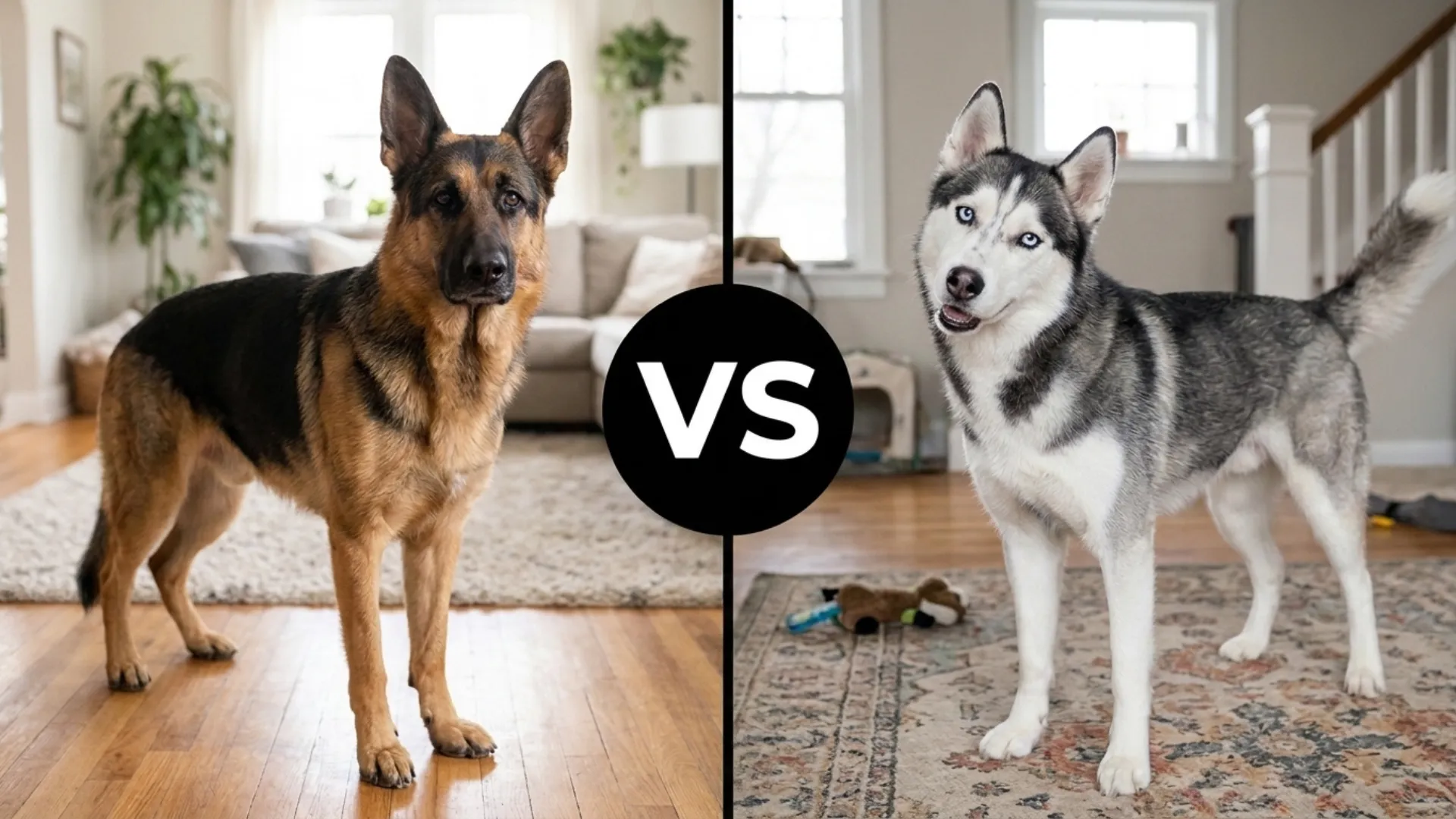
Choosing between a German Shepherd and a Siberian Husky is kind of like choosing between the highly organized team captain and the adventurous friend that somehow turns a normal walk into a three-hour side quest.
Both breeds are intelligent, athletic, striking, and can become deeply loved family companions. Their personalities, however, come from very different historical jobs.
The German Shepherd was developed as a versatile working and herding dog with strong trainability, focus, confidence, and loyalty toward its handler.
The Siberian Husky was shaped by generations of endurance sled work, where teamwork, stamina, independence, and the ability to keep moving across huge distances mattered enormously.
Let’s compare these two breeds and see which is a better family dog and which is a better hunter.
German Shepherd vs. Siberian Husky: Where Their Personalities Differ
Origins & Purpose
The German Shepherd Dog originated in Germany as a highly functional herding and working breed. Early breeders focused heavily on intelligence, working ability, trainability, courage, and physical efficiency rather than creating a dog purely for appearance.
Historically, German Shepherds could help manage enormous flocks by acting almost like a moving fence around livestock. The AKC notes that the breed’s efficient movement let it cover large areas while conserving energy, which was essential for long working days.
The Siberian Husky comes from a completely different working tradition. It developed as a northern sled dog that worked in teams, pulling relatively light loads at moderate speeds over very long distances. Rather than being bred primarily to focus intensely on one handler, Huskies needed to cooperate socially while still possessing enough independence and stamina to keep working across demanding terrain.
These two histories create the foundation for nearly every difference discussed below. German Shepherds were shaped strongly around responsiveness, versatile work, and close cooperation with humans, while Huskies were shaped around endurance, movement, social teamwork, and independent problem-solving.
Size & Build
German Shepherds are the more substantial of the two breeds. PetMD says that adult males generally stand about 24 to 26 inches tall and weigh roughly 65 to 90 pounds, while females usually measure about 22 to 24 inches and weigh about 50 to 70 pounds. Their bodies are muscular, athletic, and designed to combine strength with smooth, efficient movement.
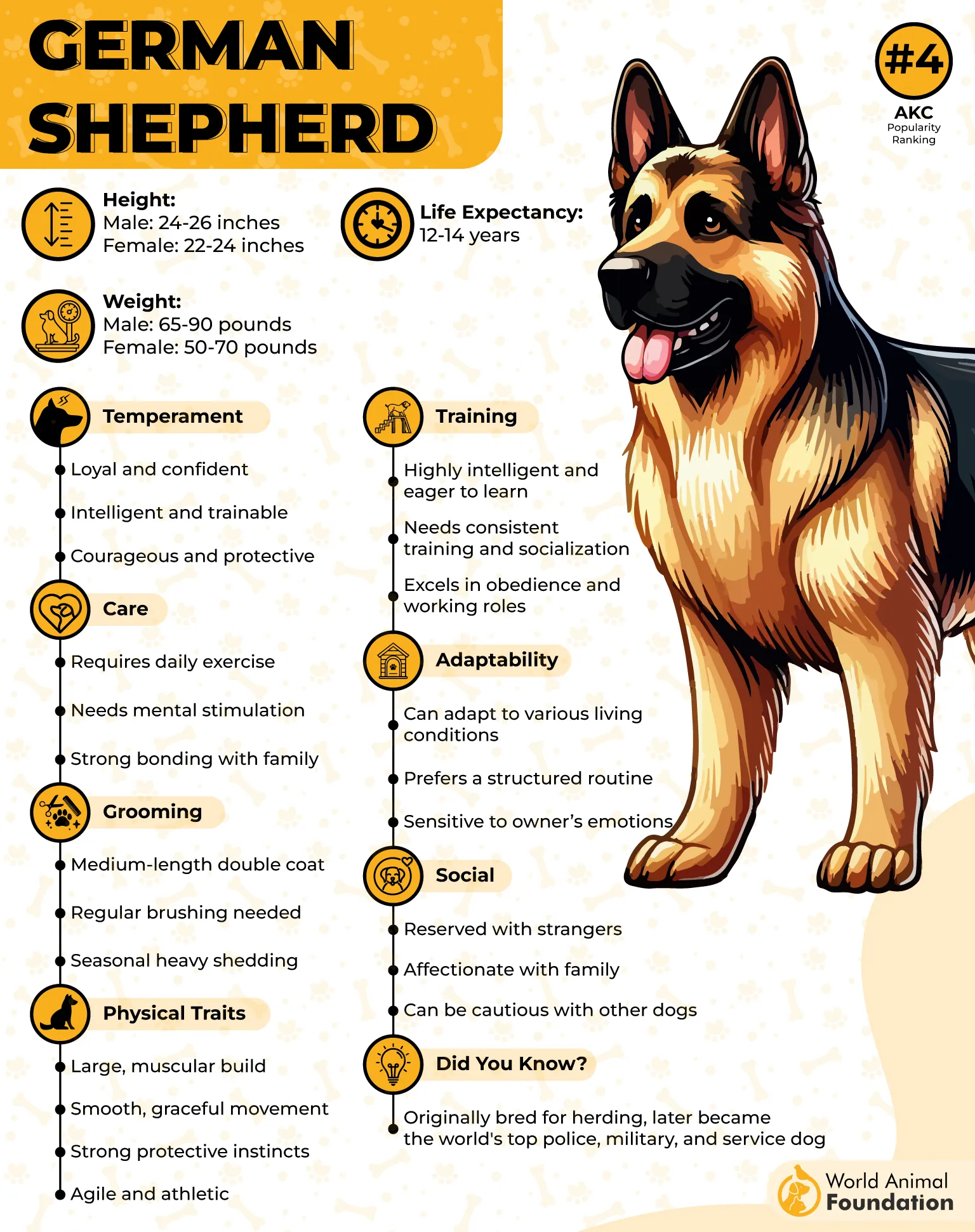
A well-built German Shepherd should look powerful without appearing bulky or clumsy. The German Shepherd Dog Club of America describes the ideal dog as strong, agile, well-muscled, alert, and full of life, with an overall impression of physical fitness.
The Siberian Husky is noticeably lighter and more compact. Britannica says males are about 21 to 23.5 inches and 45 to 60 pounds, while females generally stand 20 to 22 inches and weigh roughly 35 to 50 pounds. That lighter frame reflects the breed’s job of traveling efficiently over distance rather than relying on raw bulk.
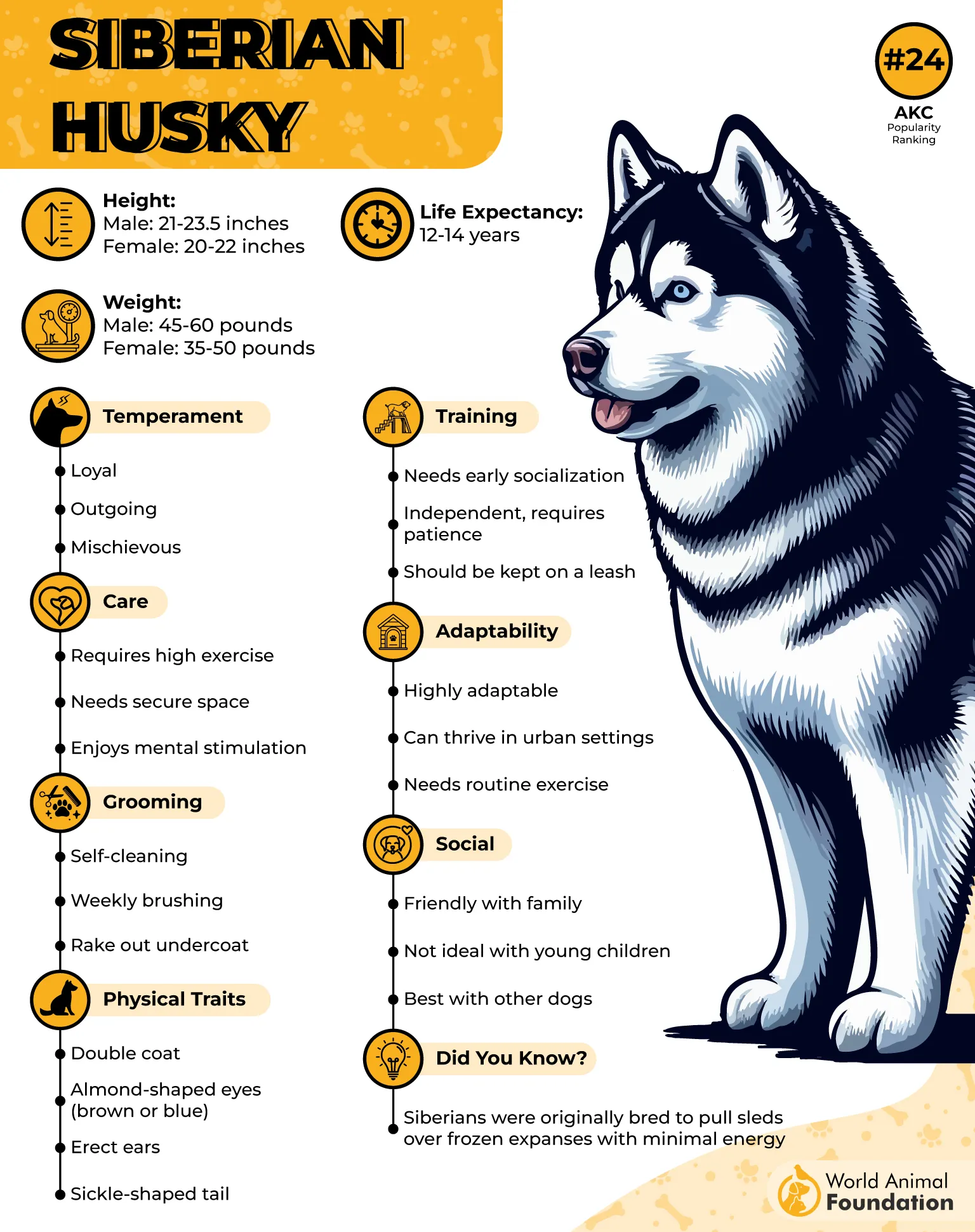
Huskies should also appear balanced rather than heavily boned when compared to other dogs of this size. Their movement should look smooth and seemingly effortless, and the breed standard emphasizes a combination of speed, endurance, and an efficient gait.
Pricing & Availability
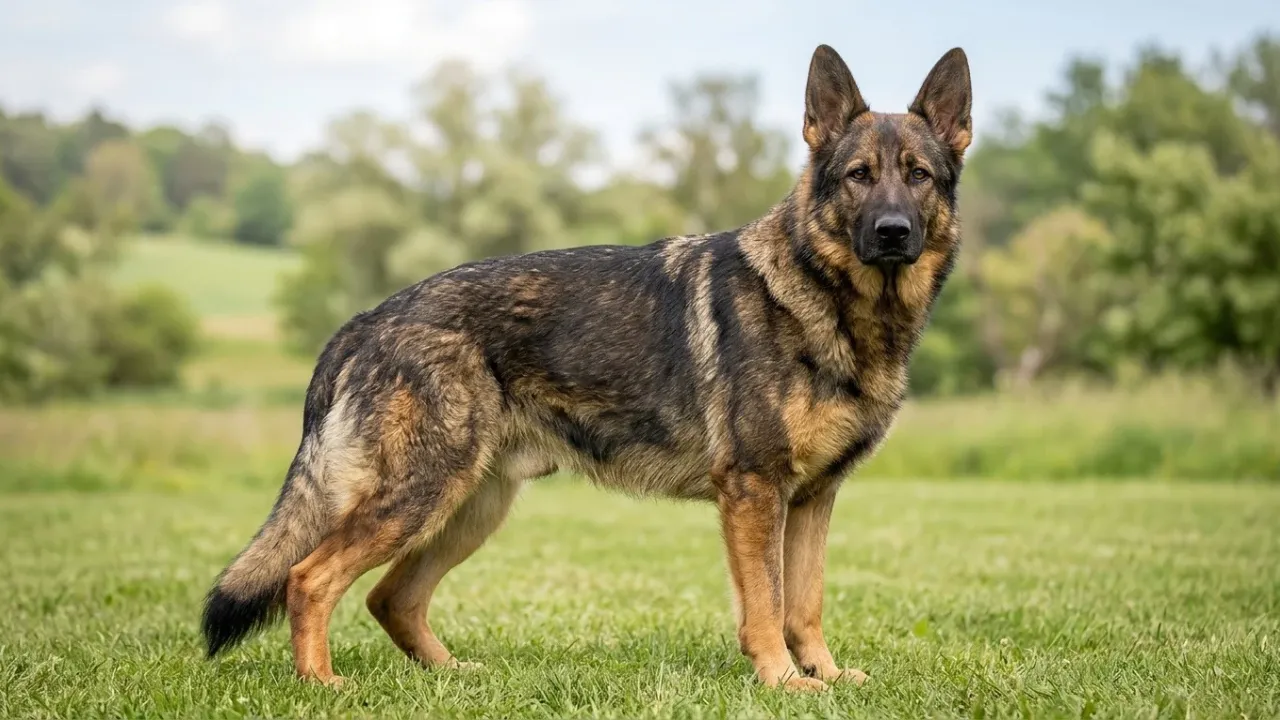
German Shepherds are widely available in many countries because the breed has remained extremely popular for family, sport, service, security, and working roles. That does not mean every puppy advertised as a German Shepherd comes from responsible breeding, though.
Current U.S. listings on Good Dog show German Shepherd puppies commonly selling in the low-to-mid $2,000 range, with the platform recently showing an average near $2,600 and a typical listed price around $2,250, depending on the breeder and individual puppy.
Siberian Huskies are also widely available, though responsible breeders may have waiting lists for carefully planned litters. Current Good Dog listings put many responsibly bred Siberian Husky puppies in the United States around $1,200 to $2,000, with one breed page giving an approximate average around $1,300. Again, think of those numbers as a current marketplace reference rather than a fixed price tag.
Rescue is another route worth considering for either breed. Both German Shepherds and Huskies regularly appear in general shelters and breed-specific rescues, sometimes because owners underestimated their exercise, training, or management needs.
Temperament & Personality Style
German Shepherds typically have a more serious, focused, observant personality. The breed is self-confident and direct without being hostile, and notes that it may show some natural aloofness rather than immediately befriending everyone it meets.
That selective social style is one reason German Shepherds often form extremely strong relationships with their primary people. They are loyal, confident, courageous, and steady, with a long-standing reputation for devotion to their handlers. They can be deeply affectionate at home while remaining much more reserved with unfamiliar people outside the family circle.
The Siberian Husky sits almost on the opposite end of the stranger-danger spectrum. The Siberian Husky Club of America’s breed standard describes the typical Husky as friendly, gentle, alert, and outgoing.
Huskies are also famous for bringing a mischievous edge to daily life. It is friendly, interested, and sometimes mischievous, which might be one of the most accurate breed descriptions ever written.
Exercise Needs & Energy Levels
A German Shepherd is absolutely not a decorative sofa accessory. The breed is active and athletic,c and insufficient exercise can lead to frustration and unwanted behavior. Daily movement should therefore include more than a slow five-minute loop around the driveway.
Physical exercise works best when paired with mental work. Tracking, obedience, scent games, agility, herding activities, retrieving, structured hikes, and problem-solving exercises can all help satisfy the German Shepherd’s instinct to work with purpose.
The Siberian Husky takes the energy conversation and turns the volume up. This breed was developed specifically for endurance movement over huge distances, so extended walking, running, hiking, pulling sports, and active play are much closer to its original operating system.
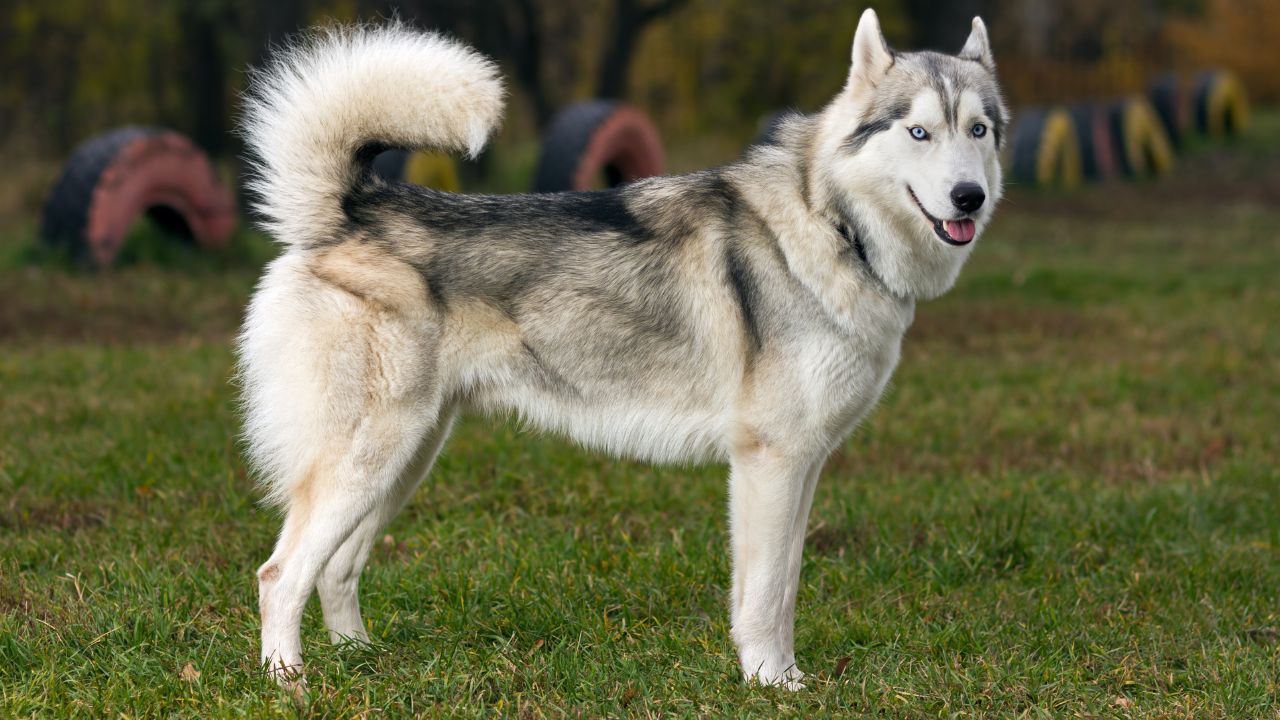
Under-exercised but high-energy Huskies can become impressively creative. Digging, escaping, chewing, pacing, vocalizing, climbing, and turning the backyard into an unauthorized archaeological site are all behaviors experienced owners frequently warn about.
Training & Obedience
Training is one area where the German Shepherd’s working heritage really shines. AKC notes that German Shepherds are highly intelligent and traditionally valued for their ability to learn, retain training, and perform specialized services. This combination explains their long history in detection, assistance, tracking, obedience, protection work, and service roles.
A well-bred GSD often wants to interact with its handler and enjoys clear responsibilities. That doesn’t mean training happens automatically, because high intelligence can produce bad habits as efficiently as good ones when boundaries are inconsistent. Early socialization, puppy classes, impulse control, recall practice, neutrality around distractions, and ongoing obedience matter enormously.
The Siberian Husky is intelligent too, but its intelligence often shows up differently. Huskies can learn commands perfectly well while simultaneously deciding whether performing the command seems worthwhile at that exact moment. Owners expecting robotic obedience may therefore experience what could politely be described as character development.
Grooming Needs & Shedding
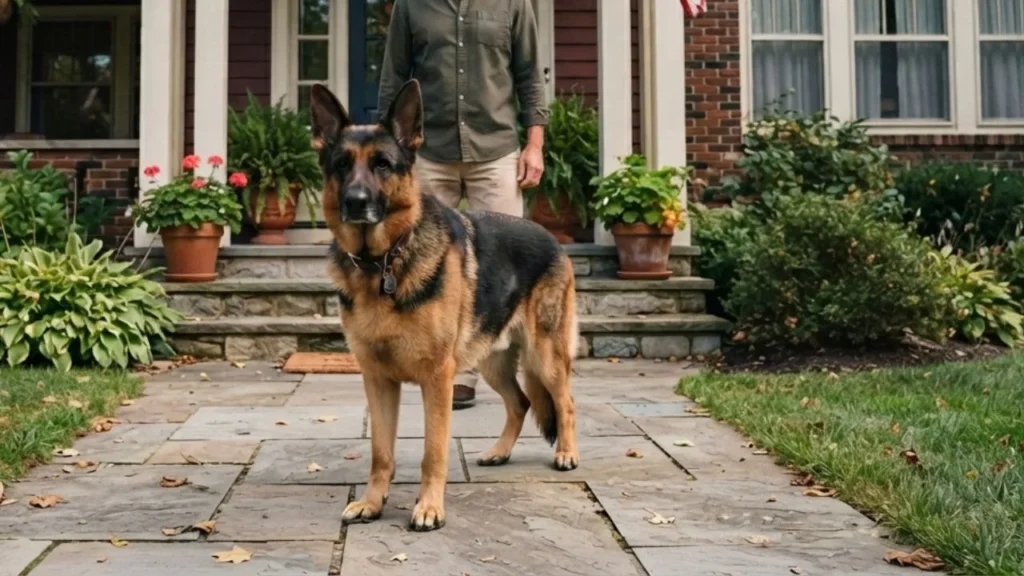
Both breeds arrive with double coats and absolutely zero respect for your black clothing. German Shepherds have a dense outer coat and a softer undercoat that protects them while letting them work in different weather conditions.
The German Shepherd’s shedding reputation isn’t exactly an internet exaggeration. Loose hair can collect on furniture, carpets, vehicle seats, clothes, and apparently objects located in rooms the dog has never even entered. A quality deshedding tool, slicker brush, vacuum cleaner, and acceptance of your new fur-based interior design are highly useful.
Siberian Huskies also have a medium-length double coat consisting of a dense, soft undercoat and smoother guard hairs. Their coat is specifically designed for northern working conditions, and the undercoat may naturally disappear during shedding season. The breed should look well-furred without the coat becoming excessively long or shaggy.
Outdoor Adventure & Exploration
German Shepherds can make outstanding adventure companions because they combine endurance, athleticism, responsiveness, and strong relationships with their handlers. Hiking, trail walking, tracking, camping, swimming, structured running, and dog sports can all provide useful outlets.
The Husky, meanwhile, seems almost purpose-built for people who love adventures. Their standard emphasizes efficient movement, endurance, and the ability to cover long distances while working in harness. For hiking enthusiasts, canicross participants, sled-sport fans, skijoring enthusiasts, and active campers, that stamina can be ridiculously fun.
For controlled outdoor partnership, the German Shepherd often feels easier to direct. For endurance adventures where running and exploration are central, the Husky’s physical design is hard to ignore. Whichever dog you choose, conditioning, temperature awareness, hydration, paw protection, wildlife safety, and reliable handling should always come before creating the cinematic Instagram moment.
Health & Lifespan
German Shepherds can live long, active lives, but prospective owners should understand the breed’s key health concerns. Responsible screening for hip dysplasia, elbow dysplasia, and degenerative myelopathy is necessary.
German Shepherds live about 12 to 14 years, though lifespan varies by genetics, body condition, disease, veterinary care, environment, and many other factors. Other databases sometimes report somewhat shorter figures, illustrating why breed lifespan numbers should be treated as estimates rather than guarantees.
Siberian Huskies are generally regarded as a relatively robust working breed when responsibly bred. UKC Dogs places their life expectancy at around 12 to 14 years, giving them a comparatively solid lifespan for a medium-sized athletic dog.
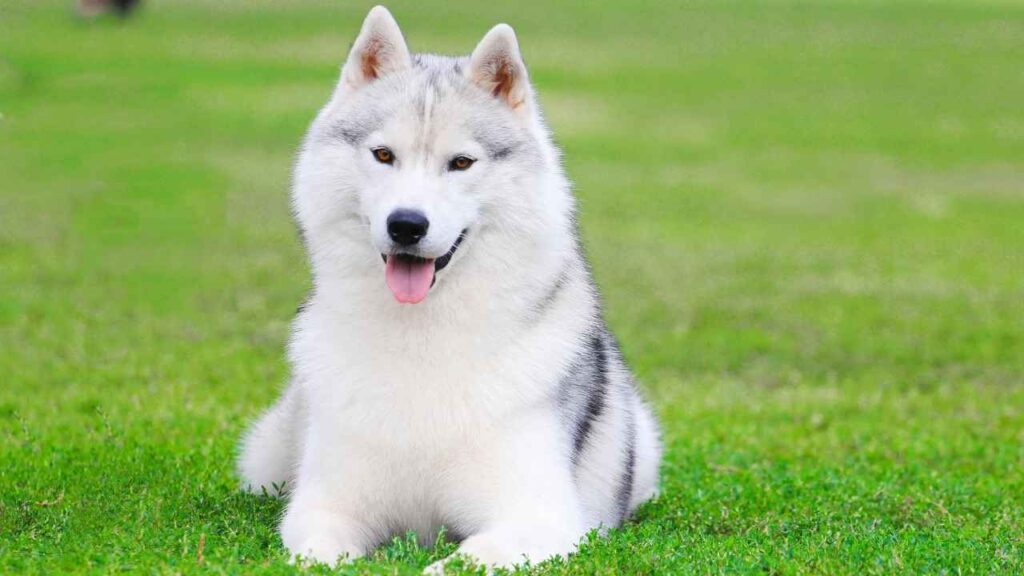
Health comparisons should therefore focus less on predicting an exact age and more on breeding quality and prevention. Good nutrition, healthy weight, dental care, appropriate exercise, physical and mental stimulation, vaccinations, parasite control, routine veterinary checks, and prompt medical attention matter tremendously for both breeds.
Which Dog Breed Suits You Best?
Choose a German Shepherd if you want a dog that naturally leans toward structured cooperation. People interested in obedience, tracking, protection sports, service-style training, advanced commands, or simply having a highly engaged training partner often appreciate the GSD’s working mentality.
It may also suit someone who prefers a dog that is affectionate with family but does not necessarily treat every stranger like its long-lost best friend. Their natural watchfulness and reserve can appeal to owners who want an attentive household companion.
Choose a Siberian Husky if you want a dog that’s energetic, social, adventurous, and full of personality. Huskies can be hilarious companions for active families that enjoy walking, hiking, running, outdoor recreation, and spending substantial time with their dogs.
Conclusion
The German Shepherd and Siberian Husky may both look athletic, intelligent, and impressive, but their personalities run on very different operating systems.
The German Shepherd tends to bring focus, loyalty, responsiveness, watchfulness, and a strong desire to work alongside its person. The Husky brings sociability, endurance, curiosity, independence, humor, and enough adventurous energy to turn an unlocked gate into a travel opportunity.
For structured training, serious work, and a strong handler-focused relationship, the German Shepherd’s historical purpose gives it clear advantages. For long-distance outdoor fun, social companionship, and owners who appreciate a more free-spirited personality, the Siberian Husky offers something completely different.
