




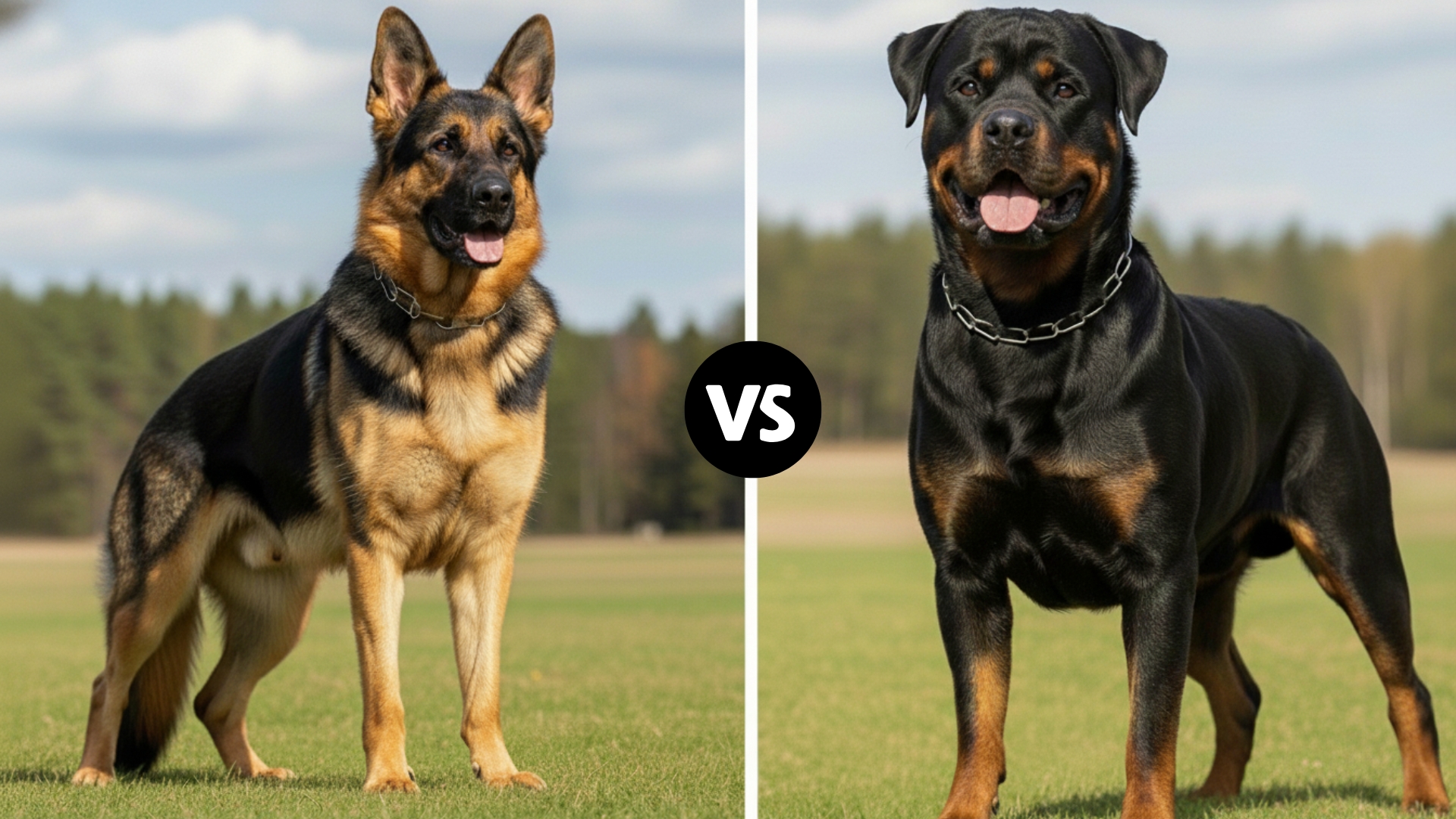
Finding the answer to this question always remains a never-ending debate. Both these dogs excel at their roles in an excellent way. They are popular for their intimidating size and strength. All dog breeds vary widely in temperament, instincts, and behavior because they were bred for different purposes. They differ in their size, strength, and ways of working.
Talking about Rottweiler and GSD, both of them are among the world’s most popular breeds used as guard dogs. But choosing them as a guard dog means you have to check which dog meets your requirements. Both of these are highly intelligent dogs with rich histories and distinctive traits.
This guide will walk you through Rotties and GDS’s history, physical build, temperament, protective instincts, grooming needs, and lifespan. And most importantly: what sets them apart.
German Shepherd vs. Rottweiler: Which Guard Dog Wins?
Rottweiler and German Shepherd differ in every aspect. Below is a quick insight into these protection dogs.
Origin & History
German Shepherd was bred in Germany in 1899 for herding and working for police and military purposes. Because of their smartness, courage, confidence, and abilities in obedience training, they are employed for various roles.
While in history they were used for herding sheep and protecting livestock from predators, today they make great family companions, apart from guarding. The original name of this breed is “Deutscher Schäferhund,” which was translated to “German Shepherd Dog”. It was named by von Stephanitz.
According to Britannica, the breed was officially recognized by the American Kennel Club in 1908. And from 1919 to 1977, the United Kingdom changed its name to “Alsatian” because they were not willing to call their dogs German because of WWI and WWII.
Whereas the Rottweiler was originally bred from Mastiffs of Ancient Rome and was used for protecting and herding. They were used to pull butcher carts and guard property. They have also helped in keeping livestock safe from predators and thieves.
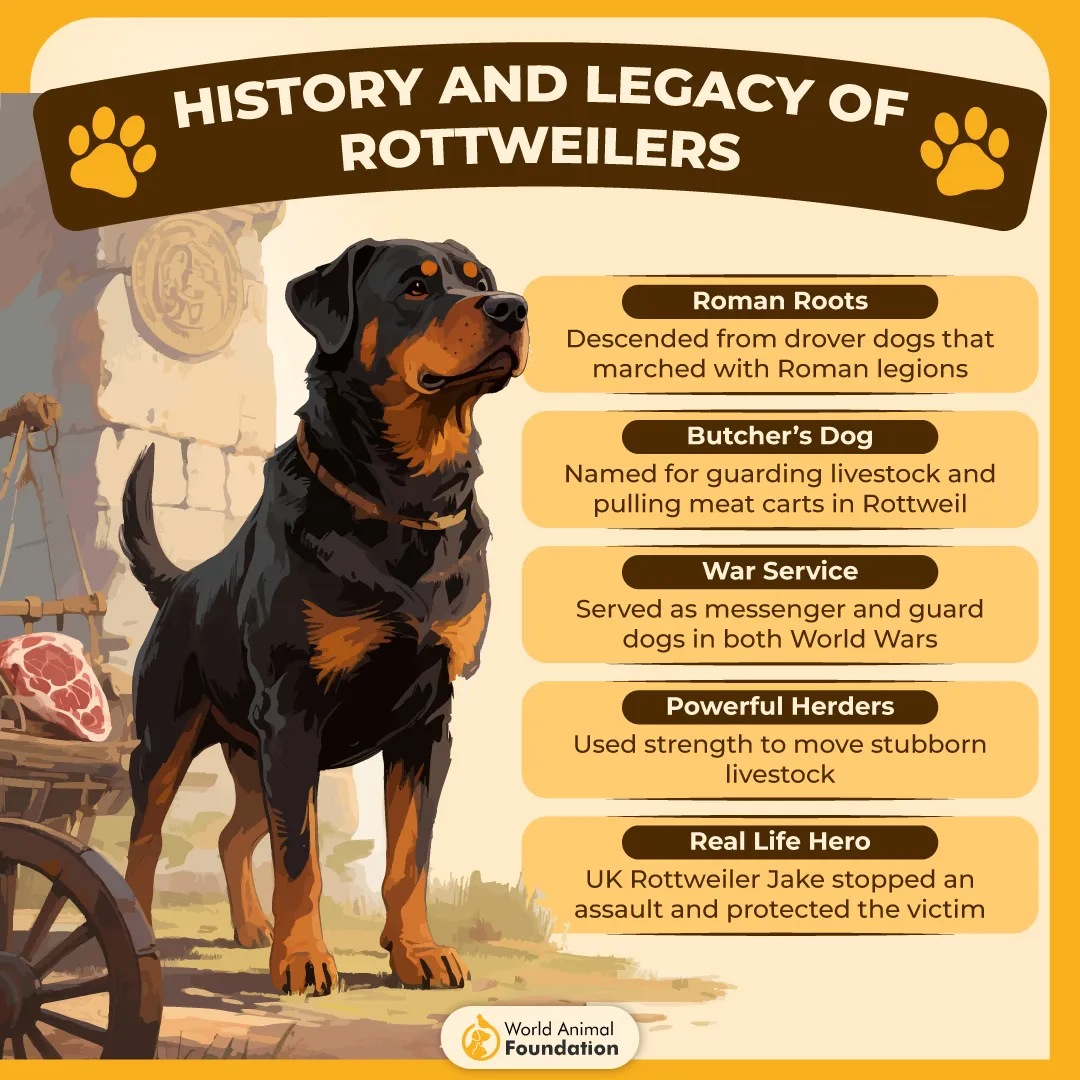
They are highly intelligent, muscular, energetic, and easy to train dogs. They are in demand because they work as guard dogs and therapy dogs as well. The breed got its name from the town of Rottweil in Germany.
The Rottweiler that we know today, historically, was classified into two categories. One was used for draft work because of its massive size, while the other was used for herding because of its small size. Before World War II, the population of Rottweiler was just a few in number. They found their recognition by the AKC and the United States in 1931.
Size & Physical Build
German Shepherd is a large, agile, muscular, and intelligent dog, known for its athletic build. The Rottweiler is a large and muscular dog, known for its muscular build.

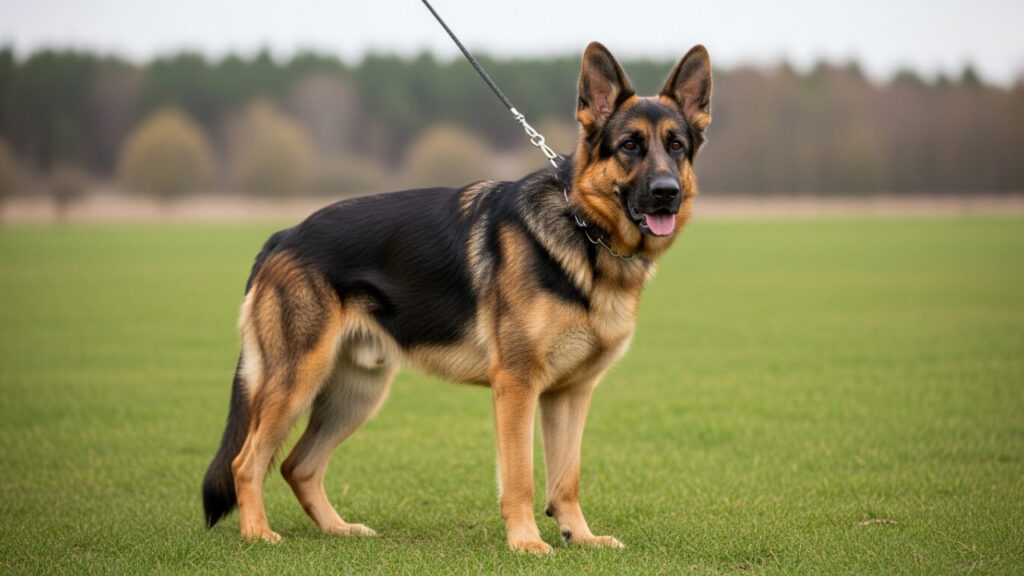
The size of a GSD is 22-26 inches, depending on its gender, while the weight is 50-90 pounds. It has a long body with a slightly sloped back, known for its courage and bravery, they excel at training. It has a thick, medium-length double coat, where the outer coat is tight, and the inner coat is soft.
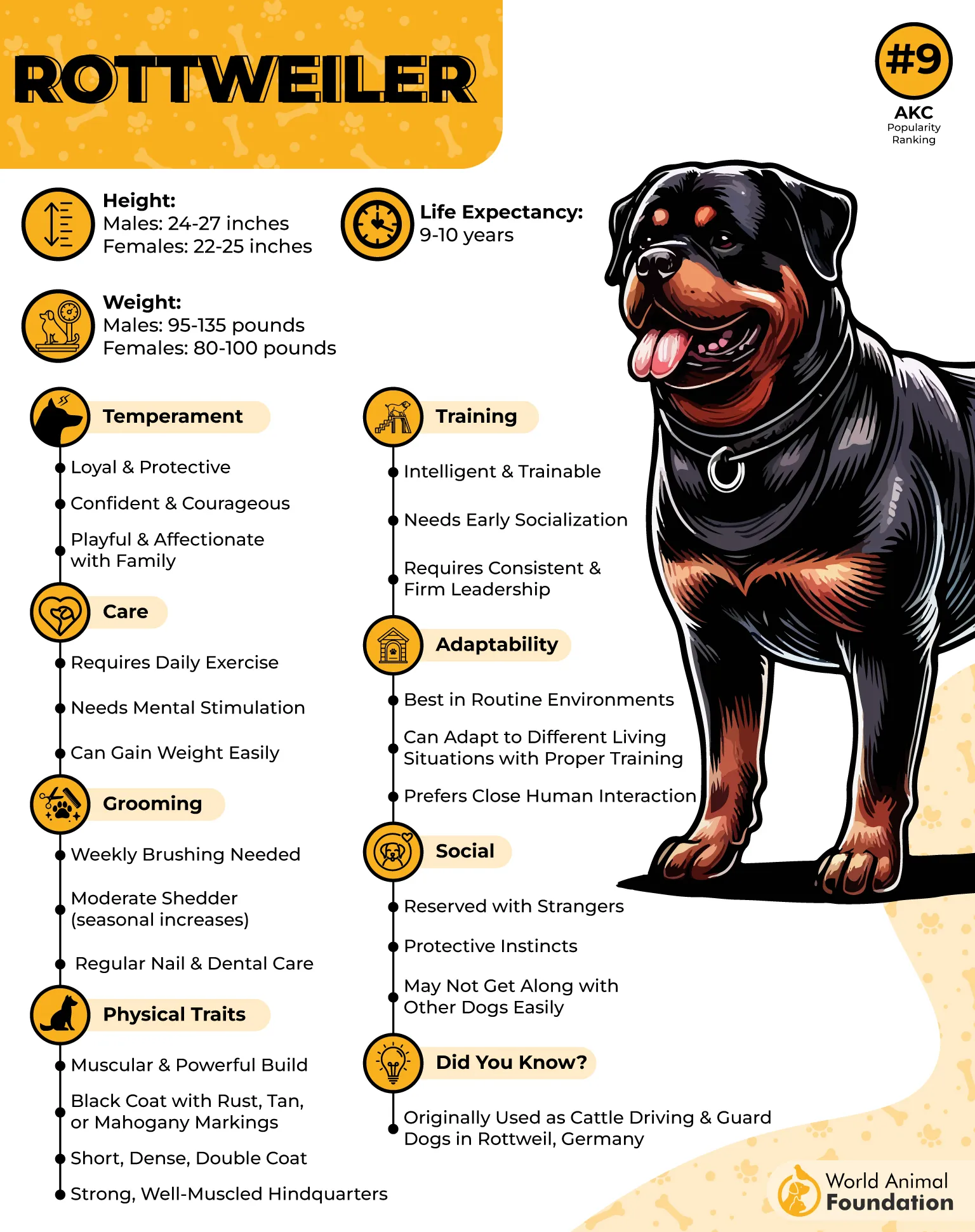
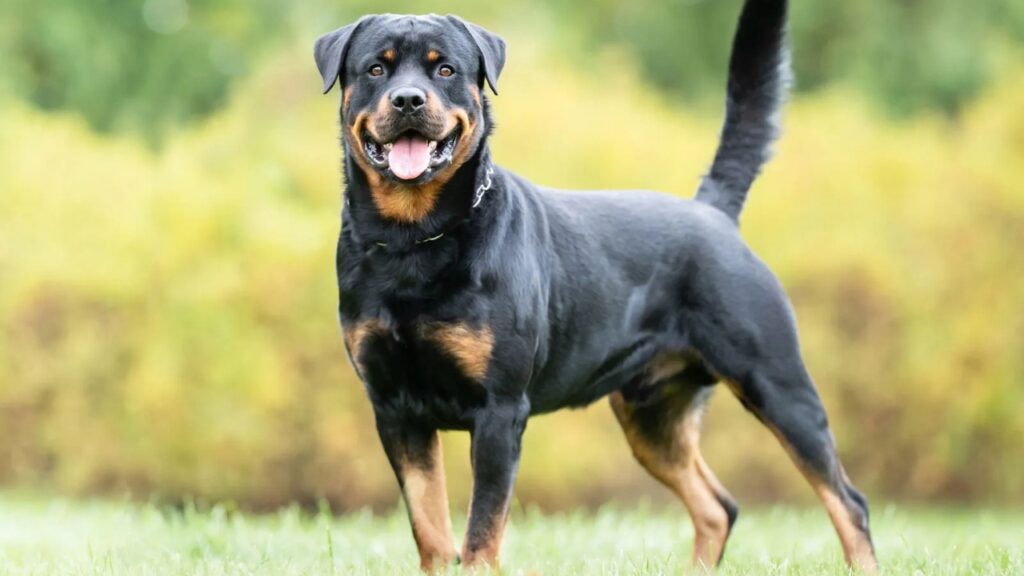
Whereas the Rottweiler is 80-120 pounds with 22 to 27 inches tall. They are independent, smart, and active dogs. They have a broad head, short fur, and wide eyes. Their short, dense medium coat is shiny and sheds a lot. And it has black rust markings on its chest, legs, and face.
Temperament & Personality
Considering these dogs’ temperament, both of them are gentle and aloof. While the GSD requires proper socialization to prevent feeling aloof around strangers, the Rottie needs early socialization to prevent aggression in them.
GSD is known to be gentle around families while being an active and alert dog. They drive to please their owners. Whereas the Rotties are affectionate dogs that possess strong protective instincts.
You may find a Rott barking in an unfamiliar situation. They are calm dogs that are also known to be natural clowns, who make you cherish and enjoy their company, as PetMD shares about them.
Trainability & Intelligence
Be it Rottie or GSD, they cannot thrive without training. The Rottweilers are sharp dogs that are quick learners. And the German Shepherds are intellectual dogs that are fast thinker and known for quick adaptability.
GSD’s have a strong prey drive and, being one of the smart dog breeds, proper training is vital for them. It also helps them make strong bonds with their owners. Experienced dog owners can handle their training well, but if you are a new pet owner, consider taking them to training sessions.
Although Rotties are quick learners, training should start at an early age. They need training and proper socialization to turn into a well-trained dog. They learn new commands quickly, and positive reinforcement is encouraged. They enjoy walking, jogging, and running, etc.
Health & Lifespan
In these canines, health issues are common concerns, and the lifespan also varies. Keeping an eye on their health conditions is important. Whereas the lifespan of GSD is 12-14 years, Rottie has a shorter lifespan than many other breeds, which is 9-10 years.
The health issues in both of these dogs are likely common, such as elbow and hip dysplasia and cancer. GSD is prone to other health problems like heart disease and degenerative myelopathy. And Rottie has common problems like obesity and bloating.
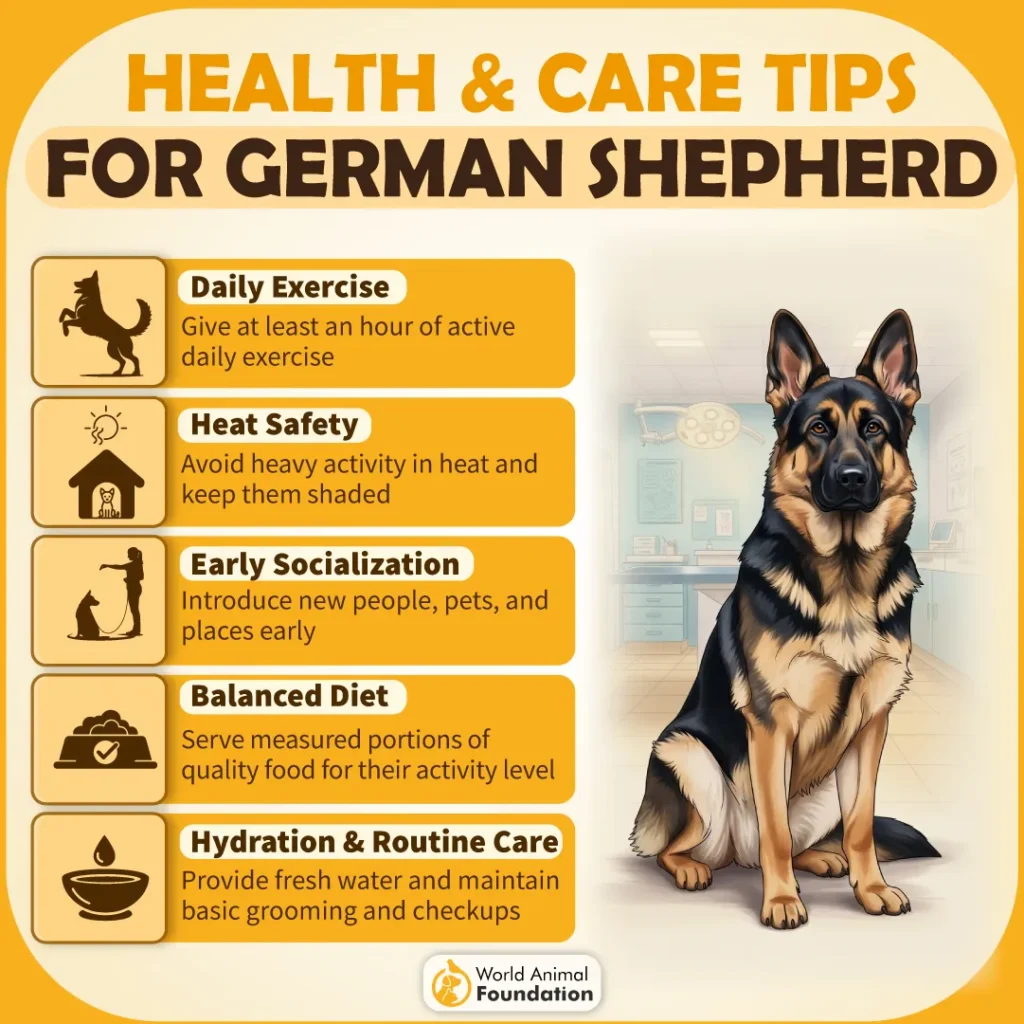
The health of these breeds is tied to their working roles and physical and mental stimulation.
Grooming & Shedding
The shedding level of both these dogs is higher. But they differ in grooming needs. While Rotties are low-maintenance dogs, GSD requires a lot of at-home grooming.
The short, dense coat of Rotties requires weekly brushing to maintain the coat and get rid of loose hair. They shed yearly, which might increase depending on the season. Their nails must be trimmed every week, and their teeth need to be brushed on a regular basis.
As described by AKC, the thick and double coat of the German Shepherd requires a lot of grooming. You may need to brush their coat, usually 2–3 times per week, though more during shedding season to keep it tangle-free. But remember that over-grooming can cause harm to their coat’s fur. The shedding can be decreased if they are fed a nutritional diet.
Guarding Instincts & Protective Nature
Figuring out which of these dogs has guarding instincts and a protective nature could be challenging. Because they are similar and have these traits in their own ways. Both of these dogs have strong protective instincts and have been used for guarding throughout history.
German Shepherds are known for their courage and loyalty. They are one of the best protection dogs that will not hesitate to protect their owners and loved ones while putting their lives in danger. Because of their fearless nature and bravery, they have been chosen for police and military work. Their speed, strong prey drive, and agility make them an ideal choice when considering protective nature in dogs.
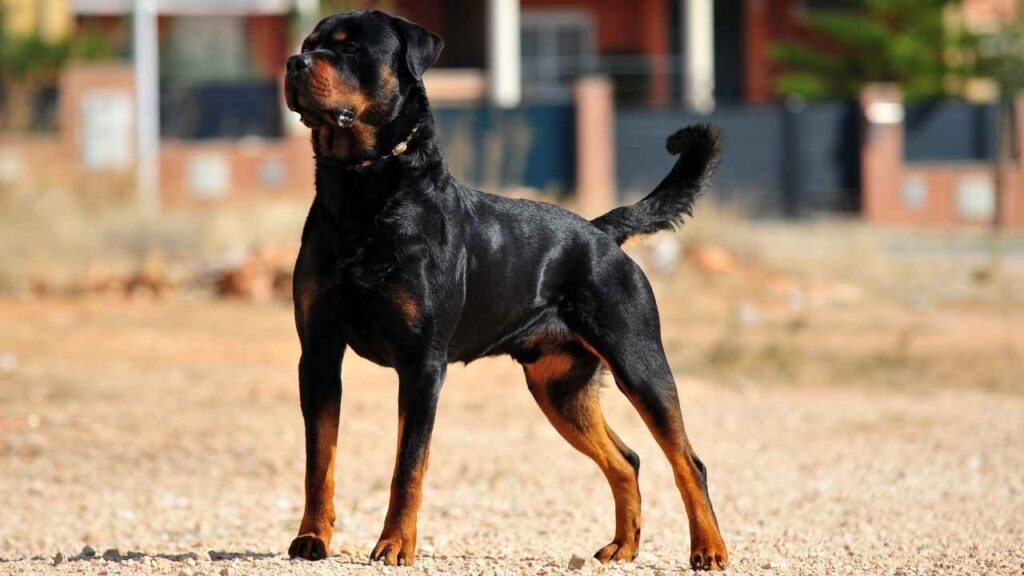
Whereas the Rotties are known in history for guarding money and property. These larger and muscular dogs were used for guarding cattle as well. They are excellent guarding dogs, but can be destructive, so proper training is important to have a well-mannered Rottweiler.
German Shepherd vs Rottweiler: Which Guard Dog Wins?
Coming to the difficult answer, both of these dogs are different in their own ways. They stand out in their personalities and are unmatched. If the dog meets your requirements and fulfills its duties properly, it wins. And it fails if the expectations are not met.
Rottweiler will be the right choice if you want a dog that is a powerful and loyal protector. Now, we are not saying that German Shepherds are not loyal. They are, and if you want a versatile and highly trained dog, then it’s none other than the GSD.
However, both of these breeds are protective and make wonderful companion dogs. They can only win when chosen after understanding the owner’s needs.
Conclusion
The debate over “who wins” might remain confusing and unanswerable, but you might clearly understand the roles of these dogs. These two breeds are incredibly intelligent and require proper exercise and good training. Generally, they are not recommended for first-time dog owners.
To have a healthy and right dog, understand the personalities of these dogs, and then choose the breed. Lastly, all that matters is that these dogs return everything that you give them in the shape of love, loyalty, and family companionship!
