




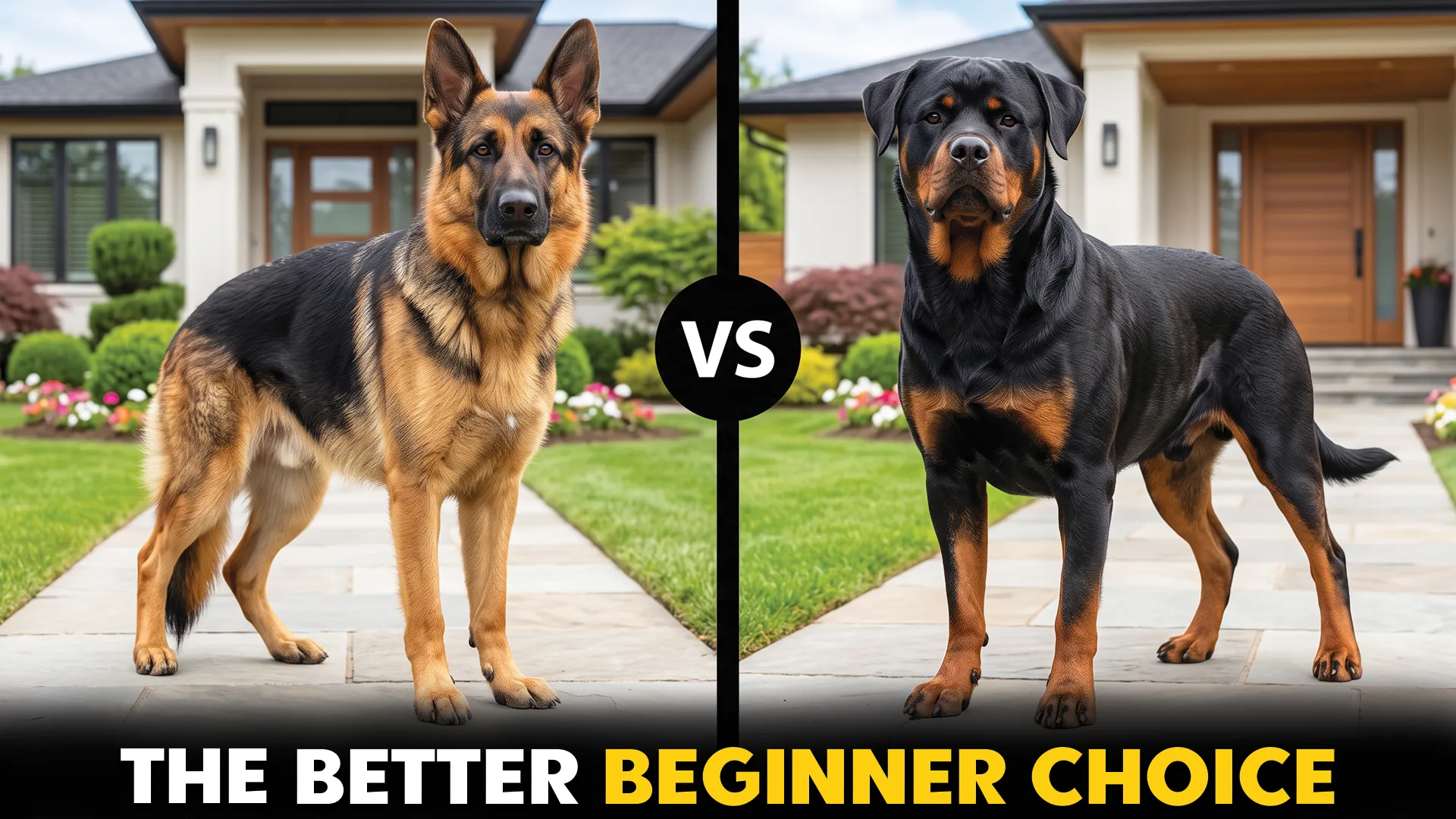
Choosing your first large dog is about more than appearance or reputation—it’s about finding a breed that matches your experience, lifestyle, and ability to meet its needs. German Shepherds and Rottweilers are both intelligent working dogs, but they differ in trainability, exercise requirements, grooming, and temperament.
While both breeds are devoted protectors, first-time owners should consider how much time they can dedicate to training, socialization, and daily activity.
German Shepherds are often eager to learn quickly and highly responsive, whereas Rottweilers tend to be calmer but may require a more confident, consistent approach to training.
This comparison explores the strengths, challenges, and care needs of each breed, helping you decide which companion is the better fit for your home and your first dog-owning experience.
German Shepherd vs. Rottweiler: Which Dog Is Better for First-Time Owners
Size and Strength
The German Shepherd and Rottweiler are both large, capable breeds, but they differ in build. Rottweilers have a broader, stockier frame, while German Shepherds feature a leaner, more athletic body designed for speed and agility.
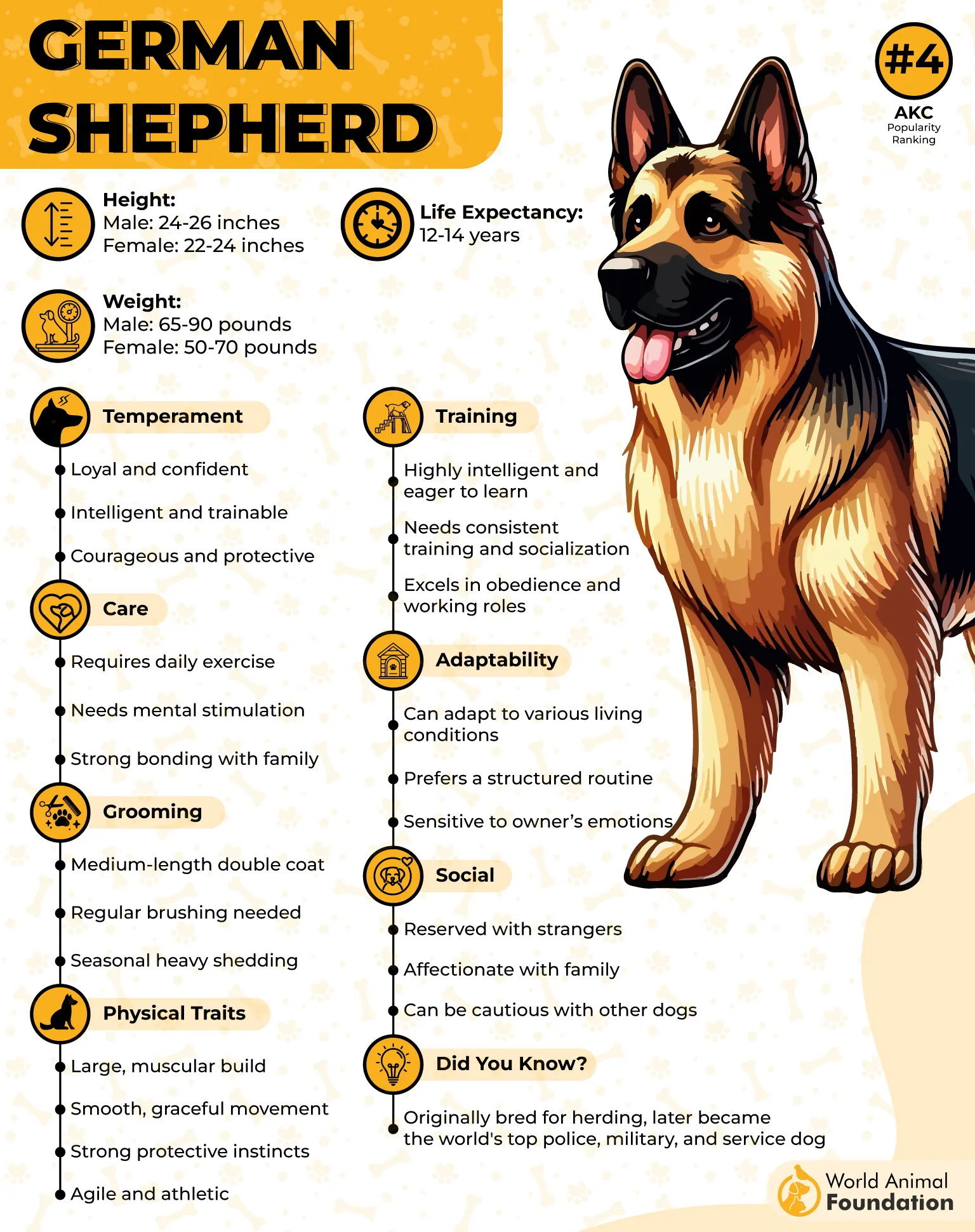
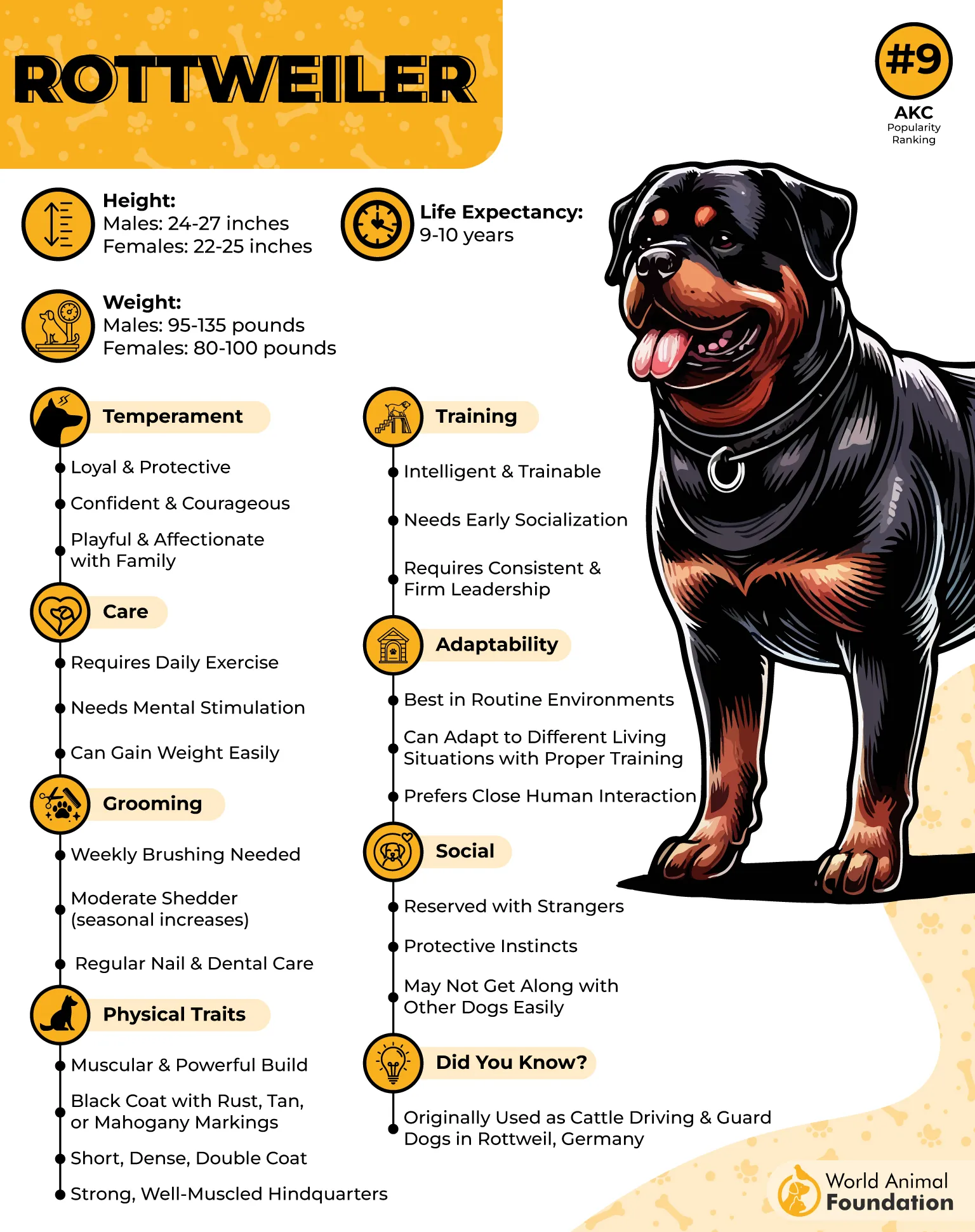
Adult Rottweilers typically stand 22–27 inches tall and weigh 80–135 pounds, while German Shepherds measure 22–26 inches and weigh 50–90 pounds.
When it comes to raw power, the Rottweiler has the advantage. Its heavier muscles and naturally stronger bite make it better suited for tasks requiring pulling strength, whereas the German Shepherd relies on endurance, balance, and quick movement.
For first-time owners, size also affects long-term responsibilities. Both breeds require ongoing investment in quality food, training, and veterinary care, but the Rottweiler’s heavier build can increase maintenance costs, while the German Shepherd’s athletic nature often demands more regular exercise and grooming.
Temperament and Personality
Both the German Shepherd and Rottweiler are loyal, intelligent dog breed choices, but their personalities suit different first-time owners. German Shepherds are generally more adaptable, outgoing, and affectionate, while Rottweilers are naturally reserved with strangers and display a stronger protective instinct.
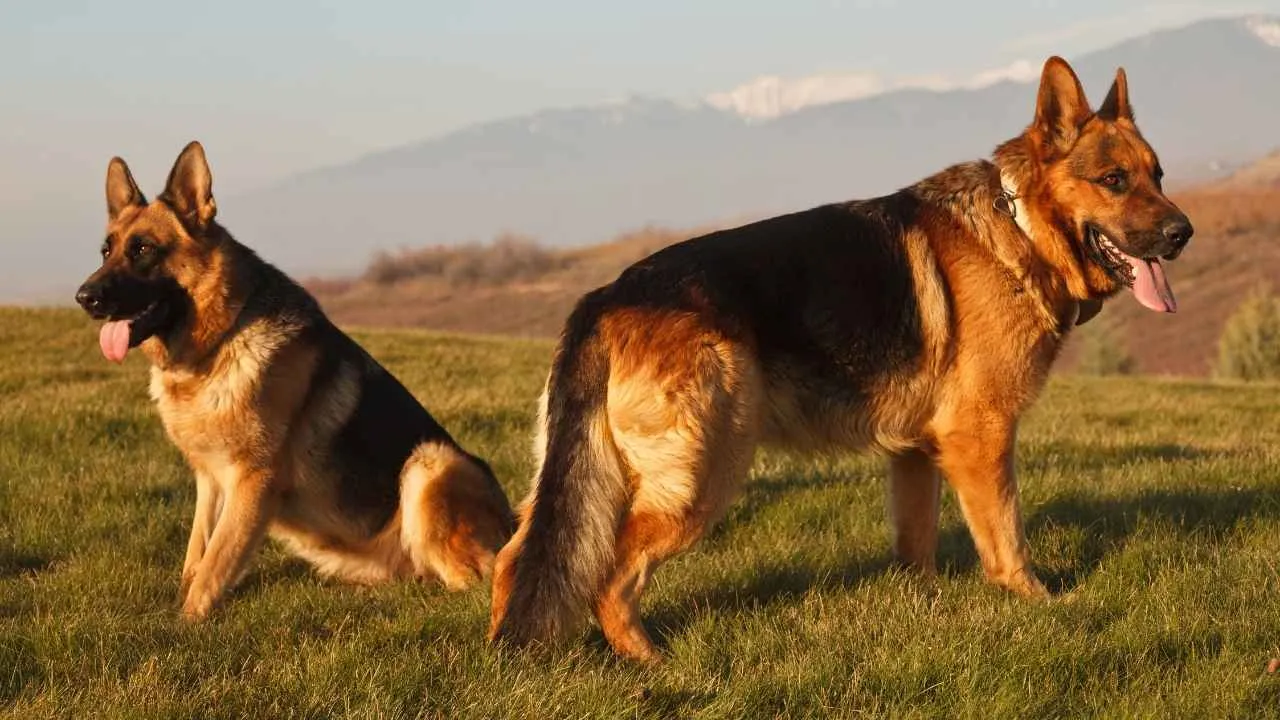
German Shepherds thrive on learning, daily interaction, and meaningful activities, making them eager, extremely loving companions that enjoy staying involved with family life. Rottweilers are equally devoted but tend to have a calmer nature once their physical and mental needs are met, although they benefit greatly from consistent training and structured routines.
For either breed, early socialization and positive reinforcement are essential. Both form deep bonds with their families, but the German Shepherd’s adaptable temperament is often easier for first-time owners to manage.
Health and Lifespan
Both German Shepherds and Rottweilers are generally healthy large breeds, but they share a higher risk of inherited conditions such as hip and elbow dysplasia. Regular veterinary checkups, weight management, and proper nutrition play an important role in supporting their long-term health.
German Shepherds typically live 9 to 13 years and are more susceptible to degenerative myelopathy, bloat, and exocrine pancreatic insufficiency.
Rottweilers usually have a lifespan of 8 to 10 years and are more commonly affected by heart conditions, including dilated cardiomyopathy, as well as cruciate ligament injuries and certain cancers. According to Royal Canin, Rottweilers may sometimes develop lumps or masses on their bodies.
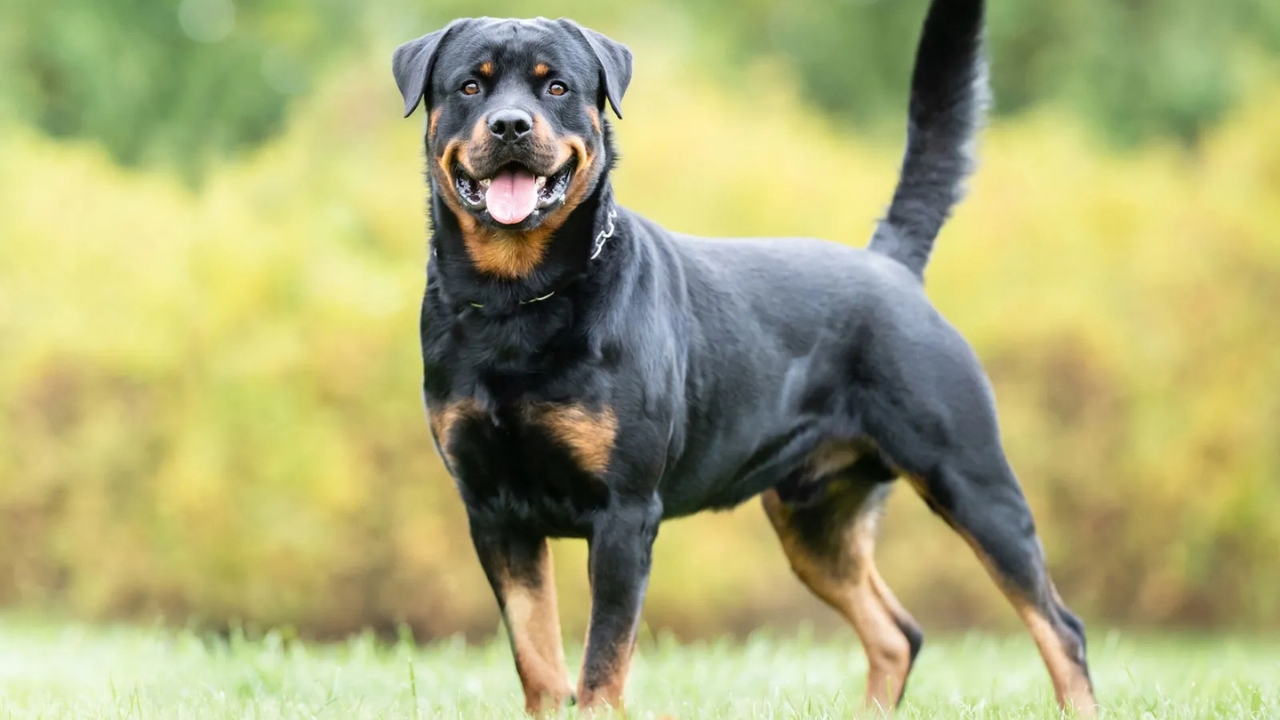
For first-time owners, preventive care is essential regardless of the breed. Feeding a balanced diet formulated for large dogs, avoiding excess weight, staying alert to emergency conditions like bloat, and maintaining an active lifestyle can help reduce health risks and improve overall quality of life.
Training and Exercise
Both German Shepherds and Rottweilers are intelligent working dogs that respond well to proper training, but their learning styles differ.
German Shepherds typically grasp new commands more quickly, while Rottweilers benefit from consistent, confident guidance and may take longer because of their independent streak. Positive, firm training works best for both breeds.
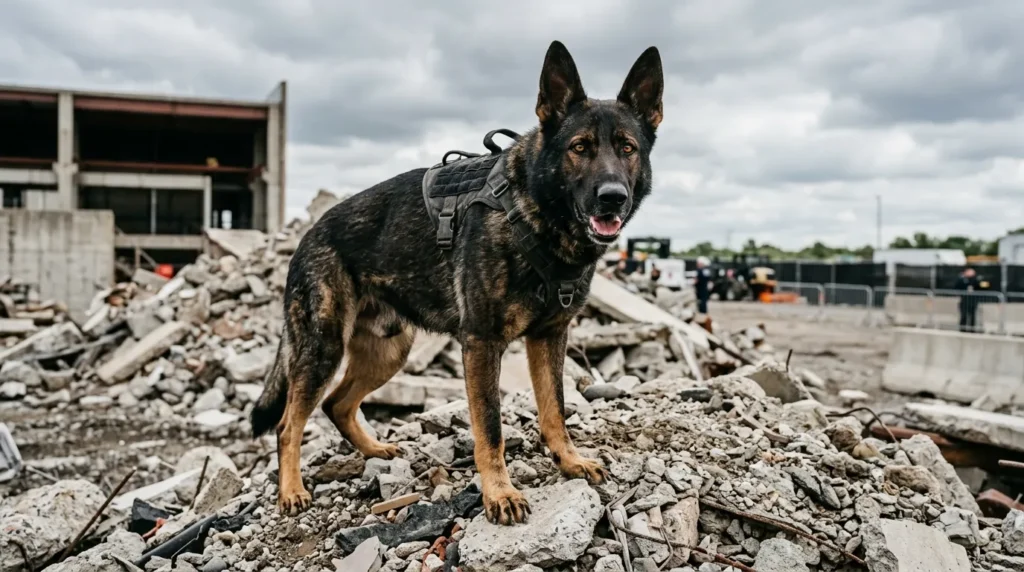
Mental stimulation is essential to prevent boredom and unwanted behaviors. German Shepherds usually require more activity, while Rottweilers are often satisfied with a slightly more moderate routine. Interactive games, puzzle toys, obedience work, agility, hiking, swimming, and fetch help keep both breeds engaged and fulfilled.
German Shepherds need controlled exercise to protect developing joints and balance movement, training, and enrichment for a healthy, well-adjusted companion. According to PetMD, they need about one to two hours of daily exercise to support their physical fitness.
Energy Level
German Shepherds are naturally high-energy dogs that stay constantly alert and ready for action. During their first few years, they can be especially boisterous, often racing around the house and becoming difficult to control if their active minds are left unoccupied. Most gradually become calmer as they mature, although they remain energetic throughout adulthood.
Rottweilers possess impressive stamina and strength, but their energy is usually more measured than constant. They can switch between active working mode and relaxed family time with ease, and individual personalities often determine whether they are playful or more laid-back.
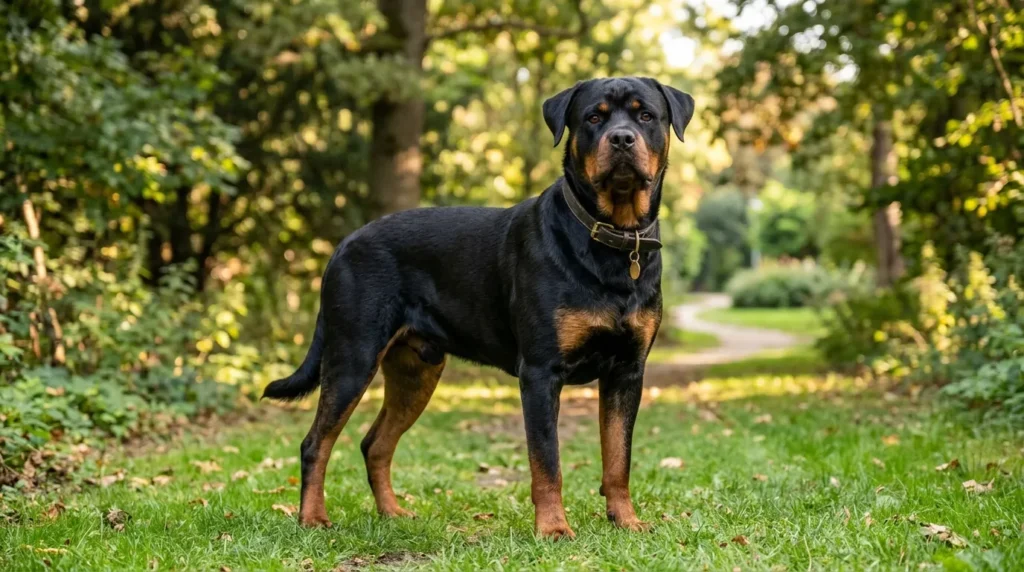
For first-time owners, the Rottweiler’s steadier temperament may feel easier to handle, while the German Shepherd’s intense enthusiasm and youthful exuberance often require greater confidence and day-to-day management.
Guard Instincts
The German Shepherd approaches guarding with intelligence and purpose. Rather than relying solely on its presence, it stays alert, evaluates situations quickly, and works closely with its owner, making its protective instincts as an excellent guard dog highly responsive to guidance and training.
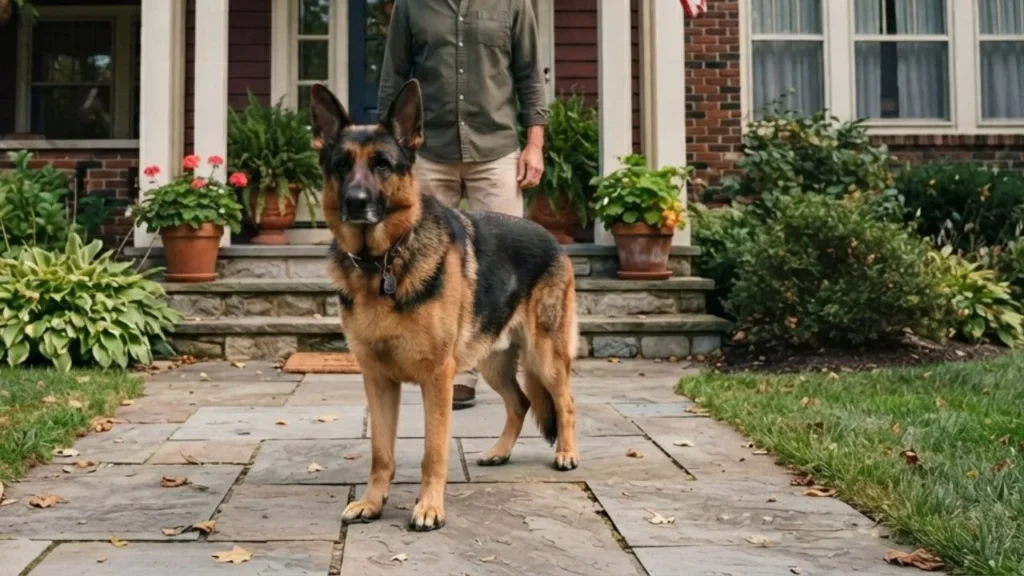
The Rottweiler has a naturally stronger territorial drive and instinctively watches over its home and family, making it one of the most reliable guard dogs. Its calm, self-assured nature allows it to stand its ground without unnecessary reactions, though early socialization is important to distinguish genuine threats from everyday visitors.
Both breeds are dependable guardians, but their instincts are expressed differently. The German Shepherd favors controlled, owner-directed protection, while the Rottweiler depends more on its natural territorial awareness and steady confidence.
Protective Temperament
Both the German Shepherd and Rottweiler are naturally protective protection dogs, but they express those instincts in different ways.
German Shepherds are known for their courage, quick responses, and willingness to step between their family pet and potential threats, making them trusted partners in demanding service roles. German Shepherds tend to respond quickly. According to Purina, they may be too boisterous for households with very young children or frail older adults.
Rottweilers rely on calm confidence rather than speed. Naturally watchful and reserved around strangers, they develop deep loyalty to their families and are dedicated guardians when properly socialized and trained from an early age. They are also powerful dogs valued for personal protection.
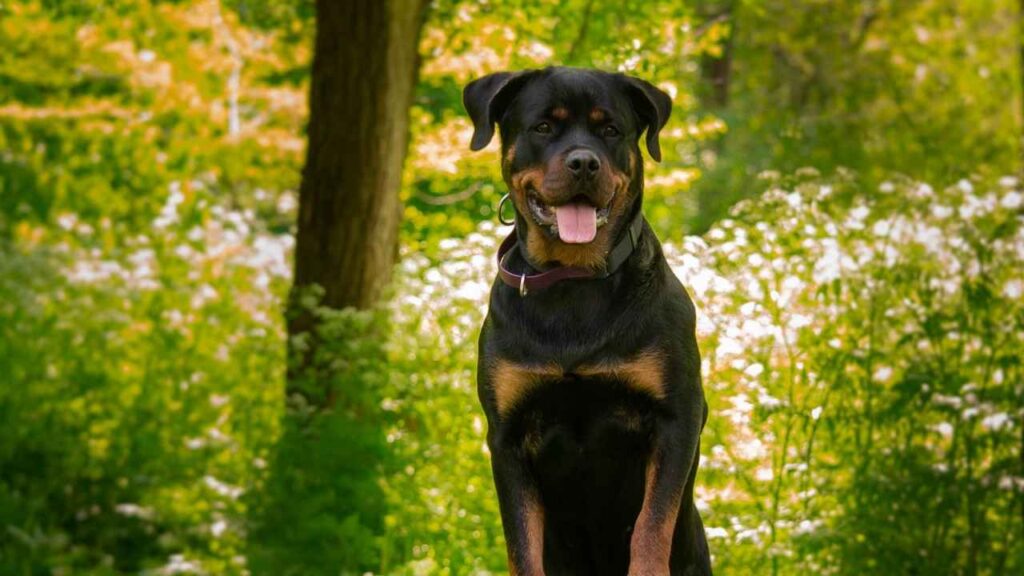
For first-time owners, the German Shepherd’s adaptability, eagerness, and smart nature may feel easier to manage, while the Rottweiler’s territorial nature often requires more experienced handling and consistent training. Spending time with both breeds can help you determine which protective style better suits your home and lifestyle. Both breeds are also used in rescue and research work.
Conclusion
Choosing between a German Shepherd and a Rottweiler depends on your experience, lifestyle, and expectations as a first-time owner. Both breeds are loyal, intelligent, and naturally protective; however, they differ in their responses to training, strangers, and everyday family life.
The German Shepherd stands out for its versatility, eagerness to learn, and adaptability, making it easier for many new owners to guide with consistent training. The Rottweiler offers unwavering devotion and confident guarding instincts but benefits from firm leadership and early socialization.
Neither breed is the right choice without proper commitment. Regular training, exercise, and responsible ownership are essential to help each dog develop into a well-mannered companion.
Before making your decision, spend time with both breeds and consider which temperament, energy level, and protective style best match your home. The right fit will reward you with years of loyalty, companionship, and trust.
