




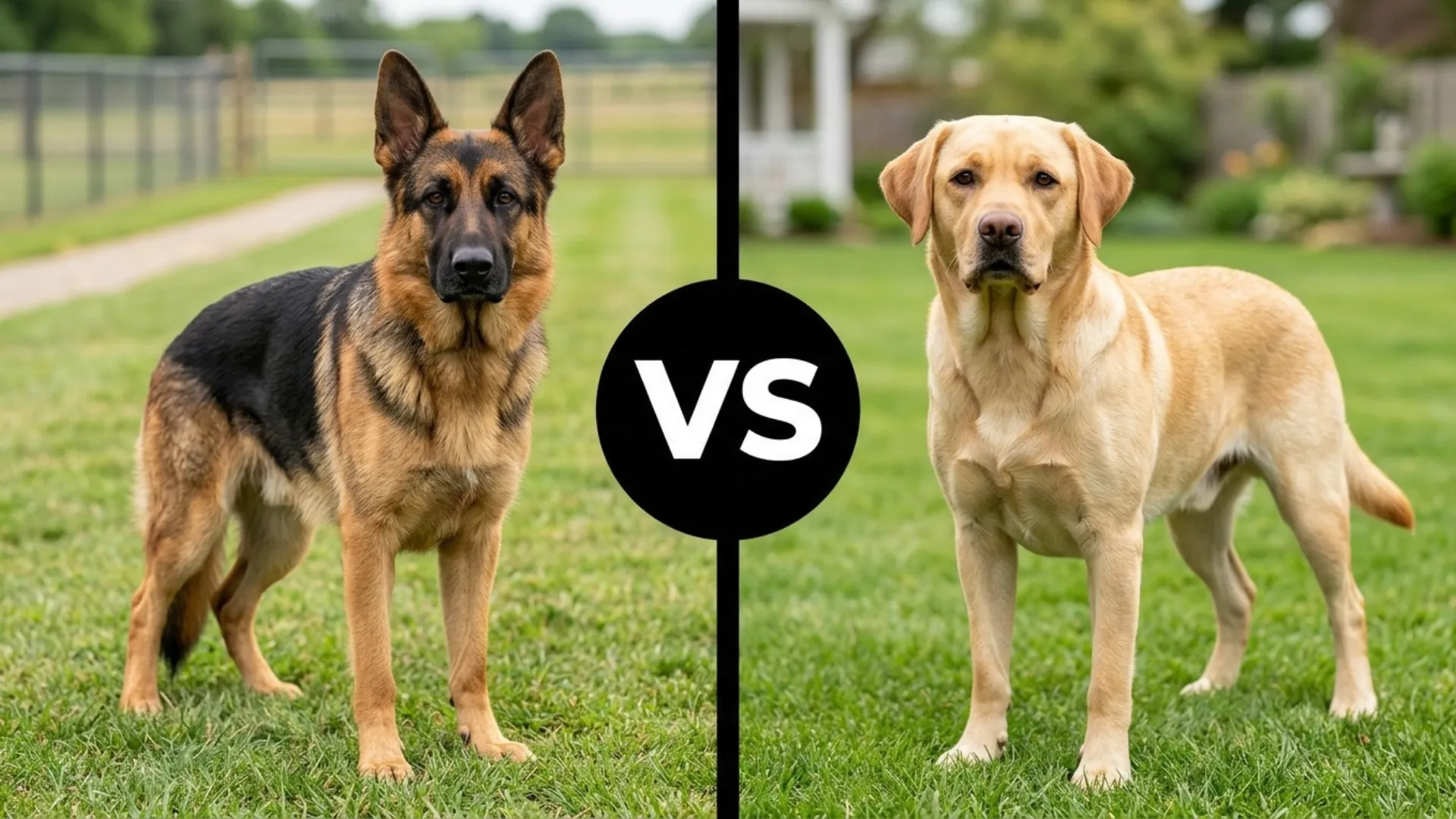
For over 30 years straight, the Labrador Retriever has held the title of America’s most registered dog breed with the American Kennel Club. That is not a fluke. It says something real about what people actually want in a family dog.
But right behind it, steady as ever, sits the German Shepherd, a breed built on brains, loyalty, and serious working instincts. So which one actually belongs in your home?
The truth is, these two popular dog breeds could not be more different once you look past the popularity charts. One thrives on structure and purpose, the other on play and companionship.
Picking between them is not about which breed is “better.” It’s about matching temperament, energy, and lifestyle the right way. Ready to find out which one is really your match? Let’s dig in.
German Shepherd vs. Labrador Retriever: Which Dog Fits Your Lifestyle
Two of America’s most popular dog breeds could not feel more different to live with. One is a devoted protector with a working background in police and military service. The other is a family pet built for fetch, water, and easy company. Here is how they compare.
Origins & Purpose
Where do these two breeds actually come from? The German Shepherd traces back to 1899 Germany, when Max von Stephanitz set out to build the ultimate sheep herding dog with a sharp, working temperament.
That breed history led straight into police dogs and military duty, and German Shepherd dogs served through both World Wars before becoming trusted protective companions worldwide.
The Labrador Retriever started simpler, as a fisherman’s helper in Newfoundland, Canada. England refined it into a gundog in the 1830s, and it crossed to the United States soon after.
Size & Build
German Shepherds are the bigger, leaner athletes of this large breed comparison, built with real muscle behind that confident stance.
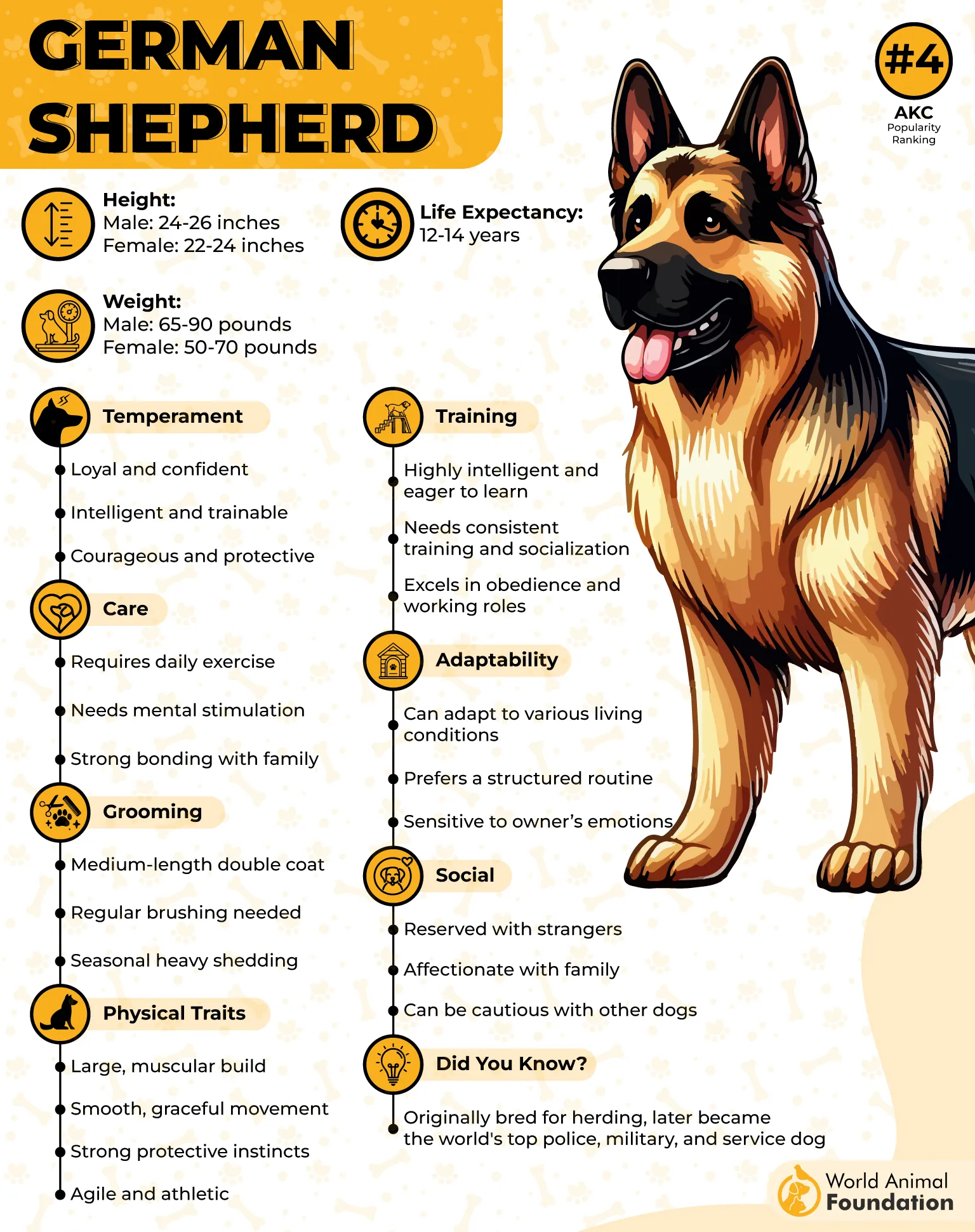
German Shepherd: 24 to 26 inches, 65 to 90 pounds.
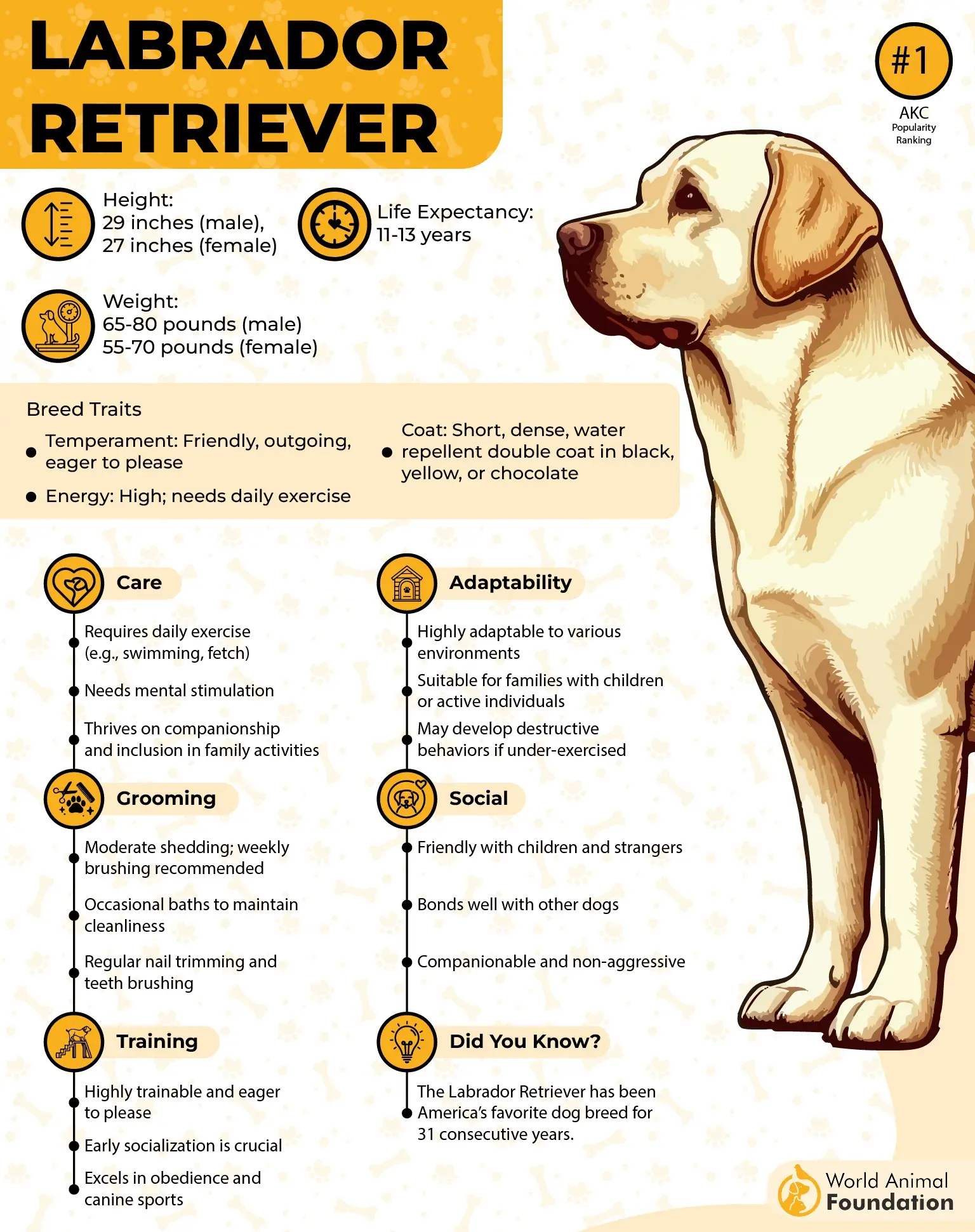
Labrador Retriever: 21.5 to 24.5 inches, 55 to 80 pounds, stockier build.
Both breeds finish growing between 18 months and 2 years of age.
Either dog needs real space to move, so apartment living raises more questions than square footage alone answers for a dog owner planning.
Pricing & Availability
Three thousand dollars. That is roughly the ceiling reputable breeders charge for a well-bred German Shepherd puppy with health testing behind it, though many puppies cost far less depending on lineage.
German Shepherd: 500 to 3,000 dollars from a breeder, 50 to 500 through rescue.
Labrador Retriever: 250 to 2,000 dollars from a breeder, similarly affordable through rescue.
Both breeds show up regularly at shelters, so rescue dogs are a realistic, budget-friendly option.
Pet insurance is worth budgeting for either breed, since both carry health issues that get expensive fast without coverage.
Temperament & Personality
Would a Labrador ever make a convincing guard dog? Not really, and that is exactly the point. According to Royal Canin, the breed is friendly and largely devoid of aggressiveness, only stepping in if the family seems genuinely threatened.
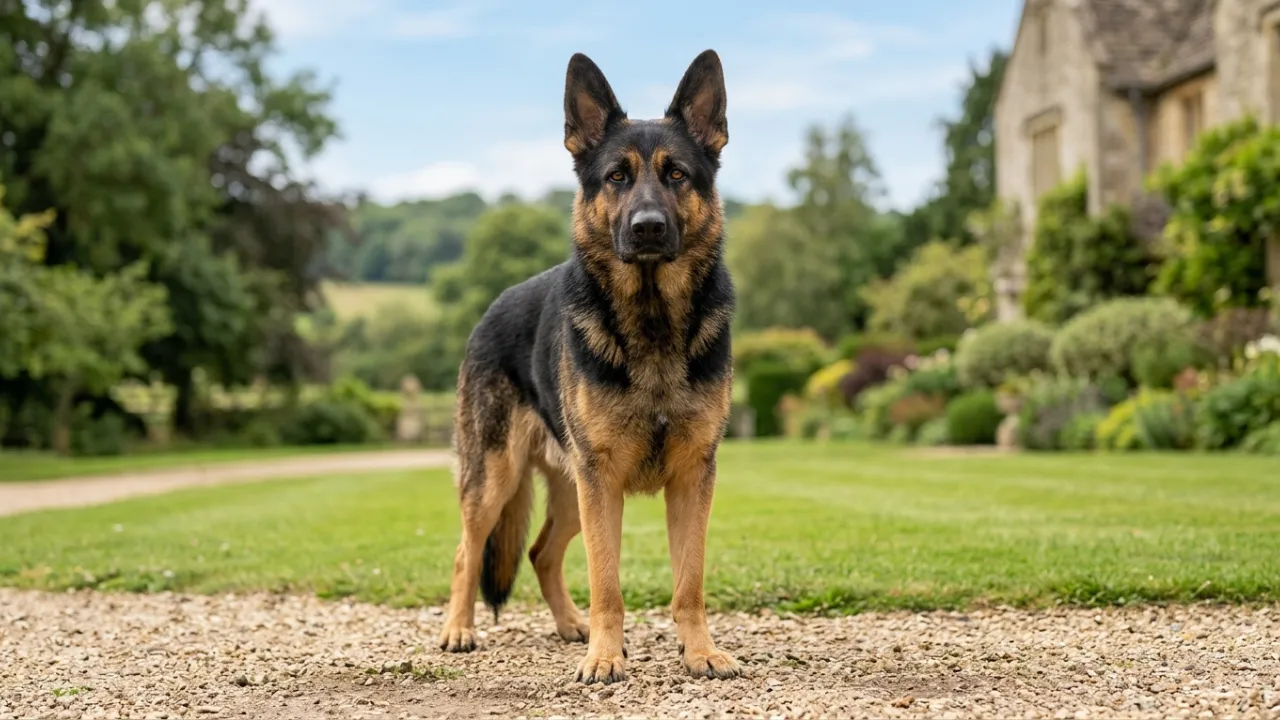
German Shepherds sit at the opposite end of the temperament scale, wired with protective instincts and a natural wariness toward strangers and other dogs. Both breeds are intelligent dogs and loyal family members once a strong bond forms.
Early socialization shapes how far either temperament swings, so upbringing matters as much as breed on paper, and it helps both dogs adapt well to other pets.
Exercise Needs & Energy Levels
German Shepherd: 60 to 90 minutes of daily exercise, split between physical exertion and mental stimulation like tracking or scent work.
Labrador Retriever: At least 60 minutes daily, often closer to two hours during the high-energy puppy and young adult years.
Both breeds are high-energy dogs that need more than a quick walk around the block to stay balanced.
Skip the daily activity with either breed, and chewing, digging, or barking usually follow close behind.
Playing fetch, agility courses, and swimming all work well as outlets, though Labradors lean toward water and Shepherds toward focused, task-driven play.
Training & Obedience
Both breeds rank among the most trainable dogs in the canine world, part of why they remain such a popular choice for new and experienced owners alike.
Labradors lead with food motivation and genuine eagerness to please, making positive reinforcement training almost effortless from a young age.

German Shepherds bring intense focus and high intelligence instead, learning fast but needing firm, consistent training to manage their protective instincts responsibly. Both excel at obedience, agility courses, and advanced roles like therapy dogs or service dogs.
A bored Labrador tends to get mischievous, while a bored German Shepherd tends to get pushy, so consistent training helps both settle.
Grooming Needs & Shedding
How much attention does a thick double coat really need? More than most new owners expect from either breed. German Shepherds need brushing more than once a month to manage shedding between the two seasonal coat blows each year.
German Shepherd: Thick double coat, brush 2 to 3 times weekly, heavier shedding in spring and fall.
Labrador Retriever: Shorter double coat, brush weekly, similar seasonal shedding pattern.
Both breeds need regular ear checks, since floppy ears and upright ears alike are prone to ear infections.
Outdoor Adventure & Exploration
A weekend camping trip tells you everything about these two breeds. The Labrador is already swimming laps around the lake before the tent is even up, while the German Shepherd is doing a slow perimeter check of the campsite first.
Water changes everything for a Labrador. Its dense, water-resistant coat and natural retrieving drive make lakes and rivers pure joy rather than an obstacle.
The German Shepherd takes a different approach to the outdoors, treating every hike like a job with a purpose. It covers ground with intense focus, sticks close to its person on unfamiliar terrain, and shows a bit more caution around strangers passing on the trail.

Both dogs can handle a demanding trail day, just with very different ideas of what counts as fun along the way.
Health & Lifespan
Genetics can turn a fun afternoon of fetch into a scary moment fast. According to PetMD, Labradors with exercise-induced collapse, a condition most common in this breed, can start showing symptoms after as little as five minutes of intense play.
Labs also face hip and elbow dysplasia, progressive retinal atrophy, and a tendency toward obesity, with an average lifespan of 11 to 13 years.

German Shepherds carry their own genetic health issues, chiefly hip dysplasia and degenerative myelopathy, a progressive spinal disease that VCA says typically appears from around age five onward.
The average lifespan for German Shepherds runs 9 to 13 years. Reputable breeders who screen for these conditions make a real difference in a dog’s long-term quality of life.
Which Loyal Breed Suits Your Lifestyle?
Choosing between the German Shepherd and Labrador depends less on which is objectively better and more on which fits the lifestyle already in motion. The right choice depends on daily activity level, experience, climate, and how much time a household genuinely has to give.
The experienced dog owner with a fenced yard and hours for training and mental stimulation: A German Shepherd rewards that structure with a devoted protector and a confident, capable working companion.
The first-time dog owner or busy family with young kids: A Labrador Retriever’s outgoing, easygoing nature and eagerness to please make the learning curve dramatically gentler.
The outdoor enthusiast near water or open trails who wants a dog able to adapt to different climates: Either breed thrives here, though the Labrador edges ahead near lakes while the German Shepherd holds an advantage on longer, cooler hikes.
The apartment dweller working long hours with little time to spare: Neither breed is the right choice here, since both are high-energy, protective dogs that decline fast without daily exercise, agility training, and consistent socialization.
Whichever breed ultimately fits your home best, both remain loyal, intelligent, and rewarding dogs to adopt.
Conclusion
At the end of the day, there’s no wrong pick here, just the right one for your lifestyle. Both breeds are smart, energetic, and highly trainable, and both form a strong bond with the people who put in the time.
Whether you’re drawn to the German Shepherd’s confident, protective edge or the Labrador’s easygoing charm, either dog will adapt beautifully to a home ready to meet its needs. Ready to bring one home? Start chatting with reputable breeders or local rescues today and find your perfect match.
