




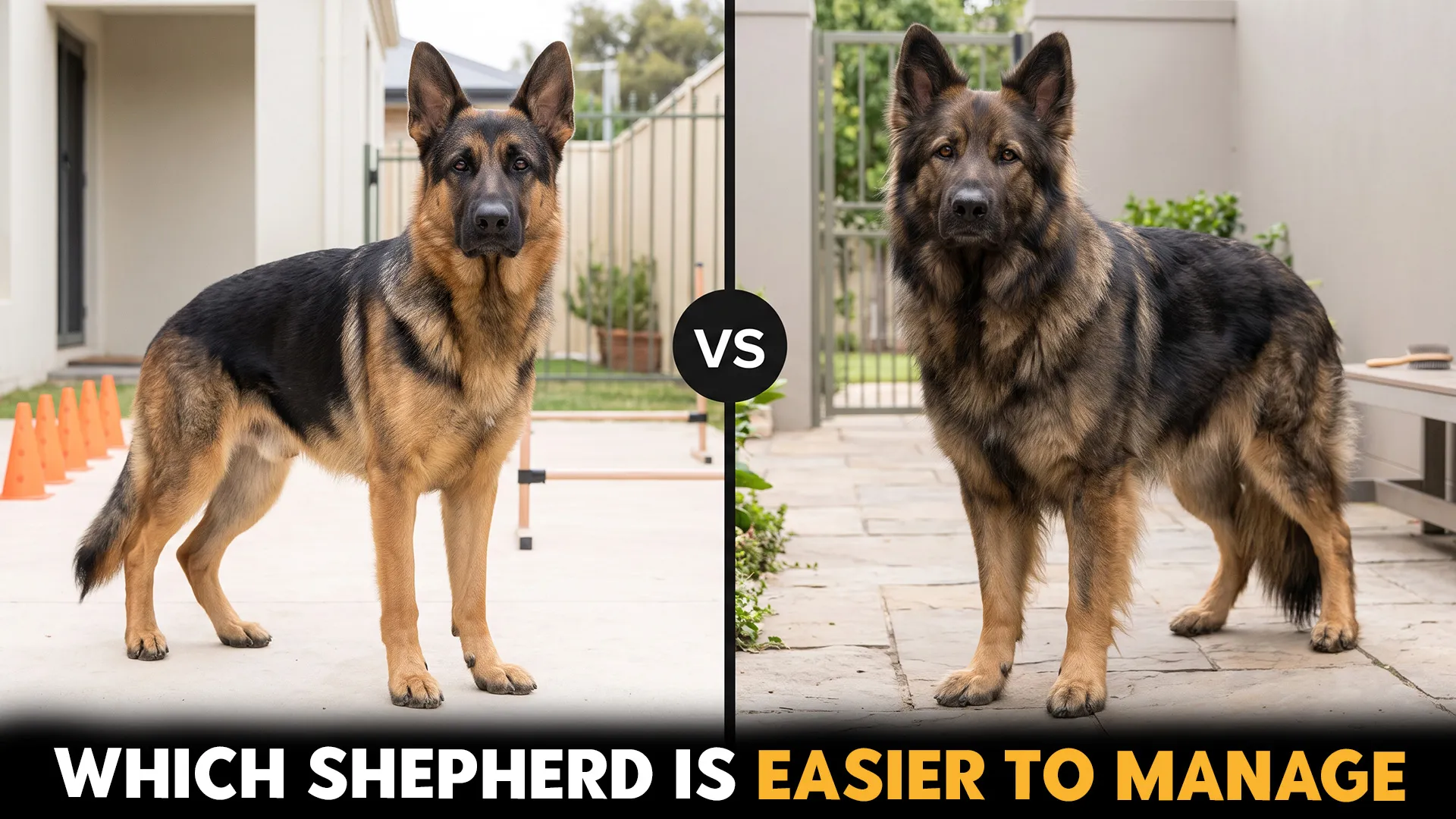
Two dogs can have nearly identical features in photographs and still offer noticeably different experiences as household companions. That is particularly interesting when comparing two large shepherd-type breeds with shared ancestry and similar protective instincts.
Both are recognized for intelligence, loyalty, and physical strength, but their adult size, build, working tendencies, and typical energy levels deserve a closer look. One breed generally has a more established history in police, military, and service work, while the other was developed with a larger frame and a somewhat different family-oriented temperament in mind.
These differences can influence everything from obedience sessions to daily walks and interactions with children. Even experienced dog enthusiasts can overlook important distinctions when judging them by appearance alone. The most useful comparison begins with details that become apparent after living with either dog.
Here, readers can examine the differences that truly matter before choosing their next companion.
German Shepherd vs. King Shepherd: Beyond Their Similar Looks
Read till the end to find out which of these two shepherds would feel more at home with your family.
Origins & Purpose
German Shepherds became an established breed in 1899 under the guidance of Captain Max von Stephanitz in Germany. Their ancestors had spent centuries assisting shepherds and farmers, providing the foundation for a capable working dog with a close connection to humans.
Popularity spread internationally during the early 20th century, and the American Kennel Club recognized the breed in 1908. Political tensions during the World Wars influenced its name, with Alsatian becoming a widely used alternative that persists in parts of Europe, as GSDCA notes.
King Shepherds entered the canine world in the 1990s as American breeders explored ways to improve genetic diversity within shepherd lineages. David Turkheimer and Shelley Watts-Cross paired German Shepherds with Shiloh Shepherds, aiming to reduce inherited health risks while preserving desirable characteristics.
The breeding program also included long-haired German Shepherds from European lineages, contributing to the breed’s distinctive appearance and broader genetic pool. Its relatively recent origins distinguish it from established shepherd breeds, and recognition currently remains limited to smaller canine organizations.
Size & Physical Build
German Shepherd height: 22-26 inches
German Shepherd weight: 50-90 pounds
This police dog has a medium-to-large athletic frame, with a slightly elongated body and a deep chest suited to sustained physical activity. Their almond-shaped eyes give them an alert, steady expression, while their overall structure favors endurance over short bursts of speed.
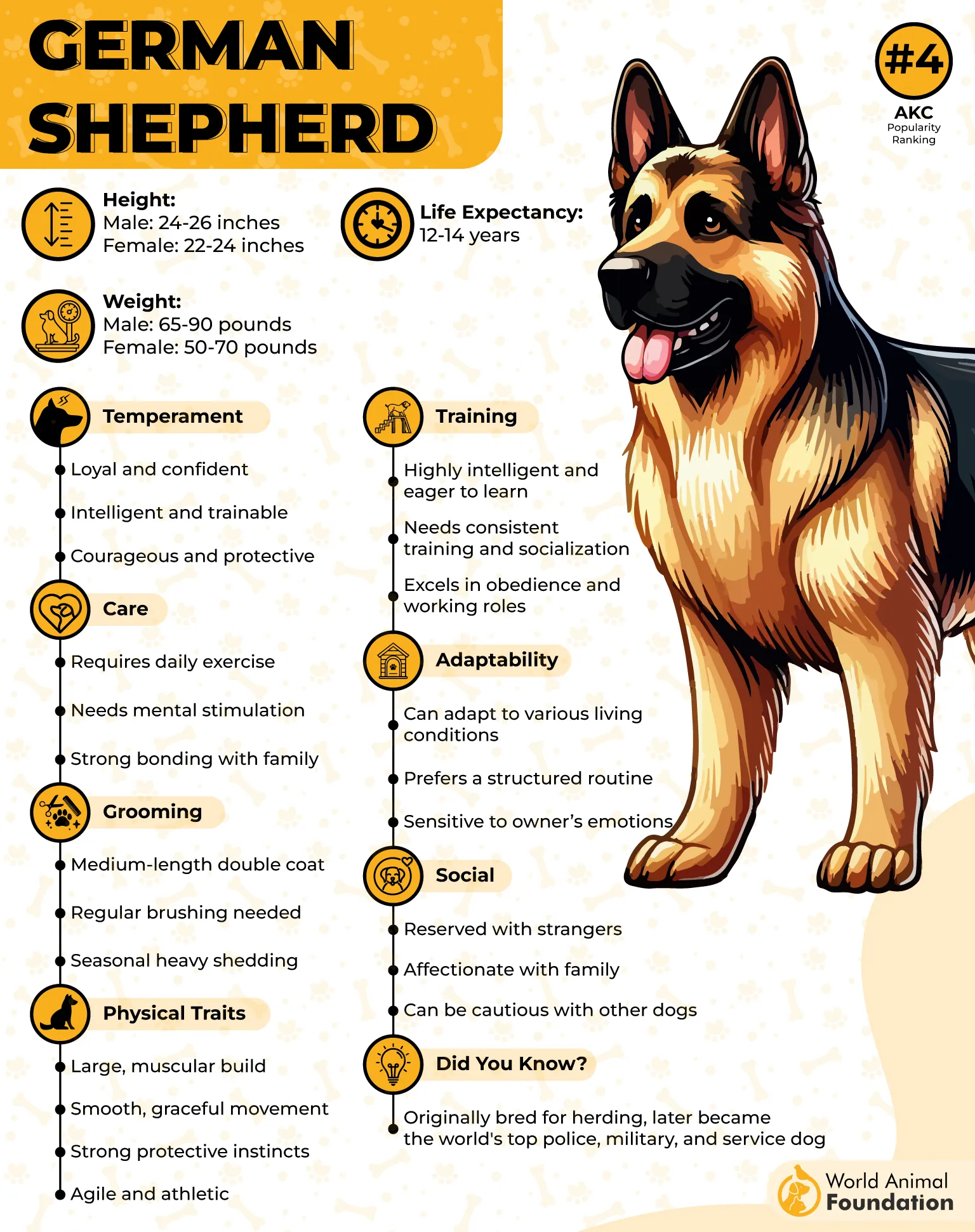
Males generally have broader skulls, thicker necks, and more substantial bone structure. Females tend to have narrower heads and a more streamlined appearance, while breeding for working and guide dogs prioritizes sound physical structure over exaggerated size.
King Shepherd height: 25-32 inches
King Shepherd weight: 80-150 pounds
King Shepherds have a noticeably larger build, with heavier bones and a broader chest than most German Shepherds. Their broad heads, strong muzzles, and erect ears give them a commanding appearance, supported by considerable muscular strength throughout the body, as CKCUSA noted.
Males typically have thicker necks, more pronounced manes, and greater muscle mass around the shoulders and forequarters. Females retain the breed’s substantial structure but generally have more refined head proportions, less bulk around the chest, and a leaner appearance.
Temperament & Personality
German Shepherds are self-assured dogs that tend to be selective about whom they trust. They remain alert around unfamiliar people but generally welcome visitors once satisfied there is no threat. They crave human interaction and may become destructive when left alone for extended periods.
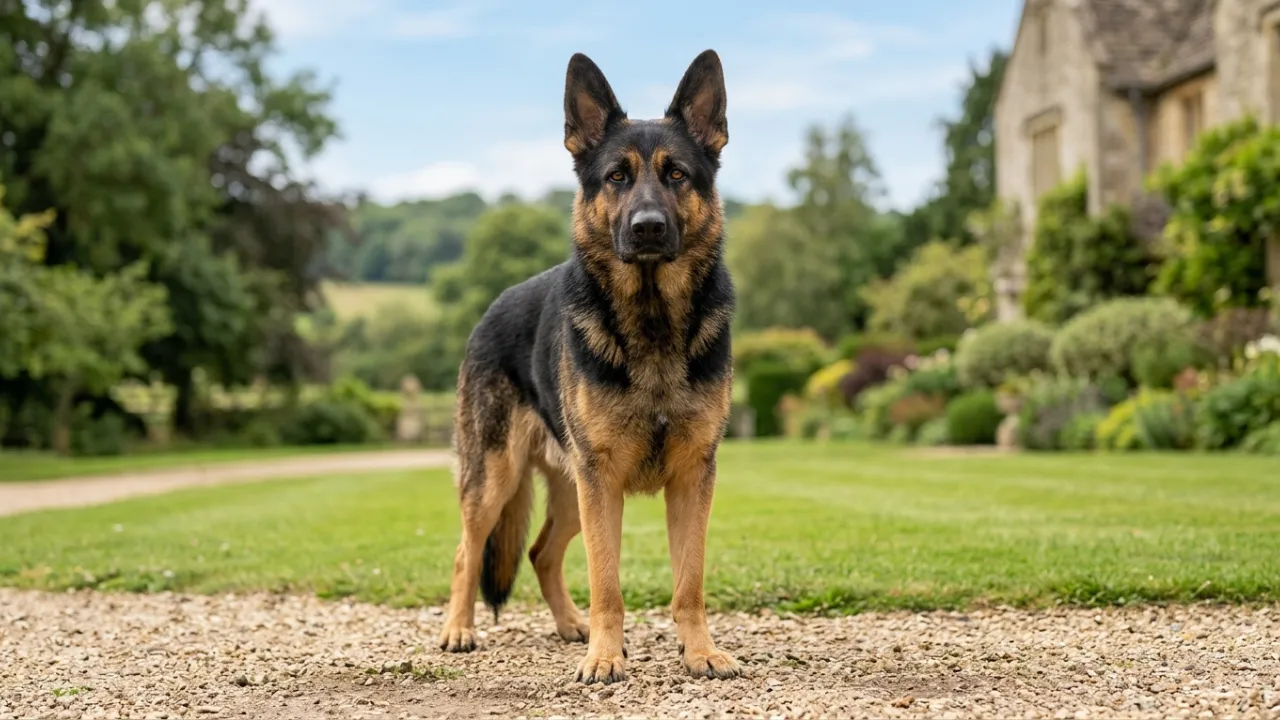
Their playful side often emerges around family members, particularly children they have grown up with, as Orvis explains. Early socialization helps them live peacefully with other pets, although their prey drive varies between individuals. Their size also makes supervision around young children important.
King Shepherds combine a protective personality with a generally calm and patient disposition. Their intelligence and problem-solving abilities make them quick learners, while their eagerness to please encourages cooperation. They are particularly gentle with children, though their considerable size requires careful supervision.
Sharing a home with other dogs and cats is often possible when introductions happen gradually, and early socialization is encouraged. Smaller pets, such as hamsters and guinea pigs, require closer supervision, as their movements may trigger the dog’s natural prey instincts.
Exercise & Energy Levels
German Shepherds need two to three hours of daily activity that challenges them physically and mentally. Brisk jogs, scent walks, hiking, and fetch are excellent ways to spend that time, while swimming can offer an enjoyable change during warmer weather.
These large breeds can reach speeds of 30 miles per hour, making leash use important outside securely fenced areas. Indoor activities, such as hiding kibble around the house or placing treats under boxes, can keep their minds occupied between outdoor adventures.
King Shepherds require at least an hour of vigorous exercise each day and benefit from having plenty of space to move around. Games like tug-of-war, fetch, and hide-and-seek offer variety, while agility training gives them something more challenging to work toward.
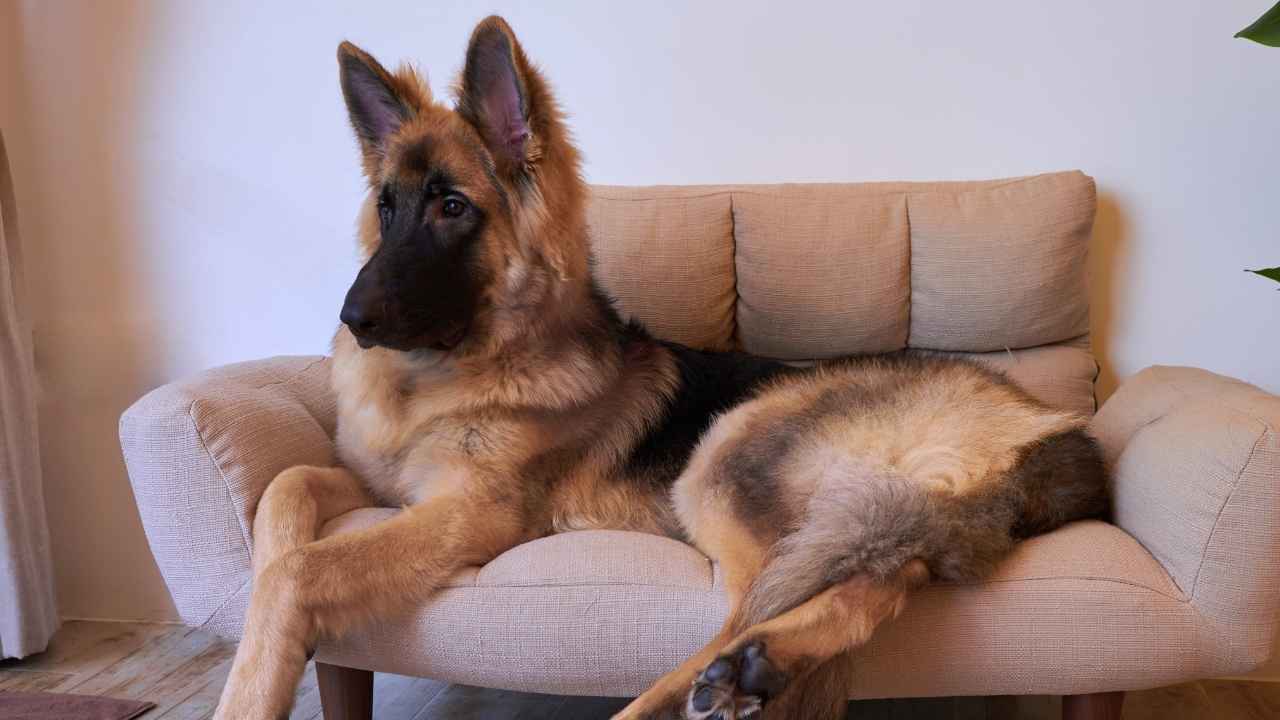
Physical activity alone may leave these intelligent dogs looking for something else to do. Incorporating mental challenges into their exercise routine is particularly important, as King Shepherds can become bored easily and may resort to destructive behavior when left underoccupied.
Training & Socialization
German Shepherds can be wary of unfamiliar people, making early socialization particularly important. Puppy classes help introduce them to other dogs and people while teaching basic obedience and leash manners through positive reinforcement using treats, toys, and praise.
Teaching appropriate play habits during puppyhood is equally important, given their tendency to mouth things. As they mature, scent walks, puzzle toys, tracking, and agility exercises can keep their minds occupied while strengthening their connection with you.
King Shepherds are highly intelligent and eager to please their families, making them relatively straightforward to train. Basic obedience can begin between 8 and 16 weeks of age, with simple commands often learned quickly when training sessions are consistent and engaging.
Socialization should begin as soon as you bring your puppy home, with regular introductions to unfamiliar people and animals. Training should extend beyond basic puppy lessons, gradually introducing more advanced exercises throughout adulthood to maintain good behavior and mental engagement.
Health & Lifespan
German Shepherds have a lifespan of 12 to 14 years, although certain inherited conditions deserve attention. Responsible breeders screen their dogs for hip and elbow dysplasia and degenerative myelopathy, helping reduce the risk of passing these conditions to future generations.

Bloat is another serious concern because it can cause sudden, life-threatening abdominal swelling. Familiarizing yourself with its warning signs is essential, while hip evaluations, elbow evaluations, and temperament testing are recommended by the National Breed Club.
King Shepherds typically live between 11 and 14 years. Although reducing inherited health problems was one of the goals behind their breeding, they remain susceptible to certain conditions, including von Willebrand disease, which affects the blood’s ability to clot properly.
Hypothyroidism and joint dysplasia also deserve attention in this large breed. Joint problems can gradually limit movement and contribute to weight gain, making regular veterinary examinations and maintaining a healthy body weight particularly important.
German Shepherd vs. King Shepherd Dog Suitability as Family Pets vs. Guard Dogs
German Shepherds can be excellent family pets for households willing to invest time in exercise, training, and socialization. They form close relationships with family members and are particularly suited to owners who want an active companion involved in their everyday routines.
Their alertness also makes them capable guard dogs, although managing their protective instincts requires consistent training. If your household frequently welcomes visitors, teaching your dog to distinguish everyday social interactions from genuine threats becomes particularly important.
King Shepherds may appeal to families looking for a larger companion with a generally calmer disposition. Their affectionate nature can make them wonderful household pets, although their considerable size requires careful supervision around small children and enough space to move comfortably.
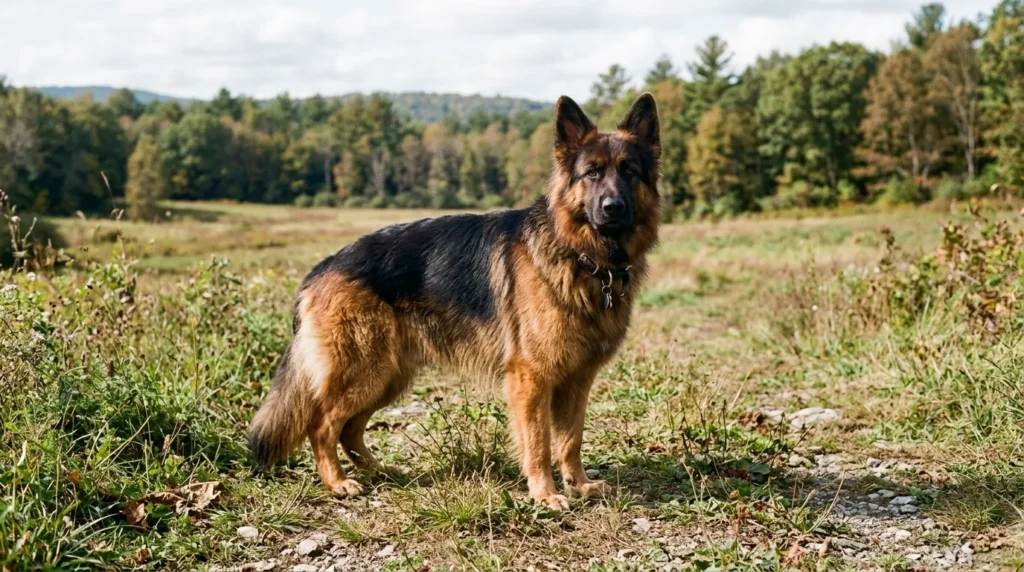
For owners seeking a balance between companionship and home protection, the King Shepherd is worth considering. The German Shepherd may be a better fit if you enjoy intensive training, while the King Shepherd may suit those who prefer a more easygoing companion with a protective presence.
Conclusion
Both shepherd types bring intelligence, loyalty, and protective instincts into a household, but their differences deserve careful consideration. Their physical size can affect handling, exercise needs, and the amount of room they require at home. Temperament is equally important, particularly when children, visitors, or other pets share the same space.
Training and early socialization help establish good manners, while regular activity keeps these intelligent dogs occupied. Their health needs and expected lifespan may also influence your decision. Before choosing either companion, think about the time, space, and attention you can provide throughout the dog’s life.
