




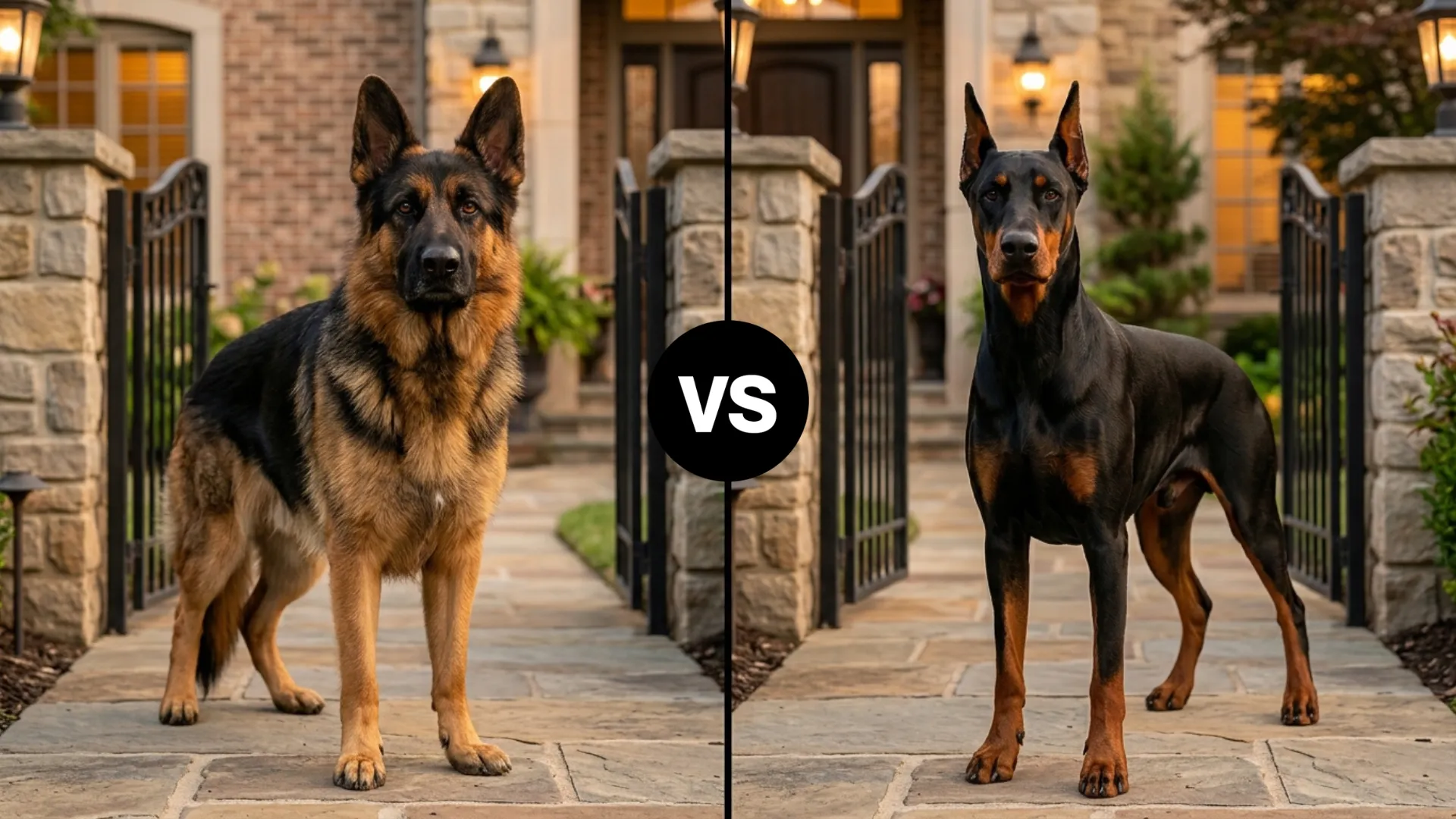
The German Shepherd and Doberman are basically the heavyweight finalists of the family-protection world, but they bring very different energy to the job. One looks like a rugged all-terrain officer ready to manage a complicated mission, while the other resembles a sleek personal bodyguard that arrived wearing a perfectly tailored suit.
German Shepherd Dogs originated as versatile herding workers before expanding into police, military, search-and-rescue, service, and guardian roles. The Doberman was developed more specifically during the nineteenth century when German tax collector Louis Dobermann wanted a courageous, intelligent companion capable of protecting him during dangerous rounds.
Let’s have a detailed comparison of these two naturally protective guard dogs.
German Shepherd vs. Doberman: Protection Dog Comparison
Size and Strength
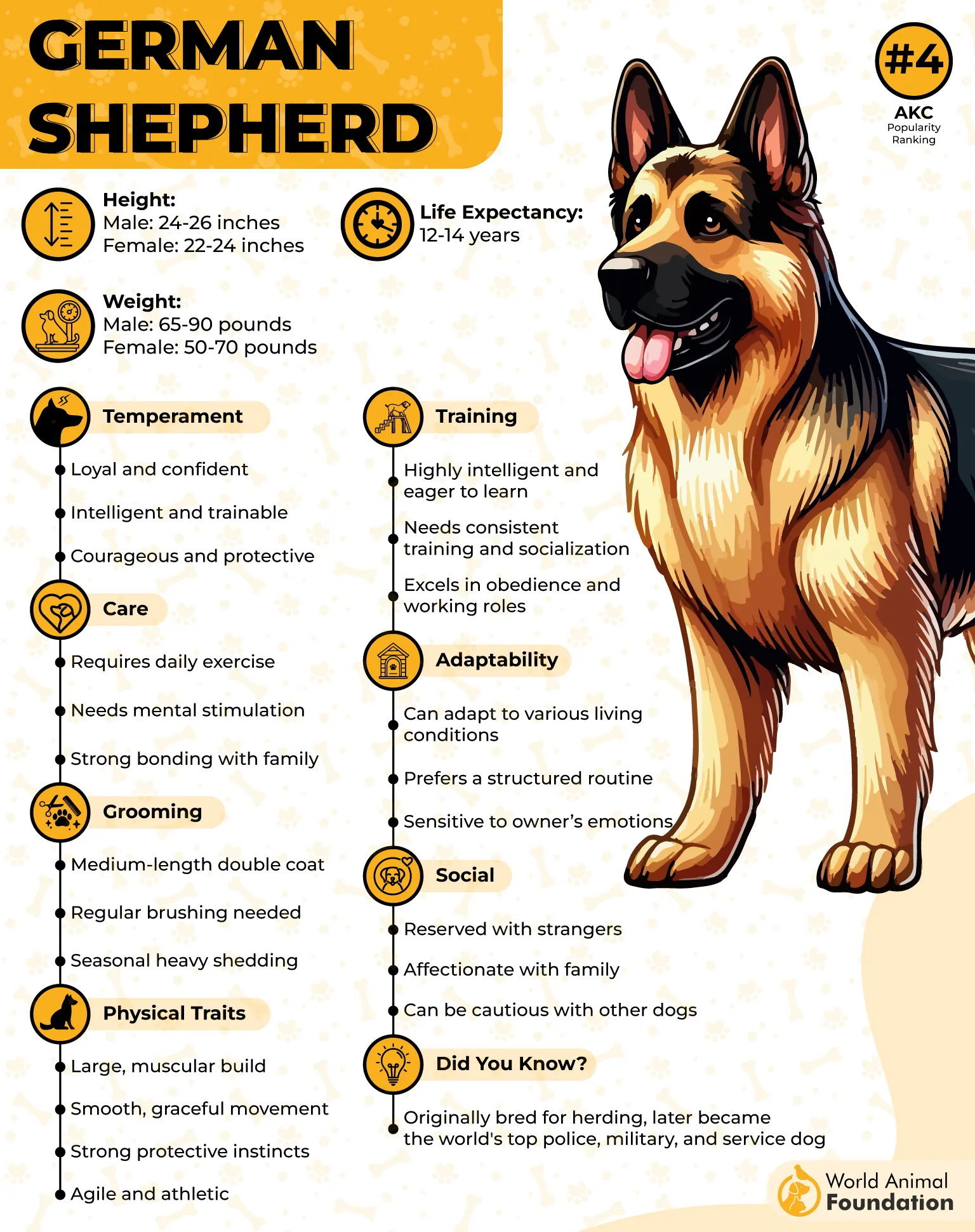
German Shepherds are substantial, muscular, and slightly longer than tall, with a structure designed for balance, endurance, and efficient trotting over distance. They wear a double coat with a dense undercoat beneath a medium-length outer coat. Compared with the sharper outline of the Doberman, the Shepherd looks heavier, carries more coat, and often produces a more rugged “do not test the perimeter” presence.
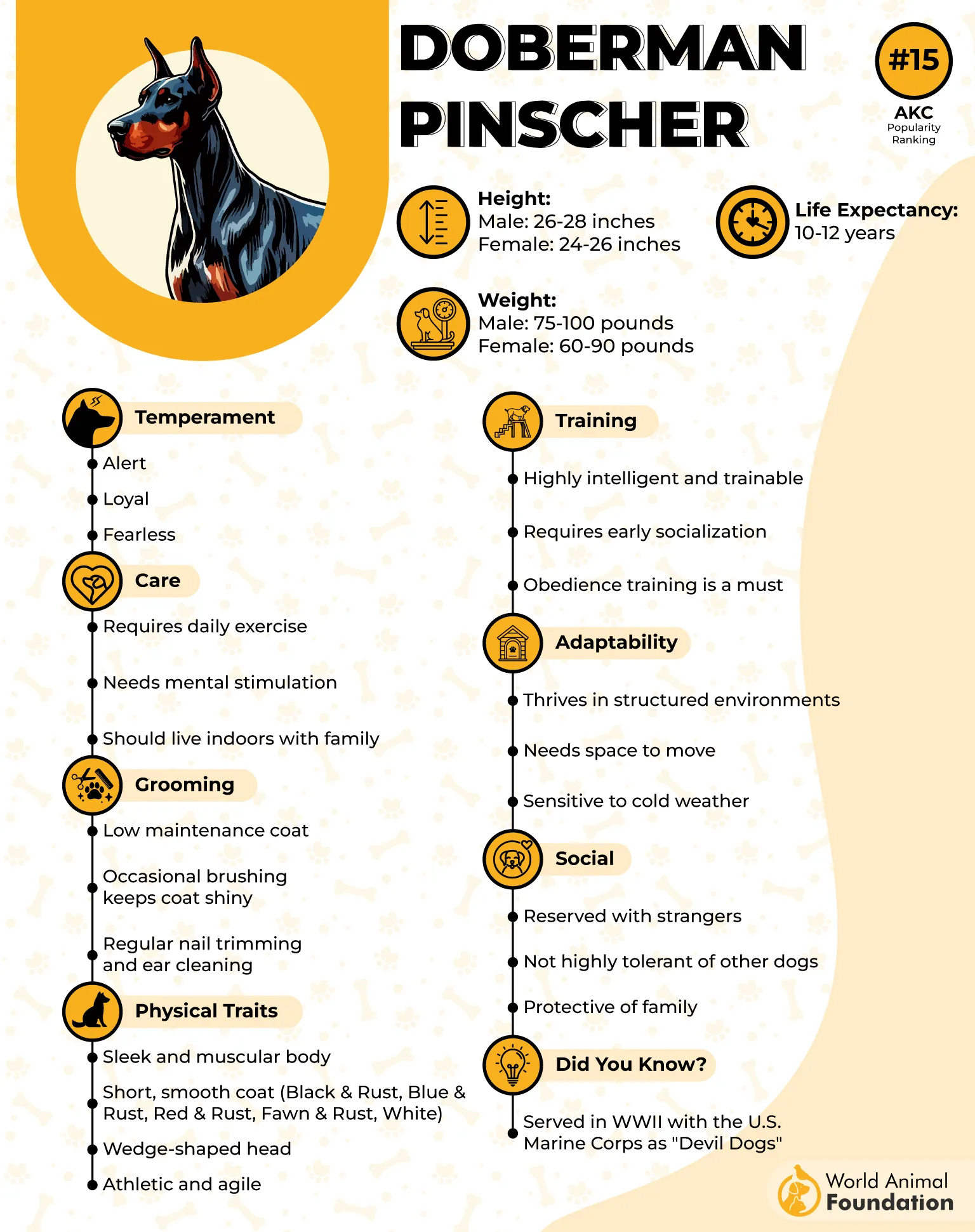
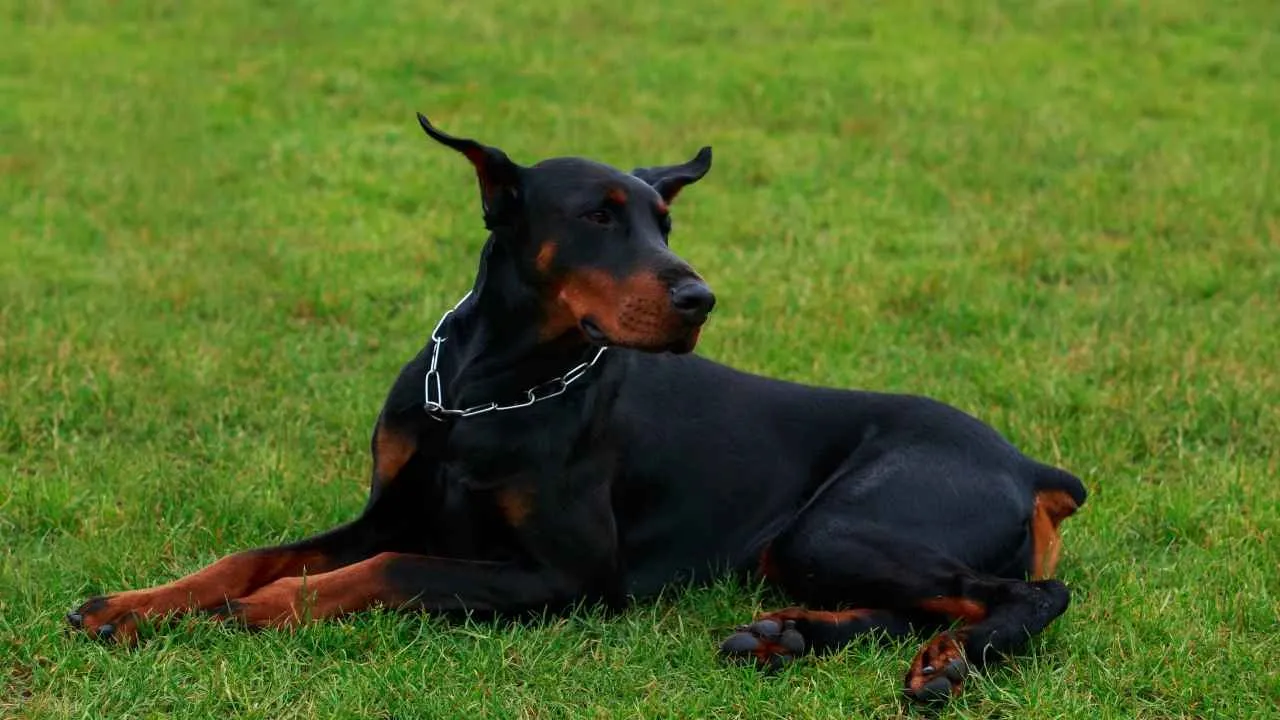
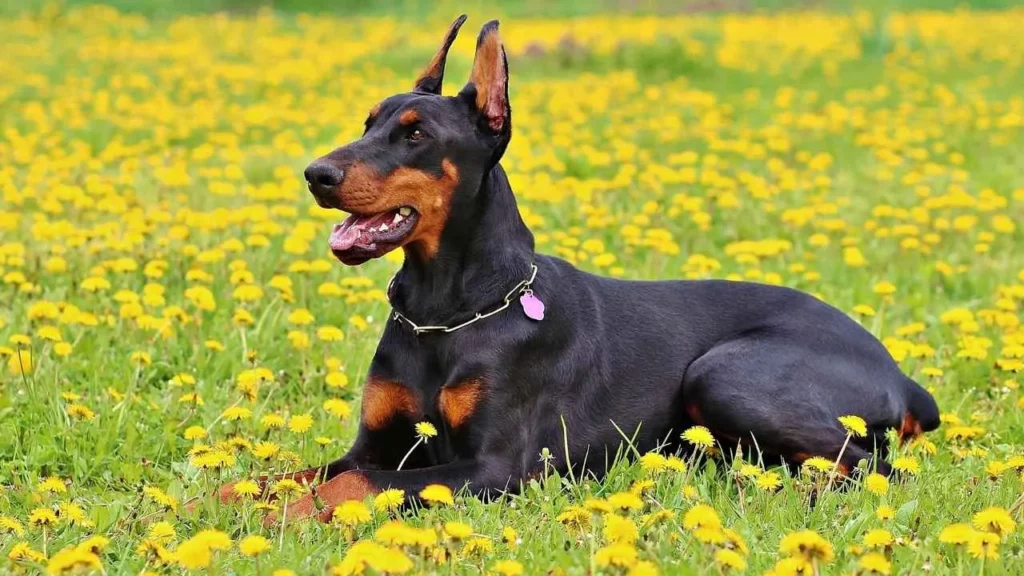
A large Doberman may actually be taller and heavier than many German Shepherds, despite appearing leaner because of its tight coat, compact proportions, and cleaner muscular outline. It is less furry tank and more athletic interceptor, combining reach, acceleration, and a silhouette that delivers immediate visual deterrence.
For physical tasks requiring traction, rough-terrain stability, and sustained resistance, the German Shepherd’s broader working structure can offer an advantage. For rapid positioning, tight turns, and close personal guarding, the Doberman’s streamlined frame may feel faster and more responsive.
Temperament and Personality
The German Shepherd breed standard calls for direct, fearless but non-hostile behaviour, self-confidence, and a degree of natural aloofness. They often observe unfamiliar people before offering friendship, yet well-bred dogs should remain approachable, composed, and willing to accept normal social interaction.
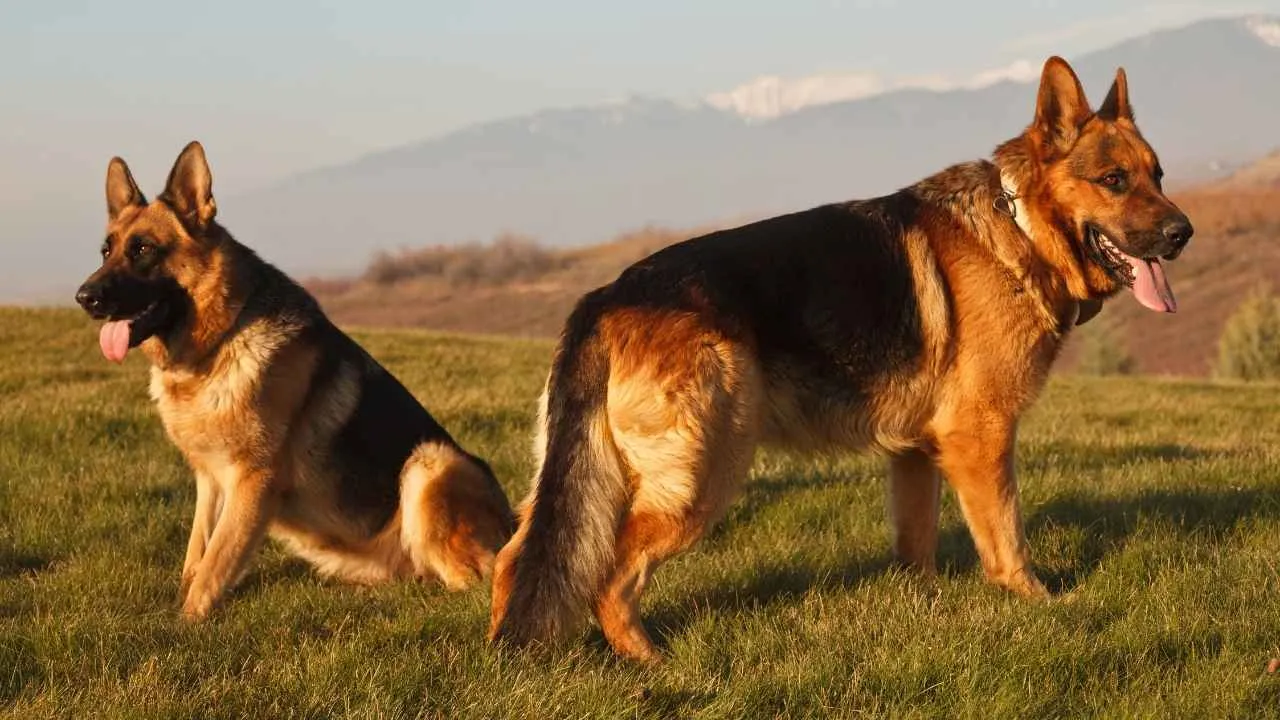
Compared with the emotionally intense Doberman, the Shepherd can appear more businesslike, as though it is constantly reviewing the room’s security settings.
Dobermans are described as energetic, watchful, determined, alert, fearless, loyal, and obedient. They frequently form extremely close attachments to their families and want to participate in daily life rather than being parked alone in a garden as decorative security equipment.
Both breeds can be affectionate family companions, but the German Shepherd often offers slightly more emotional independence and broader adaptability across working situations.
Health and Lifespan
The American Kennel Club lists a life expectancy of 12–14 years for the German Shepherd and 10–12 years for the Doberman. Those ranges are population-level estimates rather than guarantees, because genetics, weight, veterinary care, exercise, breeding quality, and plain luck influence every individual dog.
Responsible German Shepherd breeding places major emphasis on hip and elbow evaluation because orthopedic soundness directly affects comfort and working ability. The German Shepherd Dog Club of America’s health programmes also include temperament assessment, with broader award requirements that cover cardiac, thyroid, and degenerative myelopathy testing.
Doberman buyers must pay especially close attention to cardiac screening because dilated cardiomyopathy is a major health concern and can remain hidden before symptoms appear. It is also advised that serious breeders investigate cardiac function alongside hip, elbow, thyroid, and eye health, liver function, and von Willebrand disease status. Health testing is a must!
Training and Exercise
German Shepherds are highly trainable as they learn quickly, retain complex skills, and have enough versatility to succeed in obedience, tracking, herding, scent work, service tasks, and carefully managed protection sports. Early training and positive reinforcement should develop confidence, recall, impulse control, neutrality around strangers, and the ability to switch from excitement into calm behaviour.
Dobermans are similarly intelligent and can absorb commands with almost suspicious speed, especially when training is clear, varied, and closely connected to their favourite person.
Because these highly intelligent dogs are powerful, vigilant creatures with long memories, breeders and trainers emphasise thoughtful early socialisation rather than throwing puppies into overwhelming situations and hoping confidence magically appears.
Both dog breeds need reward-based obedience and proper training throughout life, not a six-week puppy course followed by ten years of positive thinking. German Shepherds often excel at varied technical tasks, while Dobermans usually shine in fast, interactive sessions that require precision and direct handler engagement.
Energy Level
German Shepherd owners should expect an energetic working dog that needs extensive physical activity and mental stimulation every day. Long walks alone may not be enough, because the breed also benefits from obedience, scent work, tracking, retrieving, controlled running, and tasks that require actual decision-making.
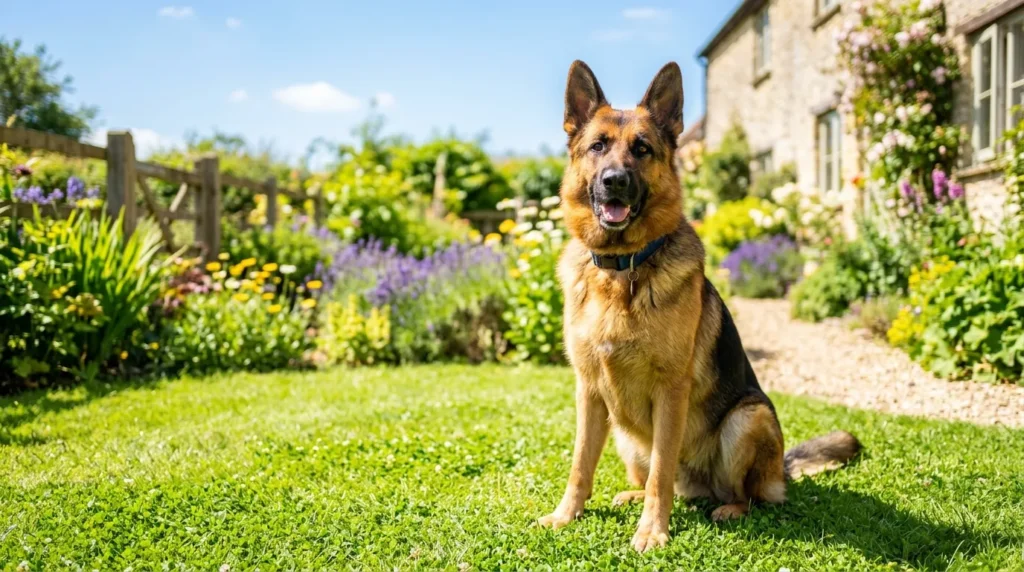
Dobermans fall within the medium-to-high energy range and are ideal for homes that provide daily exercise, play, training, and close family interaction. Their athletic build suits long walks, hiking, obedience, agility, and tracking, but insufficient stimulation can result in destructive or unmanageable behaviour.
The German Shepherd’s herding and service background tends to produce endurance, environmental awareness, and willingness to remain engaged across long assignments. The Doberman’s companion-protector origins favour rapid reactions, close positioning, and intense focus on whatever its handler is doing.
Natural Protection Instincts
German Shepherds protect through vigilance, confidence, territorial awareness, and a remarkable ability to learn structured roles. Their history in herding, police work, military service, guiding, search and rescue, and guarding has selected for dogs capable of reading environments and changing tasks without immediately losing composure.
The Doberman was deliberately developed to accompany and defend one vulnerable individual, giving it a more specialised personal-protection background. Its speed, family fixation, watchfulness, and willingness to place itself between its person and a perceived danger create the classic bodyguard impression.
For close personal deterrence, rapid response, and intense one-family loyalty, the Doberman earns a narrow advantage. For all-purpose guarding, versatility in service, rough-terrain capability, and a broader range of working applications, the German Shepherd, with its protective instincts, takes the lead.
That verdict is an informed comparison rather than a guarantee, because a stable, ethically bred, professionally trained individual from either breed will outperform a poorly socialised dog with impressive looks and zero emotional regulation.
Conclusion
Choose the German Shepherd when you want a substantial, versatile working companion that can combine family guardianship with tracking, obedience, service work, scent detection, or other structured activities.
Be prepared for significant shedding, daily mental and physical work, careful joint-health research, and consistent training from puppyhood into adulthood. The Shepherd is the better all-rounder, bringing more Swiss Army knife energy than a single-purpose security system.
The German Shepherd narrowly wins for overall protection versatility in this Doberman vs. German Shepherd comparison. At the same time, the Doberman may be the stronger choice for focused personal companionship and visual deterrence.
