




Keeping guard dogs to protect families and properties is far from a modern trend; humans have relied on the strength, alertness, and loyalty of canines since ancient times. From herding livestock to safeguarding homes and farms, well-trained guardian dogs have faithfully lived up to their roles for centuries.
Among the breeds celebrated for bravery and unwavering loyalty, two stand out: the German Shepherd and the Bullmastiff. Each boasts unique traits that make them favorites among experienced dog owners, particularly for those seeking reliable guard dogs.
Both breeds can thrive in family settings when guided by knowledgeable owners who understand their specific needs. If you’re trying to decide which breed is the best fit for your home, this guide will walk you through their histories, temperaments, care requirements, and the qualities that set them apart.
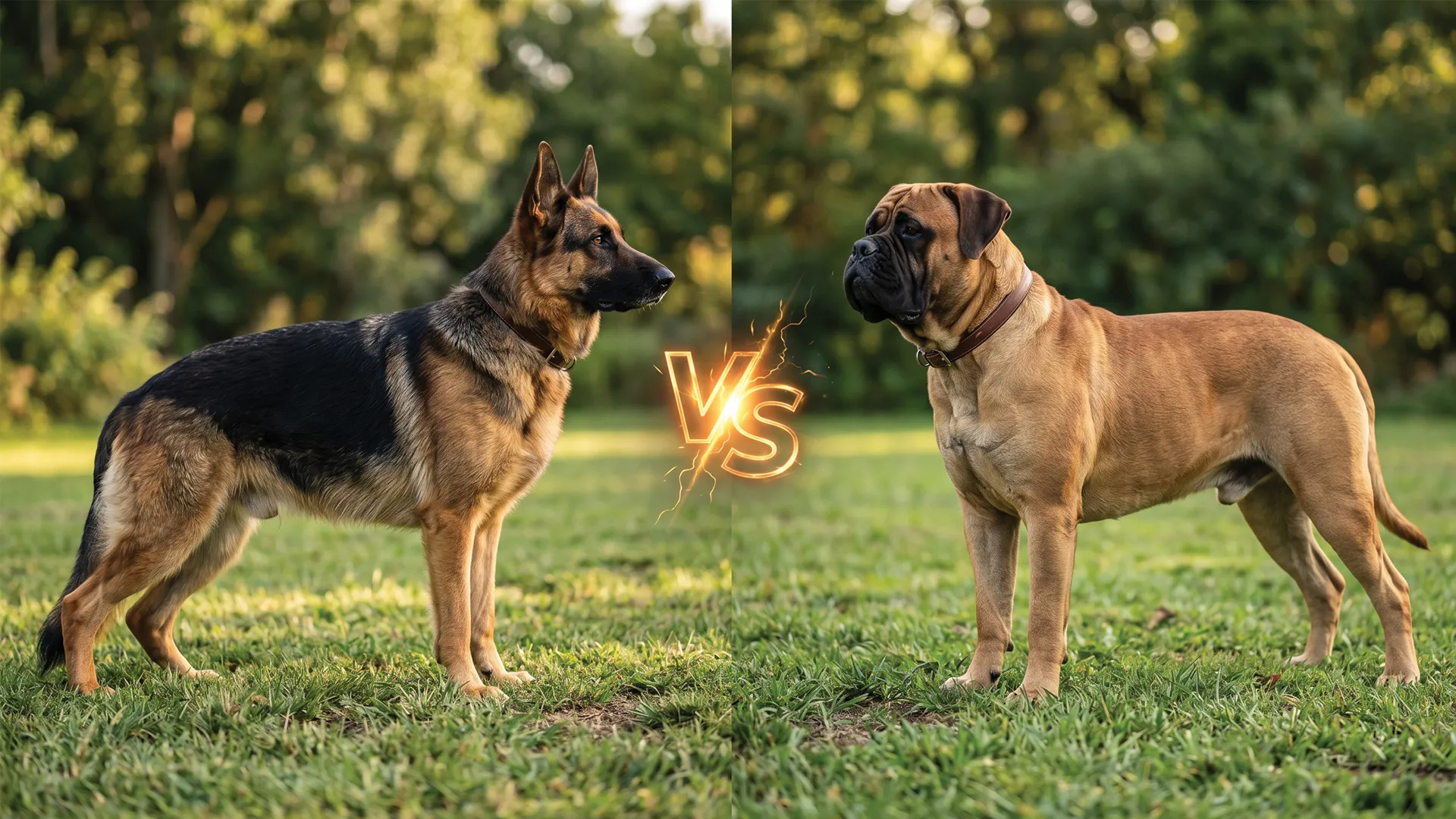
German Shepherd vs. Bullmastiff guard dog comparison
Choosing between the agile intelligence of a German Shepherd and the sheer physical presence of a Bullmastiff is a classic debate for those seeking the ultimate home protector. While one relies on lightning-fast reflexes and versatility, the other utilizes a “silent guardian” approach, using its massive frame to deter intruders.
Both breeds are legendary in the world of security, but they bring very different temperaments and defensive styles to the table. This comparison breaks down their protective instincts, training needs, and family compatibility to help you decide which guardian is right for your sanctuary.
Origin and History
German Shepherd
Dog lovers around the world know the German Shepherd as a powerful and striking guard dog. Renowned for their intelligence and high energy, German Shepherds are consistently ranked among the most popular dog breeds in the U.S., according to PetMD. Originally bred in Germany, this versatile working breed gained global recognition in the early 1900s.
Historical records highlight their prominence: President John F. Kennedy owned a German Shepherd named Clipper, and in 1928, a German Shepherd named Buddy became the first guide dog in the United States. Recognized by the AKC in 1908, German Shepherds’ popularity eventually inspired crossbreeding, giving rise to the King Shepherd.
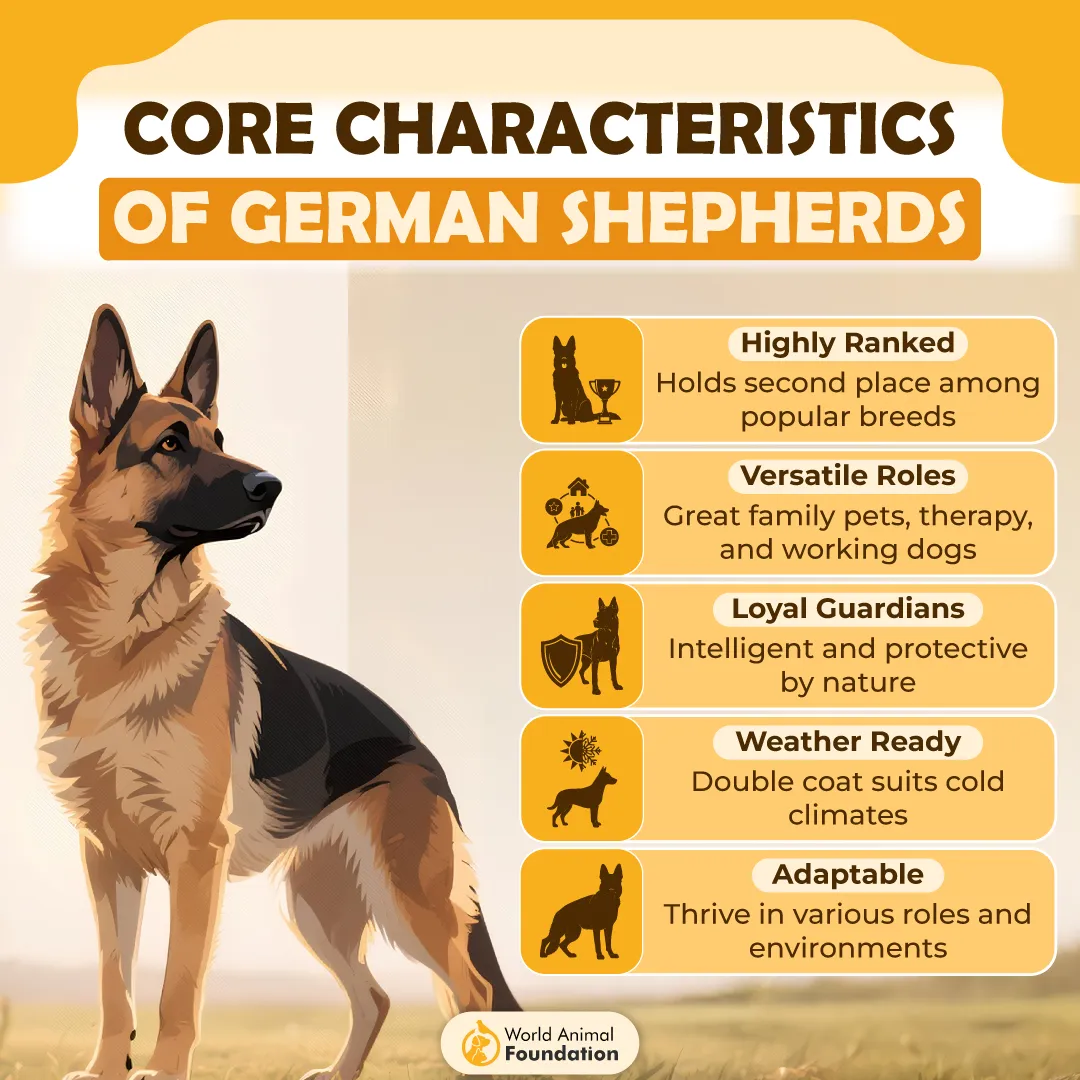
Throughout their history, German Shepherds have proven themselves as loyal guardians, skilled shepherds, and highly trainable service dogs. Their intelligence and versatility have made them indispensable in police, military, and search-and-rescue work, cementing their reputation as one of the world’s most capable and respected breeds.
Bullmastiff
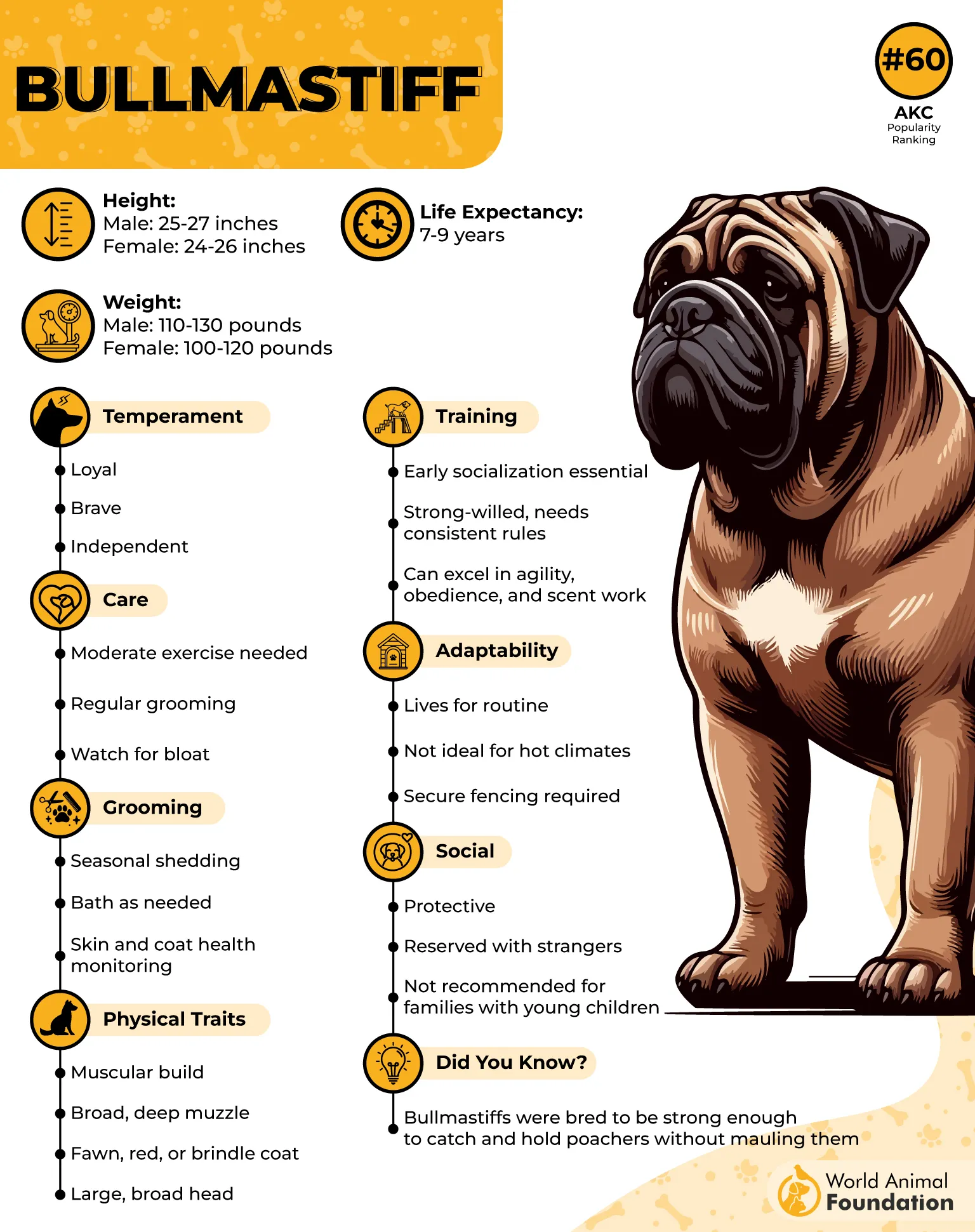
The Bullmastiff is a powerful, flat-faced breed with distinctive droopy ears, developed by crossing Mastiffs with Bulldogs to combine the best traits of both. Omlet notes that its origins trace back to 19th-century England, where it was bred specifically to guard estates against poachers. So effective was its work that it earned the nickname “the gamekeeper’s night dog”.
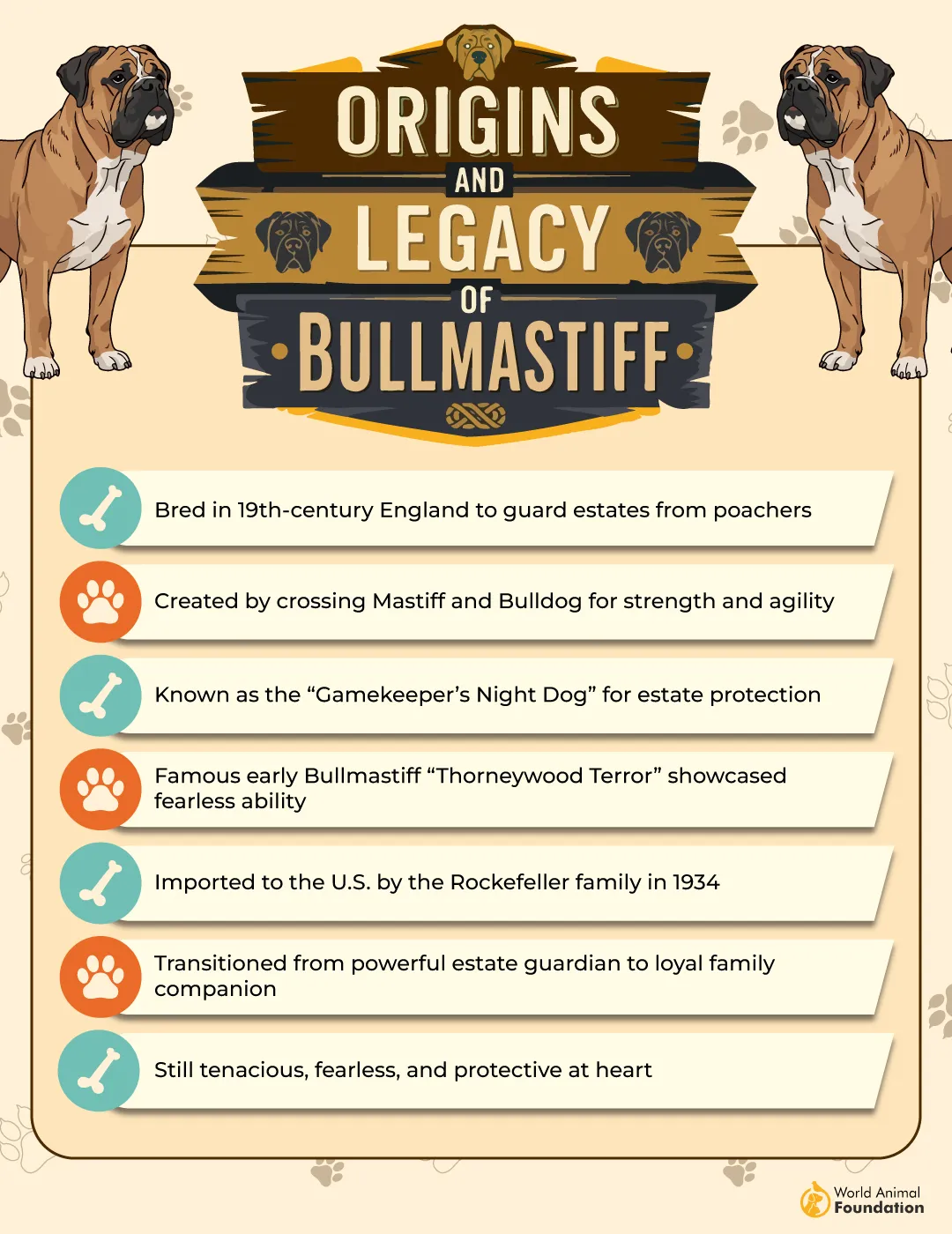
Despite their formidable presence, Bullmastiffs are affectionate and surprisingly cuddly, making them not only excellent guardians but also devoted family companions. Recognizing their unique qualities, the American Kennel Club officially admitted the breed in 1933.
Size and Build
German Shepherd
Standing 22–26 inches tall and weighing between 50–90 pounds, German Shepherds are strong, athletic dogs with a thick double coat. Their well-proportioned bodies, perky ears, and distinctive masked faces give them an alert, confident, and serious appearance. Coat colors typically include solid sable, black, and tan, highlighting their striking features.
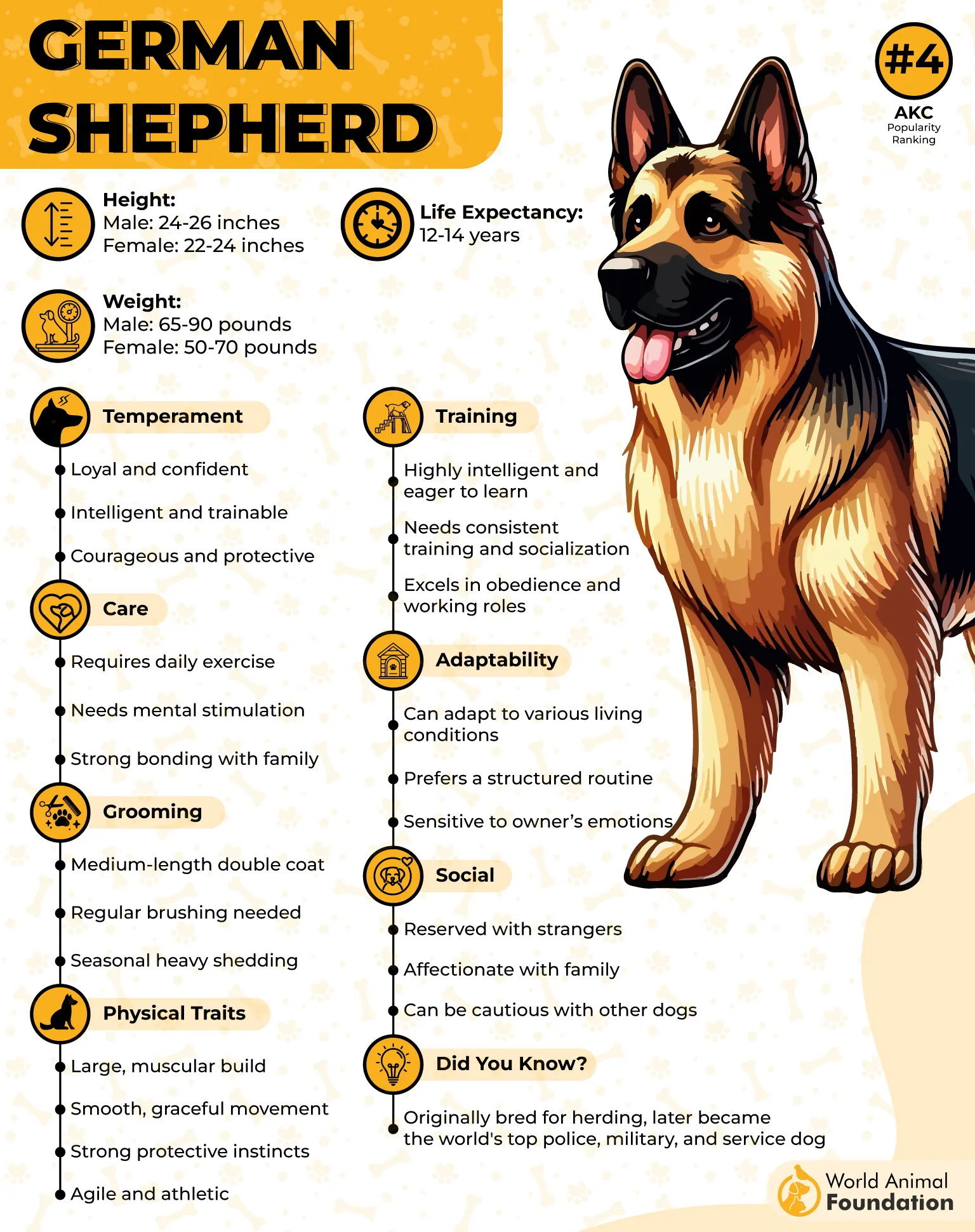
These loyal and intelligent dogs can adapt to various living environments, particularly when given early socialization and training. However, they thrive best in homes with enough space to move freely and expend their abundant energy.
Bullmastiff
Bullmastiffs typically stand 24–27 inches tall and weigh between 100 and 130 pounds. These large, muscular dogs carry a sturdy build that reflects their Mastiff and Bulldog ancestry, though they are slightly smaller than full-sized Mastiffs. They feature short, droopy ears, a brachycephalic (flat) masked face, and irresistibly expressive “pleading eyes” that soften their imposing presence.
Temperament and Personality
German Shepherd
German Shepherds have worked closely with humans for centuries, taking on roles that range from herding and guarding to modern jobs like airport security and bomb detection. Their loyalty is unwavering, and they consistently rise to the task of protecting and assisting their humans.
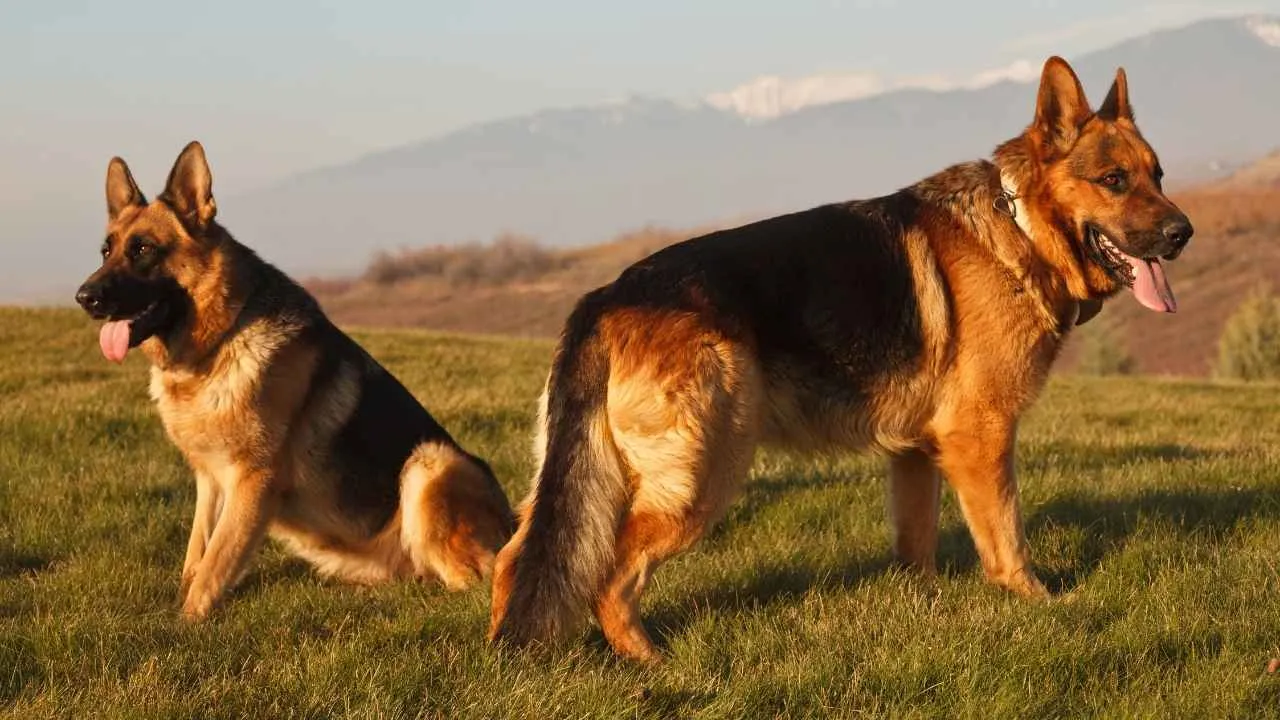
Beyond their duties as guardians, German Shepherds are affectionate family members who get along well with people of all ages.
Thanks to their guarding instincts, they may be naturally wary of strangers. However, once they become familiar with someone, they are warm, trusting, and devoted—especially toward their own families.
Bullmastiff
Bullmastiffs are calm, affectionate, and devoted companions, whether living with families or single owners. Confident by nature, they are surprisingly adaptable and can even thrive in apartment settings when given proper care and early training. With consistent guidance, these gentle giants make loving and dependable family pets.
Typically quieter than many guard breeds, Bullmastiffs do not bark excessively, making them well-suited for urban environments. They may be reserved around strangers, so early socialization during puppyhood is essential to help them grow into well-adjusted and friendly companions.
Trainability and Intelligence
German Shepherd
German Shepherds are highly intelligent and remarkably trainable, especially when guided by experienced handlers. Their eagerness to please allows them to excel in a wide range of roles, from dog sports and obedience competitions to police and military work. Energetic and alert, they respond best to reward-based training paired with mental stimulation, which keeps them engaged and cooperative.
Due to their natural herding instincts, German Shepherds may try to chase small animals. Britannica notes that early training, consistent boundaries, and secure spaces such as fenced yards or leashes are essential. Starting obedience training as puppies is crucial, as German Shepherds can become more challenging to manage if training is delayed.
Bullmastiff
The AKC mentions that Bullmastiffs are intelligent, even-tempered, and responsive dogs, but early training is essential to bring out their best behavior. While they can occasionally show a stubborn streak, establishing clear rules from puppyhood or working with an experienced trainer helps them become obedient and well-mannered companions.
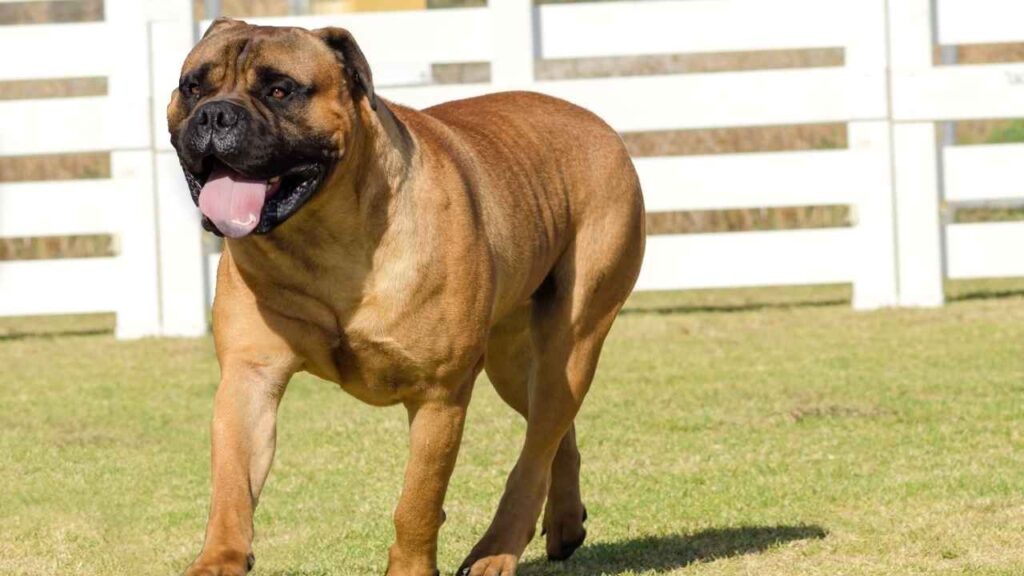
Eager to please and quick learners, Bullmastiffs respond exceptionally well to consistent, positive-reinforcement training, allowing them to master commands and cues with patience and persistence.
Health and Lifespan
German Shepherd
German Shepherds are generally healthy dogs, with a typical lifespan of 7–10 years when provided with proper care, balanced nutrition, and regular exercise. Like all breeds, they can be prone to certain health issues, but responsible breeders often screen for these conditions early.
Some common health concerns include hip dysplasia, elbow dysplasia, degenerative myelopathy (a spinal cord disorder), cancer, and bloat. Regular veterinary check-ups and early screening are essential to catch potential problems early and maintain long-term health and vitality.
Bullmastiff
Bullmastiffs are powerful, large dogs that thrive when given a healthy lifestyle and proper care. They typically live 7–9 years, and like most breeds, are prone to certain health issues. Common concerns include hip and elbow dysplasia, eye disorders, heart disease, and lymphoma.
Maintaining their health requires a balanced diet and proper nutrition. Treats should make up no more than 10% of their daily intake to ensure they stay in optimal condition and avoid unnecessary weight gain. Regular veterinary check-ups are also essential to catch potential health problems early.
Grooming and Shedding
German Shepherd
German Shepherd dogs have a medium-length, dense double coat, featuring a soft undercoat and a slightly coarse outer coat. While beautiful and protective, their coat sheds regularly and requires consistent brushing to stay clean and tangle-free.
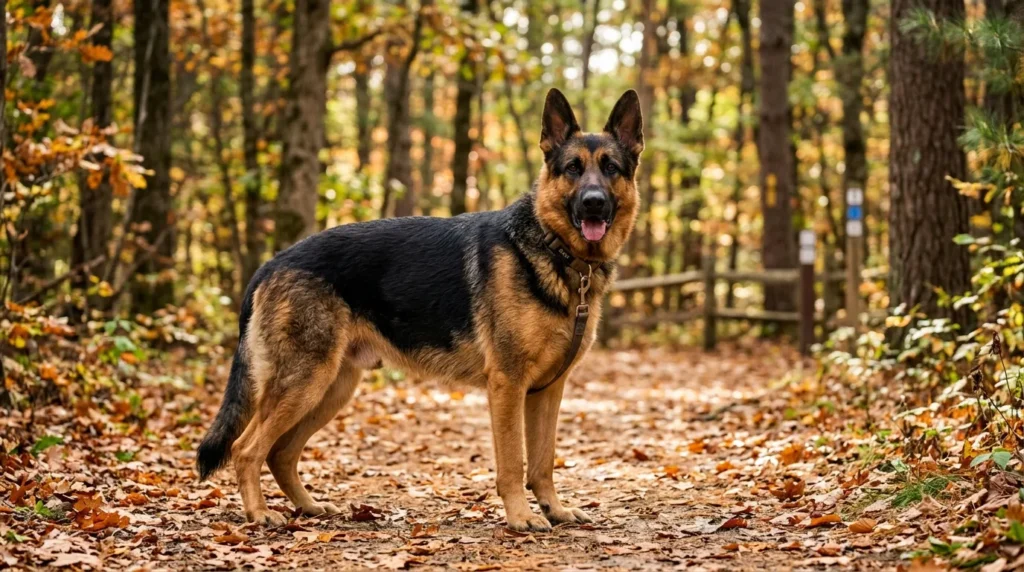
They typically experience heavier shedding once or twice a year, during which more frequent brushing is recommended to remove loose hair and prevent matting. Regular grooming not only keeps their dense coat healthy but also helps reduce the amount of hair around your home.
Bullmastiff
Bullmastiffs have a short, low-maintenance coat that sheds minimally, though some seasonal shedding can occur. Brushing once or twice a week helps remove loose hair and distribute natural oils evenly across the skin, keeping the coat healthy and shiny.
While their coat is easy to maintain, Bullmastiffs have wrinkled faces that require regular cleaning to prevent infections. They are also prone to drooling, so wiping their face and providing regular baths is important to keep them clean and comfortable.
Guarding Instincts and Protective Nature
German Shepherd
German Shepherds are famously loyal, often considered a “one-person” breed because they form deep, lasting bonds with their human companions. Their protective instincts stem from centuries of guarding livestock and property, and combined with their intelligence and high alertness, they make exceptional guard dogs.
Despite their formidable appearance, German Shepherds are loving and gentle with their families, including children, especially when socialized from an early age. They will fiercely protect their loved ones, forming strong attachments that are both heartwarming and dependable.
Bullmastiff
Bullmastiffs are confident and calm, yet naturally alert around strangers. While they are not overly vocal, they will always alert their families to anything suspicious. Their sheer size and presence alone can deter intruders, making them effective guardians even before any training.
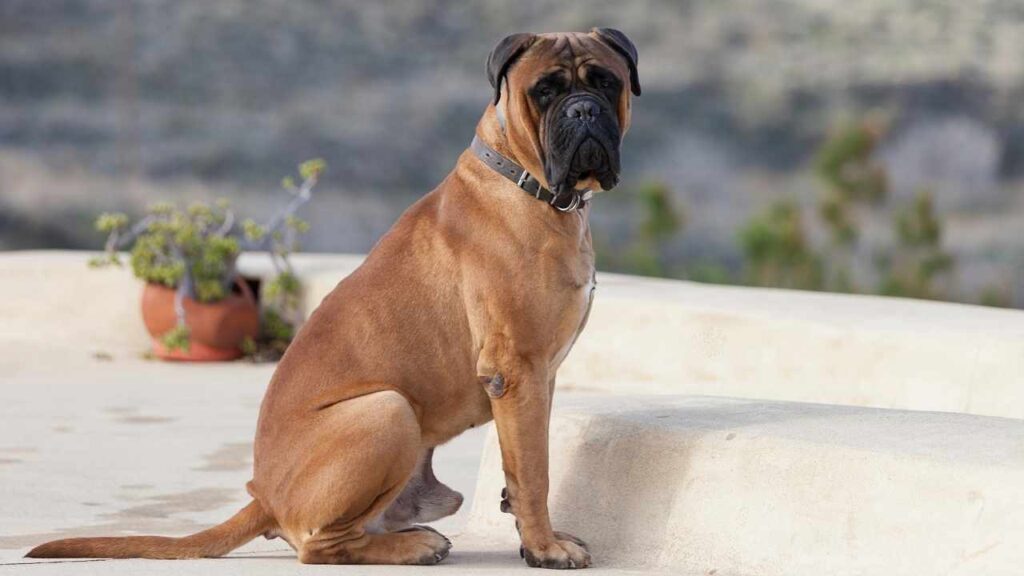
Bred specifically to protect estates from poachers, Bullmastiffs possess naturally protective instincts. With proper training, they make reliable guard dogs while remaining affectionate and friendly with their families, striking a balance between vigilance and companionship.
Suitability as Guard Dogs
German Shepherd
German Shepherds are an excellent choice for families or individuals with an active lifestyle and some experience with dogs. They thrive in environments where they have plenty of space to exercise and expend their abundant energy, though they can adapt to a variety of living conditions when properly cared for.
Their intelligence, loyalty, and versatility also make them ideal companions for off-grid or rural living, where they can serve as both guardians and herding partners. For those ready to embrace an active and engaged lifestyle, a German Shepherd can be the perfect four-legged companion.
Bullmastiff
Bullmastiffs are an excellent choice for those seeking a calm, affectionate, and low-vocality guard dog. With regular walks and proper health care—especially considering their brachycephalic (flat-faced) nature—these gentle giants will reliably watch over your home and family.
Because Bullmastiffs can be independent and occasionally stubborn, early training and experienced handling are essential to help them become well-mannered and responsive companions. When guided properly, they make both loving pets and formidable guardians.
Conclusion
Both German Shepherds and Bullmastiffs are remarkable guard dogs, each offering loyalty, protection, and a unique bond with their humans. Choosing between them is more than picking a breed; it’s about finding a companion whose personality, energy, and instincts align with your lifestyle.
By understanding their distinctive traits and needs, you can make a thoughtful choice that not only ensures safety but also brings a lifelong friendship, love, and unwavering devotion into your home.
