




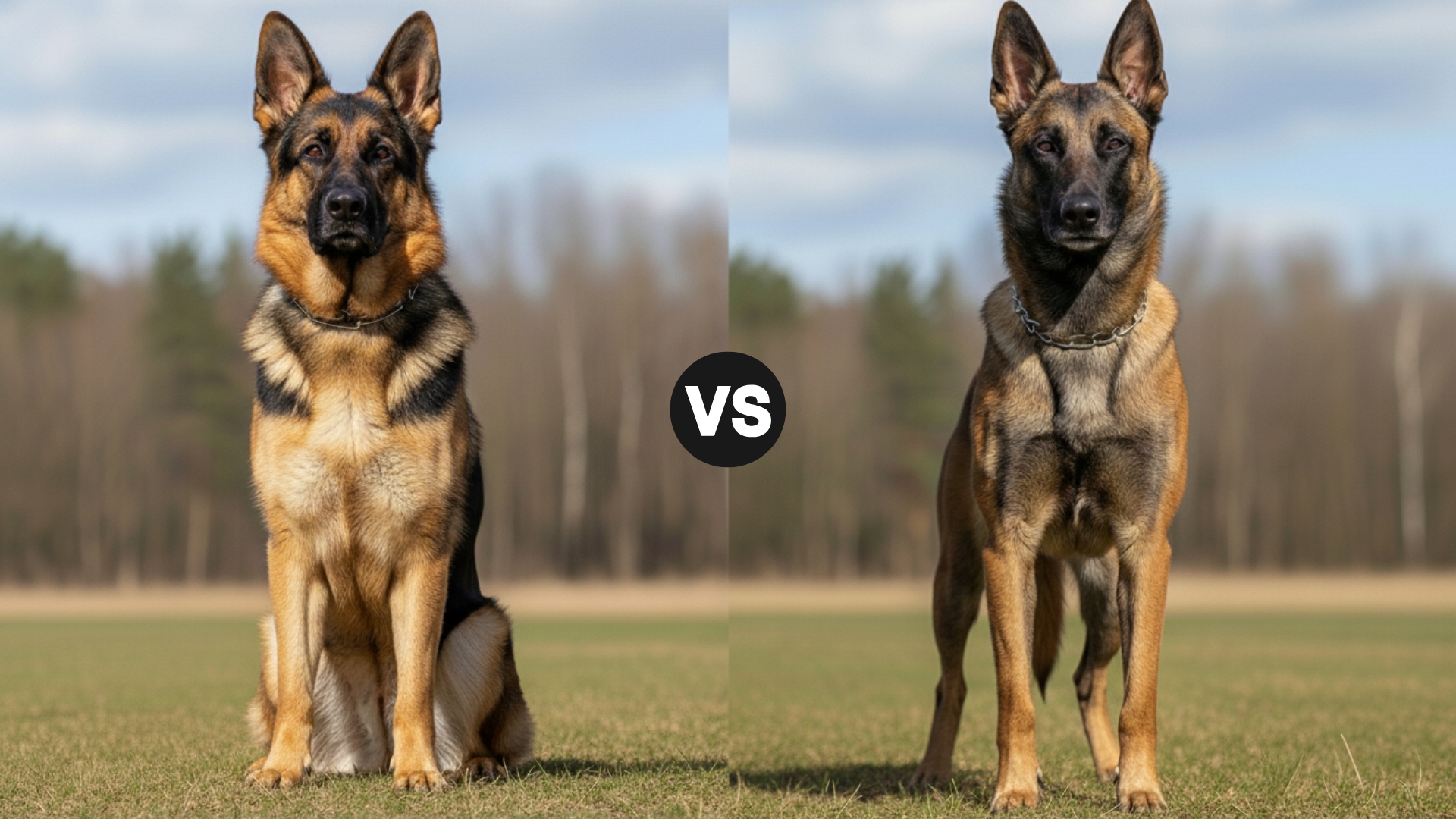
Search trends, training videos, and tactical documentaries have amplified one recurring question: which police dog truly leads the pack? Online discussions frequently spotlight the German Shepherd and the Belgian Malinois as the ultimate K9 contenders.
Viral footage often highlights speed, takedowns, and flawless obedience, yet short clips rarely show the full story. Real police work demands more than dramatic apprehensions. It requires mental stability, environmental resilience, trainability, and consistent performance across years of service.
These two breeds dominate modern units because of proven results, not social media visibility. Still, their working styles and physical design of these animals differ in meaningful ways, which you shouldn’t miss.
In this article, we examine endurance levels, drive intensity, handler responsiveness, and deployment versatility to determine how each breed fits specific policing roles.
German Shepherd vs. Belgian Malinois: Police Dog Battle
Key Takeaways
Tactical teams around the world rely on dogs that can endure stress, think clearly, and respond without hesitation.
The German Shepherd carries a legacy of disciplined service, shaped by structure, intelligence, and controlled strength.
The Belgian Malinois stands out for sharp agility and intense drive, earning trust in high-stakes operations where timing matters most.
When endurance, temperament, and real deployment demands are examined together, their differences tell a story that rankings alone cannot capture.
Origins & Purpose
German Shepherd
German Shepherd dog traces back to old German farm and herding dogs that worked closely with humans for centuries. In 1899, Capt. Max von Stephanitz formally established the breed in Germany with a clear vision of creating a disciplined working partner. Early recognition by the American Kennel Club in 1908 accelerated global attention.
During the World Wars, the breed’s name was temporarily changed to “Shepherd Dog” or “Alsatian” due to anti-German sentiment. Even with that shift, its reputation as a dependable service dog continued expanding across Europe and America. Selective breeding later influenced lines such as the King Shepherd.
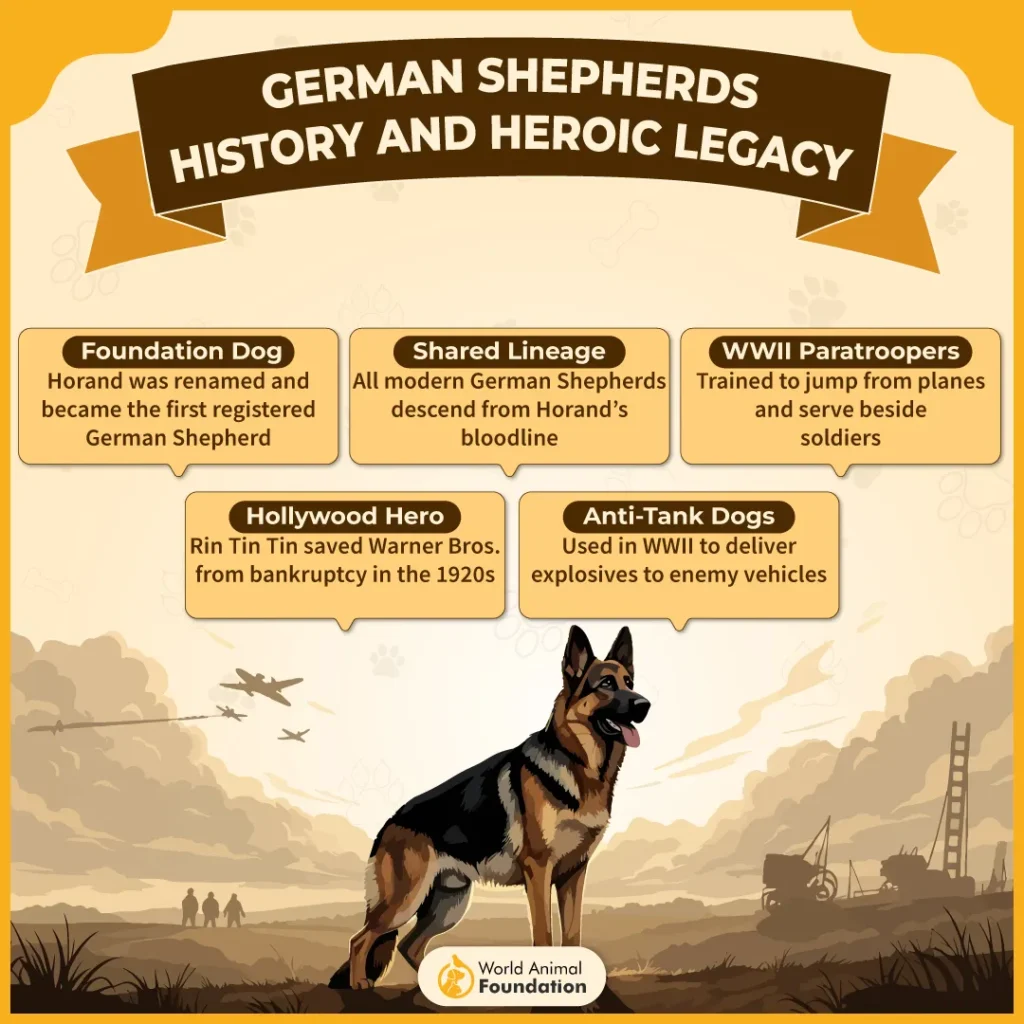
Britannica states that its foundation was rooted in utility, blending companionship with livestock management. That dual-purpose beginning shaped a dog suited for structured tasks and organized service roles. The original breeding goal centered on reliability, intelligence, and controlled strength.
Belgian Malinois
Belgian Malinois developed in the 1800s as one of four Belgian shepherd varieties alongside the Tervuren, Groenendael, and Laekenois. The breed takes its name from the city of Mechelen, where breeders refined it for herding and property protection. Early development emphasized stamina and a steady work ethic.
The Malinois arrived in the United States in the early 1900s, though recognition fluctuated after World War II. The American Kennel Club formally recognized the breed in 1959, renewing structured breeding programs, as the AKC highlighted. Interest steadily increased again during the 1960s.
By the early 2000s, the Malinois had become a prominent choice for police work, the military, detection, and search-and-rescue units. It has served with the Secret Service and was part of Navy SEAL operations, including the 2011 mission targeting Osama bin Laden. Its breeding focus consistently centered on precision and operational readiness.
Size & Physical Build
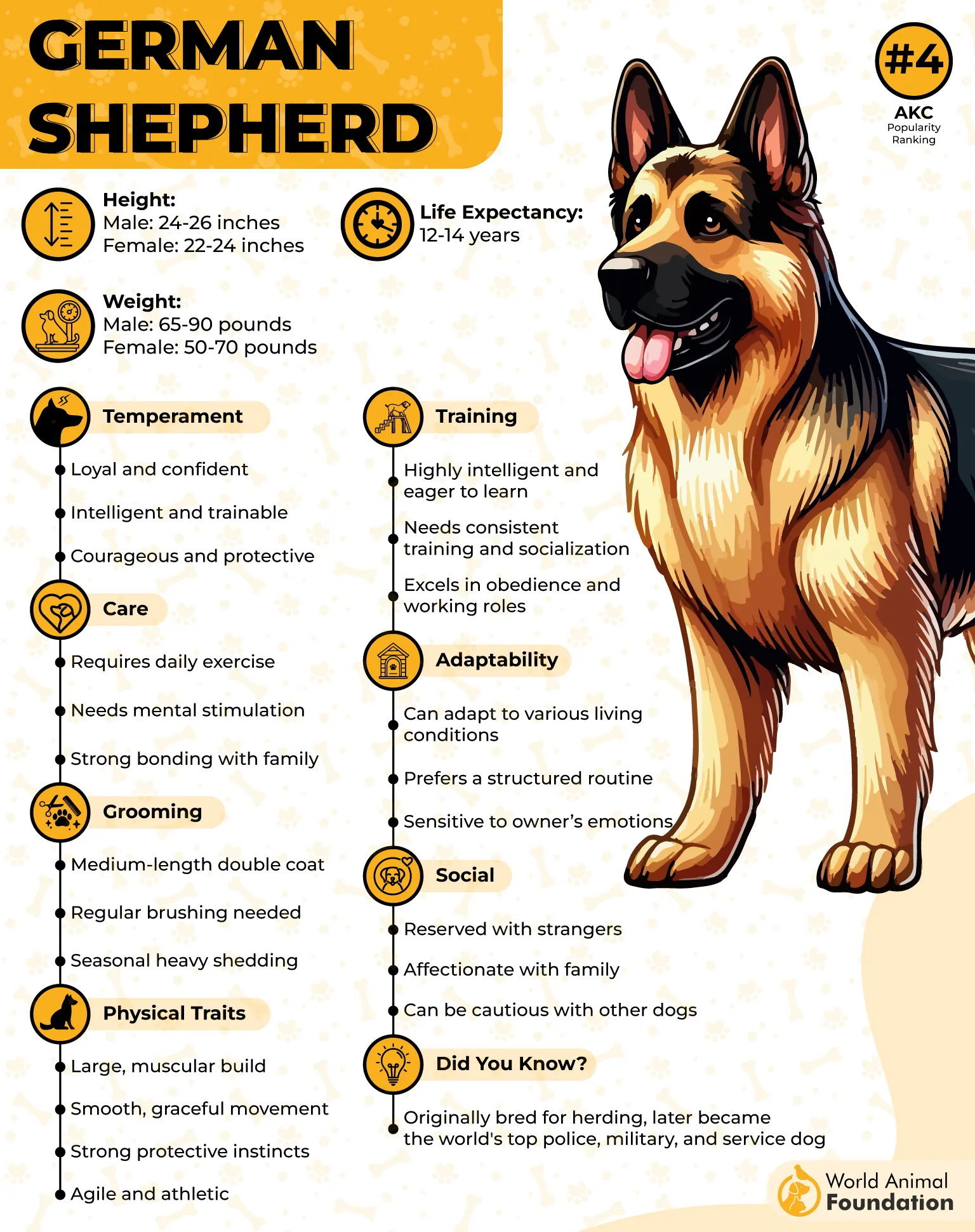
GSD stands up to 26 inches at the shoulder, with males weighing between 65 and 90 pounds and females ranging from 50 and 70 pounds. The outline shows smooth, flowing curves rather than sharp angles. This structure supports both endurance and controlled power during active duty.
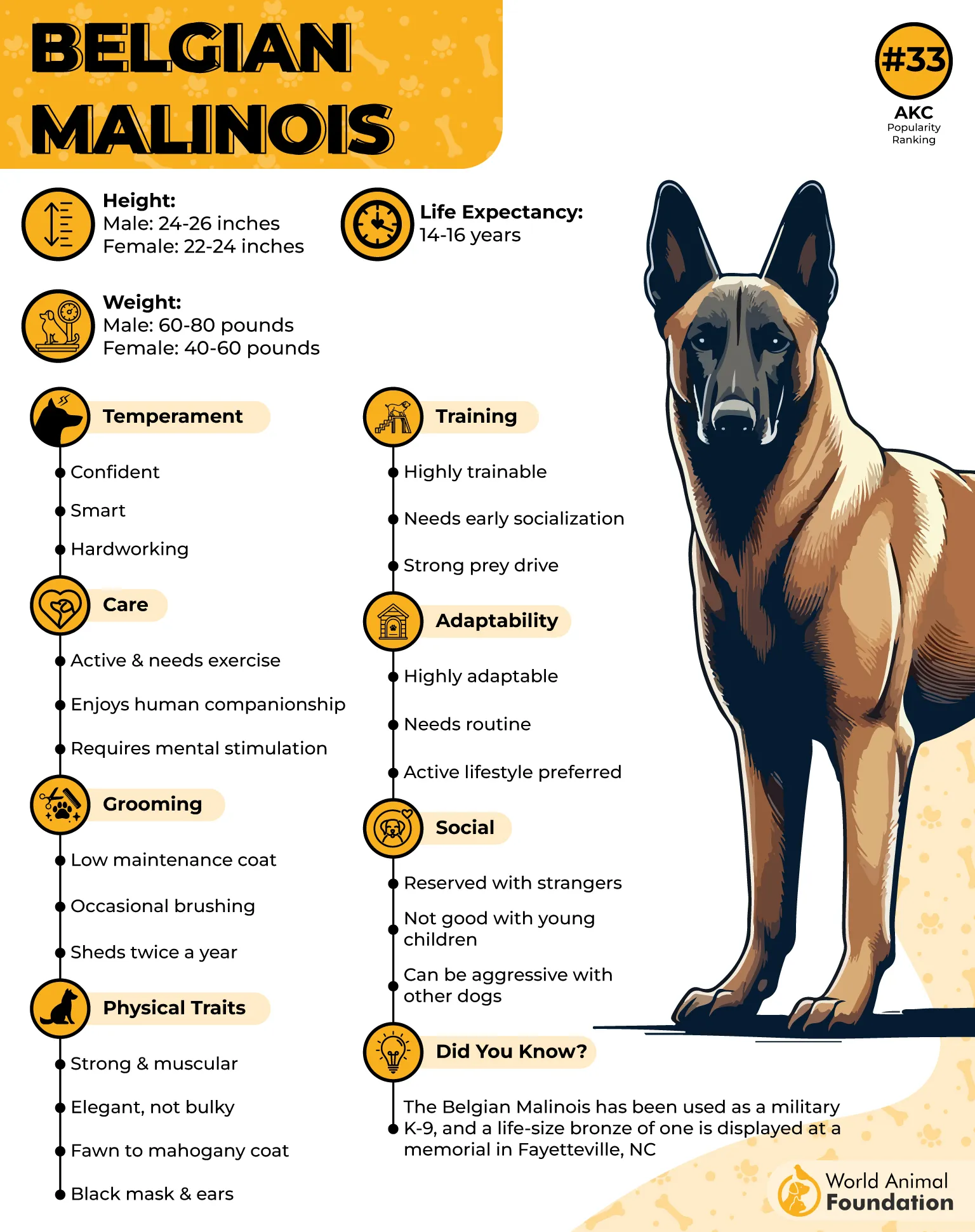
Belgian Malinois measures 24 to 26 inches for males and 22 to 24 inches for females, generally weighing 60 to 80 pounds for males and 40 to 60 pounds for females. The body is square and tightly built. Their lighter frame creates a visibly leaner working profile.
Movement & Presence
German Shepherd moves with a free, ground-covering trot that can quickly shift into high speed when required. The gait reflects balance and reach rather than short bursts alone. That extended stride plays a major role in patrol and pursuit scenarios.
Belgian Malinois shows a compact, efficient stride shaped by its square proportions. A proud head carriage and upright posture give it a sharp, alert silhouette. The overall appearance feels streamlined and purpose-built for rapid directional shifts.
Temperament & Personality
German Shepherd
German Shepherd temperament reflects its roots as both herder and guardian, combining alertness with steady composure. Around family, they tend to show controlled affection and patience. With strangers, they often remain watchful until properly introduced.
German Shepherds generally interact well with children when structured training and early socialization are in place. Their protective instincts can make them attentive in home environments. Supervised interactions help ensure boundaries are respected on both sides.
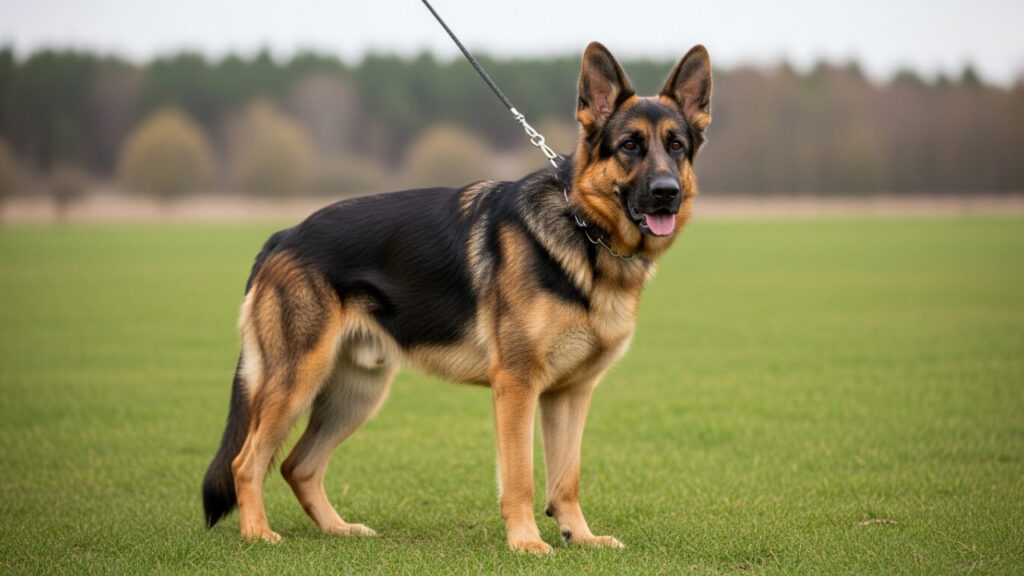
In demanding service roles, this breed balances confidence with measured responses. Their ability to stay composed while remaining observant supports consistent performance. That steady temperament is one reason they are frequently selected for structured duty work.
Belgian Malinois
Belgian Malinois temperament centers on intense loyalty and constant engagement with their handler. They seek close partnership and prefer active involvement over independence. Long periods of isolation often lead to frustration.
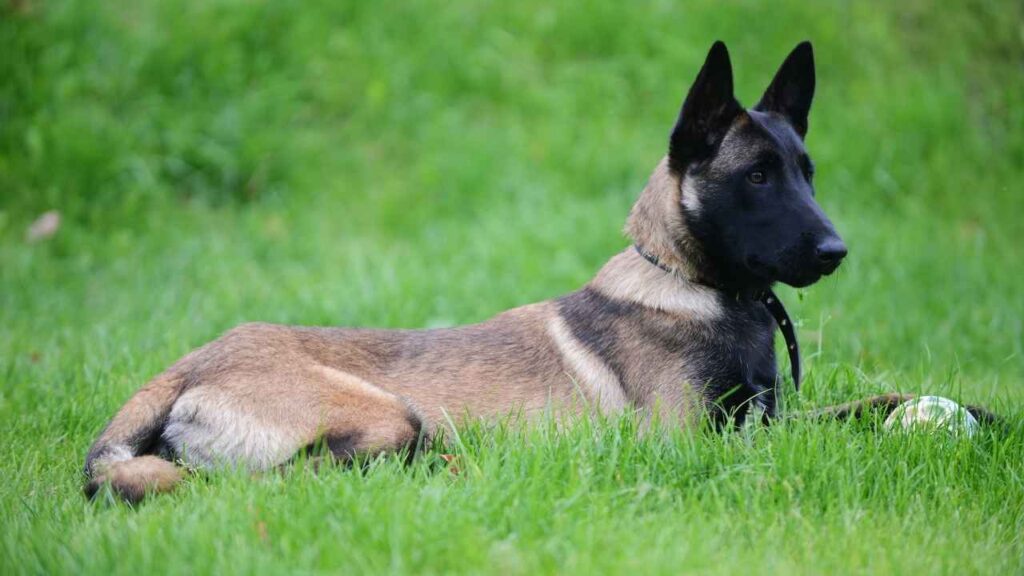
Belgian Malinois show strong attachment to one primary person and remain highly responsive to direction. Their elevated prey drive makes them highly reactive to fast movement, as PetMD claims. Without guidance, that instinct can extend to chasing vehicles or attempting to herd children.
In professional settings, this high-drive personality translates into relentless focus and fast reactions. Their eagerness to respond quickly can be an advantage during complex operations. Close supervision of children remains important due to their herding impulses.
Exercise & Energy Levels
German Shepherds
German Shepherd operates best with structured physical outlets that challenge both body and mind. Without consistent activity, frustration can surface in unwanted behaviors. Early routines often include controlled walks and supervised play in secure spaces.
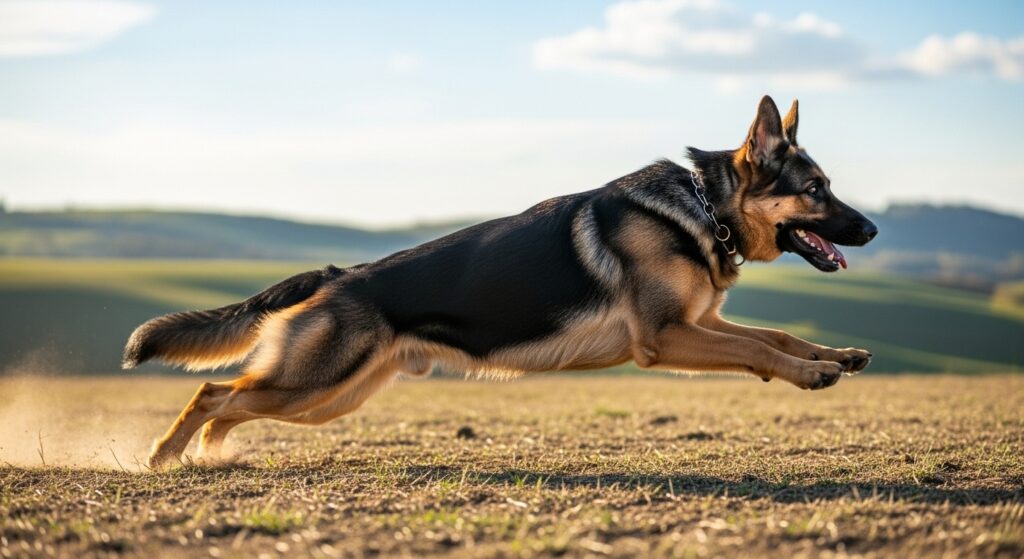
Beyond daily movement, structured canine sports sharpen focus and discipline. Productive outlets include:
Agility and herding drills
Tracking exercises
Dock diving challenges
Off-leash freedom requires caution, as distractions can override commands. Purposeful tasks keep this breed balanced and operationally sharp.
Belgian Malinois
Belgian Malinois demands far more than casual daily walks to stay balanced and focused. Constant engagement alongside a handler keeps this breed mentally locked in. Idle time quickly turns into restlessness when energy has no direction.
High-output routines define their daily rhythm. Productive outlets include:
Protection-based sport work
Advanced obedience and tracking
Long-distance running or hiking
This breed performs best when activity is shared, not assigned from a distance. Physical exertion paired with direct involvement builds control and reliability in demanding roles.
Training & Intelligence
German Shepherds
German Shepherd responds exceptionally well to structured, reward-based methods that start early and continue into adulthood.
Puppy classes and steady obedience work shape this intelligence into reliability under pressure. Living closely with the family sharpens responsiveness and builds the adaptability required in service roles.
Belgian Malinois
Belgian Malinois learns fast and reacts even faster, which makes early guidance essential from the start. Strong interest in movement can be redirected into focused drills through disciplined obedience work.
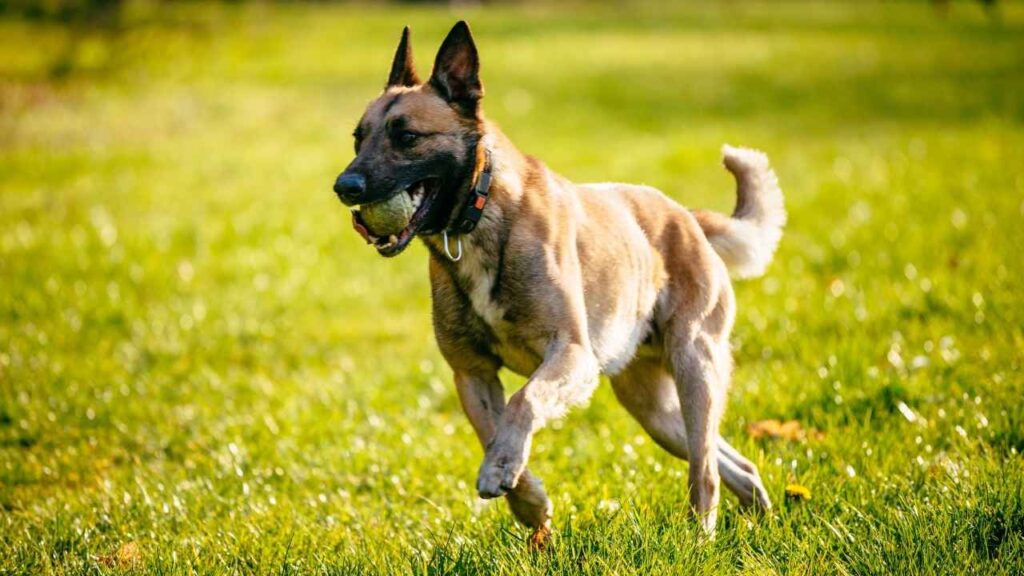
Socialization, paired with consistent direction channels, drives to precise, controlled performance suited for high-stakes assignments.
Health & Lifespan
German Shepherds typically live 12–14 years, with most individuals remaining structurally sound when responsibly bred. Screening for degenerative myelopathy and hip or elbow dysplasia plays a central role in preserving mobility. Bloat remains a serious emergency, making awareness critical in active duty settings.
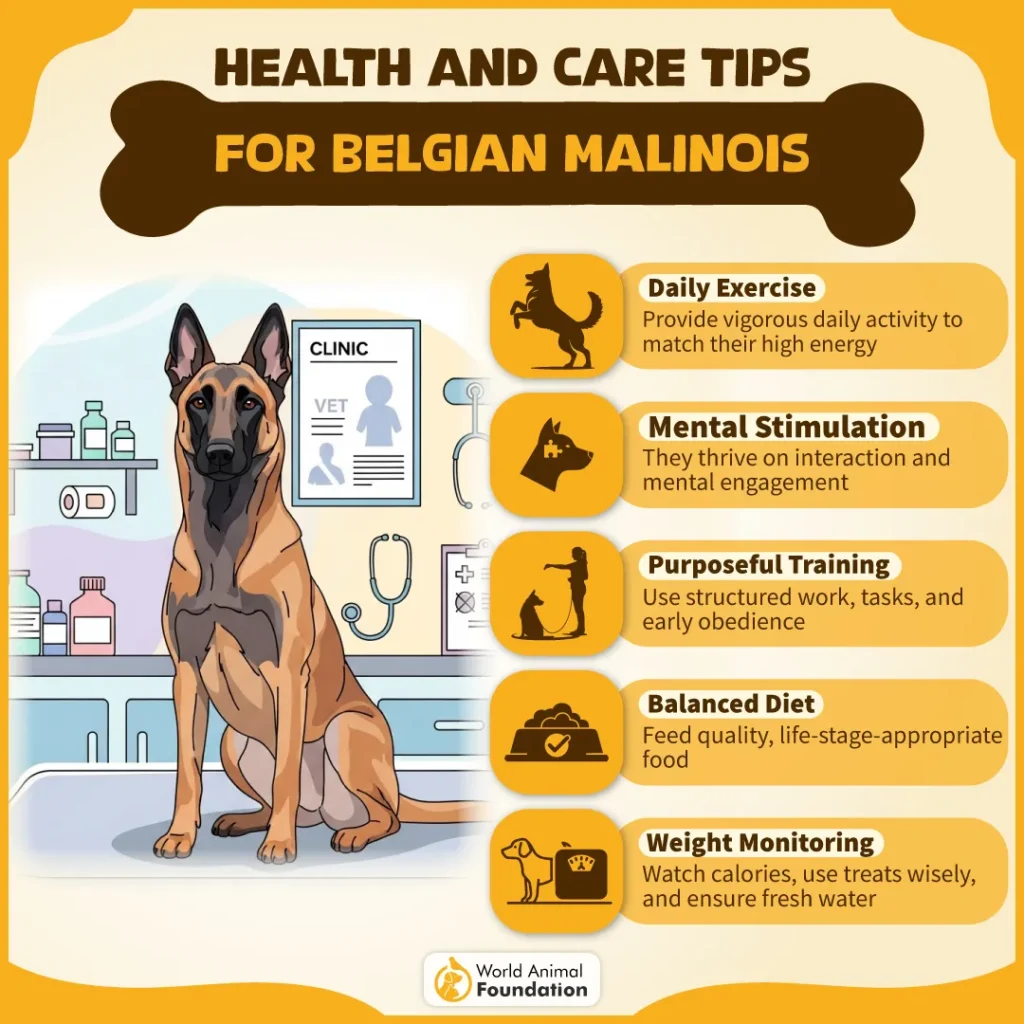
Belgian Malinois generally reaches 14–16 years, offering slightly longer working potential in structured programs. Ethical breeding programs test for hip and elbow dysplasia, along with specific eye conditions. Consistent health monitoring supports their sustained performance in demanding roles.
Breed-Specific Health Priorities
German Shepherd benefits from breed club–recommended hip and elbow evaluations alongside formal temperament testing. These assessments help maintain both structural integrity and behavioral stability required in police environments. Early detection directly influences long-term operational readiness.
Belgian Malinois requires hip and elbow evaluations plus ophthalmologist screening to safeguard vision and joint strength. Routine ear checks and dental care help prevent minor issues from interfering with field reliability. Structured oversight keeps the breed physically prepared for high-intensity assignments.
German Shepherd vs. Belgian Malinois Suitability as Family Pets vs. Guard Dogs
Living With a German Shepherd
German Shepherd fits into family life when structure and guidance are consistent from day one. The breed is known to be gentle with children when properly trained and socialized, yet naturally watchful around unfamiliar faces. That balance makes them steady household companions with a built-in alert system.
In a guard role, the German Shepherd responds to clear direction and formal instruction with precision. Police and military programs rely on this reliability because the breed combines confidence with controlled reactions. At home, that same steadiness translates into visible awareness without unnecessary agitation.
Living With a Belgian Malinois
Belgian Malinois connects intensely with one primary handler and expects close daily involvement. Leaving this breed isolated or under-stimulated often leads to behavioral strain, as their drive is wired for partnership. In a family setting, engagement is not optional; it is essential.
When assigned to protection or patrol work, Belgian Malinois channels focus and speed into rapid response. Law enforcement units value this sharp engagement because the breed reacts instantly to direction. In a household, that intensity requires experienced leadership and a clearly defined role.
Conclusion
German Shepherd and Belgian Malinois dominate police work for clear reasons rooted in structure, drive, and resilience. One brings controlled power, steady nerves, and balanced versatility across patrol and protection roles. The other delivers explosive speed, intense focus, and rapid response under pressure.
Size, endurance, temperament, and training style shape how each performs in real deployment settings. Neither replaces the other. Instead, each fits specific operational demands and handler expectations. The true distinction appears not in viral footage but in long-term consistency, where discipline, conditioning, and partnership determine which dog excels when the pressure is real.
