




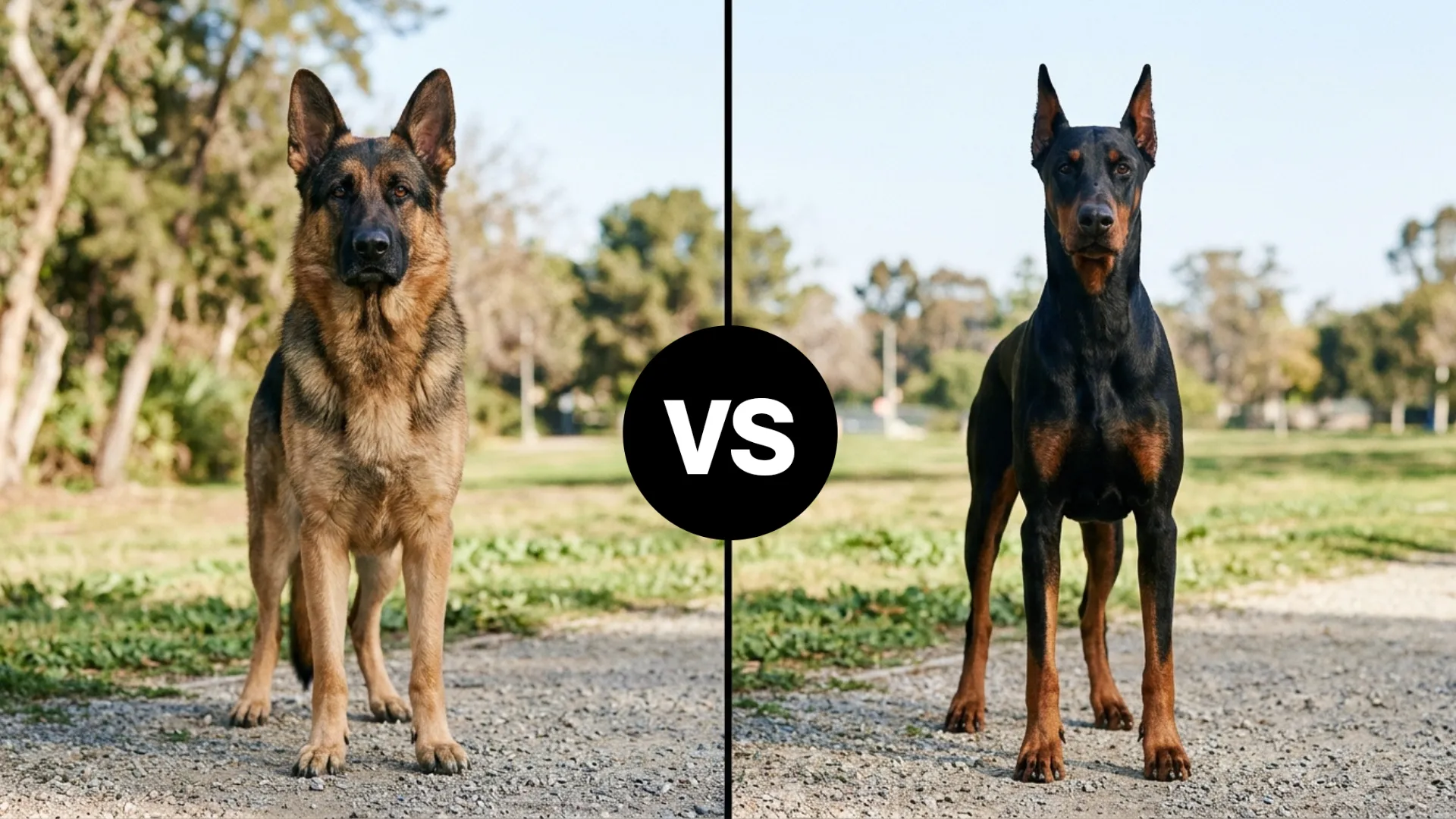
Choosing a dog is like picking your main character in a game: you want someone who vibes with your lifestyle, can handle challenges, and maybe even has a bit of swagger.
If you’re eyeing a dog that’s loyal, protective, and just straight-up iconic, two names probably keep popping up: German Shepherds and Dobermans. Both breeds have insane intelligence, fierce loyalty, and a look that screams “don’t mess with me,” but each brings a very different energy to the table.
In this guide, we’ll dive into everything you need to know and discuss German Shepherd vs Doberman must-read insights before choosing one. From origins to personality quirks, from grooming to guarding instincts, we’ll cover stats, real owner stories, and practical tips so you can decide which four-legged friend of these two breeds is your perfect match.
Spoiler alert: both are incredible, but one might fit your life like a glove while the other is more of a “challenge accepted” type of companion.
German Shepherd vs. Doberman: Must-Read Insights Before Choosing One
While the German Shepherd is globally prized for its versatile, steady work ethic and fierce family devotion, the Doberman Pinscher counters with lightning-fast athletic agility, sleek elegance, and a naturally sharp guardian instinct.
This definitive breakdown dives into the vital differences in temperament, exercise demands, and training needs to ensure you choose the perfect elite protector for your lifestyle.
Origins & Purpose
German Shepherds originated in Germany in the late 19th century. Their purpose? Pure utility. These dogs were bred to herd sheep, work with police forces, and later, to serve in military roles. They’re the OG multitaskers of the canine world—imagine a character in a strategy game who can fight, scout, and manage resources all at once.
Doberman Pinschers, on the other hand, hail from Germany too, but a few decades later, in the 1890s. They were designed to be personal protection dogs and police companions. Their creator, Karl Friedrich Louis Dobermann, wanted a dog that combined speed, intelligence, and loyalty—basically, the superhero version of a guard dog.
Owners rave about their Dobermans’ “laser focus” and ability to read situations, making them excellent for families who want a dog that’s alert but trainable.
While both breeds were born for protection, their historical purposes shape their personalities today. Shepherds are versatile workaholics who can adapt to multiple roles, while Dobermans are sleek guardians who excel at focus and vigilance.
In gamer terms, think of Shepherds as open-world RPG explorers who multitask, and Dobermans as snipers who lock onto their target with precision.
Stats to note: German Shepherds were officially recognized by the American Kennel Club in 1908, while Dobermans made their debut in 1908 as well. Both breeds quickly became favorites for law enforcement and military work globally.
Size & Build
German Shepherds are iconic for their balanced, muscular build, according to Purina. A male typically weighs between 65 and 90 lbs, while females are slightly smaller at 50 and 70 lbs. Their bodies are slightly elongated, giving them agility and stamina, perfect for herding or running alongside humans.
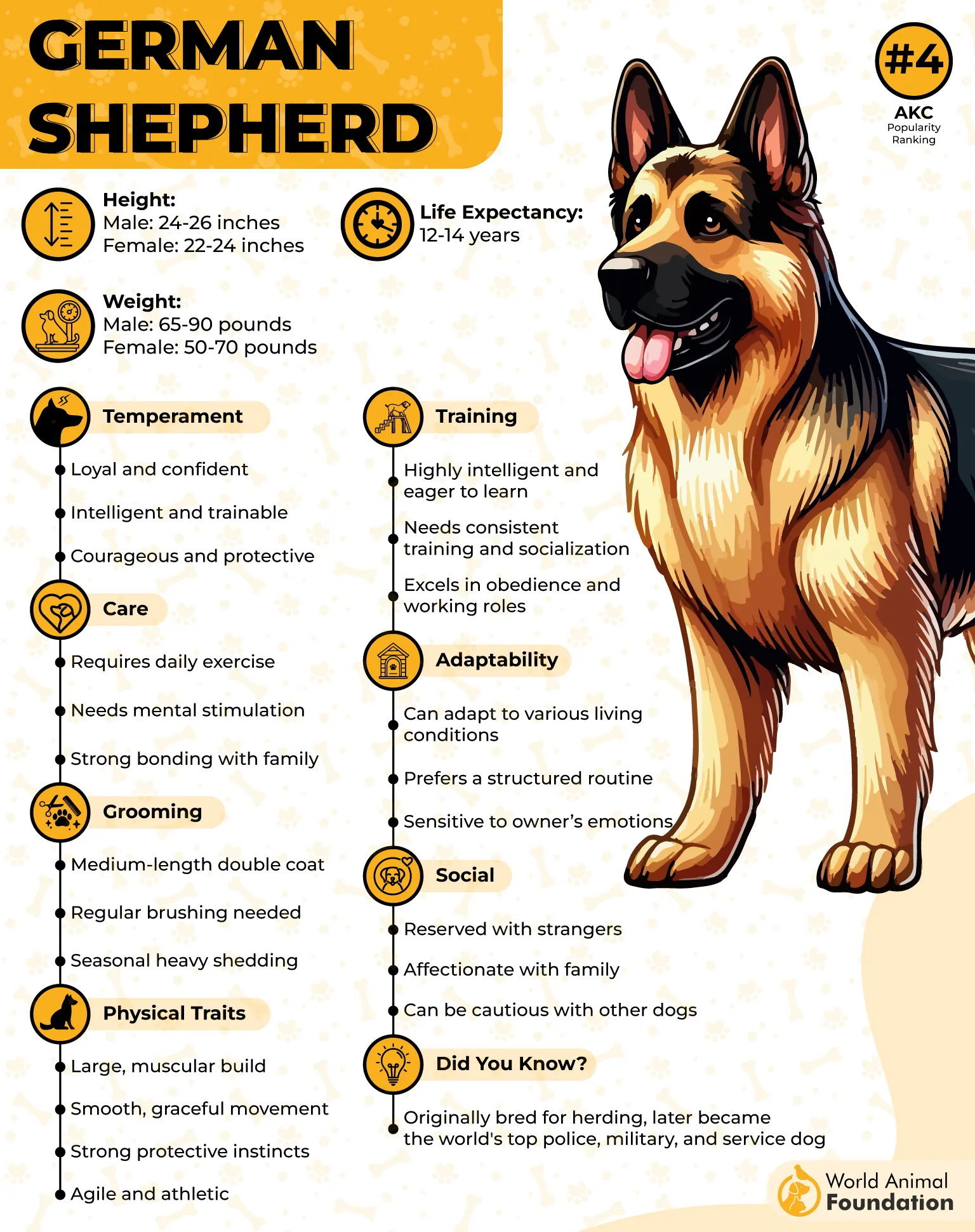
Think of them like the main character in an adventure game who has both strength and mobility—they can sprint, jump, and tackle multiple tasks without breaking a sweat.
Dobermans are sleeker and more athletic in appearance, often weighing between 60 and 100 lbs, with males being taller (around 26–28 inches) and females slightly shorter. Their streamlined bodies make them faster and more explosive, which is why they’re so popular in police and security roles.
If a Shepherd is your versatile RPG hero, the Doberman is the speedster in a racing game—fast, elegant, and precise.
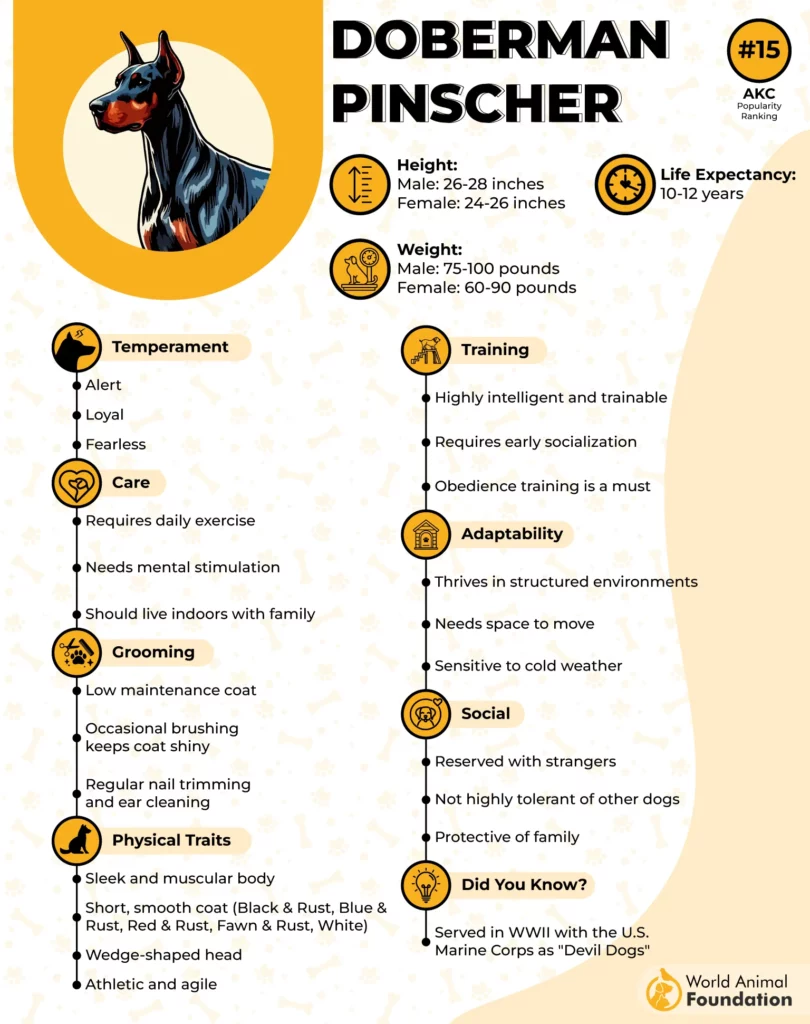
Owners frequently note that German Shepherds may seem “chunkier,” but that extra heft translates to endurance, while Dobermans are built for bursts of speed and agility. Both dogs are athletic, but their training needs differ: Shepherds require stamina-building exercises like running or hiking, while Dobermans excel with sprints, agility drills, and structured training sessions.
Pricing & Availability
Both breeds are considered premium dogs in terms of price.
German Shepherd puppies typically cost between $500 and $2,500, depending on pedigree, health clearances, and breeder reputation. Dobermans are great family dogs that can cost slightly more, averaging $1,500–$3,000 from reputable breeders.
Expect extra expenses for health checks, vaccinations, and early socialization classes, which are critical for both breeds.
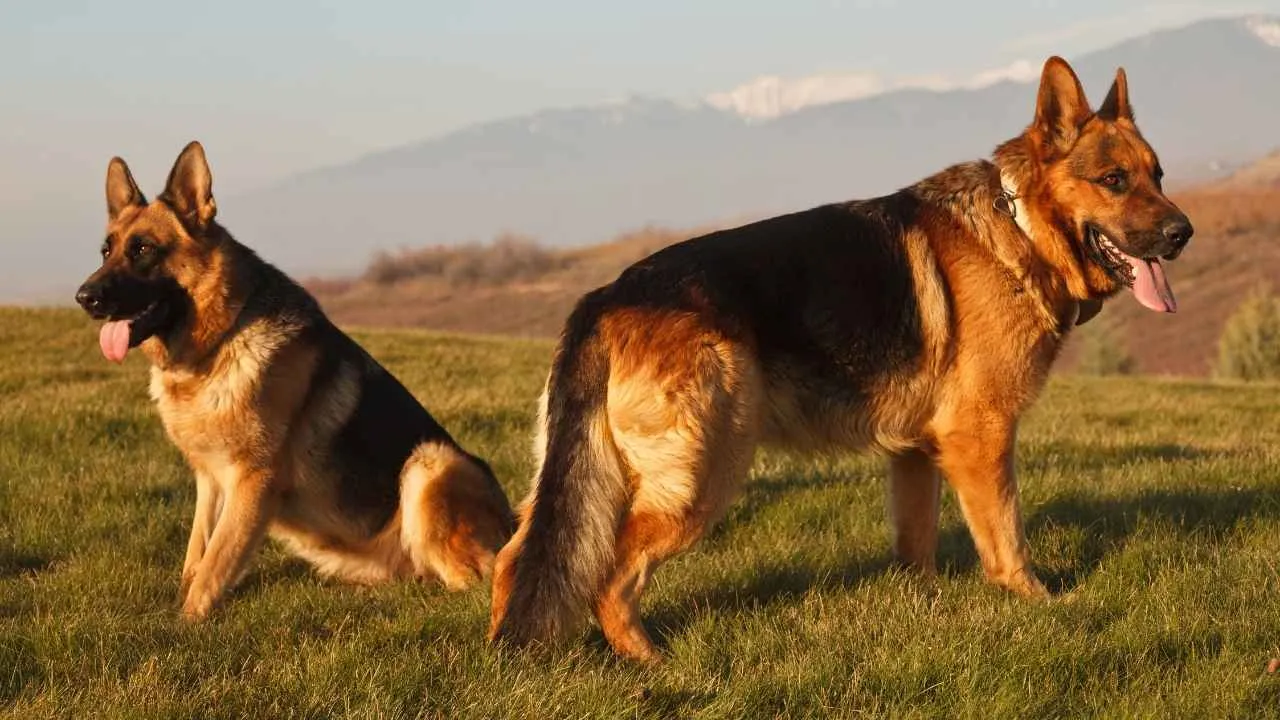
Availability varies depending on location. German Shepherds are more common in most urban areas, partly because they’re a household name in movies and TV shows (yes, “Rin Tin Tin” and “K9” fans, I see you).
Dobermans might require more legwork to find a reputable breeder, though rescue groups often have them available for adoption. Real owners warn against buying dogs from puppy mills or unverified sources—especially with Dobermans, as poor breeding can lead to health and temperament issues.
Temperament & Personality
German Shepherds are intelligent, loyal, and protective, but they’re also sensitive. They pick up on your moods, almost like a friend who notices your Insta posts and DM vibes before you even react. They love structure, praise, and mental stimulation.
They act as “shadow dogs”—they follow you everywhere and quickly learn family routines. On the flip side, they can become anxious or destructive if left alone for too long.
Dobermans are confident, alert, and extremely loyal. They’re affectionate with family but cautious around strangers, sometimes showing a level of independence compared to Shepherds. Think of them as the dog equivalent of your favorite streaming antihero—they’ll guard your space, follow rules, but maintain their own edge.
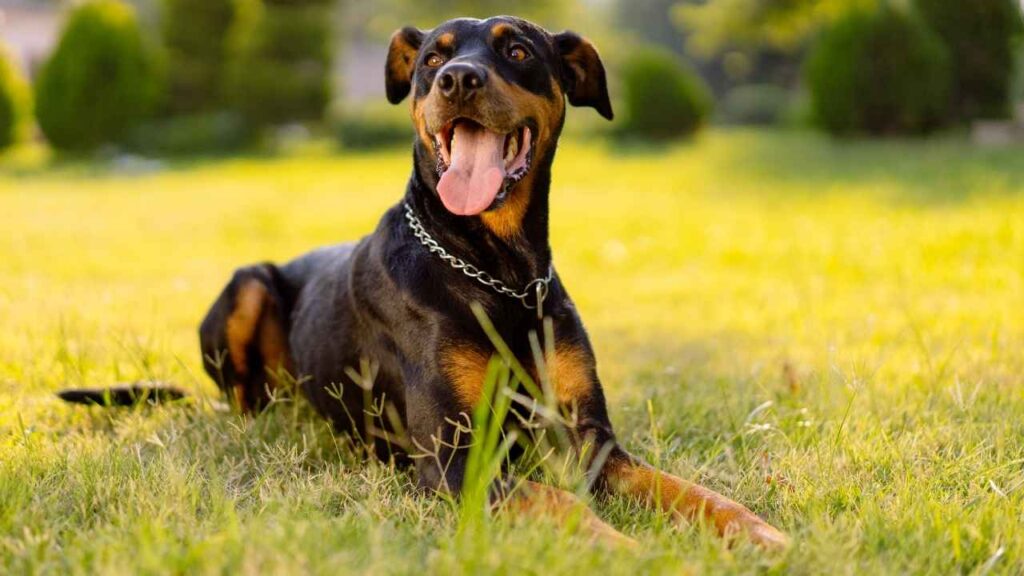
Interesting stat: Both breeds rank in the top 10 smartest dog breeds. German Shepherds are known for their versatility in obedience and work, while Dobermans excel in tasks requiring focus, protection, and loyalty.
Exercise Needs & Energy Level
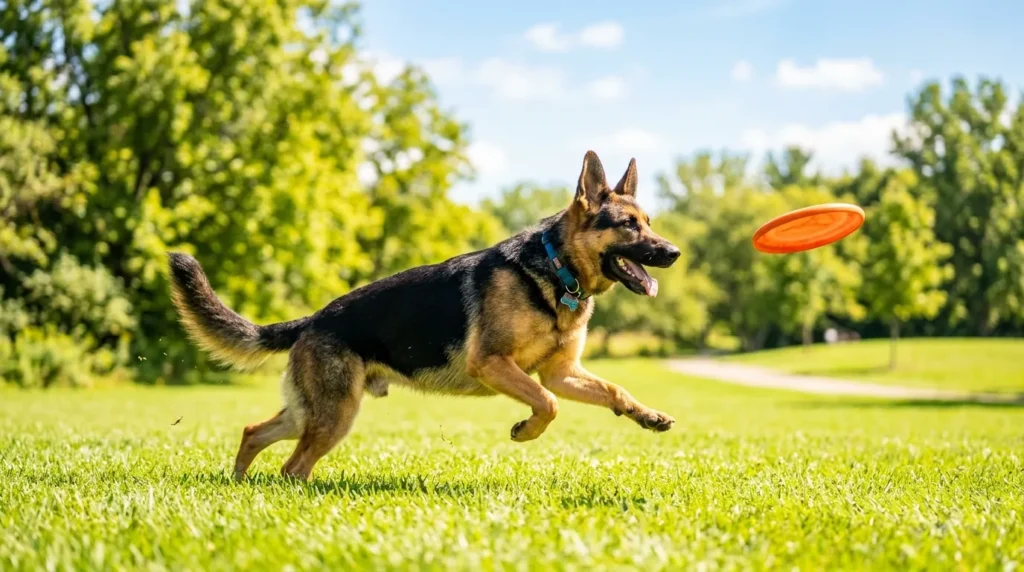
Both dogs are high-energy, but their activity needs differ slightly. German Shepherds require 2–3 hours of daily exercise, which can include walks, runs, fetch, or interactive games.
Without stimulation, they can become bored and exhibit unwanted behaviors such as chewing on furniture or barking excessively. They thrive in environments where they have a “job” to do, even if that job is just mentally challenging games or training drills.
Dobermans are also energetic, but their exercise is often more intense and focused, requiring bursts of activity such as agility training, sprinting, or structured play sessions. Many owners describe their Dobermans as “sport mode dogs”—they can be calm at home if mentally satisfied, but explode with energy when outdoors or challenged.
Trainability & Obedience
German Shepherds are highly trainable. They thrive on consistency, positive reinforcement, and structured routines. Their intelligence allows them to learn multiple commands, complex tricks, and even advanced protection skills.
Dobermans are equally intelligent but can display a more stubborn streak, requiring patience and firm yet gentle guidance. They respond well to proper training, socialization, and mental challenges. Owners often remark on their Doberman’s uncanny ability to anticipate situations, like sensing when someone is at the door before they arrive.
German Shepherds are slightly more forgiving for first-time dog owners. Showsight Magazine claims that they’re intelligent, eager to please, and versatile. With early training, they quickly learn house rules and basic commands.
Training Tip: Both breeds excel in obedience classes, agility, and protection training, but Dobermans may need a slightly more nuanced approach due to their independent streak. Consistency, mental stimulation, and structured routines are key for both breeds.
Grooming Needs & Shedding
German shepherds shed year-round, with heavier shedding in spring and fall. Grooming requires weekly brushing and occasional baths.
Many owners invest in quality grooming tools and find that keeping the coat healthy also reduces their dog’s anxiety. Fun fact: GSDs are self-cleaning to an extent, but they still benefit from structured brushing—it’s basically a spa day they secretly enjoy.
Dobermans are strong dogs with a short, sleek, low-maintenance coat that requires minimal brushing and occasional baths. They shed less than sheep but still benefit from routine coat care.
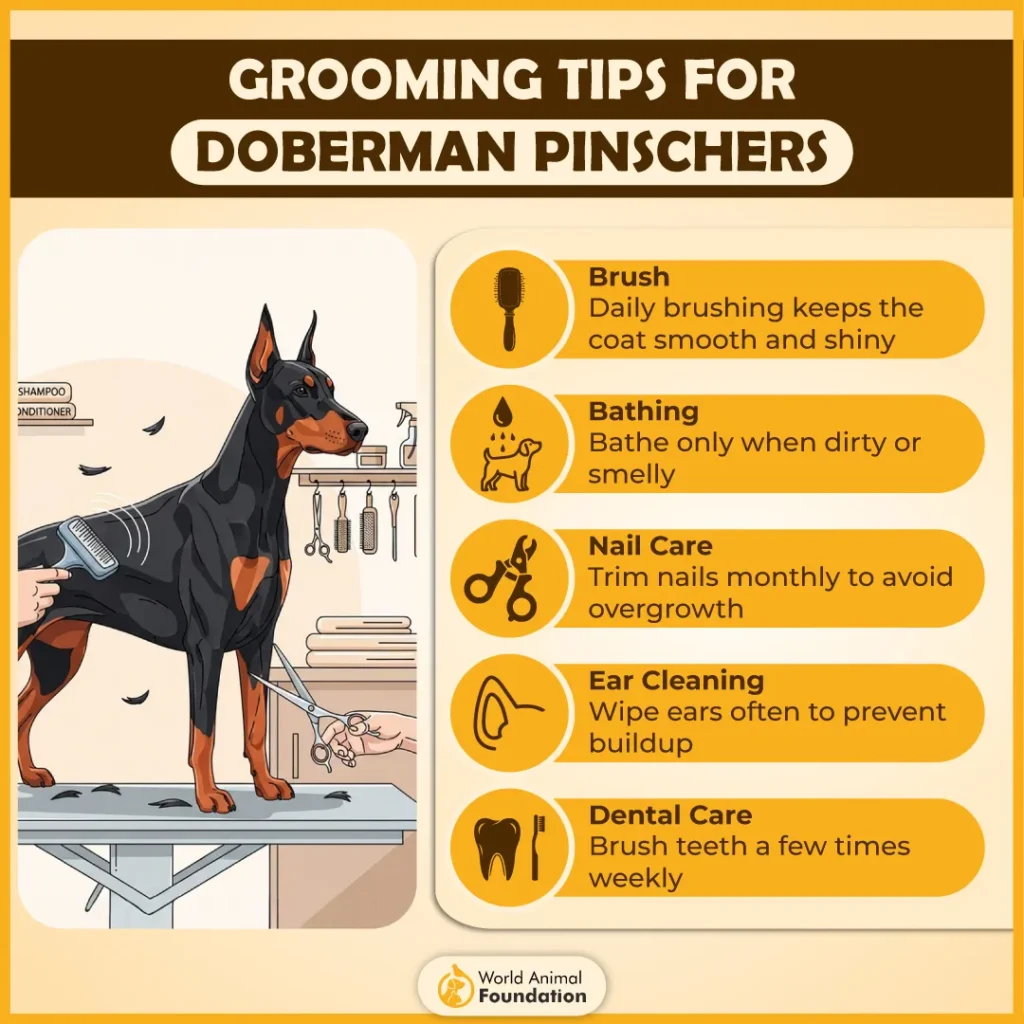
Both breeds appreciate grooming routines as bonding time. Nail trimming, dental care, and ear cleaning are essential for long-term health, especially for active dogs.
Guarding Instincts & Alertness
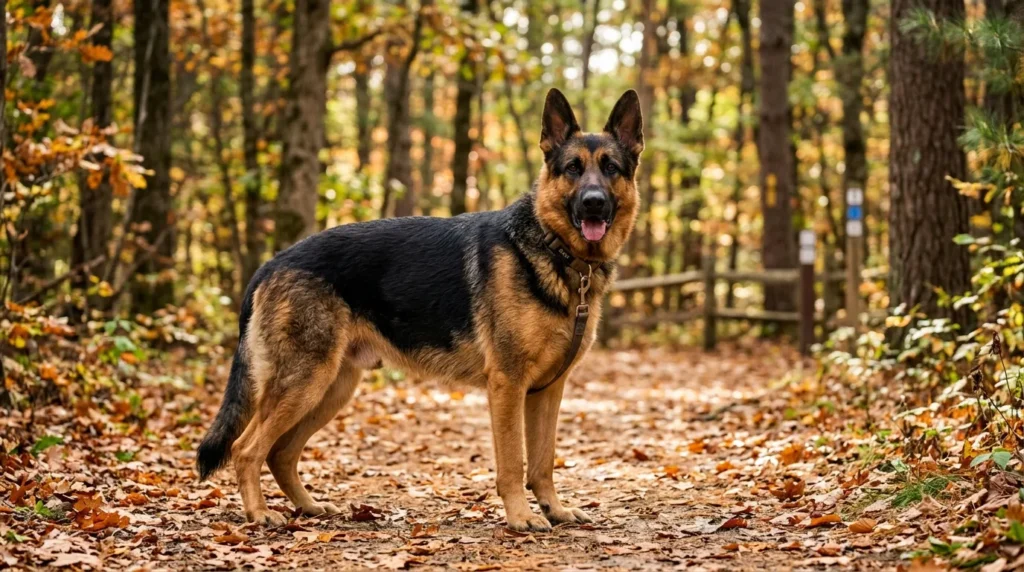
German Shepherds are naturally protective but generally balance alertness with sociability. They can distinguish between real threats and casual visitors when properly trained, making them excellent family guardians.
They will watch the house quietly from a vantage point, almost like a “streaming camera alert system,” rather than barking nonstop.
Dobermans are highly alert and instinctively protective, often forming a one-on-one bond with a primary owner. Hills Pet says they have strong territorial instincts and will react quickly to perceived threats.
Real-life anecdotes describe Dobermans acting as “living security systems,” alerting their families with precision. However, early socialization is crucial to prevent overprotectiveness or fear-based aggression.
Stats: Both breeds score high in protective tendencies on canine behavior scales, with Dobermans slightly edging out GSDs in rapid threat detection and reaction time.
Health & Lifespan
German Shepherds generally live 9–13 years and are prone to hip dysplasia, elbow dysplasia, and certain heart conditions.
Regular vet visits, a balanced diet, and controlled exercise are key to longevity. Owners often emphasize the importance of mental stimulation alongside physical care to prevent anxiety-related behaviors.
PetMD claims that Dobermans typically live 10–12 years and are prone to dilated cardiomyopathy, hip dysplasia, and von Willebrand’s disease. Responsible breeding, proper diet, and exercise are critical for preventing health issues. Many owners schedule annual heart screenings for their Dobermans, treating them like a routine health checkpoint.
Owner advice: Both breeds benefit from preventive care and an active lifestyle. Early socialization, mental enrichment, and regular veterinary check-ups drastically improve quality of life.
German Shepherd vs. Doberman: Which Guard Dog Fits Your Lifestyle Best?
Choosing between a Doberman vs German Shepherd really comes down to lifestyle fit.
If you want a versatile, loyal companion who can adapt to multiple roles, loves family interactions, and thrives on structured activity, the German Shepherd is probably your go-to. On the other hand, if you want a sleek, high-energy guardian who bonds deeply with one person, excels at protection, and loves intense physical and mental challenges, the Doberman may be perfect.
GSDs can absolutely be velcro dogs, but it depends on their upbringing and personality. They are deeply attached to their family, especially one main caregiver, and will follow them around the house like a shadow.
Think of it like choosing your playlist vibe for the week: the Shepherd is your dependable, chill playlist that works for study, gaming, and gym, while the Doberman is the adrenaline-pumping playlist that keeps you on your toes and ready to sprint.
Both dogs require commitment, but the “energy compatibility” matters most.
Conclusion
At the end of the day, both these good guard dogs are incredible dogs with unique strengths. Your choice boils down to your lifestyle, activity level, and what kind of bond you want. Shepherds offer versatility, intelligence, and a calm-but-alert presence, while Dobermans provide focus, protection, and athletic elegance.
Both iconic breeds can become your ultimate loyal companion, ready to protect, play, and love unconditionally.
Remember, adopting either dog isn’t just a purchase—it’s a lifestyle upgrade. If you’re ready for consistent training, daily exercise, and an unwavering furry friend, you’re in for an amazing journey. Whether you choose the German Shepherd or the Doberman, you’ll gain a partner who’s smart, loving, and absolutely unforgettable.
