




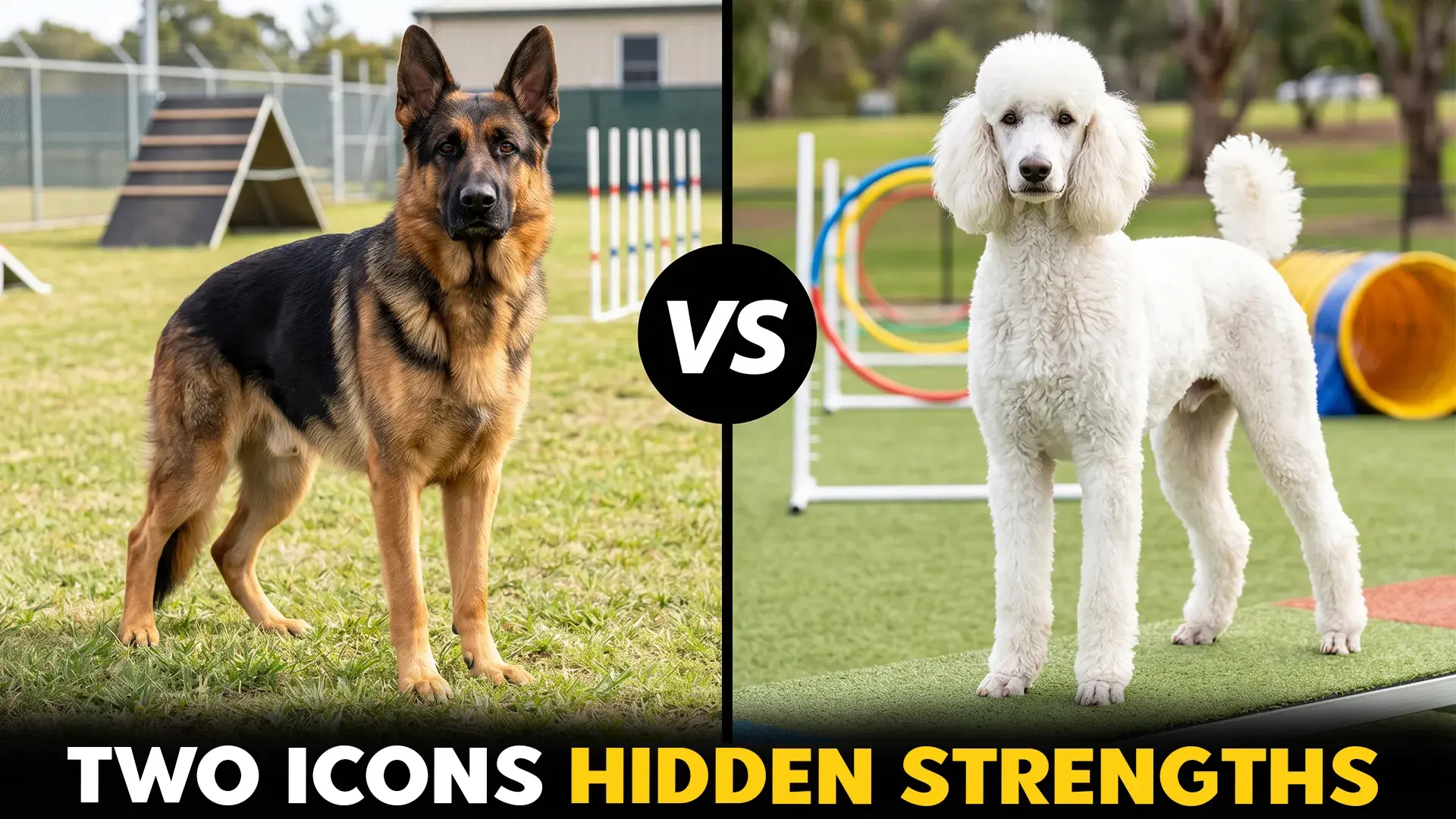
The German Shepherd was developed in Germany during the late 19th century as a versatile herding and utility dog capable of protecting flocks while responding quickly to human commands. Poodles, despite often being associated with glamorous grooming styles, were originally water retrievers bred to recover game for hunters.
German Shepherds dominate police, military, and search-and-rescue operations around the globe, while Poodles frequently excel in obedience, agility, scent work, and service-dog roles. Their resumes are impressive, but their day-to-day personalities tell very different stories.
Let’s dive deep into one of the most fascinating comparisons in the canine world. From physical structure to personality quirks, this guide explores what really separates these two iconic breeds beyond internet memes and viral videos.
German Shepherd vs Poodle: Hidden Strengths Explained
Size & Build Differences
At first glance, the German Shepherd projects strength and athleticism, while the Standard Poodle often surprises people with its elegant proportions. Underneath that curly coat, however, lies a lean, muscular athlete capable of remarkable speed and endurance.
Both breeds are medium-to-large dogs, but they distribute their mass and movement very differently.
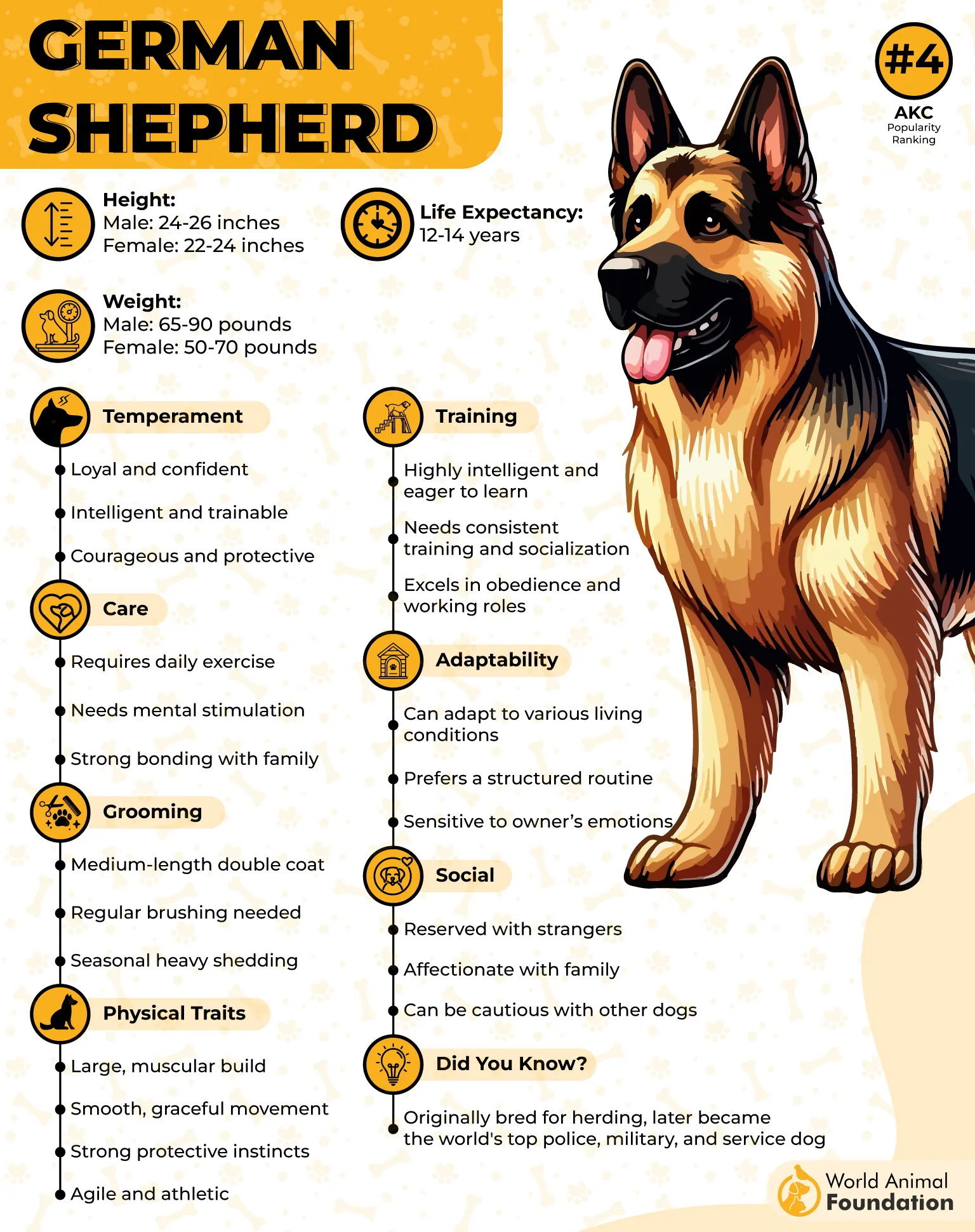
German Shepherds generally stand between 22 and 26 inches, while Standard Poodles usually measure over 15 inches. While similar in height, Poodles typically carry less bulk and appear lighter on their feet.
The German Shepherd’s body was engineered for efficient trotting across long distances while herding livestock and performing patrol work. Their deep chest, powerful hindquarters, and balanced angulation allow sustained movement with relatively little wasted energy.
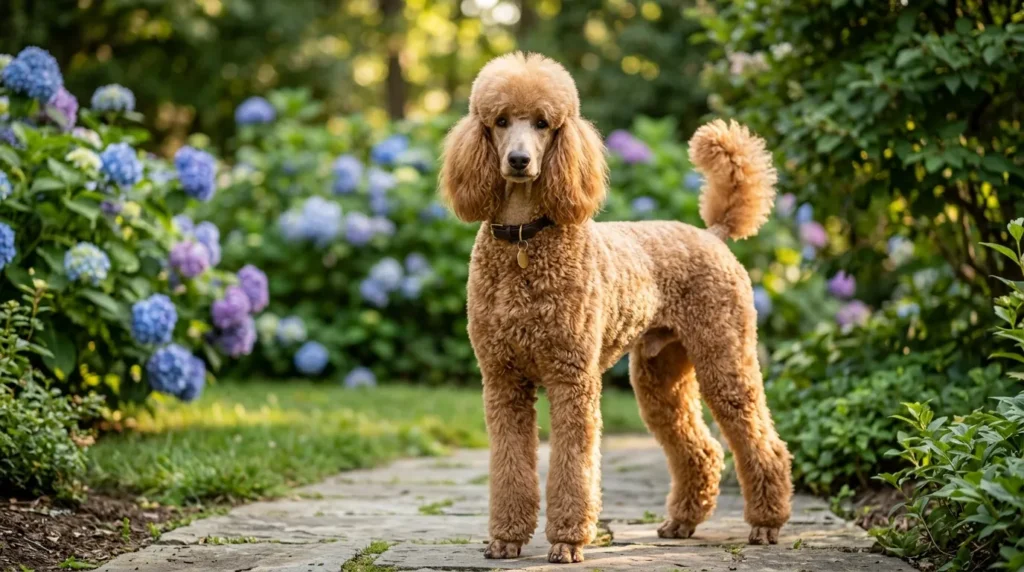
Poodles possess a square, athletic frame built for water retrieval rather than brute force. Long legs, excellent balance, and surprisingly powerful muscles allow them to leap, swim, and navigate uneven terrain with grace that many owners underestimate.
Despite their size difference compared to GSDs, Standard Poodles often display remarkable stamina during extended activities. Hikes, field work, and advanced dog sports reveal athletic capabilities that surprise those who assume curly-coated breeds are delicate.
Temperament & Personality
If dogs had workplace personalities, the German Shepherd would probably volunteer to lead the emergency response team, while the Poodle would organize the strategy meeting and solve the puzzle first.
Both are exceptionally intelligent, but they express emotions and social interactions in distinct ways. Understanding these differences is often more important than comparing intelligence scores.
German Shepherds are renowned for deep loyalty and strong attachments to their families, claims PetMD. They frequently develop close bonds with a handful of trusted individuals and remain naturally watchful around unfamiliar people. This reserved attitude should not be mistaken for aggression, as well-socialized Shepherds can be calm and confident ambassadors for the breed.
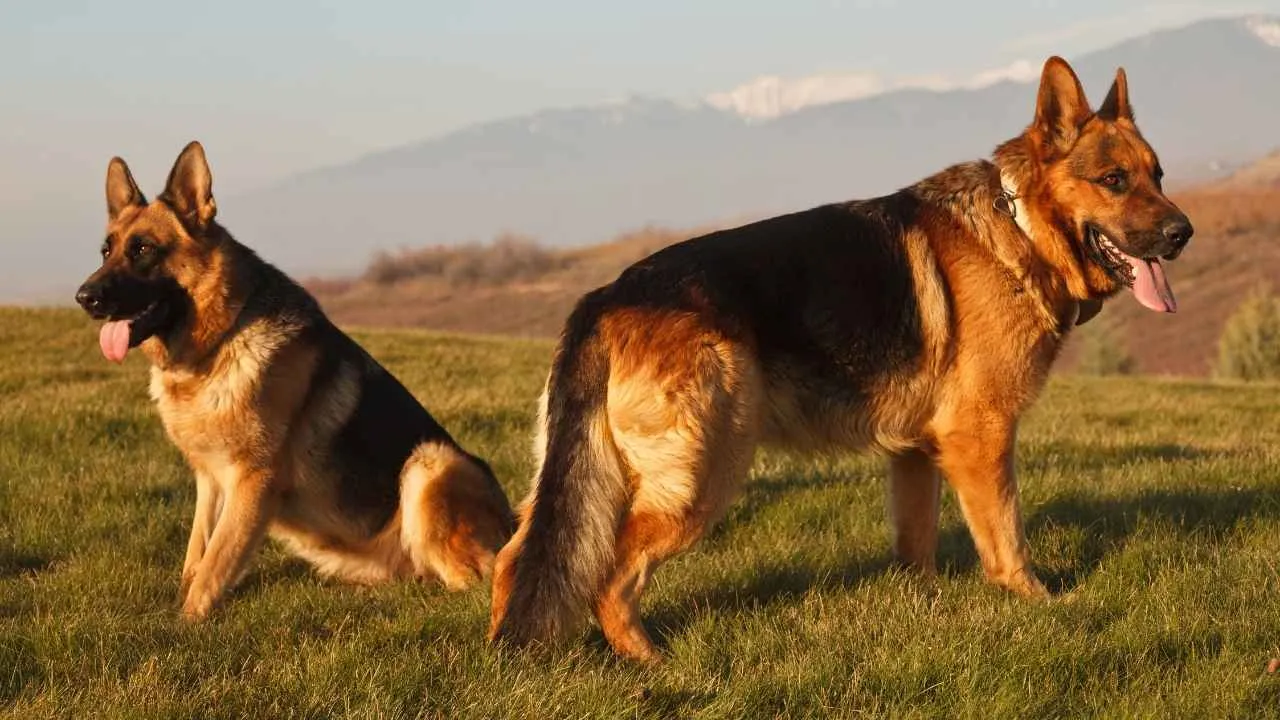
Poodles tend to approach social situations with curiosity rather than suspicion. Many Standard Poodles eagerly greet visitors after appropriate introductions and enjoy participating in household activities involving multiple family members. Their outgoing nature often makes them excellent companions for social homes with regular guests.
Another hidden strength of the GSD lies in emotional responsiveness. Many handlers report that these dogs seem remarkably attuned to subtle changes in body language, routines, and mood. This sensitivity contributes to their success in service work, therapy support, and complex operational environments where communication extends beyond verbal commands.
Poodles possess a different kind of social intelligence centered around adaptability and observation. They quickly recognize patterns, anticipate routines, and often invent creative solutions to obtain desired outcomes. Owners sometimes joke that living with a Poodle feels less like training a pet and more like negotiating with an exceptionally clever roommate.
Exercise & Energy Levels
One of the biggest myths on dog TikTok is that a quick walk around the block is enough for highly intelligent breeds. Both the German Shepherd and the Standard Poodle have working-dog roots, meaning they were bred to stay active for hours rather than binge-watch Netflix all afternoon. The difference is in how they like to spend that energy.
German Shepherds thrive when they have structured jobs to do. Long hikes, advanced obedience drills, tracking exercises, scent work, and protection sports all tap into the breed’s instincts and prevent boredom. Many trainers recommend at least one to two hours of combined physical and mental activity each day for healthy adult dogs.
Poodles are every bit as energetic, but they often express it with more bounce and curiosity. Their retrieving heritage means they excel at fetch, dock diving, swimming, agility, and puzzle-solving games that require both movement and quick thinking. A Standard Poodle may happily switch from sprinting across a field to mastering a new trick within minutes.
Mental exercise is where both breeds truly shine. Food puzzles, scent trails, hidden toys, and advanced trick training can tire these dogs almost as effectively as a long run. Owners frequently report that a bored German Shepherd or Poodle becomes an expert at creating its own entertainment—and that entertainment may involve your furniture.
The hidden strength of the German Shepherd is endurance under pressure. Whether working alongside police officers, search-and-rescue teams, or livestock handlers, the breed has been selected for sustained focus even in demanding environments. They rarely give up on a task once engaged.
Poodles, meanwhile, demonstrate remarkable versatility. They can transition seamlessly between family companion, sporting dog, therapy partner, and competitive athlete with the right training. Their enthusiasm for learning keeps exercise sessions varied and prevents routines from becoming stale.
Training & Intelligence
When conversations turn to canine intelligence, both German Shepherds and Poodles consistently appear near the top of the list.
Research popularized by psychologist Stanley Coren placed both breeds among the highest-ranking working and obedience dogs, reflecting their ability to learn commands quickly and respond reliably. Of course, intelligence is multifaceted, and these breeds showcase it in different ways.
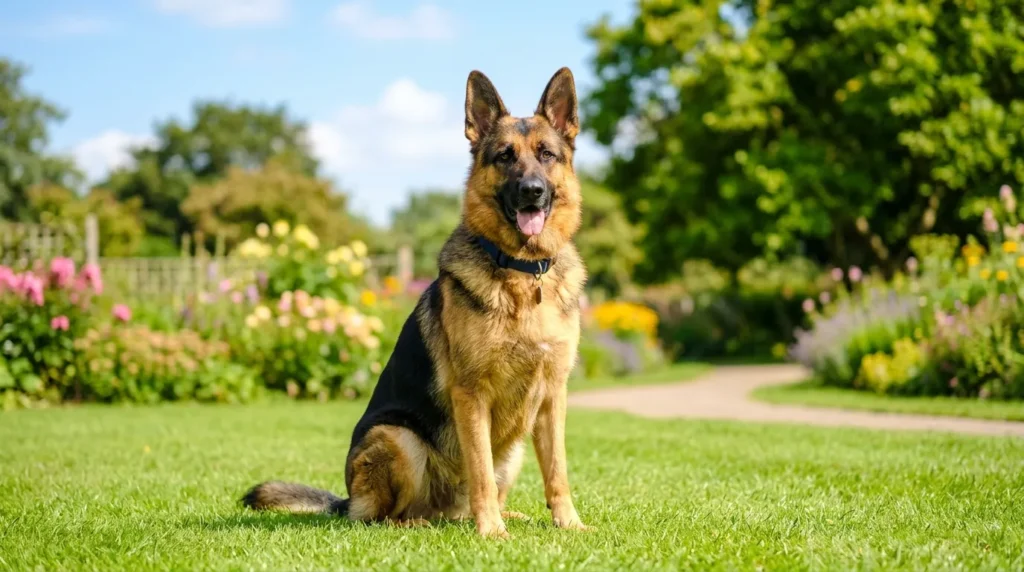
German Shepherds are smart dogs that excel in structured environments where precision matters. They rapidly learn complex command sequences and often retain them for years with consistent reinforcement. This reliability explains why they remain a favorite for military units, law enforcement agencies, and service organizations worldwide.
Poodles approach training almost like a puzzle game. They eagerly experiment, anticipate patterns, and often appear to solve problems before their handlers finish explaining them. Their quick thinking makes training sessions highly rewarding, but can also reveal creative loopholes if owners are inconsistent.
Positive reinforcement works exceptionally well with both of these intelligent dogs. Reward-based methods strengthen motivation while encouraging confidence and trust, leading to durable learning outcomes. Harsh corrections, by contrast, may damage the relationship and reduce enthusiasm for training.
A hidden strength of the German Shepherd is composure under stress. Many individuals maintain focus despite distractions, noisy environments, or unfamiliar situations, making them dependable partners in demanding operational settings. Their willingness to follow direction under pressure is one of the breed’s defining characteristics.
The Poodle’s hidden advantage is adaptability. Because of its high cognitive flexibility, it often transitions between different activities with minimal confusion, excelling in obedience one moment and agility the next. Trainers frequently praise the breed’s eagerness to participate and experiment.
Vocal Behavior
If silence is your top priority, understanding breed-specific vocal tendencies is just as important as considering size or grooming needs. Both German Shepherds and Poodles communicate actively, but the reasons behind their barking often differ. Context, training, and individual personality all influence how talkative a dog becomes.
German Shepherds frequently use their voices as part of their guarding instincts. They may bark to alert owners about approaching visitors, unusual noises, or unfamiliar activity near the home. This behavior stems from centuries of selective breeding for vigilance and protection rather than simple excitability.
Poodles tend to vocalize more when engaged and curious. They may announce a delivery driver, respond to unfamiliar sounds, or express excitement during playtime, but they often quiet down quickly when reassured. Proper training can significantly reduce unnecessary barking.
Neither breed should be labeled excessively noisy by default. Adequate exercise, mental stimulation, and early behavioral guidance play enormous roles in shaping communication habits. Dogs with unmet physical or emotional needs are generally more likely to bark frequently, regardless of breed.
German Shepherds often produce deeper, more authoritative vocalizations that naturally command attention. Even a single warning bark may discourage unwanted visitors or wildlife from approaching the property. Their voice complements an already imposing physical presence.
Poodles possess a wide range of expressive sounds, from excited barks during games to softer vocalizations that seek interaction. Many owners describe them as surprisingly communicative, using facial expressions and body language alongside vocal cues to express themselves. Their intelligence contributes to nuanced communication styles.
Coat & Grooming
The German Shepherd and the Poodle sit at opposite ends of the grooming spectrum, and prospective owners should know exactly what they’re signing up for.
German Shepherds have a dense double coat that sheds consistently throughout the year and often “blows” seasonally, coating floors, furniture, and clothing with fur. Poodles, on the other hand, have a curly, continuously growing coat that sheds very little into the environment but requires regular maintenance to prevent mats.
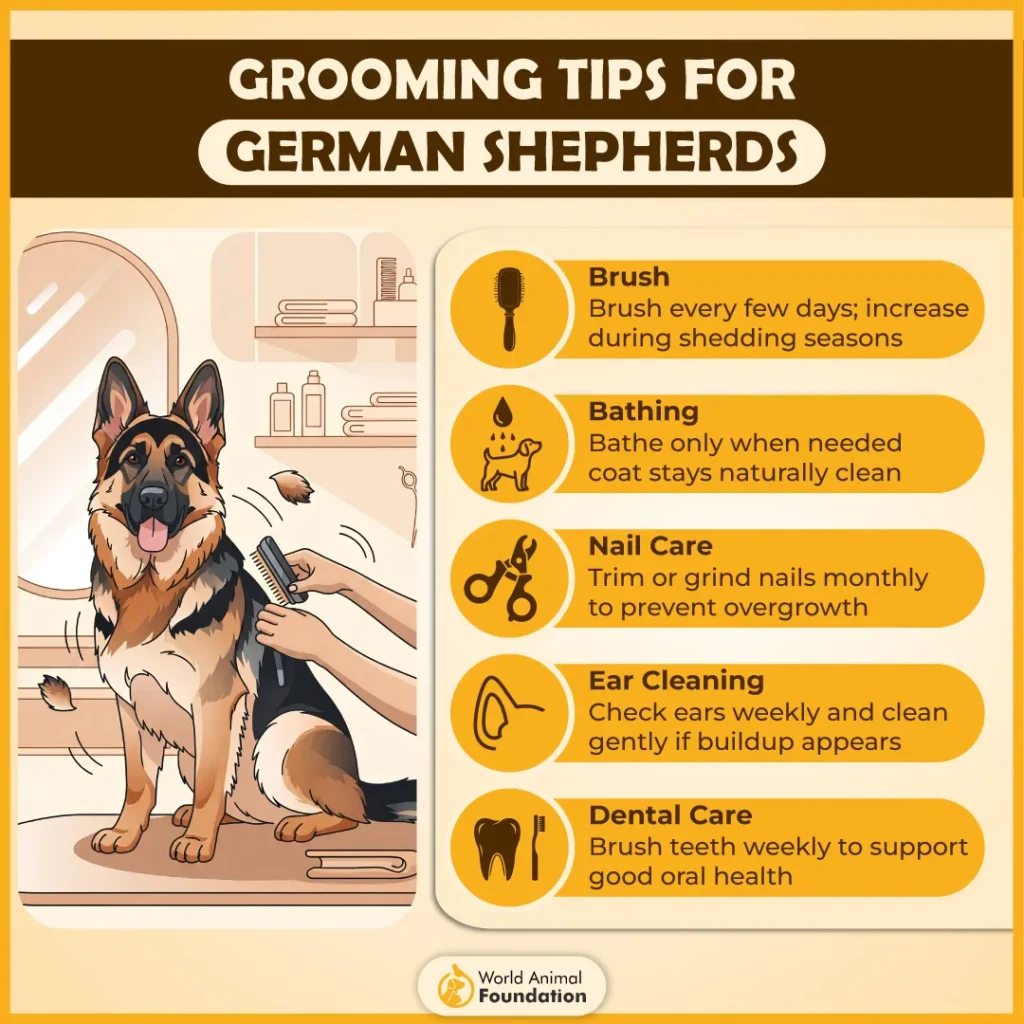
A German Shepherd’s coat is designed for function. The weather-resistant outer layer and insulating undercoat helped the breed work in challenging outdoor conditions while herding and guarding livestock. Weekly brushing is usually sufficient for much of the year, although shedding seasons often require more frequent sessions.
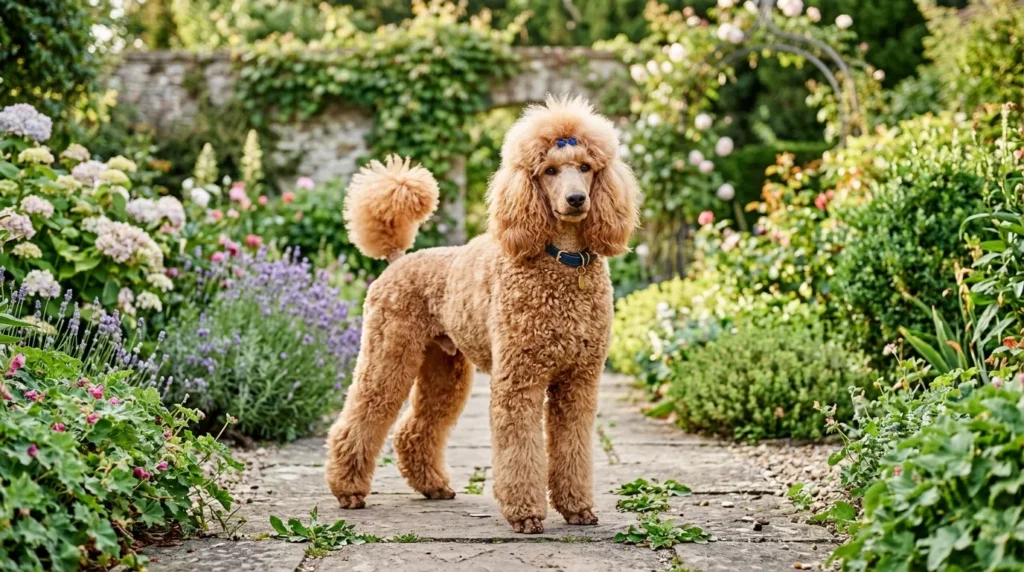
The Poodle’s coat has a different hidden strength: it traps loose hairs within the curls instead of letting them fall around the home. This characteristic is one reason the breed is frequently recommended to people seeking lower-shedding companions, though no dog is truly hypoallergenic. The trade-off is that trapped hair must be removed through brushing and scheduled grooming appointments.
Bathing routines also differ significantly. German Shepherds generally need occasional baths unless they become particularly dirty, while many Poodle owners establish regular grooming schedules every four to eight weeks to maintain coat health and appearance. Professional grooming costs should therefore be factored into the long-term ownership budget.
Health Issues & Lifespan
Like all purebred dogs, German Shepherds and Poodles have inherited health considerations that responsible owners should understand before adoption. Ethical breeders perform health testing to reduce the likelihood of passing on preventable genetic conditions. Regular veterinary care, proper nutrition, exercise, and weight management also contribute significantly to long-term well-being.
Purina mentions that German Shepherds are commonly associated with orthopedic concerns such as hip and elbow dysplasia. Some bloodlines may also be predisposed to degenerative myelopathy, digestive issues, or bloat, also known as gastric dilatation-volvulus. Careful breeding practices and maintaining healthy body condition can help reduce certain risks.
Standard Poodles are generally regarded as robust athletes, but are not free from inherited conditions. Health concerns may include hip dysplasia, eye disorders, thyroid disease, Addison’s disease, and bloat in some individuals. Reputable health screening programs remain an important part of preserving the breed’s long-term health.
Lifespan comparisons often show Standard Poodles (even Toy Poodles) averaging around 10 to 18 years, depending on size, variety, and individual circumstances, while German Shepherds commonly live around 9 to 13 years.
Genetics, preventive care, exercise habits, and nutrition all influence longevity beyond breed averages. Individual dogs frequently exceed expectations when raised under excellent conditions.
Preventive medicine offers one of the greatest hidden strengths for both breeds. Routine wellness examinations, vaccinations, parasite control, dental care, and early intervention can identify problems before they become serious. Owners who stay proactive often enjoy many additional years with their companions.
Guard & Protection Instincts
If there is one category where the German Shepherd has built an international reputation, it is protection work. Decades of service in military, police, search-and-rescue, and security roles have demonstrated the breed’s confidence, courage, and willingness to defend its handlers. Their protective instincts are deeply rooted in purposeful breeding rather than aggression.
German Shepherds naturally monitor their surroundings and often position themselves strategically when unfamiliar people approach. With proper socialization, this vigilance becomes controlled awareness instead of unnecessary suspicion. Many families value the quiet reassurance of a dog that notices potential concerns before humans do.
Poodles approach protection from a different angle, according to the Royal Kennel Club. They are observant, intelligent, and often excellent watchdogs who alert owners to unusual activity, but they are generally less inclined toward physical guarding than German Shepherds. Their first response is often communication rather than confrontation.
One hidden strength of the Poodle lies in perception. Many owners report that these dogs quickly recognize changes in routine, unfamiliar sounds, or unusual visitor behavior and respond with appropriate alertness. While they may not intimidate through sheer presence, they often notice details others overlook.
Formal protection training requires specialized expertise regardless of breed. Encouraging defensive behaviors without professional guidance can create confusion and increase safety risks. Most companion households benefit more from obedience training and confidence-building than from advanced protection work.
German Shepherds excel when given structured responsibilities and clear leadership. Their combination of trainability, emotional stability, and willingness to cooperate has made them one of the most trusted working breeds in high-stakes environments worldwide. They are capable of extraordinary restraint when properly trained.
Conclusion
Comparing Poodles and German Shepherds reveals that true canine excellence comes in very different forms. One breed projects strength, steadfast loyalty, and natural protective instincts, while the other combines athleticism, adaptability, and exceptional cognitive flexibility beneath an elegant appearance. Their hidden strengths become obvious only after looking beyond stereotypes.
The German Shepherd stands out as a purpose-driven working partner, excelling in demanding operational environments while remaining deeply devoted to its family. The Poodle quietly disproves outdated assumptions every single day.
Neither of these two breeds is universally “better,” because the ideal choice depends entirely on lifestyle and expectations. Active owners who enjoy training, outdoor adventures, and daily engagement can thrive with either dog as long as they commit to meeting physical and mental needs. Success comes from compatibility rather than popularity.
