




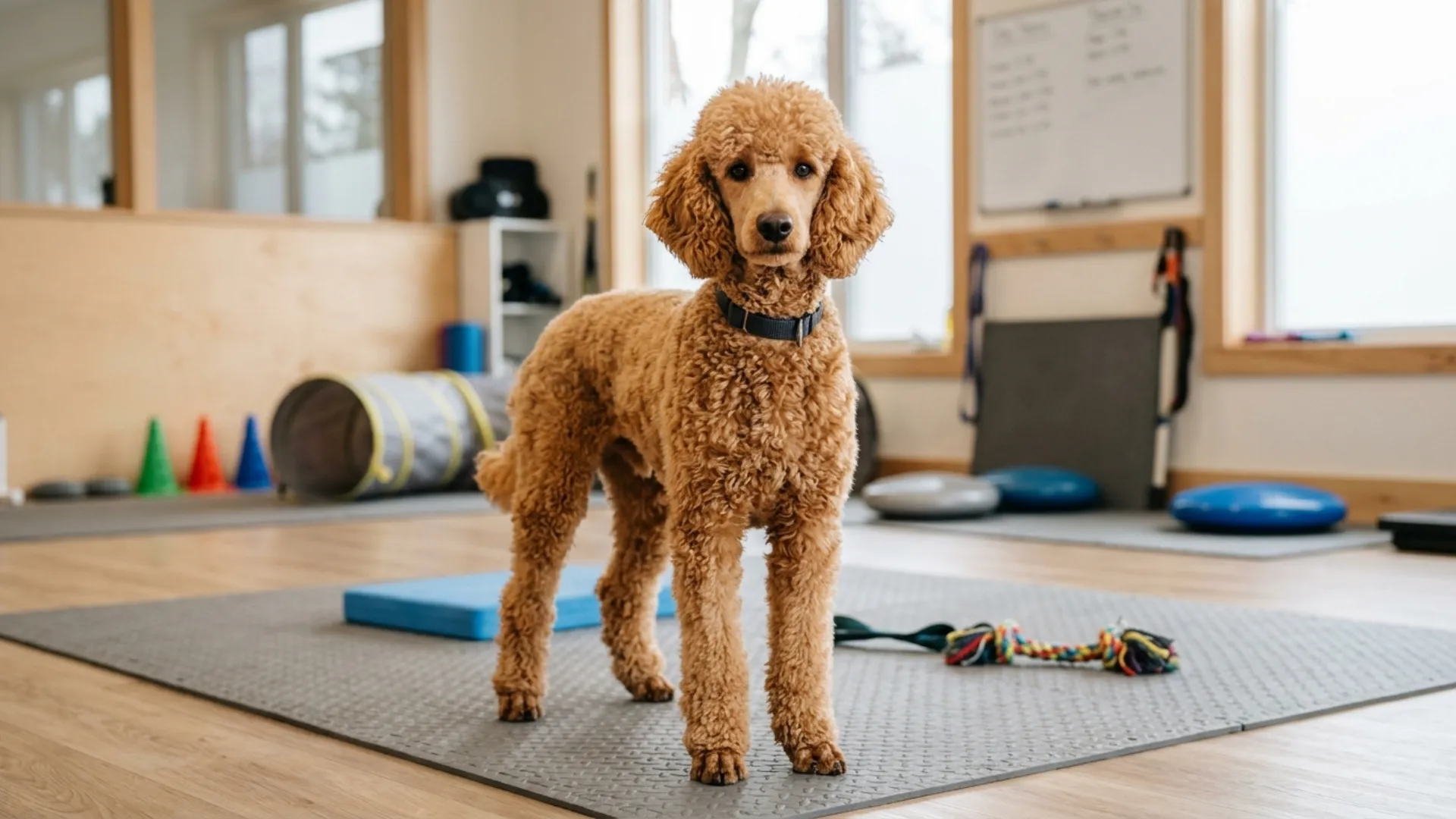
You see a cute dog sitting quietly on the couch one minute, and the next, it’s turning your living room upside down. There is no glitch in its brain; that sudden burst of energy is just how it burns off steam to stay healthy. For an active dog, training is just as essential as food, helping them focus their energy and learn how to behave.
If you love a busy, on-the-go lifestyle, buckling up and finding the right high-energy pup can lead to an incredible partnership. With so many families searching for well-mannered companions, trainability has become one of the most desired traits in a pet.
Fortunately, several active breeds are eager to learn while keeping their sweet, affectionate nature intact. As author Roger Caras once said, “Dogs are not our whole life, but they make our lives whole.” The following breeds prove that statement every single day.
Top Gentle Dog Breeds That Excel in Training
1. Australian Shepherd
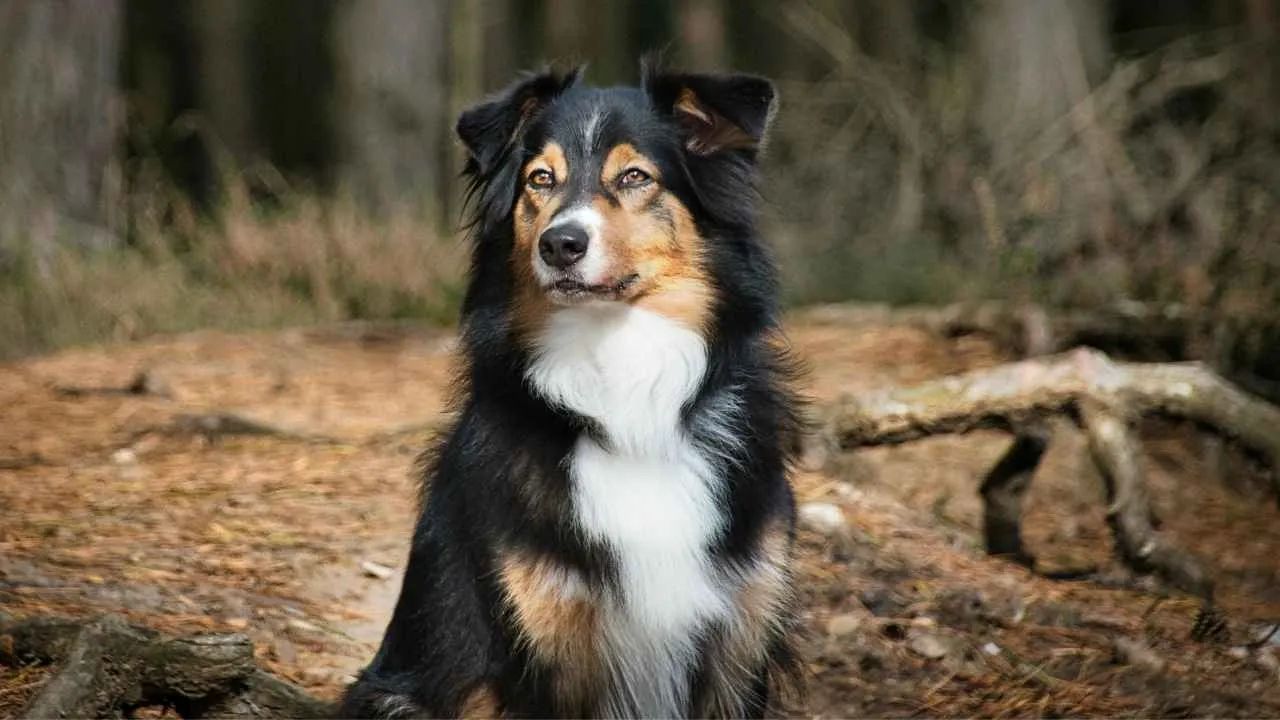
Despite its misleading name, the Australian Shepherd actually developed in California during the 19th century. According to the Royal Kennel Club, the breed is believed to have descended from sheepdogs originating in northwest Spain and Collies imported by way of Australia. While their primary historical purpose was herding livestock, they are widely cherished as devoted companion dogs today.
Physically, a low center of gravity and a highly flexible spine give the Australian Shepherd exceptional agility and body control. They also possess an incredibly wide field of vision, allowing them to instantly register microscopic shifts in human body language, spatial positions, and hand gestures.
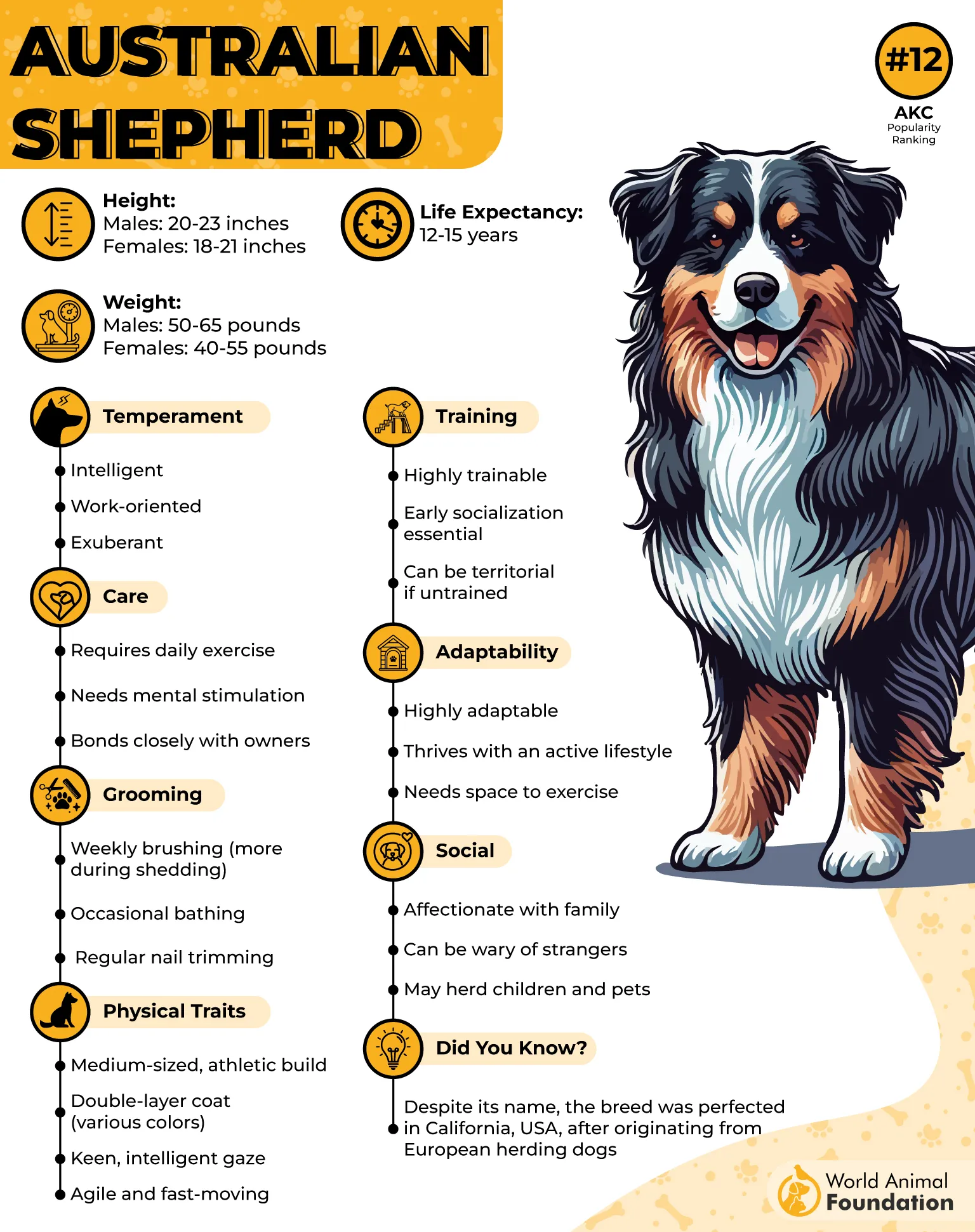
Because they are wired to work, learning a new trick or completing a task triggers a natural dopamine rush that acts as an internal reward mechanism.
To keep this intelligent breed happy, ideal training activities include advanced obedience (utilizing verbal cues and directional signals), agility courses, and structured scent work. Without consistent mental stimulation and physical outlets, under-trained Australian Shepherds can easily develop destructive behaviors like chewing, digging, or excessive barking.
2. German Shepherd
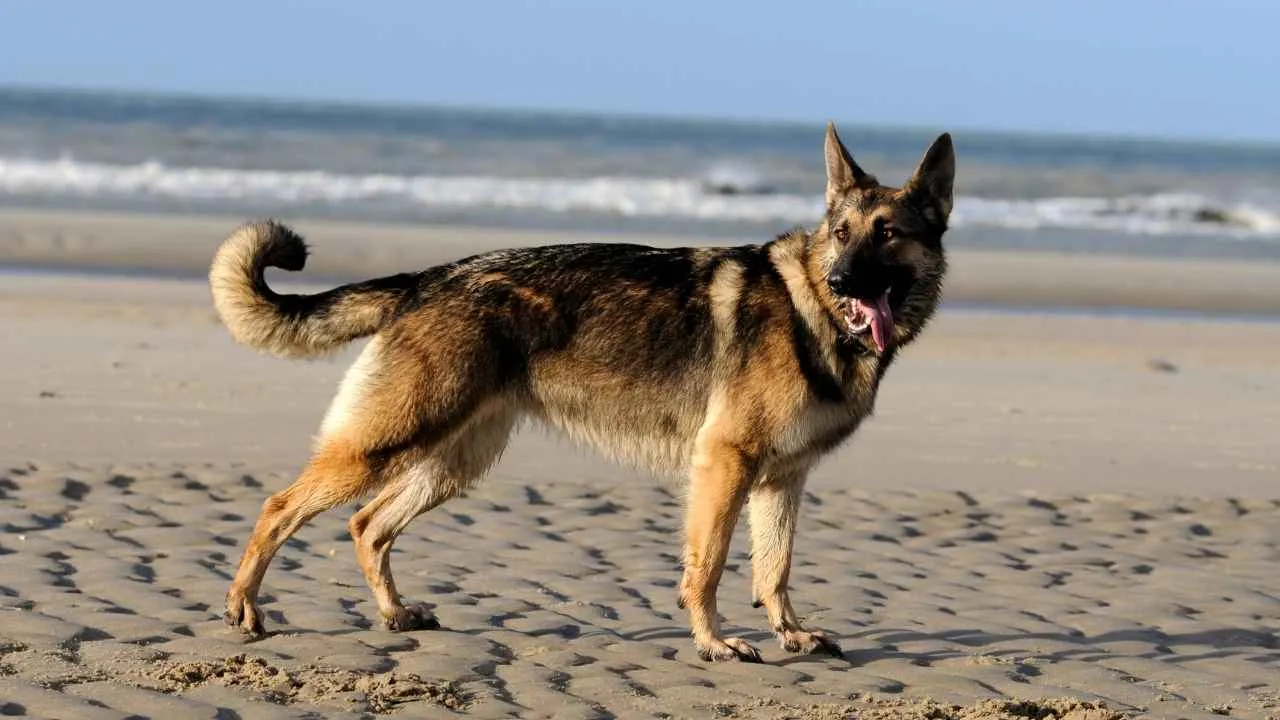
Originally bred for herding, the German Shepherd originated in Germany and is widely ranked as the third-most intelligent dog breed. The breed was officially established by Captain Max von Stephanitz in 1899, who carefully crossed various traditional herding and farm dogs to create the ultimate working animal.
Because of this high intelligence and work ethic, the German Shepherd is extensively used worldwide in assistance roles, dog sports, search and rescue (SAR), and police work.

Physically, the breed features well-angulated hindquarters, a large lung capacity, and an efficient, ground-covering trot that enables it to travel long distances without tiring. Emotionally, they are known for selective bonding, forming an incredibly strong and loyal relationship with their primary handler. They also possess a naturally high prey drive, which translates into an intense, unwavering focus on whatever task or goal they are given.
Because of their highly alert and protective nature, early and consistent training is essential to channel their instincts correctly. The AKC notes that it is crucial to expose a puppy to various sights, smells, and sounds between the ages of 3 and 6 months.
Practicing basic obedience in different environments, like the house and public parks, using positive reinforcement helps build a well-adjusted adult. Once the basics are mastered, you can introduce advanced sports and agility work, starting with simple obstacle navigation.
3. Poodle
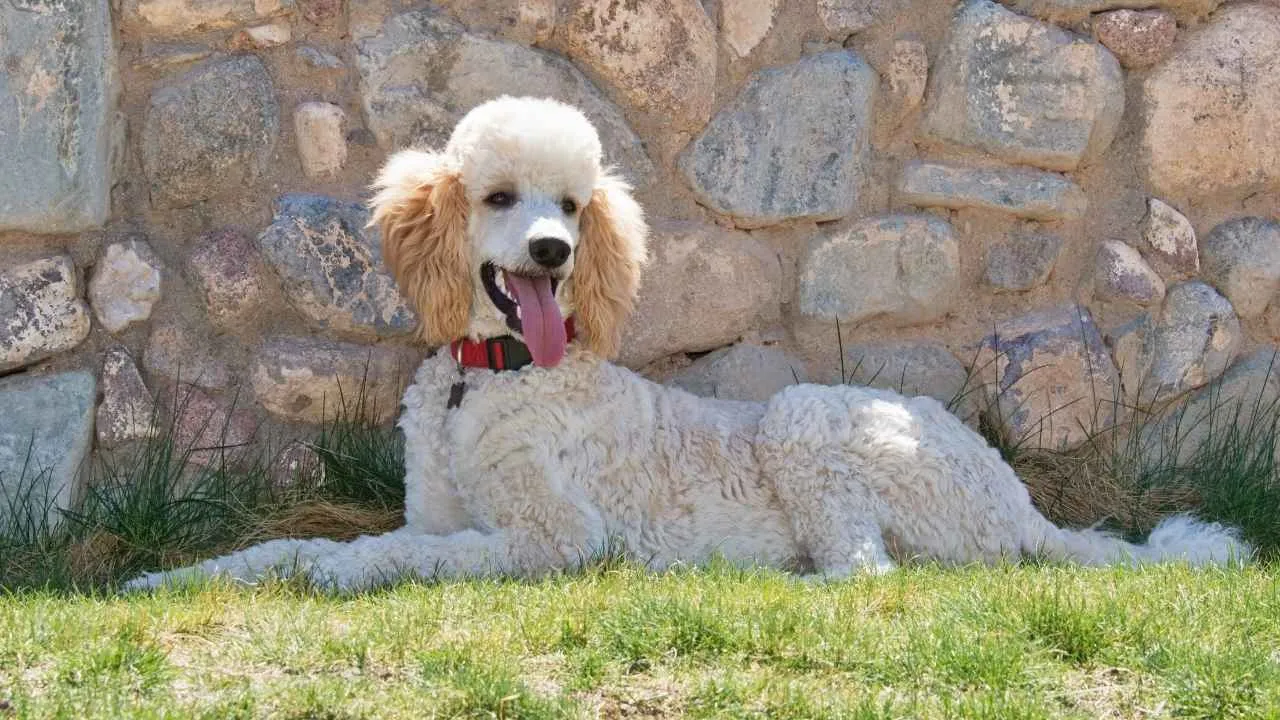
The Poodle ranks as the most intelligent breed in the toy dog kingdom, though it actually originated in Germany as a hardworking water retriever. The name comes from the German word Pudeln, which means “to splash.” Today, the breed is recognized in three distinct sizes: Toy, Miniature, and Standard, all sharing the exact same brilliant genetics.
This exceptionally smart dog boasts an incredible learning speed and excels in associative learning; the ability to instantly connect a specific action with a reward. This knack for problem-solving enables them to master complex, multi-step commands after only a few repetitions.
Their water-retrieving heritage has directly shaped their physical traits, giving them webbed paws for efficient swimming, flexible joints for athletic jumping, and an advanced olfactory system that makes them naturals at scent work.
Because of this sharp mind, Poodles require constant mental stimulation, thriving on puzzle-solving toys, creative new drills, and games of hide-and-seek. To keep them balanced, ideal training regimens should include agility training, flyball, advanced canine sports, and intentional settle training to help them relax indoors.
Across all sizes, these active dogs need roughly 60 to 90 minutes of daily physical exercise and mental engagement to stay happy and healthy.
4. Papillon
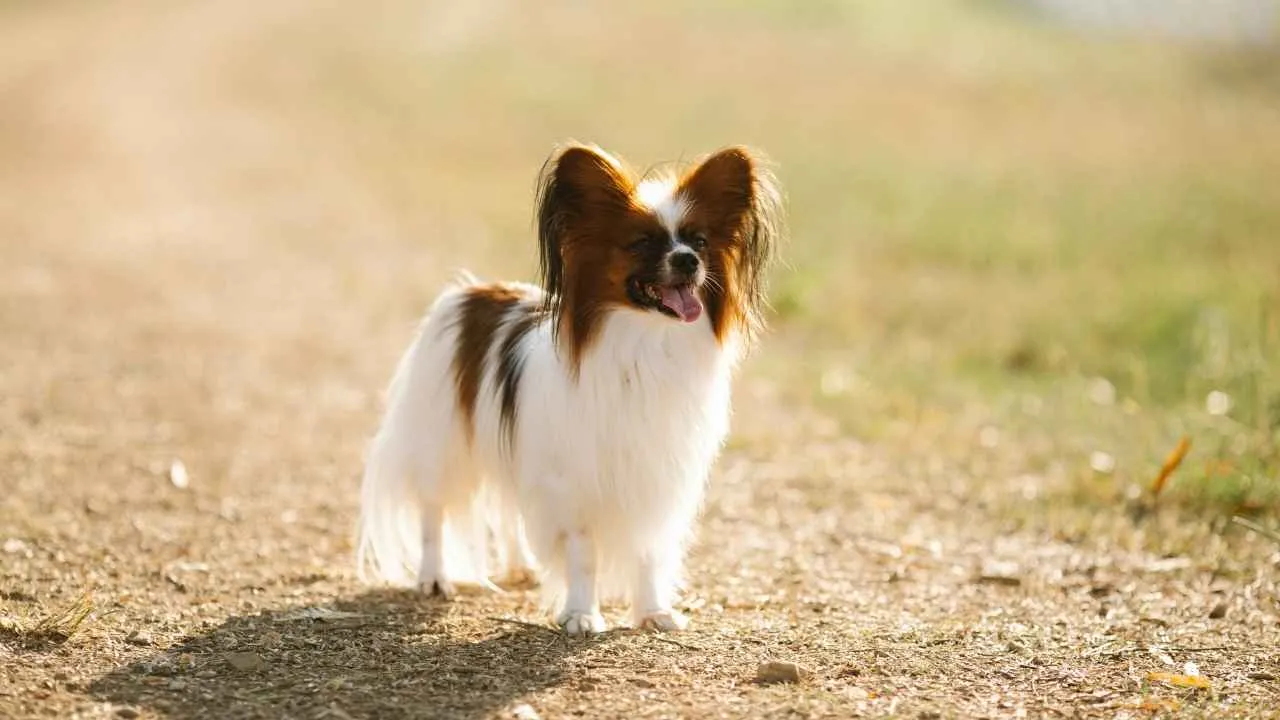
The Papillon is a highly intelligent small dog breed that developed in France and is famous for its signature, fringed “butterfly-like” ears. These ears are not just beautiful; they are also an active tool for communication, twitching and moving to express curiosity, alertness, and happiness. Dating back to the 13th century, the breed was originally known as a “dwarf spaniel” and was a favorite among European royalty.
Despite its delicate appearance, this dog possesses a high metabolic rate that provides a natural, high-energy drive, making it a perfect fit for fast-paced dog sports. Weighing in at just 5 to 10 pounds, they have a surprisingly hardy frame that allows them to navigate tight spaces with incredible speed and agility.
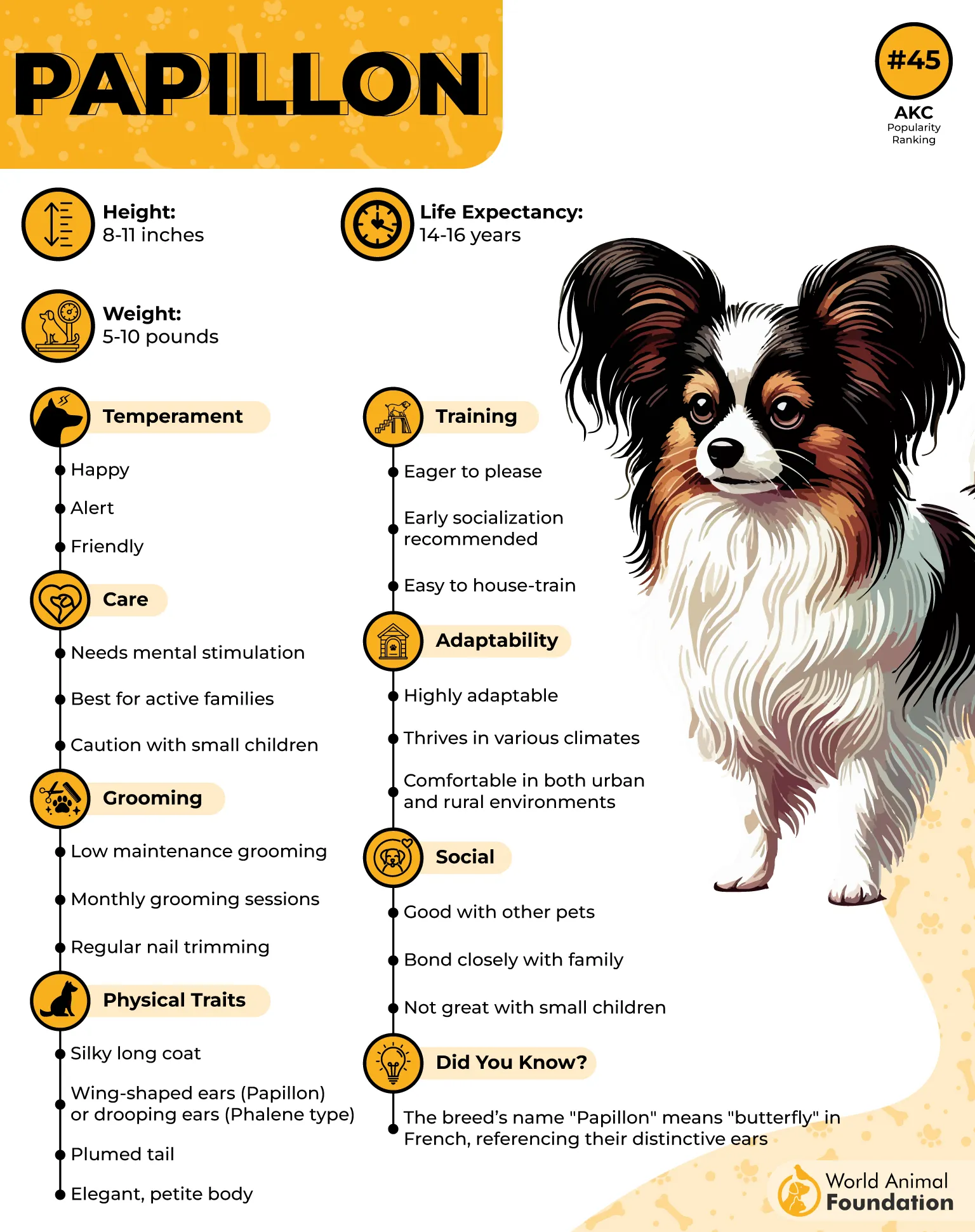
Because they were bred down from hunting spaniels to be dedicated companions, they have an eager-to-please personality that makes them remarkably quick learners.
To get the best results, start with brief basic obedience sessions of 3 to 5 minutes daily to prevent stubbornness or selective hearing. Fun trick training, such as teaching them to wave, high-five, or spin, provides the essential mental stimulation this sharp breed craves.
For easy house-training, consistency is key: take your puppy to their designated outdoor spot every 1 to 2 hours, especially right after meals and naps.
5. Golden Retriever
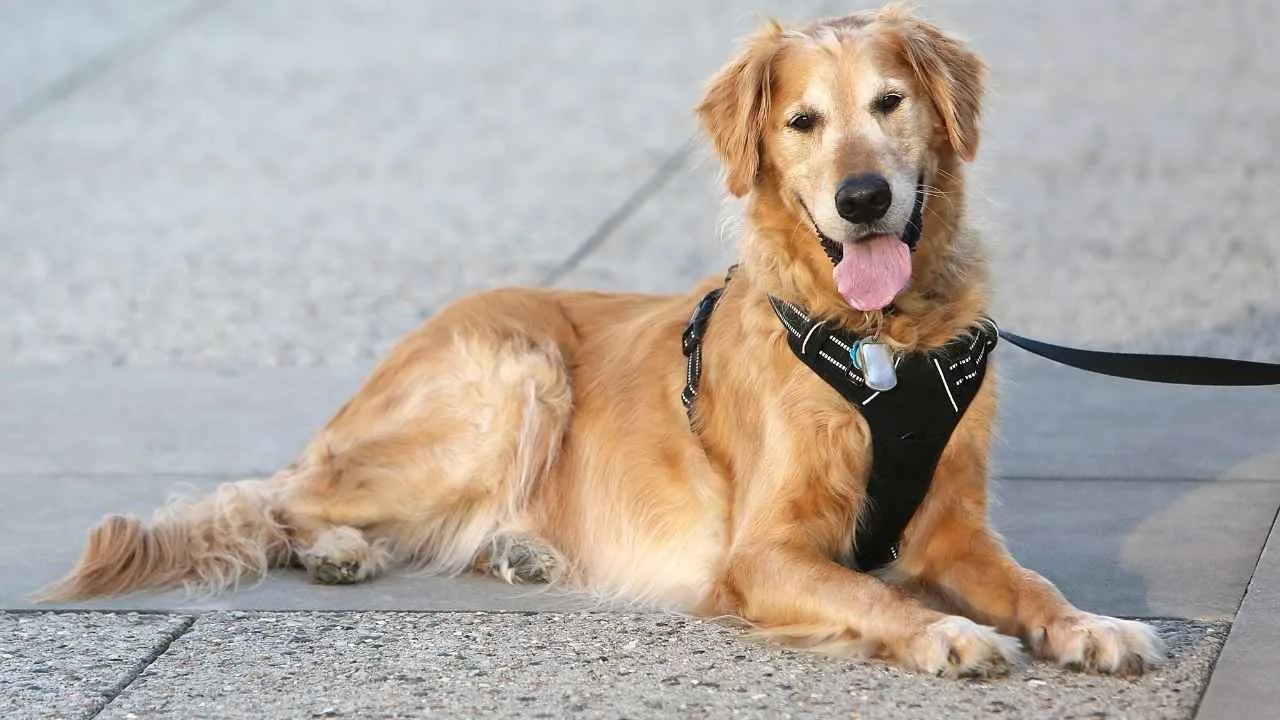
This medium-to-large dog breed was developed in Scotland during the late 19th century by Sir Dudley Marjoribanks, who sought to create the ultimate hunting companion. Known for its gorgeous golden coat, the Golden Retriever is world-renowned for its gentle temperament and affectionate nature, making it one of the most highly trainable breeds in existence.
Specifically bred to retrieve waterfowl from both land and water, the Golden Retriever possesses a remarkably soft mouth; a gentle jaw grip designed to carry game without damaging it. Their sense of smell is incredibly sharp, making them ideal for tracking, search and rescue, and scent-based tasks.
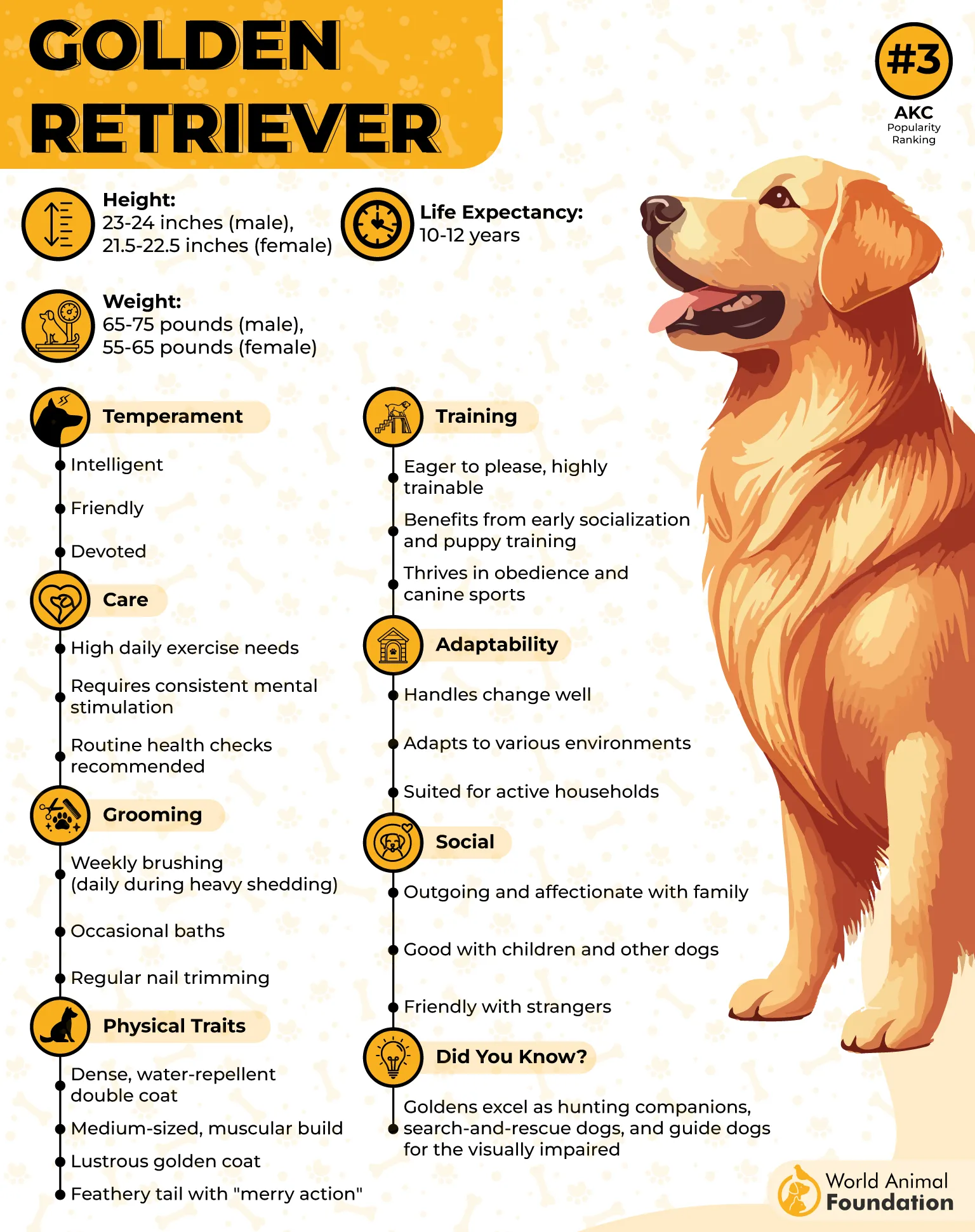
To keep them engaged during training, it is best to focus on short, dynamic sessions of 5 to 10 minutes each so their eager minds do not get bored.
UKC mentions that because they are so intensely people-oriented, early training should focus on impulse control to prevent them from enthusiastically jumping on visitors. Mastering basic commands like sit, down, come, and stay provides a vital foundation for their manners.
To keep this athletic breed healthy and content, they require 60 to 90 minutes of daily exercise, thriving on activities like fetching, swimming, running, and jogging alongside a bicycle.
6. Doberman Pinscher
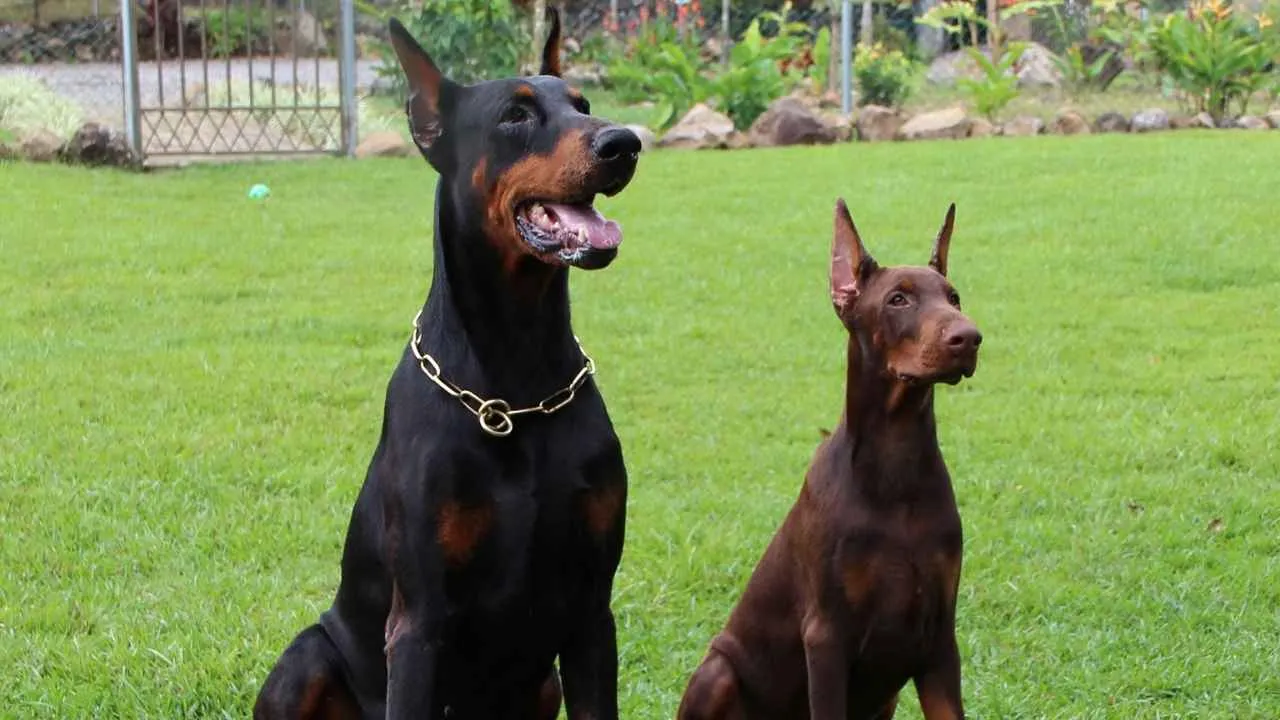
This medium-to-large working dog breed was developed in Germany during the late 19th century by a tax collector named Louis Dobermann, who sought to create a loyal, imposing companion for his own personal protection.
Today, the Doberman Pinscher is widely celebrated around the world, serving as a reliable guard dog, a devoted family companion, and a highly capable asset in police and military work.
Ranked as the fifth-most intelligent dog breed, the Doberman possesses an elite cardiovascular system with superior heart rate recovery. This incredible stamina allows them to participate in high-intensity canine sports like agility, Schutzhund, and tracking for long stretches without tiring.
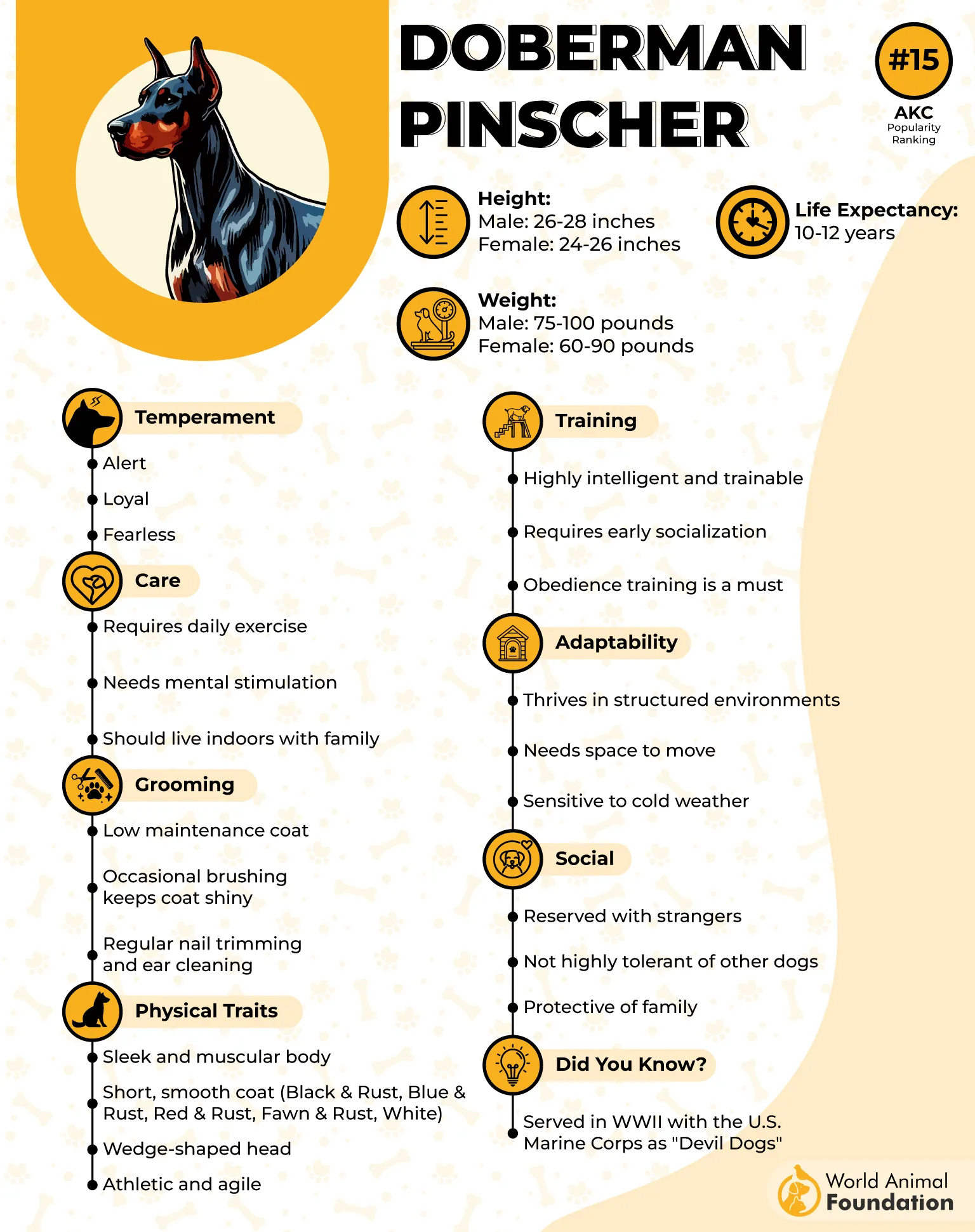
Because they form deeply intense, protective bonds with their families, comprehensive socialization starting in early puppyhood is essential to ensure they grow into well-adjusted, confident adults.
To prevent resource guarding tendencies, handlers should focus on positive reinforcement protocols around high-value items, teaching the dog that human approach means good things happen rather than simply taking items away.
To keep this muscular, athletic breed physically and mentally satisfied, an adult Doberman requires 1 to 2 hours of vigorous daily exercise, thriving on activities like brisk walking, running, dock diving, canicross, bikejoring, and hiking.
7. Labrador Retriever

The Labrador Retriever is a direct descendant of the St. John’s Water Dog, a hardworking canine from Newfoundland, Canada. Today, the breed is split into two primary lines: the American Labrador and the English Labrador. According to WebMD, the English type generally features a calmer, more blocky build, while the American type tends to be sleeker and more energetic.
Under the hood, the Labrador possesses highly developed neural pathways that seamlessly link visual tracking with their sense of smell. This unique wiring gives them an effortless, intense focus on both moving objects and their handler’s gestures.
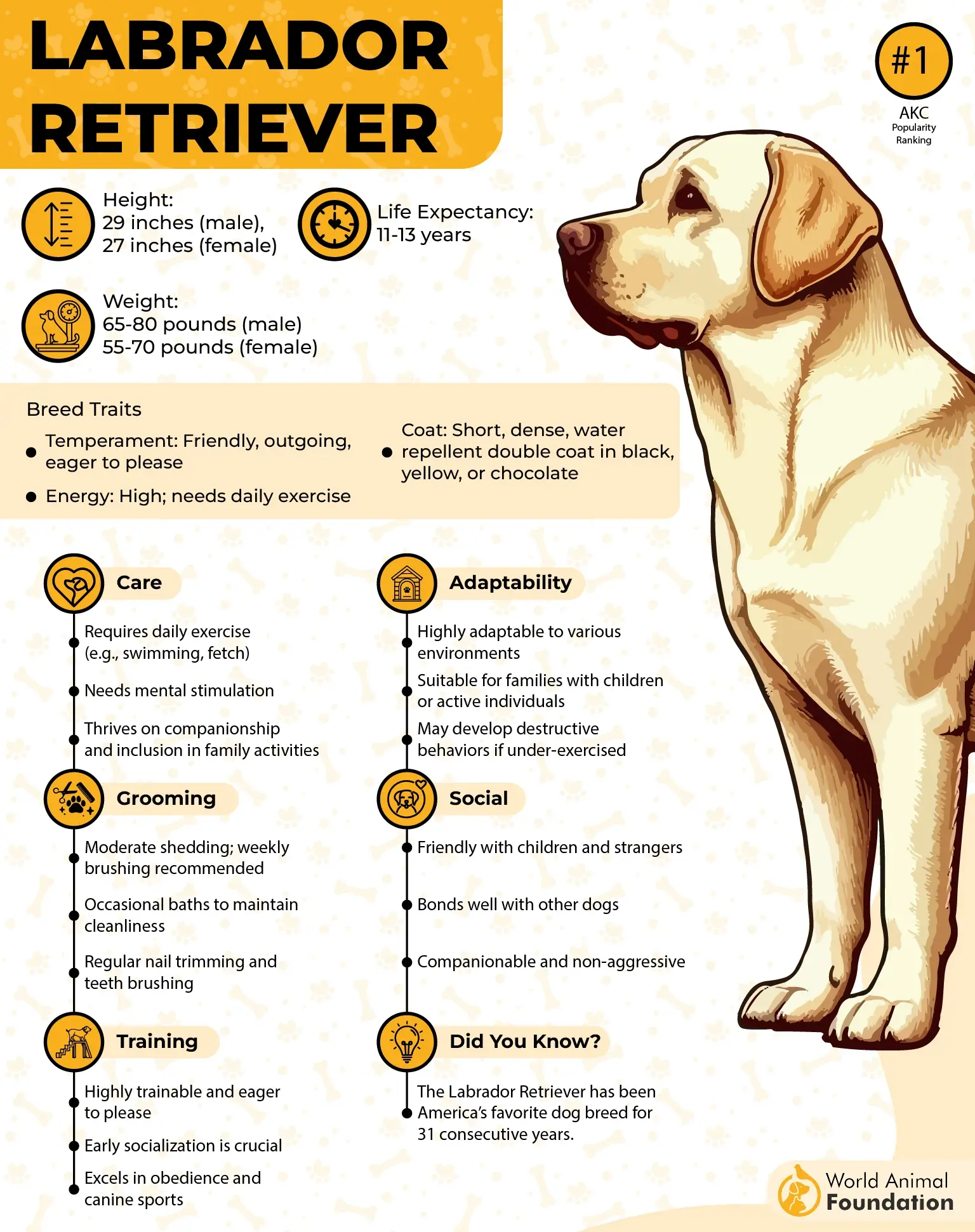
Their physical build boasts a perfect genetic balance of slow-twitch muscle fibers for long-distance endurance and fast-twitch muscle fibers for explosive bursts of speed, allowing them to excel in rigorous, athletic training.
Because Labs have a naturally fast metabolism and an exceptionally high food drive, they are incredibly easy to motivate using reward-based positive reinforcement. Incorporating 60 to 90 minutes of moderate physical activity, such as daily walks, hikes, fetching games, or swimming, prior to training sessions is highly effective for burning off excess energy, ensuring they stay focused, calm, and ready to learn.
8. Border Collie
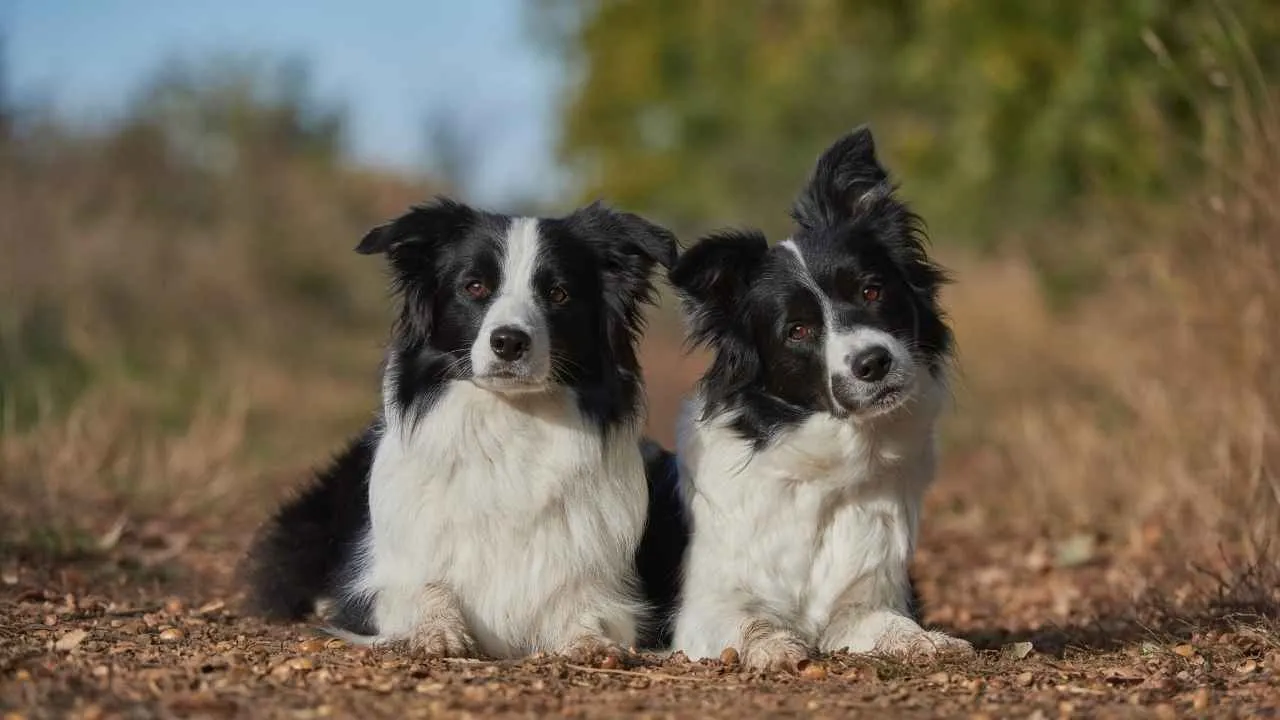
This medium-sized herding dog was developed along the Anglo-Scottish border and is widely recognized as the most intelligent dog breed in existence. A direct descendant of traditional British sheepdogs, this brilliant breed is capable of mastering complex, multi-step commands in fewer than five repetitions.
A highly developed prefrontal cortex provides the breed with exceptional working memory, advanced planning skills, and complex problem-solving abilities. They also utilize an intense, hypnotic stare known as the “Collie eye,” which allows them to completely screen out environmental distractions and remain locked onto their task.
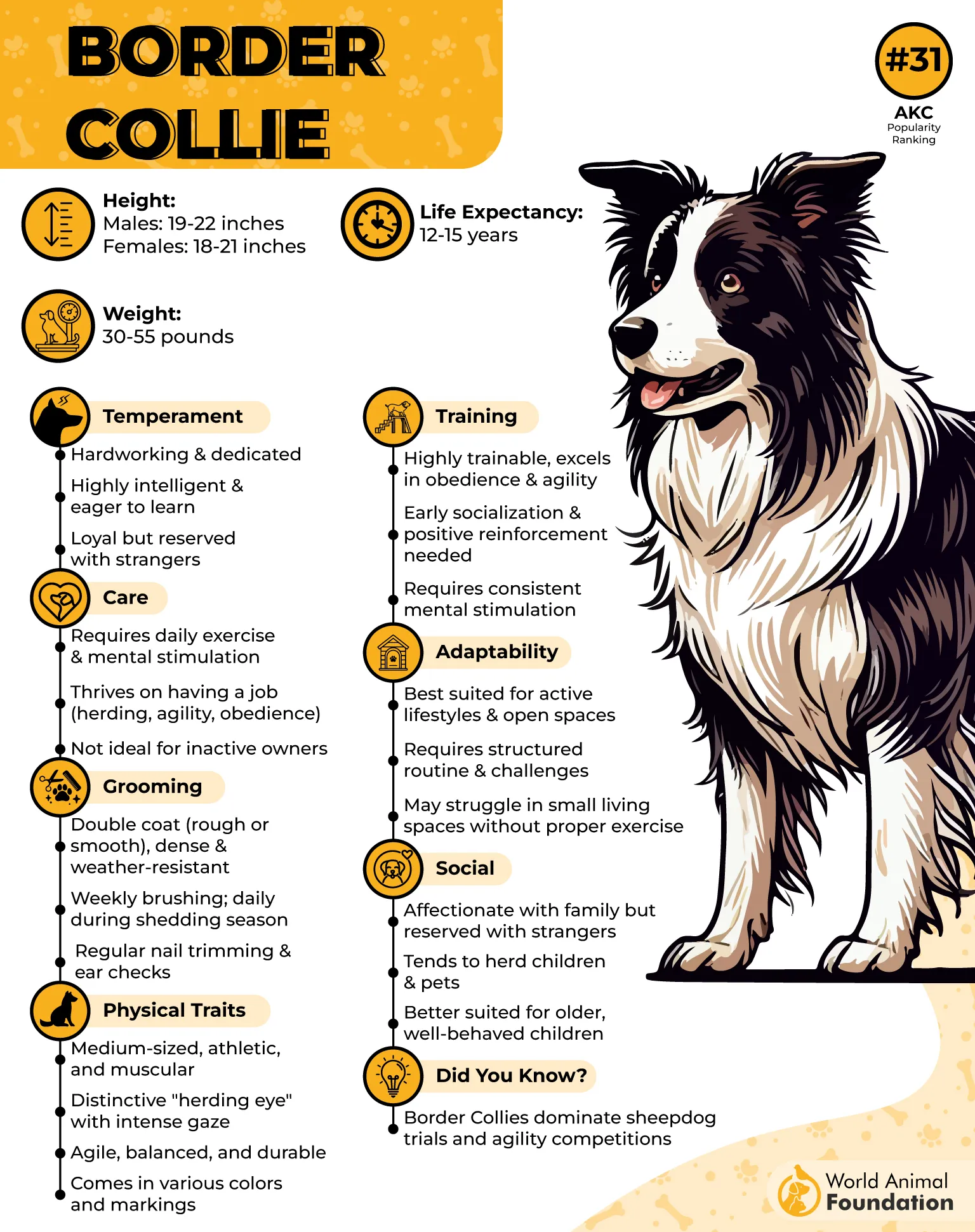
Because they excel at executing directional cues at high speeds, they are unmatched champions in fast-paced canine sports like agility and flyball, which naturally improve off-leash control.
Driven by a powerful instinct to herd and control moving objects, they require early obedience and structured training to safely redirect these herding behaviors away from cars, children, or other pets.
To keep this premier working dog balanced and content, they need 2 to 3 hours of daily physical and mental stimulation, thriving on activities like frisbee, swimming, intensive fetching, advanced obedience games, and interactive puzzle toys.
9. Rottweiler
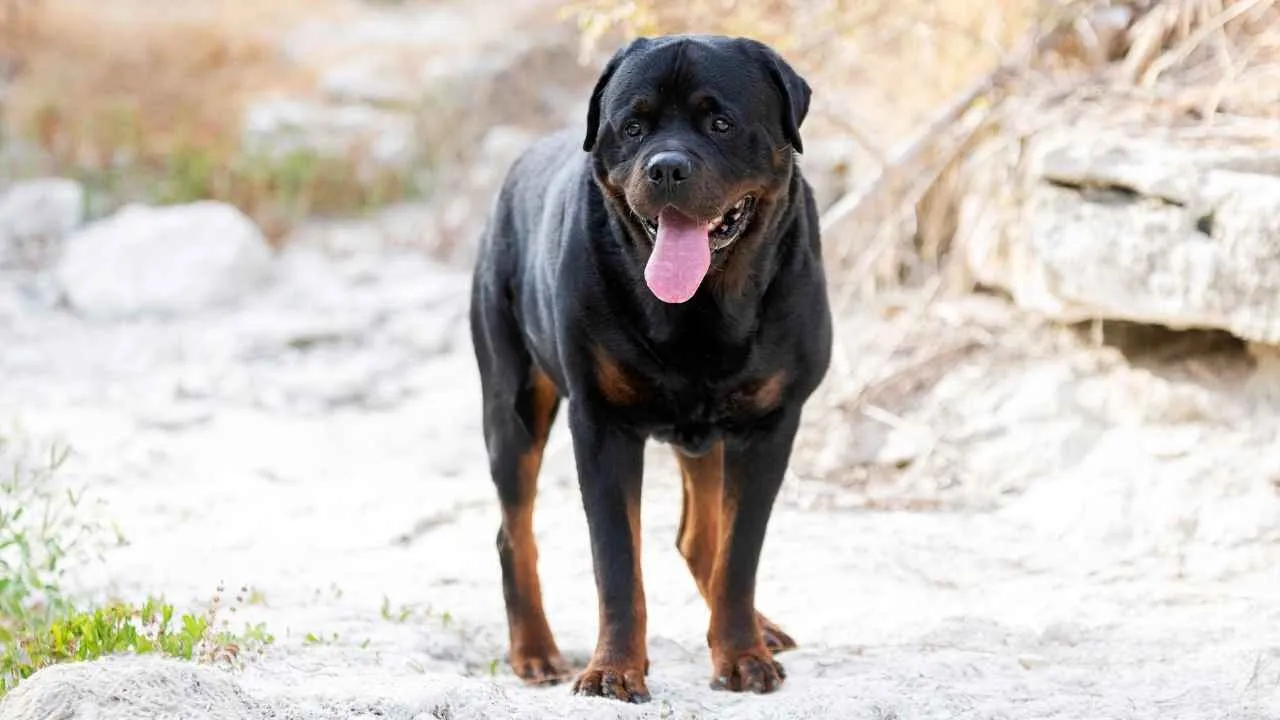
This medium-to-large mastiff-type dog was developed in Germany and was historically known as the Rottweiler Metzgerhund (Rottweiler Butcher’s Dog) because it was used to pull heavy meat carts to market long before the invention of railways. Today, this powerful breed is highly valued as a loyal guardian, police dog, and dedicated family companion.
Weighing between 100 and 130 pounds, the Rottweiler boasts a robust, well-developed musculature. Unlike more high-strung breeds, this dog naturally maintains an even-tempered “wait-and-see” attitude and low resting reactivity, allowing it to stay focused and calm even in highly distracting training environments.
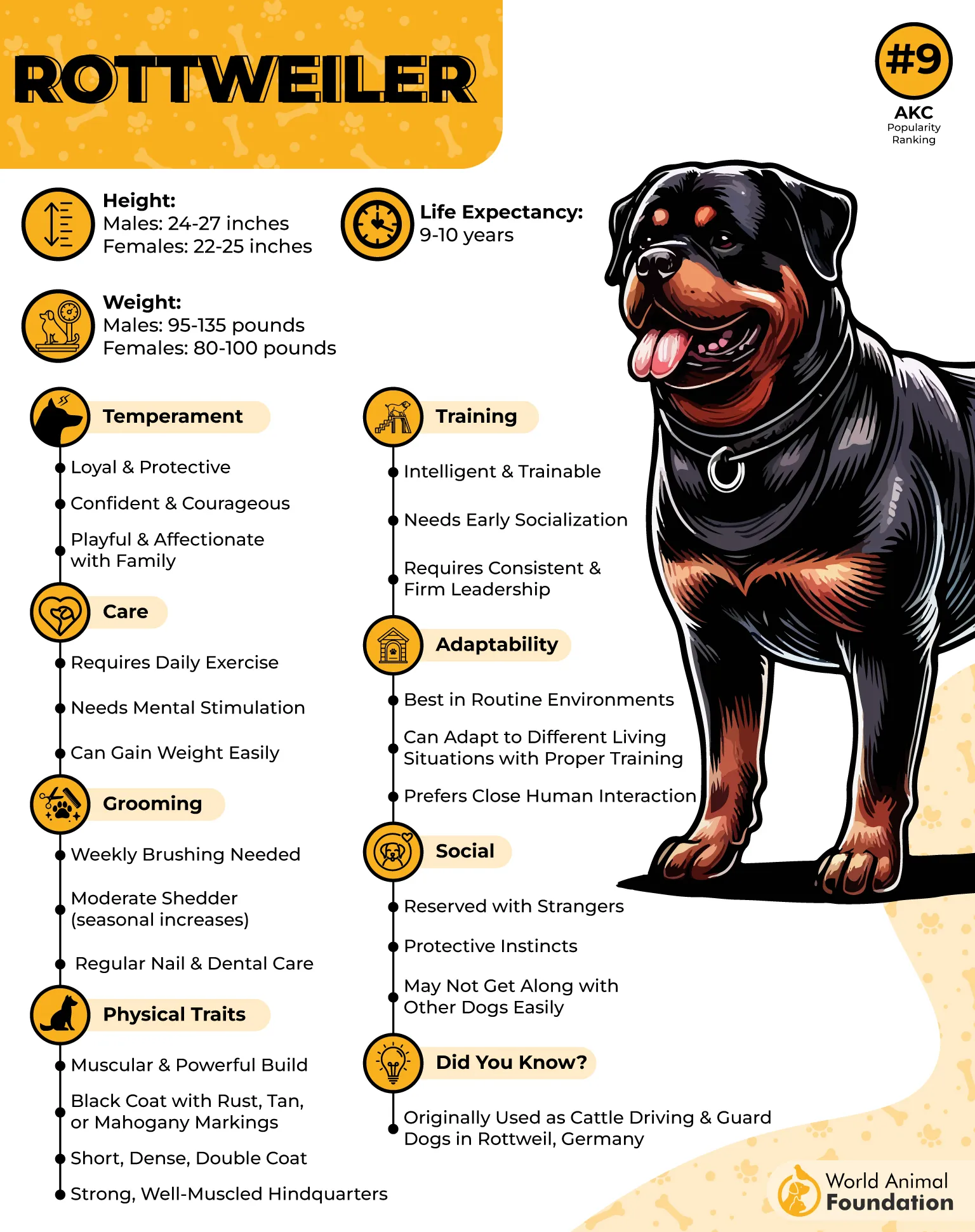
Because they are naturally protective and cautious around strangers, intensive socialization between 8 and 16 weeks of age is essential. Given their immense physical power, early loose-leash training is non-negotiable to ensure they do not overpower their handlers.
To maintain their health and protect their joints, adults require 1 to 2 hours of moderate-impact daily exercise, such as steady walks, swimming, and structured weight-pulling activities.
10. Bichon frise
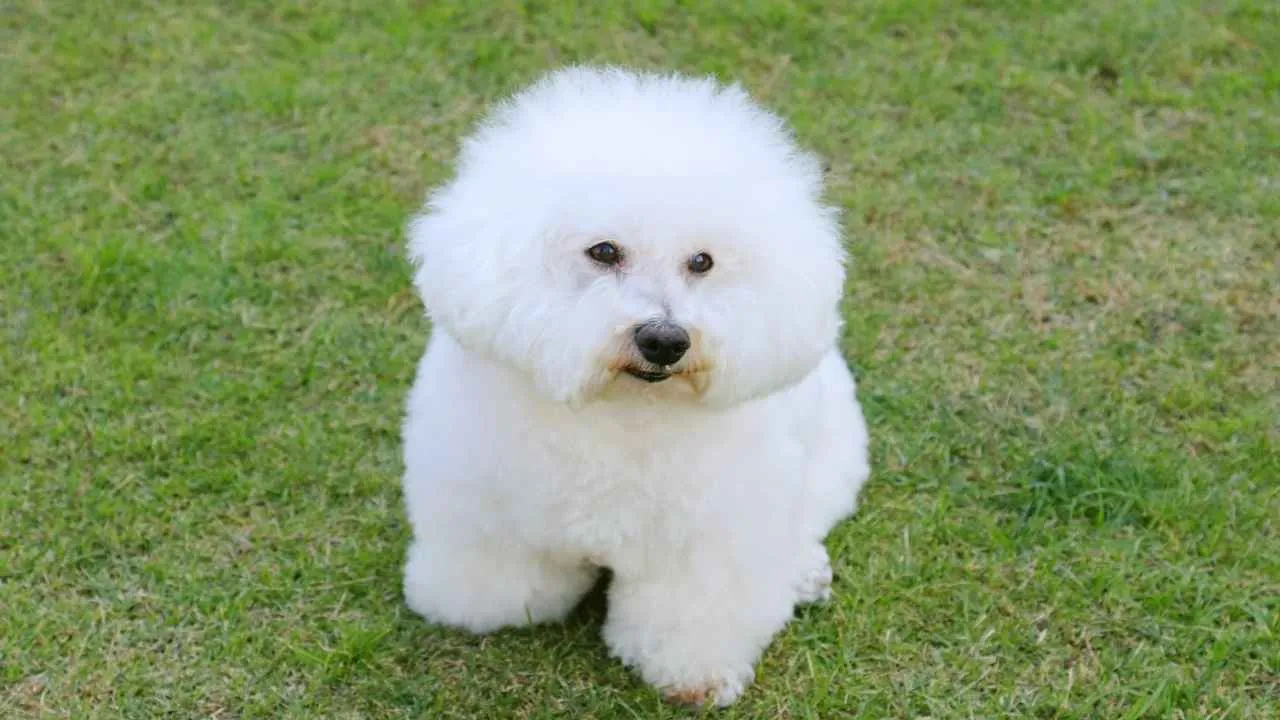
A popular companion across Spain and France, the Bichon Frise is a fluffy white dog that originally developed in the Mediterranean region before being brought to mainland Europe by sailors in the 14th century.
Once a pampered royal lap dog, the breed’s fortunes changed drastically during the French Revolution, when they were forced onto the streets to work as performing dogs alongside organ grinders and circus acts.
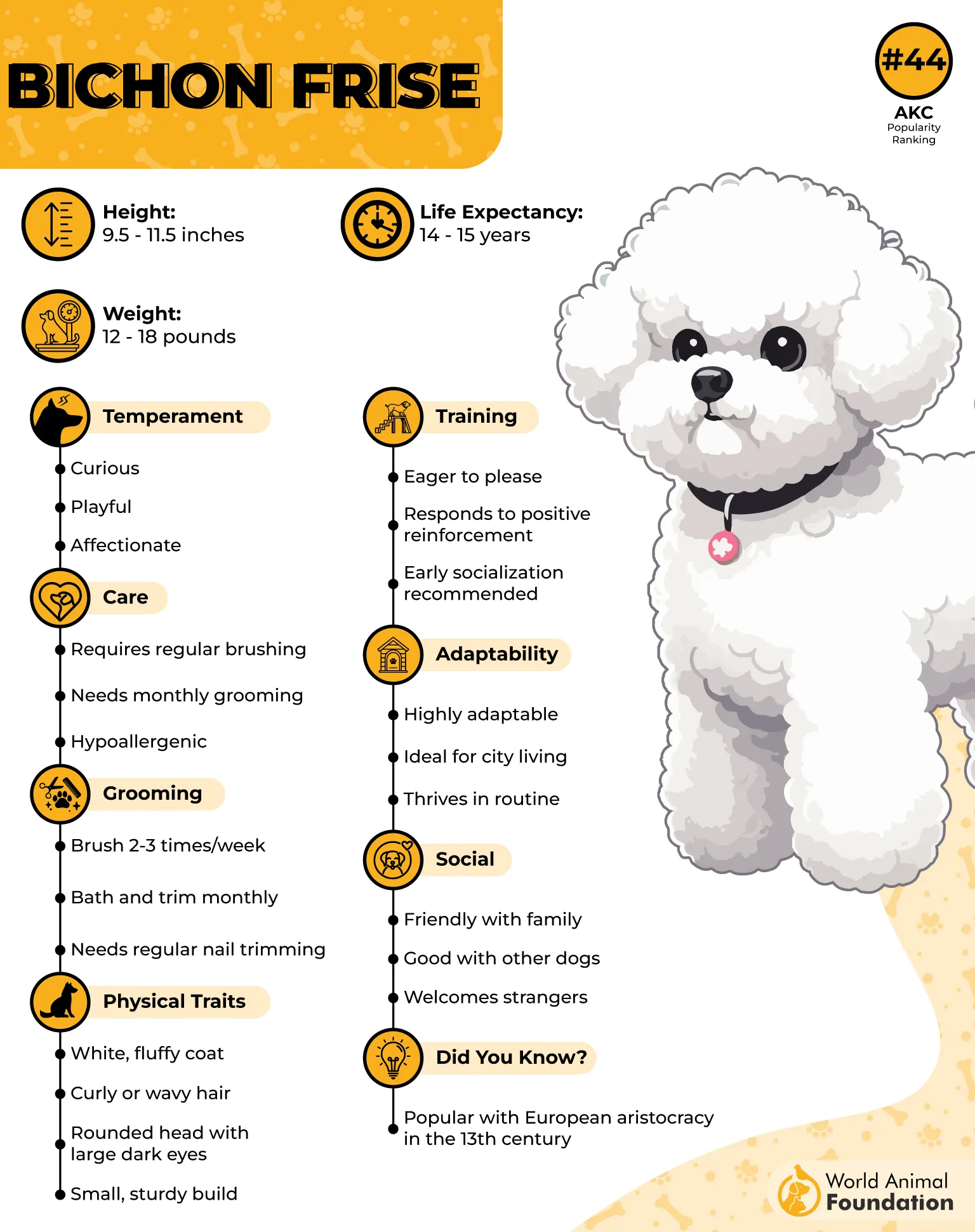
Today, the Bichon Frise is a true social butterfly, forming fast friendships with family members, young children, household pets, and even total strangers. Owners frequently witness a phenomenon known as the “Bichon Blitz”: sudden, frantic bursts of energy where the dog zooms around the room and jumps in excitement before abruptly returning to a long, peaceful nap.
Because of their performance history, these intelligent dogs are eager to learn and thrive on a structured mental enrichment routine filled with interactive tricks like playing dead, shaking hands, and spinning.
However, they are deeply people-oriented and should not be left completely alone for more than four hours, as they are highly susceptible to developing severe separation anxiety.
Conclusion
The best trainable dogs are not always the fastest learners. They are the ones who combine intelligence with kindness, patience, and a willingness to work alongside people. The Australian Shepherd, German Shepherd, Poodle, Papillon, Gold Retriever, Labrador Retriever, Bichon Frise, Border Collie, Rottweiler, and Doberman Pinscher all bring something unique to the table.
Some are energetic athletes. Others are gentle family companions. Yet each breed proves that good training is about more than commands and obedience. It is about trust, communication, and partnership. When that bond develops, obedience training stops feeling like a lesson. It becomes a conversation between two friends who are learning to understand each other a little better every day.
