




Not every guard dog needs to be fierce, intimidating, or demanding to be effective. Some dogs have a gentle nature but remain alert to their surroundings and protective of the people they love.
Their calm temperament makes them appealing to families who want a sense of security without living with an overly aggressive or difficult-to-manage pet. Gentle guard dogs can offer a balance of companionship, loyalty, and natural watchfulness.
They may alert their owners to unfamiliar visitors, stay close to their families, or use their size and presence to discourage unwanted attention. Many can also enjoy a relaxed home environment without needing constant activity or complicated daily care.
The following guard dog breeds combine protective qualities with manageable care needs, making them worth considering for owners who want both an affectionate companion and a dependable home guardian.
Gentle Dog Breeds That Excel as Low-Maintenance Guards
1. Great Dane
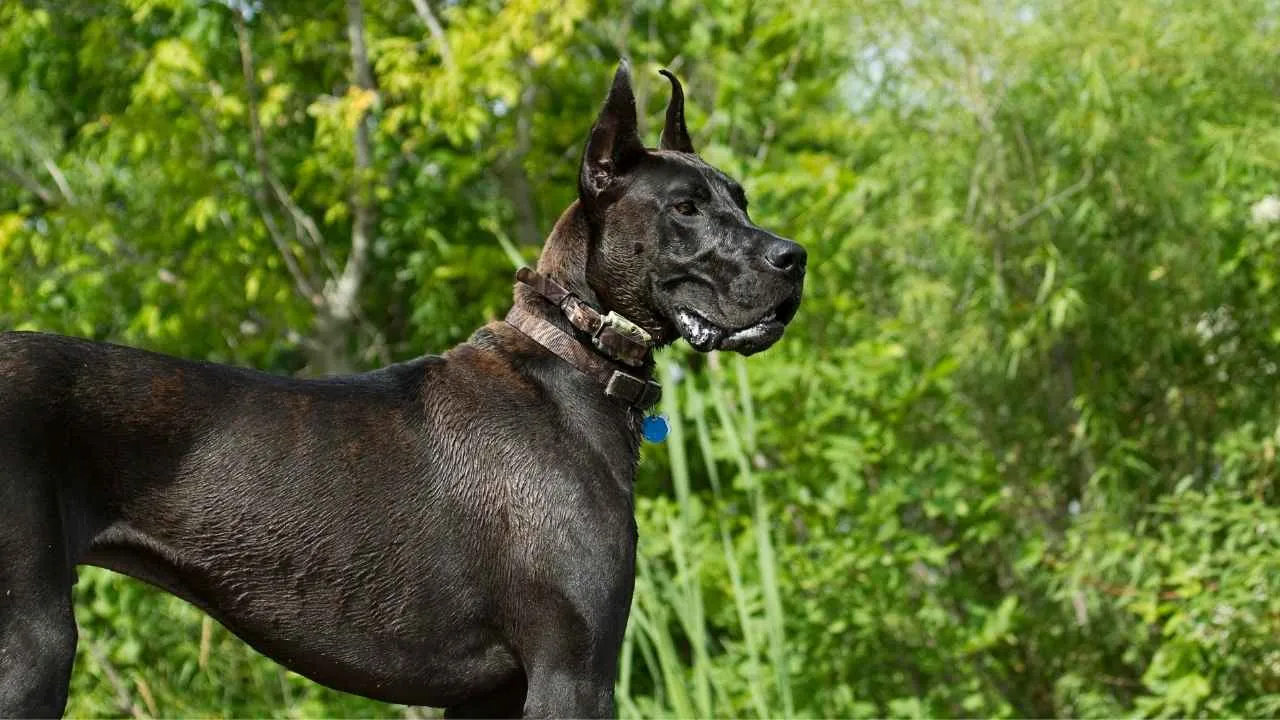
Great Danes are gentle giants known for their affectionate nature and natural guarding instincts. Originally bred in Germany during the 1800s to hunt wild boar and guard estates, they are now valued as loving family companions.
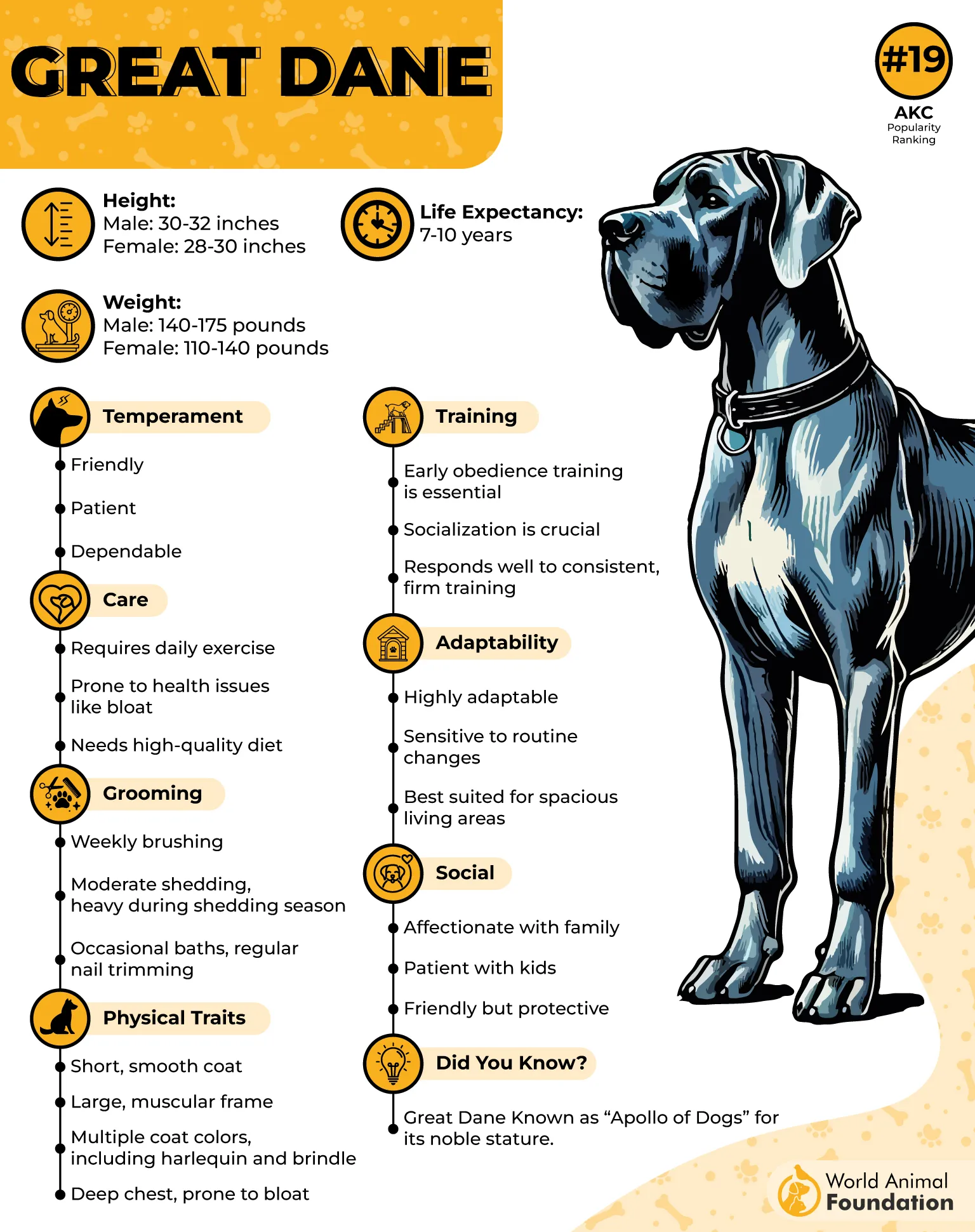
Great Danes are alert home guardians. Their impressive presence can discourage intruders, and they are brave when faced with a real threat. Britannica says they rarely bark without a reason and usually get along well with children and other pets, especially when raised together.
They are also moderately playful and have fairly low energy levels, making them suitable for homes that prefer a calmer companion.
Care and Grooming Needs
Coat care: Great Danes have short coats that need occasional brushing. They shed moderately, and their large size can mean plenty of loose hair around the home.
Bathing: Their grooming needs are fairly low, as they only need occasional baths when dirty or smelly.
Training: These dogs are generally easy to train, though some can be stubborn or slow to respond.
2. Broholmer
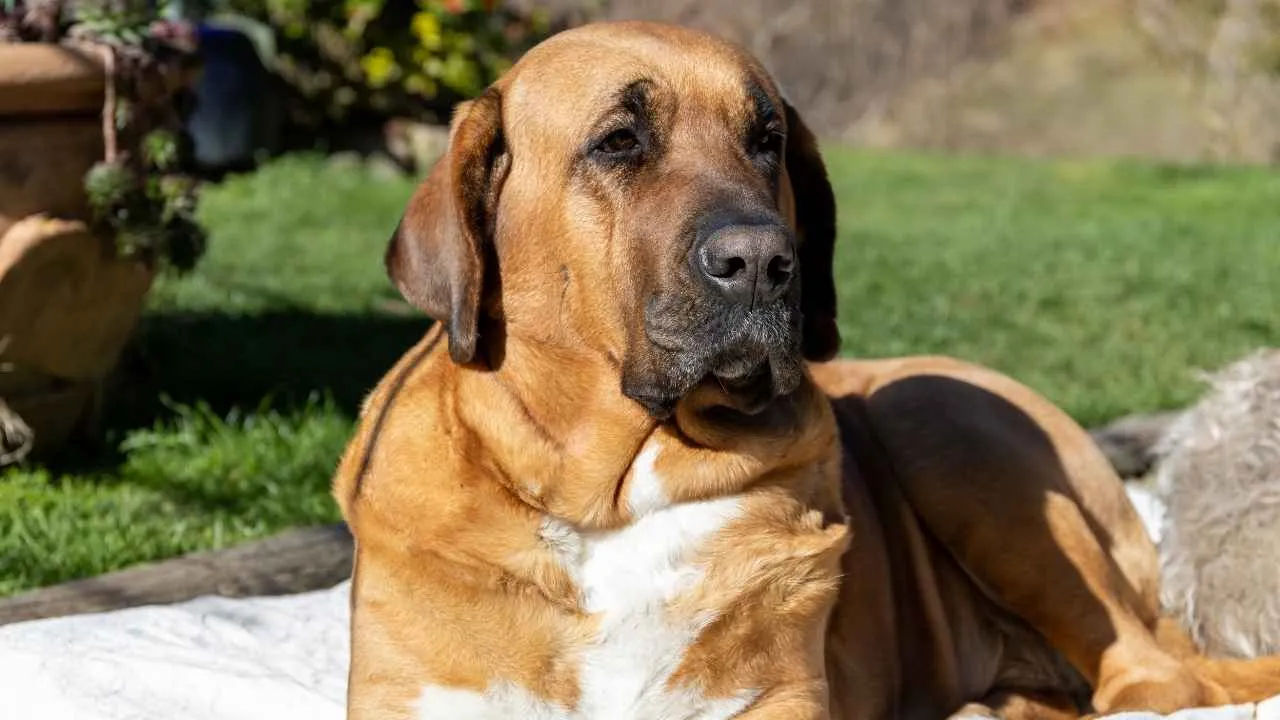
Broholmers are calm, confident dogs with a natural instinct to protect their homes and families. This Danish breed dates back to the Middle Ages, when it was used for stag hunting.
Later, Broholmers became guard dogs for farms, estates, and cattle. Today, they are valued as loyal companions who can help protect a home without being unnecessarily aggressive.
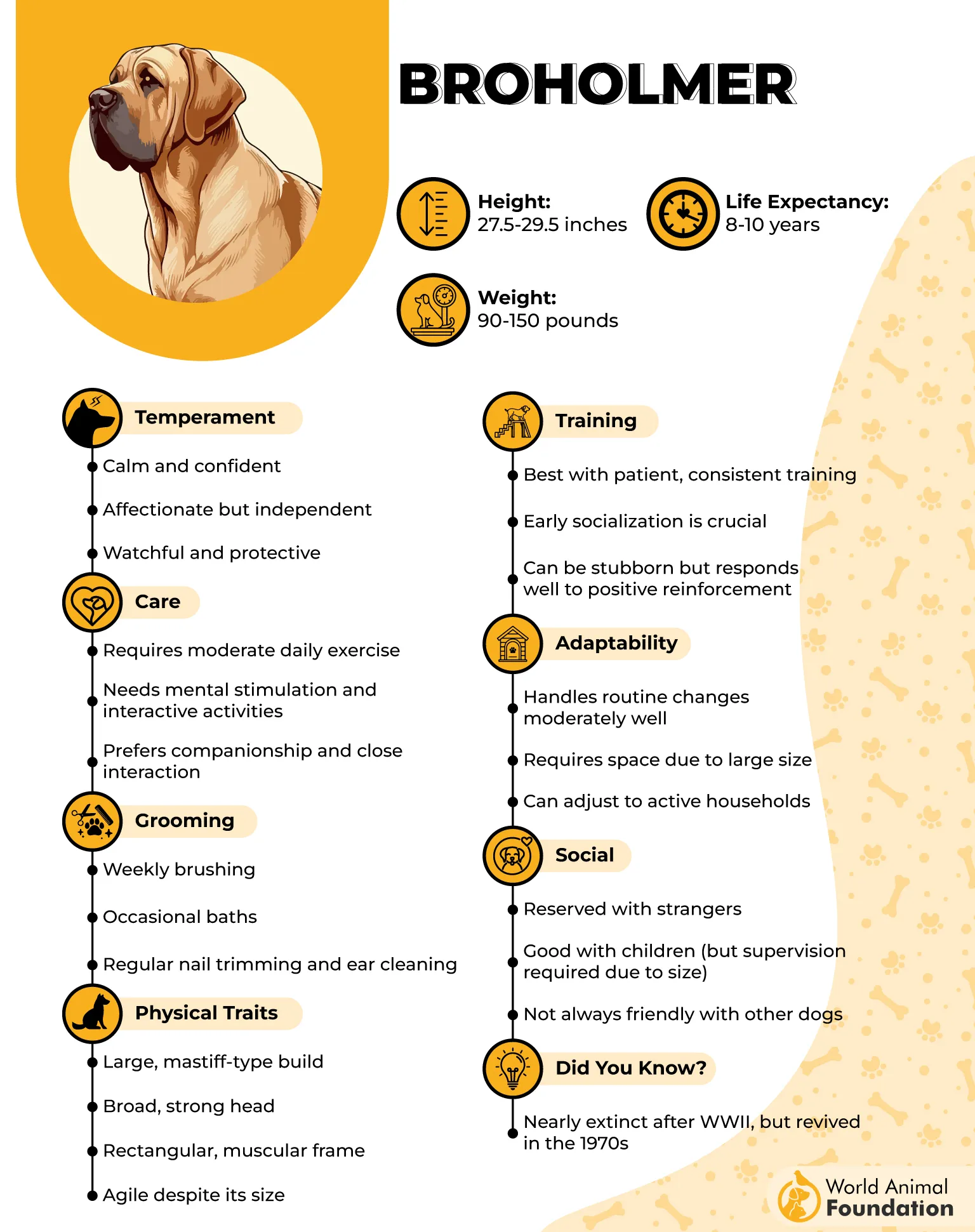
Despite their imposing appearance, Broholmers are affectionate, friendly, and good-natured. They enjoy staying close to their families and generally get along well with children and other dogs. They can be reserved around strangers but are usually gentle with those they know.
Care and Grooming Needs
Coat care: Broholmers have short coats that are easy to maintain and do not require complicated grooming routines.
Exercise: They need moderate daily activity and enjoy walks, hiking, and games of fetch.
Training: Early socialization, clear routines, and positive reinforcement help develop good manners and reliable guarding behavior.
3. Boerboel
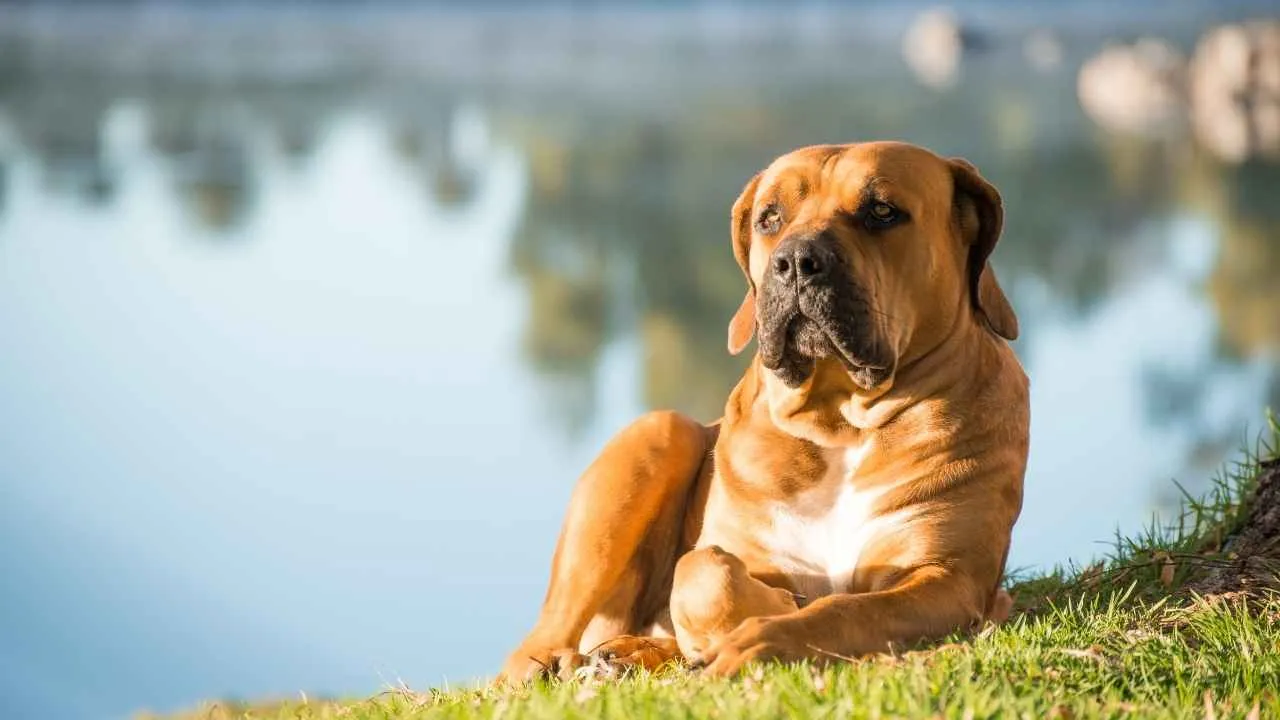
Boerboels are powerful South African guard dogs known for their confidence, intelligence, and loyalty. Originally bred to protect farms and homesteads from predators, including hyenas and lions, they have strong natural guarding instincts.
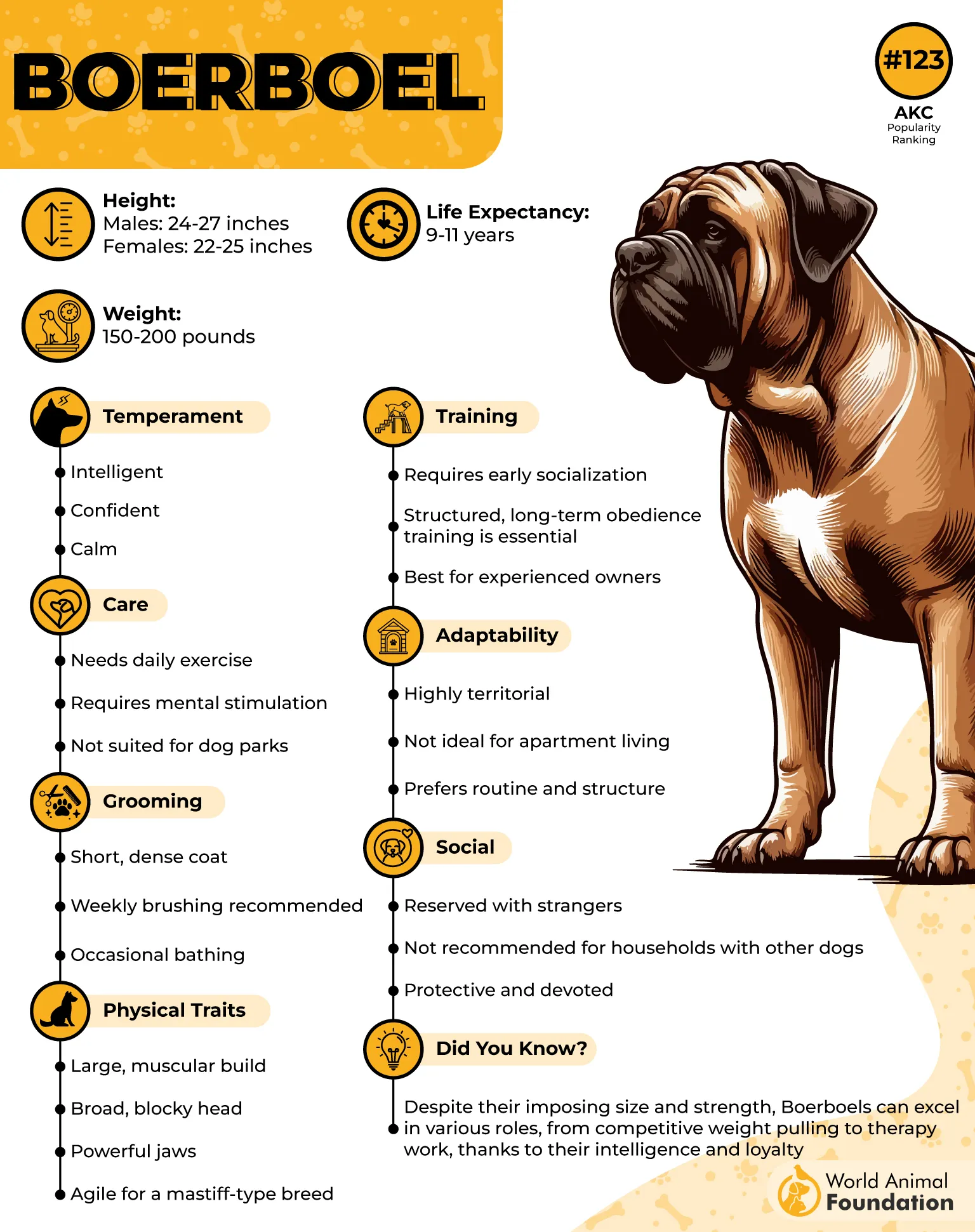
These mastiff-type dogs are alert and discerning, making them devoted protectors of their homes and families. Despite their intimidating appearance, Boerboels can be affectionate, calm, and playful with their loved ones. They are often good with children but may be reserved around unfamiliar people.
Proper introductions can help them become more comfortable with guests. Their intelligence makes them trainable, but their dominant nature and strength mean they are better suited to experienced owners than beginners.
Care and Training Needs
Coat care: Boerboels have short, dense coats that need weekly brushing. They shed moderately and generally need a bath about once a month.
Training and socialization: Start early and stay consistent to help them develop good manners and respond well to new situations.
Exercise and stimulation: These active, intelligent dogs need physical activity and mental challenges to stay content.
4. Bullmastiff
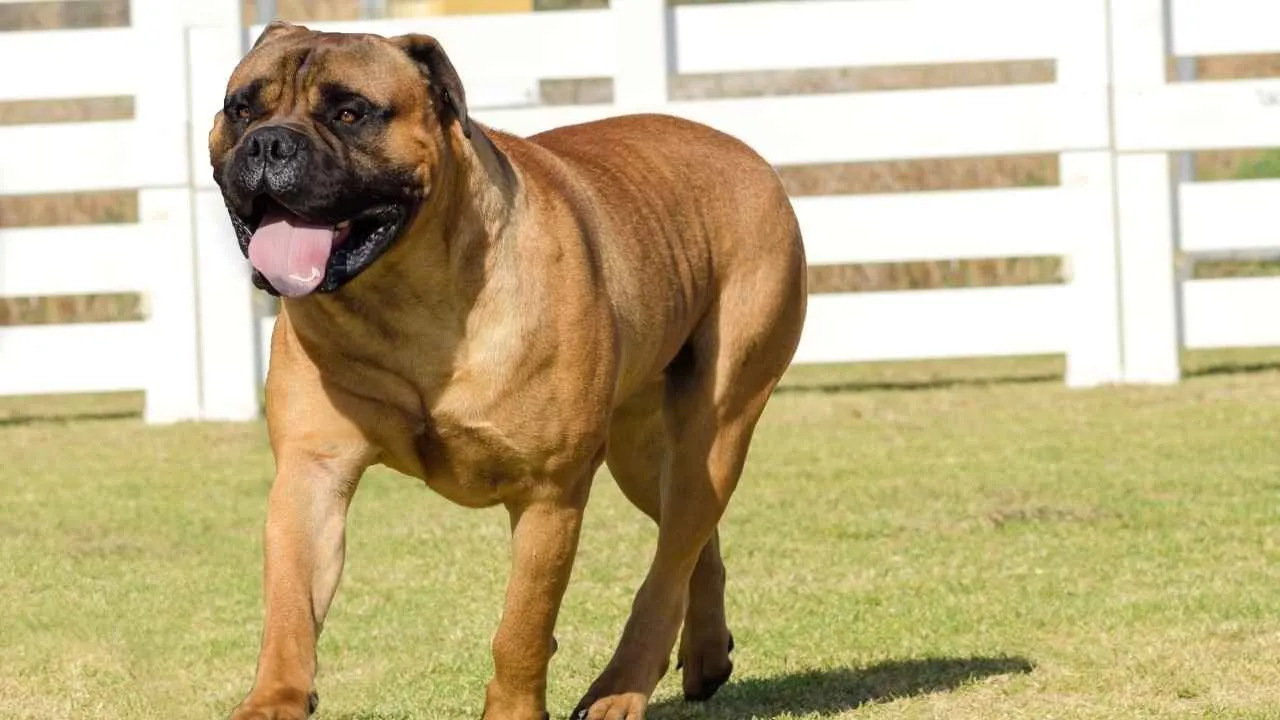
Bullmastiffs were developed in Britain around 1860 by crossing Bulldogs with Mastiffs, according to PetMD. Gamekeepers bred them to guard estates and catch poachers.
Today, these powerful dogs remain natural protectors, using their imposing appearance and alert nature to help keep their homes safe. They are also known for their intelligence and confidence.
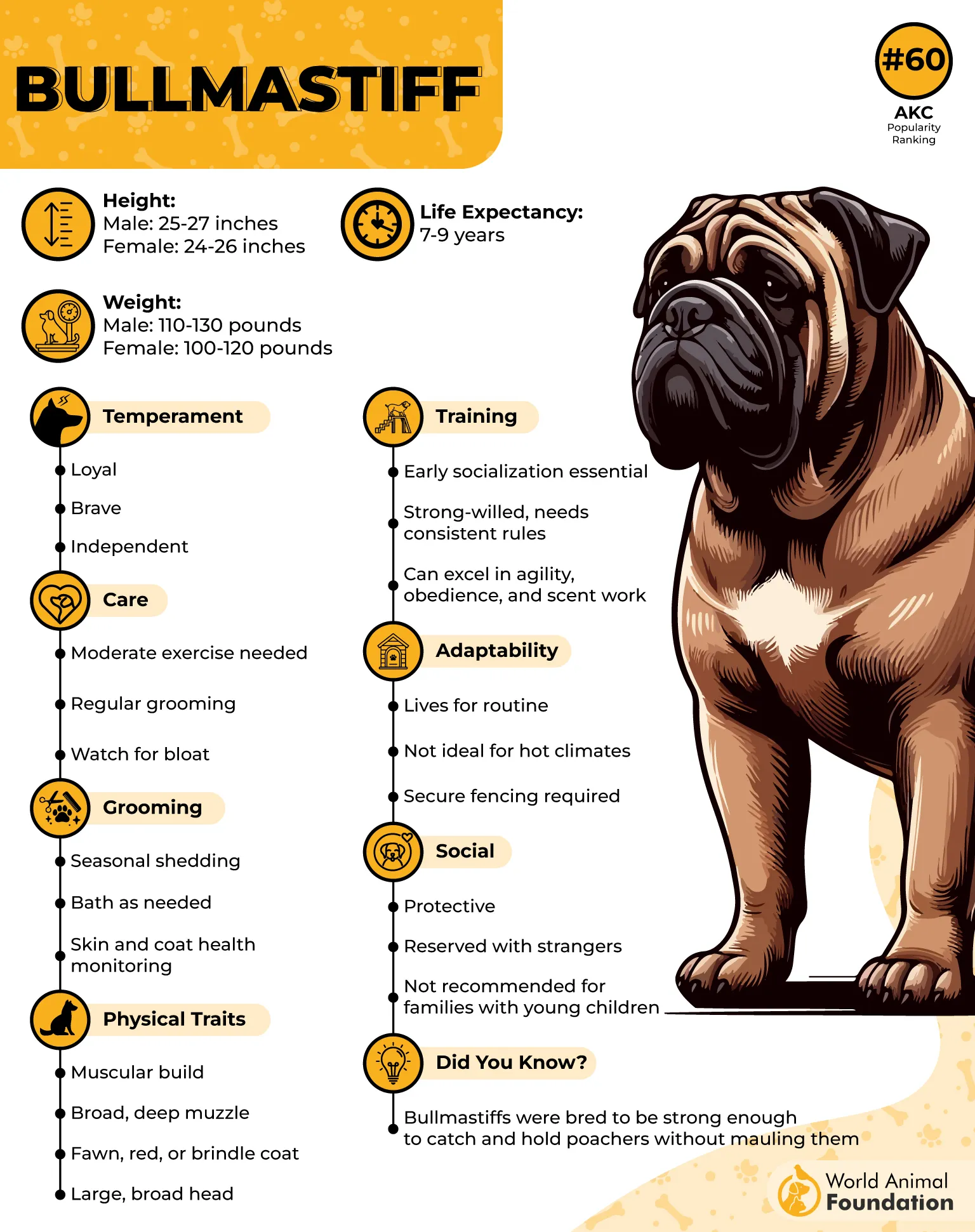
Despite their strong appearance, Bullmastiffs are affectionate, docile, and devoted to their families. They form strong bonds with their owners and are generally quiet rather than frequent barkers.
They may take time to warm up to strangers, but early socialization can help them become more comfortable around visitors. They can also be good with children and other dogs, although supervision is important because their size can lead to accidental knocks.
Care and Training Needs
Coat care: Bullmastiffs have short, dense coats that are easy to maintain and do not require complicated grooming routines.
Exercise: Daily walks and playtime in a fenced yard help meet their exercise needs. They are not suited to long-distance running.
Training: They learn quickly, but early training and socialization are essential. Teaching basic commands and calm leash walking helps pet owners manage their strength.
5. Neapolitan Mastiff
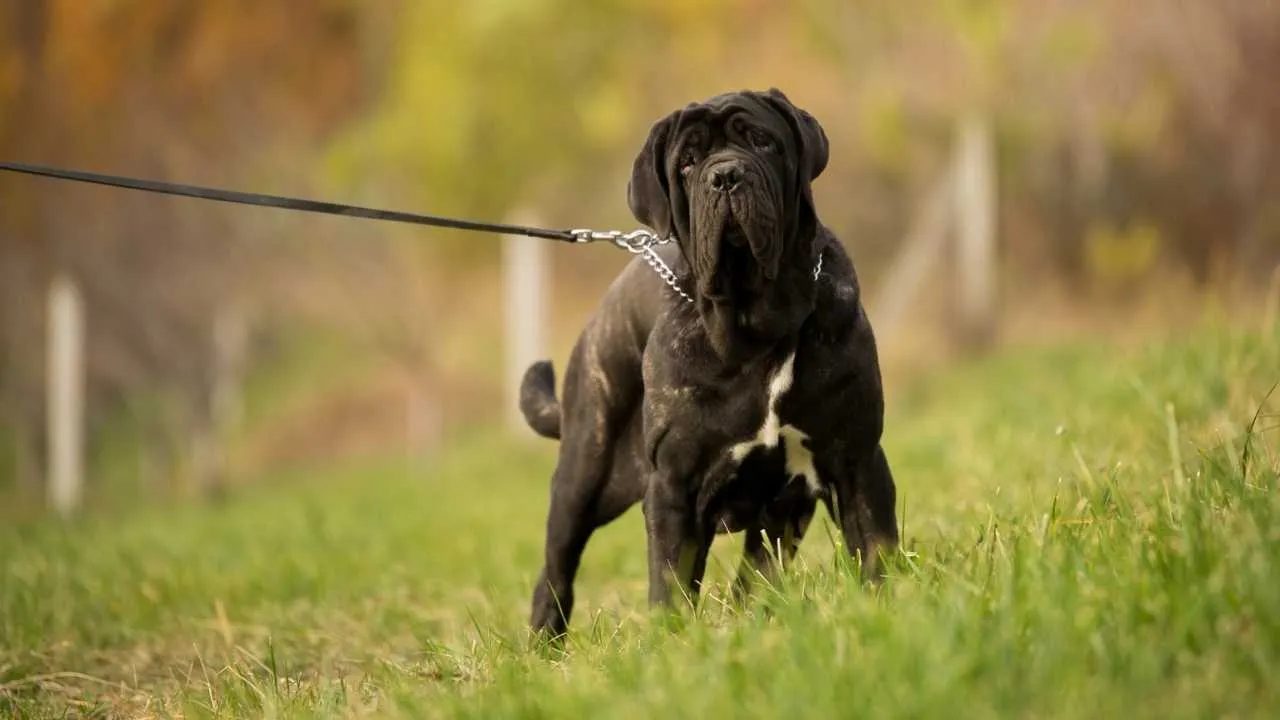
Neapolitan Mastiffs are powerful, watchful dogs known for their imposing appearance and natural guarding instincts. Dating back to ancient Rome, these Italian dogs have long been valued for their protective nature.
Their loose, wrinkled skin and hanging lips give them a distinctive look that can discourage intruders without the need for aggressive behavior.
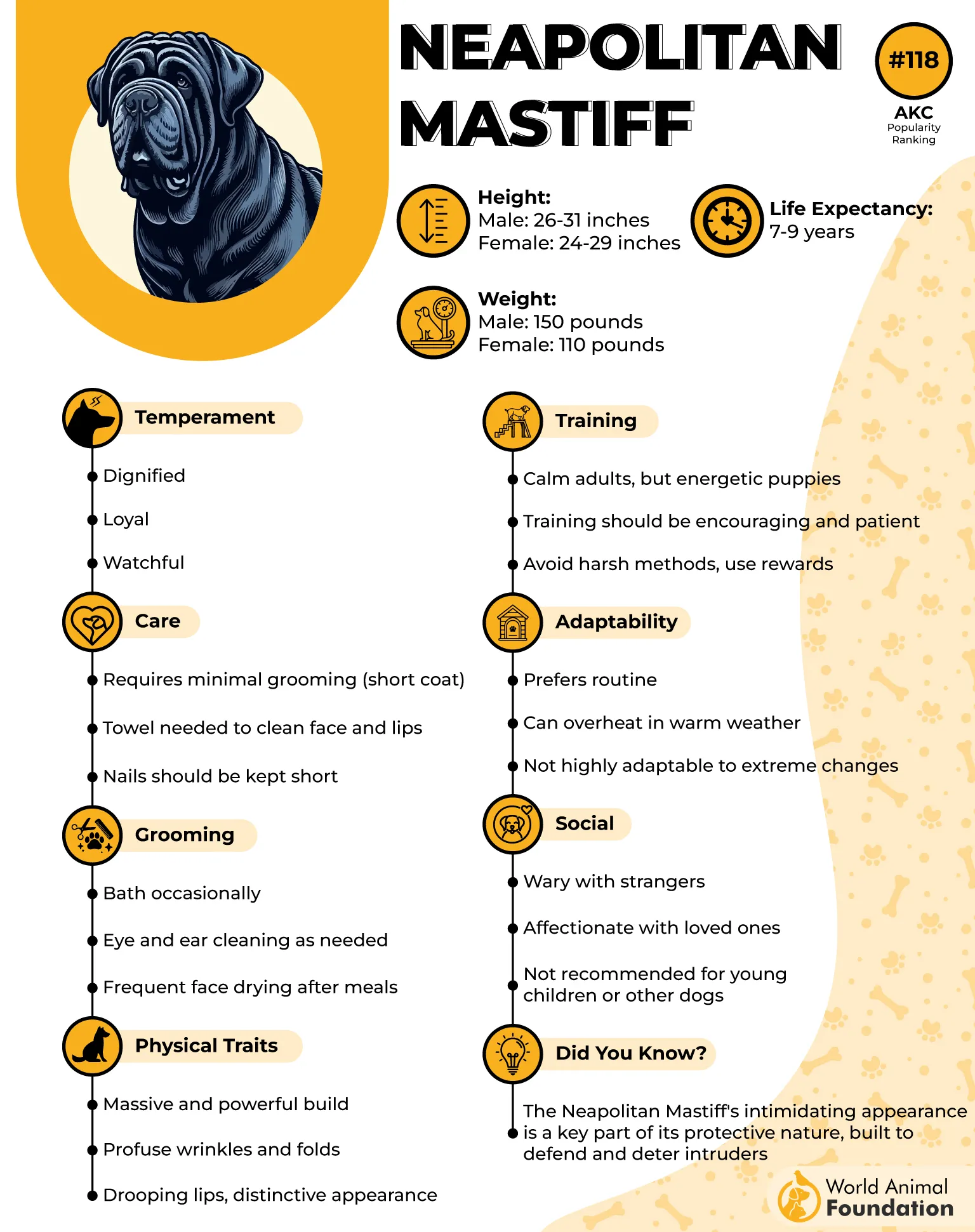
Despite their serious appearance, Neapolitan Mastiffs are affectionate, calm, and loyal to their families. They are usually reserved around strangers but gentle with people they know well.
Adults tend to prefer relaxing with their owners rather than engaging in strenuous activities. They also bark to alert their families when something seems unusual, making them attentive home guardians.
Care and Training Needs
Coat care: Their short coat is relatively easy to maintain, although their wrinkles and folds need attention.
Exercise: Around 30–40 minutes of regular exercise helps keep them healthy. They generally prefer relaxed activities over long runs.
Training: Early training and socialization help them become well-mannered and comfortable around unfamiliar people.
6. Saint Bernard
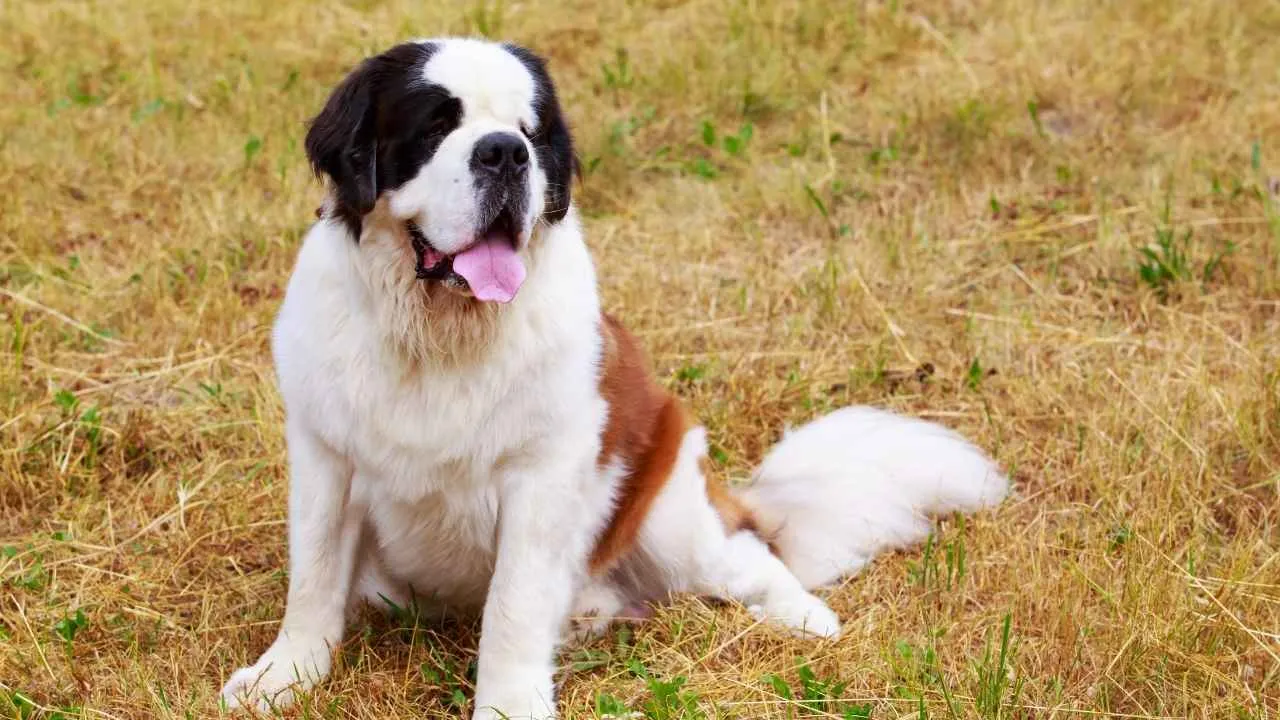
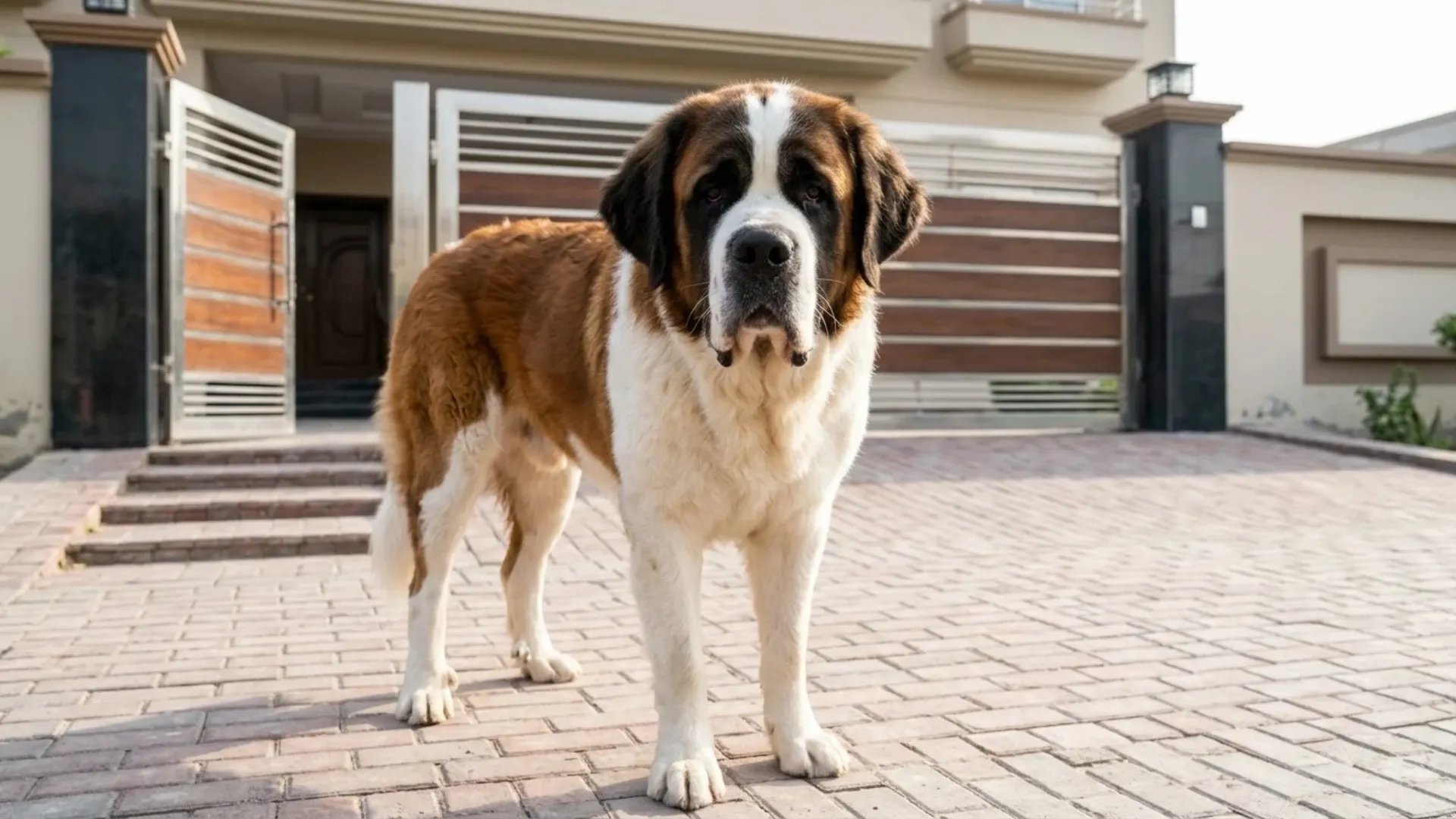
Saint Bernards are gentle, easygoing dogs known for their patience and devotion to their family members. Originally trained by monks in the Swiss Alps during the 1600s, they helped locate and rescue people trapped by avalanches.
Today, these famous giants are beloved family companions. Their watchful nature and imposing appearance can also help discourage unwanted visitors.
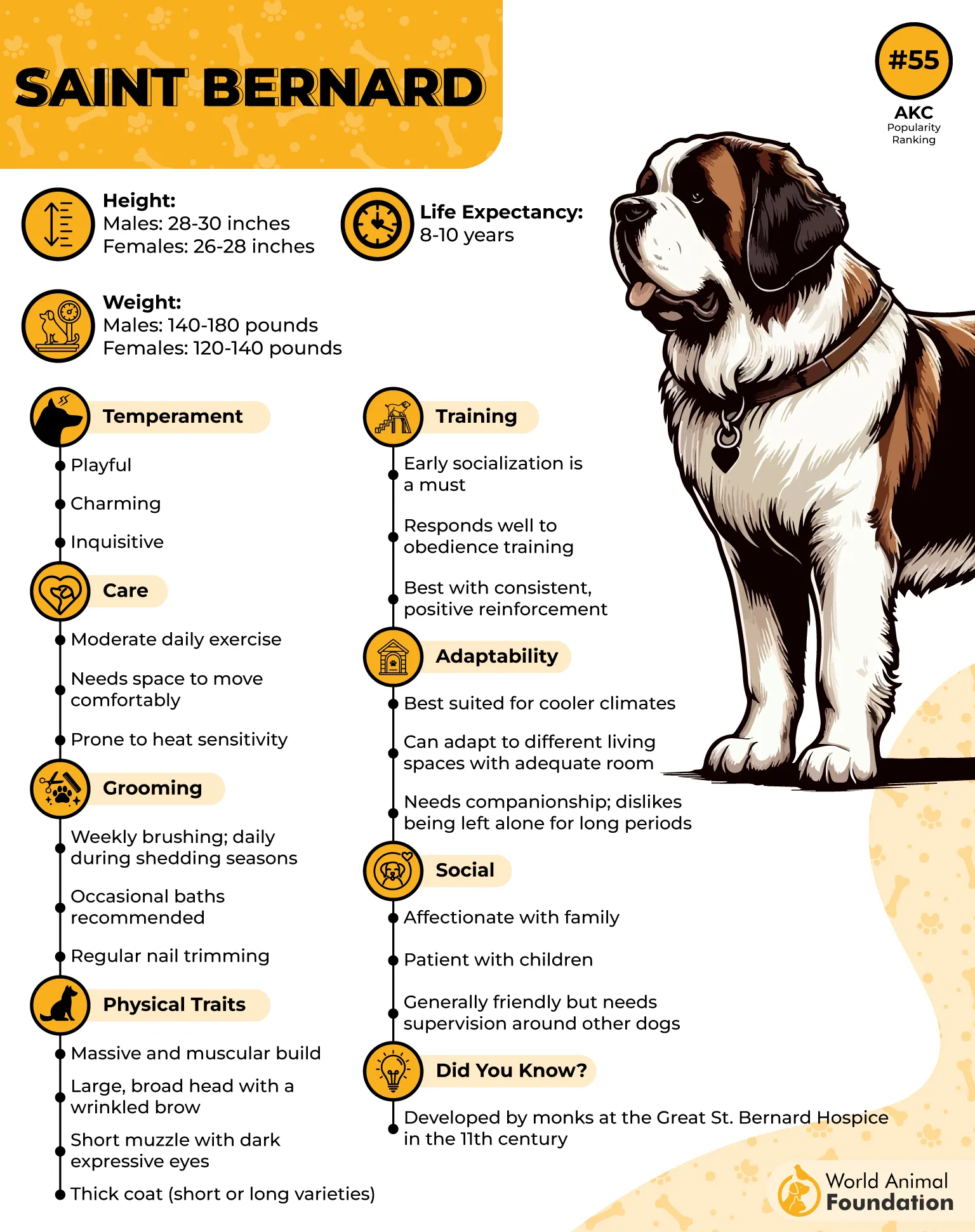
Despite their size, Saint Bernards are friendly, affectionate, and usually good with children, other dogs, and even cats. They enjoy staying close to their owners and joining them on relaxed outings.
Although puppies can be energetic and excitable, adults tend to become calmer and more laid-back. They are not highly active dogs, but daily walks and mental stimulation remain important.
Care and Training Needs
Exercise: Around 30 minutes of daily exercise helps keep them healthy. They also enjoy short walks and hikes in cool weather.
Training: Regular training sessions and socialization are important. They can be stubborn, so patience and clear guidance help.
Grooming: Their large size requires space and regular care. Drooling is another consideration, so dog owners should keep the area around their mouths clean.
7. Rhodesian Ridgeback
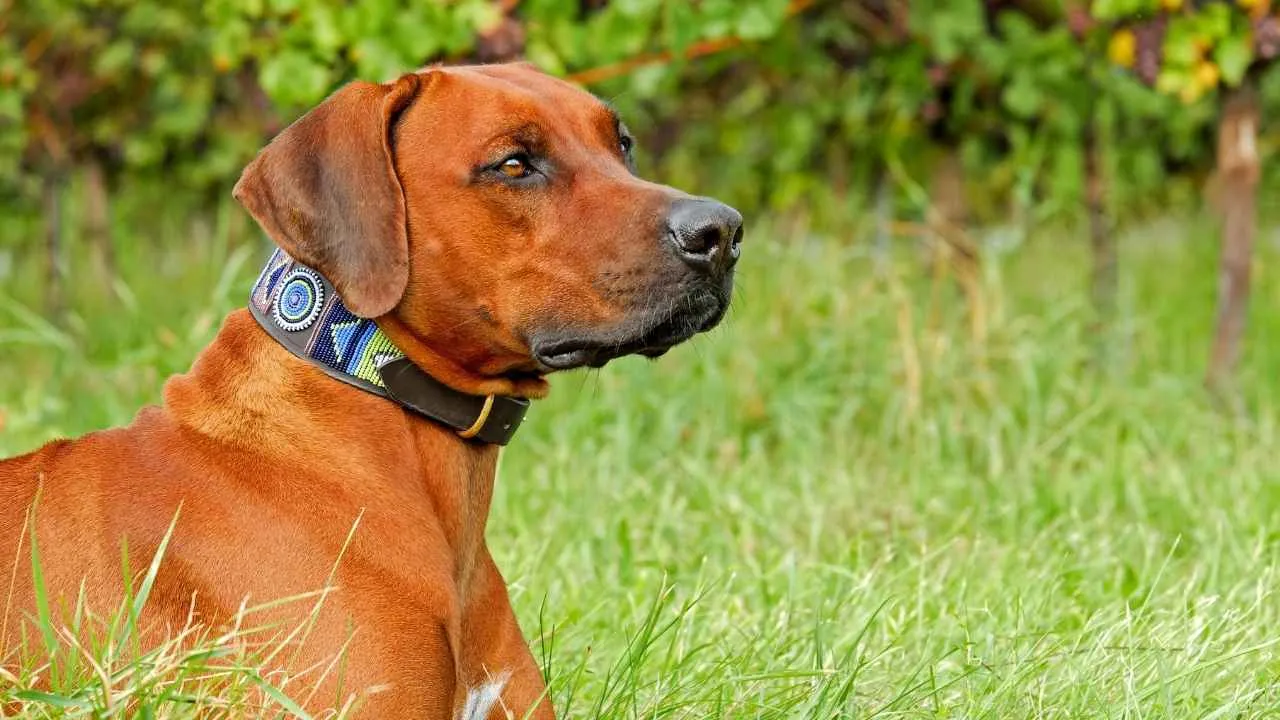
Rhodesian Ridgebacks are powerful, intelligent dogs known for their courage, loyalty, and natural guarding instincts. Originally developed in southern Africa, they were used for hunting and tracking lions.
According to Omlet, their distinctive feature is a ridge of hair along their backs that grows in the opposite direction to the rest of their coat. Today, they are valued as both family companions and alert watchdogs.
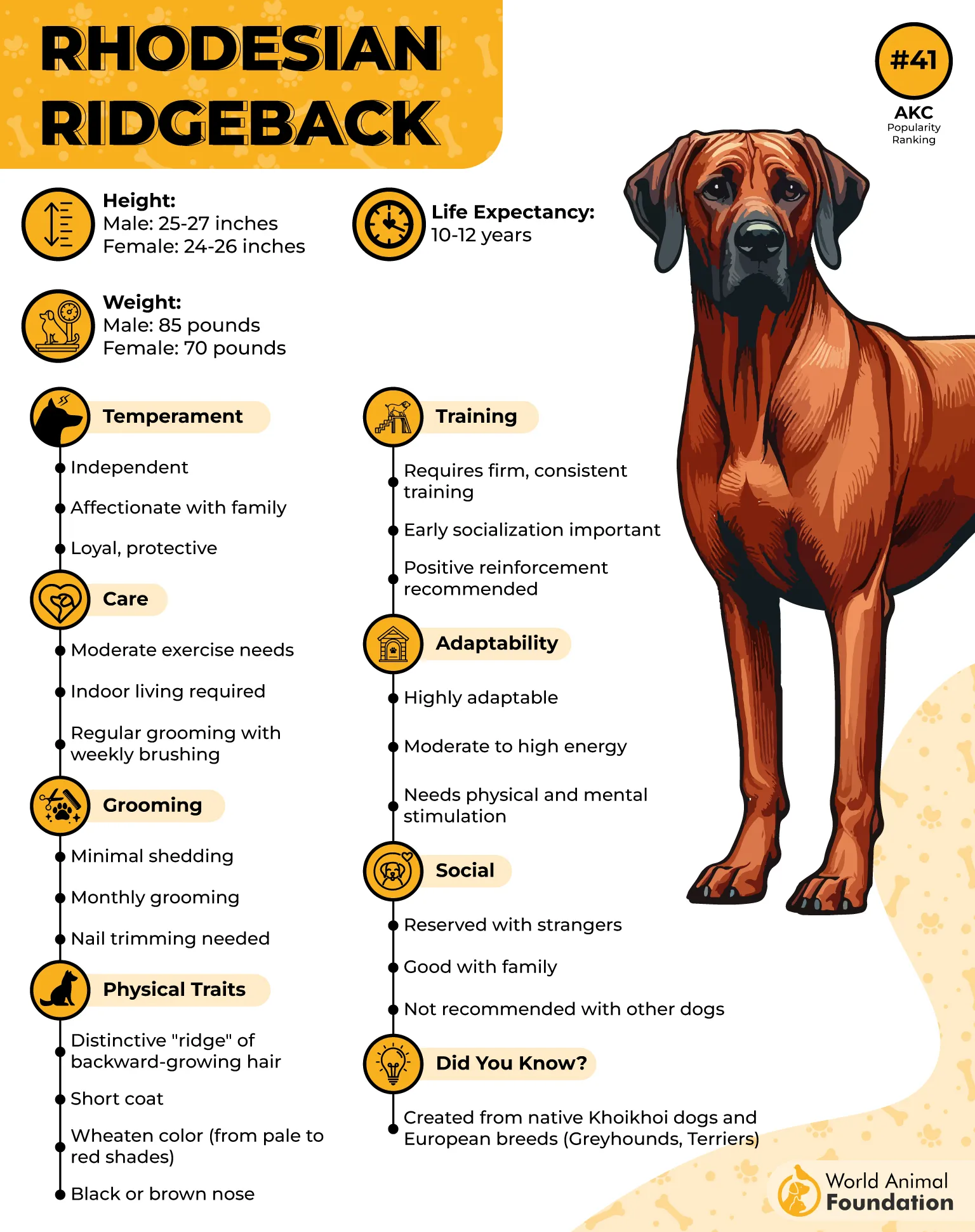
Despite their athletic build, Rhodesian Ridgebacks can be calm and affectionate with people they trust. They are usually reserved around strangers and may bark to warn their owners when something seems wrong. Their strong prey drive means they need careful supervision around smaller animals.
They can also be good with children, but their energy and powerful tails may accidentally knock over younger kids. These dogs are best suited to experienced owners who can provide proper training and plenty of activity.
Care and Training Needs
Coat care: Their short, glossy coats shed lightly and require minimal grooming.
Exercise: They need plenty of daily activity and enjoy running, jogging, hiking, and other outdoor adventures. Older dogs may become calmer.
Training: Early socialization and firm, consistent, reward-based training help manage their independent nature.
Conclusion
Gentle guard dog breeds offer a balance of loyalty, companionship, and protection without always requiring complicated grooming routines or intense daily exercise. Each brings different qualities to a home. The right breed depends on your living space, experience, and the time you can give your dog.
Before choosing a breed, consider its exercise needs, training requirements, temperament, and size. Even low-maintenance breeds need proper socialization, consistent guidance, and daily care to thrive.
With the right match, you can welcome a loving companion who makes your family feel safer while bringing plenty of affection into everyday life.
