





Minimalist living is all about making thoughtful choices, maximizing available space, and keeping everyday routines manageable. For dog lovers, finding a breed that fits this lifestyle means considering size, activity levels, grooming requirements, and temperament. The right companion can bring plenty of affection without making a small home feel overcrowded.
However, living minimally does not mean compromising a dog’s comfort or well-being. Every breed needs daily attention, suitable exercise, mental stimulation, and regular veterinary care. Factors such as barking, shedding, and tolerance for being alone also deserve consideration when choosing a dog for an apartment or compact household.
From sociable little companions to surprisingly relaxed athletes, these seven breeds offer different advantages for minimalist homes. Understanding their individual characteristics can help prospective owners find a dog that complements their space and daily routine.
Fantastic Dog Breeds for Minimalist Living
1. French Bulldog
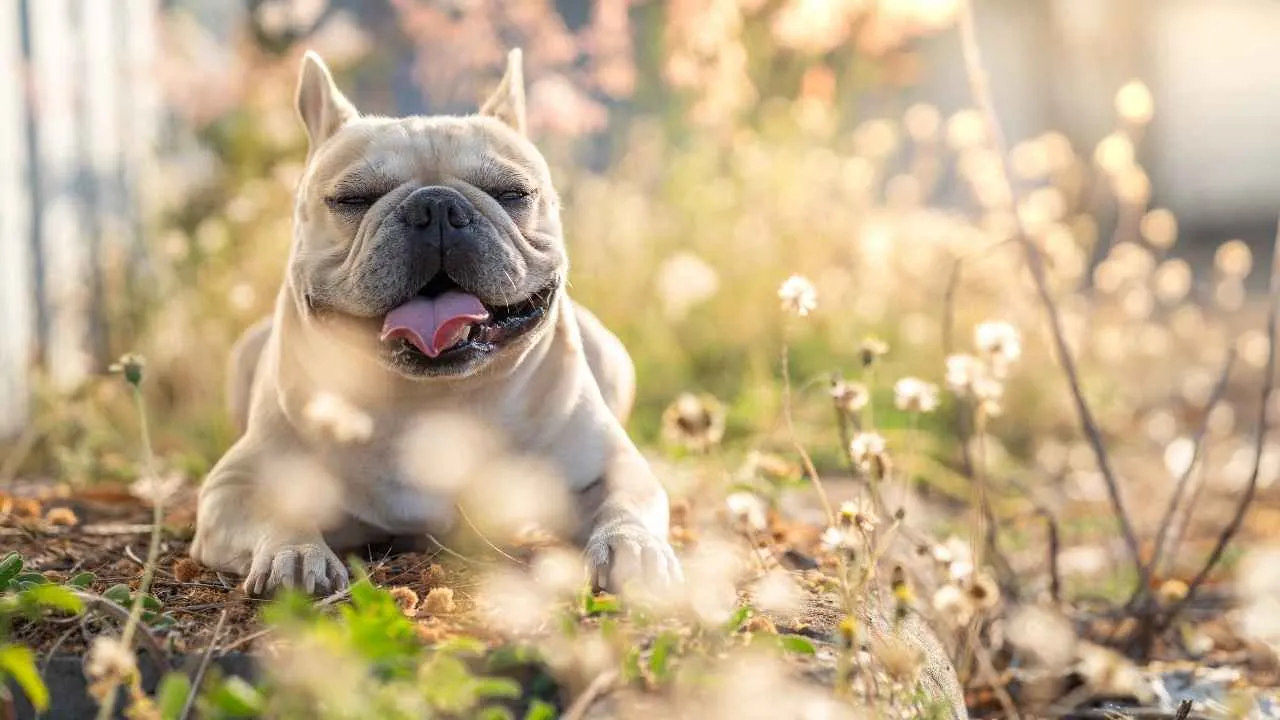
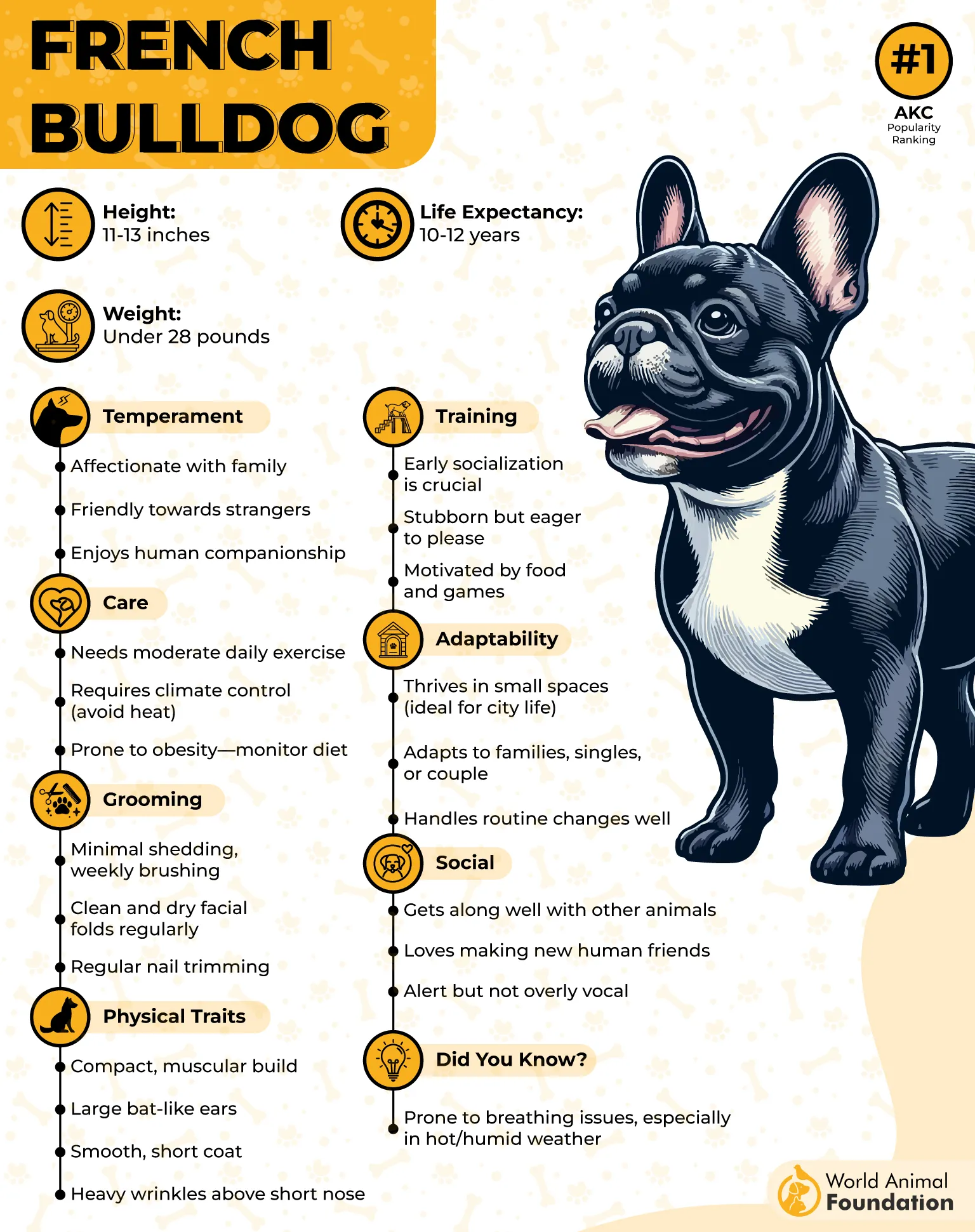
The French Bulldog has become a popular companion for urban residents thanks to its compact build, playful personality, and preference for spending time with its family. Originally developed as a companion breed, it generally adapts well to apartment living and does not require extensive outdoor exercise, as per Britannica.
Simple Grooming With Important Health Considerations
The French Bulldog’s short coat is easy to maintain with weekly brushing, while its facial folds need gentle cleaning and thorough drying. Regular dental care, nail trimming, and ear checks should also be part of its routine. Because its shortened muzzle can cause breathing difficulties, owners must watch for respiratory distress and overheating.
A Compact Companion for City Living
French Bulldogs often enjoy short walks, indoor play, and lounging beside their owners after a busy day. Their modest exercise requirements can suit people with limited outdoor space, although daily movement remains essential for maintaining a healthy weight.
Hot and humid weather can be dangerous because of their breathing limitations. A cool indoor environment and carefully planned activity make apartment life more comfortable for these little companions.
2. Boston Terrier
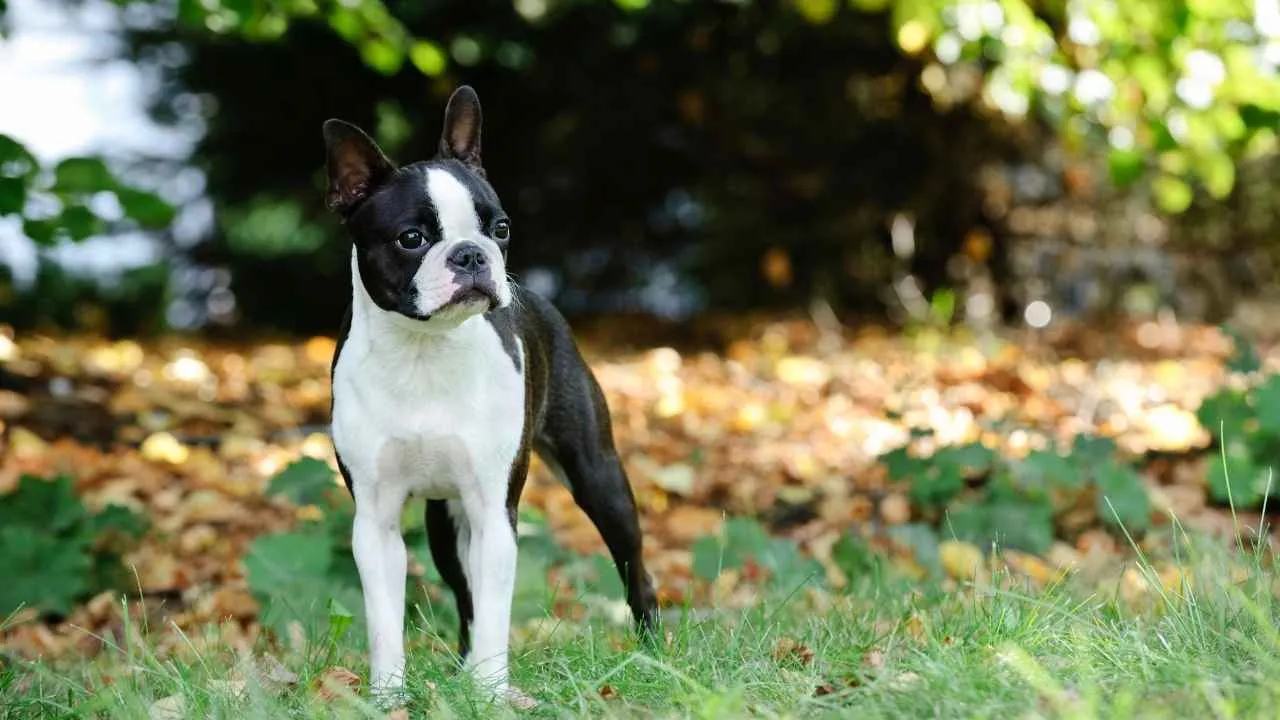
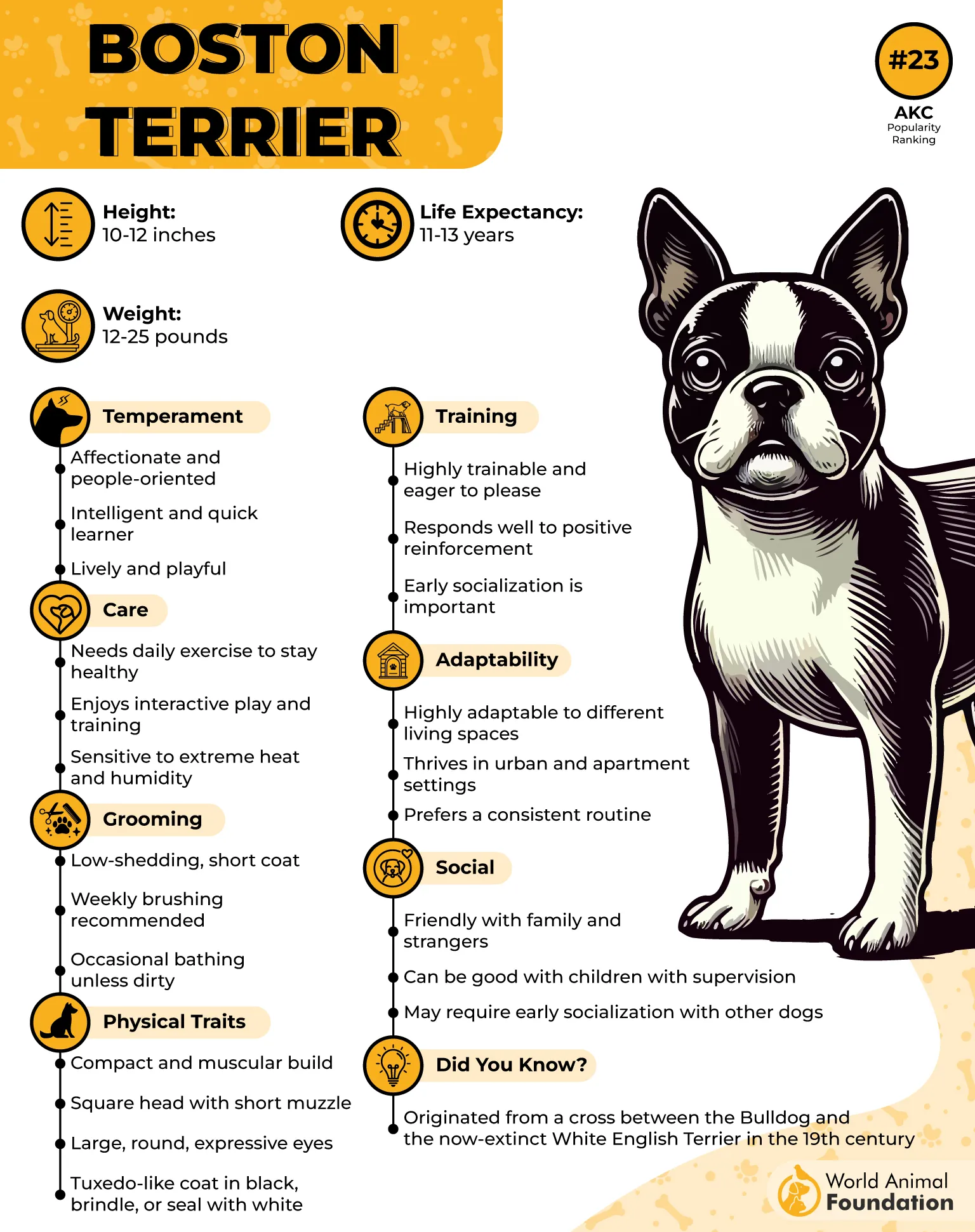
The Boston Terrier is a lively, intelligent dog with a tuxedo-like coat and an enthusiastic personality. Developed in the United States, it combines a compact frame with a sociable nature that often makes it well suited to city households.
Boston Terriers enjoy participating in family activities and learning simple tricks. Their manageable size and adaptable temperament appeal to owners who want a companion with personality but without a large physical footprint.
A Low-Maintenance Coat for Busy Owners
The Boston Terrier’s smooth coat requires only occasional brushing to remove loose hair. Its eyes deserve particular attention because the breed’s prominent eye structure can leave them vulnerable to irritation and injury.
Like other short-muzzled breeds, Boston Terriers may experience breathing difficulties or heat intolerance, so strenuous exercise in warm conditions should be avoided.
Playful Energy Without Taking Over Your Space
Boston Terriers bring a cheerful spark to smaller homes, often enjoying interactive toys, short walks, and brief training sessions. Their enthusiasm makes them more active than some apartment-friendly breeds, but their compact bodies make indoor games practical.
Consistent training can help manage excitement and encourage good manners in shared buildings. They still need daily activity and companionship rather than being left alone for long stretches.
3. Chihuahua

The Chihuahua is one of the world’s smallest dog breeds, making it a practical option for people living in studios, apartments, or other compact spaces. Originating in Mexico, this tiny dog often forms a close bond with its chosen people and can be surprisingly confident despite its size.
Chihuahuas come in smooth-coated and long-coated varieties, offering different grooming commitments. Their small stature makes everyday transportation and home arrangements relatively straightforward.
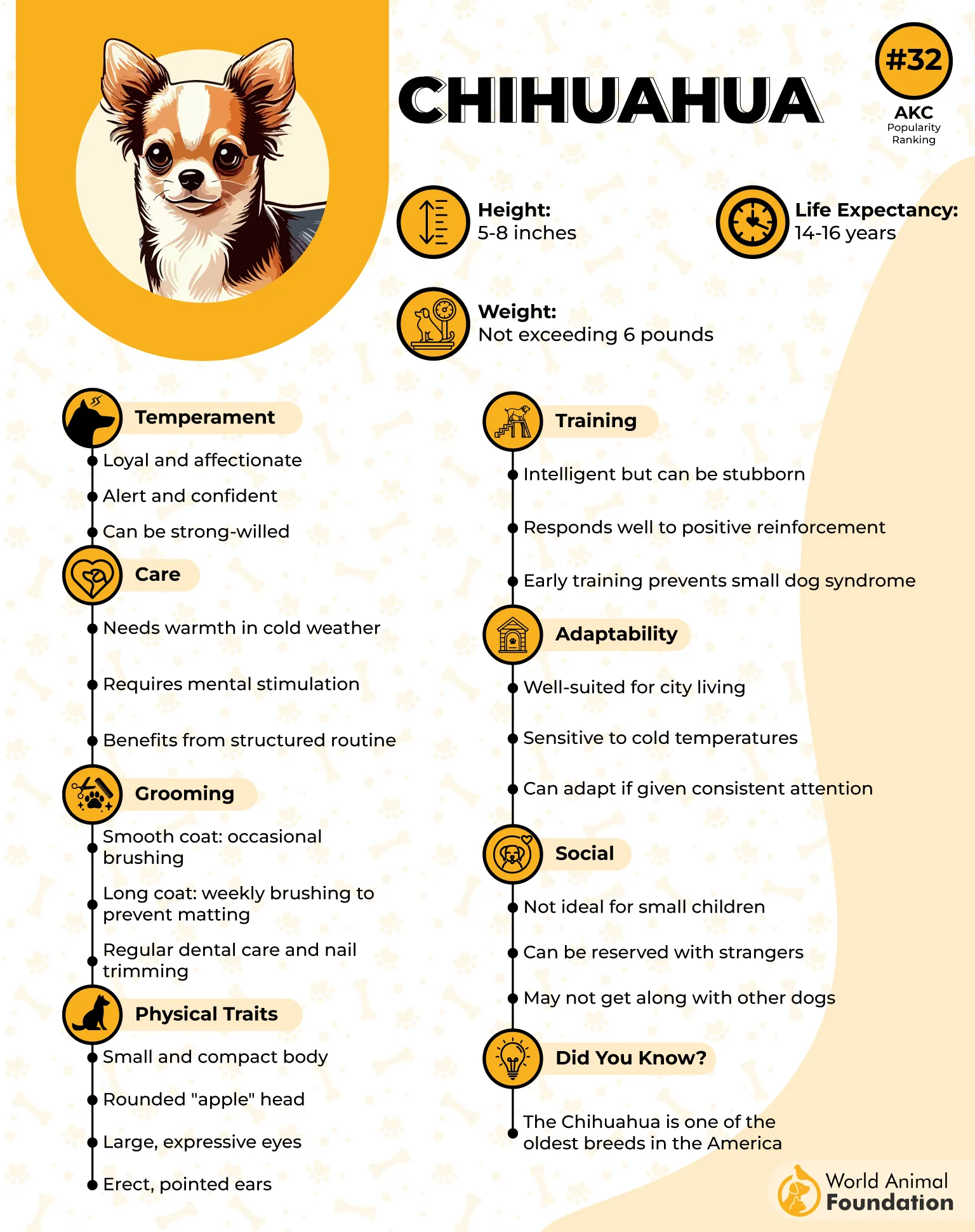
Choosing Between Two Coat Types
Smooth-coated Chihuahuas generally need only occasional brushing, while long-coated individuals benefit from more frequent grooming to prevent tangles. Their small mouths can be susceptible to crowded teeth and periodontal disease, so regular tooth brushing is especially important.
Owners should also protect them from cold weather and arrange routine veterinary examinations. Careful handling is necessary because their delicate bodies can be injured by falls or rough play.
Big Personality in a Tiny Living Space
A Chihuahua can enjoy apartment life without needing a dedicated outdoor area, provided it receives regular walks, playtime, and mental enrichment. Its alert nature may lead to barking at unfamiliar sounds, making early socialization and positive training valuable in shared buildings.
Warm bedding and safe resting spots help the dog feel comfortable. Despite its size, this breed needs consistent attention and should not be treated like a toy or accessory.
4. Pug
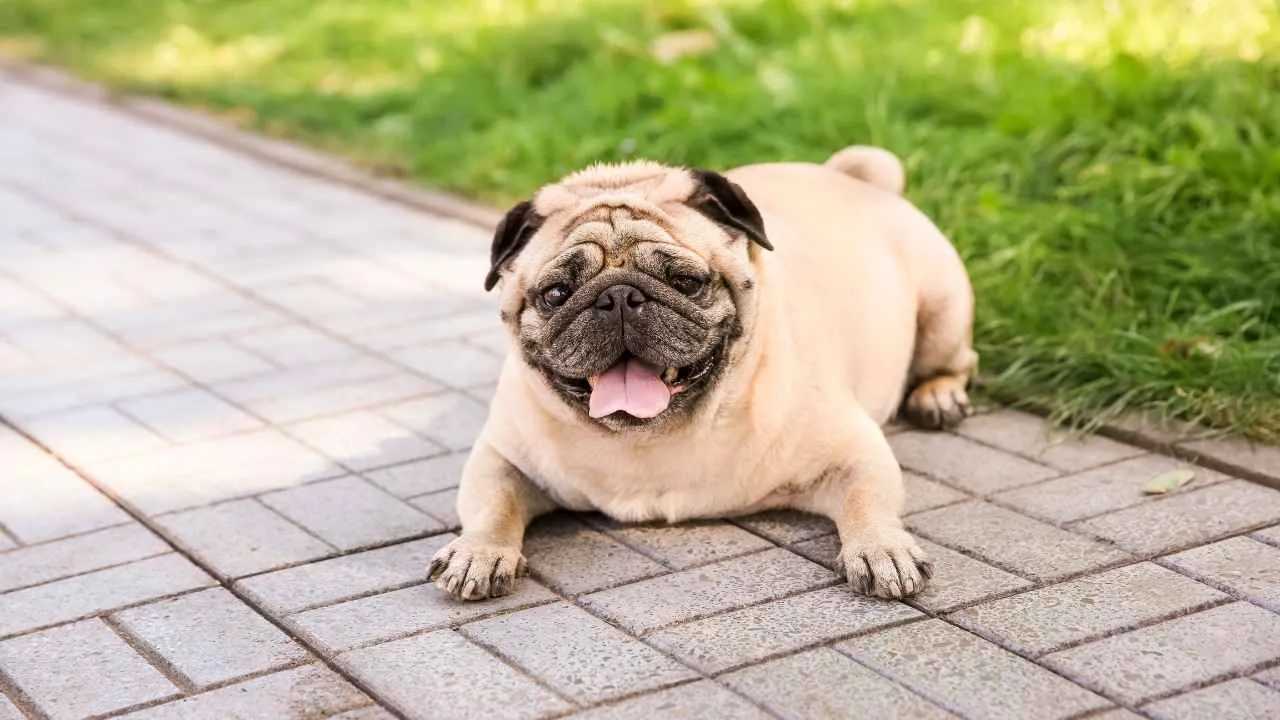
The Pug is known for its round eyes, wrinkled forehead, and affectionate personality. Historically treasured as a companion dog, it often prefers being close to its family rather than spending hours entertaining itself outdoors, as per PetMD.
Its small, sturdy body can fit comfortably into many homes, and its sociable temperament may appeal to first-time owners. Pugs do shed more than their short coat might suggest, so their grooming needs should not be underestimated.
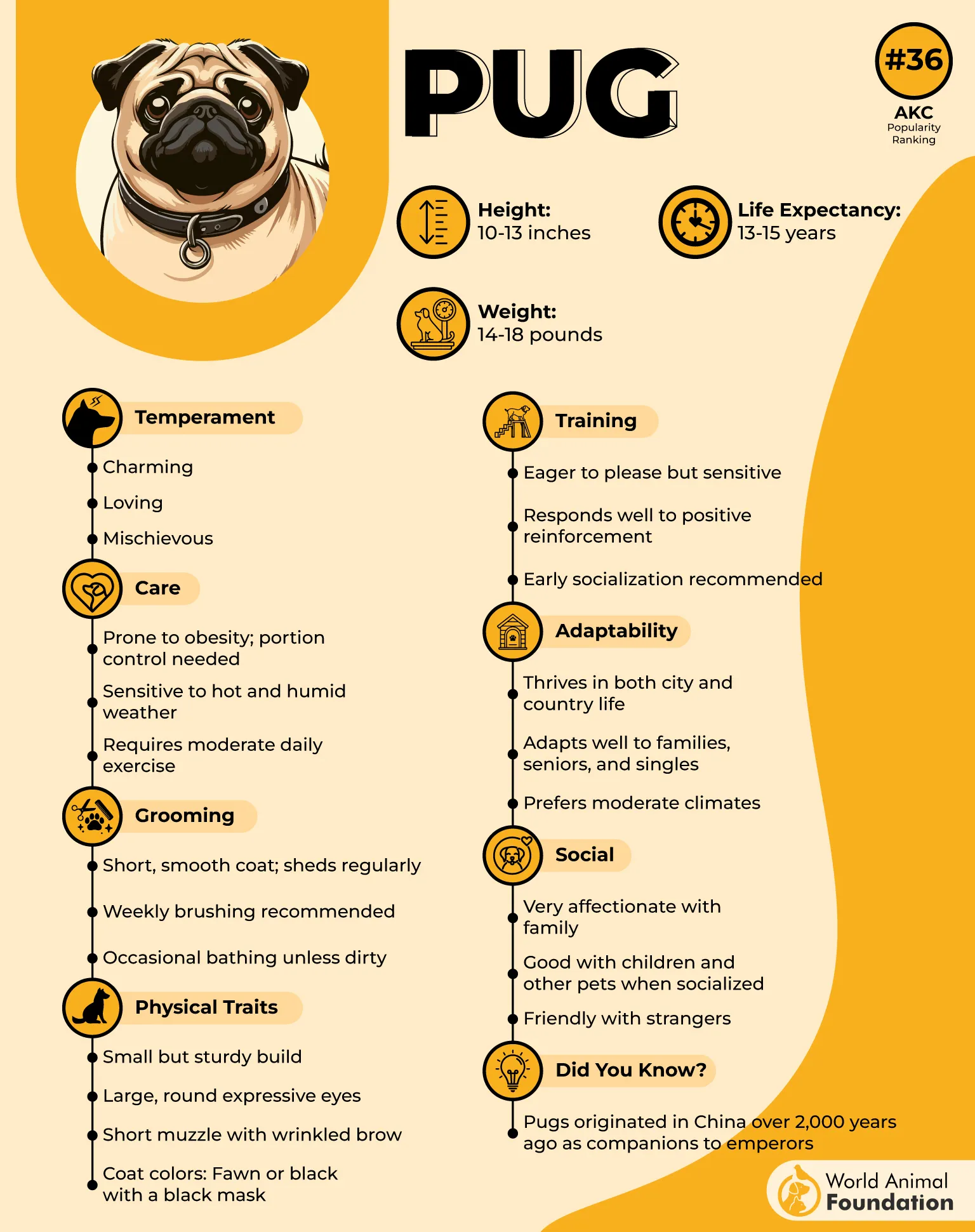
Managing Shedding, Facial Folds, and Weight
A Pug’s short double coat benefits from regular brushing because loose hair can accumulate around the home. Facial wrinkles should be cleaned gently and dried thoroughly to reduce the risk of skin irritation.
Maintaining a healthy weight is especially important because extra pounds can worsen breathing difficulties. Regular veterinary checks are also necessary to monitor eye health, skin problems, and other concerns associated with the breed’s flat face.
A Snuggle-Focused Dog for a Relaxed Home
Pugs are often happiest joining their owners for quiet evenings, short neighborhood walks, and gentle indoor play. Their affectionate nature can suit people who spend plenty of time at home and want a companion that enjoys close contact.
However, their short muzzles make heat and humidity particularly hazardous. Moderate exercise, portion-controlled meals, and access to a cool resting area help them remain comfortable in a compact home.
5. Cavalier King Charles Spaniel
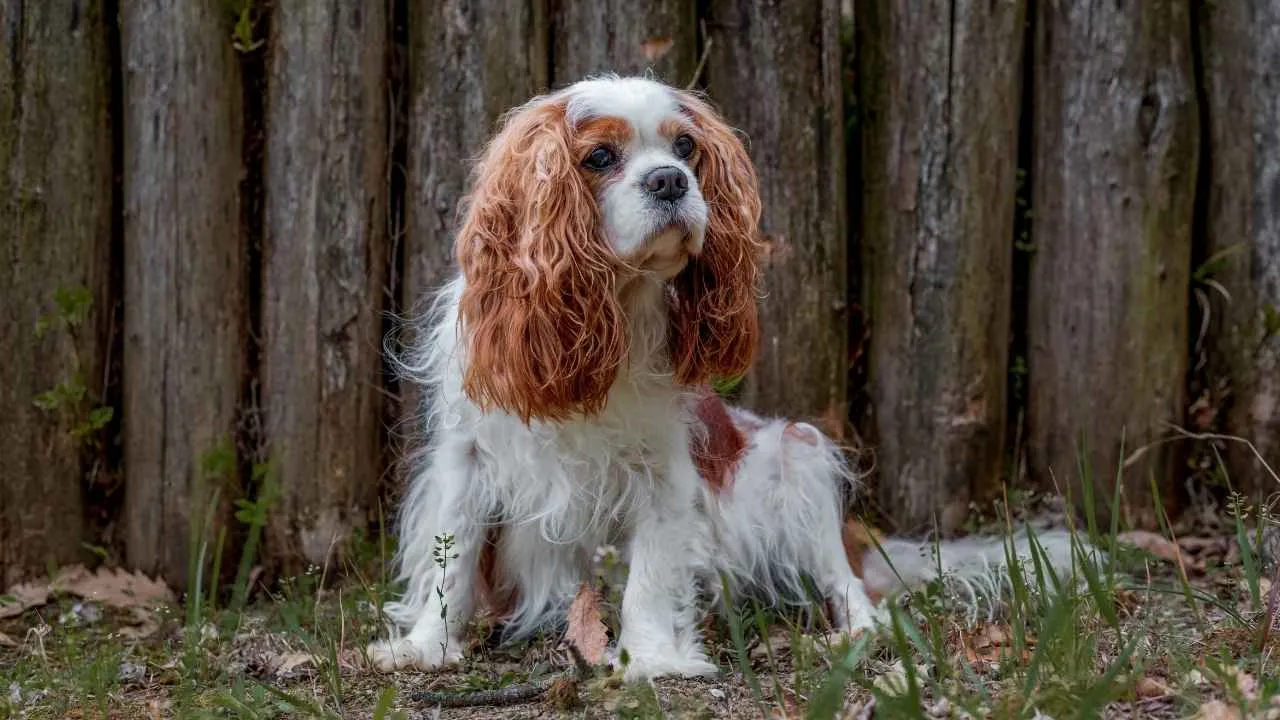
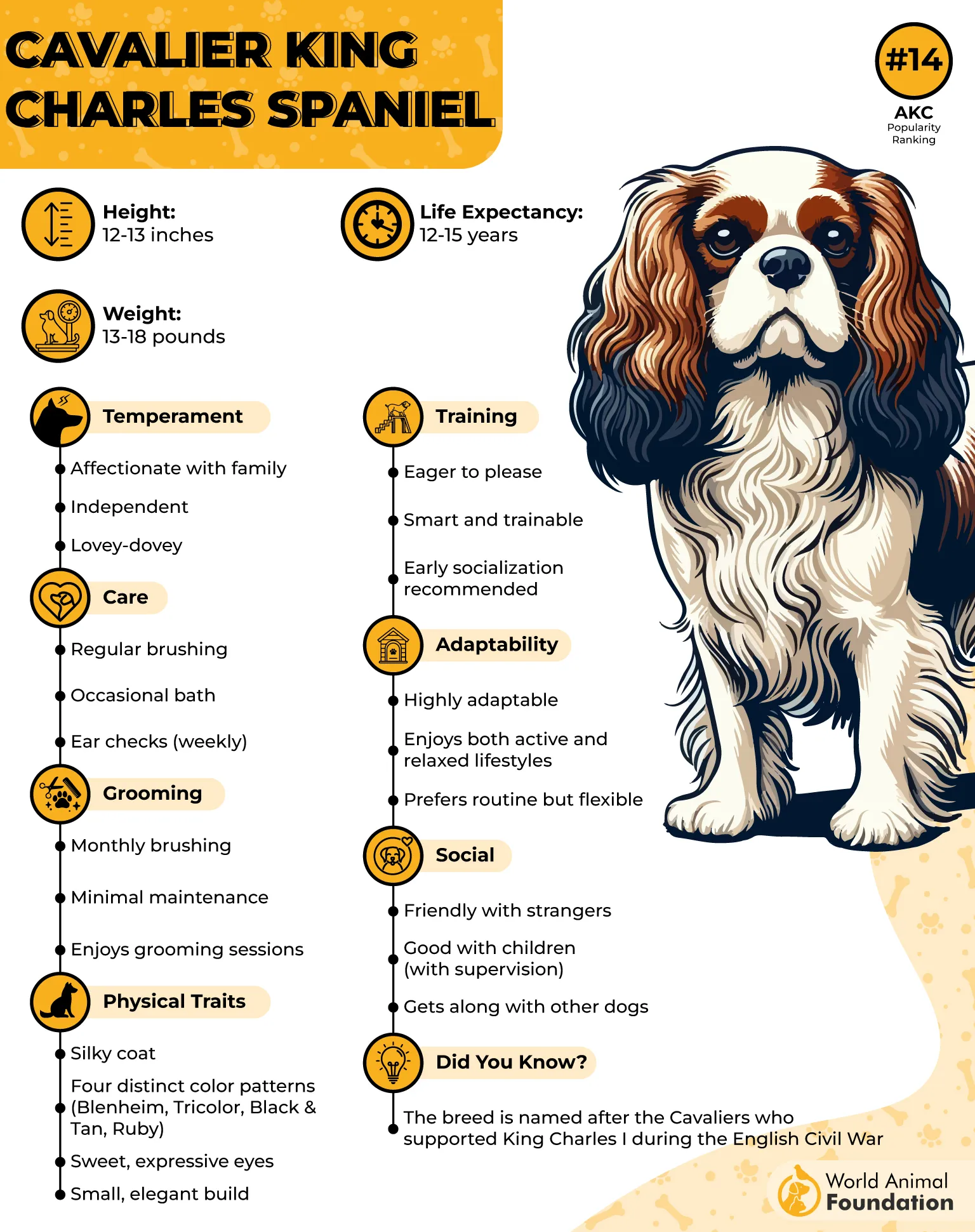
The Cavalier King Charles Spaniel brings a gentle, affectionate presence to homes of many sizes. Bred primarily for companionship, it usually enjoys being included in everyday activities, whether that means relaxing on the sofa or accompanying its owner on a neighborhood walk.
Its small frame makes it manageable in apartments, while its friendly disposition can suit families and individuals alike.
Keeping Feathered Fur Neat and Healthy
The Cavalier’s silky coat has longer feathering around the ears, legs, and tail, so brushing several times a week helps prevent tangles. Its ears need regular inspection, and dental care should begin early.
The breed is predisposed to mitral valve disease and syringomyelia, making responsible breeding and veterinary screening particularly important. Routine checkups can help identify health problems before they significantly affect quality of life.
An Affectionate Roommate for Smaller Homes
Cavaliers often settle comfortably into apartment routines because they enjoy companionship and can adapt to moderate daily exercise. A walk, a little indoor play, and time beside their favorite person can provide a satisfying day.
Their sociable nature means prolonged isolation may be difficult, so prospective owners should consider their daily schedules. With attention and enrichment, these affectionate dogs can bring warmth to even a modest living space.
6. Dachshund

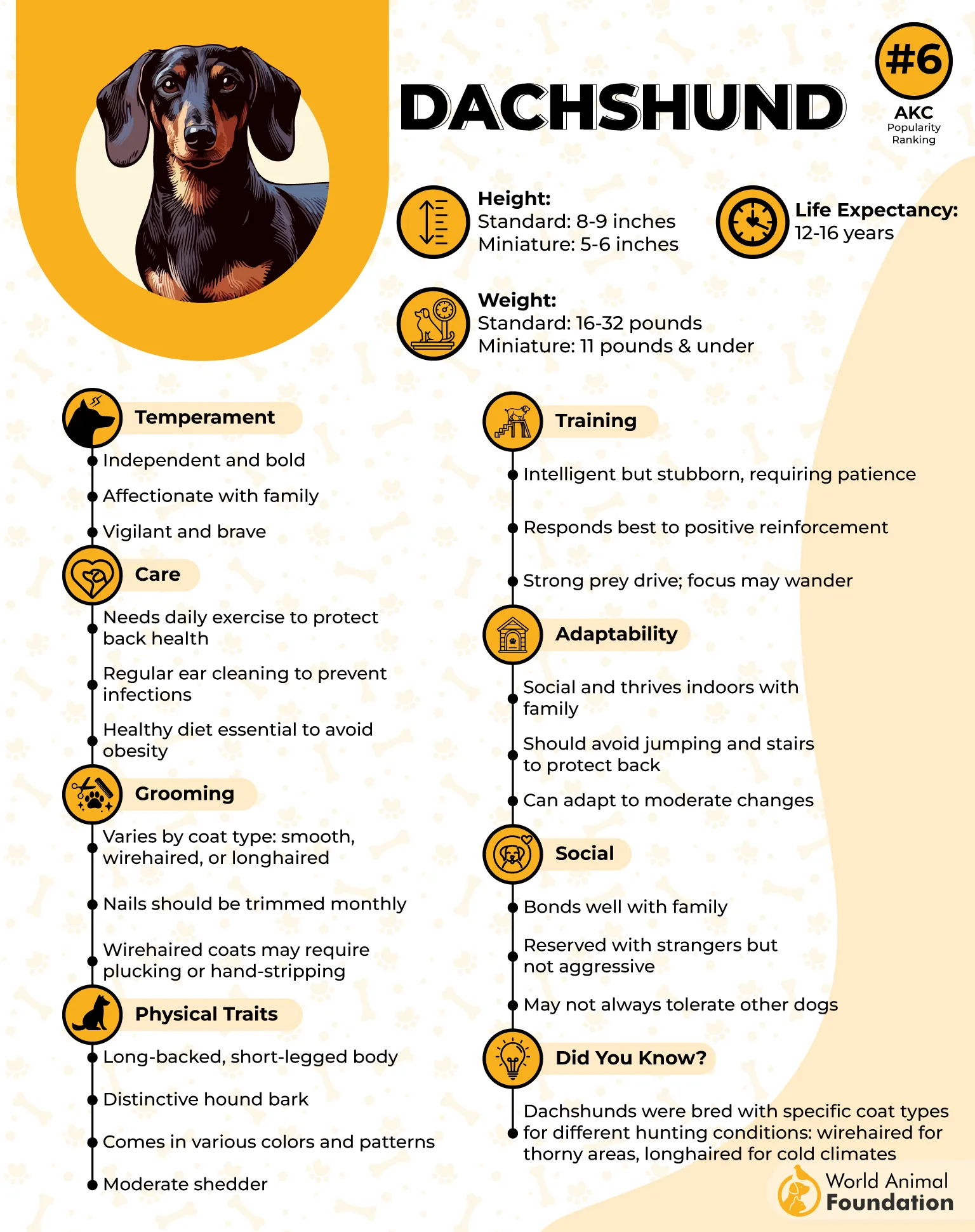
The Dachshund’s long body, short legs, and curious personality make it one of the most distinctive small breeds. Originally developed in Germany to hunt animals in burrows, it retains a strong instinct to investigate scents and explore its surroundings, as per Purina.
Dachshunds come in different sizes and coat varieties, allowing some flexibility in grooming preferences. Although compact enough for smaller homes, they often have more energy and determination than their stature suggests.
Coat Care and Protecting a Long Back
Smooth-coated Dachshunds require relatively little grooming, while longhaired varieties need regular brushing and wirehaired individuals benefit from more specialized coat maintenance. Their elongated backs make spinal health a major consideration, particularly the risk of intervertebral disc disease.
Owners should discourage repeated jumping from furniture and use ramps where practical. Maintaining a healthy weight and seeking veterinary advice about safe exercise can help protect their backs.
A Small-Space Explorer With a Curious Mind
Dachshunds can adapt well to apartments, but their hunting heritage means they need more than a comfortable bed. Daily walks, scent games, and puzzle toys help satisfy their curiosity and reduce boredom.
They may bark at unfamiliar noises, so patient training is useful when living close to neighbors. Secure outdoor areas are important because an interesting smell can quickly distract them from their handler.
7. Greyhound

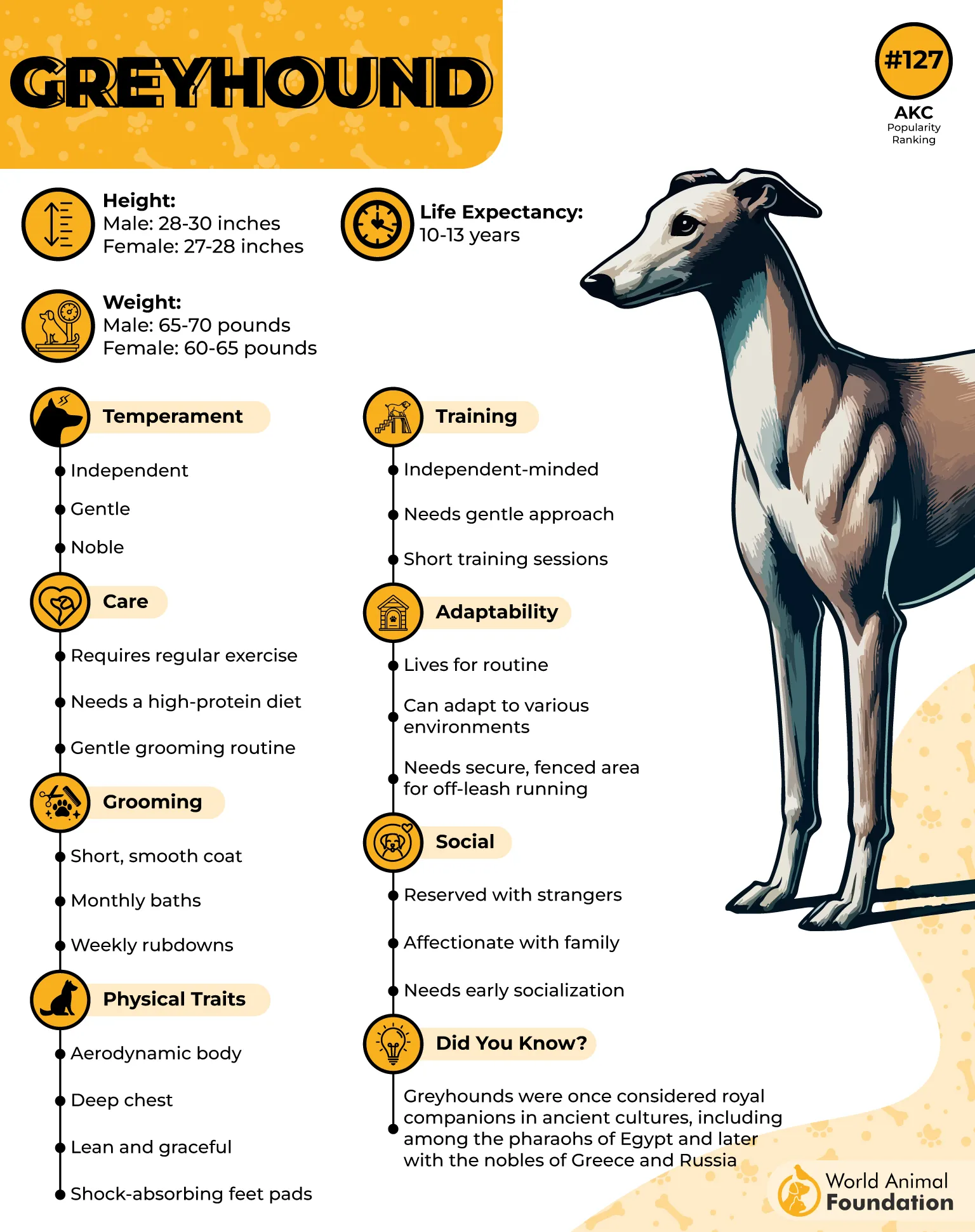
Although Greyhounds are famous for their racing speed, many are remarkably relaxed when indoors. Their tall, slender bodies take up more physical space than those of smaller apartment dogs, but their quiet habits and appreciation for comfortable resting places can make them suitable for the right compact home. Originally bred for sight-based hunting, they are built for short bursts of speed rather than continuous activity.
Minimal Grooming for a Fine-Coated Athlete
The Greyhound’s short, fine coat needs only occasional brushing, making its grooming routine relatively straightforward. Its thin skin and limited body fat can leave it vulnerable to cold temperatures, so a warm coat may be useful during chilly walks.
Dental disease is another concern, and regular tooth brushing is recommended. Soft bedding helps protect its prominent joints and bones while providing a comfortable place to rest.
A Quiet Indoor Athlete With Room to Stretch
Greyhounds often spend much of the day resting after their daily walks and opportunities to run safely. This makes them appealing to owners who prefer a peaceful indoor environment rather than constant activity.
However, these fast dogs need access to secure areas for occasional running, and their prey drive means off-leash freedom in unsecured spaces is risky. Their height and long legs also mean the home should offer enough room to move comfortably.
Conclusion
French Bulldogs, Boston Terriers, Chihuahuas, Pugs, Cavalier King Charles Spaniels, Dachshunds, and Greyhounds each offer different advantages for minimalist living. Some require little grooming, others thrive on close companionship, and certain breeds are particularly content with a relaxed indoor routine. Choosing between them depends on the space available, daily schedule, and the dog’s individual temperament.
A compact home can provide a wonderful environment for a dog, but small size does not automatically mean low maintenance. Breathing difficulties, spinal concerns, dental problems, grooming demands, and exercise requirements vary considerably across these breeds. Prospective owners should evaluate these needs alongside housing restrictions and their ability to provide daily companionship.
With thoughtful planning, suitable enrichment, and consistent care, minimalist living and responsible dog ownership can work beautifully together. The best companion is one whose needs fit your lifestyle while still allowing it to enjoy a healthy, comfortable, and fulfilling life.
