




Run your hand down a dog’s back and tell us what you feel.
Silk? Wool? Something that crunches a little? Or, in one very famous case, a bunch of heavy ropes that look like a mop took a wrong turn?
That’s one of our favorite things about the dog world. No two coats are the same. A dog’s coat type is not merely about looks. It decides how much you will brush, how much you will vacuum, how your pup handles cold weather, and if your sneezy grandma can visit without tissues.
These exceptional dog breeds and their distinct coat textures prove that fur comes in about a thousand types. Some are soft hair you can bury your face in, or crisp curls or long, dramatic, runway-ready coats. And yes, every one of them comes with its own set of grooming needs, so stick around for the real talk.
FAIR WARNING! A gorgeous coat is a commitment. Not a scary one. Just a “better buy a good brush” kind of commitment.
Exceptional Dog Breeds and Their Distinct Coat Textures
1. Komondor
We have to start with the showstopper.
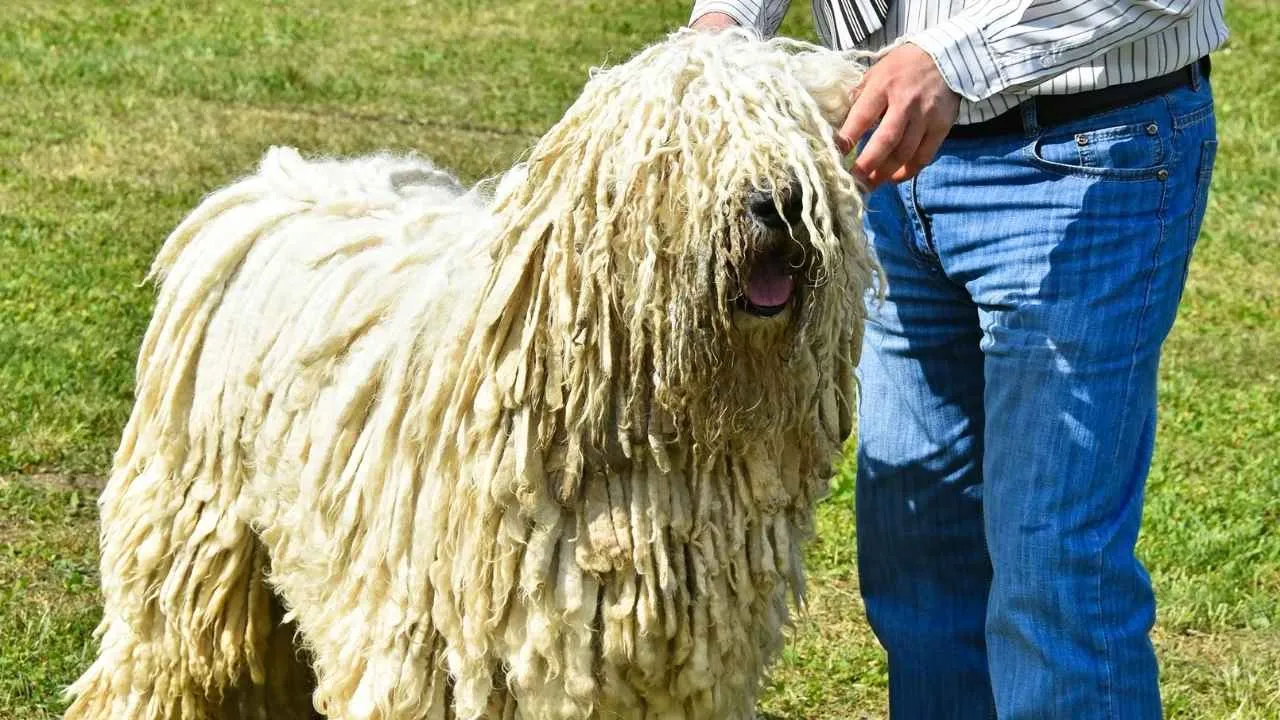
The Komondor is instantly recognizable. You can picture a white shag rug that walks and got a job guarding sheep. Because that’s basically it.
According to Omlet, Komondors were originally bred in Hungary to protect flocks, and that thick corded coat helped them blend right in with the sheep. Wolves had a hard time figuring out who was who. Clever, huh?
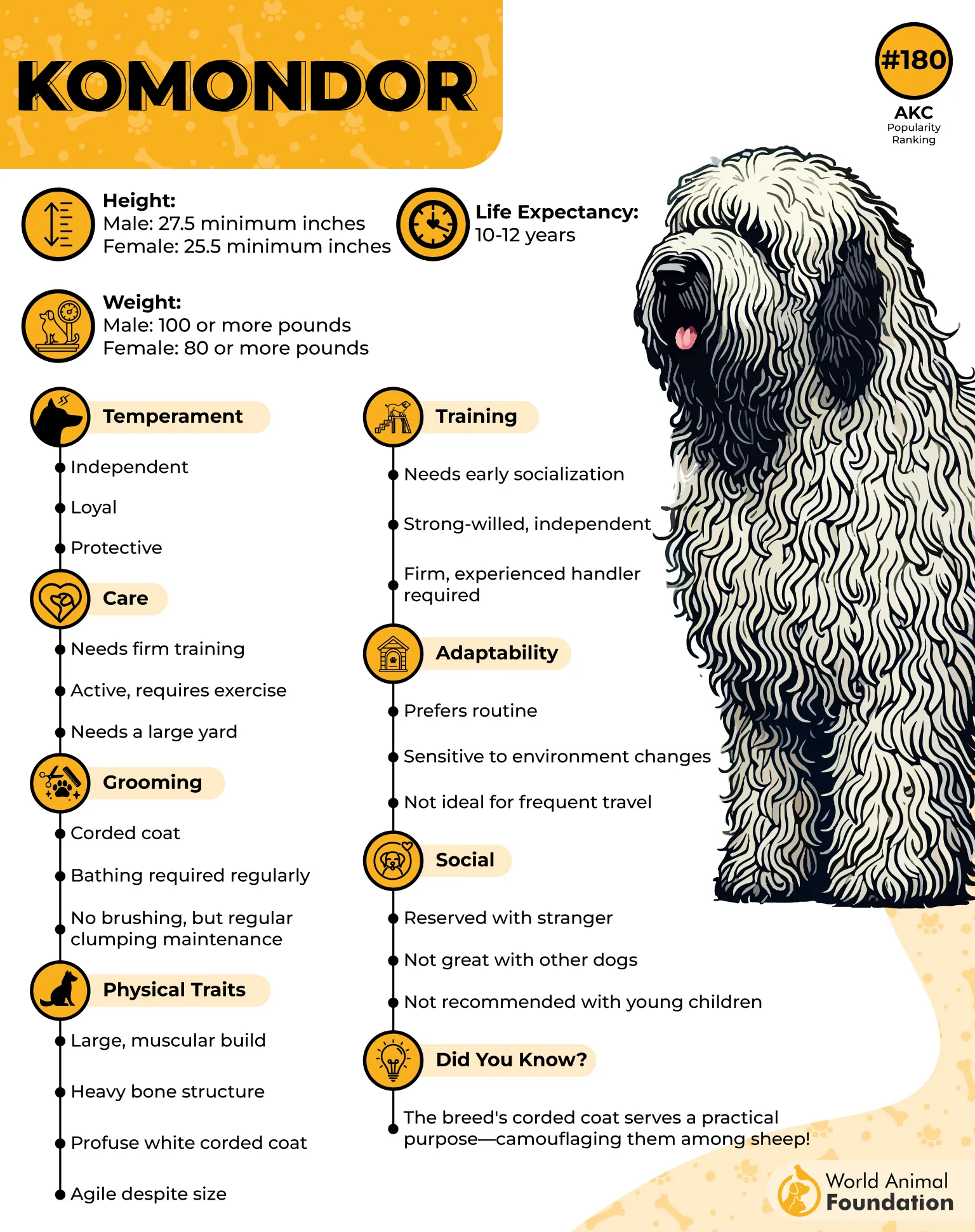
Now let’s talk about that rough coat.
The cords don’t brush out. You have to separate them by hand as they grow so they don’t turn into a big felted mat. Bathing takes forever, and drying takes even longer. A wet Komondor can take a full day or more to dry. YEP!
These livestock guardians are calm, loyal, and serious about protecting their family. They are also independent thinkers, so early socialization and training are a must. They are not the first-time-owner kind of dog, but a magnificent one.
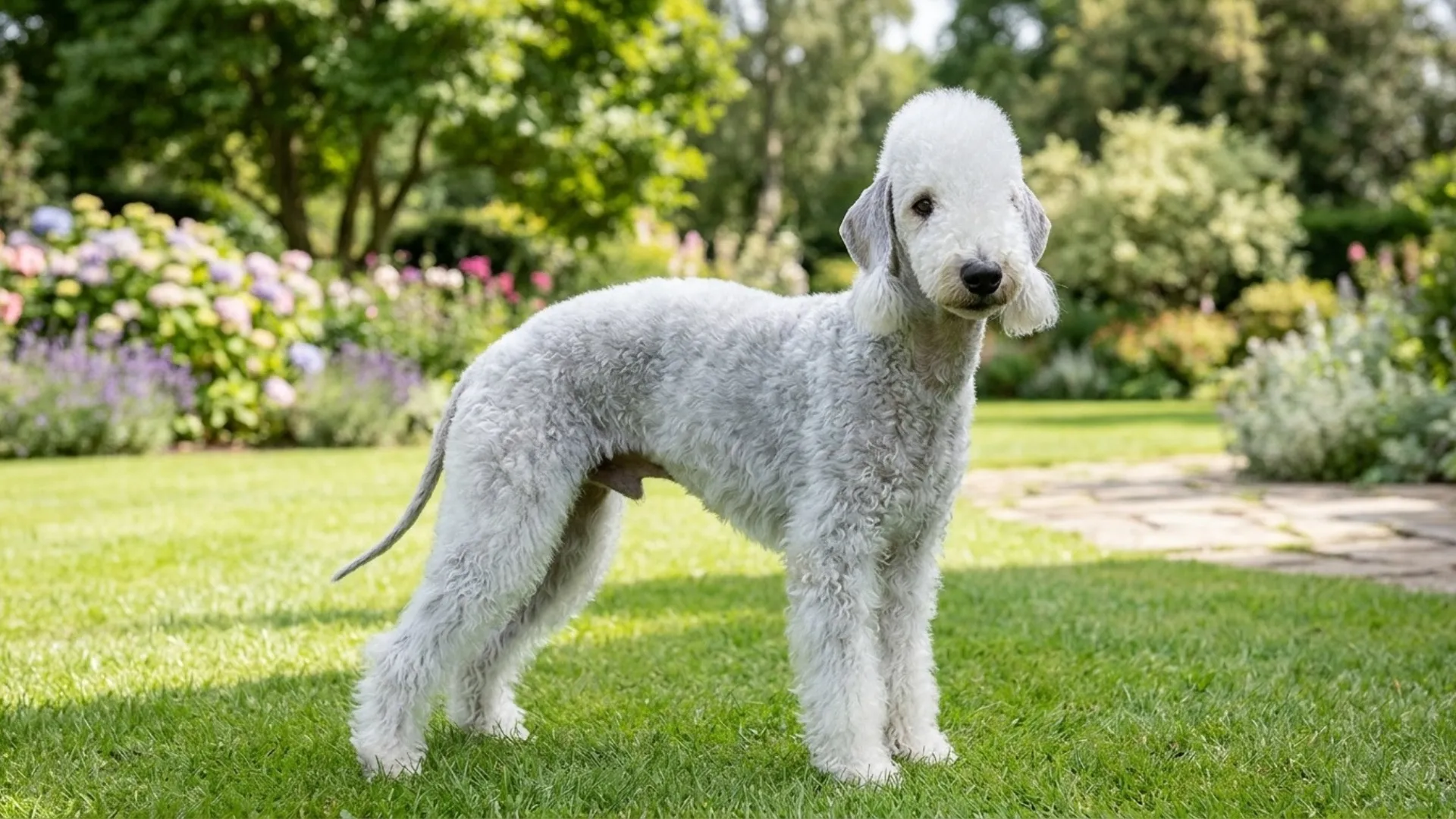
2. Bedlington Terrier

WAIT, is that a lamb?
Nope! It’s a Terrier wearing a lamb costume. Or at least that’s what it looks like.
The Bedlington Terrier has a soft, crispy, curly coat in a fluffy, topknot-style swoop over the head. Pair that with a rounded face and a gentle expression, and you have a dog who looks sweet as pie.
But underneath, this is a Terrier. Bedlington Terriers were bred in England to chase vermin, so they are quick, brave, and sometimes a little stubborn. They love a good run and do best with vigorous exercise and daily play.
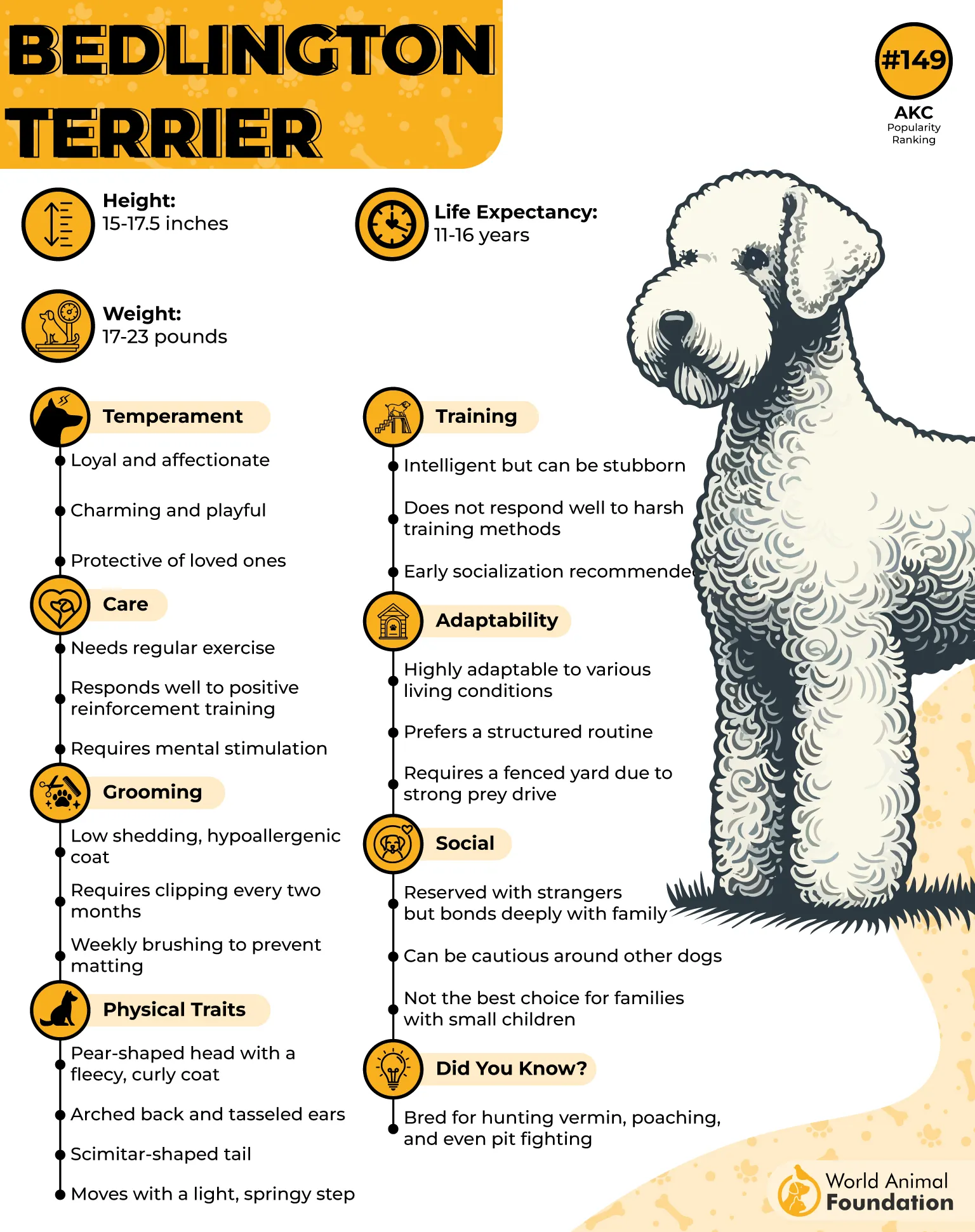
Let us tell you a perk of having a Bedlington Terrier. They shed very little (essentially, a hypoallergenic dog), which makes them a popular pick for allergy sufferers.
No dog is truly allergy-proof, so spend time with one before you commit. The coat does need regular trims and brushing to avoid tangles, though. It is a salon-appointment kind of dog.
3. Lhasa Apso
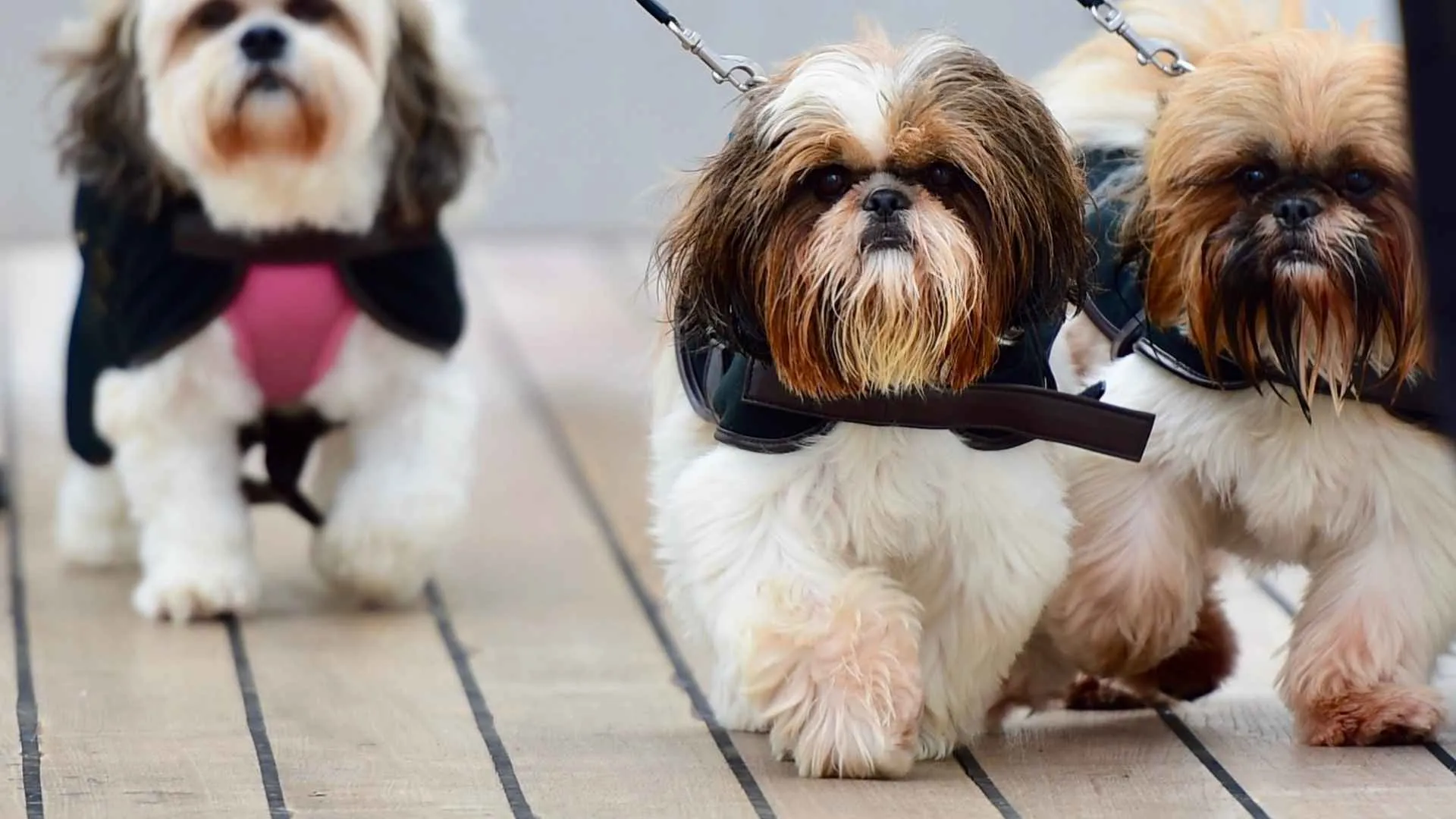
Small body, enormous hair and even bigger attitude.
The Lhasa Apso is what happens when a dog decides it’s the household’s CEO.
Lhasa Apsos come from Tibet, where these Asian dogs kept watch inside monasteries and homes. That strong sense of noticing everything is still there. They are alert, a little aloof with strangers, and fiercely loyal to their people.
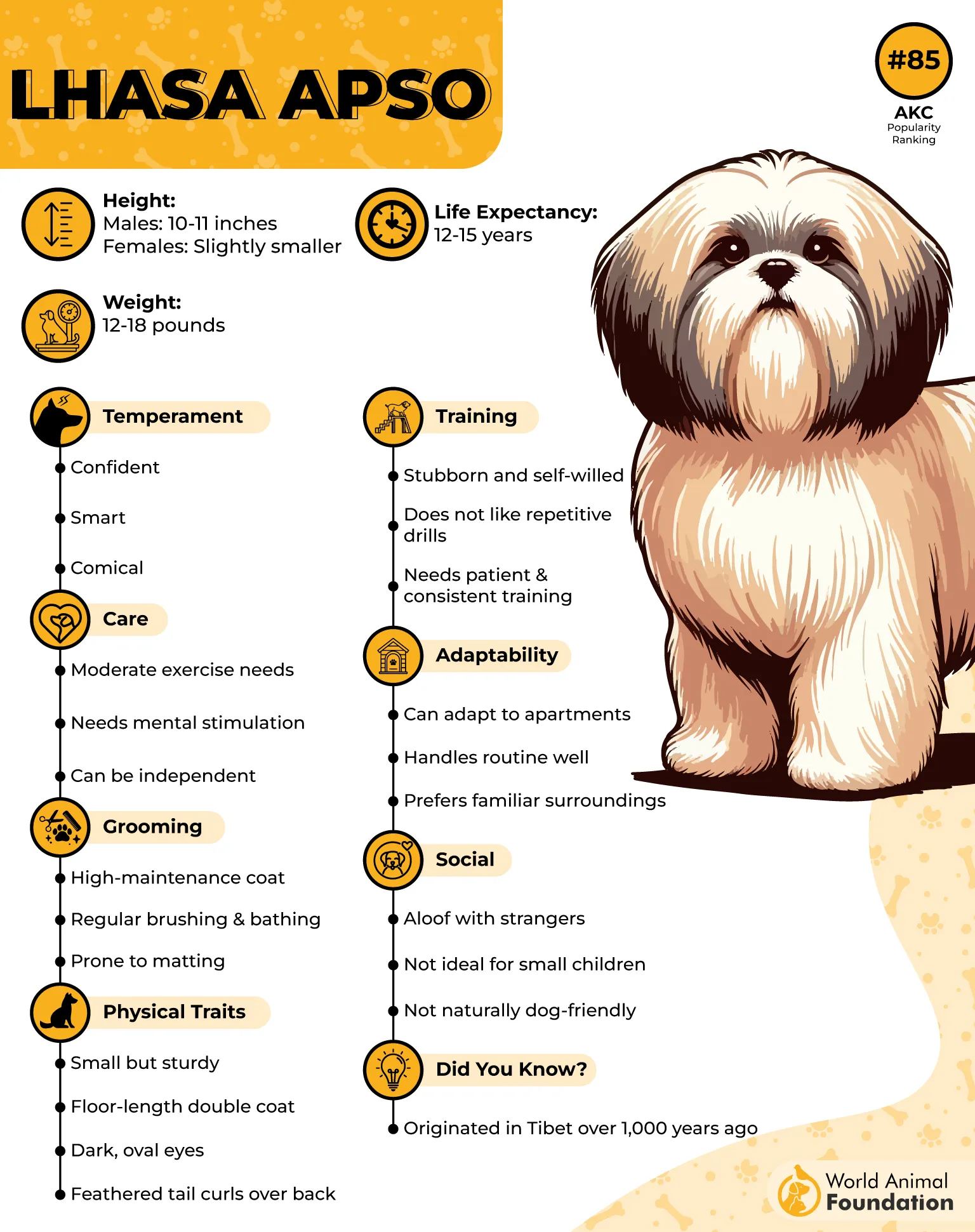
The coat is long, heavy, and straight, falling like a curtain over the eyes and down to the floor. It’s a dense double layer that needs frequent brushing and a mild dog shampoo to stay clean. Many owners opt for a shorter “puppy cut” to make life easier, and that’s totally fair.
Don’t skip the grooming, though. A neglected Lhasa Apso coat tangles quickly, and tangles hurt.
This is a tiny, dignified, and long-haired little gamekeeper.
4. Irish Setter
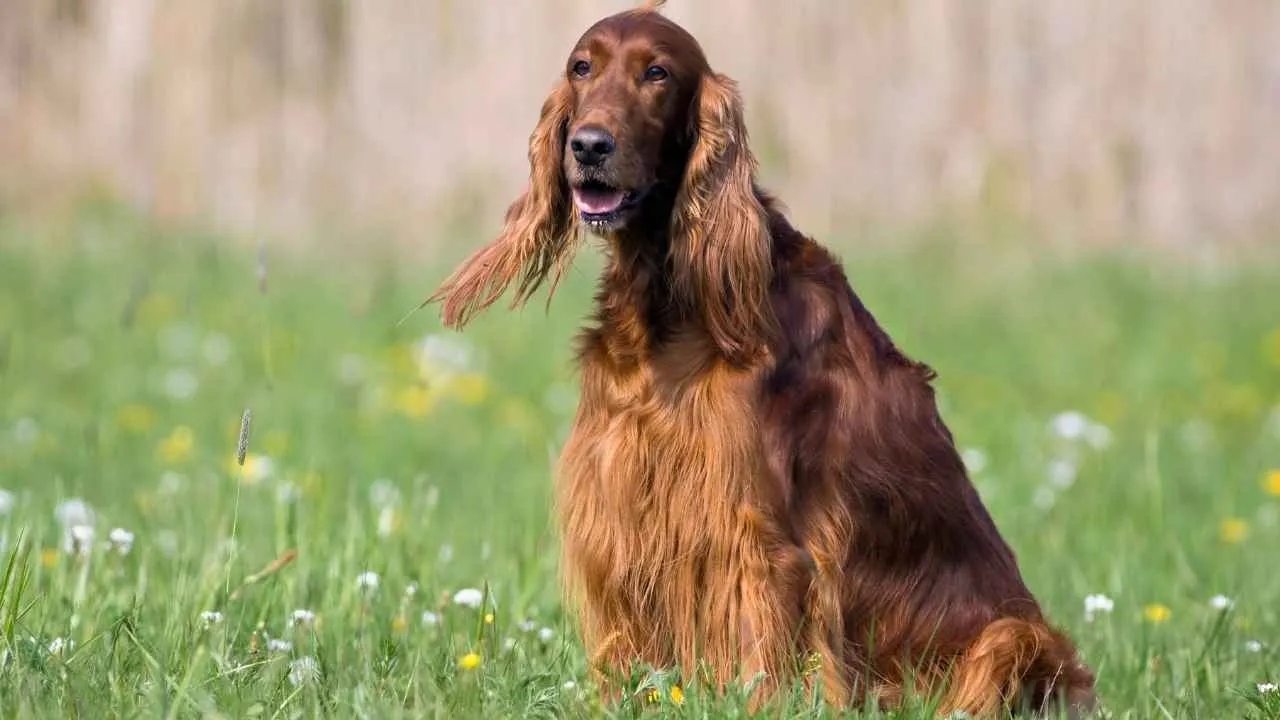
Okay, THIS coat. Let’s all take a moment.
That deep mahogany red looks as if it was dipped in sunset. Nobody walks past an Irish Setter without turning around.
These ravishing red dogs have a silky, flowing coat with long feathering on the ears, chest, legs, and tail. It’s a single layer, which means it doesn’t have that dense undercoat many other breeds do. It’s smooth to the touch, a little wavy, and catches the light beautifully.
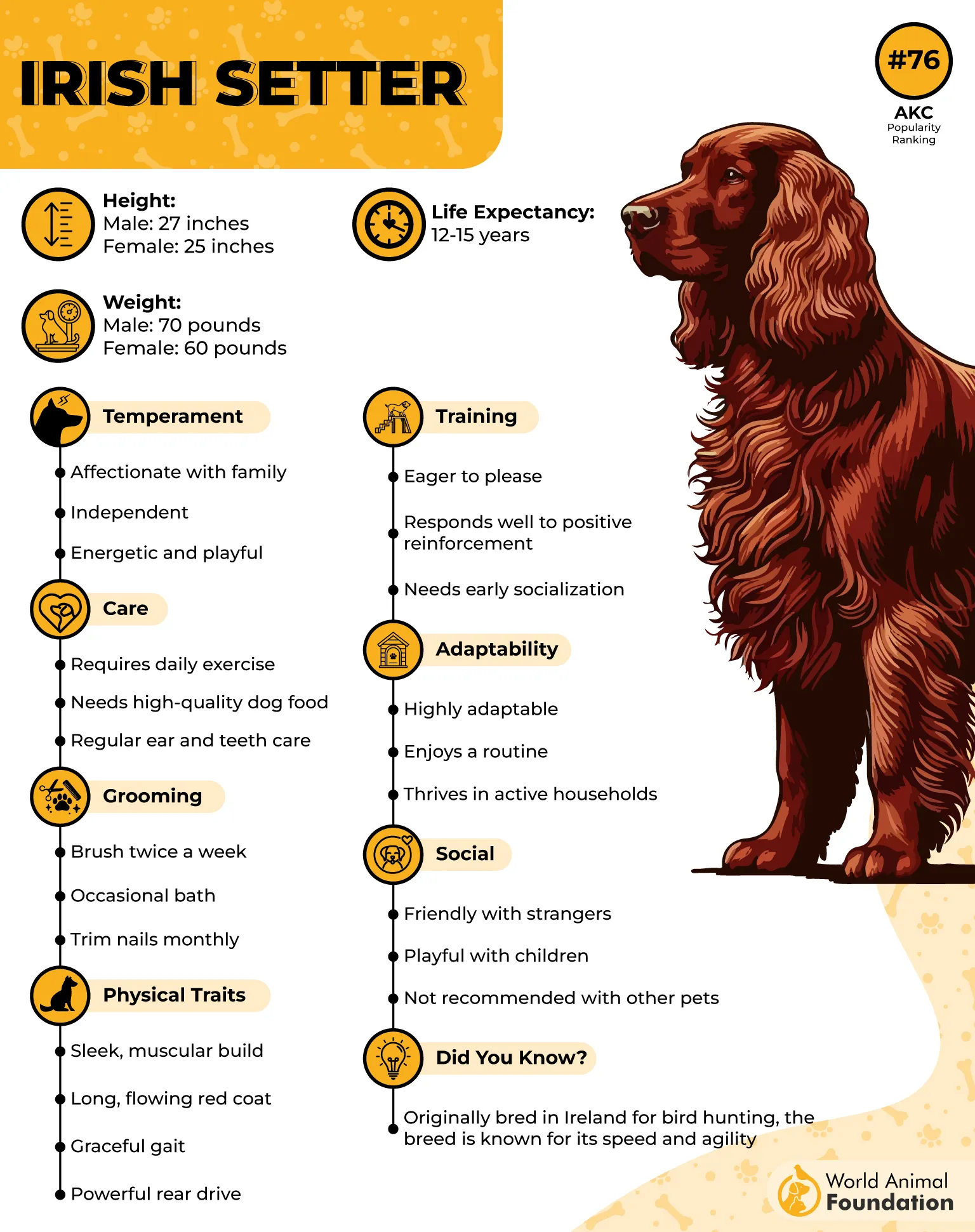
This smooth coat also catches burrs, twigs, and whatever else is in the backyard. Regular brushing keeps it tangle-free, and a quick check after outdoor adventures saves a lot of trouble.
Irish Setters are friendly, bouncy, and full of energy. They need exercise and a family that can keep up. A bored Setter with a gorgeous coat will happily redecorate your room.
A red streak of pure joy with silky hair.
5. Shih Tzu
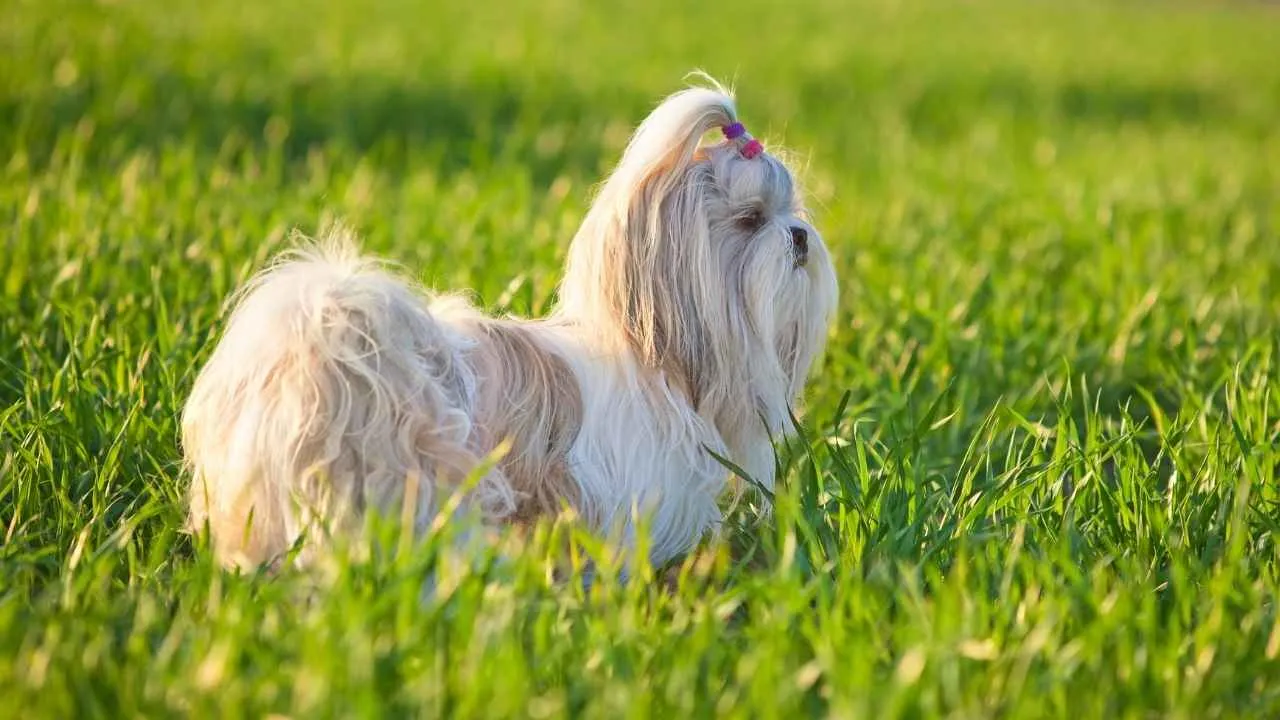
FUN FACT! Shih Tzu translates to “lion.” That is hilarious, because this dog acts more like a spoiled little emperor.
The Shih Tzu has a long, soft, silky double coat that flows over a tiny body. According to PetPlan, they have an enviable, luxurious coat. It’s also a LOT. Daily brushing keeps mats at bay, and many owners opt for a trimmed cut to keep things manageable for double-coated breeds.
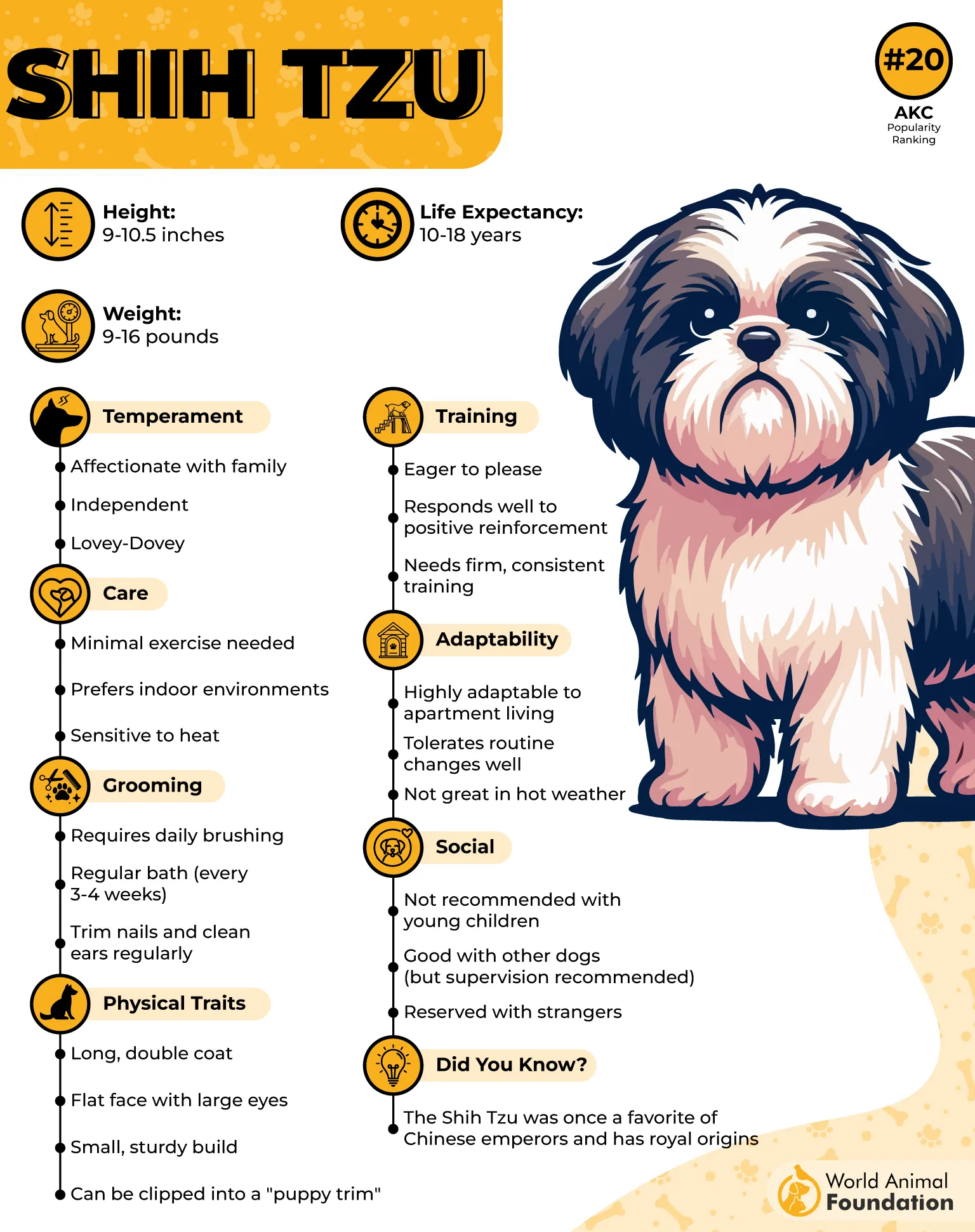
Those big, dark, expressive eyes do need attention too. Hair tends to flop right into them, so a little topknot (hello, bow!) isn’t just cute but practical.
Shih Tzus are friendly, affectionate, and happy right next to their humans. They don’t need intense exercise. A couple of short walks and some indoor play will do these small dogs some good.
Cuddles count as cardio.
6. Cocker Spaniel
This is a dog with some personality.
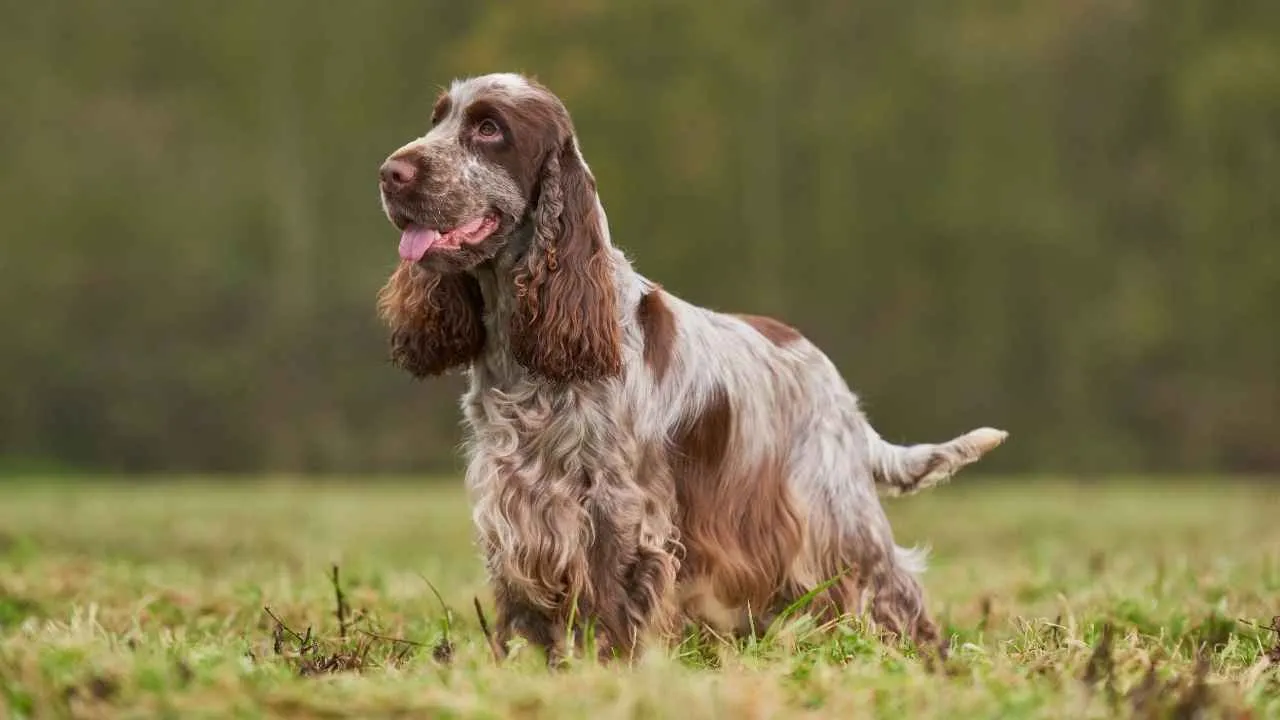
Smooth and sleek on the back. Long and feathery on the ears, belly, and legs. It’s like two haircuts in one.
The Cocker Spaniel has a silky coat of medium length that can be straight or slightly wavy. Those long ears act like mops, scooping up food, water, and pretty much anything on the ground. Regular grooming, cleaning, and brushing are important.
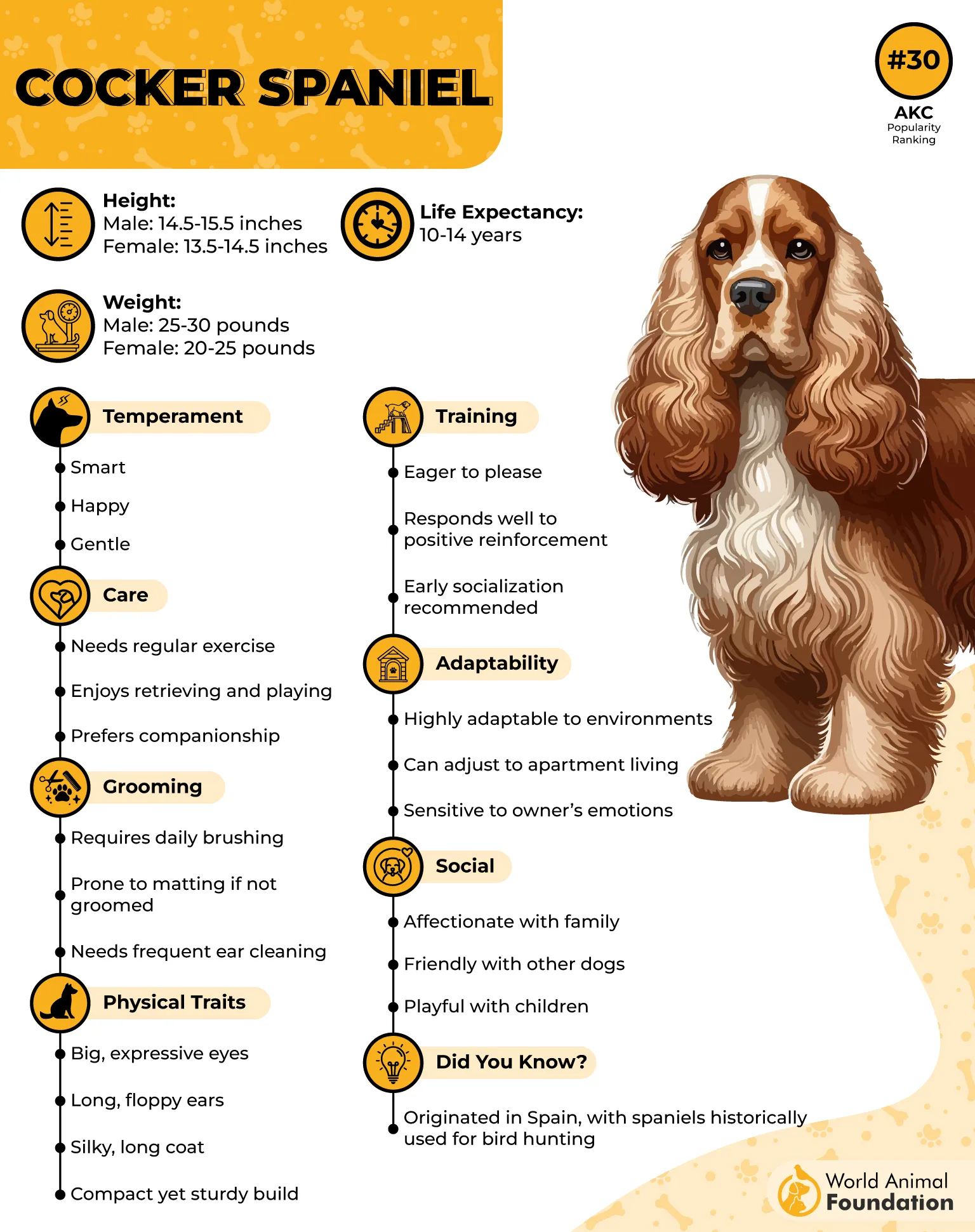
Cockers were bred as bird dogs, and they still love being outdoors and sniffing around. They are gentle, cheerful, and extremely people-oriented. Many owners schedule professional grooming every month or two to keep that gorgeous coat in shape.
Skip it, and you will end up with mats behind the ears.
7. Portuguese Water Dog

Last but definitely not least, the curly-coated swimmer.
You might remember the Portuguese Water Dog from the White House, where “Bo” lived for years. Famous and fabulous.
This breed has a thick, curly, or wavy coat in a single layer. It’s water-resistant, which makes sense, because these water dogs were bred to help Portuguese fishermen herd fish into nets and retrieve gear from the water. Seriously. Real working dogs.
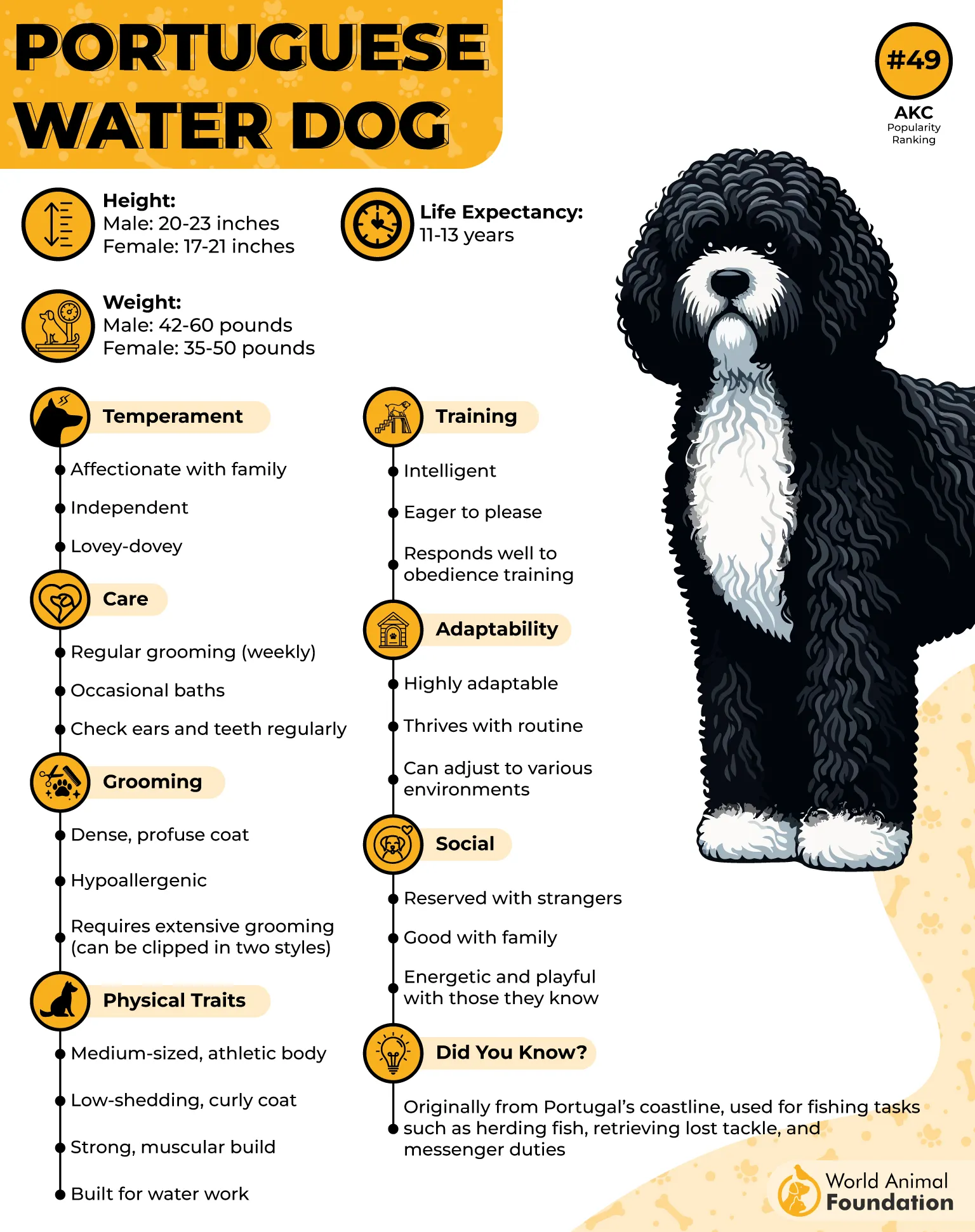
They shed very little, which is why people with allergies sometimes look their way. But the trade-off is real: regular grooming, frequent brushing, and trims to prevent tangles.
They are highly intelligent, athletic, and love to swim. They need enough exercise to keep on going, plus physical and mental stimulation. A bored Portie may start inventing games you didn’t agree to.
Conclusion
Coat types are gorgeous, but they are also work. Before you fall in love with a breed because of its hair, ask yourself how much time, money, and practice you can give to upkeep.
A quick tip before you dog. Don’t over-bathe that dog hair. Too many baths strip the natural oils that keep skin and coat healthy (you don’t wanna have a hairless dog, right?). Use a mild dog shampoo, brush often, and check for tangles. Some wire coats need hand stripping. A senior dog may need a gentler touch, since sore joints can make grooming tougher.
Pick the outer coat (and the dog) that fits your lifestyle. Grab a good brush. Enjoy every soft, curly, silky, or corded inch of your four-legged friends.
