





Not all heroes wear capes. Some have paws, a steady gaze, and an instinct that quietly says, “I’ve got this.” Exceptional and rare dog breeds often bring a special blend of confidence, loyalty, and natural protectiveness that feels reassuring, not intimidating.
These dogs are not about nonstop barking or over-the-top bravado. They are thinkers and observers, devoted partners who know when to stay calm, when to step forward, and when simply being present is enough.
For dog owners drawn to breeds with presence, purpose, and personality, these protectors stand apart. Ahead, we’ll take a closer look at the rare dogs that guard with heart, intelligence, and unmistakable character.
Fun Fact
Many protective dogs instinctively position themselves between their owner and the door. It’s their subtle way of saying, “I’ll keep watch, you relax.”
Exceptional & Rare Dog Breeds: A Protector’s Dream
1. Fila Brasileiro
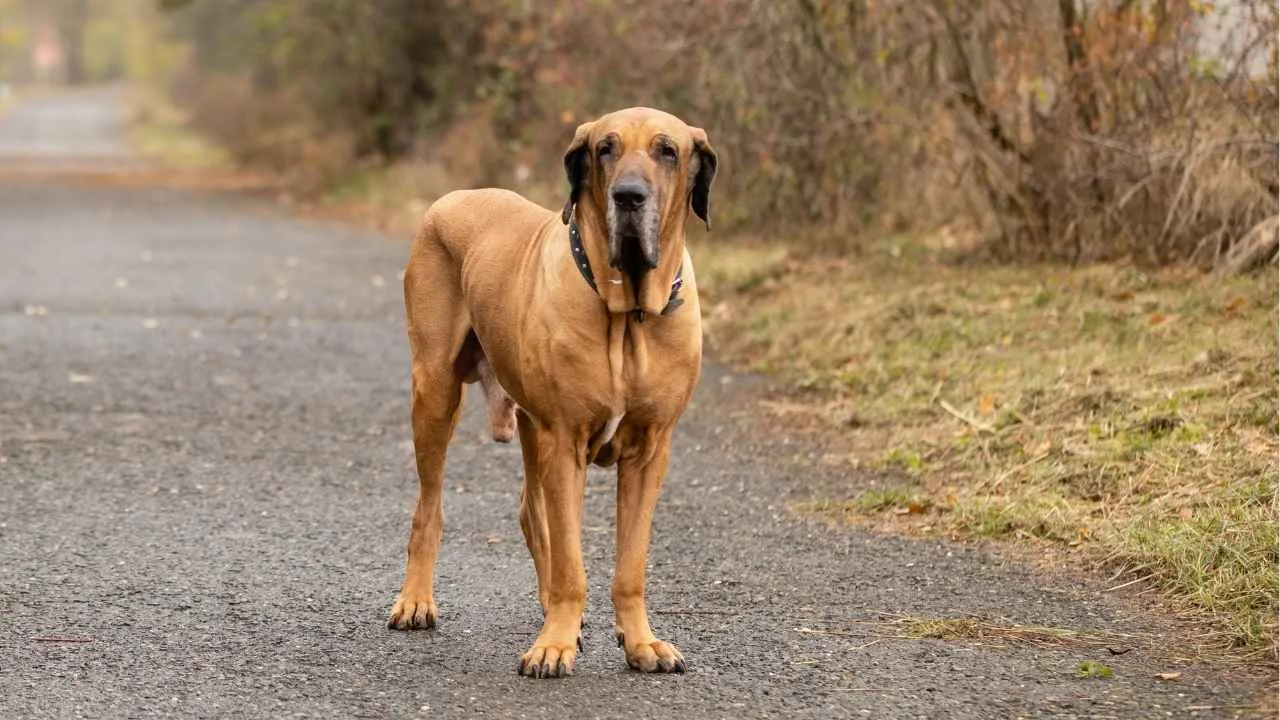
The Fila Brasileiro is a powerful working dog developed on Brazilian farms, where it served as a guardian, tracker, and cattle herder. Its muscular frame, loose skin, and distinctive sloping back give it a presence that is hard to miss.
Life with a Fila requires structure, space, and an experienced handler who understands strong-willed guardian breeds. Rural environments suit them best, as frequent visitors and busy neighborhoods can create stress for a dog that is naturally wary of strangers. Early training and consistent socialization are essential to help channel their protective instincts appropriately.

Grooming needs are moderate, thanks to a short coat that benefits from regular brushing. Health awareness is important, as Filas can be prone to joint issues and bloat, making responsible care a long-term commitment.
Fun Fact
In Brazil, the breed inspired the phrase “Faithful as a Fila,” reflecting its legendary devotion. This saying is still commonly used to describe unwavering loyalty.
2. Boerboel
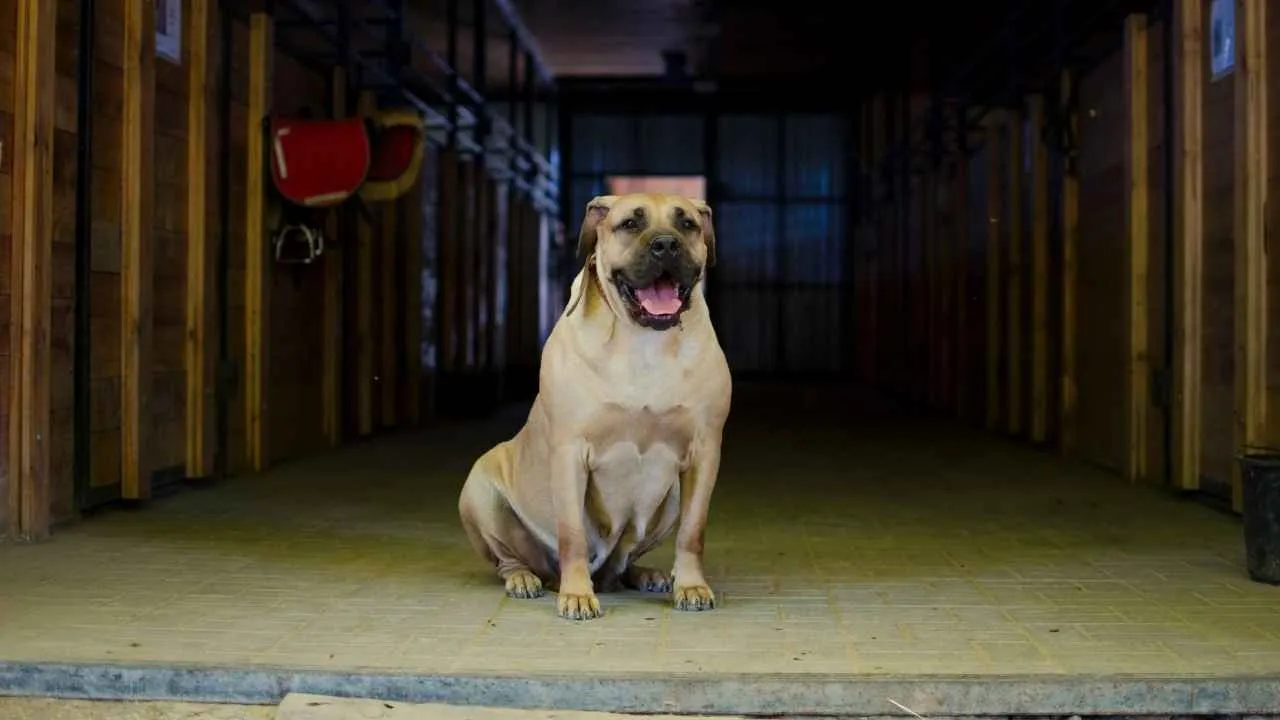
The Boerboel developed in South Africa as a dependable guardian for remote homesteads, valued for its judgment as much as its strength. This breed is naturally confident and attentive, often observing quietly before deciding how to respond.
A Boerboel does best with regular routines that include exercise, interaction, and purposeful activity. Long walks, controlled play, and tasks that engage the mind help prevent boredom. Coat care is simple and predictable, allowing owners to focus more on building trust and maintaining a balanced daily rhythm.
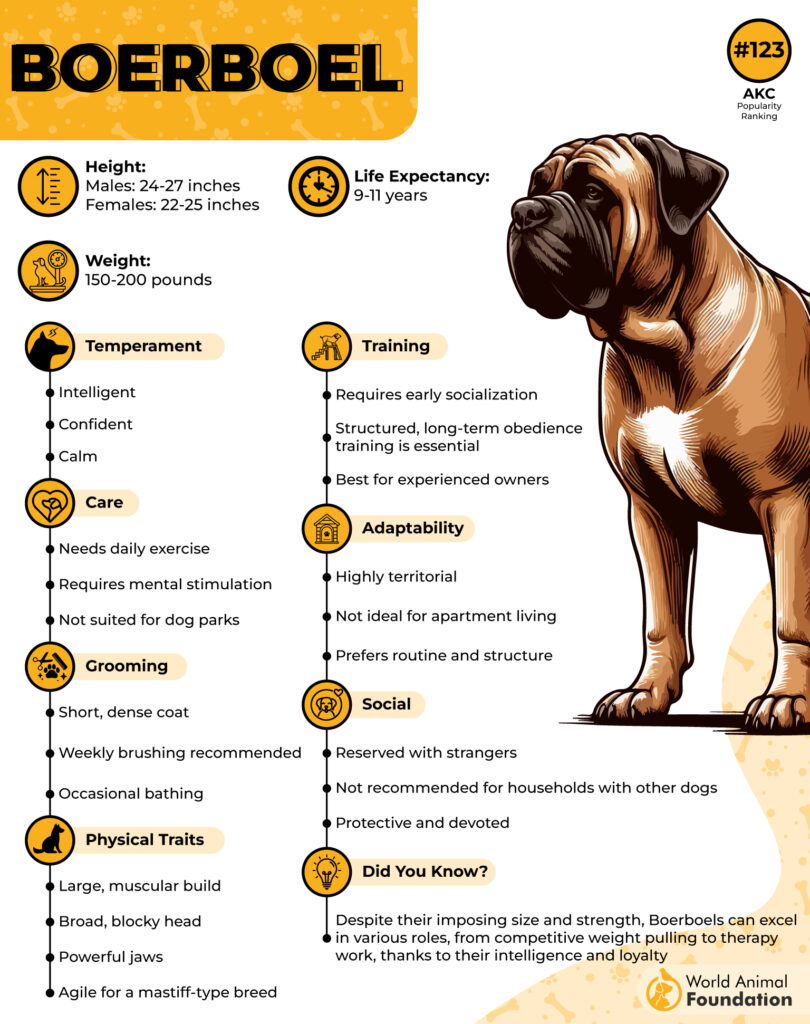
Structure and guidance shape this breed’s best qualities over time. According to AKC, consistent training and early social exposure help reinforce appropriate behavior as the dog matures. Without clear direction, its dominant nature can become challenging, making experienced ownership an important factor.
Fun Fact
The name “Boerboel” comes from a word meaning “farmer’s dog.” It reflects the breed’s long history of working closely alongside families rather than living apart from them.
3. Pyrenean Shepherd
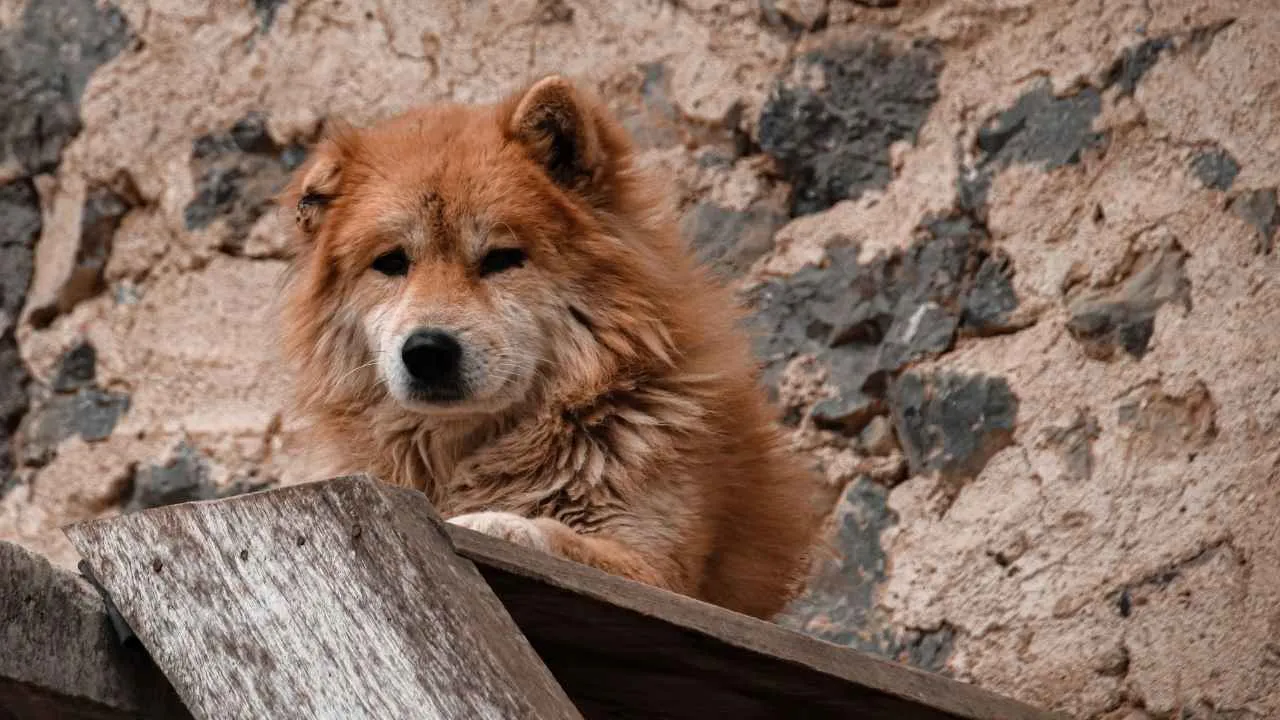
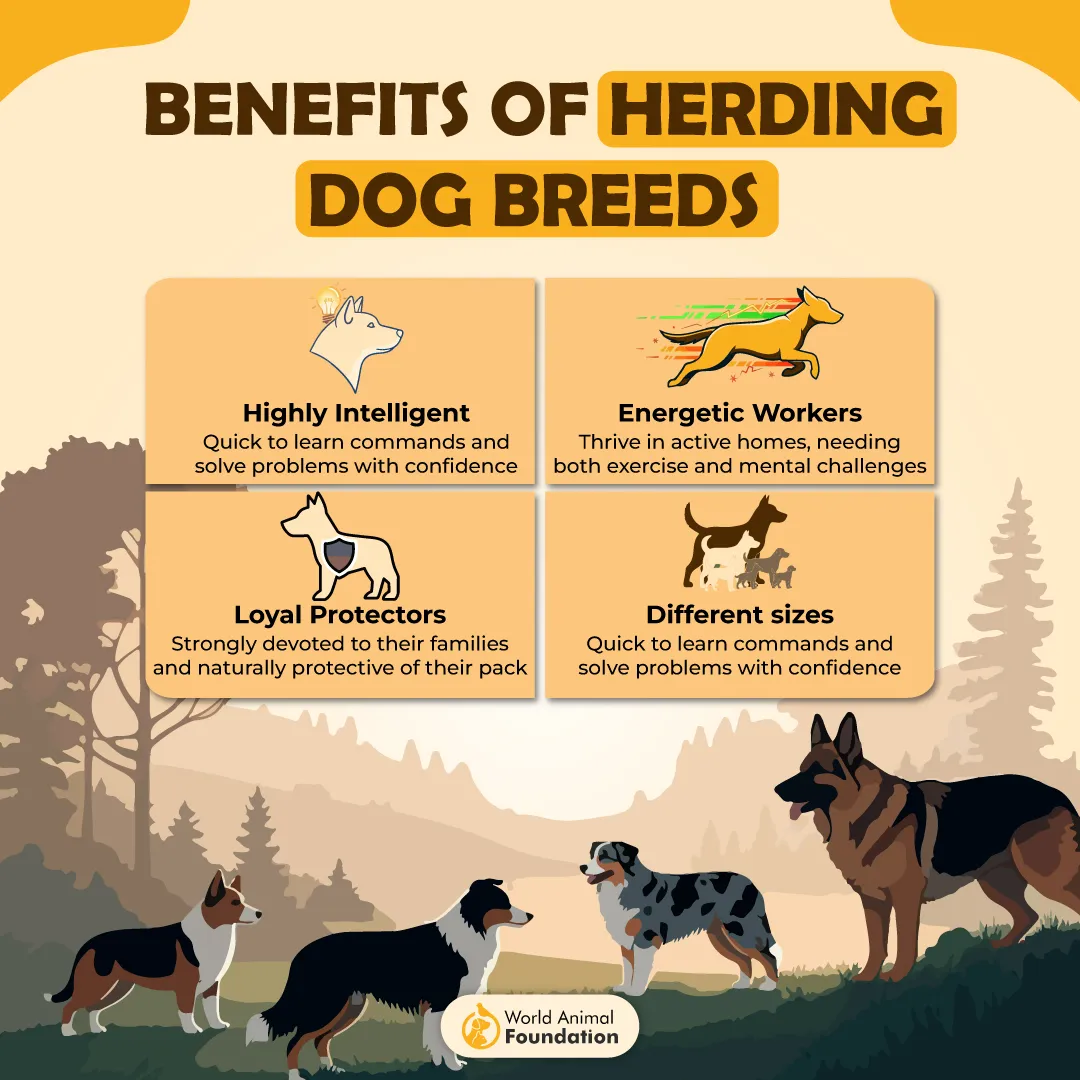
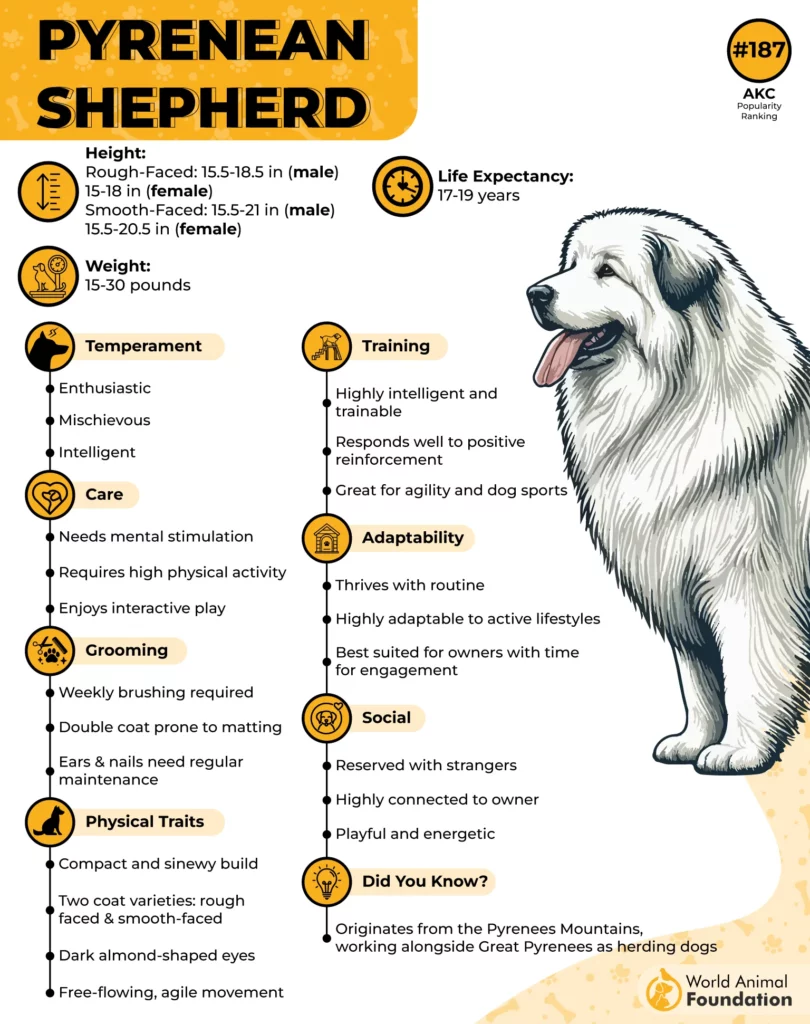
Small, fast, and constantly thinking, the Pyrenean Shepherd was shaped by life in the Pyrenees Mountains, where sharp instincts mattered more than size.
Originally bred to herd and guard livestock on steep terrain, this dog learned to make quick decisions without waiting for direction. The result is a lean, expressive breed with an alert face and a mind that rarely switches off.
These dogs bond closely with their people and are especially fond of children, often sticking close like a fuzzy shadow. Herding instincts run strong, so homes with other pets can feel like a workplace rather than a living room.
As mentioned by Purina, activity is non-negotiable for this breed. Canine sports, advanced training, and outdoor adventures suit them far better than casual walks. Regular coat care keeps tangles under control, and daily engagement keeps boredom at bay.
Fun Fact
Pyrenean Shepherds come in rough-faced and smooth-faced varieties, and both can appear in the same litter. It is one of the few breeds where siblings can look surprisingly different.
4. Bergamasco Sheepdog
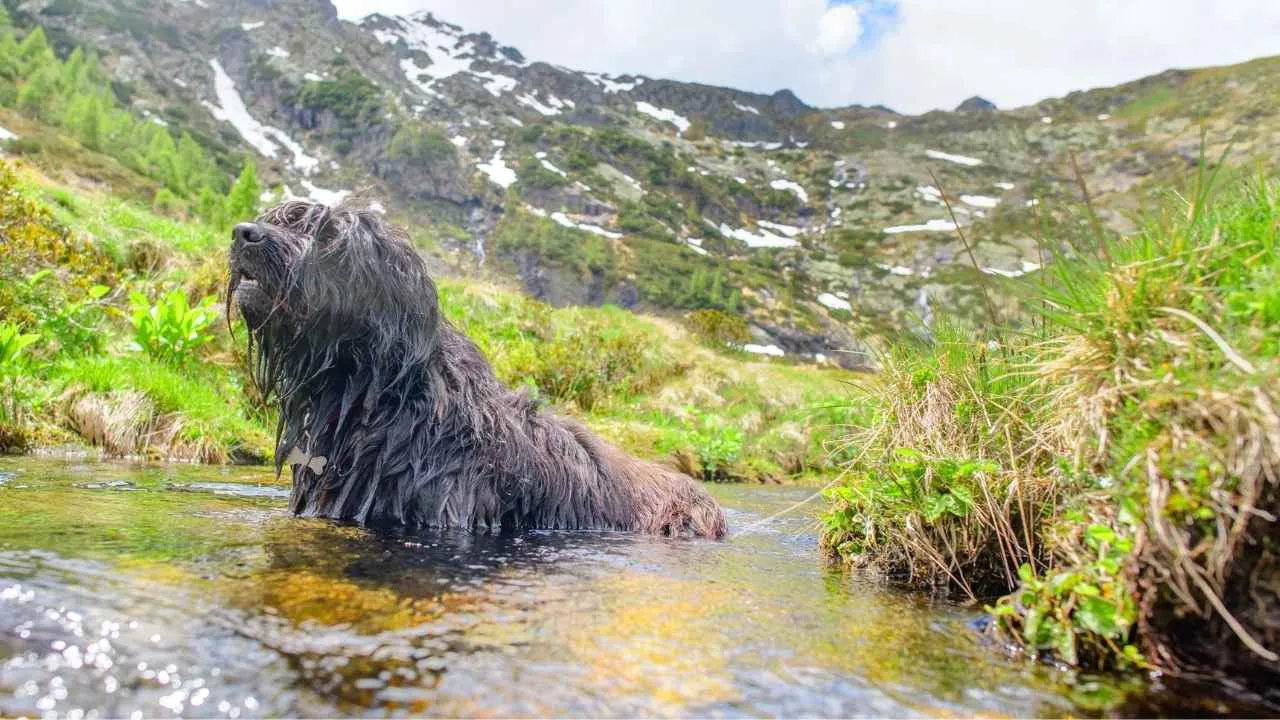
At first glance, the Bergamasco Sheepdog looks like a walking work of art, but this breed was built for serious responsibility. Developed in the Italian Alps, it guarded and guided sheep across harsh mountain terrain while thinking independently. Under the signature flocks is a sturdy, calm herder with quiet confidence.
Their coat looks demanding, but becomes largely hands-off once the flocks are formed. Moderate exercise, mental stimulation, and consistent training suit this breed well. They respond best to guidance that treats them as thoughtful partners rather than followers.
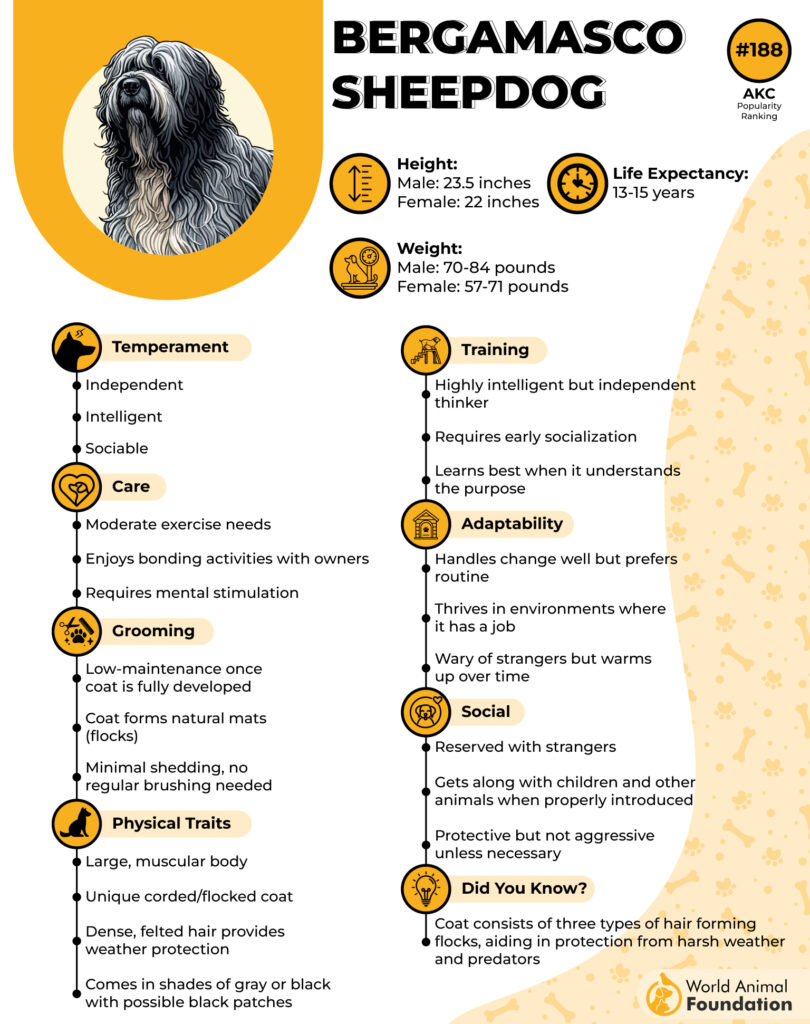
Bergamascos are observant and measured in their reactions, preferring to assess situations rather than rush in. They are deeply loyal and affectionate with their family, while remaining cautious with unfamiliar faces. Space matters to them, and they are happiest when given room to patrol and relax.
Fun Fact
The Bergamasco’s flocks were designed to blend in with sheep, helping the dog remain unnoticed by predators. This natural disguise also made it harder for threats to tell the dog from the flock.
5. Norwegian Buhund Dog
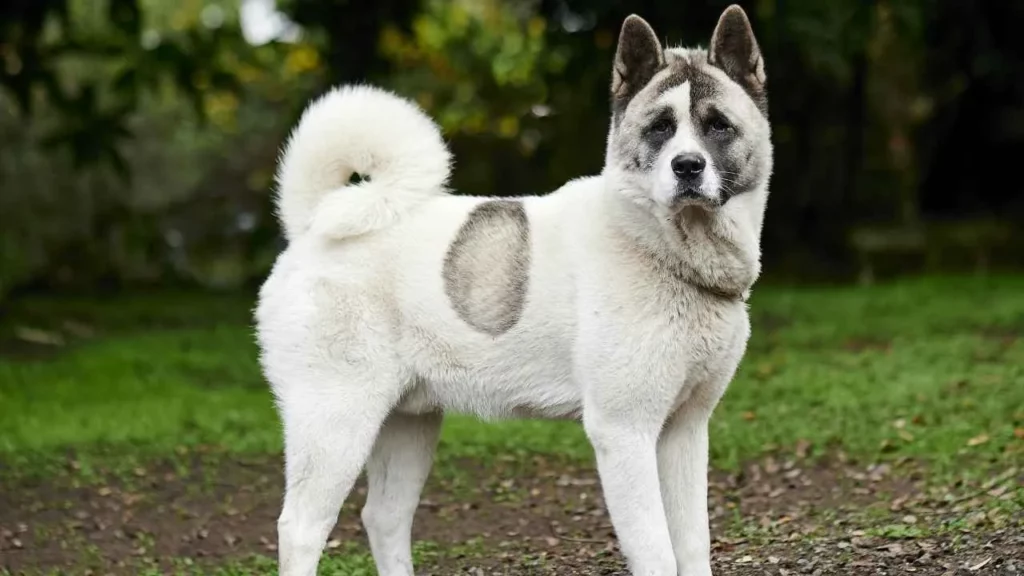
The Norwegian Buhund traces its roots back to Viking times, where it worked as a dependable farm dog and guardian. Bred to herd livestock and watch over homesteads, this spitz-type breed developed a balance of alertness and approachability. Its history is closely tied to people, which makes it a great family dog.
Energetic and people-oriented, the Buhund thrives on companionship and daily activity. Early socialization matters, as this breed can become overly protective if not guided to feel comfortable around strangers.
Mental engagement keeps the Buhund at its best. Training works well when built around positive reinforcement, as this is a Spitz breed that genuinely enjoys pleasing its owner. Regular exercise, consistent guidance, and weekly grooming help maintain a calm, respectful presence at home.
Fun Fact
Norwegian Buhunds are known for being unusually clean and have been observed grooming themselves much like cats. This habit contributes to their naturally low odor coat.
6. Kuvasz
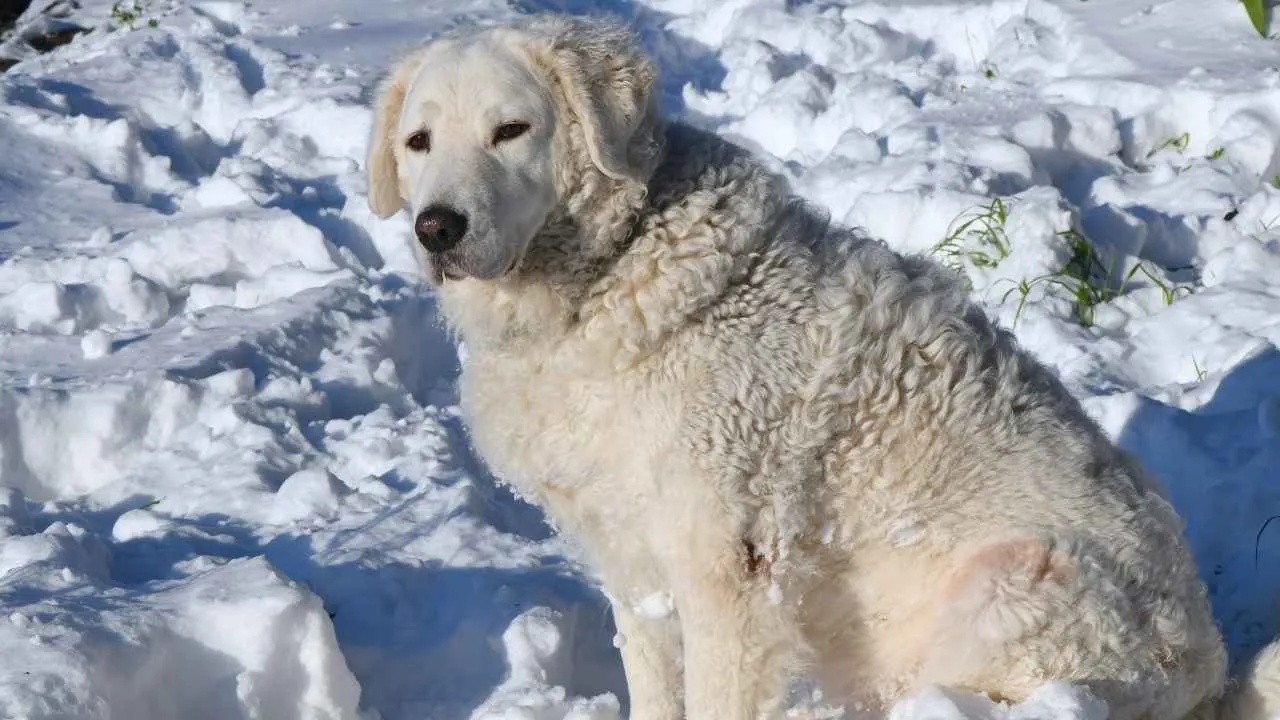
The Kuvasz was shaped by long hours of solitary work, standing guard over livestock with little human direction. This background created a dog that is confident, observant, and comfortable making decisions on its own. Rather than seeking constant interaction, the Kuvasz prefers to keep watch, quietly aware of its surroundings.
As per PetMD, connection with family is steady and serious, built on trust rather than showy affection. This breed is patient with children when properly introduced and raised, yet naturally cautious with unfamiliar people. That reserve is not fear-based but purposeful, reflecting a guardian mindset that values discernment.
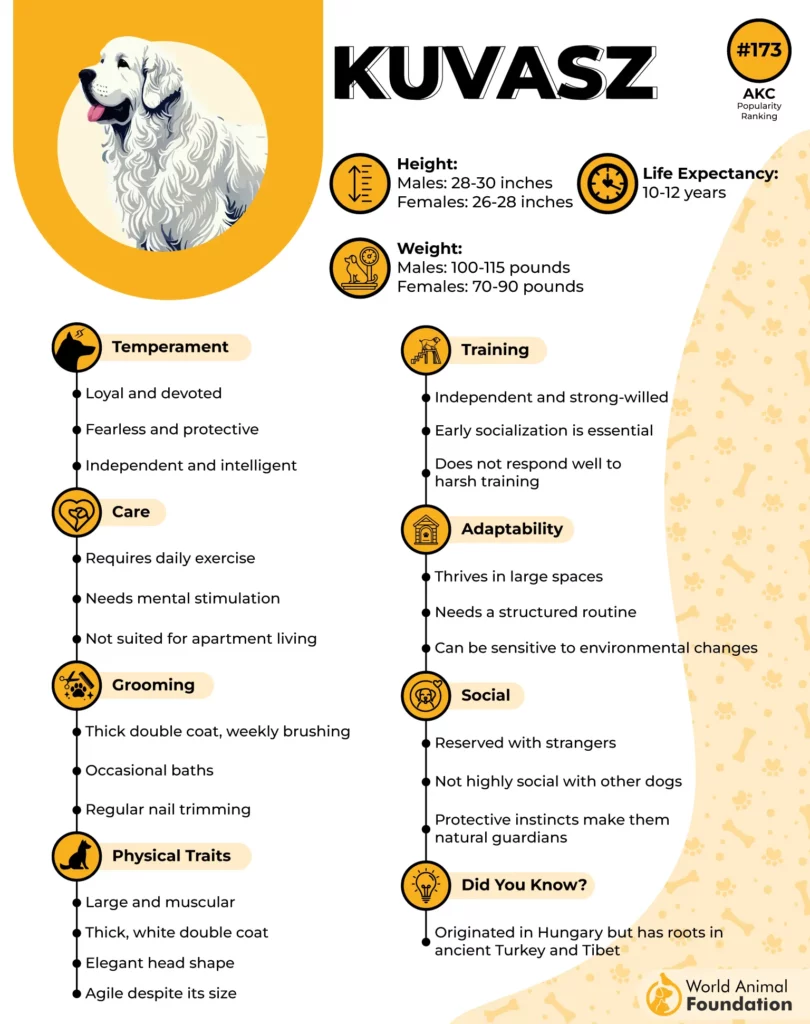
Living with a Kuvasz means providing structure, space, and thoughtful leadership. Training progresses best when it feels cooperative, not repetitive or forceful. With daily movement and a secure environment, the Kuvasz settles into a calm rhythm, always alert but rarely restless.
Fun Fact
The plural of Kuvasz is Kuvaszok, a term still commonly used in Hungary today. It reflects how deeply rooted the breed remains in its homeland.
7. Australian Kelpie
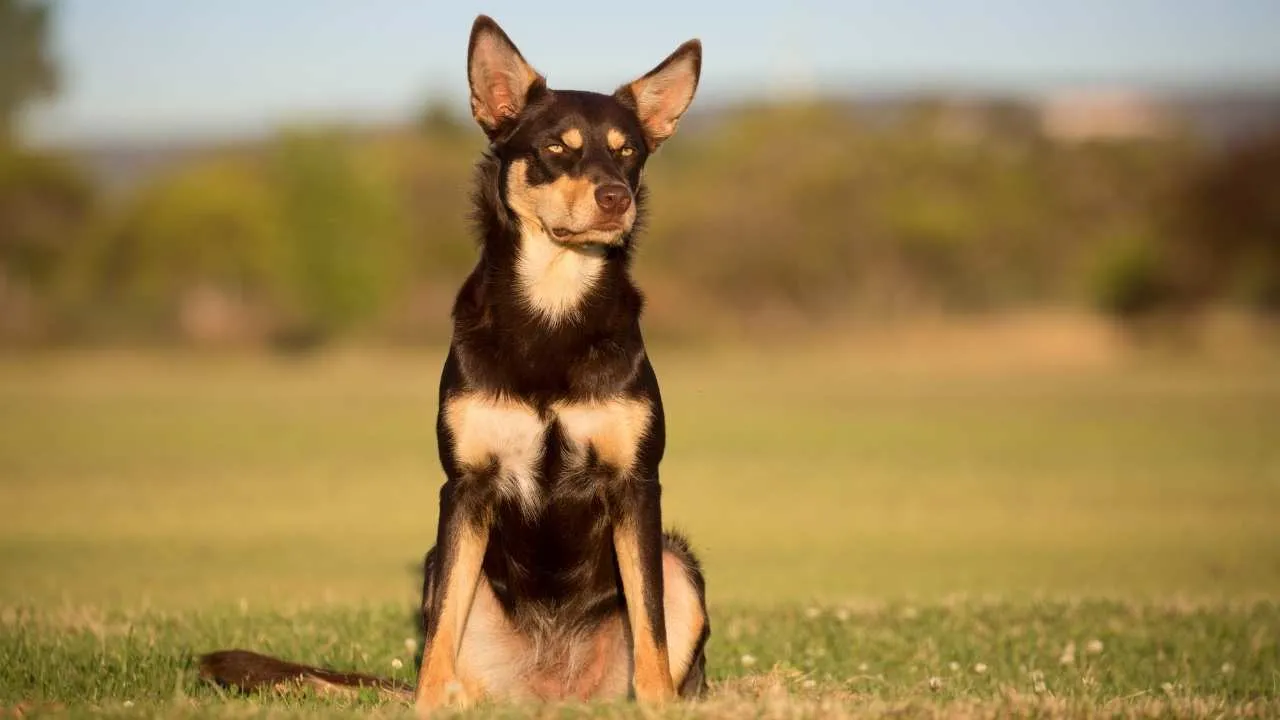
The Australian Kelpie was developed to handle demanding work across vast, rugged landscapes. Agile, focused, and highly intelligent, this breed approaches tasks with purpose and endurance. Generations of herding shaped a dog that thrives when its mind and body are fully engaged.
Temperament-wise, the Kelpie is alert, deeply loyal, and committed to its people. It forms strong bonds with its family and often stays close once the day’s activity is done. While affectionate, this breed is driven by instinct and focus, which can surface as herding behaviors when stimulation is lacking.
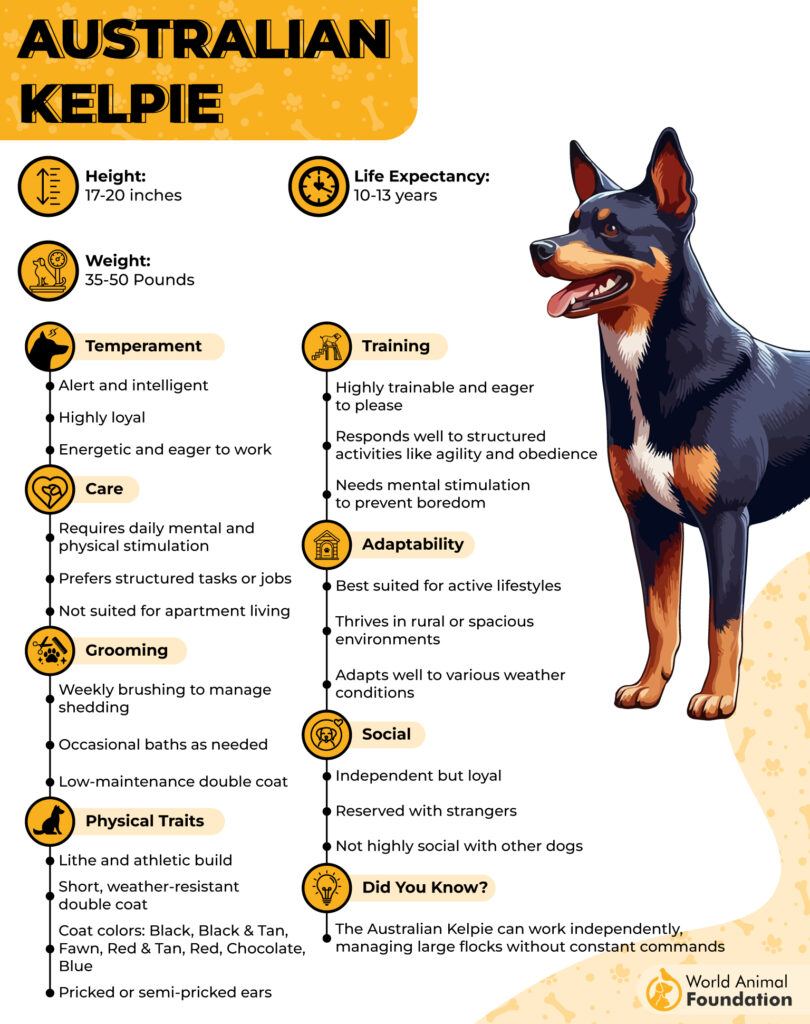
For pet parents, the Kelpie requires an active lifestyle and consistent involvement. Daily exercise, mental challenges, and clear expectations are essential to prevent frustration and unwanted behaviors. This breed is best suited for homes with space and owners who enjoy structured activity and ongoing training.
Fun Fact
Australian Kelpies are known for working with remarkable independence while still responding closely to their handler. This balance made them highly valued on large sheep properties.
Conclusion
From herding dogs with a gentle disposition to guardians with strong protective instincts, these loyal dogs form incredibly strong bonds with the people they protect. With proper training and guidance, they grow into excellent companions that are generally calm, sweet, and deeply aware of human emotions.
Whether high energy or gentle giants, they thrive when given a job, family activities, and the chance to protect the ones they love. One thing to keep in mind about these rare breeds is that they should always be bought or adopted from a reputable breeder to ensure that they don’t develop health issues later on.
Some rare and also common breeds that you can look up, such as German Shepherds, Tibetan Mastiff, Catahoula Leopard Dog, Bedlington Terrier, Thai Ridgeback, Finnish Spitz, Peruvian Inca Orchid, and Norwegian Lundehund, also stand out for fierce loyalty, tracking ability, and protective nature, offering exceptional companionship for their owners.
