





Bringing home a first dog is an exciting experience, but choosing a breed that fits everyday life can make the transition much smoother. New dog parents often benefit from companions that are affectionate, adaptable, reasonably manageable, and responsive to consistent training. Lifestyle, living space, grooming expectations, and exercise requirements should all be considered before making a decision.
No breed is completely effortless, and even smaller companion dogs need proper care, socialization, veterinary attention, and plenty of interaction. However, some breeds have characteristics that can make them particularly rewarding for people who are still learning the fundamentals of responsible dog ownership.
The seven best dog breeds featured here offer a variety of personalities and appearances while sharing qualities that can suit newcomers. From cheerful lapdogs to lively little companions, each brings something distinctive to a first-time household.
Excellent Dog Breeds for First-Time Dog Parents
1. Pug

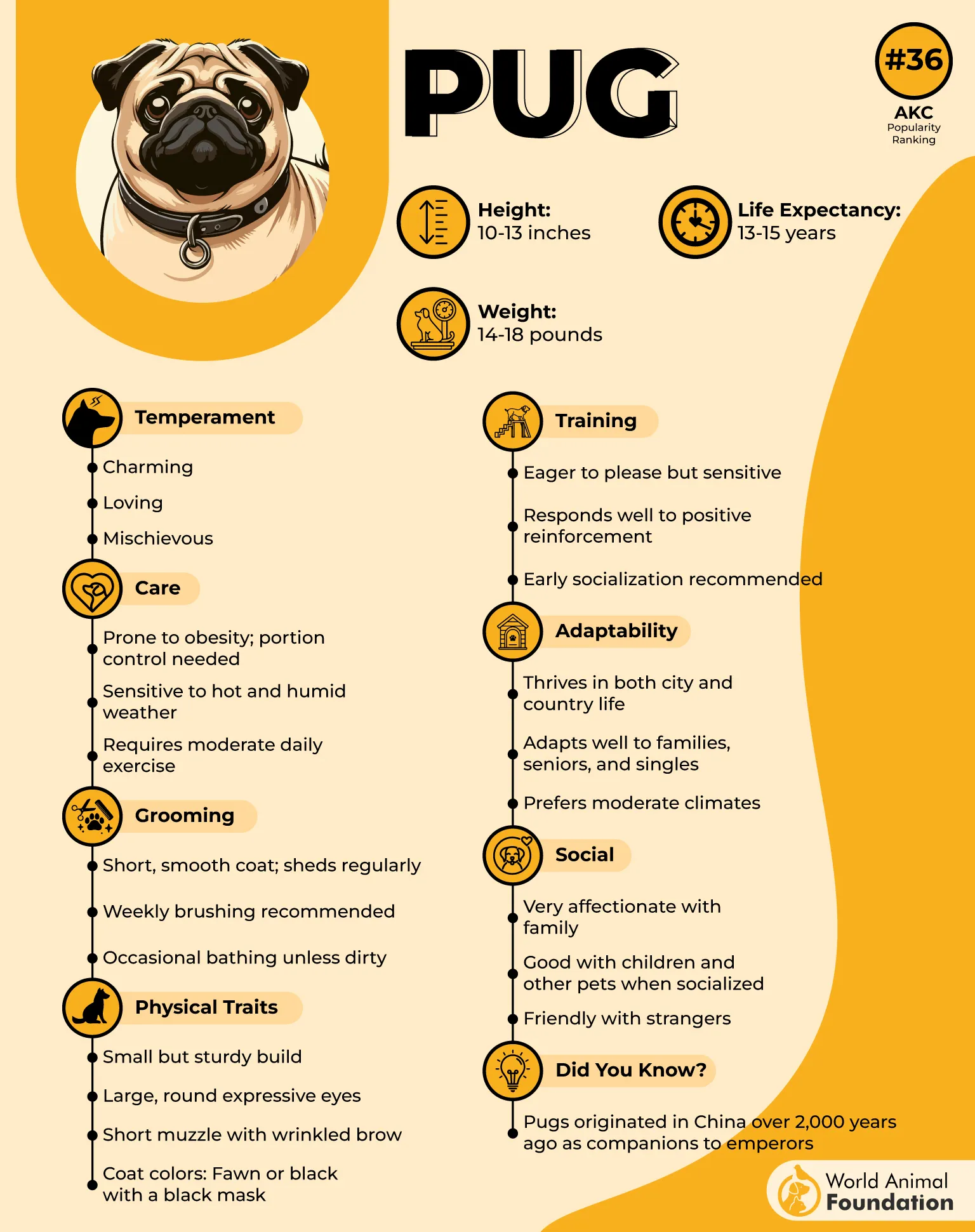
The Pug is an excellent companion known for its playful behavior, affectionate personality, and unmistakable expression, according to Purina.
Bred primarily to provide companionship, it generally enjoys being involved in household activities and spending time with its favorite people. Its compact size and entertaining character have helped make it a popular choice among those looking for their first canine companion.
Easygoing at Heart
Pugs appreciate moderate daily activity, gentle walks, interactive games, and plenty of family companionship. Their short coat is relatively simple to groom, although dog owners should pay particular attention to routine care around their facial folds and overall weight management.
A Cheerful Companion
Their people-oriented nature can make Pugs rewarding to train using patience and positive reinforcement. They often enjoy attention and can bring considerable personality into a home without requiring the demanding exercise routine of a high-energy working breed.
2. Lowchen
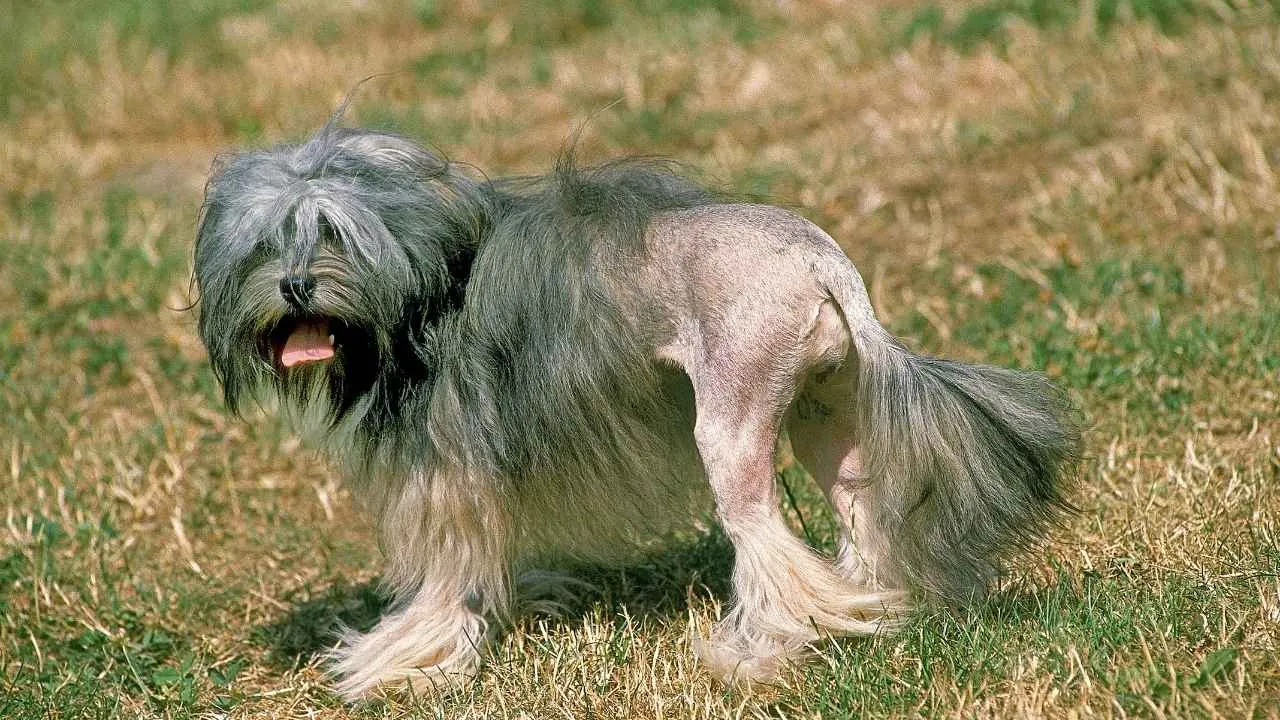
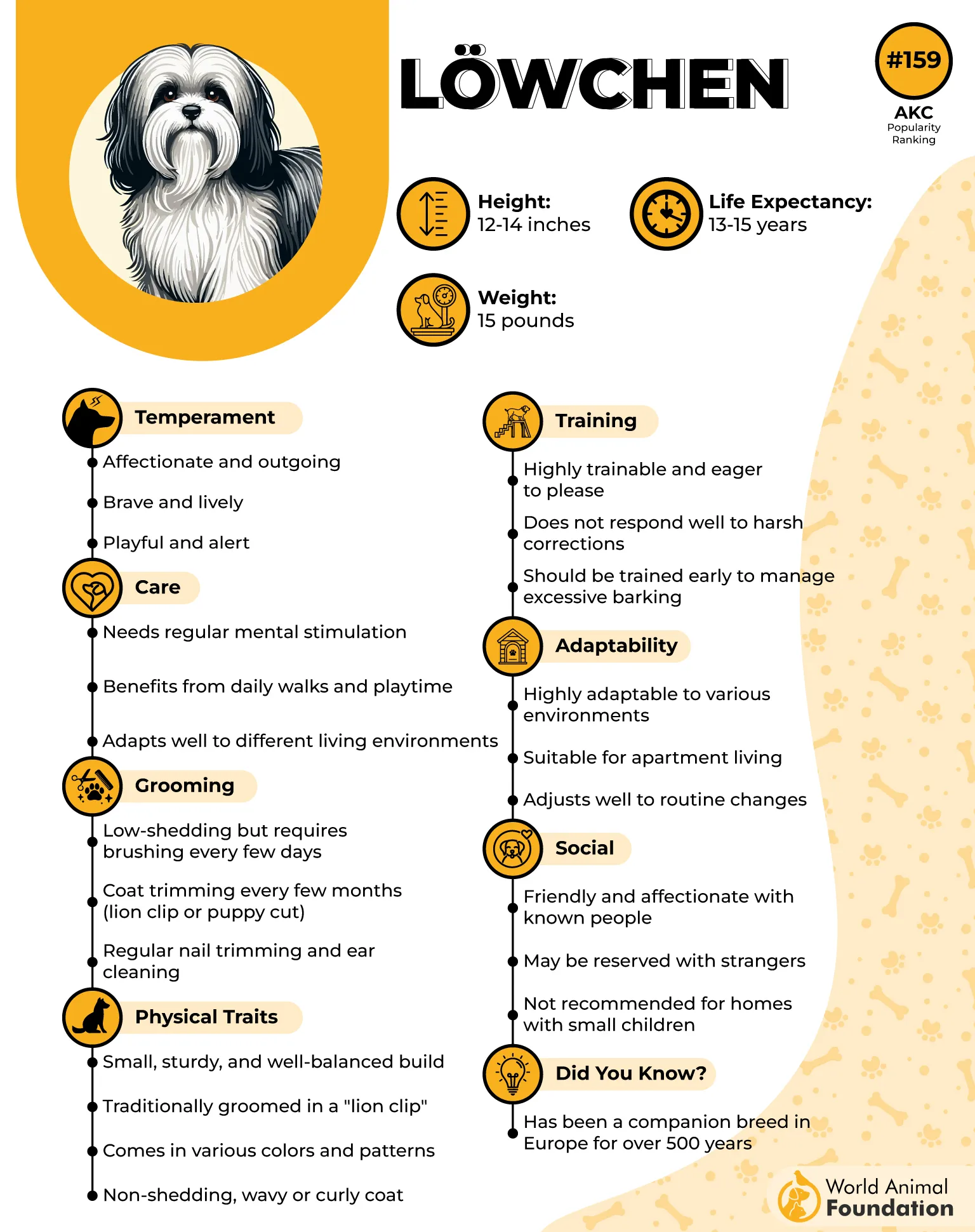
The Lowchen, often known as the Little Lion Dog, is a small European companion breed with a lively and affectionate disposition. Historically kept as a companion, it developed a strong connection with people and an outgoing personality. Its manageable size makes it convenient for many households, while its playful spirit keeps everyday life interesting.
Compact with Confidence
Lowchen dogs benefit from daily walks, play sessions, and activities that involve interaction with their owners. Their longer coat requires regular brushing and grooming, particularly when owners wish to maintain the breed’s traditional appearance.
Bright and Affectionate
This loyal breed tends to respond well to positive training and enjoys learning when lessons are engaging. Early socialization can encourage confident behavior, while regular companionship helps satisfy its strong desire to remain involved with the family.
3. Bolognese
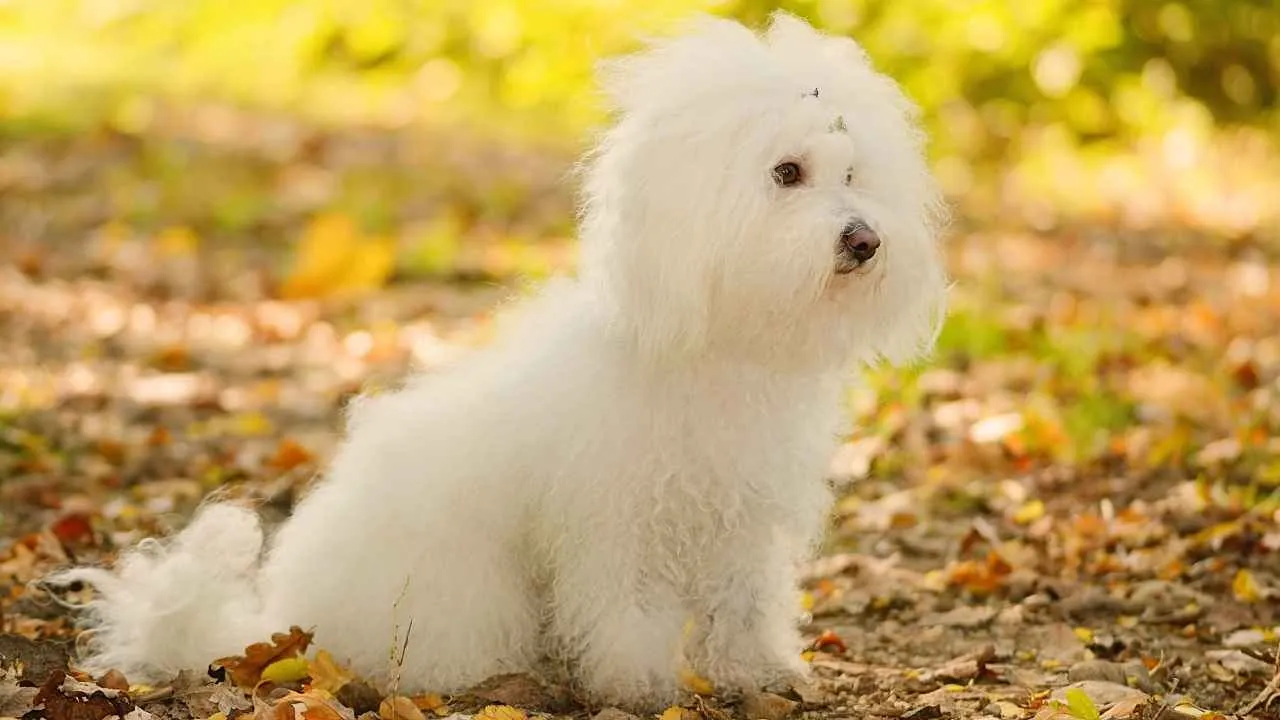
The Bolognese is a small Italian companion dog appreciated for its calm, affectionate, and devoted temperament. Developed to live closely with people, it typically enjoys quiet household routines as well as playful moments with its owners. Its gentle presence can appeal to first-time pet parents seeking a close-knit companion.
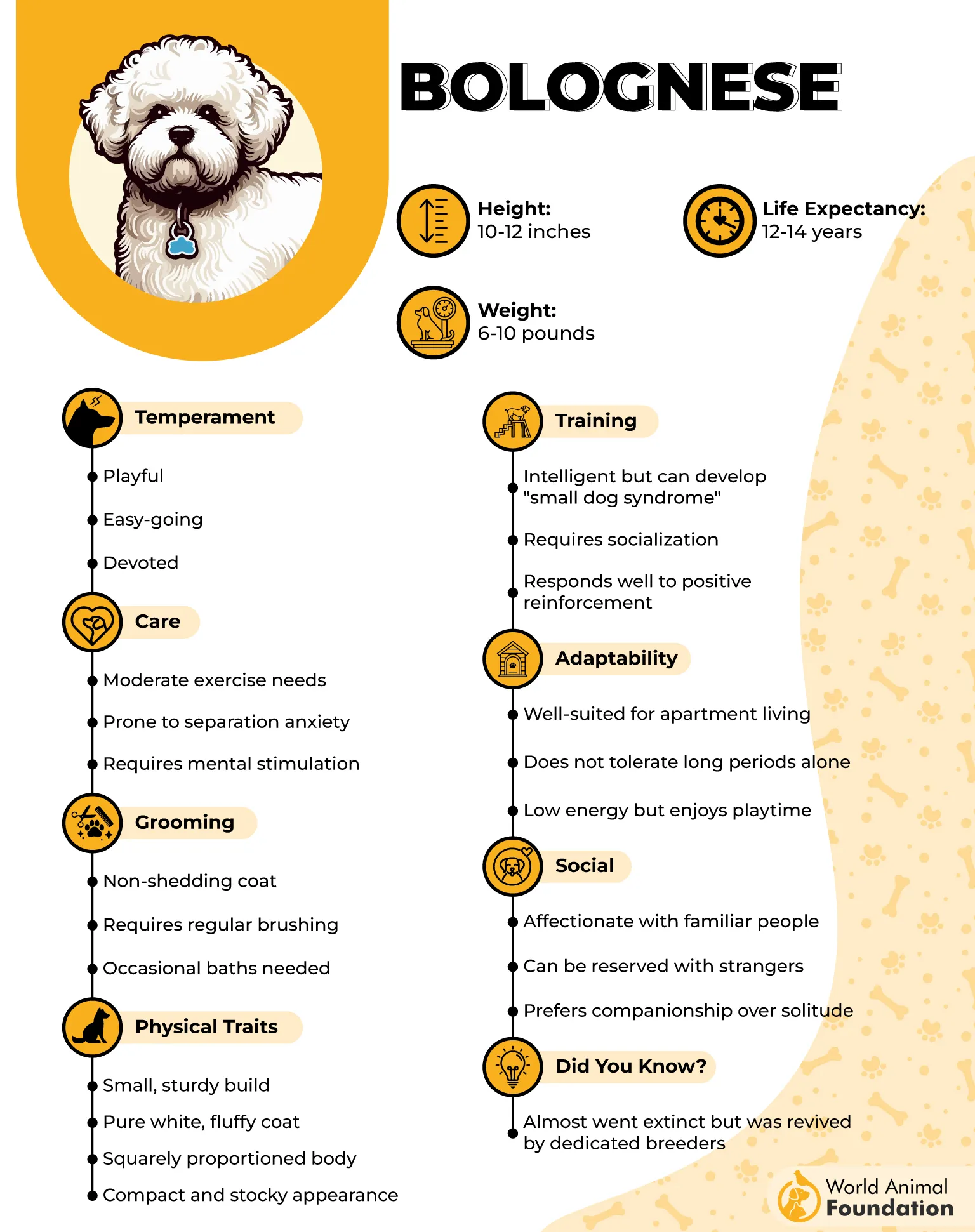
Naturally Attached
Bolognese dogs often form strong bonds with their families and enjoy spending considerable time alongside their owners, as per PetMD. They need regular brushing to keep their soft coat in good condition, while moderate walks and indoor games can provide suitable everyday exercise.
Gentle but Intelligent
Their willingness to engage with people can make basic training a pleasant experience. Consistent routines, rewards, and early exposure to different situations help this easy-to-train dog develop confidence while maintaining its naturally affectionate personality.
4. Russian Toy
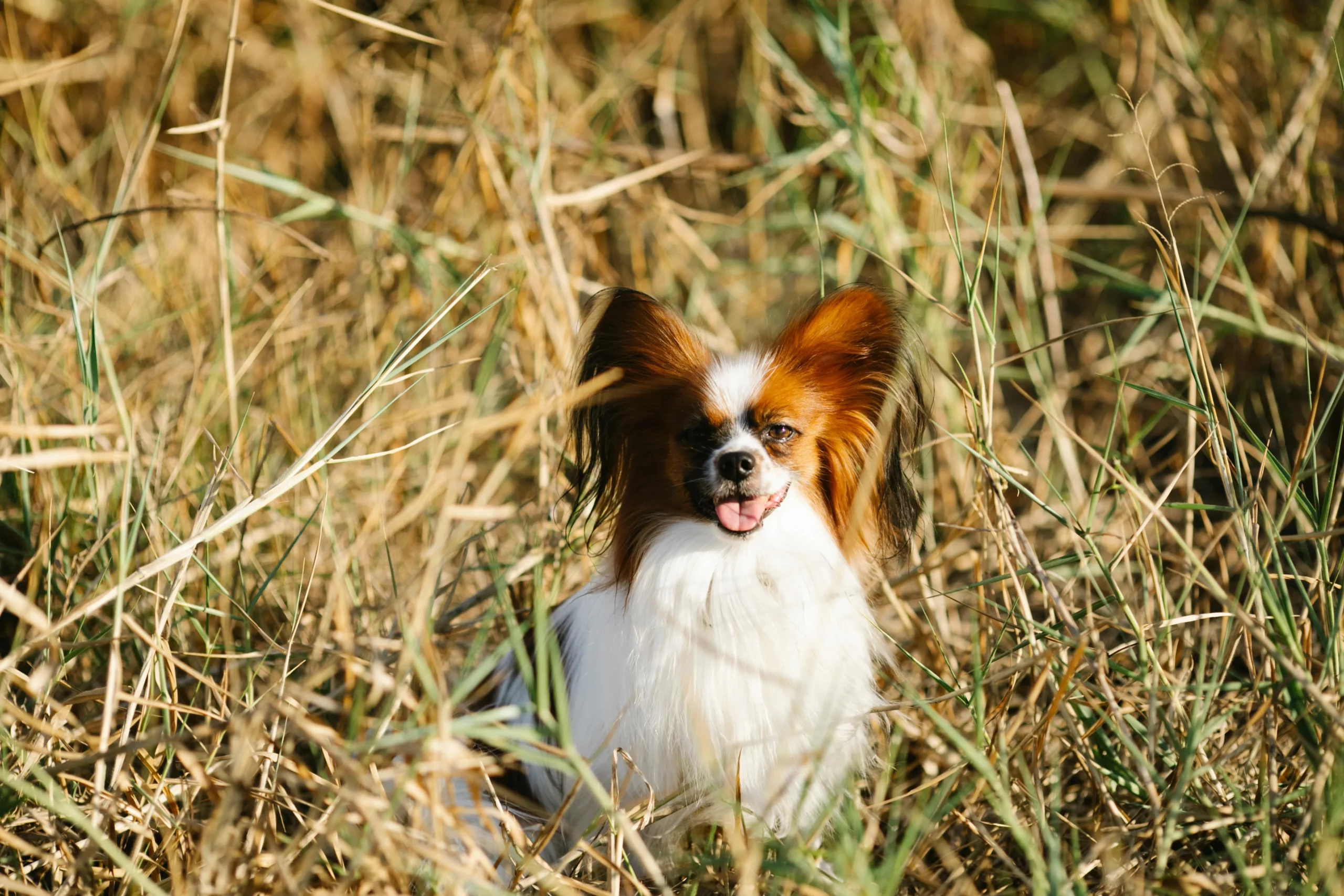
The Russian Toy is a tiny companion breed with a lively temperament, alert expression, and affectionate nature. Despite its delicate appearance, this intelligent dog can be energetic and curious, enjoying opportunities to explore and participate in household activities. Its small stature also makes everyday handling relatively convenient for many new owners.
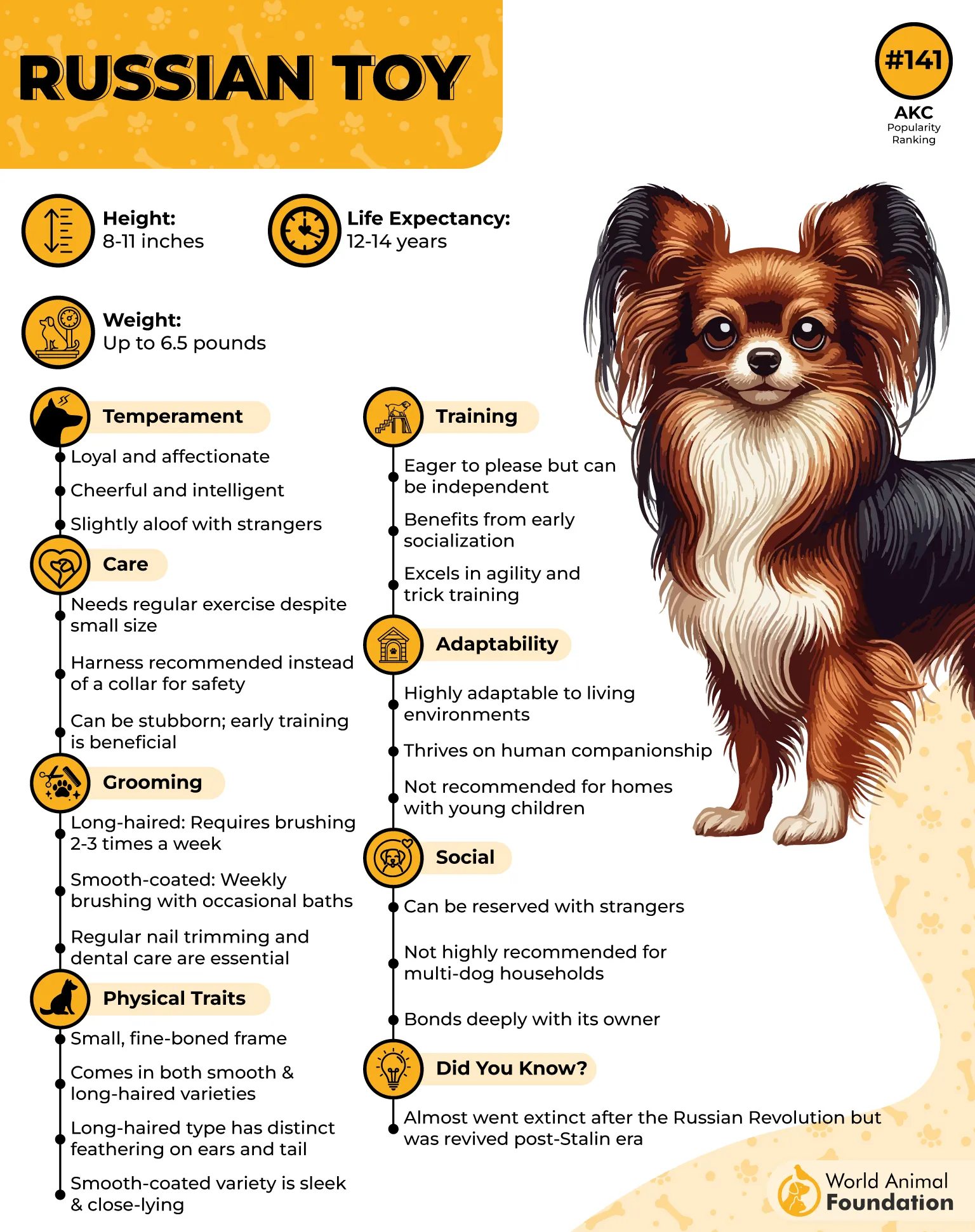
Tiny Frame, Lively Spirit
Russian Toys can stay moderately active through short walks, indoor play, and mentally stimulating games. Grooming needs vary between coat types, but routine care is generally manageable, making the breed a practical option for first-time owners who prefer a small companion.
Quick to Engage
Intelligence and curiosity can make this breed receptive to training when sessions are brief, rewarding, and consistent. Early socialization is especially useful for helping such a small dog become comfortable around unfamiliar people, animals, sounds, and environments, as per the AKC.
5. Russian Tsvetnaya Bolonka
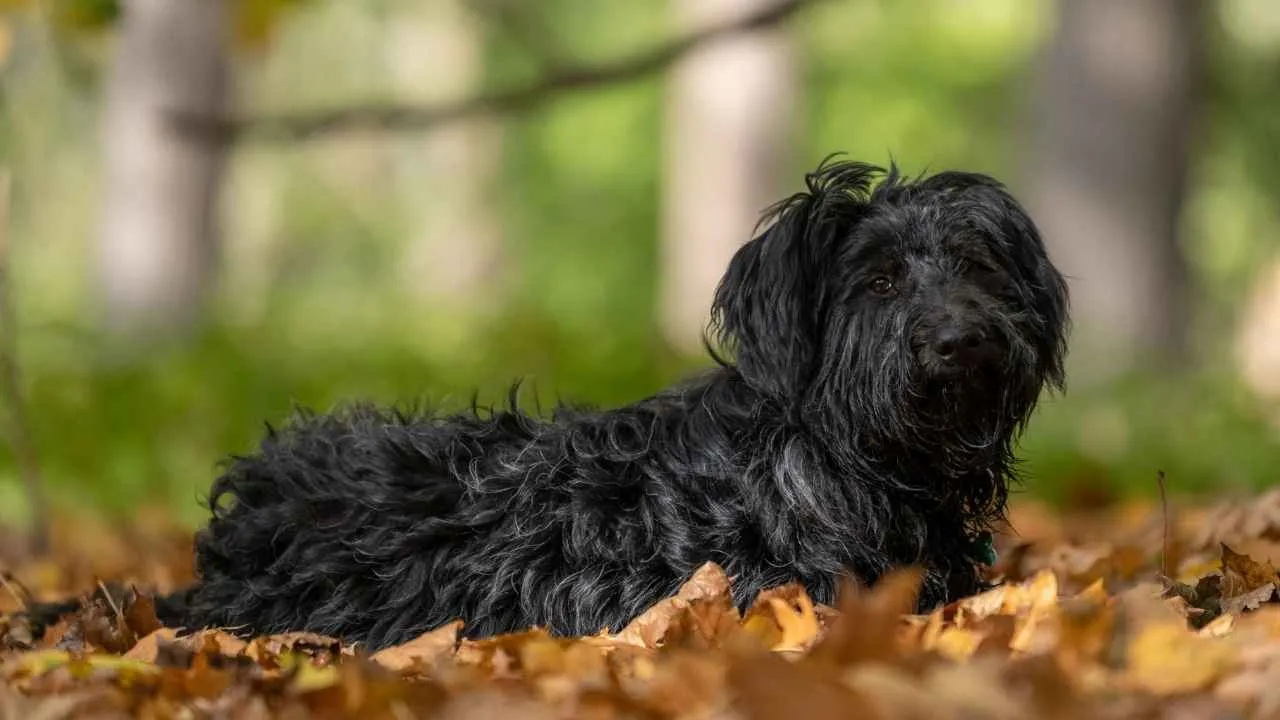
The Russian Tsvetnaya Bolonka is a small companion breed developed in Russia and valued for its friendly, affectionate personality. Its name refers to its colorful, coated appearance, while its companion-dog heritage has encouraged a strong preference for human interaction. The breed can bring a playful yet devoted presence to households looking for a smaller first dog.
A Sociable Little Dog
Russian Tsvetnaya Bolonkas enjoy spending time with their families and benefit from daily walks, indoor games, and regular mental stimulation. Their textured coat needs consistent grooming to prevent tangling, so new owners should be prepared for routine coat maintenance.
Affection Comes Naturally
These friendly dogs can be responsive and eager to participate in family life when given clear, gentle guidance. Positive training and early social experiences can help shape good household manners while allowing their cheerful personality to flourish.
6. Italian Greyhound
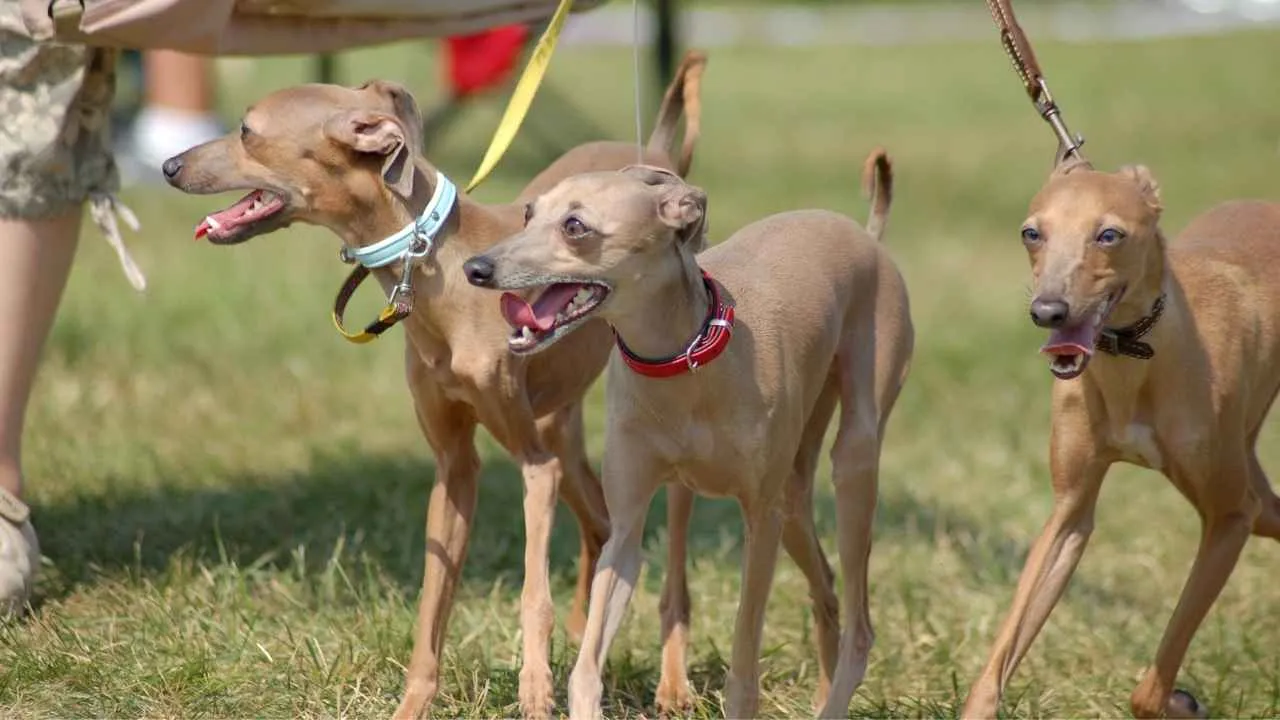
The Italian Greyhound is a graceful miniature sighthound distinguished by its slender build, elegance, and affectionate temperament. Although it possesses the athletic heritage of larger sighthounds, it is also known for enjoying comfortable indoor living and close companionship. Its combination of bursts of activity and a fondness for relaxation can suit owners who appreciate a small but great dog.
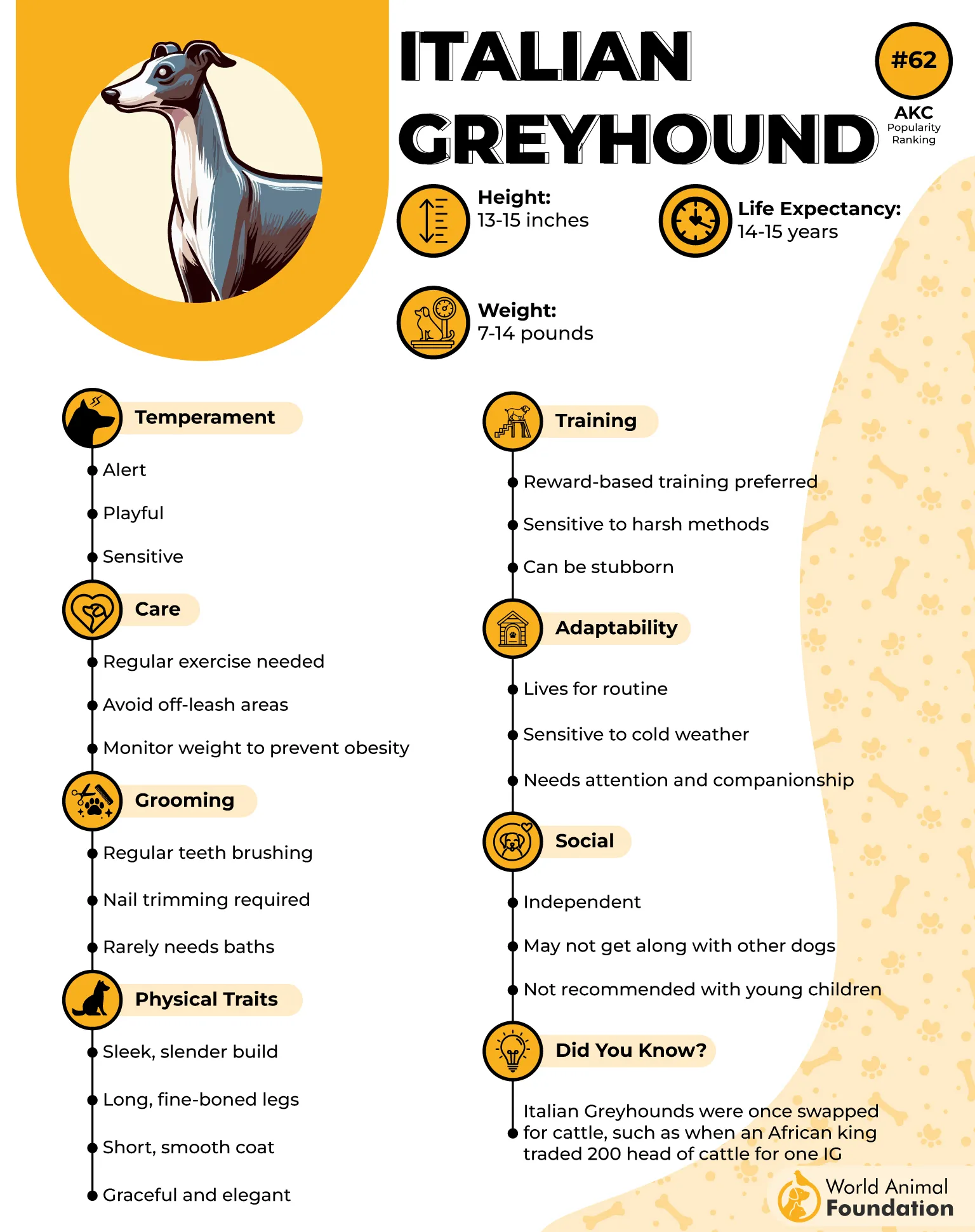
Graceful and Energetic
Italian Greyhounds enjoy short periods of energetic activity followed by plenty of rest. Their fine coat requires little grooming, but their delicate build means owners should take care with rough play, jumping, and exposure to very cold conditions, as per PDSA.
Devoted to Its People
This dog breed often develops a particularly close relationship with its owners and responds best to gentle, encouraging training. Patience is important because harsh handling can make it hesitant, while positive experiences can help create a confident and affectionate household companion.
7. Cavalier King Charles Spaniel
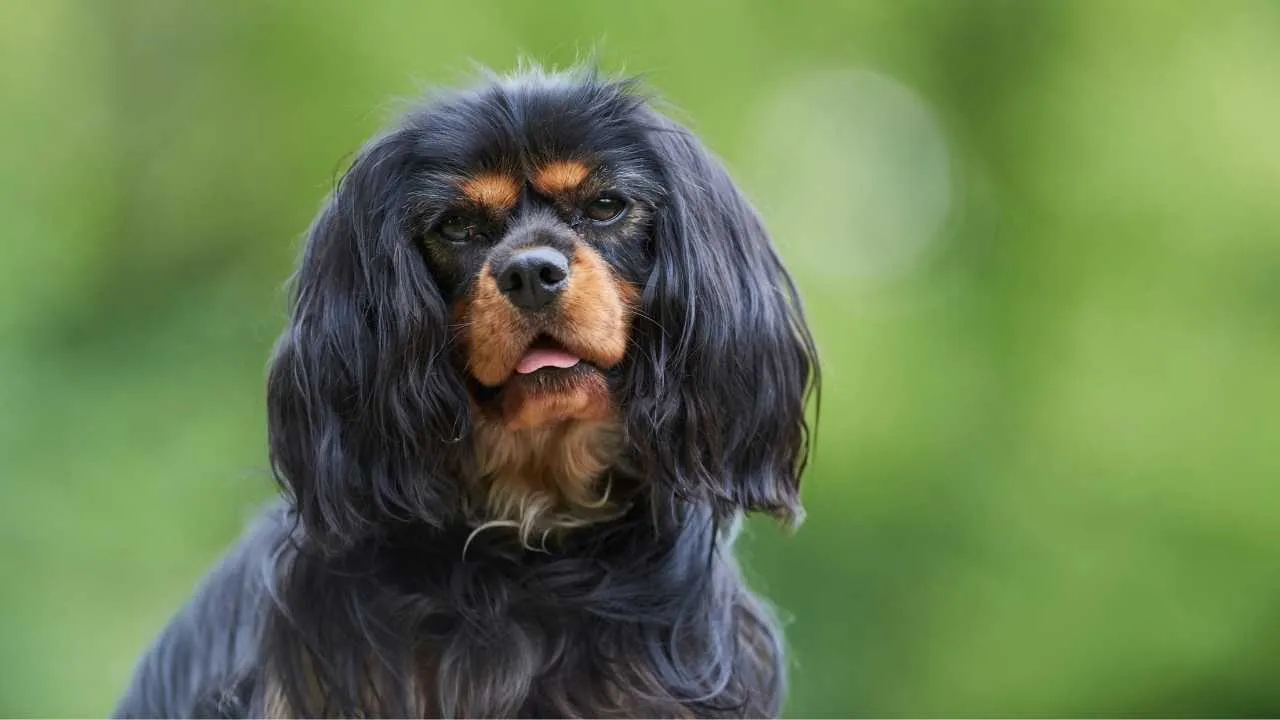
The Cavalier King Charles Spaniel is a beloved companion breed recognized for its sweet expression, affectionate character, and adaptable nature. It was developed primarily as a companion and generally enjoys being part of family routines. Its friendly disposition and enthusiasm for human company make it an appealing candidate for first-time dog parents.
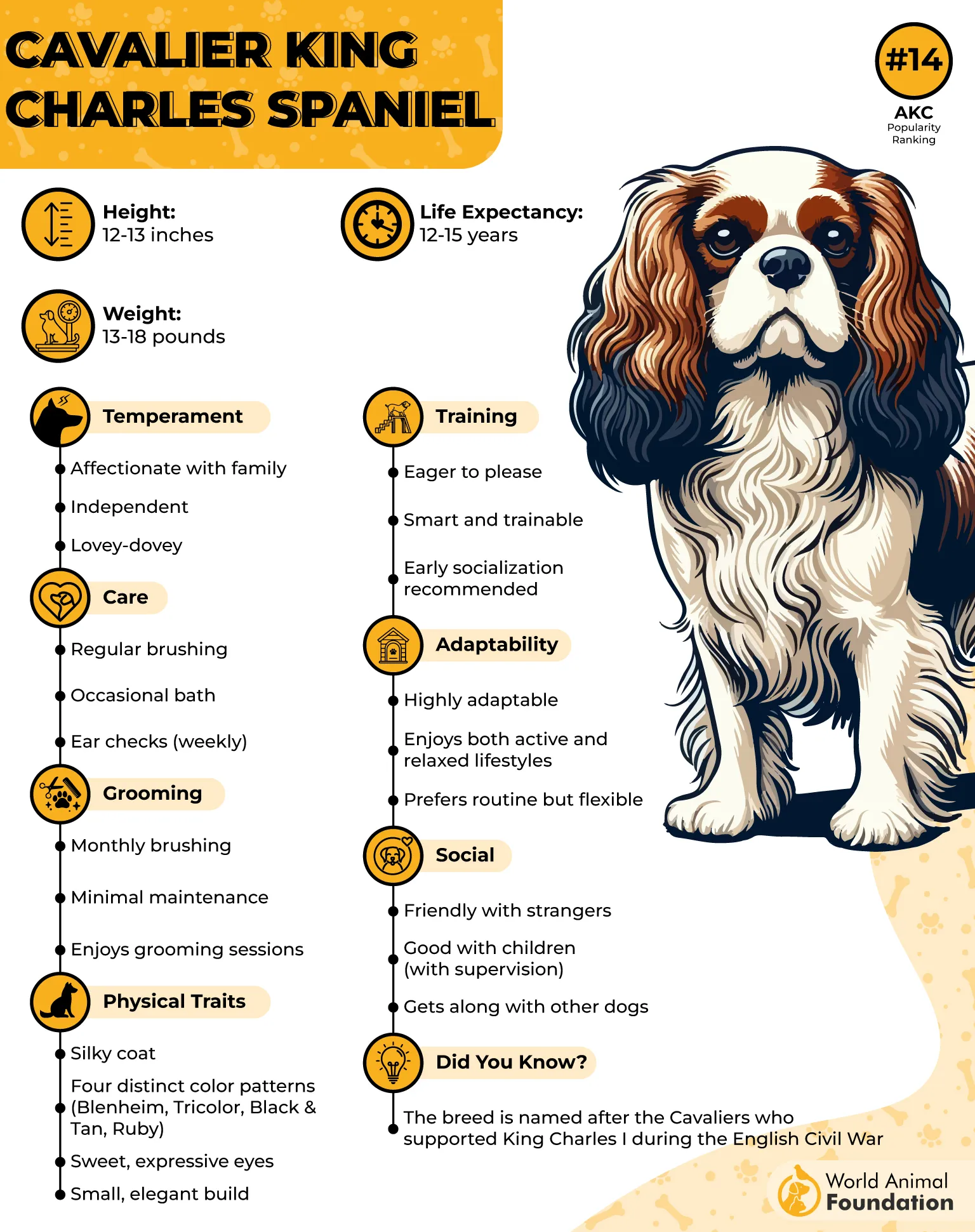
Made for Companionship
Cavaliers benefit from regular walks, play, and interactive time with their families. Their long, silky coat needs frequent brushing to minimize tangles, while routine ear and general grooming care should form part of their regular maintenance.
Warm and Responsive
These popular dogs typically enjoy learning through praise, rewards, and calm repetition. Their affectionate personality allows them to become deeply connected to their owners, making them particularly rewarding for dog parents who want an involved and loving companion.
Conclusion
Selecting a first family dog should begin with compatibility rather than appearance alone. Pugs, Lowchen, Bolognese, Russian Toys, Russian Tsvetnaya Bolonkas, Italian Greyhounds, and Cavalier King Charles Spaniels each have distinct temperaments and care requirements, yet all can offer qualities that appeal to people entering loyal dog ownership for the first time.
Their differences are worth considering carefully. Some prefer a quieter routine and abundant companionship, while others are more energetic and playful. Grooming requirements also range from relatively simple coat care to regular brushing and professional maintenance, making it important for prospective owners to understand what each breed requires.
Becoming a successful affectionate dog parent ultimately depends on more than selecting a suitable intelligent breed. Consistent training, socialization, nutritious food, preventive veterinary care, appropriate exercise, and dependable affection all contribute to a happy relationship. With preparation and realistic expectations, the right breed can become a cherished part of the family for years to come.
