




Bringing home your first dog feels a little like starring in your own family movie. It’s exciting, heartwarming, and yes, a tiny bit nerve-racking too. Every new owner wonders, “Am I choosing the right breed?” The good news is that some dogs naturally make that learning curve much smoother.
You might fall in love with the first dog you see at the shelter, but if their grooming, exercise, or training needs don’t match your lifestyle, they’re probably not the right fit for you. It’s worth doing a bit of research, not just on which breeds suit your lifestyle, but specifically on which ones tend to be easier for first-time dog owners to care for.
The breeds that work best for beginners tend to be patient, adaptable, and eager to build a strong bond with their people. That connection starts with choosing a breed that genuinely fits your day-to-day life. Let’s meet some wonderful first-time companions that can help turn nervous beginners into confident, happy dog owners.
Excellent Dog Breeds for First-Time Dog Ownership
1. Lowchen
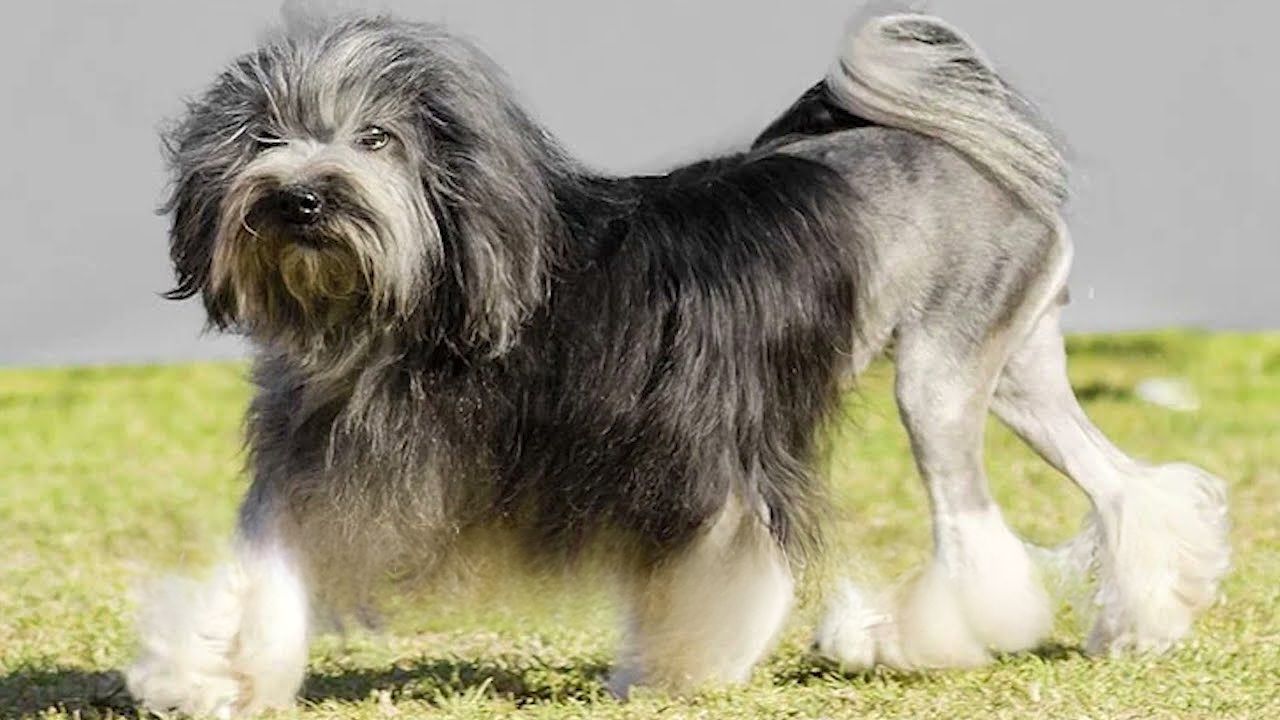
Existing for nearly 500 years, this breed likely originated in Germany and shares ancestry with the same parent stock that gave rise to the Maltese and Bichon Frise. It was once favored by Russian and Italian nobility and is known for the thick “mane” of fur around its neck, according to WebMD.
This non-sporting breed has a petite build and an adaptable nature. Despite its small size, it carries itself with a surprisingly brave attitude, staying alert and protective of its owner. It’s also relatively low maintenance, needing just weekly brushing to keep its coat in good shape.
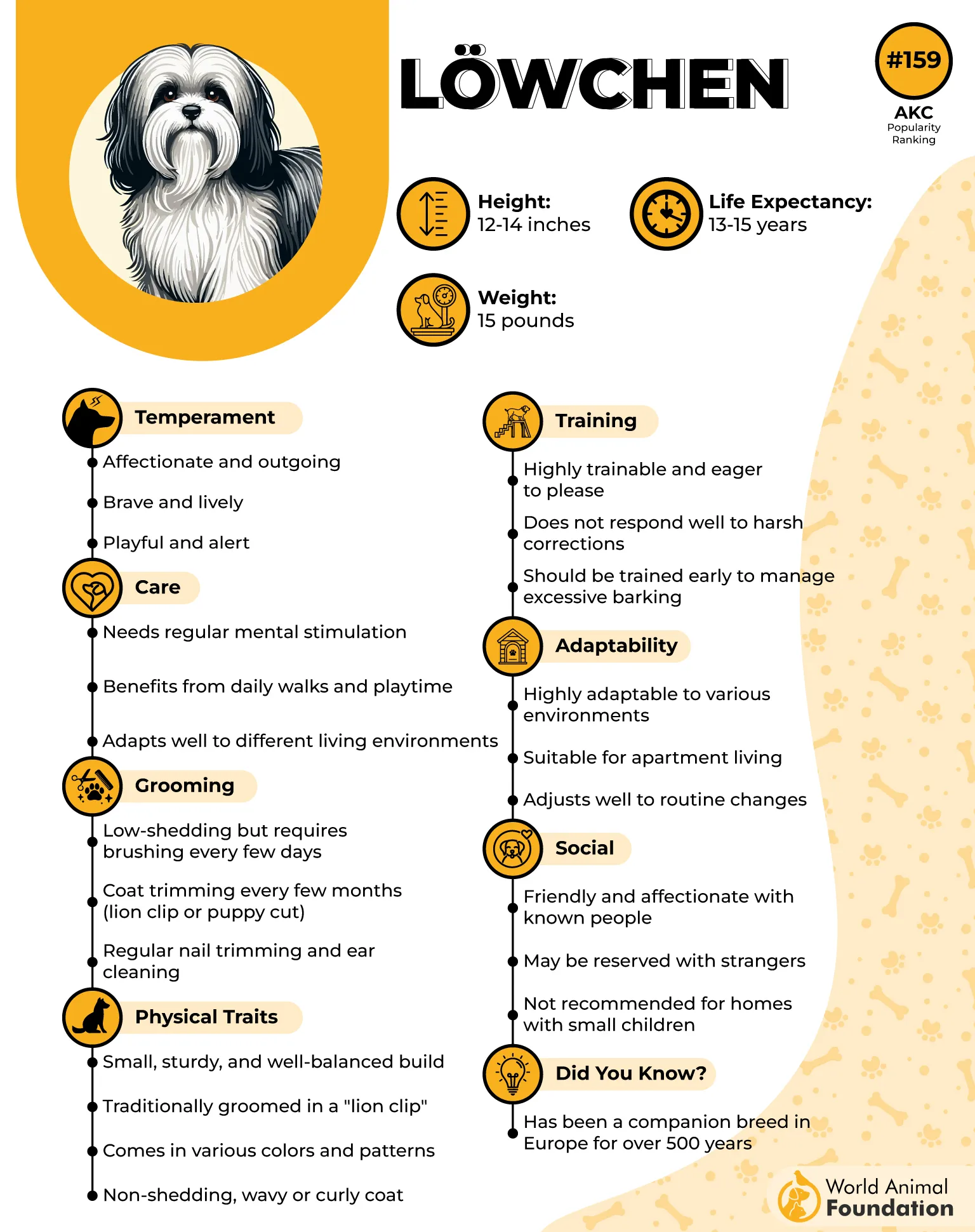
With moderate energy levels, this intelligent little dog does well with short walks, fetching, and mental stimulation games. Its tail sits high in a well-arched plume, giving it that classic alert, confident expression.
2. Bolognese
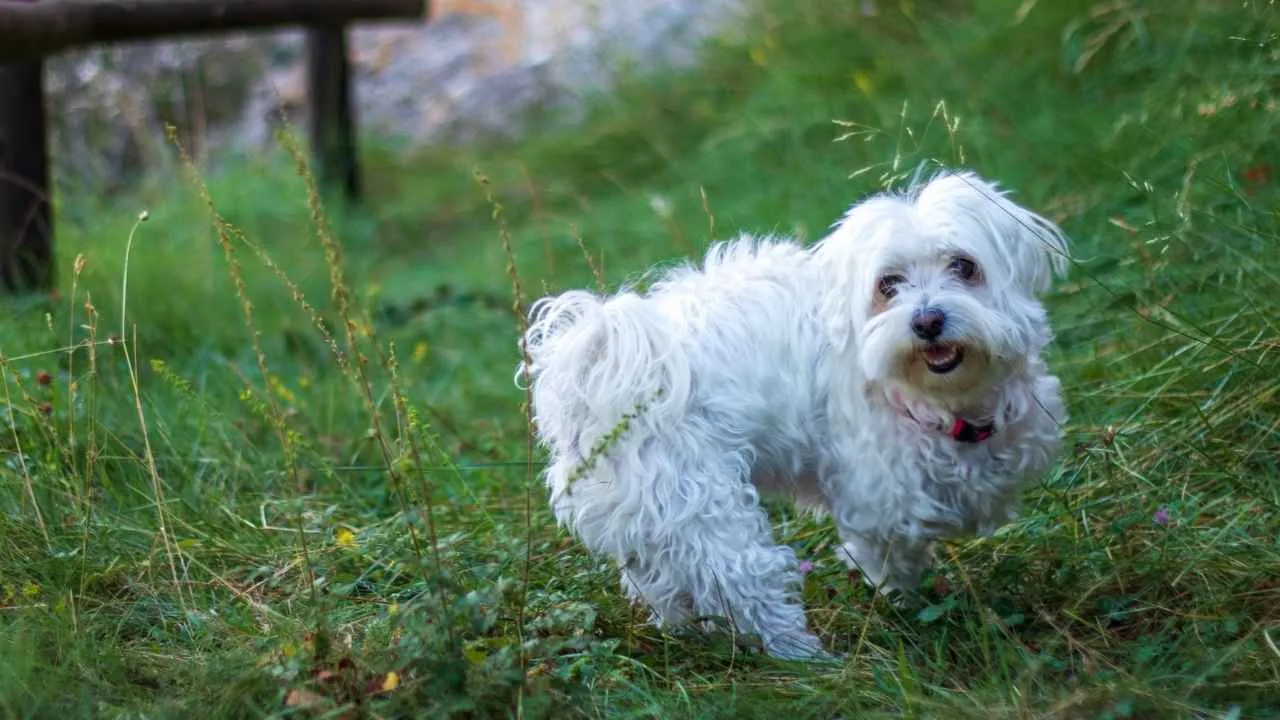
Loved by aristocratic women throughout history, this ancient breed traces its roots back to Rome. As part of the Bichon family, it typically has a curved tail, large expressive eyes, a calm temperament, and fluffy fur. Known as a true “velcro dog,” it hates being separated from its favorite person for long.
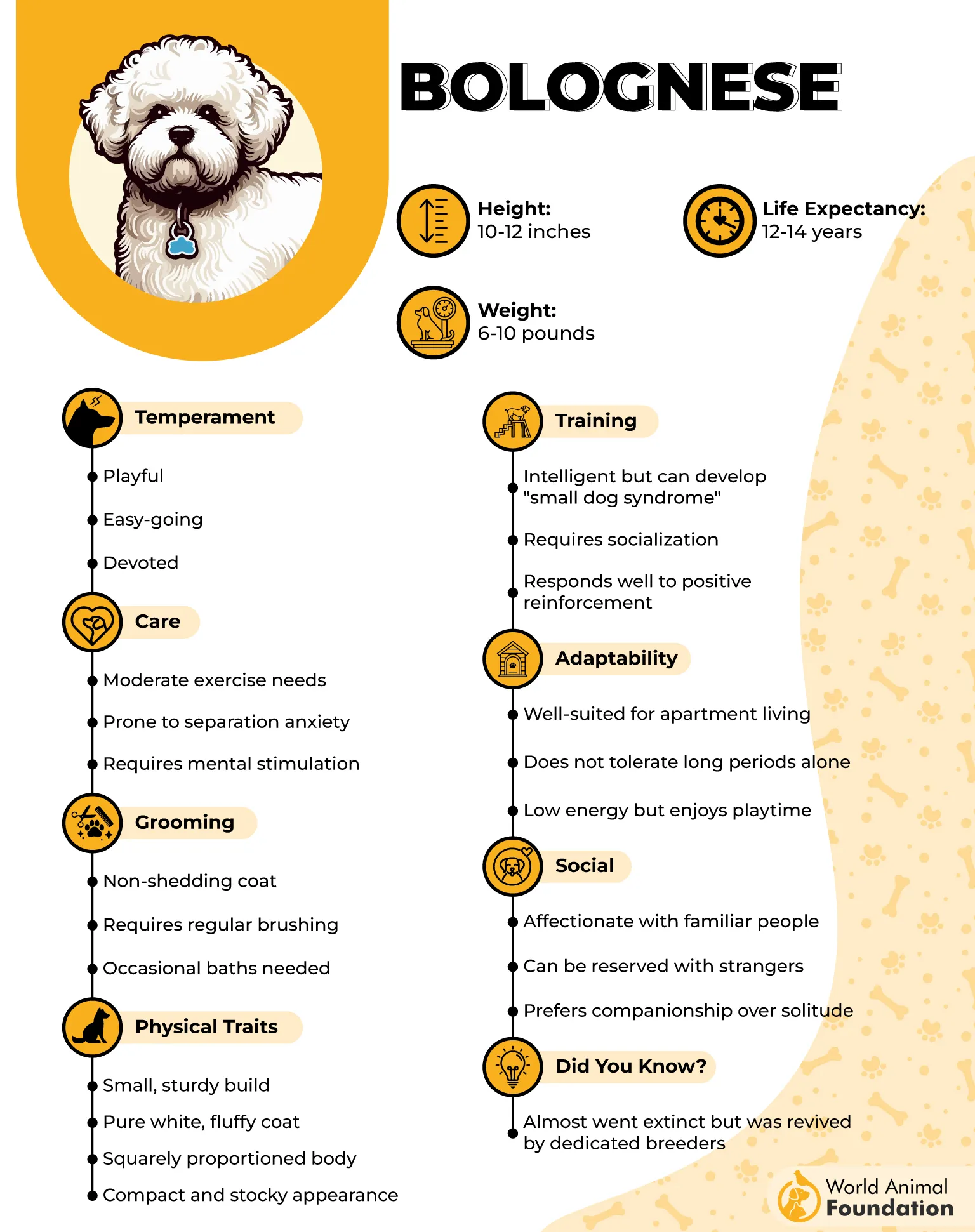
It’s fiercely loyal to its owner, though its gentle, non-aggressive nature means it doesn’t make much of a guard dog. This breed has a plush, snow-white coat with a beautifully silky texture. It tends to be relaxed around familiar faces but a bit reserved with strangers, which makes it a great fit for first-time pet parents.
Regular grooming with a detangling comb, along with monthly baths, helps keep the coat looking its best. It’s also prone to tear staining around the eyes, so gently wiping them with a soft cloth on a regular basis helps keep things clean. Since it’s not an especially high-energy breed, moderate exercise is more than enough to keep it happy.
3. Russian Toy
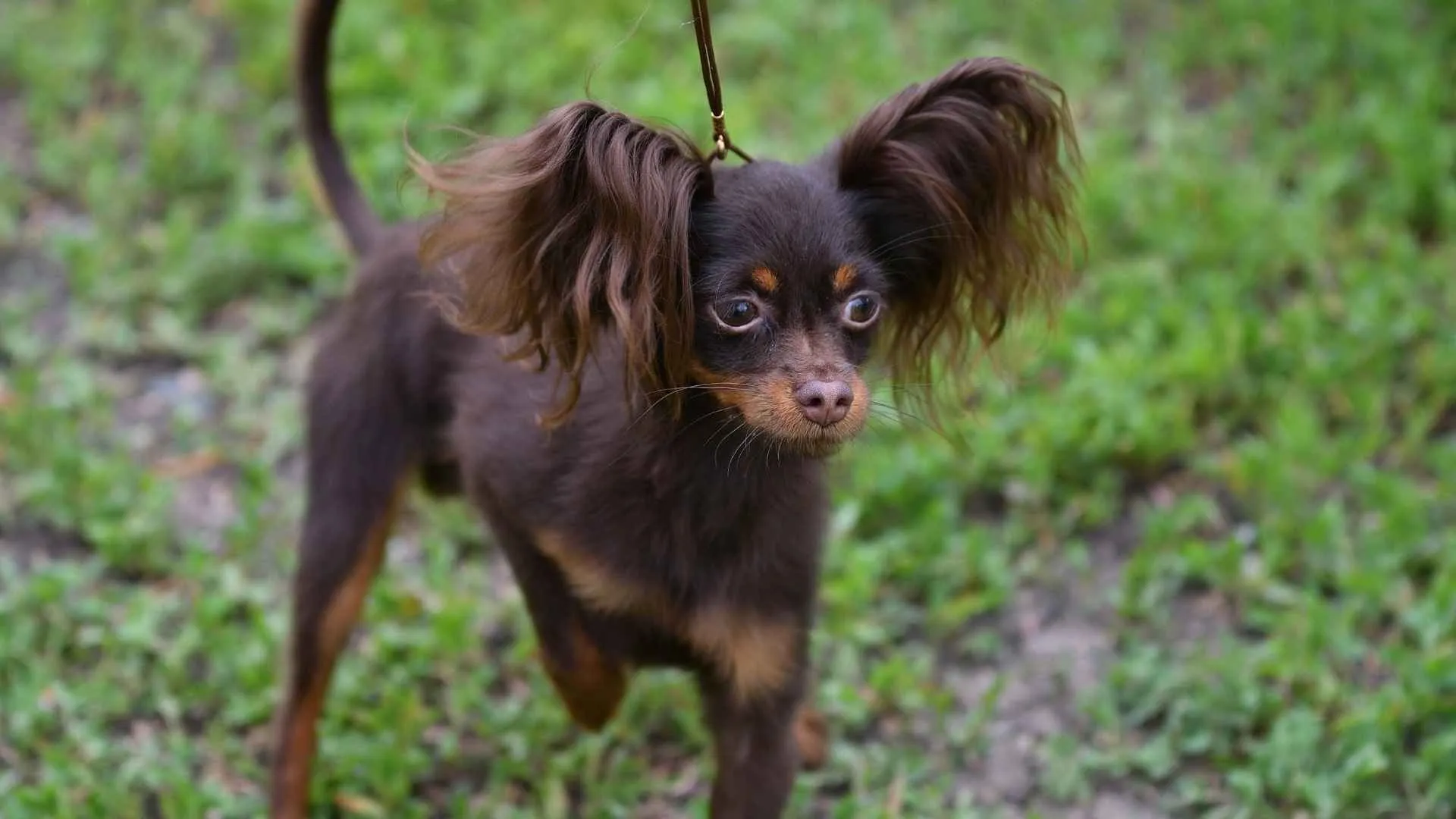
This tiny breed was originally developed in Russia from the English Toy Terrier. It nearly went extinct twice, once during the rise of Communism in the 1920s, and again around the fall of the Iron Curtain in the 1990s. Its original purpose was to serve as a watchdog and ratter, according to Wikipedia.
Because of its watchdog roots, this breed can be a bit yappy, quick to bark at anything unusual. Proper socialization and consistent training from an early age go a long way, especially around other pets and children.
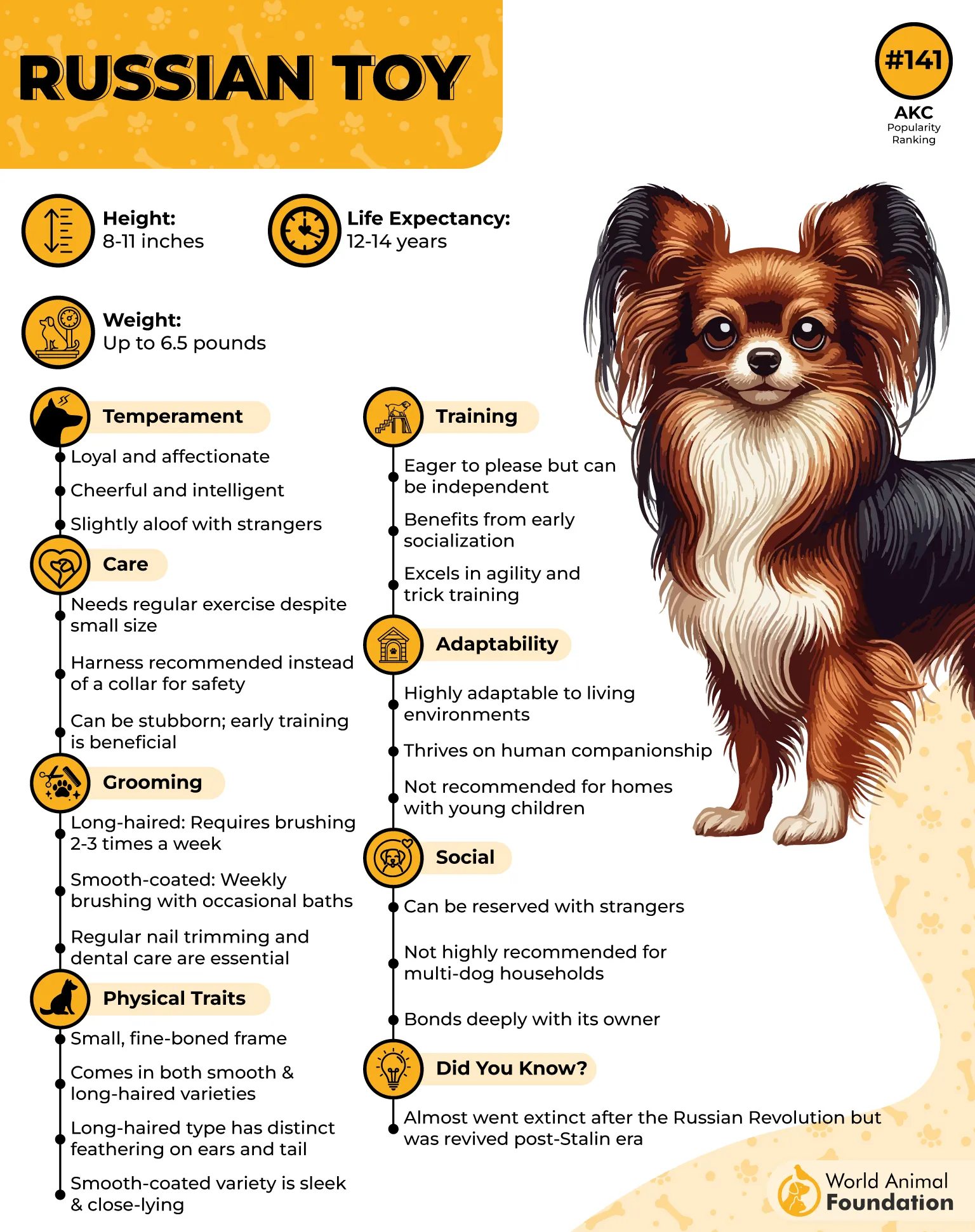
It genuinely enjoys learning basic manners and picking up new training cues. And as a bonus for your wallet, its small size means modest food costs each month.
As an energetic little breed, it needs at least an hour of exercise daily; brisk walks, gentle fetch, puzzle toys, and dog sports all work well. Grooming needs depend on coat type: the short-coated variety only needs weekly brushing with a bristle brush, while the long-coated variety needs brushing daily.
4. Russian Tsvetnaya Bolonka
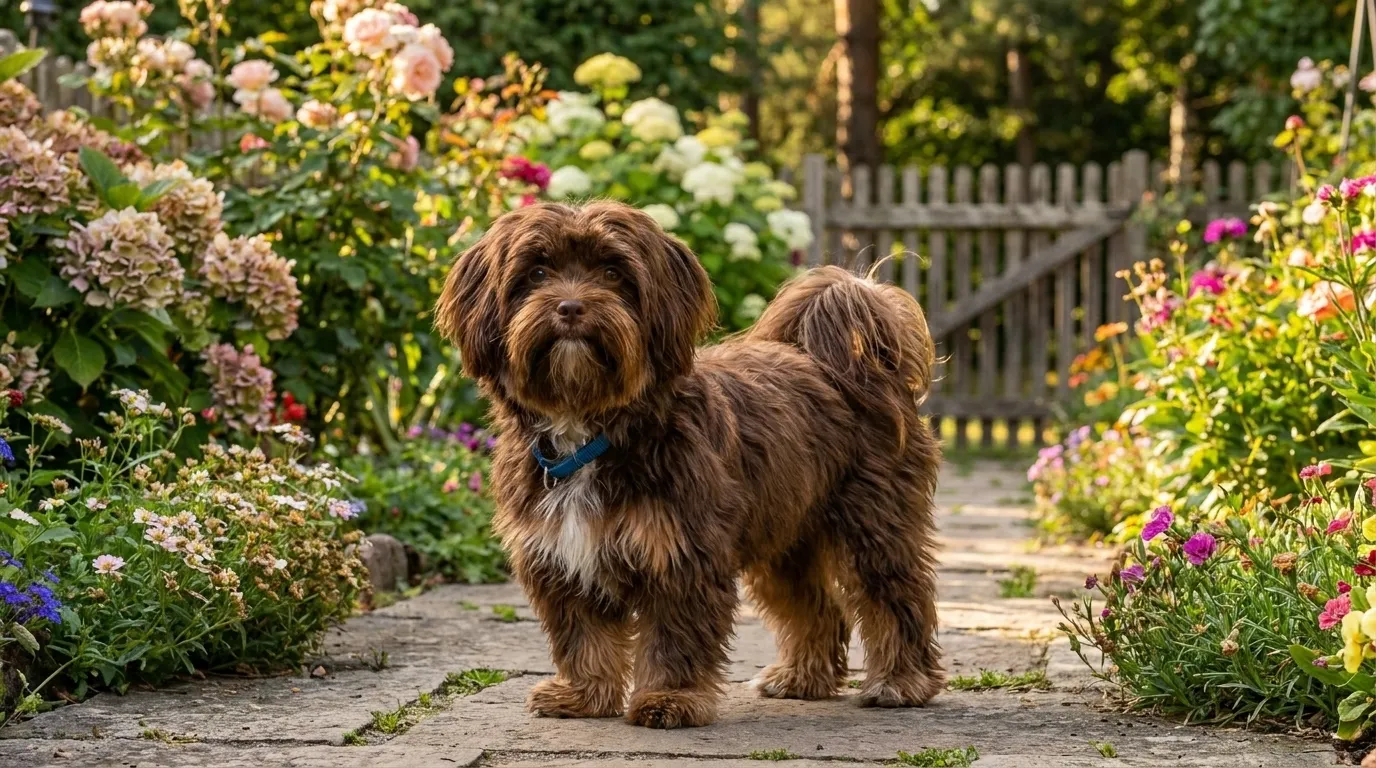
This breed was originally developed in Saint Petersburg and Moscow back in the 18th century, created by crossing the Bichon Frise, Pekingese, and French Bolognese with Russian street dogs. When demand grew for a smaller companion breed in the 1960s, the breed was selectively bred down in size, eventually giving us the modern-day Russian Tsvetnaya Bolonka.
Known for its alert expression, outgoing personality, and graceful movement, this breed’s hair is often tied up in a small bow to keep it out of its face.
Interestingly, the breed’s coat actually comes in various colors, not just black, though darker coats can help hide everyday dirt and keep the dog looking tidy. It’s well suited to apartment living, particularly in a calmer household, and despite being alert, it isn’t a big barker.
Treats should be kept to no more than about 10% of daily calorie intake to help prevent obesity. Thanks to its lap-dog nature, minimal exercise is enough to keep it content. That said, its independent streak can make training a bit of a challenge, so positive reinforcement and consistent obedience training are essential.
5. Havanese
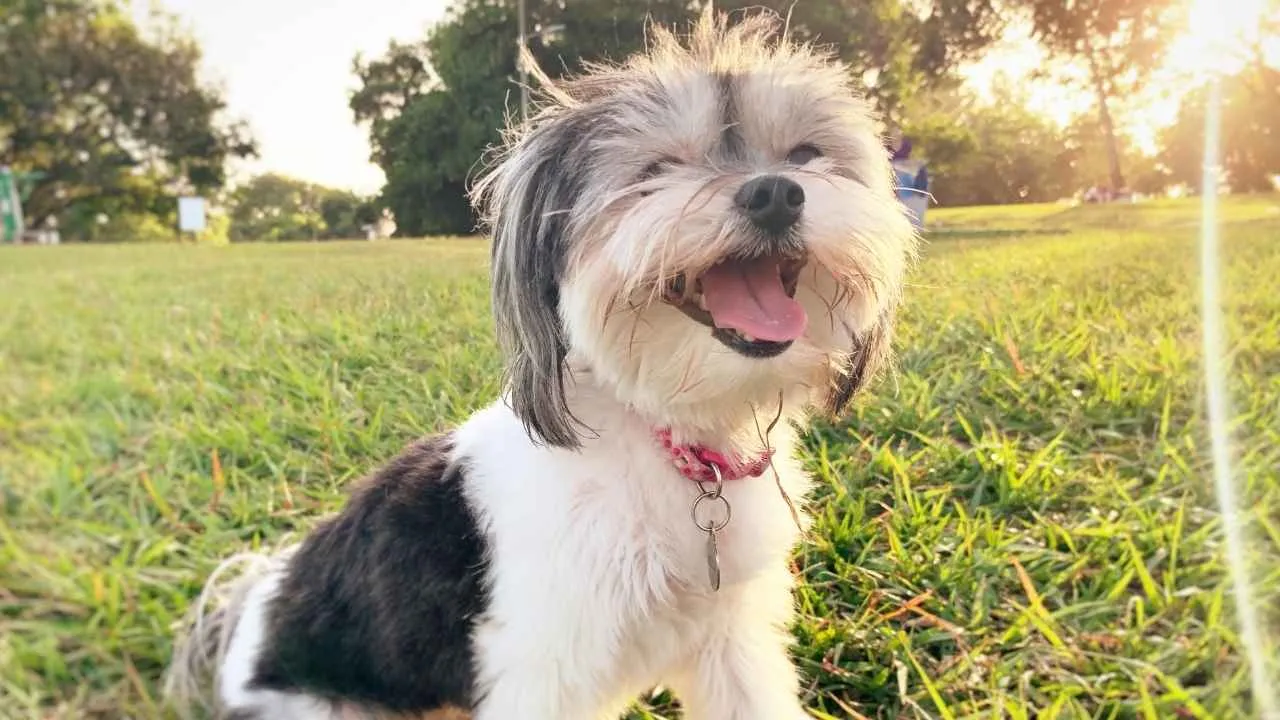
Originating in the Mediterranean region centuries ago, this Bichon-type dog was reportedly used by Spanish traders as a gift to help establish trade relationships. It picked up nicknames like “Habanero” and “White Cuban” along the way, eventually making its way back to Europe, where it even found a role as a circus performer, according to Omlet.
This breed is a true social butterfly, getting along well with just about everyone, strangers included. Affectionate by nature, its favorite activity is pretty much cuddling you nonstop.
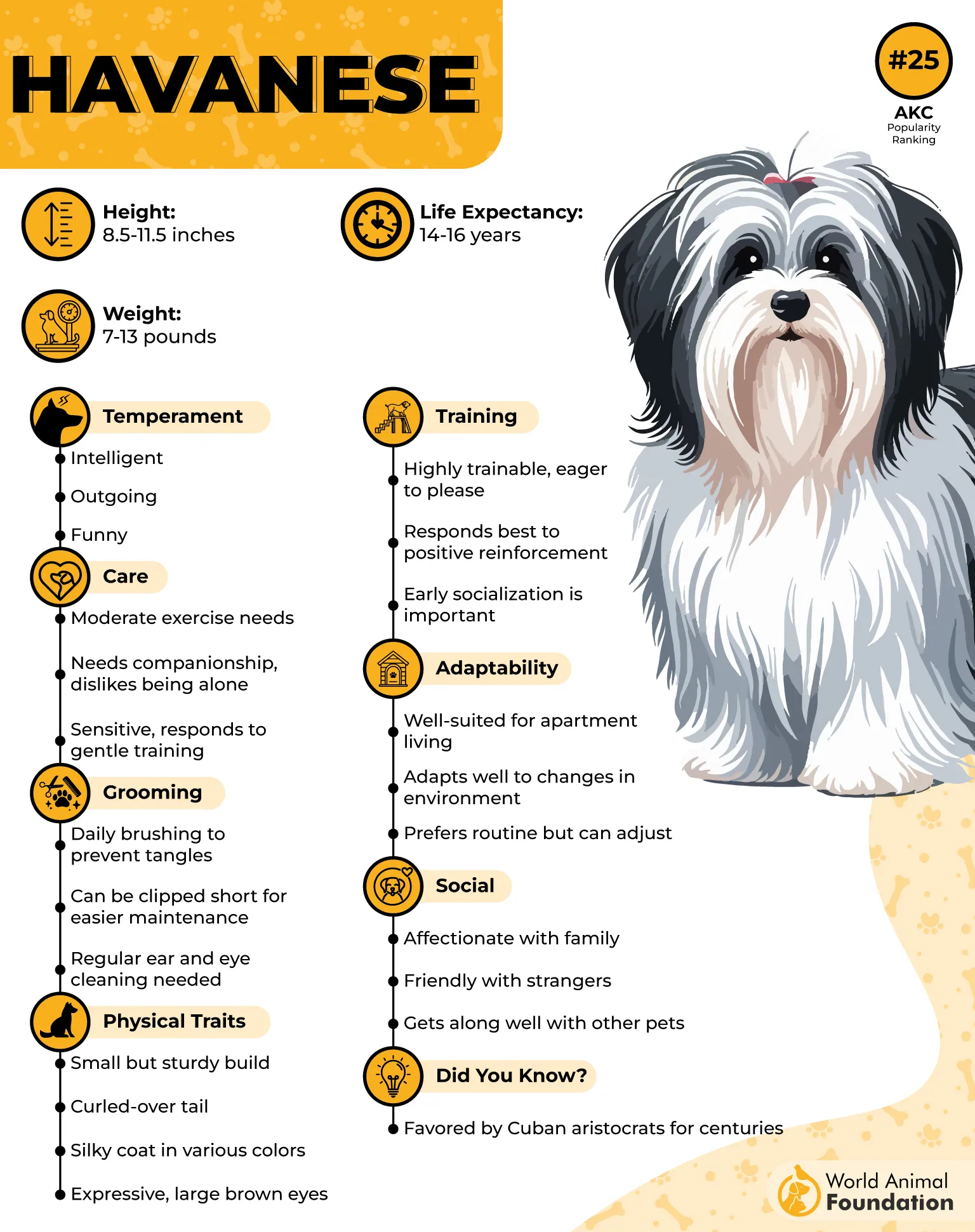
As a bit of an attention-seeker, it loves performing fun tricks just to keep the spotlight on itself. It’s also remarkably in tune with its owner’s emotions, which is part of why it’s often used as a therapy dog.
This cheerful breed has a surprisingly cat-like streak, often picking a favorite vantage point around the house and settling in for hours to watch the world go by. It has moderate exercise needs; around 20–30 minutes a day is plenty.
6. Cavalier King Charles Spaniel
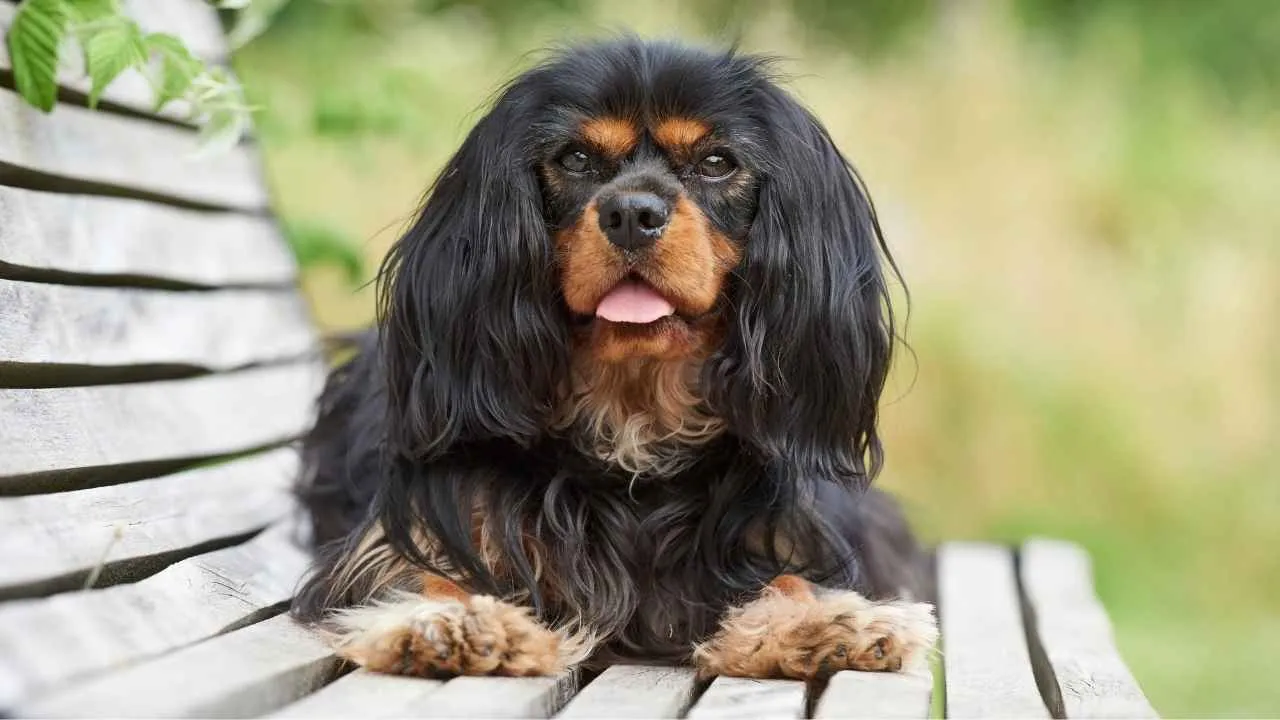
The history of this royal breed dates back to the 16th century. Descended from the toy spaniel, it earned the nickname “comforter” thanks to its gentle, soothing temperament. During the Victorian era, selective breeding gradually changed its appearance, eventually giving rise to the flatter-faced King Charles Spaniel, and later, the Cavalier King Charles Spaniel as we know it today.
This breed tends to have a laid-back, easygoing nature, with a tail that wags freely when it’s excited. It’s not a particularly demanding dog and mostly just wants your attention when it’s time to cuddle.
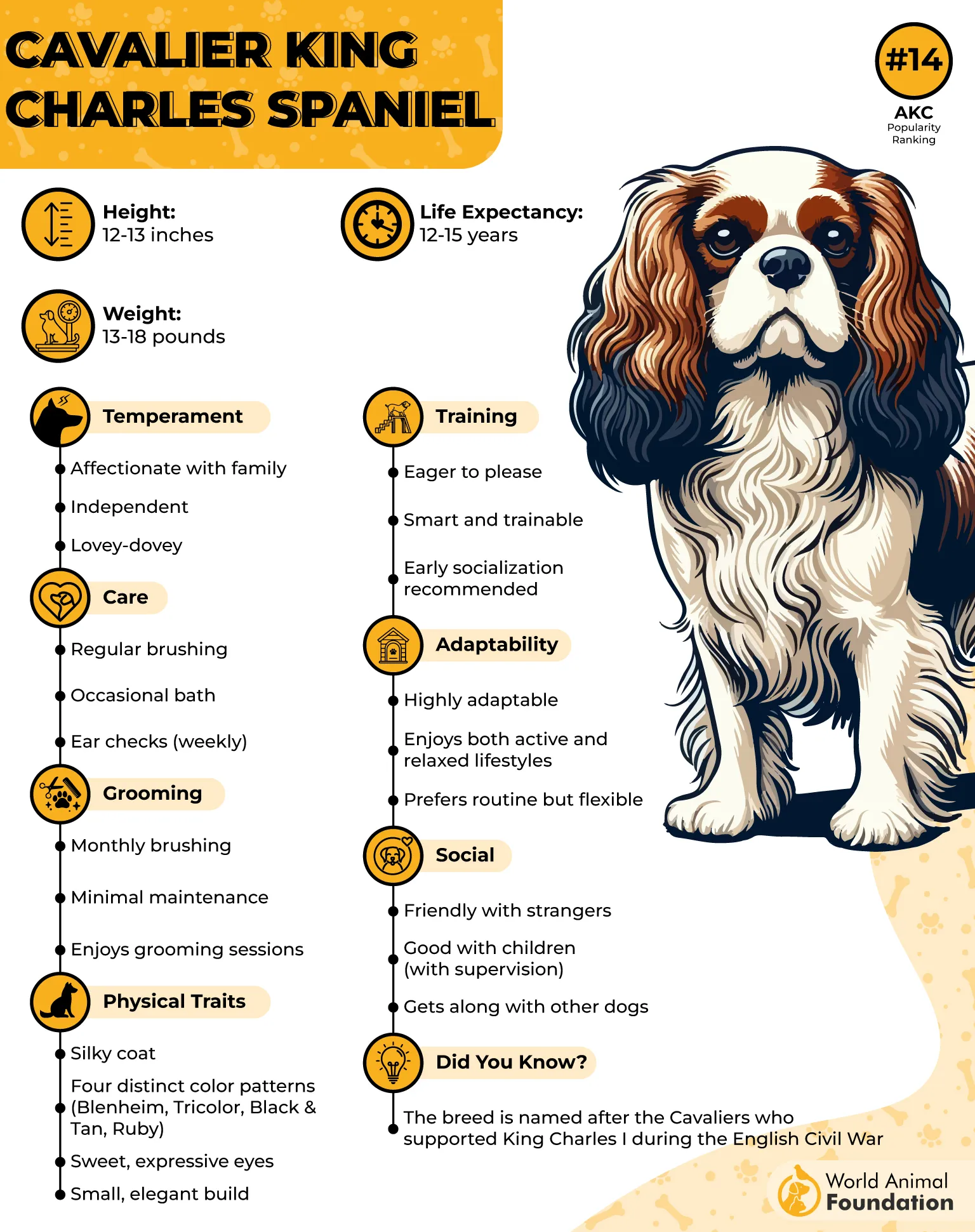
Sometimes a bit timid, it genuinely seems to live for making its owner smile, though it can develop separation anxiety if left alone too often.
Since it isn’t much of a barker, this breed adapts well to smaller living spaces. Adult dogs need about 30–40 minutes of daily exercise. That said, its deep-rooted hunting instincts mean it loves following interesting scents, so leash training is definitely worth prioritizing.
7. Australian Terrier
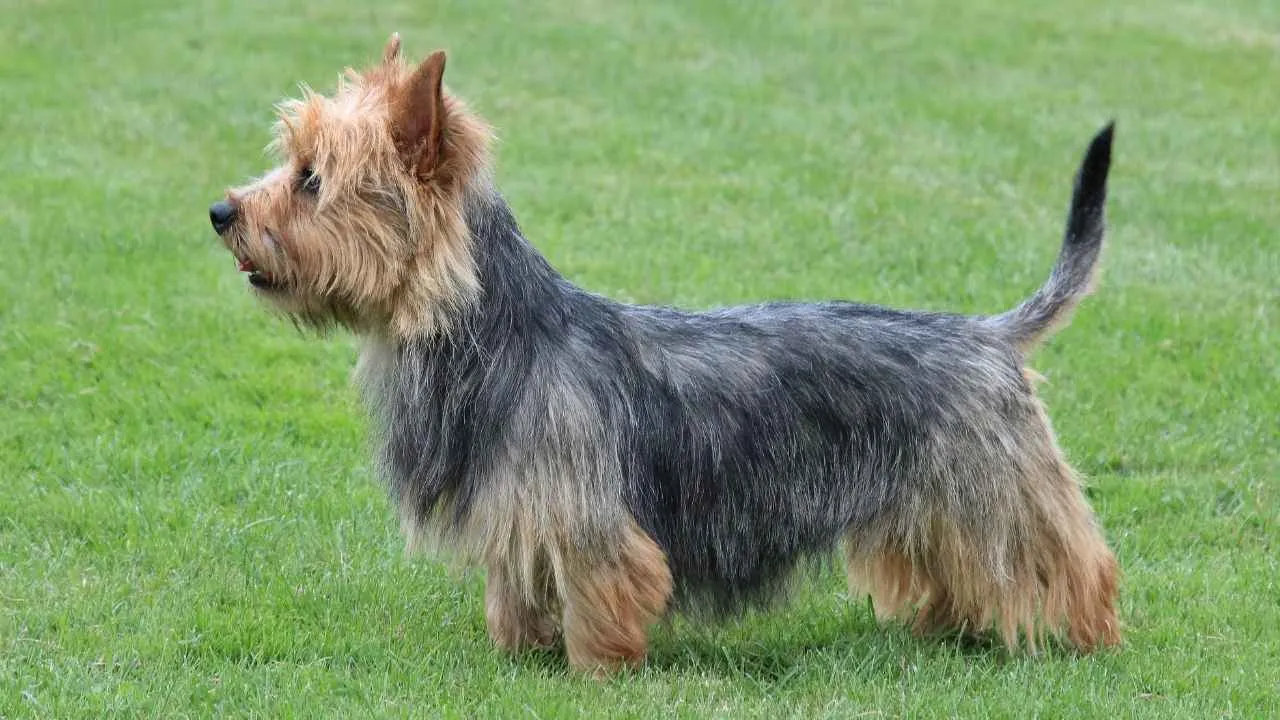
This breed was originally called the “Rough Coated Terrier,” with the name officially changing in 1892. Several related terrier breeds contributed to its development, including the Cairn Terrier, Dandie Dinmont Terrier, and Yorkshire Terrier.
Friendly by nature, this breed tends to get along well with other dogs and even cats when properly trained. That said, it can show a bit of a bossy streak and some protectiveness around unfamiliar animals.
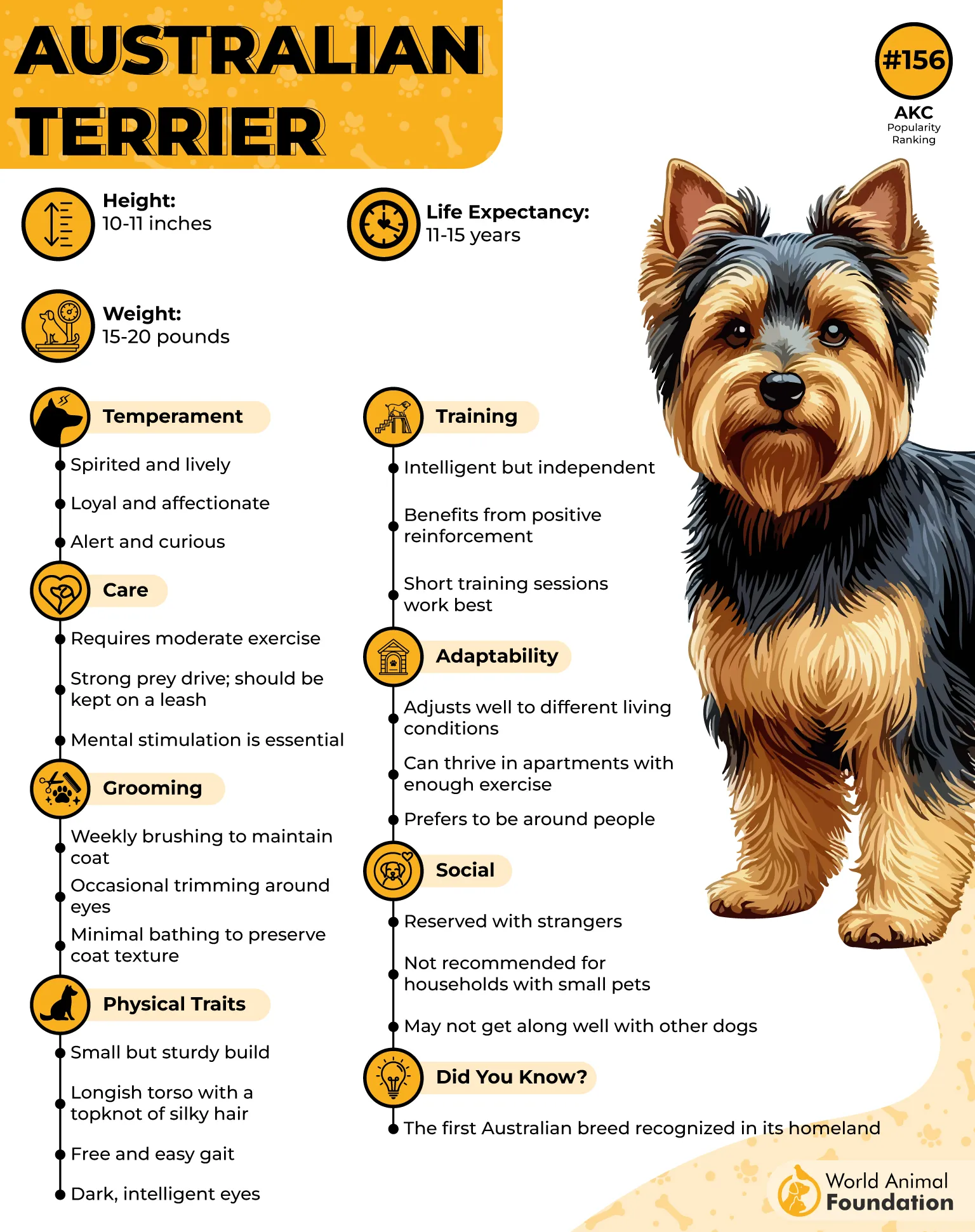
It thrives with a job to do and stays happiest when it has a sense of purpose. Grooming is fairly low-effort too; just weekly brushing keeps the coat tangle-free.
Around 30–45 minutes of daily activity is enough to keep this breed satisfied. Because of its hunting heritage, it may develop a fondness for digging, and a securely fenced yard is a smart way to prevent it from taking off after prey.
Conclusion
Your first dog will teach you far more than how to walk on a schedule or keep treats in every pocket. It will teach patience, consistency, and the joy of earning unconditional trust. While every dog has its own personality, the breeds in this guide are known for qualities that make the journey easier for beginners. They are generally friendly, adaptable, and willing to learn alongside you.
No breed is completely maintenance-free, but the right match can make daily life natural instead of overwhelming. Spend time learning about your future companion, prepare your home, and commit to responsible care. With realistic expectations and plenty of love, your first dog can become a lifelong best friend.
