




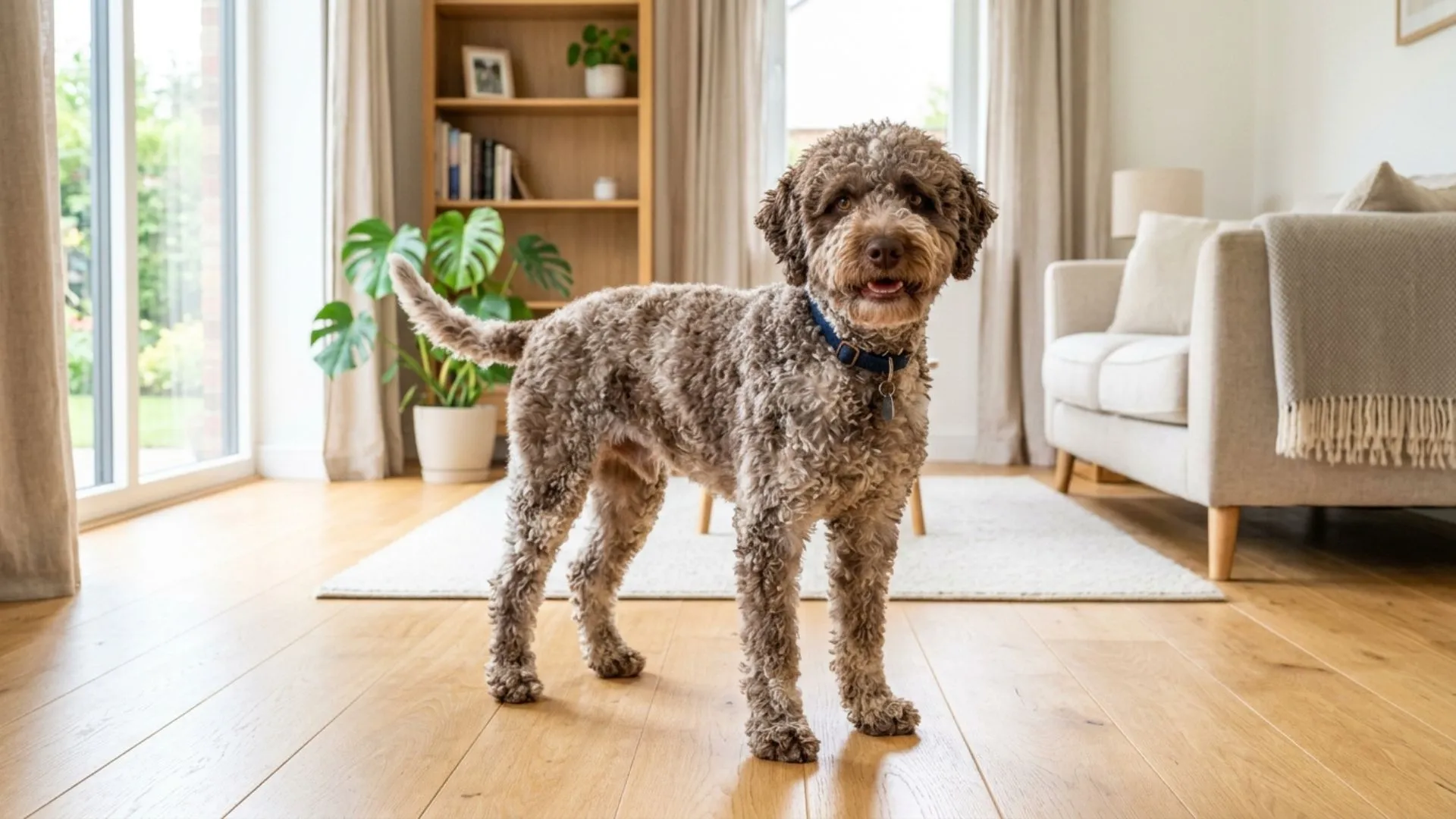
Having a furry companion brings a joy that only true dog lovers fully understand. However, dealing with dog hair on clothes, furniture, and carpets can sometimes be frustrating. The good news is that low-shedding dog breeds offer a great solution: less fur around the home, less cleanup, and the same love and companionship you expect from any dog.
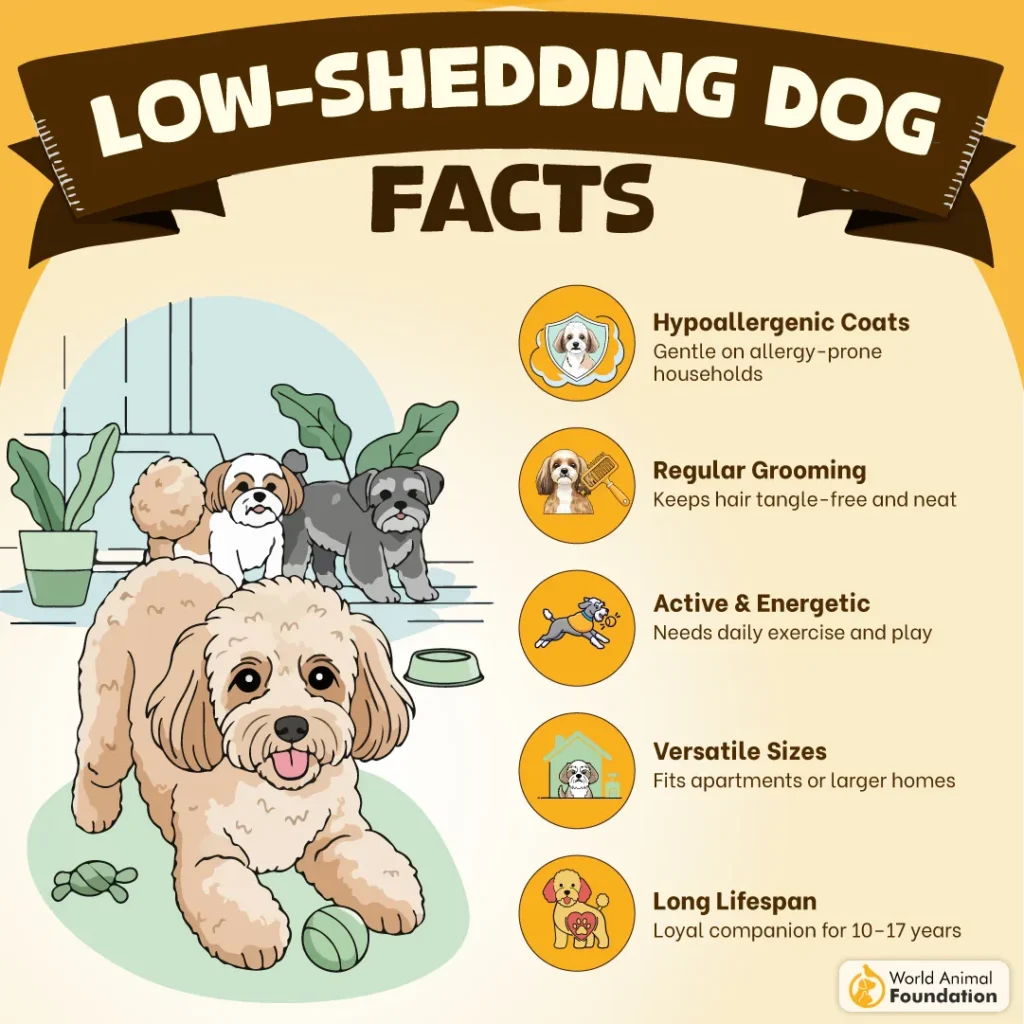
These breeds are often referred to as “hypoallergenic,” although no dog is completely free of allergens or shedding. While they may still drool or shed minimally, they are generally much easier to maintain compared to heavier-shedding breeds. Like all dogs, they still require regular grooming and basic care to stay healthy and comfortable.
One of the biggest advantages of low-shedding breeds is that they can be a better option for allergy-sensitive individuals, allowing more people to enjoy the companionship of a dog without constant sneezing or irritation.
These dogs are a delight to live with—often playful, affectionate, and easygoing, with coats that are as beautiful as they are practical.
So, if you’re ready to enjoy a cleaner home without giving up the joy of having a pet, here are ten low-shedding dog breeds that help keep your space neat, tidy, and far less fur-filled.
Top Dog Breeds with Reduced Shedding: Keep Your Home Clean
1. Poodle
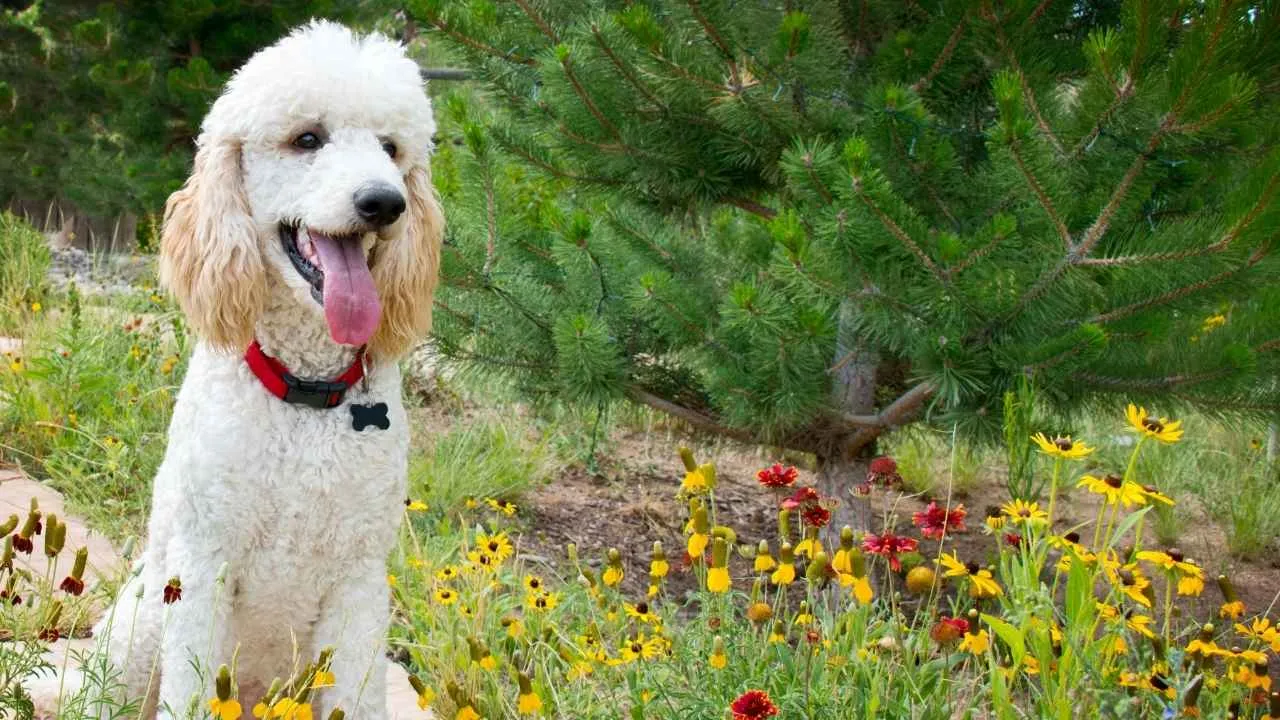
The Poodle is one of the most popular hypoallergenic dog breeds in the world, widely admired for its intelligence, elegance, and versatility. It comes in three sizes: Standard, Miniature, and Toy, making it a suitable choice for a wide range of homes and lifestyles. Highly affectionate and adaptable, Poodles fit well into both active households and quieter living environments.
Their signature curly coat helps trap loose hair instead of releasing it into the environment, which reduces shedding around the home. Because their coat grows continuously, it does not fall out in the same way as many other breeds, making them a preferred option for people looking to minimize allergens and mess.
Coat Care
The Poodle’s curly coat requires regular maintenance, as it can easily become matted without proper care. Most owners opt for professional grooming every 6 to 8 weeks, although home grooming is also possible. Daily brushing with a slicker brush and steel comb helps prevent tangles, while regular bathing keeps the coat clean and healthy by removing loose hair and dirt buildup.
Why Choose This Breed?
Low-shedding coat helps reduce allergens in the home
Highly intelligent and easy to train
Friendly and social with both people and other dogs
2. Maltese
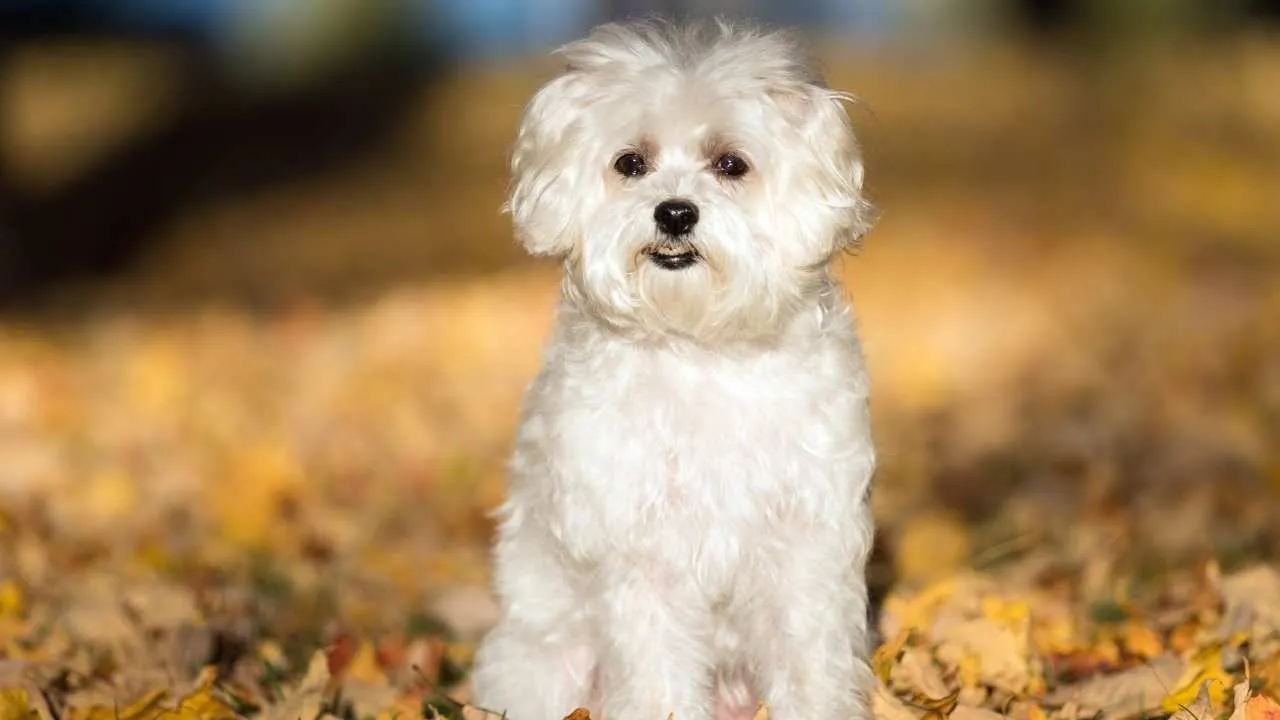
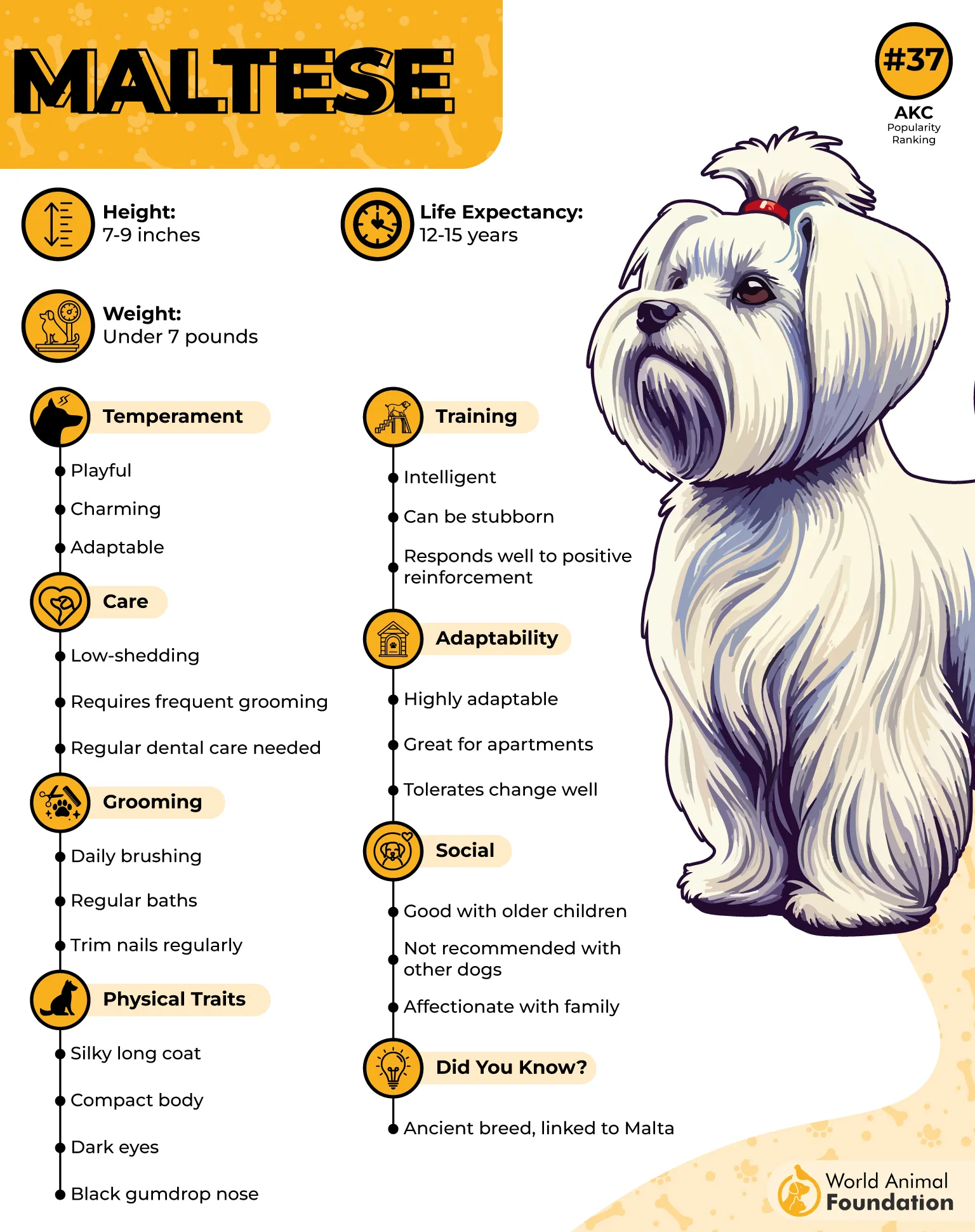
The Maltese is a small companion breed admired for its long, silky white coat that flows gracefully with movement. Despite its elegant appearance, it has a single-layer coat, which contributes to significantly lower shedding compared to many double-coated breeds. While beautiful, this coat does require consistent grooming to stay healthy and tangle-free.
The Maltese is a devoted, family-oriented companion that forms strong bonds with its owners. Its affectionate yet gentle nature makes it a great choice for individuals and families who want a loving pet that is also relatively easy to manage in daily life.
Coat Care
The Maltese’s long, silky coat needs regular maintenance to prevent tangles and matting. When kept in a full coat, daily brushing is recommended. Many owners choose a shorter trim, in which case brushing 2–3 times per week is usually sufficient. A soft bristle brush helps maintain coat health and remove debris, while regular baths keep the fur clean and shiny by distributing natural oils evenly.
Why Choose This Breed?
Calm, easygoing temperament ideal for apartment living
Low shedding with hair-like coat, reducing household mess
Affectionate and loyal companion with strong human bonding
3. Yorkshire Terrier
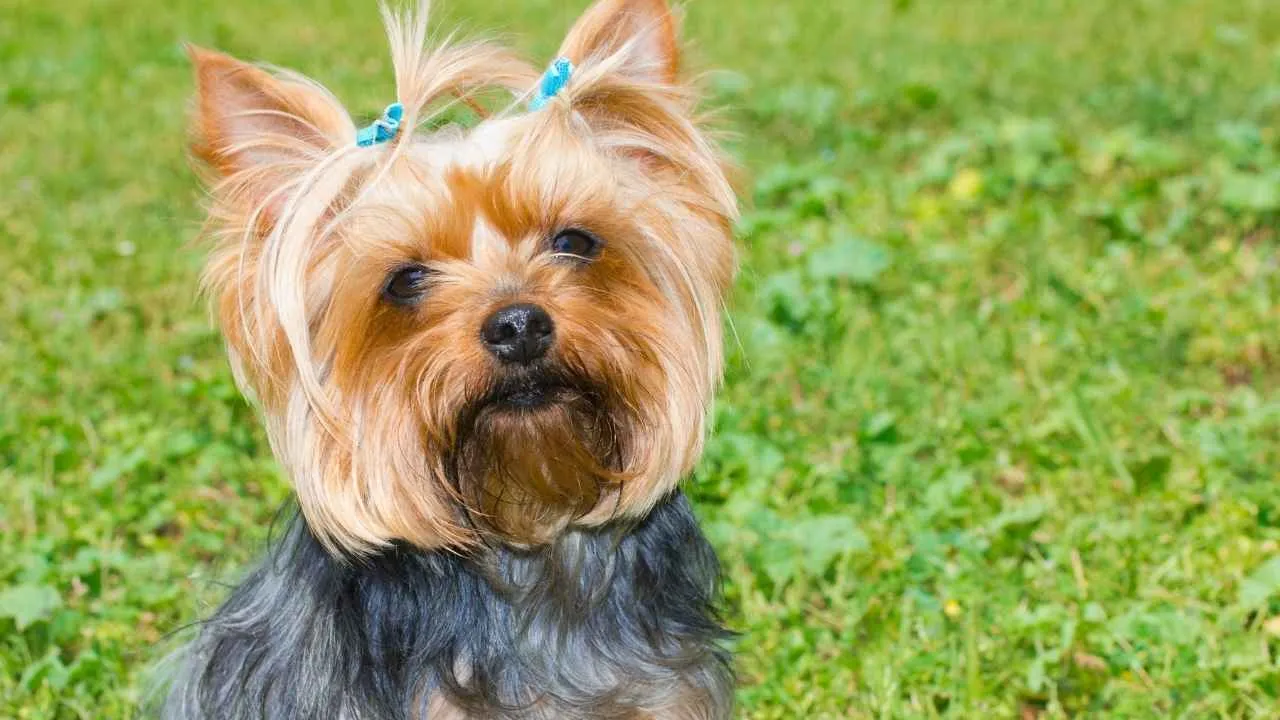
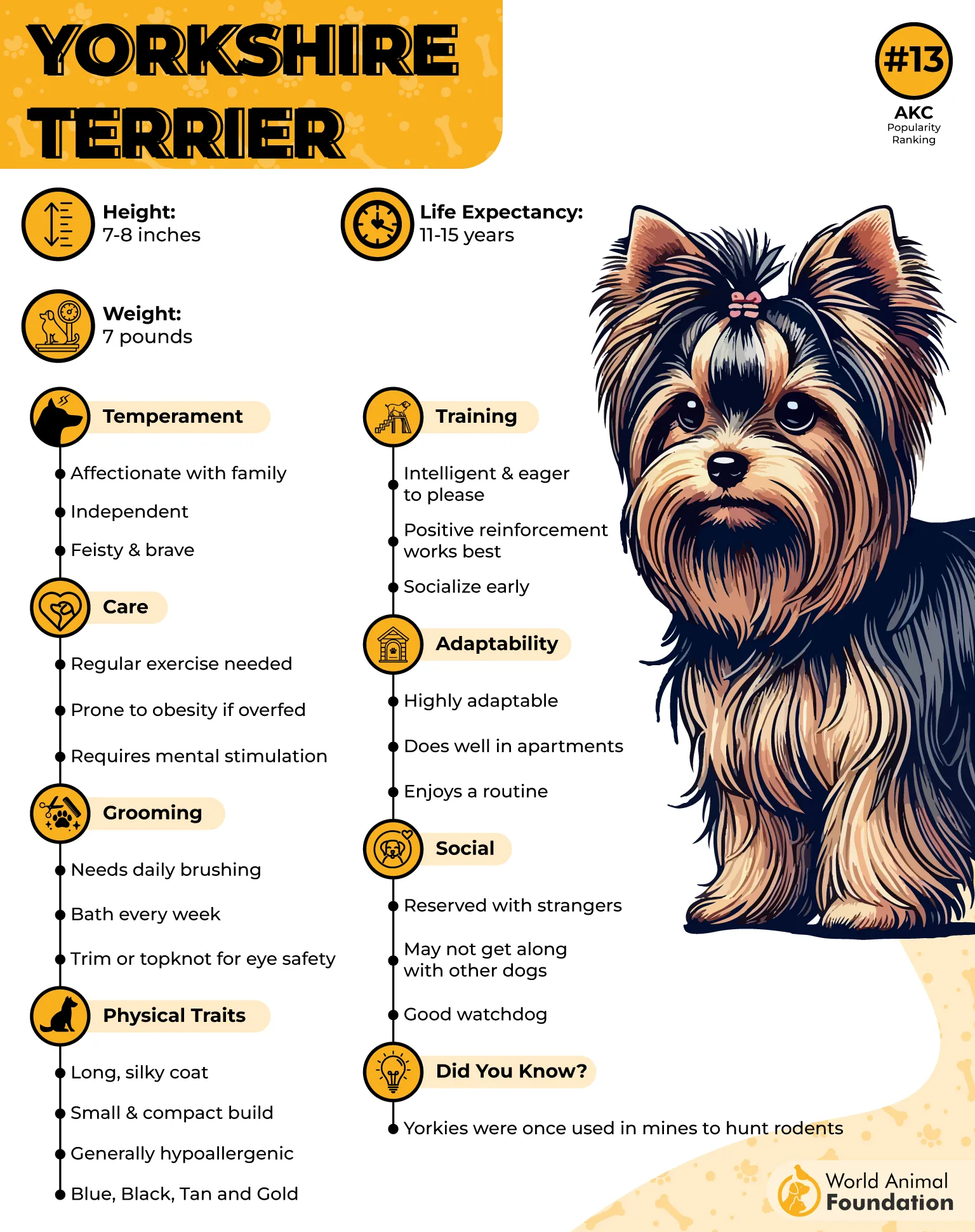
The Yorkshire Terrier is one of the most popular toy breeds, known for its fine, silky, floor-length coat and bold personality. Despite its glamorous appearance, it is a low-shedding breed, with hair that more closely resembles human hair than typical dog fur. Some Yorkies may also have slightly wavy or wiry coat variations, each requiring different levels of grooming care.
This breed is often seen in its signature steel-blue and tan coloring, sometimes styled in a fashionable “puppy cut,” which is especially practical for easier maintenance. As noted by PetMD, the Yorkie’s coat is one of its most distinctive features, but its personality is even more striking, often far larger than its small frame.
Coat Care
The Yorkshire Terrier’s long coat requires daily brushing to prevent tangles and matting. A pin brush is commonly used to keep the hair smooth, healthy, and knot-free. Many owners opt for a shorter “puppy cut” to simplify grooming, though regular professional grooming may still be needed.
Some Yorkies are prone to dry or flaky skin, so using a gentle, moisturizing shampoo during baths can help maintain coat and skin health.
Why Choose This Breed?
Lively, alert, and adaptable companion suited for various living spaces
A low-shedding coat that is often considered more allergy-friendly
Intelligent and confident personality in a small, manageable size
4. Shih Tzu
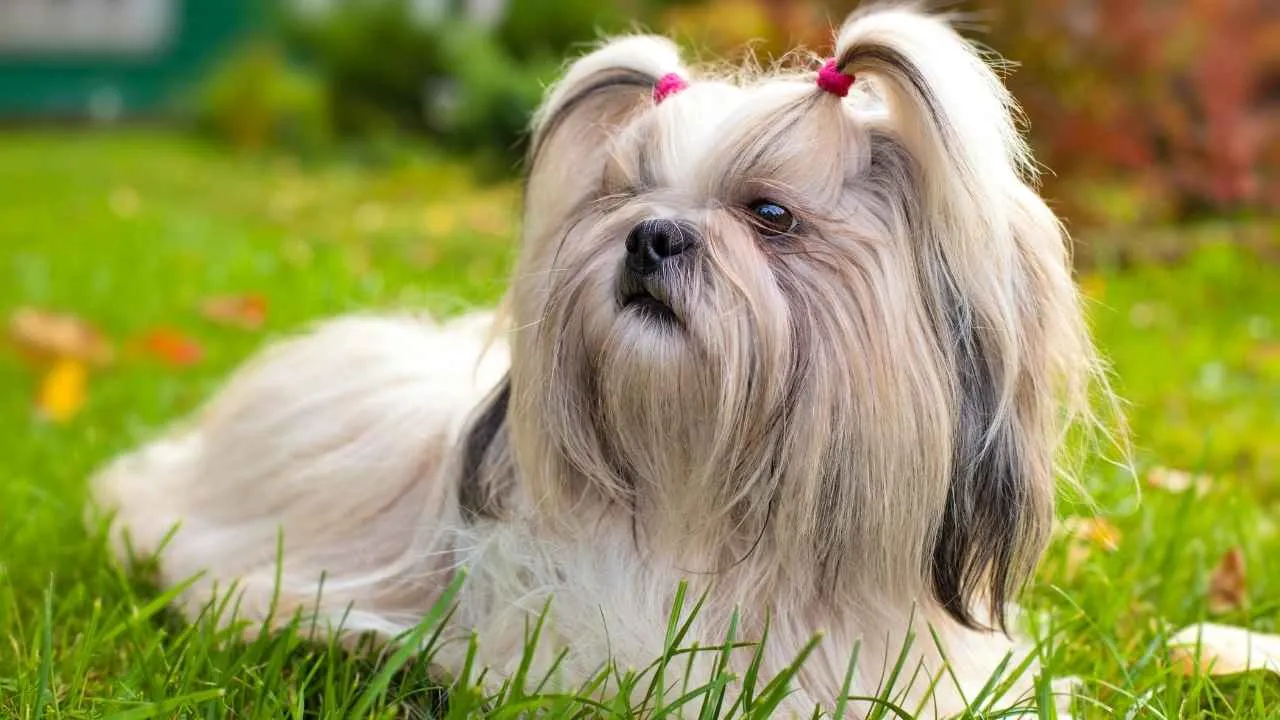
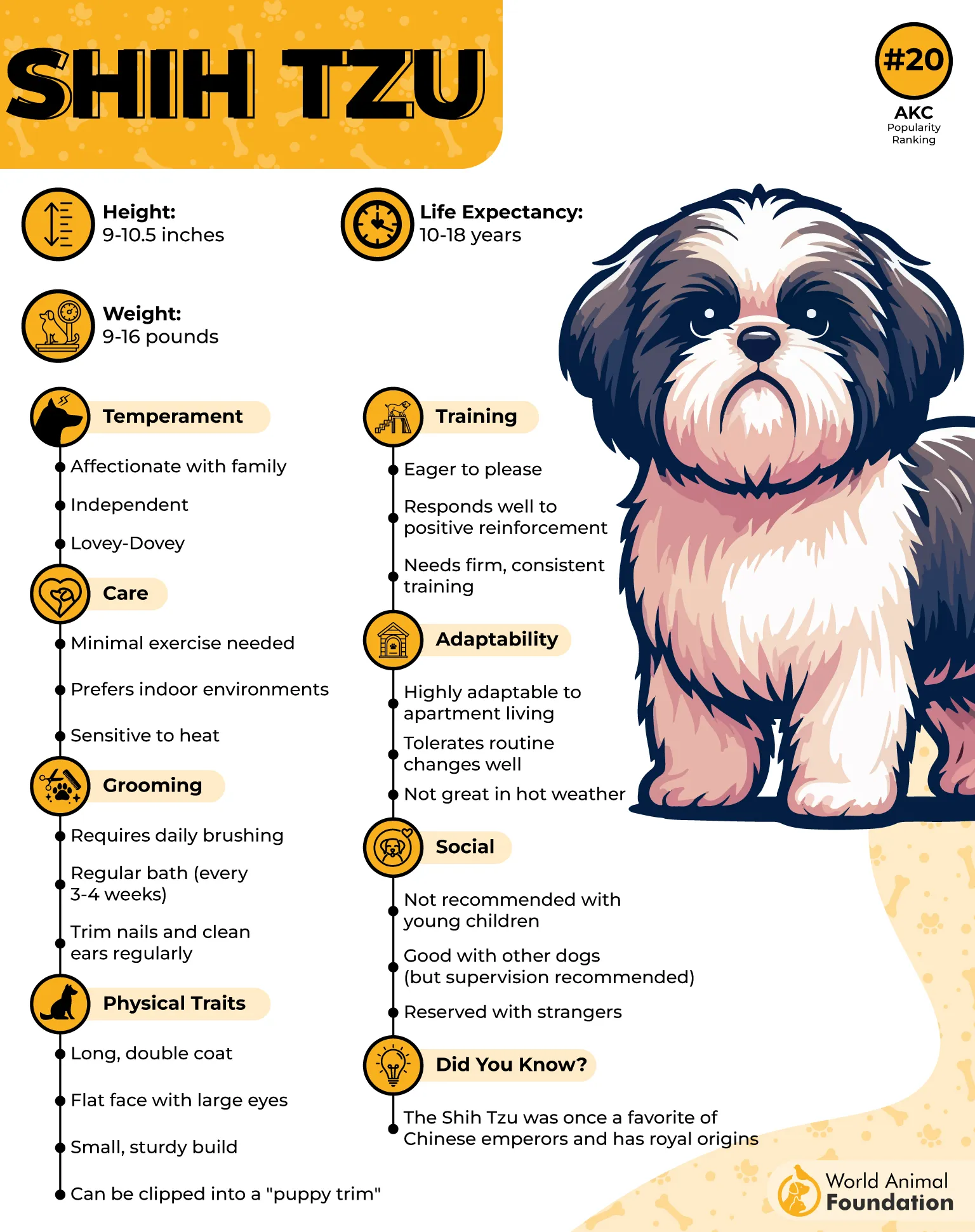
The Shih Tzu is one of the most beloved lap dog breeds, admired for its long, flowing coat and affectionate personality. Despite its luxurious appearance, it sheds relatively little, as much of the loose hair tends to remain within the coat rather than spreading across floors and furniture. Their fluffy, elegant look often draws attention wherever they go.
An ancient Chinese companion breed, the Shih Tzu has been cherished for centuries as a loyal, human-focused companion. They thrive on close interaction and enjoy being part of daily family life. Like all breeds, they require regular grooming to keep their coat healthy, soft, and tangle-free.
Coat Care
Shih Tzus need brushing or combing every other day to prevent matting and tangling. Many owners choose to keep their coat trimmed shorter for easier maintenance, which gives it a softer, more manageable texture.
Regular grooming, including baths every 3–4 weeks, helps preserve natural skin oils and maintain coat health. Ear care is also important, as their floppy ears can trap moisture and debris if not cleaned regularly.
Why Choose This Breed?
Low-shedding coat, helping keep homes cleaner
Friendly, social temperament suited for families and companionship
Affectionate lap dog that enjoys human interaction and bonding
5. Bichon Frise
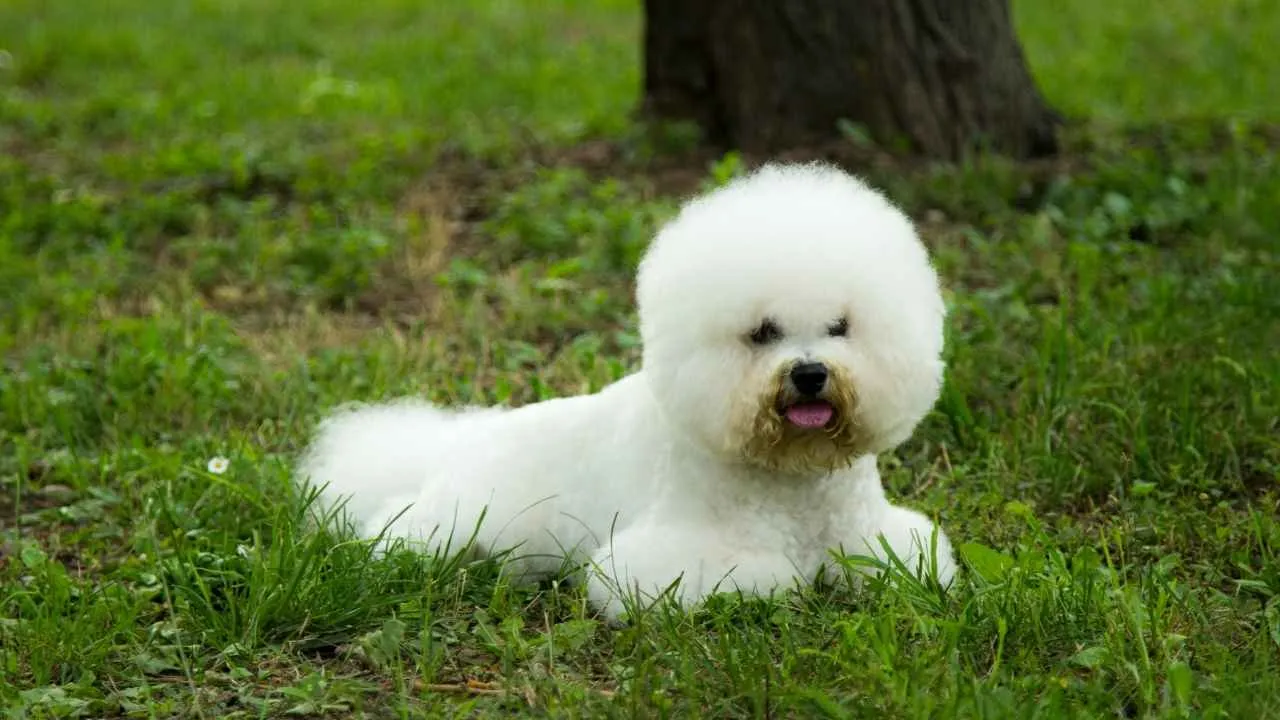
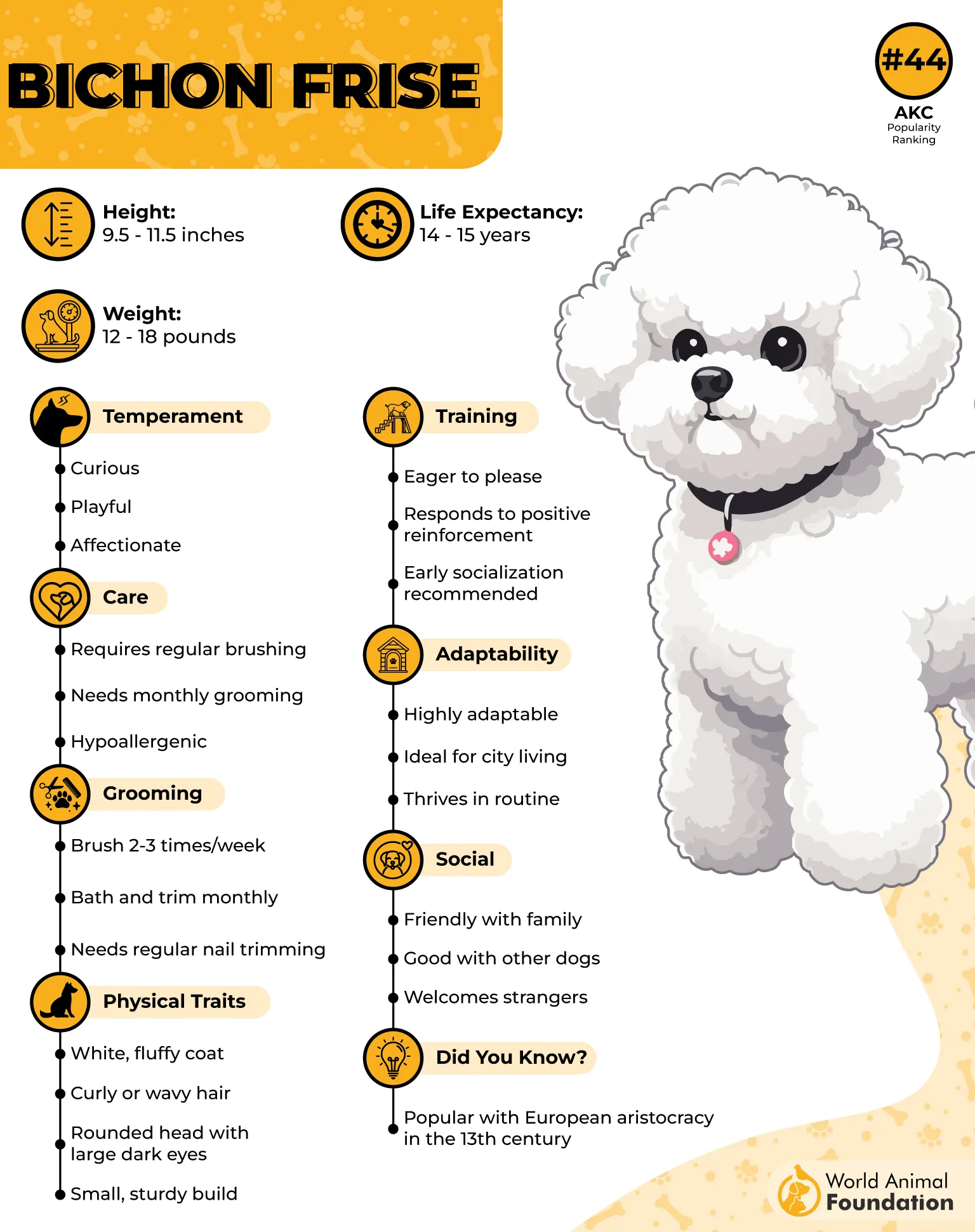
The Bichon Frise is a small, cheerful white dog breed that has won the hearts of many dog lovers around the world. Known for its fluffy, cotton-like coat, it often resembles a living plush toy. Its tightly curled hair helps trap loose strands within the coat, which contributes to its low-shedding reputation.
Bichons are playful, affectionate, and highly people-oriented dogs that thrive on companionship. One of their most notable traits is their hypoallergenic coat, although it does require consistent care to keep it clean, healthy, and tangle-free.
Coat Care
The Bichon Frise has a dense, double coat that does not shed heavily but tends to trap loose hair, as noted by Britannica. Regular brushing is essential to prevent matting and tangles. A slicker brush followed by a comb works best for thorough grooming.
Most owners also schedule professional grooming about once a month for trimming and shaping. Bathing every one to two weeks helps maintain coat cleanliness, especially since the white fur can easily pick up dirt depending on the environment.
Why Choose This Breed?
Friendly and sociable, generally good with children and other pets
Low-shedding, hypoallergenic coat suitable for allergy-sensitive homes
Playful, affectionate temperament ideal for companionship
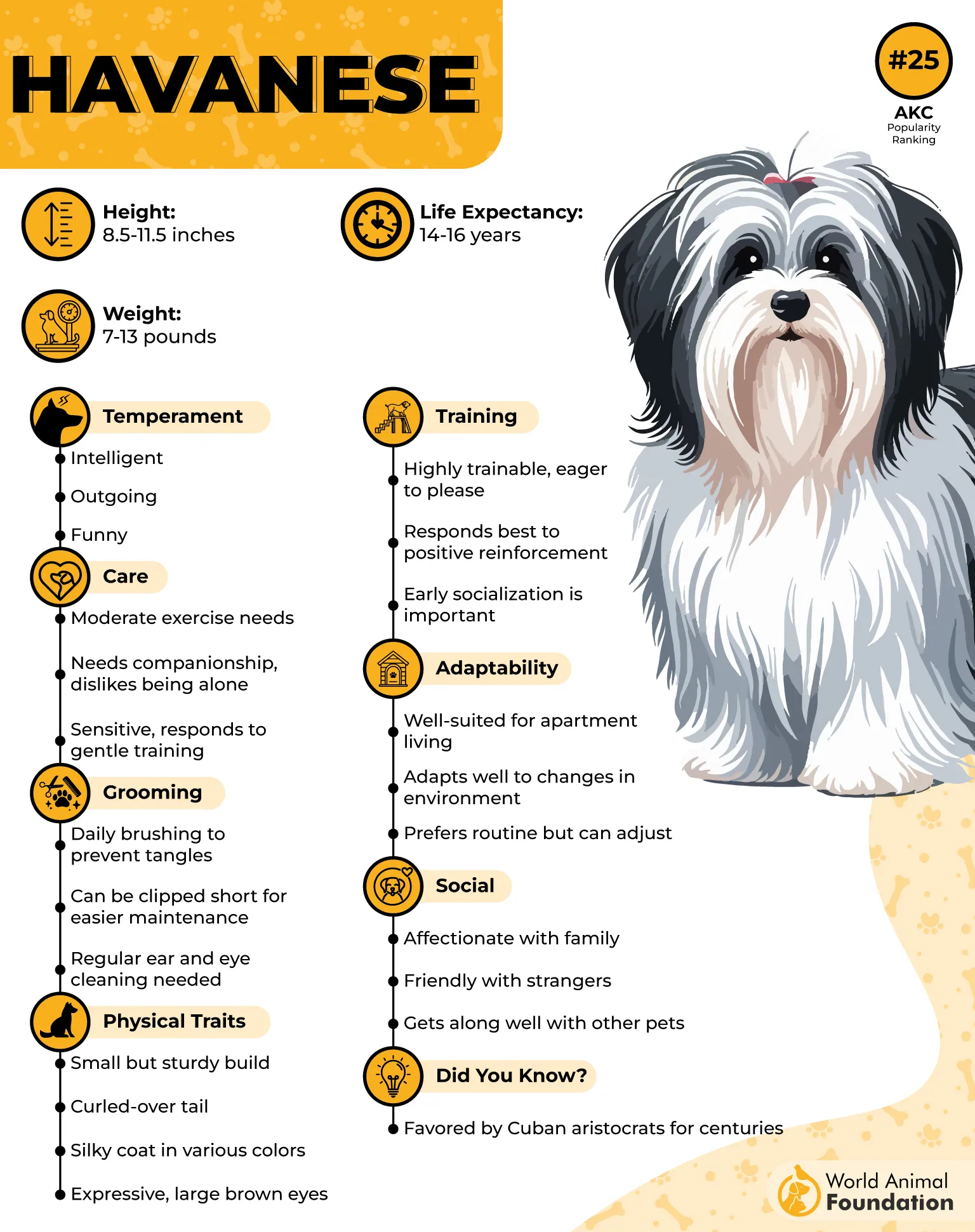
6. Havanese
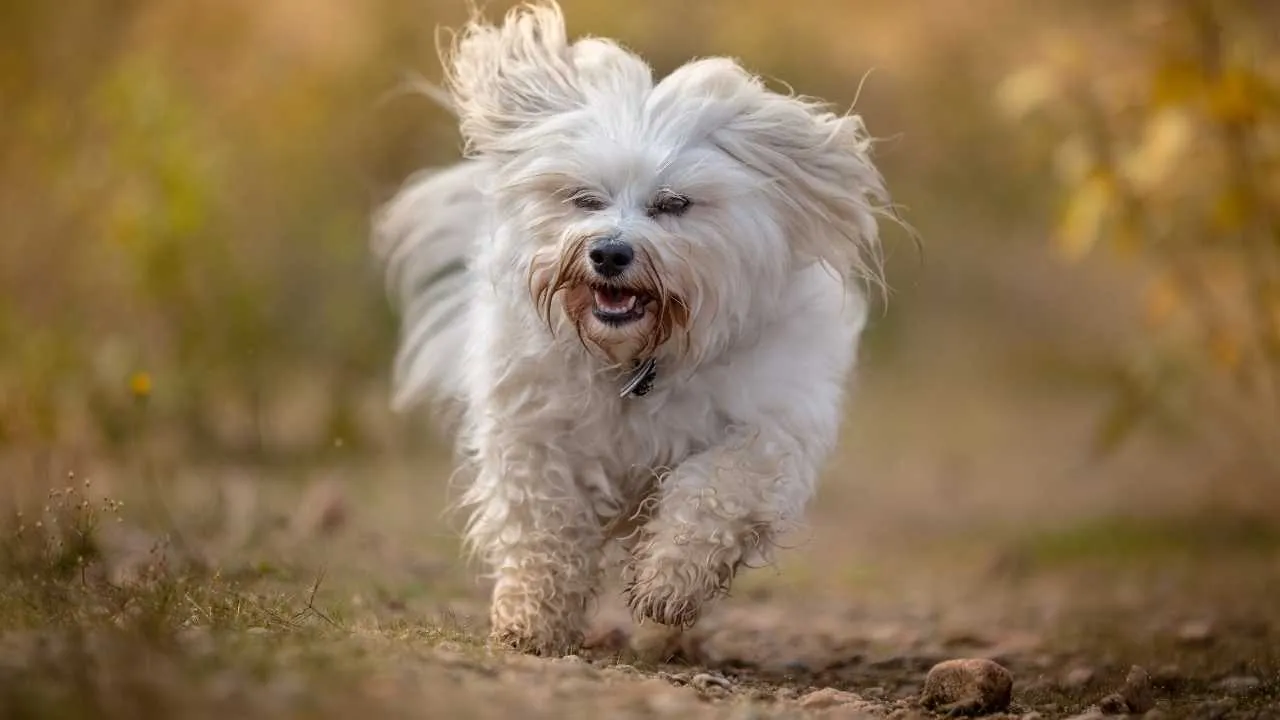
The Havanese is the national dog of Cuba, known for its silky double coat and distinctive tail that curls gracefully over its back. This charming lap dog can have either straight or slightly wavy coat textures, and many owners enjoy keeping it long and natural to highlight its soft, flowing appearance. Its cheerful expression and expressive eyes add to its overall appeal.
According to Purina, Havanese dogs are intelligent, outgoing, and eager to please, making them highly trainable companions. They are well-suited for people looking for an active yet adaptable dog that does not require large living spaces or intense exercise routines.
Coat Care
The Havanese is a low-shedding breed, but its continuously growing coat can easily become tangled without proper care. Regular brushing is essential to prevent mats and maintain a smooth, healthy coat. Brushing also helps distribute natural oils, giving the coat its signature shine.
Many owners opt for a shorter trim to reduce grooming time and maintenance. Bathing every 2–4 weeks is generally recommended, depending on activity level and environment.
Why Choose This Breed?
Friendly, social temperament with strong family bonding
Moderately active and well-suited for apartment or small home living
Can serve as a light watchdog while remaining affectionate and gentle
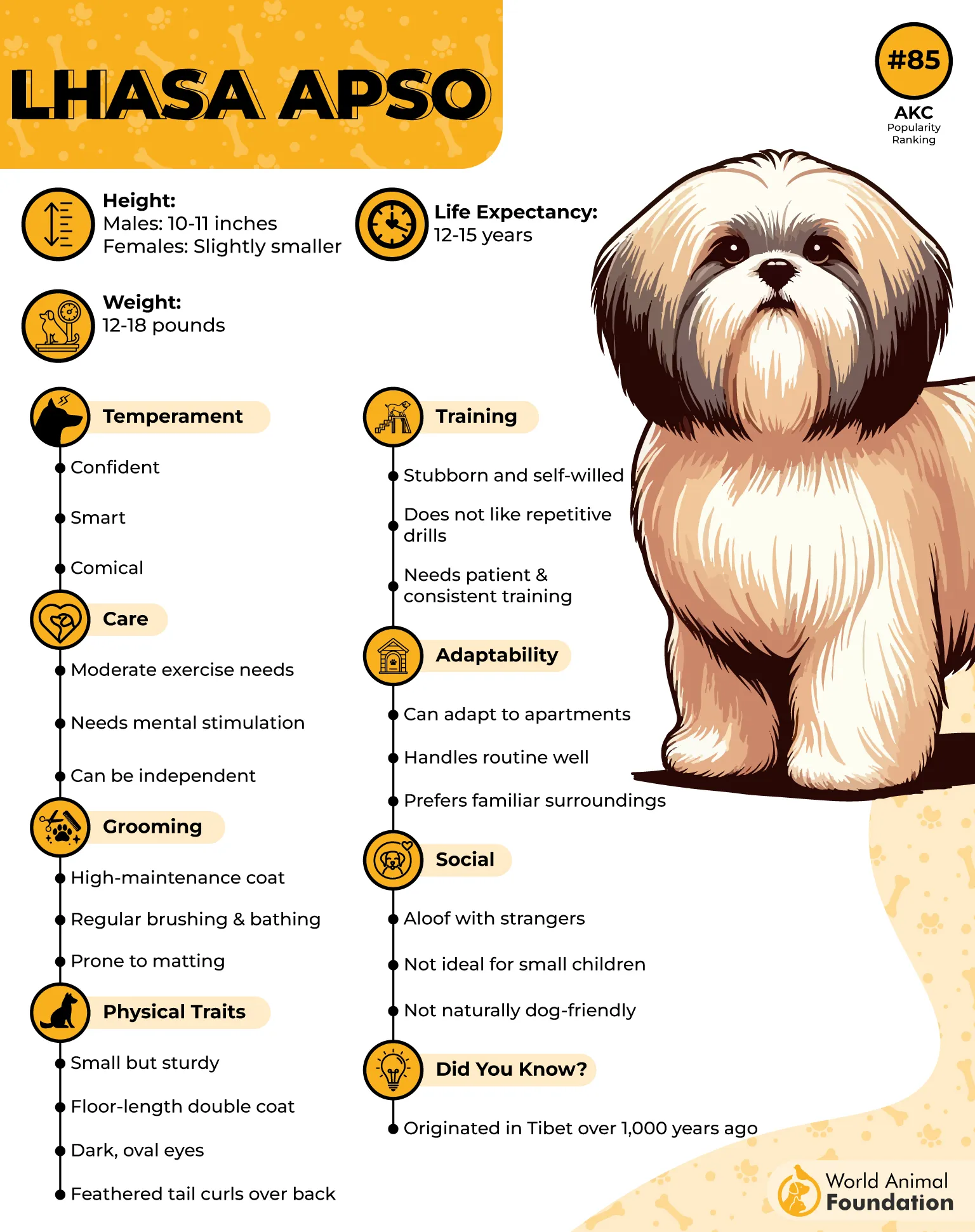
7. Lhasa Apso
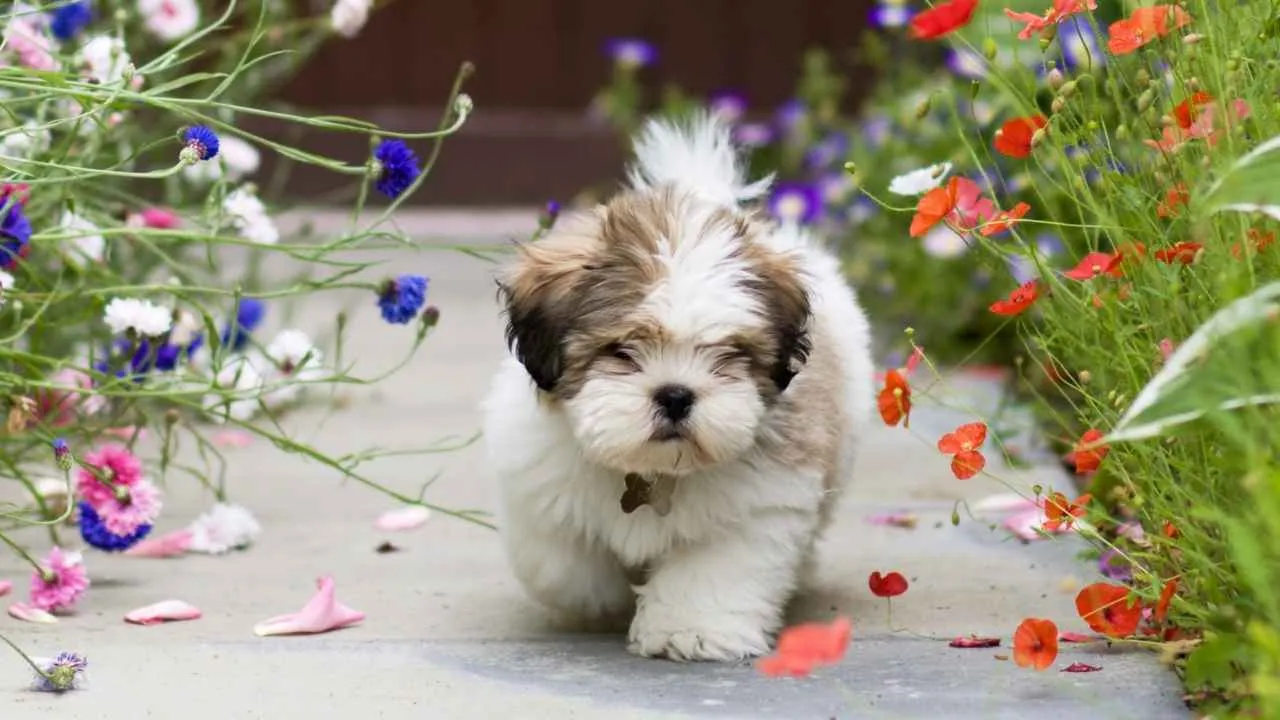
The Lhasa Apso is one of the oldest dog breeds in the world, with a history that spans thousands of years. Originally bred in Tibetan monasteries, these dignified and regal dogs were often gifted as symbols of good fortune and protection. Their dense double coat is unique, as it does not shed seasonally in the same way as many other double-coated breeds.
Lhasa Apsos are lively, confident dogs with a playful, almost clownish personality that often entertains their owners. For those looking for a low-shedding breed with natural alertness and a watchful temperament, the Lhasa Apso is a strong contender.
Coat Care
The Lhasa Apso’s long, straight coat requires regular maintenance, with brushing and combing recommended every other day to prevent tangles and mats. Owners can choose to keep the coat long for a traditional look or trimmed short for easier upkeep.
A shorter “puppy cut” typically requires brushing only 2–3 times per week and bathing between grooming appointments. Regular use of a dog-specific shampoo helps maintain coat cleanliness and overall skin health.
Why Choose This Breed?
Loyal and attentive, with natural watchdog instincts
Minimal seasonal shedding compared to many double-coated breeds
Adaptable grooming options depending on owner preference
8. Boston Terrier
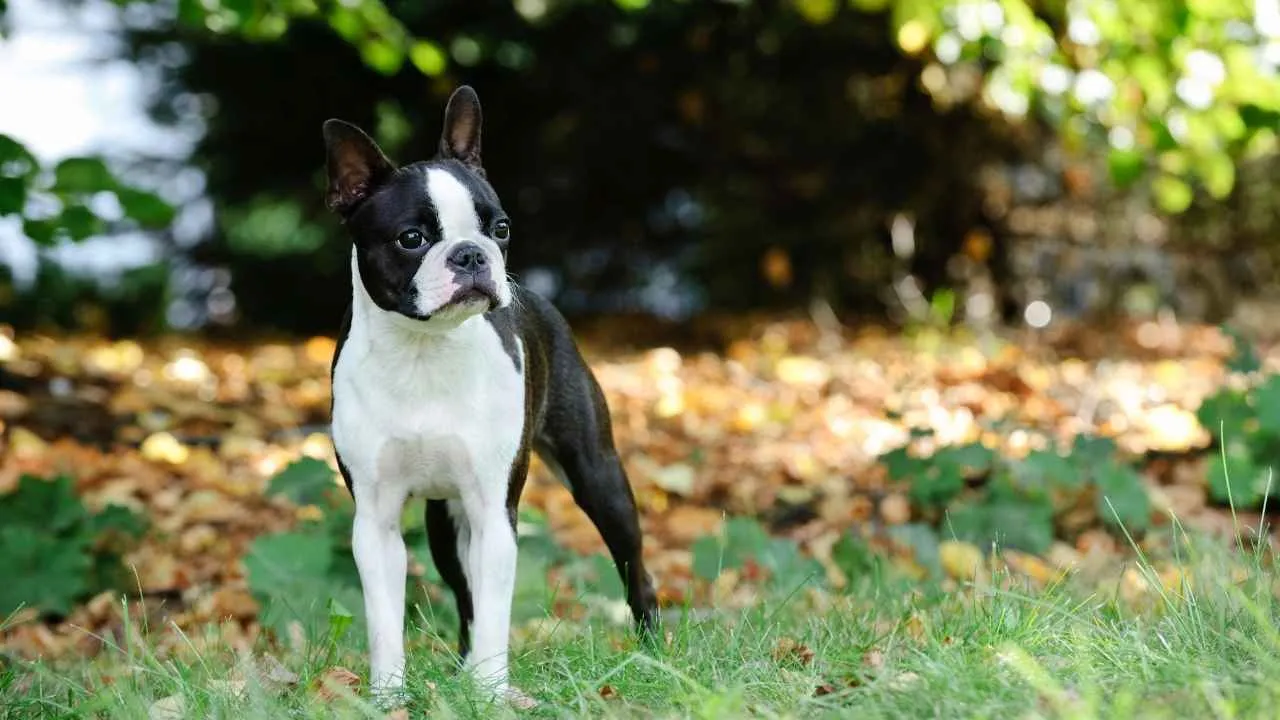
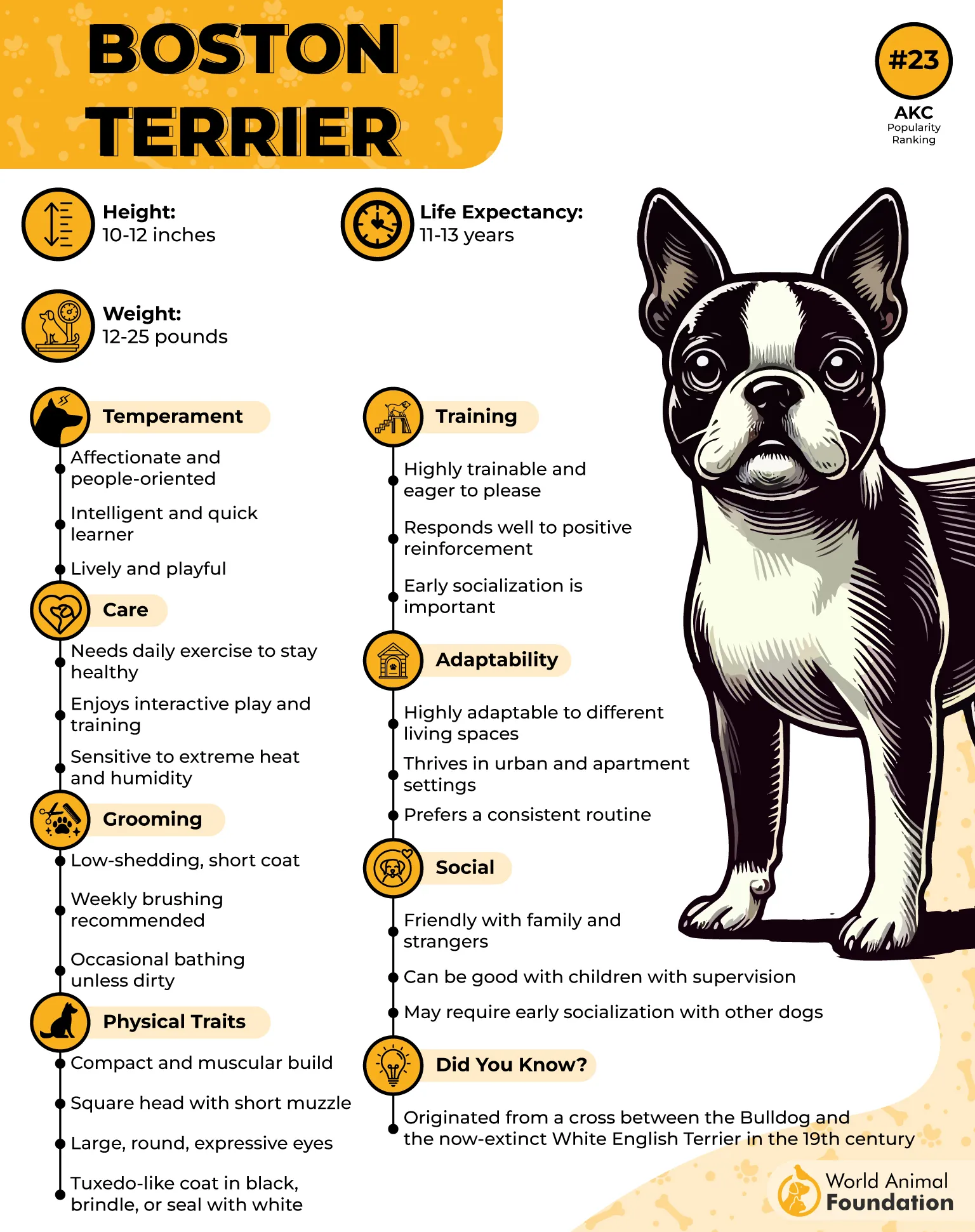
Nicknamed the “American Gentleman,” the Boston Terrier is a bright, cheerful, and well-mannered breed known for its compact build and distinctive tuxedo-like coat. Its short, sleek hair and polished appearance make it a naturally tidy companion that fits well into clean, organized households.
Boston Terriers are affectionate, eager to please, and enjoy being close to their people. Despite their lively personality, they are generally easy to manage and adapt well to a variety of living environments.
Coat Care
Boston Terriers are light to moderate shedders with a simple grooming routine. Their short coat only requires occasional brushing, about once a week, with a soft-bristle brush to remove loose hair and maintain coat cleanliness, as noted by Britannica. Regular bathing, nail trimming, and cleaning around facial folds are also important for overall hygiene and comfort.
Why Choose This Breed?
Friendly and adaptable, getting along well with people and other pets
Low-maintenance coat with minimal grooming needs
Intelligent, affectionate, and easy to manage in most home settings
9. Lagotto Romagnolo
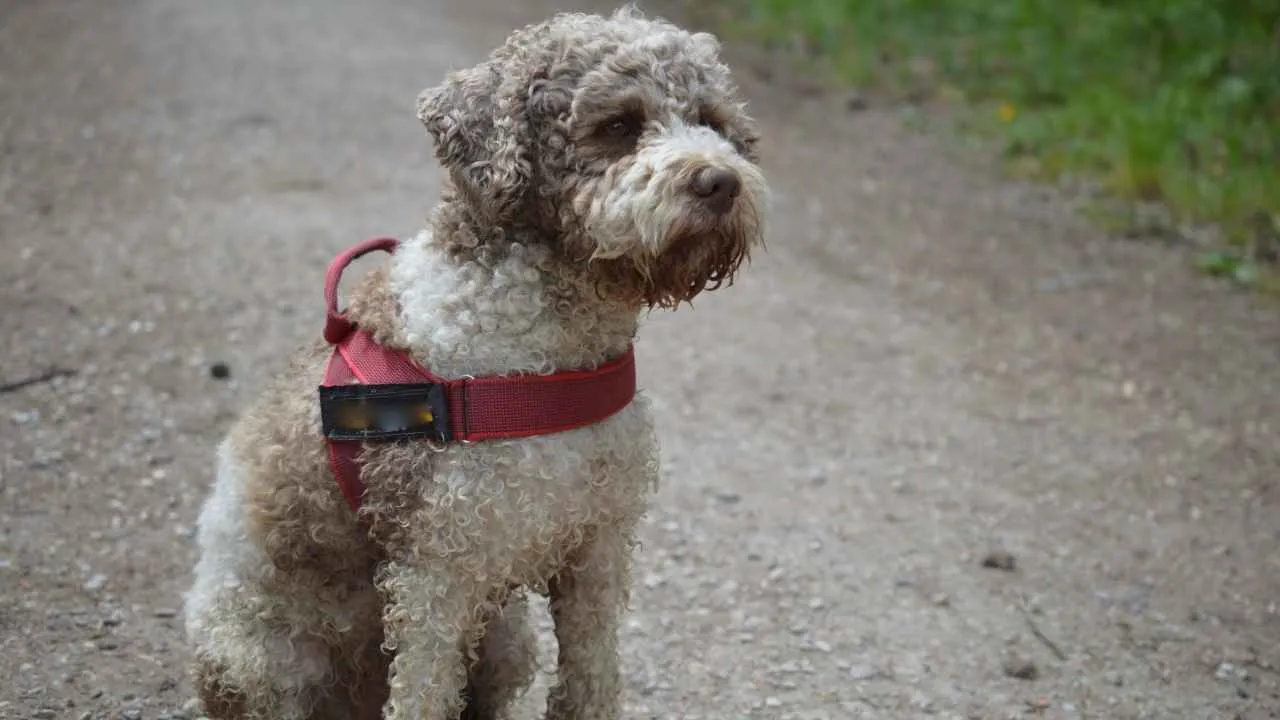
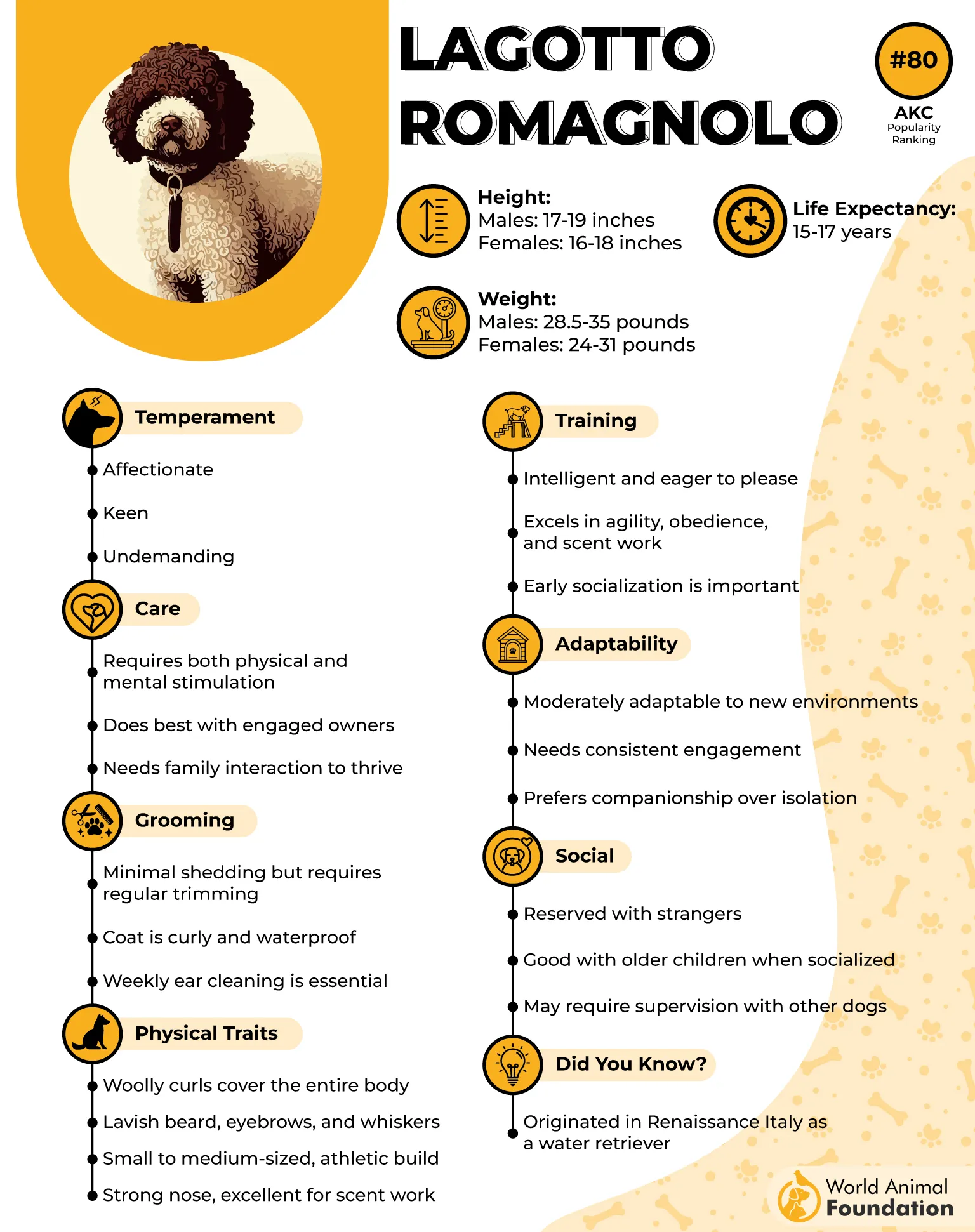
The Lagotto Romagnolo is a medium-sized, energetic breed known for its dense, woolly, curly coat that gives it an adorable teddy bear-like appearance. Despite its cute and fluffy look, this Italian breed is highly active and was originally developed for working in water and searching for truffles.
Its double coat features a dense undercoat for insulation and a water-resistant outer layer, making it well-suited for outdoor activity in various conditions.
Affectionately called “carino” by Italians, meaning “cute,” the Lagotto Romagnolo is both charming and hardworking, combining a lively spirit with a gentle, affectionate nature at home.
Coat Care
The Lagotto’s tight curls are more similar to human hair than traditional fur and require consistent maintenance. Regular brushing with a metal comb is essential to prevent tangles from forming deep within the coat.
According to Orvis, professional trimming every 6–8 weeks helps keep the curls manageable and healthy. Using a gentle, dog-friendly shampoo along with a moisturizing conditioner helps maintain softness and coat condition.
Why Choose This Breed?
Playful and energetic yet affectionate in the home
Intelligent and well-suited for active owners
Generally friendly with children and other dogs when properly socialized
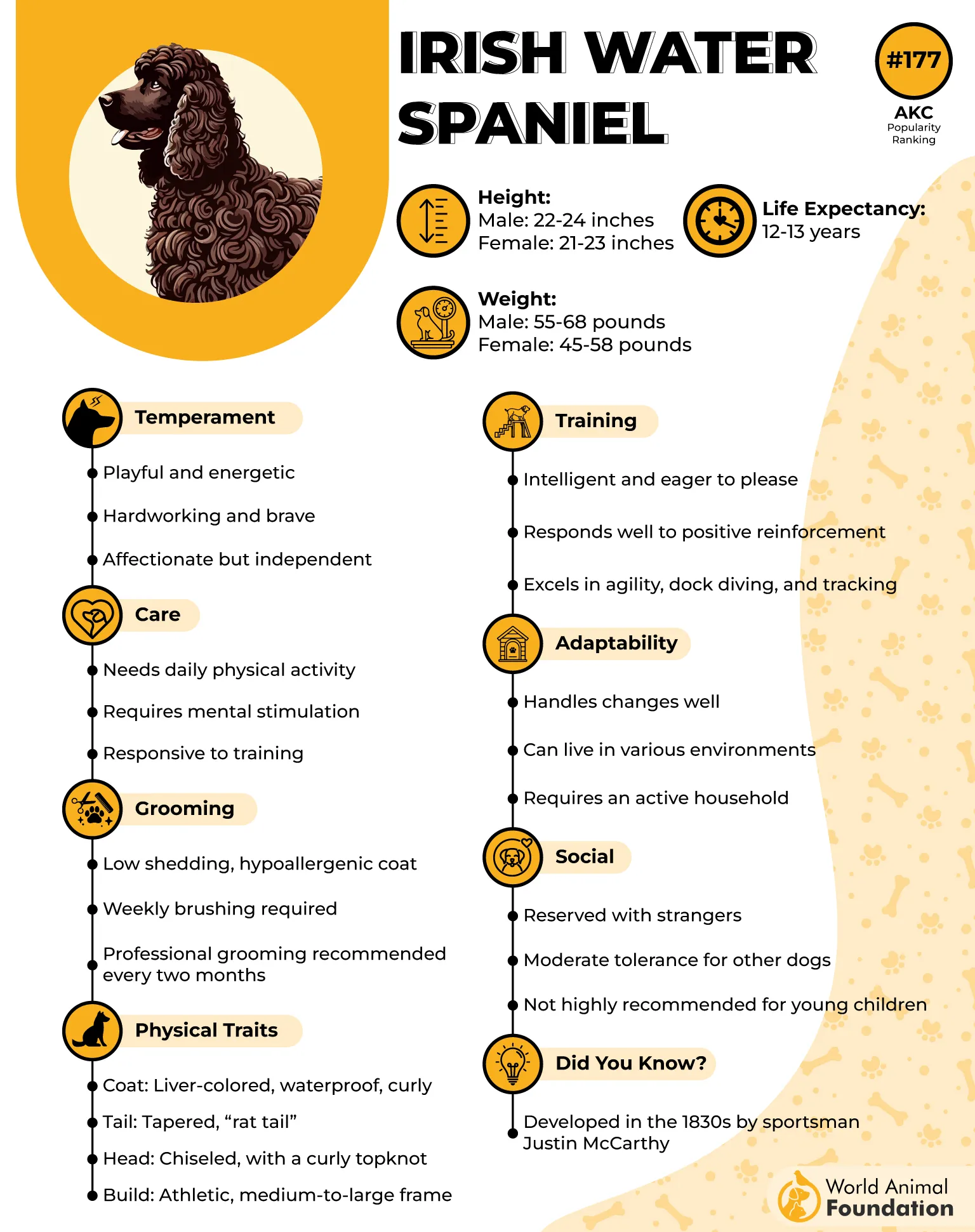
10. Irish Water Spaniel
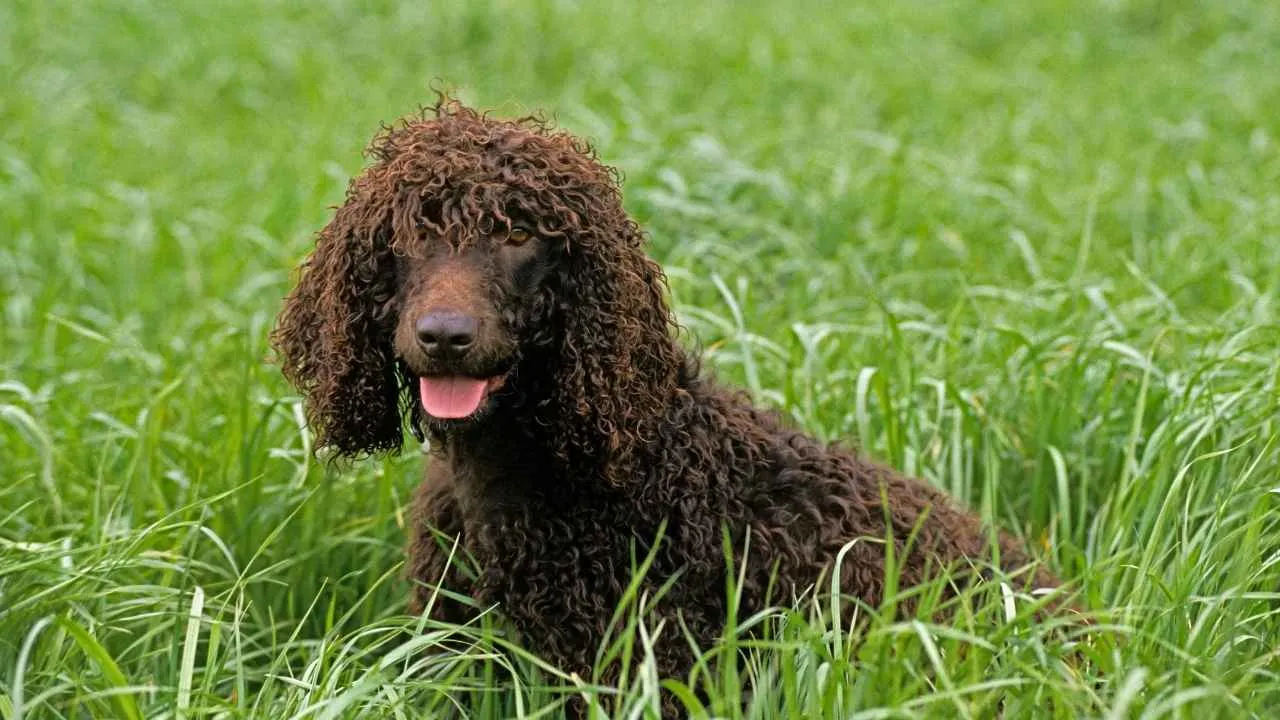
The Irish Water Spaniel is one of the most distinctive sporting breeds, recognized for its dense, tightly curled coat and unique appearance. As the tallest of all spaniel types, it stands out both for its striking looks and its strong working ability. Its natural curls provide excellent water resistance, a key trait developed for a dedicated water-retrieving dog.
The breed’s coat consists of a soft undercoat and a coarser outer layer. While it is often described as low-shedding compared to many breeds, loose curls can still trap debris and require regular maintenance. The characteristic curls on its head also contribute to its famously playful and slightly mischievous expression.
Coat Care
The Irish Water Spaniel’s curly coat requires consistent grooming to stay healthy and tangle-free. Brushing several times a week helps prevent matting and removes dirt and debris trapped within the curls. Weekly thorough grooming also helps manage loose hair.
Many owners rely on professional grooming to maintain the coat’s shape and condition. Bathing is typically recommended about once a month, or as needed after outdoor activity, using a gentle, vet-approved shampoo to maintain skin health and prevent irritation.
Why Choose This Breed?
Energetic, playful, and well-suited for active owners
Intelligent sporting dog with strong retrieving instincts
Lower dander production compared to many heavy-shedding breeds
Conclusion
Choosing a dog with reduced shedding is one of the smartest options if pet hair around the home is a concern. It allows you to enjoy all the joy and companionship of having a dog without constantly dealing with fur on furniture, clothes, and floors. While these ten breeds vary in personality, they all share the advantage of being low-shedding companions.
However, low shedding does not mean no grooming. Most of these dogs still require regular brushing, bathing, and basic hygiene care to keep their coats and skin healthy. Many also benefit from occasional professional grooming, often once a month, depending on the breed and coat type. Consistent care is just as important as proper nutrition when it comes to keeping your dog healthy and comfortable.
With the right routine, these low-shedding breeds can help create a cleaner home environment while also bringing warmth, companionship, and happiness into everyday life.
